The global legal order faces one of its most severe stress tests in decades after U.S. President DonaldTrump signaled plans to exercise interim control over Venezuela following the capture of President Nicolás Maduro in a dramatic cross-border operation, triggering intense legal scrutiny and global diplomatic fallout. President Nicolás Maduro has now been transferred to New York to face federal drug-trafficking charges.
The unprecedented action involving the seizure of a sitting head of state, cross-border military strikes, and an assertion of administrative authority over a sovereign nation has triggered fierce international debate over state sovereignty, the use of force, regime change, and the limits of international law.
While Washington frames the operation as a law-enforcement and counter-narcotics mission, critics warn it represents a de facto military intervention with far-reaching geopolitical and legal consequences. U.S. officials frame the move as a temporary measure aimed at facilitating a:
“safe and judicious transition”
International law experts warn that the action raises serious questions about state sovereignty, the legality of regime intervention, and the precedent it sets for foreign-led governance in the modern international system.
Update: New Developments Following Maduro’s Capture
Updated on January 7, 2026
President DonaldTrump subsequently defended the operation, describing it as “brilliant” and dismissing international criticism. He argued that U.S. actions had restored accountability in Venezuela, warned foreign governments against interference, and suggested that similar measures could be pursued elsewhere if U.S. interests were threatened.
Tensions escalated further after Trump claimed that “many” Cuban soldiers were killed during the raid, heightening regional alarm. Havana condemned the operation as an act of aggression and a violation of international law, though Cuban authorities have not released official casualty figures.
In New York, Nicolás Maduro and his wife, Cilia Flores, appeared before a federal judge and pleaded not guilty to U.S. drug-trafficking and narco-terrorism charges. Addressing the court, Maduro asserted that he remains Venezuela’s legitimate president and characterized his capture as an illegal abduction carried out in breach of international law.
The crisis also assumed a significant economic dimension after Trump announced that Venezuelan officials had agreed to begin transferring millions of barrels of oil to the United States, framing the move as compensation for U.S. involvement. The claim, which would represent Venezuela’s first major concession since Maduro’s capture, has raised immediate legal, diplomatic, and market concerns.
Caracas forcefully rejected U.S. assertions of interim control. Venezuela’s Supreme Court-backed leadership under Delcy Rodríguez stated that all state institutions remain under Venezuelan authority and warned that any foreign administration or resource control would be unconstitutional and illegitimate.
Most recently, residents reported anti-aircraft fire and heightened security deployments across parts of Caracas as authorities sought to maintain order. While major infrastructure remains operational, the capital remains on edge, with sporadic disruptions and an expanded military presence underscoring the volatility of the situation on the ground.
Why this matters legally: The latest developments raise fundamental questions about state sovereignty, extraterritorial enforcement, the legality of regime intervention, and the use of economic leverage under international law.
What Happened: A Rare Capture of a Sitting Head of State
According to U.S. officials, American special forces carried out an overnight operation that disabled power infrastructure in parts of Caracas, struck Venezuelan military sites, and captured President Maduro near one of his safe houses.
Maduro and his wife, Cilia Flores, were transported offshore to a U.S. Navy vessel and flown to New York, where he is now held at the Metropolitan Detention Center in Brooklyn. U.S. prosecutors say Maduro will face charges including narco-terrorism conspiracy, allegations he has long denied.
President Trump declared that the U.S. would oversee Venezuela until a safe, proper, and judicious transition could be arranged, adding that American oil companies would refurbish the country’s deteriorating oil infrastructure.
Global condemnation continued to build in the aftermath of the U.S. operation, with Russia, China, Mexico, and several Latin American states reiterating that the capture of Nicolás Maduro violates state sovereignty and the UNCharter. European officials urged restraint, warning that unilateral regime intervention risks normalizing actions that undermine the rules-based international order.
International Law Under Strain: Key Legal Questions
No immediate self-defense justification was articulated
This places the operation in direct tension with the foundational principles of international law.
2. Arresting a Sitting Head of State
While international tribunals can prosecute heads of state, unilateral seizure by another country is virtually unprecedented outside wartime contexts. Customary international law typically protects:
Personal immunity (ratione personae) while in office
Due process through international or multilateral mechanisms
U.S.courts asserting jurisdiction over Maduro raises serious questions about extraterritorial enforcement and precedent.
3. Regime Change and Interim Governance by Force
Trump’s statement that the U.S. will “run” Venezuela echoes past regime-change interventions, which are widely criticized under international law unless justified by:
Natural resources are the property of the sovereign state of the nation, not belonging to or other powers.
Unrecognized economic exploitation could be considered to be a violation of appropriation laws.
Contracts that are signed with coercion may be at risk of invalidity
Any oil transfer that is not accompanied by widespread international recognition could result in legal problems in arbitration courts and sanctions regimes.
5. Precedent Risk to the Global Legal Order
The Maduro operation could alter international norms through:
Abduction of leaders in a unilateral manner is normalized.
Promoting enforcement of power-based principles over multilateral law
Legal experts caution that, if the precedent holds this could trigger the shift away from an international order based on rules towards a more selective enforcement driven through geopolitics.
Venezuela’s Response: Emergency Rule and Defiance
In the wake of the alleged capture, Venezuela’s government declared an emergency rule, consolidating power and restricting dissent to maintain control over key institutions and territory. President Maduro’s administration framed the U.S. action as an illegal foreign intervention, calling for national unity and mobilizing loyal security forces.
Defiance has also taken a diplomatic form, with Venezuela appealing to allies and international bodies to condemn what it describes as a breach of sovereignty, while signaling that external attempts to assert control will not be recognized. This response shows the resilience of domestic authority structures and highlights the legal and political obstacles facing any externally imposed interim governance.
Venezuela’s high court later named Delcy Rodríguez interim president, who denounced the operation as a “kidnapping” and declared Maduro the country’s only legitimate president, citing the need to maintain administrative continuity during a
“national emergency.”
Global Reaction: A Divided International Community
Global reaction has exposed deep divisions in the international community over the legality and legitimacy of the U.S. action, with reactions broadly split between political approval and legal alarm. Supportive statements focused on Maduro’s removal rather than the method used, while critics warned that the operation risks normalizing unilateral intervention and weakening sovereignty-based international order.
United Kingdom: Prime Minister Keir Starmer said the UK would “shed no tears” over Nicolás Maduro’s removal, signaling political relief but avoiding any endorsement of the operation’s legality.
Argentina: President Javier Milei welcomed what he called Venezuela’s “new freedom,” aligning with his government’s hardline opposition to authoritarian regimes and support for U.S.-led pressure.
Brazil: President Luiz Inácio Lula da Silva condemned the move as “an unacceptable line,” arguing it threatens regional stability and undermines non-intervention principles in Latin America.
Mexico: Rejected the operation as a clear breach of sovereignty, reinforcing its long-standing doctrine of non-intervention in foreign affairs.
Russia and China: Jointly denounced the action as illegal and destabilizing, accusing Washington of bypassing international law and multilateral institutions.
European Union: Officials expressed concern over escalation and legality, urging restraint and a return to diplomatic and multilateral frameworks rather than unilateral enforcement.
Organization of American States (OAS): Member states remained divided, reflecting broader hemispheric splits between governments prioritizing democratic change and those emphasizing sovereignty.
United Nations: Secretary-General António Guterres warned the move could set a “dangerous precedent,” stressing that leadership change through force raises serious international law concerns.
These responses reflect a growing divide between rule-based internationalism and power-driven unilateralism.
Oil, Power, and Resource Questions
Venezuela’s vast oil reserves add a critical economic dimension to the crisis, raising questions over who holds lawful authority to manage, export, and profit from state-owned resources during any interim control period.
Trump’s repeated references to Venezuela’s oil reserves have intensified scrutiny. His claim that U.S. involvement would be “paid for” by oil revenue recalls the Iraq War’s flawed economic justifications.
Under international law, control over natural resources is tied to recognized sovereignty, meaning shifts in political authority, especially those imposed externally, can complicate contracts, sanctionsenforcement, and global energy markets. As a result, energy security, corporate exposure, and legal ownership claims have emerged as central issues alongside the political fallout.
Historical Echoes: Panama, Iraq, and the Monroe Doctrine
The episode has drawn comparisons to past U.S. interventions, particularly the 1989 invasion of Panama to remove Manuel Noriega and the 2003 Iraqwar in which Saddam Hussein was sentenced to death by hanging, both of which were justified on security and governance grounds but later scrutinized under international law.
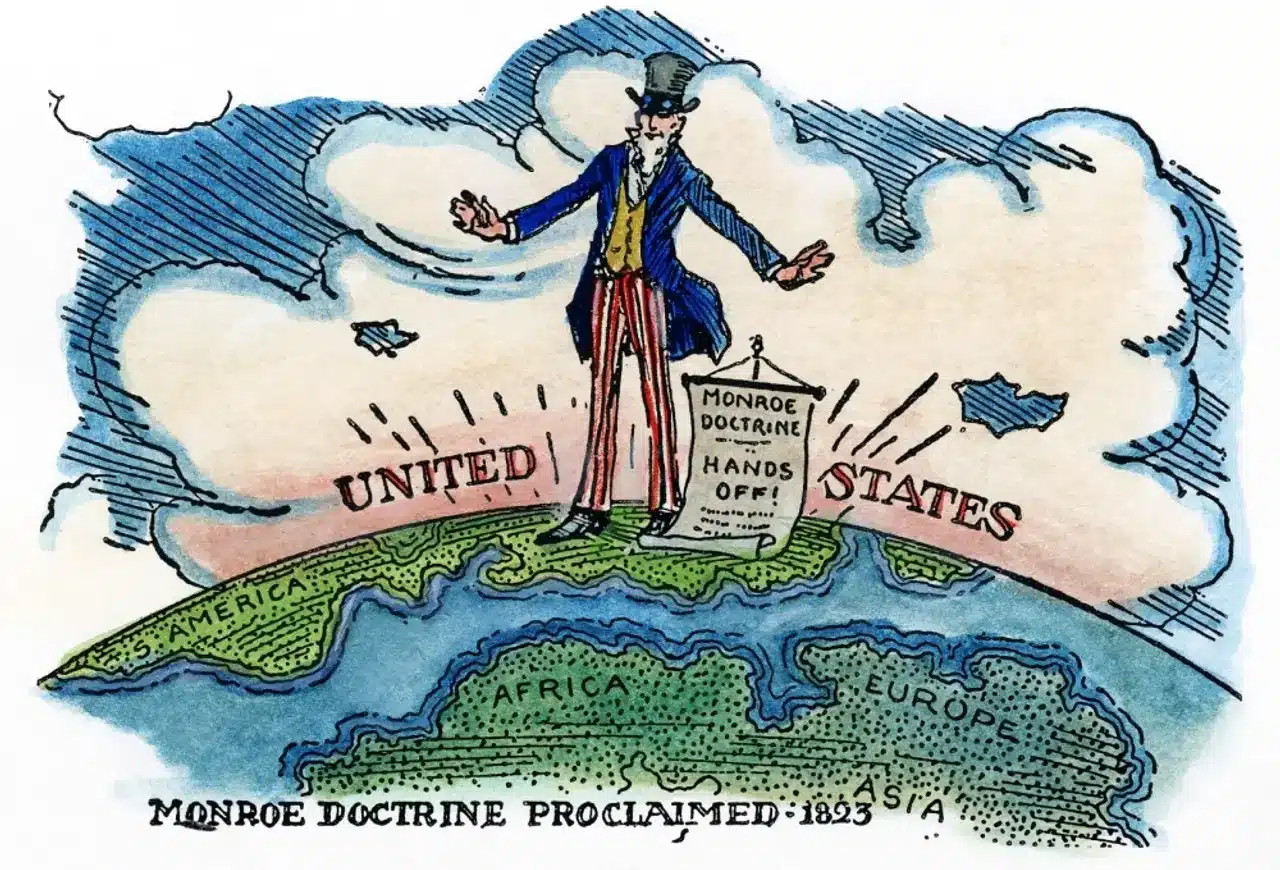
Critics argue the current situation reflects a modern extension of the Monroe Doctrine, asserting U.S. primacy in the Western Hemisphere, while supporters contend it represents a targeted response to regional instability rather than territorial ambition.
These historical parallels reveal recurring tensions between unilateral action, legal justification, and long-term geopolitical consequences. Trump’s remarks referencing oil infrastructure and the “Monroe Doctrine” revive comparisons to:
Cold War-era interventions widely criticized in Latin America
Domestic Political Risks for Washington
The move carries significant domestic political risks for Washington, where public opinion remains wary of overseas interventions following prolonged conflicts in Iraq and Afghanistan. Lawmakers from both parties have raised concerns over constitutional authority, potential costs, and the absence of congressional approval, while supporters argue the action strengthens U.S. credibility and regional leadership.
As economic pressures and election-year dynamics intensify, the operation could become a focal point for debates over executive power, foreign policy restraint, and America’s role abroad. The move exposes Trump to bipartisan scrutiny:
Democrats question congressional authorization and constitutional limits
Some Republicans warn of foreign entanglement contradicting “America First”
Public opinion remains focused on inflation and domestic costs
What Comes Next?
The U.S. move involving Venezuela marks a pivotal test for international law, sovereignty, and the limits of unilateral power. While supporters focus on political outcomes, critics warn that bypassing multilateral frameworks risks weakening the very legal order meant to manage global stability.
What comes next remains uncertain, with outcomes likely shaped by diplomatic recognition, internal stability in Venezuela, and international legal challenges. Key unresolved questions include:
Will international organizations recognize the arrangement?
Can a legitimate transition occur without internal consensus?
The answers will determine not only Venezuela’s political trajectory but also how far international norms on sovereignty and intervention are tested in the years ahead. The capture of Nicolás Maduro is no longer just a Venezuela crisis, it is a stress test for international law itself. Whether the global community accepts or resists this action will shape future interpretations of sovereignty, immunity, and the lawful use of force for years to come.
Frequently Asked Questions
Is it legal for the U.S. to capture a sitting foreign president?
Stay ahead of 2026 immigration reforms with new visa rules, travel bans, and stricter border controls that are shaping global travel and skilled migration.
The year 2026 marks a massive global immigration overhaul, with major changes to visa rules, travel restrictions, and entry requirements in countries around the world. Governments are tightening regulations to enhance security, streamline visa processing, and respond to shifting labor and humanitarian needs. Travelers, students, and expatriates must stay informed, as these updates could impact work permits, family reunifications, and international travel plans.
Global Mobility Faces Its Biggest Reset in Years
2026 marks one of the most consequential turning points in modern immigration and visa law. Governments across North America, Europe, the UK, Australia, and parts of Asia and the Middle East have introduced sweeping reforms that fundamentally reshape how people travel, work, study, and settle across borders.
From expanded U.S. travel bans and mandatory biometric tracking to stricter skilled-worker thresholds in the UK, fee hikes in Canada, and digitized border controls across Europe, the global immigration system is moving toward tighter security, higher compliance, and skill-driven migration.
For travelers, students, professionals, and policymakers alike, these changes signal a new era of controlled global mobility.
United States: Expanded Travel Bans & Biometric Enforcement
A December 2025 presidential proclamation broadened the U.S. travel ban list to 39 countries, adding new nationalities to both full and partial entry suspensions that take effect January 1, 2026, and prompting some affected nations to reciprocate with bans on U.S. citizens.
Complementing these restrictions, the Department of Homeland Security finalized a mandatory biometric entry-exit system that requires facial recognition and other biometric collection from virtually all non-U.S. citizens, including visa holders, green card holders, and previously exempt groups such as Canadian visitors and young children, at airports, seaports, and land borders beginning December 26, 2025.
Refusal to comply with biometric checks can result in denied entry or departure, reflecting a broader security strategy to tighten identity verification, reduce visa overstays, and link traveler movement data across DHS systems.
Key Developments
Expanded travel restrictions affecting nationals from dozens of countries, limiting access to tourist, student, and non-immigrant visas.
Mandatory biometric entry-exit systems now operational at ports of entry, tracking arrivals and departures of non-citizens in real time.
H-1B visa reforms introducing stricter wage thresholds, employer accountability, and selection criteria emphasizing economic value.
Why It Matters
These measures reflect a shift toward national security-first immigration policy, reducing overstays and tightening employer-based migration. Businesses dependent on foreign talent and international students may face increased hurdles and costs.
United Kingdom: Skilled Migration Tightened, Settlement Harder
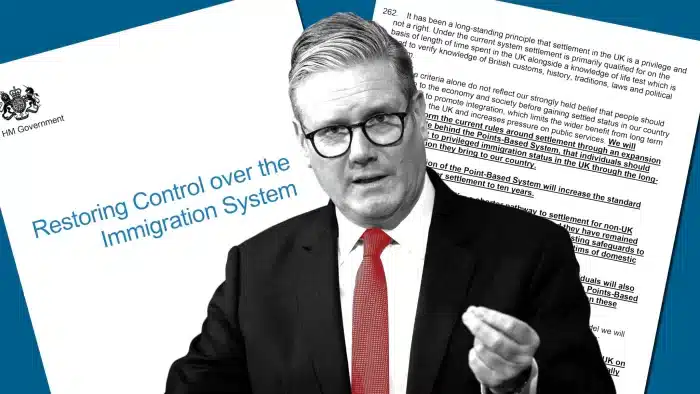
The UK’s 2026 immigration strategy continues its post-Brexit recalibration, placing skills and economic contribution at the center of visa policy. In 2025–2026, the United Kingdom pressed forward with sweeping immigration reforms that tightened access for skilled migrants and made permanent settlement significantly harder under its
As of 22 July 2025, the Skilled Worker visa was overhauled as minimum skill and salary thresholds were raised to require at least a bachelor’s-degree-level qualification (RQF 6) and higher pay requirements, while hundreds of medium-skill occupations were removed from eligibility or shifted to atemporary shortage list with restricted benefits, such as no dependent visas.
Looking ahead to April 2026, the standard qualifying period for Indefinite Leave to Remain (ILR) is set to double from five years to ten years for most migrants, delaying pathways to permanent residency and citizenship except in limited fast-track categories.
These changes reflect a broader shift toward prioritising highly qualified, high-earning workers and reducing net migration, while compelling migrants to demonstrate greater language proficiency, financial stability, and long-term “earned” contribution before settling in the UK.
What’s Changed
Higher salary and sponsorship thresholds for Skilled Worker visas.
Increased scrutiny for long-term residence and settlement pathways.
Stronger emphasis on English proficiency and compliance history.
Impact
While the UK remains open to talent, low-skill and marginal eligibility applicants face exclusion, signaling a more selective migration system aligned with labor shortages rather than population growth.
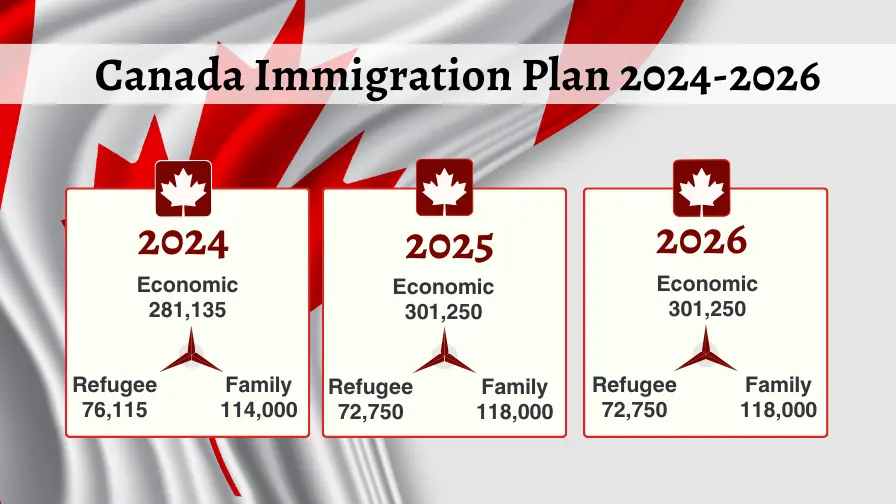
Canada, long viewed as migrant-friendly, has also recalibrated its approach for 2026. In 2025–2026, Canada’s immigration system shifted toward higher application costs and more targeted residency routes, reflecting efforts to balance labour needs with fiscal sustainability.
Effective December 1, 2025, Immigration, Refugees and Citizenship Canada (IRCC) raised fees across key categories, including permanent residence, work permits, and study permits, with typical increases of roughly 8–10 % for main economic programs, pushing overall costs for applicants higher as 2026 approaches.
At the same time, the federal Temporary Resident to Permanent Resident (TR-to-PR) pathway was updated to create a more selective fast-track for international graduates, healthcare workers, and essential workers already in Canada with sufficient work experience and language skills, bypassing the traditional points-based Express Entry competition.
Provincial programs are also tightening criteria, for example, Alberta’s Rural Renewal Stream updates effective January 1, 2026, impose stricter endorsement limits, and require valid work permits for in-Canada applicants.
These changes together mark a more costly and targeted immigration landscape, with higher financial barriers for new applicants paired with selective pathways designed to retain in-country talent and fill specific labour-market gaps.
Key Updates
Visa application and processing fee increases across multiple categories.
Greater focus on economic migrants, entrepreneurs, and targeted skills.
More rigorous documentation and verification processes.
What Applicants Should Know
Higher costs and longer processing timelines may disproportionately affect students and temporary workers, while high-skill applicants remain prioritized.
Australia: Skills Over Degrees
Australia’s immigration reset for 2026 represents a structural shift in philosophy. In 2025–2026, Australia’s immigration system shifted toward prioritising demonstrable skills, earnings and job-market alignment over formal degrees alone, reinforcing a strategic pivot in its skilled migrationframework.
Effective 1 July 2025, a major structural change was the introduction of the Skills in Demand (SID) visa, which replaced the old Temporary Skill Shortage (TSS) visa and categorises applicants based on Core Skills and Specialist Skills streams tied to market-driven income thresholds rather than degree level alone, with the Core Skills Income Threshold (CSIT) and Temporary Skilled Migration Income Threshold (TSMIT) both rising to AUD 76,515 and the Specialist Skills Income Threshold (SSIT) increasing to AUD 141,210.
Employers must now demonstrate that nominees are paid at or above these benchmarks, signalling a clear preference for high-productivity roles and tangible job contributions. Meanwhile, the Core Skills Occupation List (CSOL) has become the primary gateway for employer-sponsored recruitment, streamlining and tightening who qualifies, and a new National Innovation Visa pathway prioritises measurable impact and specialised expertise over traditional academic credentials.
These reforms reflect Canberra’s push to align migration more closely with acute skill shortages and practical capabilities, making workplace experience and wage-based criteria more decisive than degrees in many cases.
Major Changes
Migration policy now prioritizes practical skills and labor demand over academic qualifications.
Adjustments to international student pathways and post-study work rights.
Stronger alignment between visas and workforce shortages.
Global Trend Indicator
Australia’s approach reflects a broader global pattern of migration as an economic tool, not a humanitarian default.
Europe & Schengen Area: Digitized Borders and Biometric Control
Europe is undergoing a silent but transformative border revolution. In 2025–2026, the European Union launched a major digital transformation of its external borders, replacing traditional passport stamping with a biometric Entry/Exit System (EES) designed to strengthen security, speed up crossings, and better track short-stay travellers from non-EU countries.
Rollout of the Entry/Exit System (EES), recording biometric data of non-EU travelers.
Enforcement of the 90/180-day rule through automated systems.
Upcoming ETIAS travel authorization, requiring pre-approval before travel.
Implications
Short-term visitors, business travelers, and frequent flyers will face greater surveillance and compliance checks, reducing flexibility but increasing enforcement consistency.
Middle East: Residency Reforms & Expat Controls
Several Gulf states are refining residency systems amid economic diversification efforts. Across the Middle East in 2025–2026, governments are reshaping residency frameworks and tightening controls on expatriate populations as part of broader economic and labour reforms.
Kuwait has overhauled its immigration rules, introducing a tiered residency model with long-term permits of up to 15 years for investors and property owners while imposing a new six-month limit on how long expats can remain abroad without losing their residency status, a change intended to strengthen compliance and population management.
At the same time, digital e-services now allow online issuance, renewal, and transfer of work and residency visas, aiming to streamline administrative processes for foreign workers. Oman has both extended the validity of foreign residency cards to ten years and tightened pre-entry professional qualification checks for regulated roles, reflecting a dual strategy of attracting high-value talent while tightening standards.
In Bahrain, legislative changes have expanded flexible and Golden Visa options for investors, skilled professionals and retirees, even as “Bahrainization” labour policies increasingly prioritise national hires.
These varied but concurrent reforms mark a regional shift toward controlled expatriate populations, digitalised residency administration, and selective long-term residency pathways tied to investment and strategic skills, balancing the need for foreign talent with domestic economic objectives.
Stricter monitoring of expatriate stays and sponsorship conditions.
Policy shifts balancing labor demand with demographic management.
A Global Pattern Emerges: Controlled, Conditional Mobility
Across regions, a clear global pattern is emerging in which mobility is no longer expanding freely but is being tightly conditioned on skills, income, securityscreening, and compliance. Governments are shifting away from broad access models toward selective, data-driven migration systems that prioritise economic value, biometric verification, and long-term contribution over simple eligibility.
From digitised borders in Europe and biometric enforcement in the United States to skills-based pathways in Australia and earned settlement models in the UK and Canada, migration is increasingly treated as a regulated privilege rather than an open channel.
For travellers, workers, and migrants in 2026, crossing borders now requires more than a valid visa, it demands measurable credentials, ongoing compliance, and acceptance of continuous monitoring in an era of controlled, conditional movement.
Despite regional differences, these trends define the 2026 immigration law:
As governments continue to recalibrate immigration systems in 2026 and beyond, further tightening, not liberalisation, appears the more likely trajectory. Policymakers are expected to expand digitalborder infrastructure, raise eligibility thresholds, and refine selective pathways that favour high-skill, high-income, and in-country applicants, while limiting low-discretion entry routes.
For migrants and travellers, this means earlier planning, higher costs, stricter documentation, and increased scrutiny at every stage of movement. In the near term, the defining challenge will be adaptability; those who align with evolving skills demands, compliance requirements, and biometric systems will retain mobility, while others face narrowing legal pathways in an increasingly regulated global migration landscape.
Frequently Asked Questions
What are the major immigration changes in the U.S. for 2026?
Expanded travel restrictions affecting multiple countries, mandatory biometric entry-exit systems at ports of entry, and H-1B visa reforms introducing stricter wage thresholds and employer accountability.
How is the UK tightening skilled migration in 2026?
Higher salary and sponsorship thresholds for Skilled Worker visas, stricter long-term residence and settlement requirements, and a stronger emphasis on English proficiency and compliance history.
What updates has Canada made to immigration rules in 2026?
Visa application and processing fees have increased, more focus on economic migrants and high-skill applicants, and documentation and verification processes are more rigorous.
Migration policy now favors practical skills over academic qualifications, international student pathways have been adjusted, and visas are aligned with workforce shortages.
Rollout of the Entry/Exit System (EES) recording biometric data of non-EU travelers, automated enforcement of the 90/180-day rule, and the upcoming ETIAS travel authorization requiring pre-approval.
What residency reforms are happening in the Middle East?
Answer: Expansion of digital visa and residency services, stricter monitoring of expatriate stays, and policy shifts balancing labor demand with demographic management.
What should travelers and migrants do in 2026?
Verify visa rules before travel, expect biometric checks and longer processing times, and budget for higher fees and documentation.
What should employers, universities, and policymakers do?
Employers and universities should plan recruitment earlier and strengthen compliance frameworks. Policymakers should monitor rights implications, labor market impacts, and international coordination trends.
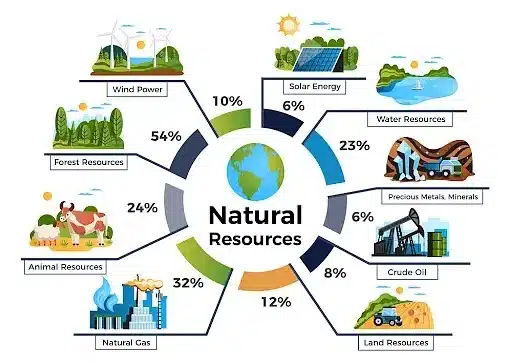
Natural resource management laws in 2026 are increasingly shaped by international conservation principles and cross-border regulatory cooperation. As environmental pressures intensify, governments are aligning domestic policies with global legal frameworks to manage land, water, minerals, forests, and biodiversity more sustainably. This guide explains the key conservation principles underpinning natural resource management and the international and national laws used to enforce them.
Similar adjustments are ongoing globally, aligning domestic legal frameworks with international biodiversity goals. This guide examines the core principles of natural resource management, the global and national legal frameworks governing conservation, and the regulatory mechanisms enforcing compliance in 2026.
Core Principles of Natural Resource Management
Natural resource management is grounded in internationally recognized legal and policy principles guiding sustainable use, conservation, and protection for current and future generations.
“addressing the establishment and administration of national forests to provide for multiple use and sustained yield of products and services, including recreation, range, timber, watershed, and wildlife and fish purposes.”
Sustainable Use and Yield Principles
Sustainable use ensures resource extraction does not exceed regeneration capacity. Key elements include:
Protected areas, wilderness designations, and biodiversity reserves often combine both approaches depending on ecological sensitivity and legal objectives.
Wilderness.net explains that the Wilderness Act established the National Wilderness Preservation System:
“composed of federally owned areas designated by Congress where lands are administered for the use and enjoyment of the American people in such manner as will leave them unimpaired for future use as wilderness.”
Ecosystem-Based and Landscape-Scale Management
Modern laws increasingly adopt ecosystem-based management over species-specific approaches:
Many legal systems recognize natural resources as held in trust for the public. Under this doctrine, governments must manage resources to serve societal interests rather than narrow private gain.
Global Conservation Laws
Natural resource management extends beyond national borders, guided by international treaties and regional agreements.
“COP 16’s successful conclusion in 2025 established biodiversityfinance mechanisms and full set of indicators to measure progress toward Framework goals under the Kunming-Montreal Global BiodiversityFramework.”
CITES: Wildlife Trade Regulation
The Convention on International Trade in Endangered Species of Wild Fauna and Flora (CITES) ensures legal, traceable, and sustainabletrade in wildlife and plants. According to US Fish & Wildlife Service, cited by N-LAWS:
“CITES is a global treaty to ensure international trade in wild plants and animals is legal, traceable, and biologically sustainable, with 185 Parties.”
CITES protects over 40,900 endangered species, about 6,610 species of animals and 34,310 species of plants.
Financial and technical assistance to developing countries
These agreements are increasingly critical as climate change alters species ranges and resource availability.
National Conservation Laws and Frameworks
Endangered Species Protection
Species protection laws are enforced nationally with reference to international commitments:
The Endangered Species Act (USA)
The ESA provides the strongest federal protection for imperiled species. Strong federal protections are credited with preventing extinction for 99% of listed species. 2025–26 updates include species-specific rules replacing blanket protections. Also, critical habitat designation now considers economic, security, and ecological factors.
Key ESA provisions include:
Listing threatened and endangered species
Designating critical habitats
Section 7 consultation for federal actions
Section 9 prohibitions on take (harass, harm, capture)
Recovery planning and habitat conservation on private lands
“credited with saving 99% of listed species from extinction thanks to collaborative actions of federal agencies, state, local and Tribal governments, conservation organizations and private citizens.”
Federal land acquisition to protect watershed headwaters. It permits the federal government to purchase private land to protect headwaters of rivers and watersheds in the eastern U.S. and is considered one of the most successful pieces of conservationlegislation in U.S. history.
National Forest Management Act (1976)
Forest plans integrating biodiversity, watershed, and recreation. it requires forest plans based on multiple-use sustained yield principles, biological diversity maintenance, and watershed protection standards, including public participation.
Forest and Rangeland Renewable Resources Planning Act
Requires assessment, monitoring, and periodic Congressional reporting. It recognizes that the management of a nation’s renewable resources is very complex and changes with time, requiring assessment, planning, and monitoring with periodic Congressional reporting.
Wildlife Conservation Laws
Wildlife legislation regulates hunting, trade, and habitat protection:
Migratory Bird Treaty Act (1918)
Regulates migratory bird protection across international boundaries. Widened through international conventions with Canada, Mexico, Russia, and Japan. Under the Act, taking, killing, disturbing nests, and possessing migratory birds is highly regulated.
Pittman-Robertson Act
Excise taxes fund wildlife research and habitat restoration. Established excise tax on firearms and ammunition, with funds distributed to states for wildlife research, management, and habitat protection. Species such as white-tailed deer, wild turkey, and wood ducks are shining examples of restoration supported by the legislation.
National Wildlife Refuge System Acts
Manage over 95 million acres across 556 refuges. Provides authority, guidelines, and directives for the Fish and Wildlife Service to improve the National Wildlife Refuge System, managing more than 95 million acres within 556 National Wildlife Refuges.
LWCF directs $900 million annually from offshore oil drilling revenues to pay for conservation projects in national parks and forests, fish and wildlife refuges, local parks, and other public lands.”
Bankhead-Jones Farm Tenant Act (1937)
Corrects maladjustments in land use, including soil erosion control. It directs the Secretary of Agriculture to develop a program of land conservation and utilization to correct maladjustments in land use, including soil erosion control, reforestation, and fish and wildlife protection.
Clean Water Act
The Clean Water Act is a foundational U.S.environmental statute aimed at restoring and maintaining the chemical, physical, and biological integrity of the nation’s waters. It also empowers federal and state agencies to enforce compliance, monitor water quality, and implement remediation measures against industrial, municipal, and agricultural pollution.
Soil Conservation and Domestic Allotment Act (1936)
Enacted to address severe soil erosion and agricultural instability during the Dust Bowl era. The Act authorizes federal programs promoting soil conservation practices, crop rotation, and land-use planning to preserve soil fertility and prevent land degradation.
Conservation Reserve Program
Voluntary federal initiative that compensates farmers and landowners for removing environmentally sensitive land from agricultural production. The program aims to reduce soil erosion, improve water quality, and enhance biodiversity.
International Treaties vs Corresponding National Laws by Region (2026)
Table: International Treaties vs Corresponding National Laws by Region (2026)
NEPA-style frameworks require assessments of environmental impacts (EIA), alternatives, and public participation, and support informed decision-making and cumulative impact analysis. US Forest Service notes that:
“NEPA set forth a bold new vision for America, requiring federal agencies to foster and promote general welfare, create and maintain conditions under which man and nature can exist in productive harmony.”
Sue agencies for failure to perform mandatory duties
Recover attorney fees if prevailing
Obtain injunctive relief preventing harm
Funding and Policy Support
Public Funding Mechanisms
Effective conservation requires adequate funding and sustainable policy frameworks, e.g., America’s Wildlife Habitat Conservation Act allocates up to $300 million annually for species recovery. Congress.gov details H.R.7408, establishing the Wildlife Habitat Conservation and Restoration Subaccount, allocating not more than $300,000,000 for each of fiscal years 2025 through 2029 for:
Recovering threatened and endangered species
Preventing need to list additional species
Restoring habitat on state, tribal, federal, and private lands
Requiring 15% minimum spending for endangered species recovery
Public-Private Partnerships
Conservation increasingly relies on collaborative approaches:
The 2025 deregulatory agenda creates challenges, including the proposed rescission of conservation rules and reduced federal protections, potentially shifting:
Deregulatory trends shift responsibility to states or local authorities
Varying capacity and commitment across jurisdictions
Natural resource management in 2026 relies on a combination of legal frameworks, conservation principles, and international cooperation. Core principles such as sustainable yield, multiple use, ecosystem-based management, and the public trust doctrine ensure forests, wildlife, water, and soil are protected while supporting human development. National laws like the Endangered Species Act in the U.S., the EU Habitats Directive, India’s Wildlife Protection Act, and South Africa’s Biodiversity Act translate these principles into actionable conservation measures tailored to regional contexts.
International treaties complement national efforts by providing coordinated approaches to biodiversity, trade, water, and climate. The CBD sets global biodiversity targets, CITES regulates wildlife trade, and the Ramsar Convention safeguards wetlands, while agreements like UN Watercourses and the Paris Agreement integrate sustainable resource management with climate adaptation. Effective enforcement, monitoring, and funding programs such as the Land and Water Conservation Fund and public-private partnerships ensure these laws and treaties have measurable ecological impacts, demonstrated by species recoveries and protected habitat networks worldwide.
Looking ahead, challenges like climate change, technological advancement, and regulatoryuncertainty demand adaptive strategies. Leveraging tools like remote sensing, AI monitoring, and satellite tracking, alongside inclusive governance involving local communities and indigenous peoples, is critical to sustaining natural resources. By combining strong legal frameworks with innovation, collaboration, and adequate funding, nations can safeguard biodiversity, maintain ecosystem services, and achieve long-term sustainable resource management in an increasingly complex global environment.
Frequently Asked Questions
What are the core principles of natural resource management?
Key principles include sustainable yield, multiple use, conservation versus preservation, ecosystem-based management, and the public trust doctrine, ensuring long-term resource protection and availability.
How does the Endangered Species Act regulate resource use?
The ESA protects listed species through habitat designation, take prohibitions, federal agency consultation, and recovery planning. In 2025, species-specific rules replace blanket protections to tailor conservation needs.
Which laws govern forests, wildlife, water, and soil?
Major statutes include the National Forest Management Act, Migratory Bird Treaty Act, Clean Water Act, Soil Conservation Act, and Land and Water Conservation Fund, covering land, water, and wildlife protection.
Compliance relies on permits, NEPAenvironmental reviews, monitoring, reporting, enforcement actions, and citizen suit provisions allowing public legal challenges to violations.
Funding comes from programs like LWCF, NRCS conservation programs, and proposed legislation such as America’s Wildlife Habitat Conservation Act, alongside public-private partnerships and adaptive management strategies.
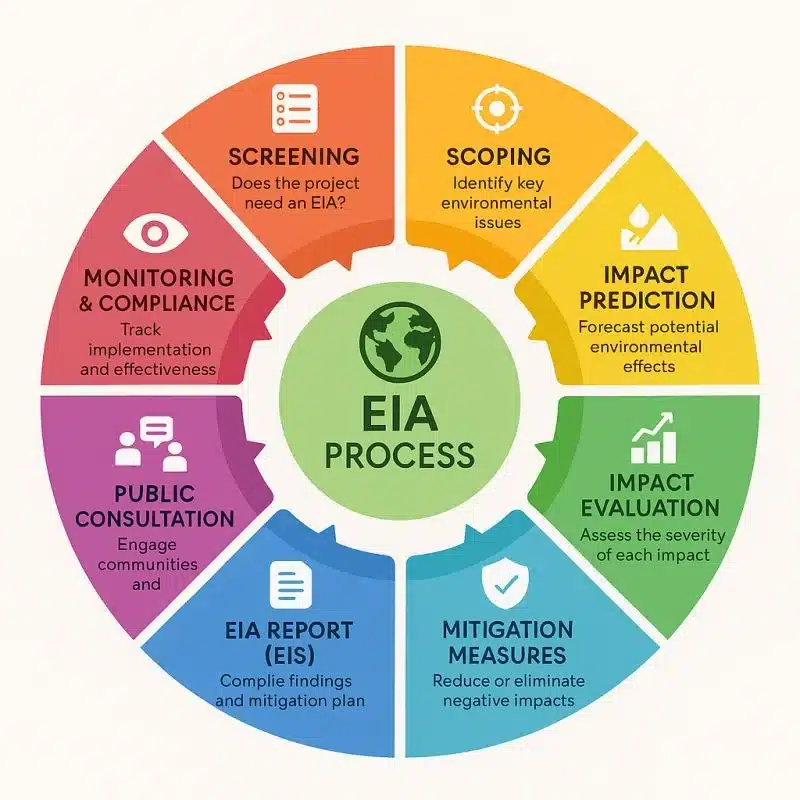
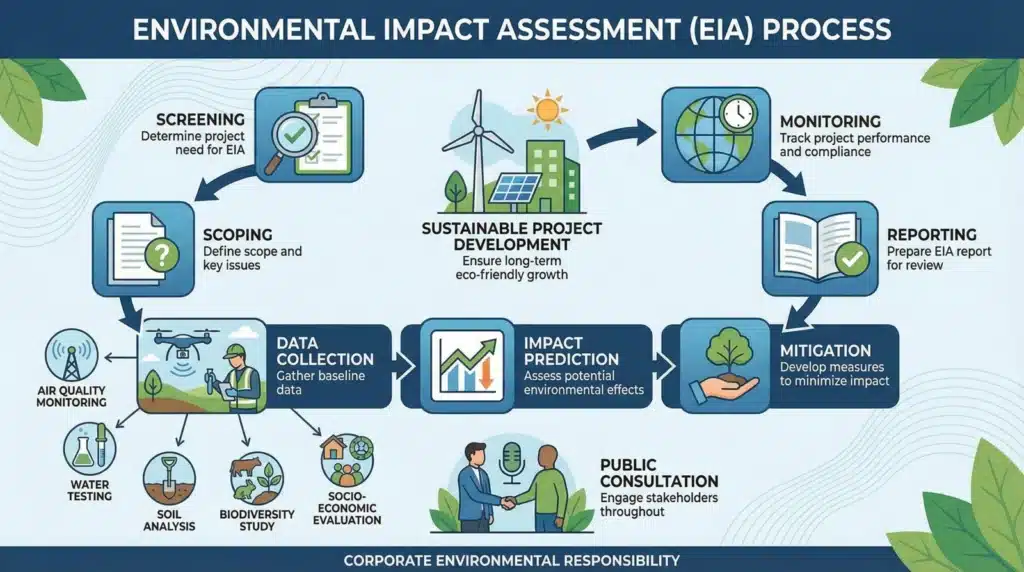
Understand the legal requirements of Environmental Impact Assessment (EIA), including screening and scoping procedures, and how to prepare a legally compliant EIA report in this comprehensive guide.
Environmental Impact Assessment (EIA) is a legally mandated process designed to evaluate the potential environmental consequences of proposed projects before regulatory approval is granted. From a legal perspective, the EIAframework imposes specific obligations on project proponents, including screening to determine whether an EIA is required, scoping to identify legally relevant environmental issues, and the preparation of a comprehensive EIA report in accordance with statutory standards.
Failure to comply with these procedural and substantive requirements may result in regulatory sanctions, project delays, or judicial review. This analysis examines the legal requirements governing EIA screening, scoping, and report preparation, highlighting the regulatory principles and compliance considerations that shape lawful environmental decision-making.
EIA Screening and Scoping
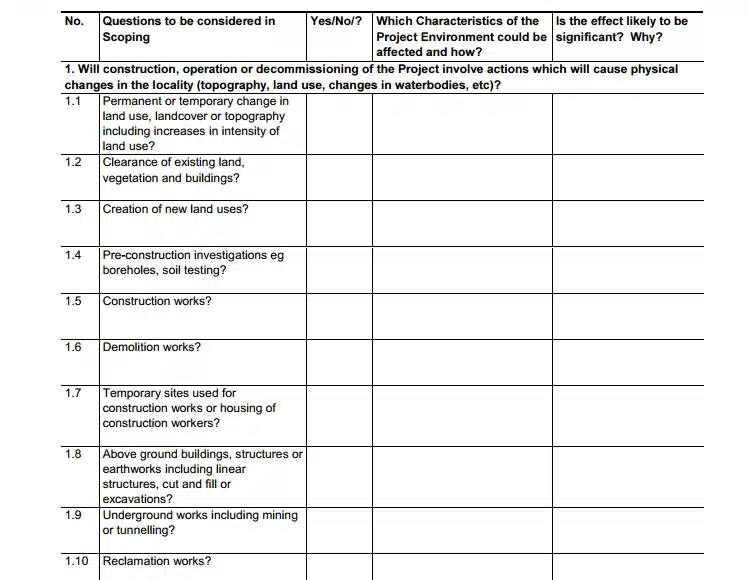
Screening and scoping represent the foundational stages of the Environmental Impact Assessment (EIA) process, establishing the framework for all subsequent analysis. These critical early steps determine whether assessment is necessary and, if so, what it should examine. Understanding the key questions addressed during screening and scoping helps ensure that EIA efforts focus on genuinely significant environmental issues while avoiding unnecessary regulatory burdens.
Understanding Screening in EIA
Screening serves as the gateway to formal environmental assessment, answering the fundamental question of whether a proposed project requires a detailed EIA. This initial filter ensures proportional response to environmental risks, directing comprehensive assessment resources toward projects with genuine potential for significant impacts.
“screening is the first stage of the EIA process which results in a key decision, namely to either conduct the assessment based on likely significant impacts or not conduct it in the anticipated absence of such impacts.”
The most straightforward screening approach involves checking whether projects fall into categories automatically requiring assessment. According to Solen’s screening analysis:
“in many cases, projects to which EIA applies are listed in an annex and screening could be done simply by following this project list.”
Project lists typically categorize developments based on sector and scale. Common categories automatically requiring EIA include dams and reservoirs above threshold sizes, industrial plants exceeding production capacity limits, mining and mineral extraction projects, power generation facilities, major transportation infrastructure, and waste management facilities.
However, as Solen notes, project lists are specific to particular countries or jurisdictions, requiring adequate review by relevant stakeholders. Lists should be revised and updated over time through consultative processes to reflect evolving environmental understanding and priorities.
Question 2: Does the Project Exceed Size or Capacity Thresholds?
Many jurisdictions establish quantitative thresholds triggering EIA requirements. These might include:
Threshold approaches provide clear, objective criteria but may miss environmentally significant projects falling below limits. Hybrid systems combining thresholds with discretionary authority address this limitation.
Question 3: Is the Project Located in or Near Sensitive Areas?
“under certain circumstances, relatively small project proposals might have potentially adverse environmental impacts.”
Screening criteria might include the project’s location or proximity to designated protected areas or special heritage landscapes. Even small projects in highly sensitive locations may warrant a full EIA due to the vulnerability of receiving environments.
Location-based screening considers whether projects are situated in or near protected areas and nature reserves, wetlands and critical watersheds, coastal zones and marine environments, areas with endangered or threatened species, cultural heritage sites, or regions with cumulative development pressures.
Question 4: Will There Be Large Changes in Environmental Conditions?
The European Union suggests questions designed so “yes” answers generally indicate EIA necessity. According to theIISD, these include whether there will be large changes in environmental conditions.
Consider whether the project will significantly alter existing environmental conditions such as land cover or habitat types, hydrological patterns or water quality, air quality or noise levels, community character or land use patterns, or ecological processes and functions.
Question 5: Will New Features Be Out-of-Scale with Existing Environment?
Another EU screening question asks whether new features will be out-of-scale with the existing environment. Projects introducing dramatically different scales, intensities, or characters from surrounding areas often warrant assessment.
Examples include high-rise development in low-density areas, industrial facilities in residential neighborhoods, intensive agriculture in natural landscapes, or tourism development in pristine environments.
Question 6: Will Effects Be Unusual or Particularly Complex?
“screening considers whether effects will be unusual in the area or particularly complex.”
Unusual or complex impacts are difficult to predict using standard methods and may require specialized expertise. Complexity indicators include novel technologies with limited track records, multiple interacting impact pathways, long-term or irreversible changes, potential for cascading effects across ecosystems, or significant scientific uncertainty about outcomes.
Question 7: Are There Potential Transboundary Impacts?
Projects with impacts potentially extending beyond national boundaries require special consideration. International frameworks like the Espoo Convention establish requirements for transboundary EIA.
Consider whether projects might affect shared water resources, air quality in neighboring jurisdictions, migratory species crossing borders, or climate change through significant emissions.
Question 8: How Many People Will Be Affected?
Population impact represents an important screening consideration. Projects affecting large numbers of people typically require assessment even if environmental impacts seem limited.
Consider direct effects on nearby residents, indirect effects through resource competition or services, impacts on vulnerable or marginalized populations, and effects on indigenous peoples with special rights or relationships to affected areas.
Understanding Scoping in EIA
Once screening determines that EIA is necessary, scoping defines what the assessment will examine. According to the EVS Institute’s scoping analysis:
“scoping creates a detailed roadmap for the entire EIA process, identifying which environmental components deserve detailed study and which impacts are most likely to occur.”
Scoping prevents both under-assessment (missing important impacts) and over-assessment (wasting resources on trivial issues). Effective scoping ensures EIA efforts focus where they matter most.
“scoping is the early, open, and interactive process of determining the major issues and impacts that need to be addressed in an EIA.”
Identify key environmental concerns through stakeholder consultation, review of similar projects, expert judgment, and preliminary environmental review. Focus on issues where the project could cause significant changes or where environment is particularly sensitive.
Question 10: What Is the Appropriate Study Area?
Scoping must define geographic boundaries for assessment. According to the IISD scoping guide:
“This includes describing the project area and the area of project influence.”
Study areas vary by impact type. Air quality assessment might require regional modeling domains. Water quality studies focus on affected watersheds. Socioeconomic assessment addresses communities within the economic influence zone.
Consider direct project footprint areas, zones of direct physical impact, indirect impact areas, and cumulative effects study regions.
Question 11: What Time Periods Should Assessment Cover?
Temporal boundaries define when impacts occur and how long they persist. According to IISD:
“assessment should address all project stages from preparation through closure.”
Time periods include construction phase (temporary but often intense impacts), operational phase (ongoing but potentially well-controlled), maintenance and upgrade activities, and decommissioning or closure (often overlooked but important).
Question 12: Which Environmental Components Require Detailed Study?
Scoping identifies specific environmental components warranting detailed assessment. According to Solen:
“key objectives include organizing key issues into impact categories to be studied.”
Human environment (health, economy, culture, heritage)
Not all components require equal attention. Focus detailed study on components where significant impacts are likely, where environments are particularly sensitive, where stakeholders express concern, or where regulatory standards apply.
Question 13: What Project Alternatives Should Be Examined?
“scoping includes outlining project alternatives for preparation, implementation, and closure.”
Consider location alternatives (different sites), technology alternatives (different approaches), design alternatives (configurations or scales), timing alternatives (phasing or schedules), and the no-action alternative (baseline comparison).
“Baseline studies are critical EIA techniques used in scoping.”
Consider what data is already available from existing studies, monitoring programs, or scientific literature, what new data must be collected through field surveys, what temporal coverage is needed (seasonal variations, long-term trends), and what spatial resolution is appropriate. Avoid collecting unnecessary data that will not inform impact assessment or decisions.
Question 15: Which Assessment Methods Are Most Appropriate?
Scoping identifies methodologies for impact prediction and evaluation. Different methods suit different impact types and environmental conditions.
“prediction techniques include extrapolative methods, quantitative models, case studies, and expert judgment.”
Method selection considers data availability and quality, scientific understanding of processes, resource and time constraints, and regulatory requirements or expectations.
“scoping includes conducting public meetings and stakeholder consultations, integrating comments and feedback into project planning.”
Scoping determines who should be consulted (affected communities, indigenous peoples, government agencies, NGOs, experts), when consultation should occur throughout EIA, what methods will be used (meetings, workshops, surveys), and how input will be incorporated into assessment.
Question 17: What Are the Cumulative Effects Considerations?
Modern EIA increasingly addresses cumulative impacts from multiple projects affecting the same environment. Scoping identifies other developments whose effects should be considered alongside the proposed project.
“scoping ensures that studies are based on sufficient information to assess realistic options, including consideration of costs associated with potential climate change risks and cumulative effects.”
Question 18: How Will Uncertainty Be Addressed?
All impact predictions involve uncertainty. Scoping should acknowledge this and determine how uncertainty will be characterized and communicated.
Approaches include sensitivity analysis testing key assumptions, probability assessments where feasible, conservative assumptions for precautionary approach, and explicit discussion of knowledge gaps and limitations.
“the preparation of Terms of Reference (TOR) for an EIA is an important concluding task of scoping.”
TOR specify impact categories requiring assessment, methodologies for each category, baseline data requirements, stakeholder consultation plans, report structure and content, submission requirements and deadlines, and roles and responsibilities. TOR provide clear guidance for EIA practitioners and establishes expectations for reviewers.
Information gathered during screening informs scoping decisions. For example, screening might identify location near protected areas as triggering EIA. Scoping then determines what aspects of those protected values require detailed assessment.
Effective screening provides scoping with clear direction about why EIA is required, what preliminary concerns exist, which stakeholders should be engaged, and what regulatory requirements apply.
“many parties involved in EIAscoping tend to act in risk-averse manner, retaining broad scope for reassurance.”
This culture extends both the number of environmental topics covered and the scope within topics. Over-scoping wastes resources on trivial issues, delays assessment completion, obscures truly significant impacts in masses of detail, and increases costs without improving decision quality.
Under-Scoping
Conversely, inadequate scoping may miss important impacts, leading to problems during review or implementation. Comprehensive risk assessment at the scoping stage minimizes chances of missing issues.
“scoping can become politicized with agencies using EIA to address issues inappropriate for project-level assessment.”
Balance is needed between comprehensive assessment and maintaining focus on genuinely significant environmental impacts.
Stakeholder Management
Effective scoping requires balancing diverse stakeholder perspectives. According to IEMA’s analysis:
“greater public involvement can lead to over-scoping as it results in more attention on perceived rather than actual concerns.”
Good scoping sets priorities and decision-makers must sometimes reject concerns before setting Terms of Reference. Scoping should identify information pertinent to impact assessment, not just record all opinions.
Best Practices for Effective Screening and Scoping
Early Engagement
Begin screening and scoping early in project planning when design flexibility remains maximum. This allows environmental considerations to genuinely influence project development.
Transparency
Conduct screening and scoping transparently with clear criteria, documented decisions, and stakeholder involvement. According to Mission Sustainability:
“public participation and transparency are fundamental EIA principles.”
Expert Input
Engage qualified specialists early to identify potential impacts and appropriate assessment methods. Interdisciplinary teams provide comprehensive perspective.
Documentation
Document screening and scoping decisions thoroughly, explaining rationale for including or excluding issues from detailed assessment. This documentation supports subsequent review and addresses challenges.
Flexibility
Recognize that some issues may emerge unexpectedly as assessment proceeds. According to IEMA:
“changes in scope can reflect new issues arising as studies are undertaken, which does not necessarily represent scoping failure.”
Build flexibility for scope adjustment if justified by new information.
Environmental Impact Assessment Report
Preparing an Environmental Impact Assessment (EIA) report represents one of the most critical tasks in the environmental review process. This comprehensive document translates months of research, analysis, and consultation into actionable information that guides project approval decisions. Whether you are an environmental consultant preparing your first EIA or a project manager overseeing the process, understanding how to create an effective EIA report is essential for regulatory compliance and environmental stewardship.
Understanding EIA Report Requirements
Before beginning report preparation, understanding regulatory requirements and stakeholder expectations establishes the foundation for success. EIA reports must satisfy multiple audiences including regulatory decision-makers, technical reviewers, affected communities, and legal compliance officers.
“federal Environmental Impact Statements must include specific components such as an executive summary, statement of purpose and need, alternatives analysis, description of affected environment, assessment of environmental consequences, list of preparers, and required appendices.”
Different jurisdictions have specific format and content requirements. Some require particular section organization, page limits, or submission formats (digital, printed, or both). Reviewing applicable regulations and consulting with regulatory authorities early prevents costly revisions later.
The Terms of Reference (TOR) developed during scoping provide your reporting roadmap. According to Capacity4dev’s EIA guidance:
“TOR specify impact categories requiring assessment, methodologies for prediction and evaluation, baseline data requirements, stakeholder consultation plans, and report structure.”
Carefully review TOR to ensure your report addresses all required elements. Create a compliancematrix tracking how each TOR requirement is addressed in your report.
Assemble Your Team
EIA reports require multidisciplinary expertise. Assemble a team covering all relevant specializations such as environmental scientists, ecologists and biologists, hydrologists and water resource specialists, air quality experts, socioeconomic analysts, GIS and mapping specialists, and technical writers.
Designate a report coordinator responsible for maintaining consistency, managing contributions from multiple specialists, ensuring adherence to deadlines, and conducting quality control.
Develop Report Outline
Create a detailed outline before writing begins. This outline should align with TOR requirements and regulatory guidelines while organizing information logically for readers. The standard EIA report structure includes
The executive summary serves as the most widely read section of your EIA report. Many decision-makers and stakeholders will read only this section, making its clarity and completeness critical.
Executive Summary Components
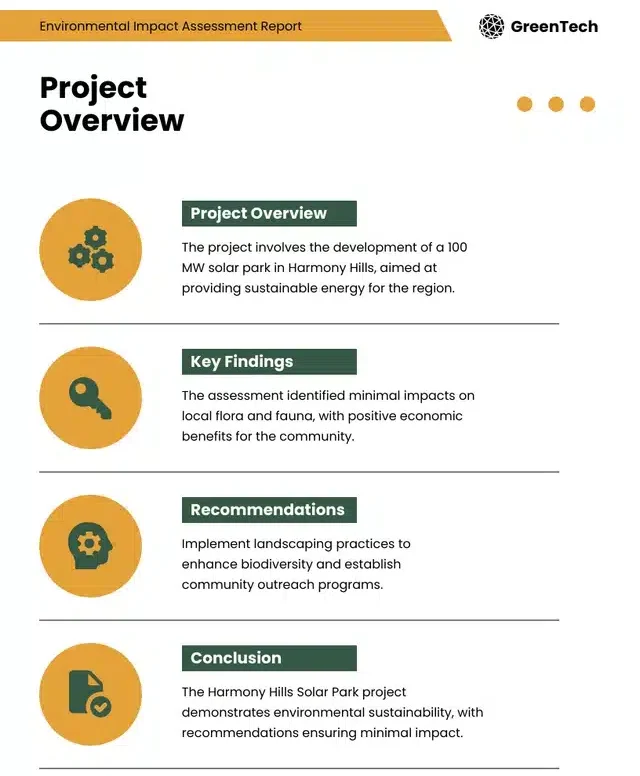
Include concise descriptions of the proposed project, key environmental concerns identified, significant predicted impacts, proposed mitigation measures, alternatives considered, and overall conclusions and recommendations.
“the executive summary should be written last after all analysis is complete, even though it appears first in the document.”
This ensures accurate summarization of findings.
Writing Tips
Keep the executive summary to 5-10 pages maximum. Use clear, non-technical language accessible to general audiences. Employ bullet points and tables to present information concisely. Avoid jargon and technical terms or define them when necessary. Focus on key findings rather than methodology details.
Provide sufficient technical detail for impact prediction without overwhelming readers. Use drawings, site plans, and diagrams to illustrate project components. Explain any special technologies or approaches being employed.
Phasing and Timeline
Clearly describe project phases, including site preparation and construction, operational activities, maintenance and upgrades, and eventual decommissioning or closure. Specify durations for each phase as they affect the impact assessment.
“environmental assessment description of existing conditions establishes baseline environmental conditions at the site.”
This baseline provides the reference state against which impacts are measured.Organize baseline documentation by environmental component such as physical environment (air quality, water resources, soils, noise), biological environment (vegetation, wildlife, aquatic ecosystems, protected species), and human environment (land use, demographics, cultural resources, infrastructure).
Data Presentation
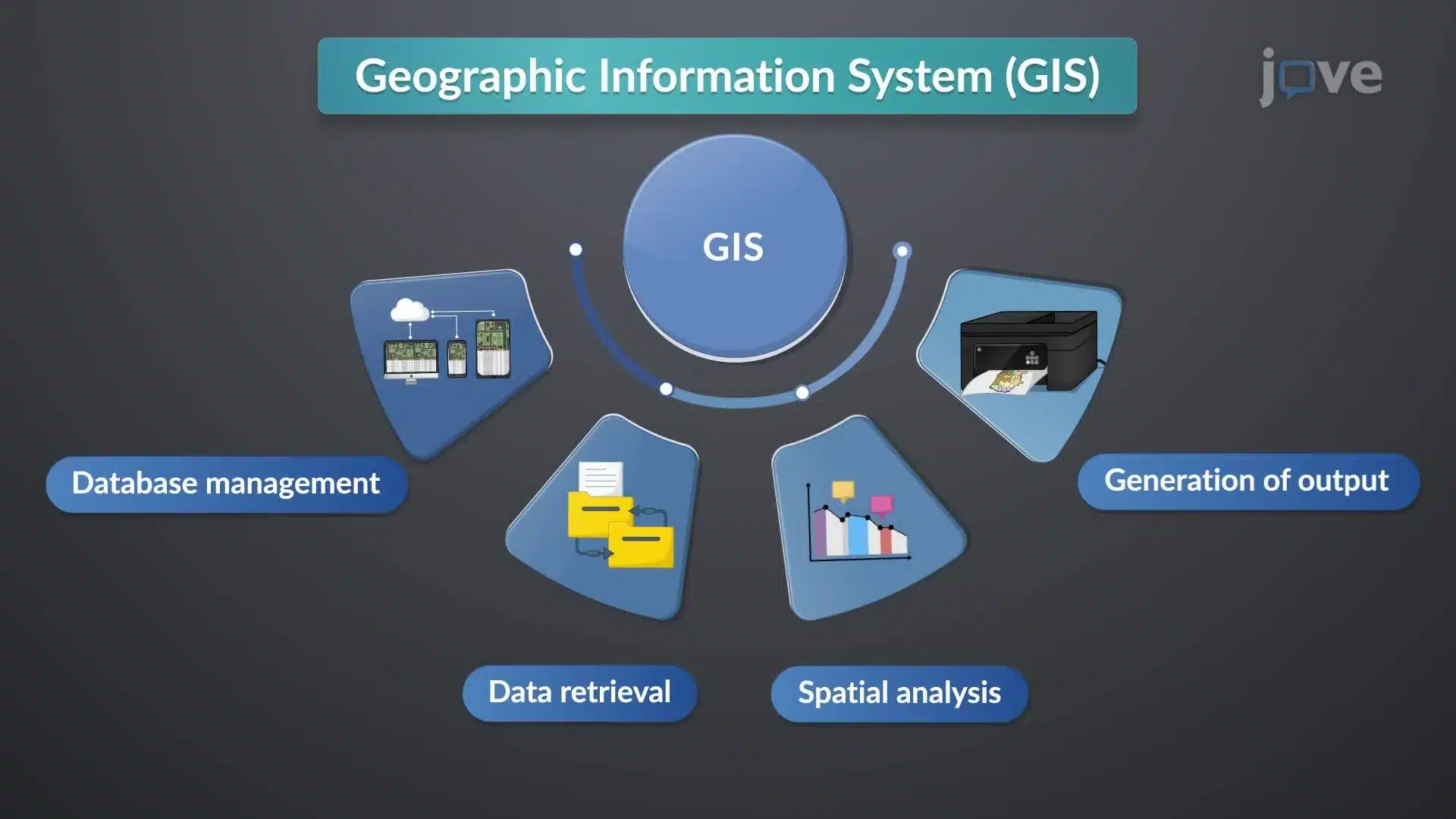
Present baseline data clearly using maps showing study area and key features, tables summarizing measurements and observations, graphs illustrating trends or comparisons, photographs documenting existing conditions, and GIS overlays displaying spatial relationships.
“information should be presented in simple, understandable forms so connections between project impacts can be identified.”
Data Sources and Quality
Document all data sources including field surveys conducted for the EIA, existing studies and reports referenced, monitoring data from regulatory agencies, remote sensing and aerial imagery, and stakeholder and community input.
Discuss data quality, limitations, and gaps. Acknowledge uncertainty where it exists rather than overstating confidence in findings.
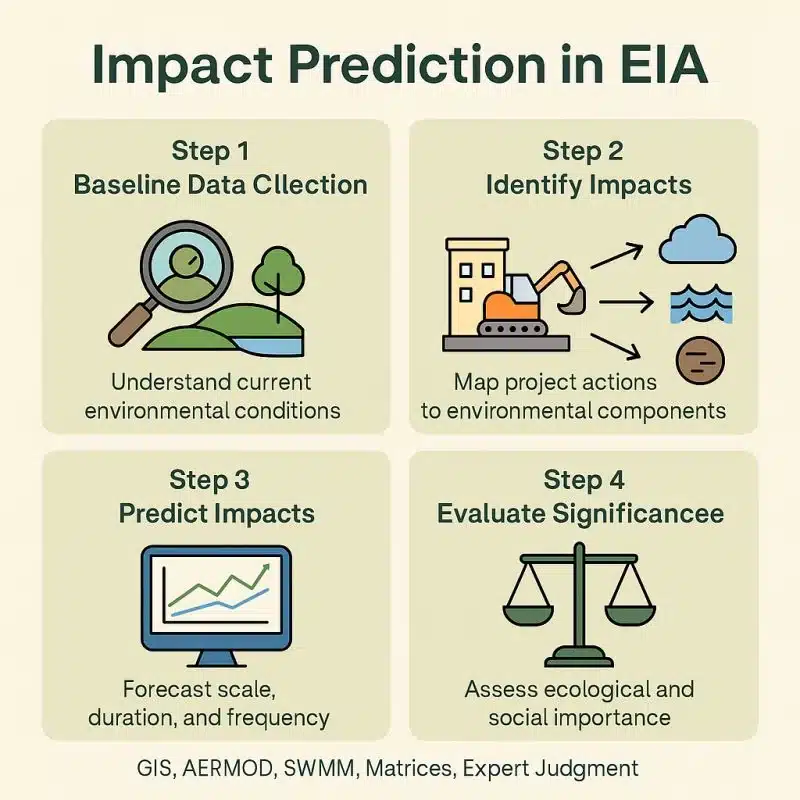
“prediction techniques include extrapolative methods using historical trends, quantitative models simulating processes, case studies examining similar projects, and expert judgment addressing unique conditions.”
Significance Evaluation
Evaluate impact significance by comparing predicted changes against regulatory standards and guidelines, ecological thresholds and sustainability limits, stakeholder values and concerns, cumulative effects with other projects, and mitigation feasibility.
“when project impacts would significantly change conditions from baseline, especially in adverse manners affecting environmental factors, this constitutes significant impact.”
“identification and assessment of impacts are necessary for all alternatives under study to compare them and provide recommendations on the most environmentally sound alternative.”
Discuss expected effectiveness of proposed measures based on scientific literature, case study experience, expert opinion, and monitoring capabilities.
“EMPs lay out how mitigation measures should be implemented and monitored.”
EMP Components
Include implementation schedules and responsibilities, resource allocation and budgets, monitoring and reporting procedures, corrective action protocols, training requirements, and compliance verification methods.
Integration with Project Management
The EMP should integrate with overall project management systems, establishing clear lines of authority and accountability for environmental performance.
Step 9: Address Public Consultation
Documenting Consultation Process
Describe how stakeholder engagement was conducted including public meetings and hearings held, comment periods provided, stakeholder workshops organized, individual consultations conducted, and information dissemination methods.
Incorporating Feedback
Explain how public input influenced project design, impact assessment, mitigation measures, and alternatives analysis. According to Mission Sustainability:
“public participation and transparency are fundamental EIA principles.”
Responding to Comments
Include appendices with comment summaries and responses demonstrating how concerns were addressed or explaining why certain suggestions were not adopted.
Appendices contain detailed supporting information such as baseline data tables, calculation methodologies, modeling results, specialist reports, consultation materials, and regulatory correspondence.
“Appendices provide background materials prepared in connection with the EIS.”
Visual Materials
Enhance report clarity with maps and GIS products, site photographs, technical diagrams, flow charts and process diagrams, and comparison graphics.
List of Preparers
Include qualifications of team members who prepared the EIA, demonstrating appropriate expertise.
Step 11: Conduct Quality Review
Internal Review Process
Before submission, conduct thorough internal review checking completeness against TOR requirements, technical accuracy of analysis, clarity and readability, consistency across sections, and adequacy of supporting documentation.
Peer Review
Consider independent peer review by specialists not involved in preparation, providing objective assessment of technical quality.
Revision and Finalization
Address review comments systematically, documenting changes made. Ensure the final document meets all formatting and submission requirements.
Step 12: Submit and Respond to Review
Submission Process
Follow regulatory submission procedures precisely, including required number of copies, digital format specifications, distribution lists, and filing deadlines.
Review Period
During regulatory and public review, be prepared to respond promptly to information requests, clarification questions, and substantive comments.
Inadequate baseline characterization undermines impact assessment credibility. Invest sufficient time and resources in comprehensive baseline studies.
Poor Integration
EIA reports sometimes read as disconnected specialist reports rather than integrated assessments. Ensure strong coordination across team members and clear synthesis of findings.
Excessive Technical Jargon
While technical rigor is essential, excessive jargon alienates non-specialist readers. Balance technical detail with accessibility.
Inadequate Alternatives Analysis
Superficial alternatives analysis suggesting only the proponent’s preferred option fails EIA’s purpose. Genuinely evaluate reasonable alternatives.
Screening and scoping represent critical foundation stages determining EIA effectiveness. The key questions addressed during these stages shape the entire assessment process, establishing what will be studied, how it will be assessed, and what information will inform decisions.
Effective screening ensures that EIA requirements are proportional to environmental risks, directing resources toward projects with genuine potential for significant impacts. Thoughtful scoping creates focused work plans that address truly important environmental issues without wasting effort on trivial concerns.
Success in screening and scoping requires asking the right questions systematically, engaging stakeholders meaningfully, applying professional judgment guided by clear criteria, balancing comprehensiveness with efficiency, and documenting decisions transparently. When screening and scoping are done well, the foundation is laid for EIA that genuinely informs and improves environmental decision-making.
Preparing effective EIA reports requires meticulous planning, multidisciplinary expertise, and commitment to transparency and scientific rigor. While the process can be challenging, well-prepared reports serve multiple valuable purposes by facilitating informed decision-making, demonstrating environmental responsibility, building stakeholder confidence, ensuring regulatory compliance, and creating frameworks for environmental management.
Success depends on understanding regulatory requirements thoroughly, assembling qualified teams, conducting comprehensive assessments, communicating clearly to diverse audiences, and maintaining scientific integrity throughout the process. By following systematic approaches and avoiding common pitfalls, EIA practitioners can produce reports that genuinely contribute to sustainable development and environmental protection.
Frequently Asked Questions
What happens if screening determines EIA is not required, but significant impacts later emerge?
If unexpected impacts emerge after screening determined EIA was unnecessary, projects may be required to conduct belated assessment. To avoid this, screening should be precautionary when uncertainty exists. Some jurisdictions allow screening decisions to be revisited if circumstances change significantly or new information emerges suggesting greater impacts than initially anticipated.
Scoping decisions are sometimes subject to challenge through administrative or legal processes, though procedures vary by jurisdiction. Transparent scoping with clear rationale and stakeholder consultation reduces vulnerability to successful challenges. Some systems provide for scoping opinions or directions from regulatory authorities that carry legal weight.
How are screening and scoping decisions made for novel projects with no precedents?
Novel projects present special screening and scoping challenges. Approaches include consulting international best practice guidance, engaging specialized experts who can draw on related experience, conducting preliminary studies to better understand potential impacts, and adopting precautionary approaches favoring more rather than less assessment when uncertainty is high.
Should screening and scoping be conducted sequentially or can they overlap?
While logically sequential (screening determines if EIA is needed, scoping determines what it examines), some practical overlap often occurs. Preliminary scoping considerations may inform screening decisions about likely significance. However, formal scoping should not begin until screening confirms EIA is required, as it would waste resources if assessment proves unnecessary.
How can small organizations or developing countries conduct effective screening and scoping with limited resources?
Resource constraints make screening and scoping efficiency especially important. Strategies include using standardized screening checklists and criteria to streamline decisions, focusing scoping on genuinely significant issues rather than attempting comprehensive assessment of all possible impacts, leveraging existing environmental data rather than conducting new baseline studies for all parameters, engaging stakeholder knowledge to identify key concerns cost-effectively, and seeking technical assistance from international organizations or bilateral programs when available.
EIA report length varies widely based on project complexity. Simple projects might produce reports of 50-100 pages, while complex projects can generate documents exceeding 1,000 pages with appendices. Focus on completeness and clarity rather than arbitrary page limits. The executive summary should always remain concise regardless of overall report length.
Who should write different sections of the EIA report?
Different sections require different expertise. Environmental scientists typically write baseline environmental sections. Impact assessment sections are prepared by specialists in relevant fields (air quality, hydrology, ecology). Socioeconomic analysts address social and economic impacts. Technical writers often synthesize specialist inputs into coherent narratives and prepare executive summaries. A report coordinator ensures consistency across all sections.
How technical should the language be in an EIA report?
Balance technical rigor with accessibility. Main report sections should be understandable to educated non-specialists, using technical terms where necessary but defining them clearly. Technical appendices can contain detailed specialist information for expert reviewers. The executive summary must be accessible to general audiences without sacrificing accuracy.
What if baseline data is unavailable for certain parameters?
Acknowledge data gaps explicitly rather than ignoring them. Explain why data is unavailable (access constraints, time limitations, resource restrictions). Discuss implications for impact assessment. Propose how gaps will be addressed through monitoring programs. Use best available information and conservative assumptions when making predictions despite data limitations.
How do you ensure the EIA report is objective and unbiased?
Maintain objectivity by clearly documenting all data sources and methods, presenting both positive and negative impacts transparently, evaluating alternatives fairly without predetermined conclusions, incorporating independent peer review where possible, and acknowledging uncertainties and limitations. Remember that the EIA consultant works for the proponent but serves the broader public interest through honest, comprehensive environmental assessment.
Mega infrastructure projects, highways, dams, power plants, and smart cities don’t get approved by chance; they pass through a powerful legal filter known as Environmental Impact Assessment (EIA). Across the world, governments rely on EIA to decide whether development moves forward, gets redesigned, or stops altogether.
Environmental Impact Assessment (EIA) is one of the most powerful tools used globally to regulate development and protect the environment. It is not simply a technical assessment of pollution or ecological damage; it is a legally enforceable decision-making frameworkembedded in environmentallaws across developed and developing countries alike.
This global guide breaks down Environmental Impact Assessment (EIA) in simple terms, explaining the methods used to predict environmental harm, the legal approval process, and the environmentallaws that make EIA mandatory in countries like the United States, the EU, the UK, Australia, Pakistan, and beyond. Whether you’re a student, policymaker, consultant, or concerned citizen, this article shows how EIA protects ecosystems, enforces accountability, and drives sustainable development in the real world.
Global Legal Framework Governing Environmental Impact Assessment
Environmental Impact Assessment is mandated by law in most jurisdictions worldwide. While procedures vary, core principles are remarkably consistent.
Across these systems, EIA is legally binding, enforceable, and subject to judicial review.
EIA Methods & Techniques
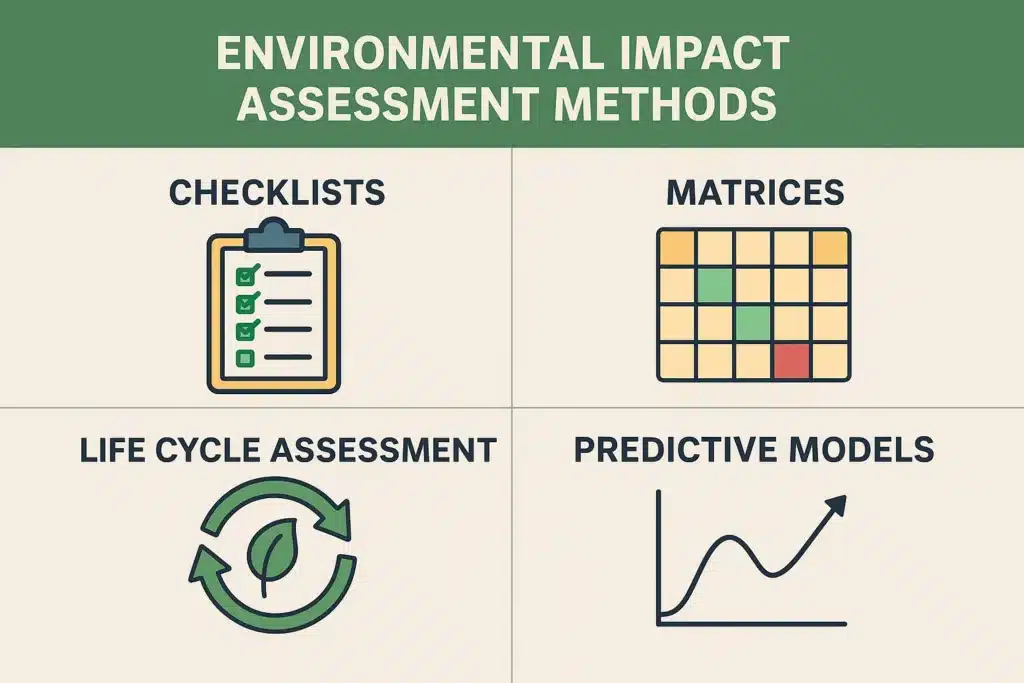
Environmental Impact Assessment relies on multiple methodologies to identify, predict, evaluate, and communicate environmental impacts. Courts and regulators often assess not just whether an EIA was conducted, but whether appropriate methods were used.
“many methods have been devised to aid identification, prediction, and assessment of impacts and preparation of Environmental Impact Statements.”
Methods vary from simple to complex, from static piecemeal approaches to dynamic representations of environmental systems, and from listing potential impacts to complex models involving feedback paths and higher-order impacts.
“checklists may be simple (parameter lists without interpretation guidance), descriptive (lists with measurement and assessment information), scaling (incorporating magnitude ratings), or weighting (assigning relative importance values).”
Simple checklists: Lists of parameters only that ensure comprehensive coverage by systematically reviewing potential impact categories.
Descriptive checklists: Include guidance on how to measure parameters, predict impacts, and assess significance.
Checklists are easy to understand and use, good for site selection and priority setting, and allow simple ranking and weighting. Checklists ensure that no major impact categories are overlooked, provide systematic frameworks for team coordination, facilitate comparisons between alternatives, and are accessible to non-specialists.
Limitations of Checklists
checklists do not distinguish between direct and indirect impacts, do not link actions to impacts, and can involve controversial value incorporation processes.
“simple checklists identify potential impacts without rating relative magnitudes.”
Scaling and weighting remove decision-making from decision-makers by assigning single numbers to inherently different impacts.
Legal Impact
Checklists demonstrate procedural compliance, especially during screening and scoping. However, courts often criticize EIAs that rely solely on checklists for failing to assess indirect, cumulative, or long-term impacts.
2. Matrices and the Leopold Matrix
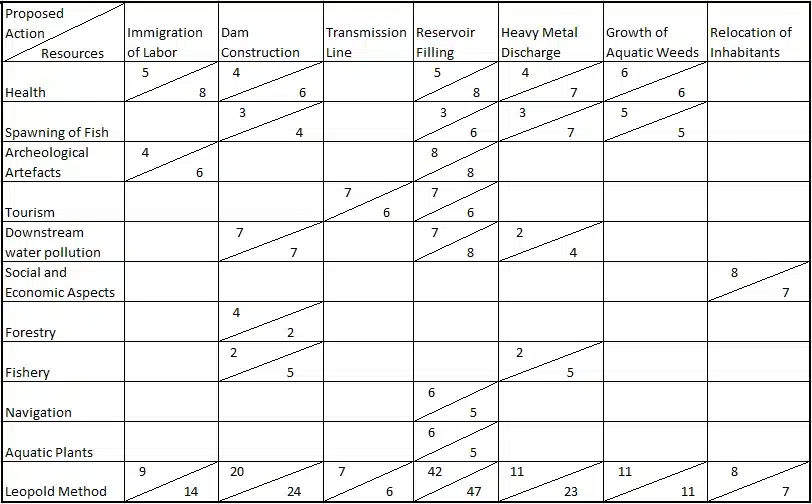
Matrices explicitly link project actions with environmental receptors, allowing analysts to visualize cause-effect relationships in tabular formats.
“this matrix lists 100 different project actions along one axis and 88 environmental characteristics along the other, covering both biophysical and socioeconomic environments.”
Matrices display project activities (columns) and environmental components (rows) with cells showing whether interactions occur and their characteristics (magnitude, importance, duration).
Matrices link actions to impacts, provide good methods for displaying EIA results, and clearly show cause-and-effect relationships. Matrices facilitate systematic impact identification, enable visual impact summaries, support comparison between alternatives, and communicate findings effectively to diverse audiences.
Matrix Limitations
Matrices have difficulty distinguishing direct from indirect impacts and have potential for double-counting impacts. Large matrices become cumbersome with hundreds of cells. According to Advanced Environmental Engineering:
“they make no provision for assessing dynamic probabilistic trends or identifying higher-order effects and interactions.”
Legal Significance
Matrices support legal requirements for causation analysis, a critical element in regulatory approvals and environmentallitigation. However, large matrices can become static and fail to capture dynamic interactions.
3. Networks and Systems Diagrams
Network diagrams show how project actions trigger chains of environmental effects through ecosystems and social systems.
Network Characteristics
Networks link actions to impacts, are useful for checking second-order impacts, handle direct and indirect impacts, but can become very complex beyond simplified versions. Networks use flowcharts showing pathways from project activities through primary impacts to secondary and higher-order effects. Arrows indicate causal relationships and feedback loops.
Applications
Networks excel at identifying indirect and cumulative impacts that simpler methods miss, understanding ecosystem interactions and cascading effects, communicating complex environmental relationships, and supporting adaptive management through systems thinking.
Failure to identify these impacts is a common reason EIAs are challenged or overturned in court.
4. Overlay Mapping and Geographic Information Systems (GIS)
Overlay mapping uses spatial layers to analyze project impacts geographically.
Traditional Overlays
Overlays are easy to understand, focus and display spatial impacts, serve as good siting tools, but can be cumbersome and poorly suited to address impact duration or probability. Traditional approaches involve transparent map layers showing project footprints, sensitive environmental features, land use patterns, protected areas, and infrastructure. Overlaying these reveals spatial conflicts and opportunities.
“GIS and computer expert systems excel at impact identification and spatial analysis, are good for experimenting with alternatives, but rely heavily on knowledge and data availability.”
“Geographic Information Systems (GIS) and remote sensing tools monitor and analyze environmental factors like air and water quality, helping evaluate environmental impacts more accurately.”
Legal Importance
GIS evidence is frequently relied upon in regulatory hearings and judicial proceedings, especially where zoning laws, conservation areas, or indigenous lands are involved.
5. Quantitative Prediction Models
Models simulate environmental processes to predict impacts numerically.
Types of Models
Quantitative models: These models suit particular cause-and-effect relationships being studied. Examples include air dispersion models predicting emissions and pollution concentrations, hydrological models predicting flow regime changes, and ecological models predicting changes in aquatic biota from toxic substance discharge.
Additional model types include:
Water quality models
Simulating pollutant transport and fate
Noise propagation models: Predicting sound levels
Traffic models: Forecasting congestion and emissions
Economic models: Estimating employment and income effects
“It is important to assess the required accuracy levels of predictions.”
Mathematical modelling provides valuable techniques, but care must be taken to choose models suited to available data. Model selection considers data requirements and availability, spatial and temporal resolution needed, computational complexity and resources, regulatory acceptance and precedent, and uncertainty characterization capabilities.
“Environmental systems involve countless interactions that scientific models cannot fully capture. Expert judgment helps bridge knowledge gaps.”
All models simplify reality through assumptions. Understanding and communicating these limitations is essential for appropriate use of model results in decision-making.
“Expert judgment remains essential for interpreting complex environmental interactions and addressing uncertainty.”
Experienced professionals identify potential impacts that quantitative analysis might miss. Expert judgment proves particularly valuable when assessing unique environmental conditions with limited data, evaluating the significance of impacts, selecting appropriate assessment methods, and interpreting model results within broader contexts.
Delphi Technique
The Delphi technique structures expert consultation through iterative questionnaire rounds, allowing experts to revise opinions based on group feedback while maintaining anonymity to reduce bias.
Delphi applications include scoping to identify key issues, significance evaluation when objective criteria are insufficient, and uncertainty assessment to characterize knowledge gaps.
Legal Value
Well-documented expert processes strengthen the defensibility of EIAs in contested approvals.
7. Rapid Impact Assessment Matrix (RIAM)
RIAM applies standardized scoring across criteria such as magnitude, permanence, reversibility, and cumulative effects.
“RIAM was applied to assess COVID-19 pandemic environmental impacts in Tehran, demonstrating versatility for diverse assessment contexts.”
RIAM suits rapid assessments where resources are limited, comparative evaluation of alternatives, communication of results to non-specialists, and integration of diverse impact types into comparable frameworks.
Why Regulators Use RIAM
Transparency
Comparability
Reduced subjectivity
Easier justification of decisions
8. Life Cycle Assessment (LCA)
LCA evaluates impacts from raw material extraction to decommissioning. According to ZFuture’s EIA methodology overview:
“Life Cycle Analysis (LCA) examines environmental impacts throughout all project stages from raw material extraction to production, consumption, and final disposal.”
LCA Applications in EIA
LCA methodology is widely used in EIA studies for facilities like plastic factories, helping understand energy and resource consumption plus emissions generated during manufacturing and operation. LCA considers resource extraction impacts, manufacturing and construction effects, operational phase environmental loads, maintenance and upgrade requirements, and decommissioning and disposal considerations.
“Digital models and simulations rely on software tools to create environmental impact assessment models for specific projects, providing quantitative data helping informed decisions.”
Simulation Capabilities
Modern simulation platforms integrate multiple environmental processes, enabling complex scenario testing including climate change projections, cumulative impact assessment, adaptive management alternatives, and uncertainty quantification.
Regulatory Guidance
These tools are increasingly referenced in best-practice regulatory guidance.
Environmental Impact Assessment Process
The EIA process provides the legally structured pathway through which methods are applied. The EIA process follows a logical sequence designed to identify, predict, evaluate, and manage environmental impacts comprehensively. While specific procedures vary by jurisdiction, the core steps remain remarkably consistent worldwide, reflecting decades of international experience and best practice development.
“the EIA process is designed to identify and address potential environmental effects, ensuring development proceeds in ways that minimize environmental harm.”
The process typically includes screening, scoping, impact analysis, mitigation planning, reporting, review, decision-making, and monitoring.
These stages form an iterative rather than strictly linear process. Information gathered in later stages may reveal the need to revisit earlier decisions. Public consultation and stakeholder engagement occur throughout, ensuring transparency and incorporating diverse perspectives at each critical juncture.
Step 1: Screening
Screening represents the critical first decision point that determines whether a proposed project requires a full Environmental Impact Assessment. This initial filter ensures that assessment efforts focus on projects with potential for significant environmental impacts while avoiding unnecessary regulatory burdens on low-impact activities.
Screening Objectives
Screening determines the level of impact of proposed projects and whether EIA is required. The process ensures that environmental review is proportional to potential environmental impacts, facilitating informed decision-making by providing a clear analysis of proposed actions.
“many cases involve project lists annexed to legislation that specify which activities require EIA.”
However, project lists are jurisdiction-specific and require adequate review by competent stakeholders. Common screening approaches include mandatory lists (projects automatically requiring EIA), threshold-based criteria (size, capacity, or investment triggers), case-by-case assessment (discretionary review based on project specifics), and hybrid systems (combining lists with case-by-case flexibility).
For example, projects like large dams, nuclear power plants, major highways, and industrial facilities almost universally require full EIA. Smaller projects undergo screening evaluation considering factors like location sensitivity, existing environmental conditions, and cumulative impacts.
Screening Criteria
Additional screening considerations include proximity to protected areas or sensitive habitats, potential for transboundary impacts, number of people likely affected, cumulative impacts from multiple developments, and reversibility of potential environmental changes.
Screening Outcomes
Screening produces categorical decisions such as no EIA required (project proceeds without assessment), simplified assessment (abbreviated environmental review), or full EIA required (comprehensive assessment necessary). Some jurisdictions include additional categories for projects requiring extended or specialized studies.
“scoping creates a detailed roadmap for the entire EIA process, identifying which environmental components deserve detailed study and which impacts are most likely to occur.”
Scoping Objectives
Scoping serves multiple critical functions. Key objectives include creating comprehensive lists of issues and concerns, evaluating their relative importance to derive key issues, organizing key issues into impact categories, identifying alternatives for investigation, and planning public consultation and expert inputs.
Spatial boundaries define the geographic area where impacts will be assessed, extending beyond immediate project footprints to include indirect and cumulative effect zones.
Temporal boundaries specify timeframes covering construction, operation, and decommissioning phases plus post-closure periods where relevant.
Impact category boundaries identify which environmental components require detailed assessment such as air quality, water resources, biodiversity, socioeconomic conditions, and cultural heritage.
Developing Terms of Reference
The scoping process culminates in Terms of Reference (TOR) that guide the entire EIA. TOR preparation represents an important concluding task that specifies impact categories requiring assessment, methodologies for impact prediction and evaluation, baseline data requirements, stakeholder consultation plans, report structure and content requirements, and timelines and responsibilities.
Step 3: Baseline Studies
With the scope defined, the next step involves comprehensive documentation of existing environmental conditions. Baseline studies establish the reference state against which predicted project impacts are measured.
“baseline studies describe the initial state of the environment within selected study area boundaries, including a description of the ‘no project’ scenario based on assumptions regarding future changes.”
Identifying sensitive receptors and valued ecosystem components
Providing data for impact prediction models
Establishing monitoring benchmarks for future comparison
Supporting cumulative impact assessment.
Data Collection Methods
Baseline data collection employs diverse methods, including literature review of existing studies and reports, field surveys and sampling programs, remote sensing and aerial photography, stakeholder interviews and traditional knowledge documentation, and monitoring programs measuring environmental parameters over time. The choice of methods depends on environmental components, data availability and quality, budget and time constraints, and accessibility of study areas.
Step 4: Impact Prediction and Significance Assessment
The core of EIA involves predicting how proposed projects will affect the environment and evaluating the significance of those impacts.
“Impact analysis in the EIA process assesses potential effects, including both positive and negative impacts.”
This requires understanding cause-effect relationships between project activities and environmental changes. Impact identification employs various tools including checklists ensuring comprehensive coverage, matrices linking actions to impacts, networks showing cascading effects, and expert panels providing professional judgment.
Prediction Techniques
Environmental professionals employ diverse techniques, including extrapolative methods using historical data and trends, quantitative models simulating environmental processes, experimental studies testing specific hypotheses, and case studies examining similar projects.
Evaluating Significance
Not all impacts carry equal weight. Significance evaluation considers:
Step 5: Mitigation and Environmental Management Plans (EMP)
Mitigation can be approached through avoiding (designing projects to eliminate impacts), minimizing (reducing impact magnitude through design modifications), restoring (rehabilitating affected areas), and compensating (offsetting unavoidable impacts).
Effective mitigation planning specifies exactly what actions will be taken, when implementation will occur (during design, construction, or operation), who is responsible for implementation, what resources are required, and how effectiveness will be monitored and verified.
The EMP lays out how measures should be implemented and monitored. EMPs translate mitigation commitments into operational procedures, assigning responsibilities and establishing accountability for environmental performance. EMPs translate commitments into legally enforceable conditions.
Step 6: Reporting (EIS / EIA Report)
The Environmental Impact Statement is submitted for regulatory and public review. It is a formal legal document. The Environmental Impact Statement or EIA Report represents the culmination of months of study and consultation.
Report Structure
Environmental Impact Statements must include executive summary, project description, purpose and need, alternatives analysis, affected environment description, environmental consequences discussion, list of preparers, and appendices with supporting materials.
Writing for Multiple Audiences
EIA reports must serve diverse readers including regulatory decision-makers, technical experts, affected communities, and the general public. Effective reports balance technical rigor with accessible communication, using executive summaries for quick overview, technical sections for detailed analysis, visual aids clarifying complex information, and plain language summaries making findings accessible.
Quality Assurance
Before submission, reports undergo internal quality review checking completeness against Terms of Reference, accuracy of data and analysis, clarity of presentation, adequacy of impact assessment, and feasibility of proposed mitigation.
Step 7: Review and Decision-Making
Completed EIA reports undergo formal review before decisions are made about project approval.
“draft EIS documents are published for public review and comment for minimum 45-day periods.”
Review involves checking completeness and accuracy, assessing significance evaluation, evaluating mitigation adequacy, considering public comments, and requesting additional information or studies if needed.
Public Consultation
Public comment periods allow stakeholders to review findings and provide feedback. Agencies must consider substantive comments and may conduct further analyses in response.
Decision Outcomes
Based on EIA review, several outcomes are possible: project approval without changes, approval with conditions and mitigation requirements, requirement for project modifications and re-submission, or project rejection due to unacceptable impacts. Public participation is legally required in many jurisdictions.
Step 8: Monitoring, Enforcement, and Compliance
EIA does not end with project approval. Ongoing monitoring ensures that predictions were accurate and mitigation measures are implemented effectively.
Monitoring Objectives
Environmental monitoring programs track whether impacts occur as predicted, verify mitigation measure effectiveness, detect unanticipated impacts, ensure regulatorycompliance, and provide data for adaptive management.
Monitoring Design
Methods for baseline data collection should be consistent with monitoring plans, ensuring comparability over time. Monitoring programs specify parameters to be measured, measurement locations and frequency, acceptable thresholds or standards, reporting requirements, and corrective action procedures if problems are detected.
Adaptive Management
Monitoring results may reveal that adjustments are necessary. Adaptive management allows project modifications based on actual environmental performance, improving outcomes compared to static implementation of original plans. Non-compliance may result in fines, suspension, or revocation of approvals.
Selecting Appropriate Methods
Method selection significantly influences EIA quality and usefulness.
“comprehensive checklists aid multiple EIA activities, particularly scoping and defining baseline studies.”
Method selection considers project characteristics and scale, environmental conditions and sensitivity, data availability and quality, resource and time constraints, regulatory requirements, and stakeholder expectations.
Adaptive Method Application
No single method suits all situations. Different methods work better for different types of impacts and environmental conditions. Effective EIA combines methods strategically, using checklists for comprehensive screening, matrices for systematic impact identification, models for quantitative prediction where appropriate, expert judgment for complex interactions, and stakeholder input for significance evaluation.
Emerging Techniques
EIA methodology continues evolving with technological advancement and environmental understanding.
Remote Sensing Applications
Satellite imagery and aerial surveys provide comprehensive baseline data, change detection capabilities, and ongoing monitoring foundations at landscape scales impossible to achieve through ground surveys alone.
Artificial Intelligence
Machine learning algorithms increasingly assist pattern recognition in environmental data, predictive modeling with complex interactions, automated impact screening, and synthesis of diverse information sources.
Scenario Planning
Climate changeuncertainty requires robust scenario analysis exploring plausible futures rather than single predictions, testing project resilience across conditions.
Why EIA Methods, Process, and Law Must Work Together
Environmental Impact Assessment succeeds only when sound science, transparent methods, and strong legal frameworks operate together. EIA methods provide analytical rigour; the EIA process ensures accountability; and environmentallaws provide enforcement power.
EIA methods and techniques provide the analytical foundation transforming environmental concerns into evidence-based decisions. From simple checklists ensuring comprehensive coverage to sophisticated models predicting complex environmental responses, these tools enable systematic impact assessment across diverse project types and environmental contexts.
Effective EIA practitioners understand multiple methods, selecting and combining them appropriately for specific assessment needs. While technical sophistication continues advancing, core principles remain constant: systematic analysis, transparent processes, stakeholder engagement, and clear communication of findings and uncertainties.
The EIA process represents a comprehensive journey from initial project conception through long-term monitoring and management. Each step builds on previous stages, creating an integrated system for understanding and managing environmental impacts. While the process can be complex and time-consuming, it provides essential benefits by identifying ecological problems before they occur.
Success depends on conducting each step thoroughly and transparently, maintaining scientific rigor while ensuring accessibility, engaging stakeholders meaningfully throughout the process, and following through on commitments through implementation monitoring. As environmental challenges intensify globally, the structured approach embodied in the EIA process becomes ever more critical for steering development toward sustainable pathways that protect environmental quality for current and future generations.
Checklists and matrices remain most widely used due to their simplicity, versatility, and accessibility. The Leopold Matrix has become a standard reference framework, although it is often adapted rather than used in its original form.
Yes. Courts frequently overturn approvals where impacts were inadequately assessed, or public participation was flawed.
Do more sophisticated methods always produce better EIA results?
Not necessarily. Method sophistication should match assessment needs and available resources. Overly complex methods can create accessibility problems, require data that is unavailable, exceed time and budget constraints, and obscure key findings in technical detail. Simple methods applied rigorously often outperform sophisticated methods applied poorly.
Are mitigation measures legally enforceable?
Yes. Once approved, mitigation and EMP commitments become binding legal conditions.
Can EIA methods be standardized internationally or must they vary by jurisdiction?
While core principles translate across jurisdictions, specific methods must often adapt to local conditions, data availability, regulatory requirements, cultural contexts, and resource constraints. International guidance promotes best practices while allowing contextual adaptation. Organizations like the International Association for Impact Assessment facilitate knowledge exchange while recognizing appropriate variation.
Through mandatory public participation, disclosure, and accountability mechanisms.
How can practitioners ensure they select appropriate methods for specific assessments?
Method selection requires considering project characteristics (type, scale, complexity), environmental context (sensitivity, data availability), regulatory requirements and expectations, resource constraints (time, budget, expertise), stakeholder needs and preferences, and precedent from similar assessments.
How long does each step of the EIA process typically take?
Duration varies considerably based on project complexity. Screening might take days to weeks. Scoping often requires 4-8 weeks including consultations. Baseline studies and impact assessment can span 3-12 months depending on data availability and seasonal considerations. Review periods typically range from 30-90 days. Overall, simple projects might complete EIA in 6 months while complex projects can take 18-36 months or longer.
Who is responsible for conducting each step of the EIA?
Project proponents typically hire environmental consultants to conduct EIA studies, though regulatory agencies oversee the process. Screening decisions are usually made by regulatory authorities. Scoping involves both proponents and regulators with stakeholder input. Consultants conduct baseline studies and impact assessment under proponent direction. Regulatory agencies review reports and make approval decisions. Independent monitoring may involve third-party oversight.
Can steps be conducted simultaneously or must they follow strict sequence?
Environmental Impact Assessment (EIA) is a systematic process that evaluates the potential environmental consequences of proposed projects. While the steps of the EIA are typically sequential, certain phases can be conducted concurrently to enhance efficiency and adaptability. For instance, baseline data collection may commence during the scoping stage, allowing for a more informed impact assessment as project alternatives are analyzed. Nonetheless, it is essential to adhere to specific sequence requirements, ensuring that screening precedes scoping and that baseline studies guide impact predictions.
Learn the essentials of environmentalconservation in this beginner’s guide. Discover global laws, practical sustainability tips, and ways you can protect the planet today.
“the protection of plants and animals, natural areas, and interesting and important structures and buildings, especially from the damaging effects of human activity.”
“environmental conservation is a practice that paves the way for protecting the environment and natural resources at the individual, organisational as well and governmental levels.”
Our planet thrums with an incredible diversity of life, with each species playing a vital role in maintaining ecosystem balance. Worldpackers notes that:
“environmental conservation seeks to counteract these negative effects by protecting habitats through sustainable practices which help to preserve biodiversity.”
Biodiversity loss has reached critical levels. Human activities, particularly habitat destruction, pollution, and climate change, have pushed countless species toward extinction. Conservation efforts work to protect vulnerable species and the ecosystems they depend on, maintaining the complex web of life that supports all living things, including humans.
“without environmental sustainability, climate disasters and severe weather events will become increasingly common.”
Environmentalconservation, especially through reforestation, renewable energy use, and responsible land management, aims to mitigate the negative effects of human activity on the environment.
“GHG emissions need to be cut in half every single year to keep global warming below 1.5º C above pre-industrial levels. Reforestation and conservation of forests is an important feature of carbon removal.”
Ensuring Clean Air and Water
Environmentalconservation plays a huge role in keeping our water and air clean. Wetlands, forests, and other natural areas act as nature’s filtration systems, purifying air and water naturally.
“about 24% of global human deaths are caused directly or indirectly by avoidable environmental factors.”
To live long and healthy lives, we need unpolluted air to breathe, clean water to drink, and to live in places free of toxic substances. From breathing polluted air to eating contaminated food, environmental degradation takes a toll on our lives.
“environmental sustainability is crucial in safeguarding the well-being and quality of life for future generations.”
By committing to sustainable practices today, we ensure that essential resources such as clean water, fertile soil, and breathable air remain available for our children and grandchildren. Conservation is fundamentally about intergenerational equity, ensuring that today’s actions don’t harm future generations’ ability to meet their needs.
Key Areas of Environmental Conservation
Forest Conservation
Forests cover approximately 31% of Earth’s land area and provide critical ecosystem services. They absorb carbon dioxide, produce oxygen, regulate water cycles, prevent soil erosion, and house incredible biodiversity.
Every year, we lose huge numbers of forest life due to fires, logging, and land conversion. Afforestation (planting new forests) and protecting existing forests are among the best ways to conserve the environment.
Wildlife Conservation
Wildlife conservation protects animal species and their habitats from extinction. This includes establishing protected areas, combating poaching and illegal wildlife trade, breeding endangered species in captivity, and restoring degraded habitats.
Species on the verge of extinction must be saved not only for their intrinsic value but because each species plays unique roles in ecosystem functioning.
Marine Conservation
Our oceans cover 71% of Earth’s surface and support incredible biodiversity while regulating climate. However, oceans face threats from overfishing, pollution (especially plastic), ocean acidification, and habitat destruction.
By establishing protected marine areas, advocating for sustainable fishing methods, and cleaning up plastic waste already choking our oceans, marine conservation aims to protect these vital ecosystems.
Water Conservation
From showering to farming, from brushing teeth to producing clothes, our daily lives depend on water. However, freshwater resources are under increasing pressure from overuse, pollution, and climate change.
Water conservation encourages us to use this precious resource wisely through practices like fixing leaks promptly, installing water-efficient appliances, and adjusting irrigation methods in agriculture. Reducing water waste lessens strain on freshwater resources, especially important in regions grappling with water scarcity.
Soil Conservation
Healthy soil is fundamental to food production and ecosystemhealth. Soil conservation prevents erosion, maintains soil fertility, and protects against degradation through practices like crop rotation, terracing, and maintaining vegetation cover.
Energy Conservation
Energy conservation reduces consumption and promotes efficient use, mitigating impacts associated with energy production, including greenhouse gasemissions and resource depletion. This includes using renewable energy sources, improving energy efficiency, and reducing unnecessary consumption.
The Difference Between Conservation and Sustainability
While often used interchangeably, conservation and sustainability have important distinctions. EcoCart clarifies that while both approaches protect nature from human activity:
“conservation seeks to preserve nature whereas sustainability attempts to cause little or no damage in the hopes of continued resource use and symbiosis between humans and nature.”
Conservation focuses on protecting nature, often by restricting or prohibiting human use. For example, if a forest were protected through conservation, activities like logging or building would be banned.
Sustainability aims to meet present needs without compromising future generations’ ability to meet theirs. Inspire Clean Energy defines it as:
“the practice of interacting with the planet responsibly to avoid depleting natural resources and compromising the future generation’s ability to meet their daily needs.”
“meeting the needs of the present without compromising the ability of future generations to meet their own needs.”
Coursera explains that sustainability rests on three pillars:
Environmental sustainability: Maintaining ecological integrity as humans use natural resources
Economic sustainability: Ensuring humans can maintain independence and access resources to meet needs
Social sustainability: Ensuring basic human needs are attainable by all community members
Conservation works alongside sustainability to save our planet. They complement each other rather than compete.
Environmental Laws Around the World
Environmentallaws form the backbone of global conservation. These rules regulate human activities to prevent pollution, conserve natural resources, and protect ecosystems. Key examples include the
Enforcement actions may include financial penalties, suspension of operations, remediation orders, or criminal prosecution in severe cases. For example, industries discharging untreated wastewater into rivers have faced significant fines, while corporations responsible for oil spills and toxic dumping have been subjected to lawsuits and cleanup obligations.
In recent years, technological tools such as satellite monitoring and remote sensing have strengthened enforcement, particularly in combating illegal deforestation and mining in regions like the Amazon rainforest. Effective enforcement ensures accountability, deters environmental harm, and reinforces environmental protection as a legal duty rather than a voluntary practice.
Environmental Compliance in Practice
Environmentalcompliance refers to the obligation of individuals, businesses, and governments to adhere to environmentallaws, regulations, and standards in their daily operations and development activities. Compliance mechanisms are designed to prevent environmental damage before it occurs, rather than responding after harm has been done.
Common compliance requirements include conducting Environmental Impact Assessments (EIAs) for infrastructure and industrial projects, installing emission-control technologies, treating industrial effluents, and maintaining proper waste disposal systems. Multinational corporations increasingly integrate environmentalcompliance into corporate governance through sustainability reporting and carbon disclosure frameworks.
Effective compliance reduces legal and financial risks, enhances corporate credibility, and contributes to national and global environmental objectives. In a globalized economy, compliance also helps align local development practices with international environmental standards.
Moreover, international cooperation through environmental treaties enables collective action against shared environmental threats. Without binding laws and effective compliance mechanisms, conservation efforts would rely solely on voluntary actions, which are often inconsistent and inadequate for addressing large-scale environmental crises.
Global Conservation Efforts
International Agreements and Organizations
Numerous international treaties and organizations coordinate global conservation efforts:
Protected areas represent one of conservation’s most effective tools. National parks, wildlife reserves, marine protected areas, and wilderness areas provide safe havens where nature can thrive without human interference.
Community-Based Conservation
Modern conservation increasingly recognizes indigenous peoples’ and local communities’ critical roles. JMU notes that:
“environmental stewardship is not a new phenomenon.”
From farming to hunting, from conservation practices to spiritual beliefs, one can find an appreciation for natural resources and the valuable services they provide in many diverse settings.
Community-based conservation empowers local people to manage natural resources sustainably, recognizing their traditional knowledge and ensuring they benefit from conservation efforts.
Public participation strengthens environmental governance by promoting transparency, accountability, and social responsibility. Individuals contribute by complying with environmental regulations, reducing waste, conserving energy, and adopting sustainable consumption patterns.
Reduce, Reuse, Recycle: Minimize waste by reducing consumption, reusing items, and recycling materials properly.
Conserve Water: Fix leaks, take shorter showers, install water-efficient fixtures, and be mindful of water use.
Save Energy: Use energy-efficient appliances, switch to LED lighting, unplug devices when not in use, and consider renewable energy options like solar panels.
Sustainable Transportation: Walk, bike, use public transportation, or choose electric vehicles when possible to reduce emissions.
Conscious Consumption: Buy sustainably sourced products, support eco-friendly businesses, reduce meat consumption, and avoid single-use plastics.
Support Conservation Organizations: Donate to or volunteer with environmental organizations working to protect nature.
Community Level Actions
Communities also act as watchdogs by reporting environmental violations, participating in environmental impact consultations, and supporting environmental advocacy initiatives. In many countries, public interest litigation has empowered citizens to challenge environmentally harmful projects and enforce legal protections for ecosystems. When citizens actively engage with environmentallaws, conservation becomes a collective responsibility rather than a top-down regulatory process.
Humpback Whales Recovery: The ban on commercial whaling in 1986 led to a strong recovery of humpback whales, with populations now around 93% of their original size.
Wetland Restoration: Rebuilding wetlands improves water quality, reduces flood risks, and provides crucial habitat for countless species.
Reforestation Projects: Large-scale tree planting initiatives restore degraded forests, sequester carbon, and revive ecosystems.
Pollution Reduction: Implementation of clean air and water regulations has dramatically improved environmental quality in many regions.
Species Recovery: Targeted conservation programs have saved numerous species from extinction, including bald eagles, giant pandas, and mountain gorillas.
Conflicts between conservation and local livelihoods
Lack of public awareness and political will
Addressing these challenges requires sustained commitment from individuals, businesses, governments, and international organizations working together toward common goals.
Conclusion
Environmentalconservation represents humanity’s commitment to protecting the natural world that sustains all life. From preventing species extinction to combating climate change, from ensuring clean air and water to preserving resources for future generations, conservation addresses the most pressing challenges facing our planet.
Environmentalconservation is a collective effort, combining laws, enforcement, compliance, and citizen action. Understanding global regulations, following sustainable practices, and actively participating in local initiatives allow everyone to protect the planet effectively. Conservation is not just about preserving nature, it’s about ensuring a healthier, more sustainable world for current and future generations.
The good news is that conservation works. When we protect habitats, species recover. When we reduce pollution, health improves. When we restore ecosystems, nature rebounds with remarkable resilience. Every individual has a role to play in conservation. The actions you take today, whether conserving water, reducing waste, supporting conservation organizations, or advocating for environmental policies, contribute to protecting our planet’s future.
Environmentalconservation refers to the protection, restoration, and sustainable management of natural resources such as forests, wildlife, oceans, air, and water. It focuses on reducing human impact and ensuring a healthy environment for present and future generations.
What is the difference between conservation and sustainability?
Conservation focuses on preserving and protecting natural resources, often by limiting human use. Sustainability aims to use resources responsibly so that people can meet their needs without harming the ability of future generations to meet theirs.
Enforcement involves monitoring, inspections, fines, legal action, and technological tools like satellite monitoring to ensure laws are followed and ecosystems are protected.
Compliance is the practice of following environmentallaws and regulations, including conducting impact assessments, managing waste properly, and implementing pollution control measures.
Biodiversity ensures ecosystems function properly. Conservation protects diverse species and habitats, maintaining ecosystem services like pollination, clean water, climate regulation, and soil fertility.
It involves local communities and indigenous groups in protecting natural resources. Their traditional knowledge, land stewardship, and direct involvement lead to more effective and sustainableconservation outcomes.
This comprehensive guide explores the cutting-edge AI technologies powering Google Search in 2025, how they work, and what they mean for users and content creators.
Google Search has undergone a revolutionary transformation in 2025, evolving from a simple link directory into an intelligent answer engine powered by sophisticated artificial intelligence. This transformation represents the most significant shift in search technology since Google’s inception, fundamentally changing how billions of people access information online. Understanding how Google uses AI in search is essential for anyone who creates content, markets online, or simply wants to comprehend the technology shaping our digital world.
The Evolution of Google Search: From Links to AI
For over 25 years, Google has continuously reimagined what a search engine can do. What started as an algorithm that displayed web pages related to keywords has evolved into a machine capable of interpreting intentions, delivering real-time results, and even predicting what users are looking for.
“the company has developed completely new ways to search, powered by their latest advancements in AI.”
People now use Google Lens for 12 billion visual searches per month, a fourfold increase in just two years, with a growing number of those searches being multimodal (combining images and text). The introduction of generative AI represents another reimagining of what search engines can accomplish. With this powerful technology, Google can unlock entirely new types of questions users never thought Search could answer, transforming how information is organized to help people sort through and make sense of what is available.
AI Overviews, formerly known as Search Generative Experience (SGE), represent Google’s most visible application of artificial intelligence in search results. These AI-generated summaries appear at the top of search results pages, providing comprehensive answers to user queries without requiring clicks to external websites.
How AI Overviews Work
When you submit a query, Google’s AImodel processes your question, searches through its massive index and knowledge base, synthesizes information from multiple authoritative sources, and generates a coherent, comprehensive answer presented directly on the search results page.
“Instead of just showing blue links or featured snippets, SGE automatically generates written content to answer what you are looking for.”
The system utilizes advanced language models to comprehend your search intent and provide the most relevant answer instantly.
For example, asking “What is the best laptop for video editing in 2025?” generates an AI-written paragraph comparing models, specifications, and prices, all based on multiple reliable sources. This approach not only improves the speed with which you find useful information but also transforms search into a more interactive, natural, and adaptive experience.
Rollout and Availability
As of 2025, AI Overviews have rolled out to everyone in the United States, with hundreds of millions of users having access. According to Google’s May 2024 announcement:
“The company expects to bring AI Overviews to over a billion people by the end of the year.”
“AI Overviews appeared on 13.14% of all United States desktop queries as of mid-2025, double the January figure.”
Internal testing by Google indicates that AI Overviews will soon appear in more than 80% of informational queries.
User Response
People have used AI Overviews billions of times through Google’s experiment in Search Labs. According to Google’s data, users like that they can get both a quick overview of a topic and links to learn more. With AI Overviews, people use Search more and are more satisfied with their results.
Interestingly, Google reports that people are visiting a greater diversity of websites for help with more complex questions. The links included in AI Overviews receive more clicks than if the page had appeared as a traditional web listing for that query.
Several sophisticated AI technologies work together to power Google’s intelligent search capabilities.
Gemini: Google’s Custom AI Model
Google’s custom Gemini model serves as the foundation for AI-powered search features. According to Search Engine Land’s comprehensive guide:
“Gemini represents the next generation of language models specifically optimized for search applications.”
The model combines natural language processing (NLP) to understand conversational language and context, generative AI to create new text and respond naturally to user queries, and real-time web content integration that pulls up-to-date information directly from available website content.
Gemini’s architecture enables it to handle multimodal inputs, processing text, images, and eventually video and audio queries simultaneously. This versatility allows for more sophisticated search experiences than were previously possible.
Pathways Language Model 2 (PaLM 2)
Before Gemini, Google relied heavily on PaLM 2, an advanced large language model that powers various Google products. According to Semrush’s SGE explanation:
“PaLM 2 was trained on vast amounts of data, enabling it to understand and generate human-like responses.”
Think of PaLM 2 as someone who has read everything on the internet and can synthesize that knowledge to answer your questions conversationally. This deep understanding makes LLMs useful for responding to general prompts while maintaining contextual awareness.
Natural Language Processing
NLP enables Google to move beyond simple keyword matching to understand the actual meaning, context, and intent behind conversational language. When you ask “What should I wear to a beach wedding?” Google understands this is about appropriate attire for a specific occasion, not about beaches or weddings separately.
Advanced NLP analyzes syntax, semantics, context, user intent, and query relationships to deliver relevant results even when queries are phrased colloquially or incompletely.
Knowledge Graph
Google’s Knowledge Graph contains billions of facts about people, places, things, and their relationships. This massive database helps AI systems understand entities and their connections, providing context that improves search accuracy.
When you search for “Eiffel Tower,” the Knowledge Graph provides structured information about its height, location, construction date, and related entities. AI systems leverage this knowledge when generating responses.
“Google uses RAG processes where AI retrieves information from the real-time web index or Knowledge Graph, then blends them with generative AI to create coherent, well-structured answers that directly address user queries.”
This approach ensures AI responses are grounded in current, authoritative information rather than relying solely on model training data, which has a cutoff date.
AI Mode represents the newest format for AI search within Google’s Search Generative Experiences. Unlike AI Overviews that appear as one feature among traditional results, AI Mode replaces the entire traditional search experience with an AI-first interface.
Accessing AI Mode
When available, you can access AI Mode by clicking the “AI Mode” tab on Google, which takes you to a new search interface. This feature is currently available through Search Labs, Google’s experimental features program.
To enable AI Mode, open Chrome while signed in to your Google Account, click the Labs icon (beaker) in the Google search interface, find the AI Mode option, and toggle it on. Note that AI Mode is still in beta and available in limited regions.
“AI Mode brings a fundamentally different layer to the search landscape.”
Instead of delivering a list of results that users must sift through manually, AI synthesizes and summarizes information from across the web in real time using generative AI.
This removes friction for searchers by giving users direct answers to their queries. When people search via AI Mode, they see paraphrased summaries from a range of sources, getting exactly what they want instead of clicking through links and sifting through content.
Interactive Conversational Search
One of AI Mode’s key innovations is that you can interact with generated answers. According to Noergia’s guide:
“below AI-generated content, you will find suggestions like ‘ask a follow-up question’ or ‘explore further’.”
You can continue a conversation with the search engine, refining your query or asking for more details. If you search for “how to learn Python programming,” SGE gives you an overview of initial steps and free resources, then allows you to click on related questions like “how long does it take to learn?” or “what are the best free courses?”
This turns search into a dynamic dialogue with artificial intelligence. It is no longer just typing and reading; now you can guide and shape the answer according to your needs.
Beyond general web search, Google has integrated AI across numerous specialized search features.
Visual Search with Google Lens
Google Lens enables searching using images rather than text. According to Google:
“People now use Lens for 12 billion visual searches monthly.”
The AI can identify objects, translate text, solve math problems, and provide information about anything in your camera view. Multisearch combines images and text, allowing you to take a picture of something and add text like “in blue” or “near me” to refine results. AI understands both visual and textual context simultaneously.
Video Search and Understanding
Searching with video saves you the time and trouble of finding the right words to describe this issue. You will get an AI Overview with steps and resources to troubleshoot. This capability will expand to more regions over time.
Shopping and Product Search
AI enhances shopping searches by understanding product attributes, comparing features across multiple products, identifying similar items, providing price comparisons, and showing personalized recommendations based on search and purchase history.
When you search for products, AI considers your implicit preferences, previous searches, and current trends to surface the most relevant options.
Local Search and Maps
AI improves local search by better understanding contextual queries like “best sushi near me for a date,” analyzing review sentiment to surface highly-rated options, providing personalized recommendations based on your preferences and history, and optimizing route planning with real-time traffic and condition analysis.
“meal and trip planning are now available in Search Labs in English in the United States.”
Google will add customization capabilities and more categories like parties, date night, and workouts, later on. AI helps you plan entire experiences by understanding your preferences, constraints, and goals, then suggesting comprehensive plans with activities, restaurants, and logistics.
“impressions in Google Search Console may be rising, but clicks are dropping, plateauing, or nonexistent.”
Sites get plenty of visibility because people see them in search results, but they are not clicking through because AI is serving answers within the SERP. For queries triggered by AI Overviews, the median zero-click rate reaches approximately 80%. This dramatically reduces website traffic for many content creators who previously relied on organic search.
New SEO Strategies
Success in AI-powered search requires adapting SEO strategies. According to White Peak Digital’s analysis:
“correct use of structured data becomes critical so that AI can find your content more easily and deliver it to your target audience as part of its response.”
Key strategies include implementing comprehensive schema markup for all content types, creating content that answers specific questions clearly and concisely, building topical authority through content clusters and interlinking, optimizing for E-E-A-T (Experience, Expertise, Authoritativeness, Trustworthiness), and developing interactive content that cannot be replicated in AI summaries.
“Google’s AI wants high-quality, useful, and original content it can trust.”
Ironically, while SGE is AI-powered, it does not reward AI-generated spam. Google still values original human insights, editorial review, and transparency. Websites that provide clear value, trustworthy answers, and user-first experiences will thrive in this new era.
“entity-rich content may help protect your brand’s narrative in AI search because you are making it very clear who you are and what content across the web belongs to you and your brand.”
If you have done the work to bring entities together, AI search is less likely to mistake your brand for another. This can happen when brands have similar names.
Conclusion
Google’s integration of artificial intelligence into search represents the most significant transformation in how we access information since the internet’s inception. AI Overviews, AI Mode, and related technologies are fundamentally changing search from a link directory into an intelligent answer engine.
For content creators and marketers, this shift requires strategic adaptation. Success in the AI search era means creating genuinely valuable content, building topical authority, implementing structured data, and diversifying traffic sources beyond organic search alone.
For users, AI-powered search provides faster, more comprehensive answers to questions, enabling more efficient information gathering and decision-making. However, maintaining critical thinking and verification habits remains essential.
The future of search is here, and it is powered by artificial intelligence. Those who understand and embrace this transformation will be best positioned to thrive in the evolving digitalecosystem.
Frequently Asked Questions
What is the difference between AI Overviews and AI Mode?
AI Overviews appear at the top of traditional search results pages as one feature among many, providing AI-generated summaries for specific queries. AI Mode replaces the entire traditional search experience with an AI-first interface accessible through a dedicated tab. AI Overviews are available to all United States users, while AI Mode is currently in beta through Search Labs in limited regions. Both use similar AItechnology but represent different levels of AI integration into the search experience.
Will AI search completely replace traditional search results?
No, AI search complements rather than completely replaces traditional results. Even with AI Overviews, Google continues showing traditional web listings below the AI-generated content. According to Google’s data, links included in AI Overviews actually receive more clicks than if the same pages appeared as traditional listings. Google remains committed to sending traffic to websites and supporting the open web ecosystem, though traffic patterns are changing significantly.
Content creators should implement comprehensive schema markup to help AI understand content structure, create content that directly answers specific questions with clear, concise responses, build topical authority through interlinked content clusters, demonstrate expertise, experience, authoritativeness, and trustworthiness (E-E-A-T), optimize for long-tail, conversational keywords that trigger AI responses, and develop unique, interactive content that cannot be easily replicated in AI summaries. Quality, originality, and clear value remain paramount.
No, AI search represents the evolution of SEO rather than its end. According to multiple experts, traditional ranking factors still matter, but the focus shifts toward earning visibility in AI Overviews and featured snippets rather than just traditional rankings. SEO professionals must adapt strategies to prioritize structured data, question-based content, topical authority, and user-first experiences. The discipline continues but with different tactics and goals aligned with AI-powered search realities.
How accurate are Google’s AI-generated search responses?
Google works extensively to ensure AI response accuracy by training models on vast datasets, implementing quality control systems, providing source citations for verification, and continuously monitoring and improving performance. However, AI can still make errors, particularly for specialized topics, recent events, or edge cases. Users should verify important information from authoritative sources, especially for critical decisions. Google acknowledges these limitations while working to minimize errors through better training and systems refinement.
A comprehensive breakdown of e-commercecybersecuritylaws in 2025, outlining the compliance requirements online businesses must meet to protect customer data.
E-commerce platforms remain prime targets for cyberattacks, pushing regulators worldwide to tighten security and data protection requirements. In 2025, online businesses face a growing patchwork of cybersecuritylaws that set clearer expectations around data handling, breach reporting, and risk management. Understanding these legal obligations is no longer optional as compliance now plays a central role in protecting customer data, avoiding regulatory penalties, and maintaining consumer trust.
E-commerce businesses face an increasingly complex legal landscape as cyber threats evolve and regulations tighten globally. According to YeetCommerce’s 2025 compliance guide:
“staying ahead of regulatory requirements helps mitigate risks, enhance customer trust, and avoid costly penalties.”
With U.S. online retail sales projected to exceed $1.5 trillion in 2025, understanding and implementing proper cybersecuritycompliance has become essential for business survival. This comprehensive guide explains the major e-commercecybersecuritylaws, payment security requirements, consumer rights, penalties for non-compliance, and how to build a robust compliance program.
“the average cost of a data breach reached $4.88 million—a 10% increase over last year and the highest total ever.”
For online businesses, secure payment systems aren’t optional—they’re the bedrock of operations.
Non-compliance creates multiple risks:
Financial Penalties: GDPR fines can reach €20 million or 4% of global annual turnover, whichever is higher, while PCI DSS violations can cost between $5,000 and $100,000 monthly until compliance is restored.
Operational Disruption: Payment processors may suspend services for non-compliant merchants, effectively shutting down online sales.
California Consumer Privacy Act (CCPA/CPRA): The CCPA, strengthened by the California Privacy Rights Act (CPRA), is America’s strictest state privacy law. It applies to businesses that collect California residents’ personal information and meet revenue or data volume thresholds.
Key requirements include:
Providing clear notice about data collection practices
Penalties reach $2,500 per violation or $7,500 for intentional violations, with private lawsuits possible for data breaches involving encrypted personal information.
The FTC has increasingly focused on data security, issuing substantial fines for inadequate protection of customer information.
European Union: GDPR, PSD2, and Digital Services Act
General Data Protection Regulation (GDPR): GDPR remains the gold standard for data privacy, affecting any business collecting or processing EU residents’ personal data regardless of company location.
Critical requirements:
Obtain clear, informed consent before collecting personal data (no pre-checked boxes)
Allow data deletion requests as customers can demand erasure of their information
Appoint a Data Protection Officer (DPO) if processing large-scale personal data
“to be definitively adopted in 2025, with implementation between 2026 and 2027, further strengthening fraud prevention and expanding scope to instant payments, Buy Now Pay Later, and cryptocurrencies.”
Digital Services Act (DSA): The DSA establishes comprehensive rules for online platforms, including e-commerce marketplaces, requiring:
Content moderation and illegal content removal
Transparent advertising and recommendation systems
User complaint mechanisms
Cooperation with authorities on illegal activities
United Kingdom: Data Protection Act 2018 and E-commerce Regulations
Post-Brexit, the UK maintains GDPR-equivalent protections through the Data Protection Act 2018, with similar requirements for consent, data subject rights, breach notification, and security measures. Penalties reach £17.5 million or 4% of global annual turnover.
UKE-Commerce Regulations require online businesses to:
Provide clear business identity and contact information
Display terms and conditions prominently
Confirm orders and provide order summaries
Offer cancellation rights (14-day cooling-off period for distance sales)
Ensure price transparency including all taxes and delivery charges
PCI DSS organizes security requirements into six goals with 12 requirements:
Build and Maintain Secure Networks and Systems:
1. Install and maintain network security controls (firewalls)
2. Apply secure configurations to all system components
Protect Account Data: 3. Protect stored account data with encryption 4. Protect cardholder data transmission with strong cryptography
Maintain Vulnerability Management Program: 5. Protect systems from malware with regularly updated antivirus software 6. Develop and maintain secure systems and software
Implement Strong Access Control Measures: 7. Restrict access to cardholder data by business need-to-know 8. Identify users and authenticate access to system components 9. Restrict physical access to cardholder data
Regularly Monitor and Test Networks: 10. Log and monitor all access to system components and cardholder data 11. Test security systems and processes regularly
Maintain Information Security Policy: 12. Support information security with organizational policies and programs
Requirement 6.4.3: Payment page scripts must be managed to prevent unauthorized modification. This requires:
Inventory of all scripts on payment pages
Justification for each script’s necessity
Integrity verification mechanisms
Change control processes
Requirement 11.6.1: Regular detection and monitoring of unauthorized changes to payment pages. Implementation includes:
Automated change detection mechanisms
Alert procedures for unauthorized modifications
Regular validation that detection systems work correctly
These requirements address “e-skimming attacks” where criminals inject malicious JavaScript into payment pages to steal card data as customers enter it.
Tokenization: Replacing sensitive card data with non-sensitive tokens that have no exploitable value. The actual card data resides in a secure vault, never touching the merchant’s systems.
End-to-End Encryption: Encrypting cardholder data from the point of capture through the entire payment flow, ensuring it remains unreadable even if intercepted.
TLS/SSL Certificates: Using HTTPS with strong encryption for all e-commerce pages, especially payment interfaces.
Consumers have the right to expect reasonable security measures protecting their personal and financial data. Businesses must implement industry-standard protections including encryption, access controls, and monitoring.
Right to Notification
When breaches occur, consumers have the right to prompt notification. GDPR requires notification within 72 hours, while various U.S. state laws impose similar timeframes. Notifications must explain:
Nature of the breach and data affected
Potential consequences
Measures taken to address the breach
Steps consumers can take to protect themselves
Right to Access and Deletion
Under GDPR, CCPA, and similar laws, consumers can:
Request copies of all personal data companies hold about them
Demand correction of inaccurate information
Request deletion of their data (subject to certain exceptions)
Object to certain processing activities
Receive data in portable formats
Right to Compensation
When businesses fail to protect data adequately, consumers may seek compensation through:
Private lawsuits for damages resulting from breaches
Class action lawsuits for widespread harm
Regulatory complaints triggering investigations and fines
Chargeback rights for unauthorized payment transactions
Payment Dispute Rights
PSD2 and similar regulations establish clear liability frameworks:
Consumers liable for maximum €50 for lost/stolen payment instruments (if not grossly negligent)
Eight-week unconditional refund right for direct debits
Prohibition on merchants charging additional fees for specified payment methods
“PCI DSS violations can cost between USD 5,000 and 100,000 per month until compliance is restored, while the average cost of a data breach in the financial sector reached USD 5.9 million in 2024.”
“brand trust is the cornerstone of every successful digital business, and a single data breach can shatter that trust overnight, leading to mass customer attrition.”
International cooperation may lead to more harmonized standards, though regional differences will persist. The evolution from PSD2 to PSD3 demonstrates ongoing regulatory modernization.
Enhanced Authentication
Biometric authentication, behavioral analytics, and continuous authentication will supplement or replace traditional passwords, improving both security and user experience.
Privacy-Enhancing Technologies
Techniques like differential privacy, homomorphic encryption, and secure multi-party computation will enable data analysis while protecting individual privacy.
Expanded Scope
Regulations will increasingly cover emerging payment methods including cryptocurrencies, Buy Now Pay Later services, and digital wallets, as demonstrated by PSD3’s broader scope.
Conclusion
E-commercecybersecuritycompliance represents a critical business imperative in 2025, with regulations expanding globally and penalties reaching unprecedented levels. Businesses must navigate complex requirements spanning payment security (PCI DSS), data privacy (GDPR, CCPA, DPDP), and payment services (PSD2/PSD3).
Success requires systematic implementation of technical controls, organizational policies, employee training, and continuous monitoring. While compliance demands significant investment, the costs of non-compliance fines reaching millions, payment processing suspension, and reputation damage far exceed compliance costs.
Forward-thinking businesses view compliance not as a burden but as a competitive advantage, demonstrating to customers their commitment to data protection and security. By implementing robust compliance frameworks today, e-commerce businesses position themselves for sustainable growth in an increasingly regulated digital marketplace.
Glossary
Cardholder Data (CHD): Primary account number plus any combination of cardholder name, expiration date, or service code
Data Controller: Entity determining purposes and means of personal data processing
Data Processor: Entity processing personal data on behalf of the controller
Payment Service Provider (PSP): Entity providing payment services to merchants or consumers
Strong Customer Authentication (SCA): Authentication based on two or more independent elements from knowledge, possession, and inherence categories
Tokenization: Replacing sensitive data with non-sensitive tokens that have no exploitable value
Yes, any business that stores, processes, or transmits credit card information must comply with PCI DSS regardless of size. The validation level depends on transaction volume, but all merchants must meet the requirements.
GDPR applies to any business processing personal data of EU residents, regardless of where the business is located. If you have EU customers, you must comply with GDPR.
PCI DSS specifically protects payment card data through technical security standards. Data privacylaws like GDPR protect all personal information and focus on consent, transparency, and individual rights. Both apply to e-commerce businesses.
Can we outsource PCI compliance to payment processors?
While using third-party payment processors reduces PCI scope, merchants remain responsible for compliance in areas they control, including website security and customer data protection.
When does PSD3 become mandatory?
PSD3 is expected to be adopted in 2025 with implementation between 2026-2027 after an 18-month transition period. Businesses should begin preparing now for the expanded requirements.
Pakistan’s power structure is going through an extraordinary phase of legal reckoning. Within days, a former prime minister, his spouse, and a former spymaster have all received long prison sentences each case formally distinct, yet politically and institutionally intertwined in the public mind. For many Pakistanis, it feels less like routine accountability and more like a stress test of justice, democracy, and civil-military balance.
Many ordinary Pakistanis describe the verdict as a “farce” that has further shaken already fragile trust in the country’s courts and democratic architecture.
The case centres on accusations that the couple unlawfully retained and profited from a high‑value Bulgari jewellery set, reportedly worth over PKR 71 million, gifted by Saudi Crown Prince Mohammed bin Salman during an official visit. Pakistan’s Ministry of Foreign Affairs confirmed the valuation of the set, which became the core asset in what has come to be known as Toshakhana‑2.
The gift was presented to Khan during a 2021 visit by the Saudi crown prince, and the trial was conducted at Rawalpindi’s Adiala jail, where Khan is already incarcerated. Special Judge Central Shahrukh Arjumand announced the latest verdict inside the prison facility, underscoring how deeply the former premier’s legal fortunes are now tied to closed courtrooms rather than open political stages.
Toshakhana‑2: Undervaluation, Non‑Declaration And Fines
FIA records cited by Pakistani media state that the Bulgari set, comprising a necklace, bracelet, ring and earrings, was never properly deposited in the Toshakhana, the state treasury that handles official gifts, nor was its true value accurately declared. Prosecutors alleged the jewellery was instead severely undervalued, with a private firm assessing it at just PKR 5.9 million, a fraction of its reported market worth, before it was acquired at a discounted rate.
Both Imran Khan and Bushra Bibi were additionally fined PKR 16.4 million each, with the court making clear that failure to pay could translate into further jail time. Under Pakistani rules, state gifts belong to the Toshakhana unless properly purchased back at market value, and any profit from resale is fully declared. Prosecutors argued those conditions were not met, while the defence insists the gifts were lawfully retained after paying 50% of the assessed value.
Legal Basis: Criminal Breach Of Trust And Misconduct
Khan’s 17‑year term is structured as 10 years’ rigorous imprisonment under Sections 34 (common intention) and 409 (criminal breach of trust) of the Pakistan Penal Code, plus seven years under Section 5(2) of the Prevention of Corruption Act for criminal misconduct by a public office‑holder.
Bushra Bibi received an identical sentence under the same legal provisions, effectively mirroring the court’s assessment of their shared culpability. The court’s written judgment, according to Pakistani media, holds that the prosecution
“Successfully proved its case.”
Both accused were guilty of criminal breach of trust relating to state property. For observers, the legal framing reinforces a message that misuse of official gifts is being treated not as a procedural lapse but as a serious integrity offence against the state.
Concurrent Jail Terms And A Long Legal Trail
This latest Toshakhana‑2 conviction adds to a long list of cases facing the Pakistan Tehreek‑e‑Insaf (PTI) founder. He is already serving sentences linked to earlier graft and state secrets cases and has previously received a 14‑year term in a separate Toshakhana matter, where the sentence is currently suspended pending appeal.
Media reports note that the new 10‑year and seven‑year terms for breach of trust and misconduct are expected to run concurrently with some of his existing jail time, though the overall practical effect is to keep him behind bars for the foreseeable future.
Khan, 73, has consistently rejected all charges as politically driven, while PTI calls the Toshakhana proceedings a “sham” and accuses authorities of weaponising accountability to block his return to power. As a former cricket icon turned populist leader, Khan remains a polarising but deeply popular figure, and each new sentence has sparked protests, especially among younger urban supporters who see him as a victim of an entrenched establishment.
Claims Of Closed‑Door Justice And Endless Cases
Critics have flagged what they describe as procedural irregularities, from hearings being held inside prison to alleged limitations on the defence’s opportunity to present arguments. One resident, Shabir, asserted that the case was
“all political”
Further claiming that the hearing was “premature” and that both government and defence lawyers had not completed their arguments before sentencing. He also highlighted that trials of this nature are generally expected to be open to the public, arguing that decisions with such sweeping political implications should be delivered
“in the courts, not somewhere else, and in full view of citizens.”
While courts in many jurisdictions do resort to in‑camera proceedings for security or sensitivity reasons, in Pakistan’s fraught environment secrecy often fuels speculation that outcomes are pre‑decided. In Peshawar, some citizens framed the Toshakhana‑2 ruling as part of a pattern of serial prosecutions against Khan. One resident, Abdul Hakeem, remarked that after each bail,
“A new case opens up, leading to sentences of ten or twenty years.”
He further argued that whichever party aligns with the establishment tends to take power, regardless of public welfare.
Sons Speak Out: Prison Conditions, Isolation And Contact Limits
Against this backdrop, concerns over Khan’s imprisonment conditions are growing louder, particularly after a recent interview by his sons, Sulaiman and Kasim, with journalist Mehdi Hasan on Zeteo. They told Hasan that court‑mandated weekly calls have not been consistently allowed and that
“they’re not even allowing guards to speak to him because they want total isolation from any other person just to try and break him.”
The brothers said their last in‑person meeting was back in November 2022 after an assassination attempt on Khan, and that more recent phone calls have been brief and infrequent, despite judicial orders permitting contact.
Kasim described his father as being confined in what he called a roughly “6×8” cell, alleging “awful” conditions, murky water and poor food, and argued that talk of him being treated like royalty in prison is detached from reality.
Government Response: ‘Prince‑Like’ Facilities And Denials
Government representatives have flatly rejected claims of mistreatment. Prime Minister Shehbaz Sharif’s spokesperson Mosharraf Zaidi reveals that Khan is not held in a tiny cell but in designated living quarters with access to outdoor space, exercise, books and a private cook. Zaidi said a medical officer monitors his meals and dismissed allegations of torture or solitary confinement as:
“disinformation” aimed at shaping political narratives.”
The spokesperson added that Khan’s children would be treated in line with Pakistani law if they visited the country but warned that authorities would act if any visit were used to incite disorder. These competing accounts of harsh isolation, the other of comfortable facilities illustrate how even basic facts about Khan’s incarceration are contested, with each side presenting a radically different picture to domestic and international audiences.
Imran Khan’s Broader Legal Battles And Political Status
Khan has faced more than 100 legal cases since his ouster in April 2022, spanning allegations from corruption and selling state gifts to terrorism‑related charges linked to violent protests on 9 May 2023. Many of those cases remain pending, and the BBC and other outlets note that the exact tally is difficult to independently verify. PTI continues to insist that:
“every major indictment is part of a broader strategy to sideline its leader ahead of future political cycles.”
Despite his prolonged detention since August 2023, Khan’s political brand remains resilient. Supporters have repeatedly taken to the streets demanding his release, and his social media channels continue to issue statements and sharp criticism of the current government and Pakistan’s military leadership. That ongoing digital presence, even from behind bars, has helped keep him at the centre of Pakistan’s polarised political conversation.
Faiz Hameed: A Former Spymaster In The Dock
In a separate yet politically charged development, former Inter‑Services Intelligence (ISI) director‑general Lt Gen (retired) Faiz Hameed has been sentenced to 14 years of rigorous imprisonment by a military court, a landmark move in a country where senior generals have historically been shielded from open accountability.
Hameed, widely viewed as one of the most influential officers of his generation and long seen as close to Imran Khan during his premiership, was convicted under the Pakistan Army Act after a 15‑month Field General Court Martial.
According to the Inter‑Services Public Relations (ISPR), the proceedings began on August 12, 2024, and examined four key charges: engaging in political activities, violating the Official Secrets Act in ways deemed harmful to state interests, misusing authority and government resources, and causing wrongful loss to individuals. The court, ISPR said, found him guilty on all counts and formally promulgated the 14‑year sentence on December 11, 2025.
Military’s Case: Political Interference, Secrecy Breaches And Misuse Of Power
The military’s statement frames the case as a matter of discipline and national security. ISPR emphasised that Hameed was given full legal rights, including the ability to choose his own defence team, and retains the right to appeal at the relevant forum, effectively the army chief and later the Supreme Court.
It also noted that allegations regarding his role in fomenting vested political agitation and instability in cahoots with political elements are being handled separately, fuelling speculation about additional inquiries or charges.
Part of the prosecution narrative stems from a petition by Moeez Ahmed Khan, owner of the Top City housing development near Islamabad, who accused Hameed of orchestrating raids, coercive business transfers and intimidation. The army says it initiated a detailed inquiry on Supreme Court orders before launching the court-martial. Linking the case to years of alleged behind‑the‑scenes political engineering, Defence Minister Khawaja Asif has publicly argued that Pakistan is now:
“reaping the harvest of the seeds sown by Hameed and former army chief Qamar Javed Bajwa.”
Defence Stance: Innocence And Lack Of Transparency
Hameed’s lawyer, Mian Ali Ashfaq, has strongly rejected the verdict, asserting that his client is:
“1,000% innocent.”
He further told that the defence first learned of the sentence through media and ISPR press releases rather than formal court notification. He said the legal team is applying for a copy of the judgment and intends to file an appeal as soon as it is obtained.
The secrecy surrounding the military proceedings, with hearings held behind closed doors and no detailed public judgment raises familiar concerns about due process, especially in high‑profile cases touching on politics.
While military courts in Pakistan are legally empowered to try serving and retired officers under the Army Act, civil society groups have often warned that such processes lack the transparency needed to inspire public confidence.
Khan–Hameed Nexus And The Establishment’s Internal Reset
Faiz Hameed’s trajectory is deeply interwoven with Imran Khan’s political rise and fall. As ISI chief between 2019 and 2021, he was widely seen as a key backer of the PTI government, and analysts long speculated about his influence over parliamentary manoeuvres and opposition pressure.
Information Minister Attaullah Tarar recently described Hameed as acting like a “political adviser” to Khan even after retirement, in defiance of legal prohibitions on partisan activity for former senior officers.
The fact that both men now sit on the wrong side of the dock is striking. For some observers, it signals a rare internal reset where the military seeks to discipline figures perceived to have overstepped institutional bounds, even at the highest levels. For others, it looks more like selective accountability, with only certain actors paying the price for a system in which civilian politics and military power have long been intertwined.
Public Trust, Rule Of Law And The Road Ahead
From the streets of Lahore and Peshawar to the closed corridors of military courts, Pakistan’s current accountability drive is reshaping perceptions of justice and power. On paper, the Toshakhana‑2 judgment and Faiz Hameed’s court martial both assert the principle that no one, ex‑prime minister or ex‑spymaster, is above the law.
In practical terms, staying informed, tracking appeals, and carefully reading official judgments and independent reporting will be essential for anyone trying to separate genuine rule‑of‑law reforms from political score‑settling in the months ahead
“To limit global warming to 1.5°C, greenhouse gas emissions must peak before 2025 at the latest and decline 43% by 2030.”
This urgent timeline has driven countries worldwide to enact comprehensive legal frameworks addressing climate action.
The Climate Change Laws of the World database tracks over 1,200 climate policies across 164 countries, representing 95% of global greenhouse gas emissions. These laws represent humanity’s collective legal response to the defining challenge of our time, establishing binding commitments, enforcement mechanisms, and accountability structures for climate action.
This guide explains the global legal framework governing climate change, how major jurisdictions approach regulation, and what these evolving laws mean in practice.
This landmark agreement provides the framework within which national climatelaws operate, establishing the principle of Nationally Determined Contributions (NDCs) where each country sets its own emission reduction targets.
Climatelaws take various forms frameworklegislation establishing overarching goals, sector-specific regulations targeting emissions from energy or transport, carbon pricing mechanisms creating economic incentives for reduction, and adaptation measures protecting communities from climate impacts. Together, they create comprehensive legal architectures for addressing climate change at every level of governance.
“The urgency of climate action has intensified dramatically. Recent scientific evidence shows we may have already entered a 20-year period that will reach an average warming of 1.5 degrees Celsius.”
This reality makes robust legal frameworks essential for driving the rapid transformation needed.
Economic Imperative: The transition to clean energy represents one of the world’s fastest-growing markets. Imperial College London notes that:
“UK has already been successful in enabling economic growth alongside taking climate change action. Since 1990, the UK’s economy has grown by around 75% while greenhouse gas emissions have reduced by 44%.”
This demonstrates that climatelaws can drive prosperity while protecting the environment.
Public Health Protection: Climatelaws protect public health by reducing air pollution, promoting healthier diets, and preventing climate-related disasters. These benefits lower healthcare costs while improving quality of life.
Legal Rights: Climatelaws increasingly recognize the right to a stable climate as a fundamental human right. Courts worldwide have ruled that governments have legal duties to protect citizens from climate change, establishing new precedents for environmental justice.
Corporate Accountability: New disclosure requirements and ESG (Environmental, Social, Governance) mandates under climatelaws ensure businesses take responsibility for their environmental impacts, driving private sector innovation and investment in sustainable technologies.
Global climate governance rests on foundational international treaties:
UN Framework Convention on Climate Change (UNFCCC)
Adopted at the 1992 Earth Summit, the UNFCCC established the principle that parties should meet regularly to address climate change through Conferences of Parties (COP).
“The UNFCCC is one of the three conventions that were adopted at the Rio Earth Summit in 1992, when the international community recognised the need to act collectively to protect people and the environment and to contain greenhouse gas emissions.”
Kyoto Protocol (1997-2020)
The Kyoto Protocol introduced the first legally binding emissions reduction targets for developed countries. While the United States never ratified it, the protocol established important mechanisms including emissions trading and the Clean Development Mechanism.
“It marked a historic turning point for global climate action, as world leaders came to a consensus on an accord comprised of commitments by 195 nations to combat climate change and adapt to its impacts.”
Key features include:
Temperature Goals: Hold global warming “well below 2°C” above pre-industrial levels and pursue efforts to limit it to 1.5°C
NDCs: Each country determines and communicates climate actions they will take
Five-Year Cycles: Countries must submit updated, more ambitious NDCs every five years
Transparency Framework: Enhanced reporting and review mechanisms for tracking progress
ClimateFinance: Developed countries committed to mobilizing $100 billion annually by 2020 through 2025, with a new goal to be set before 2025
Glasgow Climate Pact (COP26, 2021)
The Glasgow pact reinforced net-zero commitments, called for accelerated phase-down of coal power, and strengthened 2030 targets. It also completed the Paris Rulebook, operationalizing the agreement’s provisions.
Current Status (2025)
Countries are currently submitting their third round of NDCs with 2035 targets.
“Over 60 countries including Brazil, Canada, Japan, and the UK have submitted new NDCs, though major emitters like China, the EU, and India missed the February 2025 deadline.”
The EU has established the world’s most comprehensive climate legal framework. The European Climate Law, adopted in 2021, makes climate neutrality by 2050 legally binding. This law creates enforceable targets with five-year carbon budgets and independent monitoring through the European Scientific Advisory Board on Climate Change.
Energy Efficiency Directive: Mandating efficiency improvements across the economy
EU member states have individual laws: Germany targets climate neutrality by 2045, Sweden by 2045, France by 2050, with legally binding national commitments creating accountability mechanisms.
United Kingdom: Pioneering Framework Legislation
The UK’s Climate Change Act 2008 (updated 2019) pioneered legally binding carbon budgets limiting emissions over five-year periods. The UK targets an 81% reduction by 2035 compared to 1990 levels, as announced at COP29. The Act establishes the independent Climate Change Committee providing scientific advice and progress assessments, creating accountability through mandatory parliamentary reporting.
United States: State and Federal Action
While the US withdrew from the Paris Agreement in January 2025 under President Trump (effective January 2026), climate action continues at state and local levels. California leads with comprehensive climatelegislation including cap-and-trade, renewable portfolio standards, and vehicle emission standards. A bipartisan coalition of 24 governors have pledged to maintain US Paris Agreement commitments despite federal withdrawal.
Federal laws include the Inflation Reduction Act (2022), providing $369 billion for clean energy and climate programs, representing the largest federal climate investment in US history.
“Zhang Xiliang, the director of the Institute of Energy, Environment, and Economy at China’s Tsinghua University, expects his country’s carbon emissions to peak around 2025, followed by a plateau and then a sharp decline.”
China’s 14th Five-Year Plan emphasizes renewable energy expansion, electric vehicle adoption, and emissions intensity reduction. The country operates the world’s largest emissions trading system and has made massive investments in solar and wind capacity.
India: Balancing Development and Climate Action
India’s National Action Plan on Climate Change and Energy Conservation Act (2022) establish frameworks for emissions reduction while supporting economic development.
“India had set a target to install 175 gigawatts of renewable energy generators by 2022 but is now set to surpass this goal and extend it to 480 gigawatts.”
India’s approach emphasizes renewable energy deployment, electric mobility, and energy efficiency while maintaining its position that developed countries bear primary responsibility for historical emissions.
Other Key Countries
Australia: The Climate Change Act (2022) mandates 43% emissions cuts by 2030, ending a decade-long policy vacuum.
Canada: The Canadian Net-Zero Emissions Accountability Act (2021) legally requires net-zero by 2050, with five-year progress reports.
Japan: Targets 46% emissions reduction by 2030 under its Global Warming Countermeasures Act.
Brazil: The National Policy on Climate Change (2009) focuses on deforestation control, with updated NDCs emphasizing Amazon protection.
South Africa: The Climate Change Bill (2022) creates a carbon budget system for major emitters.
Corporate Climate Compliance and ESG Legal Obligations
Carbon Pricing: Over 60 jurisdictions implement carbon pricing through taxes or emissions trading systems, creating economic incentives for emissions reduction.
Mandatory Disclosure: The EU’s CorporateSustainability Reporting Directive (CSRD) requires large companies to report environmental impacts, climate risks, and sustainability strategies. Similar requirements are emerging globally.
Scope 3 Emissions: Companies must increasingly account for value chain emissions beyond their direct operations, requiring supply chain transformation and transparency.
Climate Risk Disclosure: Financial regulators require companies to disclose climate-related financial risks under frameworks like the Task Force on Climate-related Financial Disclosures (TCFD).
Net-Zero Commitments: Voluntary corporate net-zero pledges are becoming subject to legal scrutiny for greenwashing, with regulators establishing standards for credible commitments.
Climate Justice and Human Rights Law
Climate change is increasingly recognized as a human rights issue, with courts ruling that governments have duties to protect citizens from climate impacts:
Landmark Cases:
Urgenda v. Netherlands (2019): Dutch Supreme Court ruled the government must reduce emissions to protect citizens’ human rights
Neubauer v. Germany (2021): Constitutional court ruled Germany’s climate law violated younger generations’ rights
Shell v. Milieudefensie (2021): Court ordered Shell to reduce emissions 45% by 2030, holding a corporation directly accountable
Youth Litigation: Young people worldwide are suing governments for climate inaction, arguing their futures are being compromised by insufficient action.
Indigenous Rights: Climatelaws increasingly recognize indigenous peoples’ rights to protect their lands and traditional knowledge, acknowledging their critical role in conservation.
Enforcement Gaps: Many countries lack mechanisms to enforce climatelaws effectively, with targets treated as aspirational rather than binding.
North-South Divide: Developing countries require financial and technical support to implement climatelaws, but promised climatefinance often falls short of commitments.
Fossil Fuel Subsidies: Despite climate commitments, governments still provide over $7 trillion annually in fossil fuel subsidies, undermining climatelaws.
Short-Term Political Cycles: Climate action requires long-term commitment, but political cycles create uncertainty as new governments may weaken or abandon climate policies.
Just Transition: Ensuring climatelaws don’t disproportionately burden workers and communities dependent on fossil fuel industries remains a critical challenge requiring careful policy design.
Carbon Border Adjustments: The EU’s Carbon Border Adjustment Mechanism (CBAM) starting in 2026 will impose carbon tariffs on imports, with other countries likely following.
Nature-Based Solutions: Climatelaws will increasingly integrate ecosystem protection, recognizing forests, wetlands, and oceans as carbon sinks.
Technology Regulation: Laws governing carbon capture, green hydrogen, and other emerging technologies will proliferate.
Adaptation Focus: As climate impacts intensify, laws will shift toward adaptation, resilience, and loss and damage compensation.
Conclusion
Climate changelaws represent humanity’s legal response to the defining challenge of our time. From the foundational UNFCCC to the Paris Agreement’s framework of national commitments, from pioneering legislation in the UK and EU to emerging laws in developing countries, legal frameworks are driving the global transition to a sustainable future.
The 2025 deadline for updated NDCs marks a critical juncture. With emissions needing to peak before 2025 and decline 43% by 2030 to limit warming to 1.5°C, the legal commitments made now will determine whether we meet these targets. Success requires not just ambitious laws, but effective implementation, adequate financing, and political will to maintain climate action despite short-term pressures.
Climatelaws work when they establish clear targets, create accountability mechanisms, provide enforcement tools, and ensure just transitions that protect vulnerable populations. As climate impacts intensify and scientific urgency grows, expect climate law to continue evolving, with courts, citizens, and international bodies playing increasing roles in holding governments and corporations accountable for protecting our planetary future.
Many are, particularly in the EU, UK, and some other developed countries. However, enforcement mechanisms vary widely, with some laws establishing aspirational goals rather than enforceable obligations.
Nationally Determined Contributions are each country’s self-determined climate commitments under the Paris Agreement. Countries must submit updated NDCs every five years, with each round expected to be more ambitious than the last.
Can citizens sue governments for climate inaction?
Yes, climate litigation is growing rapidly. Courts in numerous countries have ruled that governments have legal duties to protect citizens from climate change, establishing grounds for legal action.
What happens to countries that don’t meet their climate targets?
The Paris Agreement relies on transparency and peer pressure rather than financial penalties. However, countries face reputational costs, potential trade consequences, and increasing domestic legal challenges when failing to meet commitments.