
International banking has become one of the defining pillars of the modern global economy. Every cross-border payment, syndicated loan, foreign investment, international trade transaction, and multinational acquisition depends upon a legal and regulatory framework that enables financial institutions to operate safely across jurisdictions. Although banking activity increasingly transcends national borders, regulation remains largely domestic. International banking law bridges this gap by combining national legislation, internationally recognised regulatory standards, supervisory cooperation, and contractual principles to support financial stability and market confidence.
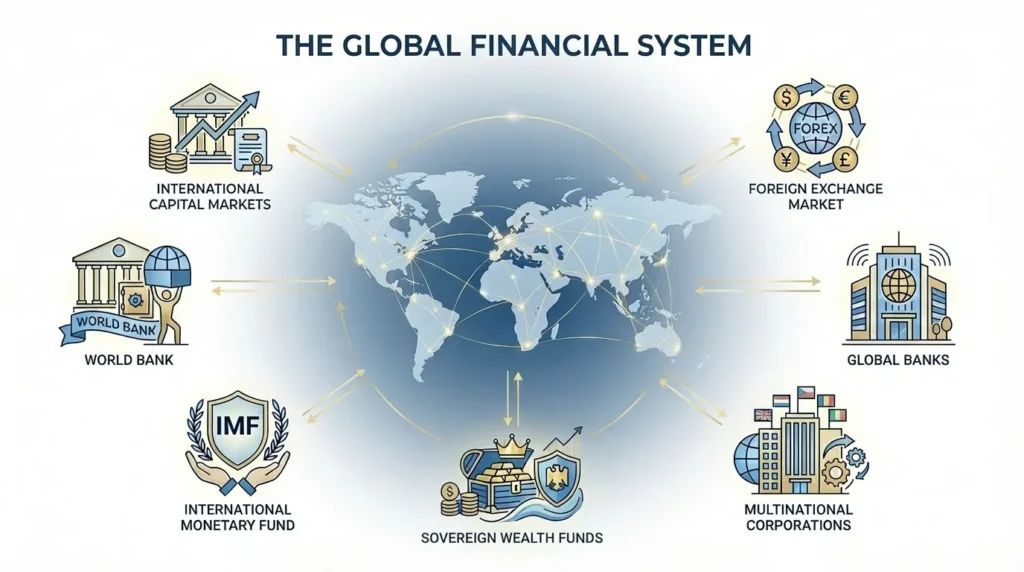
According to the Basel Committee on Banking Supervision,
“effective banking supervision is essential for maintaining the safety and soundness of banks and the banking system as a whole.”
The global financial crisis of 2008 fundamentally reshaped this framework. Regulators responded by introducing stronger capital requirements, enhanced liquidity standards, improved governance expectations, and more robust crisis-management mechanisms. Since then, international banking law has continued to evolve in response to emerging risks, including cyber threats, digital innovation, geopolitical instability, and climate-related financial risks. Today, banking regulation extends well beyond capital adequacy to encompass operational resilience, consumer protection, anti-money laundering obligations, sanctions compliance, and technological governance.
The Bank for International Settlements reports that:
“global banking assets exceeded $183 trillion in 2024, underscoring the critical importance of comprehensive legal frameworks governing this sector.”
This article explains the foundations of international banking and finance law, traces its historical development, examines the Basel Accords, and explores the institutions that shape the global regulatory framework. It also compares how major jurisdictions implement international standards and considers the challenges that will define the next generation of banking regulation.
Why International Banking Law Matters
International banking rarely captures public attention until a crisis exposes weaknesses within the financial system. The collapse of Lehman Brothers in 2008, the rapid failure of Silicon Valley Bank in 2023, and the emergency rescue of Credit Suisse demonstrated how quickly local banking problems can become global concerns. A liquidity shortage in one financial centre may disrupt markets worldwide, while failures in governance or risk management at a single institution can undermine confidence across multiple jurisdictions.
Behind these events lies an extensive legal framework that enables financial institutions to operate across borders while managing systemic risk. International banking and finance law provides the legal certainty required for cross-border lending, international payments, trade finance, securities transactions, and foreign investment. Without this framework, global commerce would face significantly greater legal uncertainty and operational risk.
For governments, effective banking regulation promotes financial stability and protects the wider economy from systemic shocks. For businesses, it facilitates international trade and investment by providing predictable legal rules. For consumers, it strengthens confidence in the banking system by supporting depositor protection, fair treatment, and sound governance. Increasingly, it also intersects with technology law, environmental regulation, data protection, and national security, reflecting the expanding role of financial institutions within modern economies.
N-LAWS Legal Insight
Banking law has evolved far beyond its traditional focus on capital adequacy. Contemporary regulation seeks to preserve trust in an interconnected financial system by addressing cyber resilience, artificial intelligence, sanctions compliance, climate-related financial risks, operational continuity, and digital innovation alongside traditional prudential requirements.
What Is International Banking & Finance Law?
International banking and finance law is the body of legal rules, regulatory standards, supervisory mechanisms, and contractual principles governing financial institutions that operate across national borders. Unlike domestic banking law, which derives from the legislation of a single jurisdiction, international banking law is built upon a layered framework of national statutes, regional regulations, internationally recognised standards, and cooperative supervisory arrangements.
The International Monetary Fund defines it as:
“the body of law that regulates financial institutions and markets, including banks, securities firms, insurance companies, and other financial service providers operating internationally.”
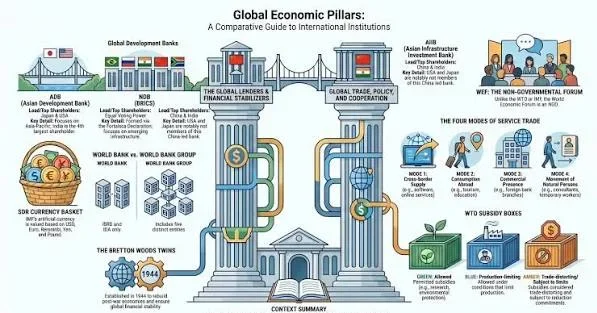
Rather than existing within one comprehensive treaty, the discipline has developed incrementally through decades of international cooperation. Organisations such as the Basel Committee on Banking Supervision, the Financial Stability Board, the Financial Action Task Force, the International Monetary Fund, and the Bank for International Settlements have each contributed to internationally recognised supervisory principles that governments subsequently implement through domestic legislation.
Public International Banking Law
Public international banking law focuses on regulation and financial stability. It encompasses prudential supervision, capital adequacy, liquidity management, governance standards, anti-money laundering obligations, sanctions compliance, crisis management, and supervisory cooperation. These measures seek to reduce systemic risk while maintaining confidence in the financial system.
Private International Banking Law
Private international banking law governs the contractual relationships arising from international financial transactions. It includes syndicated lending, project finance, derivatives, guarantees, letters of credit, payment systems, governing law clauses, and dispute resolution. Commercial certainty remains central to this branch of law, allowing financial institutions to conduct complex transactions across different legal systems.
Key Components of International Banking Law
Key components of international banking law include:
Prudential Regulation: Capital requirements, liquidity standards, and risk management frameworks designed to ensure bank stability. The Basel III framework establishes minimum capital ratios of 4.5% for Common Equity Tier 1 (CET1) capital, 6% for Tier 1 capital, and 8% for total capital.
Conduct Regulation: Rules governing how financial institutions treat customers, prevent market abuse, and maintain market integrity. The Financial Conduct Authority emphasizes that:
“treating customers fairly is at the heart of effective conduct regulation.”
Cross-Border Operations: Legal frameworks enabling banks to operate across jurisdictions while managing regulatory differences. According to the International Banking Federation:
“over 60% of major banks now operate in more than 50 countries.”
Financial Crime Prevention: Anti-money laundering (AML) and counter-terrorism financing (CTF) regulations. The Financial Action Task Force reports that:
“global money laundering reaches an estimated 2-5% of global GDP, or $800 billion to $2 trillion annually.”
Core Principles of Global Banking Regulation
The Basel Committee on Banking Supervision established 29 Core Principles for Effective Banking Supervision that serve as the foundation for banking regulation worldwide. These principles, adopted by over 150 jurisdictions, establish standards for bank licensing, supervision, and prudential requirements.
Capital Adequacy Standards
Capital adequacy requirements ensure banks maintain sufficient capital to absorb losses and continue operations during financial stress. The Basel III framework, implemented following the 2008 financial crisis, significantly strengthened capital requirements.
According to the European Banking Authority:
“strong capital positions are essential for banks to withstand shocks and continue supporting the real economy.”
The framework includes:
- Common Equity Tier 1 (CET1): The highest quality capital, consisting of common shares and retained earnings, must be at least 4.5% of risk-weighted assets
- Additional Tier 1 Capital: Instruments that can absorb losses when a bank is still viable, bringing total Tier 1 to 6%
- Tier 2 Capital: Supplementary capital including subordinated debt, totaling 2% for an 8% total capital requirement
- Conservation Buffer: Additional 2.5% of CET1 capital above minimum requirements
- Countercyclical Buffer: Variable buffer of 0-2.5% of CET1 based on credit growth
The Financial Stability Board reports that:
“global systemically important banks (G-SIBs) must maintain even higher capital buffers, ranging from 1% to 3.5% depending on their systemic importance.”
Liquidity Requirements
Basel III introduced two critical liquidity standards to ensure banks can meet short-term and long-term obligations:
The Liquidity Coverage Ratio (LCR) requires banks to hold sufficient high-quality liquid assets (HQLA) to survive a 30-day stressed funding scenario. The Basel Committee explains that:
“the LCR promotes short-term resilience of banks’ liquidity risk profile by ensuring they have sufficient high-quality liquid assets.”
The Net Stable Funding Ratio (NSFR) addresses longer-term structural liquidity mismatches by requiring stable funding for assets and activities over a one-year period.
Data from the Bank for International Settlements shows that:
“average LCR ratios for major banks reached 145% in 2024, well above the 100% minimum requirement.”
The Evolution of International Banking Law
Modern international banking law is the product of decades of financial crises, regulatory reform, and international cooperation. Rather than emerging from a single legislative initiative, it has evolved through successive responses to economic instability and systemic failures. Each major crisis has exposed weaknesses within the global financial system and prompted governments and international organisations to strengthen legal and supervisory frameworks.
Timeline of Key Milestones
| Year | Milestone | Significance |
| 1944 | Bretton Woods Conference | Creation of the IMF and World Bank, establishing the foundations of the post-war international monetary system. |
| 1971 | End of Bretton Woods | Transition from fixed to floating exchange rates, increasing cross-border financial volatility. |
| 1974 | Collapse of Bankhaus Herstatt | Revealed settlement risk and led to the creation of the Basel Committee on Banking Supervision. |
| 1988 | Basel I | Introduced the first internationally recognised minimum capital standards for banks. |
| 2004 | Basel II | Adopted a more risk-sensitive framework built around three supervisory pillars. |
| 2008 | Global Financial Crisis | Exposed weaknesses in existing regulation and prompted sweeping reforms. |
| 2010 onwards | Basel III | Strengthened capital, liquidity, governance, and stress-testing requirements. |
| Current phase | Basel IV implementation | Improves consistency in risk measurement and capital calculations. |
From Bretton Woods to Basel IV: The Historical Evolution
International banking law did not emerge through a single treaty or legislative act. Instead, it has developed over several decades in response to financial crises, regulatory failures, economic transformation, and increasing globalisation. Every major banking crisis has exposed weaknesses within the existing regulatory framework, prompting governments and international organisations to strengthen supervisory standards and improve cross-border cooperation. As a result, today’s international banking framework reflects a process of continuous adaptation rather than a fixed legal system.
Understanding this historical development is essential because modern banking regulation remains largely reactive. Significant reforms have generally followed periods of financial instability, from the collapse of the Bretton Woods monetary system and the failure of Bankhaus Herstatt to the Global Financial Crisis of 2008. These events collectively shaped the prudential standards, supervisory mechanisms, and international cooperation that underpin banking regulation today.
The Bretton Woods Legacy (1944–1971)
The foundations of the modern international financial system were established during the Bretton Woods Conference in July 1944. Representatives from forty-four Allied nations met in Bretton Woods, New Hampshire, with the objective of creating a stable international monetary order that would support post-war reconstruction, encourage economic cooperation, and reduce exchange-rate volatility.

The conference resulted in the establishment of two institutions that continue to influence international banking law:
- the International Monetary Fund (IMF), responsible for promoting international monetary cooperation and financial stability; and
- the World Bank, created to support reconstruction and long-term economic development.
Under the Bretton Woods system, participating currencies were linked to the U.S. dollar, while the dollar itself remained convertible into gold at a fixed rate. This arrangement created a predictable environment for international trade and encouraged the expansion of cross-border banking within a relatively stable monetary framework.
However, increasing inflation, growing international capital movements, and persistent balance-of-payments pressures eventually undermined the system. In 1971, the United States suspended the dollar’s convertibility into gold, effectively ending the fixed exchange-rate regime. The transition to floating exchange rates introduced greater volatility into international financial markets and highlighted the need for stronger supervision of internationally active banks.
N-LAWS Legal Insight
The end of Bretton Woods marked a significant shift in regulatory priorities. Banking supervision increasingly moved away from maintaining exchange-rate stability towards strengthening the resilience of financial institutions themselves, laying the foundations for modern prudential regulation.
The Collapse of Bankhaus Herstatt and the Birth of Modern Banking Supervision
A defining moment in the development of international banking regulation occurred in June 1974 with the collapse of Bankhaus Herstatt, a German bank heavily involved in foreign exchange trading. The failure exposed a critical weakness in cross-border settlement systems. Counterparties had already transferred Deutsche Marks to the bank but had not yet received the corresponding U.S. dollar payments when German regulators closed the institution during the business day. The result was substantial financial losses for counterparties despite no breach of contractual obligations.
This event became known as Herstatt Risk, referring to the settlement risk that arises when one party fulfils its payment obligation while the other fails before completing its own. Although payment systems have become considerably more sophisticated since 1974, Herstatt Risk continues to influence the regulation of payment systems, central bank oversight, and settlement mechanisms designed to reduce cross-border risk.
Why This Matters
The Herstatt collapse demonstrated that banking failures could produce significant international consequences even in the absence of a breach of international law. It exposed the limitations of purely national supervision and highlighted the need for coordinated oversight between regulators operating in different jurisdictions.
The Creation of the Basel Committee on Banking Supervision
In response to the Herstatt collapse, the central bank governors of the Group of Ten (G10) established the Basel Committee on Banking Supervision (BCBS) in 1974 under the auspices of the Bank for International Settlements (BIS). The Committee was created to improve cooperation among national regulators and develop internationally recognised prudential standards for banking supervision.
Unlike a legislature, the Basel Committee does not enact binding international law. Instead, it develops supervisory standards that jurisdictions voluntarily implement through domestic legislation and regulatory rules. Over time, these standards have become the benchmark for banking regulation worldwide, addressing issues such as capital adequacy, liquidity management, operational resilience, governance, market risk, credit risk, and supervisory cooperation.
Objectives of the Basel Committee
The Committee seeks to:
- strengthen the resilience of the global banking system;
- promote consistent supervisory standards across jurisdictions;
- reduce opportunities for regulatory arbitrage;
- enhance cooperation between banking supervisors; and
- improve risk management within financial institutions.
Although participation is voluntary, the Committee’s influence extends well beyond its formal membership because most jurisdictions have incorporated Basel standards into their domestic regulatory frameworks.
The Basel Accords: Building a Common Regulatory Framework
The Basel Accords represent the most influential series of international banking standards ever developed. Rather than replacing one another, each Accord responds to weaknesses identified during previous financial crises and builds upon earlier reforms. Together, they have created a common framework for prudential regulation across much of the world. The Bank for International Settlements coordinates these frameworks through the Basel Committee on Banking Supervision (BCBS).
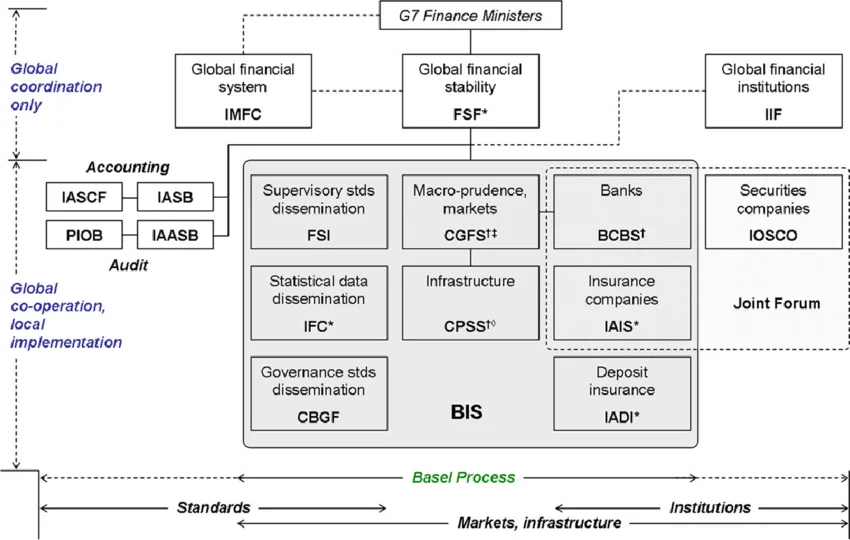
Basel I (1988): Establishing Minimum Capital Standards
Before Basel I, capital requirements varied considerably between jurisdictions, creating competitive imbalances and encouraging regulatory arbitrage. Introduced in 1988, Basel I established the first internationally recognised minimum capital requirement by requiring banks to maintain capital equal to at least 8% of risk-weighted assets. Assets were grouped into broad risk categories, with lower-risk assets such as government securities attracting lower capital charges than corporate lending.
Key achievements
- Introduced the first global capital standard.
- Improved comparability between banking systems.
- Strengthened confidence in internationally active banks.
- Reduced incentives for regulatory arbitrage.
Limitations
Its relatively simple risk classifications did not adequately reflect the complexity of modern banking activities, meaning assets with significantly different risk profiles could still receive identical regulatory treatment.
Basel II (2004): A More Risk-Sensitive Framework
Recognising the limitations of Basel I, the Basel Committee introduced Basel II in 2004. The new framework sought to align regulatory capital more closely with actual risk through a structure built around three mutually reinforcing pillars.
- Pillar One – Minimum Capital Requirements : Banks were required to calculate regulatory capital using more advanced approaches to credit, market, and operational risk.
- Pillar Two – Supervisory Review: Regulators received broader powers to evaluate internal risk-management processes and require additional capital where appropriate.
- Pillar Three – Market Discipline: Enhanced disclosure requirements were introduced to improve transparency and enable market participants to assess institutional risk.
N-LAWS Legal Insight
Basel II represented a philosophical shift. Instead of relying solely on fixed regulatory rules, it recognised that effective banking supervision requires both strong internal governance and informed supervisory judgement.
The 2008 Global Financial Crisis: A Turning Point
Despite Basel II, the Global Financial Crisis exposed significant weaknesses in the international regulatory framework. Many banks appeared well capitalised according to regulatory measures but remained vulnerable because of excessive leverage, inadequate liquidity, overreliance on short-term funding, weak governance, poor risk management, and insufficient stress testing. The crisis demonstrated that capital adequacy alone could not guarantee financial stability.
The collapse of major financial institutions also revealed the interconnected nature of modern banking, where the failure of one globally significant institution could threaten the wider financial system and the broader economy.
Basel III: Strengthening Banking Resilience
Introduced in the aftermath of the financial crisis, Basel III represented the most comprehensive overhaul of international banking regulation in decades. The Basel Committee states that:
“Basel III is a comprehensive set of reform measures to strengthen the regulation, supervision, and risk management of banks.”
The reforms sought to ensure that banks would be better equipped to withstand future periods of financial stress while reducing reliance on taxpayer-funded bailouts. The framework introduced:
- stronger Common Equity Tier 1 (CET1) capital requirements;
- capital conservation buffers;
- countercyclical capital buffers;
- leverage ratio requirements;
- the Liquidity Coverage Ratio (LCR);
- the Net Stable Funding Ratio (NSFR);
- enhanced stress testing; and
- stronger governance expectations.
Why Basel III Changed Banking Forever
Unlike earlier frameworks, Basel III recognised that resilience depends not only on the quantity of capital but also on its quality, liquidity, governance, and the institution’s ability to withstand severe market stress.
Basel IV: Refining the Post-Crisis Framework
Often described as a new Accord, Basel IV is presented in the source as the final phase of the Basel III reforms. Its principal objective is to improve consistency in the calculation of risk-weighted assets by reducing excessive reliance on internal risk models and introducing more standardised methodologies. The European Banking Authority estimates this will increase risk-weighted assets by 18-25% for major European banks.
Supporters argue that these reforms strengthen confidence in capital ratios and improve comparability across jurisdictions. Critics, however, contend that stricter requirements may increase compliance costs and constrain lending, particularly for smaller institutions and banks operating in emerging markets. The source frames balancing financial stability with economic growth as one of the central tensions in international banking law.
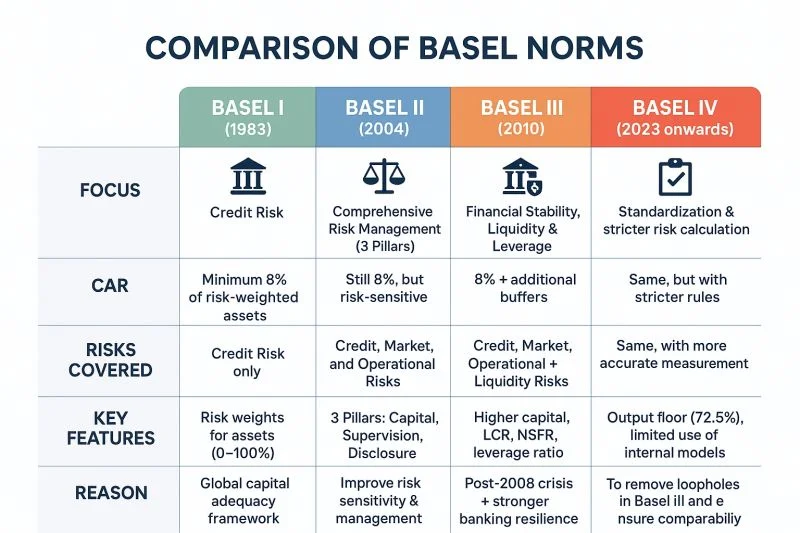
International Regulatory Architecture: Who Shapes Global Banking Law?
Unlike many areas of law, international banking regulation is not created or enforced by a single global authority. There is no worldwide banking regulator with the power to legislate for every jurisdiction. Instead, international banking law has evolved through cooperation between international organisations, central banks, national governments, and supervisory authorities. Together, these institutions establish prudential standards, monitor systemic risk, combat financial crime, and coordinate responses to emerging threats to financial stability.
This decentralised approach reflects a fundamental reality of modern finance: while banking activities are increasingly global, legal authority remains largely national. International standards therefore depend on voluntary adoption through domestic legislation rather than binding international treaties. Their effectiveness relies on regulatory cooperation, political commitment, and consistent implementation by national authorities.
N-LAWS Legal Insight
International banking law demonstrates that effective global governance does not always require a single supranational regulator. Instead, a network of specialised institutions has developed internationally recognised standards that achieve a high degree of regulatory consistency while preserving national sovereignty.
The Bank for International Settlements (BIS)
Founded in 1930 and headquartered in Basel, Switzerland, the Bank for International Settlements (BIS) is the oldest international financial institution. Often described as the “central bank for central banks”, it does not supervise commercial banks directly. Instead, it provides a forum through which central banks cooperate, exchange information, conduct research, and coordinate responses to global financial risks.
The BIS performs three principal functions:
- promoting international monetary and financial cooperation;
- conducting research into systemic risk, financial innovation, macroprudential policy, and digital currencies; and
- hosting influential international committees, including the Basel Committee on Banking Supervision.
Although the BIS has no legislative authority, its influence is considerable. Through research, technical expertise, and policy coordination, it shapes national regulatory priorities and contributes to the development of internationally accepted supervisory standards.
Why the BIS Matters
The BIS has become increasingly important as financial markets have grown more interconnected. Central banks rely on it as a platform for dialogue and cooperation, enabling coordinated responses to systemic risks that individual jurisdictions cannot manage effectively in isolation.
Basel Committee on Banking Supervision (BCBS)
While the BIS provides the institutional platform, the Basel Committee on Banking Supervision (BCBS) develops the prudential standards that underpin modern banking regulation. Established in 1974 following the collapse of Bankhaus Herstatt, the Committee seeks to strengthen the resilience of internationally active banks through internationally recognised supervisory standards. The Committee develops guidance covering:
- minimum capital requirements;
- liquidity standards;
- leverage ratios;
- operational resilience;
- governance and risk management;
- supervisory cooperation; and
- disclosure obligations.
Importantly, the BCBS does not create binding international law. Instead, its standards are incorporated into national legislation by member jurisdictions, producing a high degree of international consistency while allowing countries to retain regulatory autonomy.
- Strengths: The Committee’s greatest strength lies in its ability to build international consensus based on technical expertise. Its standards have significantly reduced differences between national banking systems and strengthened confidence in internationally active financial institutions.
- Limitations: Because implementation remains a national responsibility, jurisdictions may adopt Basel standards at different times or interpret them differently. As a result, multinational banks often need to comply with similar but not identical regulatory requirements across different markets.
Financial Stability Board (FSB): Protecting the Global Financial System
The Financial Stability Board (FSB) was established by the G20 in 2009 following the Global Financial Crisis. Its creation reflected the growing recognition that stronger prudential regulation alone would not prevent future crises. Regulators also needed mechanisms to monitor systemic risks, coordinate reforms, and manage the failure of globally significant financial institutions. The FSB’s responsibilities include:
- identifying global financial risks;
- coordinating international regulatory reforms;
- developing resolution frameworks for failing institutions;
- monitoring implementation of international standards; and
- promoting operational resilience and cyber risk management.
One of its most influential initiatives is the Key Attributes of Effective Resolution Regimes, which provide an internationally recognised framework for resolving failing financial institutions while minimising disruption to the wider financial system.
N-LAWS Legal Analysis
The establishment of the FSB represented a shift from institution-specific regulation towards system-wide supervision. Rather than focusing solely on individual banks, regulators increasingly recognised that interconnected markets, payment systems, and financial infrastructure could themselves become sources of systemic risk.
International Monetary Fund (IMF): Strengthening National Financial Systems
Although the International Monetary Fund (IMF) is not a banking regulator, it plays a significant role in strengthening national financial systems and promoting macroeconomic stability. Its work extends beyond crisis lending to include surveillance, policy advice, technical assistance, and capacity building.
A particularly important initiative is the Financial Sector Assessment Programmes (FSAPs), which evaluate the resilience of national financial sectors, identify regulatory weaknesses, and recommend legislative and institutional reforms. These assessments have frequently influenced banking reforms, particularly within emerging and developing economies.
Unlike the Basel Committee, which focuses on prudential standards, the IMF adopts a broader macroeconomic perspective by considering how banking systems interact with fiscal policy, monetary policy, and wider economic stability.
Financial Action Task Force (FATF): Setting Global Standards Against Financial Crime
The Financial Action Task Force (FATF) was established in 1989 by the G7 to develop international standards aimed at combating:
- money laundering;
- terrorist financing;
- proliferation financing;
- corruption; and
- organised crime.
Its Forty Recommendations have become the international benchmark for anti-money laundering (AML) and counter-terrorist financing (CTF) legislation, influencing banking regulation in more than 200 jurisdictions.
Although FATF does not legislate, countries that fail to implement its standards may face enhanced monitoring, reputational consequences, and restrictions affecting their international financial relationships.
Why FATF Matters
For financial institutions, FATF standards shape core compliance obligations, including:
- customer due diligence (CDD);
- enhanced due diligence (EDD);
- beneficial ownership identification;
- suspicious activity reporting;
- correspondent banking controls; and
- sanctions screening.
Failure to implement these measures effectively can expose institutions to significant regulatory penalties and reputational damage.
IOSCO: Regulating International Capital Markets
The International Organization of Securities Commissions (IOSCO) complements banking regulation by developing international standards for securities markets. As banks increasingly provide integrated banking, investment, and capital-market services, securities regulation has become closely linked to prudential banking supervision.
IOSCO’s work focuses on:
- market conduct;
- disclosure obligations;
- benchmark regulation;
- sustainable finance; and
- crypto-asset markets.
Its standards contribute to market integrity, investor protection, and transparent capital markets, complementing the work of the Basel Committee and other international organisations.
Soft Law: The Foundation of International Banking Regulation
One of the defining characteristics of international banking law is its reliance on soft law. Unlike treaties or domestic statutes, soft law consists of non-binding principles, recommendations, and standards that influence behaviour without creating directly enforceable legal obligations.
The Basel Accords, FATF Recommendations, and FSB guidance are all examples of soft law. Although these instruments are formally voluntary, governments frequently incorporate them into domestic legislation, meaning banks ultimately experience them as binding regulatory requirements.
N-LAWS Legal Insight
Soft law has become one of the most effective tools of international financial governance. It enables regulators to respond more rapidly to emerging risks than formal treaty negotiations would allow, while encouraging widespread convergence around internationally accepted standards. However, because implementation remains voluntary, differences in national practice continue to reflect the balance between global cooperation and regulatory sovereignty.
Comparative Overview of Global Regulatory Institutions
| Institution | Primary Role | Legal Influence | Practical Impact |
| Bank for International Settlements (BIS) | Promotes cooperation among central banks | Soft law | Research, policy coordination, and international cooperation |
| Basel Committee on Banking Supervision (BCBS) | Develops prudential banking standards | Soft law | Basel Accords, capital, liquidity, governance, and supervision |
| Financial Stability Board (FSB) | Monitors systemic risk and coordinates reforms | Soft law | Crisis management, resolution regimes, and financial stability |
| International Monetary Fund (IMF) | Conducts surveillance and policy advice | Indirect influence | Financial sector reform and technical assistance |
| Financial Action Task Force (FATF) | Develops AML and CTF standards | Soft law with significant political influence | Global financial crime prevention |
| International Organization of Securities Commissions (IOSCO) | Develops securities market standards | Soft law | Investor protection, market integrity, and disclosure standards |
Comparative Banking Regulation: How Major Jurisdictions Implement International Banking Law
Although international banking law is often described as a global regulatory framework, its practical application remains largely national. International organisations such as the Basel Committee on Banking Supervision (BCBS), the Financial Stability Board (FSB), and the Financial Action Task Force (FATF) establish internationally recognised principles, but responsibility for implementing and enforcing those principles rests with domestic legislatures and regulatory authorities. Consequently, two banks operating under the same Basel framework may still face different legal obligations depending on where they are incorporated or conduct business.
This distinction is particularly important for multinational banking groups. They must often comply simultaneously with home-state regulation, host-state requirements, internationally recognised standards, and, in some cases, extraterritorial laws such as U.S. sanctions. As financial services become increasingly global, navigating these overlapping obligations has become one of the greatest compliance challenges facing international banks.
N-LAWS Legal Insight
International banking regulation resembles international aviation law more than domestic commercial law. Countries agree on common safety standards, but each jurisdiction remains responsible for licensing, supervision, enforcement, and sanctions. The result is convergence without complete uniformity.
United States: A Rules-Based Regulatory Framework
The United States operates one of the world’s most comprehensive and complex banking regulatory systems. Unlike many jurisdictions, supervision is divided among several federal and state authorities, reflecting the country’s constitutional structure and historical development. The Dodd-Frank Act comprehensively reformed financial regulation following the 2008 crisis, creating new regulatory bodies and enhanced consumer protections. The Federal Reserve implements Basel standards while adding U.S.-specific requirements like stress testing. Major federal regulators include:
- Federal Reserve System (Federal Reserve)
- Office of the Comptroller of the Currency (OCC)
- Federal Deposit Insurance Corporation (FDIC)
- Consumer Financial Protection Bureau (CFPB)
- Financial Crimes Enforcement Network (FinCEN)
The U.S. framework generally adopts a detailed, rules-based approach characterised by extensive statutory requirements, frequent supervisory examinations, aggressive enforcement, and significant financial penalties. Large financial institutions are also subject to enhanced prudential standards, annual stress testing, recovery planning, and resolution planning.
Strengths
- Strong enforcement powers
- Comprehensive consumer protection
- Sophisticated supervisory capability
- Significant deterrence through enforcement action
Challenges
- Regulatory fragmentation
- Overlapping supervisory responsibilities
- Increased compliance costs
- Complexity arising from federal and state requirements
United Kingdom: Principles-Based Supervision
Following the 2008 Global Financial Crisis, the United Kingdom fundamentally restructured its regulatory system. Prudential supervision is now primarily undertaken by the Prudential Regulation Authority (PRA), while conduct regulation and consumer protection are overseen by the Financial Conduct Authority (FCA). The Bank of England, through its Financial Policy Committee, also plays a central role in safeguarding financial stability.
This arrangement is commonly referred to as the Twin Peaks Model, separating prudential regulation from market conduct supervision. Compared with the United States, the UK’s regulatory philosophy places greater emphasis on:
- supervisory judgement;
- proportionality;
- governance;
- accountability; and
- principles-based regulation.
N-LAWS Legal Analysis
The UK’s approach illustrates a broader shift in banking supervision. Regulators increasingly assess not only whether firms comply with specific rules but also whether their governance structures, organisational culture, and decision-making processes support prudent risk management. This represents a move away from “box-ticking” compliance towards outcomes-based supervision.
European Union: Supranational Banking Supervision
The European Union represents the world’s most ambitious experiment in supranational banking regulation. Rather than relying solely on cooperation between national regulators, it has developed an integrated legal framework that applies across Member States. The Capital Requirements Regulation (CRR) and Capital Requirements Directive (CRD IV) implement Basel standards across the EU.
The European Central Bank supervises significant banks through the Single Supervisory Mechanism (SSM). Its regulatory architecture includes the European Central Bank (ECB), the European Banking Authority (EBA), and national competent authorities.
The EU Banking Union rests on three principal pillars:
- Single Supervisory Mechanism (SSM) – direct supervision of significant euro-area banks by the ECB.
- Single Resolution Mechanism (SRM) – coordinated procedures for resolving failing banks.
- Harmonised Prudential Rules – implementation of Basel standards through the Capital Requirements Regulation (CRR) and Capital Requirements Directive (CRD).
While the EU model promotes regulatory consistency and reduces opportunities for regulatory arbitrage, differences remain because insolvency law, taxation, and certain implementation practices continue to operate at national level.
Singapore: Innovation with Strong Prudential Supervision
Singapore has developed one of the world’s most respected financial regulatory systems. The Monetary Authority of Singapore (MAS) serves simultaneously as the central bank, banking regulator, securities regulator, and insurance supervisor. This integrated structure reduces institutional fragmentation and supports coordinated supervision.
Singapore combines:
- strong prudential regulation;
- robust AML controls;
- active FinTech promotion; and
- proportionate supervision.
Its regulatory strategy seeks to encourage financial innovation while maintaining financial stability.
Hong Kong: An International Financial Gateway
Hong Kong remains one of Asia’s leading international financial centres. Banking supervision is led primarily by the Hong Kong Monetary Authority (HKMA). The jurisdiction combines Basel implementation, common law traditions, strong capital markets, and extensive international banking activity. Given its role as a gateway between Mainland China and global financial markets, Hong Kong places particular emphasis on cross-border supervisory cooperation and financial resilience.
Australia: Stability Through Conservative Prudential Oversight
Australia’s banking framework is internationally recognised for its resilience. Regulatory responsibilities are shared among:
- Australian Prudential Regulation Authority (APRA);
- Australian Securities and Investments Commission (ASIC); and
- Reserve Bank of Australia (RBA).
The source attributes Australia’s resilience to conservative capital supervision, proactive stress testing, and intensive prudential oversight, with banks generally maintaining capital ratios above international minimum standards.
United Arab Emirates: A Rapidly Evolving Regulatory Environment
The United Arab Emirates has emerged as a major regional financial centre. Banking regulation is shared between the Central Bank of the UAE, the Dubai Financial Services Authority (DFSA), and the Financial Services Regulatory Authority (FSRA) within Abu Dhabi Global Market. The coexistence of federal regulation with internationally recognised financial free zones is intended to attract international investment while maintaining regulatory flexibility. Recent reforms have focused on AML, digital assets, FinTech, sustainable finance, and international regulatory cooperation.
Comparative Snapshot
| Jurisdiction | Principal Regulators | Regulatory Style | Distinguishing Feature |
| United States | Federal Reserve, OCC, FDIC, CFPB, FinCEN | Rules-based | Strong enforcement and extensive federal oversight |
| United Kingdom | PRA, FCA, Bank of England | Principles-based | Twin Peaks supervisory model |
| European Union | ECB, EBA, National Authorities | Harmonised supranational framework | Banking Union and integrated supervision |
| Singapore | Monetary Authority of Singapore | Integrated regulator | Innovation combined with strong prudential oversight |
| Hong Kong | Hong Kong Monetary Authority | Risk-based | Gateway between China and international markets |
| Australia | APRA, ASIC, RBA | Prudential supervision | Conservative capital and governance standards |
| United Arab Emirates | Central Bank, DFSA, FSRA | Hybrid model | Financial free zones and modern FinTech regulation |
Home-State and Host-State Supervision
International banking groups frequently operate through branches, subsidiaries, and representative offices in multiple jurisdictions. This raises a fundamental legal question:
“which regulator is responsible for supervising a cross-border banking group?”
International banking law addresses this through the concepts of home-state supervision and host-state supervision.
Home-State Supervision
The regulator in the country where the parent bank is incorporated is primarily responsible for consolidated supervision of the banking group. Responsibilities typically include:
- capital adequacy;
- group-wide governance;
- enterprise risk management; and
- consolidated reporting.
Host-State Supervision
The regulator in the country where a foreign bank operates supervises local activities, including:
- consumer protection;
- local liquidity;
- conduct regulation; and
- compliance with domestic law.
Effective international supervision therefore depends upon continuous cooperation through supervisory colleges, information-sharing agreements, and coordinated crisis management.
Branches Versus Subsidiaries
The legal structure through which a bank expands internationally has important regulatory consequences.
Branch
A branch:
- forms part of the parent bank;
- is generally supervised by the home regulator; and
- does not have separate legal personality.
Subsidiary
A subsidiary:
- is a separate legal entity;
- holds its own banking licence;
- is supervised primarily by the host regulator; and
- must satisfy domestic prudential requirements.
Branch vs Subsidiary (Key Differences)
| Aspect | Branch | Subsidiary |
|---|---|---|
| Legal Status | Not a separate legal entity | Separate legal entity |
| Ownership | Fully controlled by parent company | Owned (fully or majority) by parent |
| Liability | Parent company is fully liable | Liability limited to subsidiary |
| Incorporation | Not separately incorporated | Incorporated in host country |
| Control | Direct control by parent | Operates independently (with oversight) |
| Regulation | Governed by parent country laws + host rules | Governed mainly by host country laws |
| Financial Reporting | Included directly in parent accounts | Separate accounts, then consolidated |
| Taxation | Taxed as part of parent (sometimes locally too) | Taxed as a separate entity |
| Risk Exposure | Higher risk for parent | Risk contained within subsidiary |
Following the Global Financial Crisis, regulators increasingly favoured locally capitalised subsidiaries because they can strengthen domestic financial stability during periods of cross-border stress.
N-LAWS Legal Insight
One of the defining trends since 2008 has been a shift from global integration towards greater local resilience. Although international banks continue to operate across borders, regulators increasingly require sufficient local capital, liquidity, governance, and recovery planning to protect domestic financial systems if a multinational banking group experiences financial distress.
Future Challenges for International Banking Law
International banking law operates through a sophisticated system of coordinated sovereignty, where international standards provide a common foundation while national authorities remain responsible for implementation and enforcement. Looking ahead, maintaining this balance will become increasingly challenging as financial services continue to evolve through digitalisation, artificial intelligence, and cross-border innovation.
Conclusion
International banking and finance law has developed into one of the most influential areas of modern financial regulation. Rather than relying on a single global legal code, it operates through an interconnected network of international standards, domestic legislation, and supervisory cooperation. From the Bretton Woods Conference and the creation of the Basel Committee to the evolution of the Basel Accords and the work of institutions such as the BIS, FSB, IMF, FATF, and IOSCO, the regulatory framework has continually adapted to lessons learned from successive financial crises and changing market conditions.
As banking becomes increasingly digital, interconnected, and technology-driven, maintaining financial stability will require continued cooperation between regulators, consistent implementation of international standards, and the flexibility to address emerging risks. The future of international banking law will therefore depend not only on preserving the resilience of individual institutions but also on strengthening the resilience of the global financial system as a whole.
Frequently Asked Questions
1. What are international banking laws?
International banking laws are legal frameworks and regulations that govern how financial institutions operate across borders, ensuring stability, transparency, and compliance in the global financial system.
2. Are the Basel Accords legally binding?
No. The Basel Accords are international prudential standards. They become enforceable only when implemented through domestic legislation or regulatory rules.
3. What does the Bank for International Settlements (BIS) do?
The BIS promotes cooperation among central banks, conducts research on financial stability, and hosts international standard-setting bodies such as the Basel Committee.
4. Why was the Basel Committee established?
It was created in 1974 following the collapse of Bankhaus Herstatt to improve international banking supervision and develop common prudential standards.
5. What is the purpose of Basel III?
Basel III strengthens banking resilience through higher-quality capital, improved liquidity standards, leverage requirements, stress testing, and stronger governance.
6. What is the difference between home-state and host-state supervision?
Home-state supervision focuses on consolidated oversight of the banking group, while host-state supervision oversees a foreign bank’s local operations and compliance with domestic law.
7. Why are international banking laws important in 2026?
8. What is meant by the global financial rulebook?
The global financial rulebook refers to the collection of international regulations, standards, and agreements—such as Basel III—that guide how banks and financial institutions operate worldwide.
9. Which institutions shape international banking regulations?
Key institutions include the Basel Committee on Banking Supervision, International Monetary Fund (IMF), World Bank, and national central banks.