
BAHAWALPUR, Pakistan — Pakistan’s National Cyber Crime Investigation Agency (NCCIA) has arrested a 17-year-old student in Bahawalpur after he allegedly used an artificial-intelligence system to seek guidance on poisoning his father, officials said. According to reports published on September 23 and 24, 2026, the teenager allegedly developed an interest in chemistry after watching the crime drama Breaking Bad and reportedly set up a small laboratory at home to poison his father.
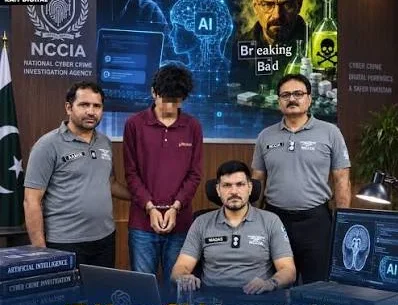
The NCCIA said he allegedly prepared a poisonous substance and attempted to administer it to his father, but the attempt was unsuccessful. He later allegedly turned to an AI system for further guidance on how to carry out the plan without being detected. The NCCIA reportedly received information from abroad through an automated alert, prompting investigators to trace and arrest the suspect.
This particular event has raised an unusual question about AI’s changing role:
“Can a technology that may be misused to facilitate harmful conduct also become the source of information that helps law enforcement intervene?”
The case has attracted attention not only because of the alleged poisoning attempt but also because authorities reportedly received information about the teenager through an automated system. However, public reports do not conclusively establish whether the AI provider itself directly alerted the NCCIA, whether an automated safety mechanism generated the alert, or whether the information reached authorities through another intelligence channel.
What Happened in Bahawalpur?
According to the NCCIA’s preliminary account, the suspect, described as a second-year student, allegedly developed strained relations with his father following a disagreement and later planned to harm him. Investigators reportedly learned that the student had developed an interest in chemistry after watching the crime drama Breaking Bad.
He allegedly established a small laboratory at home and obtained chemical materials from Australia and Islamabad. The investigation remains ongoing, and the available reports do not establish that the teenager has been convicted of any offence.
Authorities said the teenager allegedly prepared a substance and attempted to administer it to his father, but the first attempt did not produce the intended result. He subsequently allegedly turned to an AI system for further guidance on administering a poisonous substance without being detected. The precise chemical involved, the alleged method of administration and the full circumstances of the earlier attempt have not been publicly disclosed. The NCCIA’s investigation remains ongoing.
How Did AI Become an Alleged Informant?
The most unusual element of the case concerns the reported source of the investigation. Dawn reported that the Punjab NCCIA received information about the suspect through an automated system. Other reports described the information as coming from abroad, while some accounts referred to an automated alert or information generated through an automated system and received by the agency.
These descriptions do not, by themselves, prove that an AI chatbot directly contacted Pakistani investigators. They leave several technical and legal questions unanswered:
- Was the information generated by the AI platform’s internal safety-monitoring system?
- Did a human reviewer assess the alleged threat before information was shared?
- Was the alert sent directly to the NCCIA or transmitted through another agency?
- What legal authority governed the disclosure of user information?
- What information was shared, and how was its accuracy verified?
Until authorities or the relevant technology provider publicly clarify the process, the distinction between:
“an AI-generated safety alert, platform-initiated disclosure and intelligence received through another channel remains important.”
The Legal Question: When Does AI Assistance Become Evidence?
The alleged use of AI may become relevant to several aspects of the criminal investigation, but an AI conversation alone would not automatically establish that a crime occurred. Investigators would likely need to examine the teenager’s alleged intention, the substances involved, the actions taken, the connection between the online searches and the physical conduct, and whether the evidence meets the requirements of applicable Pakistani law.
Potentially relevant evidence could include:
- Digital records: Search history, chatbot conversations, account information and other online activity, subject to applicable legal requirements.
- Physical evidence: Chemical materials, laboratory equipment and any substance recovered from the residence.
- Medical evidence: Whether the father was exposed to a harmful substance and whether the alleged conduct caused injury.
- Intent and preparation: Whether the teenager knowingly planned to cause harm and what steps he allegedly took.
- Chain of custody: Whether digital and physical evidence was collected, preserved and authenticated properly.
The prosecution would still need to establish the relevant elements of any criminal charge. The fact that AI was allegedly used during preparation does not, by itself, replace proof of intent, conduct, causation or other legal requirements.
Can an AI Platform Disclose Information to Authorities?
The case also raises questions about the legal limits of AI safety monitoring and information disclosure. AI providers may use safety systems to identify potentially harmful requests, but the existence of a safety system does not automatically answer when information can be shared with law enforcement. The answer may depend on the provider’s policies, the applicable jurisdiction, the nature and immediacy of the alleged threat, and any legal process involved. Several competing interests may arise:
Public safety: If a platform detects credible information suggesting an imminent threat to life, authorities may argue that intervention is necessary to prevent serious harm.
Privacy and confidentiality: Users may expect their interactions with an AI system to remain private. Broad or unclear disclosure practices could raise concerns about surveillance, data protection and the treatment of sensitive personal information.
Accuracy and false positives: Automated systems may misinterpret context, sarcasm, fiction, curiosity or ambiguous language. An inaccurate alert could expose an innocent person to investigation or state scrutiny.
Due process: Any information shared with investigators should be assessed for reliability, lawful acquisition and relevance. Automated detection should not be treated as conclusive proof of criminal conduct.
The Bahawalpur case therefore raises a broader issue:
“how should the law balance rapid intervention against privacy, accuracy and procedural safeguards when AI systems flag potentially dangerous activity?”
A Juvenile Justice Issue in Pakistan
The suspect is reportedly 17 years old, making his age a central legal consideration. Any proceedings would need to account for Pakistan’s juvenile justice framework, including the Juvenile Justice System Act, 2018, and other applicable protections for children in conflict with the law. The precise legal treatment would depend on the charges, the evidence, the suspect’s age at the time of the alleged conduct and the relevant procedural requirements. The investigation must therefore address two issues simultaneously:
“the seriousness of the alleged conduct and the legal protections applicable to a minor.”
The teenager’s age also intensifies questions about online safety, access to harmful information, parental supervision and the responsibilities of technology companies when young users seek dangerous guidance.
Does AI Create Criminal Liability?
The case may contribute to an emerging legal debate over responsibility when AI is involved in alleged criminal activity. At present, AI systems are tools rather than independent criminal defendants in the ordinary legal sense. Responsibility may instead be examined through the conduct of the person who allegedly planned or carried out the act, the conduct of any other participants, and where supported by evidence the actions or omissions of relevant companies or individuals.
Several legal questions may arise:
- Did the user deliberately seek assistance for an unlawful purpose?
- Did the platform’s safeguards fail to block or redirect a dangerous request?
- Was any information shared with authorities lawfully and proportionately?
- Could a provider face civil or regulatory scrutiny if it failed to follow applicable safety obligations?
- What standards should govern AI-generated evidence in criminal proceedings?
These questions cannot be resolved solely from the reported arrest. They would require evidence concerning the AI system, the platform’s policies, the relevant laws and the actual events under investigation.
From Digital Assistant to Safety Intermediary
The case presents AI in two contrasting roles. First, the teenager allegedly attempted to use an AI system as a source of guidance for harmful conduct. Second, information connected to an automated system reportedly helped bring the matter to the attention of investigators. This does not necessarily mean that the same AI system independently “reported” the teenager. The available reporting does not provide enough verified technical detail to establish the exact pathway through which information reached the NCCIA.
Nevertheless, the reported sequence illustrates a major shift in the legal and technological debate. AI platforms are no longer being considered only as tools that generate answers. They are increasingly being examined as systems that may detect risk, apply safety controls, retain information and interact with institutions outside the user-platform relationship.
That expanded role creates a need for clear rules governing:
- Threat detection and escalation;
- Human review of automated alerts;
- Disclosure to law enforcement;
- Data retention and access;
- Protection of minors;
- Transparency and independent oversight; and
- Remedies for mistaken or unlawful disclosures.
What Happens Next?
The NCCIA has said that the investigation is continuing. Authorities are expected to examine the alleged chemical preparation, the substance involved, the teenager’s online activity and the circumstances of the alleged poisoning attempt.
Further official information may clarify whether a formal case has been registered, what charges are being considered, how the alleged AI interaction was obtained and how the automated information reached investigators.
Until those details emerge, allegations should not be treated as established findings of guilt.
Conclusion
The Bahawalpur arrest is significant not simply because a teenager allegedly sought AI assistance in a poisoning attempt, but because the case places artificial intelligence at the intersection of criminal conduct, automated safety detection, law enforcement and juvenile justice.
The reported incident raises an important legal question for the AI era:
“when a system is used to seek dangerous information and information about that activity later reaches investigators, what safeguards should govern the transition from private digital interaction to criminal investigation?”
The answer will depend on verified technical facts, applicable Pakistani law, due process and the evidence developed during the ongoing investigation. For now, the case highlights the need for greater transparency about how AI platforms identify threats, how alerts are reviewed and when information may lawfully be shared with public authorities.
N-Laws Perspective: The Bahawalpur investigation may become an important test of how those principles operate when AI moves from being a digital assistant to a potential safety intermediary.