
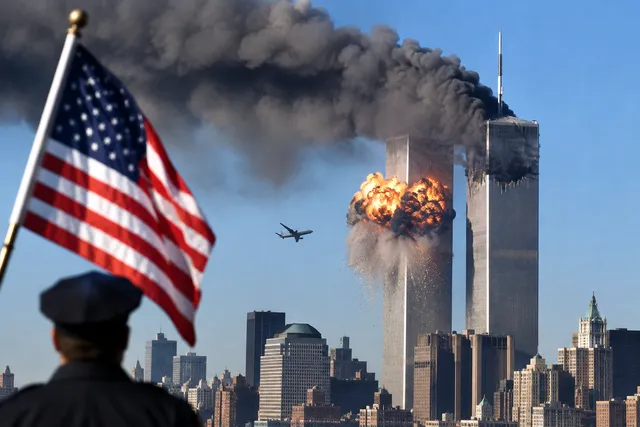
Twenty-five years ago, on 11 September 2001, 19 al-Qaeda hijackers seized four commercial aircraft in the United States. Two planes struck the World Trade Center in New York, another struck the Pentagon, and United Airlines Flight 93 crashed in Pennsylvania after passengers attempted to retake control of the aircraft.
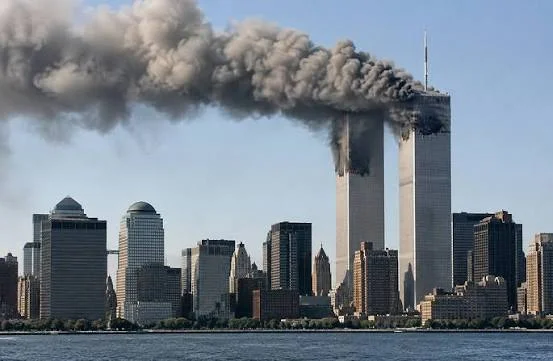
Nearly 3,000 people were killed in the attacks.
On 11 September 2026, the United States marked the 25th anniversary with ceremonies at Ground Zero, the Pentagon and the Flight 93 National Memorial. At Ground Zero, victims’ names were read aloud, while a new moment of silence recognised people who subsequently died from illnesses connected with exposure to the toxic dust and debris following the attacks.
But the 25th anniversary is more than an occasion for remembrance. It is also an opportunity to examine one of the most consequential legal transformations of the modern era. The attacks fundamentally altered the relationship between national security, executive power, military force, surveillance, immigration, criminal justice, privacy and civil liberties.
The legal architecture created after 9/11 remains influential a quarter-century later. The U.S. Department of Homeland Security still exists. The 2001 Authorization for Use of Military Force (AUMF) remains on the books. Guantanamo Bay remains open. Counterterrorism surveillance and material-support laws continue to shape national-security investigations.
The central question in 2026 is therefore no longer simply what happened on 9/11? It should be:
“How much of the legal world created in response to 9/11 remains with us—and at what cost to security, liberty and the rule of law?“
Why the 25th Anniversary Is Legally Significant
The anniversary arrives at a moment when many of the people who experienced 9/11 directly are entering later life, while an entire generation has grown up without personal memories of the attacks. The 9/11 Memorial & Museum says approximately one-third of the U.S. population is now too young to remember the attacks. Its educational programmes are therefore increasingly focused on ensuring that younger generations understand both the events themselves and their consequences.
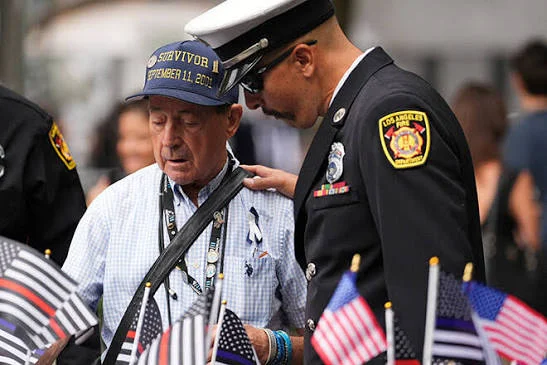
That generational change has an important legal dimension. Emergency powers introduced during periods of national trauma can become normalised over time. Measures initially presented as exceptional responses to an extraordinary threat can eventually become permanent features of the legal system.
That is one of the central questions raised by the post-9/11 experience.
The USA PATRIOT Act and the Expansion of State Power
One of the immediate legal responses to the attacks was the rapid expansion of federal counterterrorism powers. The USA PATRIOT Act broadened government authority in areas including surveillance, intelligence gathering and information sharing. The fundamental policy objective was straightforward which is to prevent another terrorist attack by giving investigators and intelligence agencies greater ability to identify threats before they materialised.
However, the expansion generated an equally important constitutional debate with questions such as
- How much surveillance should a government be permitted to conduct in the name of national security?
- How should intelligence agencies balance secrecy against judicial oversight?
- Where should the law draw the boundary between legitimate counterterrorism investigations and intrusion into the private lives of ordinary citizens?
Twenty-five years later, these questions remain central to debates over privacy and government surveillance. The broader post-9/11 legal architecture also expanded material-support offences and other counterterrorism authorities. According to Lawfare’s 25th-anniversary review, many of these powers have survived beyond the circumstances that originally produced them and have subsequently been applied to new contexts.
The Creation of the Department of Homeland Security
The attacks also exposed weaknesses in the coordination of U.S. intelligence and domestic security agencies. One of the most important institutional responses was the creation of the Department of Homeland Security (DHS). The department brought together numerous federal functions associated with domestic security, border protection, emergency preparedness and counterterrorism.
Twenty-five years later, DHS remains one of the largest federal agencies in the United States. Its creation fundamentally changed how the U.S. government approaches homeland security. The post-9/11 model also influenced how governments around the world conceptualised terrorism. National security became increasingly interconnected with:
- border security;
- immigration enforcement;
- aviation security;
- intelligence sharing;
- financial monitoring;
- cybersecurity;
- policing; and
- international cooperation.
The result was a much broader understanding of what constitutes national security.
The War on Terror and International Law
Perhaps the most consequential legal development following 9/11 was the launch of the War on Terror. The United States concluded that the attacks required more than conventional criminal investigation. The government treated al-Qaeda and associated organisations as an armed enemy and pursued military action against them.
Congress passed the 2001 Authorization for Use of Military Force, providing legal authority for military action against those responsible for the attacks and associated forces.
Twenty-five years later, that authorization remains legally significant. It has been used as a legal basis for military operations in countries beyond Afghanistan, demonstrating how an authorization adopted in the immediate aftermath of 9/11 acquired a considerably broader historical life. This raises an enduring constitutional question:
“How long should an authorization for military force remain legally operative?“
An authorization adopted during an emergency may continue influencing military operations decades after the circumstances surrounding its adoption have changed. The 25th anniversary has therefore renewed attention to the continuing legal consequences of the AUMF.
Afghanistan: The First Major Military Consequence
The U.S.-led intervention in Afghanistan became the first major military response to the attacks. The objective was to dismantle al-Qaeda and remove the Taliban government that had provided sanctuary to Osama bin Laden and his organisation. The conflict became one of the longest wars in modern U.S. history. Its consequences extended far beyond the original counterterrorism mission, affecting:
- international humanitarian law;
- detention policy;
- military tribunals;
- civilian protection;
- rules governing armed conflict;
- refugee and migration policy; and
- the interpretation of executive war powers.
The eventual U.S. withdrawal from Afghanistan in 2021 marked the end of America’s principal military presence there, but it did not eliminate the legal questions generated by two decades of conflict.
Iraq and the Expansion of the War on Terror
The post-9/11 security environment also contributed to the U.S. invasion of Iraq in 2003. The Iraq War became one of the most controversial consequences of the post-9/11 era. The legal and political debate surrounding the intervention raised fundamental questions about:
- the use of force;
- self-defence;
- preventive military action;
- intelligence assessments;
- state sovereignty; and
- the authority to initiate armed conflict.
Twenty-five years later, assessments of the Iraq intervention remain deeply contested. The broader lesson, however, is clear that the legal consequences of 9/11 were not confined to domestic U.S. law. They influenced the interpretation and application of international rules governing the use of military force.
Guantanamo Bay and the Rule of Law
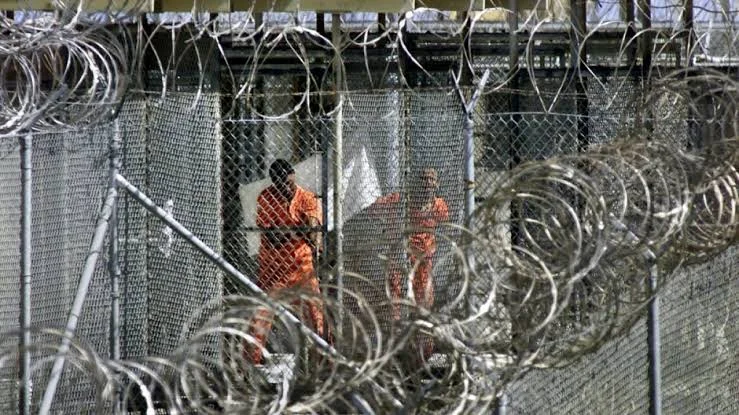
Few institutions symbolise the legal controversies of the post-9/11 period more strongly than Guantanamo Bay. The detention facility was established in 2002 to hold individuals accused of involvement in terrorism. Over the years, hundreds of detainees passed through the facility. Yet the legal status of detainees became one of the defining constitutional and international-law controversies of the War on Terror.
The central questions included:
- Can individuals suspected of terrorism be detained indefinitely?
- What legal rights do foreign detainees possess?
- Can military commissions replace ordinary criminal courts?
- What standards should govern evidence obtained during intelligence interrogations?
- What happens when detainees cannot safely be returned to their countries of origin?
The Supreme Court of the United States subsequently played an important role in defining the legal rights available to Guantanamo detainees. Still, a quarter-century after 9/11, the detention system remains legally unresolved in important respects. Lawfare reports that 15 detainees remain at Guantanamo Bay, while none of those remaining detainees has been tried for perpetrating the 9/11 attacks.
Why the 9/11 Trials Have Taken So Long
One of the most striking legal developments of the 25-year anniversary is that alleged senior 9/11 conspirators still have not received final trials. Khalid Sheikh Mohammed, identified by U.S. authorities as the alleged principal architect of the attacks, has been detained at Guantanamo since 2006.
The military commission proceedings have experienced years of litigation and procedural disputes. The underlying difficulties are unusually complex because the prosecution must address evidence connected to earlier CIA detention and interrogation programmes, including allegations involving torture. The consequences are significant.
Evidence obtained through coercive treatment can create serious problems concerning:
- admissibility;
- due process;
- reliability;
- constitutional rights; and
- international human rights law.
Current reporting indicates that a potential trial remains uncertain, with 2028 discussed as a possible trial timeframe. Twenty-five years after the attacks, the fact that the central criminal proceedings remain unresolved has become part of the legal legacy of 9/11 itself.
Torture, Detention and the Rule of Law
The post-9/11 period also produced some of the most serious legal controversies concerning the treatment of terrorism suspects. U.S. authorities established interrogation programmes involving techniques later widely condemned as torture. The controversy generated legal disputes concerning:
- the prohibition of torture;
- command responsibility;
- executive authority;
- detainee rights;
- military law; and
- international humanitarian standards.
A continuing criticism is that senior officials were not held criminally accountable for many of the abuses associated with the programme. Twenty-five years later, human-rights advocates continue to argue that this lack of accountability weakened the rule of law. The debate illustrates an enduring tension in counterterrorism law:
“Can a government protect national security effectively without abandoning the legal principles it claims to defend?“
Surveillance and Privacy: The Digital Legacy of 9/11
The attacks also transformed the relationship between technology and national security. Governments increasingly relied upon:
- electronic communications;
- intelligence databases;
- information sharing;
- telecommunications data;
- financial information; and
- digital surveillance.
The objective was to identify potential terrorist threats before they could develop into attacks. But the expansion of surveillance also raised fundamental privacy concerns. The central legal tension remains between security and privacy. Governments argue that intelligence capabilities are necessary to prevent terrorism.
Civil-liberties advocates argue that excessive surveillance can undermine constitutional rights and democratic accountability. The post-9/11 experience therefore helped establish a regulatory environment in which national-security surveillance became one of the most important legal debates surrounding modern technology.
Immigration and Border Security
The impact of 9/11 also extended to immigration law. Following the attacks, governments increasingly linked migration controls with counterterrorism and national-security policy. The United States strengthened border controls, visa screening and immigration-security procedures. Airports became substantially more security-focused, while governments around the world expanded passenger screening and identity verification. These developments changed the experience of international travel.
They also created legal debates involving:
- racial and religious profiling;
- immigration detention;
- deportation;
- national-security exclusions;
- refugee protection; and
- due process.
The post-9/11 period demonstrated that national-security policies can have consequences for people who have no connection whatsoever with terrorism.
The Impact on Muslim Communities
The attacks also had profound social and legal consequences for Muslim communities, both in the United States and internationally. Security policies adopted after 9/11 sometimes disproportionately affected Muslim communities through surveillance, immigration scrutiny, policing and national-security investigations.
Legal scholars continue to examine how counterterrorism policies interacted with discrimination and civil rights. The 25th anniversary has therefore generated renewed discussion about the difference between targeting terrorism and associating terrorism with particular ethnic, religious or national communities.
Recent reflections on the anniversary have highlighted the continuing effect of 9/11 on public perceptions of Muslim Americans. The legal lesson is fundamental:
“Counterterrorism measures must target unlawful conduct and credible threats rather than entire communities.“
Aviation Security Was Permanently Changed
For ordinary citizens, one of the most visible legacies of 9/11 has been aviation security. Air travel changed dramatically after the attacks. Security screening became more intensive, identity verification became more rigorous, and governments developed increasingly sophisticated systems for identifying potential threats.
The creation of the Transportation Security Administration became a central component of this transformation. What had once been viewed primarily as an airport-management issue became a national-security function. The legal significance is substantial because aviation demonstrates how emergency security measures can become permanent elements of everyday life.
Financial Regulation and Counterterrorism
The fight against terrorism also expanded into the financial sector. Governments increasingly focused on disrupting terrorist organisations by preventing them from accessing and moving funds. This strengthened the importance of:
- financial intelligence;
- suspicious transaction monitoring;
- customer identification;
- sanctions;
- asset freezing;
- international information sharing; and
- anti-money-laundering frameworks.
The financial sector consequently became a central part of national-security policy. Banks were no longer viewed solely as commercial institutions. They also became important participants in the international effort to identify and disrupt financial networks connected with terrorism.
International Cooperation After 9/11
The attacks demonstrated that terrorism could operate across borders. As a result, governments strengthened international cooperation involving:
- intelligence sharing;
- law enforcement;
- extradition;
- financial intelligence;
- border security;
- aviation security; and
- counterterrorism operations.
International organisations also became increasingly important in developing standards for combating terrorism and terrorist financing. The post-9/11 era therefore reinforced the principle that national security cannot always be managed through purely national law. A terrorist network operating across several jurisdictions may require coordinated responses involving multiple legal systems.
The Globalisation of Counterterrorism Law
Perhaps the most important international legacy of 9/11 is that counterterrorism law became increasingly globalised. Countries adopted or expanded:
- terrorism offences;
- terrorist-financing offences;
- asset-freezing regimes;
- border-control measures;
- intelligence-sharing mechanisms;
- surveillance powers; and
- national-security legislation.
This created a complex international legal environment in which governments attempt to coordinate security policies while maintaining different constitutional and human-rights standards. The result is a continuing tension between harmonisation and national sovereignty.
Europe After 9/11
European governments also strengthened counterterrorism frameworks following the attacks. Over time, however, European legal debates increasingly focused upon the proportionality of security measures and their compatibility with fundamental rights. The European experience demonstrates that counterterrorism legislation does not exist in a legal vacuum.
Measures must be evaluated against:
- privacy rights;
- freedom of expression;
- freedom of association;
- non-discrimination;
- due process; and
- judicial oversight.
The 25-year anniversary has therefore encouraged renewed examination of whether emergency security measures introduced after 9/11 remain proportionate to contemporary threats.
The Rule of Law: The Central Lesson of 25 Years
Perhaps the strongest legal lesson of the post-9/11 period is the importance of the rule of law during emergencies. Governments have a legitimate responsibility to protect citizens from terrorism.
But national-security emergencies can create pressure for extraordinary powers. The difficult question is how those powers should be constrained. The experience of the last 25 years suggests that several principles remain essential:
- Judicial Oversight: Security agencies require effective mechanisms of legal supervision.
- Due Process: Individuals accused of terrorism must retain meaningful legal rights.
- Proportionality: Counterterrorism measures should not exceed what is reasonably necessary to address legitimate security threats.
- Accountability: Government officials must remain subject to the law.
- Transparency: Democratic societies require sufficient information to evaluate the operation of extraordinary powers.
These principles are particularly important because emergency measures can survive long after the emergency that created them.
9/11 and the Expansion of Executive Power
Another major legal consequence was the expansion of executive power. The War on Terror required governments to make rapid decisions involving:
- military operations;
- detention;
- intelligence;
- surveillance;
- classified information;
- targeted counterterrorism operations; and
- immigration security.
This strengthened the role of executive institutions in national-security decision-making. The resulting constitutional debate remains highly relevant as to where should executive authority end and legislative or judicial authority begin. Twenty-five years after 9/11, that question remains unresolved in many areas of national-security law.
The Human Cost Continues 25 Years Later
The consequences of 9/11 are not limited to legislation and court decisions. The human consequences remain profound. At the 2026 anniversary ceremonies, victims’ families once again gathered to read the names of those who died.
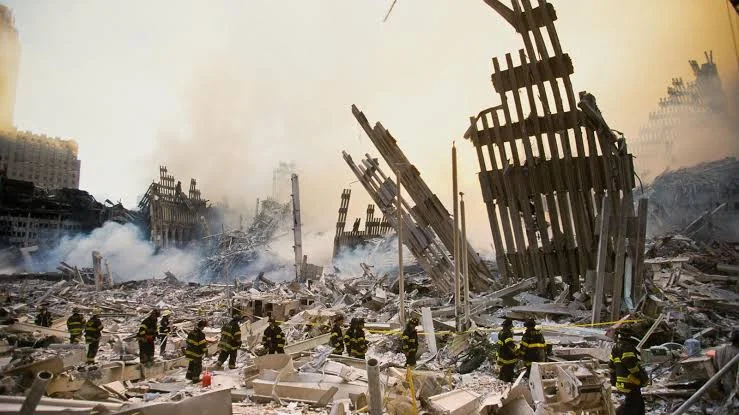
For the first time at the Ground Zero commemoration, a dedicated moment of silence also recognised people who later died from illnesses associated with exposure to toxic dust and debris. The New York Fire Department has reported that more than 600 firefighters have died from 9/11-related illnesses since the attacks.
This means the legal consequences of 9/11 extend into occupational health, compensation, public-health policy and government responsibility. The disaster did not end when the towers fell. Its consequences continued through the health problems experienced by first responders, survivors and others exposed to the aftermath.
What Has Changed Since 2001?
Twenty-five years after 9/11, the world is fundamentally different. The legal environment has changed in several important respects.
- Security is now more preventive as governments increasingly seek to identify threats before an attack occurs.
- Technology is central to national security as digital surveillance, data analysis and information sharing are now essential elements of counterterrorism.
- Financial institutions play a security role as banks and other financial institutions participate in efforts to identify and disrupt terrorist financing.
- Borders have become security systems as immigration and border controls increasingly incorporate national-security screening.
- Counterterrorism is global as terrorism is treated increasingly as a transnational problem requiring international cooperation.
- Civil liberties remain contested as the debate over privacy, detention, due process and government power has never disappeared.
What Has Not Been Resolved?
Despite 25 years of counterterrorism legislation and military operations, several fundamental questions remain.
- How should terrorism suspects be prosecuted?
- How far should governments be permitted to conduct surveillance?
- How should emergency powers be limited?
- How should detainees be treated during armed conflict?
- When should military force be authorised?
- How should governments balance national security with freedom and privacy?
- How should victims and survivors receive long-term support?
These questions demonstrate why the legal legacy of 9/11 remains relevant even to people born after the attacks.
What Should the World Learn From 9/11?
The 25th anniversary has produced unusually broad reflection on the post-9/11 legal order. At the UCLA School of Law, a September 2026 symposium examining 25 years after 9/11 described the attacks as having produced sweeping transformations in law, politics, society and technology, including expansions of state power that continue to shape life today.
Meanwhile, contemporary legal commentary continues to question whether counterterrorism measures introduced after 2001 have remained consistent with democratic principles and the rule of law. The debate is therefore no longer simply about whether the post-9/11 response was necessary.
It is increasingly about whether extraordinary legal powers have remained proportionate and accountable after the immediate emergency has passed. The 25th anniversary provides an opportunity to identify several broader legal lessons such as:
- Security and liberty are not necessarily opposites as effective counterterrorism can coexist with strong constitutional and human-rights protections.
- Emergency powers require limits as powers introduced during crises should remain subject to legislative review, judicial oversight and democratic accountability.
- International cooperation matters as terrorism that operates across borders cannot be addressed effectively through isolated national legal systems.
- Human rights remain relevant during emergencies as national security does not eliminate fundamental legal obligations.
- Accountability protects institutions because when governments exercise extraordinary powers without sufficient accountability, public trust can suffer.
- Laws can outlive the crises that created them
The continued existence of post-9/11 institutions and authorities demonstrates why sunset clauses, legislative review and judicial scrutiny can be important safeguards.
Conclusion
Twenty-five years after the September 11 attacks, the world continues to live with the consequences of that morning. The victims remain at the centre of the anniversary. In 2026, families, survivors, first responders and national leaders once again gathered at Ground Zero, the Pentagon and Shanksville to remember those who died. But remembrance also requires legal reflection.
9/11 transformed the relationship between governments and citizens. It expanded counterterrorism powers, created new security institutions, changed aviation and border security, reshaped international military policy, transformed surveillance practices and produced decades of debate over detention, torture, due process and civil liberties.
Some of those measures helped governments respond to genuine security threats. Others generated profound questions about the limits of state power. A quarter-century later, the legal architecture of the War on Terror remains visible. DHS continues to operate, the 2001 AUMF remains legally significant, Guantanamo remains open, and counterterrorism surveillance and material-support laws continue to influence national-security policy.
The most important lesson of the 25th anniversary is:
“The consequences of an emergency do not necessarily end when the emergency ends.“
Laws created in moments of fear can shape generations. The challenge for governments in the next 25 years will therefore be to protect societies from terrorism and emerging security threats without allowing exceptional powers to become permanently detached from the principles of due process, proportionality, human rights, judicial oversight and the rule of law.
The history of 9/11 is ultimately not only a history of terrorism. It is also a history of how governments respond when democratic societies are placed under extraordinary pressure and how those responses can reshape law for decades to come.
Frequently Asked Questions
What happened on 9/11?
How did 9/11 change U.S. law?
What was the USA PATRIOT Act?
It was major federal legislation enacted after the attacks that expanded government counterterrorism and surveillance authorities.
What is the 2001 AUMF?
The Authorization for Use of Military Force provided legal authority for U.S. military action following the attacks and remains on the books 25 years later.
Why is Guantanamo Bay legally controversial?
The detention facility has generated extensive litigation concerning detention without trial, detainee rights, military commissions, evidence and due process.
Have the alleged 9/11 masterminds been tried?
The principal alleged conspirators, including Khalid Sheikh Mohammed, have not yet completed trials. Current reporting indicates that a trial timetable remains uncertain, with 2028 discussed as a possible date.
Did 9/11 affect international law?
Yes. The attacks influenced international approaches to counterterrorism, use of force, terrorist financing, intelligence cooperation, detention and national security.
How did 9/11 affect civil liberties?
Expanded surveillance, detention and counterterrorism powers generated long-running debates concerning privacy, due process, discrimination and the appropriate limits of government authority.
Does the legal legacy of 9/11 still matter in 2026?
Yes. Major institutions and legal authorities created or expanded after the attacks remain part of the U.S. national-security system, making the 25th anniversary an important moment for evaluating their continuing necessity and proportionality.