
The 81st United Nations General Assembly has provided an unusually clear picture of a world struggling to agree on the rules by which international power should be exercised. The General Debate, held from 22 to 28 September 2026, brought 194 delegations to the UN podium, including heads of state, governments and senior ministers.
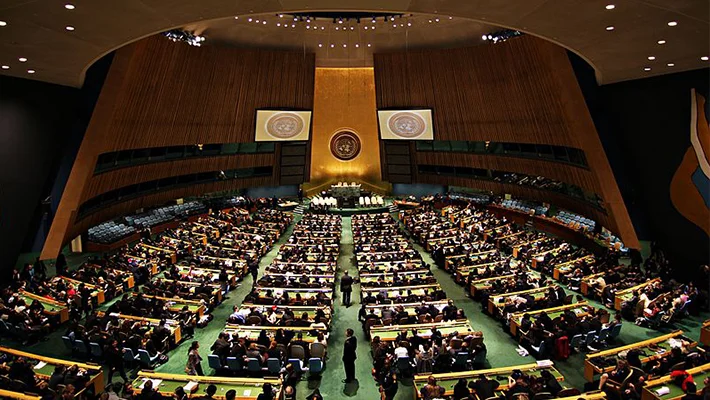
The speeches were delivered against the background of the U.S.-Israel war with Iran, the continuing Gaza crisis, Russia’s war in Ukraine, India-Pakistan tensions, disputes over international institutions, climate insecurity and the rapid emergence of artificial intelligence as a strategic technology.
But the significance of UNGA 2026 was not confined to what leaders said. What happened inside the General Assembly chamber was itself part of the diplomatic story. Delegates walked out during Israeli Prime Minister Benjamin Netanyahu‘s speech. The United States delegation walked out when Iranian President Masoud Pezeshkian began speaking. Pakistan and India used the same international platform to present sharply different accounts of their regional conflict.
Donald Trump used his address to issue an extraordinary warning to Iran, while Pezeshkian subsequently acknowledged that Trump’s speech had caused him to change the remarks he had originally intended to deliver. Taken together, these events reveal an international system in which military power, diplomacy, international law, political legitimacy, social media and technological power are increasingly intertwined.
The question emerging from New York is therefore larger than any individual speech:
“can the existing international legal order adapt to a world in which power is becoming more dispersed but international disagreements are becoming more intense?”
António Guterres: A Warning About a Fragmenting World
UN Secretary-General António Guterres opened the General Debate with perhaps the broadest assessment of the international system. His message was essentially a warning that the world’s political fault lines are widening at precisely the moment when international cooperation is becoming more necessary.
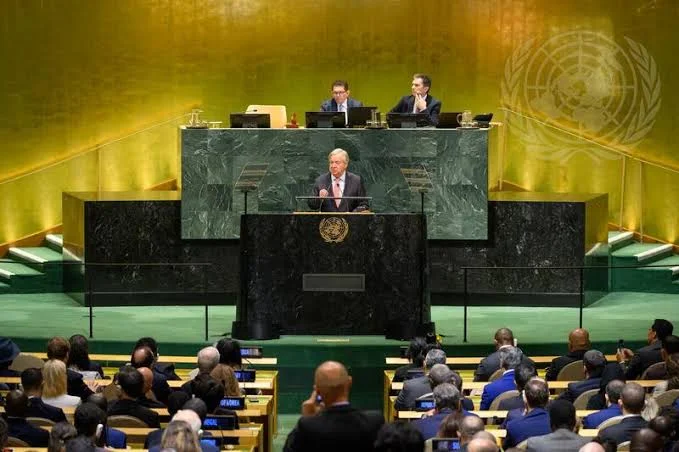
Guterres placed peace, development and human rights within the same framework rather than treating them as separate issues. His argument was that:
“international security cannot be sustained indefinitely when development is failing, human rights are being disregarded and states increasingly rely on military solutions.”
In the UN’s account of the debate, Guterres specifically described Russia’s full-scale invasion of Ukraine as a violation of the UN Charter and called for the Charter to be defended without double standards. That phrase “without double standards” is particularly important for understanding the political atmosphere of this year’s General Assembly.
Many developing countries have long argued that international law is applied more forcefully to weaker states than to powerful states with strong diplomatic alliances. The credibility of the international system therefore depends not only upon having rules, but upon demonstrating that those rules are capable of applying consistently. Guterres’ broader argument was that:
“the emerging multipolar world does not necessarily have to become a fragmented world.”
A multipolar system can function through cooperation, but only if states accept that power must operate within agreed rules. His warning therefore went beyond any particular conflict. It was a warning about the possibility of a world in which states increasingly pursue national interests without sufficient regard for collective institutions.
For international law, that distinction is crucial. The UN Charter was never designed to eliminate national power. It was designed to place legal restrictions around the use of that power, particularly through the prohibition on the threat or use of force and the collective-security system established through the Security Council.
Donald Trump: Iran, Military Power and the Return of Coercive Diplomacy
U.S. President Donald Trump’s speech became one of the most consequential addresses of the General Debate because it placed the conflict with Iran at the centre of the UN’s diplomatic stage. Trump defended the U.S.-Israeli military campaign against Iran and argued that American action had prevented Tehran from obtaining a nuclear weapon. He also issued an exceptionally strong warning that:
“the United States could annihilate Iran if a deal was not reached to end the conflict.”
The speech illustrated Trump’s characteristic approach to international diplomacy as military capability and negotiation were presented not as alternatives but as interconnected instruments. The threat of overwhelming force was used as leverage for a possible diplomatic settlement. That raises a difficult legal question.
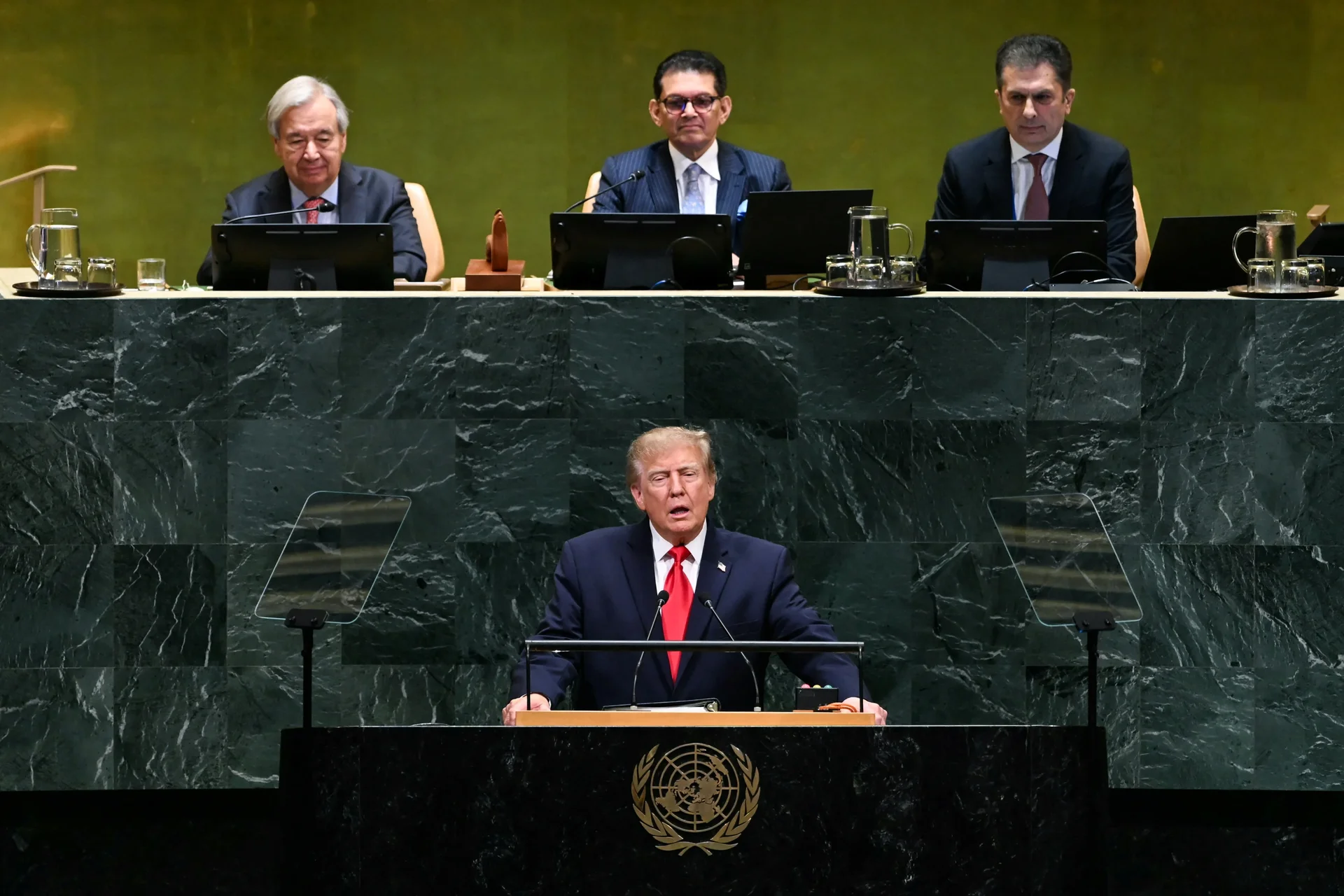
International law distinguishes between political threats and legally justified uses of force. A leader’s statement that a state could be destroyed does not itself establish that military action would be lawful. Any proposed use of force must be examined against the UN Charter, including the prohibition on force, the rules concerning self-defence and, where applicable, Security Council authority.
The United States may possess enormous military capabilities, but international law does not automatically treat military capability as a legal entitlement. Once hostilities occur, international humanitarian law imposes further obligations concerning distinction, proportionality and precautions in attack. Trump’s speech therefore demonstrated:
“the difference between strategic power and legal justification.”
At the same time, the speech demonstrated another transformation in global politics. The UN podium is traditionally associated with diplomacy, negotiation and collective security. Trump’s remarks showed that it can also be used as a platform for strategic deterrence and public coercion. That is important because public threats between states can affect the possibility of escalation. Once statements are delivered before the international community, leaders may find it politically harder to retreat from them without appearing to concede.
Masoud Pezeshkian: Iran’s Response and the Diplomacy of Defiance
Iranian President Masoud Pezeshkian addressed the General Assembly the following day and provided one of the clearest examples of how one UN speech can directly reshape another. Pezeshkian said that Iran would not surrender in the war with the United States while simultaneously insisting that Tehran still believed in diplomacy. Reuters reported that the United States delegation walked out at the beginning of his speech.
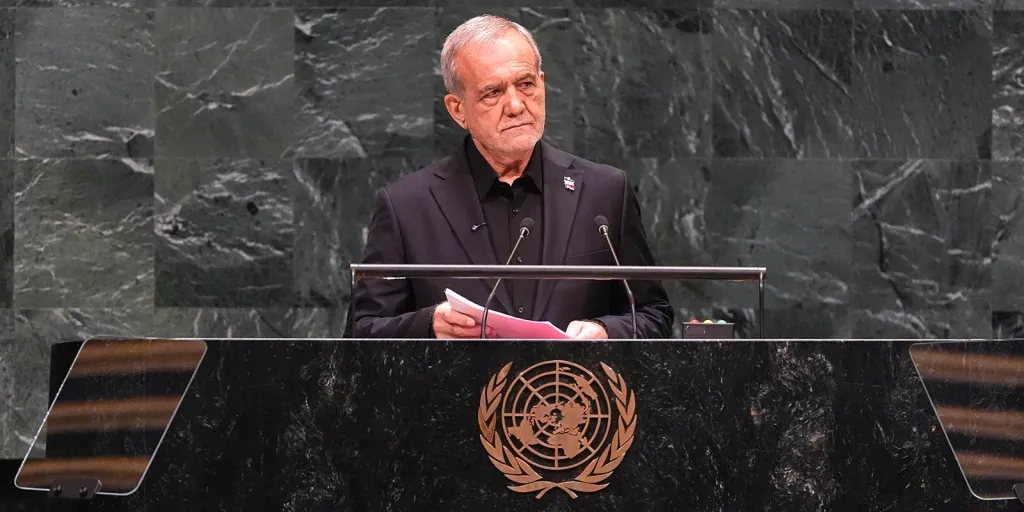
The most striking aspect of Pezeshkian’s appearance was not simply his rejection of Trump’s threats. It was his explanation that Trump’s previous day’s address had affected what he intended to say. That effectively transformed the two speeches into a diplomatic exchange.
“Trump spoke.
Iran listened.
Iran responded.”
The UN chamber therefore became something resembling a direct communication channel between two adversarial governments. Pezeshkian attempted to frame Iran’s position around sovereignty, resistance to coercion and the possibility of diplomacy. He rejected the idea that Iran should negotiate under military pressure, while simultaneously avoiding language that would completely close the diplomatic door. This creates an important legal distinction.
International law does not prohibit diplomatic disagreement or even hostile rhetoric. The more difficult issue is what happens when rhetoric is accompanied by military action. The Iranian position therefore sought to shift the debate from:
“What will Iran surrender? to Under what legal and diplomatic conditions should negotiations take place?”
Pezeshkian also raised the strategic significance of the Strait of Hormuz, arguing that continued military deployment and expansion of the conflict would not create peace. That adds another legal dimension involving freedom of navigation, maritime security and the protection of international shipping. The Iran speech consequently connected three separate legal areas that includes the use of force, diplomatic settlement and international maritime security.
Benjamin Netanyahu: A Speech Overshadowed by a Mass Walkout
If Trump’s speech demonstrated the power of military rhetoric, Benjamin Netanyahu’s address demonstrated the growing importance of diplomatic legitimacy. As Netanyahu began speaking, dozens of delegates walked out of the UN chamber. Reuters reported that Netanyahu called those who departed
“moral cowards and challenged anyone else who agreed with them to leave before continuing his speech.”
The scene was extraordinary because the walkout happened at precisely the moment Netanyahu took the podium. The emptying seats became part of the speech. Instead of simply hearing Netanyahu’s arguments, the international audience also witnessed a physical demonstration of opposition to his government’s policies.
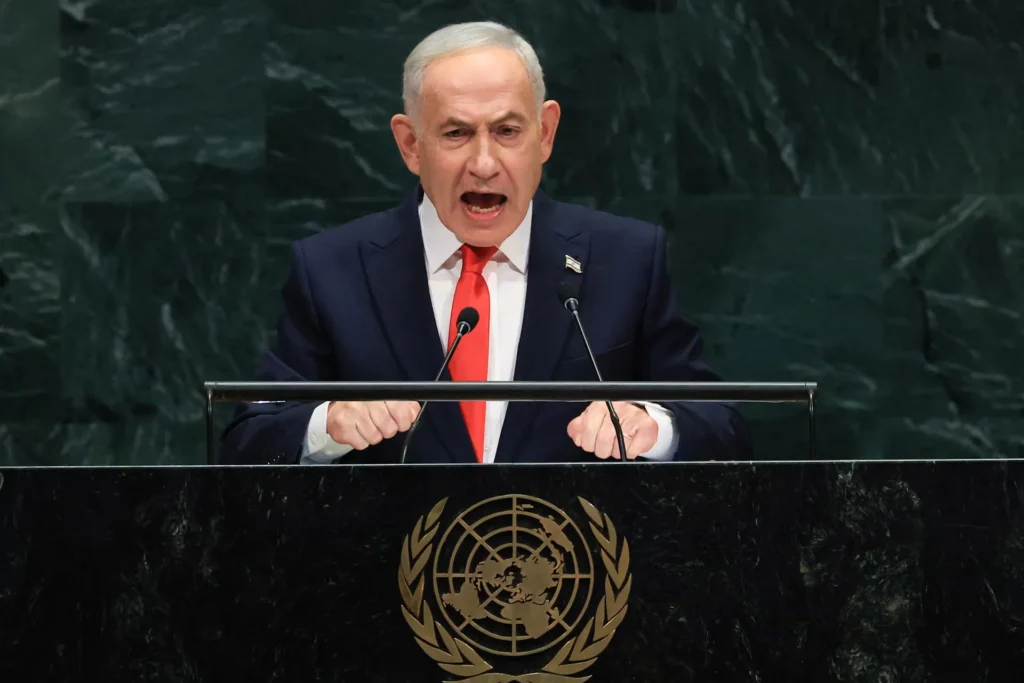
The Associated Press reported that Netanyahu defended Israel’s attack on Iran and rejected allegations concerning genocide in Gaza, while his appearance was met with cheers, boos and mass walkouts. Legally, however, the walkout needs to be understood carefully.
It was a political and diplomatic protest, not a judicial determination. Delegations leaving the chamber did not establish that Israel had committed a particular international-law violation. Questions concerning war crimes, genocide, occupation, proportionality, civilian protection or state responsibility require legal processes, evidence and competent institutions.
But politically, the symbolism was powerful. The walkout demonstrated that Israel’s conduct has become one of the most divisive questions within the UN system. It also revealed the difference between:
“formal diplomatic status and political legitimacy.”
Israel remains a UN member state and continues to have significant diplomatic and military support, particularly from the United States. Yet, a large number of governments were willing to demonstrate publicly that they disagreed with Netanyahu’s position.
The United States Walkout During Pezeshkian’s Speech
The diplomatic theatre was not one-sided. When Pezeshkian began speaking, the U.S. delegation walked out. Reuters reported the departure at the start of the Iranian president’s address. This created a remarkable symmetry. Delegations walked out during Netanyahu’s speech. The American delegation walked out during Iran’s.
The chamber therefore became a visual map of geopolitical alliances. The significance lies in the fact that diplomacy normally depends upon governments listening even when they strongly disagree. A walkout is the opposite signal as it says that:
“a delegation considers the speaker’s message unacceptable or does not wish to participate in the presentation.”
Again, this has no direct legal consequence. But it has diplomatic consequences because international relations depend partly upon recognition, communication and the willingness to engage. If walkouts become more common, the UN risks becoming less of a place where rival states negotiate and more of a place where they publicly demonstrate their disagreement.
Mahmoud Abbas and the Palestinian Question
The Palestinian position remained central to the General Assembly even beyond Netanyahu’s speech. Palestinian President Mahmoud Abbas delivered a prerecorded address after being denied a U.S. visa for the second consecutive year, according to the Associated Press. His intervention called for stronger international action concerning Israeli policies.
The Palestinian address is important because the question of Palestinian statehood increasingly intersects with several areas of international law that includes:
“self-determination, occupation, territorial sovereignty, humanitarian law and the protection of civilians.”
The broader diplomatic trend is that the Palestinian question is no longer treated solely as a bilateral Israeli-Palestinian dispute. It has become a central test of how the international community understands self-determination and civilian protection. That is why the issue repeatedly appears in speeches by governments that have no direct involvement in the conflict.
For many states, the Palestinian question represents a test of whether international legal principles apply consistently to all peoples. For Israel and its supporters, however, the issue is inseparable from security, terrorism and the protection of Israeli civilians. The competing narratives therefore remain fundamentally difficult to reconcile.
Tayyip Erdoğan: Türkiye Challenges the Structure of the International Order
Türkiye’s President Recep Tayyip Erdoğan used his UN General Assembly speech to challenge the structure of the existing international order, calling for reform of the UN Security Council and arguing that a system in which more than 190 countries are effectively subject to decisions shaped by five permanent members cannot adequately reflect today’s geopolitical realities.
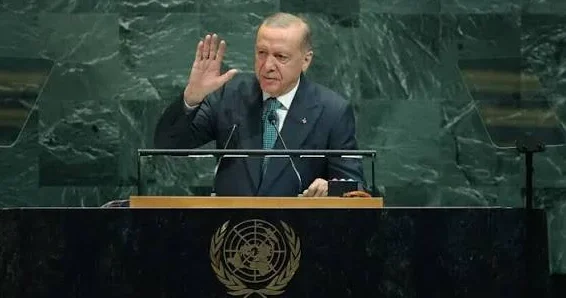
He strongly criticised Israel’s conduct in Gaza and called for greater international support for Palestinian statehood, while also highlighting the need for diplomacy and de-escalation in conflicts involving Iran and Ukraine. Erdoğan additionally raised Kashmir, aligning Türkiye’s position more closely with Pakistan’s diplomatic narrative, prompting India to reject what it described as external interference in an issue concerning its sovereignty.
From a legal perspective, Erdoğan’s speech brought together several central questions running through UNGA 2026 Security Council reform, self-determination, sovereignty, civilian protection, the use of force and the role of middle powers. His intervention represented a broader argument that the institutions governing international law and global security must become more representative if they are to retain legitimacy in an increasingly multipolar world.
Shehbaz Sharif: Pakistan’s Case on Kashmir, Water and Regional Security
Pakistan’s Prime Minister Shehbaz Sharif used the General Assembly to place South Asian security firmly within the wider debate about international law. His address raised Kashmir, the India-Pakistan conflict, Gaza and the Indus Waters Treaty, while also acknowledging Donald Trump’s role in the previous India-Pakistan crisis.
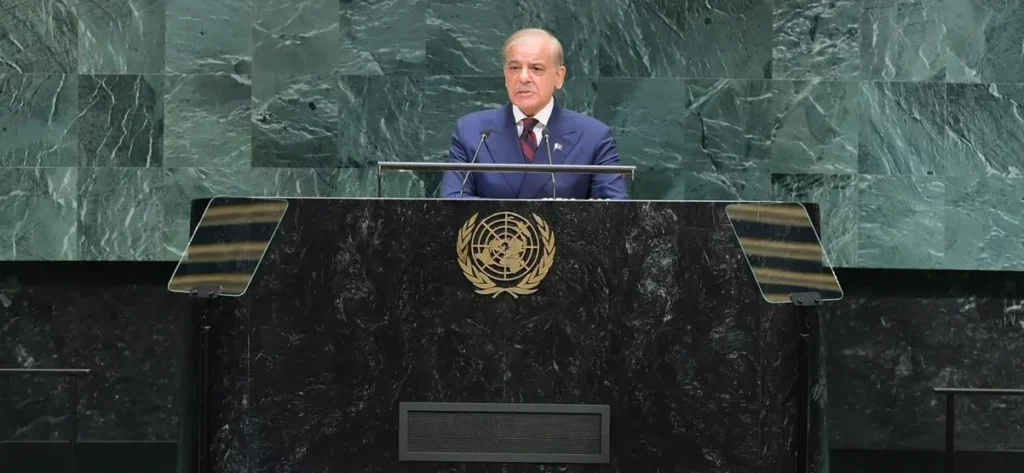
The importance of the speech was that Pakistan presented its regional concerns not merely as political disputes but as questions involving international commitments. The Indus Waters Treaty is particularly significant because:
“it is an international agreement governing the use of the waters of the Indus river system.”
Pakistan’s warning over any attempt to stop, impede or divert its water supply therefore raises issues extending beyond ordinary bilateral diplomacy. Treaty interpretation, international water law and dispute-settlement mechanisms become relevant. Sharif’s approach also connected water security with national security.
That connection is becoming increasingly important worldwide because climate change, population growth and water scarcity are turning rivers and transboundary water systems into potential sources of geopolitical tension. Pakistan’s message therefore had significance beyond Kashmir. It illustrated how climate, natural resources, treaty law and national security are becoming interconnected.
India’s Response: Terrorism, Security and Self-Defence
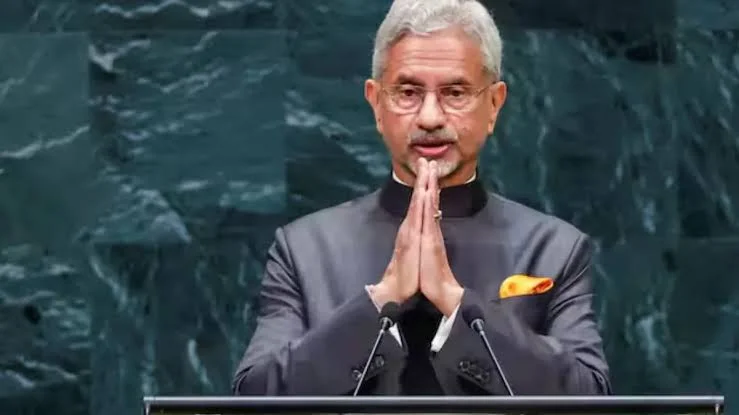
India presented a substantially different account of South Asian security. External Affairs Minister S. Jaishankar focused on terrorism and national security and defended India’s right to self-defence. The contrast between the Pakistani and Indian presentations was striking as:
“both governments placed their positions within the language of international law, but emphasised different principles.”
Pakistan’s narrative centred on Kashmir, treaty obligations and water security. India’s narrative centred on terrorism, sovereignty and self-defence. This is precisely why international conflicts can become legally complex. The existence of a security threat does not automatically establish that every response is lawful.
International law concerning self-defence requires consideration of the underlying armed attack, necessity and proportionality, while international humanitarian law governs the conduct of hostilities once an armed conflict exists. The competing Indian and Pakistani narratives therefore demonstrate how states frequently use the same vocabulary of international law while reaching fundamentally different conclusions about what that law permits.
Trump’s Intervention in the Pakistan-India Narrative
Another unusual element of UNGA 2026 was the way Trump’s comments intersected with Pakistan’s speech. Trump had already praised Shehbaz Sharif during his own address and described him positively while reiterating his claimed role in helping end the 2025 India-Pakistan confrontation. The episode demonstrated how contemporary diplomacy is increasingly personalised.
Instead of governments communicating exclusively through diplomatic notes, ambassadors and official communiqués, leaders can now intervene directly through speeches and social-media platforms. That creates both opportunities and risks.
A leader can immediately reinforce an ally’s message. But a leader can also publicly endorse one interpretation of a disputed event, potentially making diplomatic compromise more difficult. The UN system was designed around states. Modern diplomacy increasingly revolves around:
“states plus personalities plus digital platforms.”
That may be one of the most significant changes visible from this General Assembly.
China’s Message: Multilateralism in a Multipolar World
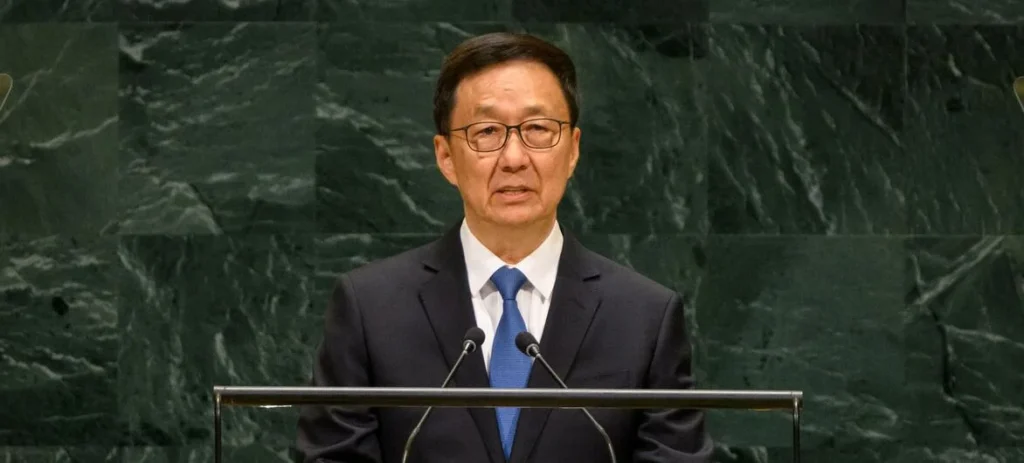
Chinese Vice President Han Zheng addressed the 81st Session of the United Nations General Assembly while President Xi Jinping skipped the gathering despite visiting the United States for a summit. China’s position needs to be understood separately from the Israel-U.S.-Iran and India-Pakistan disputes. Beijing’s broader message has been that:
“the international system should remain multilateral but should better reflect the distribution of power in the twenty-first century.”
That position challenges the idea that the institutions created after the Second World War should remain structurally unchanged. The underlying Chinese argument is not necessarily that multilateral institutions should disappear. It is that they should become more representative. This is particularly important for the UN Security Council.
Countries such as India and major African states have repeatedly argued that the composition does not adequately represent contemporary geopolitical realities. The Chinese position therefore connects directly with the larger debate over whether the international system should be preserved, reformed or fundamentally redesigned.
Macron’s Warning: “Law of the Jungle” Versus International Society
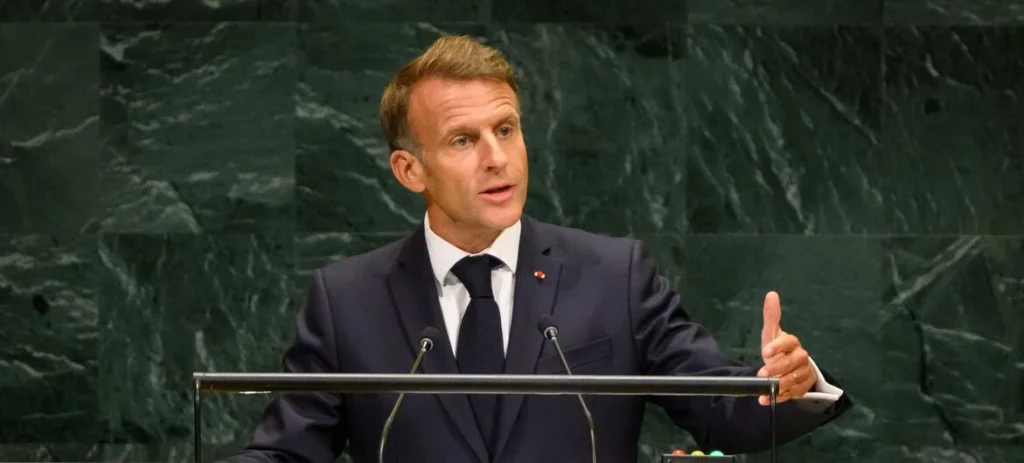
French President Emmanuel Macron offered one of the clearest counterarguments to a purely power-based international system. According to Reuters, Macron warned against a return to a global “law of the jungle” and contrasted a world governed by power and coercion with what he described as a civilised international society.
This position matters because France is not merely a commentator on the international system. It is a permanent member of the UN Security Council and a nuclear-armed state. Macron’s argument therefore represents a significant defence of the post-1945 institutional model.
The phrase “law of the jungle” is political language, but the underlying legal issue is concrete. International law attempts to prevent international relations from becoming a system where the strongest state simply determines the outcome. The prohibition on force, treaty obligations, international humanitarian law and judicial mechanisms all serve that purpose.
If those rules become optional, the international system risks becoming increasingly dependent upon deterrence and balance-of-power calculations. That would not necessarily mean the disappearance of international law. It would mean a shift in the practical weight of law compared with power.
Europe: Multilateralism Under Pressure
European leaders approached the General Assembly from another perspective. European Council President António Costa argued that no country can independently address problems such as climate change, pandemics, resilient supply chains, AI governance, financial stability or sustainable development.
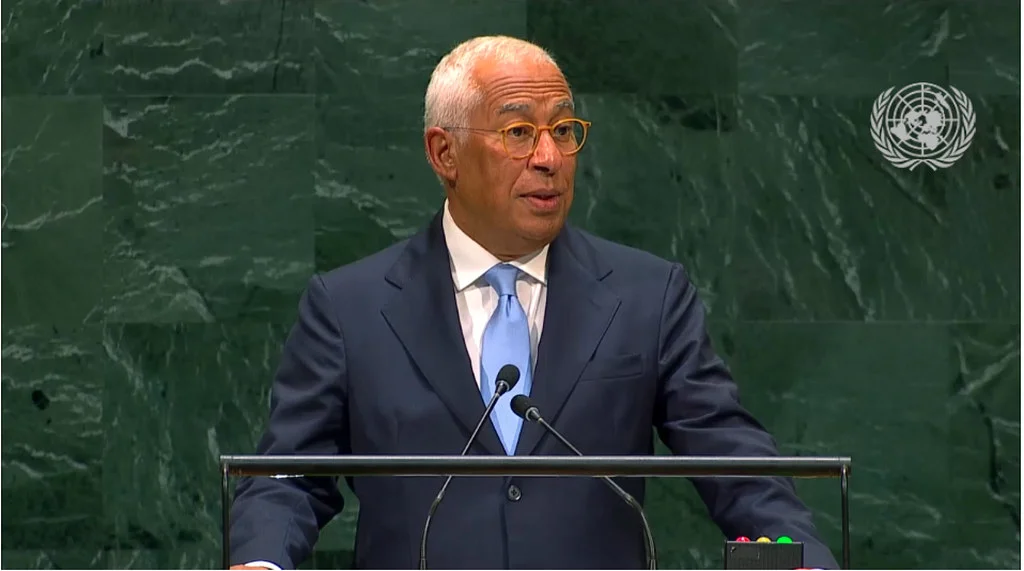
He also argued that:
“lasting peace cannot be created by individual states acting alone.”
This is important because Europe has a particular stake in preserving multilateral institutions. The European approach essentially accepts that national power remains important but argues that many modern threats are inherently transnational such as:
- Climate change cannot be contained by one state.
- AI cannot be governed effectively if every country adopts incompatible standards.
- Financial instability crosses borders.
- Pandemics do not respect sovereignty.
- Cyberattacks can originate in one country and cause damage in another.
This creates an important legal challenge: international law developed around sovereign states, while many of today’s most important problems cross sovereign borders. That means the next generation of international law may need more effective forms of international cooperation rather than simply more bilateral agreements.
Russia: The UN as a Battlefield for Competing Legal Narratives
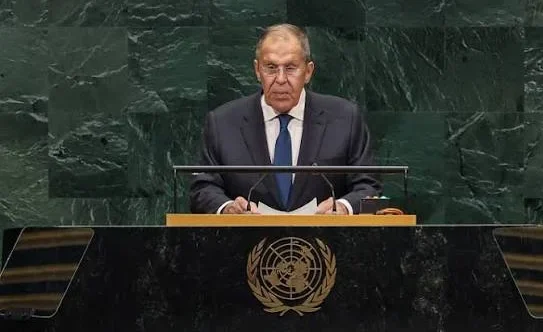
Russia also used the General Assembly environment to engage in diplomatic discussions over global developments and the UN system. UN General Assembly President Khalilur Rahman met Russian Foreign Minister Sergey Lavrov on September 23 to discuss global developments, issues before the General Assembly and Security Council, and strengthening support for the United Nations.
Russia’s presence highlights another feature of contemporary international law:
“States can invoke the same legal system while reaching fundamentally different conclusions about what the law permits.”
This is particularly visible in disputes involving sovereignty, territorial integrity and the use of force. The existence of competing legal interpretations does not mean that international law has no meaning. It means that the enforcement and interpretation of international law have become increasingly contested.
Ukraine: The Test of Territorial Integrity
Ukrainian President Volodymyr Zelenskyy addressed world leaders to demand intensified pressure on Russia and a rejection of quick territorial compromises. Russia’s war against Ukraine remained another major legal issue throughout the General Debate. The UN Secretary-General described Russia’s full-scale invasion as a violation of the UN Charter and stressed the need to defend the Charter without double standards.
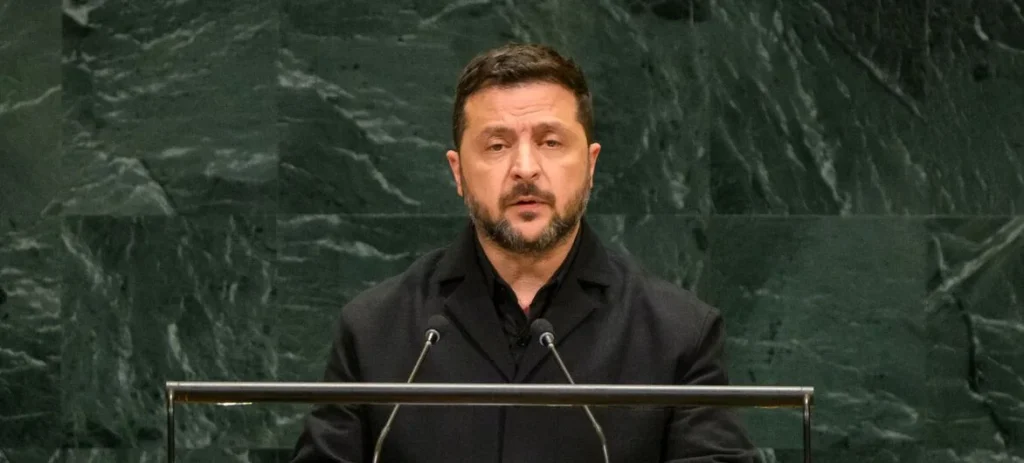
Ukraine’s position therefore represents one of the clearest tests of the post-1945 principle that states should not acquire territory through unlawful force. The legal issues include:
“sovereignty, territorial integrity, the prohibition on the use of force, self-defence, occupation and international humanitarian law.”
But Ukraine also exposes a structural weakness within the UN system. Russia is a permanent member of the Security Council. That means the same institution responsible for maintaining international peace and security includes a permanent member that is directly involved in the conflict. This is one reason Security Council reform has become such a persistent issue.
The problem is not simply Ukraine. It is whether the world’s principal security institution can operate effectively when geopolitical interests collide with the institutional power of the permanent members.
The UN Security Council: The Institutional Problem Behind the Speeches
The General Assembly’s debate ultimately returned to a question that is larger than any individual conflict:
“who gets to make the rules?”
The President of the General Assembly said the UN must become “fit for the future” and warned that reform cannot simply involve administrative restructuring. The closing assessment also highlighted calls for Security Council reform, including the continuing exclusion of Africa from permanent membership.
That issue has direct consequences for global legitimacy. If major regions believe they are inadequately represented, they may continue to regard the system as structurally unequal. Yet expanding membership also creates another question:
“Would a larger Security Council become more representative but less capable of reaching decisions?”
That is the central institutional dilemma. More representation can increase legitimacy. Too many competing interests can make collective action more difficult. The challenge is therefore to find a structure that is simultaneously representative, effective and legally credible.
Artificial Intelligence: The New Frontier of International Governance
Perhaps the most important long-term development at UNGA 2026 was the extraordinary expansion of discussion about artificial intelligence. The President of the General Assembly’s closing statement noted that 128 delegations addressed AI, compared with only five four years earlier. He said governments were increasingly asking who designs AI, who benefits from it, who bears its risks and who is accountable when harm occurs.
That shift is legally significant. AI is no longer simply a technology-policy issue. It is becoming an issue of:
- national security;
- human rights;
- economic power;
- military strategy;
- elections;
- misinformation;
- privacy;
- cybersecurity;
- employment; and
- international governance.
The central legal problem is accountability. If an AI system causes serious harm, who bears responsibility?
“The developer?
The company?
The government?
The military commander?
The user?
The state?”
The General Assembly’s closing debate captured the emerging principle that AI systems cannot possess democratic legitimacy or constitutional responsibility themselves. Humans and institutions remain responsible for the decisions made through technology. This could become one of the defining principles of twenty-first-century technology law.
Climate Change: From Environmental Policy to Security Law
Climate change was another major theme linking otherwise unrelated speeches. The UN’s closing assessment stressed that climate disasters are already erasing development gains and increasing inequality, particularly in vulnerable developing countries and small island states. The legal implications are increasingly broad. Climate change affects:
- water rights
- migration
- food security
- natural resources
- disaster responsibility
- development finance
- state obligations
- and potentially international peace and security.
This means climate law is increasingly moving beyond environmental regulation. It is becoming part of the wider architecture of international security and economic law.
What the Speeches Reveal About the Future of Global Politics
The most important feature of UNGA 2026 is that the speeches do not point towards one simple future. They reveal competing models.
- Trump’s speech emphasised national power, military leverage and strategic deterrence.
- Iran’s response emphasised sovereignty, resistance to coercion and diplomacy.
- Netanyahu’s address emphasised security and Israel’s right to defend itself, while the walkout demonstrated significant international opposition.
- Türkiye’s call for Security Council reform, its position on Gaza, its engagement with Iran and Ukraine, and its intervention on Kashmir.
- Pakistan emphasised Kashmir, water security and treaty obligations.
- India emphasised terrorism, national security and self-defence.
- China emphasised multilateralism and a more representative international system.
- European leaders defended cooperation and collective solutions to transnational problems.
- Ukraine emphasised sovereignty and territorial integrity.
- Guterres and the General Assembly leadership emphasised the need to preserve international cooperation while reforming institutions.
These are not simply different speeches.They are competing visions of the future international order.
The Emerging Global Order: Three Major Trends
The first trend is the return of hard power.
“Military capability remains central to international politics. The Iran conflict demonstrates that even in an age of international institutions, states continue to rely heavily on military force and deterrence.”
The second trend is the fragmentation of diplomatic consensus.
“The walkouts during Netanyahu’s speech and the U.S. departure during Pezeshkian’s address demonstrate how sharply divided the international community has become over major conflicts.”
The third trend is the rise of new forms of power.
“AI, digital communication, economic networks, energy infrastructure, data and social-media influence increasingly affect international relations alongside traditional military strength.”
This means the next international order will not simply be about who has the largest army. It will also be about who controls technology, information, finance and critical infrastructure.
The Legal Question: Can International Law Keep Up?
This may ultimately be the most important question emerging from UNGA 2026. International law remains the language used by almost every side. States invoke:
- sovereignty;
- self-defence;
- human rights;
- humanitarian law;
- territorial integrity;
- treaty obligations;
- terrorism;
- self-determination;
- international security.
But competing governments frequently interpret these principles differently. The challenge for the international system is therefore not merely to preserve international law. It is to maintain confidence that:
“international law means something consistent even when powerful states disagree.”
The General Assembly’s closing message captured this tension. The UN said peace was repeatedly presented not simply as an aspiration but as a defence of the UN Charter, international law and civilian protection. At the same time, delegates demanded a Security Council capable of actually carrying out its responsibilities. That gap between legal principle and institutional enforcement may define the next decade of international politics.
Conclusion: The Speeches Were a Preview of the Next World Order
UNGA 2026 was not simply a week of diplomatic speeches. It was a demonstration of how fragmented the international system has become and how difficult it may be to rebuild consensus. Trump’s confrontation with Iran showed the continuing influence of military power. Pezeshkian’s response demonstrated how rapidly diplomacy can become a direct exchange between adversaries. Netanyahu’s speech and the mass walkout showed the depth of international disagreement over Israel’s conduct in Gaza and the wider Middle East.
Pakistan and India demonstrated that regional disputes are increasingly fought through competing legal and diplomatic narratives before the international community. China and Europe offered different approaches to the future of multilateralism. Ukraine continued to expose the difficulty of enforcing Charter principles when a permanent Security Council member is directly involved in a war. AI emerged as perhaps the most important new area in which international law will have to evolve.
The UN’s own closing assessment is revealing 194 delegations spoke, and AI was addressed by 128 of them. That combination of traditional warfare alongside artificial intelligence, territorial disputes alongside digital diplomacy, and nineteenth-century concepts of sovereignty confronting twenty-first-century technologies captures the challenge facing the international system.
The future global order may therefore not be determined by one speech, one country or one conflict. It will be determined by whether states can agree on a fundamental principle that power may change, technology may change and alliances may change but the rules governing the exercise of power must remain credible, enforceable and applicable to all.
If that principle survives, the emerging multipolar world could develop into a more representative international system. If it fails, the world may increasingly move towards a system in which military strength, economic leverage and technological control determine not only who has power but whose interpretation of international law prevails. That is the real message from UNGA 2026.
“The old international order has not disappeared. But it is being renegotiated in real time.”
Frequently Asked Questions
1. Why was the 2026 UN General Assembly particularly significant?
The 2026 UN General Assembly took place amid major international crises, including the U.S.-Israel conflict with Iran, the Gaza war, Russia’s war in Ukraine, India-Pakistan tensions and growing concerns about artificial intelligence. The speeches highlighted increasing divisions over international law, sovereignty, security and the future of multilateralism.
3. Why did Iran’s President change his planned UN speech?
Iranian President Masoud Pezeshkian said that he had intended to deliver different remarks before hearing Trump’s speech. He subsequently responded directly to Trump’s threats while maintaining that Iran remained open to diplomacy. The exchange demonstrated how speeches at the UN can become part of an immediate diplomatic confrontation.
4. Why did countries walk out during Benjamin Netanyahu’s UN speech?
Dozens of delegations walked out as Israeli Prime Minister Benjamin Netanyahu began his address. The walkout was a diplomatic protest reflecting opposition to Israel’s military conduct and policies, particularly in relation to Gaza and the wider Middle East conflict. The walkout was political symbolism rather than a judicial determination of legal responsibility.
5. Did the Netanyahu walkout have any legal effect?
No. A diplomatic walkout does not constitute a court judgment or establish that a state has violated international law. Questions concerning alleged war crimes, genocide, occupation or other violations require evidence and consideration by the appropriate legal institutions.
6. What did Pakistan’s Prime Minister discuss at the UN General Assembly?
Prime Minister Shehbaz Sharif addressed issues including Kashmir, India-Pakistan tensions, the Indus Waters Treaty, Gaza and regional security. His remarks also referred positively to Donald Trump’s role in the previous India-Pakistan crisis. His discussion of water security highlighted the growing connection between international treaty law, natural resources and national security.
8. What did China and European countries say about the future of the international order?
China emphasised multilateralism and the need for international institutions to reflect changing global power. European leaders broadly stressed cooperation, international institutions and collective solutions to challenges such as climate change, security and technology. These positions reflect the wider debate over whether the existing international system should be preserved, reformed or substantially redesigned.
9. Why was artificial intelligence important at the 2026 UN General Assembly?
AI has increasingly become an international legal and security issue rather than simply a technological one. Governments are concerned about AI-generated misinformation, autonomous weapons, cybersecurity, surveillance, human rights, elections and accountability. The central legal question is increasingly who should be responsible when an AI system causes serious harm.
10. What does the 2026 UN General Assembly mean for the future of global politics?
The speeches suggest that the international system is moving towards a more contested multipolar environment. Military power remains important, but diplomatic legitimacy, economic influence, technology, AI and control of information are becoming increasingly significant. The central challenge for international law will be maintaining credible and consistent rules while global power becomes more widely distributed.