
The funeral of Iran’s Supreme Leader Ayatollah Khamenei represented far more than a national mourning ceremony. Rather, it became a carefully constructed moment of religious symbolism, geopolitical messaging, and strategic communication. Against the backdrop of confrontation with the United States and Israel, Iran used the ceremony to project an image of internal unity, ideological continuity, and resistance against external pressure.
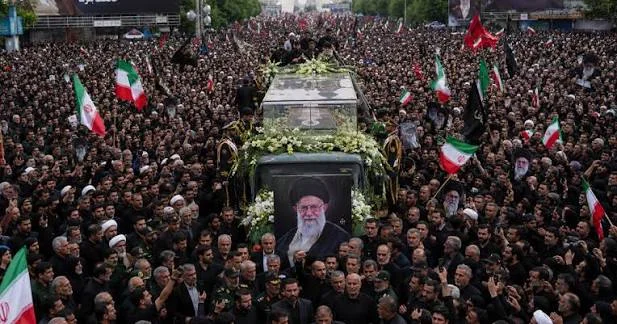
The presence of foreign delegations, religious recitations, and massive public participation transformed the funeral into a platform where faith, diplomacy, and geopolitical strategy intersected. For Iran, the ceremony was designed not only to honor a leader but also to demonstrate that the Iranian state retains domestic support and regional influence.
Religious Symbolism as Political Communication
In Iranian political culture, religion and state identity are deeply interconnected. The use of Qur’anic recitations during the funeral of Iran’s Supreme Leader Ayatollah Khamenei represented a powerful intersection of faith, political identity, and international messaging. In Iranian state ceremonies, religious texts are not only expressions of mourning but also communicate values such as patience, justice, resistance, accountability, and continuity.
For foreign delegations attending such an event, the recitations functioned as a form of religious diplomacy, a symbolic language through which Iran sought to express its worldview, reinforce alliances, and communicate strategic messages during a period of confrontation with the United States and Israel.
A verse understood domestically as a message of resilience may be viewed internationally as a statement of political determination or strategic signaling. Within the context of regional conflict, these themes carried a political dimension. The ceremony framed Iran’s struggle not simply as a geopolitical competition but as a broader narrative of endurance and sovereignty.
For domestic audiences, the message was resilience. A message that leadership may change, but the state’s ideological foundations continue. For international audiences, it signaled that external pressure had not fractured Iran’s political identity.
Significance of Holy Recitations for Foreign Delegations
The presence of representatives from different countries added a diplomatic layer to the ceremony. Religious recitations performed before international delegates carried different symbolic meanings depending on each country’s relationship with Iran.
For regional allies and sympathetic governments, the recitations reinforced ideas of shared identity, resistance, and political solidarity. The message was that Iran remained connected to a broader network of states and movements despite attempts to isolate it. For countries such as Pakistan, religious symbolism carried additional historical significance because of shared Islamic heritage and long-standing cultural connections.
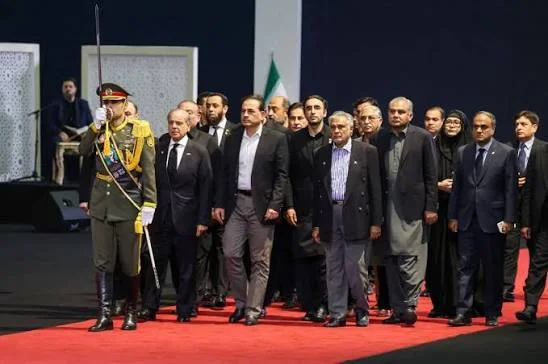
For non-Western strategic partners such as China and Russia, the ceremony carried a different geopolitical interpretation. The religious symbolism was less about shared faith and more about political messaging. The presence of major powers at such ceremonies can communicate that a state remains diplomatically engaged despite sanctions or isolation attempts.
For Arab representatives, the ceremony carried complex symbolism because Iran’s relations with Arab states involve both cooperation and rivalry. Iran’s intended message was that despite political differences, regional stability requires dialogue among Middle Eastern states rather than dependency on outside military intervention.
For Western governments observing the ceremony, particularly the United States and European states, the symbolism carried a strategic message beyond religion. Iran attempted to counter the perception that external pressure could rapidly change domestic political realities. The message was not simply opposition; rather, it was clear endurance.
Public Mobilisation: Demonstration of National Unity
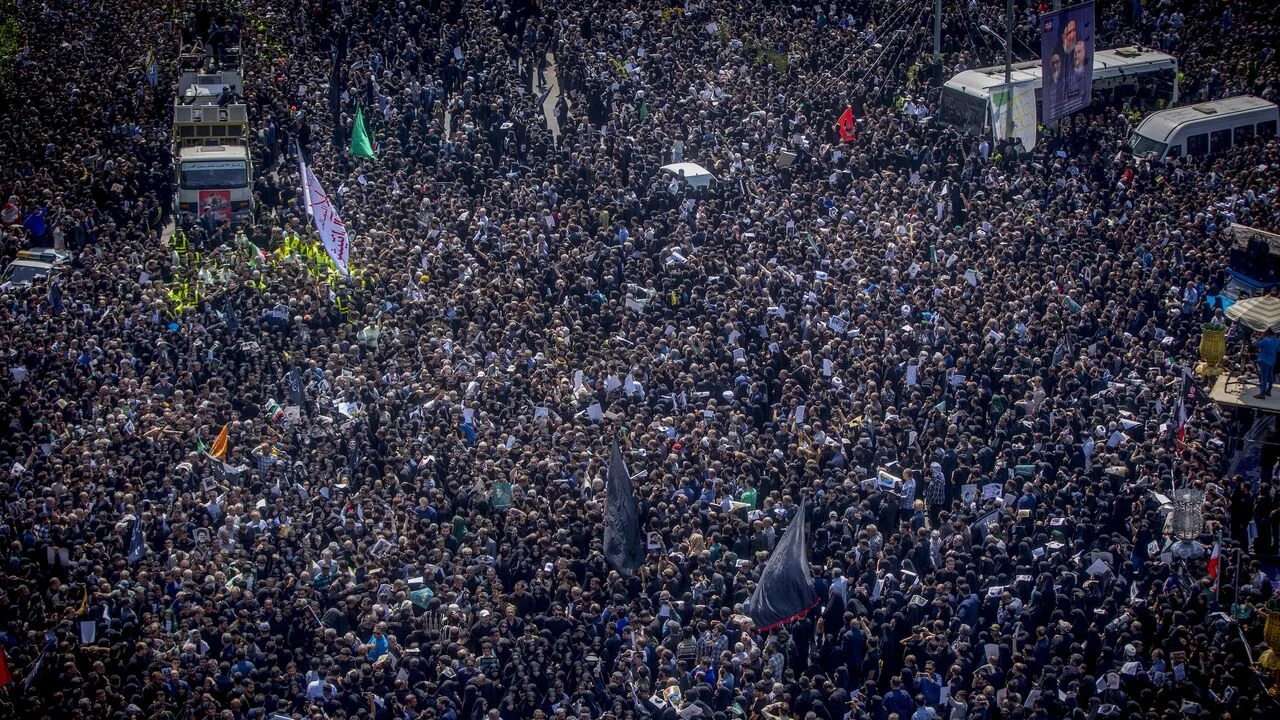
One of the most important geopolitical aspects was the participation of large numbers of Iranian citizens. State funerals often serve as moments where governments attempt to demonstrate legitimacy, continuity, and social cohesion. Iran sought to present the crowds as evidence that:
- citizens remained united despite external threats;
- foreign pressure had strengthened rather than weakened national identity;
- attempts to create political fragmentation had failed.
From Tehran’s perspective, public participation challenged the assumption that sanctions or military confrontation would automatically create domestic opposition to the government. However, analysts also note that public demonstrations during major national events can represent multiple emotions simultaneously, including grief, patriotism, religious devotion, political support, or national solidarity during foreign confrontation.
Strategic Message to the United States and Israel
The funeral carried a clear geopolitical message toward Washington and Tel Aviv. Given the long-standing hostility between Iran and Israel, the funeral also carried strong regional security symbolism. Religious themes of sacrifice and perseverance were interpreted within Iran’s political narrative of resistance. The symbolism suggested several strategic points:
First, leadership continuity remained intact. Iran wanted to demonstrate that its political system was not dependent on a single individual and that institutions would continue functioning.
Second, public mobilization was presented as evidence that external pressure may produce a “rally around the flag” effect, where citizens unite behind national identity when facing foreign threats.
Third, the ceremony reinforced Iran’s long-standing narrative that it views U.S. and Israeli actions as aggression rather than legitimate security measures.
This messaging aimed to influence both domestic morale and international perceptions.
Was It a Strategic Success for Iran?
From a geopolitical communication perspective, the ceremony can be viewed as an effective use of symbolic power. Modern conflicts are fought not only through military operations but also through narratives. Images of public unity, international attendance, and religious ceremony become tools of influence. Iran achieved several strategic objectives:
- projecting stability during uncertainty;
- demonstrating diplomatic connections;
- reinforcing national identity;
- countering narratives of political weakness.
Such events can influence international calculations because perceptions of domestic stability affect diplomacy, deterrence, and negotiations. However, the long-term impact depends on whether symbolic unity translates into economic stability, effective governance, and diplomatic success. Public ceremonies can strengthen national narratives, but they do not remove underlying political or economic challenges
Legal Perspective: Sovereignty and International Order
From an international law viewpoint, Iran’s messaging focused heavily on the principle of state sovereignty. Iran has consistently argued that external military pressure violates principles contained in the United Nations Charter, particularly restrictions on the use of force against sovereign states. The funeral narrative reinforced this argument by portraying Iran as a nation defending:
- territorial integrity,
- political independence,
- national self-determination.
Meanwhile, the United States and Israel have historically framed their actions through security concerns, including deterrence and preventing perceived threats. This reflects a wider legal dispute between competing interpretations of:
- self-defense,
- sovereignty,
- regional security.
Religious Diplomacy and Soft Power
The event also demonstrated the continued importance of religious diplomacy in international affairs. While military and economic power dominate geopolitical discussions, cultural and religious symbolism remains influential because it shapes:
- identity,
- public opinion,
- alliances,
- perceptions of legitimacy.
Iran’s use of religious ceremony showed how states can transform moments of national mourning into opportunities for strategic communication.
Conclusion
Khamenei’s funeral represented more than the passing of a political figure—it became a carefully staged moment of religious symbolism and geopolitical messaging. Through holy recitations, foreign delegations, and mass public participation, Iran attempted to communicate resilience, continuity, and resistance to external pressure.
Whether viewed as a genuine expression of national unity, a strategic communication effort, or a combination of both, the event demonstrated an important reality of modern geopolitics: power is measured not only through weapons and economies but also through the ability to control narratives, preserve legitimacy, and project unity during crisis.
For Iran, the message was clear—the state sought to show the world that military confrontation and diplomatic isolation had not broken its internal cohesion. For its opponents, the event highlighted the complexity of confronting a country where political identity, religion, and national sovereignty remain deeply intertwined.
Frequently Asked Questions
1. Why was Khamenei’s funeral considered geopolitically significant?
Khamenei’s funeral was viewed as more than a national mourning ceremony because it combined religious symbolism, public mobilisation, and international diplomacy. Iran used the event to project messages of political continuity, national resilience, and institutional stability during a period of heightened tensions with the United States and Israel.
2. What was the significance of Qur’anic recitations during the funeral?
The Qur’anic recitations served both a spiritual and symbolic role. Traditionally, such recitations emphasize themes including patience, sacrifice, justice, accountability, and perseverance during hardship. In a geopolitical context, Iran used these themes to reinforce narratives of resilience, sovereignty, and unity in the face of external pressure.
3. What message did Iran send to foreign delegations attending the funeral?
Iran sought to communicate different messages to different audiences. To allies and partners, the ceremony highlighted continuity and solidarity. To regional countries, it emphasized dialogue and shared identity. To rival powers, it signaled that leadership changes or external pressure would not necessarily weaken Iranian state institutions.
4. Did the funeral demonstrate that Iranian citizens supported their government?
Large public participation was presented by Iranian authorities as evidence of national unity and public support. However, analysts note that attendance at major state events can reflect a combination of factors, including religious devotion, respect for a national figure, patriotism, social identity, and political support. The meaning of such gatherings can therefore vary among different observers.
5. Was the funeral a strategic communication success for Iran?
From a strategic messaging perspective, the ceremony allowed Iran to project stability, unity, and diplomatic relevance at a sensitive moment. By combining religious traditions, international attendance, and public participation, Iran sought to counter narratives of weakness or isolation. The long-term effectiveness depends on broader political, economic, and diplomatic developments.
6. What message was directed toward the United States and Israel?
The ceremony appeared designed to communicate that pressure, sanctions, or military confrontation would not automatically weaken Iran’s political system. The message emphasized continuity, national identity, and resistance. The United States and Israel, however, view Iran through their own security concerns, creating competing interpretations of the same event.
7. How did the ceremony strengthen Iran’s soft power?
Soft power relies on culture, identity, symbolism, and public perception rather than military force. Through religious ceremonies, historical narratives, and international participation, Iran attempted to strengthen its image as a state with deep cultural roots and continuing influence despite geopolitical challenges.
8. What was the significance for Muslim-majority countries attending the ceremony?
For many Muslim-majority delegations, the religious elements carried themes of shared heritage, respect, and cultural connection. Iran used these symbols to emphasize regional identity and the importance of dialogue among neighboring states, even where political disagreements exist.
9. How does international law relate to Iran’s messaging?
Iran’s broader political message focused heavily on sovereignty and non-interference—principles recognized under the United Nations Charter. Iran argues that external military pressure violates these principles, while its opponents often frame their actions around security and self-defense. This reflects an ongoing debate in international law over sovereignty, deterrence, and the lawful use of force.
10. What is the broader geopolitical lesson from Khamenei’s funeral?
The funeral demonstrated that modern geopolitical competition is not limited to military strength. States also compete through narratives, symbolism, diplomacy, and public perception. Iran’s use of religious and national imagery showed how ceremonies can become tools of geopolitical communication, shaping how allies, rivals, and global audiences interpret a country’s strength and stability.