
A major shift in U.S. immigration policy is underway after Markwayne Mullin announced that migrants living in the United States under Temporary Protected Status (TPS) should either obtain permanent legal status or prepare to leave the country. The statement follows a recent decision by the Supreme Court of the United States that allows the Trump administration to terminate TPS protections for hundreds of thousands of Haitian and Syrian nationals, potentially exposing them to deportation.
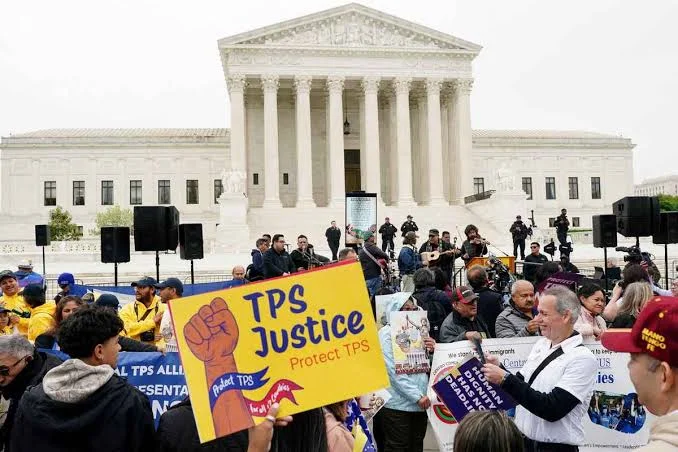
The announcement marks one of the most significant immigration policy developments of 2026, intensifying the debate over executive authority, humanitarian protections, and the future of temporary immigration programs in the United States.
Homeland Security Announces New Direction for TPS Holders
Speaking on CNN’s State of the Union, Homeland Security Secretary Markwayne Mullin stated:
“Migrants benefiting from Temporary Protected Status should either fill out the paperwork to obtain a lawful permanent immigration status or accept government assistance to return to their home countries.”
The administration also indicated that eligible migrants who voluntarily depart could receive transportation assistance, including a plane ticket and approximately $2,100 in resettlement support.
The administration argues that TPS was always intended to be a temporary humanitarian measure, rather than a permanent pathway to residence, and that individuals who qualify for another immigration status should pursue those legal avenues.
Supreme Court Decision Reshapes Immigration Policy
The announcement follows a closely watched Supreme Court ruling that permits the Trump administration to end TPS protections for approximately 350,000 Haitian nationals and 6,000 Syrian nationals. The Court concluded that the administration is likely to prevail in litigation challenging its authority to terminate these designations, allowing the policy to move forward while legal proceedings continue.
TPS was originally created by Congress in 1990 to protect foreign nationals already present in the United States when extraordinary conditions such as armed conflict, natural disasters, or humanitarian crises made safe return impossible.
Humanitarian Concerns Remain
The policy has generated significant criticism because the U.S. government continues to advise Americans not to travel to Haiti or Syria due to widespread violence, armed conflict, terrorism, and political instability. Critics argue that terminating TPS while acknowledging continuing dangers creates a contradiction between immigration enforcement and humanitarian protection.
Immigrant rights organizations have warned that many TPS beneficiaries have lived and worked legally in the United States for years, raising families, paying taxes, and contributing to local economies. Deportation, they argue, could separate families and disrupt businesses and essential public services.
Legal Debate: Temporary Protection or Long-Term Residence?
The controversy centers on the legal interpretation of the TPS statute.
Supporters of the administration argue that Congress deliberately designed TPS as a temporary immigration status, and that repeated renewals over many years effectively transformed a temporary humanitarian program into a long-term immigration pathway without congressional authorization.
Opponents respond that humanitarian crises in countries such as Haiti and Syria remain unresolved and that terminating TPS while conditions remain unsafe could undermine the humanitarian purpose of the statute.
The debate also raises broader constitutional questions regarding the extent of executive discretion in immigration policy and the role of federal courts in reviewing those decisions.
Economic and Political Opposition
The proposal has also drawn criticism from state officials, including some Republicans. Mike DeWine warned that ending TPS protections could harm Ohio’s economy by removing experienced workers from industries already facing labor shortages, particularly healthcare, manufacturing, and elder care. He also questioned the wisdom of returning migrants to countries experiencing severe instability.
Business groups and local governments have similarly argued that TPS holders have become integral members of many communities and that large-scale deportations could produce significant economic disruption.
International Law Considerations
The policy also raises questions under international refugee and human rights law. Although Temporary Protected Status (TPS) is a domestic immigration program rather than an international legal obligation, legal scholars note that deporting individuals to countries experiencing widespread violence may engage basic principles.
These principles, such as non-refoulement, generally prohibit returning people to places where they face persecution, torture, or other serious harm. Whether those protections apply depends on the individual’s legal status and eligibility under U.S. and international law.
Broader Legal Implications
The Homeland Security Secretary’s announcement signals a broader shift in U.S. immigration policy toward limiting long-term reliance on temporary humanitarian protections. If fully implemented, the policy could reshape how future administrations administer TPS and other humanitarian immigration programs, while increasing pressure on Congress to decide whether long-term TPS recipients should receive a statutory pathway to permanent residence.
The controversy ultimately reflects a fundamental legal tension between the executive branch’s authority to enforce immigration laws and the humanitarian objectives underlying temporary protection programs. As additional litigation proceeds and policymakers debate possible legislative reforms, the future of Temporary Protected Status is likely to remain one of the most consequential immigration issues before U.S. courts and Congress.