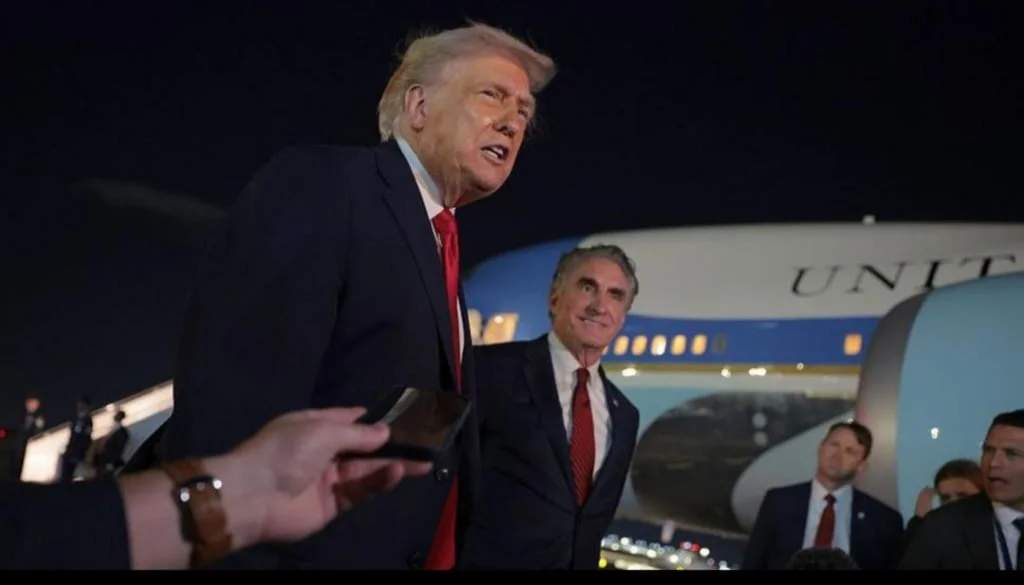
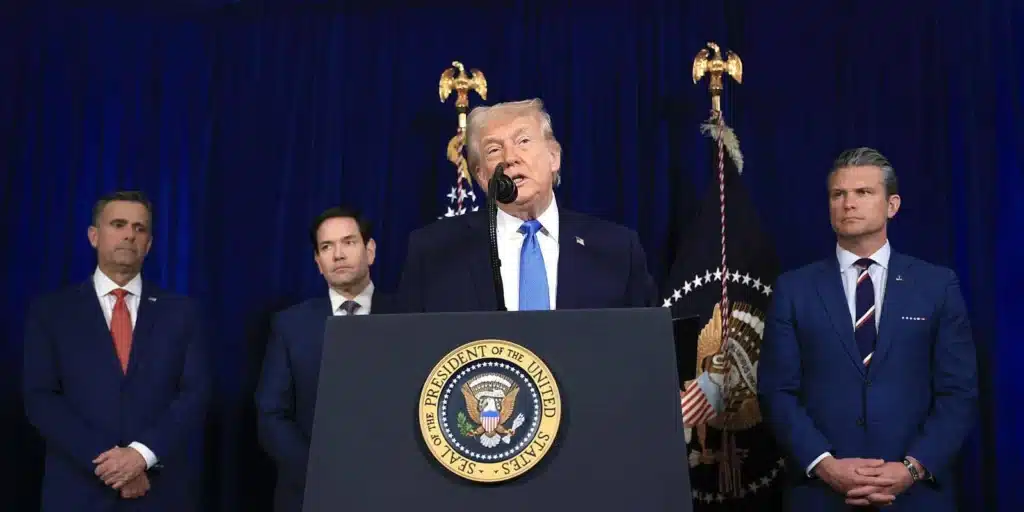
Trump’s comments, made on his Truth Social platform and in subsequent media exchanges while attending the World Economic Forum in Davos, mark an unusually direct rebuke of a major diplomatic agreement between two close U.S. allies. They have provoked reactions from British officials and raised questions about U.S. interference in another country’s sovereign decisions on international territorial arrangements.
As Starmer is not expected to travel to Davos to meet Trump, his comments will only add fuel to Conservative and Reform criticisms of the move, which have cited US concerns as a reason to deny the deal with Mauritius. Darren Jones, the chief secretary to the prime minister, suggested Trump’s intervention would not affect the UK’s deal with Mauritius saying:
“We’ve done a deal with the Mauritian government, we’ve legislated for the process, we’ve agreed the terms of the treaty, which has been signed.”
Jones said Starmer was keeping calm about the criticism, as well as about the threatened tariffs on the UK over its support for Greenland, saying:
“We disagree with President Trump on Greenland, and the prime minister has been very clear about that.”
What Trump Said: ‘Great Stupidity’ and Security Risks
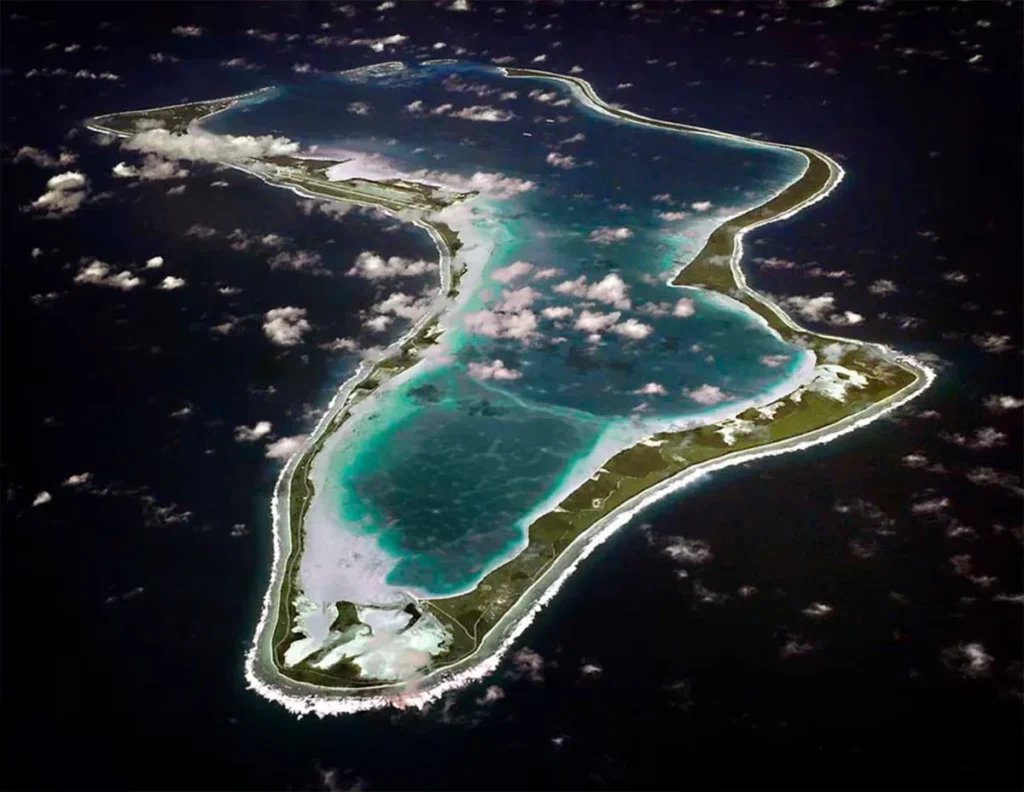
In a series of posts, Trump accused the UK government of ceding a strategically vital archipelago in the Indian Ocean, including the island of Diego Garcia, home to a key joint U.S.–UK military base. In a typically blunt Truth SocialTrump says:
“Shockingly, our ‘brilliant’ NATO Ally, the United Kingdom, is currently planning to give away the Island of Diego Garcia, the site of a vital U.S. Military Base, to Mauritius, and to do so FOR NO REASON WHATSOEVER.”
Trump believes that this act could compromise national security and embolden rival powers such as China and Russia. Trump also linked the criticism to his controversial proposal that the U.S. should assert control over Greenland, arguing that perceived weaknesses among European allies show his rationale for expanding American strategic reach. He added:
“There is no doubt that China and Russia have noticed this act of total weakness … The UK giving away extremely important land is an act of GREAT STUPIDITY, and is another in a very long line of National Security reasons why Greenland has to be acquired.”
Background: The Chagos Islands Deal and Its Controversy
The Chagos Islands sovereignty dispute dates back decades. The Chagos’ six main atolls, among more than 600 islands, lie 500 km (300 miles) south of the Maldives and halfway between Africa and Indonesia, with about 4,000 people stationed there.
Britain separated the archipelago from Mauritius in the 1960s to facilitate the construction of a U.S. military facility on Diego Garcia, displacing the indigenous Chagossian population in the process, but has given sovereignty to the former colony Mauritius, which it is paying 101 million pounds ($136 million) per year to secure the installation.
In May 2025, the UK agreed to hand sovereignty over the Chagos Islands to Mauritius, while leasing back Diego Garcia for at least 99 years to maintain joint U.S.–UK operations. The arrangement was described at the time as a resolution of long-standing legal challenges to British control and a way to secure the base’s future.
U.S. Secretary of State Marco Rubio welcomed the accord in 2025 as beneficial for the long-term operation of the military facility, reflecting prior bipartisan U.S. support.
Diplomatic Fallout: UK Response and Allied Reassurances
British officials swiftly defended the agreement amid Trump’s criticism, emphasising its legal basis and strategic value. Prime Minister Keir Starmer and Cabinet ministers have reiterated that the deal secures military cooperation and aligns with international legal advice, and that sovereignty transfer is necessary following legal rulings challenging British control of the territory.
Defending the treaty’s provisions and its 99-year leaseback arrangement, a UK government spokesperson said,
“We acted because the base on Diego Garcia was under threat after court decisions undermined our position and would have prevented it operating as intended in future.”
Broader Geopolitical Implications
Legal analysts and foreign policy experts suggest that Trump’s comments risk crossing into diplomatic interference by publicly disparaging the internal decisions of an allied government on matters of national sovereignty. They note that while allies routinely debate defence and security strategy, direct attacks on sovereign policy choices, especially after previous U.S. endorsement, can strain customary norms of non-interference.
Trump’s remarks come at a time of increasing U.S.–European tension over security priorities and territorial influence. His linkage of the Chagos Islands issue to the controversial notion of U.S. acquisition of Greenland has further unsettled transatlantic diplomatic circles, prompting calls for calm resolution and reaffirmation of alliance commitments.
European leaders, including French President Emmanuel Macron, have expressed concern over rhetoric that might be perceived as unilateral or colonial in tone, highlighting the need for a rules-based international order and respect for sovereign decision-making among allies.
Legal and Political Debate Continues
Experts also point out that a functioning military base like Diego Garcia plays a role in broader coalition operations across Asia, Africa, and the Middle East. As debates continue, the Chagos Islands handover remains a subject of legal and political contention, not least because of its colonial history and the rights of displaced Chagossians, who have long sought restitution and recognition of their forced removal.
The current diplomatic turbulence may prompt renewed discussions in international legal forums, including human rights bodies and regional security councils. From Greenland to the Chagos Islands, critics warn that the use of economic and political pressure to influence sovereignty risks eroding the legal norms that underpin alliances and the rules-based international order.
The United States and the United Kingdom have historically worked closely on defence and intelligence matters. How this episode affects broader cooperation, including NATO cohesion and strategic positioning in the Indian Ocean region, will be closely watched in the coming weeks.
WASHINGTON / COPENHAGEN — U.S. President DonaldTrump has reignited international controversy by reviving his vision of expanded U.S. control over Greenland, an autonomous territory of the Kingdom of Denmark, under U.S. control, pairing renewed rhetoric with threats of new tariffs against European partners. U.K. Prime Minister Keir Starmer has already labeled this move as:
“completely wrong.”
In a statement shared from Davos at the World Economic Forum, Trump reiterated that the U.S. will “not go back” on seeking to exert control over Greenland and refused to rule out military options to achieve that goal. The renewed campaign has raised serious questions about adherence to international law and respect for territorial sovereignty, central pillars of the post-World War II legal order. Trump said:
“As I expressed to everyone, very plainly, Greenland is imperative for National and World Security. There can be no going back — On that, everyone agrees!”
Trump suggested that additional trade penalties could be imposed on U.S. allies if negotiations over Greenland’s strategic future do not align with American interests. The remarks follow earlier tariff threats targeting European exports and have been widely interpreted as an effort to apply economic pressure in a dispute traditionally governed by diplomacy and treaty law.
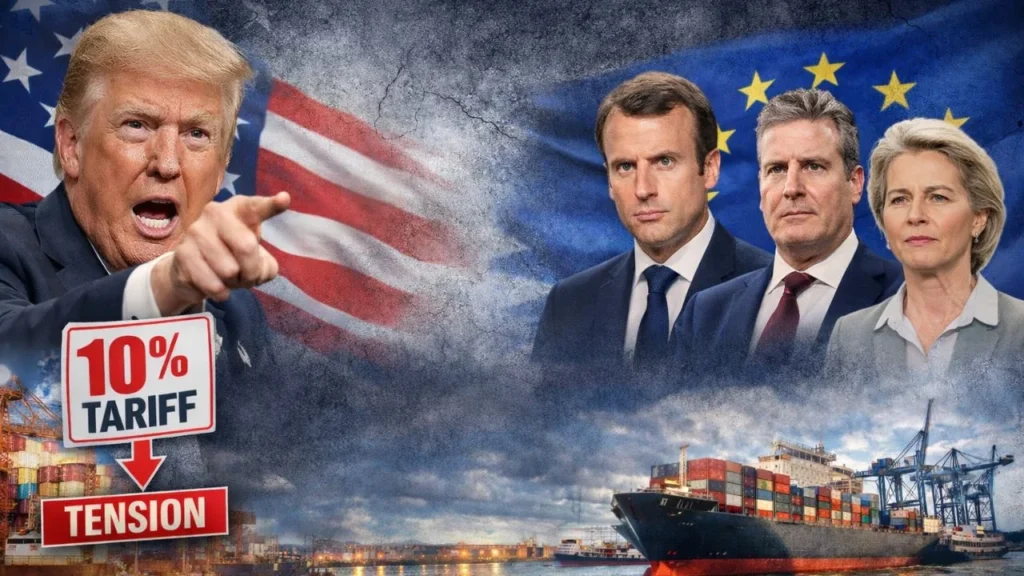
In a controversial move, Trump threatened a sweeping tariff regime of up to 25 % on imports from key European allies, including Denmark, Germany, France, and the UK, unless they acquiesce to U.S. demands regarding Greenland’s status. European diplomats and public officials have denounced the threats as coercive and legally dubious, arguing they imperil long-standing alliances and violate norms against economic blackmail.
Trump over the weekend threatened to impose a 10% tariffon European allies beginning Feb. 1 “on any and all goods sent to the United States of America” until Denmark agrees to sell Greenland to the U.S.Trump said the tariff would be increased to 25% on June 1. Trump said:
“This Tariff will be due and payable until such time as a Deal is reached for the Complete and Total purchase of Greenland.”
Senior European leaders have mobilized emergency diplomatic responses to head off a broader crisis, and NATO partners have stressed that territorial integrity and collective defense obligations under Article 5 must be upheld.
Global Backlash & Legal Critics
The Trump administration’s actions have drawn rare bipartisan criticism at home and united opposition overseas. Prominent lawmakers in the U.S., including members of Trump’s own Republican Party, have condemned the tariff threats as “bad for America” and damaging to U.S. constitutional authority and diplomatic standing.
At the U.N., Secretary-General António Guterres has publicly lamented the erosion of international legal norms by powerful states, implicitly criticizing U.S. actions that prioritize power politics over treaty obligations and established multilateral processes. Guterres believes that U.S. foreign policy reflects what he described as a belief that
“The power of law should be replaced by the law of power, arguing that Washington increasingly relies on its influence rather than international norms.”
“We choose NATO. We choose the Kingdom of Denmark. We choose the EU.”
Greenlandic and Danish officials have repeatedly emphasized that the territory is “not for sale” and reaffirmed their commitment to international law and self-determination. Massive protests in Copenhagen and Nuuk under the banner “Hands off Greenland” have bolstered diplomatic efforts to reject U.S. pressure and dispel tropes of external domination.
At the same time, Denmark has bolstered its military presence in Greenland within the NATOframework, deploying additional troops and participating in exercises aimed at deterring any destabilizing actions. The military exercise was requested by Denmark in response to Trump’s threats to take control of Greenland.
The soldiers, positioned in the capital city of Nuuk and in the town of Kangerlussuaq in western Greenland, will take part in NATO military training exercises, dubbed “Arctic Endurance.” In an eyebrow-raising move, German troops quietly packed up and left the island on Sunday, just two days after arriving for the training.
Territorial sovereignty and the principle that no state may acquire territory by force or coercion.
Self-determination of peoples under the U.N. Charter.
Non-interference in the internal affairs of other states.
Experts say Trump’s public rhetoric, suggesting tariffs, questioning Denmark’s claim, and hinting at military options, challenges these norms and could set a dangerous precedent for great-power conduct in the 21st century. Potentially justifying coordinated legal and economic countermeasures by the EU, the officials have characterized the tariff threats as a:
“textbook case of coercion.”
Greenland Standoff Tests Rules-Based Global Order
Analysts warn that the Greenland row could have lasting effects on:
Transatlantic alliances (especially NATO cohesion).
Global trade law (disputes over tariff legality under the WTO).
Arctic governance (multilateral cooperation over militarization and resources).
The situation in Greenland is increasingly being viewed both as a test of U.S. foreign policy restraint and of the durability of the rules-based international order in the face of coercive diplomacy.
Greenlandic leaders emphasize that the dispute is not merely strategic but existential, warning that external pressure disregards the right of peoples to determine their political future. That right remains a cornerstone of modern international law developed in the post-World War II era.
As rhetoric intensifies, analysts say the Greenland dispute may become a test case for the durability of the rules-based international order. Whether Washington follows through on tariff threats or recalibrates its approach, critics warn that using economic power to pressure territorial outcomes could set a precedent extending far beyond the Arctic.
Timeline: Key Developments in the Greenland Dispute
August 2019 U.S. President DonaldTrump publicly expresses interest in purchasing Greenland, calling it a “large real estate deal.” Danish officials reject the idea outright, stating that Greenland is not for sale. Greenland’s government emphasizes the island’s right to self-determination.
September 2019 Following Denmark’s rejection, Trump abruptly cancels a scheduled state visit to Copenhagen, triggering diplomatic tension between the United States and Denmark. Legal experts note early concerns about respect for sovereignty and international norms.
2020–2023 The issue remains dormant publicly but continues to surface in U.S. strategic discussions focused on Arcticsecurity, military positioning, and access to natural resources. Greenland expands diplomatic outreach, including opening a representative office in Washington.
2024 As Arctic competition intensifies due to climate change and shipping routes, U.S. political figures revive discussions about Greenland’s strategic value. Danish and Greenlandic leaders reiterate that any change in status can occur only through democratic processes.
Late 2025 DonaldTrump, campaigning on an “America First” platform, signals renewed interest in Greenland’s strategic alignment with the United States. Reports emerge of internal discussions linking trade leverage with broader geopolitical objectives.
January 2026 Trump publicly threatens new tariffs on European allies while reviving rhetoric about Greenland’s future, prompting immediate diplomatic pushback from Denmark and Greenland. European officials warn that economic pressure tied to territorial issues may violate international legal norms.
Mid-January 2026 Legal scholars and international law experts raise concerns that using tariffs to influence sovereignty questions could amount to coercive interference under international law. NATO allies express unease over growing transatlantic strain. The Greenland dispute escalates into a broader test of international legal norms governing sovereignty, self-determination, and non-coercion.
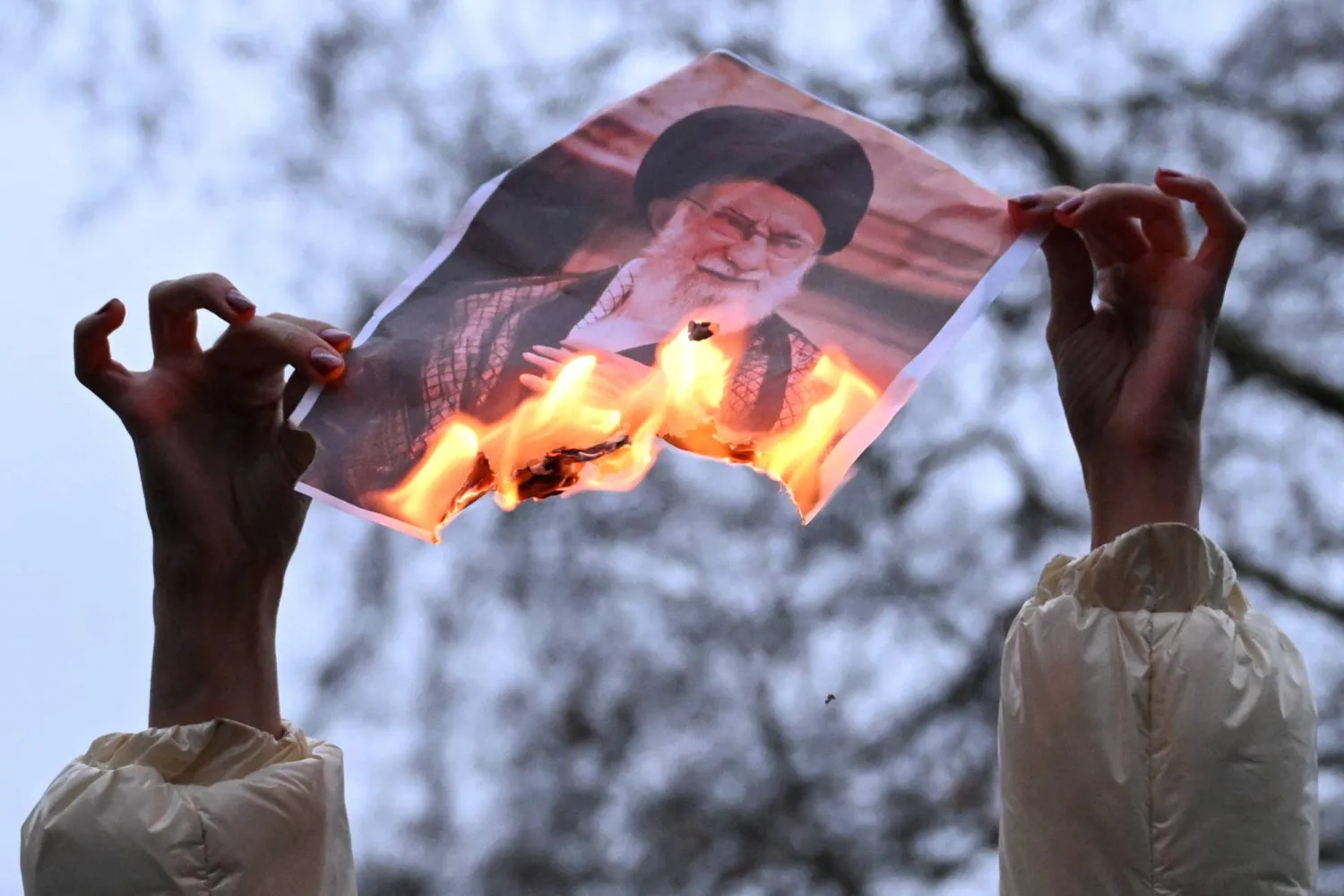
The ongoing unrest in Iran has triggered growing international concern not only for its scale and intensity but for the legal and geopolitical consequences of the state’s response. As security forces confront widespread demonstrations with increasingly forceful measures, including reported use of lethal weapons, as highlighted in recent reporting where UN rights groups warned Iran over lethal force violations, the situation has shifted from a domestic stability challenge to a test of Iran’s compliance with international human rights law. The convergence of internal economic strain, political discontent, and heightened global scrutiny has placed Iran at a critical juncture, where decisions taken in response to protests may carry long-term legal, diplomatic, and economic implications.
Why Iran’s Protest Crackdown Has Become a Global Legal Issue
The nationwide protests in Iran and the state’s response have moved beyond a domestic law-and-order challenge into a matter of international legal and geopolitical concern. Reports from United Nations officials and independent rights organizations indicate the use of lethal force against protesters, widespread arrests, and prolonged internet shutdowns. These actions raise serious questions under international human rights law and expose Iran to escalating legal, economic, and diplomatic risks.
What began as internal unrest has now evolved into a situation with long-term international consequences. United Nationshuman rights officials have condemned the use of lethal force and arbitrary detentions, saying the right to peaceful assembly and protection from arbitrary loss of life must be upheld, while Tehran blames “armed rioters” and foreign interference for the unrest, even as global pressure mounts for accountability and respect for international legal standards.
How the Protests Began and Why They Escalated
The 2025–2026 protests in Iran began on 28 December 2025, initially driven by deepening economic distress across the country. Spiraling inflation, a collapsing currency, and rising prices of food and essential goods fueled public anger. The Iranian currency “rial” hit record lows against the U.S. dollar, substantially reducing purchasing power and eroding living standards for ordinary citizens. This economic freefall worsened by renewed UN “snapback” sanctions imposed in September 2025 and lingering effects from regional conflicts intensified public discontent.
What started with a strike by shopkeepers and bazaar merchants in Tehran’s Grand Bazaar quickly spread beyond economic demands. Protesters soon articulated broader grievances about governance, lack of political freedoms, and systemic repression. Within days, the demonstrations reached universities, commercial districts, and provincial cities, evolving into one of the most significant challenges to the Islamic Republic’s authority since the 1979 revolution.
Economic Collapse as the Initial Trigger
Inflation, currency devaluation, unemployment, and reduced state capacity to provide subsidies created widespread social distress. Initial demonstrations focused on economic grievances and living costs.
Political Grievances and Security Response
Within days, protests expanded to include political demands and criticism of governance. The state’s early reliance on security forces rather than dialogue proved to be a decisive escalation point. The use of force, combined with mass arrests, shifted protests from issue-based demonstrations to broader anti-government unrest.
Internet Shutdowns and Nationwide Repression
The imposition of a near-total internet blackout marked a further escalation. Historically, such measures in Iran have coincided with intensified repression. The blackout restricted independent reporting, heightened public anger, and increased international suspicion that serious abuses were being concealed.
Applicable Legal Framework Under International Law
The conduct of state authorities in responding to public protests is governed by a well-established body of international human rights law that binds states even during periods of internal unrest. Iran is a party to core international treaties that regulate the use of force by law enforcement, protect the right to life, and safeguard freedoms of peaceful assembly, expression, and due process. These obligations are complemented by customary international law and authoritative United Nations standards, which together impose strict limits on when and how force may be used against civilians. Compliance with these norms is assessed not by domestic justifications but by internationally recognized principles of necessity, proportionality, and accountability.
Binding Human Rights Obligations
Iran is a State Party to the International Covenant on Civil and Political Rights (ICCPR), which establishes binding obligations related to:
These obligations apply at all times, including during states of emergency, subject only to strictly limited derogations.
Customary International Law and UN Standards
Customary international law and authoritative UN standards sit alongside treaty obligations in shaping the legal framework governing Iran’s protest policing and use of force. In addition to instruments such as the ICCPR, Iran is bound by customary rules on the protection of life and the prohibition of excessive force, as well as by widely accepted soft-law standards like the UN Basic Principles on the Use of Force and Firearms by Law Enforcement Officials.
These Principles set out minimum global norms requiring that force be used only when strictly necessary, in proportion to a legitimate law-enforcement objective, and in a manner that minimizes damage and injury, particularly in the context of assemblies and civil unrest, standards increasingly invoked in legal challenges to protest policing worldwide, including recent litigation surrounding anti-ICE protests and the federal use-of-force response in the United States.
Under these standards, lethal force is permitted only as a last resort in response to an imminent threat of death or serious injury, and its repeated use against largely unarmed demonstrators is treated as incompatible with international norms on the right to life and the right of peaceful assembly
Potential Violations of the Right to Life Under Article 6 ICCPR
Article 6 of the ICCPR protects the right to life and prohibits arbitrary deprivation of life. International jurisprudence establishes that lethal force by law enforcement is lawful only when strictly unavoidable to protect life, a standard underscored by recent findings in which UN rights groups warned Iran over lethal force violations.
The reported use of live ammunition against protesters, particularly where demonstrators were unarmed or not posing an imminent threat, raises serious concerns of arbitrary killings. Where lethal force is used as a method of crowd control, punishment, or deterrence, it falls outside the narrow circumstances permitted under international law. Reports of gunshot wounds to the head and torso further strengthen allegations of unlawful use of force rather than defensive action.
Excessive Force and the Right to Peaceful Assembly
Article 21 of the ICCPR protects the right of peaceful assembly, while Article 9 guarantees the liberty and security of a person and prohibits arbitrary arrest and detention. International law requires that restrictions on assemblies be lawful, necessary, and proportionate.
The use of lethal force, mass arrests, and blanket suppression of demonstrations without individualized threat assessments may constitute disproportionate interference with protected rights. Even where isolated violence occurs, international standards prohibit indiscriminate force against entire crowds.
Internet Shutdowns and Information Control
Although internet access is not explicitly listed in the ICCPR, it is closely linked to freedom of expression under Article 19 and the ability to document and report human rights violations.
International human rights bodies increasingly recognize that intentional communication blackouts during unrest may constitute violations where they are imposed to suppress dissent, conceal abuses, or prevent access to remedies. In Iran’s case, the prolonged internet shutdown may aggravate legal responsibility by obstructing transparency and accountability.
Crimes Against Humanity: Legal Threshold Analysis
Crimes against humanity do not require genocidal intent; the key question is whether serious acts such as killings, imprisonment, or persecution are carried out as part of a widespread or systematic attack directed against a civilian population, with knowledge that they form part of that broader policy-driven attack.
Where evidence shows that lethal force and repression are coordinated across the country, consistently targeting civilians under or with the support of state policy, the legal threshold for crimes against humanity under customary international law may be met
State Responsibility and Individual Criminal Liability
International law draws a clear line between state responsibility and individual criminal responsibility. State responsibility asks whether Iran, as a state, has breached its international obligations under treaties such as the International Covenant on Civil and Political Rights (ICCPR). Individual criminal responsibility, by contrast, focuses on whether specific officials or commanders can be held personally liable for international crimes such as torture, crimes against humanity, or war crimes, including on the basis of command or superior responsibility.
These two tracks operate in parallel as holding individuals criminally accountable does not erase the separate international responsibility of the state, and treaty bodies, courts, and other mechanisms may address each dimension differently. Domestic law, emergency regulations, or internal security justifications cannot lawfully excuse or neutralize violations of binding international obligations, and states remain bound to respect and ensure human rights even where national rules or policies point in the opposite direction
Accountability and Enforcement Pathways
Allegations of serious human rights violations do not depend on immediate judicial action to carry legal consequences. Under international law, multiple accountability mechanisms exist through which states and individual officials may be scrutinized, investigated, and potentially held responsible over time. These pathways include United Nationshuman rights procedures, treaty-monitoring bodies, sanctions regimes, and the exercise of jurisdiction by national courts beyond the territory where the alleged abuses occurred. While enforcement is often gradual and politically constrained, sustained documentation and international findings can translate into enduring legal, diplomatic, and personal exposure for those implicated in unlawful conduct.
United Nations Human Rights Mechanisms
At the UN level, Iran can face scrutiny through several Human Rights Council mechanisms, including special sessions, country-specific resolutions, fact-finding missions, and commissions of inquiry. These bodies are not criminalcourts, but they collect evidence, qualify conduct under international law, and identify patterns of abuse, which can later support criminal or civil proceedings in other forums.
Special procedures mandate-holders, such as Special Rapporteurs and Working Groups, can issue urgent appeals, public statements, and detailed reports that highlight individual and institutional responsibility. Over time, such findings shape the international legal record, inform sanctions decisions, and increase pressure on states to investigate and prosecute those responsible at the domestic level.
Treaty Body Review
Iran is a party to the International Covenant on Civil and Political Rights (ICCPR), and its compliance is overseen by the UNHuman Rights Committee. In periodic reviews, the Committee examines Iran’s record, assesses evidence from civil society, and issues “concluding observations” that can include authoritative findings of violations and concrete recommendations for legal and policy reform.
While these findings are formally non-binding, they interpret treaty obligations, shape customary standards, and serve as reference points for other UN organs, foreign courts, and sanctions authorities. Persistent non-compliance can be cited in multilateral forums, used in litigation strategies abroad, and relied upon to justify diplomatic measures or restrictive economic measures targeting specific officials or institutions.
Universal Jurisdiction Risks
Even though Iran is not a party to the Rome Statute of the International Criminal Court, its officials may still face exposure to criminal investigation and prosecution in foreign courts under the principle of universal jurisdiction. Universal jurisdiction allows national courts, in certain states, to investigate and prosecute crimes such as torture, war crimes, and crimes against humanity regardless of where they were committed and irrespective of the nationality of the victims or alleged perpetrators.
In recent years, prosecutors in Europe and elsewhere have increasingly relied on UN fact-finding reports, NGO dossiers, and survivor testimony to open cases against foreign officials for serious international crimes. This means that travel, financial activities, and diplomatic engagement abroad can carry significant legal risks for individuals credibly implicated in abuses, even if they remain shielded from accountability at home
Integrated Risk Matrix: Iran’s Protest Crackdown and Forward-Looking Exposure
Country assessed:Iran Time horizon: Short term (0–6 months), Medium term (6–24 months), Long term (2–5 years)
Legal Risk Matrix
Timeframe
Risk Level
Key Legal Risks
Likely Triggers
Strategic Impact
Short term
High
Credible allegations of ICCPR violations; evidence accumulation by UN bodies and NGOs
Continued lethal force; internet restrictions; mass arrests
Increased international scrutiny; reputational damage
Economic risk is indirectly driven by legal findings. Human-rights determinations increasingly function as triggers for sanctions and compliance barriers.
Strategic isolation from Western and regional partners
Institutionalized accountability narratives
Reduced leverage in negotiations
Long term
Severe
Enduring pariah status in multilateral forums
Crimes-against-humanity characterization
Strategic inflexibility; reliance on few allies
Diplomatic risk compounds over time. Even pragmatically inclined states treat systematic human-rights abuses as structural barriers.
Cross-Domain Risk Interactions
Legal findings act as primary risk multipliers across economic and diplomatic domains. Once international legal narratives harden, particularly around systematic or widespread abuses, they justify sanctions, discourage investment, and constrain diplomacy simultaneously. Internet shutdowns further amplify risk by reinforcing perceptions of concealment.
Risk Mitigation Scenarios
Scenario
Legal Risk
Economic Risk
Diplomatic Risk
Feasibility
Continued repression
Severe
High–Severe
Severe
High (status quo)
Partial de-escalation
High
Moderate
High
Moderate
Transparency and reform
Moderate
Moderate–Low
Moderate
Low
Meaningful risk reduction depends on demonstrable changes in policing practices, information access, and accountability mechanisms rather than rhetoric.
How Similar Crackdowns Were Treated Under International Law
Crackdowns on mass protests in other countries have generated a clear body of international practice on how lethal force, mass arrests, and systematic repression are evaluated under human rights and international criminal law. UN fact-finding missions and human rights bodies have repeatedly treated patterns of coordinated violence against largely peaceful demonstrators as potential crimes against humanity or, at minimum, as serious violations of ICCPR obligations. These precedents provide an important reference point for assessing how similar protest crackdowns, including in Iran, may be framed and pursued under international law.
Syria (2011–present)
UN fact-finding missions and the High Commissioner for Human Rights found that Syrian security forces engaged in “widespread and systematic” attacks against civilians during the early protest phase, including murder, enforced disappearances, torture, and mass arbitrary detentions.
These findings led UN bodies and major NGOs to characterize the crackdown as amounting to crimes against humanity, emphasizing that the pattern of abuses formed part of a broader state policy rather than isolated excesses.
The Syrian case has since become a central precedent in discussions of state responsibility, individual criminal liability, and the role of international mechanisms in documenting and prosecuting atrocity crimes arising from protest movements.
Venezuela (2017–2019 protests and beyond)
In Venezuela, UN-appointed fact-finding missions and OHCHR reporting documented the use of excessive and lethal force against demonstrators, including security forces firing indiscriminately at protesters and targeting vital areas of the body.
Investigators recorded patterns of arbitrary detentions, torture, sexual and gender-based violence, and the use of armed civilian groups (“colectivos”) alongside state forces, concluding that rights violations against anti-government protesters amounted to crimes against humanity.
These findings have underpinned calls for individual criminal accountability, including through international and domestic proceedings, while reinforcing that systematic protest repression can trigger the highest categories of international crimes.
Belarus (2020 protests)
UN reporting on Belarus’s 2020 post-election protests found widespread, unnecessary, and disproportionate use of force by security forces, including beatings, unlawful deaths, and the misuse of crowd-control weapons to disperse largely peaceful assemblies.
Authorities were found to have arbitrarily arrested and detained tens of thousands of people, with many subjected to torture, ill-treatment, and politically motivated prosecutions for peacefully demonstrating.
While the repression in Belarus was not classified as genocide, UN bodies concluded it constituted systematic and widespread gross human rights violations under the ICCPR, amounting to organized state repression of civilians and prompting calls for targeted accountability measures.
What Comes Next for Iran
In the near term, Iran is likely to double down on containment and internal security measures, treating protests primarily as a public order challenge rather than a human rights crisis, even as outside actors document alleged violations. Over the medium term, sustained reporting by UN bodies, NGOs, and media, combined with targeted sanctions and travel or asset restrictions, makes institutionalized accountability through UN mechanisms and sanctions regimes increasingly probable.
Over the longer term, persistent legal exposure under universal jurisdiction and other extraterritorial tools means that Iran’s protest response is likely to transform from a domestic security issue into a long-term legal, economic, and diplomatic liability for both the state and the individual officials most closely associated with the crackdown.
Conclusion
Iran’s protest crackdown already raises serious concerns of violations of binding obligations under the ICCPR, particularly the right to life and the right to peaceful assembly, as highlighted by UNhuman rights bodies and independent experts. Reports of security forces using live ammunition, metal pellets, and other lethal means against largely peaceful demonstrators, alongside mass arrests and attacks on medical facilities, point to a pattern that is difficult to reconcile with international standards on necessity and proportionality in the use of force.
If further evidence confirms that these killings and acts of repression were widespread, systematic, and carried out pursuant to, or with the support of, state policy, the situation could meet the legal threshold for crimes against humanity under customary international law, consistent with earlier UN fact-finding conclusions regarding prior protest cycles in Iran. This pattern mirrors earlier international scrutiny, including cases in which UN human rights groups issued warnings over Iran’s use of lethal force and called for sustained monitoring and accountability
International legal accountability in this context is best understood as a long-term process rather than a single prosecutorial event. UN fact-finding missions, treaty bodies, and Special Rapporteurs are already consolidating and preserving evidence, while bar associations, NGOs, and survivor groups are actively calling for coordinated international justice strategies, including sanctions, referrals, and universal jurisdiction cases.
Even if immediate prosecutions are not feasible, sustained documentation, mounting institutional scrutiny, and the growing practice of national courts exercising universal jurisdiction mean that the legal, economic, and diplomatic consequences of Iran’s protest response are likely to endure for years, shaping the future exposure of both the state and individual officials implicated in serious violations.
International law allows lethal force only when strictly necessary to protect life. Reports of live ammunition used against unarmed protesters raise serious ICCPR concerns.
Does the ICCPR apply during protests or emergencies?
Yes. ICCPR obligations apply at all times, including emergencies, with only very limited exceptions.
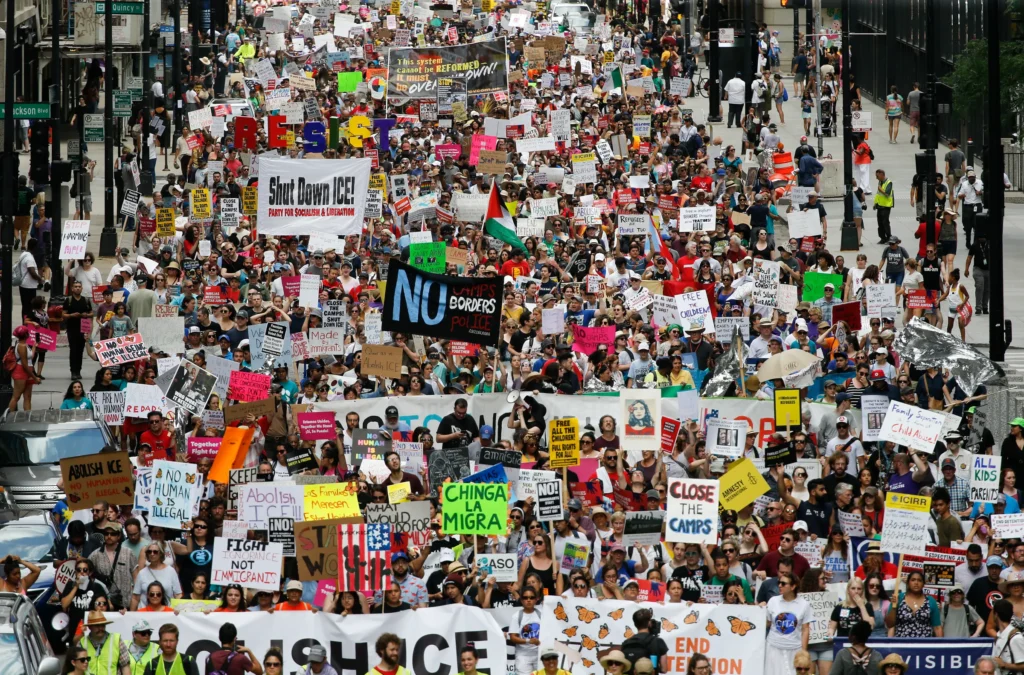
The unrest was sparked after the fatal shooting of 37-year-old Renée Nicole Good by an ICE agent during an immigrationenforcement operation in Minneapolis. Tens of thousands of demonstrators later marched through the city and across the country, demanding accountability and an end to aggressive immigrationenforcement policies.
Federal Judge Restricts ICE Tactics Amid Protest Surge
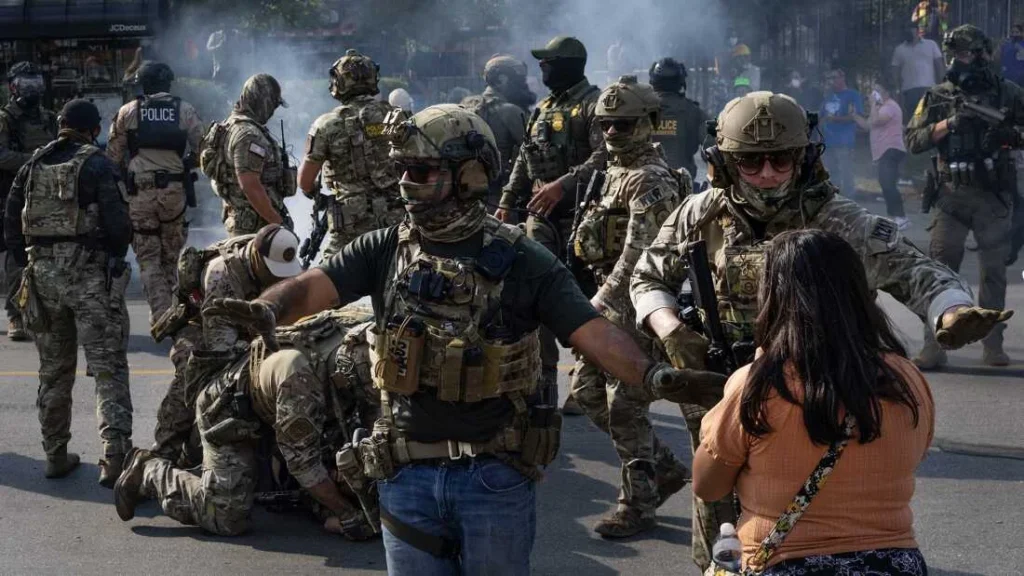
A federal judge in Minnesota issued an injunction limiting the tactics U.S.immigration agents may use against peaceful protesters in Minneapolis and St. Paul, barring arrests and forceful measures such as pepper spray or tear gas against non-violent demonstrators and observers unless there is reasonable suspicion of criminal activity.
Homeland Security Secretary Kristi Noem, one of the federal officials named in the lawsuit, said after the shooting that:
“Good had been stalking and impeding ICE agents all day and had committed an act of ‘domestic terrorism’ by trying to run over federal officers.”
Local authorities and civil liberties advocates hailed the ruling as a victory for free speech and public safety, while federal officials have not yet indicated whether the Department of Homeland Security (DHS) will appeal the decision. The injunction follows allegations that federal agents used excessive force, prompting legal challenges from Minnesota and its cities, accusing ICE of violating constitutional rights.
Protests Spread Nationwide Over Immigration Enforcement
Demonstrations have spread far beyond Minnesota, with coordinated “ICE Out for Good” protests held in cities from Portland, Oregon to Philadelphia and Indianapolis, where hundreds rallied against ICE and U.S.immigration policies. One of the protesters, Meghan Moore, a mother of two from Minneapolis, said:
“We’re all living in fear right now. ICE is creating an environment where nobody feels safe, and that’s unacceptable.”
In Durham, North Carolina, clashes with federal agents led to the use of fireworks and traffic disruptions during marches against immigrationenforcement. Adali Abeldanez, the owner of Moroleon Supermarket in Durham, said:
“Fear is impacting daily life and local businesses, including his own. People are still stressed and worried.”
Organizers across states have cited videos of federal officers’ actions in Minneapolis and Portland, including shootings and the wounding of two individuals, as catalysts for a broader resistance movement. In Minneapolis, far-right activist Jake Lang, a pardoned January 6 rioter, drew only a few supporters to an anti-Muslim, pro-ICE rally where he had vowed to burn a Quran, but was instead soaked, pelted, and chased away by a much larger crowd of counter protesters, who later shared images of him leaving bloodied as alleged proof of chaos in the city.
Federal Government Threatens Broader Deployment
Amid rising tensions and persistent protests, President DonaldTrump has threatened to invoke the Insurrection Act to deploy U.S. troops in Minneapolis if state and local authorities are unable to control unrest tied to ICE protests. Sources report that about 1,500 active-duty troops have been placed on standby in Alaska for potential deployment.
The administration maintains the expanded federal presence is necessary to protect federal personnel and property as immigrationenforcement ramps up, while critics condemn the approach as overreach that could escalate conflict and suppress dissent.
Civil Rights and Legal Scrutiny Deepen
U.S. civil rights organizations and international observers have raised concerns about the use of force against demonstrators. Legal experts note that under U.S. constitutional law and international human rights standards, law enforcement must use force only when necessary and proportionate. Similar legal questions about necessity, proportionality, and accountability in protest policing have arisen in other jurisdictions, as explored in a broader legal and geopolitical analysis of protest crackdowns involving lethal force.
Federal authorities, on the other hand, are shifting focus toward protesters’ conduct. The U.S. Department of Justice announced investigations into a group of demonstrators who disrupted a church service in St. Paul, Minnesota, accusing them of civil rights violations for interrupting worship tied to a local pastor alleged to have connections with ICE. The DOJ has vowed to press charges under federal law.
“These poorly trained, aggressive and armed agents of the federal state have terrorized Minnesota with widespread unlawful conduct.”
Local Officials’ Criticism and Washington’sResponse
Minneapolis Mayor Jacob Frey publicly criticized the federal immigration crackdown, characterizing the surge of ICE and Border Patrol agents as an “invasion” by the federal government. Frey and Minnesota Governor Tim Walz have also faced scrutiny from the Justice Department amid reports of an investigation into whether they conspired to obstruct federal immigrationenforcement.
United States President DonaldTrump in reply criticized protests against the US Immigration and Customs Enforcement (ICE) in Minnesota, claiming that the state’s Governor Tim Walz and Congresswoman Ilhan Omar are supporting the demonstrations because they take the focus away from the “FRAUD” in the state. Trump asked in a post on Truth Social:
“The thugs that are protesting include many highly paid professional agitators and anarchists. Is this really what Minnesota wants?”
He further added:
“The crooked Governor and ‘Congresswoman’ Omar, who married her brother, don’t mind because it keeps the focus of attention off the 18 Billion Dollar, Plus, FRAUD, that has taken place in the State! Don’t worry, we’re on it.”
Public Safety Incidents Fuel Anger
Demonstrations have been punctuated by incidents that intensify public debate over federal enforcement tactics. In Minneapolis, a family with young children was caught in a protest clash where tear gas deployment caused breathing difficulties for an infant, raising additional concerns about crowd control methods. Destiny Jackson, whose family was tear-gassed by ICE agents, said:
“An ICE agent, one of them, yells in my window, like, ‘Get the F out of here.’ And my husband’s like ‘We’re trying.”
A 21-year-old protester in Santa Ana, California, was reported to have suffered permanent blindness after being struck by non-lethal ammunition during an anti-ICE demonstration. According to his family, he could have died in the incident, for which he underwent six hours of surgery.
Ongoing National and Local Action
Civil rights leaders and community activists continue to mobilize, organizing protests, marches, and vigils in cities nationwide that call for independent investigations of federal agents’ conduct and systemic changes to immigrationenforcement strategies.
In Philadelphia, protesters connected ICE demonstrations with broader issues of immigrant rights and opposition to other U.S. foreign and domestic policies, drawing sizable crowds in sustained rallies.
Legal analysts note that even as some protests remain largely peaceful, the broad geographic spread and variety of incidents, from church disruptions to federal injunctions, signal that immigrationenforcement policy and protester response will remain key battlegrounds in U.S. politics and law for months to come. This use of force, whether in the United States or abroad, can generate long-term legal, political, and reputational consequences, a dynamic already visible in recent international assessments of protest responses and lethal force.
Timeline: Key Developments in the Anti-ICE Protests
January 8, 2026 – Protests spread after a separate federal shooting incident in Portland, Oregon, where two people were wounded during an immigrationenforcement action.
January 10, 2026 – Tens of thousands of demonstrators march in Minneapolis as coordinated anti-ICE protests take place in cities across the United States, including Phoenix, Durham, and Washington, D.C.
January 11-12, 2026 – Clashes occur between protesters and federal agents in Minneapolis. Chemical irritants and non-lethal munitions are reported to have been used against crowds.
January 13, 2026 – Several federal prosecutors resign, citing concerns over the Department of Justice’s refusal to open a civil rights investigation into the Minneapolis shooting.
January 14, 2026 – A second shooting involving an ICE agent is reported in Minneapolis, where a Venezuelan national is wounded during an enforcement operation, intensifying protests and criticism.
January 16, 2026 – A federal judge in Minnesota issues an injunction restricting ICE and other federal agents from detaining or using force against peaceful protesters without reasonable suspicion of criminal activity.
January 17–18, 2026 – Federal officials signal readiness to escalate enforcement. About 1,500 active-duty U.S. troops are placed on standby amid warnings that the Insurrection Act could be invoked if unrest continues.
January 19, 2026 – The Department of Justice confirms it will not pursue a federal investigation into the ICE agent involved in the fatal shooting but announces inquiries into Minnesota state and city officials over alleged obstruction of federal enforcement.
January 20–23, 2026 — Economic Blackout Protest:Labor unions and community groups organize an economic blackout and demonstrations in Minneapolis against federal immigrationenforcement and ICE tactics, drawing broad local support.
January 24, 2026 — Alex Pretti Killing: Federal immigration agents fatally shoot 37-year-old ICU nurse Alex Pretti during an immigrationenforcement operation in Minneapolis, marking the second fatal shooting by federal agents in the city in weeks and sharply escalating tensions.
January 24–25, 2026 — Mass Protests and Clashes: Thousands of protesters gather in Minneapolis and spread to cities including New York, Los Angeles, San Francisco, and Boston, demanding accountability and the removal of ICE agents; clashes with law enforcement occur as federal agents use crowd-control measures.
January 25, 2026 — Judge Orders Preservation of Evidence: A federal judge issues a temporary restraining order requiring the Department of Homeland Security to preserve evidence related to the Pretti shooting after a legal challenge by Minnesota authorities focused on DHS’s handling of the scene.
January 25–26, 2026—National Ripples: The protests and political response continue to grow, prompting broader debate over federal immigrationenforcement and civil rights. Mass protests erupt across Minneapolis. City officials, civil rights groups, and members of Congress demand the withdrawal of federal agents and independent investigations.
January 26, 2026—Minnesota state leadership formally objects to the federal deployment, citing public safety concerns and lack of coordination.
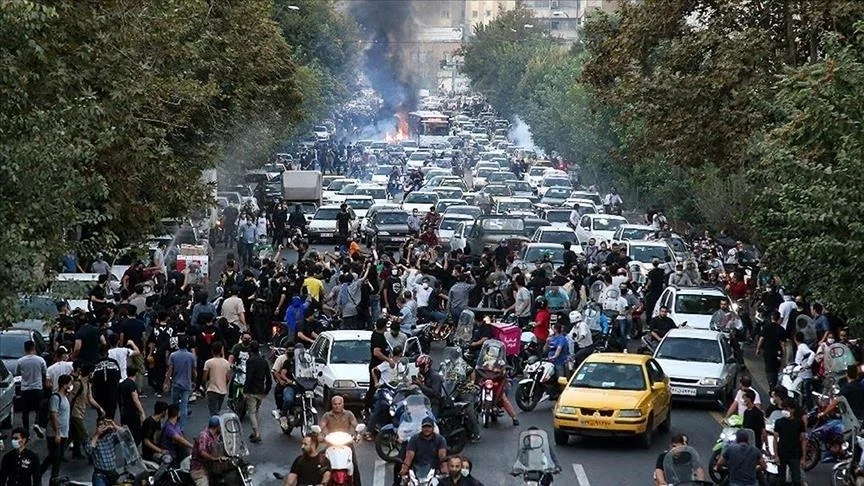
The protests, which began on 28 December 2025 amid severe economic distress, have evolved into one of the most significant challenges to Iran’s political system in decades. Rights groups estimate that thousands of people have been killed and tens of thousands detained as demonstrations spread across all 31 provinces.
The United Nationshuman rights office said it was “horrified” by reports of live ammunition being used against demonstrators, warning that arbitrary killings, mass arrests, and excessive force could amount to serious violations of international human rights law. Assistant Secretary-General Martha Pobee briefed an emergency meeting of the UNSecurity Council on Thursday, describing the situation in Iran as:
“fluid and deeply concerning.”
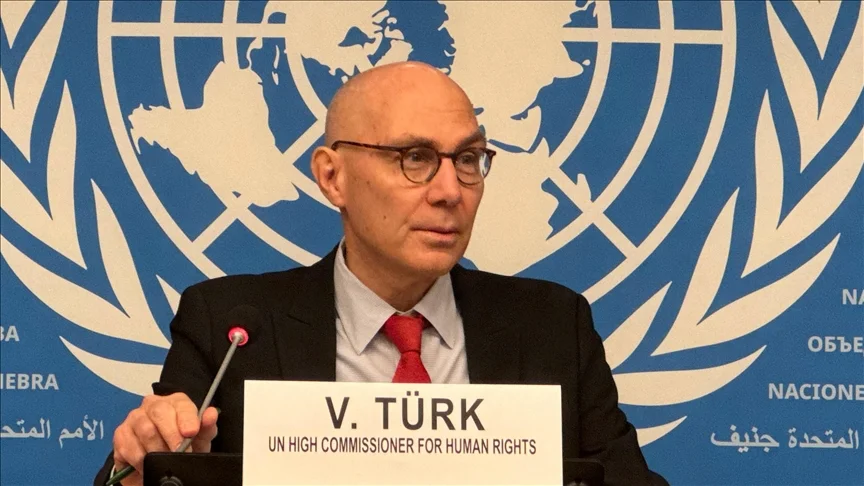
The UN High Commissioner for Human Rights, Volker Türk said in a statement, calling on Iranian authorities to respect the right to peaceful assembly and ensure accountability for abuses:
“Lethal force may only be used as a last resort to protect life.”
Protests Sparked by Economic Collapse
The unrest began amid worsening economic conditions, including spiraling inflation, a collapsing national currency, and rising food and fuel prices. The Iranian rial fell to record lows against the U.S. dollar in late 2025, sharply reducing purchasing power for ordinary citizens.
What started as a strike by shopkeepers and merchants in Tehran’s Grand Bazaar quickly spread to universities, industrial centers, and provincial cities. Protesters initially demanded economic relief but soon broadened their calls to include political reform, an end to repression, and greater accountability from state institutions.
Analysts say the rapid spread of protests reflected deep frustration across social classes, compounded by renewed international sanctions imposed in 2025 and the economic fallout from regional conflicts.
Security Response and Internet Blackout
Security forces began intervening forcefully in late December, deploying riot police, paramilitary units, and plainclothes officers in major cities. By early January, reports emerged of live ammunition, mass arrests, and targeted shootings.
On 8 January 2026, authorities imposed a near-total nationwide internet and mobile communications blackout, severely limiting the flow of information. Rights groups said the blackout obscured the scale of violence and hindered independent verification of casualties.
“The communications shutdown appears designed to suppress dissent and conceal abuses.”
Rising Death Toll and Rights Group Findings
Independent organizations operating inside and outside Iran have documented a sharp rise in deaths, injuries, and detentions. Human RightsActivists reported that by mid-January at least 1,850 protesters, including children, had been killed and more than 16,700 arrested. The group said the figures were likely a significant undercount due to reporting restrictions.
Other researchers examining what some have termed the “2026 Iran massacres” estimate that the death toll could range from several thousand to tens of thousands, alleging coordinated and widespread use of lethal force by state security agencies.
Hospitals in several cities have reported hundreds of severe injuries, including gunshot wounds to the head and torso and permanent eye damage, according to medical sources cited by rights groups.
The UN Basic Principles on the Use of Force and Firearms by Law Enforcement Officials require authorities to prioritize non-violent means and minimize harm. Legal experts say that patterns of nationwide killings, particularly against unarmed protesters, could raise concerns under international criminal law if shown to be widespread or systematic.
While Iran is not a member of the International Criminal Court, human rights lawyers note that senior officials could still face legal exposure under universal jurisdiction laws in some countries.
Government Response
Iranian officials have rejected allegations of unlawful force, blaming the violence on:
“armed rioters and foreign interference.”
Supreme Leader Ayatollah Ali Khamenei accused external actors of fueling unrest, while state media portrayed the crackdown as necessary to preserve national stability. Authorities have not released comprehensive casualty figures, contributing to wide discrepancies between official statements and independent estimates.
Global Reactions and Pressure
Foreign governments, including several Western states, have warned Tehran that continued repression could trigger further diplomatic and economic consequences. Members of the G7 have called on Iran to respect human rights and allow independent investigations.
Human rights organizations have urged the UNHuman Rights Council to convene a special session on Iran, arguing that the scale of reported abuses warrants international scrutiny.
What’s Next
Legal analysts say that while immediate accountability mechanisms may be limited, evidence gathered during the protests could have long-term consequences. Findings by UN bodies often form the basis for sanctions, travel bans, and future legal proceedings. Analysts note that these risks extend beyond the immediate crisis, echoing conclusions reached in a comprehensive legal and geopolitical outlook on Iran’s protest response and long-term exposure.
As documentation accumulates, legal exposure increases rather than fades, one international law expert said:
“Even if protests subside, the consequences of this crackdown may follow Iran and its officials for years.”
As demonstrations continue after heavy security presence and information restrictions, pressure is mounting on Iranian authorities to change course or face deepening international isolation.
Timeline: Key Events in Iran’s Protest Crackdown
28 December 2025 – Protests erupt in Tehran over inflation and currency collapse, involving shopkeepers, students, and workers.
31 December 2025 – 3 January 2026 – Security forces begin using force against protesters in multiple cities. Reports emerge of beatings, arrests, and the use of firearms, leading to initial fatalities.
8 January 2026 – Authorities impose a near-total internet and phone blackout nationwide. On the same day, security forces escalate operations, deploying live ammunition and conducting mass arrests.
9–13 January 2026 – The crackdown intensifies across all provinces. Human rights groups report targeted gunfire at protesters’ heads and torsos, mass shootings, and severe injuries, including permanent eye damage.
Mid-January 2026 – Casualty figures remain disputed due to communication restrictions, but credible estimates range from several thousand to potentially tens of thousands killed. Iranian officials acknowledge thousands of deaths, while rights groups report widespread unlawful killings.
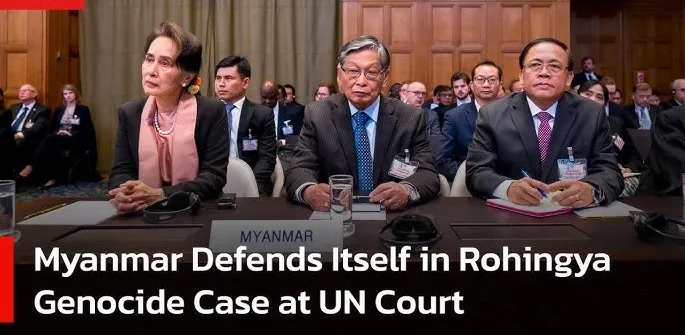
The Hague:Myanmar has formally begun presenting its defense before the International Court of Justice (ICJ) in proceedings alleging violations of the Convention on the Prevention and Punishment of the Crime of Genocide, categorically rejecting claims that it committed genocide against the Rohingya population. Similar questions about the threshold between grave human rights violations and the crime of genocide have arisen in other contemporary crises, including situations where UN rights groups warned Iran over the use of lethal force against protesters.
Myanmar’s legal representatives argued that the case rests on an incorrect application of international law and fails to satisfy the exceptionally high evidentiary threshold required to establish genocide. Ko Ko Hlaing, Myanmar’s legal counsel, stated:
“A finding of genocide would place an indelible stain on my country and its people. These proceedings are of fundamental importance for my country’s reputation and future.”
Counsel told the Court that the applicant improperly conflates alleged violations of international humanitarian and human rights law with genocide, which under the Convention requires proof of specific intent to destroy a protected group as such. He rejected the claim that Myanmar denies the existence or rights of the Muslim population in northern Rakhine state by stating:
“Myanmar considers that Bengalis in northern Rakhine State are culturally, ethnically and religiously part of the same group as the population living immediately across the border in Bangladesh.”
Background of the Case
The proceedings arise from Myanmar’s 2016–2017 military operations in Rakhine State following coordinated attacks on security posts by armed groups. Those operations triggered the mass displacement of Rohingya civilians into Bangladesh and led to allegations of killings, sexual violence, destruction of villages, and the creation of conditions of life allegedly calculated to bring about the group’s physical destruction, in whole or in part.
The case was filed by The Gambia, acting as a State Party to the Genocide Convention and invoking obligations erga omnes partes, which allow any state party to seek compliance with the Convention regardless of a direct territorial or national link to the alleged violations. In January 2020, the ICJ ordered provisional measures requiring Myanmar to take steps to prevent acts falling within Article II of the Convention and to preserve evidence.
Myanmar’s Legal Defense
Myanmar’s defense rejects all allegations of genocidal conduct and centers on the Convention’s demanding legal architecture. The submissions emphasize that genocide is a narrowly defined crime requiring proof of dolus specialis, the intent to destroy a protected group as such, and that no evidence establishes a state policy or coordinated plan aimed at destruction. Myanmar argues that allegations conflate potential violations of international humanitarian or human rights law with genocide, a category the ICJ has repeatedly treated as exceptional.
The defense further maintains that operations cited by the applicant were undertaken in response to security threats and were not directed at civilians as such, and that any unlawful acts by individuals fall within domestic accountability processes rather than constituting state responsibility for genocide. Jurisdictional and admissibility objections caution against an expansive reading of the Convention that would dilute the crime’s gravity and destabilize international criminal law.
ICJ Precedent on Genocide Claims
The Myanmar proceedings sit squarely within a line of ICJ judgments that have preserved a high evidentiary bar. In Bosnia and Herzegovina v. Serbia and Montenegro (2007), the Court recognized genocide at Srebrenica but declined to attribute commission to Serbia, instead finding a breach of the obligation to prevent genocide. In Croatia v. Serbia (2015), the Court rejected genocide claims by both parties, reiterating that widespread or systematic atrocities, even if constituting war crimes or crimes against humanity, do not suffice without proof of specific intent.
This strict approach mirrors debates in other protest-related contexts, where widespread lethal force may constitute serious human rights violations or crimes against humanity without necessarily satisfying the intent requirement for genocide, as explored in a detailed legal and geopolitical analysis of Iran’s protest crackdown.
More recently, in Ukraine v. Russian Federation (Provisional Measures, 2022), the ICJ addressed the misuse of the Genocide Convention as a justification for force, reaffirming the Convention’s precise scope. Collectively, these authorities reinforce the centrality of intent and the Court’s reluctance to broaden genocide beyond its settled definition.
Asia-Pacific and ASEAN Legal Significance
For Asia-Pacific states, the case raises foundational questions about the balance between sovereignty and peremptory norms, the interaction between domestic processes and international adjudication, and the practical consequences of erga omnes partes standing. The acceptance of third-state standing expands access to the Court and may recalibrate regional expectations about treatycompliance and dispute settlement.
From an ASEAN standpoint, the proceedings spotlight the tension between non-interference and collective treaty obligations. While ASEAN frameworks emphasize consensus and regional solutions, the ICJ’s approach underscores that multilateral human rights treaties can generate enforceable obligations beyond regional mechanisms, potentially influencing how future disputes are framed and litigated.
The Legal Test for Genocide and What the ICJ Can Decide
Under Article II of the Genocide Convention, genocide requires the commission of enumerated acts accompanied by the intent to destroy, in whole or in part, a national, ethnic, racial, or religious group. Article I imposes obligations to prevent and punish genocide, while Article IX confers ICJ jurisdiction over disputes concerning the interpretation, application, or fulfillment of the Convention.
The ICJ adjudicates disputes between states and determines state responsibility under international law. It does not assess individual criminal liability, which falls within the jurisdiction of international or domestic criminalcourts. While ICJ judgments are legally binding under Article 94 of the UNCharter, enforcement depends primarily on voluntary compliance and political mechanisms.
What Comes NextandWhy It Matters in 2026
The Court will continue to hear submissions on the merits before entering deliberations. A final judgment is expected to take considerable time, consistent with the ICJ’s practice in complex genocide cases.
The Myanmar genocide case represents one of the most consequential international law proceedings of the decade. Beyond its immediate factual context, the case tests the boundaries of genocide adjudication, the evidentiary threshold for dolus specialis, and the role of third states in enforcing multilateral human rights treaties. For Asia-Pacific states, the proceedings raise fundamental questions concerning sovereignty, non-intervention, and the judicialization of international relations.
Procedural Timeline
2016–2017 – Military operations in Rakhine State 2019 – Application filed by The Gambia at the ICJ January 2020 – ICJ orders provisional measures 2024–2025 – Written pleadings exchanged 2026 – Myanmar opens oral defense TBD – ICJ final judgment
“The UDHR has been translated into more than 500 languages, making it the most translated document in the world.”
As we commemorate the 76th anniversary in 2025, the UDHR’s 30 articles continue guiding human rights treaties, national constitutions, and international law while inspiring movements for dignity and equality worldwide. This comprehensive guide examines the UDHR’s history, key articles, legal significance, and enduring impact on global human rights protection.
What Is the Universal Declaration of Human Rights?
The Universal Declaration of Human Rights represents the first comprehensive statement of human rights principles adopted by the international community.
“The UDHR sets out, for the first time, fundamental human rights to be universally protected and has become a common standard of achievements for all peoples and all nations.”
The Universal Declaration of Human Rights emerged from the aftermath of World War II, when the international community sought to prevent the atrocities that had occurred during the conflict. The UDHR was adopted without dissent but with eight abstentions on December 10, 1948, at the Palais de Chaillot in Paris. The abstaining countries were the Soviet Union, Byelorussian Soviet Socialist Republic, Czechoslovakia, Poland, Saudi Arabia, South Africa, Ukrainian Soviet Socialist Republic, and Yugoslavia.
While not a legally binding treaty itself, the UDHR has achieved customary international law status through widespread acceptance and forms the foundation for two binding UNhuman rights covenants: the International Covenant on Civil and Political Rights (ICCPR) and the International Covenant on Economic, Social, and Cultural Rights (ICESCR). Together, these three documents comprise the International Bill of Human Rights.
Historical Context and Drafting Process
The UDHR’s creation involved diverse voices from around the world working to establish universal principles transcending cultural, political, and ideological differences.
Post-War Imperative
The horrors of World War II, including the Holocaust and widespread human rights violations, created urgent consensus that international human rights standards were essential to prevent future atrocities. The UN Charter, adopted in 1945, committed member states to promoting “universal respect for, and observance of, human rights and fundamental freedoms.”
The Drafting Committee
The UN Commission on Human Rights, chaired by Eleanor Roosevelt appointed a drafting committee to create the declaration. Key figures included René Cassin of France, Charles Malik of Lebanon, Peng Chun Chang of China, and John Humphrey of Canada, who prepared the initial draft. This diverse committee ensured the declaration reflected various philosophical and cultural traditions rather than exclusively Western values.
Eleanor Roosevelt’s leadership proved instrumental in navigating political tensions during the Cold War period. She emphasized the declaration’s universality and worked tirelessly to achieve consensus among nations with vastly different political systems and cultural backgrounds. The drafting process involved extensive consultations and revisions over nearly two years before the General Assembly’s final adoption.
Global Consultation
The drafting committee solicited input from governments, non-governmental organizations, and scholars worldwide. This inclusive process helped create a document reflecting diverse perspectives on human dignity, liberty, and justice. Philosophers, religious leaders, and legal experts contributed to articulating principles that would resonate across cultures and civilizations.
The 30 Articles: Core Rights and Freedoms
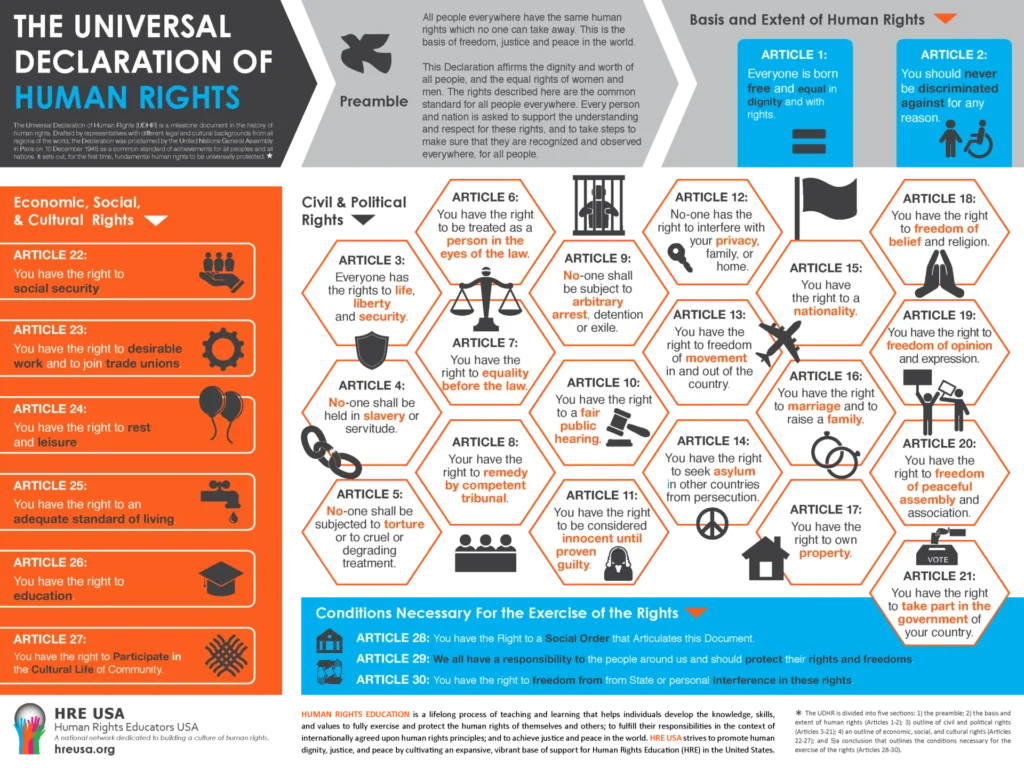
The UDHR’s 30 articles establish comprehensive rights covering civil, political, economic, social, and cultural dimensions of human dignity.
“All human beings are born free and equal in dignity and rights, endowed with reason and conscience, and should act towards one another in a spirit of brotherhood.”
This foundational principle establishes human dignity as inherent rather than granted by governments or contingent on characteristics like nationality, wealth, or social status.
“Everyone is entitled to all rights and freedoms without distinction of any kind, such as race, colour, sex, language, religion, political or other opinion, national or social origin, property, birth or other status.”
This non-discrimination principle applies universally regardless of the political, jurisdictional, or international status of the country or territory to which a person belongs.
Articles 3-21: Civil and Political Rights
These articles protect fundamental freedoms essential for human autonomy and political participation.
“the right to life, liberty, and security of person, forming the basis for prohibiting slavery, torture, arbitrary arrest, and other violations of personal integrity.”
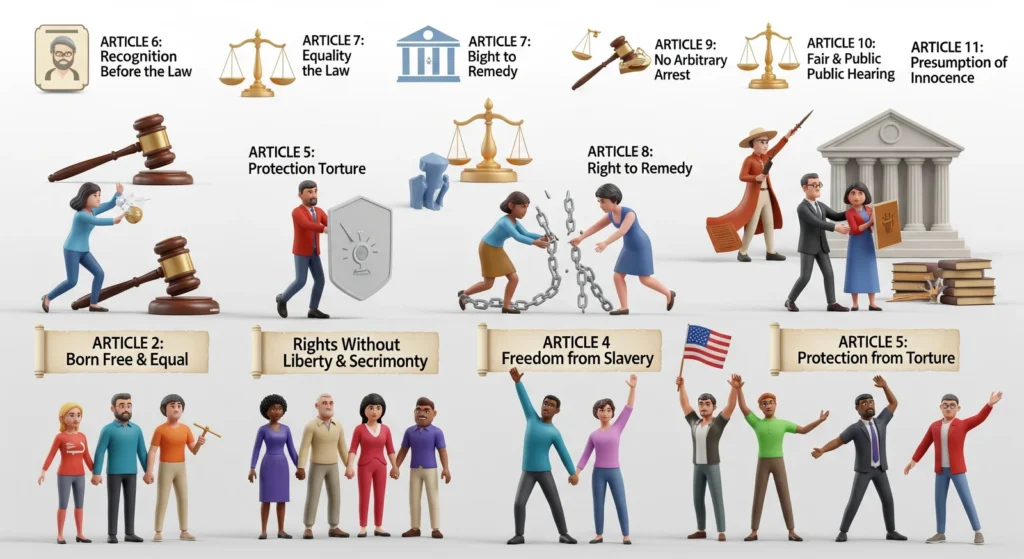
Articles 4 through 11 prohibit slavery and servitude, torture and cruel treatment, and arbitrary arrest while guaranteeing equality before the law, effective legal remedies, fair trial rights, and presumption of innocence. These provisions establish the rule of law as essential for protecting human dignity against state abuse.
Articles 12 through 17 protect privacy, freedom of movement, asylum from persecution, nationality, marriage and family rights, and property ownership.
“the right to leave any country, including one’s own, and to return to one’s country, establishing freedom of movement as a fundamental human right.”
Articles 18 through 21 guarantee freedom of thought, conscience, and religion; freedom of opinion and expression; freedom of peaceful assembly and association; and the right to participate in government through genuine periodic elections with universal and equal suffrage. These political rights enable citizens to shape their governance and hold leaders accountable.
Articles 22-27: Economic, Social, and Cultural Rights
The UDHR recognizes that civil and political freedoms cannot be fully realized without economic security and social protection.
“Everyone, as a member of society, has the right to socialsecurity and is entitled to realization of economic, social, and cultural rights indispensable for dignity and free development of personality.”
“the right to work, free choice of employment, just and favorable conditions of work, equal pay for equal work, and the right to form and join trade unions.”
These provisions recognize that economic exploitation undermines human dignity and that workers deserve fair treatment and the ability to organize collectively.
Articles 24 and 25 guarantee rest and leisure, including reasonable working hours and periodic holidays with pay, and an adequate standard of living, including food, clothing, housing, medical care, and necessary social services.
“Everyone has the right to security in unemployment, sickness, disability, widowhood, old age, or other lack of livelihood circumstances beyond their control.”
“the right to education, specifying that elementary education shall be free and compulsory, technical and professional education generally available, and higher education equally accessible based on merit.”
Education shall be directed to the full development of human personality and strengthening respect for human rights and fundamental freedoms while promoting understanding, tolerance, and friendship among nations, racial, and religious groups.
“the right to participate in cultural life, enjoy the arts, and share in scientific advancement and its benefits, while also protecting moral and material interests resulting from scientific, literary, or artistic production of which a person is the author.”
These cultural rights recognize that human flourishing requires access to knowledge, creativity, and cultural expression.
“Everyone is entitled to a social and international order in which the rights and freedoms outlined in this Declaration can be fully realized.”
This provision recognizes that effective human rights protection requires both national institutions and international cooperation creating conditions enabling rights enjoyment.
“Everyone has duties to the community and that rights exercise may be subject only to limitations established by law for the purpose of securing due recognition and respect for the rights and freedoms of others and meeting the just requirements of morality, public order, and general welfare in a democratic society.”
This balancing recognizes that rights exist within social contexts requiring reasonable limitations to protect legitimate societal interests.
“nothing in the declaration may be interpreted as implying any right to engage in activity or perform acts aimed at destruction of any rights and freedoms set forth therein.”
This safeguard prevents misuse of the declaration to undermine the human rights it seeks to protect.
Legal Status and International Influence
While originally conceived as a non-binding declaration, the UDHR has achieved profound legal and political significance through its influence on international law, national constitutions, and court decisions worldwide.
Customary International Law Status
Legal scholars increasingly recognize that many UDHR provisions have attained customary international law status through consistent state practice accompanied by a sense of legal obligation. Prohibitions on slavery, torture, and genocide, along with principles of non-discrimination and self-determination, are now considered jus cogens norms binding on all states regardless of treaty ratification.
Foundation for Human Rights Treaties
The UDHR inspired numerous international human rights treaties creating legally binding obligations. The International Covenant on Civil and Political Rights and International Covenant on Economic, Social and Cultural Rights, both adopted in 1966, elaborate the UDHR’s principles into comprehensive treaty obligations.
Regional human rights instruments, including the European Convention on Human Rights, American Convention on Human Rights, and African Charter on Human and Peoples’ Rights, draw heavily from UDHR principles while addressing regional contexts.
Specialized treaties addressing particular issues or vulnerable groups, such as the Convention on the Elimination of All Forms of Discrimination Against Women, Convention on the Rights of the Child, Convention Against Torture, and Convention on the Rights of Persons with Disabilities, build upon the UDHR’s non-discrimination principle and commitment to human dignity.
Constitutional Incorporation
More than 90 national constitutions incorporate UDHR provisions or explicitly reference the declaration, demonstrating its global influence on domestic legal systems. Constitutional courtsworldwide cite the UDHR when interpreting fundamental rights provisions, treating it as authoritative guidance on human rights content and scope.
Some countries grant the UDHR direct legal effect in their domestic legal systems, allowing courts to apply its provisions when adjudicating cases. Even where not directly enforceable, the UDHR serves as an interpretive guide helping courts determine the meaning and scope of constitutional rights protections.
International Monitoring Mechanisms
UNtreaty bodies monitoring compliance with human rights conventions regularly reference UDHR principles when evaluating state reports and issuing recommendations. The UNHuman Rights Council’s Universal Periodic Review process assesses all UN member states’ human rights records using UDHR standards as benchmarks for evaluation.
UDHR and Human Rights Education
Promoting understanding of human rights through education represents a critical component of the UDHR’s ongoing implementation and relevance.
Human Rights Day
December 10 marks Human Rights Day, commemorating the UDHR’s adoption and providing an annual opportunity to reflect on progress and remaining challenges. The UN and human rights organizations worldwide use this day to raise awareness, highlight violations, and advocate for strengthened protections.
Educational campaigns during Human Rights Day reach millions with messages about fundamental rights and individual responsibility to respect others’ dignity.
Educational Mandates
Article 26 specifically requires that education be directed toward strengthening respect for human rights and fundamental freedoms. Schools worldwide incorporate human rights education into curricula, teaching students about their rights and responsibilities in democratic societies. Universities offer specialized human rights programs training the next generation of advocates, lawyers, and policymakers working to advance UDHR principles.
Public Awareness Campaigns
The wide availability of the UDHR in over 500 languages facilitates grassroots human rights education globally. Organizations translate the declaration into local languages and dialects, making its principles accessible to communities that might otherwise remain unaware of their rights. Simple language versions help children and adults with limited literacy understand fundamental human rights concepts.
Role of Civil Society
Non-governmental organizations play essential roles in monitoring compliance, documenting violations, providing legal assistance, and advocating for policy changes consistent with UDHR standards. Groups like Amnesty International, Human Rights Watch, and countless local organizations draw on UDHR authority when challenging abuses and demanding accountability from governments and other powerful actors.
Global Impact of the UDHR in 2026
The Universal Declaration of Human Rights (UDHR) remains the cornerstone of international human rights protection in 2026, shaping how the world understands justice, dignity, and state responsibility during conflict and political crisis. Although the declaration itself is not legally binding, it continues to function as the global benchmark for lawful conduct, influencing international courts, binding treaties, humanitarian law, and accountability mechanisms.
In an era marked by the Israel–Gaza conflict, the Russia–Ukraine war, political instability in Venezuela, and rising geopolitical tensions worldwide, the UDHR’s relevance has only intensified.
From a search and discovery perspective, the UDHR is now widely referenced not only in academic and legal contexts but also in real-time policy debates, international litigation, and humanitarian reporting. Its principles help answer a question millions are searching for in 2026:
“What rules still apply when the world is in crisis?“
How UDHR Functions as Law in 2026
In practical terms, the UDHR operates as the foundation upon which binding international legal systems are built. Nearly all of its principles have been codified into enforceable treaties, such as international covenants on civil, political, economic, and social rights, and are reinforced by international humanitarian law during armed conflict.
Courts and legal bodies consistently use the UDHR as an interpretive guide when determining whether states have met their obligations related to the right to life, freedom from torture, equality before the law, and access to justice.
In 2026, the declaration also plays a critical role in international accountability. Allegations of war crimes, crimes against humanity, and large-scale human rights violations are assessed using legal standards that trace directly back to UDHR principles. This makes the declaration a living framework rather than a historical document, influencing judgments, sanctions regimes, and diplomatic pressure across regions.
Israel–Gaza in 2026: Civilian Protection and Human Rights Obligations
The crisis involving Israel and Gaza demonstrates how the UDHR continues to shape international legal and humanitarian discourse. In 2026, global attention remains focused on civilian casualties, access to humanitarian aid, protection of medical facilities, and the basic rights to food, water, shelter, and healthcare. These concerns directly reflect UDHR guarantees related to human dignity and the right to life.
Legal discussions increasingly emphasize that even during armed conflict, states remain bound by obligations to protect civilians and avoid disproportionate harm. The UDHR informs how international courts, UN bodies, and humanitarian organizations evaluate compliance, responsibility, and prevention of further violations. As a result, the declaration is not only cited in moral arguments but also embedded in legal proceedings and international rulings.
Russia–Ukraine War: War Crimes, Accountability, and Human Rights Law
The ongoing war between Russia and Ukraine remains one of the clearest modern examples of UDHR principles in action. In 2026, international concern continues over attacks on civilian infrastructure, forced displacement, treatment of prisoners of war, and the long-term humanitarian impact on millions of civilians.
These issues are assessed through international humanitarian law and international criminal law, both of which draw their ethical and legal foundations from the UDHR. Investigations into alleged war crimes reinforce the declaration’s enduring message: serious human rights violations do not lose their legal significance due to political complexity or ongoing negotiations. Accountability remains a core expectation of the international system.
United States and Venezuela: Due Process, Political Rights, and International Law
Tensions involving the United States and Venezuela highlight another dimension of UDHR relevance in 2026. Here, the focus shifts toward due process, fair trial standards, political participation, and the humanitarian consequences of sanctions and international pressure.
The UDHR provides the framework used by international observers to evaluate whether actions respect sovereignty while still protecting fundamental rights. Discussions surrounding civilian protection, legal detention, and political freedoms consistently reference UDHR principles, showing how the declaration applies not only in war zones but also in complex political and diplomatic confrontations.
Global Human Rights Trends Reflecting the UDHR in 2026
Beyond headline conflicts, the UDHR continues to shape responses to global challenges such as mass displacement, refugee protection, digitalsurveillance, censorship, suppression of protests, and restricted humanitarian access.
In many regions, governments face increasing scrutiny over arbitrary detention, erosion of judicial independence, and limitations on freedom of expression. Despite cultural and political differences, the UDHR remains the universal standard used to assess whether state actions align with internationally accepted human rights norms.
Why the Universal Declaration of Human Rights Still Matters in 2026
The UDHR remains vital in 2026 because it provides a shared global definition of human dignity that transcends borders and political systems. It supplies the language used by courts, governments, journalists, and civil society to identify injustice and demand accountability. While the declaration does not enforce itself, it shapes the laws, institutions, and mechanisms that do.
In a world increasingly defined by conflict, polarization, and humanitarian emergencies, the UDHR continues to guide legal interpretation, influence international rulings, and remind the global community that human rights are universal and non-negotiable—even in times of crisis.
Conclusion
The Universal Declaration of Human Rights stands as humanity’s most comprehensive statement of fundamental rights and freedoms essential for human dignity. Its 30 articles establish civil, political, economic, social, and cultural rights that states must respect and protect. While not originally intended as a legally binding treaty, the UDHR has achieved immense legal and moral authority influencing international law, national constitutions, and social movements worldwide.
The declaration’s enduring relevance in 2025 reflects both the universality of its principles and the persistence of human rights challenges requiring continued advocacy and action. From protecting digital privacy to addressing climate change, from defending democratic freedoms to advancing economic equality, UDHR principles guide efforts to create more just and humane societies. Universal Declaration truly belongs to all humanity and speaks to the deepest yearnings for dignity, justice, and peace that unite us across all differences.
The Universal Declaration of Human Rights remains the ethical and legal backbone of the international system in 2026. Its authority comes not from enforcement power but from universal acceptance, consistent legal integration, and continued relevance in the world’s most urgent crises. As global challenges evolve, the UDHR continues to define what humanity owes to every individual and how the world measures justice.
Frequently Asked Questions
Is the Universal Declaration of Human Rights legally binding?
No. The UDHR itself is not legally binding, but many of its principles are part of customary international law and legally binding treaties like the ICCPR and ICESCR.
The UDHR sets global human rights standards. It guides laws, court decisions, education systems, and international accountability even in modern issues like digital rights.
The UDHR influences national laws, protects freedom of speech, equality, education, work rights, and provides a global benchmark for justice and human dignity.
Yes. Human rights continue to apply during armed conflict alongside international humanitarian law, reinforcing civilian protection and accountability.
Water pollution control is a core pillar of environmental governance, protecting public health, freshwater ecosystems, and economic stability worldwide. From rivers and lakes to coastal waters and wetlands, legal systems increasingly recognize clean water as both a human necessity and a regulated public trust resource. While the U.S. Clean Water Act (CWA) remains one of the most influential water protection statutes globally, parallel regulatory frameworks operate across Europe, Asia, Africa, and under international law.
In November 2025, proposed regulatory rollbacks in the United States, particularly affecting wetlands jurisdiction, highlighted growing global concern over weakening water protections at a time of rising pollution, climate stress, and emerging contaminants. Similar regulatory pressures and reform debates are occurring worldwide, making a comparative understanding of water pollution control methods, discharge standards, treatment technologies, and compliance mechanisms increasingly urgent.
This guide examines global water pollution control frameworks in 2026, covering legal standards, discharge regulations, effluent limitations, treatment technologies, monitoring obligations, and enforcement systems shaping modern water governance.
Global Legal Frameworks Governing Water Pollution Control: 2026 Regulatory Outlook
As governments enter 2026, water pollution control laws are undergoing accelerated reform driven by climate risks, emerging contaminants, and tighter international compliance expectations. Global legal frameworks are increasingly converging around stricter discharge standards, enhanced enforcement mechanisms, and expanded jurisdiction over previously unregulated water bodies. Understanding this evolving regulatory landscape is critical for governments, industries, and environmentalcompliance professionals.
International Water Pollution Treaties: 2026 Policy Direction
In 2026, international environmental agreements continue to shape national water protection laws through harmonized pollution controls and expanded reporting obligations:
UNCLOS (United Nations Convention on the Law of the Sea) remains central to marine pollution regulation, with growing emphasis on land-based source pollution and offshore industrial activity.
UNECE Water Convention is expanding participation beyond Europe, signaling stronger global governance of transboundary rivers and lakes.
Stockholm and Basel Conventions are increasingly applied to micro-pollutants, PFAS-contaminated waste, and pharmaceutical residues entering water systems.
Minamata Convention on Mercuryenforcement is tightening, particularly for industrial wastewater and artisanal mining discharges.
By 2026, these treaties are expected to drive lower pollutant thresholds, mandatory monitoring, and enhanced liability for cross-border water contamination.
Regional Water Pollution Regulations in 2026
Regional legal regimes are setting the pace for enforceable water quality standards:
European Union – Water Framework Directive (WFD) The EU is advancing toward stricter ecological status benchmarks, enhanced nutrient controls, and updated priority substance lists reflecting PFAS and microplastics.
Revised EU Urban Waste Water Treatment Directive (2026 implementation phase) Introduces tougher treatment requirements, energy neutrality goals, and expanded monitoring for emerging contaminants.
OSPAR and Regional Seas Conventions Increasing regulatory focus on cumulative pollution impacts and offshore industrial discharges.
Asia-Pacific Frameworks ASEAN and regional river basin agreements are prioritizing industrial wastewater regulation and cross-border water quality coordination.
Mandatory remediation and ecosystem restoration obligations
Regulators are also reinforcing the polluter-pays principle, requiring responsible parties to bear the full cost of contamination cleanup and long-term environmental harm.
2026 Outlook: Toward Global Water Governance Convergence
Although water law remains nationally implemented, 2026 marks a clear trend toward global convergence in water pollution regulation. Shared legal principles, precaution, sustainability, transparency, and accountability are shaping future reforms.
As regulatory scrutiny intensifies, compliance with global water pollution control frameworks is no longer optional but a core legal and operational requirement for governments and industries worldwide.
Discharge Permits and Regulatory Authorization Systems
Discharge permit systems form the core legal mechanism for controlling water pollutionworldwide, authorizing regulated releases of wastewater while enforcing enforceable environmental standards. As regulators enter 2026, permit regimes are tightening, expanding coverage to emerging contaminants, digital monitoring, climate resilience, and cross-border accountability. Understanding how discharge authorization systems are evolving is essential for regulated industries, utilities, and policymakers.
Purpose and Legal Function of Discharge Permits
Discharge permits serve as legally binding authorizations allowing the release of pollutants into surface waters, groundwater, or marine environments under strictly defined conditions. Across jurisdictions, permit systems are designed to:
Prevent uncontrolled pollutant discharges
Translate statutory water quality goals into enforceable limits
Allocate pollution loads within watersheds and river basins
In 2026, permits increasingly function as dynamic compliance instruments, incorporating adaptive conditions that respond to climate variability and ecosystem sensitivity.
Global Models of Discharge Authorization Systems
While permit structures vary, most regulatory systems follow common models:
Permit-Based Authorization Individual or general permits specifying discharge limits, monitoring obligations, and operational conditions.
Licensing and Consent Regimes Used in the UK, EU, Australia, and parts of Asia, requiring prior consent before any discharge activity begins.
Integrated Environmental Permits Single permits covering air, water, and waste discharges under unified regulatory frameworks.
By 2026, integrated permitting is expanding as regulators seek holistic pollution control and streamlined enforcement.
United States: NPDES Permits and 2026 Developments
The U.S.National Pollutant Discharge Elimination System (NPDES) remains one of the world’s most developed discharge permit frameworks. Key 2026 regulatory trends include:
Expansion of PFAS effluent limitations across industrial categories
Greater scrutiny of stormwater and nonpoint source discharges
Revisions to Waters of the United States (WOTUS) affecting permit jurisdiction
Enhanced electronic reporting and real-time monitoring requirements
Permits increasingly include site-specific water quality-based effluent limits (WQBELs) reflecting downstream ecosystem impacts.
European Union and UK Discharge Authorization Systems
In the EU, discharge permits operate under the Water Framework Directive (WFD) and Industrial Emissions Directive (IED):
Best Available Techniques (BAT) conclusions directly shape effluent limits
2026 reforms expand coverage of pharmaceuticals, microplastics, and PFAS
The UK’s Environmental Permitting Regulations continue to evolve post-Brexit, with stronger enforcement, higher penalties, and digital permitting platforms forming the backbone of 2026 compliance.
Asia-Pacific and Emerging Economies: Permit Expansion
Across Asia-Pacific jurisdictions, discharge permitting systems are rapidly maturing:
China is strengthening discharge licensing with strict daily penalties and criminal liability
India is modernizing consent-to-operate systems through real-time effluent monitoring
Southeast Asia is expanding industrial wastewater permitting tied to river basin management
In 2026, emerging economies are prioritizing permit transparency, monitoring accuracy, and enforcement credibility.
Key Permit Conditions in 2026
Modern discharge permits typically impose:
Numeric effluent limitations for conventional, toxic, and emerging pollutants
Flow-based and load-based discharge caps
Monitoring frequency and sampling protocols
Electronic reporting and data retention obligations
Spill prevention and emergency response requirements
Adaptive conditions linked to climate and hydrological changes
These conditions are increasingly supported by digitalcompliance platforms and automated alerts.
General Permits vs. Individual Permits
Regulators distinguish between:
General Permits: Covering categories of similar dischargers (e.g., stormwater, construction sites)
Individual Permits: Tailored to high-risk or complex discharge operations
In 2026, agencies are narrowing eligibility for general permits where cumulative pollution risks are high, shifting more facilities into site-specific authorization frameworks.
Renewals in 2026 are expected to trigger stricter conditions, reflecting updated water quality data, emerging contaminant standards, and climate risk assessments.
Cross-Border and Transboundary Discharge Controls
Transboundary rivers and marine waters require coordinated authorization systems:
Basin-wide discharge caps
Joint permitting and monitoring mechanisms
Shared data platforms between states
International cooperation is becoming increasingly important as pollution impacts cross national boundaries.
2026 Regulatory Outlook: Future of Discharge Permitting
By 2026, discharge permits are evolving from static authorizations into adaptive regulatory instruments. Key trends include:
These changes reflect a global shift toward preventive, transparent, and enforceable water pollution control.
Effluent Limitations and Technology-Based Standards
Effluent limitations and technology-based standards remain the cornerstone of modern water pollution control law, translating environmental protection goals into enforceable discharge limits. Entering 2026, regulators worldwide are tightening effluent controls, expanding regulated pollutants, and redefining what qualifies as “available” and “economically achievable” treatment technology. These changes significantly increase compliance obligations for industrial facilities, municipal utilities, and infrastructure operators.
Legal Purpose of Effluent Limitations
Effluent limitations are legally binding numerical or narrative restrictions placed on wastewater discharges to:
Prevent degradation of surface and groundwater quality
Create uniform pollution control requirements across industries
Eliminate competitive advantages from weaker environmental controls
Support attainment of water quality standards
Technology-based standards operate independently of receiving water conditions, ensuring baseline protection even where water quality appears adequate.
Technology-Based Standards Explained
Technology-based effluent standards require dischargers to apply specific levels of treatment performance based on what is technically feasible and economically reasonable for their industry sector. These standards focus on pollution prevention at the source, rather than relying solely on downstream water quality impacts.
By 2026, regulators increasingly view technology-based limits as essential tools for addressing emerging contaminants and cumulative pollution risks.
Apply to newly constructed or significantly modified facilities
Reflect the highest level of demonstrated pollution control achievable
In 2026, BAT and NSPS standards are increasingly aligned with advanced treatment technologies, including membrane systems and advanced oxidation.
Expansion of Regulated Pollutants in 2026
Effluent limitations are expanding beyond traditional pollutants to address:
PFAS and fluorinated compounds
Pharmaceuticals and personal care products
Microplastics and nanomaterials
Endocrine-disrupting chemicals
Nutrient pollution contributing to harmful algal blooms
Regulators are lowering detection thresholds and requiring technology upgrades to meet new limits.
Industry-Specific Effluent Guidelines
Effluent limitations are often established through categorical guidelines tailored to specific industrial sectors, including:
Chemical manufacturing
Petroleum refining
Metal finishing and electroplating
Pulp and paper production
Food and beverage processing
Pharmaceutical manufacturing
In 2026, many sectors face revised guidelines reflecting updated treatment capabilities and environmental risk assessments.
Relationship Between Technology-Based and Water Quality-Based Limits
When technology-based limits alone are insufficient to protect receiving waters, regulators impose water quality-based effluent limits (WQBELs). These are:
In 2026, agencies are increasingly combining technology-based and water quality-based approaches to address climate-driven changes in flow, temperature, and dilution capacity.
Compliance, Monitoring, and Verification
Modern effluent standards rely on robust compliance systems, including:
Continuous or high-frequency monitoring
EPA- or regulator-approved analytical methods
Electronic reporting platforms
Automated exceedance alerts
Independent verification and audits
By 2026, real-time monitoring and data transparency are becoming standard permit conditions, particularly for high-risk dischargers.
Economic and Legal Implications in 2026
Stricter effluent limitations carry significant legal and operational consequences:
Increased capital investment in treatment infrastructure
Courts and regulators are increasingly rejecting arguments that advanced treatment is economically infeasible when technology is commercially available.
Water quality standards form the legal backbone of ecosystem protection, translating environmental objectives into enforceable criteria that safeguard human health, biodiversity, and aquatic system integrity. As regulatory frameworks evolve in 2026, water quality regulation is increasingly ecosystem-centric, addressing cumulative impacts, climate stressors, and emerging pollutants across entire watersheds.
Water quality standards serve three core legal functions:
Defining acceptable pollutant levels to protect designated water uses
Triggering regulatory intervention when degradation occurs
Providing the legal basis for discharge permitting and enforcement
Unlike technology-based effluent limits, water quality standards are site-specific, reflecting ecological sensitivity, hydrological conditions, and ecosystem services provided by each waterbody.
Designated Uses and Protected Ecosystem Functions
Regulatory systems classify waters based on designated uses, which typically include:
Drinking water supply
Aquatic life protection
Recreational use (swimming, fishing)
Agricultural and industrial use
Cultural and indigenous resource protection
In 2026, many jurisdictions are expanding designated uses to explicitly include:
This evolution strengthens legal protections for ecosystem services, not just water chemistry.
Types of Water Quality Criteria
Modern water quality standards rely on multiple criteria types to reflect complex ecological conditions:
Numeric Criteria Legally enforceable concentration limits for pollutants such as nutrients, metals, pathogens, and toxic substances. Numeric criteria increasingly reflect lower thresholds in 2026, particularly for endocrine disruptors and PFAS.
Narrative Criteria Qualitative standards prohibiting conditions that cause toxicity, bioaccumulation, or ecological imbalance, providing regulators flexibility to address unlisted pollutants.
Biological Criteria Assessment of aquatic life communities using indicators such as species diversity, abundance, and functional traits. These criteria play a growing role in ecosystem-based regulation.
Nutrient and Sediment Criteria Standards addressing eutrophication, harmful algal blooms, and habitat smothering are key priorities in 2026 climate-driven water management.
Anti-Degradation Policies and High-Value Waters
Anti-degradation rules prevent backsliding by maintaining existing water quality and protecting high-value ecosystems. Most frameworks follow a tiered structure:
Enhanced protection for high-quality waters exceeding minimum standards
Strict preservation for outstanding or ecologically critical waters
In 2026, regulators are expanding the classification of high-ecological-value waters, including headwaters, wetlands, coral reefs, and transboundary river systems.
Ecosystem-Based Water Management
Water quality regulation is increasingly integrated into ecosystem-based management approaches, recognizing that aquatic health depends on:
Legal frameworks now incorporate environmental flow requirements, habitat connectivity protections, and watershed-scale planning obligations.
Climate Change and Adaptive Standards
Climate change is reshaping water quality governance in 2026 by:
Altering pollutant dilution capacity
Increasing water temperatures and oxygen depletion
Intensifying runoff and contamination events
Shifting species tolerance thresholds
As a result, regulators are adopting adaptive water quality standards that allow periodic revision based on climate and ecological data, strengthening long-term ecosystem protection.
Monitoring, Assessment, and Transparency
Ecosystem protection depends on robust monitoring systems, including:
Enhanced protection for vulnerable and transboundary waters
As legal systems converge around ecosystem protection principles, water quality standards are becoming central tools for sustaining resilient, life-supporting aquatic environments worldwide.
Wastewater Treatment Methods and Pollution Control Technologies
Wastewater treatment methods and pollution control technologies form the technical foundation of water pollution regulation, enabling governments to enforce discharge limits, protect ecosystems, and safeguard public health. As regulatory standards tighten in 2026, treatment systems are evolving beyond conventional compliance to address emerging contaminants, climate stressors, and cumulative environmental impacts.
Globally, regulators are aligning treatment requirements with technology-based effluent standards, ecosystem protection goals, and climate resilience strategies, making advanced wastewater treatment a central compliance obligation rather than a discretionary investment.
Legal Role of Wastewater Treatment in Pollution Control
Wastewater treatment systems serve a dual legal function:
Enabling compliance with technology-based and water quality-based discharge limits
In 2026, failure to deploy adequate treatment technology increasingly exposes operators to enforcement actions, permit revocation, and civil liability.
Municipal Wastewater Treatment Systems
Public wastewater treatment plants remain the backbone of urban pollution control, relying on multi-stage treatment processes.
Primary Treatment Physical processes remove settleable solids and floatable materials through screening, grit removal, and sedimentation. While primary treatment offers limited pollutant removal, it reduces system loading and supports downstream biological processes.
Secondary Treatment Biological treatment is the regulatory minimum in most jurisdictions. Activated sludge systems, trickling filters, and rotating biological contactors degrade organic matter, achieving significant reductions in biochemical oxygen demand (BOD) and suspended solids.
Tertiary and Advanced Treatment By 2026, advanced treatment is increasingly required to:
Remove nutrients such as nitrogen and phosphorus
Eliminate pathogens and trace contaminants
Improve effluent quality in sensitive watersheds
Technologies include filtration, membrane systems, advanced disinfection, and nutrient recovery processes.
Industrial Wastewater Treatment Technologies
Industrial wastewater treatment is tailored to facility-specific pollutant profiles and regulatory obligations.
Physical and Chemical Treatment These processes address metals, oils, and suspended solids through coagulation, precipitation, pH adjustment, and separation techniques. Chemical treatment remains essential for meeting stringent discharge limits.
Biological Treatment Aerobic and anaerobic systems treat biodegradable organic wastes, with anaerobic digestion gaining prominence due to its energy recovery potential and reduced sludge generation.
Advanced Oxidation Processes (AOPs) AOPs such as ozone, UV/hydrogen peroxide, and catalytic oxidation are increasingly deployed to destroy persistent organic pollutants and pharmaceutical residues.
Emerging Technologies in 2026
Regulatory pressure and technological innovation are accelerating adoption of advanced solutions:
Membrane Bioreactors (MBRs) combining biological treatment and membrane filtration
Reverse Osmosis and Nanofiltration for high-purity effluent and reuse applications
Constructed Wetlands as nature-based treatment systems
Electrochemical Treatment for industrial pollutants
Thermal Destruction and Plasma Technologies for high-strength waste streams
These technologies are becoming critical for compliance with BAT and new source standards.
Integration of treatment with water reuse and resource recovery
Harmonization of global pollution control standards
These trends position wastewater treatment technologies as central instruments of environmental law enforcement and ecosystem protection in 2026 and beyond.
Compliance Monitoring, Reporting, and Enforcement
Compliance monitoring, reporting, and enforcement form the operational backbone of environmental regulation, ensuring that water pollution control laws move beyond policy commitments into measurable, enforceable outcomes. As regulatory regimes tighten in 2026, authorities worldwide are strengthening monitoring obligations, expanding digital reporting requirements, and intensifying enforcement against non-compliant dischargers.
The regulatory focus is shifting from periodic compliance checks to continuous, data-driven oversight, increasing legal exposure for facilities that fail to demonstrate consistent adherence to permit conditions.
Verifying adherence to discharge permits and regulatory standards
Detecting violations before ecological harm escalates
Enabling enforcement actions and judicial remedies
In 2026, the legal burden increasingly rests on permit holders to prove compliance, not merely avoid enforcement.
Monitoring Requirements and Performance Verification
Monitoring obligations are designed to measure actual environmental performance under real operating conditions.
Sampling and Monitoring Methods Regulators require use of approved analytical methods capable of detecting pollutants at or below regulatory thresholds. Enhanced detection sensitivity is now expected for:
PFAS and trace organics
Nutrients contributing to eutrophication
Metals and persistent toxics
Pathogens and microbial indicators
Monitoring Frequency and Locations Permits specify:
Discharge and Performance Reports Routine reports typically include:
Pollutant concentrations and loading calculations
Flow measurements
Permit exceedances and explanations
Equipment malfunctions or bypass events
Corrective and preventive actions taken
In 2026, incomplete or late reporting increasingly triggers enforcement action independent of discharge violations.
Inspection and Audit Programs
Regulatory agencies conduct inspections to verify reported data and operational integrity.
Inspection Focus Areas
Treatment system operation and maintenance
Sampling and laboratory procedures
Record-keeping accuracy
Emergency response preparedness
Implementation of best management practices
Authorities are expanding unannounced inspections and third-party audits, particularly for facilities with compliance histories or high environmental risk profiles.
Enforcement Mechanisms and Legal Consequences
Enforcement systems rely on escalating responses proportionate to violation severity.
Wetlands, Dredge-and-Fill Regulation, and Physical Impacts
Wetlands regulation and dredge-and-fill controls represent one of the most contested areas of water and land-use law, governing physical alterations to aquatic ecosystems rather than pollutant discharges alone. As governments reassess wetland protections in 2026, legal frameworks are increasingly focused on ecosystem function, flood resilience, biodiversity protection, and climate adaptation, even as jurisdictional boundaries remain under debate.
Globally, wetlands are recognized as critical infrastructure for water quality, carbon storage, flood mitigation, and habitat conservation making dredge-and-fill regulation central to environmental governance.
Legal Purpose of Wetlands and Dredge-and-Fill Regulation
Following recent judicial and regulatory shifts, many jurisdictions are refining definitions to emphasize functional connectivity rather than strict physical adjacency, though approaches vary widely across regions.
Regulated Dredge-and-Fill Activities
Dredge-and-fill regulation typically applies to activities such as:
Placement of fill material for construction or development
Excavation and dredging for navigation or mining
Road, bridge, and utility infrastructure projects
Flood control and shoreline stabilization
Wetland conversion for agriculture or urban expansion
In 2026, regulators increasingly require early impact assessments to determine whether alternatives exist that avoid or minimize wetland disturbance.
Environmental Impact Assessment and Alternatives Analysis
Most regulatory systems require applicants to demonstrate:
Alternatives analysis has become more rigorous in 2026, with authorities scrutinizing project siting, design, and construction methods to reduce ecological harm.
Compensatory Mitigation and No-Net-Loss Policies
Where impacts cannot be avoided, permits require compensatory mitigation to offset ecological loss. Accepted mitigation approaches include:
Wetland restoration returning degraded sites to functional condition
Greater enforcement against unauthorized physical impacts
As environmentallaws evolve, physical alteration of wetlands is becoming one of the most legally sensitive aspects of development, requiring early legal analysis, careful project design, and robust compliance planning.
Stormwater, Nonpoint Source Pollution, and Oil Spill Control
Stormwater runoff, nonpoint source pollution, and oil spill risks represent some of the most complex challenges in modern water pollution control law, as they originate from diffuse sources rather than discrete discharge points. In 2026, regulators worldwide are expanding stormwater permitting, strengthening nonpoint source management programs, and tightening oil spill prevention and response obligations in response to climate-driven extreme weather and increasing industrial activity.
These regulatory areas now sit at the intersection of water quality protection, land-use planning, climate resilience, and emergency response law.
Legal Framework for Stormwater and Nonpoint Source Control
Unlike traditional point-source regulation, stormwater and nonpoint source pollution are governed through management-based legal approaches rather than strict numeric discharge limits. Regulatory systems rely on:
Permit requirements for regulated stormwater discharges
Best management practices (BMPs)
Watershed-based planning obligations
Spill prevention and emergency response mandates
In 2026, regulators increasingly treat stormwater and runoff as predictable pollution sources, expanding legal accountability.
Stormwater Permitting and Urban Runoff Regulation
Stormwater discharges from urban and industrial sources are subject to permit requirements in many jurisdictions.
Regulated Stormwater Systems
Municipal separate storm sewer systems (MS4s)
Industrial facilities exposed to precipitation
Construction activities disturbing land above threshold sizes
Permits typically require implementation of stormwater pollution prevention plans (SWPPPs) incorporating structural and non-structural controls.
Key Stormwater Control Measures
Green infrastructure such as bioswales, rain gardens, and permeable pavement
Detention and retention basins managing runoff volume
Street sweeping and sediment control programs
Illicit discharge detection and elimination programs
Public education and outreach initiatives
By 2026, many cities face mandatory green infrastructure targets to address flooding and water quality simultaneously.
Nonpoint Source Pollution Management
Nonpoint source pollution arises from diffuse activities, including agriculture, forestry, and urban development.
Alignment with climate adaptation and disaster preparedness laws
These regulatory trends signal that diffuse pollution sources are no longer peripheral concerns, but central components of modern water pollution control and ecosystem protection strategies.
Emerging Challenges and the Future of Water Pollution
Water pollution control faces a rapidly evolving landscape, with emerging contaminants, climate change, technological innovation, and regulatoryuncertainty reshaping legal and operational frameworks worldwide. As governments, industries, and communities navigate 2026, effective water protection requires a proactive, adaptive, and integrated approach.
This section explores key trends, regulatory pressures, and future opportunities for water pollution governance.
Emerging Contaminants and Regulatory Complexity
The proliferation of per- and polyfluoroalkyl substances (PFAS), pharmaceuticals, microplastics, and endocrine-disrupting chemicals presents unprecedented monitoring and treatment challenges.
PFAS and “forever chemicals”: Regulators worldwide are finalizing numeric and narrative standards for industrial, municipal, and agricultural discharges.
Pharmaceutical residues: Hospital and municipal effluents increasingly require advanced tertiary treatment to mitigateenvironmental and human health impacts.
Microplastics: Identification of sources, fate, and ecological effects drives new policies and monitoring mandates.
In 2026, cross-jurisdictional standards and harmonized testing methods are becoming critical for global compliance and trade.
Climate Change and Hydrological Variability
Extreme weather events, rising temperatures, and altered precipitation patterns are amplifying risks to water quality:
Increased stormwater volumes and urban runoff overwhelm existing infrastructure.
Nonpoint source pollution intensifies during heavy rainfall, leading to eutrophication and habitat degradation.
Sea-level rise and coastal flooding threaten wastewater treatment facilities and oil spill containment systems.
Regulators are embeddingclimate resilience and adaptive management requirements into permits, infrastructure design, and emergency planning.
The next decade will demand innovative, legally robust, and technologically advanced approaches to ensure clean water for human health, ecosystem integrity, and sustainable development.
Water pollution control in 2026 stands at a critical juncture, shaped by emerging contaminants, climate change, technological innovation, and evolving regulatory frameworks. Strong legal foundations, such as discharge permits, effluent limitations, water quality standards, and wetlands protections, remain essential, but modern challenges demand integrated, adaptive, and forward-looking approaches to safeguard ecosystems and public health.
Effective water protection requires robust compliance monitoring, reporting, and enforcement, alongside advanced treatment technologies and watershed-based management strategies. Regulators worldwide are emphasizing digital transparency, real-time monitoring, and citizen participation, while industries must adopt proactive compliance systems, green infrastructure, and risk-based pollution control measures to meet increasingly stringent 2026 standards.
Looking ahead, the future of water pollution control hinges on holistic governance, technological innovation, and collaborative stewardship. By combining regulatory rigor with sustainable practices, nations can protect critical water resources, support climate resilience, and ensure clean water for communities, ecosystems, and future generations. In this dynamic regulatory landscape, vigilance, innovation, and legal compliance are not optional; they are the foundation of sustainable water management.
Water pollution control is governed by federal, state, and international regulations, including the Clean Water Act (CWA), National Pollutant Discharge Elimination System (NPDES) permits, wetlands dredge-and-fill rules, stormwater and nonpoint source programs, and oil spill prevention laws. In 2026, regulatory updates emphasize climate resilience, emerging contaminants, and ecosystem protection.
How are discharge limits determined for wastewater?
Discharge limits are based on technology-based effluent standards such as BPT, BCT, BAT, and New Source Performance Standards (NSPS), along with water quality-based criteria for specific waterbodies. Industry-specific categorical guidelines and 2026 PFAS regulations further tailor limits to protect aquatic ecosystems and public health.
What wastewater treatment methods are used for pollution control?
Treatment methods include primary, secondary, and advanced/tertiary treatments for municipal facilities, and physical-chemical, biological, and advanced oxidation processes for industrial wastewater. Emerging technologies such as membrane filtration, AI-driven monitoring, and nature-based solutions are increasingly applied to remove contaminants and meet stricter 2026 standards.
Facilities must submit Discharge Monitoring Reports (DMRs), follow EPA-approved analytical methods, and implement corrective measures for violations. Regulatory agencies conduct inspections, enforce permit conditions, and can impose civil or criminal penalties. Citizen suit provisions allow public legal action against violators.
How are wetlands and dredge-and-fill activities regulated?
Section 404 permits under the CWA regulate physical impacts to wetlands, rivers, and navigable waters. 2026 frameworks emphasize avoidance, minimization, and compensatory mitigation through wetland restoration, enhancement, creation, or preservation. Regulatory agencies review project impacts on hydrology, biodiversity, and ecosystem services.
What are the main strategies for stormwater and nonpoint source pollution control?
Stormwater and nonpoint source pollution are managed using permit-based controls, best management practices (BMPs), watershed planning, green infrastructure, and agricultural runoff management. Section 319 programs and MS4 permits require municipalities and industries to implement measures that reduce pollutant loading and maintain water quality.
How are oil spills prevented and managed under 2026 regulations?
Oil storage facilities must develop Spill Prevention, Control, and Countermeasure (SPCC) Plans, including facility diagrams, prevention procedures, and employee training. The OilPollution Act of 1990 provides liability frameworks and mandates rapid response, cleanup, and remediation for oil and hazardous substance spills.
What are the emerging challenges for water pollution control in 2026?
Key challenges include PFAS and microplastics contamination, climate-driven stormwater events, nonpoint source runoff, aging infrastructure, and regulatoryuncertainty. Adopting advanced treatment technologies, real-time monitoring, and adaptive management are critical to addressing these emerging risks.
International agreements, transboundary watershed management, and regional biodiversity frameworks are increasingly influencing national policies. Global trends emphasize ecosystem-based management, climate adaptation, and harmonized standards for emerging contaminants, wastewater discharge, and wetlands protection.
What is the future outlook for water pollution control?
The future emphasizes integrated watershed governance, technology-driven compliance, stakeholder engagement, and resilient infrastructure. Effective management will rely on combining regulatoryenforcement with sustainable practices to ensure clean water for human health, biodiversity, and long-term ecosystem integrity.
The capture of Venezuelan President Nicolás Maduro by U.S. forces has triggered one of the most consequential legal disputes in international relations in recent years. While Washington has framed the operation as a lawful enforcement action, subsequent claims of interim authority, jurisdiction, and economic compensation have raised fundamental questions under international law.
This analysis builds on N-LAWS’ earlier reporting on the capture of Maduro and the United States’ assertions of interim control over Venezuelan institutions. Readers seeking a factual account of how the operation unfolded and the immediate political reactions can refer to the full news report here: https://n-laws.com/us-interim-control-venezuela-maduro-capture/
The Legal Basis Claimed by the United States
The United States has justified the capture of Nicolás Maduro primarily by invoking domestic criminal jurisdiction based on long-standing indictments alleging drug trafficking and narco-terrorism. U.S. authorities argue that these offenses produced substantial effects on U.S.security interests, allowing federal courts to exercise extraterritorial jurisdiction over a foreign national.
Under U.S. law, such jurisdictional claims are not unusual where Congress has clearly authorized extraterritorial reach and where the alleged conduct has a direct or foreseeable connection to the United States. From a domestic perspective, the assertion of jurisdiction may therefore be legally sustainable.
Assertion of Universal and Protective Jurisdiction
Supporters of the U.S. position argue that the alleged offenses attributed to Nicolás Maduro fall within categories of conduct that justify expanded jurisdiction under international law. Drug trafficking and narco-terrorism are often characterized as transnational crimes with cross-border effects, permitting states to invoke forms of protective or universal jurisdiction when their national security is directly threatened.
From this perspective, U.S. authorities contend that the scale and impact of the alleged criminal activity justified exceptional measures, particularly where domestic legal processes within the territorial state were viewed as unavailable or ineffective.
Questioning the Applicability of Head-of-State Immunity
Another central argument advanced by U.S. officials concerns the scope of head-of-state immunity. While customary international law recognizes personal immunity for sitting heads of state, U.S. practice has, at times, taken the position that immunity may not apply where a leader is accused of serious transnational crimes or where recognition of legitimate authority is contested.
Proponents of this view argue that immunity should not function as a shield for conduct that undermines international security or facilitates large-scale criminal enterprises. They further assert that immunity doctrines were never intended to protect individuals acting outside lawful governmental authority.
Reliance on the Effects Doctrine and National Security Exceptions
The United States has also relied on the effects doctrine, under which jurisdiction may be asserted where conduct outside a state’s territory produces substantial and foreseeable effects within it. In cases involving narcotics trafficking and terrorism-related offenses, U.S.courts have frequently accepted this rationale.
Applied internationally, this argument suggests that where criminal conduct generates direct threats to a state’s population or institutions, enforcement actions may be justified as necessary measures to protect national security interests, even when conducted extraterritorially.
Argument of Necessity and Exceptional Circumstances
A further defense sometimes invoked is the doctrine of necessity, which permits temporary departures from international obligations where such action is the only means of safeguarding an essential interest against a grave and imminent peril. U.S. officials may argue that the operation was conducted under exceptional circumstances in which alternative legal avenues were unavailable.
While the doctrine of necessity is narrowly construed under international law, its invocation reflects the argument that extraordinary threats may justify extraordinary responses.
Rejection of Territorial Consent as a Practical Requirement
Finally, supporters of the U.S. position contend that requiring consent from the territorial state in cases involving alleged criminal leadership creates an inherent enforcement gap. If a government is unwilling or unable to act against its own leadership, strict adherence to consent-based enforcement mechanisms may render international criminal accountability ineffective.
From this perspective, unilateral action is framed not as a violation of sovereignty, but as a response to governance failure and impunity.
Limits on Enforcement Jurisdiction Under International Law
International law, however, draws a critical distinction between the authority to prosecute and the authority to enforce that prosecution on the following grounds:
Limits on Enforcement and Territorial Sovereignty
Even where a state lawfully claims criminal jurisdiction, international law restricts how that jurisdiction may be enforced. Law-enforcement actions such as arrests or seizures may not be carried out on the territory of another sovereign state without consent.
This principle is grounded in territorial sovereignty and has long been recognized in international jurisprudence. In The Lotus Case (Permanent Court of International Justice, 1927), the court emphasized that a state may not exercise its power in the territory of another state unless international law expressly permits it.
In the present case, the United States has not publicly asserted that Venezuelan authorities consented to the operation, nor has it relied on a recognized extradition process. In the absence of consent or a treaty-based framework, unilateral enforcement action on foreign soil is generally regarded as a violation of sovereignty under international law.
Head-of-State Immunity and Jurisdictional Barriers
The legal position becomes substantially more complex because the operation targeted a sitting head of state. Under customary international law, heads of state enjoy personal immunity, known as immunity ratione personae, from foreign criminal jurisdiction while in office.
This immunity applies regardless of the seriousness of the alleged offenses and is intended to preserve the sovereign equality of states and the stability of international relations. The International Court of Justice reaffirmed this rule in the Arrest Warrant Case (Democratic Republic of the Congo v. Belgium, 2002), holding that domestic courts may not exercise criminal jurisdiction over incumbent heads of state.
International law does not make this immunity dependent on political recognition by foreign governments. Instead, it attaches to the office itself unless lawfully removed by the state concerned or displaced by the jurisdiction of an international criminal tribunal.
Absence of United Nations Authorization or Self-Defense Justification
The absence of authorization from the United NationsSecurity Council further undermines the international legal basis for the operation. Under the UNCharter, coercive measures involving force against another state are lawful only when authorized by the Security Council under Chapter VII or justified as an act of self-defense in response to an armed attack.
The International Court of Justice has consistently interpreted these exceptions narrowly. In Nicaragua v. United States (1986), the Court rejected broad claims that unilateral enforcement actions could be justified solely on the basis of security or policy interests.
Publicly available information has not indicated that the capture of Maduro was carried out pursuant to Security Council authorization or in response to an armed attack attributable to Venezuela.
Core Legal Vulnerability in the U.S. Position
Taken together, while the United States may assert a domestic legal basis for prosecuting alleged criminal conduct, international law imposes strict limits on how that jurisdiction may be enforced. The unilateral capture of a sitting head of state on foreign territory, without consent or international authorization, remains the central legal vulnerability in the U.S. position.
International law, however, draws a sharp distinction between criminal jurisdiction and lawful enforcement action. While states may prosecute foreign leaders following extradition or voluntary surrender, forcibly apprehending a sitting head of state on foreign territory raises far more serious legal barriers.
How International Courts Would Likely Approach the Case
If the legality of Maduro’s capture were assessed by an international judicial body, the analysis would likely begin with the prohibition on the use of force under Article 2(4) of the United NationsCharter. International courts have consistently treated this prohibition as a cornerstone of the international legal system, subject only to narrowly construed exceptions.
The absence of explicit Security Council authorization would weigh heavily against the legality of the operation. International jurisprudence has repeatedly rejected unilateral enforcement actions justified solely on policy or security grounds, emphasizing that such measures risk undermining collective security frameworks.
The court would then likely examine the question of head-of-state immunity. Past decisions, including those of the International Court of Justice, suggest that immunityratione personae remains applicable before foreign domestic courts, regardless of the seriousness of the alleged crimes. Without involvement of an international criminal tribunal or lawful removal of immunity by the state concerned, immunity would likely be upheld.
Claims based on necessity or exceptional circumstances would be scrutinized narrowly. International courts have historically required that necessity be the only available means to address a grave and imminent peril and that the measure not seriously impair essential interests of other states. Meeting this threshold would present a significant challenge.
Taken together, while an international court might acknowledge the gravity of the alleged offenses and the enforcement concerns raised by the United States, prevailing jurisprudence suggests that unilateral capture of a sitting head of state on foreign territory would face substantial legal obstacles under international law.
Sovereignty and the Prohibition on the Use of Force
Sovereignty is a basic rule of international law. It means that each state has exclusive authority over its own territory and internal affairs. Other states are not allowed to interfere in that authority without consent. This principle exists to maintain stability and prevent conflicts between states.
International law treats sovereignty as a starting point for all legal analysis involving cross-border actions. When a state uses coercive measures inside another state’s territory, it immediately raises legal concerns.
Article 2(4) of the UN Charter
The prohibition on the use of force is set out in Article 2(4) of the United NationsCharter. This provision requires states to refrain from using force against the territorial integrity or political independence of another state. It applies to all UN members and is widely accepted as customary international law.
International courts have consistently interpreted Article 2(4) broadly. It covers not only large-scale military operations but also other coercive actions that intrude on a state’s sovereignty.
How International Courts Interpret the Rule
The International Court of Justice has repeatedly confirmed the strength of the prohibition on force. In Nicaragua v. United States (1986), the Court held that the use of force includes actions that interfere with another state’s sovereignty, even when framed as security measures. The Court rejected arguments that political objectives or general security concerns could justify such actions.
In the Oil Platforms Case (Iran v. United States, 2003), the Court further clarified that claims of necessity or security must meet strict legal standards. States cannot rely on broad or speculative threats to justify unilateral uses of force.
Narrow Exceptions to the Prohibition
International law recognizes only two main exceptions to the prohibition on the use of force. The first is authorization by the United NationsSecurity Council under Chapter VII of the UNCharter. The second is the right of self-defense under Article 51, which applies only when a state suffers an armed attack.
The International Court of Justice has stressed that self-defense must be necessary and proportionate and must be reported to the Security Council. These conditions are interpreted narrowly to prevent abuse.
Application to Unilateral Capture Operations
Forcibly capturing an individual on the territory of another state without consent generally qualifies as a use of force under international law, even if the action is described as law enforcement. When such an operation targets a head of state, the intrusion into sovereignty and political independence is especially severe.
International law does not recognize a general right for states to carry out unilateral enforcement actions abroad simply because serious crimes are alleged. Without territorial consent or Security Council authorization, such operations face strong legal objections under Article 2(4).
Why the Prohibition Matters
The prohibition on the use of force is designed to prevent escalation and retaliation between states. If unilateral uses of force were widely accepted, the international system would risk shifting from collective security to discretionary enforcement by powerful states.
For this reason, international courts have consistently resisted expanding the exceptions to Article 2(4), even in cases involving serious allegations or urgent political circumstances.
Legal Significance in the Present Case
In the absence of publicly demonstrated Security Council authorization or a qualifying armed attack, the use of force against Venezuelan territory raises serious legal concerns. Under established international law, sovereignty and the prohibition on the use of force remain central barriers to the legality of unilateral capture operations.
Claims of Interim Control and International Administration
International law recognizes that, in limited and exceptional circumstances, a territory may be placed under international or transitional administration. Such arrangements have historically arisen in post-conflict or humanitarian crisis settings and have been grounded in multilateral authorization rather than unilateral action.
Notable examples include Kosovo, where the United Nations Interim Administration Mission (UNMIK) was established through Security Council Resolution 1244 (1999), and East Timor, which was administered by the United Nations Transitional Administration in East Timor (UNTAET) pursuant to Security Council Resolution 1272 (1999). In both cases, international administration was explicitly authorized by the Security Council and exercised collectively rather than by a single state.
A further example is Iraq following the 2003 invasion. Although the legality of the invasion itself was contested, subsequent transitional arrangements, including the Coalition Provisional Authority, were later acknowledged within a Security Council framework, most notably Resolution 1483 (2003). Even in that context, the international legal debate underscored that governance authority required multilateral recognition and oversight.
These precedents demonstrate that international administration is treated as an exceptional legal mechanism, dependent on clear international mandates.
Requirement of Authorization or Consent
Under the United NationsCharter, any arrangement that interferes with a state’s governing authority generally requires authorization from the Security Council under Chapter VII or the valid consent of the territorial state. This requirement reflects the collective security structure of international law and limits unilateral exercises of power over another state’s institutions.
In the absence of Security Council authorization or explicit consent, claims of interim control lack a recognized legal foundation. Publicly available information does not indicate that Venezuelan authorities consented to any form of foreign administration or transfer of governing authority, a fact that significantly weakens the legal basis of such claims.
Sovereign Equality and the Limits of Unilateral Control
The principle of sovereign equality, enshrined in Article 2(1) of the UNCharter, requires that all states be treated as legally equal. Unilateral assertions of interim control risk violating this principle by allowing one state to assume governing authority over another without collective approval.
International law has consistently resisted recognizing unilateral governance claims, even when framed as temporary or stabilizing, due to their potential to undermine the prohibition on intervention and the predictability of the international legal order.
Counter-Argument: Defending Claims of Interim Control
Supporters of interim control claims argue that international law must adapt to situations in which a state’s institutions are allegedly compromised or unable to exercise effective governance. From this perspective, temporary control may be framed as a necessity-driven response aimed at stabilizing conditions, protecting populations, or preventing further harm.
Proponents contend that where multilateral mechanisms are politically paralyzed, limited unilateral action may serve broader international interests, particularly when framed as transitional rather than permanent. While such arguments emphasize pragmatism and effectiveness, they remain legally controversial and have not been clearly accepted as lawful exceptions under established international law.
In simple terms, international law allows temporary foreign administration of a country only in rare cases and usually with approval from the United Nations or the country itself. Past examples like Kosovo and East Timor were managed by the UN, not by a single state acting alone. When a country claims interim control without UN approval or consent, international law generally views this as a violation of sovereignty, even if the claim is described as temporary or necessary.
Economic Coercion and Resource Transfer Concerns
International law recognizes that coercion is not limited to military force. Economic pressure exerted to compel another state to surrender sovereign rights or resources can also raise serious legal concerns. While states are generally free to engage in economic relations, international law draws a line where economic measures are used to force political or sovereign concessions.
The principle of non-intervention prohibits states from using coercive measures, military or economic, to interfere in the internal or external affairs of another state. This principle was affirmed by the International Court of Justice in Nicaragua v. United States (1986), where the Court held that coercive economic measures aimed at influencing another state’s sovereign decisions may constitute unlawful intervention.
Resource Transfers Under Conditions of Coercion
Claims that Venezuelan oil or other natural resources could be transferred as compensation following coercive action raise distinct legal issues. Under international law, permanent sovereignty over natural resources belongs to the state and its people, not to foreign powers. This principle has been repeatedly affirmed in United Nations General Assembly resolutions and forms part of customary international law.
Agreements involving natural resources must be entered into freely and by authorities exercising lawful control. Where resource transfers occur under conditions of military pressure, political coercion, or unlawful intervention, their legal validity is highly questionable. International law generally treats such arrangements as voidable or invalid, particularly if they undermine the economic sovereignty of the affected state.
Occupation Law and Effective Control Considerations
If a foreign state exercises effective control over territory or state institutions, international humanitarian law may also become relevant. Under the law of occupation, an occupying power is prohibited from exploiting natural resources for its own benefit and must administer resources in accordance with the interests of the local population.
Even absent a formal occupation, assertions of control that enable resource extraction risk triggering similar legal scrutiny. International practice has consistently rejected the use of natural resources as compensation for intervention or enforcement actions.
Precedents and International Practice
Historical practice reinforces these limits. In situations where resource exploitation followed military intervention, international legal debate has often focused on the absence of genuine consent and the imbalance of power between the parties. Such concerns were raised in relation to resource arrangements in conflict and post-conflict settings, where international oversight was viewed as essential to legitimacy.
No widely accepted precedent exists in which unilateral enforcement action lawfully resulted in compulsory resource transfers as compensation under international law.
Legal and Market Implications
Beyond legality, claims of coerced resource transfers carry significant economic and market consequences. Uncertainty surrounding ownership, consent, and legality can deter investment, disrupt markets, and expose third parties to legal risk. Companies engaging in transactions involving contested resources may face liability under international law, domestic legislation, or sanctions regimes.
Legal Significance in the Present Context
In the absence of freely given consent or multilateral authorization, economic arrangements framed as compensation following coercive action are likely to face serious legal challenges. International law places strong emphasis on protecting economic sovereignty and preventing the use of pressure to extract strategic resources.
Accordingly, claims involving forced or coerced transfers of Venezuelan oil or other resources represent a further legal vulnerability in the broader framework of unilateral enforcement and interim control assertions.
Counter-Argument: Economic Leverage as Lawful State Practice
Supporters of the U.S. position argue that the use of economic leverage does not automatically amount to unlawful coercion under international law. States routinely condition economic relations, sanctions relief, or access to markets on political or legal compliance, and such practices are widely accepted as lawful tools of statecraft.
From this perspective, resource transfers framed as negotiated compensation or settlement arrangements may be characterized as political agreements rather than coerced expropriation, particularly where no formal state of occupation exists. Proponents further contend that international law does not prohibit all forms of pressure, but only those that deprive a state of its free will in matters reserved to sovereign decision-making.
Where agreements are presented as transitional, revocable, or linked to broader stabilization efforts, supporters argue that economic leverage can be defended as a pragmatic response to governance breakdown rather than an unlawful interference with economic sovereignty.
Regional and Global Implications
The capture of a sitting head of state and subsequent claims of interim control have heightened regional tensions and raised concerns about political and security stability. Neighboring states and regional actors have warned that unilateral enforcement actions risk escalation, public unrest, and spillover effects, including refugee movements and cross-border tensions. These concerns reflect the underlying purpose of international law’s non-intervention and use-of-force rules, which seek to prevent destabilizing chain reactions.
Regional Stability and Sovereignty Concerns
Regional responses have reflected deep sensitivity to sovereignty. While reactions vary politically, many states have expressed unease about precedents that could normalize extraterritorial enforcement against sitting governments. The absence of broad regional support weakens claims that such actions serve collective or stabilizing interests.
Implications for the International Legal Order
At the global level, the case raises broader questions about the durability of international legal constraints. If unilateral capture operations and interim control claims were accepted as lawful, other states could invoke similar reasoning, eroding the prohibition on the use of force and the principle of sovereign equality. International law depends on consistent restraint; departures from established norms risk reducing predictability and increasing conflict.
Long-Term Consequences for Global Governance
Ultimately, the case highlights a growing tension between demands for effective enforcement against transnational wrongdoing and the limits imposed by sovereignty-based rules. How states respond will shape future expectations about lawful enforcement, regional stability, and the balance between accountability and international order.
Why This Matters Legally
The legal issues raised by the capture of Nicolás Maduro extend well beyond the immediate political dispute. At stake are core principles of international law that govern how states exercise power beyond their borders, including sovereignty, jurisdiction, the prohibition on the use of force, and the limits of economic and political coercion.
If unilateral capture operations, claims of interim control, or coerced resource transfers were accepted as lawful, they would weaken long-standing legal restraints designed to prevent escalation and protect sovereign equality. International law relies on these restraints to ensure that enforcement actions occur through collective mechanisms rather than unilateral force.
The case also highlights the growing gap between the demand for accountability in cases of alleged transnational crime and the limited capacity of existing international institutions to deliver that accountability. How states respond to this gap, whether by strengthening multilateral mechanisms or bypassing them, will shape the future balance between legality and effectiveness.
Ultimately, this dispute serves as a test of whether international law remains a meaningful constraint on state power or evolves toward a more discretionary system in which enforcement depends on political strength rather than legal authorization. The outcome will influence not only this case, but future approaches to extraterritorial enforcement, leadership accountability, and global stability.
Conclusion
The capture of Nicolás Maduro and the subsequent claims advanced by the United States present a critical test for the contemporary international legal order. While states have legitimate interests in combating transnational crime and addressing governance failures, international law imposes firm limits on how those interests may be pursued.
The principles of sovereignty, non-intervention, head-of-state immunity, and collective authorization remain central safeguards against unilateral coercion. How these principles are interpreted and applied in this case will shape future expectations about lawful enforcement, accountability, and the balance between effectiveness and legality in international relations.
The legality of Nicolás Maduro’s capture is highly contested. Under international law, forcibly apprehending a sitting head of state on foreign territory without consent or UN authorization generally violates principles of sovereignty and the prohibition on the use of force.
Customary international law grants sitting heads of state personal immunity from foreign criminal jurisdiction. This immunity applies even in cases involving serious allegations, unless lifted by an international tribunal or the individual’s own state.
Can the United States claim interim control over another country?
International law does not recognize unilateral claims of interim or temporary control over another sovereign state. Legitimate international administration typically requires multilateral authorization, such as a UN mandate or peacekeeping arrangement.
Article 2(4) of the United NationsCharter prohibits the use of force against the territorial integrity or political independence of any state. Any exception must meet strict legal criteria, such as self-defense or Security Council authorization.
Is economic compensation through resource transfers lawful after military intervention?
Resource transfers negotiated under conditions of coercion or following unlawful intervention may be legally invalid under international law. Such arrangements raise serious concerns related to economic sovereignty and the exploitation of natural resources.
Could this case set a precedent for future international interventions?
Yes. If accepted as lawful, similar actions could be cited by other states to justify extraterritorial enforcement through force, potentially weakening long-standing norms of non-intervention and sovereign equality.
How does this differ from lawful extradition?
Lawful extradition requires formal legal processes, treaty obligations, and the consent of the state where the individual is located. Forcible capture without such procedures is fundamentally different and far more controversial under international law.
The case tests foundational principles governing sovereignty, jurisdiction, the use of force, and economic coercion. Its outcome may influence how international law constrains state power in future geopolitical crises.
Pollution control laws form the backbone of environmental protection in the United States, setting enforceable limits on how industries, governments, and individuals may impact air, water, and land resources. In 2026, environmental regulation has entered a period of significant transition. The Environmental Protection Agency (EPA) is implementing revised compliance frameworks while reassessing several standards adopted during the previous administration.
Legal analysis from Harvard Law School’s Environmental and Energy Law Program confirms that
“EPA has amended key elements of the New Source Review (NSR) program, easing permitting requirements for certain new and modified sources while maintaining statutory enforcement authority.”
This comprehensive legal guide explains how pollution control laws operate in 2026, covering the Clean Air Act, emission standards, waste management regulations, enforcement mechanisms, and the evolving compliance risks businesses must navigate to operate lawfully in a shifting regulatory environment. This analysis reflects how environmentalcompliance is interpreted and applied across federal agencies, state regulators, and legal advisory practice.
Understanding the Legal Framework of Pollution Control
Pollution control laws in the United States operate through a layered legal structure combining federal statutes, agency regulations, and state implementation authority. At the center of this framework is the Clean Air Act, which remains the primary federal law governing air pollution from both stationary and mobile sources.
Courts and regulators consistently recognize the Clean Air Act as:
“the comprehensive statute authorizing federal oversight of ambient air quality, industrial emissions, and vehicle pollution.”
Federal environmental statutes establish baseline requirements, but enforcement is shared with states through cooperative federalism, allowing regional flexibility while preserving national standards.
The Role of the Environmental Protection Agency
The EPA functions as the primary federal authority responsible for implementing, interpreting, and enforcing environmentallaws. In 2026, the agency continues its shift toward what it describes as “Next GenerationCompliance,” a strategy emphasizing technology, electronic reporting, and transparency over purely reactive enforcement.
In practice, regulated entities most frequently encounter enforcement risk through reporting discrepancies rather than visible emission exceedances.
State Implementation Plans and Federal-State Coordination
While the EPA sets national air quality standards, states remain responsible for achieving compliance through State Implementation Plans, commonly known as SIPs. The Congressional Research Service explains that:
“Under Section 110 of the act, the states adopt plans, known as State Implementation Plans (SIPs), and submit them to EPA to ensure that they are adequate to meet statutory requirements.”
SIPs rely on emissions inventories, modeling, and enforcement programs tailored to local conditions. If a state fails to submit an adequate plan, the EPA retains authority to impose a federal implementation plan to ensure statutory compliance.
The Regulatory Climate in 2026
Environmental regulation in 2026 reflects a broader federal deregulatory agenda aimed at reducing compliance burdens on energy, manufacturing, and infrastructure sectors. Several high-profile rules remain under review or legal challenge, including particulate matter standards, risk management requirements for hazardous chemicals, oil and gas effluent guidelines, and the definition of Waters of the United States under the Clean Water Act.
“in the Spring of 2025, the Trump Administration announced its deregulatory agenda with the announced aim to promote American energy and manufacturing.”
This leads to reconsideration of numerous environmental regulations, including:
National Ambient Air Quality Standards for Particulate Matter
Despite these policy shifts, core statutory obligations remain intact. Courts continue to enforce Clean Air Act mandates even as agencies revise implementing regulations, creating an environment where legal compliance requires careful attention to both regulatory changes and litigation outcomes.
The Clean Air Act as the Foundation of Air Quality Regulation
The Clean Air Act remains the most comprehensive air pollution control statute in U.S. history. It authorizes the EPA to establish national standards, regulate emissions from diverse sources, and enforce compliance through civil and criminal penalties.
“create a list of the important categories of stationary sources of air pollution, and to establish Federal standards of performance for new sources within these categories.”
New Source Performance Standards apply to:
Newly constructed sources
Sources undergoing major upgrades or modifications
Both equipment specifications and operational requirements
Specific measurement and monitoring obligations
These standards establish technology-based emission limits tailored to specific industrial categories. Compliance obligations include equipment specifications, operational controls, monitoring requirements, and record-keeping duties.
National Emission Standards for Hazardous Air Pollutants(NESHAP)
Section 112 of the Clean Air Act governs emissions of hazardous air pollutants through Maximum Achievable Control Technology standards.
“for major sources, Section 112 requires that EPA establish emission standards that require the maximum degree of reduction in emissions of hazardous air pollutants.”
Facilities emitting significant quantities of hazardous pollutants must adopt the strictest controls demonstrated by top-performing sources within their industry. These standards apply to chemicals such as mercury, benzene, and ethylene oxide and remain a major enforcement focus in 2026.
Major sources are defined as facilities emitting:
10 tons per year or more of any single hazardous air pollutant, OR
25 tons per year or more of combined hazardous air pollutants
These emission standards are commonly referred to as “maximum achievable control technology” (MACT) standards, requiring the strictest controls that have been demonstrated as achievable by the best-performing facilities in each category.
Emission Standards and Compliance Obligations
Emission standards establish enforceable limits on pollutant releases and form the basis of environmental permits issued to regulated entities.
Mobile Source Emission Regulation
Vehicle emissions remain regulated under Title II of the Clean Air Act. Tier 3 standards, fully implemented by 2025, require substantial reductions in sulfur content and tailpipe emissions. In 2026, regulatoryuncertainty persists as the EPA reevaluates the legal foundation for greenhouse gas regulation, including the 2009 Endangerment Finding that underpins federal climate rules.
Any change to this finding would have sweeping implications for transportation, power generation, and industrial emissions, though such action remains subject to extensive litigation. EPA regulates vehicle emissions through comprehensive standards covering:
On-Road Vehicles:
Light-duty passenger cars and trucks
Medium-duty vehicles
Heavy-duty trucks and buses
Nonroad Sources:
Construction equipment
Agricultural machinery
Locomotives
Marine vessels
Small engines (lawn equipment, chainsaws, etc.)
Stationary Source Emission Controls
Major stationary sources must install pollution control technology, conduct continuous emissions monitoring, obtain Title V operating permits, and submit regular compliance certifications. Failure to comply with permit conditions remains one of the most common enforcement triggers.
Industrial facilities face stringent emission limits based on source category and pollutant type. EPA’s regulations require major stationary sources to:
Install pollution control equipment meeting MACT standards
Meet specific emissions limitations for criteria and hazardous air pollutants
Obtain operating permits under Title V of the Clean Air Act
Submit periodic compliance reports demonstrating adherence to permit limits
New Source Review (NSR)Permitting
The New Source Review program governs construction and modification of emission sources. Facilities in attainment areas are subject to Prevention of Significant Deterioration requirements, while those in nonattainment areas face stricter controls. EPA revisions in 2026 have adjusted permitting thresholds, but statutory NSR obligations continue to apply.
The NSR program applies when facilities construct new emission sources or modify existing ones. Harvard Law’s tracker notes that:
“EPA establishes the baseline requirements for new source review (NSR) permits, which are then issued by state and local air pollution agencies.”
NSR includes two sub-programs:
Prevention of Significant Deterioration (PSD): For areas meeting NAAQS
Nonattainment NSR: For areas not meeting NAAQS
Waste Management and Hazardous Materials Regulation
Pollution control law extends beyond air emissions to comprehensive waste management requirements under the Resource Conservation and Recovery Act.
Updated standards for small waste incinerators took effect in late 2025, imposing stricter limits on particulate matter, carbon monoxide, dioxins, and heavy metals. These requirements apply to facilities processing limited daily waste volumes but still present significant compliance obligations.
The Resource Conservation and Recovery Act (RCRA) governs solid and hazardous waste management. With new rules effective December 29, 2025, EPA’s Sidley Brief reports that:
“EPA updated Clean Air Act standards applicable to small waste incinerators.”
For small waste incinerators burning 10 or fewer tons per day, the updated standards introduce:
“electronic reporting allows for more accurate and timely information on pollution sources, as well as public access to pollution and compliance information.”
These systems improve regulatory oversight while increasing exposure to penalties for inaccurate reporting. The shift toward e-reporting includes:
Real-time data submission capabilities
Improved data accuracy and completeness
Enhanced public transparency
Reduced reporting burdens for regulated entities
Better enforcement through timely violation identification
Monitoring, Audits, and Compliance Systems
Achieving and maintaining compliance with pollution control laws requires systematic monitoring, record-keeping, and reporting by regulated entities.
Continuous Emissions Monitoring Systems (CEMS)
Major emission sources must install CEMS to track pollutant releases in real-time. These systems:
Many facilities conduct voluntary environmental audits to identify and correct compliance issues before they trigger enforcement. The EPA encourages such audits through:
Recognition of systematic compliance management systems
Reduced penalties for self-disclosed violations
Immunity from criminal prosecution for promptly corrected issues
Enforcement Authority and Penalties
EPA and state agencies possess substantial enforcement authority to ensure compliance with environmental regulations, utilizing both administrative and judicial mechanisms.
Individual fines up to $250,000 per day of violation
Citizen Suit Provisions
The Clean Air Act authorizes citizens to sue:
EPA for failure to perform non-discretionary duties. Courts may award attorney fees and costs to prevailing parties, enabling environmental groups to enforce regulations when agencies do not.
“on June 11, 2025, EPA proposed a rule to repeal the 2024 carbonpollution standards for fossil fuel-fired power plants, with greenhouse gasemissions from these facilities representing roughly 25% of total U.S. GHG emissions.”
Chemical Manufacturing
The sector faces stringent hazardous air pollutant controls. EPA’s proposed rules address:
“chemical manufacturing area sources, with particular focus on ethylene oxide (EtO) emissions.”
In July 2025, the Trump administration exempted 41 sterilization facilities from stringent EtO rules, prompting challenges from public health organizations.
Data Centers and AI Infrastructure
Recognizing the growth of artificial intelligence infrastructure, EPA launched the Clean Air Act Resources for Data Centers webpage in December 2025, providing guidance on:
“pollution prevention includes practices that increase efficiency in the use of energy, water, or other natural resources, and protect our resource base through conservation.”
Prevention proves more cost-effective than managing pollution after generation because it:
The pollution control regulatory landscape continues evolving, with several key trends shaping future requirements.
Regulatory Uncertainty
The current administration’s deregulatory focus creates uncertainty for businesses planning long-term compliance investments. Williams Mullen notes that numerous rules face reconsideration, including:
“The deregulatory push is also being challenged in court and will almost certainly face more lawsuits, with environmental groups like the Environmental Defense Fund repeatedly suing over weakened protections.”
State-Level Action
As federal standards potentially weaken, states may fill regulatory gaps. California’s authority under Clean Air Act waivers allows the state:
“to maintain stricter standards, with other states able to adopt California’s requirements.”
Pollution control laws in 2026 reflect a complex balance between statutory mandates, regulatory reform, and judicial oversight. While policy priorities may shift, core environmental protections remain legally enforceable. Businesses and regulated entities must remain vigilant by monitoring regulatory developments, maintaining robust compliance systems, and preparing for enforcement and litigation risks.
The Clean Air Act’s fundamental objective of protecting public health and environmental quality continues to guide enforcement, regardless of political change. Organizations that treat environmentalcompliance as a core operational responsibility rather than a regulatory burden will be best positioned to adapt to ongoing legal and regulatory evolution.
What are the most important pollution control law changes in 2026?
Key changes include revised EPA permitting rules, increased reliance on electronic reporting, continued enforcement of Clean Air Act standards, and legal challenges affecting greenhouse gas regulation.