Islamabad, Pakistan — A district and sessions court in Islamabad on January 24, 2026, sentenced prominent human rights lawyer Imaan Zainab Mazari-Hazirand her husband, fellow lawyer Hadi Ali Chattha, to 17 years in prison each over social media posts that the authorities described as “anti-state” and harmful to state institutions. The convictions targeted tweets from 2021 to 2025 criticizing state institutions, military human rights abuses, and glorifying proscribed Baloch activist Mahrang Baloch.
The verdict was delivered by Additional District and Sessions Judge Muhammad Afzal Majoka, who convicted the couple under multiple provisions of thePrevention of Electronic Crimes Act (PECA) 2016. Each was handed concurrent sentences of:
“five years under Section 9, ten years under Section 10, and two years under Section 26-A of PECA, along with fines and default imprisonment provisions, totaling 17 years in prison.”
According to the written judgment, the prosecution successfully proved that the tweets and online posts made by Mazari and Chattha between 2021 and 2025 falsely portrayed Pakistan as a “terrorist state” and advanced narratives that aligned with proscribed militant groups, including the Baloch separatist insurgency and Tehreek-i-Taliban Pakistan (TTP).
Both lawyers have denied the allegations, maintaining that their posts were legitimate criticism of enforced disappearances and human rights abuses they allege were carried out by state forces, complaints the military and government have repeatedly rejected.
Exact Posts and Charges
Glorification (PECA Section 9): Tweet on Mahrang Baloch “making a sign of victory,” urging “Join us on 7 May from 6 PM till midnight to demand justice for Dr. Mahrang Baloch & all other illegally detained BYC leaders.”
Baloch is proscribed under Anti-Terrorism Act’s Fourth Schedule; punishable by up to 7 years.
Hate Speech (PECA Section 10): Calling Pakistan a “terrorist state” and accusing state of human rights violations, deemed advancing proscribed groups’ objectives.
Fake News (PECA Section 26-A): Claims of “solidarity with Mahrang Baloch that she was wrongly incarcerated” and Ghazi Amahullah’s forced disappearance, ruled likely to incite fear; up to 7 years possible.
Hadi Chattha was accused of sharing Imaan’s posts, amplifying the content. Posts focused on Balochistan/Khyber Pakhtunkhwa issues, questioning security against groups like BLA and TTP, amid the couple’s activism. Amnesty International decried it as “judicial harassment,” while bar associations condemned retaliation for free expression.
Arrest, Trial, and Procedural Concerns
Mazari and Chattha were arrested on January 23, 2026, in Islamabad while en route to a courtroom appearance. Eyewitnesses and rights groups reported that law enforcement used undue force during the arrest and provided no clear justification at the time, raising concerns about procedural fairness.
The couple boycotted parts of the court proceedings, including the final hearing, which the judge explicitly referenced in his ruling, noting that the defense had chosen not to participate. Their absence prompted criticism from legal observers who argued the trial lacked fundamental guarantees of fairness and transparency.
Domestic and International Reaction
The sentence has sparked widespread condemnation from Pakistan’s legal fraternity, human rights groups, and political figures. The Islamabad High Court Bar Association and other legal bodies staged strikes and protests, criticizing the ruling as lacking due process and alleging harassment of dissenting voices.
Civil society voices, including prominent lawyers like Jibran Nasir, accused authorities of suppressing dissent and attempting to stifle free expression, with protest actions reported in cities including Karachi, where roads leading to the Press Club were blocked by security forces to prevent demonstrations.
International rights organizations, including Amnesty International, have expressed deep concern, describing the convictions as part of a broader pattern of judicial harassment and intimidation against human rights defenders in Pakistan. Amnesty called for the immediate release of the couple and an end to the use of cybercrimelaws to target critics.
The case reflects shrinking civic space and the broader chilling effect of broad cybercrime provisions on freedom of expression, as opposition parties and civil rights groups also labeled the verdict a
“grave miscarriage of justice”
Legal and Constitutional Issues at Stake
The case hinges on provisions of PECA that criminalize:
Section 9 – glorification of proscribed organizations;
Section 10 – dissemination of information considered to advance objectives of banned groups or malign state institutions;
Section 26-A – intentional transmission of information believed to be false and likely to cause fear.
Critics argue these provisions are overly broad and risk criminalizing legitimate political expression and criticism of public institutions, raising serious constitutional concerns about freedom of speech and fair trial rights under Pakistani law.
Supporters of the sentence, including government officials, have defended the ruling as consistent with Pakistan’s cybercrimelaws, asserting that speech alleged to promote violence, insurgency, or falsehoods about security forces falls outside protected expression.
What Comes Next
Mazari and Chattha are expected to appeal the verdict through higher courts, including the Islamabad High Court and potentially the Supreme Court of Pakistan, where constitutional challenges to PECA provisions and procedural fairness are likely to be central issues. The outcome of these appeals could have significant implications for digital speech regulation and rights advocacy in Pakistan.
The case also continues to draw international legal scrutiny, with observers noting its potential impact on Pakistan’s obligations under international human rights treaties, including those safeguarding freedom of expression and fair trial rights.
Latest Developments
The Islamabad High Court (IHC) on February 19, 2026, issued formal notices to theNational Cyber Crime Investigation Agency (NCCIA) in response to appeals filed by human rights lawyer Imaan Mazari and her husband Hadi Ali Chattha challenging their conviction under Pakistan’s cybercrimelaws.
The notices were issued as part of proceedings on petitions seeking suspension of their sentences and release on bail pending a final decision on their appeals. The couple has argued before the court that their conviction was the result of a “patently illegal and arbitrary trial” and violated settled legal principles and due process requirements.
The issuance of notices to the NCCIA signals that the High Court has formally taken cognizance of the appeals and will now examine whether procedural irregularities, jurisdictional errors, or constitutional violations occurred in the conviction. The outcome of the appeal is expected to become a major test case for the application of PECA provisions to political speech and digital expression in Pakistan.
Sustainable water resource management has emerged as one of the most pressing legal and governance challenges of the twenty-first century. Accelerating climate change, population growth, urbanization, and competing agricultural, industrial, and ecological demands have placed unprecedented stress on finite freshwater resources.
This comprehensive guide examines water management laws, integrated water resources management (IWRM) frameworks, groundwater and surface-water regulation, water allocation systems, and environmentalcompliance requirements governing sustainable water use in 2026, while situating these regimes within ongoing legal and institutional change.
Foundations of Global Water Law
Global water law does not operate through a single comprehensive treaty. Instead, it consists of overlapping principles derived from international treaties, customary international law, regional agreements, and judicial decisions.
At its core are the principles of equitable and reasonable utilization, the obligation not to cause significant harm, prior notification and consultation, and cooperation among riparian states. These principles are reflected in the UN Convention on the Law of the Non-Navigational Uses of International Watercourses and have been reinforced through state practice and international adjudication.
International human rights law has further reshaped water governance. The recognition of access to safe drinking water and sanitation as a human right imposes positive obligations on states to ensure availability, quality, affordability, and accessibility. In 2026, courts and treaty bodies increasingly interpret water management failures as potential violations of the right to life, health, and dignity.
Environmental law adds another layer, requiring states to protect aquatic ecosystems, maintain environmental flows, and prevent irreversible ecological harm. Climate law now intersects directly with water law, as states must adapt allocation systems to hydrological variability driven by global warming.
Transboundary Watercourses and International Obligations
Transboundary rivers, lakes, and aquifers supply water to hundreds of millions of people, making international cooperation a legal necessity. Global water law requires states sharing watercourses to manage them cooperatively and sustainably.
The principle of equitable and reasonable utilization does not mandate equal shares but requires consideration of factors such as population dependence, existing uses, climatic conditions, and ecosystem needs. In practice, this principle has become central to resolving disputes in basins such as the Nile, Indus, Mekong, and Euphrates-Tigris systems.
The obligation not to cause significant harm limits unilateral development that would materially damage downstream states. While not an absolute prohibition, it requires mitigation, consultation, and compensation where harm occurs. International courts have emphasized that environmental damage and water deprivation can constitute legally cognizable harm even in the absence of armed conflict.
Prior notification and information-sharing obligations ensure transparency for planned measures such as dams, diversions, or large-scale irrigation schemes. Failure to comply increasingly attracts diplomatic protests and legal challenges before international forums.
Integrated Water Resources Management as a Global Norm
Integrated Water Resources Management has evolved from a policy concept into a normative framework influencing legal interpretation at both domestic and international levels. IWRM emphasizes basin-scale planning, integration of surface water and groundwater, stakeholder participation, economic valuation, and environmentalsustainability.
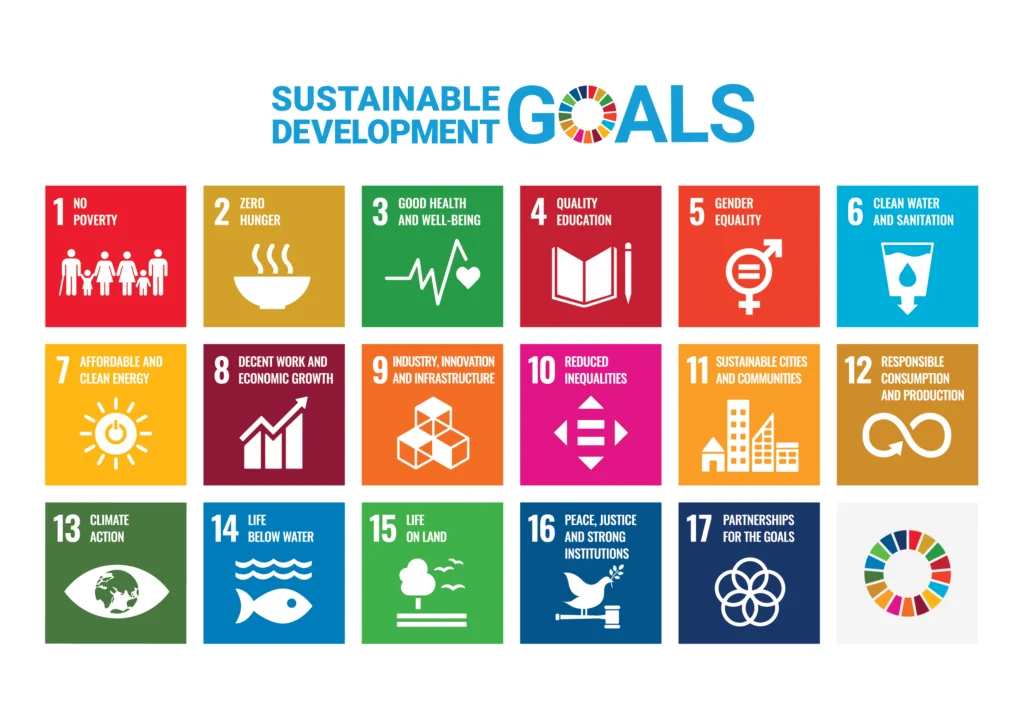
Global institutions promote IWRM as essential for achieving Sustainable Development Goal 6, which commits states to ensure the availability and sustainable management of water and sanitation for all. In 2026, donor funding, development bank lending, and climatefinance increasingly require alignment with IWRM principles.
Watershed-based governance is now widely recognized as legally preferable to fragmented sectoral regulation. International river basin organizations play a growing role in coordinating planning, data-sharing, and dispute prevention, although their authority varies widely.
“a process which promotes the coordinated development and management of water, land and related resources to maximise economic and social welfare equitably without compromising the sustainability of vital ecosystems.”
Groundwater represents the world’s largest source of accessible freshwater, yet remains among the least regulated under international law. Over extraction, pollution, and climate-driven recharge variability have elevated groundwater governance to a critical legal issue. Groundwater supplies approximately 40% of U.S. public water systems and 50% of domestic water, requiring comprehensive management addressing overexploitation and contamination.
Groundwater Overdraft Challenges
Many aquifers face unsustainable extraction rates exceeding natural recharge:
States employ various regulatory approaches to groundwater management. Absolute ownership grants landowners unlimited rights to groundwater beneath property, though this approach has limited application today. Reasonable use requires that extraction be reasonable relative to aquifer capacity and other users’ rights. Correlative rights ensure that all overlying landowners share aquifer capacity proportionally during shortages.
Prior appropriation applies to groundwater in some western states using permit systems with priority dates. Most states now require permit systems for new wells above specified capacity, establishing allowable withdrawal rates, measurement and reporting requirements, well spacing and construction standards, and critical area designations with enhanced restrictions.
Conjunctive Management
Progressive management integrates surface and groundwater recognizing their hydraulic connection:
The UN Draft Articles on the Law of Transboundary Aquifers articulate principles of cooperation, equitable utilization, and sustainability, signaling emerging customary norms. States increasingly recognize that uncontrolled pumping can violate international obligations where transboundary impacts occur.
At the domestic level, permit systems, abstraction limits, and monitoring requirements are expanding. Conjunctive management, coordinating groundwater and surface water use, has become a best practice in regions facing chronic scarcity.
Surface Water Allocation Laws
Surface water allocation systems determine who can use water, how much, for what purposes, and under what conditions.
Appropriation Permit Systems
Western states issue water rights through administrative processes:
States prepare drought contingency plans including:
Monitoring triggers defining drought stages
Progressive water use restrictions
Priority system implementation favoring senior rights
Temporary transfer facilitation
Emergency well permits
Economic assistance programs
Water Quality and Pollution Control Obligations
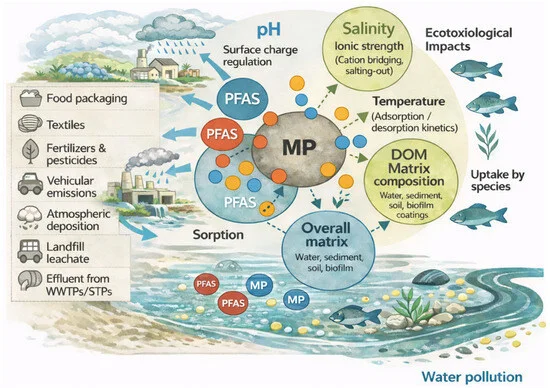
Global water law imposes obligations to protect water quality for human consumption, agriculture, and ecosystemhealth. International environmental treaties address pollution through frameworks governing hazardous substances, persistent organic pollutants, and marine pollution. The emergence of contaminants such as PFAS, pharmaceuticals, and microplastics has exposed gaps in existing regimes. In 2026, international cooperation increasingly focuses on monitoring, data exchange, and technology transfer to address these risks.
States are expected to adopt precautionary approaches, particularly where pollution threatens drinking water supplies or transboundary ecosystems. Failure to regulate industrial and agricultural runoff increasingly raises human rights concerns. Ensuring water quality for designated uses requires comprehensive standards and regulatory oversight.
Clean Water Act Standards
States establish water quality standards for all surface waters specifying:
Designated Uses: Swimming, fishing, drinking water supply, agricultural irrigation, industrial use, aquatic life support
Criteria: Numeric limits or narrative statements for pollutants protecting designated uses
Anti-degradation Policy: Three-tier system maintaining existing high-quality waters
Total Maximum Daily Loads (TMDLs)
For impaired waters not meeting standards, states develop TMDLs calculating:
Maximum pollutant amounts water body can receive while meeting standards
Allocation among point sources (NPDES permits)
Allocation to nonpoint sources (agricultural runoff, urban stormwater)
Aquatic ecosystems are now recognized as integral components of water governance rather than collateral concerns. Environmental flow requirements, habitat conservation, and ecosystem restoration have entered legal discourse at international and regional levels.
Dam safety and removal have gained prominence as aging infrastructure poses risks to downstream communities and ecosystems. International development standards now require comprehensive environmental and social safeguards for water infrastructure projects. Aging dam infrastructure requires attention to:
Regular safety inspections
Emergency action plans
Structural modifications meeting current standards
Fish passage requirements
Consideration of dam removal for ecosystem restoration
Climate Change and Adaptive Water Governance
Climate change has fundamentally altered the assumptions underlying water allocation law. Reduced snowpack, altered precipitation patterns, intensified droughts, and sea-level rise challenge static allocation regimes. Global water law increasingly emphasizes adaptive management, flexibility, and resilience. Climatefinance mechanisms support water conservation, storage, ecosystem restoration, and early-warning systems.
Legal frameworks now incorporate dynamic permitting, drought contingency planning, and conflict-resolution mechanisms designed to respond to uncertainty rather than historical averages. Climate change fundamentally alters water availability and management requirements necessitating adaptive strategies.
Global water law operates across diverse legal, political, and hydrological contexts. While core international principles, equitable and reasonable utilization, the obligation not to cause significant harm, cooperation, and sustainability, are widely recognized, their implementation varies substantially across regions.
Comparative analysis reveals how legal traditions, institutional capacity, economic development, and geopolitical dynamics shape water governance outcomes. Understanding these regional approaches is essential to assessing both the strengths and limitations of global water law as it functions in practice.
South Asia: Treaty-Based Allocation and Judicialized Dispute Resolution
South Asia presents one of the most legally dense yet politically sensitive water governance environments in the world. The region relies heavily on bilateral treaties to manage transboundary rivers originating in the Himalayas, particularly between India, Pakistan, Bangladesh, Nepal, and Bhutan. These agreements often focus on allocation and infrastructure development rather than ecosystem protection.
The Indus Waters Treaty stands as the most prominent example, establishing a detailed allocation regime and dispute resolution mechanisms involving neutral experts and international arbitration. Despite geopolitical hostility, the treaty has endured for decades, demonstrating the stabilizing potential of legally binding water agreements. However, critics note that the treaty reflects mid-twentieth-century assumptions, offering limited flexibility to address climate change, groundwater depletion, or environmental flows.
In Bangladesh and eastern India, water governance challenges arise from upstream diversions and flood control structures affecting downstream ecosystems and livelihoods. Legal mechanisms exist, but enforcement often relies on diplomatic engagement rather than adjudication. Regional courts have increasingly recognized water as a constitutional and human rights issue, signaling a gradual shift toward rights-based water governance.
Southeast Asia: Cooperative Basin Governance with Limited Enforcement
Southeast Asia’s approach to water governance emphasizes cooperation over adjudication. The Mekong River Basin illustrates this model, with the Mekong River Commission facilitating data sharing, joint studies, and consultation on major projects. The legal framework prioritizes consensus and political dialogue rather than binding enforcement.
While this approach has promoted regional stability, it has also exposed weaknesses. Large-scale hydropower development has proceeded despite downstream concerns, highlighting the limitations of non-binding legal structures. Environmental impact assessments and consultation processes exist but often lack enforceability, showing the gap between cooperative norms and legal accountability.
Middle East and North Africa: Scarcity, Security, and Asymmetric Power
The Middle East and North Africa region faces extreme water scarcity compounded by political instability and conflict. Water law here intersects directly with national security and survival concerns. Shared water resources such as the Jordan River, Tigris–Euphrates system, and transboundary aquifers are governed by a mix of bilateral agreements, customary practices, and unilateral measures.
Legal frameworks tend to be weakly institutionalized, with power asymmetries heavily influencing outcomes. International law principles are frequently invoked in diplomatic discourse but rarely adjudicated. Desalination, wastewater reuse, and technological solutions play a disproportionate role, reducing dependence on shared surface water but raising questions about environmentalsustainability and equitable access.
Human rights law has gained increasing relevance in the region, particularly where water scarcity intersects with occupation, displacement, and humanitarian crises. Courts and UN bodies have begun to frame water deprivation as a rights violation, signaling an emerging legal pathway where traditional water law mechanisms have failed.
Sub-Saharan Africa: Basin Organizations and Development-Driven Governance
Legal frameworks in the region emphasize development, energy generation, and food security, often supported by international financing. While treaties and basin charters incorporate equitable utilization and environmental protection, implementation remains uneven due to limited resources, political instability, and competing national priorities.
Recent developments show increasing attention to climate resilience, community participation, and ecosystem protection. Constitutional recognition of environmental rights in several African states has strengthened domestic enforcement, linking regional water governance to national judicial oversight.
Europe: Integrated, Binding, and Rights-Oriented Regulation
The European Union represents the most legally integrated regional water governance system. The EU Water Framework Directive establishes binding obligations for member states to manage water resources at the river basin level, achieve ecological status targets, and ensure public participation.
European water law explicitly integrates environmental protection, water quality, and quantitative management. Groundwater, surface water, and coastal waters are regulated within a unified framework, supported by enforcement through EU institutions and domestic courts.
Human rights jurisprudence further reinforces water governance. The European Court of Human Rights has held states accountable for regulatory failures leading to environmental harm and loss of life, effectively constitutionalizing water safety obligations.
Latin America: Constitutionalization and Social Equity
Latin American water law is notable for its constitutional innovation. Several countries have recognized water as a fundamental right, reshaping allocation and privatization policies. Courts in the region frequently intervene to protect access to water for marginalized communities, linking water governance to social justice.
Transboundary cooperation exists but is less institutionalized than in Europe or Africa. Domestic constitutional law often provides stronger enforcement mechanisms than international treaties, highlighting the growing role of national courts in advancing global water law principles.
North America: Federalism, Property Rights, and Adaptive Governance
In North America, water governance reflects federal structures and strong property-rights traditions. The United States relies on a complex interaction between federal environmental regulation and state-controlled water allocation systems. While surface water and groundwater are regulated differently across states, federal law plays a dominant role in water quality, wetlands protection, and endangered species conservation.
Canada emphasizes cooperative federalism and basin-based planning, with strong protections for Indigenous water rights increasingly recognized through constitutional and judicial processes.
Legal Framework for Water Managementin the U.S.
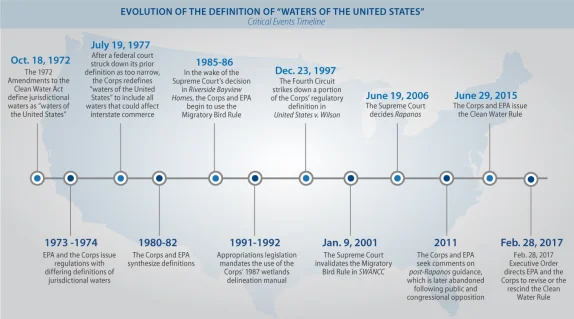
Water law in the United States continues to operate through a complex federal-state framework in which surface water and groundwater are regulated under distinct doctrines shaped by historical practice, regional hydrology, and constitutional principles. In the United States, water law entered a new phase of uncertainty following the Environmental Protection Agency’s late-2025 proposal to significantly narrow the definition of “Waters of the United States” (WOTUS).
Clean Water Act (CWA): Establishes federal authority over “navigable waters” through pollution control requirements, wetland protection under Section 404, and water quality standards. TheNovember 2025 proposed rule would significantly narrow CWA jurisdiction following Supreme Court decisions.
Safe Drinking Water Act (SDWA): Protects public health by regulating drinking water quality, establishing maximum contaminant levels, and requiring treatment technologies. EPA sets standards for over 90 contaminants including microorganisms, chemicals, and radionuclides.
Wild and Scenic Rivers Act: Preserves selected rivers with outstanding natural, cultural, and recreational values in free-flowing condition, prohibiting dams and other development that would harm river values.
Federal Power Act: Authorizes Federal Energy Regulatory Commission (FERC) to license hydropower projects on navigable waters, requiring consideration of fish and wildlife, recreation, and water quality.
State Water Rights Systems
States retain primary authority over water allocation, employing three principal systems.
Prior Appropriation (Western States): “First in time, first in right” system where water rights depend on beneficial use priority dates. Senior rights holders receive full allocation before junior rights holders during shortages. Rights can be lost through non-use and generally allow transfer to new uses or locations.
Riparian Rights (Eastern States): Landowners adjacent to water bodies have rights to reasonable use that doesn’t unreasonably interfere with other riparians. Rights attach to land ownership and generally cannot be transferred separately from land.
Hybrid Systems: Some states employ combinations incorporating elements of both doctrines.
Interstate Water Allocation
Rivers crossing state boundaries require allocation through:
Federal Project Operations: Bureau of Reclamation manages major water projects
Congressional Compacts: Colorado River Compact allocates flows among seven basin states
Interstate Compacts: Negotiated agreements among states with congressional approval
Supreme Court Decrees: Equitable apportionment when states cannot agree
Comparative Lessons for Global Water Law
Comparative analysis reveals several consistent patterns. First, legal effectiveness depends less on the articulation of principles than on institutional capacity and enforcement mechanisms. Second, rights-based approaches increasingly supplement traditional allocation doctrines, particularly in contexts of scarcity and inequality. Third, climate change demands legal flexibility that older treaty regimes often lack.
Across regions, global water law is converging toward a model that prioritizes sustainability, cooperation, transparency, and human rights. Yet divergence persists in enforcement, reflecting political realities and economic disparities. Bridging this gap remains the central challenge for global water governance in the coming decade.
Future Directions and Policy Challenges
Sustainable water management faces evolving pressures requiring innovative legal and institutional responses.
Emerging Contaminants
PFAS, pharmaceuticals, and microplastics challenge conventional treatment and require:
By 2026, global water law stands at a critical juncture. The legal principles governing water are well established, but enforcement and coordination remain uneven. Climate change, population growth, and environmental degradation demand a shift from fragmented regulation to integrated, rights-based, and adaptive governance.
Sustainable water management is no longer a technical policy choice but a legal imperative grounded in international law, human rights, and environmental protection. The effectiveness of global water law will determine not only resource sustainability but also social stability, economic resilience, and peace in an increasingly water-scarce world.
Integrated water resources management principles emphasizing basin-scale approaches, stakeholder participation, and surface-groundwater coordination provide pathways toward sustainability. Groundwater and surface water regulations establish allocation systems balancing economic uses with environmental flows while water quality standards protect designated uses.
Global water law consists of international treaties, customary law, human rights obligations, and environmental principles governing water allocation, quality, and ecosystem protection.
Is access to water a human right?
Yes. International human rights law recognizes access to safe drinking water and sanitation as a fundamental right linked to life, health, and dignity.
How are transboundary rivers regulated?
Through principles of equitable and reasonable utilization, no significant harm, cooperation, and prior notification, reflected in treaties and customary law.
How do federal and state water authorities differ?
Federal law focuses on water quality, drinking water, wetlands, and interstate waters, while states control allocation through prior appropriation, riparian rights, or hybrid systems.
What is Integrated Water Resources Management?
IWRM is a governance framework coordinating surface water, groundwater, land use, and ecosystems at the watershed level to balance economic, social, and environmental needs.
How is groundwater regulated in 2026?
States rely on permit systems, withdrawal limits, reporting requirements, critical management areas, and conjunctive management to address overdraft and contamination.
What compliance requirements apply to water users?
Water users must meet permit conditions, monitor withdrawals and quality, comply with ESA and NEPA reviews, protect instream flows, and adapt operations to climate-driven hydrologic change.
Minneapolis, Minnesota — A 37-year-old man was shot and killed Saturday morning by federal immigration officers in Minneapolis during a large-scale immigrationenforcement operation, authorities and witnesses say. The incident has drawn protests, political condemnation, and renewed scrutiny of federal law enforcement tactics in the city.
Local officials and family members have identified the man as Alex Jeffrey Pretti, an intensive care nurse and U.S. citizen, who was killed in the Whittier neighborhood of south Minneapolis. Federal officials circulated photos of a weapon that they said Pretti carried and described the shooting as a response to an immediate threat. After Pretti allegedly resisted attempts to disarm him during a confrontation near West 26th Street and Nicollet Avenue, federal authorities’ agents fired:
However, video evidence and witness statements contradict key aspects of this account. Bystander footage circulating on social media shows federal agents wrestling Pretti to the ground, pepper-spraying protesters, and Pretti holding what appears to be a mobile phone rather than a firearm before shots were fired.
Family members and colleagues describe Pretti as a compassionate ICU nurse and lawful gun owner who participated peacefully in protests against aggressive immigrationenforcement tactics. The fatal shooting occurred amid a spike in controversial federal immigrationenforcement known as Operation Metro Surge and follows a similar January shooting in Minneapolis involving another federal agent.
“When individuals make poor choices, poor decisions come into a law enforcement situation.”
Protests and Public Reaction
Pretti’s fatal shooting triggered widespread outrage and protests not only in Minneapolis but across multiple U.S. cities including New York, San Francisco, Boston, and Los Angeles. Demonstrators have called for accountability, an end to aggressive ICE and Border Patrol operations, and even the abolition of ICE.
Many Minnesota leaders, including Minnesota Governor Tim Walz, condemned the shooting and called for an end to the federal operation. U.S. Senator Amy Klobuchar also urged ICE to withdraw from the state, saying:
“the incident reflects growing concerns about the conduct and oversight of federal immigration agents.”
The Department of Homeland Security has said it will conduct a review of the shooting, but details remain limited as public outcry and calls for an independent investigation grow. The Minneapolis Police Chief, adding depth to the dispute over what transpired, acknowledged Pretti was:
“a legally armed resident with no significant criminal record beyond minor traffic violations.”
Civil liberties advocates, including the American Civil Liberties Union (ACLU) and its Minnesota affiliate, have condemned the killing as part of a pattern of excessive force by immigrationenforcement officers. They are urging federal withdrawal from local communities and independent investigations into use-of-force practices.
Trump Defends ICE, Blasts Local Leaders
President Trump has strongly defended federal immigration agents following the fatal shooting of a man by ICE officers in Minneapolis, rejecting criticism from Minnesota officials and civil rights groups. Trump framed the incident as a consequence of resistance to federal law enforcement, describing the operation as lawful and necessary, urging authorities to:
In public statements and social media posts, Trump accused state and local leaders of inflaming tensions and “undermining” immigrationenforcement, going as far as alleging that criticism of ICE amounted to encouraging disorder. He emphasized that federal agents were acting in self-defense and shared images purportedly linked to the incident to bolster claims that officers faced an armed threat.
Trump’s reaction has intensified the political fallout surrounding the killing, deepening divisions between federal and state authorities over immigrationenforcement and use of force. As investigations into the shooting continue, his remarks reinforce a broader law-and-order narrative that prioritizes aggressive immigration control, even as calls grow for independent oversight and accountability for federal agents involved in lethal encounters.
Broader Policy and Constitutional Questions
The repeated fatal shootings during the Trump administration’s expanded immigrationenforcement operations raise systemic legal concerns. These include:
Federal overreach and the militarization of domestic immigrationenforcement, drawing criticism that ICE and related entities are deployed in ways that exceed traditional federal priorities and disrupt local governance.
Protester rights and civil liberties, particularly whether actions against individuals documenting or opposing enforcement violate free speech and assembly protections.
Transparency and accountability in federal operations, given resistance to state investigation access.
The incidents have also fueled national debate over federal budget appropriations for the Department of Homeland Security and whether Congress should impose constraints on ICE and Border Patrol operations in response to civil rights concerns.
Timeline: Key Developments in the Anti-ICE Protests
January 8, 2026 – Protests spread after a separate federal shooting incident in Portland, Oregon, where two people were wounded during an immigrationenforcement action.
January 10, 2026 – Tens of thousands of demonstrators march in Minneapolis as coordinated anti-ICE protests take place in cities across the United States, including Phoenix, Durham, and Washington, D.C.
January 11-12, 2026 – Clashes occur between protesters and federal agents in Minneapolis. Chemical irritants and non-lethal munitions are reported to have been used against crowds.
January 13, 2026 – Several federal prosecutors resign, citing concerns over the Department of Justice’s refusal to open a civil rights investigation into the Minneapolis shooting.
January 14, 2026 – A second shooting involving an ICE agent is reported in Minneapolis, where a Venezuelan national is wounded during an enforcement operation, intensifying protests and criticism.
January 16, 2026 – A federal judge in Minnesota issues an injunction restricting ICE and other federal agents from detaining or using force against peaceful protesters without reasonable suspicion of criminal activity.
January 17–18, 2026 – Federal officials signal readiness to escalate enforcement. About 1,500 active-duty U.S. troops are placed on standby amid warnings that the Insurrection Act could be invoked if unrest continues.
January 19, 2026 – The Department of Justice confirms it will not pursue a federal investigation into the ICE agent involved in the fatal shooting but announces inquiries into Minnesota state and city officials over alleged obstruction of federal enforcement.
January 20–23, 2026 — Economic Blackout Protest:Labor unions and community groups organize an economic blackout and demonstrations in Minneapolis against federal immigrationenforcement and ICE tactics, drawing broad local support.
January 24, 2026 — Alex Pretti Killing: Federal immigration agents fatally shoot 37-year-old ICU nurse Alex Pretti during an immigrationenforcement operation in Minneapolis, marking the second fatal shooting by federal agents in the city in weeks and sharply escalating tensions.
January 24–25, 2026 — Mass Protests and Clashes: Thousands of protesters gather in Minneapolis and spread to cities including New York, Los Angeles, San Francisco, and Boston, demanding accountability and the removal of ICE agents; clashes with law enforcement occur as federal agents use crowd-control measures.
January 25, 2026 — Judge Orders Preservation of Evidence: A federal judge issues a temporary restraining order requiring the Department of Homeland Security to preserve evidence related to the Pretti shooting after a legal challenge by Minnesota authorities focused on DHS’s handling of the scene.
January 25–26, 2026—National Ripples: The protests and political response continue to grow, prompting broader debate over federal immigrationenforcement and civil rights. Mass protests erupt across Minneapolis. City officials, civil rights groups, and members of Congress demand the withdrawal of federal agents and independent investigations.
January 26, 2026—Minnesota state leadership formally objects to the federal deployment, citing public safety concerns and lack of coordination.
London, England —Prince Harry, Duke of Sussex, has returned to the spotlight of the U.K. legal system in one of the most high-profile civil privacy cases in recent memory, bringing decades of alleged tabloid misconduct before the High Court in London. The trial, which began in January and is expected to run for several weeks, pits Harry and six other public figures against Associated Newspapers Ltd. (ANL), the publisher of Daily Mail,Mail on Sunday, and MailOnline, over claims of unlawful information gathering spanning more than two decades.
The lawsuit represents Harry’s third major concerted legal offensive against British tabloids and is widely seen as the concluding chapter of his long-running battle against intrusive press behaviour that he, and others, allege contributed to sustained harm, including psychological distress. The case has drawn global attention not just for its celebrity participants but for its potential implications on press conduct, privacy rights, and media regulation in the U.K. and beyond.
The case also unfolds amid heightened scrutiny of editorial governance and institutional accountability within major media organisations, following recent controversies involving public broadcasters and political pressure over editorial decisions, including a high-profile episode in which BBC leadership resigned after Donald Trump threatened legal action over alleged speech editing.
What the Case Alleges
Prince Harry and his co-claimants, among them Sir Elton John, Elizabeth Hurley, Doreen Lawrence, Sir Simon Hughes, Sadie Frost, and David Furnish, contend that Daily Mail newspapers engaged in unlawful information-gathering practices from the early 1990s until at least 2018. These practices are alleged to have included voicemail interception, line bugging, paid access to private information, and other forms of unlawful surveillance and deception to source stories.
Harry’s legal team asserts that these acts went far beyond legitimate journalistic sourcing, extensively invading private conversations, medical and banking records, and highly personal details. The claimants argue that such behaviour not only breached established privacylaws but also inflicted tangible personal and emotional harm, particularly for Harry and his wife, Meghan, Duchess of Sussex.
Associated Newspapers has categorically denied the allegations, arguing that the contested stories were the product of lawful journalistic practices, including interviews, public records, and conventional sourcing. ANL’s defence emphasises that mere publication of unflattering content does not equate to wrongdoing, and that claims of systematic illegal acts are based on insufficient and, in some instances, contested evidence.
Trial Dynamics and Key Testimony
Prince Harry took the witness stand in London’s High Court on January 21, offering emotional testimony about the profound impact he says intrusive reporting has had on his life and relationships. During his roughly two-and-a-half hours under questioning, Harry recounted the distressing consequences of media intrusion, including periods where tabloid coverage contributed to his feeling, a sentiment echoed by the court-reported details of his witness statement:
“paranoid beyond belief.”
Harry’s barrister, David Sherborne, a veteran advocate who has represented him in previous privacy suits, framed the trial not as a personal grievance alone but as a broader fight for accountability and accountability in media conduct. The emotional tenor of Harry’s testimony was underlined by his description of how coverage affected Meghan Markle and others close to him, portraying the case as an effort to demand respect for individual privacy rights against aggressive tabloids.
Shortly after Harry’s testimony, fellow claimant Elizabeth Hurley took the stand, asserting that her rooms had been “bugged” and categorically rejecting defence suggestions that any media leaks came from friends or social insiders, a contention ANL raised to rebut claims of unlawful information gathering.
Historical and Legal Context
This trial builds on Harry’s earlier legal battles with the British media. In recent years, he has brought successful actions against other publishers, including Mirror Group Newspapers (MGN) and News Group Newspapers (NGN), resulting in damages and formal apologies.
Those cases helped establish precedents for civil liability in cases involving unlawful practices such as phone hacking and overreach by tabloids, practices most infamously revealed in the News of the World phone-hacking scandal.
Yet this case is broader, implicating one of the U.K.’s most influential tabloid groups and extending over a much longer period, with claims centred on systematic wrongdoing rather than isolated incidents. That raises the stakes not only for Harry but for all claimants and the newspaper industry itself, potentially shaping future privacylitigation and press standards.
Legal Issues at the Heart of the Case
At its core, the litigation hinges on three main legal questions:
Whether the defendant engaged in unlawful information-gathering practices — such as voicemail interception (“blagging”), telephone bugging, or paid access to private information, that violate established UKprivacy and data protectionlaws.
Whether the actions attributed to ANL caused compensable harm — including distress, reputational damage, or financial loss to Harry and the other claimants.
Whether legitimate journalistic activity can be legally distinguished from unlawful intrusion in this context.
English civil privacy law provides avenues for redress where unlawful intrusion is shown, but plaintiffs must meet stringent evidentiary standards. The court’s judgment will hinge on the credibility of witness accounts, documentation of alleged misdeeds, and legal interpretation of what constitutes unlawful newsgathering versus legitimate press activity.
Potential Outcomes and Legal Implications
The trial, expected to last up to nine weeks, could result in several possible outcomes:
Victories for Claimants: If successful, claimants could receive compensatory damages and possibly punitive orders, setting a significant precedent for privacylitigation and press conduct in the UK. Such a result could spur further legal action by other public figures alleging misconduct by media organisations.
Partial Awards: The court might find liability in some specific instances without fully endorsing the claimants’ broader narrative, a nuanced result that would still signal meaningful judicial scrutiny of tabloid conduct.
Defence Success: If the judge finds that ANL’s actions were lawful or that evidence of wrongdoing is insufficient, the case could reaffirm robust protections for press freedom and sourcing. Such an outcome might dampen the momentum of privacylitigation but could also rally calls for legislative reform.
Broader Significance Beyond Harry’s Case
This litigation represents a collision point between two fundamental principles of modern society:
A ruling in favour of Harry and his co-claimants could embolden similar lawsuits and contribute to evolving legal standards governing media conduct and accountability in the digital age. Conversely, a ruling favouring ANL would reaffirm strong protections for editorial discretion and journalistic investigation, albeit with ongoing debate over ethical boundaries.
Prince Harry’s privacy case against the publisher of Daily Mail and related outlets is more than a personal legal battle; it is a litmus test for how 21st-century democracies balance press freedom with individual rights in an era of pervasive media intrusion.
As the trial unfolds over several weeks, its findings are likely to reverberate across legal, journalistic, and public spheres ,shaping how privacy rights and press conduct are understood and enforced in the United Kingdom and potentially beyond.
Timeline of Prince Harry’s Privacy Litigation Against UK Tabloids
1990s–2010s: Alleged unlawful tabloid surveillance and information-gathering targeting Prince Harry and others 2011: Phone-hacking scandal exposes systemic media misconduct in the UK 2019–2020: Prince Harry launches coordinated civil actions against British tabloids 2023: High Court rules partly in Harry’s favor against Mirror Group, awarding damages Oct 2023: Harry joins claim against Associated Newspapers alleging decades of privacy violations 2024: High Court rejects key strike-out attempts, allowing the case to proceed Jan 2026: Trial begins in London before the High Court Jan 2026: Prince Harry testifies on emotional and privacy harms 2026 (Expected): Judgment anticipated, with potential damages and wider media-law impact
According to ICC officials, the Board voted 14–2 to retain Bangladesh’s scheduled fixtures in India, relying on independent security assessments that categorized the threat level as low to moderate and found no basis for relocation. The ICC subsequently determined that Bangladesh’s continued refusal amounted to a voluntary withdrawal under tournament regulations.
Under ICC rules, member boards are required to ensure that decisions affecting participation in ICC events are taken independently and free from government direction. At the same time, the ICC retains exclusive authority over tournament scheduling, venues, and security clearances, relying on host-nation guarantees and independent security assessments.
This dual structure creates inherent tension when national security concerns overlap with state-level political considerations. The escalating standoff between the Bangladesh Cricket Board and the International Cricket Council over security concerns in India has exposed a familiar but increasingly complex fault line in international sport: where player safety, geopolitics, and institutional authority collide.
What began as a request to relocate Bangladesh’s T20 World Cup matches has evolved into a broader legal and governance dispute, raising questions about political interference, the limits of national discretion, and the ICC’s obligation to balance security assessments with the integrity of global competition.
ICC Governance Framework
Under the ICC’s governance framework, responsibility for player safety is centralized rather than left to individual member boards. For major international tournaments, the ICC relies on host-nation security guarantees, coordination with local authorities, and assessments conducted by independent security experts. These evaluations are designed to ensure uniform standards across venues and to prevent security concerns from being framed through political or diplomatic lenses.
Once the ICC determines that required security thresholds are met, participating teams are contractually bound to honor their fixtures. Member boards do not retain unilateral discretion to withdraw or demand relocation based solely on subjective risk perceptions or political developments. From a legal standpoint, this centralized model protects tournament integrity, commercial certainty, and equal treatment of all participants.
The ICC also exercises discretion in determining whether exceptional circumstances justify deviation from scheduled venues. However, that discretion is narrowly framed. It requires objective evidence of imminent and credible threats, not generalized diplomatic tension or speculative risk. Accepting unverified security claims could expose the ICC to contractual breaches, competitive imbalance, and precedent-setting pressure in future tournaments.
In the Bangladesh–India dispute, the ICC’s refusal to relocate matches reflects this legal calculus. By affirming independent security assessments and rejecting politically framed objections, the ICC has sought to preserve its authority as the final arbiter of safety and logistics. While this approach may carry reputational and relational costs, it aligns with established governance practice and the legal obligation to administer global events consistently and predictably.
Political Interference in International Sports Law
Political interference is one of the most sensitive compliance issues in international sports governance. Under the constitutions and regulations of major sporting bodies, including the International Cricket Council, national federations are required to operate independently of government control, particularly in matters involving international participation, scheduling, and competition integrity.
Legal Standard for Political Interference
In international sports law, political interference generally arises when a state authority directly or indirectly influences a sports federation’s decision-making. This includes government instructions on whether a team may tour, participate in an event, withdraw, or adopt a particular position in an international dispute. The legal concern is not limited to formal orders; sustained political pressure, public directives, or conditional approvals can also meet the threshold.
The rationale behind this standard is institutional neutrality. International sports bodies are designed to function outside geopolitical rivalries, ensuring that competition is governed by rules rather than diplomatic leverage. Where governments intervene, it undermines competitive equality and exposes tournaments to politicization.
Security Concerns Versus Interference
A critical legal distinction exists between legitimate security assessments and political interference. Governments retain a sovereign duty to protect their citizens and may raise safety concerns. However, under sports governance rules, those concerns must be conveyed through independent, technical channels rather than political declarations or public pressure.
When a government publicly endorses, directs, or frames a federation’s refusal to participate as a matter of diplomatic dispute, the risk of non-compliance increases. At that point, what might begin as a safety issue can be recharacterized legally as state interference in sport.
Risk Exposure for National Federations
If a federation is found to be acting under government direction, it may face consequences ranging from formal warnings to suspension of rights, loss of hosting privileges, or exclusion from events. While enforcement has historically been cautious, the legal exposure remains real, particularly where political involvement is overt and documented.
Institutional Risk for Governing Bodies
International federations also face legal and reputational risk. Failure to enforce non-interference rules consistently can weaken governance credibility and encourage future political leverage. Conversely, rigid enforcement without transparent justification may alienate member boards and invite accusations of bias.
Legal Balance Point
The core legal challenge lies in balancing sovereignsecurity responsibilities with institutional autonomy. International sports law does not deny states the right to protect athletes, but it requires that decisions affecting competition remain insulated from political command. Where that line is crossed, the issue ceases to be about safety and becomes a governance violation.
In this sense, political interference rules serve a dual function: they protect sport from geopolitics, and they protect athletes and competitions from becoming instruments of state policy rather than participants in a neutral global framework.
A central legal risk for Bangladesh lies in the political interference doctrine. ICC regulations prohibit national governments from directing or coercing cricket boards in matters such as team selection, participation, or international engagement.
Public endorsements by Bangladesh’s interim government of the decision not to travel, combined with statements framing the issue as a political or diplomatic dispute with India, raise compliance concerns under ICC rules. If the ICC determines that the BCB acted under government instruction rather than independent judgment, sanctions could theoretically include suspension or loss of voting rights, though such measures are rarely applied in practice.
At the same time, Bangladesh argues that state responsibility for player safety cannot be ignored and that governments are entitled to assess risks to their citizens abroad. This creates a gray zone where sports autonomy intersects with sovereignsecurity obligations.ety, direct involvement in participation decisions risks breaching ICC non-interference obligations. Even if sanctions are unlikely, the legal exposure exists.
Dispute Resolution Mechanisms Available to Bangladesh
Under the governance framework of the International Cricket Council, Bangladesh has a limited but clearly defined set of legal and procedural avenues to challenge decisions relating to tournament participation, security assessments, and alleged procedural unfairness. These mechanisms are designed to resolve disputes within the institutional structure of international cricket, rather than through external political or diplomatic pressure.
ICC Dispute Resolution Committee
The primary formal mechanism available to the Bangladesh Cricket Board is referral to the ICC’s Dispute Resolution Committee. This body may review whether ICC procedures were followed correctly, including whether Bangladesh’s submissions were duly considered, whether security assessments met prescribed standards, and whether the decision-making process was impartial and consistent with past practice. Importantly, the Committee does not substitute its judgment for the ICC’s on operational matters such as venue selection unless a clear procedural defect is established.
Procedural Fairness and Due Process Claims
Bangladesh may argue that its concerns were dismissed without adequate engagement, or that relevant information was not transparently shared. Such claims focus on due process rather than outcome. However, even if procedural shortcomings are identified, remedies typically involve clarification or reconsideration, not automatic relocation or suspension of fixtures.
Force Majeure and Exceptional Circumstances
Another potential argument is invocation of force majeure or exceptional circumstances. This is a high legal threshold. Bangladesh would need to demonstrate objective, independently verifiable evidence of an imminent and specific security threat that materially prevents participation. Generalized political tension, diplomatic disputes, or speculative risk assessments are unlikely to satisfy this standard under ICC contracts and event regulations.
Negotiated Settlement and Mediation
Historically, most ICC disputes are resolved through confidential negotiation rather than adjudication. Bangladesh may seek assurances such as enhanced security protocols, additional liaison officers, or formal written guarantees. While these measures do not alter venues, they can provide face-saving solutions that avoid escalation or sanctions.
Limits of Legal Remedies
Crucially, none of these mechanisms suspends the ICC’s authority over tournament logistics. If Bangladesh ultimately refuses to participate without ICC approval, the legal characterization would likely be voluntary withdrawal rather than exclusion. This distinction carries significant reputational and competitive consequences but limits Bangladesh’s ability to claim institutional fault.
Strategic Reality
From a legal strategy perspective, Bangladesh’s strongest position lies not in overturning the ICC’s decision, but in demonstrating good-faith engagement with institutional processes. Doing so reduces exposure to allegations of political interference and preserves standing within the ICCframework, even if the substantive outcome remains unchanged.
While dispute resolution mechanisms exist, they are designed to preserve centralized governance and tournament integrity. They offer process-based review and negotiation, not unilateral veto power over venues or scheduling.
Comparative Precedents
The Bangladesh–India T20 World Cup standoff is not unprecedented. International sport, and cricket in particular, has repeatedly faced disputes where security, geopolitics, and governance intersect.
Pakistan–India Cricket Relations
For decades, cricketing ties between Pakistan and India have been disrupted by security concerns and political tension. Pakistan has repeatedly argued that it cannot safely host Indian teams, while India has declined tours citing security assessments endorsed by its government. In these cases, the ICC and bilateral agreements have generally deferred to host-nation guarantees and independent security reviews, rather than unilateral political claims. Crucially, when matches were relocated or canceled, decisions were typically negotiated multilaterally rather than imposed unilaterally by one board.
Sri Lanka Tours During Civil Conflict
Sri Lanka continued to host international matches during periods of internal conflict, including during its civil war. Following the 2009 Lahore attack on the Sri Lankan team in Pakistan, international cricket authorities significantly tightened security protocols. However, venue decisions remained grounded in independent risk assessments, not political statements. This precedent reinforced the principle that objective security evaluation, not diplomatic tension, governs participation.
Afghanistan Cricket and Political Instability
Afghanistan’s participation in ICC events despite internal instability further illustrates ICC practice. The ICC has consistently separated domestic political conditions from tournament participation, unless player safety risks are verified by independent experts. Even amid regime change, the ICC emphasized non-interference while maintaining centralized authority over event logistics.
Across these cases, the governing principle has been consistent: security concerns must be objectively substantiated and institutionally assessed. Political tension alone has not been accepted as a sufficient legal basis for relocation or withdrawal.
Bangladesh’s Prospects Before the Court of Arbitration for Sport
Bangladesh has unsuccessfully appealed the decision before the ICC’s Dispute Resolution Committee and is reportedly exploring options before the Court of Arbitration for Sport (CAS), although legal experts note that overturning an ICC venue decision would be difficult absent procedural irregularity. Under the ICC’s constitutional and regulatoryframework, authority over scheduling, venues, and security determinations is centralized, leaving member boards with narrow grounds for contestation.
Outcome Before the ICC Dispute Resolution Committee
The ICC DRC primarily examines whether the decision-making process complied with applicable rules, contractual obligations, and principles of procedural fairness. It does not reassess the substantive merits of operational decisions such as security assessments or venue allocation unless there is evidence of bias, arbitrariness, or departure from established procedure. Bangladesh’s appeal reportedly failed because the ICC demonstrated reliance on independent security evaluations, board-level voting, and prior notice—satisfying procedural requirements under ICC regulations.
Limits of Substantive Review in Sports Governance
From a legal standpoint, sports governing bodies are afforded wide discretion in organizing global events. Courts and arbitral tribunals consistently defer to institutional expertise in areas involving safety, logistics, and competitive balance. As a result, disagreement with the outcome of a decision, such as refusal to relocate matches, does not, by itself, establish a legal violation.
Potential Recourse to the Court of Arbitration for Sport
Bangladesh may seek relief before the Court of Arbitration for Sport, which has jurisdiction over disputes arising under ICC rules where arbitration clauses apply. However, CAS jurisprudence indicates that overturning a governing body’s operational decision requires proof of a serious procedural defect, such as denial of the right to be heard, lack of impartiality, manifest arbitrariness, or bad faith.
In the absence of such defects, CAS typically upholds the autonomy of sports organizations, particularly where decisions are supported by expert assessments and taken in good faith to preserve competition integrity. CAS has also recognized that venue selection and security management fall squarely within the discretionary competence of international federations.
Standard of Review and Burden of Proof
Bangladesh would bear a high burden of proof to demonstrate that the ICC acted ultra vires, violated its own regulations, or breached fundamental principles of natural justice. Claims based solely on political tension, subjective security fears, or disagreement with expert conclusions are unlikely to succeed.
Practical Legal Assessment
Legal experts therefore view Bangladesh’s prospects before CAS as limited. Even if CAS were to identify minor procedural shortcomings, remedies would more likely involve declaratory relief or guidance for future process, rather than reinstatement in an ongoing tournament or reversal of venue decisions already implemented.
The failure of Bangladesh’s appeal before the ICC DRC shows a central feature of international sports law: institutional discretion is strongly protected, particularly in matters of security and tournament logistics. Without clear evidence of procedural irregularity or abuse of power, external arbitration is unlikely to disturb an ICC decision grounded in independent assessments and collective governance
Precedent and Broader Implications for International Sport
The Bangladesh–India dispute carries significance far beyond a single tournament, as it touches on how international sport responds when security concerns intersect with geopolitics. Historically, governing bodies such as the International Cricket Council, FIFA, and the IOC have sought to insulate competitions from political disputes by relying on centralized authority and independent assessments. The consistency of that approach is now being tested.
Precedent on Security-Based Withdrawals
Past cases involving Pakistan–India fixtures, Sri Lanka’s touring disruptions, and Afghanistan’s participation amid domestic instability show a clear pattern: international bodies prioritize objective, expert-led security evaluations over unilateral political claims. Where venues were changed or matches relocated, decisions typically followed negotiated, multilateral processes rather than one-sided refusals. Departing from this model risks encouraging future withdrawals framed as “security concerns” but rooted in diplomatic tension.
Risk of Politicization of Sport
If international federations accept politically contested security objections without independent verification, sport risks becoming a proxy arena for state rivalry. This would undermine competitive equality and expose tournaments to unpredictable disruption, weakening trust among players, sponsors, broadcasters, and fans.
Institutional Authority Versus Member Confidence
At the same time, rigid enforcement of centralized authority carries its own risks. Member boards may perceive governing bodies as dismissive of legitimate anxieties, particularly in regions where political volatility is real. The challenge lies in maintaining authority while demonstrating transparency, consultation, and credibility in decision-making.
Long-Term Governance Implications
The precedent set here will influence how future disputes are handled—not only in cricket but across international sport. A permissive approach could fragment governance and normalize political leverage, while an inflexible one could erode confidence in institutions meant to safeguard both integrity and safety.
Broader Lesson for Global Sport
Ultimately, the case illustrates a structural tension at the heart of international sport: neutrality depends on strong rules, but legitimacy depends on trust. How governing bodies navigate this balance will shape whether global competitions remain insulated from geopolitics or become increasingly vulnerable to it.
Legal Perspective
From a legal standpoint, the Bangladesh–ICC dispute sits at the intersection of contractual obligation, institutional autonomy, and public international law principles applied through sports governance. Under the ICC’s constitutional framework, participation in ICC events is not discretionary once venues and schedules are confirmed through established procedures. Member boards accept these constraints contractually, including reliance on centralized security determinations.
The ICC’s position is therefore legally defensible on three grounds:
First, contractual authority: the ICC retains exclusive competence over venues, logistics, and security clearance for global tournaments.
Second, governance integrity: permitting unilateral withdrawal based on politically framed security concerns would undermine equality of competition and expose the institution to claims of arbitrariness.
Third, non-interference norms: international sports law consistently requires insulation of sporting decisions from state direction, even where governments invoke public safety narratives.
For Bangladesh, the legal challenge is less about disproving the ICC’s authority and more about process and proportionality. Unless Bangladesh can demonstrate that the ICC ignored material evidence or departed from its own security protocols, courts or arbitral bodies are unlikely to override institutional discretion. At most, remedies would focus on procedural fairness rather than substantive reversal.
More broadly, the case illustrates how sports law functions as a hybrid legal order: formally private and contractual, yet deeply influenced by public law values such as neutrality, due process, and non-coercion. In that hybrid space, the law tends to favor centralized governance over sovereign preference, particularly where accepting the latter would politicize global competition.
What This Means Going Forward
Going forward, Bangladesh’s failed appeal before the ICC’s Dispute Resolution Committee significantly narrows its legal and strategic options. With the tournament already proceeding and a replacement team confirmed, any further challenge, particularly before the Court of Arbitration for Sport, would be prospective rather than restorative. In practical terms, even a successful CAS ruling would be unlikely to reinstate Bangladesh in the current T20 World Cup, as sports tribunals are reluctant to disrupt competitions already underway.
Institutionally, the episode reinforces the high level of deference afforded to international governing bodies in matters of venue selection, security assessment, and tournament logistics. The ICC’s reliance on independent expert evaluations and collective board voting places its decision on firm legal footing, making future challenges by member boards difficult unless clear procedural defects can be shown.
For Bangladesh, the more immediate implications are reputational and financial. The case may prompt closer scrutiny of the BCB’s governance independence and its compliance with ICC non-interference rules. Even without formal sanctions, the perception of government direction could affect Bangladesh’s influence within ICC decision-making structures and future hosting or participation negotiations.
Ultimately, the case sends a clear message to member boards that participation in global tournaments is governed by institutional process, not unilateral discretion. Where security concerns arise, they must be raised early, substantiated independently, and pursued within established legal channels, or risk exclusion with limited recourse once decisions are finalized.
Frequently Asked Questions
Why did Bangladesh request the relocation of matches from India?
Bangladesh cited security concerns arising from political tensions with India, arguing that these posed risks to players and officials.
The ICC relied on independent security assessments and host-nation guarantees, concluding there was no credible threat. It also emphasized tournament integrity and contractual obligations.
Can a team refuse to play if it feels unsafe?
Yes, but legally such refusal is treated as voluntary withdrawal unless supported by verified, independent security findings recognized by the governing body.
Is this considered political interference?
It may be, depending on whether the decision was driven by government direction rather than the independent judgment of the cricket board. Public governmental involvement raises compliance concerns under ICC rules.
In theory, yes — for political interference or failure to fulfill participation obligations. In practice, the ICC often avoids harsh sanctions and seeks negotiated solutions to protect the sport.
Relocation affects broadcast contracts, commercial agreements, competitive fairness, and other teams. Doing so without verified security necessity could expose the ICC to legal and financial liability.
Has this happened before?
Yes. Similar disputes involving Pakistan, India, Sri Lanka, and Afghanistan have arisen. Historically, decisions hinge on objective security assessments, not diplomatic disputes.
What does this mean for international sport?
The dispute highlights the growing challenge of insulating global sport from geopolitics while maintaining credibility, safety, and fairness.
In a major development ahead of the ICC Men’s T20 World Cup 2026, the International Cricket Council has rejected the request by the Bangladesh Cricket Board (BCB)to relocate Bangladesh’s matches out of India, triggering a standoff that has resulted in the replacement of the Bangladeshi side by Scotland.
Bangladesh’s government-aligned board had argued that ongoing security threats and political tensions between India and Bangladesh, exacerbated by incidents such as the removal of star pacer Mustafizur Rahman from the Indian Premier League and wider diplomatic friction, posed “genuine risks” to players, officials, and traveling supporters.
The ICC, after reviewing security assessments including independent evaluations, stated there was “no credible threat” to the safety of the Bangladesh team at scheduled T20 World Cup venues in India and reiterated that altering the schedule so close to the start of the tournament would jeopardize the integrity and planning of the global event.
Bangladesh Officially Replaced by Scotland
The International Cricket Council (ICC) has officially replaced Bangladesh with Scotland in the upcoming ICC Men’s T20 World Cup 2026 after the Bangladesh Cricket Board (BCB) refused to send its national team to India, citing security concerns. The decision followed a final deadline imposed by the ICC, after which Bangladesh failed to confirm participation.
According to ICC officials, the Board voted 14–2 to retain Bangladesh’s scheduled fixtures in India, relying on independent security assessments that categorized the threat level as low to moderate and found no basis for relocation. The ICC subsequently determined that Bangladesh’s continued refusal amounted to a voluntary withdrawal under tournament regulations.
Players’ Position and Governance Issues
Bangladesh was given a deadline to decide whether it would play in India or risk being replaced in the event by a team such as Scotland, next in line based on rankings, if it refused to travel. Bangladesh has since confirmed it will not travel, a position backed by both the BCB and interim government officials, leaving the team’s World Cup participation in jeopardy.
Under ICC regulations, national boards must remain free from government instruction in matters of international participation. Persistent political direction can expose boards to sanctions, including suspension or loss of membership rights, although such measures are applied cautiously.
Inside Bangladesh, there have been reports that team players were not sufficiently consulted before the BCB and authorities decided to refuse the India tour, leading to disappointment and confusion within the squad. Some team members privately expressed readiness to play, underscoring internal disagreements over the decision.
Political Interference Allegations and Regional Relations
The dispute has quickly taken on a political dimension beyond sport. Dhaka’s leadership and sports advisers have accused the ICC and Indian authorities of failing to meaningfully address their safety concerns, arguing that political interference and deteriorating bilateral relations with India necessitate caution.
The situation mirrors broader concerns about political interference in international sport, where government involvement in team participation and governance decisions has previously exposed federations to sanctions and institutional risk under global sporting rules.
The episode has triggered serious political interference concerns under ICC governance rules. Bangladesh’s interim government and sports adviser Asif Nazrul publicly endorsed the boycott decision, framing it as a response to broader political and sporting tensions with India. Officials also referenced the release of Bangladeshi pacer Mustafizur Rahman from the Kolkata Knight Riders in the Indian Premier League, alleging influence from Indian cricket authorities.
Former players and commentators, including ex-Indian cricketer Manoj Tiwary, criticized the move as an overt politicization of cricket, warning that government direction of participation decisions could place the BCB in violation of ICC rules requiring institutional independence from state control.
In addition, former international players and commentators have entered the debate, with some figures in neighbouring cricketing countries urging solidarity with Bangladesh. Ex-Pakistan captain Rashid Latif has called for Pakistan to consider boycotting the World Cup in solidarity with Bangladesh’s stance, highlighting growing political overtones in regional cricketing relationships.
Legal and Financial Fallout
Bangladesh has unsuccessfully appealed the decision before the ICC’s Dispute Resolution Committee and is reportedly exploring options before the Court of Arbitration for Sport (CAS), although legal experts note that overturning an ICC venue decision would be difficult absent procedural irregularity.
The BCB is expected to incur financial losses estimated at approximately USD 27 million, reflecting lost participation revenue, broadcast shares, and commercial exposure. The ICC has also indicated that governance issues surrounding the decision may be subject to further review.
Broader Implications for International Cricket
The replacement of a full ICC member nation with an associate team marks one of the most consequential enforcement actions in recent international cricket history. The case underscores the ICC’s determination to maintain centralized authority over security and scheduling decisions, even amid geopolitical tension.
Legal analysts note that while the ICC’s decision is contractually and procedurally defensible, the dispute highlights growing challenges in insulating international sport from political conflict—particularly where governments invoke security narratives to influence participation.
For now, the ICC has moved to protect tournament continuity, while Bangladesh faces the prospect of prolonged legal, financial, and reputational consequences stemming from a dispute where sports governance and state politics collided head-on.
Tournament and Governance Implications
The potential absence of Bangladesh, a core cricketing nation with a passionate following, from the T20 World Cup threatens to impact global viewership, sponsorship revenues, and competitive balance. In legal terms, the dispute underscores the challenges faced by international sporting bodies when security concerns intersect with geopolitics, raising questions about governance, impartiality, and the responsibilities of hosts and federations toward visiting teams.
Cricket analysts note that the ICC’s rejection of venue changes on grounds of tournament integrity, coupled with Dhaka’s insistence on relocation due to safety and diplomatic concerns, reflects a broader tension between sporting autonomy and sovereign political calculations, a dilemma not unique to cricket but increasingly visible across global sports governance.
Timeline of Key Decisions
21 January – The ICC Board formally rejected the BCB’s request to relocate Bangladesh’s matches to Sri Lanka, reaffirming India as the host venue.
23 January – Bangladesh failed to meet the ICC’s participation deadline, amid reports of direct government involvement in the decision.
Late January 2026 – Bangladesh appeals unsuccessfully to the ICC Dispute Resolution Committee and signals it is considering proceedings before the Court of Arbitration for Sport (CAS).
Early February 2026 – Pakistan publicly expresses solidarity with Bangladesh and raises objections to playing its scheduled T20 World Cup match against India.
Current Status – The ICC is seeking clarification from the Pakistan Cricket Board, weighing independent security assessments, and exploring mediation options to avoid a second high-profile boycott ahead of the T20 World Cup 2026.
Since assuming office, DonaldTrump has pursued a foreign policy characterized by unilateralism, coercive rhetoric, and repeated interference in the internal affairs of other states. Across multiple regions, including Europe, the Middle East, Latin America, and Asia, Trump’s statements and actions have raised sustained concerns under international law, particularly regarding the principles of non-intervention, sovereign equality, and the prohibition on the threat or use of force.
Recent disputes involving U.S. pressure over Greenland, including threats of tariffs against European allies to advance territorial ambitions, illustrate how these concerns have moved from abstract doctrine into concrete geopolitical confrontation. Despite the scale and frequency of these interventions, the United Nations has been largely unable to take effective enforcement action. This analysis examines the legal implications of Trump-era interventions and explains why existing international mechanisms have failed to impose meaningful accountability.
Core Legal Principles at StakeUnder International Law
At the center of debates surrounding Trump-era foreign policy interventions lie a set of foundational principles of international law, enshrined in the Charter of the United Nations and reinforced through customary international law and judicial practice. These principles are not aspirational norms but binding legal rules designed to preserve international order, limit power politics, and prevent coercion by stronger states against weaker ones. The International Court of Justice has repeatedly affirmed that coercive interference, whether military, political, or economic, is unlawful when it deprives states of freedom in matters reserved to their domestic jurisdiction.
Sovereign Equality of States – UN Charter Article 2(1)
The principle of sovereign equality establishes that all states, regardless of size, power, or economic strength, possess equal legal status under international law. This norm prohibits powerful states from asserting superior rights to dictate the political, economic, or territorial decisions of others.
Trump’s public disparagement of allied governments, pressure campaigns over territorial issues, and unilateral policy demands have been criticized as undermining this principle by treating sovereignty as conditional rather than inherent. When state conduct signals that compliance is expected based on power asymmetry rather than consent, it erodes the legal equality that underpins the international system.
Prohibition on the Threat or Use of Force – Article 2(4)
Article 2(4) of the UNCharter prohibits not only the use of armed force, but also the threat of force against the territorial integrity or political independence of any state. International jurisprudence has clarified that threats need not be explicit military ultimatums; coercive posturing that implies force or leverages overwhelming power may also fall within the scope of the prohibition.
Trump-era rhetoric suggesting potential military action, territorial acquisition, or punitive consequences for non-compliance has raised concerns that political pressure was at times accompanied by implicit threats inconsistent with this core rule. The norm exists precisely to prevent escalation and to ensure that disputes are resolved through peaceful means rather than intimidation.
Non-Intervention in Domestic Affairs – Article 2(7)
The principle of non-intervention bars states from coercively interfering in matters that fall within another state’s domestic jurisdiction, including internal political processes, territorial administration, and economic policy choices. While international law permits criticism, diplomacy, and advocacy, particularly on human rights, it draws a firm line at coercion.
Trump-era policies that combined public encouragement of internal political movements, economic pressure, and threats of unilateral action have been viewed by legal scholars as approaching or crossing this line. The International Court of Justice has repeatedly held that intervention becomes unlawful when it deprives a state of free choice in matters reserved to its sovereign authority.
Collective Security Through the UN Security Council
The UNCharter establishes collective security as the exclusive legal framework for addressing threats to international peace and security. Enforcement action, including sanctions and the use of force, is meant to flow through the UNSecurity Council to ensure legality, proportionality, and multilateral oversight. Trump-era reliance on unilateral sanctions, military threats, and coercive economic measures outside this framework has highlighted a structural tension in international law.
While the Charter centralizes enforcement authority, powerful states retain the capacity to act independently. This dynamic explains why many Trump-era actions generated legal controversy but little formal accountability, because the very mechanisms designed to enforce collective security can be blocked or bypassed by those with sufficient power.
Why These Principles Matter Collectively
Taken together, these four principles form the legal firewall against unilateral domination in international relations. Sovereign equality ensures formal parity, non-intervention protects political independence, the prohibition on force prevents coercive escalation, and collective security channels enforcement through multilateral institutions.
When these norms are selectively applied or disregarded, the result is not merely legal violation but systemic weakening of the rules-based order. Trump-era interventions are therefore significant not only for their individual legality, but for how they test the resilience of the international legal framework itself, exposing the gap between law on the books and law in practice when confronted by hegemonic power.
Since assuming office, DonaldTrump has pursued a distinctly interventionist approach to foreign policy that blends unilateral decision-making, coercive rhetoric, and strategic pressure across multiple regions of the world. From economic threats against allies to political interference in domestic crises and ambiguous postures in armed conflicts, these actions have repeatedly tested the boundaries of international law.
Trump’s Critique of the Chagos Islands Deal as Diplomatic Interference
His public critique of an agreement reached between two sovereign states, the United Kingdom and Mauritius, on sovereignty and military basing arrangements signals a departure from established diplomatic norms that respect state autonomy in territorial negotiations. Under international law, states generally refrain from public disparagement of another state’s internal agreements, especially between allies, as a matter of respect for sovereign equality and non-intervention.
The UN Charter’s foundational principles require states to refrain from the threat or use of force against the territorial integrity or political independence of any state and to refrain from intervention in matters essentially within domestic jurisdiction. While diplomatic critique is lawful, when such statements are coupled with calls for unilateral actions, such as acquiring foreign territory, including Greenland, or pressuring allies, they risk crossing into politically coercive interference.
Europe & Greenland Tariff Threats: Sovereign Equality, and Prohibition on Force
When President Trump threatened tariffs on eight European allies, including Denmark, France, Germany, the UK, and others, over their opposition to U.S. pressure regarding Greenland, legal concerns were raised about coercive economic measures that undermine sovereign equality and verge on interference in internal policy decisions.
The tariff threats were widely condemned as inappropriate leverage and “blackmail,” risking erosion of long-standing norms of sovereign decision-making. In response to such pushback, Trump ultimately backed down and suspended the threatened tariffs after agreeing on a vague “framework of a future deal” with NATO Secretary-General Mark Rutte, explicitly ruling out use of force and averting an immediate trade conflict.
Under the UNCharter, the prohibition on the threat or use of force (Article 2(4)) extends to coercive threats that might undermine territorial integrity or independence, while Article 2(1) affirms that all states enjoy equal sovereign status. Imposing punitive tariffs conditional on political acquiescence can contravene these principles when used coercively rather than as legitimate trade policy.
Article 2(7) further prohibits intervention in another state’s domestic decisions, here, Denmark’s handling of its territory, by external economic coercion. The European Union’s consideration of its own countermeasures and suspension of a major U.S.–EU trade deal reflects how such tariff threats can challenge established legal norms and alliance cohesion
Israel–Gaza: Diplomatic Shielding and Legal Impunity
Although specific recent Trump-era actions on Israel and Gaza are not directly tied to fresh events like Greenland or Venezuela, the larger pattern of U.S. diplomatic support, including blocking or vetoing accountability mechanisms at the U.N. or shielding Israel from scrutiny over civilian harm, triggers international law concerns.
While states may lawfully support allies, international lawyers have contended that providing diplomatic cover for actions that might violate international humanitarian law (IHL) or obscure accountability raises questions about complicity and respect for legal norms.
Under the principles of sovereign equality and non-intervention, states must avoid actions that materially support or facilitate what could amount to internationally wrongful acts by allies. Although veto use at the U.N. Security Council is lawful, persistent shielding can weaken enforcement of IHL obligations and undermine collective security mechanisms that are central to the U.N. Charter’s purpose.
India–Pakistan: Escalatory Rhetoric in a Nuclear Context
Trump’s public statements and mediation offers concerning tensions betweenIndia and Pakistan, particularly regarding Kashmir, raised concerns about external interference in one of the world’s most volatile bilateral disputes. Trump’s repeated public statements offering to “mediate” or “intervene,” without a jointly accepted mandate from both states, were viewed by legal analysts as inconsistent with the norm of non-intervention under Article 2(7) of the UNCharter.
Also, Trump’s decision to impose and threaten tariffs on Indian goods, including the withdrawal of preferential trade benefits, introduced an economic dimension with legal implications. While tariffs are not per se unlawful, their use as leverage to influence a state’s strategic or political choices raises questions under customary international law on economic coercion and under the World Trade Organization framework.
Applied to India, the tariffs signaled that economic pressure could be deployed alongside geopolitical messaging, reinforcing perceptions of power-based diplomacy rather than rules-based engagement. For Pakistan, the rhetoric contributed to concerns that external actors might reshape the strategic balance without regional consent.
Cambodia–Thailand: Regional Interference and Power Signaling
Trump’s engagement with tensions between Cambodia and Thailand, including security signaling and economic leverage, illustrates how great-power involvement in regional disputes can undermine ASEAN norms of non-interference.
Such actions, though often framed as strategic balancing, risk violating customary principles when they influence internal or border disputes without collective regional authorization.
Russia–Ukraine: Selective Legalism and Strategic Ambiguity
Trump’s approach to the Russia–Ukraineconflict was marked by ambiguity, delayed sanctions, and rhetoric that undermined Ukraine’s sovereignty while questioning NATO commitments. International law requires consistent opposition to territorial acquisition by force. Selective enforcement weakens legal norms and emboldens violations by signaling that geopolitical alignment, rather than legality, determines consequences.
On the one hand, the United States formally recognized Ukraine’s territorial integrity and maintained sanctions imposed after Russia’s annexation of Crimea. On the other hand, Trump repeatedly questioned the legitimacy of those sanctions, expressed skepticism about Ukraine’s sovereignty claims, and suggested that Russia’s actions were understandable or negotiable. This rhetoric diluted the clarity of the legal position that territorial conquest is unlawful under Article 2(4) of the UNCharter, regardless of geopolitical context.
The ambiguity was compounded by Trump’s public questioning of U.S.security commitments under North Atlantic Treaty Organization. By framing NATO obligations as conditional or transactional, Trump introduced uncertainty into the collective security architecture designed to deter aggression. From an international law perspective, such uncertainty weakens the effectiveness of collective security without formally withdrawing from it, creating space for violations to persist without decisive response.
U.S. Rhetoric and Actions in Iran: Interference or International Concern
In the context of the mass protests in Iran that began in late 2025, President Trump and U.S. officials issued repeated statements suggesting that the U.S. might intervene militarily if Iranian forces escalated lethal force against protesters. U.S. officials said they were “locked and loaded” to aid protesters and warned that violence against demonstrators could prompt a forceful American response. These public threats raise critical international law questions about the line between legitimate concern for human rights and unlawfulintervention in internal affairs.
Under Article 2(7) of the UNCharter, states should refrain from intervening in matters within another state’s domestic jurisdiction. While supporting human rights is lawful, threats of military intervention to influence internal political developments tread into prohibited interference when they curtail a state’s free choice and encourage regime change.
Moreover, explicit threats of force implicate Article 2(4), which forbids the threat or use of force except in self-defense or with Security Council authorization. Trump’s rhetoric triggered warnings from Iran that U.S. interference would destabilize the region, highlighting how such threats can exacerbate tensions and violate norms of non-intervention.
From Tehran’s perspective, such rhetoric was framed as external instigation of domestic unrest, complicating diplomatic resolution and increasing the risk of escalation. This illustrates how interventionist rhetoric—even absent direct force- can exacerbate internal conflicts and undermine peaceful settlement.
U.S. Military Intervention in Venezuela and Latin America
The U.S. military intervention in Venezuela on 3 January 2026, which resulted in the capture of President Nicolás Maduro and his wife, sparked widespread legal debate. International law experts have characterized this action as unlawful under the UN Charter’s prohibition on the use of force, Article 2(4), since it lacked Security Council authorization or a legitimate self-defense justification.
Many scholars argue that the intervention qualifies as a crime of aggression or at least a manifest violation of international law, as no imminent threat to U.S.security was articulated, and standard legal bases (collective self-defense or Council mandate) were absent.
Global reactions were swift, with Latin American states and others condemning the strikes and abduction as breaches of sovereignty. U.N. officials expressed alarm about destabilizing effects on regional peace and security. This intervention illustrates how military operations undertaken without multilateral legitimacy can breach the prohibition on the threat or use of force, even when framed domestically as protective or strategic.
More broadly, sustained U.S. political and economic pressure across Latin America, including sanctions linked to regime change objectives has reinforced concerns about systemic violations of the non-intervention principle.
The imposition of sweeping tariffs on Chinese goods, often justified publicly on grounds extending well beyond trade imbalances, including technology policy, industrial planning, national security posture, and geopolitical alignment, shifted tariffs from a commercial remedy to a tool of strategic coercion.
Legal scholars argue that when economic measures are explicitly intended to force changes in a state’s domestic governance model, regulatory regime, or long-term development strategy, they begin to resemble unlawful intervention under customary international law, particularly where they deprive the targeted state of free choice in matters within its domestic jurisdiction.
This approach also strained the principle of sovereign equality, as it framed compliance with U.S. preferences as a condition for access to global markets, implicitly asserting hierarchical economic authority rather than legal parity. Although tariffs themselves are not prohibited per se under international law, their use outside multilateral frameworks, particularly the marginalization of the World Trade Organization dispute-settlement system, undermined collective trade governance and weakened confidence in the rule-based economic order.
Economic Warfare: Tariffs as Instruments of Coercive Intervention
Tariffs are not inherently unlawful. However, when used strategically to undermine a state’s political autonomy, destabilize governance, or compel internal policy change, they may constitute economic coercion, prohibited under customary international law and reflected in UN General Assembly resolutions.
Trump’s tariff strategy functioned as a non-kinetic intervention tool, designed to undermine domestic industries and employment, generate internal political pressure against governments, force renegotiation of treaties under duress, and signal dominance outside multilateral trade regimes. This approach bypassed the World Trade Organization, eroding institutional dispute resolution and normalizing unilateral economic punishment.
Why the United Nations Is Unable to Act
Despite recurring allegations that Trump-era interventions violated core principles of international law, the United Nations has remained largely unable to take binding or corrective action. This institutional paralysis is not accidental; it is rooted in the structure of the UN system, power asymmetries among states, and limits of international adjudication.
Security Council Veto Power and Structural Immunity
The most decisive constraint is the United States’ position as a permanent member of the UNSecurity Council. Under the UNCharter, any substantive resolution requires the consent of all five permanent members. As a result, any attempt to condemn, sanction, or authorize action against U.S. conduct can be unilaterally blocked by a U.S. veto. This creates de facto legal immunity for actions taken by permanent members, even when those actions raise serious concerns under Article 2(4) (use of force) or Article 2(7) (non-intervention).
Absence of Compulsory Jurisdiction Over Powerful States
The International Court of Justice lacks automatic jurisdiction over states. The United States has historically restricted its acceptance of ICJ jurisdiction and routinely contests admissibility when its conduct is challenged. Without state consent, judicial review of alleged violations—whether in Venezuela, Iran, or elsewhere, is procedurally barred, regardless of the substantive legal merits.
Political Nature of Enforcement Mechanisms
UNenforcement is inherently political rather than judicial. Even where violations appear clear, action depends on diplomatic consensus, not legal determination alone. When alleged violators are major powers or strategic allies, political considerations override legal accountability. This explains why norms are enforced asymmetrically, with weaker states facing sanctions while stronger ones face statements, reports, or silence.
Fragmentation Between Legal Norms and Enforcement Tools
International law lacks a centralized enforcement authority. Human rights bodies can issue findings and recommendations, but they cannot compel compliance. The General Assembly can pass resolutions, but these are non-binding. As a result, legal condemnation does not translate into legal consequence when states are willing to absorb reputational costs.
Normalization of Exceptionalism by Major Powers
When influential states openly disregard or reinterpret international norms—whether through unilateral tariffs, threats of territorial acquisition, or military interventions—it weakens the authority of the system itself. Other states become less willing to push for accountability, fearing retaliation or erosion of reciprocal restraint. This creates a self-reinforcing cycle of non-enforcement.
The Resulting Accountability Gap
The UN’s inability to act is therefore not a failure of legal principles, but a failure of enforcement against power. The legal framework prohibiting coercion, intervention, and unlawful use of force remains intact on paper. What is missing is the capacity or political will to apply those rules evenly.
In effect, the Trump era exposed a long-standing reality of international law: it constrains the willing more than the powerful. Until structural reforms address veto dominance, jurisdictional opt-outs, and enforcement asymmetry, the UN will continue to document violations without being able to prevent or remedy them
Systemic Consequences for International Order
Trump-era interventions reveal a shift from rules-based restraint to power-based assertion, with far-reaching consequences: erosion of non-intervention norms, increased normalization of economic coercion, weakening of UN legitimacy, and precedent for rival powers to justify aggression. These consequences persist beyond any single administration.
Trump’s global interventions illustrate a fundamental tension in international law: norms exist, but enforcement against powerful states remains limited. While many actions and threats appear inconsistent with the UNCharter, structural constraints within the UN system have prevented accountability.
International law ultimately depends on restraint by those with the greatest capacity to violate it. When that restraint erodes, so too does the stability of the international legal order itself.
Comparative Intervention Matrix: Trump-Era Actions and International Law Implications
This matrix compares major Trump-era interventions, rhetoric, and coercive actions across regions, identifying the type of intervention, applicable international law norms, alleged violations, and constraints on UN response.
The matrix demonstrates that Trump-era conduct reflects not isolated breaches, but a pattern of intervention across military, political, and economic domains. While each action may be defended individually, taken together they signalsystemic stress on the international legal order, particularly the norms of non-intervention, sovereign equality, and collective security.
International law’s inability to respond effectively is not a failure of norms, but a failure of enforcement against power.
Conclusion
The examination of Trump-era interventions across Europe, the Middle East, Latin America, and Asia reveals a consistent pattern, which is the exercise of power increasingly decoupled from the legal restraints that have traditionally governed international relations. While each episode, whether involving tariffs, territorial rhetoric, military pressure, or political interference, can be defended in isolation as strategy or diplomacy, taken together they expose a deeper structural problem for the international legal order.
International law is built on restraint, reciprocity, and the expectation that even powerful states will accept limits on their conduct. When those limits are treated as optional, enforcement mechanisms falter, not because the law is unclear, but because the system is structurally ill-equipped to discipline its most influential members. The United Nations’ inability to respond meaningfully to such conduct highlights this imbalance between legal norms and geopolitical reality.
The long-term risk is not confined to any single administration or state. The precedents set by unilateralism and coercive leverage are easily replicated by others, accelerating the erosion of non-intervention, sovereign equality, and collective security. As these norms weaken, disputes become harder to resolve peacefully, economic relations more unstable, and international institutions less authoritative.
Ultimately, the durability of international law depends less on its textual strength than on political commitment to uphold it. Without renewed restraint by major powers and a recommitment to multilateral processes, the global order risks drifting further toward selective legality, where rules bind the weak more tightly than the strong. The challenge ahead is not to redefine international law, but to restore confidence that it applies to all states, without exception.
Frequently Asked Questions
What core principles of international law are implicated by Trump-era interventions?
The main principles involved are sovereign equality of states, the prohibition on the threat or use of force, non-intervention in domestic affairs, and collective security through the United NationsSecurity Council, all enshrined in Article 2 of the UNCharter.
Tariffs are lawful trade instruments in principle, but when used to coerce another state’s political or sovereign decisions, they may cross into unlawful economic coercion. Such use can conflict with World Trade Organization rules and the customary international law principle of non-intervention.
Selective compliance—invoking international law against rivals while disregarding it in one’s own conduct—undermines the perceived neutrality and authority of international law. This weakens trust in global institutions and reduces the law’s deterrent effect.
Why has the United Nations been unable to take effective action?
Are rhetorical statements alone considered violations of international law?
Not always. Diplomatic speech is generally lawful. However, rhetoric can become legally significant when it forms part of coercive pressure, threats, or policies that interfere with another state’s political independence or territorial integrity.
How do these interventions impact smaller or weaker states?
They increase vulnerability by signaling that legal protections may be overridden by power. This can discourage reliance on international institutions and encourage self-help measures, including militarization or alignment with rival powers.
What is meant by “selective legalism”?
Selective legalism refers to the practice of applying international law inconsistently—strictly against adversaries but flexibly or dismissively when it constrains one’s own actions. This practice accelerates erosion of legal norms.
Do these developments permanently weaken the international legal order?
Not necessarily, but they place it under significant strain. The resilience of international law depends on renewed political commitment by major powers to multilateralism, restraint, and good-faith compliance with established norms.
Greater adherence to multilateral decision-making, restraint in the use of coercive economic measures, respect for UN processes, and consistent application of legal principles regardless of geopolitical alignment would help rebuild trust in the international legal system.
European leaders have lined up to condemn Donald Trump’s “new colonialism” and warn that the continent is facing a crossroads as the US president said there is no going back on his goal of controlling Greenland. In a dramatic turn, President Trump announced that the United States will “not impose previously threatened tariffs” on several European countries over objections to his push regarding Greenland, saying a “framework” for future discussions has been agreed upon with allies.
Trump’s Davos Speech: Tariffs, Greenland, and a Dramatic U-Turn
At the annual gathering of global political and business elites, Trump doubled down on his previously announced plan to impose significant tariffs on European allies opposed to U.S. ambitions over Greenland, a semi-autonomous Danish territory seen as strategically critical in the Arctic. He said the U.S. had effectively saved Europe during World War II and even declared of NATO:
“It’s a very small ask compared to what we have given them for many, many decades.”
While Trump insisted he would not deploy military force to take Greenland, he asserted that the United States is uniquely positioned to secure and defend the island and warned that the refusal to negotiate could result in tariffs of 10% escalating to 25% on imports from several European countries. Trump’s Davos comments mirrored his language on the Chagos Islands, where he framed allied sovereignty decisions as strategic weaknesses justifying stronger U.S. leverage.
The speech came after Trump’s flight to Davos was delayed following a midair turnaround of Air Force One due to a “minor electrical issue” and a transatlantic flight on a backup jet. Trump’s remarks, which also included criticism of NATO and European economic policies, reframed this year’s forum from multilateral cooperation to a tense spotlight on U.S.–Europe relations.
President Trump said progress had been made toward a potential agreement on the Arctic island, which the U.S. has long viewed as strategically critical. Trump ruled out imposing tariffs that were scheduled to take effect on February 1 on nations including Denmark, Germany, France, the United Kingdom, Sweden, Norway, the Netherlands, and Finland, all of which had opposed his broader ambitions relating to the territory.
European Leaders Reject “New Colonialism”
European leaders and institutions have responded with unprecedented diplomatic and economic pushback against Trump’s threats to impose tariffs on NATO allies opposing U.S. ambitions regarding Greenland. European Commission President Ursula von der Leyen has vowed a united and firm response, emphasizing that threats tied to Greenland undermine international law and the transatlantic partnership by saying:
“Arctic security can only be achieved together, and this is why the proposed additional tariffs are a mistake, especially between long-standing allies.”
European Council President António Costa warned that the tariff threats challenge Europe’s security, principles, and prosperity, and stressed the EU’s commitment to defend territorial integrity and sovereignty. EU leaders have convened emergency meetings to coordinate responses, including potential retaliation and reliance on the bloc’s “Anti-Coercion Instrument” to protect EU markets from coercive trade measures.
“blackmailed by tariff threats and urging unity and resilience within the 27-member bloc.”
The European Parliament has reacted by suspending progress on a proposed EU-U.S. trade agreement, postponing its formal ratification process in protest against the threatened U.S.tariffs, a move that intensifies pressure on Washington and underscores European lawmakers’ belief that Trump’s strategy breaches the terms of existing trade cooperation.
Across capitals, leaders from the United Kingdom, Norway, Spain, Poland, and other EU states have united in public statements affirming that Greenland’s future is a matter for Denmark and its people, not unilateral pressure from an ally. European officials have reiterated that respect for sovereignty, territorial integrity, and international law must guide diplomatic engagement, and have signaled readiness to defend these principles economically and politically.
These reactions reflect deepening transatlantic tensions under Trump’s second term, as traditional alliances face stress tests over sovereignty disputes and the use of economic tools as leverage in geopolitical negotiations.
European Reaction: Trade Tensions Cool but Skepticism Remains
European officials welcomed the withdrawal of tariff threats but stopped short of full diplomatic relief. The European Parliament has halted progress on a proposed EU–U.S. trade agreement, citing U.S.tariff threats and Greenland tensions as undermining trust in transatlantic trade cooperation. Lawmakers are pushing for safeguards to guard against future coercive economic measures.
Earlier in the dispute, EU leaders, including Commission President Ursula von der Leyen, characterized the tariff threats as a strategic error that risked undermining longstanding trade and diplomatic relations, saying:
“When friends shake hands, it must mean something.”
Despite the latest de-escalation, skepticism persists in European capitals, where officials stress that sovereignty and rule-based diplomacy must guide discussions about Greenland’s future.
NATO, Arctic Security, and Shared Interests
Trump’s decision not to impose tariffs was framed as part of a broader “framework of future cooperation” with NATO allies on Arcticsecurity, an area of increasing geopolitical importance amid competition with Russia and China. Trump also reiterated that the United States“won’t use force” to alter Greenland’s status, a clarification aimed at assuaging European concerns over earlier rhetoric.
NATO officials described the move as an opportunity to recalibrate cooperation in the Arctic region, although they acknowledged lingering tensions over how best to balance alliance commitments with bilateral interests.
What Comes Next: Diplomacy Over Tariffs
The Greenland episode, from tariff threats to their abrupt retraction, reflects the volatility now shaping parts of U.S.–European relations. While the tariff reversal reduces the immediate threat of a transatlantic economic dispute, many analysts warn that structural mistrust remains. European governments are expected to pursue formal discussions on Arctic policy, sovereignty, and economic cooperation to prevent future unrest.
The suspension of tariff threats may also revive talks on the previously negotiated Agreement on Reciprocal, Fair, and Balanced Trade between the U.S. and the EU. That pact, which would have harmonized tariff levels and modernized trade relations, stalled amid Greenland tensions and political backlash from lawmakers demanding respect for sovereign decision-making.
European officials have indicated that trade negotiations could resume once diplomatic confidence is restored, highlighting that mutual economic interests remain strong even as political friction over security and territorial questions persists.
Pakistan’s repeated urban fire disasters, including the Baldia (Ali Enterprises) factory fire, the Gul Plazafire in Karachi, and large-scale commercial blazes at Hafeez Centre and Pace Centre in Lahore, and several other major fire incidents, reveal a systemic failure to enforce fire safety laws despite a well-established legal framework. The most recent illustration of this pattern is the Gul Plaza fire in Karachi, which exposed widespread violations of fire safety laws in a multi-storey commercial building.
This legal analysis examines recurring safety violations underlying these incidents, evaluates judicial responses by the Sindh High Court, Punjab courts, and the Supreme Court of Pakistan, and argues that the persistence of such disasters reflects an enforcement and governance deficit rather than a legislative vacuum.
Drawing on comparative international law, the article situates Pakistan’s failures within global standards on the right to life and state responsibility and concludes by proposing a nationwide fire safety complianceframework grounded in constitutional doctrine, statutory law, judicial precedent, and international best practices.
Recurrent Fire Disasters as a Failure of Governance
Pakistan’s repeated urban fire disasters are not random accidents or unavoidable misfortunes. They represent a persistent and systemic failure of safety governance, regulatory enforcement, and accountability mechanisms. Over the past decade, incidents such as the Baldia (Ali Enterprises) factory fire of 2012, the recent Gul Plazafire in Karachi, and large-scale commercial blazes at Hafeez Centre and Pace Centre in Lahore have revealed a consistent pattern of regulatory neglect, foreseeable risk, and delayed or incomplete accountability across major provinces in Pakistan.
Despite differences in location, building function, and casualty count, these cases share the same legal DNA: blocked or absent exits, non-functional fire safety systems, illegal or unsafe building use, and prolonged regulatory inaction. In each case, risks were visible, documented, and legally prohibited long before disaster struck. Courts have repeatedly recognized these failures as legally actionable. Yet enforcement has remained episodic, reactive, and insufficient to deter repetition.
This analysis examines Pakistan’s major fire disasters through a domestic and comparative legal lens. It assesses the legal duties breached, the judicial responses that followed, the structural reasons enforcement has failed to evolve, and the reforms required to translate settled legal doctrine into lived public safety.
Legal Framework Governing Fire Safety in Pakistan
Fire safety in Pakistan is regulated through a multi-layered legal framework combining constitutional protections, federal criminal law, provincial statutes, labour legislation, and municipal regulations. While Pakistan lacks a single unified national fire code, courts have consistently held that the existing legal framework is sufficient in substance. The recurring problem identified in major fire disasters is not absence of law, but weak enforcement, fragmented authority, and regulatory neglect.
Constitutional Foundation
Constitution of Pakistan, 1973 – Article 9 (Right to Life) The Supreme Court of Pakistan has repeatedly interpreted the right to life to include protection from foreseeable hazards, including unsafe buildings, industrial risks, and fire dangers. Failure by state authorities to enforce fire safety laws can therefore amount to a constitutional violation and maladministration.
These laws govern fire exits, emergency stairwells, alarms, suppression systems, inspections, occupancy certificates, and sealing of unsafe buildings. The Sindh High Court has held that failure to enforce these laws constitutes a breach of public duty.
These instruments apply to commercial plazas, shopping malls, factories, and mixed-use buildings, regulating emergency exits, evacuation planning, and inspections. Judicial scrutiny intensified after the Hafeez Center and Pace Center fires.
These laws require safe means of escape, fire drills, safe electrical installations, and general workplace safety. Violations were central to judicial findings in the Baldia factory fire.
These empower authorities to inspect buildings, conduct fire safety training, order preventive measures, and assist in emergencies. Courts have criticized the largely reactive enforcement of these powers.
Municipal bodies act as the first line of enforcement through approvals, inspections, and occupancy certification, and are frequently implicated in regulatory failures.
Recurring Safety Failures Across Major Fire Incidents
Across Baldia, Gul Plaza, Hafeez Center, Pace Center, and numerous other fires, three categories of failure recur with striking consistency.
The first is the absence or disabling of basic fire protection systems. Investigations consistently reveal missing or non-functional fire alarms, sprinklers, smoke detectors, and emergency lighting. In Baldia, exits were locked and windows barred. In Gul Plaza and the Pace Center, exits were blocked or poorly marked. At Hafeez Center, the absence of modern suppression systems allowed the fire to burn uncontrollably for days.
The second is unsafe and illegal building use. Basements converted into storage areas, flammable materials stacked in confined spaces, unauthorized electrical loads, and unapproved structural modifications were common across cases. These violations were visible, long-standing, and expressly prohibited by law, yet rarely enforced against.
The third is regulatory neglect. In each case, buildings operated openly for years without valid safety certifications or despite known violations. Inspection regimes were weak, inconsistent, or compromised, pointing to systemic institutional failure rather than isolated oversight.
Baldia Factory Fire: Judicial Benchmark for Criminal Negligence
The Baldia factory fire of 2012 remains Pakistan’s deadliest industrial disaster, killing more than 260 workers trapped inside a garment factory. Investigations later established that exits were locked, windows barred, and no functional fire alarms or sprinklers existed.
From a legal standpoint, Baldia marked a turning point. Courts recognized that the deaths were not accidental but the foreseeable outcome of criminal negligence. Prosecutions followed, and the Sindh High Court played a central role in supervising investigations, hearing appeals, and affirming key findings.
Crucially, the court rejected arguments that regulatory failure diluted private liability. Employers could not rely on lax inspections to escape responsibility. Later revelations of arson linked to extortion expanded the case into one involving organized crime, but this did not negate the foundational finding: safety violations had already made mass death inevitable.
Yet Baldia also exposed the limits of Pakistan’s justice system. Convictions took years, compensation was delayed, and systemic regulatory reform remained largely symbolic. The case became a landmark without becoming a deterrent.
Gul Plaza Fire: Commercial Negligence and Expanding Legal Liability
The Gul Plaza fire differs in context but not in substance. Unlike Baldia, which involved industrial labour, Gul Plaza housed offices and small commercial enterprises. Preliminary findings reveal familiar violations: blocked exits, absent alarms, lack of emergency stairwells, flammable stock, and no evacuation planning.
Legally, Gul Plaza highlights that safety duties extend beyond factories. Commercial landlords, property managers, tenants, and approving authorities all owe a duty of care. Liability is not confined to ownership but extends to those who permit continued operation despite known risks.
The case mirrors Baldia’s unresolved questions: Were safety clearances issued lawfully? Were inspections conducted at all? Did officials ignore known violations? Gul Plaza tests whether the legal lessons of 2012 have been internalized—or merely archived.
Hafeez Centre Fire: Commercial Hub Reduced to Ashes
The fire at Hafeez Centre, one of Lahore’s largest electronics markets, erupted in October 2020 and burned for more than 48 hours, destroying hundreds of shops and causing losses estimated in the billions of rupees. Although the incident did not result in mass fatalities due to the timing of the fire, legal experts note that the absence of deaths was a matter of chance rather than compliance.
Investigations revealed that the building lacked a functional fire suppression system, had overloaded electrical wiring, and stored flammable materials in violation of safety norms. Emergency access was limited, and fire services struggled to contain the blaze due to structural and planning deficiencies.
From a legal perspective, Hafeez Centre highlighted the gap between property loss-focused enforcement and life safety regulation. Despite clear evidence of violations, enforcement actions largely remained administrative, with limited criminal accountability. Courts and inquiries emphasized the need for updated safety infrastructure, but long-term enforcement reforms remained elusive.
Following the Hafeez Centre fire, courts in Punjab took suo motu notice of the scale of losses and questioned regulatory authorities about inspection failures. Judicial observations stressed that commercial hubs operating without modern fire safety systems posed an ongoing threat to life and property. However, the legal aftermath focused more on reconstruction and compensation than on prosecuting negligence, reinforcing concerns that deterrence remains weak.
Pace Centre Fire: A Repeat of Known Risks
The Pace Centre fire in Lahore, which broke out in a multi-storey shopping mall, reinforced the same legal fault lines. The building reportedly lacked adequate fire exits, alarm systems, and emergency evacuation planning. Firefighters again cited narrow access routes, poor internal fire compartmentalization, and delayed detection as factors that allowed the fire to spread rapidly.
As with Hafeez Centre, investigations pointed to non-compliance with building codes and fire safety regulations that should have prevented the blaze or minimized its impact. Yet accountability again remained limited, with few public prosecutions and reliance on temporary closures and repair directives.
From a legal standpoint, these cases demonstrate a critical enforcement failure: where deaths do not occur, accountability weakens, even though the legal breach is identical. Safety law imposes a duty to prevent foreseeable harm, not merely to respond after fatalities.
Comparative Table: Major Fire Disasters and Legal Outcomes in Pakistan
Judicial Responses: Doctrine Without Institutionalization
Pakistan’s superior courts, including the Supreme Court of Pakistan, have repeatedly emphasized that safety laws are mandatory and that regulatory bodies bear enforceable public duties. Courts have taken suo motu notice, summoned officials, and demanded compliance reports. Across multiple rulings, Pakistani courts have consistently held that:
• Fire safety is a non-delegable public duty • Economic activity cannot override the right to life • Regulatory authorities are liable for maladministration where inspections fail • Absence of deaths does not absolve legal responsibility if risk was foreseeable
These principles flow from constitutional protections of life and dignity and from statutory obligations under provincial building and labour laws. However, judicial intervention has often been episodic. Courts articulate strong principles, but sustained enforcement depends on executive action. Once public attention fades, non-compliant buildings often reopen after cosmetic fixes. Judicial doctrine remains strong; institutional follow-through remains weak.
Comparative International Perspective
International law increasingly recognizes fire safety and building regulation as integral components of the right to life. Article 6 of the International Covenant on Civil and Political Rights (ICCPR) obliges states not only to refrain from arbitrary deprivation of life but also to adopt positive measures to protect life from foreseeable threats, including industrial and structural hazards.
The UNHuman Rights Committee has clarified that state responsibility arises where authorities knew or ought to have known of life-threatening risks and failed to take reasonable preventive measures.² This positive-obligation doctrine directly parallels Pakistani constitutional jurisprudence under Article 9, situating domestic fire disasters within a broader international legal framework.
Bangladesh: Rana Plaza and the Internationalization of Industrial Safety Duties
The Rana Plaza disaster in Bangladesh, which killed more than 1,100 workers in 2013, represents a pivotal moment in international labor and safety law. Although not a fire, Rana Plaza involved the same core failure present in Pakistan’s Baldia case, that is, foreseeable structural danger ignored by regulators and employers.
International legal pressure following Rana Plaza led to binding transnational instruments such as the Accord on Fire and Building Safety in Bangladesh, imposing mandatory inspections, public disclosure, and enforceable remediation obligations on factory owners and international brands.
Comparatively, while Pakistan’s courts articulated similar principles in Baldia, foreseeability, non-delegable duty, and regulatory accountability, Pakistan lacked the international enforcement leverage and binding compliance mechanisms that followed Rana Plaza. The contrast illustrates how international economic pressure can accelerate domestic safety reform where internal enforcement falters.
United Kingdom: Grenfell Tower and State Accountability for Regulatory Failure
The Grenfell Tower fire in the United Kingdom in 2017, which killed 72 residents, provides a direct comparative precedent for state liability arising from regulatory neglect. Public inquiries concluded that the disaster resulted from systemic failures in building regulation, fire safety oversight, and governmental complacency.
Legally, Grenfell reaffirmed the European Court of Human Rights’ jurisprudence that Article 2 of the European Convention on Human Rights imposes procedural and substantive obligations on states to regulate dangerous activities and investigate failures effectively.
The Grenfell inquiry model, public, victim-centered, and enforcement-oriented, stands in contrast to Pakistan’s fragmented post-fire inquiries, which rarely lead to sustained institutional reform or criminal accountability beyond individual actors.
The Hong Kong High-Rise Fire: Foreseeable Risk and State Responsibility
In comparative terms, the deadly Wang-Fuk high-rise court fire in Hong Kong in late 2025, which killed over 128 residents, illustrates the same regulatory failure seen in Pakistan’s major fire disasters. Investigations linked the blaze to renovation work, flammable external scaffolding, and inspection lapses, underscoring that mass-casualty fires stem from foreseeable risks and enforcement breakdown rather than sudden accidents.
The incident is instructive because it occurred in a jurisdiction with strong building codes, yet still required arrests and an independent inquiry—highlighting how weak oversight, not legal absence, enables tragedy and reinforcing the urgency of sustained fire safety enforcement in Pakistan.
European Court of Human Rights: Positive Obligations and Preventive Regulation
The European Court of Human Rights (ECtHR) has consistently held states responsible for failure to regulate dangerous activities. In Öneryıldız v. Turkey, the Court ruled that where authorities tolerate known risks, resulting deaths constitute a violation of the right to life.
The Court emphasized that liability arises not only from direct state action but from regulatory omission, including failure to enforce safety standards. This jurisprudence mirrors Pakistan’s Baldia doctrine but goes further by imposing international legal consequences for sustained regulatory neglect.
United States: Regulatory Enforcement and Tort-Based Accountability
In the United States, fire safety enforcement operates through a combination of federal standards, state building codes, and tort liability. Major industrial and residential fires routinely generate civil class actions, punitive damages, and criminal prosecutions where negligence is proven.
Unlike Pakistan, U.S.regulatory agencies face institutional liability, and inspection records are routinely discoverable in litigation. While the U.S. lacks constitutionalized safety jurisprudence equivalent to Article 9, its enforcement architecture demonstrates how economic deterrence supplements criminal law in preventing safety violations.
Across all these jurisdictions, three important lessons emerge:
Deterrence depends on certainty, not severity, of punishment.
International Law Implications for Pakistan
As a party to the ICCPR, Pakistan bears international responsibility to take reasonable measures to prevent foreseeable loss of life. Repeated fire disasters with identical safety failures risk constituting a pattern of systemic omission, which may attract scrutiny from international human rights mechanisms.
Failure to institutionalize fire safety enforcement not only undermines domestic constitutional guarantees but also places Pakistan at odds with evolving international standards on state responsibility for preventable industrial and urban hazards.
Comparative international law confirms what Pakistan’s courts have already articulated, that fire disasters resulting from known risks are legally preventable. The divergence lies not in doctrine but in implementation. Jurisdictions that converted tragedy into binding reform reduced recurrence; those that did not continued to repeat it.
For Pakistan, aligning domestic enforcement with international best practices is not a matter of legal innovation, but of legal fidelity to constitutional law, judicial precedent, and international obligations already assumed.
Towards aNationwide Fire Safety Compliance Framework
Several factors explain why settled legal doctrine has not translated into prevention. Regulatory fragmentation diffuses responsibility across multiple agencies. Inspection systems remain manual, opaque, and vulnerable to interference. Penalties for non-compliance are often lower than the economic cost of compliance, encouraging risk-taking. Most critically, criminal liability for regulators remains rare despite judicial recognition that official negligence can directly contribute to loss of life.
To translate judicial principles into practice, Pakistan requires a unified complianceframework applicable across provinces. This framework requires no new constitutional interpretation, only political and administrative commitment to apply settled law consistently. Core elements should include mandatory annual fire safety audits, independent provincial fire safety authorities, criminal liability for foreseeable risk creation, public access to safety records, mandatory insurance, victim compensation mechanisms, and sustained judicial oversight.
1. Legal Foundation
• Anchor fire safety enforcement under constitutional right to life • Treat fire safety violations as strict regulatory offences with criminal consequences where risk is foreseeable • Apply uniform minimum standards nationwide, with provincial enhancement powers
2. Mandatory Audit Regime
• Annual independent fire safety audits for all multi-storey commercial, industrial, and mixed-use buildings • Audit reports uploaded to a centralized provincial registry • Occupancy certificates automatically suspended upon audit failure
3. Institutional Structure
• Establish independent Provincial Fire Safety Authorities • Separate approval, inspection, and enforcement functions • Grant inspectors statutory protection from political interference
• Mandatory FIR registration where blocked exits, disabled alarms, or illegal storage is found • Departmental and criminal proceedings against inspectors approving non-compliant buildings • Escalating penalties for repeat offenders
5. Transparency and Public Access
• Public online access to building safety status • Citizen complaint mechanisms with statutory response timelines • Whistleblower protection for reporting violations
6. Insurance and Victim Protection
• Mandatory third-party fire liability insurance • Provincial fire victim compensation funds • Fast-track civil claims linked to criminal findings
7. Judicial Oversight
• High Courts to maintain supervisory jurisdiction over compliance reporting • Annual judicial review of enforcement data • Contempt proceedings for persistent non-compliance with court directions
Such a framework aligns directly with existing judicial reasoning. It does not require new constitutional interpretation, only political and administrative commitment. Courts have already recognized the legal duties; this framework operationalizes them.
Conclusion: Law Exists, Enforcement Does Not
Pakistan’s fire disasters are legally preventable and certainly demonstrate that the country does not lack safety laws or judicial doctrine. What it lacks is consistent enforcement. Baldia, Gul Plaza, Hafeez Centre, and Pace Centre collectively show that fires are predictable outcomes of ignored risks rather than unavoidable accidents.
From a legal perspective, the lesson is clear. Unless safety violations are treated as serious criminal and public-law breaches, regardless of whether deaths occur. Pakistan will continue to cycle through tragedy, inquiry, and limited reform. The courts have spoken. The unresolved question is whether the state will finally act because what remains unresolved is enforcement. The Gul Plaza case serves as a contemporary test of whether Pakistan will finally translate settled legal doctrine into enforcement, as examined in reporting on the Karachi plaza fire and its accountability implications.
All these major fire incidents reveal a stark reality that Pakistan continues to pay with lives for ignoring fire safety laws. Each disaster follows a similar legal script of non-compliance, tragedy, outrage, and limited reform. Unless safety violations are treated as serious criminal and public-law breaches regardless of casualty count, Pakistan will continue to repeat the same tragedies.
The law is very much settled that foreseeable risk plus regulatory neglect equals liability. For Pakistan’s legal system, the current Gul Plazafire represents an opportunity to break this cycle. Whether it does so will determine if past tragedies have led to real legal change or merely served as warnings repeatedly ignored.
Frequently Asked Questions
What makes Pakistan’s fire disasters legally preventable rather than accidental
In nearly all major cases, safety violations such as blocked exits, missing alarms, and illegal building use were visible and known in advance. Courts have repeatedly held that such foreseeability transforms accidents into legal negligence.
Can building owners and regulators both be held liable
Yes. Pakistani courts recognize shared liability. Private owners, managers, and public officials responsible for inspection and approval can all be held accountable where regulatory neglect contributes to loss of life.
Why did the Baldia case not deter future disasters?
Although Baldia produced landmark rulings, prosecutions were delayed, penalties were inconsistent, and regulatory reform remained limited. Without certainty of enforcement, deterrence failed.
Does absence of deaths reduce legal responsibility?
No. Courts have emphasized that safety law aims to prevent foreseeable harm. Near-miss disasters like Hafeez Center and Pace Center still engage legal liability.
What is the most urgent reform needed?
Mandatory independent fire safety audits linked to occupancy permits, combined with criminal liability for regulators who ignore violations, would immediately reduce risk.
As a party to the ICCPR, Pakistan has a duty to prevent foreseeable loss of life. Repeated failures may attract international scrutiny for systemic omission.
A massive fire erupted at Gul Plaza, a multi-story shopping mall on M.A. Jinnah Road in Karachi, Pakistan, on January 16, 2026, destroying over 1,200 shops and causing structural collapses. The blaze, fueled by chemicals and possibly a faulty circuit breaker, took over a day to extinguish and has led to at least 27 deaths, including a firefighter and a child, with 81 people still missing as of January 20.
Rescue operations continue with teams from Rescue 1122, Sindh Rangers, Pakistan Navy, and KMC using heavy machinery to access upper floors after clearing the ground and first levels. Over 30 injuries reported; cooling the structure delays full searches, expected to last days. A help desk at DC South Office tracks missing persons.
Preliminary investigations indicate that the structure lacked functional fire alarms, emergency exits, and proper evacuation plans, violations that are explicitly prohibited under provincial building and occupational safety regulations.
Legal Obligations Under Pakistani Law
Under Pakistan’s existing legal framework, commercial buildings are required to comply with fire safety standards enforced by municipal authorities, development authorities, and civil defence departments. In Sindh, these obligations arise from local building control regulations, the Sindh Fire Prevention and Life Safety Measures Act, and occupational safety rules governing workplaces.
Legal experts note that failure to install fire detection systems, maintain accessible emergency exits, and conduct safety inspections can trigger criminal negligence, civil liability, and administrative sanctions. Where loss of life occurs, responsible parties, including building owners, occupiers, and approving authorities may face prosecution under the Pakistan Penal Code for causing death by negligence.
Pattern of Regulatory Neglect
The Gul Plaza incident follows a familiar pattern seen in past tragedies across Pakistan, where commercial buildings operate for years without compliance checks, often due to weak enforcement, regulatory capture, or corruption. Investigators have found that several floors of the building were operating without valid safety clearance certificates, while stairwells and exits were reportedly blocked or locked at the time of the fire.
Firefighters responding to the blaze cited narrow access points, lack of internal fire suppression systems, and absence of emergency lighting as factors that hampered rescue operations and contributed to fatalities.
Similar regulatory failures have been documented across multiple provinces and fire incidents, reinforcing the conclusion that Pakistan’s fire disasters stem from governance and enforcement deficits rather than the absence of law, as detailed in a wider national compliance analysis of fire safety enforcement.
Criminal and Civil Liability Risks
From a legal standpoint, the incident exposes multiple layers of liability. Building owners and management may face criminal charges for reckless disregard of safety obligations. Employers operating inside the premises may also be liable for failing to ensure a safe working environment for employees.
In addition, victims’ families may pursue civil compensation claims for wrongful death and personal injury, arguing that the fire was foreseeable and preventable. Courts in Pakistan have previously held that economic activity cannot justify compromising life safety standards.
Role of State Authorities Under Question
Beyond private liability, the fire has raised uncomfortable questions about the role of state and municipal authorities responsible for inspection and enforcement. Legal analysts point out that regulatory agencies have a public law duty to ensure compliance with safety laws, and prolonged inaction may amount to maladministration.
Sindh CM ordered strict fire safetyenforcement and compensation of 10 million PKR per affected family. Inquiry underway into response delays, water shortages from Green Line construction, and safety lapses. Officials, including IGP Sindh and Mayor Wahab, oversaw operations.
In previous cases, courts have criticised local authorities for issuing completion certificates or allowing occupancy despite clear violations. The Gul Plaza fire is likely to revive debate over whether officials who failed to enforce safety requirements should face departmental or criminal proceedings.
Broader Legal and Policy Implications
The tragedy highlights a systemic failure in urban safety governance in Pakistan’s major cities. Despite repeated fatal fires in factories, shopping centres, and residential buildings, enforcement remains reactive rather than preventive.
Legal observers warn that without structural reforms such as mandatory annual safety audits, digital inspection records, and independent fire safety authorities, Pakistan will continue to pay a high human cost for regulatory neglect.
Calls for Accountability and Reform
In the aftermath of the Gul Plaza fire, civil society groups and legal practitioners have called for transparent investigations, public disclosure of inspection records, and swift prosecution of those responsible. There are also renewed demands for amendments to strengthen penalties for safety violations and to eliminate discretionary loopholes that allow non-compliant buildings to operate.
The Gul Plaza fire is not merely an isolated accident but a stark illustration of the legal and human losses caused by ignoring fire safetylaws in Pakistan. As investigations continue, the case may become a defining test of whether existing legal frameworks will be meaningfully enforced, or whether accountability will once again fade after public attention subsides.
Without structural reform and consistent enforcement, the Gul Plaza fire risks becoming another entry in a growing list of preventable disasters highlighted in broader assessments of Pakistan’s systemic fire safety failures. For Pakistan’s courts, regulators, and lawmakers, the message from Karachi is clear: neglecting fire safety is no longer just a regulatory lapse; it is a matter of life, death, and legal responsibility.