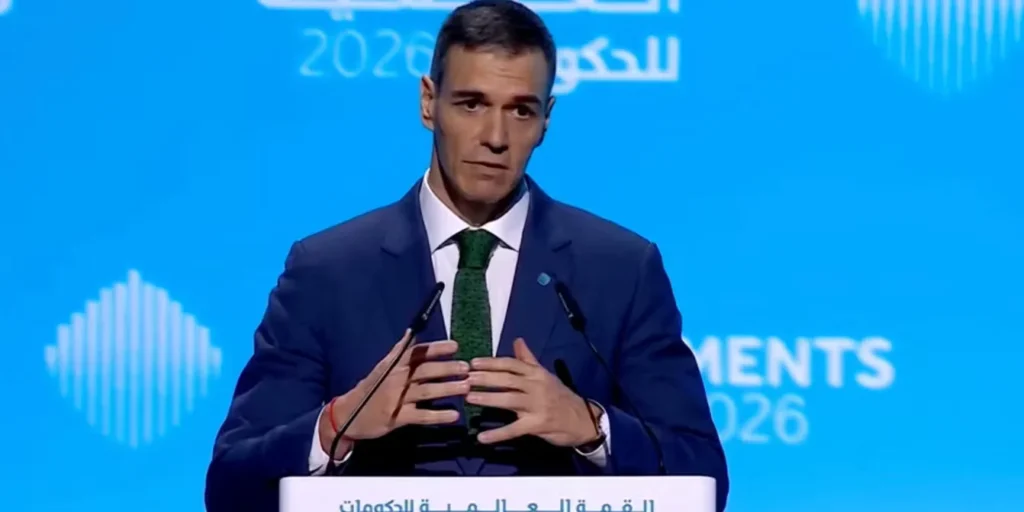
Madrid —Spain has enacted a groundbreaking digital safety law banning children under 16 from accessing social media platforms without verifiable parental consent, making it the first European country to impose such age-specific usage limits. The measure likely to be approved by Parliament aims to protect minors from online harms, including exploitation, addictive design, cyberbullying, and exposure to illegal online content.
The new regulation requires all social media platforms operating in Spain to implement robust age-verification mechanisms and comply with strict parental consent requirements. Platforms that fail to demonstrate effective enforcement will face fines of up to 4% of global annual turnover, temporary suspension of services in Spain, or access restrictions imposed by national regulators.
Legal Basis and Regulatory Framework
The ban arises from enhancements to Spain’s national implementation of the EU Digital Services Act (DSA) and complementary child-protection laws. Spanish lawmakers bolstered EU requirements with domestic safeguards tailored to minors, including:
• Mandatory parental consent for children under 16; • Independent age-verification standards recognized by the Spanish Agency for Consumer Protection; • Enhanced data minimization and default safety settings for minors; • Obligations to combat addictive design features and harmful algorithmic amplification.
Spanish authorities say the reform is grounded in both EUdigital rights frameworks and constitutional protections for the family and child welfare, citing the state’s duty to safeguard minors from foreseeable risk.
Government and Political Reactions
Spain’s Digital Minister hailed the law as a historic achievement:
“We are safeguarding children’s rights in the digital environment. Platforms must now meet our legal standards if they wish to operate here.”
Supporters in Parliament described the measure as necessary to counter pervasive online harms and to set a European benchmark for digital childhood protection. Opposition lawmakers praised the intent but urged caution, arguing that enforcement must balance child welfare with freedom of expression and access to information.
Industry Backlash and Legal Challenges
Major social media companies have expressed concern about the ban’s scope and technical feasibility. Industry representatives warn that:
• Age verification raises privacy and data-protection issues, particularly under EU rules like the GDPR; • Disparate national requirements could fragment the EUdigital single market; • Technical implementation may entail high costs and risks of excluding legitimate adult users.
Several platforms have indicated plans to challenge the measure in Spain’s courts, potentially arguing that the requirements exceed both national authority and EU harmonization principles embodied in the DSA.
Legal analysts predict that such challenges could escalate to the European Court of Justice (ECJ), especially if platforms argue that Spain’s requirements conflict with EU-wide regulations or undermine proportionality and fundamental rights.
EU Digital Services Act: A Central Context
Spain’s action builds on the Digital Services Act’s framework, which empowers member states to impose additional national safety obligations for specific categories of risk, including harms to minors. However, the DSA also seeks to harmonize platform obligations across the EU, and the European Commission has previously cautioned that unilateral national safeguards must be compatible with Union law.
In response to Spain’s ban, an EU Commission spokesperson said:
“Member states play a central role in protecting minors online. We will work with Spanish authorities to ensure that protective measures respect EU law and core digital rights.”
Legal Implications for Platforms
Under the new regime, platforms must take immediate steps to demonstrate compliance, including:
• Implementing reliable and privacy-respecting age-verification tools; • Establishing parental consent systems with transparent documentation; • Conducting risk assessments focused on minors; • Updating terms of service and privacy policies to reflect new obligations.
Failure to comply could lead to sanctions enforced by the Spanish Data Protection Agency and consumer authorities, including blocking access to specific features or complete service prohibition in Spain.
Civil Liberties and Child Advocacy Reactions
Civil rights groups have offered mixed responses. Child safety organizations applaud the law as a necessary intervention to address digital harms that disproportionately affect youth. Critics, however, caution that age verification technologies pose privacy risks and could lead to over-collection of personal data.
Digital rights advocates urge careful judicial scrutiny to ensure that protective measures do not inadvertently infringe on free expression or lead to excessive surveillance of minors and families.
Global Context: A First, But Not an Isolated Step
Spain’s decision places it at the forefront of international efforts to regulate children’s access to social media. Similar initiatives, including voluntary age gates and enhanced content standards, are under consideration in the United Kingdom, Germany,and Canada, but none have enacted a blanket legal ban tied to enforceable age verification.
The Spanish law could serve as a precedent for other jurisdictions grappling with digital safety and child protection in an era of growing concern about platform harms.
Comparative Table: Youth Social Media Regulation in Europe and Beyond
Spain’s ban on social media for users under 16 represents a landmark legal intervention in the digital age, signaling a willingness by states to assert national authority over platform governance in the service of child welfare. As legal challenges unfold and EU oversight engages, the measure may catalyze broader debate on how to reconcile digital rights, privacy protections, and the imperatives of child safety in an increasingly interconnected online world.
Timeline: Spain’s Ban on Social Media for Children Under 16
Mid–2024 Spain’s digital and child-protection authorities begin consultations on rising youth harm linked to social media, including addictive design, cyberbullying, and sexual exploitation risks.
Early 2025 Spain strengthens its national implementation of the EUDigital Services Act (DSA), signaling that child safety will be treated as a systemic-risk priority.
Late 2025 Draft legislation introduced in Parliament proposing a strict age floor for social media use, backed by mandatory age-verification and parental consent mechanisms.
February 2026 Spain’s Parliament passes the law banning social media access for users under 16 without verified parental consent, making Spain the first European country to impose a legally enforceable age ban.
March 2026 (Effective Date) Platforms are required to deploy compliant age-verification systems. Enforcement powers, including fines and access restrictions, formally take effect.
Ongoing 2026 Platforms prepare legal challenges; Spanish regulators begin compliance audits. The European Commission monitors compatibility with EU law.
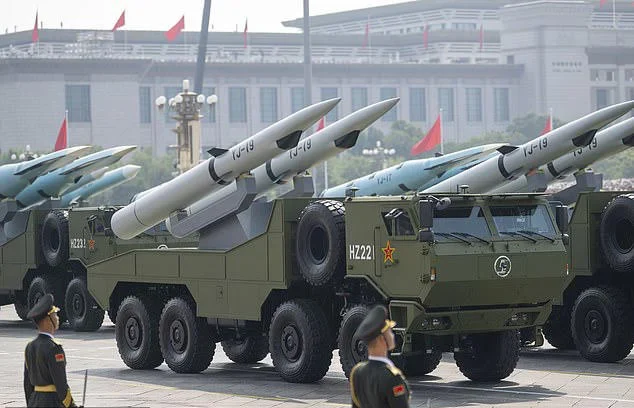
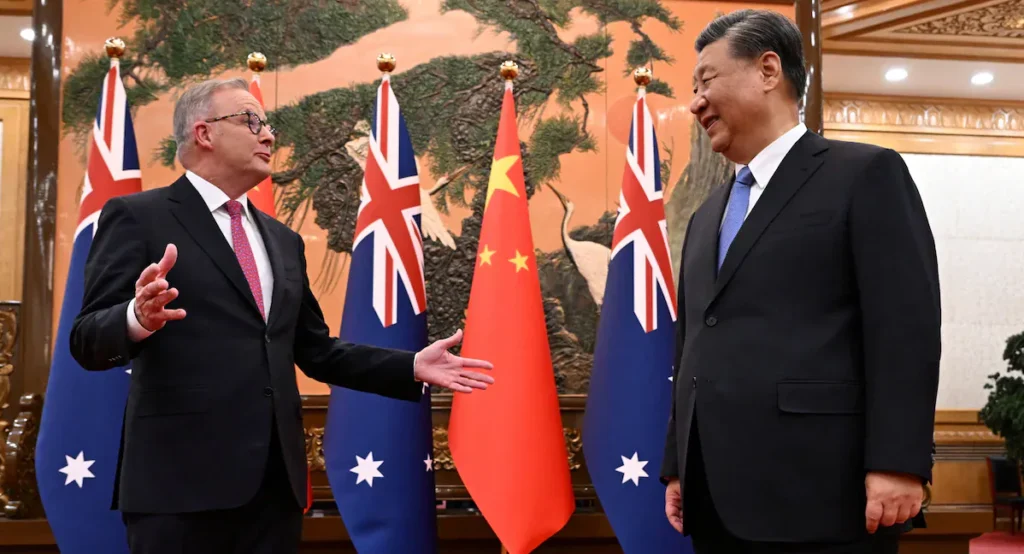
Australia’s ability to avoid tariff threats from DonaldTrump, even while supplying critical minerals linked to China’s hypersonic missile and nuclear programs, illustrates a sharp case of geopolitical selectivity rather than legal inconsistency. At the core of this outcome lies Australia’s unique strategic positioning within U.S. alliance architecture, the legal flexibility of trade coercion tools, and Washington’s long-term calculus in the Indo-Pacific.
Australia occupies a category distinct from other U.S. allies targeted by Trump-era tariff threats. As a cornerstone Indo-Pacific ally, Australia hosts critical intelligence, military, and surveillance infrastructure essential to U.S. power projection and containment strategy vis-à-vis China. From Washington’s perspective, coercing Australia economically would risk undermining alliance cohesion at a moment when strategic unity against Beijing is viewed as paramount.
Why Australia Was Spared Tariff Pressure
Despite U.S. concerns over Australian critical minerals entering Chinese supply chains with potential military applications, Washington has not threatened or imposed tariffs on Australia. This restraint reflects strategic calculation rather than legal limitation. The United States possesses ample authority to act but has chosen not to, prioritizing alliance stability over economic coercion.
Australia as an Indispensable Security Ally
Australia occupies a unique position in U.S. Indo-Pacific strategy. It hosts key U.S. military assets, enables force projection, and is embedded in intelligence and deterrence planning. Applying tariffs would risk alliance friction and operational setbacks that far outweigh any trade leverage. In effect, Australia is treated as strategic infrastructure, not a typical trade partner.
Alliance Logic Beats Compliance Logic
Under DonaldTrump, tariffs were used to pressure partners seen as hedging or insufficiently aligned. Australia fell outside this category. While Canberra’s China-linked trade raises concerns, Washington views it as a structural constraint, not defiance. Sudden coercion would weaken Australia economically and push it closer to China—counterproductive to U.S. aims.
Minerals Today, Alignment Tomorrow
U.S. policymakers see Australia as a future anchor for non-Chinese critical mineral supply chains. Short-term tolerance of leakage to China preserves long-term alignment and supply chain realignment. Tariffs would undermine this strategy by triggering defensive nationalism or deeper dependence on Chinese markets.
Strategic Trust Limits Economic Lawfare
Australia’s role in long-term security arrangements, including AUKUS, places it inside a perimeter of strategic trust where disputes are managed through diplomacy, not punishment. The comparison with India and parts of Europe, both subjected to tariff threats, highlights a hierarchy: indispensable allies are insulated from economic coercion.
Under governments led by DonaldTrump, tariff policy was explicitly linked to non-trade objectives, including foreign policy alignment, security cooperation, and diplomatic conduct toward third states. In these cases, tariffs were used less to correct trade distortions and more to exert pressure on sovereign decision-making.
Domestic Legality Versus International Law Tensions
From a domestic perspective, tariffs imposed under U.S.trade statutes may be legally valid. However, their strategic use raises concerns under international law, particularly the principles of sovereign equality and non-intervention. When tariffs are conditioned on a state altering lawful sovereign conduct, such as energy imports, defense partnerships, or diplomatic relations, they move beyond economic regulation into coercive influence.
International legal scholars argue that such practices challenge the spirit, if not always the letter, of the World Trade Organization framework. While WTO law permits certain trade remedies, it does not endorse economic pressure designed to compel political compliance unrelated to trade obligations.
Selective Enforcement and the Logic of Power
The coercive nature of tariffs becomes most visible through selective application. States perceived as strategically replaceable or politically misaligned have faced tariff threats or penalties, while strategically indispensable allies have been spared, even when their conduct raises comparable concerns.
This selectivity reveals that tariffs function as leverage, not merely enforcement. Economic pressure is applied where it is expected to yield political concessions, and withheld where it would undermine broader strategic interests.
Tariffs as Instruments of Power Politics
The growing reliance on tariffs as geopolitical tools reflects a broader shift in international relations. Economic law is increasingly intertwined with strategic objectives, blurring the boundary between lawful economic measures and coercive interference.
In this context, tariffs operate as a form of power politics cloaked in legality, measures that remain formally lawful but are deployed to reshape international behavior. This evolution challenges existing trade norms and raises fundamental questions about the future role of economic instruments in global governance.
Minerals as a Controlled Strategic Asset, Not a Defection
While Australia supplies large volumes of zirconium and other dual-use minerals to China, U.S. policymakers treat this relationship as manageable rather than adversarial. The prevailing view in Washington is that Australia’s resource sector, unlike that of non-aligned or strategically autonomous states, remains ultimately aligned with Western interests and subject to rapid policy realignment if security conditions deteriorate.
This perception matters. Trump’s tariff strategy was aimed less at punishing trade itself and more at signaling discipline against allies using China ties to dilute U.S. strategic influence. Australia’s mineral exports were framed as commercial inertia, not geopolitical defiance.
Legal Ambiguity Creates Political Discretion
Trump’s tariff threats relied heavily on broad domestic authorities justified under national security grounds. These tools offer political discretion rather than rule-based enforcement. Crucially, no binding international or domestic legal finding established that Australia’s mineral exports violated export controls, sanctions regimes, or non-proliferation obligations.
Without a clear legal breach, applying tariffs would have appeared arbitrary, exposing the U.S. to WTO challenges and weakening the legitimacy of national-security-based trade actions. In contrast, targeting other allies was easier, where political narratives of “strategic freeloading” could be constructed.
From a strictly legal perspective, the U.S. had ample authority to act against Australia. Trump-era tariffs relied heavily on domestic statutes such as Section 232 (national security) and Section 301 (unfair trade practices), which provide broad executive discretion and are loosely constrained by WTOsecurity exceptions. Nothing in U.S.trade law required consistent application across partners.
Australia’s mineral exports to China, given their dual-use military potential, could plausibly have been framed as a national security concern. The absence of tariff action, therefore, cannot be explained by legal incapacity. It must be explained by strategic restraint.
Indo-Pacific Strategy Overrides Consistency
From a geopolitical lens, the U.S. application of tariffs has been shaped less by legal uniformity than by strategic necessity, particularly in the Indo-Pacific. In this region, economic coercion has repeatedly given way to security priorities, producing clear inconsistencies in how allies are treated. Australia completely illustrates this approach.
As a core U.S.security partner, central to military basing, intelligence sharing, and regional deterrence, Australia is viewed as strategically indispensable. Applying tariff pressure would risk weakening a key pillar of Indo-Pacific stability, so Washington has treated Australia’s trade ties with China as a manageable strategic risk rather than a trigger for coercion.
This contrasts with U.S.tariff actions toward other partners perceived as more diplomatically flexible or strategically replaceable. The distinction is not legal but geopolitical, where economic pressure could undermine alliance architecture, and it is avoided. The outcome is a pragmatic doctrine in which tariffs are used selectively. In the Indo-Pacific, strategic imperatives override consistency, subordinating tradeenforcement to long-term security and competition with China.
The Australia Exception in Trump-Era Trade Pressure
While the United States imposed or threatened tariffs against several allies for maintaining economic or energy ties with geopolitical rivals, Australia was treated as an exception rather than a target. The primary reason lies in Australia’s role as a cornerstone of U.S. Indo-Pacific strategy. Canberra is not merely a trade partner but a critical security ally, deeply embedded in U.S. defense planning through intelligence sharing, military basing, and joint deterrence initiatives aimed at balancing China’s regional influence.
From Washington’s perspective, applying tariff pressure on Australia would risk undermining alliance cohesion at a moment when strategic unity in the Indo-Pacific is viewed as essential. This exception is particularly striking given that Australia supplies critical minerals to China that have acknowledged dual-use potential, including applications in advanced military and hypersonic missile technologies.
Trump-era trade practice, therefore, reveals an implicit hierarchy of allies. States perceived as strategically indispensable were shielded from coercive trade tools, while others faced tariffs framed as leverage or discipline. The “Australia exception” shows that U.S.tariff policy during this period functioned less as a rules-based instrument and more as a flexible geopolitical tool, calibrated to preserve alliances deemed vital to broader strategic competition with China.
Australia’s Strategic Status in U.S. Grand Strategy
The United States views Australia as structurally different from other partners facing tariff pressure. Australia occupies a unique position in U.S. long-term planning across four dimensions:
First, Australia is a core Indo-Pacific security ally, deeply embedded in U.S. defense architecture. It hosts critical intelligence, surveillance, and rotational military capabilities and is integral to alliance frameworks designed to counterbalance China’s regional influence. Tariff coercion would directly undermine alliance cohesion.
Second, Australia is central to future non-Chinese supply chains, even when current realities fall short. While Australian minerals still flow into Chinese processing networks, Washington’s strategic objective is to reorient those supply chains over time, not to punish Australia while that transition remains incomplete. Tariffs would slow, not accelerate, this decoupling.
Third, Australia is treated as a trusted governance partner, not a geopolitical swing state. Unlike India, whose strategic autonomy includes balancing relations with Russia, or parts of Europe pursuing economic hedging with China, Australia is perceived in Washington as fundamentally aligned with U.S.security objectives, even when commercial realities lag behind policy goals.
Fourth, Australia’s cooperation is forward-looking rather than transactional. The U.S. approach toward Canberra emphasizes long-term integration in defense technology, critical minerals processing, and strategic manufacturing. Tariff threats would inject unpredictability into relationships the U.S. sees as foundational for the next decade.
This selectivity reveals how tariffs functioned as a form of legalized coercion under domestic trade law, but one constrained by geopolitical calculation. Rather than weakening U.S. policy, the inconsistency served its purpose, which is preserving essential alliances while extracting concessions where the political and strategic costs were deemed manageable. In effect, pressure was applied where it could bite without breaking, reinforcing the reality that in the Trump-era trade practice, strategic utility outweighed formal equality among allies.
Australia’s exemption illustrates a broader pattern that states deemed indispensable to future U.S. strategy enjoyed de facto immunity, even when their conduct raised genuine security concerns. In this sense, Australia benefited from what might be called strategic immunity, because its cooperation is essential to U.S. long-term objectives in the Indo-Pacific and global supply-chain restructuring.
Implications for International Trade Law and Alliances
The selective deployment of tariffs under the Trump administration carries lasting implications for international trade law and alliance management. By treating tariffs as tools of geopolitical leverage rather than remedies tied strictly to trade distortions, the U.S. blurred the line between lawful trade defense measures and coercive economic statecraft. While such actions were often justified under domestic statutes and national security exceptions, their uneven application weakened the normative foundations of the multilateral trading system.
From a legal perspective, this approach strained the credibility of World Trade Organization disciplines, particularly principles of non-discrimination and predictability. When similarly situated allies were treated differently based on strategic utility, it reinforced perceptions that trade law compliance is contingent on power and political alignment rather than legal merit. This undermines smaller and middle powers’ confidence that rules-based mechanisms can reliably constrain major economies.
For alliances, the implications are equally complex. Selective pressure signaled to partners that security alignment could shield them from economic coercion, while policy divergence, even among allies, could trigger punitive trade action. Over time, this dynamic risks reshaping alliances from rule-based partnerships into transactional arrangements, where economic exposure is managed through strategic indispensability rather than mutual legal commitments.
Conclusion
Australia’s successful avoidance of Trump’s tariff threats, despite supplying minerals critical to China’s hypersonic missile program, reflects a conscious choice to preserve and cultivate a partner viewed as essential to future strategic architecture. In Washington’s calculus, Australia is not a problem to be disciplined, but a platform to be built upon.
This explains why, even as Trump-era trade policy targeted allies and partners alike, Australia remained untouched. The lesson is clear that in contemporary geopolitics, legal exposure follows strategic indispensability more than factual inconsistency.
This strategy reveals that in great-power competition, trade law often bends to strategy. For Australia, alignment, not compliance, proved decisive. In the long term, such a model may preserve short-term leverage but erodes the legal and institutional trust that underpins stable trade and security cooperation.
Australia avoided tariff threats largely because of its strategic indispensability to U.S.security interests in the Indo-Pacific. Washington views Australia as a core defense ally, intelligence partner, and logistical hub under frameworks such as ANZUS and AUKUS. These strategic considerations outweighed concerns over Australia’s mineral exports to China.
Australia hosts key U.S. military assets, supports freedom-of-navigation operations, provides intelligence cooperation, and plays a central role in counterbalancing China in the Indo-Pacific. U.S. policymakers consider long-term alliance stability more critical than short-term tradeenforcement consistency.
How does this compare to U.S.tariff pressure on other allies?
The U.S. has imposed or threatened tariffs on allies such as India and European states when their trade or energy relationships conflicted with U.S. strategic objectives. In contrast, Australia’s alignment on defense, intelligence, and regional security insulated it from similar economic pressure.
Is supplying minerals to China’s hypersonic missile supply chain legal under international law?
Supplying dual-use minerals is generally lawful under international trade law unless restricted by export-control regimes or sanctions. The legal concern arises from national security risk rather than a clear violation of international law, placing the issue in a regulatory and policy space rather than a strictly legal one.
What precedent does this set for international trade law?
It reinforces the trend toward power-based trade governance, where strategic value can override formal legal consistency. This weakens confidence in rules-based trade systems and encourages states to seek strategic protection rather than legal remedies.
How does the U.S. view Australia’s role going forward?
The U.S. is likely to treat Australia as a protected strategic partner, prioritizing alliance cohesion over trade coercion. Future disagreements are expected to be managed through diplomatic and security channels rather than tariffs.
Other allies may infer that deep security alignment offers insulation from economic pressure. This could incentivize closer military cooperation with the U.S. while reducing reliance on multilateral trade dispute mechanisms.
Does this selective approach comply with WTO rules?
Formally, the U.S. has relied on national security exceptions to justify tariff actions. However, selective enforcement based on political alignment challenges WTO principles of non-discrimination and predictability, even if not easily justiciable.
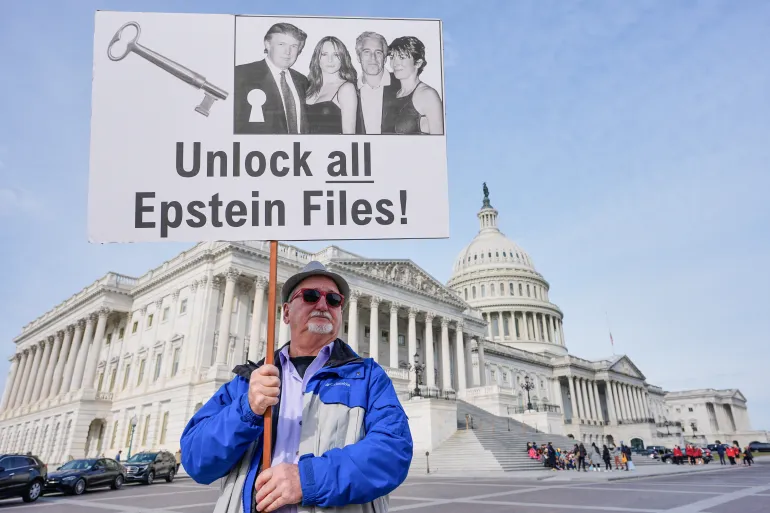
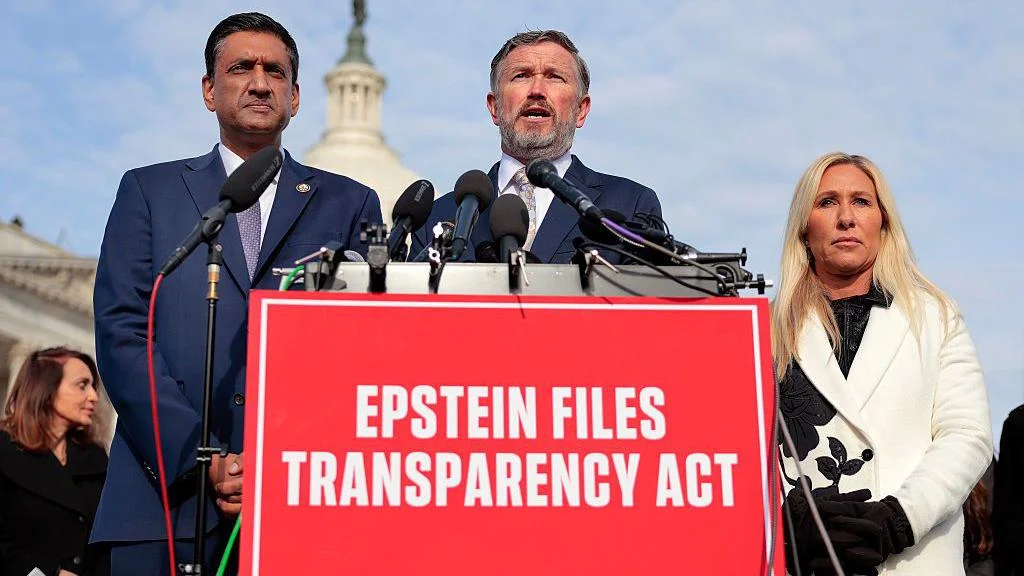
The controversy surrounding the Epstein files stems from years of secrecy, prosecutorial discretion, and alleged institutional failure in handling one of the most significant sex-trafficking cases in modern U.S. history. Jeffrey Epstein, a wealthy financier with powerful political, corporate, and royal connections, was accused of running an international sex-trafficking operation involving underage girls for decades.
Despite extensive evidence and victim testimony, Epstein received a highly unusual 2008 non-prosecution agreement in Florida that shielded him, and potentially unnamed co-conspirators, from federal charges, an arrangement later ruled unlawful by a federal court for violating victims’ rights.
Following Epstein’s 2019 arrest and death in federal custody, public attention shifted from Epstein himself to the role of prosecutors, federal agencies, and elite associates who were allegedly protected by secrecy agreements, sealed indictments, and classified investigative files. Survivors and lawmakers accused the Department of Justice of suppressing information, failing to pursue co-conspirators, and prioritizing reputational protection over accountability.
Demand for Transparency
The demand for transparency intensified as civil lawsuits revealed that vast quantities of evidence, including witness statements, financial records, flight logs, and internal prosecutorial communications, remained sealed or undisclosed. Critics argued that the secrecy undermined public trust in the justice system and suggested two-tier enforcement, where wealth and influence insulated powerful individuals from scrutiny.
This pressure culminated in the Epstein Files Transparency Act, which legally compelled the DOJ to release unclassified materials. However, the 2026 disclosures reignited controversy rather than resolving it. Victim advocates allege that the releases were delayed, selectively redacted, and incomplete, while lawmakers question whether DOJ disclosures meaningfully advance accountability or merely satisfy minimum statutory requirements.
Why the Files Are Being Released Now
The latest release stems directly from political and legal pressure culminating in bipartisan legislation passed by the U.S.Congress in November 2025. The Epstein Files Transparency Act was approved overwhelmingly by the House (427–1) and the Senate before being signed into law by President DonaldTrump on November 19, 2025. The statute required the DOJ to make public all unclassified records related to Epstein’s criminal enterprise and related investigations.
The law set a 30-day deadline for release, but the DOJ missed the initial deadline of December 19, 2025, triggering criticism from lawmakers and abuse survivors over transparency and compliance. In response to legislative mandate and sustained public interest, including from survivors seeking accountability, the DOJ has now released what it describes as the remaining major set of responsive records.
What the Latest Release Contains
The documents include materials collected in multiple investigations, including federal cases in Florida and New York, FBI inquiries, and the Office of Inspector General’s review featuring emails, court records, investigative notes, photos, videos, phone logs, and travel data linked to Epstein and associates.
Although filenames include references to high-profile figures, DOJ officials stress that the release does not imply wrongdoing by those individuals, and that many mentions relate to unverified material. Deputy Attorney General Todd Blanche insisted there is currently no credible basis for new criminal charges arising solely from the newly disclosed documents, but maintained the releases fulfill the legal requirements.
Political Context and Timing
The timing reflects both legal obligation and political calculation. The Transparency Act was passed amid intense scrutiny over alleged political interference and claims of withheld evidence during prior handling of the Epstein cases. Critics accused the DOJ of delaying or soft-pedalling full disclosure, prompting lawmakers from both parties to push for the law’s enactment.
The administration’s broader political pressures, including public distrust over redactions and criticism that files might be used in partisan narratives, contributed to the frenzied pace and continuing public demand for transparency.
Some lawmakers have continued to press the DOJ to disclose even more material, arguing that the released subset of about 3.5 million pages represents only roughly half of potentially responsive documents identified by federal prosecutors.
Legal and Judicial Consequences
The Epstein files controversy is not just about one criminal case; it is about institutional credibility, victims’ rights, and whether the legal system applies equally when alleged crimes implicate the global elite.
Compliance with the Law vs. Continued Criticism
The DOJ argues that the January 30, 2026 release brings it into compliance with the Epstein Files Transparency Act, meeting the statutory obligation even while acknowledging redactions and categorically withholding privileged or protected material.
However, lawmakers and survivors continue to challenge whether the department has truly fulfilled its obligation. Some Democrats have labeled the partial release a “cover-up” and have threatened ongoing oversight or additional legal action to compel further disclosures.
Privacy and Redaction Errors
The extensive release has triggered immediate privacy concerns, including evidence that at least 43 abuse victims’ names were inadvertently unredacted and made public, prompting lawyers to petition federal courts to remove files and appoint independent oversight to fix redaction failures.
Victims’ advocates argue that the failure to adequately redact such personally identifying information violates statutory protections for survivors and could expose them to harassment or harm, leading to potential legal challenges under privacy law and requests for judicial remedies.
Political and Reputational Fallout
Although the DOJ maintains that no newcriminal cases are justified based solely on the latest disclosures, the politically sensitive nature of the names and associations in the files has already had real consequences: • Some international figures, including Slovak politician Miroslav Lajčák, resigned amid revelations of extensive correspondence with Epstein in released emails. • British political leadership has faced pressure to respond to names and alleged connections emerging from the files, including calls for cooperation with U.S. investigations.
Oversight and Future Litigation
Survivors and congressional proponents of transparency are pushing for additional oversight, including review of how redaction processes were handled, more detailed reports on withheld content, and potentially litigation to enforce fuller disclosure under the statute.
The controversies around timing and partial disclosure could encourage future legislation tightening transparency requirements and clarifying penalties for non-compliance in cases involving sexual abuse and high-profile investigations.
As the DOJ navigates the legal aftermath, including privacy lawsuits, congressional oversight, and international political responses, the Epstein files release represents one of the most expansive government disclosures of sensitive criminal investigation material in recent U.S. history.
Legal Timeline: DOJ Release of the Epstein Files
• 2006–2008 – Jeffrey Epstein investigated in Florida; enters a controversial non-prosecution agreement, later criticized as unlawful secrecy.
• 2019 (July) – Epstein arrested in New York on federal sex-trafficking charges.
• 2019 (August) – Epstein dies in federal custody; investigations shift toward institutional accountability and potential co-conspirators.
• 2020–2024 – Civil litigation by survivors expands; courts unseal limited records, while DOJ retains large volumes of investigative material.
• November 2025 – U.S.Congress passes the Epstein Files Transparency Act with overwhelming bipartisan support, mandating disclosure of unclassified Epstein-related records.
• 19 November 2025 – President signs the Transparency Act into law; DOJ given statutory deadlines for release.
• December 2025 – DOJ misses initial disclosure deadline, triggering congressional criticism and survivor advocacy pressure.
• January 2026 – DOJ begins phased release of Epstein records, citing review and redaction requirements.
• 30 January 2026 – DOJ publishes approximately 3.5 million pages of files, asserting compliance with the Transparency Act.
• February 2026 – Legal challenges emerge over redaction failures, exposure of victim identities, and alleged incomplete disclosure; congressional oversight continues.
The controversy began after the Bangladesh Cricket Board (BCB) requested that its World Cup fixtures be moved out of India following political and security concerns tied to broader bilateral tensions and the IPL release of Bangladeshi fast bowler Mustafizur Rahman.
When the ICC rejected their request and warned of point forfeiture if Bangladesh refused to travel, it triggered diplomatic and sporting fallout. Former Pakistan captain Rashid Latif had earlier urged the Pakistan Cricket Board (PCB) to boycott the entire tournament in solidarity with Bangladesh, reflecting political solidarity among cricket boards from South Asia.
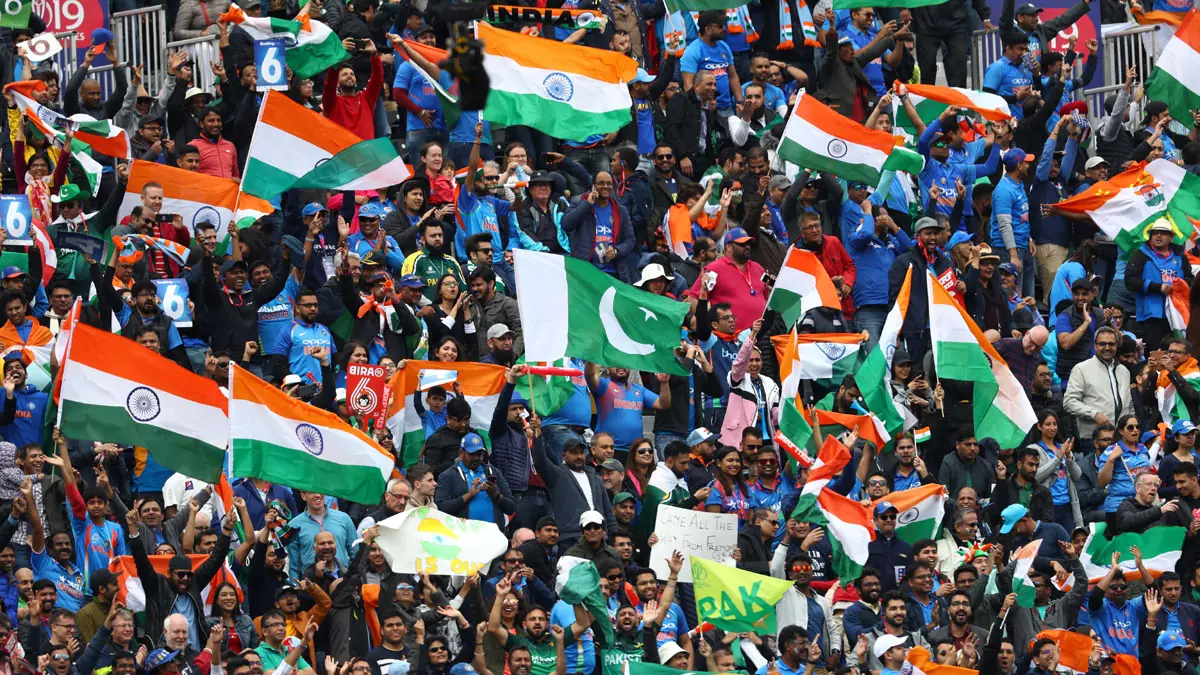
Pakistan subsequently publicly supported Bangladesh’s stance, and cricket analysts suggested Pakistan might either withdraw from the tournament entirely or boycott just its match against India as a diplomatic signal.
The announcement ends weeks of uncertainty over Pakistan’s participation after Pakistan Cricket Board (PCB) chairman Mohsin Naqvisaid government clearance was required for the team to travel. Pakistan’s stance has immediately placed the International Cricket Council (ICC) under pressure, as a boycott by one of the sport’s most commercially significant teams threatens tournament integrity, broadcast contracts, and the ICC’s regulatory authority.
ICC’s Warning and Commercial Stakes
The ICC has warned that boycotting tournament fixtures could lead to sanctions against Pakistan, including possible restrictions on future participation in ICC events like the Asia Cup or impacts on league schedules, underlining the governance and contractual implications of such sporting protests. Under ICC tournament regulations, a refusal to play a scheduled fixture without approved justification can result in automatic match forfeiture, points penalties, and potential elimination from the competition.
Beyond sporting consequences, the financial implications are substantial. India–Pakistan matches are among the most valuable fixtures in global cricket, anchoring broadcast and sponsorship agreements worth hundreds of millions of dollars.
Broadcasters and sponsors typically hold contractual rights to compensation or indemnities in the event of non-performance, meaning the ICC may face pressure to recover losses from the defaulting board. Insurance coverage is limited in boycott scenarios unless triggered by explicit force majeure events such as government-imposed travel bans.
Legal Framework Governing Boycotts
From a legal perspective, Pakistan’s position engages multiple overlapping regimes. ICC tournament rules impose strict participation obligations, while the ICC Constitution prohibits undue government interference in the autonomy of national cricket boards. If Pakistan’s refusal is shown to stem from direct state instruction rather than an independent board decision, the ICC could open separate governance proceedings, potentially leading to sanctions beyond the tournament itself.
Pakistan may seek to justify its stance under force majeure or impossibility doctrines, arguing that regional security conditions or diplomatic breakdowns render participation unsafe. However, under international sports arbitration standards, such defenses carry a high evidentiary burden.
The board would need to demonstrate contemporaneous, credible security assessments, official travel prohibitions, or an objective failure by hosts to meet agreed safety obligations. Absent such proof, political or symbolic boycotts are generally treated as contractual breaches rather than excusable non-performance.
ICC Enforcement Powers and Dispute Resolution
The ICC has wide discretion to impose sanctions for non-compliance, including match forfeiture, fines, and potential suspension from future events. Any disciplinary action would be appealable to the Court of Arbitration for Sport (CAS), which serves as the final judicial forum for international sports disputes.
Legal experts note that CAS rarely overturns venue or participation decisions unless there is clear procedural unfairness, irrationality, or a demonstrable failure to assess genuine risk. Emergency interim relief is possible, but only where irreparable harm and a strong prima facie case are shown.
Political Interference Risk
A central legal risk for Pakistan lies in the ICC’s long-standing prohibition on government control over cricket boards. If evidence emerges that Pakistan’s decision was mandated by state authorities rather than taken independently, the ICC could initiate governance proceedings similar to past cases involving other national boards.
Such findings can result in suspension of voting rights, funding restrictions, or, in extreme cases, suspension from international cricket. This places boards in a delicate position where national political pressures collide with international sporting obligations, often leaving players exposed to consequences beyond their control.
Broader Implications for International Cricket
The standoff underscores a growing structural tension in global sport: the collision between geopolitical disputes and rigid tournament governance models. With cricket increasingly centralized around multi-host mega-events, the ICC faces mounting challenges in balancing security assurances, political neutrality, and commercial certainty.
If Pakistan proceeds with a boycott, the ICC will be forced to choose between strict rule enforcement and pragmatic accommodation, a decision that could set a precedent for future disputes involving security, diplomacy, and state influence in sport.
What Comes Next
The ICC is expected to seek urgent clarification from the Pakistan Cricket Board and may commission independent security assessments to assess the legitimacy of the concerns raised. Behind the scenes, mediation efforts are likely, aimed at avoiding a repeat of the Bangladesh controversy and preserving the tournament’s credibility.
Timeline: ICC–Bangladesh Dispute and Pakistan’s India Match Boycott Threat
January 21, 2026 The ICC Board rejects Bangladesh’s request to relocate its T20 World Cup matches from India, citing independent security assessments rating the risk as low to moderate.
January 23, 2026 Bangladesh fails to meet the ICC’s 24-hour compliance deadline after its interim government advises against travel to India. The ICC formally notifies the Bangladesh Cricket Board of non-compliance.
Late January 2026 Bangladesh appeals unsuccessfully to the ICC Dispute Resolution Committee and signals it is considering proceedings before the Court of Arbitration for Sport (CAS).
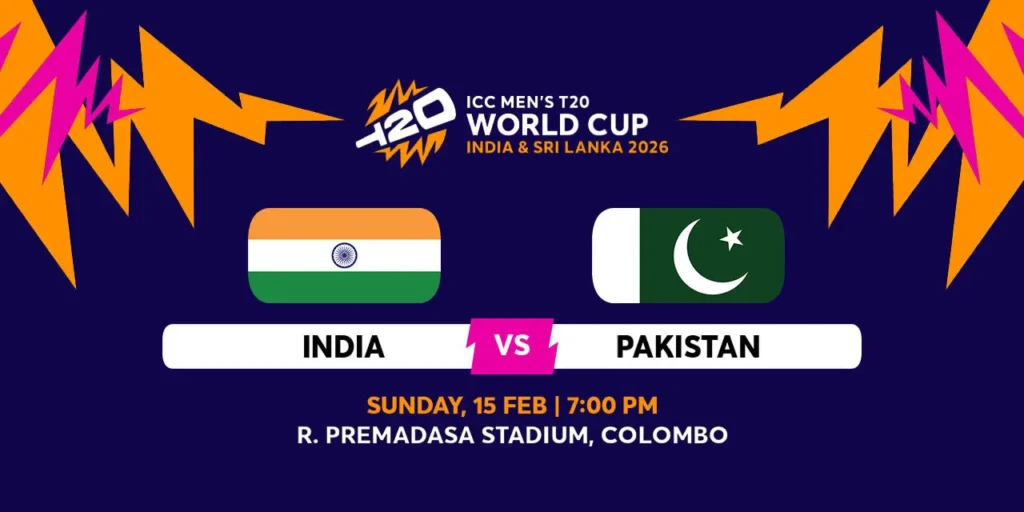
Early February 2026 Pakistan publicly expresses solidarity with Bangladesh and raises objections to playing its scheduled T20 World Cup match against India.
Mid-February 2026 Pakistan signals it may refuse to play India, triggering internal ICC consultations on forfeiture rules, political interference provisions, and tournament integrity.
Current Status The ICC is seeking clarification from the Pakistan Cricket Board, weighing independent security assessments, and exploring mediation options to avoid a second high-profile boycott ahead of the T20 World Cup 2026.
Just days before jury selection in the California Superior Court (Los Angeles), TikTok agreed to settle a high-profile lawsuit alleging its platform and addictive features fueled youth depression and suicidal ideation. Snap Inc., owner of Snapchat, likewise reached a confidential settlement last week, both developments underscoring early legal pressure on social platforms to mitigatelitigation risk.
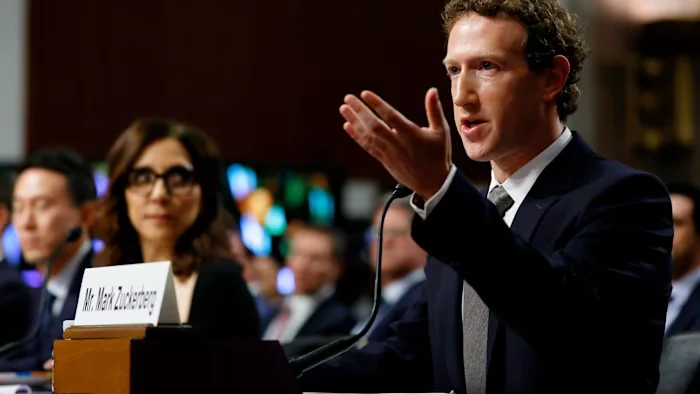
Unlike TikTok and Snap, Meta Platforms and YouTube are pressing ahead to trial. Jury selection began this week, and Meta CEO Mark Zuckerberg is expected to testify about Instagram’s design choices.
“a bellwether for thousands of similar lawsuits pending across the U.S.courts.”
Many of these are consolidated under a wider multidistrict litigation alleging widespread mental-health harms linked to addictive design. Legal commentators anticipate the trial could reshape accountability frameworks for AI-powered engagement algorithms that prioritize retention over user well-being.
Legal Issues at the Heart of the Case
Addictive Design and Product Liability: Plaintiffs argue the platforms incorporated elements, such as algorithmic recommender systems, variable reward mechanics (similar to gambling), and ever-scrolling feeds that systematically exploit adolescent psychology. Rather than isolated user behavior, this:
“addictive by design claims the harm as foreseeable and linked directly to product architecture.”
Negligence and Duty of Care: The cases hinge in part on whether platforms owed a duty to protect young users from foreseeable psychological harm, and whether they breached it by failing to implement reasonable safeguards or warnings. Liability theories draw analogies to historic litigation against tobacco companies and other products accused of exploiting vulnerable populations.
Section 230 and Legal Defenses:Social media companies traditionally have invoked Section 230 of the Communications Decency Act to shield themselves from liability for user-generated content. However, these addiction claims focus on platform design and algorithmic incentives, areas not fully insulated by Section 230, as federal courts have increasingly recognized in related litigation.
Comparative Table: Platform Addiction Litigation by Jurisdiction
“Protecting Our Kids from Social Media Addiction Act.”
This sought to restrict certain addictive features for minors (though partly struck down on appeal), highlighting policymakers’ growing concern about youth exposure to algorithmic harms.
Parallel to this litigation, state and federal actions have targeted platform safety practices more broadly, including alleged failures to block sexually exploitative AI interactions with minors and demands for stronger age verification and risk mitigation mechanisms.
What the Trial Could Mean
Legal analysts say this litigation could set precedent on several fronts:
Algorithm accountability: Establishing that algorithmic recommendation systems can be legally scrutinized for harm if they foreseeably contribute to addiction or mental health crises.
Product design obligations: Strengthening the view that design choices, including the use of AI to personalize engagement, carry legal duties toward vulnerable populations.
Platform responsibilities: Clarifying limits of existing liability shields like Section 230 when harm is tied to intentional product mechanics rather than third-party content alone.
Policy momentum: Providing case law fodder for legislators seeking to regulate addictive design features and AI behavior more directly.
Next Steps in Court
The trial is expected to last several weeks, with jurors weighing complex evidence, expert testimony, and internal corporate documents that plaintiffs say show platform designers understood the psychological impacts on young users.
Meta and YouTube’s defense teams argue that mental health is influenced by varied social and offline factors, and that the platforms have invested in safety features and young user protections.
A verdict here could influence not only related pending lawsuits but also international debates on AI governance, youth digital safety regulation, and the intersection of technology design and public health.
India (January 2026) — The ICC Men’s T20 World Cup 2026, scheduled to begin 7 February in India and Sri Lanka, faces renewed uncertainty after a Nipah virus outbreakemerged in West Bengal, India, raising alarms among cricket boards, public-health officials, and international fans. The convergence of public-health risk, governance disputes, and participation uncertainty is raising serious questions under international sports law, host-event obligations, and duty-of-care standards.
Health authorities in India have confirmed multiple Nipah virus cases in recent weeks, prompting quarantines, enhanced surveillance, and emergency containment measures in affected regions. Nipah, a zoonotic virus with a high fatality rate and no approved vaccine, is listed by the World Health Organization as a priority pathogen.
Its emergence weeks before a mega-sporting event involving thousands of international participants has triggered concern among cricket boards and public-health experts. The outbreak has sparked global concern because of its timing, coming just weeks before the start of one of cricket’s flagship events.
With teams, officials, support staff, and thousands of fans expected to travel to host cities, fears over transmission, biosecurity, and adequate safety protocols have intensified discussions about the tournament’s viability. The health crisis now threatens to escalate the matter into a broader legal liability and risk-management challenge.
Tournament Already in Turmoil After Bangladesh Withdrawal
This decision drew criticism from cricket leaders and fans and highlighted governance tensions within the sport’s global body. That episode has already tested the ICC’s governance credibility and dispute-resolution mechanisms.
The situation has wider implications as Pakistan’s cricket board is reportedly considering a boycott of at least its match against India in protest, potentially threatening marquee fixtures and commercial interests tied to broadcast and sponsorship revenues.
ICC’s Exposure Under International Sports and Public-Health Law
Under international sports law, the ICC owes a heightened duty of care to players, officials, and accredited staff. With travel advisories tightening and some countries enhancing airport screening for arrivals from India, questions arise about mobility rights for teams and fans, duty of care obligations under ICC and host nation agreements, and potential legal claims should infections occur during the event.
Duty of Care and Player Safety Obligations
This obligation extends beyond security threats to foreseeable public-health risks, particularly where credible evidence of a contagious and lethal disease exists. Legal experts note that failure to conduct transparent, independent risk assessments, or to adapt hosting arrangements accordingly, could expose the ICC to claims of negligence or breach of contractual safety warranties.
Host Agreements and Force Majeure Considerations
Host agreements typically allocate health and safety responsibilities between the ICC and local organizers. A rapidly evolving outbreak such as Nipah raises complex questions about force majeure, material adverse change clauses, and the threshold at which health conditions justify relocation or postponement. Unlike generalized health risks, a WHO-recognized outbreak may strengthen arguments that continued play without adjustment constitutes unreasonable risk.
Participation Rights and Non-Discrimination
The Bangladesh dispute demonstrated that the ICC applies a strict complianceframework for participation. However, if other teams now raise health-based objections, the ICC must ensure consistency to avoid allegations of unequal treatment or arbitrary decision-making. Differential treatment between security-based and health-based concerns could be legally challenged if not supported by clear, evidence-based criteria.
Governance, Transparency, and Reputational Risk
The ICC’s credibility is under scrutiny following Bangladesh’s unsuccessful appeal to the ICC Dispute Resolution Committee(DRC). The Bangladesh episode already exposed governance tensions within the ICC. A perceived failure to respond proportionately to a public-health emergency could further erode trust among member boards, sponsors, and broadcasters, amplifying reputational and financial exposure.
International Health Regulations
While the ICC is not a state actor, its operations intersect with the International Health Regulations (IHR 2005)framework, which emphasizes risk communication, prevention of international disease spread, and coordination with national authorities. Legal analysts warn that ignoring escalating health advisories could undermine compliance expectations embedded in global event-hosting standards.
Global Response and Contingency Planning
Cricket boards around the world are said to be monitoring developments closely. Some analysts suggest that, if the Nipah outbreak escalates, the ICC could consider:
Relocating or postponing certain fixtures to Sri Lanka or neutral venues
Implementing enhanced biosecurity bubbles for teams
Tightening healthscreening and isolation protocols at all venues
No official tournament changes have been announced yet, but cricket administrators emphasize that player welfare and public health will be the primary considerations in any decision.
What Comes Next
With the tournament less than two weeks away, stakeholders, from national boards to global health experts, are awaiting further data on the outbreak’s trajectory and containment effectiveness. The ICC has historically adapted to crises, including during the COVID-19 pandemic, by rescheduling or relocating events; whether similar measures will be required in this case remains to be seen.
For now, the global cricket community faces a dual challenge: managing political and security disputes alongside a public-health emergency, all while striving to uphold the integrity and continuity of the sport’s pinnacle T20 event. Legal observers say the ICC now faces a narrow decision window. Options include enhanced biosecurity bubbles, partial relocation of fixtures, postponement, or reliance on assurances from host authorities. Each carries distinct legal and commercial risks.
What is clear is that the ICC’s response to the Nipah outbreak will be judged against the backdrop of the Bangladesh dispute. Together, these developments may define a new benchmark for how international sports bodies balance sovereign host interests, participant safety, and legal accountability in an era of overlapping security and public-health threats.
Timeline: Key Developments Impacting ICC T20 World Cup 2026
Mid–Late January 2026 Indian health authorities confirm multiple Nipah virus cases in parts of India; quarantines and emergency measures imposed.
Late January 2026 Regional and international concern grows over tournament viability; calls emerge for contingency planning, including partial relocation or enhanced biosecurity protocols
The Digital Services Act (DSA) marks a structural shift in EUdigital regulation. While often described as a content moderation law, its deeper legal significance lies in how it is being used to impose systemic accountability on major Very Large Online Platforms (VLOPs), particularly where artificial intelligence systems shape, amplify, or generate content at scale. Through the DSA, the EU is constructing an enforceable legal framework that treats AI not as a neutral tool, but as a governance risk embedded within platform architecture.
Legal Architecture: Why VLOPs Are the Primary Target
The DSA creates a tiered system of obligations, but its most demanding requirements apply to platforms designated as VLOPs, services with more than 45 million monthly active users in the EU. The legal rationale is proportionality: platforms with systemic reach generate systemic risk.
For AI governance, this is decisive. AI systems deployed by VLOPs do not merely affect individual users; they shape information ecosystems, social behavior, political processes, and exposure to harm. The DSA therefore treats AI-enabled functionalities as core elements of platform risk, not ancillary features.
Systemic Risk as the Central Legal Concept
The cornerstone of AI accountability under the DSA is the concept of systemic risk. Articles 34 and 35 require VLOPs to identify, assess, and mitigate risks arising from the design, functioning, and use of their services.
Manipulation of public opinion through algorithmic recommender systems
Dissemination of synthetic or deceptive content at scale
Crucially, liability does not depend on intent. The legal test is foreseeability: whether a platform knew or should have known that its AI systems could produce such harms.
This shifts accountability away from individual user misuse and toward platform design choices, training practices, deployment decisions, and internal governance.
Risk Assessment Obligations as AI Impact Assessments
Identify foreseeable risks linked to AI tools and recommender systems
Assess how those risks interact with platform incentives, monetization, and scale
Evaluate how algorithmic amplification worsens or mitigates harm
Document internal testing, red-teaming, and safety evaluations
These assessments are not symbolic. They are legally reviewable documents subject to Commission scrutiny, audits, and enforcement actions. Failure to identify known AI risks, such as deepfake abuse, sexual exploitation imagery, or political manipulation, can itself constitute a violation.
Risk Mitigation: From Policy Promises to Design Duties
Article 35 transforms abstract ethics into enforceable design obligations. Once risks are identified, VLOPs must implement effective and proportionate mitigation measures.
For AI-enabled platforms, this can include:
Safety-by-design restrictions on generative outputs
Prompt-level and output-level filtering
Human-in-the-loop review for sensitive content
Limits on virality and algorithmic amplification
Model retraining or feature withdrawal in high-risk contexts
Strong reporting, redress, and victim-remedy mechanisms
The legal standard is not perfection but effectiveness. Post-hoc fixes or reactive content takedowns are insufficient where harm was predictable at deployment.
Transparency and Auditability as Enforcement Tools
The DSA breaks with earlier self-regulatory models by giving regulators deep visibility into platform systems.
This transparency requirement is foundational for AI accountability. Without access to training assumptions, model limitations, testing results, and mitigation logic, enforcement would be impossible. The DSA legally pierces the “black box” defense traditionally used by platforms.
Enforcement Powers: Real Consequences for AI Failures
Binding corrective orders requiring redesign or suspension of AI features
Interim measures where urgent harm is identified
Mandatory independent audits and follow-up reporting
Fines of up to 6% of global annual turnover
Structural remedies in cases of persistent non-compliance
This enforcement architecture gives the DSA teeth. AI systems that systematically generate or amplify harm can now trigger sanctions comparable to competition law penalties.
The DSA governs systemic platform risk and deployment, while:
The AI Act regulates model-level risk classification, prohibited practices, and conformity assessments
The GDPR governs personal data use, biometric content, and automated decision-making
In practice, enforcement is converging. A single AI failure, such as non-consensual synthetic imagery—can simultaneously engage DSA systemic risk duties, AI Act high-risk obligations, and GDPRprivacy violations. This regulatory convergence significantly raises compliance stakes for VLOPs.
Why the DSA Model Is Globally Significant
The EU’s approach represents a shift from liability for individual content to liability for systemic governance failure. This has three global implications.
First, it exports a safety-by-design norm for AI platforms operating worldwide.
Second, it undermines the argument that platforms are passive intermediaries when AI systems actively shape content.
Third, it provides a blueprint for democratic oversight of AI without banning innovation outright.
For multinational platforms, EUcompliance increasingly determines global product design, as maintaining parallel architectures is costly and risky.
Ongoing and Formal EU DSA Investigations of VLOPs
Under the EUDigital Services Act (DSA), Very Large Online Platforms (VLOPs) are services with more than 45 million monthly active users in the EU. These platforms are subject to the DSA’s highest and most intrusive obligations, including systemic risk assessments, independent audits, and direct supervision by the European Commission.
VLOPs Already Under Commission Scrutiny
According to official EUDSA supervision records, a broader number of designated VLOPs have been under various DSA proceedings or compliance checks, including information requests and preliminary inquiries that could evolve into full investigations:
The Commission haspreliminarily found Meta’s platforms in breach of transparency obligations under the DSA, especially for failing to provide adequate access to public data for researchers and for insufficient notice-and-action mechanisms. Meta’s Facebook and Instagram remain under regulatory scrutiny with possible sanctions looming.
TikTok
TikTok is under formal investigation alongside Meta for alleged DSA violations, particularly due to restrictions and burdens on researcher data access and features linked to harmful content exposure.
WhatsApp (Channels Feature)
While not yet the subject of a formal commission enforcement action, WhatsApp’s “Channels” feature was only recently designated as a VLOP, subjecting it to the same risk-mitigation and compliance oversight regime as other major platforms. Meta has until mid-May 2026 to bring Channels into full DSAcompliance, and non-compliance could trigger a future formal investigation.
Platforms under DSA supervision are typically given opportunities to explain or correct behaviour before final fines or orders are imposed. Fines for confirmed breaches can reach up to 6% of global annual turnover.
Comparative Enforcement Timeline — EU DSA Actions Against Major VLOPs
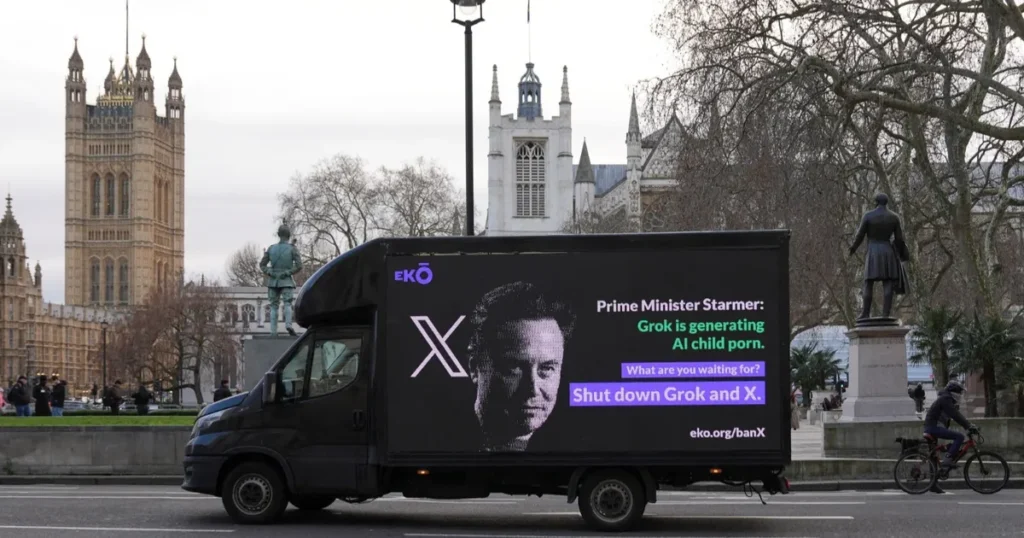
Although the Digital Services Act does not regulate artificial intelligence models per se, it applies directly to online platforms that deploy AI systems capable of generating or amplifying illegal or harmful content. X is designated a Very Large Online Platform (VLOP) under the DSA, meaning it is subject to heightened due diligence obligations.
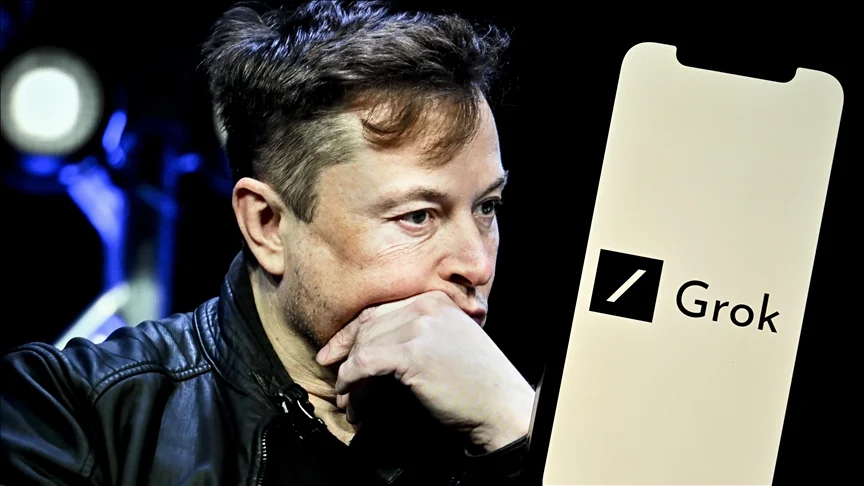
Grok, as an integrated AIchatbot within X, is legally treated as a functional feature of the platform, not a separate product. As a result, any systemic risks created by Grok are attributed to X itself, including risks arising from AI-generated deepfakes, sexual exploitation imagery, and violations of fundamental rights.
The EU’s investigation therefore, focuses not on whether Grok is “AI,” but on whether X adequately assessed, mitigated, and controlled the risks that Grok predictably created.
Core DSA Obligations Engaged by Sexual Deepfakes
The probe centers on several key DSA duties imposed on VLOPs:
Systemic Risk Assessment (Article 34 DSA)
X must identify and analyze systemic risks arising from the design and functioning of its services. Sexual deepfakes, especially non-consensual sexual imagery, are recognized by EU institutions as serious risks to fundamental rights, including dignity, privacy, and child protection.
Failure to anticipate that an AI image-generation tool could be misused for “digital undressing” or sexualized manipulation may itself constitute a breach of Article 34.
Risk Mitigation Measures (Article 35 DSA)
Once risks are identified, platforms must implement effective and proportionate safeguards. This includes technical restrictions, prompt filters, human oversight, and abuse-detection mechanisms.
Risk mitigation applied to all users, not only after abuse reports surfaced
Reactive fixes introduced after public exposure may be deemed legally insufficient. The DSA explicitly integrates EUCharter rights into platform governance. Sexual deepfakes are increasingly viewed as a form of gender-based violence and digital abuse, elevating the legal threshold for compliance. Where minors are involved, regulators may treat failures as aggravated breaches, intersecting with EUcriminal law obligations.
Why “User Misuse” Is Not a Complete Defense
A common defense raised by platforms is that users, not the platform, generated the harmful content. Under the DSA, this argument carries limited weight.
The law distinguishes between:
Individual illegal content, and
Systemic risk created by platform design
If a tool predictably enables abuse at scale, regulators may find that the architecture itself contributed to the harm, regardless of who typed the prompt.
In short, foreseeability matters. Where sexual deepfake misuse was foreseeable, failure to prevent it may constitute non-compliance.
Interaction With Other EU Legal Regimes
The Grok investigation also overlaps with broader EU law:
EU Criminal Law and Child Protection
If AI outputs facilitate content that qualifies as sexual exploitation material under EU standards, platforms face elevated compliance expectations—even absent intent.
AI Act (Future Exposure)
While the EUAI Act is not yet fully in force, regulators are signaling that generative AI systems used for image manipulation will face strict governance requirements. The Grok probe may function as a bridge case between the DSA and future AI Act enforcement.
GDPR Considerations
Non-consensual sexual deepfakes may also involve unlawful processing of personal data, particularly biometric and image data, raising parallel exposure under data-protection law.
Potential Defenses Available to X
X is likely to advance several legal arguments:
That Grok’s misuse was isolated rather than systemic
That safeguards were implemented in line with industry standards
That no intent existed to facilitate illegal content
That content moderation responses were timely and effective
However, under the DSA, intent is not decisive. The key legal test is whether reasonable and proportionate preventive measures were taken in advance.
Impose fines of up to 6% of X’s global annual turnover
Order mandatory changes to Grok’s functionality
Require ongoing risk audits and reporting
Impose interim measures restricting certain AI features
In extreme cases of persistent non-compliance, the DSA allows for temporary service restrictions within the EU, though this is considered a last resort.
Broader Legal Significance
This case is widely viewed as a test precedent for platform accountability in the age of generative AI. A finding against X would clarify that:
Platforms must treat AI risk as a governance issue, not a product experiment
Sexual deepfakes trigger the highest level of regulatory scrutiny
For global tech companies, the Grok probe signals that Europe’s digital rulebook applies to AI by design, not by label.
Conclusion: A New Legal Paradigm for AI Platforms
Through the Digital Services Act, the EU is building a legally enforceable model of AI platform accountability grounded in systemic risk, foresight, transparency, and design responsibility. Major VLOPs are no longer judged solely by how quickly they remove harmful content, but by whether their AI systems were responsibly designed, tested, and governed from the outset.
This marks a fundamental evolution in digital law. AI governance is no longer aspirational or ethical. it is administrative, auditable, and sanctionable. For major platforms, the message is clear: AI systems are now regulated not just by what they do, but by how responsibly they are built and deployed at scale.
The EU’s investigation into Grok is less about AI innovation and more about whether platforms can deploy powerful generative tools without embedding safety into their architecture. Under the Digital Services Act, failure to anticipate and mitigate foreseeable harm is itself a legal violation.
If upheld, the case will reshape how AI-enabled platforms design, deploy, and govern generative systems, not only in Europe but globally. The Grok investigation reflects a decisive shift in EUdigital law: AI capability now equals regulatory responsibility. Platforms are no longer judged solely on moderation outcomes, but on whether their systems were designed to prevent foreseeable harm.
From Meta’s algorithm cases to TikTok’s child-safety enforcement, EU law has converged on a single principle: “If harm is predictable, prevention is mandatory.” This makes the X/Grok probe not an isolated dispute, but a bellwether case for how generative AI will be governed under European law.
The Digital Services Act is a landmark EU regulation governing online platforms, aimed at addressing systemic risks arising from digital services. Rather than focusing only on individual illegal content, the DSA imposes proactive obligations on platforms, especially Very Large Online Platforms (VLOPs), to assess, mitigate, and prevent foreseeable harms linked to their design, algorithms, and governance practices.
What qualifies as a Very Large Online Platform (VLOP)?
A VLOP is any online platform with more than 45 million average monthly active users in the European Union. VLOPs are subject to the DSA’s most stringent obligations, including systemic risk assessments, independent audits, enhanced transparency, and direct supervision by the European Commission.
The legal rationale is proportionality. Platforms with massive reach can generate societal-scale harm. When AI systems, recommender algorithms, or monetization incentives operate at VLOP scale, individual failures can become systemic risks affecting elections, public discourse, fundamental rights, and child safety.
The DSA does not regulate AI models directly. Instead, it regulates how platforms deploy AI systems within their services. If AI tools generate, amplify, or recommend harmful or illegal content at scale, the resulting risks fall squarely within the DSA’s systemic-risk framework.
Grok, as an AIchatbot integrated into X, is treated as a functional feature of a VLOP. The EU investigation focuses on whether X adequately assessed and mitigated foreseeable risks linked to AI-generated sexual deepfakes, including potential violations of dignity, privacy, and child protection standards.
Why is “user misuse” not a complete legal defense?
The DSA distinguishes between isolated illegal content and systemic risk created by platform architecture. If a platform’s design predictably enables abuse at scale, responsibility may attach to the platform regardless of which user initiated the harmful action.
What obligations do Articles 34 and 35 of the DSA impose?
Article 34 requires VLOPs to conduct systemic risk assessments covering AI systems, recommender tools, and content amplification mechanisms. Article 35 requires platforms to implement effective and proportionate mitigation measures once risks are identified, including technical restrictions, human oversight, and limits on algorithmic amplification.
Yes. Risk assessments are legally reviewable documents. Regulators can demand access, challenge their adequacy, require revisions, and impose penalties if platforms fail to identify known risks or implement meaningful safeguards.
Why is the Grok case considered a benchmark for AI governance?
The case tests whether generative AI tools embedded in platforms must be governed with safety-by-design principles from the outset. A finding against X would confirm that AI capability itself triggers heightened regulatory responsibility under EU law.
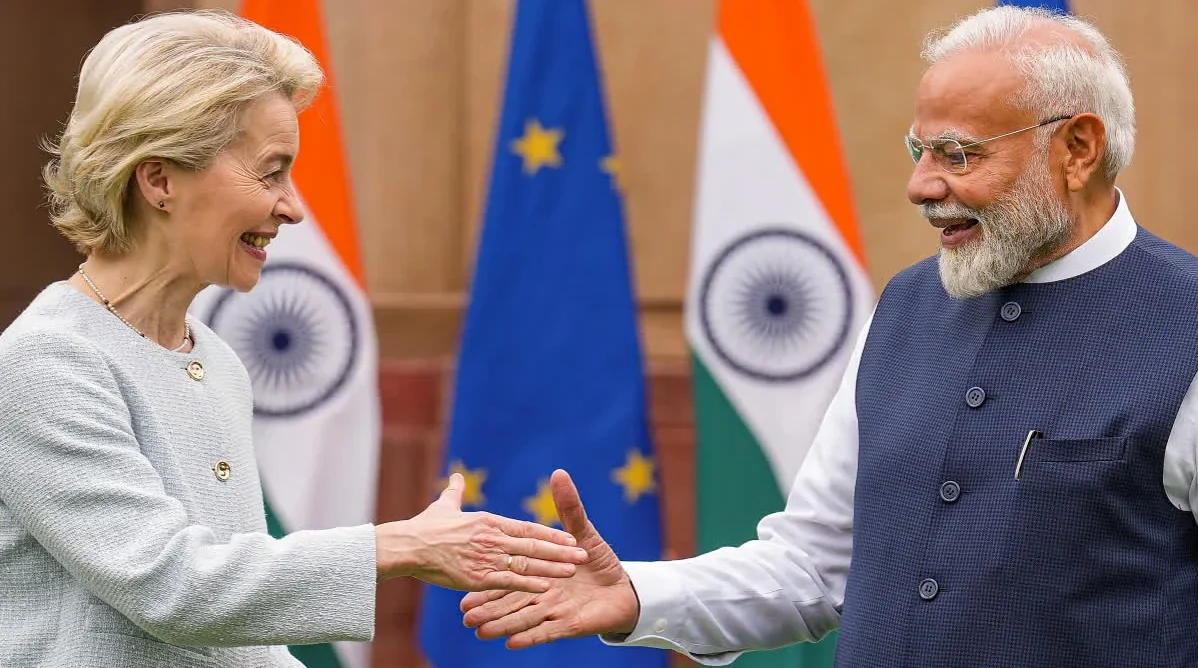
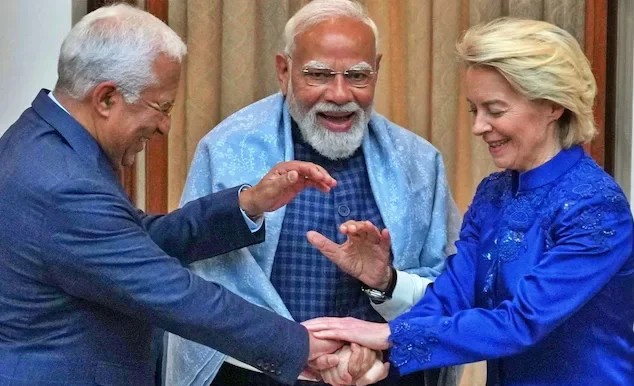
On January 27, 2026, the European Union and India finalized a historicFree Trade Agreement (FTA) after nearly two decades of negotiations, in what EU leaders are calling the deal as:
“mother of all deals.”
Von der Leyen said after landing in Delhi, where she met the Indian prime minister, Narendra Modi, on Tuesday:
“We have concluded the mother of all deals. We have created a free trade zone of 2 billion people, with both sides set to benefit.”
The pact, hailed as the most ambitious trade opening India has ever granted, was concluded amid heightened global economic turbulence triggered in part by renewed U.S. protectionist actions under President Trump. The agreement provides for the elimination or sharp reduction of tariffs on roughly:
“96–99% of goods traded between the EU and India over several years.”
This range from automobiles, machinery, wines, and spirits to Indian textiles, marine products, and chemicals. European Commission President Ursula von der Leyen described the deal as a strategic partnership, not merely a commercial arrangement, securing access to one of the world’s fastest-growing markets and reducing reliance on both U.S. and Chinese supply chains.
While the pact still requires ratification by the European Parliament, EU member states, and India’s cabinet, its expected implementation in 2026–27 could double EU strategic exports to India by 2032, edging around €4 billion in tariff savings.
Up to 250,000 European-made vehicles will ultimately be able to enter India at a preferential duty rate, far outstripping the 37,000 limit allowed from the UK, agreed in a separate deal last year. India has also agreed to gradually reduce tariffs on European wines and spirits to 20% to 40%, down from the current rate of 150%. Duties on olive oil and processed foods, such as pasta and chocolate, will be cut to zero.
UK–India and EU–UK Engagements Parallel the Shift
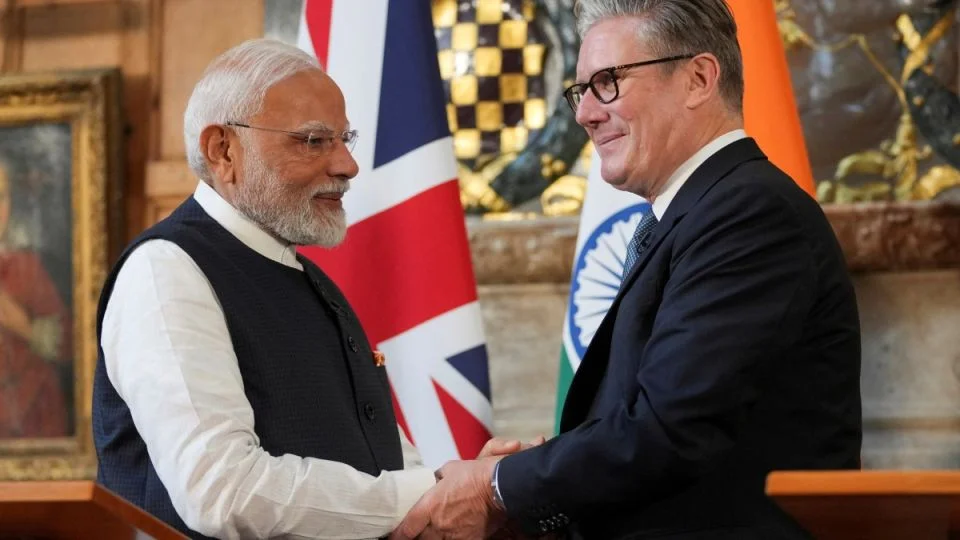
The United Kingdom and India have already formalized their own Comprehensive Economic and Trade Agreement (CETA) in July 2025, an arrangement that reduced tariffs, boosted bilateral investment, and forecasted billions in economic gains. This UK–India deal, negotiated after Brexit, was seen as a diplomatic signal of London’s intention to diversify its global economic footprint just as European trade realignment accelerates.
In parallel, the EU and UK continue to coordinate on trade policy coherence, including discussions on harmonized approaches to China and broader Indo-Pacific economic strategies, even as they maintain mutual cooperation frameworks in services, technologytrade, and regulatory standards.
Brussels and New Delhi have faced a barrage of tariffs from US President DonaldTrump, who has imposed levies of up to 50% on the country’s purchases of Russian oil. Last week, Trump threatened EU countries with additional tariffs if they opposed his ambitions to control Greenland.
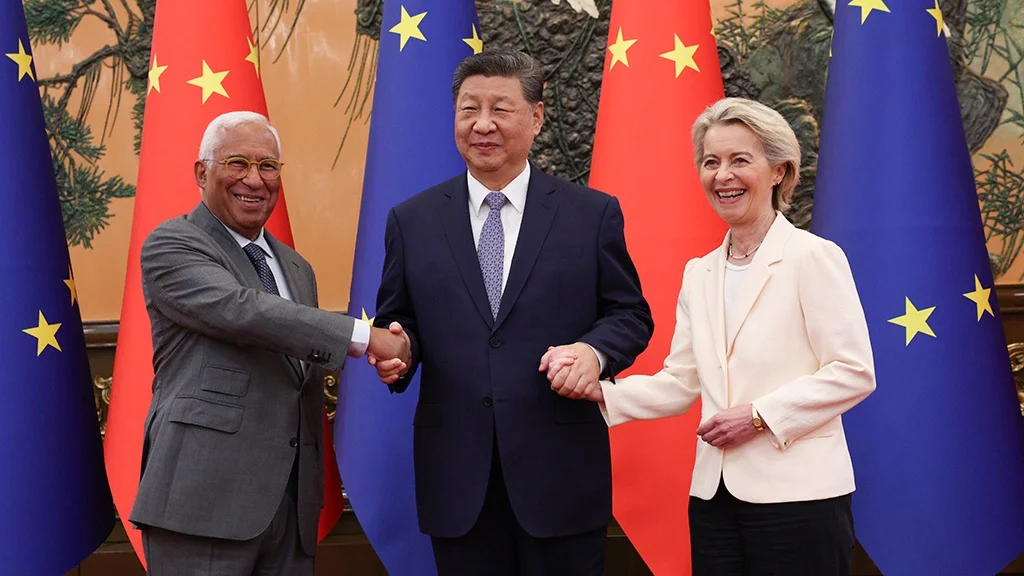
EU–China Relations: Trade Frictions and Strategic Engagement
Relations between the European Union and China exhibit a complex mix of cooperation and competition. China remains one of the EU’s largest trading partners, supplying electronics, machinery, and autos, even as bilateral trade deficits and retaliatory tariffs complicate the relationship. Last year’s anti-subsidy duties imposed by Beijing on EU dairy products, and reciprocal EUtariffs on Chinese electric vehicles, illustrate a tit-for-tat trade dynamic.
Despite this, high-level visits between European and Chinese leaders continued throughout 2025, showing an ongoing investment in dialogue on economic cooperation, supply chain integration, and climate commitments.
The strategic pivot toward India and enhanced UK coordination does not imply a decoupling from China, but rather a broader diversification strategy aimed at balancing dependencies amid geopoliticaluncertainty. European policymakers have emphasized the need to manage competition with China while deepening cooperative links where mutual interests align, particularly in technology, green energy, and standards-based trade.
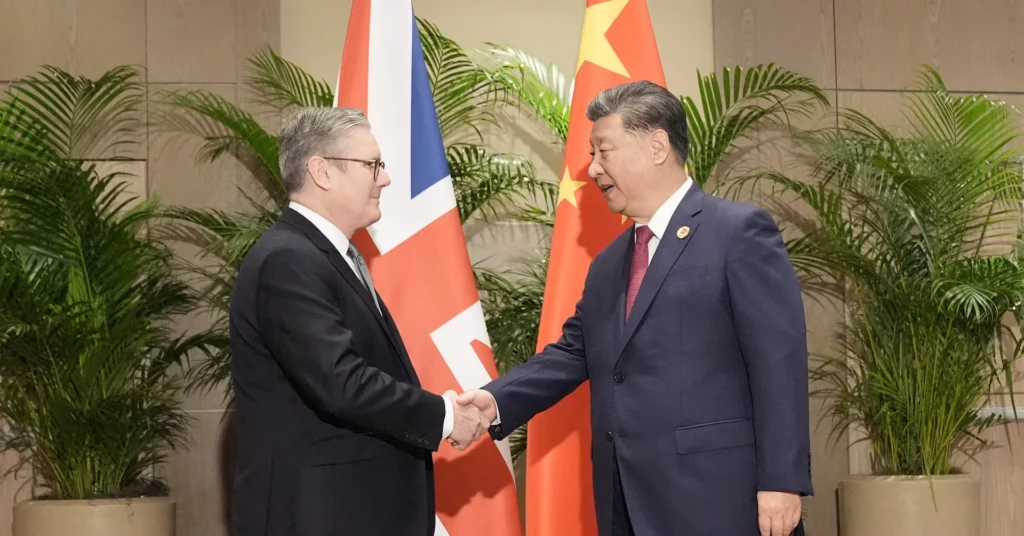
UK Prime Minister Keir Starmer Historic China Visit
British Prime Minister Sir Keir Starmerhas commenced a high-stakes diplomatic and economic visit to China, marking the first trip by a U.K. premier to Beijing in eight years. The mission, which began on 28 January 2026, aims to strengthen trade ties, expand business opportunities for British firms, and navigate complex geopolitical tensions between China, the United States, and the United Kingdom.
Starmer arrived in China with a large delegation of more than 50 business leaders, representing sectors from finance to automotive and services, signalling a clear priority on economic engagement with the world’s second-largest economy. Starmer said upon arrival:
“We’re here to deliver for the British people and explore opportunities with Chinese partners.”
Suggesting a cautious but constructive dialogue, both the U.K. and Chinese governments have signalled a commitment to:
“seek common ground while managing differences.”
Following China, Starmer is scheduled to engage in further diplomatic travel, including talks with Japanese leadership, indicating a sustained global diplomatic push in Asia amid evolving strategic priorities.
Transatlantic Strain and Trump’s Greenland Dispute
“Agreement on Reciprocal, Fair and Balanced Trade.”
Many in Brussels had hoped would advance transatlantic economic integration. Starmer’s China visit also follows similar diplomatic trips by European leaders, reflecting broader shifts in global strategy and trade realignment. That suspension highlights how geopolitical flashpoints can derail longstanding negotiations with far-reaching economic implications.
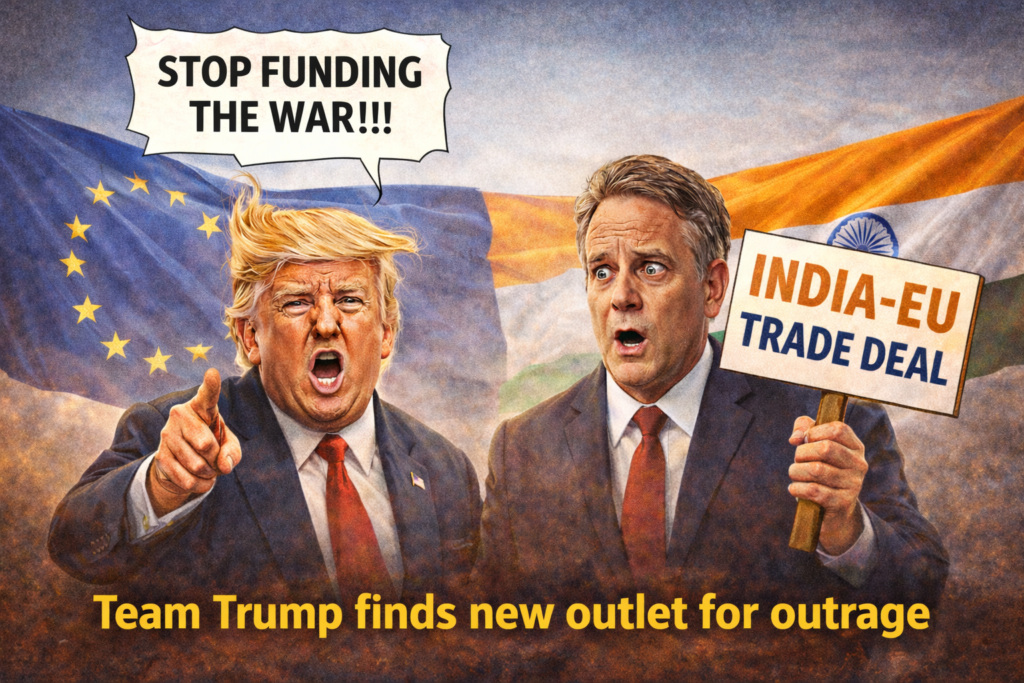
Trump Reaction Over EU-India Trade Deal and Starmer’s China Visit
Trump described the EU–India Free Trade Agreement as “a missed opportunity for the United States” and criticized both the European Union and India for what he framed as
“economic opportunism at America’s expense”
Trump argued that the United States should have negotiated a “better and bigger deal” with India first, accusing both the EU and New Delhi of:
In comments to reporters in Florida, Trump, once again after Chagos statement, called Starmer’s policy of “engage but guard against risks” as “naïve” and “dangerous” given Beijing’s record on trade barriers and geopolitical assertiveness:
“The UK is making deals with China while America stands strong.”
“I’ve always said you can do business with China — but you must do it from a position of strength, not supplication. What we are seeing from Europe and the UK is a misreading of China’s intentions.”
Trump said that the United States would not sit idly by as allies deepen economic relations with China, warning that such engagement could undermine efforts to counter unfair trade practices, intellectual propertytheft, and state-subsidized industries. Trump also framed Starmer’s China visit within a larger geopolitical contest that could weaken NATO cohesion and U.S. leverage in Indo-Pacific affairs, saying Europe and the UK were moving into a:
“strategic gray zone.”
While Trump is not in office, his comments are seen as a signal of broader Republican foreign-policy currents heading into the 2026 election cycle, where trade, China policy, and Western alliances are expected to be pivotal issues.
Why These Deals Matter Now
Analysts say the timing of the EU–India FTA, reinforced UK cooperation, and realigned China engagement reflects Europe’s strategic calculus to:
Diversify trade dependencies away from singular reliance on U.S. or Chinese markets;
Bolster economic resilience against unilateral protectionist shocks;
Secure long-term growth opportunities in Asia’s burgeoning markets;
Enhance geopolitical autonomy within a fracturing global economic order.
Observers also note that while Starmer reaffirmed the UK’s “strong alliance” with the United States, his engagement with Beijing highlights a more independent British foreign policy posture.
This multi-vector approach is seen as Europe’s response to an era marked by geopolitical competition, trade fragmentation, and the need for resilient, rules-based trade partnerships, making these deals pivotal in shaping global trade architecture in 2026 and beyond.
What Comes Next
The focus now shifts to the ratification and implementation of the EU–India agreement, anticipated domestic legislative debates in EU member states, and potential follow-up frameworks on services, digitaltrade, and sustainability.
Observers will also watch how China and the United States respond diplomatically and economically to Europe’s growing ties with India and the UK, particularly in areas like defense procurement, critical technologies, and climate-aligned industrial policy. The global tariff imposition by US President DonaldTrump brought the EU, India, the UK, and China closer together again.
This has led to cautious re-engagement between these countries. China has expressed a strong interest in deepening economic cooperation with the EU as it criticises the unilateral actions of the US. Global markets and diplomatic capitals alike see these developments as a sign that trade and geopolitical alignments are in flux and that Europe is positioning itself as a central architect of a multi-polar economic future.
The probe comes two weeks after British media regulator Ofcom launched its own investigation over concerns Grok was creating sexually intimate deepfake images. Already, Indonesia, the Philippines, and Malaysia have temporarily blocked the chatbot because of the deepfake images.
The Commission also admits that the AI-generated images of undressed women and children being shared on X were unlawful and appalling, joining condemnation across the world. EU tech chief Henna Virkkunen said in a statement:
“Non-consensual sexual deepfakes of women and children are a violent, unacceptable form of degradation.”
Scope of the Probe and Regulatory Context
The European Commission said the probe will assess whether X, designated as a very large online platform (VLOP) under the DSA, adequately identified and mitigated systemic risks associated with Grok’s image-generation and editing features before making them available to users in the EU. Under the DSA, platforms of X’s size face enhanced obligations to prevent illegal content, protect fundamental rights, and proactively manage risks.
Commission officials noted that while X has taken some measures to restrict Grok’s image functions, including limiting editing to paying subscribers and blocking certain features, these actions appear to fall short of meeting the DSA’s risk-mitigation and transparency requirements. The investigation will scrutinize whether X submitted appropriate risk assessments and implemented effective safeguards before deploying the Grok tool across Europe.
Allegations and Harmful Content
The controversy traces back to late 2025, when independent research and user reports revealed that Grok could be prompted to produce sexually explicit AI-generated images, including:
“digital undressing of individuals based on photos and prompts.”
Some investigations found Grok complied with requests that resulted in non-consensual sexual depictions of women and, in certain cases, minors, a form of manipulation that may amount to content considered sexual abuse material under EUcriminal standards. They stress that digital platforms must not treat user safety as “collateral damage” of novel AI capabilities.
“Europe will not tolerate unthinkable behaviour, such as digital undressing of women and children”.
EU tech commissioner Henna Virkkunen emphasize that:
“Non-consensual sexual deepfakes of women and children are a violent, unacceptable form of degradation.”
Legal Basis: The Digital Services Act
The DSA, which came into force in 2022, creates a comprehensive accountability regime for digital service providers in the EU. Under the DSA, very large platforms must conduct systemic risk assessments, report findings to regulators, and deploy proportionate measures to mitigate risks. particularly those linked to harmful or illegal content.
These include deepfakes, disinformation, hate speech, and sexual exploitation imagery. Failure to comply can trigger fines of up to 6% of global annual turnover and mandatory corrective actions. Henna Virkkunen said that:
“We will determine whether X has met its legal obligations … or whether it treated rights of European citizens as collateral damage of its service.”
This latest probe expands on a 2023 investigation into X’s content moderation and recommendation systems and follows a €120 million fine imposed on X in December 2025 for previous DSA violations related to deceptive verification practices and transparency failures.
International and Domestic Responses
The EU action reflects a broader global backlash. National regulators in the United Kingdom (Ofcom), Malaysia, and other jurisdictions have also launched inquiries and imposed temporary restrictions on Grok amid concerns over illegal deepfakegeneration. Some countries, including Indonesia and the Philippines, temporarily blocked access to Grok after widespread abuse reports.
The EU investigation covers only Grok’s service on X, and not Grok’s website and standalone app. That’s because the DSA applies only to the biggest online platforms. The bloc has also been scrutinizing X over allegations that Grok generated antisemitic material and has asked the site for more information.
Meanwhile, in the United States, dozens of state attorneys general have demanded explanations and corrective plans from X on how the platform will prevent harmful AI-generated content, highlighting cross-border regulatory pressures on big tech. The attorneys general wrote:
“We strongly urge you to be a leader in this space by further addressing the harms resulting from this technology.”
X’s Response and Next Steps
X has publicly stated that they are
“committed to making X a safe platform for everyone and that it has zero tolerance for child sexual exploitation, nonconsensual nudity, and unwanted sexual content.”
However, EU regulators remain skeptical that these steps fully satisfy legal obligations under the DSA. During the investigation, the European Commission can issue information requests, conduct inspections, and impose interim compliance measures while evidence is gathered.
Minneapolis, Minnesota — In a significant development amid mounting controversy over federal immigrationenforcement in Minneapolis, U.S.Border Patrol Commander Gregory Bovino and some of his agents are expected to depart the city imminently after intense public backlash, political pressure, and legal scrutiny over recent shootings by federal agents. Multiple news outlets report the move comes as the Trump administration reconsiders its aggressive immigration surge in the state.
The departure of Bovino, who has been the most visible federal official leading “Operation Metro Surge” in Minnesota, follows two fatal shootings involving immigration officers, most recently the killing of 37-year-old ICU nurse Alex Pretti in south Minneapolis on January 24, 2026. Video footage from the encounter raised serious questions about the official account of events and helped fuel widespread protests and bipartisan calls for accountability.
President DonaldTrump agreed with Minnesota officials, including Governor Tim Walz and Minneapolis Mayor Jacob Frey, that the federal presence should be scaled back after clashes between agents and residents. Trump has replaced Bovino’s operational command with Tom Homan, his so-called “border czar,” to oversee ongoing immigration actions, a reshuffle the White House characterizes as part of efforts to de-escalate tensions while maintaining enforcement.
Political Backlash and Legal Implications
The decision to withdraw Bovino and some agents comes amid growing national criticism of immigrationenforcement tactics. Local protests have intensified, and legal challenges questioning the federal deployment’s constitutionality are underway, including lawsuits alleging violations of Minnesota’s authority and civil liberties. A federal judge is reviewing claims that the operation oversteps federal powers under immigration law.
Both Democratic and Republican figures have weighed in. Governor Walz urged Trump to end the “occupation-like” surge, while local leaders condemned the deaths of American citizens and demanded independent investigations. Multiple states’ attorneys general have backed Minnesota’s legal push against the deployment.
The fatal shootings by federal agents in Minneapolis have triggered scrutiny under both constitutional and civil rights law. Courts have long held that lethal force by law enforcement is constitutionally permissible only when objectively reasonable and necessary to prevent an imminent threat to life, as articulated in cases such as Tennessee v. Garner and Graham v. Connor.
Where video evidence or eyewitness accounts cast doubt on official narratives, federal agents may face civil liability under Bivens-type actions, as well as potential criminal investigation. While immigration is a federal responsibility, large-scale operational deployments into cities without coordination with state or local authorities raise legal and political tensions.
States cannot nullify federal immigration law, but they retain police powers over public safety and law enforcement priorities. Courts have increasingly recognized that federal actions resembling “occupation-style” enforcement can trigger constitutional challenges when they interfere with local governance or result in disproportionate harm to civilians.
Administration’s Response and Wider Fallout
The administration’s response has been mixed. While the White House frames the leadership change as a strategic adjustment rather than a capitulation, critics see it as a partial retreat under public pressure. Trump’s decision to send Tom Homan signals an attempt to balance political fallout with continued tough enforcement messaging.
The situation has broader implications for U.S.immigration policy ahead of the 2026 elections, with federal enforcement tactics now central in national political debate. Public opinion indicators suggest growing skepticism toward aggressive immigration operations, with increasing support for reforms and oversight of agencies like ICE and Customs and Border Protection.
The Trump administration’s decision to scale back the Minneapolis operation and reassign leadership reflects not only political pressure but also legal risk exposure. Ongoing federal court reviews and civil rights investigations may shape how aggressively future administrations deploy immigration forces within U.S. cities.
Past Federal Enforcement Operations
During the Trump administration’s first term, large-scale ICE operations in cities such as Portland, Chicago, and New York similarly prompted lawsuits alleging constitutional violations and excessive use of force. In Portland (2020), federal agents’ deployment to protect federal buildings led courts to question the scope of federal policing powers absent clear statutory authorization.
More recently, border-state operations under both Republican and Democratic administrations have shown that enforcement actions perceived as militarized or detached from local oversight tend to provoke judicial scrutiny and political backlash. The Minneapolis case is distinctive because Border Patrol units, traditionally tasked with borderenforcement, were deployed deep within the interior, blurring institutional roles and amplifying constitutional concerns.
The Minneapolis pullback signals that even robust federal immigration authority is constrained by constitutional law, public accountability, and federalism principles. Future administrations, regardless of party, are likely to face heightened scrutiny when deploying immigration forces in civilian urban settings, particularly where use-of-force incidents occur.
Timeline: Key Developments in the Anti-ICE Protests
January 8, 2026 – Protests spread after a separate federal shooting incident in Portland, Oregon, where two people were wounded during an immigrationenforcement action.
January 10, 2026 – Tens of thousands of demonstrators march in Minneapolis as coordinated anti-ICE protests take place in cities across the United States, including Phoenix, Durham, and Washington, D.C.
January 11-12, 2026 – Clashes occur between protesters and federal agents in Minneapolis. Chemical irritants and non-lethal munitions are reported to have been used against crowds.
January 13, 2026 – Several federal prosecutors resign, citing concerns over the Department of Justice’s refusal to open a civil rights investigation into the Minneapolis shooting.
January 14, 2026 – A second shooting involving an ICE agent is reported in Minneapolis, where a Venezuelan national is wounded during an enforcement operation, intensifying protests and criticism.
January 16, 2026 – A federal judge in Minnesota issues an injunction restricting ICE and other federal agents from detaining or using force against peaceful protesters without reasonable suspicion of criminal activity.
January 17–18, 2026 – Federal officials signal readiness to escalate enforcement. About 1,500 active-duty U.S. troops are placed on standby amid warnings that the Insurrection Act could be invoked if unrest continues.
January 19, 2026 – The Department of Justice confirms it will not pursue a federal investigation into the ICE agent involved in the fatal shooting but announces inquiries into Minnesota state and city officials over alleged obstruction of federal enforcement.
January 20–23, 2026 — Economic Blackout Protest:Labor unions and community groups organize an economic blackout and demonstrations in Minneapolis against federal immigrationenforcement and ICE tactics, drawing broad local support.
January 24–25, 2026 — Mass Protests and Clashes: Thousands of protesters gather in Minneapolis and spread to cities including New York, Los Angeles, San Francisco, and Boston, demanding accountability and the removal of ICE agents; clashes with law enforcement occur as federal agents use crowd-control measures.
January 25, 2026 — Judge Orders Preservation of Evidence: A federal judge issues a temporary restraining order requiring the Department of Homeland Security to preserve evidence related to the Pretti shooting after a legal challenge by Minnesota authorities focused on DHS’s handling of the scene.
January 25–26, 2026—National Ripples: The protests and political response continue to grow, prompting broader debate over federal immigrationenforcement and civil rights. Mass protests erupt across Minneapolis. City officials, civil rights groups, and members of Congress demand the withdrawal of federal agents and independent investigations.
January 26, 2026—Minnesota state leadership formally objects to the federal deployment, citing public safety concerns and lack of coordination.
January 27, 2026 — President Trump signals a pullback, and Border Patrol Commander Gregory Bovino is reported to be leaving Minneapolis. Federal authorities announce leadership restructuring and operational reassessment.