Saturday, October 24, 2026
Home Blog Page 6

Rule of Law and Due Process: The Complete Guide to Fair Justice and Legal Protection in 2026

The rule of law and due process represent foundational pillars of democratic governance and individual liberty. These interrelated principles ensure that governmental power operates through established legal procedures rather than arbitrary discretion, that all persons receive equal treatment under law, and that fundamental fairness guides legal proceedings affecting life, liberty, and property.

rule_of_law

This guide provides a detailed examination of the rule of law and due process in 2026, including their legal foundations, international standards, institutional enforcement mechanisms, contemporary challenges, and future trajectory.

Why Rule of Law and Due Process Matter in 2026

In 2026, the concepts of rule of law and due process stand at the center of global legal and political debates. From digital surveillance and national security laws to political prosecutions and international sanctions, legal systems worldwide are being tested on whether they can ensure fairness, accountability, and equal protection under law. The rule of law is no longer viewed merely as a constitutional principle; it is increasingly seen as a foundational requirement for democratic governance, economic stability, and international legitimacy.

As authoritarian trends threaten legal systems worldwide and debates intensify over criminal justice reform, immigration procedures, and administrative accountability in 2026, understanding rule of law frameworks and due process protections has become essential for citizens, legal practitioners, policymakers, and human rights advocates globally.

Due process serves as the operational core of the rule of law. It ensures that state power is exercised according to established legal procedures, that individuals are treated fairly by courts and authorities, and that no one is deprived of life, liberty, or property without lawful justification. Together, rule of law and due process form the backbone of modern legal systems and remain essential safeguards against arbitrary state action.

Understanding the Rule of Law: Core Principles

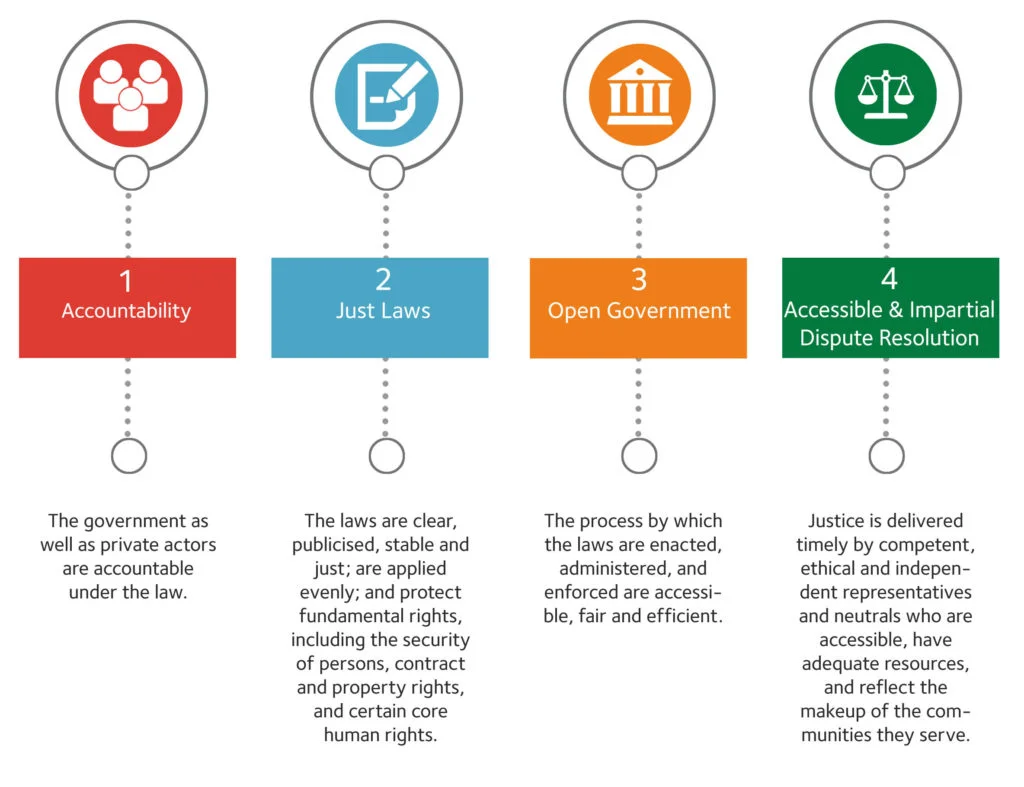
The rule of law means that law governs society rather than the arbitrary decisions of individual rulers. The World Justice Project defines the rule of law as a system where laws are clear, publicized, stable, just, and applied evenly. Under the rule of law, government and private actors are accountable under the law, laws protect fundamental rights, and justice is delivered by competent, ethical, independent representatives.

Key elements of the rule of law include:

  • Equality before the law
  • Accountability of government and public officials
  • Independent and impartial judiciary
  • Transparent and predictable legal processes
  • Access to justice and legal remedies
  • Protection of fundamental rights

The historical development of the rule of law traces to ancient civilizations, with foundational contributions from Greek philosophy, Roman law, and English common law traditions. The Magna Carta of 1215 established that even kings must obey the law, while the U.S. Constitution embodied the rule of law through written limitations on governmental power, separation of powers, and enumerated rights protections.
rule_of_law

 Source: World Justice Project Rule of Law Framework

The World Justice Project Rule of Law Index 2024 measures rule of law across 142 countries using eight factors: constraints on government powers, absence of corruption, open government, fundamental rights, order and security, regulatory enforcement, civil justice, and criminal justice. The index reveals significant global variation, with Nordic countries consistently ranking highest while authoritarian regimes show systematic rule of law deficits.

Modern rule of law encompasses several essential elements according to United Nations standards. Laws must be publicly promulgated, equally enforced, and independently adjudicated. Legal systems should be consistent with international human rights standards and norms. Rule of law requires supremacy of law over arbitrary power, equality before the law without discrimination, accountability to law for all persons and institutions, fairness in application and enforcement, separation of powers, participation in decision-making, legal certainty avoiding arbitrary decisions, and procedural and legal transparency.

The International Bar Association emphasizes that the rule of law differs fundamentally from “rule by law,” where law serves merely as an instrument of governmental power. The rule of law constrains the government itself, requiring authorities to justify actions by reference to legal authorization and subject decisions to independent review. This distinction separates democratic governance from authoritarian systems that maintain extensive legal codes but lack genuine legal constraints on power.

According to Lord Bingham:

“The rule of law is more than the blind application of rigid rules; it demands fairness, equity, and justice.”

Due Process: Constitutional Guarantees of Fair Treatment

Due process refers to the legal requirement that governments must respect all legal rights owed to individuals. It ensures that legal proceedings are conducted fairly and that individuals are given notice and an opportunity to be heard before adverse actions are taken. Due process ensures the government cannot deprive persons of life, liberty, or property without fair procedures and adequate legal justification.

The Fifth Amendment to the U.S. Constitution prohibits the federal government from depriving persons of life, liberty, or property without due process of law, while the Fourteenth Amendment extends this protection against state governments. Due process contains two distinct components with different requirements. Procedural due process requires fair procedures before governmental deprivation of protected interests. Substantive due process protects certain fundamental rights from governmental interference regardless of procedures used.

The Supreme Court of the United States has developed extensive jurisprudence defining both aspects through landmark cases spanning two centuries. Procedural due process mandates notice and opportunity to be heard before governmental action affecting protected interests. The Supreme Court in Mathews v. Eldridge established a three-factor test balancing the private interest affected, risk of erroneous deprivation through procedures used, probable value of additional safeguards, and the government’s interest, including administrative and fiscal burdens.

This flexible framework requires more extensive procedures for severe deprivations like criminal punishment or parental rights termination than for minor administrative matters. Essential procedural protections include adequate notice specifying charges or grounds for action, a neutral decision-maker free from bias, opportunity to present evidence and arguments, the right to counsel in certain proceedings, a reasoned decision based on evidence, and appellate review of adverse decisions.
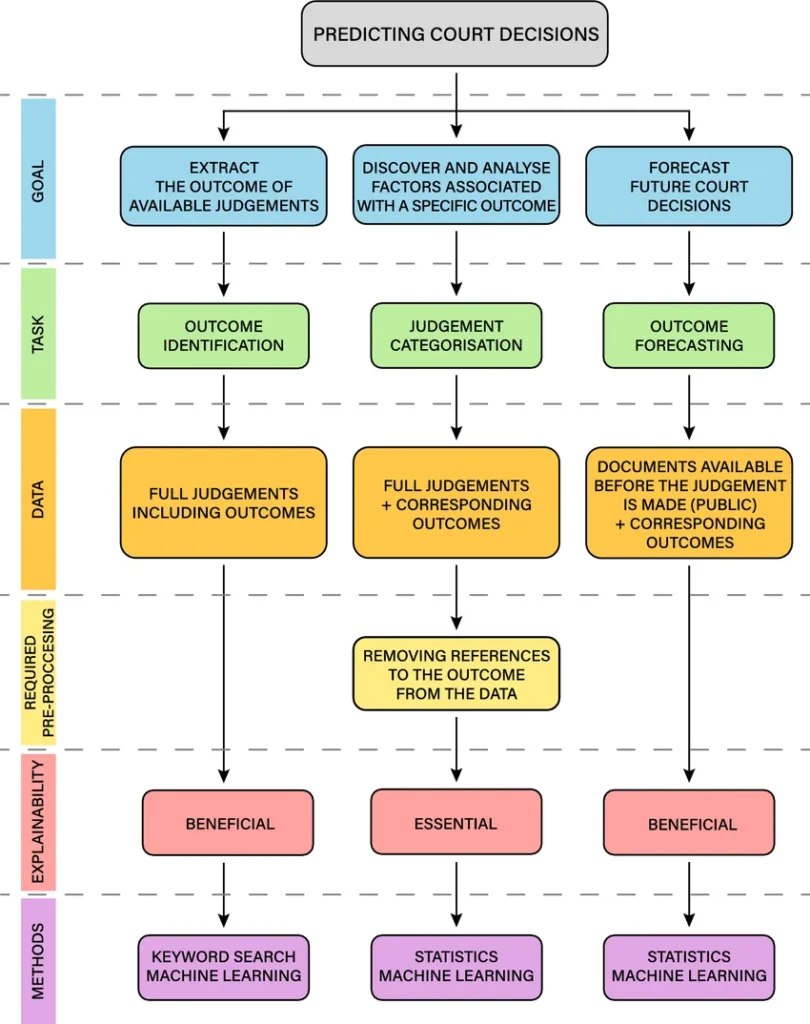
 Source: U.S. Courts Educational Resources

The American Bar Association emphasizes that:

“specific procedures required depend on context, with criminal proceedings demanding the most rigorous protections.”

Substantive due process protects fundamental rights from unjustified governmental interference ,even with perfect procedures. The Supreme Court has recognized various unenumerated fundamental rights ,including privacy, marriage, family relationships, and personal autonomy. Governmental restrictions on fundamental rights receive strict scrutiny, requiring compelling governmental interests and narrowly tailored means. Non-fundamental rights face only rational basis review, requiring reasonable relationship to legitimate governmental purposes.

Criminal Justice and Fair Trial Rights

Criminal due process represents the most developed area of procedural protections given the severe consequences of criminal punishment. The U.S. Constitution establishes comprehensive criminal procedure guarantees through the Fourth, Fifth, Sixth, and Eighth Amendments protecting against unreasonable searches, compelled self-incrimination, and cruel punishment while ensuring speedy public trials, impartial juries, confrontation of witnesses, and legal representation.

The presumption of innocence requires prosecution to prove guilt beyond a reasonable doubt, placing the burden entirely on the state rather than requiring defendants to prove innocence. The United Nations Human Rights Committee (UNHRC) emphasizes that the presumption of innocence forms the foundation of fair criminal process, requiring that doubt benefits defendants and that pre-trial detention and treatment respect this fundamental principle.
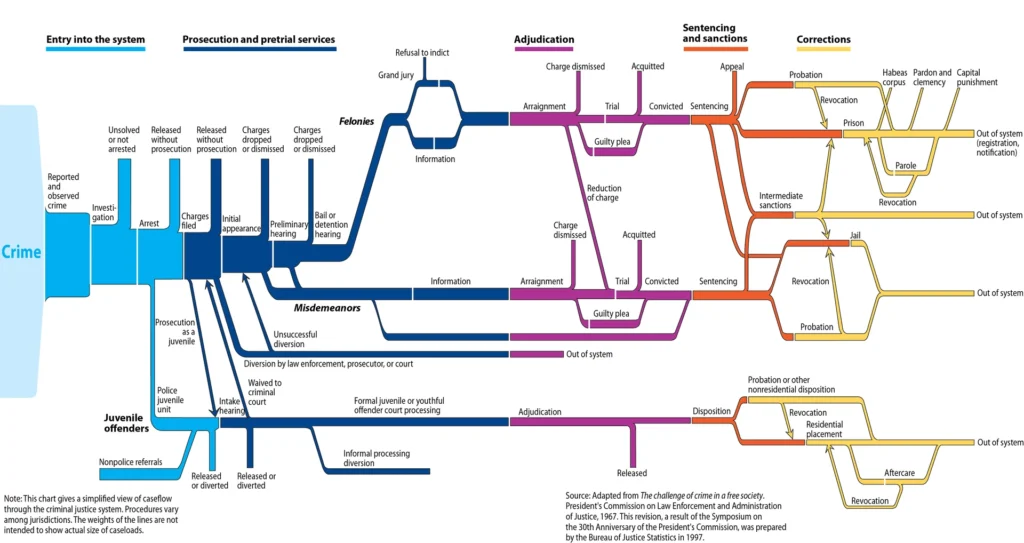
CJS_flowchart

Source: Sequence of Events in the Criminal Justice System

Civil Justice and Access to Courts

Civil due process protects property and liberty interests outside the criminal context through fair procedures in civil litigation, administrative proceedings, and governmental decision-making. The Supreme Court requires procedural protections when government deprives individuals of protected interests, though specific procedures vary based on the Mathews v. Eldridge balancing test.

Access to justice ensures individuals can vindicate their rights through legal proceedings. The Legal Services Corporation provides civil legal assistance to low-income Americans, though funding limitations leave most civil legal needs unmet. The American Bar Association documents the “justice gap” where millions lack representation in civil matters affecting housing, family, income, and health.

Alternative dispute resolution mechanisms, including mediation and arbitration, provide less formal processes for resolving disputes. The American Arbitration Association facilitates arbitration across commercial, employment, and consumer contexts. However, mandatory arbitration agreements increasingly prevent individuals from accessing courts, raising due process concerns about forced waiver of judicial remedies. The National Consumer Law Center advocates against forced arbitration that denies consumers and employees their day in court.

Administrative due process governs proceedings before governmental agencies affecting regulated industries, benefit recipients, licensees, and others subject to administrative authority. The Administrative Procedure Act establishes minimum procedural requirements for federal agencies including notice-and-comment rulemaking, formal adjudication procedures when required by statute, and judicial review of final agency actions. State administrative procedure acts provide similar protections at state levels.

Class action litigation enables individuals with small claims to aggregate into collective proceedings, making litigation economically viable and ensuring accountability for widespread harms. The Federal Rules of Civil Procedure Rule 23 governs federal class actions, requiring numerosity, commonality, typicality, and adequate representation. However, the Supreme Court has increasingly restricted class certification, making it harder to bring collective claims against corporations and governments.

International Legal Frameworks Governing Due Process

The Universal Declaration of Human Rights (UDHR) Article 10 establishes that

“everyone is entitled in full equality to a fair and public hearing by an independent and impartial tribunal, in the determination of his rights and obligations and of any criminal charge against him.”

This foundational principle has been elaborated through binding treaties and regional human rights systems.

The International Covenant on Civil and Political Rights (ICCPR) Articles 9-14 establish comprehensive due process and fair trial rights binding 173 states parties. Protections include prohibition of arbitrary arrest and detention, humane treatment of detainees, prompt appearance before judicial authority, trial within a reasonable time or release, presumption of innocence, minimum guarantees for criminal defendants, and prohibition of retroactive criminal laws.

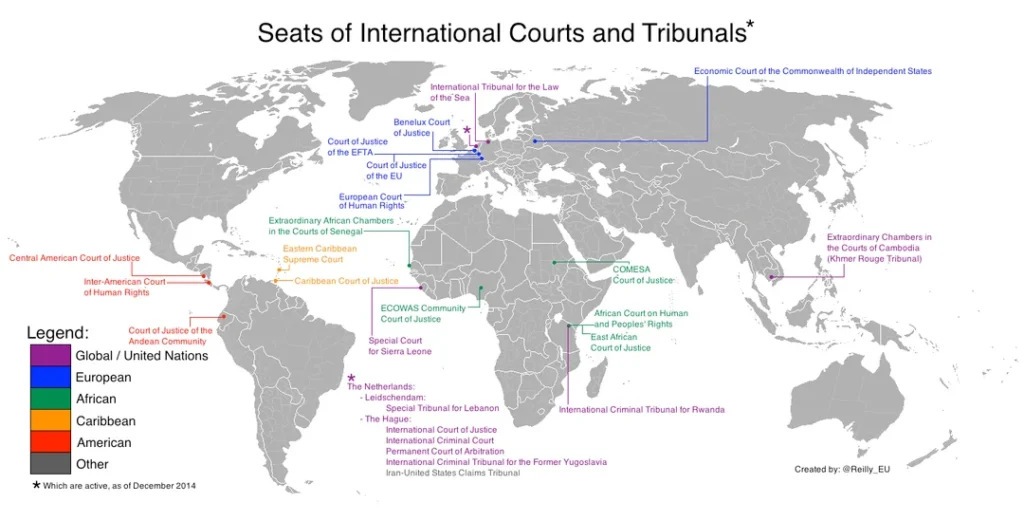
Regional human rights systems provide additional protections enforced through supranational courts. The European Court of Human Rights (ECHR) has issued thousands of judgments interpreting Article 6 fair trial guarantees, developing sophisticated jurisprudence on trial length, legal aid, witness examination, and judicial independence. The Inter-American Court of Human Rights enforces the American Convention guarantees across Latin America, while the African Court on Human and Peoples’ Rights interprets the African Charter protections.

The UN Basic Principles on the Independence of the Judiciary establish standards for judicial independence essential for fair trials. Principles include judicial selection based on integrity and ability, security of tenure, adequate remuneration, and freedom from improper influences. The Venice Commission monitors judicial independence in Council of Europe member states and provides expertise on institutional reforms.

Torture prohibitions receive absolute protection under international law, with no exceptions permitted even during emergencies. The Convention Against Torture prohibits torture and cruel, inhuman, or degrading treatment, requires prosecution or extradition of alleged torturers, and excludes evidence obtained through torture. The Committee Against Torture monitors compliance through state reports and individual complaints.

Judicial Independence and Impartiality

Judicial independence ensures courts can decide cases based on law and facts without improper external influence from other governmental branches, private parties, or public pressure. The American Bar Association identifies judicial independence as essential for the rule of law, requiring structural protections including security of tenure, adequate compensation, transparent appointment processes, and protection against retaliation.

Selection methods significantly affect judicial independence and accountability. Federal judges in the United States receive lifetime appointments after presidential nomination and Senate confirmation, insulating them from political pressure but raising accountability concerns. Many states elect judges, creating democratic accountability but risking politicization and campaign financing influence. Merit selection systems attempt to balance independence and accountability through nonpartisan nominating commissions, though implementation varies.

Judicial ethics rules prohibit conflicts of interest and require recusal when impartiality might reasonably be questioned. The Code of Conduct for United States Judges establishes standards for federal judges, while the American Bar Association Model Code of Judicial Conduct influences state judicial ethics codes. However, Supreme Court justices are not bound by the federal code, creating accountability gaps addressed through proposed reforms.

Court funding affects independence when legislatures or executives can retaliate against unfavorable decisions by reducing budgets or resources. The National Center for State Courts emphasizes that adequate, secure funding independent of case outcomes is essential for judicial independence. Many jurisdictions struggle with underfunded courts, creating access barriers and undermining the quality of justice.

Threats to judicial independence include physical attacks on judges, improper criticism, court-packing schemes, and the removal of judges for politically unpopular decisions. The Brennan Center for Justice documents increasing attacks on judicial legitimacy in the United States and globally, with authoritarian leaders undermining courts that constrain executive power. The The International Association of Judges advocates for judicial independence protections worldwide.

Contemporary Challenges to Rule of Law in 2026

Despite strong legal frameworks, rule of law faces significant challenges worldwide.

Political Interference in Judiciary – In several countries, concerns have emerged over executive influence on judicial appointments and decisions, undermining judicial independence.

National Security and Emergency Powers – Governments increasingly invoke national security to justify surveillance, detention, and restrictions on civil liberties. Balancing security with due process remains a central legal challenge.

Digital Governance and AI – Artificial intelligence in policing, sentencing, and surveillance raises new due process questions. Automated decision-making systems may lack transparency, making it difficult for individuals to challenge outcomes.

Disinformation and Social Media Regulation – Efforts to regulate online content have sparked debates about freedom of expression and procedural fairness, particularly where platforms or states remove content without clear legal processes.

Selective Enforcement of Law – Allegations of politically motivated prosecutions and unequal enforcement of laws undermine public trust in legal systems and challenge rule-of-law legitimacy.

Conclusion

In 2026, the rule of law and due process remain indispensable to democratic governance and human dignity. They provide the legal architecture that restrains power, protects rights, and ensures accountability. While global legal systems face evolving challenges from technological disruption to geopolitical tensions, the fundamental principles of fairness, transparency, and equality before the law continue to guide the pursuit of justice.

Rule of law and due process represent humanity’s greatest achievements in constraining arbitrary power through legal principles, institutional structures, and procedural safeguards. These foundational concepts transform raw power into legitimate authority, subject governmental decisions to reasoned justification, and protect individuals from oppression. Though implementation remains imperfect and constant vigilance is required against erosion, the principles endure because they address timeless human needs for order, justice, and dignity.

Strengthening rule of law and due process for contemporary challenges requires constitutional commitments, adequately resourced institutions, independent judiciaries, accessible legal systems, engaged civil society, and democratic culture valuing legal constraints on power. The future of democratic governance and human rights protection depends substantially on whether societies maintain and improve these legal foundations amid technological, political, and social transformations threatening established protections.

Frequently Asked Questions

What is the rule of law?

The rule of law is a legal principle requiring that all individuals and institutions, including governments, are subject to and accountable under the law, ensuring fairness, equality, and transparency.

What does due process mean?

Due process refers to fair legal procedures and safeguards that protect individuals from arbitrary state action, including the right to a fair trial, legal representation, and impartial adjudication.

Why is judicial independence important?

Judicial independence ensures that courts can make decisions based on law and evidence without political pressure, maintaining fairness and public confidence in the legal system.

How does international law protect due process?

International treaties such as the ICCPR and regional human rights conventions guarantee fair trial rights and allow individuals to seek remedies for violations through international bodies.

What is the difference between rule of law and rule by law?

The rule of law means law constrains government itself, requiring authorities to justify actions by reference to legal authorization and subjecting decisions to independent review. Rule by law means the government uses law as an instrument of power without being genuinely constrained by it. Democratic systems operate under the rule of law, where government is accountable to law, while authoritarian systems may have extensive legal codes but lack genuine legal limits on power.

Do non-citizens receive due process protections?

Yes. The Fifth and Fourteenth Amendments use the term “person” rather than “citizen,” extending due process protections to all individuals within U.S. jurisdiction regardless of citizenship status. However, immigration proceedings provide fewer procedural protections than criminal cases, and non-citizens lack certain rights limited to citizens such as voting.

Can due process rights be suspended during emergencies?

Some rights may be limited during genuine emergencies when measures are necessary, proportionate, and temporary. However, certain rights are non-derogable even during crises, including prohibitions against torture, arbitrary killing, and slavery. International human rights law requires that emergency derogations be officially proclaimed, strictly necessary, non-discriminatory, and consistent with other international obligations.

What happens when courts violate due process?

Remedies for due process violations include reversal of convictions or judgments, exclusion of unconstitutionally obtained evidence, damages against officials (subject to immunity limits), injunctions preventing future violations, and disciplinary action against judges or lawyers. Habeas corpus petitions provide post-conviction relief for constitutional violations in criminal cases.

How is rule of law measured?

Organizations like the World Justice Project measure rule of law through surveys of legal practitioners and general population combined with quantitative data. Factors assessed include constraints on government powers, absence of corruption, open government, fundamental rights protection, order and security, regulatory enforcement, civil justice effectiveness, and criminal justice fairness. Measurement enables comparative assessment and tracking changes over time.

What are the biggest rule-of-law challenges today?

Major challenges include political interference in courts, misuse of emergency powers, digital surveillance, AI-driven decision-making, and selective enforcement of laws.


New Toxin Findings in Navalny Death Trigger International Chemical Weapons Scrutiny and Legal Fallout

European governments have escalated accusations against the Kremlin following new forensic findings concluding that Alexei Navalny died from poisoning with a rare and highly lethal toxin while in Russian custody. Officials from France, the United Kingdom, Germany, Sweden, and the Netherlands announced that laboratory analysis identified epibatidine, a potent neurotoxin, as the likely cause of death.

Alexei_Navalny

The findings, presented during the Munich Security Conference, represent the strongest scientific attribution to date and significantly strengthen Europe’s legal and diplomatic case against the Russian state. European officials stated that the toxicological evidence, combined with Navalny’s custodial detention, reinforced the conclusion that the poisoning was not accidental but deliberate, and establishes what they described as:

“means, motive, and opportunity”

Direct Accusations Against President Putin and Russian Authorities

Following the latest forensic findings linking Alexei Navalny’s death to a rare and lethal toxin, European leaders have issued some of the strongest direct accusations against Russian President Vladimir Putin and the Russian state in recent years. France’s Foreign Minister Jean-Noël Barrot publicly stated that the conclusions drawn by France and four European partners indicate that Navalny’s death was:

“deliberately orchestrated, highlighting a chilling readiness.”

The UK government went further, explicitly holding Russia responsible and describing the death as part of a broader:

“barbaric plot to silence political dissent.”

Officials stressed that the toxin identified, epibatidine, a rare neurotoxin derived from South American dart frogs, is not accessible to ordinary individuals, strongly suggesting state involvement. European diplomats emphasize that the findings reflect a systematic pattern, building on Navalny’s prior 2020 poisoning with a Novichok-class nerve agent, which was similarly attributed to Russian authorities.

These statements mark an unprecedented level of direct accusation from European governments, framing Navalny’s death as:

“more than an isolated incident, but rather a case emblematic of state-backed repression and extrajudicial targeting.”

Legal experts note that while these accusations carry significant political weight, translating them into enforceable international accountability remains a complex challenge, as Russia maintains sovereign control over its territory, evidence, and cooperation with investigative mechanisms. The case therefore shows the tension between scientific and legal attribution of responsibility and the practical limitations of international enforcement against major powers.

Referral to Chemical Weapons Watchdog Raises Treaty Compliance Questions

In response to the latest forensic findings linking Alexei Navalny’s death to the rare neurotoxin epibatidine, European governments have formally referred the case to the Organisation for the Prohibition of Chemical Weapons. This referral raises critical legal and treaty compliance questions under the Chemical Weapons Convention (CWC), to which Russia is a signatory.

The OPCW, responsible for monitoring adherence to the CWC and investigating potential use of toxic chemical agents, is now expected to assess whether the toxin involved falls within the treaty’s prohibited substances list and whether Russia maintained control over such agents contrary to its obligations.

According to European authorities, the identification of epibatidine, a highly potent substance derived from the skin of South American poison dart frogs, suggests state-level access and expertise, strengthening claims of potential violation of international chemical weapons norms. Legal analysts emphasize that the OPCW’s involvement has both scientific and political significance.

While the organization can confirm the presence of prohibited substances, recommend compliance measures, and issue findings, it cannot directly enforce criminal accountability against a sovereign state without broader international consensus or UN Security Council action. Nevertheless, the referral sets a precedent in leveraging forensic science to hold states to international chemical weapons standards, highlighting the growing intersection of toxicology, international law, and human rights in addressing extrajudicial killings.

Russia Denies Allegations as Legal and Enforcement Limits Emerge

Russia has consistently rejected allegations that Alexei Navalny was poisoned while in custody, maintaining that he died of natural causes during his detention in an Arctic penal colony. Kremlin officials have dismissed European claims as politically motivated, framing the reports as part of a broader anti-Russian narrative. This public denial underscores a core limitation of international legal mechanisms: the reliance on state cooperation for investigation, evidence access, and enforcement.

Despite strong forensic evidence from European laboratories pointing to the use of a rare neurotoxin, Russia’s refusal to allow independent inspections, produce custodial records, or provide access to key witnesses has effectively blocked international judicial or chemical weapons investigations.

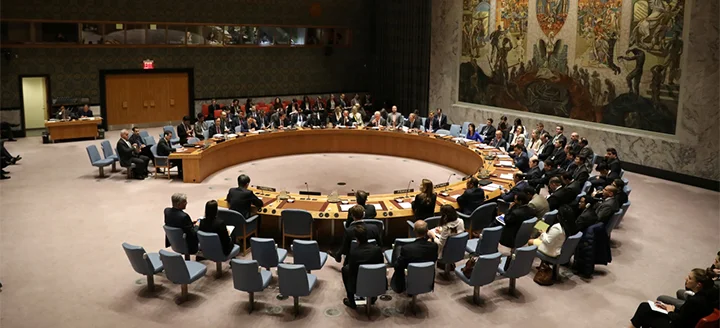
Legal analysts also highlight the geopolitical dimension that, as a permanent member of the United Nations Security Council, Russia can veto any proposed enforcement or sanctions measures, limiting the capacity of the international community to compel accountability.

Navalny’s Prior Poisoning and Continued Political Targeting

Alexei Navalny’s 2024 death cannot be viewed in isolation, as it follows a history of targeted attacks and political persecution. In August 2020, Navalny survived a poisoning with a Soviet-era nerve agent from the Novichok family, an incident that drew widespread international condemnation and was widely attributed to Russian state operatives.

He was subsequently treated in Germany, where forensic analysis confirmed exposure to the banned nerve agent. This event underscored the risks faced by prominent opposition figures in Russia and highlighted systemic threats to political dissent under the current administration. After recovering abroad, Navalny returned to Russia in 2021, fully aware of the dangers he faced, and was immediately arrested upon arrival.

He was later sentenced to 19 years in prison on charges widely criticized by international observers as politically motivated. Despite incarceration, Navalny remained a prominent symbol of opposition, continuing to speak out against corruption and the Russian government’s domestic and international policies.

His anti-corruption campaigns had previously mobilized tens of thousands of supporters, though mass protests have since become rare due to strict domestic crackdown and legal repression. Even while imprisoned, Navalny remained a central symbol of political opposition and anti-corruption activism.

Legal and Geopolitical Implications Intensify International Scrutiny

The confirmation that Alexei Navalny was likely poisoned with a rare neurotoxin has significantly intensified both legal and geopolitical scrutiny of Russia. The referral of the case to the Organisation for the Prohibition of Chemical Weapons raises critical questions under the Chemical Weapons Convention about Russia’s obligations, its handling of controlled toxins, and compliance with international chemical weapons law.

At the same time, these developments have strengthened coordinated diplomatic efforts, including potential sanctions, targeted restrictions, and political pressure aimed at holding Russia accountable. Experts note that while international courts cannot directly compel Russia to cooperate, the combination of forensic evidence, treaty obligations, and diplomatic leverage provides a multi-faceted approach to addressing violations.

Geopolitically, Navalny’s death and the scientific confirmation of poisoning have escalated tensions between Russia and Europe, highlighting the intersection of human rights law, chemical weapons regulation, and international security norms.

Switzerland’s Male Chick Maceration Ban: Landmark Ethical Animal Welfare Reform with Global Legal Implications

Switzerland’s recent formal ban on the live shredding (maceration) of newly hatched male chicks signals a decisive shift in farm-animal welfare regulation. The reform marks a significant ethical and regulatory shift, aligning agricultural practices with evolving societal expectations regarding animal protection and biodiversity conservation. Beyond its domestic impact, the ban carries broader legal and commercial consequences, potentially influencing European regulatory trends, trade compliance standards, and global debates over humane farming practices in an increasingly interconnected agri-food market. This legal analysis examines the scope, rationale, and implications of Switzerland’s ban on male chick maceration within the broader framework of animal welfare law and international trade regulation.

Maceration

What Precisely Changed in Swiss Law and Practice?

Switzerland’s reform did not emerge in a legal vacuum; rather, it represents a targeted strengthening of an already rigorous animal welfare framework. The key change lies in the explicit prohibition of the routine killing of day-old male chicks through maceration, a practice historically used in the egg industry because male chicks of laying breeds are economically unviable for meat production. The amendment closes a regulatory gap by making it unlawful to cull male chicks using mechanical shredding methods, thereby transforming what was previously an accepted agricultural practice into a prohibited act under Swiss animal protection law.

Statutory and Regulatory Amendments

The reform builds upon the Swiss Animal Protection Act (Tierschutzgesetz) and its implementing ordinances. While Swiss law already required that animals be treated with dignity and protected from unjustified suffering, the new legal clarification specifically restricts permissible methods of killing in the poultry sector. By expressly banning maceration, the law narrows the range of legally acceptable culling techniques and raises the compliance threshold for hatcheries.

In practice, this means that hatcheries may no longer rely on shredding as a disposal method for surplus male chicks. Instead, they must adopt alternative solutions that comply with Swiss welfare standards, such as:

  • In-ovo sex determination technologies (identifying the sex of embryos before hatching),
  • Rearing male chicks for meat production under designated programs, or
  • Other approved humane methods consistent with veterinary oversight and welfare guidelines.

The change thus shifts the regulatory focus from managing how chicks are killed to reducing or eliminating the need to hatch unwanted male chicks in the first place.

Transformation of Industry Practice

Operationally, hatcheries and egg producers are now required to adjust production models. Investment in new technologies, particularly in-ovo sexing systems, has become essential to ensure compliance. This has financial implications, as producers must absorb or pass on the costs associated with technological upgrades and altered supply chains.

The reform also strengthens inspection and enforcement mechanisms. Veterinary authorities are empowered to monitor hatcheries more closely, ensuring that prohibited methods are not used and that alternative procedures meet welfare standards. Non-compliance may result in administrative penalties, fines, or suspension of operating licenses.

Normative and Policy Shift

Beyond the technical legal amendment, the reform signals a deeper normative transformation. Previously, economic efficiency justified the large-scale culling of male chicks as an industry norm. The new approach prioritizes animal dignity over production convenience, reflecting a broader ethical recalibration in Swiss agricultural policy.

The law thus moves from regulating the manner of culling to questioning the legitimacy of the practice itself. This represents a structural change in both law and agricultural governance, embedding higher welfare expectations into production systems and positioning Switzerland at the forefront of humane farming regulation.

Legal Foundations and Applicable Legal Instruments

The ban on male chick maceration in Switzerland is grounded in a multilayered legal framework that combines constitutional principles, statutory animal welfare legislation, regulatory ordinances, and international commitments. Together, these instruments provide the normative and institutional basis for reforming poultry industry practices.

Constitutional Foundations

At the apex of the legal hierarchy lies the Federal Constitution of the Swiss Confederation, which embeds environmental protection and animal welfare within the broader public interest mandate of the state. Swiss constitutional law recognizes the principle of animal dignity, a distinctive concept requiring that animals not be subjected to unjustified suffering, harm, or humiliation. This constitutional recognition empowers federal authorities to enact detailed legislation regulating animal treatment in agriculture, research, and commercial activities.

The male chick maceration ban can therefore be understood as a concrete legislative expression of constitutional animal dignity, translating abstract ethical commitments into enforceable regulatory standards.

Statutory Framework: Animal Protection Act

The primary statutory instrument is the Swiss Animal Protection Act (Tierschutzgesetz, TSchG). This Act establishes the core principles governing animal treatment, including:

  • Prohibition of unjustified pain, suffering, or harm
  • Requirements for humane housing and handling
  • Regulation of slaughter and killing methods
  • Federal authority to specify acceptable practices through ordinances

The maceration ban operates within this statutory structure by clarifying that mechanical shredding of live male chicks is inconsistent with lawful and humane treatment. The Act provides the legal authority for detailed implementing rules and sanctions in cases of non-compliance.

Implementing Ordinances and Technical Regulations

The Animal Protection Ordinance (Tierschutzverordnung, TSchV) and related technical guidelines specify permitted and prohibited methods of killing animals in agricultural settings. Amendments or interpretive clarifications at the ordinance level effectively operationalized the ban, defining acceptable alternatives and compliance requirements for hatcheries.

These subordinate regulations are crucial because they:

  • Identify lawful slaughter or euthanasia techniques
  • Establish veterinary supervision standards
  • Provide inspection and enforcement mechanisms
  • Impose administrative and financial penalties for violations

Thus, the practical effect of the reform is achieved primarily through regulatory detailing rather than constitutional amendment.

International and European Context

Although Switzerland is not a member of the European Union, it aligns closely with European animal welfare developments. The reform is consistent with evolving standards within Europe concerning chick culling and humane farming practices. Internationally, Switzerland’s measures also reflect commitments under:

By situating the ban within recognized welfare principles, Switzerland strengthens its legal defensibility in potential trade disputes.

Enforcement and Compliance Mechanisms

The legal instruments provide enforcement authority to cantonal veterinary offices, which conduct inspections and supervise compliance. Administrative sanctions, fines, and potential revocation of operating licenses ensure that the prohibition is not merely symbolic but legally binding.

Comparative Snapshot: How Switzerland Fits into Global Law Reform

Switzerland’s ban on male chick maceration places it within a growing group of jurisdictions that are redefining animal welfare standards in agricultural production. While not the first country to address the practice, Switzerland’s reform reflects a broader global shift from regulating the method of culling toward questioning the acceptability of routine mass killing in industrial farming. Its approach illustrates how domestic legal systems are increasingly integrating ethical considerations into enforceable agricultural policy.

Europe: Regulatory Momentum

Within Europe, several states have already taken legislative action against chick culling. Countries such as Germany and France moved earlier to prohibit the systematic killing of male chicks, often mandating the adoption of in-ovo sex determination technologies. These reforms are frequently grounded in constitutional animal protection principles or strengthened statutory welfare laws.

Switzerland aligns closely with this European trend despite not being an EU member. Its reform reinforces a regional normative pattern in which animal welfare standards are progressively harmonized, even across non-EU jurisdictions. This positioning enhances Switzerland’s regulatory compatibility with European markets while signaling high ethical compliance standards in agricultural exports.

Beyond Europe: Gradual and Uneven Reform

Outside Europe, reforms remain uneven. In many jurisdictions, male chick culling continues to be lawful under animal husbandry regulations, provided it complies with general humane slaughter standards. Some countries rely primarily on industry-led voluntary commitments rather than binding legislation.

Switzerland’s legally binding prohibition therefore contrasts with more permissive or market-driven approaches elsewhere. It represents a model of state-led intervention that prioritizes welfare norms over production efficiency. This may place competitive pressure on producers in countries with lower standards, particularly where consumer demand increasingly favors ethically certified products.

Trade Law and Public Morals

From an international trade perspective, Switzerland’s reform fits within a broader movement of states invoking animal welfare as a legitimate public policy objective. Under WTO law, measures aimed at protecting public morals or animal health can be justified if they are non-discriminatory and proportionate.

By embedding the ban within a coherent animal welfare framework, Switzerland strengthens its legal defensibility against potential trade challenges. At the same time, the reform contributes to the gradual crystallization of animal welfare as a recognized regulatory value in global commerce.

Normative Leadership and Soft Law Influence

Beyond binding legislation, Switzerland’s reform may influence soft law development and industry standards. International organizations, certification schemes, and multinational retailers often adapt to higher welfare benchmarks established by leading jurisdictions. In this sense, Switzerland acts as a norm entrepreneur, helping to shape expectations about humane farming practices beyond its borders.

Key Legal Issues and Regulatory Risks for Industry Players

Switzerland’s ban on male chick maceration creates a range of legal, operational, and commercial risks for hatcheries, egg producers, importers, and retailers. While the reform advances animal welfare objectives, it also reshapes compliance obligations and exposes industry actors to heightened regulatory scrutiny.

Compliance and Licensing Risks

The most immediate legal issue concerns regulatory compliance. Hatcheries must ensure that prohibited culling methods are fully eliminated from operations. Failure to comply may result in:

  • Administrative fines
  • Suspension or revocation of operating licenses
  • Mandatory corrective orders
  • Reputational damage linked to enforcement actions

Because enforcement authority is vested in cantonal veterinary offices, inspections may intensify during the transition period. Industry players face increased documentation and reporting requirements to demonstrate that alternative methods, such as in-ovo sexing or approved humane practices, meet legal standards.

Technology and Investment Liability

The shift toward technological alternatives introduces new regulatory and contractual risks. Companies investing in in-ovo sex determination systems must ensure that:

  • The technology meets approved animal welfare criteria
  • Equipment is certified under applicable veterinary standards
  • Supply contracts reflect updated compliance obligations

If technologies fail to perform reliably or do not meet regulatory expectations, producers may face liability for non-compliance despite significant capital investment. This creates both financial and operational exposure.

Supply Chain and Trade Implications

The reform may affect cross-border supply chains. Importers of eggs or poultry products into Switzerland must ensure that production methods comply with Swiss standards if labeling, certification, or equivalence requirements apply. There is also a potential risk of:

  • Trade disputes if foreign producers view the measure as indirectly restrictive
  • Increased due diligence obligations for multinational retailers
  • Pressure to segregate supply chains based on welfare compliance

Companies exporting from Switzerland must also ensure that higher production costs remain competitive in markets where similar bans are not yet in place.

Competition and Cost Pressures

The ban may increase production costs due to technological investment, slower production cycles, or alternative rearing programs for male chicks. Smaller hatcheries may face disproportionate financial strain, raising potential competition law considerations if market consolidation occurs. Producers must balance compliance with maintaining price competitiveness, particularly in global markets where welfare standards differ significantly.

Litigation and Public Interest Challenges

Industry actors may face strategic litigation or advocacy pressure if compliance appears incomplete or inconsistent. Animal welfare organizations could challenge regulatory approvals, enforcement decisions, or alleged loopholes. Conversely, businesses might challenge implementing regulations if they believe measures exceed statutory authority or impose disproportionate burdens.

In addition, reputational risk is closely intertwined with legal risk. Public scrutiny in welfare-sensitive sectors can amplify even minor regulatory breaches into significant commercial setbacks.

Future Regulatory Escalation

Finally, the reform may not be the endpoint. The ban could serve as a precedent for broader reforms addressing other intensive farming practices. Industry players must anticipate evolving standards and adopt forward-looking compliance strategies rather than minimum-threshold adjustments.

In-Ovo Sexing, Embryonic Development and Law

Switzerland’s ban shifts the regulatory focus upstream, toward embryonic development and technological intervention before hatching. The central legal and ethical question is no longer simply how chicks are killed, but when life attains sufficient biological and moral status to trigger full animal protection safeguards. This creates a complex intersection between veterinary science, ethics, and statutory interpretation.

In-Ovo Sexing Technology and Legal Compliance

In-ovo sexing technologies determine the sex of a chick embryo during incubation, allowing hatcheries to prevent male chicks from hatching in the first place. These systems typically operate within the first days of embryonic development by analyzing hormonal markers, DNA samples, or optical characteristics.

From a legal perspective, the permissibility of in-ovo sexing depends on whether the embryo is considered capable of experiencing pain or suffering at the time of intervention. Swiss animal welfare law is grounded in the principle of protecting animals from unjustified suffering, which requires scientific assessment of embryonic sensory development.

If termination occurs before the embryo reaches a neurologically developed stage capable of pain perception, regulators may consider it compliant with animal protection standards. Thus, the law establishes a technical threshold linked to biological development rather than mere economic convenience.

Embryonic Development and the Concept of Animal Dignity

Switzerland’s recognition of animal dignity introduces an additional ethical dimension. The concept extends beyond preventing physical pain and includes protecting animals from disproportionate instrumentalization. This raises nuanced questions:

  • Does terminating an embryo prior to sentience violate animal dignity?
  • Is prevention of suffering sufficient to justify selective incubation practices?
  • How should proportionality be assessed between agricultural necessity and moral consideration?

Legal analysis often turns on the stage of neural development. Scientific consensus generally holds that chick embryos develop pain perception capacity only after a certain incubation period. By requiring intervention before this developmental threshold, the law attempts to align agricultural practice with both scientific evidence and ethical responsibility.

Regulatory Precision and Scientific Uncertainty

A critical regulatory challenge lies in defining precise cut-off points. Legislators must rely on evolving scientific data regarding embryonic neurobiology. If future research adjusts the understanding of when pain perception begins, regulatory standards may require revision. This creates potential compliance risk for industry players:

  • Technological systems must reliably operate within legally permitted developmental windows.
  • Documentation and traceability mechanisms must verify timing and procedural safeguards.
  • Veterinary oversight must confirm adherence to scientific benchmarks.

The law therefore integrates dynamic scientific assessment into its compliance framework, rather than relying on static rules.

Ethical Trade-Offs and Broader Policy Implications

In-ovo sexing reflects an ethical compromise rather than a complete elimination of life termination. Critics argue that selective embryonic termination remains morally problematic, while proponents emphasize that it prevents large-scale suffering associated with post-hatch culling.

Legally, the approach represents a proportionality-based model: minimizing harm while acknowledging agricultural realities. It signals a regulatory shift from managing visible cruelty to embedding welfare considerations at the earliest stages of production.

Trade and WTO Considerations

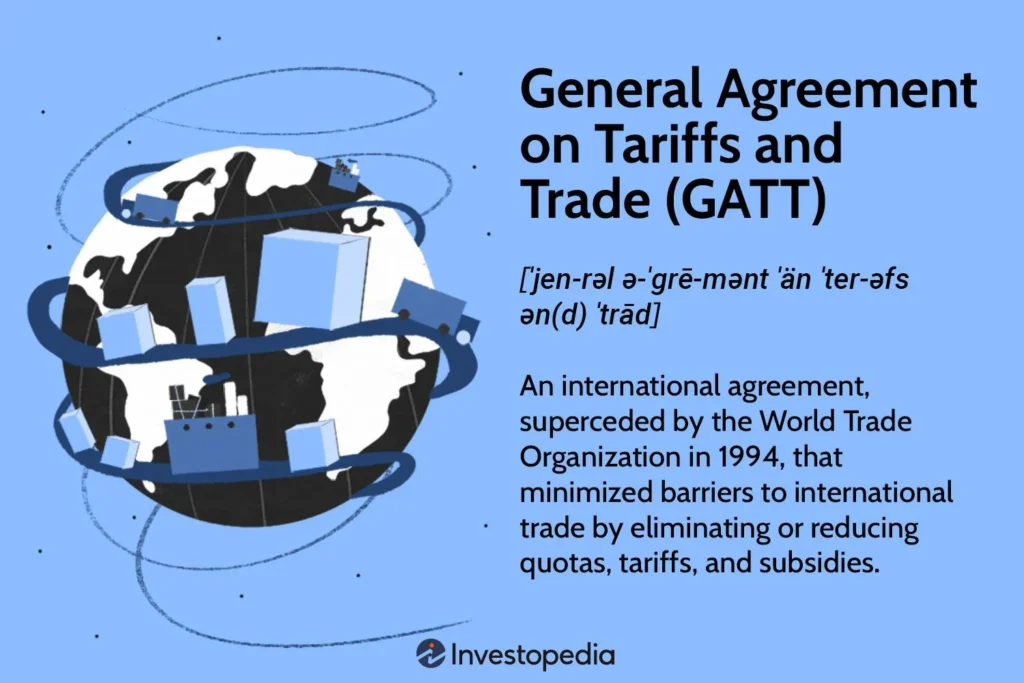
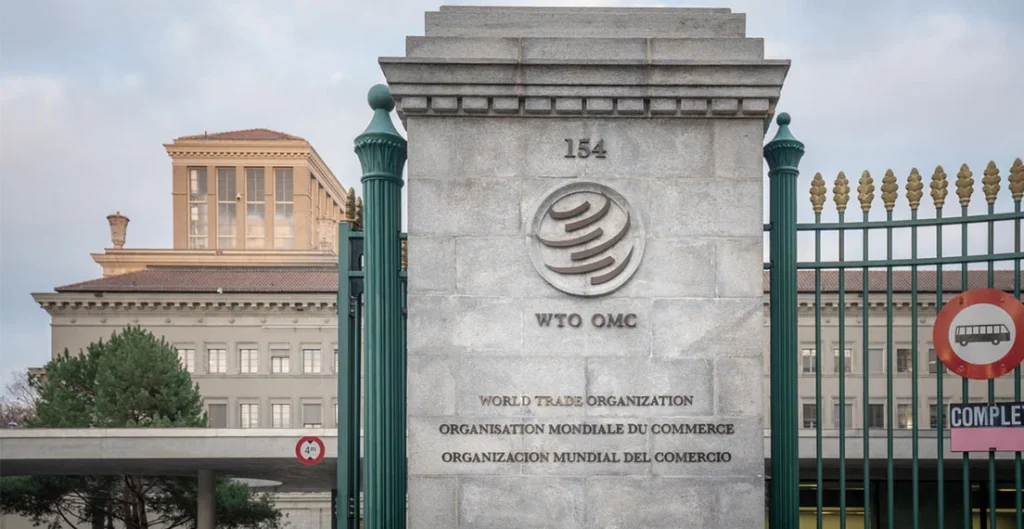
The ban carries important implications under international trade law, particularly within the framework of the World Trade Organization (WTO). Although the measure is primarily domestic and welfare-driven, it intersects with obligations under the General Agreement on Tariffs and Trade (GATT 1994) and the broader multilateral trading system. The central legal issue is whether higher animal welfare standards may indirectly restrict trade and, if so, whether such restrictions can be legally justified.

GATT

Non-Discrimination and Market Access

Under WTO law, Switzerland must comply with the principles of Most-Favoured-Nation (MFN) treatment and National Treatment, meaning imported products must not be treated less favorably than domestic “like products.” If Switzerland were to impose import restrictions on eggs or poultry products derived from male chick culling practices abroad, questions could arise regarding:

  • Whether production methods (process and production methods, or PPMs) justify differential treatment;
  • Whether foreign products are considered “like” Swiss-compliant products;
  • Whether regulatory distinctions amount to disguised protectionism.

A purely domestic ban affecting only Swiss producers generally does not violate WTO rules. However, trade tensions may arise if welfare-based standards are extended to imports or incorporated into labeling, certification, or procurement requirements.

Article XX Exceptions: Public Morals and Animal Protection

Even if a measure restricts trade, it may be justified under Article XX of GATT, particularly:

  • Article XX(a) – measures necessary to protect public morals;
  • Article XX(b) – measures necessary to protect animal life or health.

WTO jurisprudence has recognized animal welfare as capable of falling within the scope of “public morals.” Therefore, Switzerland could defend stricter welfare measures if they are:

  • Necessary to achieve a legitimate objective;
  • Applied in a non-discriminatory manner;
  • Not a disguised restriction on international trade.

The design and implementation of the ban are therefore critical. Transparent scientific justification, equal application to domestic and imported products, and proportional regulatory measures strengthen legal defensibility.

Technical Barriers to Trade (TBT) Considerations

If Switzerland adopts labeling requirements or certification schemes linked to chick-culling practices, these measures may fall under the Agreement on Technical Barriers to Trade (TBT Agreement). Under TBT rules, technical regulations must:

  • Not create unnecessary obstacles to trade;
  • Be based on legitimate objectives;
  • Be proportionate and science-informed where relevant.

Industry actors exporting to Switzerland may challenge compliance burdens if standards are unclear, overly restrictive, or inconsistent with international norms.

Competitive and Strategic Trade Effects

Beyond formal WTO disputes, the reform may generate indirect trade consequences:

  • Increased production costs for Swiss producers could affect export competitiveness;
  • Foreign producers may face pressure to upgrade welfare practices to access premium markets;
  • Multinational retailers may harmonize supply chains around higher welfare benchmarks.

In this sense, the ban may function as a form of regulatory influence rather than a trade restriction, encouraging normative convergence without formal trade barriers.

Broader Systemic Implications

Switzerland’s reform contributes to an ongoing debate within the WTO about the role of non-trade values, such as animal welfare, sustainability, and ethical production, in global commerce. As more states adopt welfare-based regulations, the trading system must reconcile market liberalization with evolving societal expectations.

Impact on Global Animal-Welfare Law and Doctrine

Switzerland’s ban on male chick maceration contributes meaningfully to the evolution of global animal-welfare law, reinforcing the trend toward recognizing animal protection as a legitimate and enforceable public policy objective rather than a purely ethical aspiration. Although the reform operates within domestic law, its normative and doctrinal implications extend beyond national borders.

Strengthening the Concept of Animal Dignity

One of the most significant doctrinal contributions lies in the operationalization of animal dignity. Switzerland has long recognized this concept in its legal framework, but the ban translates it into concrete regulatory consequences. By prohibiting a routine industrial practice based on ethical considerations, the reform strengthens the argument that animals possess intrinsic value deserving legal protection independent of economic utility.

This may influence comparative constitutional interpretation in jurisdictions where courts increasingly reference animal welfare principles in balancing economic and moral interests. It contributes to a gradual doctrinal shift from a purely anti-cruelty model toward a dignity-based or rights-informed framework.

Moving from Method Regulation to Practice Prohibition

Traditionally, animal-welfare law has focused on regulating how animals are treated—ensuring humane slaughter techniques, minimizing suffering, and imposing procedural safeguards. Switzerland’s approach reflects a deeper transformation: questioning the legitimacy of the underlying industrial practice itself.

By prohibiting maceration outright and promoting upstream technological alternatives, the law redefines the regulatory paradigm. This model may serve as a reference point for other jurisdictions considering reforms in areas such as intensive farming, live animal transport, or mass culling practices.

Influence Through Soft Law and Market Standards

Even in the absence of binding international treaties specifically banning chick culling, domestic reforms can shape global norms through soft law mechanisms. International organizations, certification bodies, and multinational retailers often adopt higher standards pioneered by leading jurisdictions. Switzerland’s reform may therefore:

  • Encourage harmonization of welfare standards in trade agreements;
  • Inform international guidelines on humane agricultural practices;
  • Strengthen the legitimacy of welfare-based trade measures under global commerce rules.

This indirect influence can accelerate normative convergence, particularly in premium consumer markets where ethical production increasingly drives demand.

Expanding the Scope of Public Morals in International Law

The reform also reinforces the doctrinal recognition of animal welfare as part of “public morals” within international trade jurisprudence. As more states enact welfare-driven regulations, the legal system increasingly acknowledges that ethical treatment of animals constitutes a legitimate state interest capable of justifying regulatory intervention.

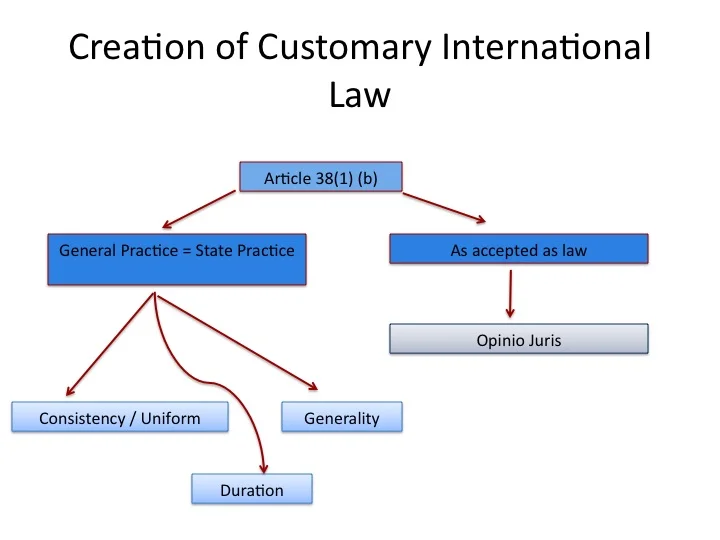
Over time, repeated legislative actions across jurisdictions may contribute to the crystallization of customary norms or at least a widely accepted regulatory practice supporting higher welfare thresholds.

Precedent for Technological Integration in Welfare Law

Finally, the integration of in-ovo sexing technology into regulatory compliance illustrates how innovation can reshape legal doctrine. Law is no longer confined to prohibiting harm; it now incentivizes technological solutions that prevent harm at earlier stages. This anticipatory regulatory approach may influence broader debates in environmental and bioethical governance.

Economic and Market Consequences

This ban carries significant economic and market implications, affecting producers, consumers, and international trade. While the reform is primarily ethical and regulatory, its practical impact extends across production costs, supply chain structures, pricing, and global market positioning.

Increased Production Costs

The prohibition of maceration necessitates the adoption of alternative methods such as in-ovo sexing or rearing male chicks for meat production. These technological and operational adjustments introduce substantial costs:

  • Investment in in-ovo sexing equipment and training
  • Operational adjustments to manage male chick rearing or alternative disposal methods
  • Ongoing monitoring and documentation to ensure compliance

Smaller hatcheries may face disproportionate financial strain, potentially leading to consolidation in the sector or reduced market entry for new producers.

Impact on Supply Chains

The ban alters traditional egg production and hatchery practices, requiring supply chain reconfiguration:

  • Producers must synchronize in-ovo sexing technology with incubation schedules
  • Transport and logistics may need adjustment for alternative rearing programs
  • Compliance requirements may affect upstream and downstream partners, including feed suppliers and distributors

Exporters must ensure that products meet Swiss welfare standards, which could increase administrative and certification burdens.

Pricing and Market Dynamics

Higher production costs are likely to be passed on to consumers, resulting in premium-priced eggs and poultry products that reflect compliance with enhanced welfare standards. This could influence consumer behavior:

  • Demand for ethically certified products may rise, creating market differentiation
  • Price-sensitive consumers may seek alternatives, potentially limiting market access for some producers
  • Retailers and food-service providers may adjust procurement strategies to source compliant products

Competitive Positioning and Trade Considerations

Switzerland’s reform may enhance the country’s global reputation as a leader in ethical agriculture, strengthening market positioning for export products that meet high welfare standards. Conversely, producers may face competitive pressures in markets where such standards are not enforced, potentially affecting price competitiveness.

At the international level, the ban could encourage foreign producers to adopt similar practices to maintain access to Swiss and European markets, gradually raising the global welfare baseline.

Innovation and Long-Term Economic Benefits

While the initial economic impact includes higher costs, the reform may incentivize innovation in agri-tech solutions, such as more efficient in-ovo sexing systems, automation, and sustainable rearing techniques. Over time, these innovations could reduce operational costs, enhance productivity, and position Switzerland at the forefront of sustainable and ethically responsible agriculture, potentially opening new market opportunities and improving global competitiveness.

Conclusion

Switzerland’s ban on male chick maceration represents a landmark intersection of law, ethics, and commerce, signaling a transformative shift in animal welfare regulation. By explicitly prohibiting routine culling and promoting upstream alternatives such as in-ovo sexing, the reform moves beyond procedural safeguards to challenge the legitimacy of longstanding industrial practices. This approach embeds ethical principles into enforceable law, reinforcing the concept of animal dignity as a core legal standard.

The reform carries significant domestic and international implications. For the poultry industry, it introduces new compliance obligations, operational adjustments, and economic costs, while also creating opportunities for innovation, market differentiation, and enhanced competitiveness in ethically conscious markets. At the international level, Switzerland’s measures contribute to the evolution of animal-welfare law, influence global norms, and provide a model for integrating moral considerations into regulatory frameworks.

Ultimately, Switzerland’s action demonstrates how domestic legal reform can reverberate across markets, trade, and international doctrine. By balancing ethical imperatives, technological feasibility, and legal enforceability, the ban sets a precedent for harmonizing humane agricultural practices with modern production realities. In 2026, it exemplifies a broader global trend toward responsible, welfare-oriented governance that aligns legal standards with societal expectations, scientific knowledge, and cross-border trade considerations.

Frequently Asked Questions

What is male chick maceration and why was it banned in Switzerland?

Male chick maceration is the routine killing of day-old male chicks in the egg industry because they are not suitable for meat production. Switzerland banned this practice in 2026 to strengthen animal welfare standards, align agriculture with ethical principles, and uphold the legal concept of animal dignity.

Which law forms the legal basis for the ban?

The ban is grounded in the Swiss Animal Protection Act (Tierschutzgesetz), supported by implementing regulations under the Animal Protection Ordinance (Tierschutzverordnung). These laws establish humane treatment standards and explicitly prohibit the mechanical culling of male chicks.

What alternatives exist for hatcheries under the new law?

Hatcheries must adopt legally compliant alternatives that include in-ovo sexing (identifying chick sex before hatching), raising male chicks for meat production in specialized programs, and other humane methods approved by veterinary authorities.

How does the ban affect producers and the poultry industry?

The reform increases operational and compliance costs, requiring investment in new technology and adjustments to production processes. Smaller hatcheries may face financial challenges, while larger operators may benefit from innovation-driven efficiency and ethical market positioning.

Does the ban impact international trade?

Yes. Products exported to Switzerland must meet welfare standards, and the reform could influence global supply chains and labeling requirements. The measure is generally compatible with WTO law under Article XX exceptions for public morals and animal protection, provided it is applied non-discriminatorily.

What are the ethical and legal considerations of in-ovo sexing?

In-ovo sexing intervenes at an early embryonic stage, before chicks can experience pain, aligning with Swiss animal welfare law. The ethical and legal threshold is based on protecting embryos before they reach sentience while minimizing industrial animal suffering.

How does Switzerland’s reform influence global animal welfare law?

Switzerland sets a precedent by operationalizing the concept of animal dignity, influencing European and global norms. The ban encourages other countries to adopt higher welfare standards and integrates ethical considerations into trade and agricultural regulations.

Are there penalties for non-compliance?

Yes. Cantonal veterinary authorities can impose fines, corrective orders, or revoke operating licenses for hatcheries that fail to comply with the ban. Strict monitoring ensures both legal enforcement and ethical adherence.

What are the long-term market consequences?

While short-term costs may rise, the reform fosters innovation, creates premium markets for ethically produced eggs, and enhances Switzerland’s global reputation as a leader in humane agriculture. It may also drive international convergence toward higher welfare standards.

Is this reform likely to influence other animal welfare laws in the future?

Yes. The ban reflects a broader shift from regulating methods to questioning practices themselves. It may inspire reforms in intensive farming, live transport, and other areas where ethical and technological solutions can reduce animal suffering.

Switzerland Moves to Ban Live Chick Shredding in Major Animal Protection Shift

Bern, Switzerland — In a significant animal-welfare reform taking effect this year, Switzerland has officially banned the live shredding of male chicks in the egg-production industry, marking a major legal shift away from a long-criticized practice that has drawn global ethical scrutiny. Effective January 1, 2026, Swiss poultry producers will no longer be permitted to kill newly hatched male chicks simply because they are male and considered economically unviable, a move animal-rights advocates have championed for years as part of broader cruelty-reduction reforms.

Chick_culling

Under previous practice, male chicks, which cannot lay eggs and are less profitable for meat production, were often killed shortly after hatching. In line with longstanding Swiss animal-welfare norms, the Animal Welfare Act prohibits unnecessary suffering and harm to animals, and since 2019, Switzerland has already outlawed the maceration (shredding) of live chicks, even though the method had fallen out of regular use.

The new prohibition extends this principle across the egg industry, in which male chicks must no longer be routinely culled after hatch, and producers are instead expected to adopt alternatives such as in-ovo sex-identification technology to determine chick gender before hatching, dual-purpose breeds, or ethically humane euthanasia techniques consistent with both animal-welfare law and industry standards.

Legal and Regulatory Context

Switzerland’s ban builds upon its stringent animal-welfare framework. The Animal Welfare Act (AniWA) 2005 establishes broad protections against inflicting pain or suffering on animals without justification, a legal foundation that has enabled incremental reforms such as eliminating inhumane slaughtering methods.

While Switzerland banned the specific practice of shredding male chicks nearly a decade ago, the broader industry, including methods like gassing or other forms of killing, remained legally permissible under certain conditions until the end of 2025.

The 2026 policy change represents a formal closure of loopholes that had enabled routine culling of male chicks, aligning practice with both ethical standards and evolving public expectations regarding farm-animal treatment.

Industry and Welfare Reactions

Animal-welfare organizations and ethicists have widely praised Switzerland’s decision as a global leader in humane animal-production standards. Advocates note that modern technologies, such as pre-hatch sex identification and alternative breeding practices, make the routine culling of male chicks both avoidable and ethically indefensible.

Critics of the previous regime argued that the practice reduced sentient beings to mere by-products of production, contravening the dignity principles enshrined in AniWA and consistent with contemporary welfare jurisprudence.

Egg producers and agricultural stakeholders have acknowledged the shift, emphasizing the need for practical implementation timelines and support for adopting humane alternatives. Swiss poultry associations have indicated their intent to collaborate with technology providers and farmers to ensure a smooth transition that balances ethical obligations with economic viability.

Comparative Legal Landscape

Switzerland’s move fits within a broader trend of countries reforming animal cruelty laws. Several EU-member states, including France and Germany, have also committed to banning the routine culling of male chicks and exploring in-ovo sexing technologies, although the specific legal mechanisms and timelines vary.

Switzerland’s 2026 ban thus highlights its position at the forefront of animal-welfare legislation, particularly in areas where ethical considerations increasingly influence statutory reform.

Comparative Table

Country / JurisdictionCurrent Legal Status (2026)Key Regulatory Measures / NotesPractical Alternatives Encouraged or Mandated
SwitzerlandBan on live maceration/shredding and strengthened prohibition on routine post-hatch culling (effective 2026)Animal Welfare Act foundations; formal closure of loopholes permitting routine killing methods; enforcement and transition support announcedIn-ovo sex-identification, dual-purpose breeds, humane euthanasia protocols, mandatory phase-in timelines
GermanyNational phase-out announced; commercial use restricted with timelines to eliminate post-hatch cullingGovernment strategy under animal-welfare legislation with subsidies for in-ovo technology adoption; regulatory roadmaps in placeIn-ovo sexing widely piloted; incentives for breeding alternatives and certification schemes
FrancePolicy commitment to end routine culling; industry commitments and EU coordinationMinisterial roadmaps and funding for R&D; moves to require earlier sexing where feasibleIn-ovo sexing pilots; certification and labelling schemes for welfare-friendly eggs
United KingdomIndustry transition plans supported by government guidance; regulatory reform proposals under considerationNo blanket criminal ban across UK as of 2026 but strong regulatory pressure and retailer commitmentsIn-ovo sexing pilots, dual-purpose breeds, retailer codes of practice
European Union (overview)EU-level policy alignment and funding incentives; member states taking varied legal stepsEU regulatory instruments and funding to accelerate non-culling solutions; potential harmonized standards under animal-welfare initiativesEU grant support for in-ovo tech; guidance on humane practices and labelling
United StatesNo federal ban; state-level actions limited and patchwork regulationIndustry self-regulation and animal-welfare standards from NGOs; USDA guidance varies; litigation rareVoluntary in-ovo tech adoption; market pressure from retailers and consumers
BrazilNo national ban; industry practice continues with growing NGO pressureRegulatory focus remains on biosecurity and food safety; animal-welfare reforms discussedLimited adoption of alternatives; pilot projects emerging
JapanIndustry and government exploring in-ovo sexing; no comprehensive banGovernment funding for tech pilots and industry guidance; cultural and market differences affect uptakeIn-ovo sexing trials; gradual adoption encouraged
IndiaNo formal ban; regulatory attention limitedFocus remains primarily on large-scale poultry efficiency; animal-welfare activism increasingSmall number of pilots for dual-purpose breeds and humane practices
CanadaProvincial initiatives and industry commitments; no federal prohibitionProvincial animal-welfare frameworks encourage alternatives; retailers activeIn-ovo sexing pilots, industry codes of conduct

What This Means Going Forward

Switzerland’s 2026 prohibition formalizes a legal trend in high-income jurisdictions that is moving from tolerance of routine post-hatch culling toward legally enforceable bans or phase-outs backed by industry transition support.

  • Legal Impact: The ban enforces stricter compliance with animal-welfare law and closes prior regulatory gaps that allowed culling under specific methods.
  • Industry Obligations: Egg producers must adopt humane alternatives to routine culling, potentially increasing operational costs and incentivizing innovation.
  • Ethical Precedent: Switzerland’s decision may influence legislative developments globally as activists and policymakers push for similar bans in other jurisdictions.

Switzerland’s 2026 prohibition on live shredding of male chicks thus represents both a legal clarification and a normative shift, reinforcing that cruelty-free livestock practices are becoming an established expectation in animal welfare jurisprudence. Switzerland’s move is likely to accelerate EU harmonization and push retailers globally to drive change in supply chains.

DOJ Transparency Crisis Deepens as Legal Scrutiny Grows Over Epstein Files Handling

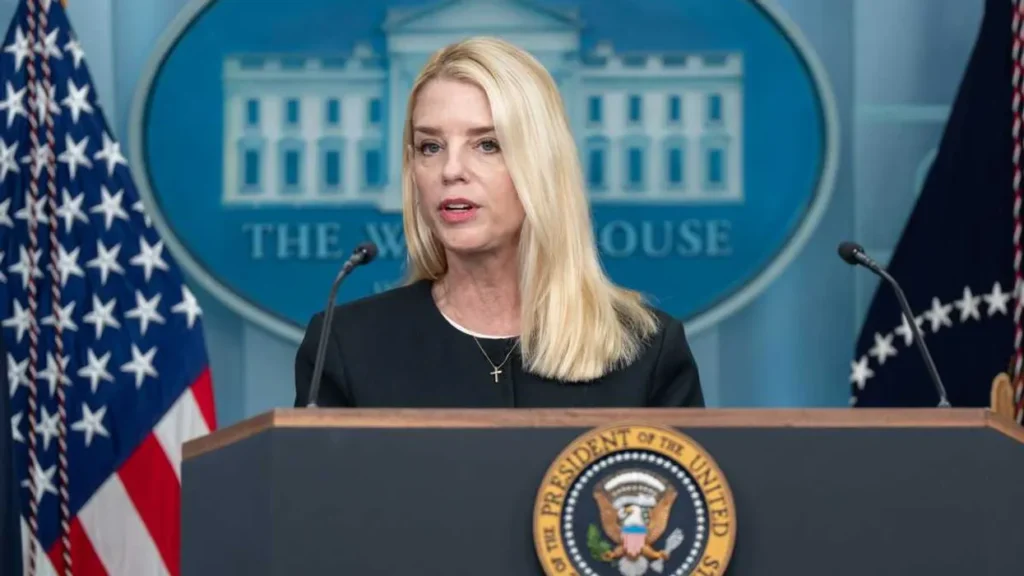
Washington, D.C. — The U.S. Department of Justice(DOJ) has become the center of a major political and legal controversy in early 2026 over its handling of the release and redaction of millions of pages of files related to financier Jeffrey Epstein, who died in jail in 2019. The dispute has widened from procedural questions about document disclosure to accusations of obstruction, cover-ups, surveillance of lawmakers, and systematic mishandling of victim privacy protections.

Pam_Bondi

Background: The Epstein Files Transparency Act and DOJ Release

In November 2025, the U.S. Congress passed the Epstein Files Transparency Act, which required the Attorney General to publicly disclose all unclassified DOJ documents relating to Epstein’s investigations within 30 days of enactment. The law defined limited exceptions to redaction, primarily victim privacy, material depicting abuse, or national security, and prohibited withholding information purely for reputational protection.

Although the DOJ released an initial tranche of documents in December 2025 and a much larger batch of roughly 3.5 million pages, 180,000 images, and videos on January 30, 2026, critics argue the release ultimately violated both the spirit and the letter of the statute. Lawmakers and advocacy groups contend that the department failed to unredact materials linking powerful figures to Epstein’s network and simultaneously released files that exposed sensitive victim information without adequate safeguards.

What the DOJ Did and Alleged Missteps

  • Delayed Compliance: The law imposed a 30-day deadline for release by December 19, 2025. The DOJ’s staggered rollout and later large-volume disclosure were criticized as untimely and non-compliant, even without explicit penalties in the statute.
  • Redaction Controversies: Despite the Act’s restrictions, lawmakers reported extensive redactions that appeared to shield high-profile individuals’ names and communications. During a secure review session, six names were reportedly identified by Members of Congress that should not have been redacted under the statute, intensifying claims that the DOJ withheld key information without justified legal basis.
  • Victim Privacy Breaches: Many victims’ names, images, and even identifying details such as email addresses and Social Security numbers were reportedly published in the publicly accessible files, prompting immediate outcry from victims, legal representatives, and advocacy groups. In response, the DOJ removed thousands of documents for further review and redaction correction.
  • Procedural Errors: A separate gaffe involved unintentional disclosure of an undercover FBI agent’s identity in a file released online, which DOJ officials quickly sought to have removed after recognizing the error.

Congressional Backlash and Legal Accusations

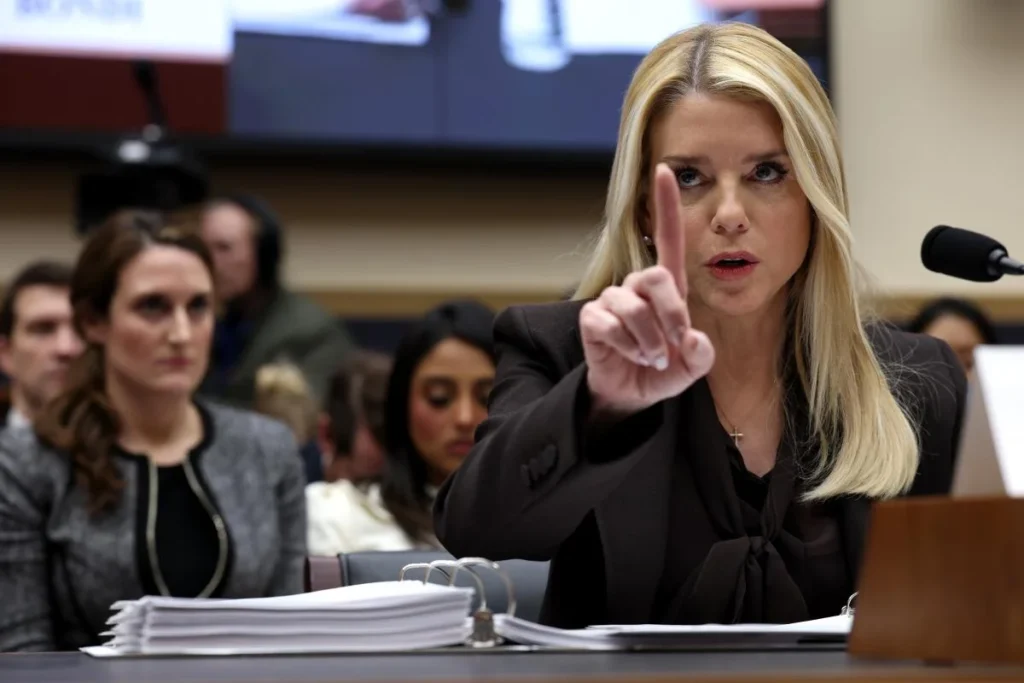
The controversy reached a peak on February 11, 2026, when U.S. Attorney General Pam Bondi faced a highly charged House Judiciary Committee hearing. Lawmakers from both parties criticized her leadership and the department’s conduct, with several accusing the DOJ of procedural failures and even cover-ups.

Bondi

Key accusations leveled by lawmakers include:

  • Obstruction or Noncompliance with Law: Critics contend that the DOJ’s partial and delayed disclosures, redaction practices, and overall timeline violated the clear statutory command of the Epstein Files Transparency Act.
  • Selective Redaction and Shielding Influential Figures: Members of Congress claimed that redactions protected wealthy, politically connected individuals rather than focusing strictly on permissible victim privacy exceptions.
  • “Spying” on Lawmakers: Representative Jamie Raskin and others demanded an inspector general investigation after allegations emerged that the DOJ was tracking congressional searches of the released documents, raising constitutional and separation-of-powers concerns.
  • Inadequate Protection of Victims: Some lawmakers and survivors condemned the department for exposing victims’ identities, with no clear plan initially in place to correct or mitigate the harm.
  • Reluctance to Investigate Prominent Allegations: Heated exchanges focused on questions about whether the DOJ would pursue further investigations into individuals whose names appeared in the files, including allegations that were previously uninvestigated or settled civilly.

Bondi was also accused of deflecting responsibility, at times blaming predecessors or the volume and complexity of the files rather than acknowledging institutional mismanagement. Her testimony, described by some lawmakers as evasive or combative, further fueled calls for independent oversight of the department’s actions.

Legal and Institutional Implications

The debate over the Epstein files has several important legal dimensions:

  • Statutory Compliance: The controversy raises questions about the enforceability of the Epstein Files Transparency Act where no explicit enforcement mechanism or penalty was mandated. Defenders cite the DOJ’s press releases asserting compliance, while critics argue that compliance must be assessed by courts or congressional oversight mechanisms.
  • Separation of Powers: Allegations of document tracking, oversight interference, and withheld information implicate separation-of-powers norms, potentially triggering inspector general reviews or even federal litigation over interbranch authority.
  • Privacy and Evidence Law: Missteps in redaction highlight the complexity of balancing transparency with legal protections for victims, implicating both statutory privacy standards and constitutional concerns under the Privacy Act and federal evidentiary rules.
  • Institutional Trust in DOJ: Perceived partisan handling of sensitive materials, particularly allegations of favorable treatment toward political allies or deflecting accountability, has broader implications for public trust in prosecutorial independence and the rule of law.

What Happens Next

Lawmakers have signaled multiple potential follow-up actions, including:

  • Requests for an inspector general investigation into whether the DOJ improperly monitored congressional access (and whether that tracking was legally justified).
  • Further oversight hearings and demands for unredacted releases that fully comply with statute.
  • Possible litigation by victims or advocacy groups seeking judicial enforcement of the transparency act.
  • Ongoing internal DOJ reviews to refine redaction protocols and ensure victims’ identities are protected before re-release of previously handled files.

The Epstein files controversy has evolved from a statutory compliance matter into a substantive legal and political conflict over transparency, accountability, statutory interpretation, privacy protections, and the role of the Department of Justice in administering politically sensitive disclosures. Critics argue that mismanagement of the files undermines both victims’ rights and public confidence, while defenders emphasize logistical challenges and complexity in processing decades’ worth of voluminous documents. The issue continues to unfold in Congress, in the courts, and in the court of public opinion.

Global Legal Affairs in 2026: The Evolving Architecture of International Law and Cross-Border Governance in a Fragmented World

By 2026, global legal affairs have entered a phase of accelerated transformation. The architecture of international law, built on multilateral treaties, customary norms, and institutional adjudication, continues to operate, yet it does so under unprecedented geopolitical strain. Trade wars, selective sanctions, AI governance disputes, climate litigation, cyber operations, maritime tensions, and the politicization of international institutions have redefined how law functions across borders.

Globa_Governance

International law today is not collapsing; it is being stress-tested. States increasingly invoke legal doctrine strategically, sometimes to justify unilateral measures, sometimes to resist them. The United Nations, the International Court of Justice, the International Criminal Court, and the World Trade Organization remain operational pillars of global governance. Yet their authority is increasingly shaped by geopolitical power competition rather than purely doctrinal coherence.

What we are witnessing is not the erosion of law, but the transformation of its operational architecture. Legal norms are invoked strategically, compliance is increasingly selective, enforcement is politically mediated, and sector-specific regimes are diverging in coherence and effectiveness. The central question in 2026 is therefore not whether international law survives, but what form it will take in an era of multipolarity, technological acceleration, climate emergency, and economic coercion.

This analysis examines the structural foundations of international law, its enforcement dynamics, institutional resilience, and emerging regulatory domains, while assessing how power politics is reshaping global legal governance.

Foundations of International Law: Consent, Custom, and Constraint

International legal affairs operate through a complex network of treaties, conventions, and customary international law that bind nations together. The United Nations serves as the cornerstone institution, with the International Court of Justice adjudicates disputes between states and provides advisory opinions on legal questions. Article 38 of the ICJ Statute remains the canonical articulation of these sources.

According to the UN Treaty Collection, over 560 multilateral treaties currently govern various aspects of international relations, from human rights to environmental protection. The doctrine of pacta sunt servanda, codified in the Vienna Convention on the Law of Treaties, still underpins treaty compliance. The Vienna Convention on the Law of Treaties establishes:

“every treaty in force is binding upon the parties to it and must be performed by them in good faith.”

This fundamental doctrine ensures stability in international relations and provides predictability for cross-border transactions. Yet in 2026, the tension between legal obligation and strategic interest is increasingly visible. States sometimes reinterpret treaty commitments through national security exceptions, domestic constitutional doctrines, or economic emergency powers.

Customary international law, formed by consistent state practice accompanied by opinio juris, continues to evolve in areas such as cyber operations, environmental protection, and space governance. However, fragmentation of practice among major powers complicates the crystallization of universal norms. General principles, good faith, proportionality, equity, and estoppel remain doctrinal tools that international tribunals invoke when treaty text is silent or ambiguous.

Sovereignty in 2026: From Absolute Authority to Managed Interdependence

The principle of sovereign equality under Article 2(1) of the United Nations Charter formally treats states as equal. In practice, however, global governance reflects asymmetries of power. In 2026, the classical notion of sovereignty as absolute and exclusive authority within a defined territory has continued to evolve under the pressures of globalization, technological integration, and multilateral governance.

While the principle of sovereign equality remains formally intact under the UN Charter, state authority is increasingly shaped by binding treaty commitments, economic interdependence, and transnational regulatory frameworks. Sovereignty is no longer exercised in isolation as it operates within a dense network of legal obligations that condition how states regulate trade, security, climate policy, digital infrastructure, and human rights.

At the same time, sovereignty has not disappeared; it has been recalibrated. States continue to assert control over borders, natural resources, national security policy, and digital ecosystems, often invoking sovereignty to justify regulatory autonomy or resistance to external pressure. However, this assertion coexists with structural constraints imposed by global supply chains, financial systems, cyber interconnectivity, and collective security arrangements.

In practice, sovereignty in 2026 functions less as absolute independence and more as strategic participation in international regimes that require cooperation, compliance, and negotiated compromise. The emerging model can be described as managed interdependence. States retain ultimate authority but exercise it within frameworks that recognize mutual vulnerability and shared risk, particularly in areas such as climate change, artificial intelligence governance, public health, and cross-border security threats.

Sovereignty today is defined not by insulation from external influence, but by a state’s capacity to navigate international obligations while safeguarding domestic legitimacy. The shift reflects a transformation in the operational meaning of sovereignty, from unilateral control to coordinated governance in an interconnected global order.

International Judicial Institutions

International judicial institutions in 2026 operate in an increasingly complex and politically contested environment. Courts such as the International Court of Justice, the International Criminal Court, and regional human rights tribunals were designed to provide legal clarity, accountability, and peaceful dispute resolution. However, their authority depends largely on state consent and cooperation, making them vulnerable to geopolitical tension, selective compliance, and jurisdictional resistance.

International Court of Justice

The International Court of Justice (ICJ) in The Hague represents the principal judicial organ of the United Nations, resolving contentious cases between states and issuing advisory opinions. With 15 judges elected by the UN General Assembly and Security Council, the ICJ has adjudicated over 180 cases since its establishment in 1946. Recent landmark cases include maritime boundary disputes, questions of genocide, and environmental protection obligations.

icj

The Permanent Court of Arbitration complements the ICJ by providing arbitration services for international disputes involving states, international organizations, and private parties. Established in 1899, it has facilitated the resolution of complex territorial, investment, and treaty interpretation disputes through flexible arbitration mechanisms.

Jurisdiction and Functions

The ICJ has two main functions. First, it settles contentious cases between states. Only states may be parties before the Court, and jurisdiction is based on state consent, either through special agreements, treaty clauses, or optional declarations recognizing compulsory jurisdiction. Second, the Court issues advisory opinions at the request of authorized UN organs and specialized agencies. Although advisory opinions are not legally binding, they carry significant legal weight and influence international practice.

The Court addresses a wide range of issues, including territorial disputes, maritime boundaries, diplomatic protection, treaty interpretation, use of force, and state responsibility. Its judgments are final and binding on the parties to the dispute, without appeal, although interpretation or revision may be requested under limited conditions.

Role in the International Legal Order

Despite enforcement constraints, the ICJ plays a central role in clarifying and developing international law. Its jurisprudence contributes to the interpretation of treaties, the consolidation of customary international law, and the articulation of principles such as sovereign equality, non-intervention, and state responsibility. Advisory opinions have also shaped debates on decolonization, self-determination, humanitarian law, and environmental obligations.

International Criminal Court

The International Criminal Court (ICC) prosecutes individuals for genocide, crimes against humanity, war crimes, and aggression. With 123 states parties to the Rome Statute, the ICC represents a critical evolution in international criminal justice. As of 2026, the court has opened investigations in 17 situations and issued arrest warrants for numerous individuals accused of grave international crimes.

Jurisdiction and Legal Framework

The ICC’s jurisdiction is defined by the Rome Statute. It may exercise authority where crimes are committed on the territory of a State Party, by nationals of a State Party, or when a situation is referred by the United Nations Security Council. The Court operates on the principle of complementarity, meaning it acts only when national courts are unwilling or genuinely unable to prosecute alleged crimes. This reinforces state sovereignty while providing a mechanism to address impunity.

The crime of aggression, activated in 2018, further expanded the Court’s scope, though its jurisdiction in this area remains legally and politically complex. The ICC’s authority is not universal, as several major powers are not parties to the Rome Statute, which limits the Court’s reach in certain geopolitical contexts.

Contemporary Relevance in 2026

In 2026, the ICC operates in a politically polarized environment marked by ongoing conflicts and allegations of war crimes in multiple regions. The Court faces pressure from geopolitical rivalry, jurisdictional disputes, and questions about enforcement capacity. At the same time, it remains a central institution in the global fight against impunity. Its investigations and arrest warrants continue to shape diplomatic discourse, reinforce accountability norms, and influence domestic legal proceedings.

Arbitration and Investment Tribunals

Arbitration and investment tribunals play a central role in resolving cross-border commercial and investment disputes. Unlike standing international courts, arbitral tribunals are typically constituted on an ad hoc basis to decide specific disputes, particularly between foreign investors and host states. In 2026, these mechanisms remain a cornerstone of international economic law, offering a structured forum for neutral dispute resolution outside domestic courts.

Investor–State Dispute Settlement (ISDS)

Investment arbitration is most commonly conducted under bilateral investment treaties (BITs), multilateral agreements, or free trade agreements that include Investor–State Dispute Settlement (ISDS) provisions. These clauses allow foreign investors to bring claims directly against states for alleged breaches of treaty obligations, such as expropriation without compensation, denial of fair and equitable treatment, or discrimination. Institutions such as the International Centre for Settlement of Investment Disputes (ICSID) and arbitral frameworks under UNCITRAL rules administer many of these disputes.

The rationale behind ISDS is to depoliticize investment disputes and provide legal certainty, thereby encouraging cross-border investment. Awards issued by tribunals are binding and enforceable under international conventions, including the ICSID Convention and the New York Convention on the Recognition and Enforcement of Foreign Arbitral Awards.

Commercial Arbitration

Beyond investment disputes, international commercial arbitration remains widely used for resolving disputes between private parties engaged in cross-border trade. Arbitration clauses in contracts allow parties to avoid domestic court systems and instead rely on neutral arbitrators, chosen procedures, and enforceable awards. The flexibility, confidentiality, and global enforceability of arbitral awards continue to make arbitration a preferred mechanism in international commerce.

Trade Law in the Age of Economic Coercion

In 2026, international trade law operates in an environment increasingly shaped by economic coercion, strategic decoupling, and geopolitical rivalry. The multilateral trading system, built on predictability and non-discrimination under the World Trade Organization (WTO), faces sustained pressure from unilateral tariffs, export controls, sanctions regimes, and industrial policy measures.

WTO

WTO and Fragmented Multilateralism

The World Trade Organization (WTO) governs international trade relations among 164 member states, administering trade agreements and resolving disputes through its comprehensive legal framework. The WTO’s Dispute Settlement Body has become one of the most active international tribunals, having ruled on over 600 disputes since 1995.

Trade liberalization under WTO agreements has generated substantial economic benefits. According to WTO statistics, global merchandise trade reached $25.3 trillion in 2024, with services trade contributing an additional $7.5 trillion. The legal framework governing this massive economic exchange includes the General Agreement on Tariffs and Trade (GATT), the General Agreement on Trade in Services (GATS), and the Agreement on Trade-Related Aspects of Intellectual Property Rights (TRIPS).

One of the most significant structural challenges remains the weakened dispute settlement system. The paralysis of the Appellate Body has reduced the enforceability of WTO rulings, encouraging some members to bypass or delay compliance. The inability to restore a fully functioning dispute resolution mechanism reflects deeper divisions over trade governance, industrial policy, and the role of state intervention in markets.

International Investment Law and Arbitration

International investment law regulates the protection of foreign investments and governs disputes between investors and host states. Built primarily on bilateral investment treaties (BITs), free trade agreements (FTAs), and multilateral conventions, this legal regime seeks to promote cross-border capital flows by offering legal certainty and enforceable protections.

Cross-border investment is protected by over 3,000 bilateral investment treaties (BITs) and numerous multilateral agreements. The International Centre for Settlement of Investment Disputes (ICSID) has administered over 800 investment arbitration cases, addressing disputes between foreign investors and host states. As detailed in ICSID’s 2024 Annual Report, investment treaty arbitration continues to evolve, with increasing focus on regulatory space for public policy objectives.

A defining feature of the system is Investor–State Dispute Settlement (ISDS), which allows investors to bring claims directly against states without requiring diplomatic intervention. This mechanism was designed to depoliticize disputes and ensure neutrality. However, ISDS has faced sustained criticism.

Human Rights Law: Normative Expansion, Political Resistance

Treaties, customary law, and regional human rights instruments collectively create a robust framework obligating states to respect, protect, and fulfill individual and collective rights. Issues such as freedom of expression, minority protections, gender equality, environmental justice, and digital privacy are increasingly recognized as legally enforceable rights, reflecting evolving international norms and societal expectations.

Universal Human Rights Frameworks

Universal human rights frameworks provide the foundational architecture for protecting fundamental rights and freedoms across all states, regardless of culture, political system, or economic status. At their core are treaties, conventions, and declarations developed under the United Nations and other international bodies, establishing legal obligations and normative standards that guide state behavior and influence domestic law.

The Universal Declaration of Human Rights (UDHR), adopted in 1948, established the foundation for modern international human rights law. This framework has expanded through nine core international human rights treaties, including the International Covenant on Civil and Political Rights and the International Covenant on Economic, Social, and Cultural Rights (ICESCR). Together, these instruments articulate the universal principles of dignity, equality, freedom, and non-discrimination.

The Office of the High Commissioner for Human Rights monitors compliance with these treaties through treaty bodies, special procedures, and the Universal Periodic Review mechanism. As of 2026, all UN member states have ratified at least one core human rights treaty, demonstrating universal acceptance of human rights obligations.

Regional Human Rights Systems

Regional systems complement universal mechanisms through the European Court of Human Rights, the Inter-American Court of Human Rights, and the African Court on Human and Peoples’ Rights. These courts have issued thousands of binding judgments, developing sophisticated jurisprudence on civil, political, economic, and social rights. The European Court alone has delivered over 25,000 judgments since its establishment, addressing issues from privacy rights to fair trial guarantees.

These regional treaties create courts and commissions that monitor compliance, adjudicate complaints, and issue binding or persuasive decisions, reinforcing accountability at multiple levels. The interplay between universal and regional frameworks ensures a more comprehensive and accessible rights protection system worldwide.

International Humanitarian Law and Armed Conflict

Grounded in the four Geneva Conventions of 1949 and their Additional Protocols, IHL establishes rules governing the conduct of war, treatment of prisoners, protection of civilians, and the use of weapons. It applies to both international and non-international armed conflicts, creating binding obligations on states and organized armed groups to adhere to principles of distinction, proportionality, and necessity.

The International Committee of the Red Cross (ICRC) serves as the guardian of IHL, promoting compliance and providing humanitarian assistance in conflict zones. The Arms Trade Treaty, which entered into force in 2014, regulates international trade in conventional weapons to prevent illicit trafficking and diversion. With 113 states parties as of 2025, the treaty represents significant progress in controlling weapons proliferation, though major arms exporters remain outside the framework.

Enforcement and compliance remain ongoing challenges. While IHL sets clear legal obligations, violations continue due to limited enforcement mechanisms, lack of state cooperation, and political considerations. International monitoring bodies, fact-finding missions, and humanitarian organizations play a key role in documenting breaches and advocating for accountability.

Climate Governance and Environmental Litigation

In 2026, climate governance has become a central focus of international law, reflecting the urgent need to address global environmental challenges. Multilateral frameworks such as the Paris Agreement and the United Nations Framework Convention on Climate Change (UNFCCC) provide binding and aspirational obligations for states to reduce greenhouse gas emissions, adapt to climate impacts, and support sustainable development.

UNFCCC

Environmental litigation, on the other hand, has emerged as a critical tool for enforcing climate obligations and holding states and corporations accountable. Courts and tribunals at national and international levels increasingly hear cases challenging inadequate climate policies, pollution, deforestation, and the failure to meet emissions targets.

The Paris Agreement and Climate Action

The Paris Agreement, adopted in 2015 under the United Nations Framework Convention on Climate Change (UNFCCC), represents the most comprehensive international legal framework for climate action. With 195 parties committed to limiting global temperature, its primary objective is to limit global temperature rise to well below 2°C above pre-industrial levels, with efforts to contain the increase to 1.5°C.

The Agreement relies on nationally determined contributions (NDCs), allowing states to set their own emission reduction targets while promoting transparency, accountability, and periodic review. According to the UN Framework Convention on Climate Change, global greenhouse gas emissions must decline by 45% from 2010 levels by 2030 to achieve the Paris Agreement’s goals. This urgent timeline has prompted unprecedented legal and regulatory innovation across jurisdictions.

Courts increasingly reference the Paris framework in climate litigation, holding governments accountable for inadequate policies and invoking the Agreement as a normative standard for environmental protection. Private sector initiatives, investment decisions, and regulatory measures are also guided by the Agreement’s objectives, signaling its role as both a legal and policy benchmark.

Biodiversity and Environmental Protection

Biodiversity and environmental protection have become central pillars of international law and global governance in 2026. Recognizing that ecosystems, species, and genetic resources are critical to human survival and sustainable development, states and international institutions have increasingly codified obligations to conserve biodiversity and manage natural resources responsibly.

The Convention on Biological Diversity and its protocols govern the conservation and sustainable use of biological resources, while the Montreal Protocol demonstrates the success of multilateral environmental agreements in phasing out ozone-depleting substances. The Kunming-Montreal Global Biodiversity Framework, adopted in 2022, sets ambitious targets for protecting 30% of terrestrial and marine areas by 2030.

Related agreements, such as the Nagoya Protocol and the Cartagena Protocol on Biosafety, provide frameworks for protecting ecosystems, regulating access to genetic resources, and promoting the sustainable use of biodiversity. Environmental impact assessments, regulatory compliance mechanisms, and reporting requirements have become standard tools to ensure accountability. At the same time, multilateral cooperation is essential to address challenges such as species extinction, invasive species, and ecosystem degradation.

Cybersecurity and Digital Governance

International law in cyberspace remains a complex and contested domain. Principles derived from the UN Charter, customary international law, and the Tallinn Manual on the International Law Applicable to Cyber Operations guide state conduct regarding sovereignty, non-intervention, and the use of force in digital operations. Multilateral efforts to develop binding norms, such as UN Group of Governmental Experts (GGE) initiatives, continue, but enforcement relies heavily on state consent and cooperation.

The Council of Europe’s Budapest Convention on Cybercrime, with 68 parties as of 2025, provides the most comprehensive international treaty addressing internet crimes and electronic evidence. The United Nations Group of Governmental Experts has developed voluntary norms for responsible state behavior in cyberspace, while regional organizations advance complementary frameworks. The European Union’s General Data Protection Regulation (GDPR) has established influential standards for data protection, with many jurisdictions adopting similar frameworks.

Digital governance also encompasses issues of privacy, data protection, and regulation of cross-border data flows. International agreements, national legislation, and standards set by organizations such as the OECD, ISO, and regional authorities shape the rights of individuals and the obligations of corporations. Cybersecurity and digital governance in 2026 increasingly intersect with human rights, trade, and critical infrastructure protection, emphasizing the need for coordinated, multilevel legal responses.

Intellectual Property Rights in Global Commerce

Intellectual Property Rights (IPR) continue to be a cornerstone of global commerce, shaping innovation, trade, and economic competitiveness. Patents, trademarks, copyrights, industrial designs, and trade secrets provide legal protection for creators, innovators, and businesses, incentivizing research and development while fostering technology transfer and market growth.

The World Intellectual Property Organization (WIPO) administers 26 international treaties protecting intellectual property rights across borders. The Patent Cooperation Treaty streamlines international patent applications, while the Madrid System facilitates international trademark registration. According to WIPO’s 2024 statistics, over 3.5 million patent applications were filed globally in 2024, reflecting the critical importance of intellectual property protection in the knowledge economy.

WIPO

The Agreement on Trade-Related Aspects of Intellectual Property Rights (TRIPS) under the World Trade Organization remains the primary international framework, establishing minimum standards for the protection and enforcement of IPR across member states. in 2026, issues such as artificial intelligence-generated works, biotechnology innovations, pharmaceutical patents, and cross-border data use raise complex questions regarding ownership, licensing, and enforcement.

Migration and Refugee Law

The legal framework is primarily anchored in the 1951 Refugee Convention and its 1967 protocol that defines refugee rights and state obligations toward asylum seekers. The UN High Commissioner for Refugees (UNHCR) reports that over 117 million people worldwide were forcibly displaced by the end of 2024, creating unprecedented challenges for refugee protection systems.

The Global Compact on Refugees and Global Compact for Safe, Orderly and Regular Migration provide comprehensive frameworks for addressing contemporary migration challenges through international cooperation and burden-sharing mechanisms. Complementing these instruments are regional treaties, such as the OAU Refugee Convention in Africa and the Cartagena Declaration in Latin America, as well as international human rights law, which collectively broaden protections for migrants and displaced persons.

Enforcement and compliance in migration and refugee law continue to face limitations. While the principle of non-refoulement is legally binding, practical implementation is uneven, and states sometimes impose restrictive policies that limit asylum access. At the same time, strategic litigation, advocacy by NGOs, and international monitoring mechanisms help reinforce accountability and protect vulnerable populations.

Maritime Law and Ocean Governance

The UN Convention on the Law of the Sea (UNCLOS), described as the “constitution for the oceans,” continues to serve as the foundational framework, defining states’ rights and responsibilities over territorial seas, exclusive economic zones (EEZs), continental shelves, and the high seas. UNCLOS establishes principles for navigation, fishing, resource exploitation, and environmental protection, balancing national sovereignty with the collective interest in maintaining the oceans as a sustainable global commons.

With 168 parties, UNCLOS governs maritime zones, navigation rights, marine resources, and dispute settlement through the International Tribunal for the Law of the Sea (ITLOS). Current debates focus on governance of areas beyond national jurisdiction, with negotiations ongoing for a treaty on marine biodiversity in areas beyond national jurisdiction (BBNJ), which was adopted in 2023 and is progressing toward entry into force.

Ocean governance has expanded beyond traditional territorial concerns to encompass environmental protection, climate resilience, and the sustainable use of marine resources. Issues such as overfishing, coral reef degradation, pollution from shipping, and deep-sea mining require coordinated international regulation.

Enforcement in maritime law remains a complex challenge. Compliance depends on state cooperation, effective monitoring, and dispute resolution mechanisms such as the International Tribunal for the Law of the Sea (ITLOS). While UNCLOS provides legal recourse for maritime disputes, geopolitical tensions, overlapping claims, and unilateral resource exploitation sometimes test the effectiveness of these frameworks.

Space Law

In 2026, space law has become an increasingly critical area of international law, governing human activities in outer space as nations and private actors expand exploration, commercial ventures, and military applications. The legal framework is primarily based on the 1967 Outer Space Treaty, the 1979 Moon Agreement, and related UN resolutions, which establish fundamental principles such as the peaceful use of space, non-appropriation of celestial bodies, freedom of exploration, and state responsibility for national space activities.

The rapid growth of commercial space operations, including satellite constellations, space mining, and tourism, has prompted new challenges in regulation and governance. Issues such as orbital debris management, space traffic coordination, resource extraction, and the sustainability of outer space are increasingly pressing.

In addition, military and dual-use technologies raise concerns about the weaponization of space, compliance with international law, and potential conflicts in orbit. Enforcement and compliance in space law remain limited, relying heavily on state oversight and voluntary adherence to norms. While national space agencies and private companies must operate under domestic authorization and supervision, international cooperation through forums such as the UN Committee on the Peaceful Uses of Outer Space (COPUOS) is crucial for harmonizing standards and preventing conflicts.

Emerging Challenges in 2026

One major challenge is the rise of cyber and hybrid threats, including cyberattacks, disinformation campaigns, and the militarization of digital infrastructure. Existing international law, including customary norms and the UN Charter, provides partial guidance, but attribution, proportionality, and accountability remain contested.

Similarly, emerging technologies such as artificial intelligence, autonomous weapons, and quantum computing pose legal and ethical dilemmas, as the pace of innovation outstrips regulatory frameworks and creates new questions of liability, safety, and human rights compliance. Economic coercion, trade disputes through tariffs and export controls, and investment conflicts further complicate enforcement, as states balance national interests against international obligations.

Another pressing challenge lies in climate change, environmental degradation, and resource scarcity, which strain traditional legal mechanisms. Disputes over emissions responsibility, biodiversity protection, and access to shared resources increasingly intersect with human rights and international humanitarian law.

Conclusion

Global legal affairs in 2026 stand at a critical juncture. The international legal order faces challenges from rising nationalism, power competition among major states, and the urgent need to address transnational threats like climate change, pandemics, and cybersecurity. Yet the framework of international law has demonstrated remarkable resilience and adaptability over decades.

Success in navigating these challenges requires strengthening international institutions, ensuring equitable participation of all states in legal development, and maintaining commitment to the rule of law at both national and international levels. As cross-border interdependence deepens across economic, environmental, and security domains, effective global legal governance becomes not merely desirable but essential for human flourishing.

The continued evolution of international law, from traditional state-centric frameworks to more inclusive systems addressing non-state actors, individuals, and global commons, reflects the dynamic nature of legal development in response to changing global needs. Legal practitioners, policymakers, and engaged citizens must remain vigilant in supporting and strengthening the international legal order that underpins global peace, prosperity, and justice.

Frequently Asked Questions

What is the difference between international law and domestic law?

International law governs relations between states and international organizations, deriving from treaties, customary international law, and general principles. Domestic law operates within individual countries. While domestic law can be enforced through national courts and police, international law relies primarily on state consent, reciprocity, and institutional mechanisms like the International Court of Justice for enforcement.

Are international treaties legally binding on countries?

Yes, international treaties are legally binding on states that have ratified or acceded to them under the principle of pacta sunt servanda (agreements must be kept) established in the Vienna Convention on the Law of Treaties. However, enforcement mechanisms vary, and some treaties include reservation clauses allowing states to opt out of specific provisions.

How does the International Criminal Court differ from the International Court of Justice?

The International Court of Justice adjudicates disputes between states and provides advisory opinions on legal questions, while the International Criminal Court prosecutes individuals for genocide, crimes against humanity, war crimes, and aggression. The ICJ cannot try individuals, and the ICC cannot hear cases between states.

What happens when countries violate international law?

Consequences for violating international law include diplomatic pressure, economic sanctions, referral to international courts or tribunals, suspension from international organizations, and in extreme cases, authorized use of force by the UN Security Council. However, enforcement depends heavily on political will and power dynamics among states.

How is international law created and changed?

International law is created primarily through treaties (negotiated agreements between states), customary international law (consistent state practice accepted as legally binding), and general principles of law recognized by civilized nations. Changes occur through new treaties, evolution of customary law, or authoritative interpretations by international courts and tribunals. The process typically requires broad international consensus and can be slow, particularly for customary law development.

What is the biggest emerging area of international law?

AI governance, cyber norms, climate accountability, and regulation of global digital platforms are rapidly evolving frontiers.

Pakistan Withdraws Boycott of India Match at T20 World Cup After ICC-Assisted Legal Assurances

Pakistan has formally withdrawn its boycott of the India–Pakistan fixture at the upcoming T20 World Cup, ending days of uncertainty that had raised legal, commercial, and governance concerns for international cricket. The decision follows intensive engagement between the Pakistan Cricket Board (PCB), the International Cricket Council, and tournament stakeholders, whose interests converged on avoiding a governance and commercial crisis at the T20 World Cup.

india_pakistan

Pakistan’s initial stance was framed as a protest rooted in principles of competitive fairness and institutional consistency. The PCB argued that selective enforcement of tournament obligations, particularly the ICC’s handling of Bangladesh’s refusal to travel and the subsequent replacement decision, created unequal treatment among member boards.

From a legal standpoint, the boycott risked breaching ICC Participation Agreements, event regulations, and commercial commitments tied to broadcast and sponsorship rights. The Pakistan government reaffirms its stance that it stands shoulder to shoulder with Bangladesh, stating:

“The Government of Pakistan has reviewed the formal requests extended to the PCB by the Bangladesh Cricket Board, as well as the supporting communications from Sri Lanka, the United Arab Emirates, and other member nations.”

The Pakistan Government further noted the statement by BCB President, Mr. Amin ul Islam, by acknowledging:

“The profound gratitude expressed by our brotherly nation is received with great warmth. These correspondences sought Pakistan’s leadership in securing a viable solution to recent challenges.”

Parties Involved in Resolving the Dispute

Pakistan, through the Pakistan Cricket Board, was the initiating party to the boycott. Its leverage came from the exceptional sporting and commercial value of the India–Pakistan fixture and the legal disruption its absence would have caused.

India, represented institutionally by the Board of Control for Cricket in India, did not negotiate directly on political questions but played a decisive role indirectly. The scale of Indian broadcast revenue and sponsorship exposure meant that India’s participation made compromise unavoidable for the tournament as a whole.

The central coordinating role was played by the International Cricket Council, which acted as mediator, regulator, and risk absorber. The ICC facilitated assurances, clarified regulatory positions, and balanced competing member interests to prevent escalation into formal disputes or arbitration.

The host state (India for the match in question) and ICC-appointed international security consultants were involved at the operational level, providing updated security guarantees and compliance assurances that removed the only legally defensible basis for a match refusal under ICC rules.

Terms on Which the Boycott Was Withdrawn

Pakistan’s withdrawal of the boycott is understood to rest on a package of assurances rather than a single concession. According to officials familiar with the discussions, the following elements were central:

  • Written Governance Assurances by the International Cricket Council – The ICC reportedly provided formal assurances reaffirming that tournament regulations would be applied uniformly, with clearer procedural standards for venue changes, force majeure claims, and participation disputes.
  • Security and Logistics Guarantees – Pakistan received updated security briefings and operational guarantees for the India match, including coordination protocols with local authorities and ICC-appointed security consultants, addressing player welfare and risk allocation.
  • Dispute-Resolution Pathways Preserved – Crucially, Pakistan retained the right to pursue institutional remedies, through ICC committees or, if necessary, external arbitration, on broader governance grievances, without those claims being deemed waived by participation.
  • Commercial and Disciplinary Safeguards – By returning to play, Pakistan avoided potential sanctions under ICC rules, including fines, points deductions, or claims for breach of commercial obligations that could have arisen from a unilateral refusal to play a marquee fixture.

Who Gains From the Withdrawal

Pakistan gains the most immediate legal protection. By playing the match, it avoids disciplinary sanctions, financial penalties, and potential claims for breach of ICC Participation Agreements. It also preserves its standing as a compliant full member while still retaining the ability to challenge governance issues through formal channels.

Pakistan_play

India secures the uninterrupted staging of the world’s most valuable cricket fixture, protecting broadcast revenue, sponsorship exposure, and domestic commercial commitments. It also avoids being drawn into a precedent-setting dispute over boycotts and political objections.

International Cricket Council avoids a governance crisis that could have undermined its authority and exposed it to arbitration or credibility damage. By resolving the issue through negotiation, it reinforces its role as the ultimate regulator capable of managing political and legal risk within the sport.

Broadcasters, Sponsors and advertisers are clear beneficiaries. The India–Pakistan match is among the highest-value events in world sport, and its cancellation would have triggered refund claims, renegotiations, and reputational fallout.

The Tournament Itself, as the integrity, scheduling stability, and commercial viability of the T20 World Cup are preserved, preventing knock-on effects for other teams and matches.

Legal Significance for International Cricket

From a sports law perspective, the episode highlights the limits of political or protest-based boycotts within tightly regulated global tournaments. ICC events are governed by binding participation agreements that prioritize competition integrity, broadcast certainty, and sponsor rights.

While boards may raise governance objections, outright refusal to play carries significant legal exposure unless grounded in narrowly defined exceptions such as verified security force majeure.

The resolution also reflects the ICC’s preference for negotiated compliance over punitive enforcement, particularly where a boycott could destabilize the tournament and trigger cascading disputes among member boards.

What Comes Next

With the boycott lifted, Pakistan will play the India match as scheduled, restoring one of cricket’s most commercially significant fixtures. Attention now shifts to whether the ICC follows through on promised governance clarifications and whether unresolved disputes, especially those linked to venue allocation and political interference claims, are addressed through formal institutional reform rather than ad hoc crisis management.

For now, the episode closes without litigation, but it leaves behind a clear precedent that participation in ICC tournaments is a legal obligation first, and a political instrument only at significant regulatory and financial risk.

Who Governs the World in 2026? International Law in a Fractured Global Order

International law governs relations between nations through treaties, customs, judicial doctrine, and foundational principles. In 2026, it stands at the center of global governance as states confront overlapping crises, geopolitical rivalry, climate instability, digital transformation, armed conflict, artificial intelligence, and economic fragmentation.

international_law

Once viewed as a narrow discipline regulating diplomacy and war, international law has evolved into a complex system shaping trade, human rights, environmental protection, technology governance, and corporate conduct. While its enforcement remains decentralized, its influence on global behavior has expanded dramatically.

Understanding international law in 2026 is no longer optional for governments, businesses, legal professionals, or civil society; it is essential. This analysis explains what international law is, how it functions, who it binds, where it succeeds, where it fails, and how it is being reshaped by contemporary global pressures.

What Is International Law

International law, often referred to as public international law or the law of nations, consists of rules and principles recognized as binding between sovereign states and international organizations, and increasingly applicable to individuals and corporations.

Unlike domestic legal systems, international law operates without a centralized legislature or enforcement authority. Its legitimacy derives from state consent, customary practice, and shared legal principles, reinforced through diplomacy, adjudication, sanctions, and reputational consequences.

The authoritative articulation of its sources appears in Article 38 of the Statute of the International Court of Justice, which identifies treaties, customary international law, general principles of law, and judicial decisions and scholarly writings as subsidiary means of interpretation.

According to the American Society of International Law:

“International law now encompasses over 75,000 treaties registered with the UN, countless customary rules, and an expanding body of jurisprudence from international courts and tribunals.”

This vast legal framework addresses everything from diplomatic immunity to climate change, from trade regulations to human rights protection.

Primary Sources of International Law

International law draws its authority from a limited set of recognized sources that guide how rules are created, interpreted, and applied among states and other international actors. These primary sources are formally identified in Article 38(1) of the Statute of the International Court of Justice (ICJ) and form the backbone of the international legal system.

Treaties and International Conventions

Treaties are written agreements governed by international law and voluntarily entered into by states. Once ratified, they create binding legal obligations. The global treaty system regulates peace and security, trade, human rights, environmental protection, arms control, and digital cooperation. Treaties represent the most visible and explicit source of international law.

As defined by the Vienna Convention on the Law of Treaties:

“A treaty is an international agreement concluded between States in written form and governed by international law.”

The UN Treaty Collection currently registers over 560 major multilateral treaties covering subjects from arms control to environmental protection. Treaties create binding legal obligations between the parties that ratify them. Major examples include the UN Charter, which established the United Nations in 1945, the Geneva Conventions protecting war victims, and the Paris Agreement on climate change, with 195 parties as of 2025.

Customary International Law

Customary international law arises from consistent state practice accompanied by opinio juris, the belief that such practice is legally obligatory. Customary norms bind all states except persistent objectors and include prohibitions on genocide, torture, aggressive war, and the principle of sovereign equality.

Source: ICJ Statute Article 38 Visualization

The International Law Commission has identified:

“customary international law as arising from general practice accepted as law.”

Unlike treaties, customary law binds all states except those that have persistently objected during its formation. Classic examples of customary international law include diplomatic immunity, the prohibition against genocide, and the principle of non-refoulement (not returning refugees to persecution).

According to research published by the Max Planck Encyclopedia of Public International Law, customary international law continues to evolve, with recent developments in areas like cyber warfare and environmental protection.

General Principles of Law

General principles of law recognized by civilized nations constitute the third primary source of international law. These include fundamental legal concepts found across different legal systems, such as good faith, equity, res judicata (finality of judgments), and the principle that no one should profit from their own wrongdoing.

General principles operate as gap-fillers where treaties and customs are silent. International courts rely on these principles to ensure coherence and fairness. The Permanent Court of International Justice and its successor, the ICJ, have regularly applied these principles when treaty law and custom provide insufficient guidance.

How International Law Differs from Domestic Law

International law and domestic (municipal) law operate in distinct legal spheres, differing in their sources, scope, enforcement mechanisms, and subjects. Understanding these differences is essential to grasp how law functions at both national and global levels.

Sovereignty and Consent

The fundamental difference between international and domestic law lies in sovereignty. Domestic law operates within a hierarchical system where a central government possesses authority to create and enforce laws over its territory and citizens, such as a parliament, legislature, or constitution, and applies automatically within the national territory.

International law derives its authority from the consent of states, expressed through treaties, customary practices, and general principles of law. There is no single global legislature that creates binding rules for all states.

As the European Journal of International Law explains, this consensual foundation means states cannot be bound by treaties they have not ratified, though they remain bound by customary international law and jus cogens norms (peremptory norms that permit no derogation).

Subjects of Law

The primary subjects of international law are states and international organizations. Over time, individuals have gained a more prominent role, particularly through international human rights law and international criminal law, where individuals can hold rights and, in some cases, bear direct legal responsibility.

Domestic law primarily governs individuals, corporations, and other entities within the state, and the state exercises direct authority over these subjects.

Scope and Application

International law regulates relations that extend beyond national borders. It addresses issues such as diplomacy, the use of force, international trade, environmental protection, and global human rights standards.

Domestic law applies within a state’s territorial boundaries and governs internal matters such as criminal justice, civil disputes, administrative regulation, and taxation.

Enforcement and Compliance

Enforcement is one of the most significant distinctions between international and domestic law. International law lacks a centralized enforcement mechanism. Compliance depends largely on voluntary adherence, diplomatic engagement, reciprocity, political pressure, and adjudication by international courts and tribunals.

Domestic law, by contrast, is enforced through established institutions such as police forces, courts, and regulatory agencies, backed by the coercive power of the state.

Legal Hierarchy and Sovereignty

In international law, states are legally equal under the principle of sovereign equality, and no state has authority over another. Obligations arise through consent rather than command.

Domestic legal systems operate within a clear hierarchical structure, where constitutions are supreme, followed by legislation, regulations, and judicial decisions, each with defined authority and precedence.

Relationship Between International and Domestic Law

The interaction between international and domestic law varies from state to state. Under a monist approach, international law becomes part of domestic law automatically once accepted.

Under a dualist approach, international rules must be incorporated through national legislation before they can take effect internally. This relationship plays a critical role in determining how international legal obligations are implemented and enforced at the national level.

Subjects of International Law

The subjects of international law are entities that possess international legal personality, meaning they have the capacity to hold rights, bear obligations, and, in some cases, bring claims under international law. While states remain the primary subjects, the scope of international legal personality has expanded over time.

States as Primary Actors

States are the original and principal subjects of international law. They possess full international legal personality, including the capacity to enter into treaties, establish diplomatic relations, claim rights, incur obligations, and be held responsible for internationally wrongful acts.

To be recognized as a state under international law, an entity must satisfy the criteria established by the Montevideo Convention on the Rights and Duties of States, in which Statehood is generally defined by criteria such as:

“a permanent population, defined territory, government, and the capacity to enter into relations with other states.”

International Organizations

International organizations like the United Nations, World Trade Organization, and World Health Organization possess international legal personality, enabling them to enter into treaties, own property, and bring legal claims.

un_org_chart

Source: UN System Chart

The UN Charter grants the United Nations broad powers to maintain international peace and security, develop friendly relations among nations, and promote human rights and social progress. Their legal personality is derived from their constituent treaties, which define their powers, rights, and responsibilities. Unlike states, their legal capacity is limited and functional in nature.

Individuals and Non-State Actors

Although individuals were traditionally not regarded as subjects of international law, modern international law increasingly recognizes individuals as holders of rights and obligations. The Universal Declaration of Human Rights (UDHR), adopted in 1948, and subsequent human rights treaties establish individual protections enforceable through international mechanisms.

The Rome Statute of the International Criminal Court criminalizes genocide, crimes against humanity, war crimes, and aggression, making individuals directly accountable under international law. Meanwhile, multinational corporations face increasing scrutiny under international law, particularly regarding human rights and environmental standards, as reflected in the UN Guiding Principles on Business and Human Rights.

International human rights law grants individuals enforceable rights, while international criminal law imposes direct responsibility for crimes such as genocide, war crimes, and crimes against humanity. Individuals may also access certain international complaint mechanisms and tribunals.

National Liberation Movements and Insurgent Groups

In specific contexts, national liberation movements and organized armed groups may acquire limited international legal personality. This recognition often arises in situations of armed conflict or self-determination, allowing such entities to be bound by certain international humanitarian law obligations and, in some cases, to participate in international agreements.

Corporations and Non-State Actors

Multinational corporations and other non-state actors do not generally possess full international legal personality. However, they increasingly play a role in the international legal system, particularly in areas such as international investment law, environmental law, and business and human rights. Certain treaties and mechanisms impose obligations or grant rights that affect corporate conduct at the international level.

Special Entities

Certain entities, such as the Holy See, the International Committee of the Red Cross, and, historically, belligerent communities, occupy a unique position in international law. They are recognized as having limited legal personality due to their special functions and roles within the international legal order.

Major Branches of International Law

International law is a broad and evolving legal system governing relations among states, international organizations, and, increasingly, individuals. Over time, it has developed several major branches, each addressing distinct areas of global interaction and regulation.

Public International Law

Public international law governs the relationships between states and international organizations. It covers fundamental principles such as state sovereignty, jurisdiction, diplomatic relations, treaty law, the law of the sea, and the peaceful settlement of disputes. It also regulates the use of force and collective security under frameworks such as the United Nations Charter.

International Human Rights Law

International human rights law focuses on the protection of fundamental rights and freedoms of individuals at the international level. This branch imposes obligations on states to respect, protect, and fulfill human rights without discrimination. The framework comprises nine core international human rights treaties overseen by the Office of the High Commissioner for Human Rights, including:

  • International Covenant on Civil and Political Rights (ICCPR)
  • International Covenant on Economic, Social and Cultural Rights (ICESCR)
  • Convention on the Elimination of All Forms of Discrimination Against Women (CEDAW)
  • Convention on the Rights of the Child (CRC)

Regional systems complement these universal mechanisms through the European Court of Human Rights, Inter-American Court of Human Rights, and African Court on Human and Peoples’ Rights.

International Humanitarian Law

International humanitarian law (IHL), also known as the laws of war, regulates armed conflict to protect civilians and combatants who are no longer participating in hostilities. The four Geneva Conventions of 1949 and their Additional Protocols form the core of IHL. The International Committee of the Red Cross serves as the guardian of IHL, monitoring compliance and providing humanitarian assistance.

International Criminal Law

International criminal law establishes individual criminal responsibility for serious international crimes, including genocide, crimes against humanity, war crimes, and the crime of aggression. It is enforced through international tribunals such as the International Criminal Court and ad hoc tribunals, as well as through national courts exercising universal or extraterritorial jurisdiction.

The International Criminal Court exercises jurisdiction over genocide, crimes against humanity, war crimes, and aggression. With 123 states parties as of 2025, the ICC has opened investigations in 17 situations and issued numerous arrest warrants for individuals accused of grave international crimes.

International Environmental Law

International environmental law addresses the protection of the environment at a global and regional level. It regulates issues such as climate change, biodiversity conservation, pollution control, and sustainable development through treaties like the UN Framework Convention on Climate Change, the Convention on Biological Diversity, and the Basel Convention on Hazardous Wastes.

The Paris Agreement represents the most comprehensive climate legal framework, requiring countries to limit global temperature increase to well below 2°C above pre-industrial levels. This branch reflects growing international concern over environmental degradation and shared natural resources.

International Economic and Trade Law

This branch governs international economic relations, including trade, investment, finance, and development. International trade law governs economic exchanges between nations, primarily through the World Trade Organization framework. It aims to promote stable and predictable economic relations between states.

The WTO administers agreements, including the General Agreement on Tariffs and Trade (GATT), General Agreement on Trade in Services (GATS), and Agreement on Trade-Related Aspects of Intellectual Property Rights (TRIPS). According to WTO statistics:

“Global merchandise trade reached $25.3 trillion in 2024, all governed by this comprehensive legal framework.”

Law of the Sea

The law of the sea regulates maritime rights and obligations, including territorial seas, exclusive economic zones, continental shelves, navigation rights, and marine resource exploitation. The United Nations Convention on the Law of the Sea serves as the primary legal instrument in this field.

International Refugee and Migration Law

International refugee law provides protection to individuals fleeing persecution, conflict, or violence, primarily through the 1951 Refugee Convention and its 1967 Protocol. International migration law addresses broader issues related to cross-border movement, including labor migration, border control, and the rights of migrants.

Comparative International Law Matrix (2026)

DomainPrimary Legal SourcesKey InstitutionsEnforcement MechanismsCurrent Challenges
Human RightsICCPR, ICESCR, CRC, CEDAW, Customary LawUN Human Rights Council, Regional CourtsTreaty bodies, judicial rulings, reputational pressureDigital rights, climate displacement, surveillance
Armed ConflictGeneva Conventions, Customary IHLICRC, ICC, ICJCriminal prosecution, sanctionsUrban warfare, autonomous weapons
TradeWTO Agreements (GATT, GATS, TRIPS)WTO DSBRetaliation, compliance panelsTrade paralysis, economic coercion
EnvironmentParis Agreement, CBD, UNCLOSUNFCCC, ITLOSReporting, litigation, sanctionsClimate liability, loss and damage
Criminal LawRome StatuteICCArrest warrants, prosecutionsJurisdiction gaps, political resistance
Digital & AISoft law, regional regulationsEU, OECD, UN bodiesRegulatory enforcement, finesAI accountability, platform power
CybersecurityCustomary norms, UN GGE reportsUN, regional bodiesDiplomatic pressureAttribution, norm fragmentation
Space LawOuter Space TreatyUNOOSAState responsibilityCommercialization, debris

The Enforcement Challenge: Compliance and Sanctions

Enforcement and compliance are central challenges in international law because the system operates without a centralized global authority. Unlike domestic legal systems, international law relies on a combination of legal, political, and institutional mechanisms to ensure that states and other actors follow their international obligations.

Why States Comply

Despite lacking centralized enforcement, international law achieves remarkable compliance rates. Research by the American Journal of International Law indicates that states comply with international law over 90% of the time. Compliance stems from several factors:

  • Reciprocity: States comply to ensure others reciprocate
  • Reputation: Violation damages credibility in future negotiations
  • Domestic politics: International commitments constrain government actions
  • Internalization: States incorporate international norms into domestic law
  • Cost-benefit analysis: Compliance often serves national interests

Sanctions and Countermeasures

When states violate international law, various enforcement mechanisms activate. The UN Security Council can impose mandatory sanctions under Chapter VII of the UN Charter, including arms embargoes, travel bans, and financial restrictions. According to the UN Security Council Sanctions Database, 14 sanctions regimes were active as of 2025.

Individual states may also take countermeasures, actions that would otherwise be illegal but are permitted in response to another state’s violation. The International Law Commission’s Articles on State Responsibility codifies the conditions and limits for such countermeasures.

International Courts and Tribunals

International judicial institutions provide authoritative interpretations and settle disputes. Key tribunals include:

International_courts


Source: Project on International Courts and Tribunals

Contemporary Challenges in International Law in 2026

International law in 2026 faces mounting pressure from rapid geopolitical change, technological disruption, and evolving global risks. While the legal framework continues to provide a basis for international cooperation, its effectiveness is increasingly tested by new and complex challenges.

Geopolitical Fragmentation and Great Power Rivalry

Rising strategic competition among major powers has weakened multilateral cooperation and strained respect for international legal norms. Selective compliance with international law, particularly in areas such as territorial integrity, use of force, and sanctions, has undermined the authority of international institutions. Geopolitical polarization has also made consensus within bodies like the United Nations Security Council more difficult, limiting collective enforcement.

Armed Conflicts and Erosion of Humanitarian Norms

Ongoing and emerging conflicts have intensified concerns over compliance with international humanitarian law. Attacks on civilians, use of prohibited or controversial weapons, and disregard for humanitarian access continue to challenge the enforcement of the Geneva Conventions. Accountability mechanisms face political resistance, limited jurisdiction, and difficulties in securing arrests and cooperation.

Human Rights Backsliding and Democratic Decline

In 2026, several states continue to adopt restrictive laws affecting freedom of expression, digital rights, minority protections, and civil society space. Emergency powers, national security laws, and surveillance technologies are often justified on security grounds but raise serious human rights concerns. Enforcement of international human rights obligations remains uneven, particularly where domestic courts lack independence.

Regulation of Artificial Intelligence and Emerging Technologies

Emerging technologies like artificial intelligence lack comprehensive international legal frameworks. The rapid deployment of artificial intelligence, autonomous weapons systems, and algorithmic governance has outpaced existing international legal frameworks. Questions around accountability, bias, transparency, and responsibility for AI-driven decisions remain unresolved.

Efforts to develop global norms on AI governance face fragmentation, with states adopting divergent regulatory approaches. Organizations, including the OECD and UNESCO, are developing AI principles and ethical guidelines, while the Council of Europe negotiates a framework convention on AI and human rights.

Climate Change and Environmental Accountability

Climate change continues to pose one of the most significant challenges to international law. Disputes over climate finance, loss and damage, state responsibility, and enforcement of environmental commitments persist. Small island states and developing countries increasingly turn to international courts and advisory opinions to clarify legal obligations, testing the adaptability of international environmental law.

Climate change presents existential challenges requiring unprecedented international legal cooperation. The Intergovernmental Panel on Climate Change reports that:

“limiting warming to 1.5°C requires global emissions to decline by 45% from 2010 levels by 2030, necessitating robust legal frameworks for implementation and enforcement.”

Cyber Operations and Hybrid Warfare

The digital revolution has created unprecedented challenges for international law. Cyberattacks, disinformation campaigns, and hybrid warfare tactics blur the line between peace and armed conflict. International law struggles to clearly define attribution, proportionality, and state responsibility in cyberspace.

The UN Group of Governmental Experts on Cybersecurity has worked to establish norms for responsible state behavior in cyberspace, while the Council of Europe’s Budapest Convention provides the most comprehensive treaty on cybercrime, with 68 parties. While normative efforts exist, binding legal rules remain limited, creating uncertainty and uneven compliance.

Migration, Refugees, and Border Control

Large-scale displacement driven by conflict, climate change, and economic instability continues to strain international refugee and migration regimes. States increasingly prioritize border security over protection obligations, challenging the effectiveness of the Refugee Convention and related human rights norms. Burden-sharing mechanisms remain politically contentious.

Weak Enforcement and Selective Compliance

A persistent challenge in 2026 is the gap between legal obligations and enforcement. International courts and monitoring bodies often lack coercive power, relying on state cooperation that is not always forthcoming. Selective compliance weakens legal predictability and risks normalizing violations of international law.

Sovereignty vs. Global Governance

Tension between state sovereignty and global governance needs intensifies as transnational challenges multiply. The Responsibility to Protect (R2P) doctrine exemplifies this tension, asserting that sovereignty entails responsibility to protect populations from mass atrocities, and when states fail, the international community must intervene.

The Role of International Law in Daily Life

International law impacts individuals and businesses more than commonly recognized, shaping everyday life beyond formal diplomacy. International agreements govern:

Former US Supreme Court Justice Anthony Kennedy is of the view that:

“International law is part of the law of the land. We have to comply with it and apply it.”

Conclusion

International law in 2026 faces unprecedented strain but unprecedented necessity. In a world of interconnected risks, it remains the most viable framework for managing coexistence, preventing disorder, and advancing collective survival. Its effectiveness depends not on perfection, but on continued commitment, adaptation, and institutional reinforcement.

The rules-based international order faces challenges from great power competition, rising nationalism, and urgent global threats requiring collective action. Yet international law has demonstrated remarkable resilience and adaptability since the establishment of the modern system after World War II.

The expansion of international law from purely state-centric concerns to encompass human rights, environmental protection, criminal accountability, and economic governance reflects humanity’s growing recognition of shared interests transcending borders. As global interconnectedness deepens through trade, technology, and climate interdependence, effective international legal frameworks become not merely aspirational but essential for peace, prosperity, and survival.

Success requires strengthening existing institutions, ensuring equitable participation of all nations in legal development, addressing emerging challenges through innovative legal mechanisms, and maintaining political will for multilateral cooperation. The alternative—a return to pure power politics unrestrained by law, risks catastrophic consequences in an age of nuclear weapons, climate change, and pandemic threats.

Frequently Asked Questions

Is international law really “law” if there’s no world government to enforce it?

Yes, international law is genuine law despite lacking centralized enforcement. Law doesn’t require a sovereign enforcer, it requires a system of rules that actors recognize as binding and generally comply with. States comply with international law over 90% of the time due to reciprocity, reputation concerns, and self-interest. Enforcement occurs through diplomatic pressure, sanctions, international courts, and collective action, proving effective despite being decentralized.

Can international law override a country’s domestic laws?

This depends on the country’s constitutional system. Some states (monist systems) automatically incorporate international law into domestic law, while others (dualist systems) require legislative action to implement international obligations domestically. Under international law itself, the Vienna Convention on the Law of Treaties states that countries cannot invoke domestic law to justify violating international obligations, but enforcement of this principle varies.

What happens when powerful countries violate international law?

Powerful countries face fewer immediate consequences for violations due to their political and economic influence, creating a persistent challenge for the international legal system. However, even major powers face costs including diplomatic isolation, economic sanctions, reputational damage, and reduced influence in international institutions. The long-term legitimacy of the international system depends on holding all states, regardless of power, accountable to shared rules.

What is the difference between public and private international law?

Public international law governs relations between states and international organizations, addressing issues like treaties, diplomacy, armed conflict, and human rights. Private international law (also called conflict of laws) determines which country’s domestic law applies in private disputes with international elements, such as cross-border contracts, divorces, or inheritance matters. Both fields address international dimensions but involve different actors, rules, and mechanisms.

Why do powerful states face fewer consequences?

Power affects enforcement, not legality. Long-term reputational, economic, and strategic costs still apply.

Is international law weakening?

It is evolving. While politically contested, its scope and relevance continue to expand.

European Commission Urged to Invoke Digital Law Against TikTok Over Safety and Compliance Failures

Brussels — The European Commission is facing intensified calls from lawmakers, digital rights groups, and EU member states to invoke strict digital regulations against TikTok for alleged systemic non-compliance with platform safety and transparency requirements. The renewed pressure centers on concerns including child protection, the spread of disinformation, opaque recommender systems, and failure to meet obligations under the Digital Services Act (DSA), the European Union’s landmark 2024 digital regulation regime.

TikTok_Europe

Calls for Enforcement and Investigations Escalate

Over recent weeks, several MEPs and data protection advocates have publicly criticized TikTok’s handling of youth-directed content, weak age verification, and algorithm-driven amplification of harmful material. Representatives from multiple EU capitals have urged the Commission to take decisive action, including initiating formal investigations, imposing fines, and exploring interim measures under the DSA’s enforcement toolkit for Very Large Online Platforms (VLOPs).

A coalition of digital safety NGOs wrote to the Commission:

“TikTok’s ongoing failure to safeguard children and mitigate algorithmic risks warrants full DSA enforcement, including sanctions and corrective orders.”

Legal Basis: The Digital Services Act and Platform Accountability

The Digital Services Act, fully in force across the EU since 2024, imposes tiered obligations on online intermediaries, with the most stringent duties reserved for platforms designated as Very Large Online Platforms (VLOPs). As a service with over 45 million monthly users in the European Union, TikTok falls into this category, triggering heightened responsibilities including:

  • Conducting systemic risk assessments relating to content and algorithmic amplification
  • Mitigating systemic risks to minors, fundamental rights, and civic discourse
  • Providing regulators with access to internal data, logs, and recommender parameters
  • Maintaining transparency reports and independent audit results
  • Cooperating with national authorities on compliance enforcement

Critics argue that TikTok’s reported practices, especially its algorithmic promotion of addictive short-form video content and insufficient safeguards for young users, fall short of these requirements.

Regulatory Mechanisms at the Commission’s Disposal

Under the DSA, the Commission may pursue a range of enforcement tools tailored to address systemic non-compliance by VLOPs, including:

  • Formal investigations accompanied by data access and compulsory reporting
  • Corrective orders requiring specific fixes to recommender system design
  • Interim measures where imminent harm is identified
  • Fines of up to 6% of global annual turnover for confirmed breaches
  • Independent audits to verify compliance
  • In extreme cases, temporary restrictions on platform features within the EU

Legal analysts emphasize that the Commission has rarely used the full suite of DSA enforcement mechanisms, making any significant action against TikTok a potentially precedent-setting move.

Member State Voices Amplify Pressure

Several EU member states, including France, Germany, and Spain, have publicly backed tougher enforcement. Health ministries and parliamentary committees in these capitals have cited concerns about:

  • Rising rates of digital addiction among minors
  • Spread of extremist or self-harm content
  • Insufficient content moderation transparency
  • Lack of parental consent mechanisms

Officials argue that TikTok’s global content policies must be adapted to meet EU legal standards, and not simply regional labeling or age gating.

TikTok’s Response and Legal Position

TikTok has asserted its commitment to child protection and regulatory compliance. In recent statements, the company has noted:

  • Implementation of AI-driven age estimation tools
  • Default safety settings for under-18 users
  • Expanded human moderation teams
  • Localized transparency reports for EU audiences

However, critics, including EU regulators, maintain that these measures are insufficiently documented, inadequately enforced, and fail to satisfy DSA risk-mitigation criteria.

A TikTok spokesperson said:

“We engage constructively with EU authorities and remain committed to meeting regulatory requirements while respecting user rights and platform innovation.”

Legal Debate: Algorithmic Transparency and Fundamental Rights

At the core of the DSA enforcement debate is the question of algorithmic accountability. The law treats recommender systems as intrinsic to platform risk architecture, requiring VLOPs to identify, assess, and mitigate foreseeable harms resulting from algorithmic amplification, especially where it intersects with children’s exposure and political content.

Legal scholars note that TikTok’s opaque recommendation logic may violate DSA provisions if regulators determine that:

This legal framing positions TikTok’s compliance debate not just as youth safety or content moderation, but as a systemic digital governance obligation with enforceable consequences.

Possible Outcomes and Sanctions

Should the Commission proceed with formal enforcement under the DSA, possible outcomes include:

  • Fines amounting to hundreds of millions (or more), calculated under turnover-based penalties
  • Mandatory redesign of algorithmic features
  • Binding corrective orders with compliance deadlines
  • Independent audits and follow-up reporting requirements
  • Interim restrictions on specific platform capabilities within the EU

In the most severe scenario, regulators could impose feature suspensions until compliance is demonstrated, a step rarely taken but legally available under the DSA.

Broader Implications for Platform Regulation

A strong enforcement action against TikTok would signal a shift toward active oversight and power to hold global platforms accountable for digital harms under EU law. It would also clarify how the DSA’s risk-mitigation and transparency duties apply in practice, particularly for algorithm-driven services with major youth user bases.

Industry observers note that other platforms with similar algorithmic architectures may also face intensified scrutiny if the Commission moves decisively. As pressure mounts on the European Commission to act, the legal dispute over TikTok’s compliance with digital safety norms underscores a larger trend: sovereign regulators are asserting authority over platform governance with unprecedented scope.

Whether the Commission invokes the full weight of the Digital Services Act remains to be seen, but the current momentum suggests that TikTok may soon face its most rigorous legal challenge in Europe to date, one that could reshape how social media platforms operate within the EU.

Timeline: European Enforcement Pressure on TikTok Under Digital Law

April 2024
European Commission finalizes the Digital Services Act (DSA) enforcement framework, outlining responsibilities and penalties for Very Large Online Platforms (VLOPs) including algorithmic risk mitigation and transparency obligations.

June 2024
EU digital safety regulators send early compliance notices to algorithm-driven platforms, including TikTok, emphasizing child protection, harmful content controls, and transparency duties under the DSA.

September 2024
France’s digital safety authority launches a preliminary inquiry into TikTok’s age-verification processes and content moderation gaps affecting minors.

November 2024
German data protection regulators issue notices questioning TikTok’s handling of user metadata and cross-border data transfers for EU users.

January 2025
European Parliament passes resolutions urging stricter enforcement of platform accountability standards, singling out short-form video platforms with high youth engagement, including TikTok.

March 2025
EU consumer and youth advocacy groups deliver formal petitions to the European Commission calling for investigations into TikTok’s alleged systemic compliance failures on DSA standards.

May 2025
The Commission requests detailed systemic-risk assessment documentation from TikTok relating to recommender system harms, algorithmic transparency, and mitigation measures.

August 2025
Preliminary regulatory findings indicate gaps in TikTok’s compliance with content moderation thresholds, particularly for self-harm, misinformation, and hate speech associated content.

October 2025
Spanish data protection authorities coordinate with EU regulators to raise concerns about TikTok’s privacy controls and age-verification accuracy, increasing inter-agency scrutiny.

December 2025
EU regulators issue formal compliance deadline notices, signaling that systemic risk obligations and transparency failures must be remedied or enforcement actions may follow.

January 2026
Lawmakers and digital-rights coalitions intensify public calls for the European Commission to initiate DSA enforcement proceedings against TikTok for continued non-compliance.

February 2026
Commission officials confirm they are reviewing evidence and legal arguments for formal enforcement actions, including fines, corrective orders, and possible interim restrictions under DSA authorities.

Early 2026 (Ongoing)
Legal preparedness by digital safety coalitions and national regulators continues, anticipating formal enforcement measures and potential court challenges once the Commission acts.

SpaceX and xAI Make Strategic Moves Amid Regulatory Scrutiny and Innovation Expansion

SpaceX, the aerospace innovator led by Elon Musk, and its artificial-intelligence subsidiary xAI have unveiled several high-impact developments that are drawing both technological acclaim and legal scrutiny. The announcements come as SpaceX continues to scale its Starship orbital missions and expand its Starlink satellite constellation, while xAI accelerates advancements in generative AI models and AI alignment research. These moves have reverberated across regulatory, national-security, and international legal arenas.

Merger Background and Strategic Integration

Space Exploration Technologies Corp. (SpaceX) was founded in 2002 by Elon Musk with a singular mission: significantly lowering the cost of space access and enabling human presence on Mars. Over two decades, SpaceX has matured into a leading aerospace company with record-breaking reusable rockets, global satellite internet via Starlink, and a broad set of government and commercial space launch contracts.

xAI, formally incorporated in 2023, was conceived by Musk as an independent artificial intelligence research and development entity with the stated purpose of creating safe, trustworthy, and highly capable AI systems. Positioned at the intersection of scientific computing and next-generation generative AI, xAI’s charter emphasizes alignment research, multimodal reasoning, and transparency.

Despite separate incorporation structures, the two companies share overlapping leadership networks, common strategic interests, and Musk as a central executive figure, creating substantive operational links even before formal integration planning.

Merger Rationale and Strategic Logic

While SpaceX and xAI have not formally announced a full legal merger in the traditional corporate sense, the phrase “SpaceX–xAI merger” is widely used to describe the ongoing operational integration and strategic alignment across multiple dimensions:

1. Technological Integration

AI systems from xAI are being embedded into key SpaceX workflows, including:

  • Autonomous mission planning
  • Automated fault detection and resolution
  • Optimal trajectory computations
  • AI-driven resource allocation across distributed launch networks

This integration accelerates SpaceX’s operational capabilities while offering xAI real-world performance data at scale.

2. Shared Data Infrastructure

Starlink’s global satellite constellation provides a unique real-time information network, a potential training stream for advanced AI models. xAI has signaled interest in responsibly leveraging this data for safer multimodal systems, subject to compliance safeguards.

3. Cross-Functional Talent Mobility

Engineers and researchers are increasingly engaged in joint teams focused on AI for space autonomy, including partnerships with academic institutions and multi-industry research labs.

4. Strategic Positioning Against Competitors

Combined AI-enabled aerospace systems position the SpaceX–xAI ecosystem ahead of competitors such as traditional aerospace primes and large AI incumbents. The integrated narrative bolsters market confidence and investment flows.

In the SpaceX memo announcing the xAI merger, Musk said he thought space would provide the solution to the energy needs faced by AI firms suggesting:

“In the long term, space-based AI is obviously the only way to scale”

SpaceX Pushes Starship Toward Operational Flights

SpaceX announced that its fully reusable Starship heavy-lift launch vehicle has completed a series of high-altitude test flights this year, bringing the program closer to commercial and crewed missions. The company says the next launch window will focus on:

  • Validation of full orbital insertion capabilities
  • Payload integration for commercial and government customers
  • Expanded life-support systems for future lunar and Mars missions

SpaceX CEO Musk highlighted the strategic importance of Starship for global space access, saying:

“It represents the backbone of humanity’s multiplanetary future.”

Legal and Regulatory Context

Starship’s rapid development trajectory has triggered heightened oversight from the Federal Aviation Administration (FAA) and the National Telecommunications and Information Administration (NTIA) due to concerns about airspace safety, frequency spectrum use for telemetry, and compliance with environmental review obligations under the National Environmental Policy Act (NEPA).

Several advocacy groups have filed petitions alleging that SpaceX’s environmental impact assessments for Starship flights lack sufficient analysis of noise, debris, and coastal ecosystem impacts. Courts have indicated they may review whether the FAA properly accounted for environmental and safety factors in issuing launch licenses.

Starlink Expansion Draws National Security and Data Protection Scrutiny

SpaceX’s Starlink satellite broadband network continues to grow, with expansions into Asia, Africa, and parts of Latin America. The service’s low-latency connectivity is crucial for remote communities, disaster response, and defense communications.

However, regulators in multiple jurisdictions are intensifying oversight:

Legal experts suggest heightened satellite regulation may require SpaceX to adopt localized data controls and security audits to meet regional compliance.

xAI Advances Models With Emphasis on Safety and Alignment

SpaceX’s sister company xAI released a new multimodal generative model, branded Athena-2, which integrates large language capabilities with structured reasoning and real-world knowledge graphs. Athena-2 is being positioned for applications ranging from research assistance to scientific discovery.

xAI’s leadership said the model was trained with alignment guardrails designed to minimize hallucinations and harmful outputs, incorporating real-time feedback from human evaluators.

Regulatory and Legal Risk

As xAI’s footprint expands, it intersects with emerging AI governance frameworks:

Legal scholars suggest that xAI’s focus on alignment could position it favorably in regulatory dialogues but emphasize that compliance will require rigorous documentation, third-party audits, and potentially, localized governance structures for model deployment.

SpaceX, xAI and Export Controls: A Growing Intersection

A particularly pressing legal issue for both SpaceX and xAI is export control. Advanced rocket technology and cutting-edge AI models are potentially subject to U.S. export restrictions under the EAR and, for defense-related tech, the International Traffic in Arms Regulations (ITAR).

ITAR

Sources familiar with the matter say that U.S. agencies are drafting updated guidance on how generative AI models trained on classified or dual-use datasets should be governed when shared internationally. Companies in the AI space fear broad export controls could hinder innovation and market access.

International Collaboration and Compliance Challenges

SpaceX and xAI are also engaged in a range of global partnerships that raise legal questions:

  • Bilateral agreements on spectrum use for space services
  • Data sharing accords with telecommunications regulators
  • Cooperative AI research initiatives with universities and defense labs

In many cases, harmonizing compliance across jurisdictions, from EU digital safety laws to U.S. export rules, presents a complex legal environment requiring tailored corporate governance.

Reactions and Industry Impact

Industry associations have largely welcomed the technological progress but caution that regulatory uncertainty could slow market deployment and international cooperation.

Civil liberties groups have voiced concern over surveillance and data rights, especially where space-based connectivity services intersect with AI platforms that influence information ecosystems.

Looking Forward

As SpaceX and xAI continue to innovate, their trajectory will shape not only space exploration and AI research but also the evolving legal landscape for dual-use technologies. Legal experts predict the next 12–24 months will be critical as:

  • Courts review environmental and licensing disputes
  • EU regulators finalize AI governance rules
  • Export-control regimes adapt to emerging technologies

The balance between innovation leadership and regulatory compliance will define how SpaceX and xAI navigate the complex interplay of law, geopolitics, and technology policy.

Timeline: SpaceX and xAI—Key Legal & Regulatory Developments

March 2024
FAA issues updated guidance on commercial launch licenses, signaling tighter environmental and safety review standards for large-scale orbital systems.

June 2024
SpaceX submits revised environmental impact assessment for Starship missions after public petitions challenge prior FAA authorizations.

September 2024
European telecom regulators begin formal inquiries into Starlink’s compliance with EU data privacy and security frameworks, identifying potential gaps in localization and user data handling.

January 2025
xAI files initial design documentation for its next-generation generative AI model, triggering interest from U.S. tech oversight bodies regarding alignment and safety features.

March–May 2025
Multiple civil society groups file legal petitions against FAA’s Starship environmental review, arguing that NEPA obligations require more detailed analysis of ecosystem impacts at launch sites.

August 2025
India’s telecommunications authority initiates risk assessments of Starlink services in border regions amid concerns over data routing and national security protections.

October 2025
EU regulators and privacy authorities issue preliminary notices to SpaceX regarding potential GDPR and Digital Markets Act compliance issues for Starlink operations.

December 2025
xAI publicly announces its new generative AI model (Athena-2) with enhanced safety guardrails; regulators in the EU begin evaluating whether the model qualifies as “high-risk” under the EU AI Act.

Early January 2026
U.S. Congressional tech oversight hearings raise questions about generative AI export controls, including whether dual-use model architectures should be covered under EAR or related statutes.

January 28, 2026
Dutch data protection authority launches a formal investigation into Starlink’s handling of user metadata and cross-border data transfers involving EU end users.

February 6, 2026
SpaceX announces a new series of Starship high-altitude and pre-orbital tests; FAA signals that future approvals will require supplementary risk documentation.

February 10, 2026
xAI completes multi-jurisdictional safety documentation for Athena-2, submitting reports to EU and U.S. regulators ahead of anticipated conformity assessments.

February 15, 2026
EU Commission confirms it will coordinate with Spanish and French regulators to assess AI systemic risks related to generative models offered on social platforms, including those connected to xAI’s technologies.

Late February 2026 (Ongoing)
Legal challenges are expected to be filed in U.S. federal court regarding FAA’s Starship licensing procedures, potentially invoking NEPA and administrative procedure arguments.