Saturday, October 24, 2026
Home Blog Page 5

Immunity and Legal Responsibility in 2026: Global Accountability Under Increasing Legal Scrutiny

In 2026, legal protections for states, officials, corporations, and international institutions are facing unprecedented scrutiny across jurisdictions. Global debates on presidential accountability, police immunity, sovereign litigation, corporate responsibility, and international criminal justice have intensified pressure on traditional immunity doctrines. While immunity remains essential for functional governance, diplomatic stability, and institutional independence, courts and legislatures worldwide are increasingly confronting the risk that these protections may operate as shields for impunity.

Immunity

Modern legal systems are therefore recalibrating the balance between immunity and accountability. This evolving legal landscape reflects a broader transformation in public law and international governance, where legal responsibility is expanding alongside demands for transparency, human rights protection, and institutional oversight. The central question in 2026 is no longer whether immunity should exist, but how far it should extend and when accountability must prevail.

Understanding Immunity and Legal Responsibility

Immunity refers to protection from legal liability, prosecution, or judicial process that would otherwise apply. Legal responsibility determines when individuals, states, or institutions can be held accountable for wrongful conduct. Contemporary legal systems attempt to reconcile these doctrines by granting immunity where necessary for governance and diplomacy while preserving mechanisms to address abuse or misconduct.

Immunity frameworks now operate across multiple levels:

  • Sovereign or state immunity protecting governments
  • Official immunity shielding public officials
  • Diplomatic and international organization immunity
  • Corporate liability protections
  • International criminal law exceptions overriding immunity

The expansion of global human rights law, transnational corporate regulation, and international criminal accountability has placed increasing pressure on traditional immunity doctrines. Courts are now frequently required to determine when immunity must yield to the rule of law.

The Cornell Legal Information Institute defines immunity as:

“exemption from a duty or penalty that shields individuals or entities from lawsuits, criminal prosecution, or other legal proceedings.”

Immunity exists in various forms across legal systems, each with distinct rationales, scope, and limitations designed to balance protection with accountability. The theoretical justifications for immunity derive from several foundational principles. Separation of powers concerns motivate much governmental immunity, preventing one branch from using legal process to interfere with coordinate branches’ constitutional functions.

The U.S. Supreme Court articulated this rationale in cases like Nixon v. Fitzgerald, explaining that presidential immunity protects the executive branch from judicial and legislative harassment that could undermine effective governance. Functional necessity provides another justification, arguing that officials need protection from liability fears to make difficult decisions in the public interest without personal risk calculations distorting judgment.

International relations considerations justify foreign sovereign immunity, based on the principle of sovereign equality and comity between nations. The Vienna Convention on Diplomatic Relations codifies diplomatic immunity as essential for international relations, preventing host countries from exercising jurisdiction over foreign diplomats who must operate freely without legal intimidation.

Historical practice dating to ancient civilizations recognized special protections for foreign envoys as necessary for peaceful international communication. According to the Restatement (Second) of Torts, immunity doctrines also serve efficiency objectives by preventing endless litigation that would consume governmental resources and distract officials from public duties.

However, critics including organizations like the American Civil Liberties Union argue that immunity often shields wrongdoing from accountability, violating fundamental rule of law principles requiring that no one stands above the law. Judge Richard Posner, Seventh Circuit Court of Appeals is of the view that:

“Immunity is not exoneration. When we immunize, we do not forgive the conduct; we merely decline to hold the actor liable for it.”

Sovereign Immunity and State Responsibility

Sovereign immunity protects governments from being sued without their consent, deriving from the common law principle that:

“the King can do no wrong.”

The U.S. Department of Justice explains that sovereign immunity extends to federal, state, and sometimes local governments, preventing lawsuits unless government has waived immunity through statute or consent. The Federal Tort Claims Act represents the primary waiver of federal sovereign immunity, permitting lawsuits against the United States for torts committed by federal employees acting within their employment scope.

However, significant exceptions preserve immunity for discretionary functions, intentional torts by law enforcement, and various other categories. The Congressional Research Service notes that plaintiffs seeking recovery from the federal government must navigate complex procedural requirements and substantive limitations that preserve substantial governmental protection.

State sovereign immunity receives constitutional protection through the Eleventh Amendment, which bars federal courts from hearing suits against states by citizens of other states or foreign countries. The Supreme Court has interpreted this immunity broadly in cases like Alden v. Maine, extending protection to suits in state courts and by states’ own citizens despite literal amendment text.

Congress can abrogate state immunity when acting under Section 5 of the Fourteenth Amendment to enforce constitutional rights, but must express clear intent, as established in Seminole Tribe v. Florida. Foreign sovereign immunity protects foreign governments from suit in domestic courts under the Foreign Sovereign Immunities Act, which provides the exclusive basis for obtaining jurisdiction over foreign states in U.S. courts.

The Act grants presumptive immunity but creates exceptions for commercial activities, property takings, and certain torts occurring in the United States. The State Department plays an advisory role in foreign sovereign immunity determinations, though courts make final jurisdictional decisions based on statutory criteria.

International organizations enjoy immunity under treaties and domestic statutes based on functional necessity for effective international cooperation. The United Nations enjoys comprehensive immunity under the Convention on the Privileges and Immunities of the United Nations, with the International Court of Justice (ICJ) consistently upholding such immunities as essential for organizational independence. However, accountability concerns have prompted some organizations to establish internal justice mechanisms addressing employment and certain other disputes.

Domestic Sovereign Immunity

Most legal systems provide statutory frameworks allowing limited suits against governments. In the United States, the Federal Tort Claims Act permits claims against the federal government for certain wrongful acts of officials but preserves immunity for discretionary policy decisions, national security actions, and core governmental functions. Similar legislative waivers exist in the United Kingdom, Canada, Australia, and India.

These frameworks demonstrate a shift from absolute immunity toward conditional liability, allowing courts to adjudicate certain claims while protecting essential governmental decision-making.

Constitutional Immunity for States and Provinces

In federal systems, constituent states often enjoy constitutional immunity from lawsuits. Courts continue to refine the extent to which constitutional rights claims may override such protections. Increasingly, courts allow actions where fundamental rights violations are alleged, particularly in areas such as unlawful detention, property rights, and discrimination.

Foreign Sovereign Immunity

Foreign sovereign immunity prevents domestic courts from exercising jurisdiction over foreign states. However, the doctrine has evolved significantly toward a restrictive model. Under this approach, immunity applies to governmental acts but not to commercial or private activities.

Exceptions now commonly include:

  • Commercial transactions conducted by states
  • Property expropriation
  • State-sponsored terrorism claims in some jurisdictions
  • Certain human rights violations

This shift reflects growing recognition that states engaging in commercial or egregious misconduct should not enjoy complete legal insulation.

Official Immunity and Public Officials

Official immunity shields government employees from personal liability for actions taken in their official capacity. Two primary forms exist with different scope and justification: absolute immunity and qualified immunity. The Federal Judicial Center provides comprehensive guidance on these immunity doctrines that fundamentally shape governmental accountability. Absolute immunity provides complete protection from civil liability for certain officials performing particular functions.

Judges receive absolute immunity for judicial acts, even if erroneous or malicious, based on the need for judicial independence and finality. The Supreme Court in Stump v. Sparkman upheld absolute judicial immunity even for a judge approving a forced sterilization without jurisdiction, emphasizing that immunity depends on the act’s nature rather than its legitimacy.

Prosecutors enjoy absolute immunity for prosecutorial functions like initiating charges and presenting cases, though not for investigative or administrative actions. Legislators receive absolute immunity under the Speech or Debate Clause for legislative acts, preventing liability for votes, speeches, or committee work.

Absolute Immunity

Absolute immunity provides complete protection from civil liability for certain functions. Judges, legislators, and prosecutors often receive absolute immunity for acts performed within their official roles. The rationale lies in safeguarding institutional independence and preventing retaliatory lawsuits that could undermine governance.

Judicial immunity ensures that judges can decide cases without fear of personal liability. Legislative immunity protects lawmakers for speeches, votes, and committee work. Prosecutorial immunity shields prosecutorial decision-making in initiating and conducting prosecutions.

Qualified Immunity

In 2026, qualified immunity remains one of the most controversial legal doctrines globally. Critics argue it shields misconduct and restricts civil rights enforcement, while supporters maintain that it prevents excessive litigation and enables effective governance. Courts increasingly scrutinize whether rights were clearly established and whether immunity should apply in cases involving serious misconduct.

Qualified immunity protects executive officials from liability unless they violated “clearly established” constitutional rights that a reasonable official would have known. Established in Harlow v. Fitzgerald, qualified immunity aims to balance accountability against protecting officials from harassment and excessive caution.

The Supreme Court applies a two-part test: whether facts alleged show a constitutional violation, and whether the right was clearly established at the time. Officials receive immunity unless both elements are satisfied, with “clearly established” requiring precedent with specificity showing the conduct was unlawful.

Qualified immunity has generated intense controversy, particularly regarding police accountability. Organizations like the NAACP Legal Defense Fund and American Civil Liberties Union argue that qualified immunity enables police violence by shielding officers from consequences for constitutional violations. Congressional proposals to eliminate or reform qualified immunity have emerged, though none have been enacted as of 2026.

Presidential and Executive Immunity

Presidential immunity represents a particularly contested immunity form given the president’s unique constitutional position. The Supreme Court in Nixon v. Fitzgerald held that presidents enjoy absolute immunity from civil damages for official acts, reasoning that the singular importance of the president’s duties and visibility make him a target for litigation that could distract from constitutional responsibilities.

However, this immunity extends only to official acts, not private conduct, as the Court clarified in Clinton v. Jones, permitting civil litigation regarding the president’s private behavior to proceed during his term. Heads of state and senior executive officials typically enjoy broad immunity for official acts performed while in office. However, courts increasingly distinguish between:

  • Official acts performed within constitutional authority
  • Private conduct unrelated to office
  • Post-office criminal liability

Recent litigation across several jurisdictions has tested whether former leaders can face criminal prosecution for acts undertaken during their tenure. Emerging jurisprudence suggests a growing willingness to limit executive immunity where serious criminal or constitutional violations are alleged.

The question of presidential criminal immunity remains partially unresolved. The Office of Legal Counsel at the Department of Justice has consistently opined that sitting presidents cannot be indicted, based on concerns that criminal process would unconstitutionally interfere with executive functions.

However, this represents executive branch policy rather than definitive legal authority, and no court has conclusively addressed whether criminal immunity exists. The U.S. Supreme Court has heard arguments in 2024 regarding whether former presidents enjoy immunity from criminal prosecution for official acts, with significant implications for presidential accountability.

Diplomatic and International Organization Immunity

Diplomatic immunity remains one of the strongest forms of legal protection. Under the Vienna Convention on Diplomatic Relations, diplomats are generally immune from criminal jurisdiction in host states and largely immune from civil proceedings. This framework ensures the effective functioning of diplomatic relations but occasionally generates controversy when serious offenses occur.

International organizations such as the United Nations, World Bank, and regional bodies enjoy broad immunity from domestic courts. These protections are justified on the basis of functional necessity, allowing organizations to operate independently of national political pressures. However, accountability concerns have led many organizations to establish internal justice mechanisms and administrative tribunals. These systems provide alternative forums for resolving disputes involving employees, contractors, and, in some cases, affected individuals.

International criminal law has progressively limited immunity for the gravest crimes, establishing that certain conduct transcends immunity protections. The International Criminal Court statute explicitly provides that official capacity, including as head of state, does not exempt individuals from criminal responsibility or constitute grounds for sentence reduction.

This represents a fundamental rejection of absolute immunity for genocide, crimes against humanity, war crimes, and aggression. The Nuremberg Tribunal established the principle that individuals, including governmental leaders, bear personal responsibility for international crimes. The tribunal’s charter stated that:

“official position shall not be considered as freeing them from responsibility or mitigating punishment, rejecting Nazi defendants’ claims that governmental authority immunized their actions.”

Subsequent international tribunals including the International Criminal Tribunal for the former Yugoslavia and International Criminal Tribunal for Rwanda reinforced this principle through prosecutions of sitting and former heads of state.

The International Court of Justice has distinguished between immunity and substantive responsibility, holding in the Arrest Warrant Case that sitting foreign ministers enjoy immunity from arrest by other states’ authorities, but this represents procedural immunity rather than substantive impunity. Once officials leave office, former immunity may no longer bar prosecution. International courts and tribunals established by the Security Council or through multilateral treaties can overcome immunity based on their special international character.

Universal jurisdiction permits states to prosecute certain grave international crimes regardless of where committed or defendant’s nationality, potentially overcoming immunity limitations. The Princeton Principles on Universal Jurisdiction outline circumstances warranting universal jurisdiction exercise, though state practice remains inconsistent. High-profile cases like Belgium’s attempted prosecution of Ariel Sharon and Spain’s proceedings against Augusto Pinochet demonstrate both potential and limitations of universal jurisdiction as an accountability mechanism.

International Criminal Law: Limits on Immunity

The most significant erosion of immunity has occurred in international criminal law. Modern doctrine increasingly rejects immunity for genocide, war crimes, crimes against humanity, and torture.

International Criminal Tribunals

International courts and tribunals assert jurisdiction regardless of official status. The principle that no individual is above the law for international crimes has become firmly embedded in global legal practice. Official capacity no longer constitutes a defense before many international tribunals.

Universal Jurisdiction

Some states exercise universal jurisdiction to prosecute grave international crimes regardless of where they occurred. While politically sensitive, such prosecutions demonstrate growing willingness to challenge traditional immunity doctrines in the pursuit of accountability.

Procedural versus Substantive Immunity

International law distinguishes between procedural immunity and substantive responsibility. Sitting officials may enjoy temporary procedural immunity from foreign domestic courts, but this does not negate substantive criminal responsibility. Once officials leave office or appear before international tribunals, prosecution may proceed.

Corporate Immunity and Expanding Liability

Corporations historically enjoyed limited liability protecting shareholders from personal responsibility for corporate obligations beyond their investments. The U.S. Securities and Exchange Commission explains that limited liability encourages investment and risk-taking by capping personal exposure, though it creates moral hazard where shareholders benefit from corporate gains while externalizing losses.

Corporate criminal liability holds corporations responsible for employee crimes committed within employment scope and benefiting the corporation. The Supreme Court in New York Central & Hudson River Railroad v. United States established that corporations can be criminally liable under the principle of respondent superior, where employers bear responsibility for employees’ actions. The U.S. Department of Justice prosecutes corporate crimes using guidelines weighing factors including voluntary disclosure, cooperation, and remedial measures when deciding whether to charge corporations.

International corporate accountability for human rights violations remains contested terrain. The UN Guiding Principles on Business and Human Rights establish corporate responsibility to respect human rights and provide remedy for violations, though enforcement mechanisms remain weak. Litigation under the Alien Tort Statute attempted to hold corporations liable for complicity in human rights abuses abroad, though Supreme Court decisions in Kiobel v. Royal Dutch Petroleum and Nestlé USA, INC. v. Doe significantly restricted such suits.

Treaty negotiations for a binding UN treaty on business and human rights continue, aiming to establish enforceable corporate obligations and overcome immunity gaps. The European Union has adopted mandatory human rights due diligence requirements for large companies, representing regional movement toward enhanced corporate accountability.

The International Commission of Jurists advocates for eliminating corporate impunity through stronger domestic laws, extraterritorial jurisdiction, and international mechanisms.

Corporate Criminal Liability

Many jurisdictions now recognize corporate criminal liability for offenses committed by employees or agents. Enforcement trends in 2026 show rising prosecutions for environmental violations, corruption, financial crimes, and human rights abuses.

Human Rights and Environmental Due Diligence

New regulatory frameworks, particularly in Europe, impose mandatory human rights and environmental due diligence obligations on corporations. Companies must identify and mitigate risks across supply chains. Failure to prevent abuses may result in civil liability, regulatory sanctions, and reputational harm.

Piercing the Corporate Veil

Courts occasionally disregard corporate separateness where companies are used to commit fraud or evade legal obligations. This doctrine continues to evolve as regulators confront complex multinational corporate structures designed to limit liability.

Balancing Immunity and Accountability

The central challenge in modern legal systems is balancing functional immunity with meaningful accountability. Immunity remains necessary to ensure effective governance, diplomatic relations, and institutional independence. However, unchecked immunity risks undermining public trust and the rule of law.

Modern accountability mechanisms include:

  • Judicial review of governmental actions
  • Independent prosecutors and special tribunals
  • Parliamentary and legislative oversight
  • International human rights monitoring bodies
  • Civil liability frameworks
  • Administrative and disciplinary proceedings

Reform efforts increasingly focus on narrowing immunity rather than eliminating it entirely. Courts now require clear justification for immunity claims and interpret exceptions more broadly where serious misconduct is alleged.

Global Trends in 2026

Several key trends define the evolution of immunity doctrines:

Erosion of absolute executive protection – Courts worldwide are clarifying that executive authority does not provide blanket immunity from criminal accountability, particularly after officials leave office.

Expansion of human rights-based exceptions – Human rights violations increasingly justify limiting sovereign and official immunity in both domestic and international proceedings.

Strengthening corporate accountability – Mandatory due diligence laws and cross-border enforcement actions are reducing corporate insulation from liability for global operations.

Increased international cooperation – States increasingly cooperate in extradition, asset recovery, and prosecution of transnational crimes, narrowing safe havens created by immunity doctrines.

Conclusion

Immunity and legal responsibility exist in necessary tension, with immunity protecting governmental effectiveness and international relations while potentially shielding wrongdoing from accountability. Democratic societies must continuously calibrate these competing values, ensuring officials can perform duties without paralyzing liability fears while maintaining that no one stands truly above the law. The challenge intensifies as governmental functions expand, international interactions multiply, and citizens demand greater accountability from powerful institutions.

Effective immunity frameworks require clear scope limitations, meaningful exceptions for grave misconduct, alternative accountability mechanisms where immunity applies, and democratic oversight preventing abuse. The evolution of immunity doctrines reflects ongoing negotiation between functional necessity and justice imperatives, with contemporary reforms seeking better balance between these fundamental but sometimes conflicting principles that shape governmental accountability in democratic and international legal systems.

As global governance becomes more interconnected and public demand for accountability intensifies, immunity doctrines will continue to evolve toward narrower scope, greater transparency, and stronger enforcement mechanisms. The trajectory of legal development in 2026 suggests that immunity will remain an essential but increasingly conditional protection within the broader architecture of the rule of law.

Frequently Asked Questions

Can a sitting U.S. president be criminally prosecuted?

The question remains legally unresolved. Justice Department policy prohibits indicting sitting presidents based on concerns that criminal process would unconstitutionally interfere with executive duties, but this represents executive branch interpretation rather than definitive legal authority. No court has conclusively addressed whether criminal immunity exists during a president’s term, though prosecution after leaving office is generally accepted as permissible.

What is the difference between absolute and qualified immunity?

Absolute immunity provides complete protection from civil liability for certain officials performing specific functions like judges conducting judicial acts or legislators engaged in legislative activities. Qualified immunity protects executive officials unless they violated clearly established constitutional rights that reasonable officials would have known, providing immunity unless both elements are satisfied. Absolute immunity is broader and applies regardless of whether conduct was reasonable or constitutional.

Can foreign governments be sued in U.S. courts?

Generally no, due to sovereign immunity, but exceptions exist under the Foreign Sovereign Immunities Act for commercial activities, property takings, certain torts in the United States, and waiver. Courts must first determine whether conduct falls within an exception before exercising jurisdiction over foreign sovereigns, with the burden on plaintiffs to establish an exception applies.

Do diplomats have complete immunity from all laws?

Diplomats enjoy broad immunity from criminal jurisdiction and most civil jurisdiction, but immunity does not legalize violations. Host countries can declare diplomats persona non grata requiring departure, and sending states may waive immunity permitting prosecution. Diplomats remain subject to their home country’s laws and disciplinary measures, and immunity ends when diplomatic status terminates

How can victims obtain justice when immunity prevents lawsuits?

Alternative mechanisms include legislative claims processes like the Federal Tort Claims Act, internal complaint procedures within governmental agencies, criminal prosecution where immunity doesn’t apply, political accountability through elections and oversight, international human rights mechanisms, and advocacy for immunity reform eliminating unjust protections while preserving necessary governmental functions.
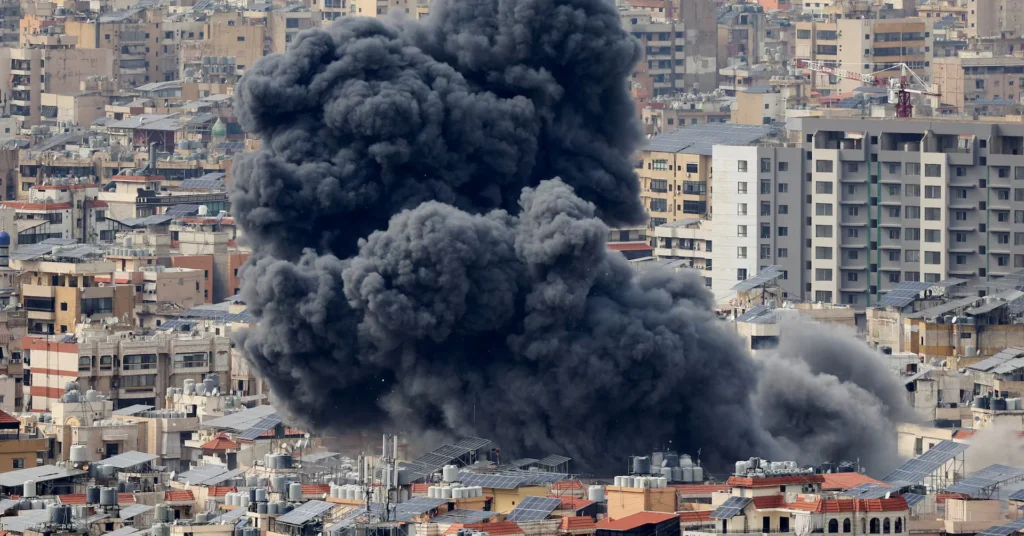

U.S. and Israel Attack Iran, Triggering Major Escalation and Global Legal Alarm

Tehran/Washington — February 28, 2026: A major military confrontation has erupted between Iran, the United States, and Israel after coordinated strikes on Iranian territory. According to Israeli authorities, the Israel Defense Forces (IDF) launched a pre-emptive strike against Iran, citing threats from Tehran’s nuclear and missile programs. The United States confirmed involvement in what President Donald Trump described as “major combat operations” against Iranian military targets.

Iran_strike

Explosions were widely reported in Tehran and other Iranian cities, with some strikes reportedly near strategic government and military facilities. Iran’s paramilitary Revolutionary Guard responded with a barrage of missiles and drones targeting Israel and, according to regional monitoring, a U.S. naval base in Bahrain. Civil defense sirens sounded in Israel as authorities warned of further retaliation.

This escalation marks a significant intensification of hostilities following earlier tensions, including a 12-day air war in June 2025 and prolonged disputes over Iran’s nuclear program and ballistic missile development.

Diplomatic and Nuclear Talk Breakdown

Before the outbreak of open hostilities, nuclear negotiations between the U.S. and Iran in Geneva ended without an agreement. Tehran had prepared a counterproposal aimed at preserving its civilian nuclear activity in exchange for sanctions relief, but negotiations faltered over missile restrictions and verification access for the International Atomic Energy Agency (IAEA). A recent confidential IAEA report indicates ongoing uncertainty about Iran’s enrichment activities due to limited monitoring access at key facilities.

Israel has framed its military action, dubbed Operation Lion’s Roar, as necessary to “remove existential threats” posed by Iran’s nuclear ambitions. Israeli Prime Minister Benjamin Netanyahu emphasized that Iran must not acquire nuclear weapons, reflecting long-standing national security doctrine shared by Washington.

Regional Fallout and International Repercussions

The conflict is already affecting regional stability:

  • Airspaces across parts of the Middle East have been closed, and international airlines have suspended flights to and from key hubs amid safety concerns.
  • Lebanon has publicly urged Hezbollah not to enter the conflict, warning of severe civilian consequences if hostilities spread beyond Iran and Israel.
  • A near-total internet blackout in Iran has been reported, complicating independent verification of events on the ground.

Multiple global actors have called for restraint, but the rapid escalation raises the possibility of a broader regional war. The U.S. has deployed substantial military assets in the region over the preceding weeks, including carrier strike groups and aerial forces, and expanded sanctions targeting Iranian oil networks and weapons supply chains, intensifying economic pressure alongside military action.

Legal and Policy Implications

The strikes and retaliatory actions carry complex legal ramifications under international law:

  • Use of Force and Self-Defense: Israel and the U.S. justify military action as pre-emptive self-defense against imminent threats posed by Iran’s alleged nuclear and missile programs. Under Article 51 of the UN Charter, pre-emptive strikes remain controversial and heavily contested in legal doctrine.
  • Sovereignty and Territorial Integrity: Unilateral military action on Iranian sovereign territory raises questions about the legality of force absent explicit United Nations Security Council authorization.
  • Sanctions Enforcement vs. Armed Conflict: The simultaneous use of broad sanctions and military operations blurs the lines between economic coercion and armed conflict law, inviting legal scrutiny into proportionality, civilian harm mitigation, and treaty obligations.

Governments around the world are closely monitoring developments as global markets react to geopolitical risk, and humanitarian organizations warn of widening civilian impact. This situation remains highly fluid. Casualty figures, diplomatic responses from other states, and future legal challenges, including potential International Court of Justice or UN Security Council involvement are expected as the conflict unfolds.

DHS Suspends TSA PreCheck and Global Entry Nationwide Amid U.S. Government Partial Shutdown

Washington, D.C. (2026) — The U.S. Department of Homeland Security (DHS) has suspended TSA PreCheck and Global Entry services at airports across the United States, triggering widespread disruption for millions of frequent travelers and raising fresh legal and political questions about federal shutdown management and essential aviation security services.

TSA_suspend

The suspension, which took effect 22 February 2026, follows the ongoing U.S. federal government shutdown that has significantly affected DHS operations and staffing across transportation security and border control agencies.

Why DHS Suspended TSA PreCheck and Global Entry

DHS officials confirmed that the suspension is directly linked to the government funding lapse, which has forced the temporary closure or reduction of several “non-essential” federal programs.

Trusted traveler programs including TSA PreCheck and Global Entry rely heavily on federal personnel for background checks, enrollment interviews, and system maintenance. With thousands of DHS and Transportation Security Administration (TSA) employees furloughed or working without pay, authorities determined that maintaining full program functionality was no longer operationally feasible.

The programs allow pre-approved, low-risk travelers to use expedited security lanes and automated border kiosks at dozens of U.S. and international airports. However, DHS announced that enrollment processing, renewals, and certain fast-track airport benefits have now been paused until funding resumes.

The suspension marks one of the most visible aviation impacts of the shutdown, affecting over 10 million TSA PreCheck users and more than 12 million Global Entry members worldwide.

Immediate Impact on Airports and Travelers

The halt in services means:

  • Travelers previously enrolled in expedited screening may face standard security lines at airports.
  • New applications and interviews for trusted traveler programs are temporarily frozen.
  • Some Global Entry kiosks and fast-track border systems are operating at reduced capacity.

Airports in major hubs including New York, Los Angeles, Chicago, Atlanta, and Dallas have reported longer processing times and increased congestion at immigration and security checkpoints.

Airlines and airport authorities have urged passengers to arrive earlier than usual as standard screening procedures resume for all travelers.

Legal and Administrative Implications

The suspension highlights significant legal and governance questions regarding:

Essential Services During Government Shutdowns

Under U.S. federal law, agencies must determine which programs qualify as “essential.” While core aviation security screening continues, expedited programs such as PreCheck and Global Entry fall into a gray area and can be halted during funding lapses.

Contractual and Consumer Rights Issues

Travelers who paid for multi-year membership in trusted traveler programs may raise legal questions about:

  • Service interruption without compensation
  • Membership validity extensions
  • Potential refund or credit claims

Legal experts note that program terms typically include government shutdown clauses limiting liability, making large-scale compensation unlikely.

Administrative Law and Oversight

Congressional oversight committees are expected to examine whether DHS properly classified trusted traveler programs as non-essential and whether prolonged suspension could undermine aviation security efficiency and border processing.

Political and Security Fallout

The suspension comes at a time of heightened political tension over federal spending and immigration policy. Aviation industry groups have warned that extended disruption could:

  • Damage international travel confidence
  • Increase airport congestion and security wait times
  • Impact tourism and business travel

Some lawmakers have called for emergency funding to restore critical aviation services, arguing that trusted traveler programs enhance security by allowing agencies to focus on higher-risk passengers.

What Happens Next

DHS has stated that TSA PreCheck and Global Entry operations will resume once federal funding is restored and normal staffing levels return. Until then, travelers are advised to:

  • Allow additional time for airport screening
  • Monitor DHS and TSA advisories
  • Expect continued delays at major international gateways

The episode highlights how government shutdowns increasingly affect not only federal workers but also global travel systems, raising broader questions about the legal classification of security-related services and the resilience of aviation infrastructure during fiscal crises.

Sanctions, Tariffs, and Global Trade: A Definitive Guide to Economic Statecraft in 2026

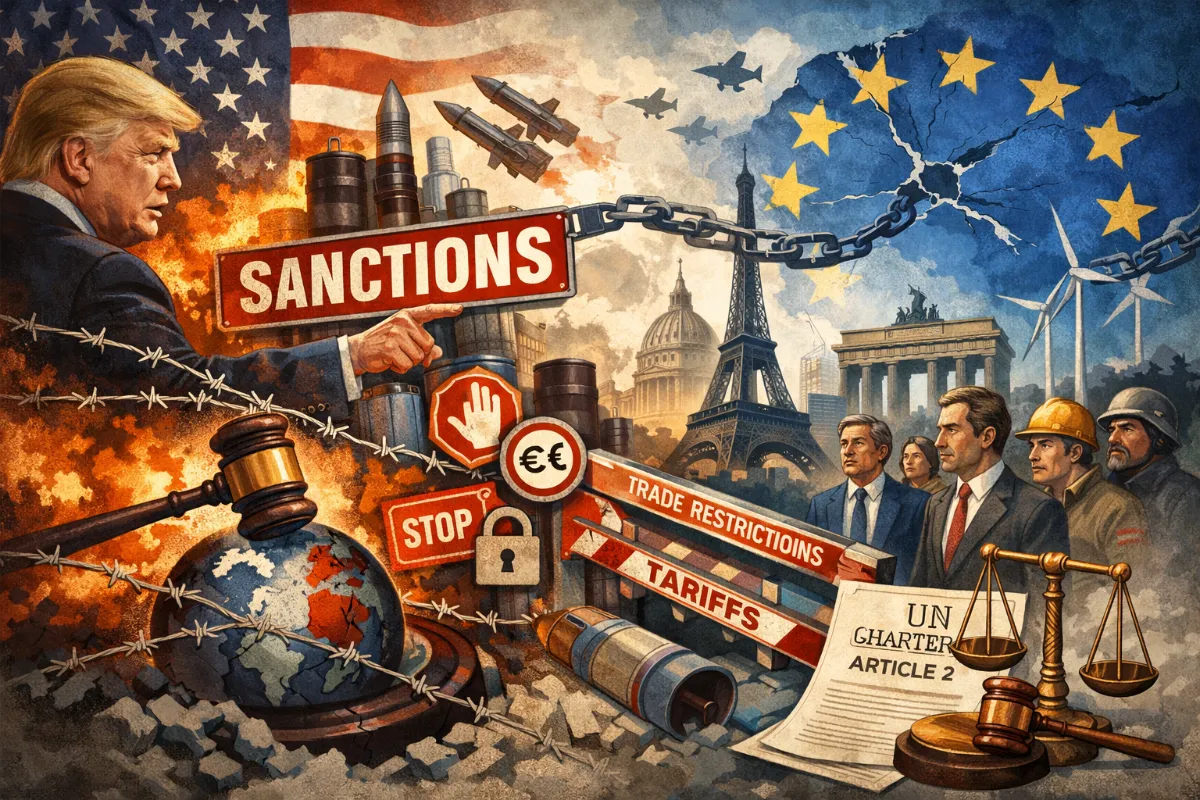
Economic sanctions and global trade represent two interconnected forces shaping the modern international economy. While global trade facilitates economic growth and interdependence, sanctions serve as powerful policy instruments through which nations pursue foreign policy objectives without military force. Tariffs, on the other hand, occupy a legally distinct but strategically connected space between traditional trade regulation and economic sanctions. While tariffs are formally trade policy instruments governed by domestic and international trade law, in modern geopolitics, they increasingly function as tools of economic coercion similar to sanctions.

tariffs_sanctions

As geopolitical tensions intensify and economic warfare becomes increasingly sophisticated in 2026, understanding sanctions and tariffs mechanisms, trade dynamics, and their far-reaching consequences has become essential for businesses, policymakers, investors, and engaged citizens worldwide. This comprehensive guide explores the nature of sanctions, their impact on global commerce, enforcement mechanisms, and the evolving landscape of economic statecraft.

Understanding Economic Sanctions: Definition and Purpose

Economic sanctions are deliberate, government-imposed commercial and financial penalties applied by one or more countries against a targeted country, group, or individual. They are primarily used to achieve national security and foreign policy objectives. Modern sanctions regimes are built on domestic legislation, executive powers, and multilateral legal instruments such as UN Security Council resolutions.

The U.S. Department of the Treasury defines sanctions as:

“economic and trade restrictions designed to promote national security and foreign policy objectives.”

Sanctions serve multiple strategic purposes. They function as tools of coercion by compelling policy change, as mechanisms of constraint by limiting access to technology and finance, and as instruments of signaling and punishment to enforce international norms. Increasingly, sanctions are also used to reinforce global standards relating to human rights, nuclear non-proliferation, and cyber governance.

According to the Peterson Institute for International Economics:

  • Coercion: Compelling target countries to change policies or behaviors
  • Constraint: Limiting a target’s ability to develop threatening capabilities
  • Signaling: Demonstrating resolve and commitment to allies and adversaries
  • Punishment: Imposing costs for violations of international norms
  • Norm reinforcement: Upholding international legal standards and values

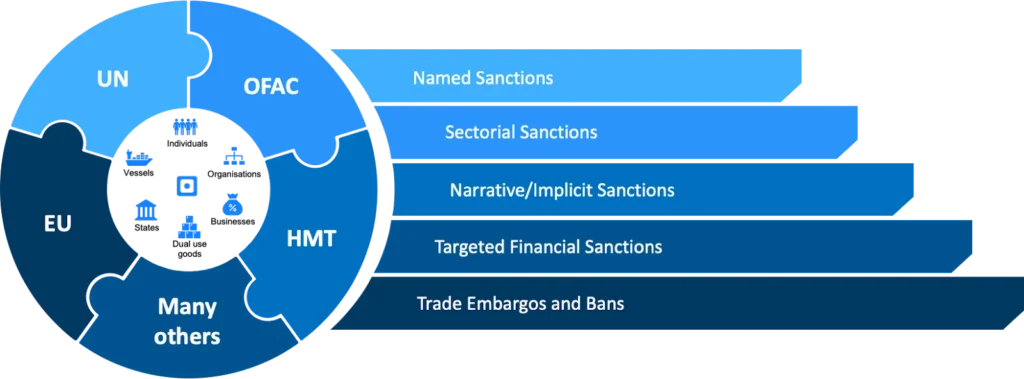
The institutional backbone of sanctions enforcement lies in agencies such as the U.S. Office of Foreign Assets Control (OFAC), the European External Action Service (EEAS), and UN sanctions committees. These bodies maintain designated lists of individuals and entities whose assets may be frozen or whose commercial access is restricted. By 2026, thousands of individuals, companies, and vessels remain subject to such designations across multiple jurisdictions.

The Office of Foreign Assets Control (OFAC), established in 1950, administers and enforces U.S. economic sanctions programs, currently maintaining over 30 active sanctions regimes. According to OFAC data, over 9,000 individuals, entities, vessels, and aircraft are currently designated on the Specially Designated Nationals (SDN) List.

Former U.S. Treasury Secretary Jacob Lew is of the view that:

“Sanctions have become the tool of choice for policymakers seeking to respond to international crises without resorting to military force.”

sanctions_type

Types of Economic Sanctions

Sanctions regimes have evolved from broad embargoes to more targeted measures designed to minimize humanitarian harm while maximizing political pressure.

Comprehensive Sanctions

Comprehensive sanctions prohibit virtually all trade and financial transactions with a target country. Historically applied to countries like Cuba, Iran, and North Korea, comprehensive sanctions represent the most severe form of economic pressure. The Congressional Research Service suggest that:

“comprehensive sanctions have become less common due to humanitarian concerns and limited effectiveness, with targeted sanctions now preferred.”

Current comprehensive sanctions programs include:

Targeted (Smart) Sanctions

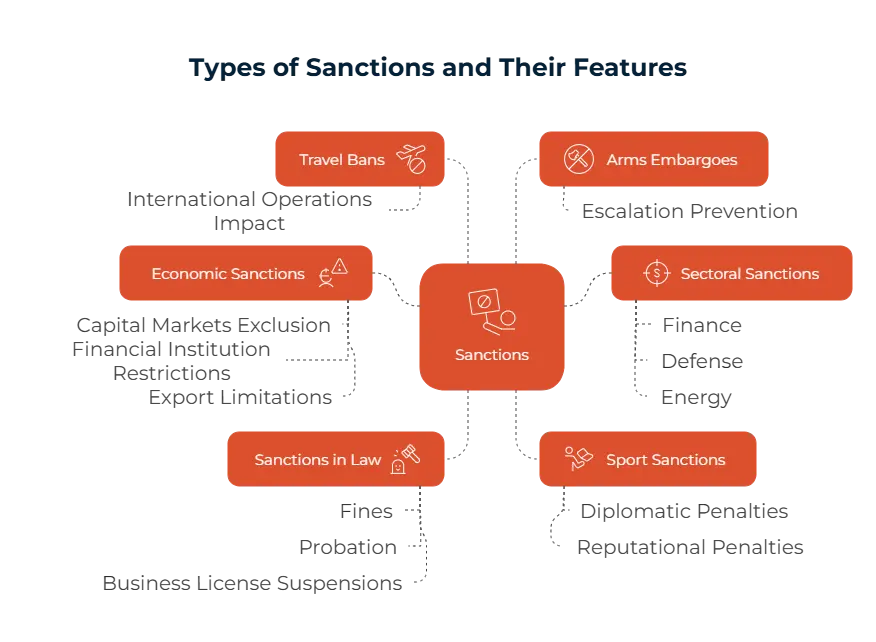
Targeted sanctions focus on specific individuals, entities, or sectors to minimize humanitarian impact while maximizing pressure on decision-makers. The United Nations Security Council pioneered targeted sanctions in the 1990s to address concerns about civilian suffering under comprehensive embargoes.

Common targeted sanction types include:

Asset Freezes: Blocking access to financial assets and property under sanctioning jurisdiction. The European Union sanctions database lists thousands of individuals and entities subject to EU asset freezes.

Travel Bans: Prohibiting entry into sanctioning countries. The UN Travel Ban List includes individuals associated with terrorism, conflict, and human rights abuses.

Sectoral Sanctions: Restricting specific economic sectors (energy, finance, defense) while allowing other commerce. U.S. sectoral sanctions against Russia target financial institutions, energy companies, and defense entities.

Arms Embargoes

Arms embargoes prohibit weapons sales and military equipment transfers to targeted countries or groups. The Stockholm International Peace Research Institute (SIPRI) maintains a database of multilateral arms embargoes, documenting 31 active UN arms embargoes as of 2026.

Financial Sanctions

Financial sanctions restrict access to international financial systems, particularly the dollar-denominated global economy. Measures include:

  • Prohibition on U.S. dollar transactions
  • Exclusion from SWIFT payment system
  • Restrictions on correspondent banking relationships
  • Limits on sovereign debt transactions
  • Blocking access to international capital markets

The Bank for International Settlements estimates that dollar-denominated transactions account for approximately 88% of global foreign exchange trades, making U.S. financial sanctions particularly powerful.

Major Sanctions Regimes in 2026

Russia Sanctions: Unprecedented Scope and Coordination

Following Russia’s 2022 invasion of Ukraine, the United States, the European Union, the United Kingdom, Japan, Canada, and allies implemented the most comprehensive sanctions ever imposed on a major economy. According to Castellum.AI’s Russia Sanctions Dashboard:

“over 13,000 Russian individuals and entities face sanctions as of 2026.”

Key measures include:

  • Asset freezes on Russian Central Bank reserves (approximately $300 billion frozen)
  • Export controls on advanced technology and dual-use goods
  • Oil price cap mechanism limiting Russian petroleum revenues
  • SWIFT exclusion for major Russian banks
  • Luxury goods and services prohibitions
  • Restrictions on Russian energy imports (phased implementation in EU)

The Atlantic Council’s Russia Tracker monitors implementation and impact, noting Russia’s GDP contracted 2.1% in 2022 but showed resilience through 2024 via sanctions evasion and trade reorientation toward China, India, and Turkey.

Iran Sanctions: Maximum Pressure Campaign

U.S. sanctions on Iran, particularly those reimposed after withdrawing from the Joint Comprehensive Plan of Action (JCPOA), targets Iran’s oil exports, banking sector, and nuclear program. The U.S.-Iran sanctions regime includes:

  • Secondary sanctions penalizing third parties conducting business with Iran
  • Designation of Iran’s Revolutionary Guard Corps as a terrorist organization
  • Restrictions on oil exports (reduced from 2.5 million barrels/day in 2018 to under 1 million by 2023)
  • Banking sector isolation limiting international transactions

The International Crisis Group reports that:

“sanctions contributed to 40% inflation in Iran by 2023, though the regime has adapted through sanctions evasion networks and regional proxy relationships.”

North Korea Sanctions: Countering Nuclear Proliferation

North Korea faces some of the world’s most stringent sanctions due to its nuclear weapons program. UN Security Council resolutions prohibit:

  • Arms and luxury goods exports to North Korea
  • North Korean coal, textiles, and seafood exports
  • Joint ventures with North Korean entities
  • Supply of refined petroleum products beyond capped amounts
  • Financial transactions supporting prohibited activities

Despite comprehensive sanctions, North Korea has developed sophisticated evasion techniques including ship-to-ship transfers, cryptocurrency theft, and cyber operations. The Center for Strategic and International Studies (CSIS) Beyond Parallel program tracks sanctions implementation and North Korean circumvention efforts.

China-Related Sanctions: Technology and Human Rights

U.S. sanctions targeting China focus on technology transfer, human rights violations in Xinjiang, and entities supporting China’s military modernization. The Entity List administered by the Bureau of Industry and Security includes hundreds of Chinese companies restricted from receiving U.S. technology.

Key programs include:

  • Export controls on semiconductor manufacturing equipment
  • Sanctions on officials responsible for human rights abuses under the Global Magnitsky Act
  • Restrictions on Chinese telecommunications companies
  • Investment prohibitions in companies supporting China’s military-industrial complex

Export controls on advanced semiconductor technologies and restrictions on telecommunications firms demonstrate how sanctions now operate as tools of technological competition and strategic containment rather than solely traditional foreign policy pressure.

Global Trade: The Foundation of Economic Interdependence

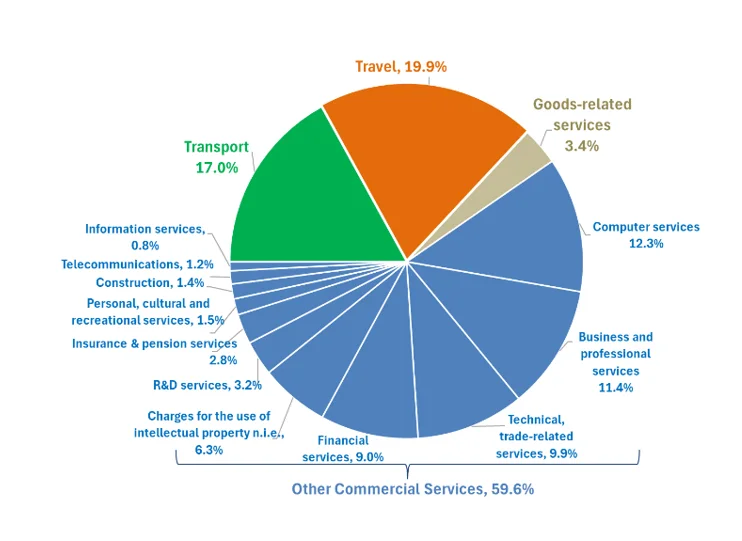
Global trade, the exchange of goods and services across international borders, forms the backbone of the modern world economy. The World Trade Organization (WTO) reports that global merchandise trade reached $25.3 trillion in 2024, with services trade contributing an additional $7.5 trillion.

Benefits of International Trade

International trade generates substantial economic benefits according to the International Monetary Fund (IMF):

  • Economic growth: Trade expansion contributes 1-2% annually to global GDP growth
  • Consumer welfare: Access to diverse, affordable products improves living standards
  • Efficiency: Comparative advantage allows countries to specialize in production
  • Innovation: Competition and knowledge transfer drive technological advancement
  • Development: Trade integration lifts countries from poverty (China, Vietnam examples)

The Peterson Institute for International Economics estimates that:

“trade liberalization since 1945 has increased U.S. GDP by approximately $2.1 trillion annually, equivalent to $18,000 per household.”

stat_31jul25_chart2

Source:WTO Trade Statistics Database

Key International Trade Agreements

World Trade Organization: The WTO, established in 1995, provides the multilateral framework governing international trade through agreements including GATT (goods), GATS (services), and TRIPS (intellectual property). With 164 member countries representing 98% of global trade, the WTO facilitates negotiations and resolves disputes through its Dispute Settlement Body.

Regional Trade Agreements: The WTO Regional Trade Agreements Database documents 355 active regional trade agreements as of 2025, including:

Frédéric Bastiat, French economist is of the view that:

“When goods don’t cross borders, soldiers will.”

Tariffs as Trade Law Instruments

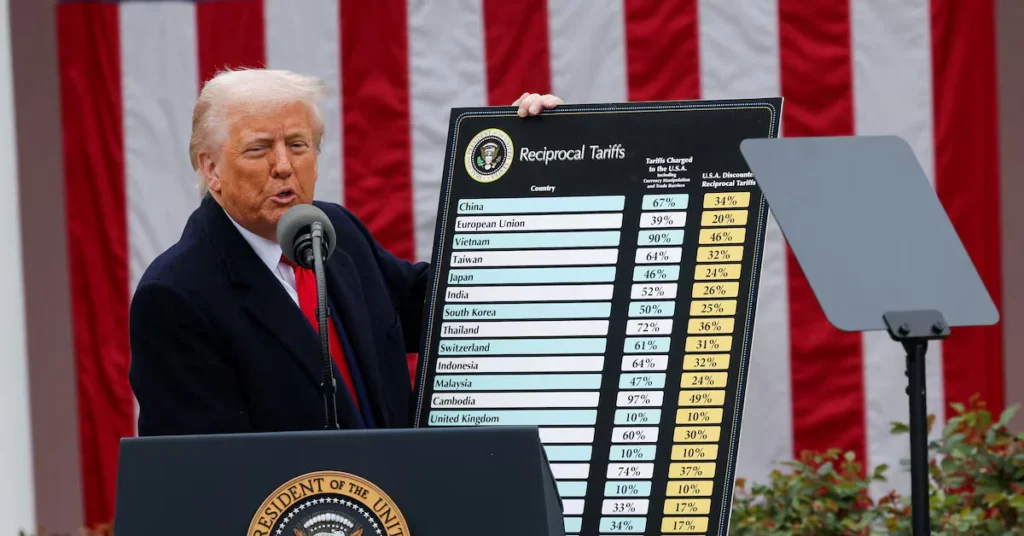
Tariffs are taxes imposed on imported goods and are traditionally justified under domestic trade statutes and World Trade Organization (WTO) rules. In the United States, tariffs are imposed through statutory authorities such as:

Under WTO law, tariffs are generally permitted but must comply with bound tariff rates and non-discrimination principles. However, national security exceptions and unilateral trade remedies provide legal flexibility, allowing tariffs to be used for geopolitical objectives.

Tariffs as De Facto Economic Sanctions

Although legally distinct from sanctions, tariffs often operate as de facto sanctions when imposed to compel policy change or punish geopolitical behavior. The key difference lies in legal framing:

  • Sanctions: Usually imposed under national security or foreign policy emergency powers, often targeting specific entities or sectors.
  • Tariffs: Imposed as trade measures but increasingly used to exert political pressure.

When tariffs are imposed to influence foreign policy—such as pressuring allies over defense spending, technology transfers, or geopolitical alignment, they function as economic coercive tools similar to sanctions.

Strategic Functions of Tariffs in Economic Statecraft

Modern U.S. tariff policy serves several strategic purposes within the broader sanctions–trade framework.

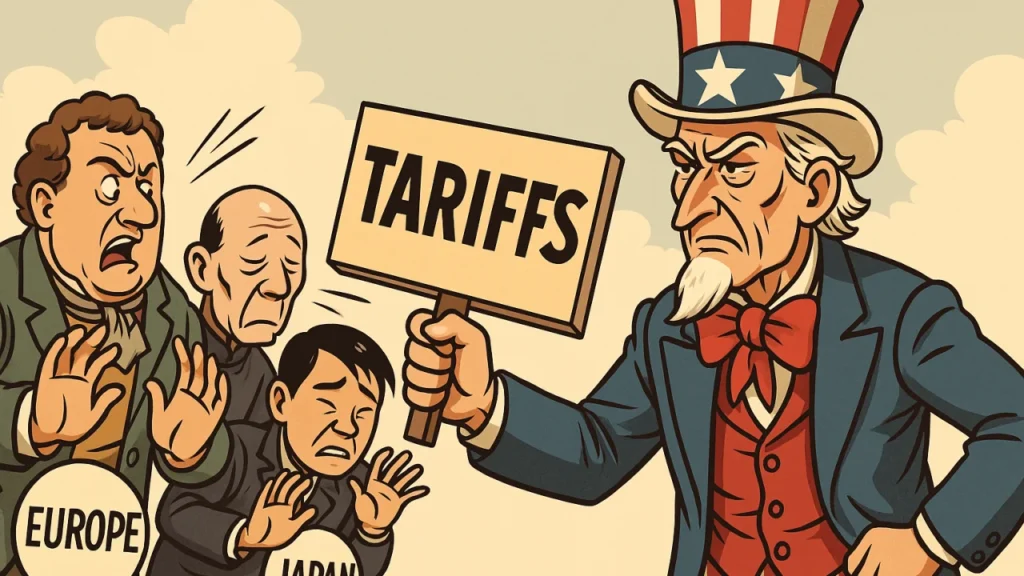
First, tariffs function as coercive leverage. By threatening or imposing tariffs on key exports, the U.S. can pressure states to alter trade relationships, technology cooperation, or security policies without invoking formal sanctions regimes.

Second, tariffs serve as signaling mechanisms. Announcing tariffs communicates geopolitical dissatisfaction or strategic red lines while avoiding the legal escalation associated with formal sanctions.

Third, tariffs act as supply-chain control tools. Tariffs targeting strategic industries—such as semiconductors, electric vehicles, or critical minerals—aim to reshape global production networks and reduce dependency on geopolitical competitors.

Fourth, tariffs operate as alternatives to sanctions where formal sanctions may be diplomatically or legally difficult. Tariffs allow economic pressure without triggering the full legal and diplomatic consequences of sanctions regimes.

Legal Overlap Between Tariffs and Sanctions

The boundary between tariffs and sanctions is increasingly blurred. In many cases, tariffs complement or reinforce sanctions frameworks. For example:

  • Tariffs may precede sanctions as warning measures.
  • Tariffs may accompany export controls and investment restrictions.
  • Tariffs may target allies rather than adversaries, reflecting trade imbalance or strategic concerns.
  • Tariffs can be imposed under national security justifications similar to sanctions.

From a legal perspective, tariffs are easier to impose because they rely on domestic trade statutes rather than emergency powers or UN authorization. However, when used coercively, they may raise questions under WTO law, particularly regarding discrimination and misuse of national security exceptions.

Tariffs, WTO Law, and International Legal Controversy

The use of tariffs as geopolitical tools has generated significant legal debate. WTO rules generally prohibit discriminatory tariffs and require adherence to agreed tariff ceilings. However, states increasingly invoke national security exceptions under Article XXI of the General Agreement on Tariffs and Trade (GATT) to justify unilateral measures.

Tariffs

The expanded use of tariffs for geopolitical purposes risks undermining the multilateral trading system. If tariffs are widely used as coercive instruments, the distinction between trade regulation and sanctions becomes largely symbolic, potentially weakening WTO dispute settlement mechanisms and encouraging retaliatory trade measures.

Tariffs in the 2026 Economic Statecraft Framework

By 2026, tariffs are best understood as part of a continuum of economic statecraft tools that includes:

Within this continuum, tariffs represent the most flexible and politically deployable instrument. They allow governments to apply pressure without formally invoking sanctions law while still producing significant economic impact.

The Intersection: How Sanctions Affect Global Trade

Sanctions fundamentally disrupt normal trade patterns, creating winners and losers while reshaping commercial relationships. The International Monetary Fund estimates that sanctions imposed since 2022 affect countries representing approximately 40% of global GDP.

Direct Trade Disruption

Sanctions directly prohibit trade in specific goods, services, or with designated entities. According to UN Conference on Trade and Development (UNCTAD), Russia sanctions disrupted approximately $400 billion in annual bilateral trade between Russia and sanctioning countries.

Commodity Markets: Russia and Ukraine accounted for 30% of global wheat exports and 80% of sunflower oil exports before the war. Food and Agriculture Organization (FAO) data shows grain prices spiked 40% in 2022, impacting food security in developing countries.

Energy Markets: Russian energy sanctions reshaped global oil and gas flows. The International Energy Agency (IEA) reports European natural gas imports from Russia fell from 155 bcm in 2021 to 80 bcm in 2023, replaced by Norwegian pipeline gas and LNG from Qatar, U.S., and other sources.

Financial System Fragmentation

Financial sanctions accelerate trends toward payment system diversification and de-dollarization. The Bank for International Settlements notes:

  • Increased bilateral currency arrangements bypassing dollar settlement
  • Development of alternative payment systems (CIPS in China, SPFS in Russia)
  • Rising gold purchases by central banks seeking sanctions-proof reserves
  • Cryptocurrency adoption for sanctions evasion (though limited in scale)

Supply Chain Reorientation

Sanctions drive supply chain restructuring as companies de-risk exposure to sanctioned jurisdictions. The McKinsey Global Institute identifies “friend-shoring” and “near-shoring” trends where companies relocate production to politically aligned or geographically proximate countries.

Technology Sector: U.S. semiconductor export controls require companies to restructure supply chains excluding Chinese manufacturers from advanced chip production. The Semiconductor Industry Association estimates this affects $15 billion in annual equipment sales.

Third-Party Effects and Sanctions Evasion

Sanctions create opportunities for third countries to serve as intermediaries or substitute suppliers. The Carnegie Endowment for International Peace documents sanctions evasion through:

  • Transshipment through neutral jurisdictions
  • Corporate restructuring to obscure ownership
  • Use of shell companies and offshore financial centers
  • Trade with non-sanctioning countries (China, India, Turkey for Russia)
  • Maritime deception (turning off transponders, ship-to-ship transfers)

Sanctions Compliance and Enforcement

Corporate Compliance Requirements

Companies operating internationally face complex sanctions compliance obligations. The Association of Certified Financial Crime Specialists identifies key compliance elements:

  • Screening: Checking customers, vendors, and transactions against sanctions lists
  • Due diligence: Investigating business partners and beneficial ownership
  • Training: Educating employees on sanctions requirements
  • Monitoring: Ongoing transaction surveillance for red flags
  • Reporting: Filing suspicious activity reports with regulators
  • Auditing: Regular compliance program assessments

Violations carry severe penalties. OFAC has assessed over $8 billion in civil penalties since 2008, with individual violations reaching hundreds of millions. The U.S. Department of Justice pursues criminal prosecutions for willful sanctions violations.

Enforcement Mechanisms

Sanctions enforcement operates through multiple channels:

Financial System Controls: Banks screen transactions against OFAC’s SDN List and other sanctions lists, blocking or rejecting prohibited payments. The Wolfsberg Group provides industry guidance on sanctions compliance.

Export Controls: The Bureau of Industry and Security enforces export controls through licensing requirements, end-use monitoring, and violations investigations.

Customs Enforcement: U.S. Customs and Border Protection intercepts prohibited imports and enforces trade sanctions at ports of entry.

International Cooperation: The Financial Action Task Force (FATF) coordinates international standards for sanctions implementation and countering sanctions evasion.

ACAMS_Sanctions

Source: ACAMS Sanctions Compliance Guidelines

Effectiveness and Limitations of Sanctions

Measuring Sanctions Success

Assessing sanctions effectiveness remains contentious. The Peterson Institute database analyzing 200+ sanctions episodes since 1914 finds only 34% achieved their objectives. Factors affecting success include:

  • Target vulnerability: Economic dependence on sanctioning countries
  • Multilateral coordination: Broad participation prevents evasion
  • Duration: Longer sanctions face diminishing effectiveness
  • Regime type: Authoritarian regimes more resilient than democracies
  • Objective clarity: Specific, achievable goals versus vague aspirations

Unintended Consequences

Sanctions generate various unintended effects documented by the International Crisis Group:

  • Humanitarian impact: Civilians suffer more than ruling elites
  • Rally-around-the-flag effect: Nationalism strengthens targeted regimes
  • Economic adaptation: Black markets and smuggling networks emerge
  • Collateral damage: Third-party businesses and countries harmed
  • Strategic reorientation: Targets develop alternative partnerships (Russia-China deepening)

Conclusion

Sanctions and global trade represent complementary aspects of economic interdependence; trade creates connections that sanctions can leverage or sever. Legally grounded in trade law but strategically deployed for geopolitical objectives, tariffs have become central to modern economic statecraft. As geopolitical competition intensifies in 2026, economic statecraft increasingly supplements or substitutes for military force in pursuing national interests.

The effectiveness of future sanctions depends on maintaining multilateral coordination, developing sophisticated evasion countermeasures, minimizing humanitarian harm, and integrating economic pressure with diplomatic and strategic initiatives. Meanwhile, global trade faces pressures from sanctions fragmentation, supply chain security concerns, and technology competition, potentially reversing decades of liberalization.

As global economic competition intensifies, tariffs are likely to remain a preferred tool for exerting pressure on both adversaries and allies. Their increasing use for strategic purposes signals a transformation in international economic law, where the boundary between trade policy and sanctions policy continues to blur, reshaping the global trading system and redefining how economic power is exercised in international relations.

Success requires balancing economic efficiency gains from trade integration with strategic resilience needs, calibrating sanctions to achieve objectives without undermining long-term economic prosperity, and developing international frameworks managing the intersection of commerce and security in an increasingly contested global economy.

Frequently Asked Questions

What is the difference between sanctions and embargoes?

An embargo is a specific type of sanction prohibiting all trade with a target country, essentially a comprehensive trade ban. Sanctions is a broader term encompassing embargoes plus other measures like asset freezes, travel bans, financial restrictions, and targeted sector prohibitions. Modern policy favors targeted sanctions over comprehensive embargoes to minimize humanitarian impact while maintaining pressure on decision-makers.

Are tariffs the same as economic sanctions?

No. Tariffs and sanctions are legally different tools. Tariffs are taxes on imports imposed under trade laws, while sanctions are restrictions imposed for national security or foreign policy reasons under emergency or sanctions legislation. However, in practice tariffs can function like sanctions when used to pressure countries politically or economically.

Can sanctions be imposed without UN Security Council approval?

Yes. Individual countries can impose unilateral sanctions based on their domestic law and foreign policy objectives. Regional organizations like the EU can also implement collective sanctions. However, UN Security Council sanctions under Chapter VII of the UN Charter are binding on all member states and carry greater international legitimacy and enforcement coordination.

Can tariffs be used against allies, or only adversaries?

Yes. Unlike traditional sanctions that usually target adversaries, tariffs can be imposed on allies as well. The U.S. has used tariff threats or measures against partners over trade imbalances, technology cooperation with rival states, and strategic economic policies. This reflects tariffs’ role as a negotiation and leverage tool.

Do sanctions actually work?

Effectiveness varies significantly based on objectives, implementation, and context. Research shows sanctions achieve complete policy goals only 30-40% of the time but may partially succeed more often. Sanctions work best when: objectives are limited and specific, implementation is multilateral, targets are economically vulnerable, and pressure combines with diplomatic engagement providing compliance pathways.

Are U.S. tariffs legal under international trade law?

Tariffs are legal under World Trade Organization (WTO) rules if they comply with agreed tariff limits and non-discrimination principles. However, disputes arise when tariffs are imposed for political or security reasons. Countries often invoke the national security exception under WTO law to justify such tariffs, though this remains controversial.

How do tariffs affect global trade and supply chains?

Tariffs can significantly reshape global trade by increasing costs, redirecting supply chains, and encouraging companies to shift production. They can trigger retaliatory tariffs, trade disputes, and new trade alliances, leading to fragmentation of global commerce and the rise of “friend-shoring” or regional supply chains.

How do sanctions affect ordinary people?

Sanctions typically harm civilians more than targeted elites, causing unemployment, inflation, shortages of essential goods, and reduced access to medicine and food, particularly under comprehensive sanctions. This led to the development of “smart sanctions” targeting specific individuals and sectors. However, even targeted sanctions create economic ripple effects impacting broader populations, raising ongoing debates about humanitarian consequences versus policy effectiveness.

Could widespread tariff use weaken the global trading system?

Yes. If tariffs are increasingly used for geopolitical pressure rather than trade regulation, they may undermine WTO rules and encourage retaliatory trade wars. This could weaken multilateral trade governance and shift the global economy toward more fragmented and politically driven trade relations.

Trump Unleashes Global 15% Tariff After Supreme Court Clash, Triggering Constitutional and Trade Shockwaves

A dramatic constitutional and economic confrontation has erupted in Washington after Donald Trump launched a sweeping new 10% global tariff proposal shortly after publicly attacking a recent U.S. Supreme Court ruling. This 10% tariff as of now has further been increased to 15%, that has stunned global markets and ignited intense debate among legal experts, with critics warning that linking trade retaliation to judicial disagreement risks pushing the United States into a historic separation-of-powers and international trade crisis.

Trump_tariffs

The proposed tariff regime, framed by Trump as an “economic reset” following what he called an unfavorable court decision, could reshape global commerce while simultaneously testing the constitutional limits of presidential authority. Lawyers and policy analysts say the move may trigger a wave of domestic litigation and international trade disputes within weeks.

Legal observers describe the announcement as a direct political counter-move to the Supreme Court decision, with Trump publicly arguing that the judiciary had “interfered” with the executive branch’s ability to defend U.S. economic interests.

The dispute follows the landmark February 2026 Supreme Court ruling in Learning Resources, Inc. v. Trump, where the Court held that the International Emergency Economic Powers Act (IEEPA) does not authorize a president to impose tariffs without congressional approval. The majority opinion concluded that the statute’s language does not grant unilateral tariff-setting authority, rejecting the administration’s argument that emergency economic powers permitted sweeping import duties.

Supreme Court Criticism Sparks Institutional Showdown

Trump’s sharp criticism of the Supreme Court itself carries no direct legal penalty under U.S. law, as political leaders retain wide free-speech protection to challenge judicial reasoning. However, the legal storm centers on what came next: a sweeping tariff announcement widely interpreted as a retaliatory policy move following the ruling.

Constitutional scholars warn that while presidents may disagree with court judgments, they cannot legally bypass or undermine binding judicial interpretations. If the tariff plan is perceived as an attempt to circumvent judicial limits on executive authority, federal courts could be asked to intervene quickly through emergency injunctions.

Legal observers describe the situation as one of the most serious institutional confrontations in years between the executive branch and the judiciary over economic powers. Such litigation would center on the separation of powers doctrine, which requires the executive branch to comply with judicial interpretations of law. Persistent attempts to bypass a ruling could trigger constitutional disputes over executive overreach.

Legal Basis for Global Tariffs Under Scrutiny

The administration is expected to rely on existing trade laws such as Section 301 of the Trade Act of 1974 and Section 232 of the Trade Expansion Act to justify the tariffs. These statutes allow tariffs under specific conditions, including national security concerns or unfair trade practices.

However, legal experts stress that such laws require formal investigations, evidence-based findings, and procedural safeguards before tariffs can be imposed. A blanket global tariff without detailed justification could face immediate legal challenges under the Administrative Procedure Act.

Major business groups and import-dependent industries are already preparing lawsuits arguing that sweeping tariffs without statutory compliance would exceed presidential authority and violate established trade law procedures.

Congress and Courts May Move to Block Tariff Plan

The unfolding dispute has also reignited debate over Congress’s constitutional power to regulate commerce. Lawmakers from both parties are reportedly considering oversight hearings and possible legislative action to restrict executive tariff powers if the proposed measures proceed.

Courts could also become a decisive battleground. If affected companies or states file legal challenges, judges may examine whether the tariffs are grounded in lawful statutory authority or represent an attempt to bypass judicial limits. A finding of executive overreach could lead to immediate suspension or invalidation of the tariffs.

White House officials indicated that new tariffs could be introduced under trade-deficit or national-security justifications rather than emergency economic powers previously struck down by the Court.

Global Trade Fallout and WTO Risks

International reaction has been swift, with major trading partners warning that across-the-board tariffs could violate World Trade Organization obligations. Governments in Europe and Asia are already evaluating retaliatory measures and possible WTO dispute filings.

Trade lawyers note that a unilateral global tariff could trigger one of the largest waves of trade litigation in years, potentially leading to counter-tariffs on U.S. exports and escalating economic tensions worldwide. Multinational companies fear sudden cost increases, disrupted supply chains, and contract disputes as uncertainty spreads across global markets.

Economic Shockwaves and Investor Anxiety

Financial markets responded cautiously to the announcement, with investors warning that sudden tariff shifts could destabilize international trade flows. Corporate groups have cautioned that abrupt policy changes may trigger commercial litigation, supply-chain restructuring, and even investor-state arbitration claims if foreign investors suffer losses.

Economists warn that the combination of constitutional conflict and global trade escalation could amplify market volatility and strain diplomatic ties with key allies.

A Defining Test of Presidential Power

At its core, the confrontation raises a profound legal question: can a president deploy sweeping trade measures immediately after a Supreme Court setback without violating constitutional limits? While political criticism of the judiciary is protected speech, policy actions perceived as retaliatory against court rulings may face swift judicial scrutiny.

The coming weeks are expected to determine whether Trump’s tariff strategy survives constitutional and international legal challenges. If struck down, the dispute could redefine the limits of presidential trade authority. If upheld, it may signal a new era where economic policy becomes a frontline tool in institutional power struggles.

Either way, the clash has already transformed into one of the most sensational legal and geopolitical showdowns of 2026, a high-stakes battle over tariffs, courts, and the boundaries of executive power.

Prince Andrew Released Under Investigation as Epstein Fallout Continues

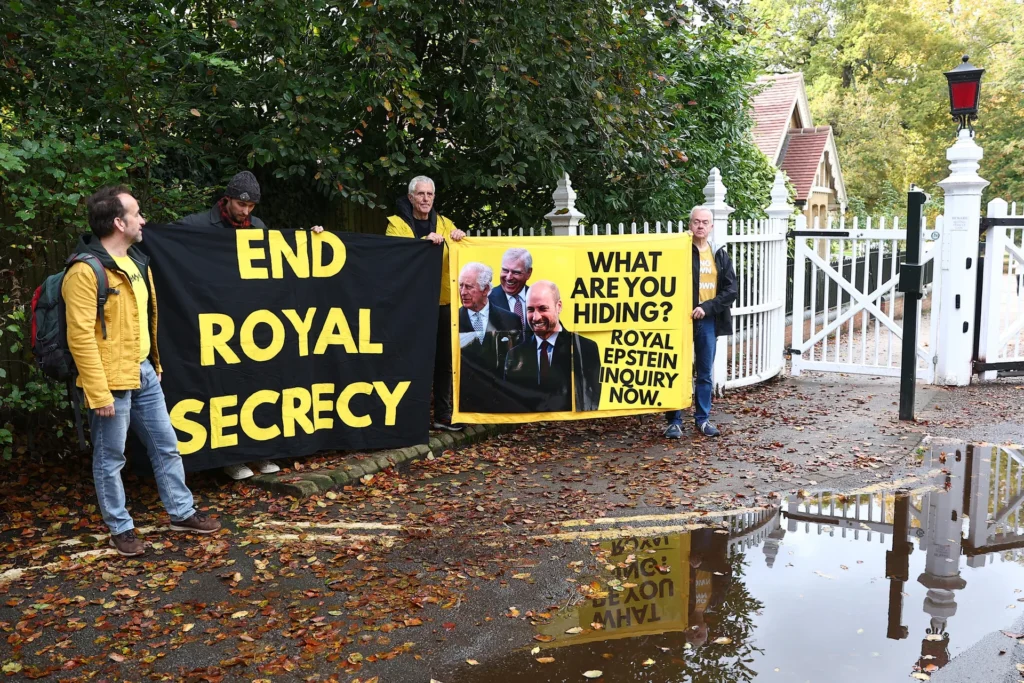
Former British royal Prince Andrew has been released under investigation following his recent arrest by UK authorities in connection with the widening fallout from newly disclosed Epstein-related files. The development marks one of the most serious legal escalations in the long-running scandal linking the Duke of York to convicted sex offender Jeffrey Epstein and his network.

Prince_Secrecy

Why Prince Andrew Was Arrested and Released

UK police confirmed that Prince Andrew was detained on suspicion of misconduct in public office before being released pending further investigation. Authorities are examining whether he improperly used his official position as a former UK trade envoy and member of the royal family to share confidential or sensitive information with Epstein or associated individuals.

The arrest follows a wave of newly released documents and emails suggesting that Andrew may have maintained contact with Epstein even after the financier’s conviction and may have shared privileged information relating to his official duties.

Being “released under investigation” means Andrew has not been charged but remains a suspect while authorities review evidence and determine whether criminal charges are warranted. This status allows investigators to continue examining communications, financial links, and potential misuse of public office without imposing immediate bail conditions.

Why Prince Andrew Is Linked to Jeffrey Epstein

Prince Andrew’s association with Epstein dates back decades and has long drawn scrutiny from law enforcement and civil litigants. Key factors linking him to Epstein include:

  • A widely circulated photograph showing Andrew with Epstein associate Virginia Giuffre and Ghislaine Maxwell.
  • Allegations that he maintained contact with Epstein after Epstein’s earlier conviction.
  • Civil claims filed in U.S. courts accusing him of misconduct, which were later settled out of court without admission of liability.
  • Newly surfaced communications suggesting ongoing links between Andrew and Epstein’s network.

In February 2022, Prince Andrew and Giuffre reached a reported multimillion-dollar settlement in the U.S. District Court for the Southern District of New York, resolving allegations that the prince sexually assaulted Giuffre when she was a minor, in connection with Epstein’s trafficking network. Settlement terms included monetary compensation and a mutual non-disparagement agreement.

Epstein_Files

However, confidentiality clauses and third-party release provisions sparked criticism from transparency advocates and survivors’ rights groups. Recent document releases have intensified scrutiny by raising questions about whether Andrew’s interactions with Epstein overlapped with his official governmental role as a trade envoy.

Prince Andrew has consistently denied liability and wrongdoing, asserting that he did not commit the acts alleged and that the settlement was a pragmatic resolution to avoid protracted litigation. Following the civil settlement and his withdrawal from public royal duties, his legal team has focused on maintaining confidentiality protections and limiting additional legal exposure.

Scope of the Current Investigation

The investigation now focuses on potential criminal exposure under UK law, particularly:

Misconduct in Public Office: Authorities are assessing whether Andrew used his public role to provide confidential information or assistance to Epstein or related individuals. This offense applies when a public office holder abuses their position in a way that undermines public trust.

Obstruction or Improper Influence: Investigators are reviewing whether Andrew attempted to interfere with or influence investigations, witnesses, or complainants connected to Epstein-related allegations.

Financial and Communications Review: Police and prosecutors are reportedly examining communications records, travel logs, and financial connections to determine whether any unlawful activity occurred during or after his tenure as trade envoy.

Legal Consequences Prince Andrew Could Face

If formal charges are filed and proven, Prince Andrew could face serious legal consequences:

Criminal prosecution in UK courts – Misconduct in public office can carry significant prison sentences depending on severity and proven intent.

Further civil litigation – New evidence could reopen or trigger additional civil claims from alleged victims or related parties in multiple jurisdictions.

Loss of remaining privileges and titles – Andrew has already faced the removal of many royal roles and honors; further legal findings could result in the complete stripping of remaining titles and state privileges.

International legal exposure – If evidence links him to actions affecting other jurisdictions, requests for cooperation or additional investigations could arise from foreign authorities.

Potential Enforcement Issues and Cross-Border Implications

While the 2022 settlement resolved U.S. civil claims, enforcement of settlement provisions may have cross-border dimensions. Giuffre’s recent motions request that the court clarify sanctions for breach of settlement terms and whether ancillary records may be disclosed to foreign regulatory or law-enforcement authorities investigating related matters.

European jurisdictions and the United Kingdom have previously examined aspects of Epstein-linked wrongdoing, and analysts suggest that renewed U.S. disclosure could catalyze inquiries into financial transactions, immigration records, or custodial cooperation across jurisdictions.

Governors of inquiry in the U.K. have faced legal debates over extradition cooperation and mutual legal assistance treaties when requests intersect with diplomatic immunities and sovereign privileges.

Broader Implications

The arrest and ongoing investigation represent a major escalation in the global Epstein scandal, which continues to generate political and legal fallout across multiple countries. Newly released documents have already prompted calls for further transparency and accountability among high-profile figures linked to Epstein’s network.

For UK authorities, the case raises sensitive constitutional questions about whether members of the royal family can be prosecuted for alleged misuse of public office and how such cases intersect with state immunity, public accountability, and international scrutiny.

While Prince Andrew has not been charged and denies wrongdoing, the decision to release him under investigation signals that prosecutors consider the allegations serious enough to warrant continued criminal inquiry. The outcome will likely shape not only Andrew’s legal future but also broader debates about accountability for public figures connected to the Epstein network.

Looking Ahead

As motions for disclosure and enforcement clarification move through the U.S. federal court system, legal analysts expect further argument on the balance between confidentiality, enforceability, and the public interest. While criminal investigation into Epstein-linked conduct has largely concluded following Epstein’s death in 2019, civil litigation has continued to expose structural issues in how complex abuse cases are resolved.

Observers will closely watch whether the court expands access to settlement records and what implications this may have for international cooperation, survivors’ rights advocacy, and future jurisprudence involving high-profile civil settlements in abuse and trafficking contexts. The saga exemplifies ongoing tensions between private resolution mechanisms and public accountability in cross-border law enforcement and human rights enforcement.

State Use of Force and Accountability: Legal Limits Under International Law in 2026

State accountability for the use of force remains one of the most contested and evolving areas of modern law and governance. In 2026, questions surrounding when governments may legitimately employ violence, through police action, military operations, or public order enforcement, have intensified across democracies and authoritarian systems alike. Incidents involving police shootings, crowd control measures, counter-terrorism operations, and wartime civilian casualties have renewed global focus on the legal frameworks governing state violence and the mechanisms designed to prevent abuse.

The central challenge today lies not in the absence of legal standards, but in ensuring effective enforcement and accountability when those standards are breached. This comprehensive legal analysis examines the legal limits on governmental use of force, oversight and accountability mechanisms, civil remedies for violations, and the role of international law in shaping state responsibility.

Legal Standards Governing State Use of Force

The legality of state force is governed by a layered framework combining constitutional law, statutory provisions, administrative regulations, and international human rights norms. At its core lies the principle that state violence must be lawful, necessary, proportionate, and accountable.

In the United States and many comparable jurisdictions, the constitutional standard for police use of force derives from Fourth Amendment jurisprudence. Courts assess whether force was “objectively reasonable” under the circumstances. This requires evaluating the severity of the alleged crime, the immediacy of the threat posed, and whether the individual resisted or attempted to evade arrest. Deadly force is permissible only where there is probable cause to believe that a suspect poses a serious threat of death or grievous injury.

International human rights law imposes even stricter standards. The UN Basic Principles on the Use of Force and Firearms require that force be used only as a last resort, and lethal force only when strictly unavoidable to protect life. These principles emphasize necessity, proportionality, and precaution. The intentional use of lethal force is lawful only when absolutely required to protect human life, not merely to enforce compliance or maintain order.

Military use of force operates within the framework of international humanitarian law. The Geneva Conventions and customary international law impose obligations of distinction, proportionality, and precaution. Armed forces must distinguish between combatants and civilians, avoid excessive civilian harm relative to military advantage, and take feasible precautions to minimize casualties. Violations may constitute war crimes.

Use of force during protests presents unique legal challenges. Under international human rights law, peaceful assembly is protected. Force against protesters must be exceptional, targeted, and proportionate. Indiscriminate use of tear gas, rubber bullets, or mass arrests against peaceful demonstrators may constitute unlawful repression and trigger state responsibility.

Even outside armed conflict, targeted killings, drone strikes, and extraterritorial counter-terrorism operations remain subject to international human rights law. The legal debate in 2026 increasingly focuses on whether states can invoke self-defence to justify force against non-state actors across borders without host-state consent.

Foundations of the Legal Framework

The legal regulation of state force derives from two primary sources: domestic constitutional law and international legal obligations.

At the international level, the right to life forms the core normative foundation. Article 6 of the International Covenant on Civil and Political Rights (ICCPR) obliges states to protect life and restricts arbitrary deprivation of life. The UN Human Rights Committee has clarified that states must adopt preventive measures, regulate law-enforcement conduct, and investigate unlawful killings.

The UN Basic Principles on the Use of Force and Firearms by Law Enforcement Officials provide detailed operational guidance. These principles require that force be:

  • Lawful (authorized by law)
  • Necessary (used only when required)
  • Proportionate (commensurate with threat)
  • Accountable (subject to review and remedy)

At the interstate level, the UN Charter governs military force. Article 2(4) prohibits the threat or use of force against the territorial integrity or political independence of any state. Exceptions exist only for self-defence under Article 51 or actions authorized by the UN Security Council.

Standards Governing Domestic Law-Enforcement Force

Domestic use of force by police and security agencies is subject to both constitutional and human rights law constraints. Across jurisdictions, several shared principles have emerged.

Necessity and proportionality require that force be used only where non-violent means are ineffective and that lethal force be a last resort.
Immediacy of threat requires a real and present danger to life or serious injury before deadly force is justified.
Precaution and de-escalation require authorities to minimize harm and pursue non-violent alternatives where feasible.
Non-discrimination mandates that force not be applied in a discriminatory or arbitrary manner.

In protest settings, international standards emphasize facilitation rather than suppression. Peaceful assemblies must not be dispersed merely because they are unauthorized, and crowd-control weapons must be used selectively and proportionately.

Accountability Mechanisms

Accountability for misuse of force operates through multiple channels.

Domestic criminal accountability allows prosecution of state officials for unlawful killings or excessive force. However, institutional barriers often limit such prosecutions.
Civil liability enables victims or families to seek compensation and judicial review of state conduct.
Independent oversight bodies such as police review commissions and human rights institutions provide investigative scrutiny.
International oversight includes UN special rapporteurs, treaty bodies, and regional human rights courts.
International criminal law allows prosecution of individuals for war crimes, crimes against humanity, and extrajudicial killings where national systems fail.

The International Criminal Court (ICC) retains jurisdiction where national authorities are unwilling or unable to prosecute grave violations. However, political constraints and jurisdictional limitations continue to restrict its reach.

Detention, Interrogation, and Prohibition of Torture

The regulation of detention and interrogation represents one of the most sensitive areas of state authority, where the risk of abuse is highest and the legal protections are most stringent. International and domestic legal systems impose strict limits on how states may detain individuals, conduct interrogations, and use force during custodial control. At the center of this framework lies the absolute prohibition of torture and cruel, inhuman, or degrading treatment.

Under international law, the prohibition of torture is considered a jus cogens norm, a peremptory principle from which no derogation is permitted. This means that torture is unlawful under all circumstances, including war, terrorism, national emergency, or internal instability. No state may justify torture on grounds of necessity, security, or public interest.

The primary treaty governing this area is the Convention Against Torture (CAT), which obliges states to criminalize torture, investigate allegations, prosecute perpetrators, and provide remedies to victims. States must ensure that all acts of torture are offenses under domestic law and that responsibility extends to those who order, enable, or fail to prevent such conduct. Command responsibility applies where superiors knew or should have known of abusive practices and failed to intervene.

International human rights law also regulates detention conditions. The International Covenant on Civil and Political Rights requires that anyone deprived of liberty be treated with humanity and respect for dignity. Arbitrary detention is prohibited, and detainees must be informed of the reasons for arrest, brought promptly before a judicial authority, and allowed access to legal counsel. Prolonged incommunicado detention, secret detention facilities, and denial of legal representation are widely recognized as facilitating torture and therefore inconsistent with international obligations.

Interrogation practices must comply with strict standards designed to prevent coercion. Physical abuse, psychological pressure, threats, sleep deprivation, stress positions, and sensory manipulation may constitute torture or cruel treatment when used to extract information or confessions. International law rejects the use of statements obtained through torture as evidence in legal proceedings, except against those responsible for the abuse.

torture_interrogations

Oversight mechanisms play a crucial role in preventing custodial abuse. States are expected to maintain transparent detention registers, permit independent inspections of detention facilities, and ensure prompt investigation of deaths or injuries in custody. The Optional Protocol to the Convention Against Torture establishes national preventive mechanisms empowered to visit places of detention and report on conditions. These preventive systems aim to detect risk factors before abuse occurs.

Accountability for violations may arise through domestic criminal prosecution, civil liability, and international scrutiny. The principle of universal jurisdiction allows states to prosecute torture regardless of where it occurred, reflecting the gravity of the offense. In extreme cases involving systematic torture, conduct may rise to the level of crimes against humanity under international criminal law.

Despite the clarity of legal standards, enforcement remains inconsistent. Allegations of torture continue to arise in counter-terrorism operations, political detention, and conflict settings. The persistence of such practices highlights the gap between legal prohibition and institutional compliance. Strengthening independent oversight, ensuring judicial independence, and protecting whistleblowers and victims remain essential to enforcing the global prohibition on torture.

Excessive force during arrest, detention, or interrogation may constitute torture or ill-treatment where it causes severe physical or psychological suffering. In 2026, increasing scrutiny surrounds custodial deaths, coercive interrogations, and use of force in immigration detention facilities. Courts and international bodies increasingly treat systemic abuse in detention as a breach of both human rights law and constitutional due process guarantees.

Oversight and Accountability Mechanisms

Effective oversight and accountability mechanisms are central to ensuring that state use of force, detention practices, and coercive authority remain within lawful limits. Without credible systems of review and enforcement, even well-developed legal standards risk becoming symbolic rather than operational. Modern legal frameworks therefore emphasize layered accountability—internal, external, judicial, and international—to prevent abuse and ensure remedies when violations occur.

Internal Accountability Systems

The first level of oversight typically exists within state institutions themselves. Law enforcement agencies, military bodies, and detention authorities are expected to maintain clear operational policies governing use of force, arrest procedures, and custodial treatment. Internal affairs divisions, inspector-general offices, and disciplinary boards investigate misconduct allegations and recommend sanctions where appropriate.

Mandatory reporting of all use-of-force incidents, custodial injuries, or deaths is a key requirement in many jurisdictions. Early intervention systems are increasingly used to identify personnel exhibiting patterns of excessive force or misconduct. These systems rely on data collection and supervisory review to trigger corrective training or disciplinary action before abuses escalate.

However, internal accountability mechanisms often face criticism for lack of independence and institutional bias. When investigators operate within the same chain of command as those under scrutiny, public confidence in outcomes may be limited. As a result, external oversight has become an essential complement.

Civilian and Independent Oversight

Many jurisdictions have established civilian review boards, police ombuds institutions, or independent oversight commissions to examine allegations of excessive force or custodial abuse. These bodies may possess investigative authority, the power to subpoena records, and the ability to recommend disciplinary or prosecutorial action.

Independent oversight improves transparency and can reduce conflicts of interest, particularly in cases involving deaths in custody or high-profile incidents of state violence. Public reporting requirements and open hearings further enhance accountability by allowing communities to assess institutional performance.

Effectiveness depends heavily on the legal powers and resources granted to oversight bodies. Where such bodies lack enforcement authority or access to evidence, their recommendations may remain advisory rather than binding.

Judicial Oversight and Prosecutorial Accountability

Courts play a central role in ensuring that state force remains lawful. Judicial review of arrests, detention conditions, and use-of-force incidents provides a formal mechanism for determining legality and awarding remedies. Criminal prosecution of officials for unlawful killings, torture, or excessive force serves as a deterrent against abuse.

Special prosecutors or independent investigative authorities are sometimes appointed to handle cases involving police or security forces, addressing concerns about conflicts of interest between prosecutors and law enforcement agencies. Judicial inquiries and public commissions may also be established following major incidents to determine responsibility and recommend reforms.

Civil litigation provides an additional accountability avenue. Victims of unlawful force may pursue damages for violations of constitutional or human rights. Strategic litigation has often driven systemic reform by exposing patterns of abuse and compelling policy changes through court orders or settlements.

International and Regional Accountability Mechanisms

When domestic accountability fails or proves inadequate, international mechanisms may provide supplementary oversight. Human rights treaty bodies review state compliance with obligations under instruments such as the International Covenant on Civil and Political Rights and the Convention Against Torture. States must submit periodic reports and respond to findings or recommendations.

Regional human rights courts and commissions, such as those in Europe, the Americas, and Africa, adjudicate complaints alleging unlawful use of force or custodial abuse. Their judgments may require compensation, legal reform, and institutional restructuring. Although enforcement ultimately depends on state cooperation, these mechanisms exert significant normative and diplomatic pressure.

International criminal law represents the most serious accountability layer. Where state violence constitutes crimes against humanity or war crimes, individual officials may face prosecution before international tribunals or under universal jurisdiction in foreign domestic courts.

Transparency, Data, and Preventive Oversight

Modern accountability frameworks increasingly emphasize transparency and prevention rather than purely reactive enforcement. Public reporting of use-of-force statistics, body-worn camera programs, independent detention inspections, and accessible complaint procedures strengthen oversight by making misconduct more visible and verifiable.

National preventive mechanisms established under international torture-prevention frameworks conduct regular inspections of detention facilities, identifying risk factors such as overcrowding, lack of medical care, or prolonged isolation that may lead to abuse. Preventive oversight aims to address systemic issues before they result in violations.

Persistent Challenges

Despite the proliferation of oversight mechanisms, significant challenges remain. Political interference, lack of institutional independence, resource constraints, and legal immunities may undermine accountability. In some jurisdictions, security forces operate with broad discretion and limited transparency, making independent investigation difficult.

Ensuring effective accountability therefore requires not only legal structures but also political will, institutional culture change, and sustained public engagement. Where oversight mechanisms function effectively, they reinforce public trust and legitimacy. Where they fail, the risk of unchecked state violence increases, weakening both domestic rule of law and international human rights protection.

Civil Remedies and Structural Barriers

Civil litigation remains a primary avenue for victims seeking compensation and accountability. Laws enabling civil suits for constitutional violations allow individuals to pursue damages for excessive force, wrongful death, or unlawful detention. Courts may also grant injunctive relief requiring institutional reforms.

However, doctrines such as qualified immunity in the United States and similar protections elsewhere limit liability for individual officers unless they violated clearly established law. Critics argue that such doctrines create significant barriers to accountability by requiring plaintiffs to identify prior cases with nearly identical facts. Supporters contend that these protections shield officials from frivolous litigation and allow decisive action in dangerous situations.

Municipal or state liability may arise where excessive force results from official policy, failure to train, or systemic neglect. Courts may impose consent decrees requiring reforms, training improvements, and independent monitoring.

Compensation schemes, while providing financial redress, often fail to ensure personal accountability for perpetrators. Governments typically indemnify officials, meaning damages are paid by public funds rather than individuals responsible.

International Human Rights Law and State Responsibility

International law treats unlawful use of force by state agents as a violation of fundamental rights, particularly the right to life and the prohibition of torture. States must investigate deaths or serious injuries caused by their agents, ensure accountability, and provide effective remedies.

The International Covenant on Civil and Political Rights (ICCPR) requires that deprivation of life occur only where strictly necessary and lawful. Failure to investigate or prosecute unlawful killings may itself constitute a separate violation. International bodies increasingly emphasize that accountability must be independent, prompt, and transparent.

Where violations are widespread or systematic, they may constitute crimes against humanity under international criminal law. The International Criminal Court (ICC) has jurisdiction over such crimes when national systems are unwilling or unable to prosecute. Command responsibility extends liability to superiors who knew or should have known of abuses and failed to prevent or punish them.

Universal jurisdiction allows national courts to prosecute grave international crimes regardless of where they occurred. Several states have exercised this jurisdiction in cases involving torture or extrajudicial killings.

Contemporary Challenges in 2026

State accountability for use of force faces significant contemporary challenges. Increasing militarization of policing, deployment of surveillance technologies, and use of artificial intelligence in security operations raise complex legal questions. Autonomous weapons and predictive policing systems complicate traditional accountability frameworks by diffusing responsibility across technological and institutional actors.

Geopolitical tensions and domestic security concerns have also expanded state reliance on emergency powers. Governments frequently justify expanded use of force on national security grounds, raising concerns about erosion of civil liberties and oversight.

In conflict zones, documenting violations and securing accountability remains difficult. Political considerations often impede international enforcement mechanisms, particularly when major powers are involved. Sanctions, diplomatic pressure, and international investigations increasingly serve as substitute accountability measures where prosecutions are unlikely.

Conclusion

State accountability for the use of force represents a foundational element of the rule of law. Legal systems worldwide recognize that while governments may legitimately use force to maintain order and protect security, that power must remain constrained by strict legal standards and effective oversight.

The core principles governing state violence, legality, necessity, proportionality, and accountability, remain universally accepted in law, even where enforcement varies. As technology transforms policing and warfare and political pressures reshape governance, ensuring meaningful accountability for state violence will remain one of the defining legal challenges of the decade.

Strengthening oversight institutions, reforming legal barriers to accountability, and reinforcing international human rights standards will be critical to ensuring that state power is exercised within lawful limits. The legitimacy of governments increasingly depends not only on their ability to maintain order but on their willingness to be held accountable for how force is used.

Frequently Asked Questions

What legal principles govern the use of force by states?

State use of force is governed by constitutional law, domestic criminal law, and international human rights law. Core principles include necessity, proportionality, legality, and accountability. Under international law, force may only be used when strictly necessary to achieve a lawful objective and must be proportionate to the threat faced.

When is lethal force by law enforcement considered lawful?

Lethal force is generally lawful only when it is strictly unavoidable to protect life or prevent serious injury. Both domestic courts and international human rights standards require that authorities demonstrate an immediate threat and show that no less harmful alternatives were available.

How does international law regulate police and military use of force?

International human rights law, particularly the International Covenant on Civil and Political Rights, regulates law enforcement conduct at all times. During armed conflict, international humanitarian law (Geneva Conventions) governs military force. Both frameworks require distinction, proportionality, and precaution to minimize harm to civilians.

What is the role of the UN in addressing excessive state force?

The United Nations monitors state compliance through human rights treaty bodies, special rapporteurs, and the Human Rights Council. While the UN cannot directly prosecute most violations, it can investigate abuses, issue findings, impose diplomatic pressure, and in extreme cases support sanctions or international criminal accountability.

Can victims of excessive force seek legal remedies?

Yes. Victims may pursue remedies through domestic courts, including criminal complaints and civil damages claims. Where domestic remedies fail, individuals may petition regional or international human rights bodies if their state recognizes such jurisdiction.

What accountability mechanisms exist for state abuse of force?

Accountability mechanisms include internal disciplinary processes, civilian oversight bodies, independent prosecutors, judicial review, and international human rights monitoring. In cases of widespread or systematic violence, international criminal tribunals may exercise jurisdiction.

How does international law address torture and custodial abuse?

Torture is absolutely prohibited under international law, particularly under the Convention Against Torture. No emergency or national security justification can legally permit torture. States are required to criminalize torture, investigate allegations, prosecute perpetrators, and provide remedies to victims.

Why is accountability for state violence often difficult to enforce?

Enforcement challenges arise from political interference, institutional bias, lack of independent oversight, and sovereign immunity doctrines. Powerful states may resist international jurisdiction, and domestic systems may lack independence or resources to pursue cases effectively.

Can international courts prosecute state officials for excessive force?

Yes, but only in limited circumstances. The International Criminal Court can prosecute individuals for crimes such as crimes against humanity or war crimes where domestic courts are unwilling or unable to act. Regional human rights courts can also issue binding judgments against states for unlawful killings or torture.

Why is state accountability for use of force important in modern governance?

Accountability ensures that state authority is exercised within the rule of law and protects individuals from abuse. Effective oversight strengthens public trust, prevents impunity, and reinforces the legitimacy of state institutions in democratic and international legal systems.

Modi Signals Strategic Diplomatic Shift After Trump Sanctions Amid Macron and Netanyahu Engagements

India has moved swiftly to recalibrate its foreign policy posture following renewed U.S. sanctions pressure under President Donald Trump, with Prime Minister Narendra Modi engaging in high-level diplomatic outreach across Europe and the Middle East. The diplomatic push comes as French President Emmanuel Macron met Modi to finalize key bilateral agreements, while New Delhi confirmed that the Indian leader will travel to Israel on Sunday for strategic talks focused on defence, technology, and regional security.

macron_modi

Strategic Diplomatic Shift After U.S. Sanctions Pressure

India’s intensified diplomacy follows recent U.S. trade and financial sanctions targeting entities linked to India’s continued energy and defence engagements with Russia and select Global South partners. Washington’s measures, framed as compliance with sanctions regimes and export controls, have triggered legal and geopolitical debate over the use of economic coercion against strategic partners.

Indian officials have signaled that New Delhi will pursue diversified partnerships to offset potential economic and technological restrictions. Legal experts note that unilateral sanctions imposed without multilateral backing often raise questions under World Trade Organization (WTO) principles and customary international law governing non-intervention and sovereign equality.

In a joint statement issued on 6 February, the Trump administration announced it had reached an agreement to lower tariffs on India. The agreement has reduced the reciprocal tariff on India from 25% to 18% and removed the additional 25% tariff imposed for India’s purchase of Russian crude. In exchange, India will commit to buying $500 billion worth of US products over five years and stop buying Russian oil.

This significantly reduces the US tariff level on India from 50%, which was among the highest in the world, to levels on par with other countries in South and Southeast Asia. The agreement paves the way for a partial reset in the relationship as the joint statement will be followed by an interim agreement in March, which will culminate in a bilateral trade agreement.

Macron–Modi Meeting Produces Defence and Technology Pacts

French President Emmanuel Macron’s visit to India is seen as India’s largest defence deal, reflecting efforts by New Delhi to reduce its dependence on Russian military hardware, despite the fact that Moscow remains a key strategic partner for New Delhi, as noted by President Vladimir Putin’s visit to New Delhi in December.

During talks in Europe, Macron and Modi finalized several agreements covering defence procurement, artificial intelligence cooperation, and clean energy transition. French and Indian officials confirmed that negotiations included expanded joint production of military hardware, cybersecurity coordination, and nuclear energy cooperation within the framework of peaceful civilian use.

A possible commitment to purchase an additional 114  Rafale jets, joint production of helicopters, and collaboration on AASM Hammer precision missiles signal a deepening of the strategic partnership between New Delhi and Paris. French engine maker SAFRAN, which makes M-88 engines for Dassault Aviation, has announced it is ready to buy parts from local suppliers in India and strengthen India’s aviation industry. Safran already has a unit operating in Telangana.

From a legal standpoint, the agreements reinforce India’s strategy of entering diversified bilateral treaties to mitigate exposure to unilateral sanctions regimes. France has emphasized that its cooperation with India complies with European Union strategic autonomy doctrine and does not breach existing sanctions frameworks.

Modi’s Israel Visit Signals Security and Technology Alignment

Following the Paris engagement, Modi is scheduled to visit Israel on Sunday for discussions expected to focus on defence technology transfers, drone systems, cyber defence, and joint research initiatives. The visit is widely viewed as part of India’s broader effort to strengthen strategic partnerships outside traditional Western alliance structures.

netanyahu_modi

Speaking to the Conference of Presidents on Sunday, Netanyahu said:

“Modi will visit next week, and there is a tremendous alliance between Israel and India, and we are going to discuss all sorts of cooperation.”

Indian and Israeli officials are also expected to explore expanded cooperation in homeland security and counter-terrorism. Legal analysts suggest such agreements will likely be structured under bilateral defence cooperation treaties and technology-sharing frameworks designed to remain compliant with export-control regimes.

Legal and Geopolitical Implications

India’s accelerated diplomatic outreach highlights a shift toward strategic diversification in response to economic pressure. By deepening ties with European and Middle Eastern partners, New Delhi aims to demonstrate that unilateral sanctions will not isolate it from global supply chains or defence cooperation networks.

International law scholars note that while sanctions remain a lawful tool of statecraft when imposed under domestic law, their extraterritorial effects often generate disputes over sovereignty and trade obligations. India’s current diplomatic strategy appears designed to counterbalance such pressure through legally binding bilateral agreements and multilateral engagement.

What Comes Next

Further announcements are expected following Modi’s Israel visit, including potential defence procurement agreements and joint technology initiatives. Observers anticipate that India will continue expanding partnerships across Europe, the Middle East, and the Indo-Pacific to hedge against continued U.S. sanctions pressure.

The unfolding diplomatic sequence highlights a broader transformation in global alignment patterns, with India positioning itself as an independent strategic actor navigating between major power blocs while seeking to safeguard its economic and security interests under international law.

U.S. State Department’s New Passport Rule Sparks Legal Debate Over Access and Rights

The U.S. State Department is facing growing legal and political scrutiny after implementing new administrative rules that significantly limit Americans’ ability to obtain passports at many in-person acceptance facilities. The policy change, introduced as part of a broader restructuring of identity verification and passport issuance procedures in 2026, restricts the categories of passport services available at local facilities and redirects a large number of applicants to centralized processing systems or stricter documentation pathways.

State_Department

The changes affect first-time applicants, amendment requests, and specialized passport services that previously required in-person processing at post offices, municipal offices, and authorized passport centers. Several facilities have reportedly been instructed to stop processing certain applications entirely or to accept only a narrow range of submissions, leaving many applicants facing delays, travel disruptions, or inability to access passport services locally.

Why the State Department Opted for Restrictions

U.S. officials have justified the move as part of a comprehensive administrative overhaul aimed at strengthening identity verification, reducing fraud risks, and standardizing documentation across federal agencies. According to policy explanations circulated within diplomatic and administrative channels, the State Department cited three primary reasons for tightening in-person passport processing:

First, federal authorities argue that centralized verification systems improve document authenticity checks and biometric matching, particularly in an era of rising identity fraud and cross-border security concerns. By shifting applications away from dispersed local acceptance facilities to more controlled processing centers, officials contend they can better manage security screening and prevent document misuse.

Second, the policy aligns with broader federal efforts to standardize identification records across agencies, including immigration, social security, and national security databases. Centralized processing allows for uniform application of documentation standards, particularly in cases involving amendments to identity markers or replacement of lost documents.

Third, administrative capacity constraints have been cited as a justification. Officials maintain that many local passport acceptance facilities lack updated technology, trained personnel, or secure infrastructure required for enhanced verification procedures. Redirecting applicants to fewer but more specialized centers is presented as an efficiency measure designed to reduce backlog and ensure consistency in adjudication.

Legal Challenges and Constitutional Concerns

Despite these justifications, the policy has triggered multiple legal challenges. Civil liberties groups and immigration attorneys argue that limiting in-person access to passport services effectively restricts the ability of certain Americans to obtain travel documentation, raising due process and equal protection concerns. Plaintiffs in federal court cases claim that the new system disproportionately affects rural residents, low-income applicants, and individuals without reliable digital access who depend on local in-person facilities.

Legal scholars note that while the federal government has broad authority over passport issuance and international travel documentation, that authority is not unlimited. Courts have historically recognized the right to international travel as a protected liberty interest. Administrative rules that create substantial barriers to obtaining passports may therefore be subject to judicial review under the Administrative Procedure Act and constitutional standards.

Several lawsuits challenge the policy as arbitrary and capricious, arguing that the State Department implemented sweeping changes without adequate public consultation or transition mechanisms. Some cases also raise concerns that certain documentation restrictions tied to identity verification could violate equal protection principles if applied unevenly.

Impact on Applicants and Travel Systems

The immediate effect of the policy has been a surge in processing delays and increased demand for appointments at remaining authorized centers. Travel industry stakeholders warn that prolonged passport backlogs could disrupt international mobility for students, business travelers, and diaspora communities. Legal practitioners report growing numbers of emergency petitions filed by individuals unable to obtain passports in time for work or family obligations abroad.

Administrative law experts suggest that the dispute may ultimately hinge on whether the government can demonstrate that the restrictions are narrowly tailored to legitimate security and efficiency objectives. If courts determine that the policy creates disproportionate barriers without sufficient justification, parts of the rule could be suspended or modified through judicial intervention.

What Comes Next

The controversy over restricted passport access is likely to intensify as litigation progresses and congressional oversight committees begin examining the policy’s impact. Federal courts may be asked to determine whether the State Department’s administrative restructuring constitutes a permissible modernization effort or an unlawful barrier to a fundamental aspect of personal liberty.

For now, the policy reflects a broader global trend in which governments are tightening identity verification and travel documentation systems in response to security and migration pressures. Whether these measures can withstand constitutional and administrative law scrutiny will shape the future of passport issuance and freedom of movement in the United States.

Navalny’s Death Exposes Limits of International Courts When Major Powers Defy Justice

The death of Russian opposition leader Alexei Navalny in an Arctic penal colony in February 2024 continues to generate major legal and diplomatic repercussions into 2026, with new international investigations, sanctions debates, and human-rights litigation shaping the global legal response. Western governments, the European Union, and human-rights organizations maintain that Navalny’s death remains a potential case of state responsibility under international law, while Moscow denies wrongdoing and has rejected calls for an independent inquiry.

Alexei_death

Navalny, who died in February 2024 while imprisoned in Russia, had long been recognized as one of the most prominent political critics of the Russian government. His death triggered widespread calls for independent investigations, sanctions, and legal accountability. Yet the legal response has also exposed structural limitations within international courts when major powers refuse cooperation or reject jurisdiction altogether.

Navalny himself faced multiple criminal prosecutions, many of which were widely viewed by international observers as politically motivated. Russian courts convicted him on charges including fraud, extremism, and violations of parole conditions. International human rights bodies, including the European Court of Human Rights (ECHR), had previously concluded that several of Navalny’s detentions and convictions violated fundamental rights, including the right to liberty and fair trial.

Background and Global Response

Navalny, long regarded as one of the most prominent critics of the Russian government, had been imprisoned following a series of legal proceedings widely criticized by international observers as politically motivated. His death in custody triggered immediate condemnation from European states, the United States, and human rights organizations, which called for independent investigations and accountability.

The European Union and several Western governments responded primarily through targeted sanctions. The United Kingdom imposed sanctions on officials linked to the penal colony where Navalny died, freezing assets and imposing travel bans. Meanwhile, the European Union reiterated that it had already sanctioned individuals responsible for Navalny’s earlier poisoning, arrest, and prosecution under its human rights sanctions regime and urged Russia to comply with international law and cease repression of political opposition.

Despite this diplomatic and economic pressure, no international court has been able to initiate a binding criminal process directly linked to Navalny’s death. This reflects deeper structural limitations within international legal institutions.

Key Findings on Navalny’s Death and International Limitations

The death of Alexei Navalny has intensified allegations by European officials and legal observers that Russian authorities may have used a rare and difficult-to-trace toxic substance, continuing a pattern of politically motivated poisonings linked to state security operations. Several European governments, including Germany and United Kingdom, have cited forensic and intelligence assessments suggesting exposure to an uncommon toxin, raising serious concerns about deliberate targeting.

These allegations draw legal and evidentiary significance from Navalny’s earlier confirmed poisoning in 2020 with a Novichok-class nerve agent, which was independently verified by laboratories designated by the Organisation for the Prohibition of Chemical Weapons. In the current case, while Russian authorities maintain that Navalny died of natural causes in custody, European investigators and human rights experts argue that the use of a rare toxin, if proven, would strongly indicate state involvement.

Such substances are typically restricted to advanced state-level research or military programs and are not accessible to private actors. From a legal standpoint, poisoning a political detainee would constitute a grave violation of international human rights law, including the right to life under customary international law and obligations previously binding on Russia under the European human rights framework.

Ongoing Investigations and Sanctions Pressure

European Union states and the United States have imposed successive sanctions on Russian officials and prison authorities believed to be linked to Navalny’s imprisonment and death. Legal discussions now focus on whether the circumstances surrounding his detention and treatment could amount to violations of the right to life under international human-rights law, particularly the European Convention on Human Rights and the International Covenant on Civil and Political Rights (ICCPR).

Several European parliaments and international legal experts continue to call for an independent international investigation, arguing that Russia’s refusal to cooperate with external probes raises questions about compliance with its treaty obligations to protect detainees and investigate suspicious deaths in custody.

russia_navalny

Navalny’s family and supporters have pursued legal action in international forums, including applications to the European Court of Human Rights (ECHR) and UN human-rights bodies, seeking accountability for alleged unlawful detention, mistreatment, and failure to provide adequate medical care. Although Russia withdrew from the Council of Europe in 2022, legal experts argue that the Court may still examine violations occurring before its departure and use findings to support international sanctions or reparations claims.

Chemical Weapon Allegations and Navalny Case

Navalny first fell gravely ill in 2020 after exposure to a cholinesterase-inhibiting nerve agent later identified by multiple certified laboratories as belonging to the Novichok family. Investigations by German authorities and the Organisation for the Prohibition of Chemical Weapons (OPCW) confirmed the presence of a previously unidentified variant of Novichok in his biological samples.

Novichok agents are internationally prohibited under the Chemical Weapons Convention due to their extreme toxicity and military-grade design, and their confirmed presence in a civilian poisoning case immediately elevated the matter from domestic criminal law to international chemical weapons enforcement. Navalny’s death has prompted renewed demands by European states, human rights bodies, and chemical weapons watchdogs for a comprehensive international investigation.

Legal experts argue that confirmation of a banned nerve agent in a political dissident’s death engages:

  • Chemical Weapons Convention obligations, requiring states to investigate and prevent use of prohibited agents
  • State responsibility doctrines where a state is alleged to have permitted or failed to prevent use of chemical weapons
  • International human rights law, particularly the right to life and the duty to conduct effective investigations into suspicious deaths

Several governments and legal scholars maintain that the use of a Novichok-type nerve agent constitutes not merely a domestic crime but a potential breach of international chemical weapons law, raising questions about enforcement where a permanent UN Security Council member is implicated.

Jurisdictional Barriers Facing International Courts

The International Criminal Court (ICC) and the International Court of Justice (ICJ) represent the primary global judicial bodies capable of addressing serious international legal violations. However, both institutions face jurisdictional constraints that significantly limit their ability to address cases involving powerful states such as Russia.

The ICC prosecutes individuals for crimes such as crimes against humanity and war crimes, but requires either territorial or nationality jurisdiction or a referral by the UN Security Council. Russia is not a party to the Rome Statute and has withdrawn from ICC jurisdiction, meaning that any prosecution would require a Security Council referral, an option effectively blocked by Russia’s veto power as a permanent member.

The ICJ, by contrast, adjudicates disputes between states rather than individuals. It cannot prosecute criminal responsibility for Navalny’s death unless a state brings a case alleging violation of international obligations and Russia consents to jurisdiction or is bound by a relevant treaty mechanism.

Even where the ICJ issues binding judgments, enforcement relies on voluntary compliance or Security Council action, again subject to veto constraints. These structural limits illustrate why international courts struggle to impose direct accountability when major powers resist legal scrutiny.

Sovereignty and the Enforcement Deficit

International law operates on the principle of state sovereignty and consent. Unlike domestic legal systems, it lacks a centralized enforcement authority capable of compelling compliance. As a result, enforcement mechanisms rely heavily on diplomatic pressure, sanctions, and reputational costs rather than coercive legal enforcement.

Navalny’s case underscores how this system functions in practice. While international bodies can condemn actions and impose sanctions, they cannot compel a sovereign state to cooperate with investigations or extradite suspects without political alignment. Even where human rights violations are alleged, enforcement remains contingent on geopolitical realities rather than purely legal determinations.

The reliance on sanctions as the primary accountability mechanism reflects this enforcement deficit. Sanctions can impose economic and political costs but rarely deliver judicial accountability comparable to domestic criminal proceedings.

European Human Rights System and Russia’s Withdrawal

Navalny’s legal battles were previously addressed by the European Court of Human Rights, which ruled in multiple judgments that his detention violated fundamental human rights protections. However, Russia’s expulsion from the Council of Europe in 2022 effectively severed its formal obligations under the European human rights system.

Although the ECHR retains jurisdiction over violations occurring before Russia’s withdrawal, enforcement remains problematic. Without cooperation from Russian authorities, judgments may carry symbolic and legal significance but lack direct coercive effect.

Before its withdrawal, Russia had been one of the most frequent respondents before the ECHR, with numerous rulings finding violations of rights related to arbitrary detention, fair trial guarantees, and political freedoms. In Navalny’s case, the Court repeatedly concluded that his arrests and prosecutions were politically motivated and violated protections under the European Convention.

Sanctions as Substitute Justice

In the absence of enforceable criminal jurisdiction or binding international investigations, sanctions have emerged as the primary mechanism through which states respond to alleged human rights violations linked to Alexei Navalny’s death. Western governments, particularly the European Union, United Kingdom, and United States, have relied on targeted asset freezes, travel bans, and financial restrictions against Russian officials and institutions believed to be connected to Navalny’s detention and treatment.

These measures function as a form of quasi-legal accountability. While not judicial findings of guilt, sanctions signal international attribution of responsibility and impose tangible economic and reputational costs on targeted individuals. The EU’s Global Human Rights Sanctions Regime, often described as a “Magnitsky-style” framework, allows for coordinated action against individuals accused of serious abuses without requiring a criminal conviction.

However, sanctions operate as political and economic instruments rather than formal legal remedies. They do not provide victims with judicial determinations of responsibility, criminal punishment, or reparations. Nor do they compel cooperation from the sanctioned state. Their effectiveness depends on multilateral coordination and sustained enforcement, and they may harden geopolitical divisions rather than produce compliance.

Structural Limits of International Justice

The international legal response to Alexei Navalny’s death illustrates the structural limits of global justice mechanisms when allegations involve powerful states. While international law establishes clear prohibitions on political assassinations, chemical weapon use, and arbitrary deprivation of life, the institutions responsible for enforcing these norms lack centralized coercive authority.

At the core of this limitation is the state-centric nature of international law. International courts and investigative bodies operate primarily through state consent. The International Criminal Court, for instance, cannot exercise jurisdiction over nationals of non-member states without either that state’s consent or a referral from the United Nations Security Council. Where a major power holds veto authority in the Security Council, the likelihood of such a referral is minimal. This structural design effectively shields powerful states from compulsory international criminal jurisdiction.

The Organisation for the Prohibition of Chemical Weapons (OPCW) demonstrates a similar constraint. Although the OPCW possesses strong technical capacity to verify the presence of banned substances and attribute chemical signatures, it lacks enforcement authority. It cannot impose sanctions, initiate prosecutions, or compel cooperation beyond treaty obligations. Enforcement of its findings depends on member states and on political consensus within multilateral institutions. When consensus is absent, legal findings risk remaining declaratory rather than actionable.

International human rights mechanisms face comparable challenges. Bodies such as the European Court of Human Rights or UN special procedures can issue findings of violations and recommend remedies, but they rely on state compliance for implementation. Where states reject jurisdiction, withdraw cooperation, or contest findings, enforcement tools are limited to diplomatic pressure, reputational cost, and economic sanctions imposed by other states.

Domestic Crackdown and Legal Repression in Russia

Inside Russia, authorities have intensified actions against Navalny’s associates and supporters, including prosecutions under extremism laws and restrictions on public memorials. Human-rights organizations describe the ongoing repression as part of a broader legal strategy to dismantle political opposition networks linked to Navalny, further complicating prospects for domestic accountability.

Navalny_protests

Beyond individual prosecutions, Russian authorities have implemented systemic legal measures to restrict political mobilization. Peaceful protests have frequently been met with mass arrests under public assembly laws, and participation in unauthorized demonstrations has been criminalized. Legal amendments have also increased penalties for speech deemed to “discredit” state institutions or military operations, further narrowing the space for political expression.

The designation of opposition groups as extremist organizations has had particularly far-reaching consequences. Courts ordered the dissolution of Navalny’s political network, criminalizing association with its activities. This legal classification effectively transformed political participation into a prosecutable offense, exposing supporters and affiliates to potential criminal liability.

Global Legal Implications

One of the most significant implications lies in the reaffirmation of the global prohibition on chemical weapons. Under the Chemical Weapons Convention (CWC), the use of toxic substances as weapons, whether in wartime or peacetime, is strictly prohibited. If the presence of banned agents in Navalny’s case is conclusively established, it reinforces the legal position that targeted poisoning constitutes not only a human rights violation but potentially a breach of international disarmament law. This elevates the case from a domestic criminal matter to a question of international treaty compliance and state responsibility.

The case also highlights the evolving concept of transnational political repression. International human rights law increasingly recognizes that states may bear responsibility for actions targeting political opponents beyond traditional battlefield contexts. Allegations of targeted poisoning or politically motivated deaths fall within the broader framework of extrajudicial killings and violations of the right to life under international human rights instruments such as the International Covenant on Civil and Political Rights.

Another major implication concerns the role of sanctions as an alternative enforcement mechanism. In situations where international courts lack jurisdiction or enforcement capacity, states and regional organizations increasingly rely on targeted sanctions regimes, such as asset freezes, travel bans, and export restrictions, to impose consequences. While these measures are political rather than judicial, they function as a form of quasi-legal accountability, shaping state behavior through economic and diplomatic pressure.

The incident also intensifies scrutiny of the international chemical weapons monitoring regime. Findings related to toxic substances may trigger expanded verification efforts by the Organisation for the Prohibition of Chemical Weapons and renewed debates over compliance mechanisms. States may push for stronger inspection powers, enhanced reporting requirements, and clearer attribution standards, particularly in cases involving alleged use of banned agents against individuals rather than in large-scale attacks.

At a systemic level, the case exposes the limitations of existing international justice structures when dealing with powerful states. The inability of institutions such as the International Criminal Court to exercise jurisdiction without consent or Security Council referral underscores structural weaknesses in global accountability frameworks. This may prompt renewed calls for institutional reform, including proposals to expand universal jurisdiction for certain international crimes or strengthen independent investigative mechanisms.

Finally, the broader geopolitical impact cannot be ignored. High-profile cases involving alleged state-linked wrongdoing often reshape diplomatic alignments, influence treaty negotiations, and affect cooperation in areas such as arms control and security. Legal disputes and sanctions related to the Navalny case may spill over into trade relations, multilateral negotiations, and regional security dynamics, demonstrating how individual incidents can carry systemic legal consequences.

Conclusion

Navalny’s death has become a defining test of the international legal system’s capacity to deliver accountability when major powers stand accused of human rights abuses. While international courts and institutions provide frameworks for justice, their effectiveness remains constrained by jurisdictional limits, sovereignty principles, and geopolitical realities.

The global response demonstrates that international law continues to function as a system of norms, pressure, and partial accountability rather than a fully enforceable judicial order. Navalny’s case therefore exposes not only the limits of international courts but also the enduring tension between legal principle and political power in the modern international system.

The episode has revived debate over universal jurisdiction, targeted sanctions regimes, and the limits of international courts when dealing with major powers that refuse cooperation. As legal and diplomatic pressure continues, the Navalny case remains one of the most consequential human-rights controversies shaping global legal discourse in 2026.

The Navalny case highlights how international justice systems operate most effectively as normative and reputational frameworks rather than coercive ones. Investigations, sanctions, and international condemnation may shape global opinion and diplomatic relations, yet they rarely produce direct legal accountability without state cooperation. This gap between legal prohibition and enforceable consequence remains one of the central structural challenges confronting contemporary international law.

Frequently Asked Questions

Why has Navalny’s death become an international legal issue rather than only a domestic matter?

Navalny’s death has drawn global legal scrutiny because it involves potential violations of international human rights law, including the right to life under the International Covenant on Civil and Political Rights. Allegations of poisoning or state involvement elevate the matter beyond domestic criminal law into questions of state responsibility, treaty compliance, and possible breaches of the Chemical Weapons Convention.

Can international courts prosecute those responsible for Navalny’s death?

Direct prosecution by international courts is unlikely unless jurisdictional thresholds are met. The International Criminal Court can only act where a state accepts its jurisdiction or the UN Security Council refers a case. Without these conditions, accountability may instead rely on national courts exercising universal jurisdiction or on sanctions and diplomatic pressure.

How does the Chemical Weapons Convention apply to this case?

If banned toxic substances were used, the incident could constitute a violation of the Chemical Weapons Convention, which prohibits the use of chemical agents against individuals in both wartime and peacetime. Such findings could trigger investigations by the Organisation for the Prohibition of Chemical Weapons and potentially lead to international sanctions or compliance proceedings.

Why are sanctions being used instead of criminal prosecutions?

Sanctions often serve as a substitute when legal prosecution is difficult due to jurisdictional or political barriers. Travel bans, asset freezes, and financial restrictions can be imposed by individual states or regional blocs without requiring court judgments, making them a primary tool for enforcing accountability against powerful states or officials.

What role does the United Nations play in such cases?

The UN can investigate alleged human rights violations through special rapporteurs and independent mechanisms. However, enforcement action—such as referrals to international courts or binding sanctions—depends on the UN Security Council, where veto powers held by permanent members often limit decisive action in politically sensitive cases.

Could national courts outside Russia pursue cases related to Navalny’s death?

Some countries allow universal jurisdiction for serious international crimes such as extrajudicial killings or use of prohibited weapons. If sufficient evidence exists and suspects travel to those jurisdictions, prosecutors may attempt to initiate cases. However, such proceedings face practical and diplomatic obstacles.

What broader impact does this case have on international law?

The case reinforces debates about the effectiveness of international justice mechanisms when powerful states are involved. It highlights the growing reliance on sanctions, independent investigations, and diplomatic pressure as alternative forms of accountability, and may lead to calls for stronger global enforcement mechanisms.

Could this case lead to changes in global chemical weapons enforcement?

Yes. Confirmed use of prohibited toxins in high-profile political cases could prompt stricter monitoring by international bodies, stronger verification measures, and renewed diplomatic efforts to reinforce compliance with the Chemical Weapons Convention.

How does this case affect global diplomacy and security relations?

High-profile allegations of politically motivated deaths can strain diplomatic ties, trigger coordinated sanctions, and influence negotiations on security, arms control, and trade. Legal disputes arising from such cases often extend into broader geopolitical tensions.

What does this case reveal about the limits of international justice?

It demonstrates that while international law establishes clear prohibitions against extrajudicial killings and chemical weapons use, enforcement remains dependent on political will and institutional capacity. When major powers resist cooperation, legal accountability often shifts from courtrooms to diplomatic and economic pressure mechanisms.