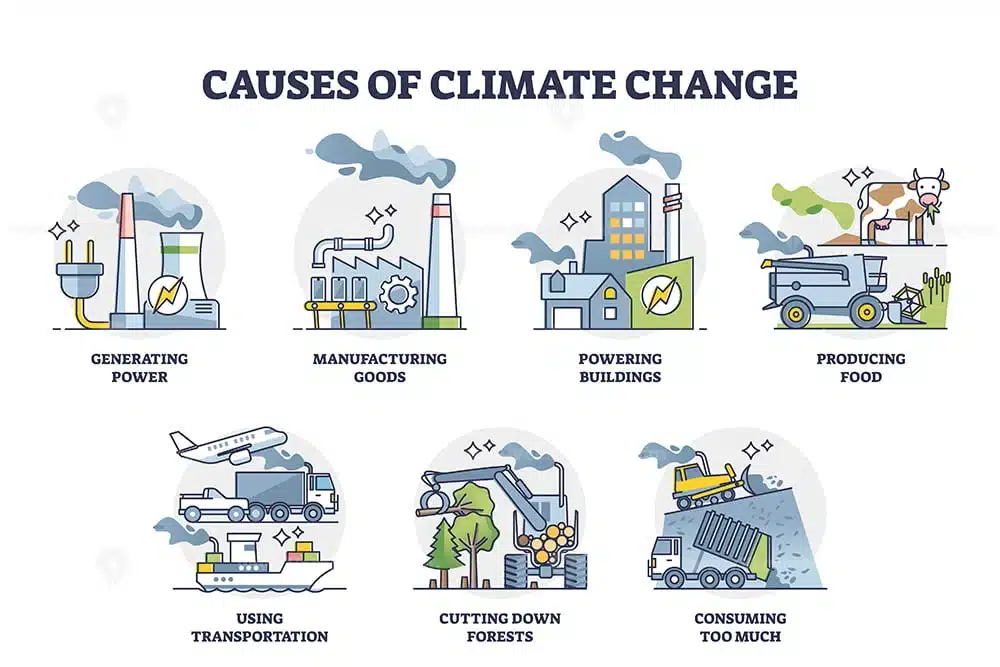
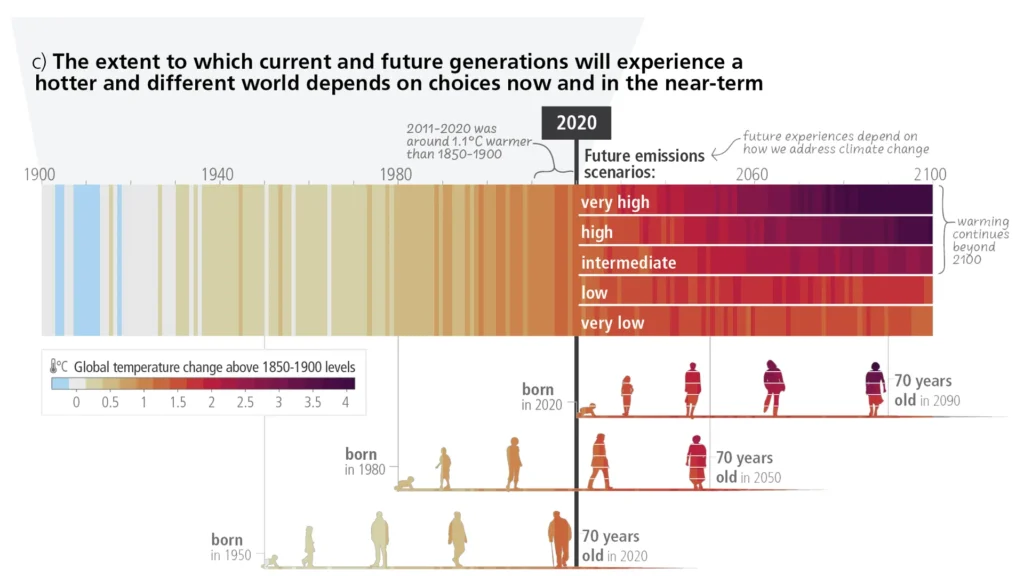
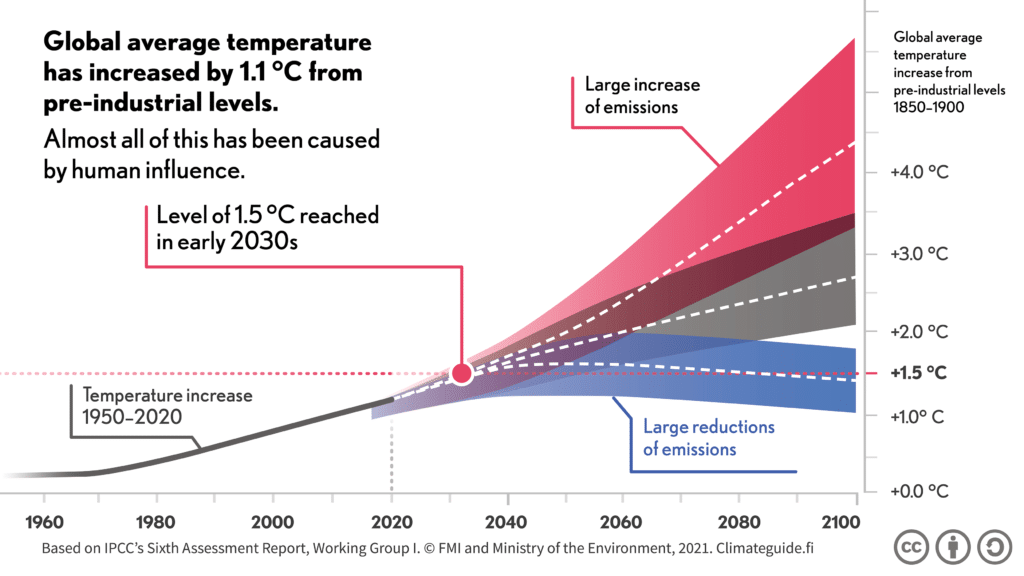
Saturday, October 24, 2026
Home Blog Page 12

Climate Change Effects in 2025: Key Environmental, Health, and Social Risks

A comprehensive look at Climate Change Effects in 2025, from environmental shifts and health hazards to social and economic risks affecting vulnerable populations.

Climate_Change

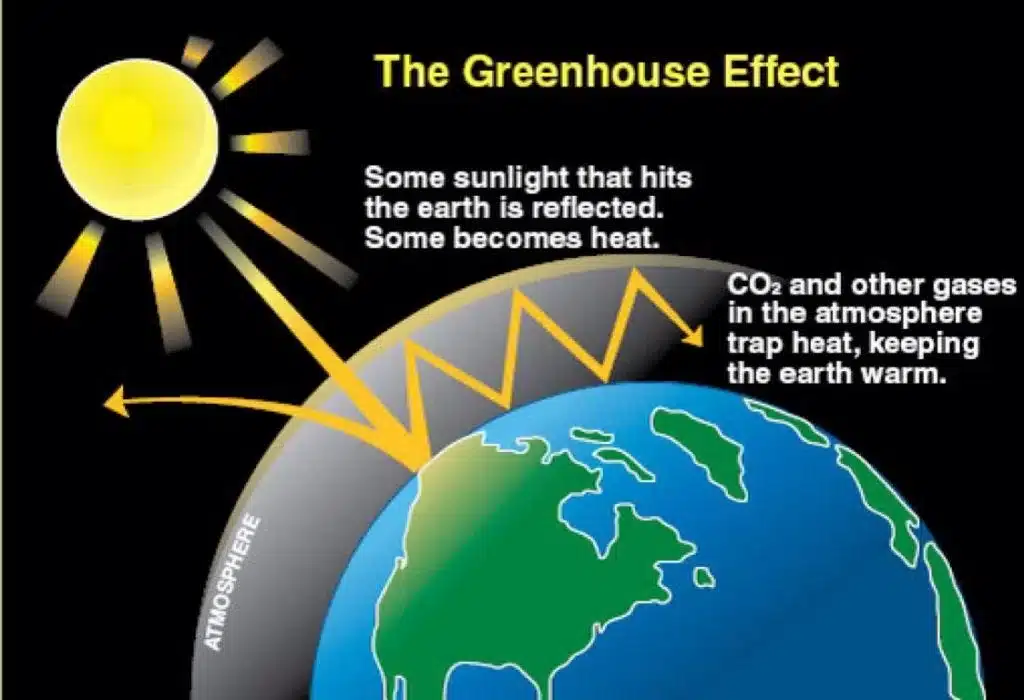
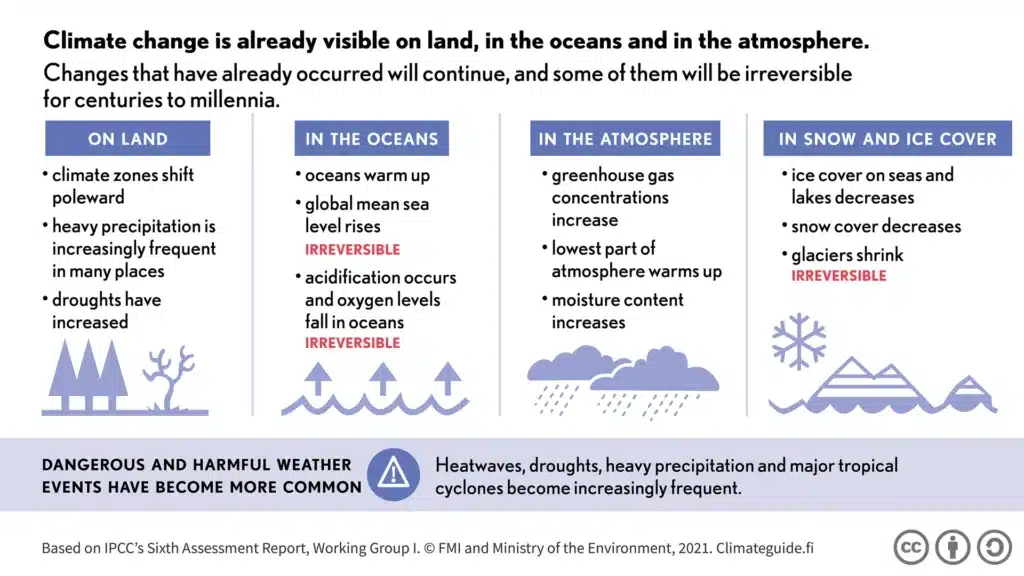
Climate change is reshaping the world in 2025, driving widespread environmental disruption, rising public health threats, and growing social and economic instability. From more frequent heatwaves and extreme weather events to accelerating biodiversity loss and increased pressure on vulnerable communities, the impacts are becoming harder to ignore. This guide breaks down the key environmental, health, and social effects of climate change in 2025 and explains why understanding these risks is essential for policymakers, businesses, and individuals.

The effects of climate change are no longer distant predictions as they’re happening now across every continent and ocean.

According to Wikipedia:

“Changes to the climate system include an overall warming trend, changes to precipitation patterns, and more extreme weather,” with impacts ranging from thawing permafrost and melting glaciers to more intense forest fires and desertification.”

EPA confirms that:

“The planet’s oceans and glaciers have also experienced changes—oceans are warming and becoming more acidic, ice caps are melting, and sea level is rising.”

The World Health Organization calls climate change one of the biggest threats to global health in the 21st century, highlighting the profound consequences for both natural systems and human societies.
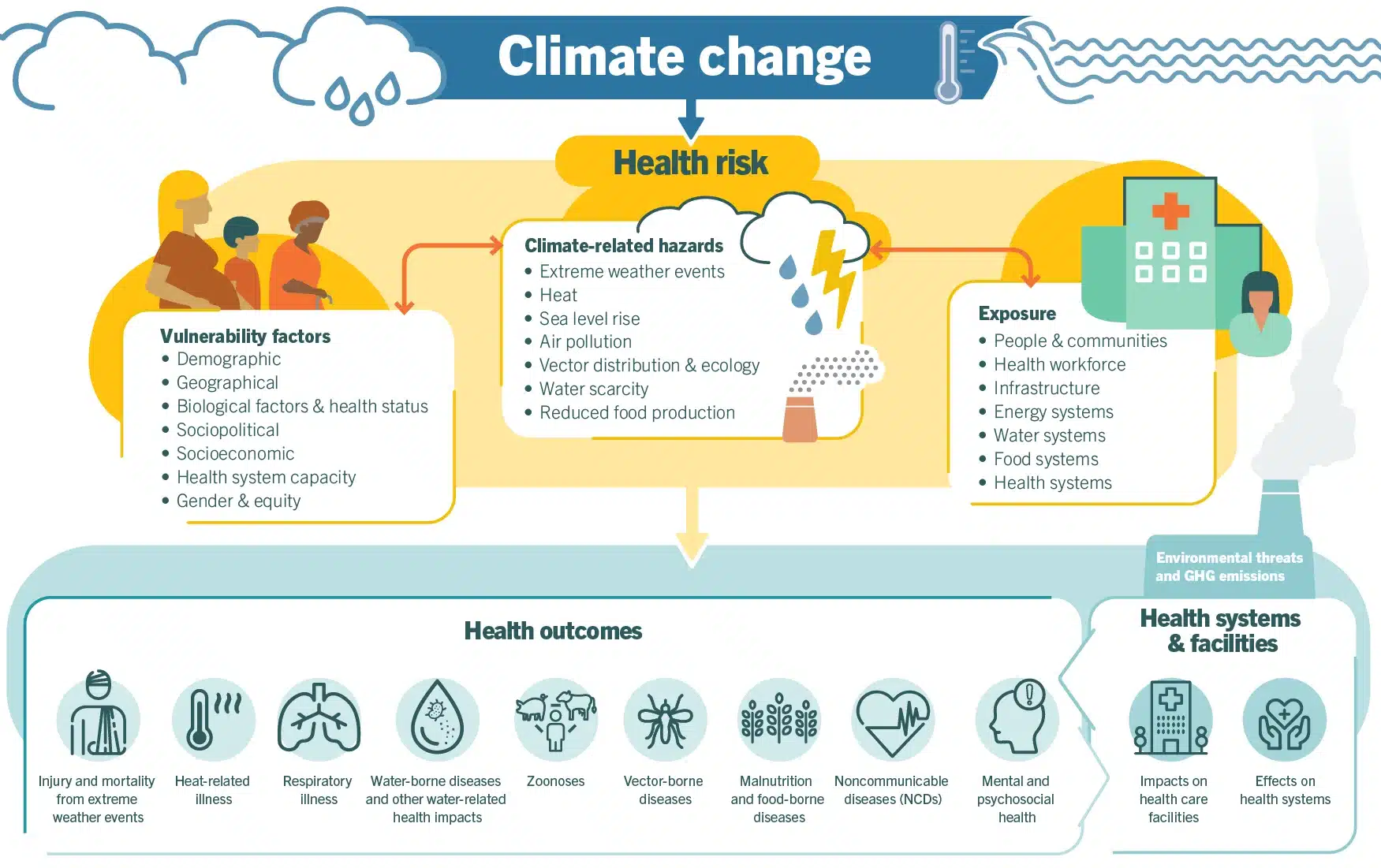
climate_health

Source: World Health Organization

Rising Global Temperatures: The Foundation of Climate Change Effects

Global temperature rise is the most fundamental effect of climate change, driving countless other impacts.

Wikipedia reports that:

“Since the pre-industrial period, the average surface temperature over land regions has increased almost twice as fast as the global average surface temperature.”

Current Temperature Increases:

  • Global average temperature has risen approximately 1.1°C above pre-industrial levels
  • Land areas are warming faster than oceans
  • The Arctic is warming more than twice as fast as the global average
  • The last decade (2015-2024) was the warmest on record

EPA notes that:

“Warmer temperatures increase the frequency, intensity, and duration of heat waves, which can pose health risks, particularly for young children and the elderly.”

These temperature increases may seem small, but they have cascading effects throughout Earth’s systems, triggering changes to weather patterns, ocean currents, ice sheets, and ecosystems worldwide.

Environmental Effects of Climate Change

Melting Glaciers and Ice Sheets

One of the most visible effects of climate change is the rapid melting of ice worldwide.

Wikipedia explains that:

“Since the beginning of the twentieth century, there has been a widespread retreat of glaciers. Those glaciers that are not associated with the polar ice sheets lost around 8% of their mass between 1971 and 2019.”

Glacier Retreat Consequences:

  • Water Supply Threats: Wikipedia notes that in the Andes in South America and in the Himalayas in Asia, the retreat of glaciers could impact water supply.
  • Glacial Hazards: Melting can cause landslides or glacial lake outburst floods
  • Loss of Freshwater Storage: Glaciers act as natural water towers for downstream communities

Polar Ice Loss:

  • Greenland: Ice sheet loss is mainly driven by surface melting
  • Antarctica: Warm ocean water is melting outlet glaciers from below
  • Arctic Sea Ice: Summer sea ice extent has dramatically declined, affecting polar bear habitat and Arctic ecosystems

climate_change_polar

Greenpeace UK reports that:

“Polar ice caps and glaciers are melting, causing sea levels to rise and encroach on coastal habitats and the Arctic tundra.”

Rising Sea Levels

As ice melts and warmer water expands, sea levels rise globally. Wikipedia states that:

“Between 1901 and 2018, the average sea level rose by 15–25 cm (6–10 in), with an increase of 2.3 mm (0.091 in) per year since the 1970s.”

According to Wikipedia:

“More alarmingly, “the rate accelerated to 4.62 mm (0.182 in)/yr for the decade 2013–2022,”

NOAA Fisheries reports that:

“Global average sea level rise has risen by about 7–8 inches since 1900, with almost half of this rise occurring since 1993.”

Sea Level Rise Impacts:

  • Coastal flooding and erosion
  • Saltwater intrusion into freshwater aquifers
  • Loss of coastal wetlands and habitats
  • Displacement of coastal communities
  • Infrastructure damage in low-lying areas

NOAA projects that:

“Relative to the year 2000, sea level rise is likely to rise 1–4 feet by the end of the century.”

Extreme Weather Events

Climate change is intensifying extreme weather worldwide. Wikipedia explains that:

“Since the 1950s, droughts and heat waves have appeared simultaneously with increasing frequency. Extremely wet or dry events within the monsoon period have increased in India and East Asia.”

Types of Extreme Weather:

  • Heat Waves: More frequent, longer-lasting, and more intense
  • Droughts: WWF reports that “longer, more intense droughts threaten crops, wildlife and freshwater supplies”
  • Intense Precipitation: Heavier rainfall events leading to flooding
  • Hurricanes: Wikipedia notes that “the rainfall rate and intensity of hurricanes and typhoons is likely increasing, and the geographic range likely expanding poleward”
  • Wildfires: Extended fire seasons with more severe fires

Changes to Precipitation Patterns

Greenpeace UK explains that:

“Global rainfall patterns are being affected by climate change, with some regions experiencing increased rainfall while others face decreasing precipitation.”

Precipitation Effects:

  • Water scarcity in arid and semi-arid regions
  • Flooding in areas with increased precipitation
  • Changes to agricultural growing seasons
  • Shifts in water availability for human use and ecosystems

Desertification and Land Degradation

Greenpeace UK describes how:

“Changes in weather patterns can lead to extreme environmental changes, like ‘desertification’—when wild habitats like grasslands or shrublands slowly turn into deserts.”

This transformation destroys habitats, reduces agricultural productivity, and forces human migration from affected areas.
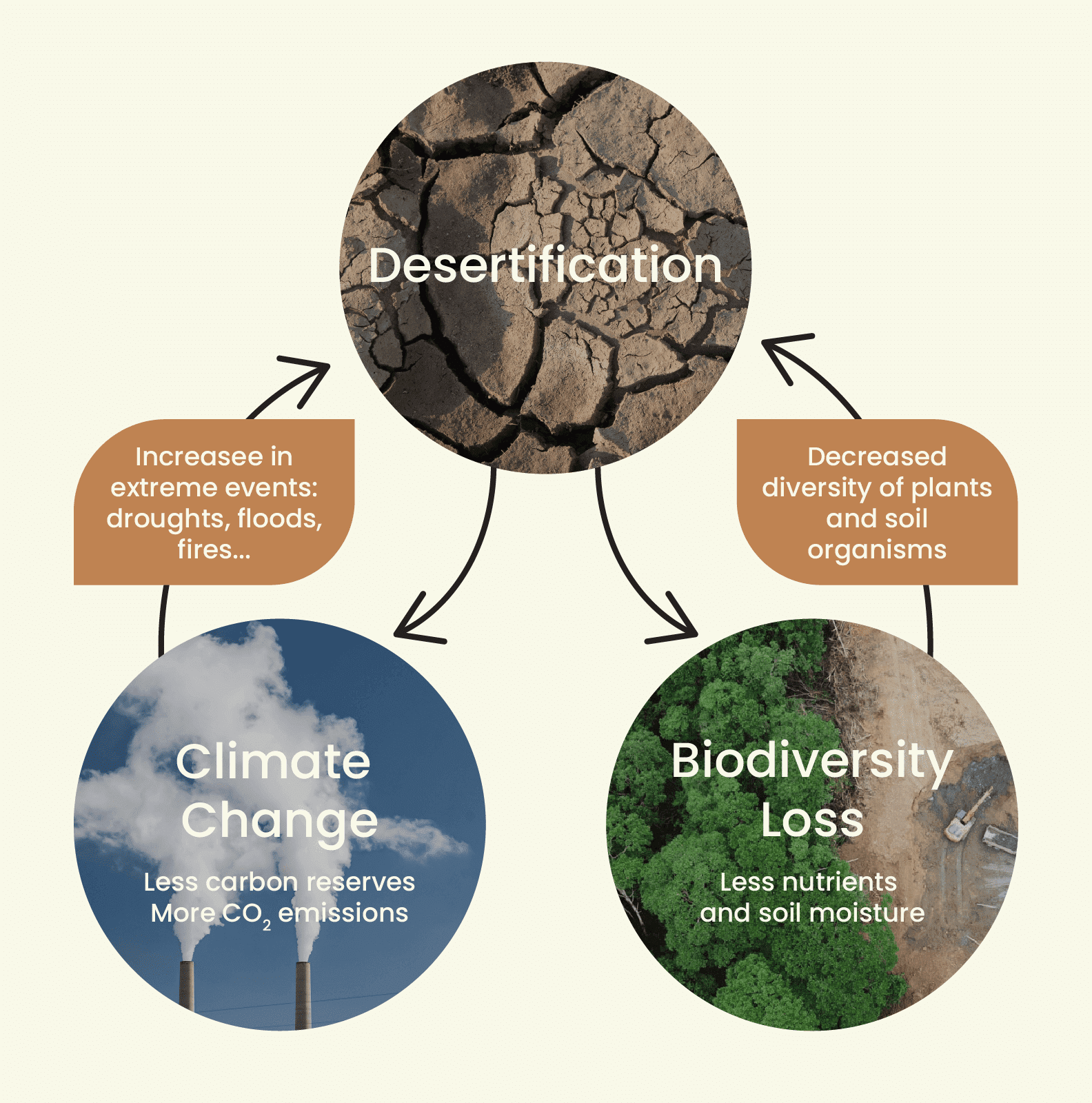
desertification_graphic

Source: Degradation and Biodiversity

Effects on Oceans and Marine Life

Ocean Warming

WWF states that:

“Oceans are becoming warmer, with profound consequences for marine ecosystems.”

NOAA Fisheries explains that:

“The changing climate and oceans have significant impacts on the nation’s valuable marine life and ecosystems.”

Ocean Warming Consequences:

  • Marine heatwaves becoming more frequent
  • Coral bleaching events
  • Changes to ocean circulation patterns
  • Intensification of tropical storms
  • Shifts in marine species distributions

Ocean Acidification

Greenpeace UK reports that:

“In the oceans, CO2 concentrations are now higher than they have been in the past 800,000 years. As a result, the oceans are becoming more acidic.”

Ocean acidification occurs as oceans absorb excess atmospheric CO2, forming carbonic acid that lowers ocean pH. This process:

  • Threatens coral reefs and shellfish
  • Disrupts marine food webs
  • Affects organisms that build calcium carbonate shells or skeletons
  • Potentially damages fisheries and aquaculture

Coral Reef Degradation

Greenpeace UK notes that:

“Scientists have identified six coral bleaching events since 1998, most notably on the Great Barrier Reef. This is of concern since coral reefs are one of the most biodiverse and valuable ecosystems on Earth.”

Coral bleaching occurs when stressed corals expel the algae living in their tissues, turning white. While corals can recover, severe or repeated bleaching often leads to death.

Marine Species Migration

NOAA Fisheries reports that:

“A number of marine species are shifting poleward at a rate of about 44 miles per decade. They are moving 5–10 times faster than terrestrial species.”

This rapid migration:

  • Disrupts marine ecosystems
  • Affects fishing communities dependent on specific species
  • Creates new species interactions and competition
  • Changes marine biodiversity patterns
NOAA Fisheries

Source: NOAA Fisheries

Impacts on Biodiversity and Ecosystems

Biodiversity Loss

Climate change has become a major driver of biodiversity loss. Greenpeace UK warns that:

“In just over 40 years, wildlife populations showed a dramatic decline of 69% on average. The IPCC reports that around 20-30% of species could die out if global mean temperatures go up by 1.5-2.5 degrees.”

Wikipedia confirms that:

“Climate change is a major driver of biodiversity loss in different land types, including cool conifer forests, savannas, Mediterranean-climate systems, tropical forests, and the Arctic tundra.”

Mechanisms of Biodiversity Loss:

  • Habitat Loss: Rising temperatures make current habitats unsuitable
  • Range Shifts: Species must move to cooler areas or face extinction
  • Phenological Mismatches: Greenpeace UK explains that “animals often take cues from their environment when making important decisions, like when to migrate or when to reproduce. Big changes in weather patterns can mean biological events fall out of sync”
  • Increased Extinction Risk: Many species cannot adapt or migrate fast enough

Ecosystem Disruption

NOAA Fisheries suggests that:

“Climate change impacts every aspect of our mission from managing fisheries and aquaculture, to conserving protected resources and vital habitats.”

Ecosystems provide essential services including:

  • Water purification
  • Carbon storage
  • Food production
  • Climate regulation
  • Coastal protection

As climate change disrupts these ecosystems, the services they provide become compromised, affecting both nature and human societies.

Forest Changes

According to Wikipedia:

“Amplified warming in the Arctic has contributed to thawing permafrost, releasing stored carbon and potentially creating feedback loops that accelerate warming.”

Forests face multiple climate stressors:

  • Increased wildfire frequency and severity
  • Pest and disease outbreaks
  • Drought stress
  • Shifts in species composition
  • Tree line migration to higher elevations and latitudes
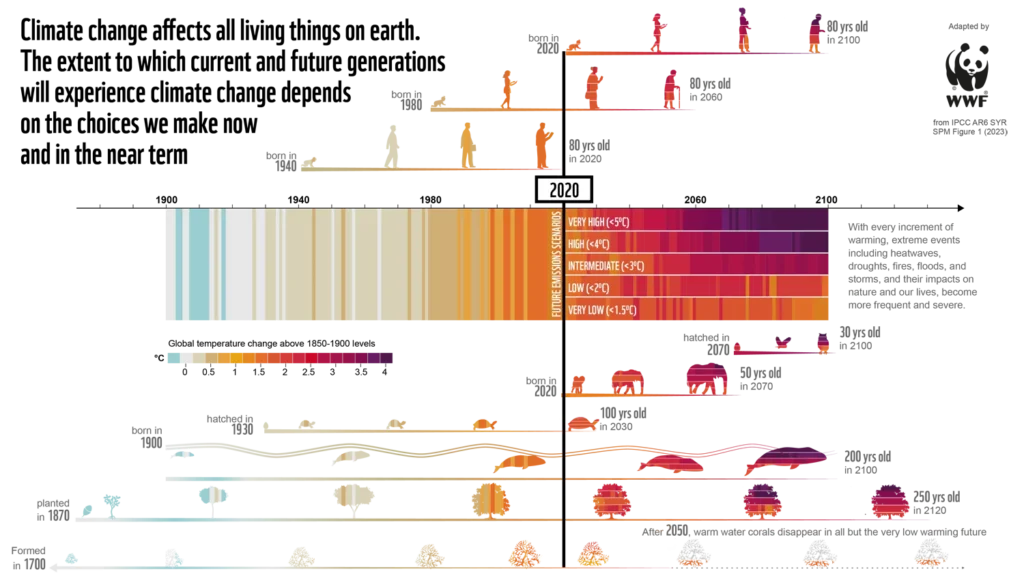
wwf

Source: WWF – Effects of Climate Change

Social Effects: Human Health and Well-being

Direct Health Impacts

Wikipedia states that:

“Climate change threatens people with increased flooding, extreme heat, increased food and water scarcity, more disease, and economic loss.”

Heat-Related Illness: More frequent and severe heat waves cause:

  • Heat stroke and heat exhaustion
  • Cardiovascular and respiratory problems
  • Increased mortality, especially among vulnerable populations
  • Reduced labor productivity

Air Quality: Climate change worsens air quality through:

  • Increased ground-level ozone formation
  • More wildfire smoke exposure
  • Higher pollen levels and longer allergy seasons
  • Spread of dust from desertification

Vector-Borne and Infectious Diseases

Warming temperatures are expanding the geographic range of disease-carrying insects like mosquitoes and ticks, spreading diseases to new areas. Climate change also affects waterborne diseases and food safety.

Food Security and Agriculture

WWF warns that:

“Longer, more intense droughts threaten crops, wildlife, and freshwater supplies.”

Agricultural Impacts:

  • Crop yield reductions from heat and drought
  • Changes to growing seasons and suitable crop areas
  • Increased pest and disease pressure
  • Livestock heat stress
  • Disrupted pollination services

NOAA Fisheries notes that:

“Fisheries support more than 1.7 million jobs and $253 billion in economic activity in the United States every year, with climate change threatening these resources.”

Water Scarcity

Climate change is altering water availability globally:

  • Glacier-dependent water supplies declining
  • Changing precipitation patterns affecting water resources
  • Increased evaporation in warmer temperatures
  • Groundwater depletion accelerating
  • Competition for water intensifying

Human Migration and Conflict

Wikipedia explains that:

“Human migration and conflict can also be a result of climate change impacts.”

Climate-Induced Migration:

  • Sea level rise forcing coastal community relocation
  • Drought and agricultural failure driving rural-to-urban migration
  • Extreme weather displacing populations
  • Resource scarcity creating tensions
  • Climate refugees lack international legal recognition

Economic Impacts

NOAA Fisheries reports that:

“Communities and economies in southern states are also being impacted by changing climate and ocean conditions. Louisiana loses a football-field-size area of coastal wetlands to the sea every hour due to rising seas and sinking lands.”

Economic effects include:

  • Infrastructure damage from extreme weather
  • Agricultural and fishery losses
  • Tourism impacts
  • Insurance cost increases
  • Property value declines in vulnerable areas

Regional Variations in Climate Change Effects

Climate change effects vary by region. According to Wikipedia that:

“The effects of climate change vary in timing and location. Up until now, the Arctic has warmed faster than most other regions due to climate change feedback.”

Arctic: Rapid warming, sea ice loss, permafrost thaw, ecosystem transformation

Small Island States: Sea level rise threatens existence, saltwater intrusion, coral reef loss

Africa: Increased drought, food insecurity, water scarcity, desertification

Asia: Glacier melt affecting water supplies, increased monsoon variability, coastal flooding

Europe: Heat waves, changing precipitation, Alpine glacier retreat, Mediterranean drought

North America: Increased wildfires, hurricane intensity, heat waves, coastal erosion

South America: Amazon rainforest stress, Andean glacier retreat, changing precipitation

Australia: Severe droughts, intense heat waves, Great Barrier Reef bleaching, bushfires

Long-Term and Irreversible Effects

EPA warns that:

“Elevated concentrations of carbon dioxide will persist in the atmosphere for hundreds or thousands of years, so the earth will continue to warm in the coming decades.”

Some effects become irreversible once tipping points are crossed:

  • Complete loss of Arctic summer sea ice
  • Collapse of major ice sheets (Greenland, West Antarctic)
  • Shutdown of ocean circulation systems
  • Amazon rainforest die-back
  • Permafrost carbon release
  • Coral reef extinction

Wikipedia reports that:

“Even if efforts to minimize future warming are successful, some effects will continue for centuries, including ocean heating, ocean acidification, and sea level rise.”

Conclusion

The effects of climate change are profound, wide-ranging, and accelerating. From melting glaciers and rising seas to biodiversity loss and human health impacts, no corner of our planet remains untouched. The World Health Organization’s designation of climate change as one of the biggest threats to global health in the 21st century reflects the severity of these impacts.

Understanding these effects is crucial for developing effective responses. While some effects are now unavoidable due to past emissions, rapid action to reduce greenhouse gases can limit future warming and its consequences. The choices we make today will determine whether we face manageable climate change impacts or catastrophic disruptions to natural systems and human societies. Time is running out, but solutions exist. What’s needed is the collective will to implement them at scale.

 Frequently Asked Questions

What drives most climate change impacts?

Rising global temperatures caused by increased greenhouse gases alter weather patterns, melt glaciers and ice sheets, warm oceans, and shift ecosystems. This warming acts as the core force behind most observed climate effects worldwide.

How does climate change affect human health?

Climate change raises heat illness risk, worsens air quality, expands mosquito and tick habitats, reduces food and water security, and increases exposure to storms and floods. These impacts fall hardest on children, older adults, and low income groups.

What is happening to the oceans?

 Oceans are warming, acidifying and losing oxygen. These shifts trigger coral bleaching, change marine species ranges, alter storm behavior and disrupt fisheries. Coastal communities face growing threats to food supplies and economic stability.

Why is sea level rising faster now?

 Sea level is accelerating due to warming water and faster loss of ice in Greenland and Antarctica. More heat in the climate system speeds melting and increases thermal expansion, leading to higher flooding risk for coastal regions globally.

Are climate change effects reversible?

 Some impacts such as ocean warming, acidification and sea level rise persist for centuries because carbon dioxide remains long in the atmosphere. Rapid emission cuts and adaptation can limit future harm but cannot undo all existing changes.

2025’s Top 10 AI Marketing Tools for Automation, SEO, Social Media & Analytics

Discover 2025’s top 10 AI marketing tools for SEO, social media, automation, content creation, and analytics to boost productivity, engagement, and ROI.

Top_AI_tools

The marketing landscape has transformed dramatically with artificial intelligence revolutionizing how brands connect with audiences, create content, and analyze data. In 2025, AI marketing tools are no longer experimental luxuries but essential components of successful marketing strategies. From automating repetitive tasks to generating personalized campaigns at scale, these tools empower marketers to achieve results that were impossible just a few years ago.

This comprehensive guide explores the top 10 AI marketing tools that are reshaping the industry in 2025, helping businesses of all sizes work smarter, faster, and more effectively.

The AI Marketing Revolution in 2025

Artificial intelligence has evolved from basic machine learning algorithms to sophisticated systems that understand context, predict trends, and create high-quality content across multiple formats.

According to Harvard’s Professional Development analysis:

“AI adoption is accelerating among marketing professionals, with many saying they use AI in digital tools in their daily workflows and “couldn’t live without AI.”

The 2024 State of Marketing AI Report from the Marketing AI Institute confirms this trend, showing that AI reduces time spent on repetitive, data-driven tasks like content marketing, email campaigns, social media management, and customer relationship management. This efficiency allows marketers to focus on strategy, creativity, and human connection.

What started as basic automation has morphed into full-blown marketing wizardry. Today’s AI-powered platforms help brands craft compelling content, predict trends before they explode, fine-tune marketing campaigns in real-time, and personalize customer experiences at unprecedented scale.

1. ChatGPT: The Ultimate AI Marketing Assistant

ChatGPT has become the gold standard for conversational AI, serving as a versatile assistant that handles countless marketing tasks. This powerful chatbot helps marketers brainstorm ideas, format content, generate personalized messaging, conduct market research, and analyze data conversationally.

chatgpt

Key Features and Capabilities

ChatGPT excels at understanding context and maintaining conversation history, allowing for nuanced discussions about marketing strategy. You can ask it to help develop campaign concepts, write ad copy variations, create email sequences, generate social media posts, and even analyze competitor positioning.

The tool remembers previous discussions and uses them as context for more accurate, on-brand outputs. This conversational approach makes complex tasks feel natural and accessible, even for marketers without technical backgrounds.

Practical Marketing Applications

According to Zapier’s comprehensive review:

“ChatGPT can generate personalized marketing messages based on customer data, help with market research by synthesizing information from various sources, create content briefs and outlines, draft blog posts and articles, and develop creative concepts for campaigns.”

Marketing agencies use ChatGPT to speed up content production, test different messaging approaches, and maintain consistent brand voice across materials. The key is providing clear prompts and context to get the best results.

chatgpt_use_cases

Source: ChatGPT Marketing Use Cases

Pricing and Accessibility

ChatGPT offers a free tier with GPT-3.5, providing substantial capability at no cost. The Plus subscription ($20 monthly) unlocks GPT-4, faster response times, and priority access during peak hours. Enterprise plans provide additional features for teams.

2. Jasper: Purpose-Built for Marketing Content Automation

Jasper stands out as the first platform specifically designed for AI content automation, transforming how marketing teams plan, create, and scale content. Powered by intelligent Agents and a rich context layer called Jasper IQ, this tool connects strategy to execution seamlessly.

jasper

Core Capabilities

Jasper’s platform offers Content Pipelines that connect data, strategy, and creative processes into automated systems delivering on-brand assets from idea to publication. The intuitive tools like Jasper Studio and Jasper Grid enable anyone to design and run automations that scale content creation without technical setup or prompt engineering.

The platform maintains quality and authenticity through its rich context hub, ensuring all generated content aligns with brand guidelines, audience insights, and marketing best practices. Enterprise-grade control with roles, permissions, and brand-safe access keeps content secure and compliant.

Marketing-Specific Features

Jasper accelerates workflows across entire teams with solutions for SEO content creation, social media campaigns, email marketing, product marketing, and comprehensive campaign planning. The tool helps launch messaging that is crisp, clear, and conversion-ready.

Teams can amplify their brand and engage followers with cohesive social media campaigns, draft comprehensive plans with goals and deliverables, and create content that ranks, drives traffic, and strengthens authority.

Team Collaboration and Training

Jasper’s Customer Success team and community of Content Engineers help design smarter workflows, optimize pipelines, and scale transformation across organizations. Self-paced courses and live training sessions teach teams how to master the platform and elevate their marketing effectiveness.

3. Gumloop: AI Automation Meets Marketing Workflows

Gumloop represents the cutting edge of AI marketing automation, combining the connectivity of tools like Zapier with the intelligence of ChatGPT.

Gumloop

According to Marketer Milk’s expert review:

“This tool has quickly won hearts despite being founded just a year ago.”

What Makes Gumloop Special

Gumloop lets you connect any large language model (GPT-5, Claude, Grok) to your internal tools and workflows without writing a single line of code. The clean, tasteful user interface makes complex automation accessible to non-technical marketers.

Remarkably, you do not need your own OpenAI or Anthropic API keys because Gumloop provides access to premium LLMs right out of the box, absorbing those costs themselves. This significantly lowers the barrier to entry for smaller teams.

Marketing Applications

Teams at Webflow, Instacart, and Shopify use Gumloop for sentiment analysis on social media, aggregating positive and critical product reviews at scale. Marketers automate competitor intelligence reports to stay updated with rival brand activities.

You can improve campaign ROI with better targeting, create AI workflows to write creative copy, and handle SEO optimization tasks that would normally be onerous to achieve manually. The tool excels at data manipulation tasks, using automation to achieve impressive results at scale.

Getting Started

Gumloop offers straightforward pricing and setup, allowing marketing teams to start automating workflows quickly. The platform provides templates for common marketing tasks, making implementation even faster.

4. GWI Spark: AI-Powered Market Research and Insights

GWI Spark stands out as a cutting-edge AI-powered market research tool that taps into real consumer data, delivering insights far beyond surface-level analysis. Unlike many AI market research tools that scrape publicly available data, GWI Spark leverages proprietary survey data from nearly a million consumers across over 50 markets.

GWI_Spark

Unique Data Advantage

This access to unique, high-quality insights gives brands a genuine competitive edge. The data comes from actual consumer surveys rather than web scraping, ensuring authenticity and depth that generic tools cannot match.

The intuitive chat-based interface makes complex market research accessible. Marketers can ask sophisticated questions and receive actionable insights in real-time, diving deeper into datasets and generating custom charts that highlight key findings.

Research Applications

Use GWI Spark to understand consumer behavior patterns, identify emerging trends before competitors, analyze market segments with precision, benchmark against industry standards, and validate campaign concepts with real consumer data.

The tool excels at helping brands move beyond gut feelings to data-backed decisions. You can explore consumer attitudes, purchasing behaviors, media consumption habits, and lifestyle preferences across demographics and markets.

Integration with Marketing Strategy

GWI Spark integrates seamlessly into strategic planning processes. Teams use it for campaign development, audience research, competitive analysis, and trend forecasting. The AI interface eliminates the need for complex data analysis skills, democratizing access to sophisticated market research.

5. Salesforce Customer 360: AI-Powered CRM Excellence

Salesforce Customer 360 revolutionizes customer relationship management by providing businesses with a complete, unified view of every customer. This comprehensive platform helps sales, marketing, and IT teams work together seamlessly, creating cohesive customer experiences.

Salesforce_customer_360

AI-Driven Customer Intelligence

According to GWI’s marketing tools analysis:

“AI-powered analytics build crystal-clear, 360-degree views of customers, making it significantly easier to personalize experiences.”

The platform tracks every interaction across touchpoints, providing insights that drive better marketing decisions. Automation tools streamline workflows and eliminate manual tasks, allowing teams to focus on high-value activities. Predictive analytics help anticipate customer needs and behaviors, enabling proactive rather than reactive marketing.

Industry Applications

Retailers use Salesforce Customer 360 to make shopping feel tailored to each individual customer. Banks and financial firms lean on it for smarter customer recommendations based on transaction history and preferences. Healthcare teams use it to drive better patient care with actionable data.

The platform excels at unifying disparate data sources into a single source of truth. Marketing automation, sales tracking, customer service management, and analytics all work from the same customer profiles, eliminating data silos.

Marketing-Specific Features

Salesforce provides sophisticated segmentation capabilities, journey orchestration tools, email marketing automation, lead scoring and nurturing, and comprehensive campaign management. Integration with other marketing tools creates a powerful, unified martech stack.

6. Hootsuite: AI-Enhanced Social Media Management

Hootsuite has evolved into a comprehensive AI-powered social media management platform that automates post scheduling, suggests high-performing content, and provides deep engagement insights. The platform serves brands managing multiple social accounts across platforms.

Hootsuite

AI-Powered Features

Hootsuite’s AI capabilities suggest optimal posting times based on audience engagement patterns, recommend content that will perform best for specific audiences, and provide real-time sentiment analysis of brand mentions and conversations.

According to GWI’s tool roundup:

“AI-powered social listening features give teams a real-time view of audience sentiment and competitor activity.”

This intelligence informs content strategy and helps brands stay ahead of trends.

Content Management

The platform streamlines content calendar management, allowing teams to map out social strategies weeks or months in advance. Bulk scheduling saves time, while AI suggestions ensure content resonates with target audiences.

Teams can track what content is landing and what is not, using performance data to refine future posts. Integration with major social networks (Facebook, Instagram, Twitter, LinkedIn, TikTok) provides centralized management.

Analytics and Reporting

Comprehensive analytics dashboards show engagement metrics, follower growth, content performance, and campaign ROI. Customizable reports make it easy to share results with stakeholders and demonstrate social media value.

7. Runway: AI Video Creation and Editing

Video content continues dominating across all platforms, and Runway provides powerful AI-driven video generation and editing capabilities.

Runway_1

According to Zapier’s review:

“Runway takes a unique approach by letting you capture and generate videos from prompts instead of starting with pre-defined templates.”

Video Generation Capabilities

Text-to-video functionality allows marketers to create videos from written descriptions. This proves invaluable for explaining concepts, creating product demonstrations, and developing educational content without expensive production crews.

The platform includes AI-powered tools to remove backgrounds, create super-slow motion effects, generate subtitles automatically, and enhance audio quality. These features transform video editing from a specialized skill into an accessible marketing capability.

Marketing Applications

Marketing teams use Runway for personalized video messages, internal communications, short YouTube tutorials, social media content, and product demonstration videos. While AI-generated videos may not match human-made authenticity, they get the job done efficiently.

The platform has a video-editing vibe but maintains surprisingly easy-to-use tools. Even team members without video production experience can create professional-looking content.

Integration into Marketing Workflows

Runway fits into modern content workflows by enabling rapid video creation for testing concepts, responding to trends, and maintaining consistent social media presence. The speed advantage allows brands to be more agile and responsive.

8. DALL-E 3: AI Image Generation for Marketing

Visual assets are critical for modern marketing, and DALL-E 3 enables creation of unique, customizable images aligned with brand aesthetics. This AI image generator has become an essential tool for marketers needing quick visual content.

DALL-E-3

Image Generation Capabilities

DALL-E 3 creates images from text descriptions, allowing marketers to generate blog post hero images, social media graphics, concept illustrations, and marketing materials without stock photo limitations.

The tool excels at understanding complex prompts and generating images that match specific styles, moods, and brand guidelines. You can iterate quickly, testing different visual approaches before committing to final designs.

Practical Marketing Uses

According to Zapier’s analysis:

“DALL-E 3 works well for creating unique images customizable to brand identity.”

Marketing teams use it for testing visual concepts, creating diverse image variations, generating placeholder graphics, and developing mood boards.

The ability to specify exact visual requirements (color schemes, composition, style) makes DALL-E 3 particularly valuable for maintaining brand consistency across campaigns.

Limitations and Best Practices

While powerful, AI-generated images require human oversight. Use them for initial concepts, testing, and non-critical applications. For high-stakes campaigns, professional photography or illustration often remains preferable.

9. Orshot: Design Automation for Social Media

Orshot serves as an AI marketing automation tool specializing in visual content creation for social media posts, blog banners, product mockups, and more using customizable templates.

orshot_1

According to Self-Made Millennials’ review:

“The platform has been growing steadily with positive user feedback.”

Design Capabilities

Orshot Design Studio provides an interface similar to Canva but with enhanced AI capabilities. The AI Template Generator creates customized design templates based on your specifications, dramatically speeding up the design process.

Users can automate posting across social platforms, creating hundreds of posts daily on autopilot. This level of automation helps brands maintain consistent presence without overwhelming design teams.

User Experience and Growth

The platform has been gaining traction, with users praising its ability to automate content at scale.

One testimonial notes:

“My brands can now post 100 times per day on autopilot thanks to Rishi and his amazing tool, Orshot.”

The tool proves particularly valuable for brands managing multiple social accounts or maintaining aggressive posting schedules. The combination of design automation and posting capabilities streamlines entire workflows.

Pricing and Plans

Orshot starts at $20 monthly for hobbyists, including one user seat, 1,500 renders (credits), 10 AI requests, and customer support. A free plan with 100 renders lets you test the tool without commitment.

10. beehiiv: AI-Powered Newsletter Platform

beehiiv represents the evolution of email marketing, combining newsletter creation, audience growth tools, and monetization features into one comprehensive AI-enhanced platform.

beehiiv

According to Self Made Millennials:

“beehiiv has become a must-have tool for solo creators and businesses.”

Core Features

The platform offers an intuitive website builder, recommendations tool for growing subscribers, paid subscription capabilities, and boosts for amplifying reach. AI assists with content creation, subject line optimization, and send-time optimization.

Audience segmentation tools allow personalized campaigns based on subscriber behavior and preferences. The platform handles technical email delivery aspects, ensuring high deliverability rates.

Growth and Monetization

beehiiv excels at helping creators and businesses grow and monetize their audiences. Built-in tools for subscriber acquisition, engagement tracking, and revenue generation eliminate the need for multiple platforms.

The recommendations network helps newsletters cross-promote to relevant audiences, accelerating growth. Monetization options include paid subscriptions, advertising, and sponsorships managed through the platform.

Pricing Structure

beehiiv is free for up to 2,500 subscribers, making it accessible for growing newsletters. Paid plans start at $49 monthly for accessing powerful growth and monetization features. A 30-day free trial lets you test premium capabilities.

Conclusion

AI marketing tools have transformed from experimental novelties into essential business infrastructure in 2025. The ten tools highlighted in this guide represent the cutting edge of marketing technology, offering capabilities that dramatically improve efficiency, creativity, and results.

From ChatGPT’s versatile assistance to Jasper’s purpose-built content automation, from GWI Spark’s deep consumer insights to Salesforce’s comprehensive CRM, these tools empower marketers to achieve more with less effort. Whether you are a solo entrepreneur or part of a large marketing team, integrating these AI tools into your workflow will provide competitive advantages.

The key to success lies not in adopting every available tool but in strategically selecting solutions that address your specific challenges and integrate smoothly into your workflows. Start with one or two tools that solve your most pressing problems, master them, and gradually expand your AI marketing toolkit.

As AI technology continues advancing, staying informed about new tools and capabilities will be crucial for maintaining marketing effectiveness. The future belongs to marketers who embrace these technologies while maintaining the human creativity, strategic thinking, and emotional intelligence that AI cannot replicate.

Frequently Asked Questions

Are AI marketing tools suitable for small businesses with limited budgets?

Yes, many AI marketing tools offer free tiers or affordable pricing specifically designed for small businesses. ChatGPT, beehiiv, and several others provide free versions with substantial capabilities. Even premium tools often cost less than hiring additional staff, making them cost-effective for growing teams. Start with free tools and upgrade as your business grows and needs expand.

How long does it take to see results from AI marketing tools?

Results vary depending on the tool and application. Content creation tools like ChatGPT and Jasper provide immediate value, accelerating content production from day one. Analytics and optimization tools like GWI Spark and Salesforce may take weeks or months to accumulate enough data for meaningful insights. Most businesses see measurable improvements within the first month of consistent use.

Do AI marketing tools require technical expertise to use effectively?

Most modern AI marketing tools are designed for non-technical users with intuitive interfaces and minimal learning curves. Tools like ChatGPT, Orshot, and Hootsuite require no coding knowledge. However, maximizing value often involves learning best practices for prompting, workflow design, and integration. Many platforms offer training resources, tutorials, and customer support to help users succeed regardless of technical background.

Can AI marketing tools replace human marketers?

No, AI tools augment rather than replace human marketers. They excel at automating repetitive tasks, analyzing large datasets, and generating content at scale, but they lack the strategic thinking, emotional intelligence, creativity, and nuanced understanding that human marketers provide. The most effective approach combines AI efficiency with human insight, using tools to handle mechanical tasks while marketers focus on strategy, relationships, and creative direction.

How do I measure the ROI of AI marketing tools?

Track specific metrics aligned with your goals. For content tools, measure production speed increases, content volume, and engagement rates. For analytics platforms, track decision quality improvements and campaign performance gains. Calculate time savings by comparing task completion times before and after implementation. Monitor revenue impacts from improved targeting, personalization, and conversion optimization. Most tools provide built-in analytics showing usage and impact, making ROI measurement straightforward.

RAG AI 101: A Beginner’s Guide to Retrieval-Augmented Generation

Understand RAG AI with this detailed beginner guide explaining Retrieval-Augmented Generation, its benefits, key use cases, and why it’s becoming essential in AI development.

Artificial intelligence continues evolving at a breathtaking pace, introducing technologies that reshape how machines understand and process information. Among these innovations, Retrieval-Augmented Generation (RAG) has emerged as one of the most transformative approaches in 2025, fundamentally changing how AI systems deliver accurate, relevant, and trustworthy responses.

If you have ever wondered how ChatGPT can answer questions about your company’s internal documents or how AI assistants access the latest information beyond their training data, you have encountered RAG in action. This comprehensive guide breaks down everything you need to know about RAG AI in clear, accessible language.

Understanding RAG AI: The Basics

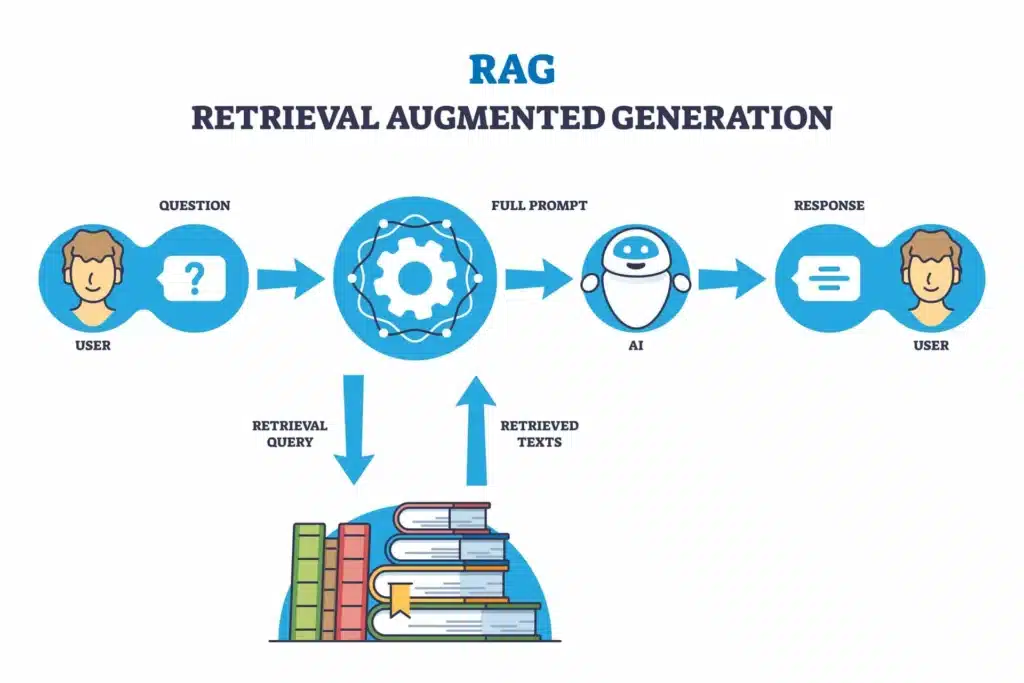
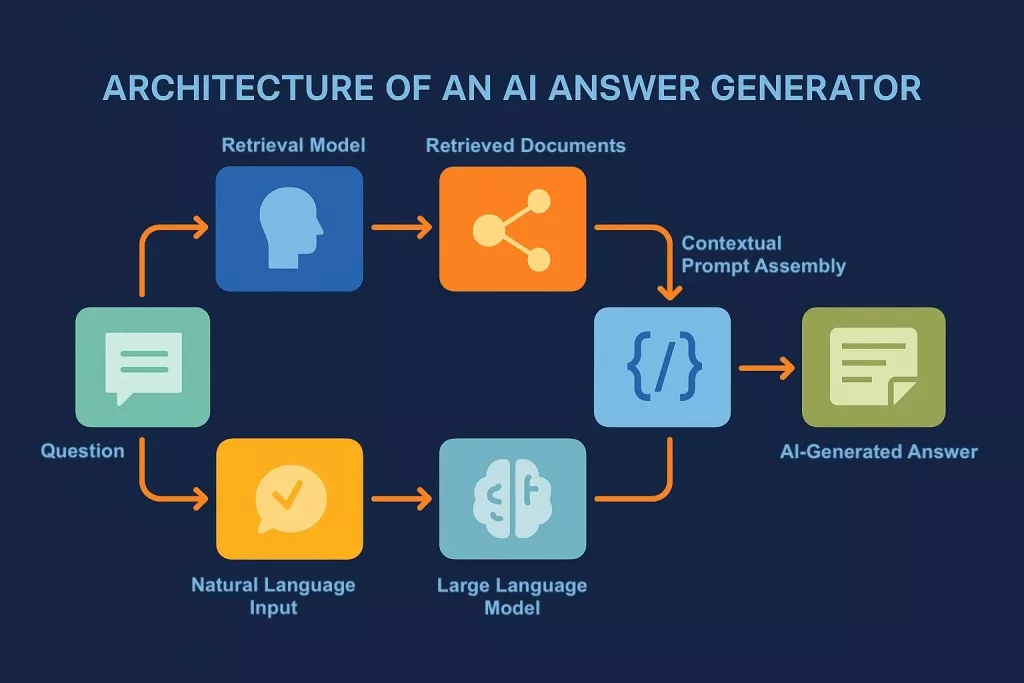
Retrieval-Augmented Generation represents a sophisticated AI framework that enhances large language models (LLMs) by connecting them to external knowledge bases. Instead of relying solely on information learned during training, RAG systems actively retrieve relevant information from authoritative sources before generating responses.

Think of traditional AI models like students taking a closed-book exam. They can only use knowledge memorized during their studies. RAG transforms this into an open-book exam, where AI systems can consult reference materials, ensuring more accurate and current answers.

According to AWS’s comprehensive explanation:

“RAG optimizes large language model output by referencing authoritative knowledge bases outside training data sources before generating responses.”

This approach dramatically improves accuracy, relevance, and usefulness across various contexts. The fundamental innovation behind RAG lies in its two-phase approach:

  • Retrieval Phase
  • Generation Phase

First, the system searches external databases for relevant information related to your query. Second, it uses that retrieved information to generate informed, contextual responses that go far beyond what the base model could produce alone.

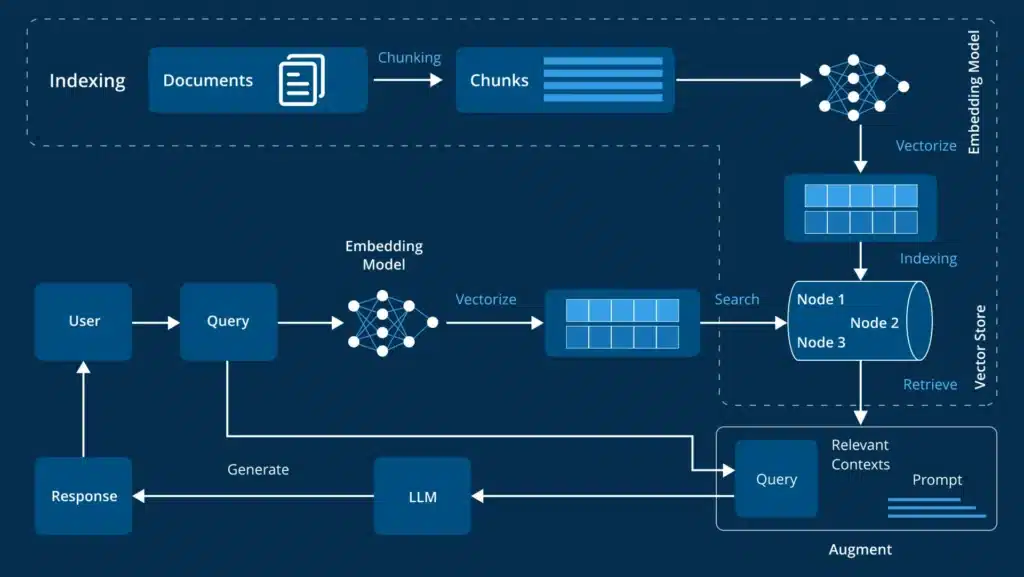
Advanced_RAG

Source: RAG Architecture Diagram

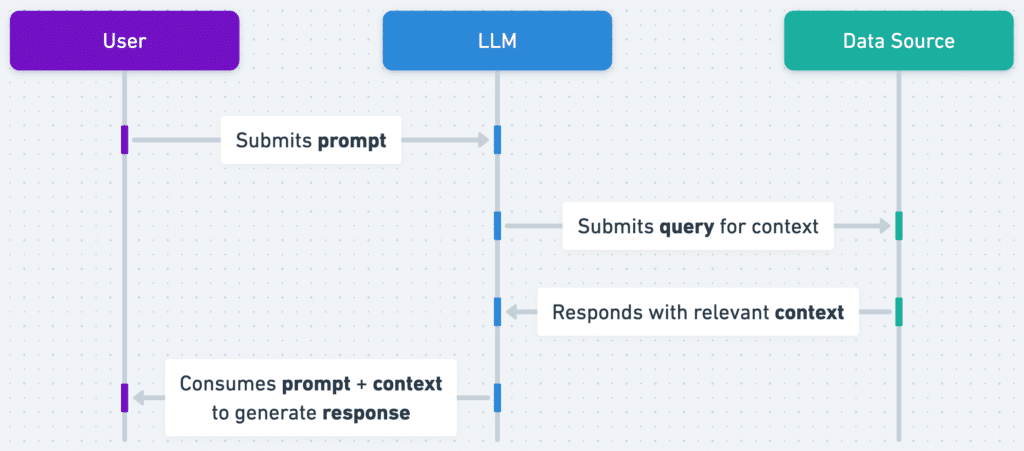
How RAG AI Works: A Step-by-Step Breakdown

Understanding RAG’s operational mechanics helps demystify this powerful technology. The process follows a structured workflow that ensures accurate, grounded responses.

Step 1: User Query Submission

Everything begins when a user submits a question or prompt. This could be anything from:

“What are the key findings in our Q3 sales report? to Explain the latest research on renewable energy technologies.”

Step 2: Query Embedding and Vectorization

The system immediately converts the user’s natural language query into a mathematical representation called an embedding or vector.

NVIDIA’s detailed blog explains that:

“These numeric vectors allow machines to understand and compare the semantic meaning of text.”

Think of embedding as a coordinate on a massive map where similar concepts cluster together.

“The question What is machine learning? would have coordinates close to artificial intelligence and neural networks but far from cooking recipes.”

Step 3: Information Retrieval from Knowledge Bases

Using the query vector, the retrieval model searches through external knowledge bases to find the most relevant information. These knowledge bases might contain company documents, scientific papers, technical manuals, or real-time data feeds.

The retrieved information could be paragraphs from research papers, sections from product manuals, or entries from databases. The system identifies and extracts the pieces most semantically similar to the user’s query.

According to IBM’s RAG documentation:

“This retrieval component serves as the bridge between static AI models and dynamic, up-to-date information sources.”

Step 4: Prompt Augmentation

The original user query and the retrieved information get combined into an enhanced, augmented prompt. This critical step provides the language model with essential context it would not otherwise have.

The augmented prompt typically follows a structure like:

“Based on the following context: [retrieved information], answer this question: [user query]. Keep your answer grounded in the provided facts.”

Step 5: Response Generation

Finally, the large language model generates a response using both the augmented prompt and its internal knowledge representation. The LLM synthesizes information from the retrieved documents, and it’s trained to create an engaging, accurate answer tailored to the user’s specific question.

Throughout this process, the system can track which sources contributed to the response, enabling proper citation and verification, which builds user trust.

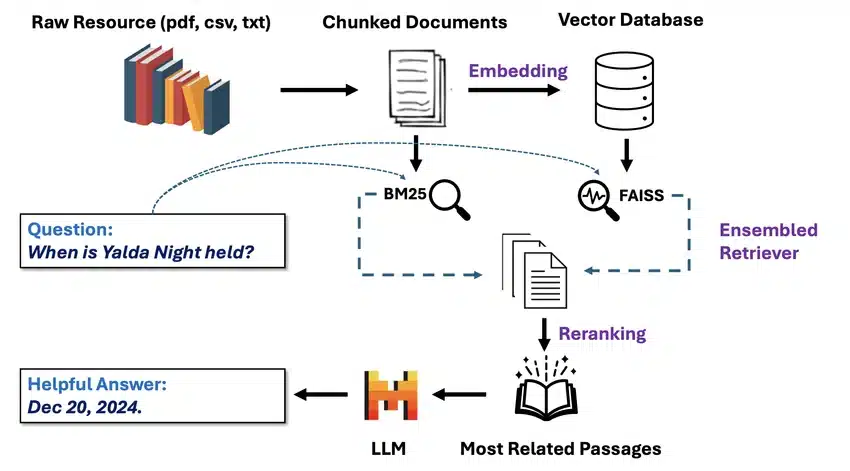
RAG_workflow

Source: RAG Workflow Visualization

The Critical Components of RAG Systems

Several key components work together to make RAG systems function effectively. Understanding these elements helps appreciate the sophistication behind this technology.

The Knowledge Base

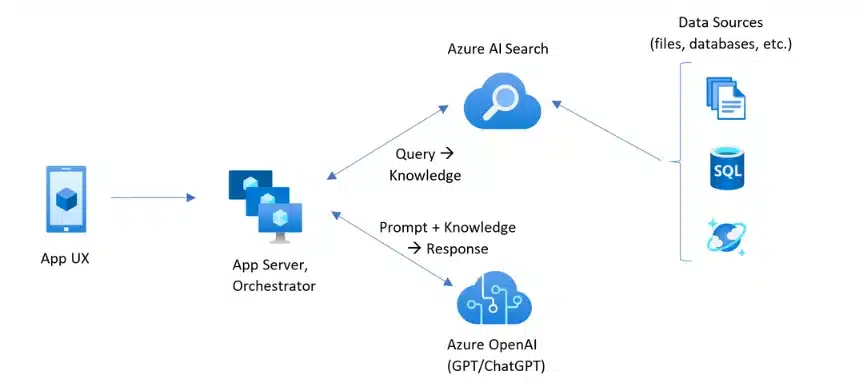
The knowledge base serves as the external information repository that RAG systems query. This could be a company’s internal document library, scientific journal databases, product catalogs, customer service records, or any other structured information source.

Organizations often use vector databases to store this information because they enable fast, efficient similarity searches. Popular vector database solutions include Pinecone, Weaviate, and Chroma.

The Retriever Model

The retriever model handles the critical task of finding relevant information within the knowledge base. It compares the user’s query vector against stored document vectors to identify the most semantically similar content.

Advanced retrievers use sophisticated ranking algorithms to ensure the most relevant information gets prioritized. Some systems employ multiple retrieval strategies simultaneously to maximize coverage and accuracy.

The Integration Layer

The integration layer coordinates all processes within the RAG system. It manages data flow between the retriever and the language model, handles prompt engineering, and orchestrates the overall workflow.

Frameworks like LangChain and LlamaIndex simplify building RAG applications by providing pre-built integration components and standardized interfaces.

The Generator Model

The generator is the large language model that produces the final response. Popular choices include GPT-4, Claude, and other state-of-the-art language models. The generator draws from both the retrieved context and its trained knowledge to create comprehensive, well-articulated answers.

Source: AI Answer Generator

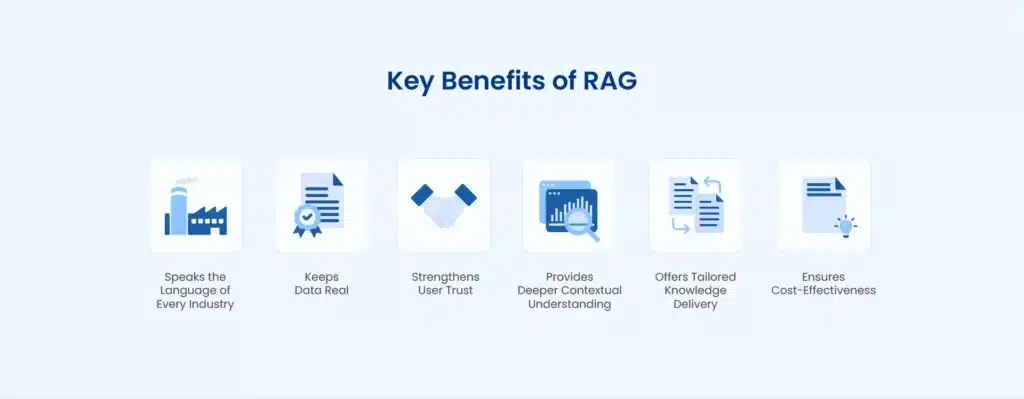
Key Benefits of RAG AI

RAG provides numerous advantages over traditional AI approaches, making it increasingly popular across industries and applications.

Improved Accuracy and Reduced Hallucinations

Large language models sometimes generate plausible-sounding but factually incorrect information, a phenomenon called hallucination.

Wikipedia’s RAG article explains that:

“RAG dramatically reduces these errors by grounding responses in authoritative source material.”

When the AI references specific documents and data, it produces more reliable, verifiable answers. Users can check the cited sources to confirm accuracy and relevance.

Access to Current Information

AI models freeze their knowledge at a specific training cutoff date. A model trained in 2023 cannot accurately discuss events from 2024 or 2025. RAG solves this limitation by connecting models to continuously updated knowledge bases.

Instead of retraining entire models with new data, which is expensive and time-consuming, organizations simply update their knowledge bases. The RAG system immediately begins using the latest information.

Domain-Specific Expertise

RAG enables AI systems to develop deep expertise in specialized fields without requiring massive retraining efforts. A medical RAG system accesses current research papers and clinical guidelines. A legal RAG system references case law and statutes. A customer service RAG system consults product manuals and support tickets.

This specialization happens through knowledge base curation rather than model modification, making it far more practical and cost-effective.

Transparency and Citability

Unlike black-box AI systems, RAG provides clear source attribution. Responses include references to the specific documents or data points used, similar to footnotes in academic papers. This transparency builds trust and allows verification.

According to Pinecone’s RAG guide:

“This citability addresses growing concerns about AI accountability and reliability.”

Cost Effectiveness

Retraining large language models requires enormous computational resources and financial investment. RAG provides a more economical alternative by keeping the base model unchanged while updating only the knowledge base.

Organizations can deploy sophisticated AI applications without the prohibitive costs associated with custom model development and continuous retraining.

benefits_of_RAG

Source: RAG Benefits Infographic

Real-World Applications of RAG AI

RAG technology powers diverse applications across numerous industries, solving practical problems and creating tangible value.

Customer Support and Service

Companies use RAG-powered chatbots that access product manuals, troubleshooting guides, and knowledge bases to provide accurate technical support. When customers ask questions, the system retrieves relevant documentation and generates helpful, contextual responses.

This approach ensures customer service AI stays current with product updates and company policies without constant retraining.

Enterprise Knowledge Management

Large organizations struggle with information scattered across countless documents, databases, and systems. RAG enables employees to query this institutional knowledge conversationally, receiving synthesized answers drawn from multiple authoritative sources.

Questions like “What is our vacation policy?” or “Find our Q3 marketing strategy document” get answered by retrieving and summarizing relevant information from HR databases and document repositories.

Medical and Healthcare Applications

Healthcare providers implement RAG systems that access medical journals, clinical guidelines, and patient records to support diagnosis and treatment planning.

IBM Research’s RAG blog highlights:

“How doctors can ask about the latest treatment protocols and receive evidence-based recommendations grounded in current research.”

Legal Research and Analysis

Law firms use RAG systems to search through case law, statutes, and legal precedents. Attorneys can ask complex legal questions and receive answers supported by relevant citations, dramatically reducing research time while improving thoroughness.

Financial Analysis

Investment firms employ RAG to analyze market data, company filings, and economic reports. Analysts can query these systems about specific companies or market trends, receiving responses based on the most current financial information available.

Content Creation and Marketing

Marketing teams use RAG systems connected to brand guidelines, product specifications, and competitor analysis to generate on-brand content. The AI references specific company information while creating blog posts, social media content, and marketing materials.

architecture_diagram

Source: RAG Use Cases Chart

Implementing RAG: Best Practices

Successfully deploying RAG systems requires careful planning and execution. Several best practices maximize effectiveness.

Curate High-Quality Knowledge Bases

The quality of RAG outputs depends entirely on the quality of the knowledge base. Invest time in collecting, organizing, and maintaining authoritative, accurate information sources. Remove outdated or incorrect information regularly.

Structure documents logically with clear headings, sections, and metadata. This organization helps the retrieval system find relevant information more efficiently.

Optimize Document Chunking

Large documents must be divided into smaller, manageable chunks before vectorization. The chunk size significantly impacts retrieval quality. Too small, and chunks lack context. Too large, and they contain too much irrelevant information.

Experiment with different chunk sizes (typically 200 to 1000 words) and overlap strategies to find the optimal configuration for your specific use case.

Select Appropriate Embedding Models

Different embedding models excel at different tasks. Some specialize in technical content, others in conversational text. Choose embedding models that align with your domain and use case.

Consider using domain-specific embedding models when available, as they often outperform general-purpose models for specialized applications.

Implement Effective Retrieval Strategies

Beyond basic similarity search, implement advanced retrieval techniques like hybrid search (combining keyword and semantic search), re-ranking (ordering results by relevance), and query expansion (generating multiple related queries).

These sophisticated approaches improve the relevance of retrieved information, leading to better generated responses.

Monitor and Evaluate Performance

Continuously monitor RAG system performance using metrics like answer accuracy, response relevance, and user satisfaction. Implement feedback loops that allow users to rate responses and report issues.

Use this feedback to refine knowledge bases, adjust retrieval parameters, and improve overall system quality.

Implementation_guide

Source: RAG Implementation Guide

RAG Limitations and Challenges

While powerful, RAG systems face several limitations that developers and users should understand.

Latency Concerns

RAG adds processing steps compared to standard language model queries. Retrieving information from large knowledge bases, especially external APIs, can introduce noticeable delays. Organizations must balance comprehensiveness with response speed.

Retrieval Quality Issues

If the retrieval system fails to find relevant information, the generated response will suffer regardless of how sophisticated the language model is. Poor retrieval represents a single point of failure that undermines the entire system.

Context Window Limitations

Language models have maximum context lengths. When retrieved information exceeds this limit, the system must decide what to include or exclude, potentially missing important details.

Evaluation Complexity

Assessing RAG system performance requires evaluating both retrieval accuracy and generation quality. Traditional AI evaluation methods fall short for this hybrid approach. Comprehensive evaluation needs human judgment, relevance scoring, and groundedness checks.

Cost Considerations

While more economical than retraining models, RAG systems still incur costs for vector database storage, embedding model inference, and language model API calls. These expenses scale with usage and knowledge base size.

The Future of RAG AI

RAG technology continues evolving rapidly, with several exciting developments on the horizon.

Agentic RAG

The next generation of RAG systems incorporates AI agents that autonomously decide which retrieval tools to use, when to use them, and how to aggregate results. These agentic systems handle complex, multi-step research tasks with minimal human oversight.

According to Pinecone’s analysis:

“Agentic RAG represents the future of AI applications, moving beyond simple question-answering to sophisticated reasoning and problem-solving.”

Multimodal RAG

Current RAG systems primarily work with text, but future implementations will seamlessly integrate images, videos, audio, and other data types. Users will query across modalities, and systems will retrieve and generate responses using the most appropriate format.

Real-Time RAG

Advances in retrieval technology and model efficiency will enable near-instantaneous RAG responses, eliminating current latency concerns. Real-time RAG will support interactive, conversational applications that feel as responsive as traditional search engines.

Industry-Specific Solutions

Specialized RAG solutions tailored for specific industries (healthcare, legal, finance, manufacturing) will become standard offerings. These vertical-specific systems will incorporate domain expertise, regulatory compliance, and industry best practices.

Conclusion

Retrieval-Augmented Generation represents a fundamental advancement in artificial intelligence, bridging the gap between static language models and dynamic, authoritative knowledge sources. By enabling AI systems to access external information before generating responses, RAG dramatically improves accuracy, relevance, and trustworthiness.

As we move through 2025, RAG has evolved from an experimental technique to an essential architecture for enterprise AI applications. From customer support to medical diagnosis, legal research to financial analysis, RAG powers countless applications that deliver real value to users and organizations.

Understanding RAG is no longer optional for anyone working with AI. Whether you are a business leader evaluating AI solutions, a developer building applications, or simply a curious individual wanting to understand modern AI, grasping RAG concepts provides crucial insights into how the most effective AI systems operate.

The future of RAG looks incredibly promising, with agentic systems, multimodal capabilities, and real-time performance on the horizon. As these technologies mature, we can expect even more sophisticated, reliable, and useful AI applications that truly augment human capabilities.

Frequently Asked Questions

How does RAG differ from fine-tuning a language model?

Fine-tuning involves retraining a language model on specific data to increase its familiarity with a domain, which is expensive and time-consuming. RAG keeps the base model unchanged but connects it to external knowledge bases for retrieval. RAG is more cost-effective, easier to update, and can be combined with fine-tuning for optimal results. Fine-tuning teaches the model domain knowledge, while RAG gives it access to current information.

Can RAG systems work offline without internet access?

Yes, RAG systems can operate entirely offline if the knowledge base is stored locally. Many enterprise implementations run on internal servers with local vector databases, requiring no internet connectivity. This approach provides better security, lower latency, and consistent performance. However, offline RAG systems cannot access real-time web information unless periodically updated.

What types of data can RAG systems access?

RAG systems can access various data types including unstructured text (documents, articles), semi-structured data (tables, spreadsheets), structured data (databases, knowledge graphs), and with multimodal RAG, images, videos, and audio files. The key requirement is that data can be converted into embeddings for vector similarity search.

How much does it cost to implement a RAG system?

Costs vary widely based on scale, complexity, and infrastructure choices. Basic implementations using open-source tools and small knowledge bases can cost just compute resources (potentially a few hundred dollars monthly). Enterprise solutions with large knowledge bases, high query volumes, and premium language models can run thousands to tens of thousands of dollars monthly. Many cloud providers offer RAG-as-a-service options with usage-based pricing.

Does RAG eliminate AI hallucinations completely?

RAG significantly reduces hallucinations by grounding responses in retrieved documents, but it does not eliminate them entirely. Language models can still misinterpret retrieved information or generate text that extends beyond what sources actually say. Proper prompt engineering, source citation requirements, and human oversight remain important for critical applications. RAG makes hallucinations less frequent and easier to detect through source verification.

Biodiversity Conservation Explained: A Comprehensive 2030 UN Framework Guide

Understanding biodiversity conservation has never been more critical. This comprehensive guide explains what biodiversity is, why it matters, and how the 2030 UN Framework drives global efforts to protect it.

biodiversity_conservation

Biodiversity is critical for maintaining healthy ecosystems, supporting human well-being, and sustaining the planet’s natural resources. Yet, rapid environmental changes, habitat loss, and climate pressures have put countless species at risk. The United Nations’ 2030 Framework provides a global blueprint for conserving biodiversity, setting clear targets and strategies to protect ecosystems and promote sustainable development. This guide breaks down the framework, explains its key goals, and offers practical insights for understanding and supporting biodiversity conservation worldwide.

Biodiversity, the incredible variety of life on Earth, is declining at an alarming rate. According to UNEP:

“A dangerous decline in nature threatening the survival of 1 million species and impacting the lives of billions of people.”

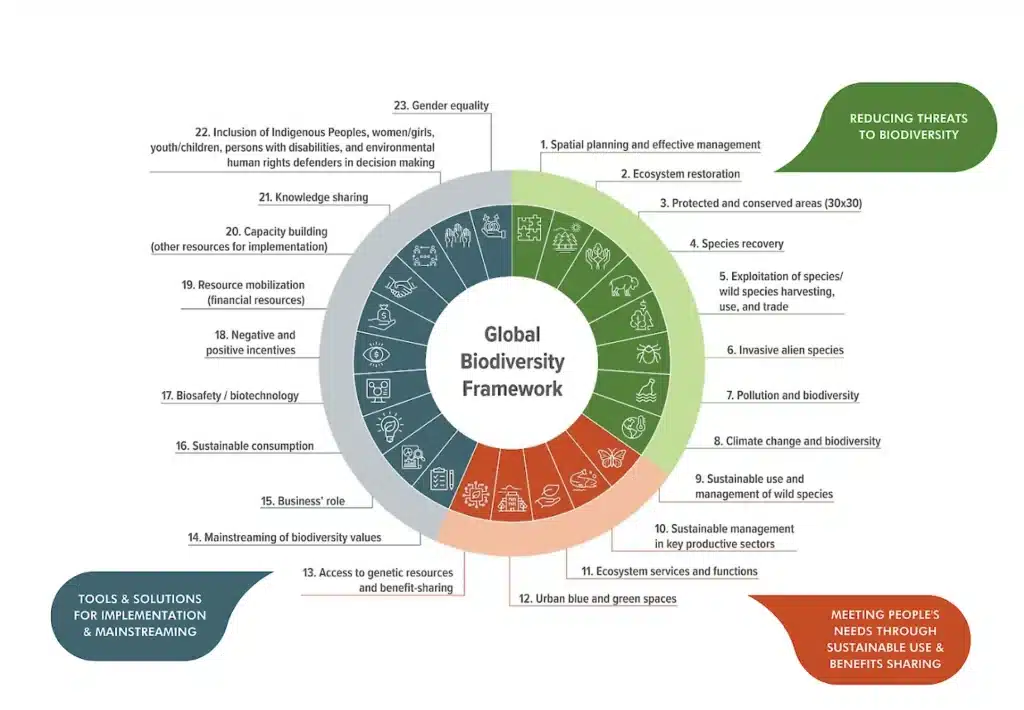
This has led to the adoption of the Kunming-Montreal Global Biodiversity Framework in December 2022. This historic agreement aims to “halt and reverse nature loss” through concrete targets to be achieved by 2030.

Biodiversity

Source: UNEP – Kunming-Montreal Global Biodiversity Framework

What Is Biodiversity?

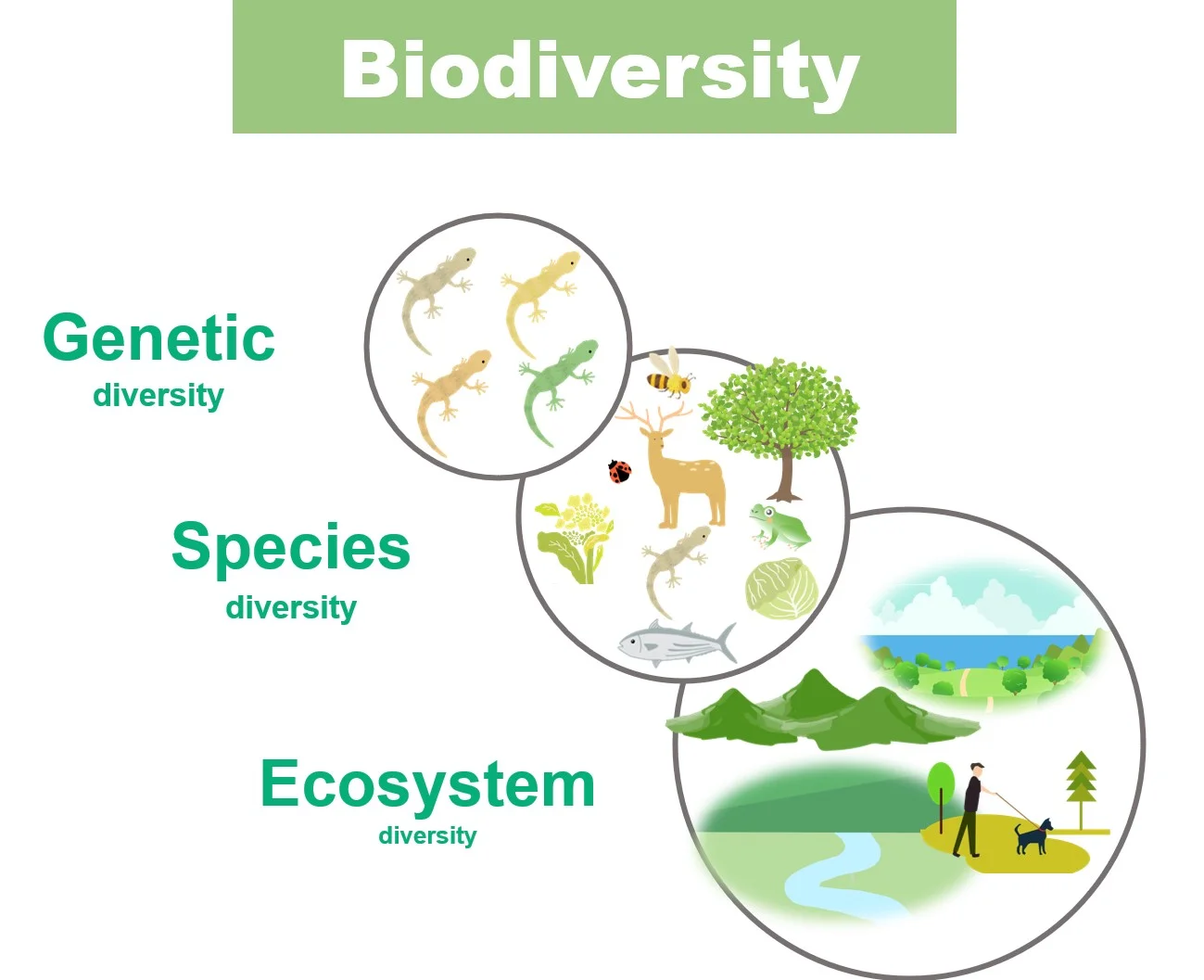
Biodiversity is the variety of life at all levels from genes to species to ecosystems.

According to Wikipedia:

“Biodiversity is commonly measured in terms of taxonomic richness of a geographic area over a time interval, examining the number and variety of different species in a particular place.”

Biodiversity encompasses three fundamental components:

Genetic Diversity represents variation within species. According to Nature’s 2025 analysis:

“Shaw et al. present a wide-ranging assessment of changes in genetic diversity across 36 taxonomic groupings of 622 species,” revealing “patterns of genetic-diversity loss that include declines in diversity even in widespread species.”

Genetic diversity enables species to adapt to changing environments and resist diseases. When genetic diversity declines, populations become vulnerable to extinction from environmental changes or disease outbreaks.

Species Richness measures the number of different species in an area. From the 20,000 species of ants to 300,000 species of beetles to 28,000 species of fish, Earth harbors incredible species diversity.

NCERT reports that:

“There are more than 20,000 species of ants, 3,00,000 species of beetles, 28,000 species of fishes and nearly 20,000 species of orchids.”

Ecosystem Diversity encompasses the variety of habitats, communities, and ecological processes. From tropical rainforests to coral reefs, from grasslands to wetlands, different ecosystems support distinct communities of organisms.

Conservation Letters research published in 2025 emphasizes that:

“Species richness is an intuitively appealing metric for biodiversity conservation because a reduction in the number of species in an area seems obviously to reflect a failure to prevent local extirpations.”

bio_1

Why Biodiversity Matters

Ecosystem Services and Human Survival

Biodiversity provides essential services that sustain human life.

According to NCERT educational materials:

“Among the ecosystem services are control of floods and soil erosion, along with pollination, water purification, climate regulation, and nutrient cycling.”

Forests produce oxygen, absorb carbon dioxide, regulate water cycles, and prevent soil erosion. Wetlands filter pollutants and buffer against floods. Coral reefs protect coastlines and support fisheries. Pollinators enable food production. These services, provided free by nature, would cost trillions of dollars to replicate artificially if replacement were even possible.

Stability and Resilience

Research from Conservation Letters explains that:

“For many decades, ecologists believed that communities with more species, generally tend to be more stable than those with fewer species.”

Diverse ecosystems better withstand disturbances, resist invasions, and recover from damage.

Nature Sustainability research demonstrates that:

“Artificial intelligence holds great promise for improving the conservation and sustainable use of biological and ecosystem values in a rapidly changing and resource-limited world.”

This helps identify priority areas that protect maximum biodiversity efficiently.

Economic and Cultural Value

Biodiversity and Conservation journal notes that:

“Biodiversity continues to decline” despite its immense value.”

Beyond ecosystem services, biodiversity supports tourism, pharmaceuticals, agriculture, and countless industries. Many cultures also hold deep spiritual connections to specific species and landscapes.

Preventing Extinction Crisis

Wikipedia reports that:

“About 40 percent of the 40,177 species assessed using the IUCN Red List criteria are now listed as threatened with extinction, a total of 16,119.” As of late 2022, 9,251 species were considered critically endangered.”

Threats

Source: Threats-Biodiversity

The Kunming-Montreal Global Biodiversity Framework 2030

In December 2022, over 190 countries adopted the Kunming-Montreal Global Biodiversity Framework (GBF) at COP15.

Wikipedia calls it:

“A Paris Agreement for Nature and the most significant agreement under the Convention on Biological Diversity to date.”

Four Goals for 2050

The framework establishes four overarching goals to be achieved by 2050:

  1. Ecosystem and Species Health: Halt human-induced species extinction and maintain healthy, resilient ecosystems
  2. Sustainable Use: Ensure biodiversity is sustainably used and managed
  3. Benefit Sharing: Fairly and equitably share benefits from genetic resources
  4. Implementation: Secure adequate financial resources, capacity-building, and technology transfer

IUCN explains that:

“Achieving these goals requires decisive local and global action from all countries and all sectors of society.”

23 Action Targets for 2030

The GBF includes 23 concrete targets for 2030, categorized into:

  • Reducing threats to biodiversity
  • Meeting people’s needs through sustainable use
  • Tools and solutions for implementation

Target 3: The 30×30 Initiative

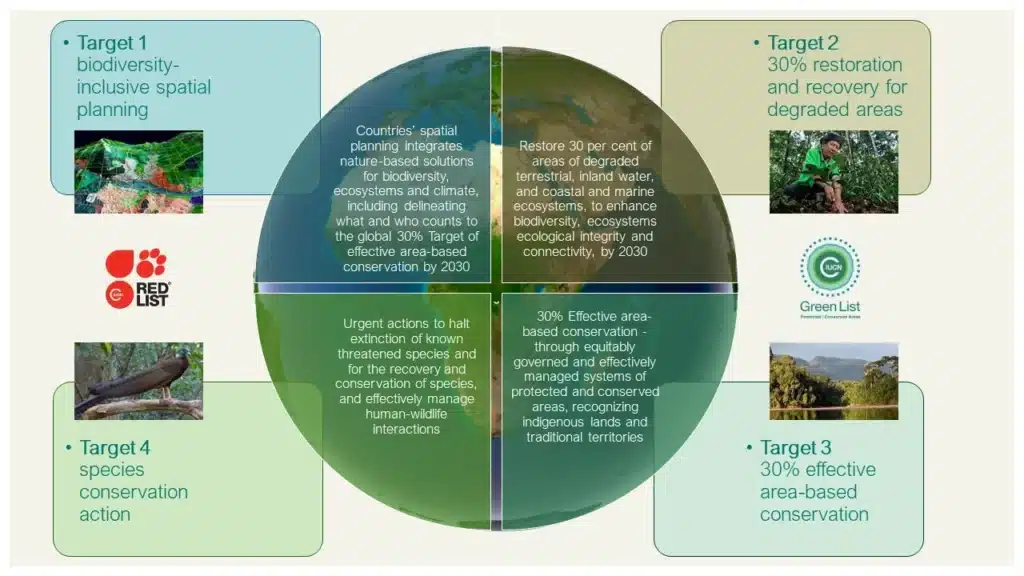
The framework’s centerpiece is Target 3, known as “30 by 30” or “30×30.”

The Nature Conservancy states that:

“This target calls for the effective protection and management of 30% of the world’s terrestrial, inland water, and coastal and marine areas by the year 2030.”

According to WWF:

“Target 3 contains an ambitious commitment to conserve 30% of terrestrial, inland water, coastal and marine areas by 2030, through ecologically representative, well-connected and equitably governed systems of protected areas.”

Target 2: Restoration

IUCN documentation explains that:

“Target 2 calls for 30% of areas of degraded terrestrial, inland water, and marine and coastal ecosystems [to be] under effective restoration by 2030.”

Indigenous Rights Recognition

Critically, the framework recognizes indigenous peoples’ and local communities’ rights and roles.

CBD targets emphasize:

“Recognizing and respecting the rights of indigenous peoples and local communities, including over their traditional territories.”

Global Conservation Strategies

Protected Areas

Protected areas remain conservation’s cornerstone. The Nature Conservancy explains that:

“Protected areas are one of the most effective ways to conserve biodiversity and they remain a cornerstone of biodiversity conservation strategies.”

According to NCERT:

In situ conservation protects:

“Endangered species in their natural habitat so that the entire ecosystem is protected. India’s conservation efforts include 14 biosphere reserves, 90 national parks, > 450 wildlife sanctuaries, and many sacred groves.”

Biodiversity Hotspots

According to NCERT:

“34 ‘biodiversity hotspots’ in the world have been proposed for intensive conservation efforts, including three covering India: Western Ghats-Sri Lanka, Himalaya, and Indo-Burma regions.”

Ex Situ Conservation

When in situ protection proves insufficient, ex situ methods preserve species outside natural habitats.

NCERT lists techniques including:

“Protective maintenance of threatened species in zoological parks and botanical gardens, in vitro fertilisation, tissue culture propagation and cryopreservation of gametes.”

Translocation and Restoration

ScienceDaily reports successful conservation examples that include:

“Reintroduction of the golden bandicoot into areas in Western Australia, release of arctic foxes from captive breeding programs in Scandinavia, translocation of greater prairie chickens into existing populations in North America.”

Technology-Enhanced Conservation

Modern conservation employs cutting-edge technology. Nature Sustainability demonstrates how their:

“Conservation Area Prioritization Through Artificial Intelligence (CAPTAIN) framework protects significantly more species from extinction than areas selected randomly or naively (such as based on species richness).”

targets_graphic

Source: IUCN – 30×30 Implementation Guide

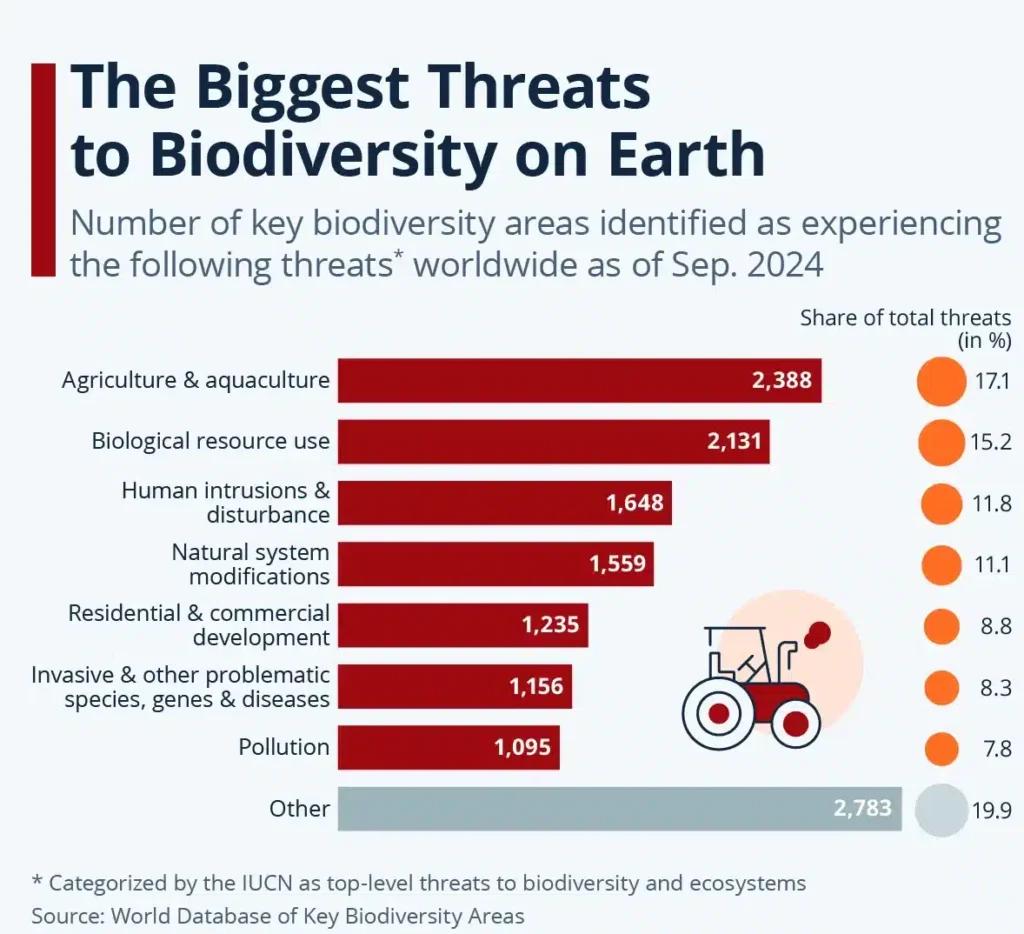
Major Threats to Biodiversity

Understanding threats helps target conservation efforts effectively:

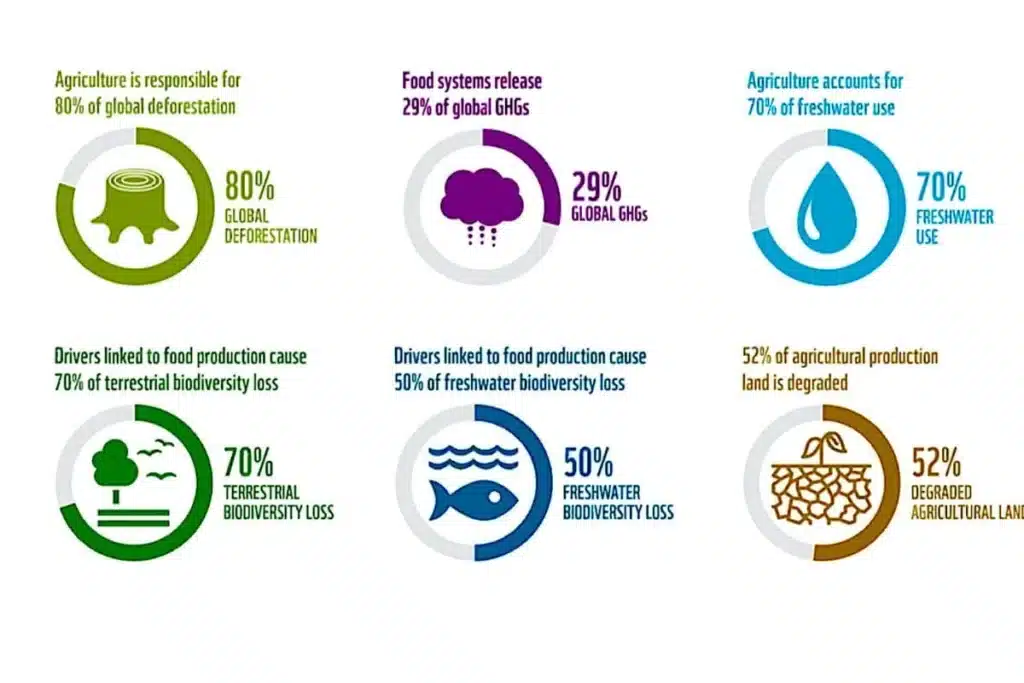
Habitat Loss and Degradation: Land-use change for agriculture, urbanization, and infrastructure destroys natural habitats.

According to Wikipedia:

“Loss of habitat caused by ‘the growth of commodities for export’ is the main driver of biodiversity decline.”

Climate Change: Rising temperatures, changing precipitation patterns, and extreme weather events disrupt ecosystems and species ranges.

Overexploitation: Unsustainable harvesting of wildlife, overfishing, and illegal poaching drive species toward extinction.

Pollution: Chemical contaminants, plastic waste, and nutrient runoff degrade ecosystems and harm species.

Invasive Species: Non-native species outcompete, prey upon, or spread diseases to native species.

Disease: Emerging infectious diseases can devastate populations, especially when genetic diversity is low.

Biodiversity_threat

Source: Biodiversity-Threats

Implementing Conservation Successfully

Financial Investment

IUCN emphasizes that:

“Investment of at least USD 200 billion per year is needed, while the framework aims at progressively closing the biodiversity finance gap of $700 billion per year.”

National Planning

Countries must develop National Biodiversity Strategies and Action Plans (NBSAPs) aligned with GBF targets, considering local contexts, priorities, and capabilities.

Participatory Approaches

IUCN stresses that:

“Setting national targets [must be] a participatory process, inclusive of those who are most affected by biodiversity loss and those who are most impacting biodiversity.”

Monitoring and Accountability

CBD provides:

“Adopted indicators to monitor progress for each target, enabling countries to track implementation and adjust strategies as needed.”

Integration Across Sectors

Wikipedia notes that:

“Implementation will require mandatory nature-related disclosure of data, where companies will be required to disclose their impacts on biodiversity and the natural world.”

How You Can Support Biodiversity Conservation

Individual actions collectively create significant impact:

  • Support conservation organizations financially or through volunteering
  • Choose sustainable products certified by credible organizations
  • Reduce consumption and waste
  • Create wildlife-friendly spaces in gardens and communities
  • Advocate for strong environmental policies
  • Educate others about biodiversity importance
  • Participate in citizen science projects monitoring local species
  • Avoid purchasing products from threatened species
  • Support indigenous communities protecting traditional territories

Conclusion: A Critical Decade

The 2020s represent a critical decade for biodiversity. The Kunming-Montreal Global Biodiversity Framework provides an unprecedented global commitment to halt and reverse nature loss, but success depends on immediate action.

UNEP concludes that:

“Accelerating action across sectors and society toward the realization of the goals and targets of the GBF is urgent to address the key drivers of biodiversity loss.”

The 30×30 target protecting 30% of Earth by 2030 is achievable but requires coordinated efforts from governments, businesses, communities, and individuals.

As The Nature Conservancy states:

“30×30 is an ambitious target… but these goals are bold and unprecedented in scale, and they are also achievable through coordinated and collaborative efforts.”

Every species lost diminishes Earth’s resilience and our own survival prospects. Every ecosystem protected maintains life-support systems we all depend on. The coming years will determine whether we successfully preserve the incredible diversity of life that makes Earth habitable, or whether we allow continued decline threatening our collective future.

Understanding biodiversity conservation empowers everyone to contribute to protecting nature. The framework exists, the targets are set, and the tools are available. Now comes the decisive test: implementation. The biodiversity we save today determines the world we inhabit tomorrow.

Glossary

Biodiversity: The variety of life at the genetic, species, and ecosystem levels within a given area or across the planet.

Genetic Diversity: Variation in genes within a species that allows populations to adapt to environmental change and resist diseases.

Species Richness: A measure of biodiversity referring to the total number of species present in a specific geographic area.

Ecosystem Diversity: The range of different ecosystems, such as forests, coral reefs, wetlands, and their ecological processes.

Ecosystem Services: Benefits humans obtain from nature, including pollination, climate regulation, water purification, and soil stabilization.

Extinction Risk (IUCN Status): A species’ probability of becoming extinct, assessed through categories such as Critically Endangered, Endangered, or Vulnerable.

Kunming-Montreal Global Biodiversity Framework (GBF): A global agreement adopted in 2022 that sets targets to halt and reverse biodiversity loss by 2030 and achieve long-term sustainability by 2050.

30×30 Initiative: A flagship GBF target calling for 30% of Earth’s land, freshwater, and marine areas to be effectively conserved by 2030.

In Situ Conservation: Protection of species within their natural habitats (e.g., national parks, wildlife sanctuaries).

Ex Situ Conservation: Conservation of species outside their natural habitats, such as in zoos, botanical gardens, seed banks, and cryopreservation facilities.

Biodiversity Hotspot: A region with exceptionally high species richness and endemism that is under severe threat from human activity.

Habitat Degradation: A reduction in habitat quality due to pollution, land-use change, fragmentation, or other human pressures.

Invasive Species: Non-native organisms that spread rapidly, outcompete native species, and disrupt ecosystem functioning.

Restoration Ecology: The scientific discipline and practice of repairing degraded ecosystems to restore biodiversity and ecological integrity.

National Biodiversity Strategy and Action Plans (NBSAPs): Country-level policy frameworks for implementing the GBF’s targets through national actions.

Frequently Asked Questions

What is biodiversity and why is it important?

Biodiversity refers to the variety of life on Earth. It is essential for food security, climate regulation, clean water, fertile soils, and ecosystem stability. Human survival depends directly on biodiversity.

What is causing the global biodiversity crisis?

Major drivers include habitat loss, climate change, overexploitation, pollution, invasive species, and disease. Human activities are responsible for biodiversity decline across all ecosystems.

What is the Kunming-Montreal Global Biodiversity Framework?

It is a global agreement adopted in 2022 at COP15 to halt and reverse biodiversity loss by 2030 through 23 targets, including the 30×30 conservation goal.

What is the 30×30 target?

The 30×30 target aims to protect and effectively manage 30% of Earth’s land, freshwater, and marine ecosystems by 2030 through ecologically representative and equitably governed conservation areas.

What are biodiversity hotspots?

These are regions with exceptional species richness and high numbers of endemic species. Hotspots are heavily threatened and prioritized for urgent conservation action.

How does biodiversity support human economies?

Biodiversity underpins agriculture, fisheries, tourism, pharmaceuticals, and ecosystem services valued in the trillions of dollars annually.

What is the difference between in situ and ex situ conservation?

In situ conservation protects species in their natural habitats, while ex situ conservation preserves species outside natural environments through zoos, seed banks, or laboratories.

How do protected areas help conserve biodiversity?

Protected areas safeguard habitats, prevent species extinction, and preserve ecological processes making them foundational to conservation strategies worldwide.

What role do indigenous peoples and local communities play?

They manage large areas of intact ecosystems, hold deep ecological knowledge, and are recognized under the GBF as essential partners with rights that must be respected in conservation.

How can individuals contribute to biodiversity conservation?

Actions include supporting conservation organizations, reducing waste, choosing sustainable products, restoring habitats at home, participating in citizen science, and advocating for biodiversity policies.

Netflix Acquires Warner Bros. And HBO in $82.7 Billion Mega Streaming Deal

Netflix confirms a historic $82.7 billion acquisition of Warner Bros. and HBO, reshaping the streaming industry and expanding its entertainment empire.

Netflix_WB

Netflix has agreed to acquire Warner Bros., including its film and TV studios, HBO, and HBO Max, in a landmark entertainment deal valued at roughly $82.7 billion in enterprise value and $72 billion in equity value. The agreement caps a fast-moving bidding war and would bring some of Hollywood’s most iconic IP libraries under the control of the world’s largest streaming platform, if regulators sign off.​

Deal Structure, Timing And Shareholder Terms

Under the terms announced by Netflix and Warner Bros. Discovery (WBD), WBD shareholders will receive $23.25 in cash and $4.50 in Netflix stock per share, valuing the transaction at about $27.75 per WBD share, subject to final collar details.

Warner_Bros

The companies expect the deal to close within 12 to 18 months, after WBD completes the planned spin-off of its Global Networks TV business, Discovery Global, into a separate public company, now targeted for Q3 2026. Boards at both firms have unanimously approved the acquisition, which still requires regulatory clearance and a vote from WBD shareholders.​

How Netflix Won The Bidding War

The sale process began in October after WBD opened itself up to offers and drew interest from Paramount, Comcast, and Netflix. According to multiple reports, Netflix ultimately offered around $28 per share for WBD’s studio and streaming assets, largely in cash, which also includes a breakup fee of about $5 billion if the deal fails to close, matching protections offered by rival bidders.

Warner_Bros_Paramount_Netflix

Paramount argued publicly that Netflix’s dominant streaming position would face serious antitrust hurdles and accused WBD’s sale process of favoring Netflix, while also highlighting potential management conflicts around CEO David Zaslav’s post-deal incentives. WBD’s board responded that it had fulfilled its fiduciary duties and would continue to do so.​

What Netflix Is Actually Buying

The transaction will see Netflix acquire Warner Bros. Studios and WBD’s streaming operations, including Warner Bros. Television, Warner Bros. Motion Picture Group, DC Studios, HBO, and HBO Max, plus their film and TV libraries.

Netflix_HBO_WB

WBD’s Global Networks business, covering linear brands like CNN, Discovery channels, TNT Sports, and Discovery+, is slated to spin out separately and is not part of the Netflix deal.

Netflix says it plans to maintain Warner Bros.’ theatrical release slate through at least 2029 and keep HBO Max operating as a standalone service in the short term, while progressively integrating HBO and HBO Max titles into the Netflix catalog. The company projects $2–$3 billion in annual cost synergies by year three after closing.​

Bringing Two Giant Content Libraries Under One Roof

Netflix co-CEOs Ted Sarandos and Greg Peters framed the merger as a way to combine Netflix’s global streaming reach with Warner Bros.’”

“century-long legacy of storytelling”

They achieved this by uniting classic film and TV with modern streaming hits. Sarandos highlighted that titles such as Casablanca, Citizen Kane, Harry Potter, and Friends will eventually sit alongside franchises like Stranger Things, Bridgerton, Squid Game and other Netflix originals.​

Netflix_Ted_Sarandos_and_Greg_Peters

Analysts note that Netflix has historically shied away from large-scale M&A, preferring to build IP organically, but argue that this deal instantly deepens its franchise bench across DC Comics, Harry Potter, Hanna-Barbera and more, while adding physical studios and production infrastructure that can help attract top-tier talent.

Buying A Library For Less Than Pandemic Content Spend

One way to contextualize the price: Netflix has spent more than $87 billion in cash on content since the end of 2019, meaning it is now acquiring Warner Bros. and HBO’s entire content engine for less than its cumulative pandemic-era content bill.

The equity value of $72 billion and enterprise value of $82.7 billion also represent a hefty premium to where WBD’s stock traded before takeover chatter, with shares recently hitting a 52-week high after languishing since the 2022 WarnerMedia–Discovery merger.​

From a consumer perspective, the expectation is that once existing licensing deals roll off, much of the Warner Bros. and HBO library could be consolidated on Netflix, although that likely implies higher subscription prices over time. As Netflix put it in its announcement:

“By adding the deep film and TV libraries and HBO and HBO Max programming, Netflix members will have even more high-quality titles from which to choose… [and] this also allows Netflix to optimize its plans for consumers, enhancing viewing options and expanding access to content.”​

Regulatory Scrutiny And Industry Impact

Regulatory review is expected to be intense, particularly in the US and EU, given Netflix’s leading streaming position and the scale of Warner Bros.’ assets. Paramount has already argued that a Netflix–WBD combination presents:

“Serious issues that no regulator will be able to ignore.”

This will be especially around competition in premium scripted content and streaming subscriptions. The companies, however, are betting that the fragmented nature of the broader entertainment landscape and competition from tech giants like Amazon and Apple will help make their case.​

If approved, the merger would reshape Hollywood’s competitive map, fusing Netflix’s distribution engine with one of the deepest IP catalogs in the industry and giving the streamer a global theatrical apparatus on top of its direct-to-consumer business.

For viewers, the long-term headline is simple, which is more of HBO and Warner Bros. under the Netflix umbrella, and for rivals, it’s a sharp escalation in the content and franchise arms race.​

Snapchat Faces Russia Ban Amid Slow User Growth and Australia’s Teen Restrictions

Snapchat has been banned in Russia, amid slow user growth and Australia’s stricter teen access rules, marking another challenge for Snap Inc.

snapchat_ban

Snapchat has been banned in Russia, adding another significant setback for parent company Snap Inc. at a time when user growth is already stalling in key markets. The platform set to lose another half a million users next week due to Australia’s under-16 social media ban. Russia’s regulator Roskomnadzor has ordered local ISPs to block the app, citing national security concerns and alleged use by criminal and extremist groups.​

Russia Blocks Snapchat And FaceTime Over Security Claims

Russian authorities confirmed this week that both Snapchat and Apple’s FaceTime have been restricted nationwide.

facetime_snapchat

According to Bloomberg:

“[Russia’s] communications agency Roskomnadzor said Snapchat and FaceTime were being used within Russia ‘to organize and carry out terrorist acts’ and recruit perpetrators, as well as to commit fraud and other crimes.”

The agency added that the technical blocking of Snapchat actually began back in October, with the public confirmation arriving alongside the FaceTime announcement in early December. As with previous platform bans in Russia, access may still be possible for some users via VPNs, but mainstream usage is expected to drop sharply.​

Part Of A Broader Push Toward State-Controlled Apps

This latest move fits into a wider crackdown on foreign tech platforms that accelerated after Russia’s 2022 invasion of Ukraine. Russia has already blocked or heavily restricted Facebook, Instagram, X, Signal, and imposed curbs on WhatsApp and Telegram, often citing terrorism, fraud, extremism or data‑sharing disputes as justification.​

In parallel, authorities have been pushing citizens towards a Kremlin-backed “super app” called MAX, which combines messaging, payments and government services and is being aggressively promoted in the region, including via requirements for phone makers to pre-install it on devices sold in Russia.

Against that backdrop, Snapchat and FaceTime look like the latest casualties of a policy shift toward a more tightly controlled, walled‑garden internet.​

User Impact: Millions Lost In Russia, Hundreds Of Thousands At Risk In Australia

Snapchat is estimated to have around 8–8.5 million users in Russia, all of whom are now effectively cut off unless they use circumvention tools. For an app with 477 million daily active users globally, that’s a meaningful regional hit, especially when combined with other headwinds.​

In Australia, Snap is also preparing to lock an estimated 440,000 Australians aged 13–15 out of their accounts from December 10, in line with the country’s under‑16s social media ban.

Those users will be required to verify they are over 16 using bank-linked IDs, government IDs or facial age estimation if they want to retain access, with underage accounts locked until their 16th birthday.​

Growth Shifts To Lower-Monetizing Markets

Snap’s latest quarterly update showed that user growth is effectively flat in the US and Europe, with all DAU gains coming from “Rest of World” regions such as India and Southeast Asia. While those markets are helping offset headline user losses, they generate significantly lower revenue per user, meaning top-line growth doesn’t fully compensate for declines or stagnation in higher-value regions.​

Losing Russia completely and a sizable chunk of its Australian teen base will likely weigh on Snapchat’s Q4 growth and longer-term monetization potential, even if global DAU manages to stay roughly level.

Snap has been leaning more heavily into SMB advertisers and direct-response ad performance to keep revenue moving in the right direction, but a shrinking or fragmented audience complicates that pitch.​

AR Glasses And The Risky Hardware Bet

In the face of these challenges, Snap continues to position augmented reality as its big strategic bet, with AR-enabled Spectacles slated for a broader launch sometime next year. The company is hoping to leverage its deep AR lens ecosystem and creator tools to carve out a niche in consumer AR hardware.​

However, the track record here is mixed at best. The first generation of Spectacles reportedly led to tens of millions of dollars in write-downs due to unsold inventory and weaker-than-hyped consumer demand.

Orion_AR_glasses

At the same time, Meta is preparing its own Orion AR glasses, building on the momentum of its Ray-Ban Meta smart glasses, which have drawn stronger mainstream interest and developer support. That raises the risk that Snap spends heavily on AR devices only to be overshadowed again by a larger rival with deeper hardware and ecosystem resources.​

Bigger Picture: Platform Risk In Politicized Markets

The Russian ban ultimately underlines how exposed global social and messaging apps are to geopolitical decisions that can erase entire markets overnight. For Snap, this is one more structural hit layered on top of saturated Western usage, regulatory pressure on teen access, and intensifying competition for both attention and ad dollars.​

Where Snapchat can still win is in deepening relevance among the audiences it retains especially younger users in open markets and proving that its AR, messaging and creator tools can deliver differentiated value that advertisers are willing to pay for.

Bottom Line

With user bans, social media age laws and hardware gambles all in play at once, the next few years look increasingly challenging for the app’s current business model

YouTube Implements New Changes to Comply with Australia’s Teen Safety Laws

YouTube implements new changes to comply with Australia’s teen safety laws, introducing stricter controls and updated protections aimed at reducing underage access and improving platform oversight.

australia_youtube_under_16

YouTube is moving to comply with Australia’s new teen social media restrictions, confirming that users under 16 will be signed out of their accounts from 10 December 2025. The change follows months of lobbying to remain exempt from the rules and marks a major shift for millions of Australian teens who use the platform daily.​

New Age Limits And What Changes For Teens

Australian users under 16 are now seeing in‑app alerts warning that their accounts will be locked when the country’s social media Minimum Age Act comes into force. In practical terms, that means they’ll be automatically signed out, with no ability to log in, subscribe, like, comment, upload videos or access their channels and monetization tools.​

youtube_teens2

According to YouTube:

“Due to a new law in Australia, the minimum age required to sign in to YouTube in Australia is 16. This means that starting on 10 December 2025, users under 16 years old will be automatically signed out from YouTube. This includes any supervised pre-teen and teen accounts.”

Signed‑out users will still be able to watch non‑age‑restricted content, but essentially as anonymous viewers. YouTube says affected users can download their data, delete their accounts, or wait to regain full access once they turn 16.​

How YouTube Lost Its Exemption

Australia introduced its tougher social media age rules last year, initially excluding YouTube based on its educational value and its positioning as a video platform rather than a social network.

That changed in July, when the government reversed the exemption following advice from the eSafety Commissioner, who cited data showing YouTube was the most frequently mentioned platform for harmful content among 10–15‑year‑olds.​

youtube_ban

The decision formally added YouTube to a list of ten platforms alongside TikTok, Instagram, Facebook, X, Snapchat, Twitch, Kick, Reddit and others that must restrict accounts for under‑16s from 10 December.

YouTube has consistently argued that it should not be treated like other social apps, emphasizing its role as a streaming and learning destination used by nearly three‑quarters of Australians aged 13–15.​

YouTube’s Criticism

While confirming it will comply, YouTube has sharply criticized the law’s design and likely impact on safety by quoting:

“At YouTube, we believe in protecting kids in the digital world, not from the digital world…” ​

Crucially, YouTube notes that the Act forces under‑16s to use the service without signed‑in accounts, suggesting:

“remov[ing] the very parental controls and safety filters built to protect them – it will not make kids safer on our platform.”

The company also argues that:

“The law fundamentally misunderstands why teens come to YouTube in the first place.”

YouTube also highlights usage for tutorials, speeches, podcasts, concerts, and sports highlights, often watched on shared TV screens.​

Questions Over Age Checks And Enforcement

One of the biggest unresolved issues is how platforms are supposed to verify users’ ages. The law requires “reasonable measures” to prevent under-16s from accessing social media accounts, backed by potential fines of up to $49.5 million, but leaves implementation details largely to the companies and a forthcoming age‑verification trial.​​

Communications Minister Anika Wells has already cautioned that:

“Many under‑16s will likely still be on social media for some time after the ban, acknowledging that it will take time for the verification sieve to filter existing accounts.”

Regulators have begun putting emerging apps like Lemon8 and photo‑sharing platform Yope “on notice” as teens flock to alternatives and will soon issue notices to the ten major platforms demanding evidence of underage account numbers before and after the law takes effect.​​

Will Teens Just Route Around The Ban?

In reality, most teens expect to find workarounds, whether by using VPNs, misstating ages, sharing family devices, or shifting to less visible platforms. Early reporting already points to rising teen interest in services like Lemon8 and Yope as possible escape valves ahead of the deadline.​​

That dynamic raises a broader risk that if enforcement pushes young users toward smaller or decentralized platforms with weaker moderation and fewer tools for parents, the net safety gain may be limited.

YouTube says it will continue to engage with the Australian government in search of:

“Effective, evidence-based regulation that actually protects kids and teens, respects parental choice, and avoids unintended consequences.”

But for now, under‑16s in Australia will soon discover what YouTube looks like without accounts at all.

2025 Climate Change Causes: Human Influence vs. Natural Forces

A complete 2025 overview of climate change causes, comparing human-driven emissions with natural climate factors to understand the planet’s warming trends.

Human_vs_natural

Climate change in 2025 is driven by a complex mix of human activities and natural forces, but their impacts are far from equal. While natural climate cycles have always influenced Earth’s temperature, today’s rapid warming is overwhelmingly linked to human-driven emissions, industrial growth, and land-use changes. Understanding how these factors interact is essential for grasping why the planet is heating faster than at any point in modern history and what it means for the future.

According to EPA:

“since the Industrial Revolution, human activities have released large amounts of carbon dioxide and other greenhouse gases into the atmosphere, which has changed the earth’s climate.”

While Earth’s climate has always changed due to natural factors, current warming is overwhelmingly driven by human activities. The Intergovernmental Panel on Climate Change (IPCC), composed of scientific experts from countries worldwide, concluded that:

“It is unequivocal that the increase of CO2, methane, and nitrous oxide in the atmosphere over the industrial era is the result of human activities and that human influence is the principal driver of many changes observed across the atmosphere, ocean, cryosphere and biosphere.”

This comprehensive guide explains both natural and human causes of climate change, the greenhouse gases responsible, and how scientists know humans are the primary cause of current warming.

temperature_vs_solar_activity

Source: NASA – Causes of Climate Change

Understanding the Greenhouse Effect: The Foundation

Before examining specific causes, we must understand the greenhouse effect, the natural process that makes Earth habitable but becomes dangerous when intensified by human activities.
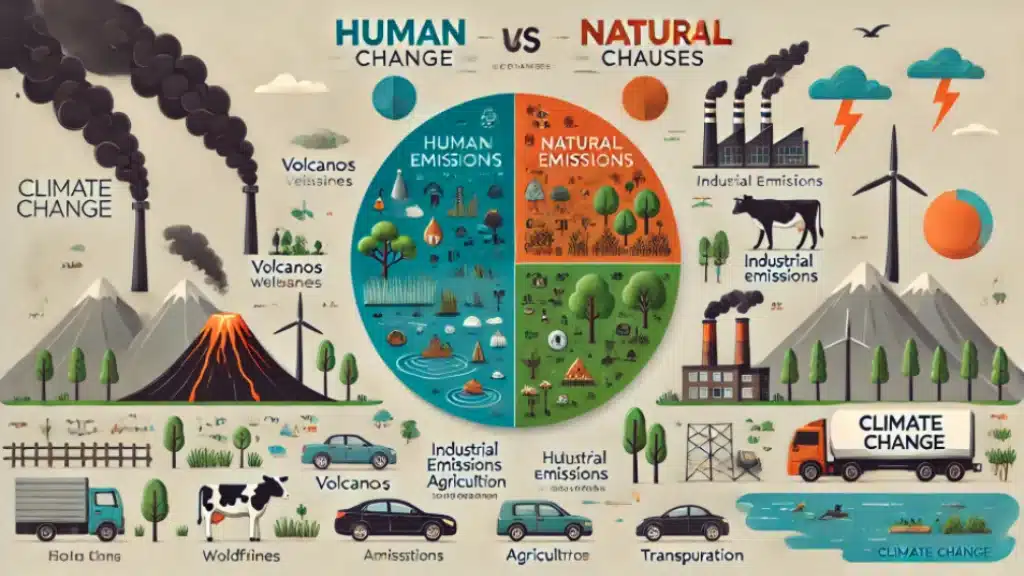
According to NASA:

“Life on Earth depends on energy coming from the Sun. About half the light energy reaching Earth’s atmosphere passes through the air and clouds to the surface, where it is absorbed and radiated in the form of infrared heat. About 90% of this heat is then absorbed by greenhouse gases and re-radiated, slowing heat loss to space.”
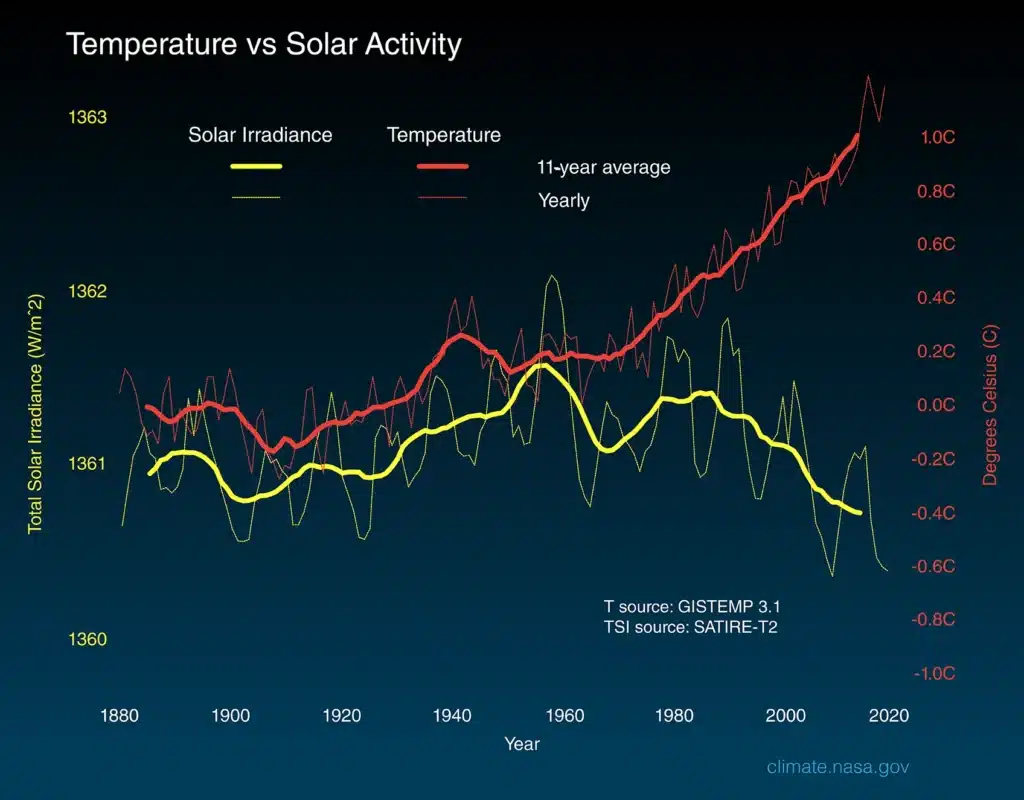
The Natural Greenhouse Effect

Without the natural greenhouse effect, Earth would be uninhabitably cold about -18°C (0°F) instead of the current 15°C (59°F).

AdaptNSW explains that:

“Greenhouse gases in our atmosphere act like the glass in a greenhouse, letting light through but stopping heat from escaping.”

The process works like this:

  1. Solar energy reaches Earth’s atmosphere
  2. About half passes through to the surface
  3. Earth’s surface absorbs this energy and warms
  4. The surface radiates heat back as infrared energy
  5. Greenhouse gases trap this heat in the atmosphere
  6. The trapped heat keeps Earth warm enough for life

The Enhanced Greenhouse Effect

The problem occurs when human activities add excessive greenhouse gases to the atmosphere.

According to AdaptNSW:

“The enhanced greenhouse effect is where extra greenhouse gases in our atmosphere trap too much of the Sun’s energy. This causes a warming effect, which some people call global warming.”

greenhouse_effect

European Commission reports that:

“This adds enormous amounts of greenhouse gases to those naturally occurring in the atmosphere, increasing the greenhouse effect and global warming.”

Key Greenhouse Gases Causing Climate Change

Carbon Dioxide (CO₂): The Primary Driver

Carbon dioxide is the most important greenhouse gas causing climate change.

NASA explains that:

“A vital component of the atmosphere, carbon dioxide (CO2) is released through natural processes (like volcanic eruptions) and through human activities, such as burning fossil fuels and deforestation.”

Current Levels: EPA data shows that:

“Atmospheric carbon dioxide concentrations have increased by more than 40 percent since pre-industrial times, from approximately 280 parts per million (ppm) in the 18th century to 419 ppm in 2023.”

Sources of CO₂:

  • Burning fossil fuels (coal, oil, natural gas) for energy
  • Deforestation and land-use changes
  • Industrial processes like cement production
  • Transportation (cars, trucks, ships, planes)

According to European Commission:

“CO2 produced by human activities is the largest contributor to global warming. By 2023, its concentration in the atmosphere had risen to 51% above its pre-industrial level (before 1750).”

Methane (CH₄): A Powerful Warming Agent

While less abundant than CO₂, methane is far more powerful at trapping heat.

European Commission reports that:

“Methane is a more powerful greenhouse gas than CO2 but has a shorter atmospheric lifetime.”

NASA explains it as:

“Like many atmospheric gases, methane comes from both natural and human-caused sources. Methane comes from plant-matter breakdown in wetlands and is also released from landfills and rice farming. Livestock animals emit methane from their digestion and manure.”

Human Sources of Methane:

  • Livestock farming (cattle and sheep digestion)
  • Rice cultivation in flooded paddies
  • Landfills decomposing organic waste
  • Natural gas production and leaks
  • Coal mining operations

EPA reports that:

“Human activities increased methane concentrations during most of the 20th century to more than 2.5 times the pre-industrial level, from approximately 722 parts per billion (ppb) in the 18th century.”

Nitrous Oxide (N₂O): The Long-Lived Gas

NASA describes nitrous oxide as:

“A potent greenhouse gas produced by farming practices, released during commercial and organic fertilizer production and use.”

European Commission adds that:

“Nitrous oxide, like CO2, is a long-lived greenhouse gas that accumulates in the atmosphere over decades to centuries.”

Sources of Nitrous Oxide:

  • Agricultural fertilizers (nitrogen-based)
  • Manure management
  • Fossil fuel combustion
  • Industrial processes
  • Wastewater treatment
causes_greenhouse_gases

Other Greenhouse Gases

Fluorinated Gases: European Commission warns that:

“Fluorinated gases are emitted from equipment and products that use these gases. Such emissions have a very strong warming effect, up to 23,000 times greater than CO2.”

Water Vapor: NASA clarifies that:

“Water vapor is the most abundant greenhouse gas, but because the warming ocean increases the amount of it in our atmosphere, it is not a direct cause of climate change.”

Instead, it acts as a feedback mechanism, amplifying warming caused by other gases.

climate_change_visible

Source: Climate Change Visible

Natural Causes of Climate Change

While human activities drive current warming, Earth’s climate has always changed due to natural factors:

Solar Radiation Variations

The Sun’s energy output varies slightly over time, affecting Earth’s climate. However, NASA’s research shows that:

“if a more active Sun caused the warming, scientists would expect warmer temperatures in all layers of the atmosphere. Instead, they have observed a cooling in the upper atmosphere and a warming at the surface and lower parts of the atmosphere. That’s because greenhouse gases are slowing heat loss from the lower atmosphere.”

European Commission confirms that:

“Natural causes, such as changes in solar radiation or volcanic activity, are estimated to have contributed less than plus or minus 0.1°C to total warming between 1850 and 2019.”

Volcanic Eruptions

Volcanic eruptions release gases and particles into the atmosphere. However, EPA reports that:

“Volcanic particles from a single eruption do not produce long-term climate change because they remain in the atmosphere for a much shorter time than greenhouse gases. In addition, human activities emit more than 100 times as much carbon dioxide as volcanoes each year.”

Large eruptions can temporarily cool the planet by reflecting sunlight, but this effect lasts only a few years.

Orbital Changes (Milankovitch Cycles)

Over tens of thousands of years, changes in Earth’s orbit and axial tilt affect how much solar energy reaches different parts of the planet. These cycles have caused ice ages and warm periods throughout Earth’s history.

EPA explains that:

“Over the last several hundred thousand years, carbon dioxide levels varied in tandem with the glacial cycles. During warm interglacial periods, carbon dioxide levels were higher. During cool glacial periods, carbon dioxide levels were lower.”

However, these orbital changes occur over thousands of years and cannot explain the rapid warming of the past century.

Natural Climate Variability

Ocean currents, atmospheric circulation patterns, and interactions between Earth’s systems cause natural climate variability on various timescales. El Niño and La Niña events, for example, temporarily affect global temperatures.

AdaptNSW notes that while

“Climate is always changing, scientists use computer models to distinguish natural variation from human-caused changes.”

causes_of_climate_change

Human Causes of Climate Change

Human activities have become the dominant force changing Earth’s climate. Let’s examine the major contributors:

Burning Fossil Fuels: The Biggest Contributor

EPA states that:

“Burning fossil fuels changes the climate more than any other human activity. In recent years, human activities have released around 35 billion tons of carbon dioxide into the atmosphere every year.”

Why Fossil Fuel Combustion Produces CO₂: NASA explains that:

“Over the last century, burning of fossil fuels like coal and oil has increased the concentration of atmospheric carbon dioxide (CO2). This increase happens because the coal or oil burning process combines carbon with oxygen in the air to make CO2.”

Major Fossil Fuel Uses:

  • Electricity Generation: Coal and natural gas power plants
  • Transportation: Gasoline and diesel vehicles, aviation, shipping
  • Industrial Processes: Manufacturing, chemical production
  • Heating and Cooling: Buildings and homes

European Commission reports that:

“Burning coal, oil, and gas produces carbon dioxide and nitrous oxide.”

Deforestation and Land Use Changes

Forests are crucial carbon sinks that absorb CO₂ from the atmosphere. European Commission explains that:

“trees help to regulate the climate by absorbing CO2 from the atmosphere. When they are cut down, that beneficial effect is lost and the carbon stored in the trees is released into the atmosphere, adding to the greenhouse effect.”

Deforestation Impacts:

  • Removes natural carbon absorption
  • Releases stored carbon when trees decompose or burn
  • Reduces biodiversity and ecosystem services
  • Changes local weather patterns
  • Increases soil erosion

NASA reports that:

“To a lesser extent, clearing of land for agriculture, industry, and other human activities has increased concentrations of greenhouse gases.”

Agriculture and Livestock Farming

Modern agriculture contributes significantly to climate change through multiple pathways:

Livestock Emissions: European Commission states that:

“Increasing livestock farming is a major concern because cows and sheep produce large amounts of methane when they digest their food.”

Rice Cultivation: Flooded rice paddies create anaerobic conditions that produce methane.

Fertilizer Use: The European Commission notes that

“fertilisers containing nitrogen produce nitrous oxide emissions.”

Land Conversion: Converting forests and grasslands to farmland releases stored carbon and reduces carbon absorption.

Industrial Processes and Manufacturing

Manufacturing and industrial activities contribute through:

  • Direct emissions from chemical reactions (cement, steel production)
  • Energy consumption from fossil fuels
  • Release of fluorinated gases from refrigeration and air conditioning
  • Production of plastics and other petroleum-based products

Transportation Sector

The global transportation system relies heavily on fossil fuels:

  • Road vehicles (cars, trucks, buses)
  • Aviation (jet fuel combustion)
  • Shipping (heavy fuel oil)
  • Rail transport

Transportation accounts for approximately one-quarter of global energy-related CO₂ emissions.

Building and Construction

  • Energy Use: Heating, cooling, and powering buildings requires enormous energy, mostly from fossil fuels.
  • Construction Materials: Producing cement and steel generates substantial CO₂ emissions.
  • Urban Heat Islands: Cities with extensive concrete and asphalt absorb and retain more heat, affecting local climates.
Climate_action

Source: Climate Action

How We Know Humans Cause Current Climate Change

Scientists have multiple lines of evidence proving human activities cause current warming:

Chemical Fingerprints

AdaptNSW explains that:

“Carbon dioxide released into the atmosphere from burning fossil fuels carries a different chemical fingerprint from that released by natural sources such as respiration and volcanoes.”

This isotopic analysis definitively shows the source of excess CO₂.

Correlation with Industrial Activity

NASA notes that:

“Industrial activities that our modern civilization depends upon have raised atmospheric carbon dioxide levels by nearly 50% since 1750.”

The timing of CO₂ increases matches perfectly with industrialization.

Climate Models

AdaptNSW describes how:

“Scientists have developed computer models that recreate the Earth’s natural rate of climate change. These models use real-world data and allow us to compare the modelled (natural) rate of climate change to the climate we are experiencing today. When we compare these climates, we see that today’s rate of climate change is higher than the natural rate.”

According to NASA:

“Climate models that include solar irradiance changes can’t reproduce the observed temperature trend over the past century or more without including a rise in greenhouse gases.”

Atmospheric Patterns

Scientists observe cooling in the upper atmosphere while the lower atmosphere and surface warm, exactly what we’d expect from greenhouse gas warming, not solar warming.

Rate of Change

Current warming is occurring 10 times faster than the average rate of ice-age-recovery warming, indicating it’s not a natural cycle.

Rate_of_change

Source: Assessment Reports

The Scale of Human Impact

The numbers illustrate humanity’s climate impact:

  • CO₂ Emissions: 35 billion tons annually from human activities
  • Atmospheric Increase: CO₂ levels 51% above pre-industrial
  • Methane Increase: 2.5 times pre-industrial levels
  • Temperature Rise: 1.55°C above pre-industrial (2024)
  • Rate of Warming: 0.25°C per decade currently

European Commission reports that:

“2015-2024 was the warmest decade recorded, with global average temperature reaching 1.55°C above pre-industrial levels in 2024. Human-induced global warming is presently increasing at a rate of 0.25°C per decade.”

Positive Feedback Loops Amplifying Warming

Climate change triggers feedback mechanisms that accelerate warming:

  • Water Vapor Feedback: Warmer air holds more water vapor, itself a greenhouse gas, amplifying warming.
  • Ice-Albedo Feedback: Melting ice exposes darker surfaces that absorb more heat, causing more melting.
  • Permafrost Thaw: Frozen Arctic soils release methane and CO₂ as they thaw, adding more greenhouse gases.
  • Forest Dieback: Climate stress causes forests to die, releasing stored carbon and reducing CO₂ absorption.

NASA explains that feedback is:

“A process where something is either amplified or reduced as time goes on, such as water vapor increasing as Earth warms, leading to even more warming.”

Conclusion

The causes of climate change are clear: while natural factors have always influenced Earth’s climate, current rapid warming is overwhelmingly caused by human activities, primarily burning fossil fuels and deforestation. The scientific evidence is unequivocal as atmospheric concentrations of CO₂, methane, and nitrous oxide have increased dramatically since the Industrial Revolution due to human activities.

Understanding these causes is essential for developing effective solutions. Since human activities cause the problem, human actions can solve it. Transitioning from fossil fuels to renewable energy, protecting and restoring forests, adopting sustainable agriculture, and improving energy efficiency can significantly reduce greenhouse gas emissions.

The urgency cannot be overstated. With global temperatures already 1.55°C above pre-industrial levels and warming at 0.25°C per decade, rapid action is needed to avoid the most catastrophic impacts. The good news is we have the knowledge and technology to address climate change what we need now is the collective will to implement solutions at scale.

Frequently Asked Questions

What is the main cause of climate change?

Burning fossil fuels for energy is the single largest cause, accounting for over 75% of global greenhouse gas emissions. This includes electricity generation, transportation, and industrial processes.

Are natural factors causing current climate change?

No. While natural factors like solar variations and volcanic eruptions affect climate, they contribute less than 0.1°C to warming since 1850. Human activities are responsible for the observed warming.

How do we know CO₂ from humans, not volcanoes?

Carbon isotope analysis shows a distinctive fingerprint proving the excess CO₂ comes from burning ancient organic matter (fossil fuels) rather than volcanic activity. Additionally, human emissions are 100 times greater than volcanic emissions.

Can reducing emissions stop climate change?

Reducing emissions can slow and eventually stop further warming. However, some warming is already locked in due to past emissions. To stabilize temperatures, global CO₂ emissions must reach net zero.

Which greenhouse gas is most important?

CO₂ is most important because of the massive quantities emitted and its long atmospheric lifetime. However, methane’s high warming potential makes reducing methane emissions crucial for near-term climate goals.

Threads Tests AI Interaction Summaries on Profiles

Threads tests AI-powered interaction summaries on user profiles, offering a quick view of recent activity and engagement.

Threads_summaries

Threads is reportedly experimenting with a new AI-driven feature that would provide interaction summaries directly on user profiles. Discovered by app researcher Alessandro Paluzzi, this feature aims to give visitors a quick recap of their past interactions with a specific user, similar to message summaries seen in Gmail, but tailored for the social feed context.

How Interaction Summaries Work

These AI-powered interaction summaries would not only outline past engagements but could also highlight relevant interests and content topics associated with the user.

interaction_summaries

The concept extends beyond known connections like Gmail message summaries, potentially offering visitors an overview of any profile’s posting habits, key interests, and conversational history at a glance.

Threads Aligns with Competitor Features

This idea closely mirrors functionality already present on X, where Premium users access a

“More about this account”

The option is powered by X’s Grok AI, summarizing a user’s profile to aid follow-up decisions.

threads_updates

Given Meta’s own AI capabilities, it is plausible that Threads is adopting a similar approach as part of its competitive strategy against X.

Potential Impacts on User Experience

While these summaries could encourage more meaningful conversations by refreshing contextual memories, there is a question of whether this upfront overview might diminish the fun of organic discovery.

Simplifying personalities to AI-generated highlights might deter followers if the summary reveals low activity or contentious behavior. However, it might also serve as a useful tool to avoid trolls or negative interactions by signaling past critical comments on your posts.

Unconfirmed and Still in Beta

To date, Threads has not officially announced this feature, meaning it remains in speculative development. If implemented, AI interaction summaries could represent a valuable new layer to user profiles.

This will enhance engagement and navigation within the app’s social ecosystem. Whether it will balance convenience with discovery will be an interesting aspect to watch as it evolves.

Bottom Line

This emerging feature demonstrates how AI continues to shape social media user experiences, merging data-driven insights with social interactions for smarter, more contextualized engagement.

Pinterest Reveals Q5 Marketing and Trend Tips

Pinterest reveals Q5 marketing insights and trend tips to help brands boost engagement, reach new audiences, and maximize post-holiday performance.

Pinterest_Holiday_Season

Pinterest has released new data highlighting key user trends during the post-Christmas period, commonly referred to as “Q5” in marketing circles. With audiences unwinding and focusing on post-holiday sales, Pinterest reports a significant spike in activity, making this window a strong opportunity for brands to close out the year.

Search Activity Surges in Specific Categories

According to Pinterest:

“While the core gift-giving season may be over, shoppers aren’t putting away their wallets just yet.”

Pinterest further highlights:

“Q5, the week between Christmas and New Year’s Day, is one of the most active periods of the year on Pinterest.”

Following figures were quoted by Pinterest:

“55% of weekly Pinterest users keep buying online, and 45% continue buying in-store, giving brands an extra sales window and an important marketing opportunity.”

During Q5, Pinterest experiences one of its highest search peaks annually.

“Instead of finding gifts, shoppers are turning their attention to items that will make get-togethers with loved ones extra special in other ways.”

Especially in:

“Two of the most-shopped categories: Food and drinks, and Fashion.”

For example:

“Pinterest searches for ‘new year’s cocktails’ surge by 9.8x, and ‘nye casual outfit’ increases by 30x.”

Self-Care and Personal Treats Also Gain Traction

Pinterest sees notable growth in health and beauty searches as users look to treat themselves at year-end.

“We particularly see this happening in health and beauty, another top-shopped category on Pinterest.”

pinterest_q5

“As the year draws to a close, people on Pinterest are searching for ways to treat themselves, which we see in beauty categories like clear skin (+2.1x), detox bath (+48%) and body oils (+22%).”

Goal Setting and Planning Drive Additional Engagement

The platform also notes that:

“users are 2.4 times more likely than non-Pinners to set New Year’s resolutions during Q5, engaging in searches related to budgeting (+2.5x), personal finance (+2.3x), and home organization (+79%).”

This aligns with Pinterest’s core strength as a planning and inspiration tool, offering brands a prime moment to connect with users around forward-looking content.

For advertisers, Q5 presents a vital chance to capitalize on heightened consumer interest and efficient auction dynamics, with lower costs and broader reach.

Bottom Line

Pinterest’s visual search and AI-driven tools support discovery and decision-making in a period marked by consumer decision fatigue, making it easier for brands to engage shoppers effectively during this ‘bonus’ marketing moment.

Explore Pinterest’s full insights and strategies for optimizing your Q5 campaigns on their official blog here.