X has introduced its new Business subscription package with updated features to enhance brand visibility, analytics, and engagement tools for professional users.
X has renamed its business subscription service from “Verified Organizations” to “Premium Business”. The revamp offers three different levels of membership that come with different features and will cost brands different amounts of money, and ultimately hopes to entice more brands to help them gain exposure on the platform.
Business Subscription Package Levels
X provides these tiers for business users (monthly pricing in USD):
Premium Business Basic: $200/month
Premium Business Full Access — $1,000/mo
Business Enterprise Premium: Custom pricing, designed for enterprise-size requirements
The Basic tier provides a low-entry option, widening accessibility from the previous Verified Organizations program, which had only the full access tier, and at the expensive end of the spectrum.
“Premium Business is the ultimate solution to drive growth on X.”
On credibility, X suggests:
“Gain instant credibility with a gold checkmark– the platform’s strongest symbol of trust – along with affiliate badges to grow your brand’s presence across the platform, advanced impersonation defense, and fast VIP human support to resolve issues quickly.”
Also, X emphasizes:
“Premium Business also unlocks a suite of tools to recruit top talent, monitor real-time news about your brand or industry, enhance productivity with SuperGrok, and so much more.”
They help with visibility, ease of managing the brand, and prevent organizational accounts from being impersonated.
New Marketplace for X Handles
Alongside its revamped business package, X has unveiled a new marketplace for purchasing X handles, allowing users to bid on desirable @names for their brands.
As shown in the feature overview, one of the key additions is the ability to buy a vacant handle for a set price.
This suggests that a wide range of @handles may soon be available for purchase. However, highly sought-after names are likely to be expensive, leaving smaller businesses to consider free or alternative options that still align with their branding needs.
Evaluating the Value Proposition
While the price tags are on the higher side, research indicates that paid subscribers enjoy significantly higher organic reach on X, something which could validate the cost for brands concerned with growing and engaging an audience.
Despite these monetisation efforts, X has seen its overall user base and engagement fall in recent times, some parts of the world, like the EU.
Brands should consider these variables in a serious way; if their target consumer remains on X, these added features and unique benefits may be a benefit over time.
Bottom Line
X Premium Business serves as an all-in-one solution for companies looking to accelerate and safeguard their social media presence in an increasingly competitive landscape with a tiered subscription model, priority handles, enhanced support, and premium brand signals.
You can learn more about X’s Premium Business options here.
Cybercrime has become one of the biggest threats in our digital world. Learn what cybercrime is, its main types, and simple ways to stay safe online in this beginner’s guide.
According to Britannica, Cybercrime is:
“The use of a computer as an instrument to further illegal ends, such as committing fraud, trafficking in child pornography and intellectual property, stealing identities, or violating privacy.”
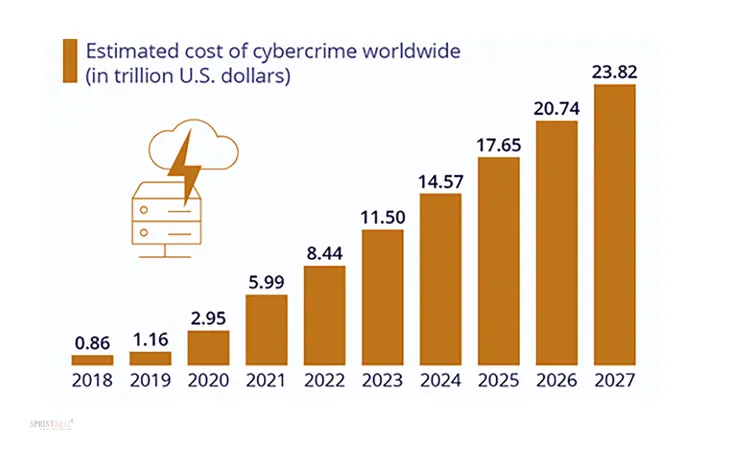
With cybercrime costs projected to reach $23.82 trillion annually by 2027, understanding this threat is essential for everyone.
This guide explains what cybercrime is, the different types you should know about, how it affects businesses, and, most importantly, how you can protect yourself from becoming a victim.
What Makes Cybercrime Different
Cybercrime is a criminal activity that involves computers, networks, or digital devices. What makes cybercrime different from traditional crime is not just the use of technology; it is how criminals can commit crimes across borders, hide their identities easily, and target thousands of victims simultaneously.
According to Britannica:
“Cybercrime highlights the centrality of networked computers in our lives, as well as the fragility of such seemingly solid facts as individual identity.”
In the digital age, our virtual identities, the collection of data about us stored in multiple databases, have become targets for criminals.
The challenge with cybercrime is its non-local character. A criminal in one country can attack victims in another country, making it difficult for law enforcement to investigate and prosecute. This is why international cooperation through treaties like the Council of Europe Convention on Cybercrime, which came into effect in 2004, has become necessary.
The CIA Triad: What Criminals Attack
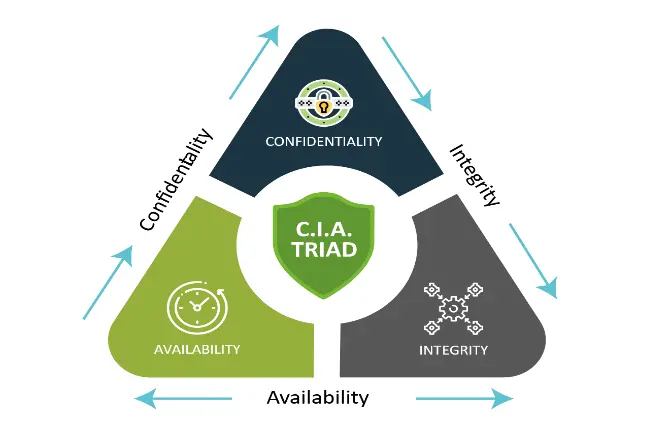
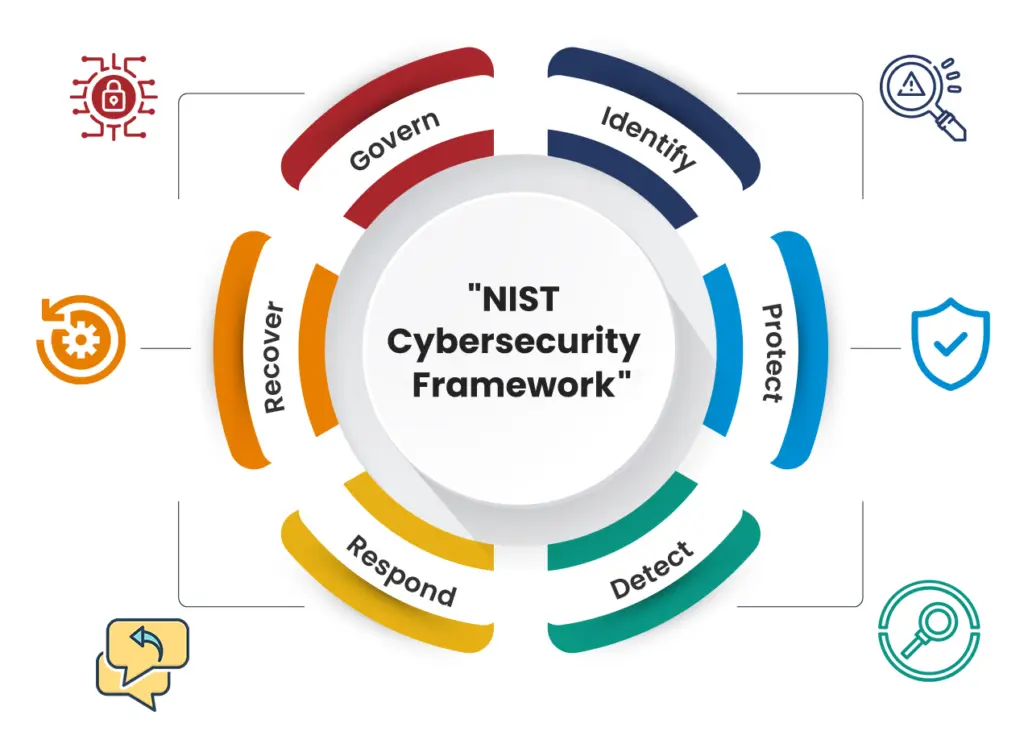
When cybercriminals attack, they typically target one or more elements of the ‘CIA Triad’. The CIA Triad is a fundamental model for information security consisting of three core principles:
Confidentiality is about keeping information private. Criminals break confidentiality when they steal passwords, hack accounts, or access private data without permission.
Integrity means keeping information accurate and unaltered. Criminals attack integrity when they change data in databases, modify financial records, or tamper with medical information.
Availability ensures that systems and data are accessible when needed. Criminals attack availability through ransomware that locks files or DDoS attacks that shut down websites.
It serves as a foundational framework for developing and evaluating security policies by ensuring data is protected from unauthorized access, remains accurate and consistent, and is accessible to authorized users when needed. Understanding these concepts helps you see what cybercriminals are trying to achieve and how to defend against their attacks.
At one end of the spectrum are crimes involving breaches of personal or corporateprivacy. These include assaults on the integrity of information held in digital databases and using illegally obtained information to blackmail or harm individuals and companies.
“Identity theft causes billions in losses annually.”
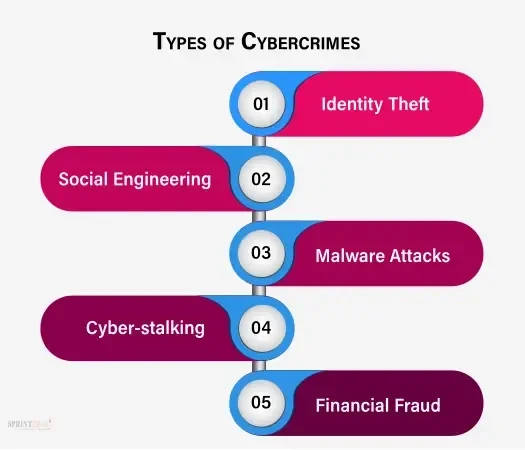
Criminals steal personal information like socialsecurity numbers, birth dates, and financial data to open fraudulent accounts, file fake tax returns, or commit crimes in someone else’s name.
Data breaches expose millions of customer records containing sensitive information. When companies get hacked, criminals steal names, addresses, credit card numbers, and passwords. This stolen data gets sold on dark web marketplaces where other criminals buy it to commit fraud.
Malware: Malicious Software Attacks
Malware is software specifically designed to damage or gain unauthorized access to computer systems. Huntress found that:
“54% of people reported experiencing malware infections in the past year, making it the most common cybercrime.”
Viruses attach to legitimate programs and spread when users run those programs. They can delete files, corrupt data, or steal information.
Trojans disguise themselves as useful software but contain hidden malicious code. Once installed, they give criminals remote access to your computer.
Spyware secretly monitors everything you do, recording keystrokes to capture passwords, tracking websites visited, and sending this information back to criminals.
Ransomware encrypts your files and demands payment for the decryption key. According to Astra:
“Ransomware costs are predicted to reach $265 billion by 2031.”
Phishing uses deception rather than technical exploits. Criminals send fake emails or messages that appear to come from trusted sources like banks, government agencies, or popular companies. Keepnet’s 2025 research shows:
“Phishing scams using AI to generate convincing emails have led to a spike in identity theft and financial fraud.”
When you click links in phishing messages, you’re taken to fake websites that look real. If you enter your username and password, criminals capture this information and use it to access your real accounts.
“Midway along the spectrum lie transaction-based crimes such as fraud, trafficking in child pornography, digital piracy, money laundering, and counterfeiting.”
These crimes have specific victims, but criminals hide behind the internet’s anonymity.
“Criminals hack or impersonate business email accounts to trick companies into transferring money.”
The FBI reports that BEC causes billions in losses because criminals carefully study how companies operate before striking.
Online fraud includes fake shopping websites, investment scams, romance scams, and cryptocurrency fraud. Criminals create convincing fake websites or profiles to steal money from unsuspecting victims.
Infrastructure Attacks
According to Britannica:
“At the far end of the spectrum are crimes that involve attempts to disrupt the actual workings of the Internet.”
These include:
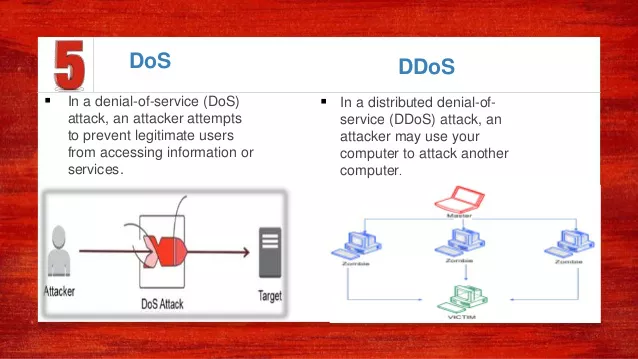
Denial of Service (DoS) and Distributed Denial of Service (DDoS) attacks overwhelm websites or services with traffic, making them unavailable to legitimate users. Criminals use networks of infected computers called botnets to launch massive attacks.
Hacking involves unauthorized access to computer systems to steal data, install malware, or cause damage. Some hackers work for criminal organizations, while others are state-sponsored actors conducting cyber espionage.
Cyberterrorism uses the internet to cause public disturbances, disrupt critical infrastructure, or even cause death. Britannica explains that:
“Cyberterrorism focuses upon the use of the Internet by nonstate actors to affect a nation’s economic and technological infrastructure.”
Understanding real-world attacks helps you recognize threats:
Healthcare Data Breaches
Hospitals and healthcare providers have become prime targets because medical records contain complete personal information, names, addresses, socialsecurity numbers, insurance details, and medical history. This data sells for high prices on criminal marketplaces. Recent attacks have forced hospitals to shut down systems, cancel appointments, and revert to paper records.
The Cl0p ransomware group attacked multinational corporations by exploiting vulnerabilities in file transfer software. Victims faced both data encryption and threats to publish stolen data publicly, a double extortion tactic that increases pressure to pay ransoms.
High-profile social media account takeovers have been used for cryptocurrency scams, spreading misinformation, and manipulating markets. When criminals hack verified accounts, their messages reach millions of followers who trust the account’s authenticity.
Government and Critical Infrastructure Attacks
State-sponsored hackers have targeted government agencies, power grids, water treatment facilities, and other critical infrastructure. These attacks can disrupt essential services and threaten public safety.
How Cybercrime Affects Businesses
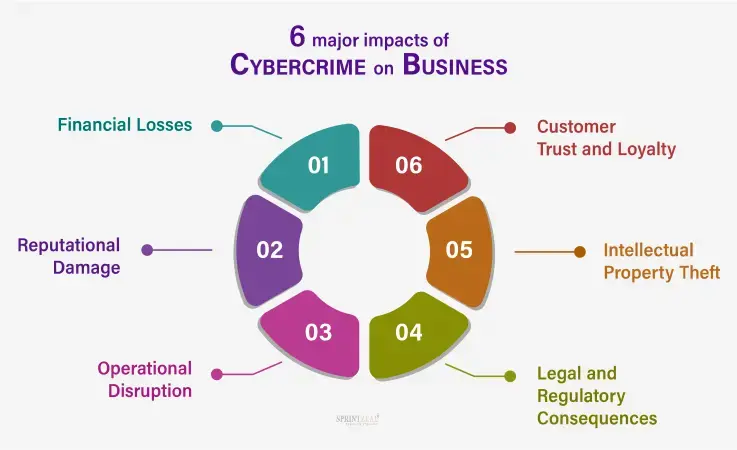
Businesses face devastating consequences from cybercrime:
“The average cost of a data breach reached $4.88 million globally in 2024.”
These costs include immediate theft, ransom payments, investigation expenses, legal fees, regulatory fines, customer notification, lost business during downtime, and increased insurance premiums.
Operational Disruption
Cyber attacks can completely shut down business operations. Manufacturing stops, stores can’t process sales, hospitals cancel surgeries, and schools close. Every hour of downtime costs money and damages customer relationships.
Reputation Damage
When customers learn their data was stolen, they lose trust. This reputation damage can exceed immediate financial losses. Customers leave for competitors, partnerships end, and investors lose confidence. Some businesses never recover.
Legal Consequences
Companies face lawsuits from affected customers, regulatory investigations, and substantial fines for failing to protect data adequately. In some cases, officers and directors face personal liability.
United States: The Computer Fraud and Abuse Act (CFAA) criminalizes unauthorized computer access. The Identity Theft and Assumption Deterrence Act specifically addresses identity theft. Each state has additional laws.
International: The Council of Europe Convention on Cybercrime helps countries cooperate in fighting cybercrime across borders. The convention came into effect in 2004 and has been ratified by over 60 countries.
Your local police department for immediate threats
How to Protect Yourself from Cybercrime
You can significantly reduce your risk with these precautionary measures:
Strong Authentication
Use passwords that are at least 12 characters with uppercase, lowercase, numbers, and symbols. Never reuse passwords. Enable multi-factor authentication (MFA) on all important accounts, email, banking, and social media.
Keep Software Updated
Install updates immediately when available. Updates include security patches that fix vulnerabilities that criminals exploit. Enable automatic updates for your operating system, applications, and security software.
Be Skeptical of Messages
Before clicking links in emails or messages, verify the sender’s address, check for urgency or threats, look for grammar mistakes, and hover over links to see actual URLs. When in doubt, go directly to the company’s website by typing the address yourself.
Secure Your Network
Use strong passwords on your home Wi-Fi router with WPA3 or WPA2 encryption. Avoid sensitive transactions on public Wi-Fi. If you must use public networks, use a Virtual Private Network (VPN) to encrypt your connection.
Back Up Your Data
Regularly back up important files to an external hard drive or cloud service. Follow the 3-2-1 rule: three copies of data, on two different media types, with one copy off-site. Test backups to ensure they work.
Install reputable antivirus and anti-malware software on all devices. Keep it updated and run regular scans. Modern security software uses AI to detect new threats.
Monitor Your Accounts
Check bank accounts, credit cards, and credit reports regularly for suspicious activity. Set up alerts for transactions. Review credit reports annually from all the major bureaus.
Educate Yourself
Stay informed about new cyber threats and scams. Criminals constantly develop new techniques. Also, share what you learn with family and friends to protect them.
Cybercrime represents a serious and growing threat in our increasingly digital world. With costs reaching trillions of dollars annually, understanding cybercrime is essential for protecting yourself and your organization.
Remember that cybercriminals are sophisticated and constantly evolving. The phishingemail that looks fake today might be incredibly convincing tomorrow. Ransomware attacks that once targeted only large corporations now affect small businesses and individuals.
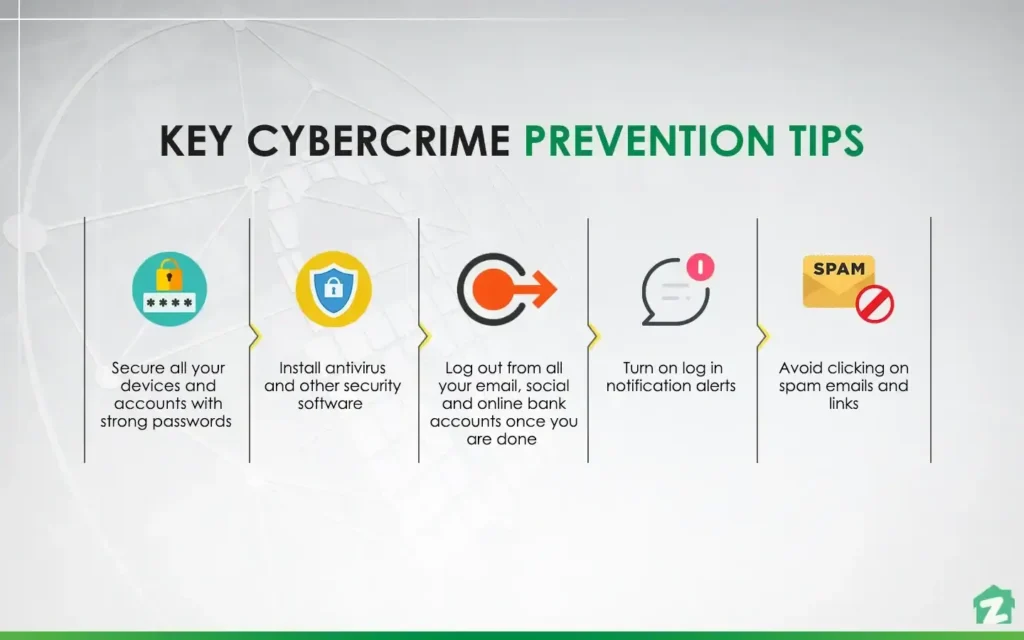
However, you do not need to be a cybersecurity expert to protect yourself. Follow basic practices like using strong authentication, keeping software updated, being skeptical of unexpected messages, backing up your data, and educating yourself about current threats. These simple steps block most cyber attacks because criminals target easy victims first.
If you become a victim, report the crime to the appropriate authorities immediately and take steps to limit damage. The fight against cybercrime requires everyone’s participation. When you protect yourself, you help protect others by not becoming a link in the chain criminals use to spread attacks.
Stay vigilant, stay informed, and take cybersecurity seriously. Your digital safety depends on the actions you take today.
Botnet: A Network of infected computers controlled by criminals to launch attacks
CIA Triad: Confidentiality, Integrity, and Availability, the three core security principles
Cybercriminal: A Person who commits crimes using computers and networks
DDoS: Distributed Denial of Service attack that overwhelms systems with traffic
Encryption: Converting data into a coded format to protect confidentiality
Hacker: A Person who gains unauthorized access to computer systems
Identity Theft: Stealing personal information to impersonate victims
Malware: Malicious software designed to damage systems or steal data
Phishing: Fake messages that trick people into revealing sensitive information
Ransomware: Malware that encrypts files and demands payment for decryption
Social Engineering: Manipulating people into breaking security procedures
Trojan: Malware disguised as legitimate software
Virus: Self-replicating malware that spreads through infected files
VPN: Virtual Private Network that encrypts internet connections
Zero-Day: Previously unknown vulnerability with no available patch
Frequently Asked Questions
What is cybercrime?
Cybercrime is any illegal activity that involves a computer, network, or the internet. It includes hacking, online scams, identity theft, and spreading viruses.
Cybercrime is rising because more people use the internet for shopping, banking, and communication, giving criminals more opportunities to exploit users.
How can I protect myself from cybercrime?
Use strong passwords, update software regularly, avoid suspicious links or emails, and use trusted antivirus and security tools.
What should I do if I become a victim of cybercrime?
Report the incident to your local cybercrime authorities, change your passwords, and secure your accounts immediately.
Ransomware attacks have become the most destructive cyber threat, posing serious risks to businesses, government networks, and individual users worldwide.
Ransomware remains one of the most dangerous cybercrime threats in 2025, targeting individuals, corporations, and even critical infrastructure. These malicious programs encrypt files and demand payment for their release, often causing severe data loss and financial damage.
“U.S. ransomware attacks increased by 149% year over year in the first five weeks of 2025, understanding ransomware is critical for everyone.”
This guide explains what ransomware is, how it works, notable attack examples, and most importantly, how you can protect yourself and recover if you become a victim.
Ransomware is malicious software that encrypts your files, making them completely inaccessible, and demands payment (ransom) to decrypt them. Think of it like digital kidnapping, where criminals hold your data hostage until you pay. However, unlike physical kidnapping, paying the ransom does not guarantee you will get your files back.
The Ransomware Attack Process
Understanding how ransomware attacks unfold helps you recognize and prevent them:
Step 1: Initial Access Criminals gain entry to your system through phishing emails, malicious downloads, compromised websites, or exploiting software vulnerabilities.
According to CISA’s ransomware guide:
“Phishing remains the most common entry point for ransomware attacks.”
Step 2: Execution and Encryption Once inside, the ransomware executes and begins encrypting files. Modern ransomware uses strong encryption algorithms that are virtually impossible to break without the decryption key. The malware often targets document files, databases, images, and backups first.
Step 3: Ransom Demand After encryption completes, a ransom note appears on your screen. This note explains what happened, demands payment (usually in cryptocurrency like Bitcoin), and provides instructions for payment. The note often includes threats to delete files permanently or publish sensitive data if you do not pay within a deadline.
Step 4: Double Extortion Many modern ransomware groups use “double extortion” tactics. They not only encrypt your files but also steal copies of your data before encryption. They threaten to publish this stolen data publicly if you don’t pay, even if you have backups and can restore your files.
Types of Ransomware
Different ransomware variants use different tactics:
Crypto Ransomware encrypts files but leaves the system functional so you can see the ransom demand and make payment.
Locker Ransomware locks you out of your entire system, preventing access to everything.
Scareware displays fake warnings claiming your system is infected and demands payment to fix it. While less dangerous, it still tricks people into paying.
Doxware threatens to publish stolen personal or sensitive data unless you pay.
Ransomware-as-a-Service (RaaS) is a business model where ransomware developers sell or rent their malware to other criminals, making ransomware attacks more accessible to less technical criminals.
Source:CISA-Stop Ransomware Guide
Ransomware Statistics: The Growing Threat in 2025
The ransomware threat has escalated dramatically in 2025:
Attack Volume and Growth
G2’s comprehensive analysis reveals:
“Over 5,263 attacks were recorded in 2024, the highest ever since tracking began in 2021.”
The trend has continued into 2025 with even more attacks.
“Some of the most reported strains of ransomware are Ryuk with 180.4 million targets, SamSam with 103.9 million targets, and Cerber with 28.2 million targets.”
These numbers show the massive scale of ransomware operations.
Financial Impact
The average ransom payment has increased significantly.
G2 suggests:
“LockBit accounted for $91 million worth of ransomware payments in 2025, making it the most prolific group that year.”
However, the total cost of attacks far exceeds ransom payments when you include downtime, recovery expenses, and lost business.
Organizations face devastating financial consequences:
Average ransom demands range from $50,000 to several million dollars
Recovery costs average 10 times the ransom amount
Business interruption costs can exceed millions per day
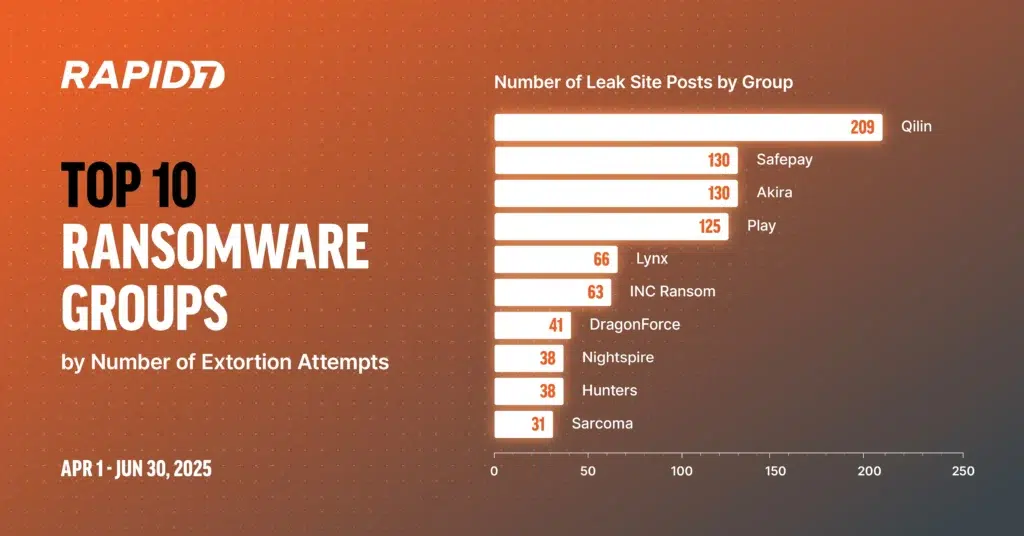
According to Fortinet, Qilin became the most active ransomware group by June 2025. Other notable groups include:
RansomHub was the most consistently active operator throughout 2024 and early 2025.
LockBit, despite law enforcement disruptions, remains a significant threat with millions in ransom payments.
Akira has shown steady growth in attack volume.
Rapid7’s Q2 2025 analysis identified 11 net new ransomware groups in Q2 2025 alone, including KaWa4096, Warlock, Devman, Nova, and Dire Wolf. This proliferation shows that taking down one group doesn’t stop the overall threat.
According to Spacelift’s statistics, Ransomware attacks target all sectors, but some industries are hit harder:
Healthcare organizations (hospitals can’t afford downtime that endangers lives)
Financial services (hold valuable data and can pay large ransoms)
Government agencies (critical services and political pressure to restore quickly)
Manufacturing (production downtime is extremely costly)
Education institutions (limited security budgets but valuable student data)
Notable Ransomware Attack Examples
Real-world examples show the devastating impact of ransomware:
Healthcare Sector Attacks
Hospitals have been hit particularly hard because they must restore operations quickly to provide patient care. Ransomware attacks have forced hospitals to divert ambulances, cancel surgeries, and revert to paper records. In some cases, delayed treatment due to ransomware attacks has contributed to patient deaths.
One major healthcare system paid a multimillion-dollar ransom after attackers encrypted patient records and operational systems. Even after payment, full recovery took weeks and cost far more than the ransom itself.
Colonial Pipeline Attack (Historical Reference)
The 2021 Colonial Pipeline attack remains a cautionary tale. Ransomware shut down the largest fuel pipeline in the U.S., causing widespread gas shortages and panic buying. The company paid $4.4 million in ransom, though law enforcement later recovered most of it. This attack demonstrated how ransomware can disrupt critical infrastructure and affect millions of people.
Educational Institution Compromises
Universities and school districts have become frequent targets because they have limited security budgets but store valuable personal information about students and staff. CM Alliance documented major organizations hit by ransomware in June 2025, highlighting the ongoing threat to educational institutions.
Corporate Data Breaches
Major corporations have paid millions in ransom after attackers encrypted operational systems and stole sensitive business data. The double extortion tactic—threatening to publish stolen data has proven particularly effective against businesses with confidential information, trade secrets, or customer data they must protect.
Fake Ransom Campaigns
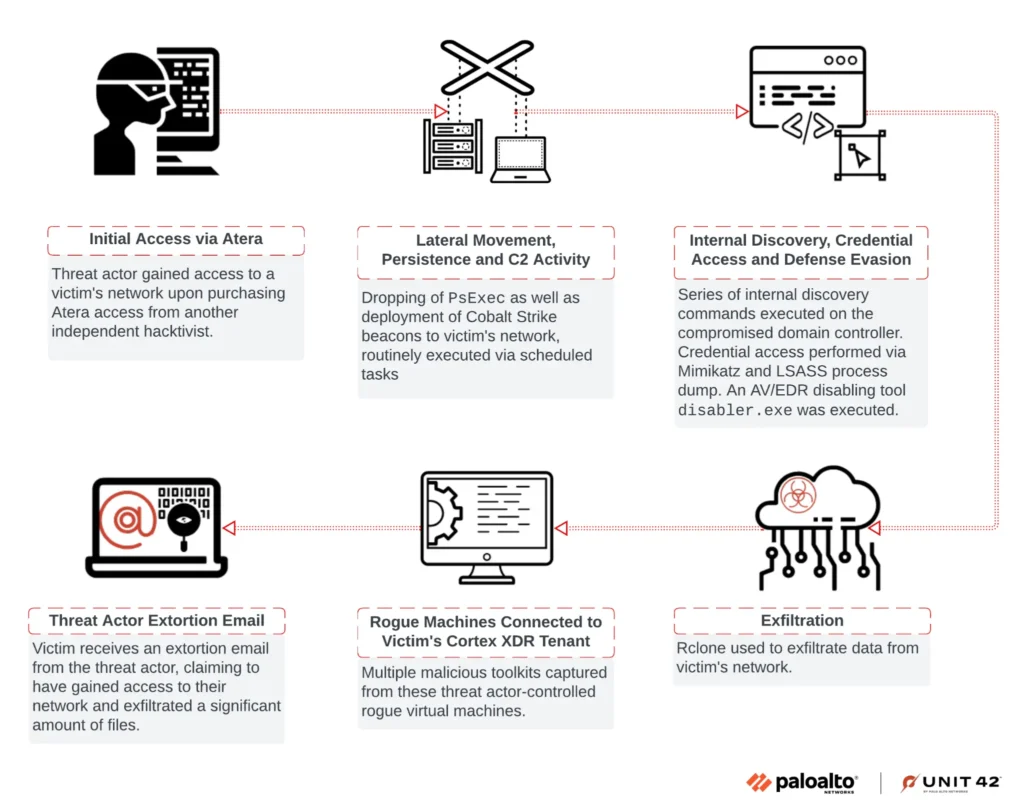
Palo Alto Networks’ Unit 42 documented a March 2025 campaign where scammers physically mailed threatening letters to executives claiming to be a known ransomware group. While no actual ransomware was deployed, these extortion attempts show the evolving tactics criminals use.
However, negotiation doesn’t change the fundamental problem: you’re dealing with criminals who have no obligation to honor agreements.
Ransomware Prevention: Building Strong Defenses
Prevention is far better than dealing with an attack. Here are proven strategies:
Implement Robust Backup Systems
Backups are your most important defense against ransomware. SentinelOne emphasizes:
“Backup frequency depends on data sensitivity and business needs. Critical data must be backed up daily, even hourly.”
Follow the 3-2-1-1 Rule: According to Cypfer’s best practices:
“Follow the 3-2-1 rule (3 copies, 2 different storage types, 1 offsite).”
Modern recommendations add a fourth element: one immutable or air-gapped copy.
3 copies of your data (original plus two backups) 2 different media types (like hard drives and cloud storage) 1 offsite backup (protects against physical disasters) 1 immutable backup (cannot be encrypted or deleted by ransomware)
Use Immutable Backups: Veeam’s ransomware prevention guide stresses:
“Immutable and encrypted backups” serve as “the last line of defense against encryption or deletion by attackers.”
Immutable storage prevents anyone, including ransomware, from modifying or deleting backups for a specified retention period.
Store Backups Offline: CISA recommends backing up:
“Data often; offline or leverage cloud-to-cloud backups.”
Air-gapped backups physically disconnected from networks cannot be reached by ransomware.
Test Backup Restoration: Backups are worthless if you can’t restore from them. Regularly test your backup restoration process to ensure:
Backups complete successfully
Files are not corrupted
Restoration procedures work
Recovery time meets your needs
Security Awareness Training
Employees are often the first line of defense. Train staff to:
According to The Hacker News, ransomware often exploits known vulnerabilities that have patches available. Implement:
Automatic updates for operating systems
Patch management for all software
Vulnerability scanning to identify weaknesses
Prioritized patching for critical vulnerabilities
Implement Network Segmentation
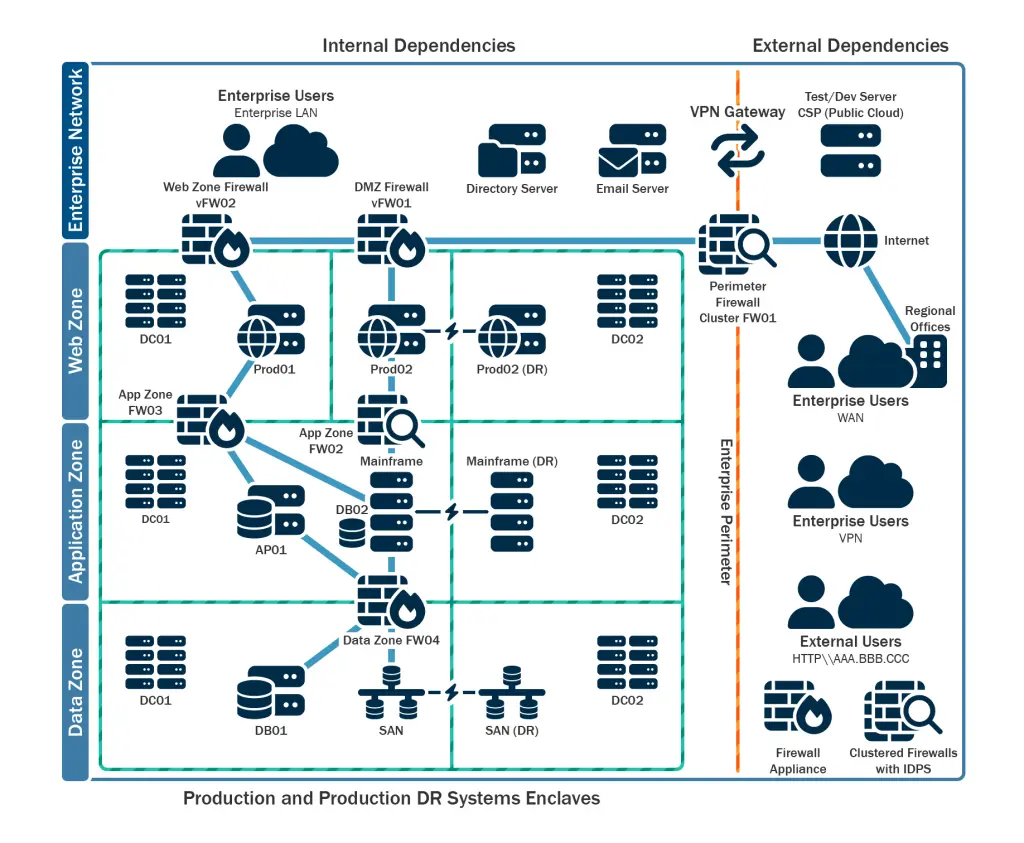
Segment your network to limit ransomware spread. If one system gets infected, segmentation prevents lateral movement to other systems. Critical systems and backups should be on separate network segments with restricted access.
Deploy Endpoint Protection
Use advanced endpoint detection and response (EDR) solutions that:
Follow the principle of least privilege—give users only the access they need to do their jobs. This limits ransomware’s ability to spread and encrypt files across your network.
Disable Unnecessary Services
Ransomware often spreads through Remote Desktop Protocol (RDP) and other remote access services. Disable services you don’t need, and secure those you must use with strong authentication and network restrictions.
Ransomware Recovery: What to Do If You’re Hit
If ransomware strikes despite your defenses, act quickly:
Immediate Response Steps
Isolate infected systems: Disconnect affected devices from the network immediately to prevent ransomware spread. According to Canadian Centre for Cyber Security, quick isolation is critical.
Don’t power off systems: Keep infected systems running so forensic investigators can analyze what happened and potentially find the ransomware variant.
Document everything: Take photos of ransom notes, record what happened and when, and preserve evidence for law enforcement and insurance claims.
Report to authorities: Contact the FBI’s Internet Crime Complaint Center (IC3), local law enforcement, and relevant regulatory agencies.
Notify stakeholders: Inform leadership, IT security team, legal counsel, insurance provider, and potentially customers depending on the breach.
Assessment and Analysis
Identify the ransomware variant: Knowing which ransomware infected you helps determine if free decryption tools exist. Websites like NoMoreRansom.org maintain databases of decryption tools.
Assess the damage: Determine which systems and data are affected, what backups are available, and how long recovery will take.
“Analyze your backup files and ensure they are free of ransomware or any other malware before restoration.”
Recovery Process
Clean infected systems: Wipe and rebuild infected systems from scratch. Don’t trust that removing ransomware is sufficient, attackers often leave backdoors.
Restore from backups: According to NIST guidelines:
“Preparing an organization to create and restore backup files can help mitigate the damage.”
Ransomware represents one of the most serious cybersecurity threats in 2025, with attack volumes increasing 149% year over year and new groups emerging constantly. The statistics are alarming—over 5,000 attacks in 2024 alone, with the trend accelerating in 2025. Organizations across all sectors face this threat daily.
However, you’re not defenseless. Strong backup practices following the 3-2-1-1 rule provide insurance against data loss. Immutable, offline backups ensure you can recover without paying ransoms. Regular security training helps employees recognize and avoid phishing attacks that introduce ransomware. Keeping systems updated closes vulnerabilities attackers exploit.
If you do get hit, remember that law enforcement agencies discourage paying ransoms. Focus instead on isolation, recovery from backups, and strengthening defenses against future attacks. Document everything, report to authorities, and learn from the experience.
The ransomware threat will continue evolving as criminals develop new tactics and groups proliferate. Your best defense combines proactive prevention, robust backup systems, employee awareness, and a tested incident response plan. Start implementing these protections today—before you need them.
Glossary of Ransomware Terms
Air-Gapped Backup: Backup storage physically disconnected from networks, making it unreachable by ransomware
Cryptocurrency: Digital currency like Bitcoin used for ransom payments because it’s difficult to trace
Decryption Key: Digital key needed to unlock encrypted files; held by ransomware operators
Double Extortion: Tactic where attackers both encrypt files and threaten to publish stolen data
Encryption: Process of scrambling data so it’s unreadable without the decryption key
Immutable Storage: Storage that cannot be modified or deleted for a specified time period
Lateral Movement: Ransomware spreading from one system to others across a network
Payload: The malicious code that performs encryption
Ransom Note: Message from attackers explaining the attack and demanding payment
Ransomware-as-a-Service (RaaS): Business model where ransomware developers rent their malware to other criminals
Recovery Point Objective (RPO): Maximum acceptable amount of data loss measured in time
Recovery Time Objective (RTO): Maximum acceptable downtime for business operations
Zero Trust: Securitymodel that requires verification for every access request
Frequently Asked Questions
What is ransomware and how does it work?
Ransomware is a cyberattack tool that locks or encrypts your data until a ransom is paid. It often spreads through phishing emails, infected downloads, or malicious links. Once it infects your device, ransomware blocks access to your system or files, demanding cryptocurrency payments for decryption. Understanding how ransomware works is the first step in effective ransomware protection in 2025.
How can I protect my system from ransomware in 2025?
To stay secure in 2025, use AI-powered antivirus tools, apply regular software updates, and maintain offline backups of your important data. Implement multi-factor authentication and a zero-trust security policy to limit unauthorized access. Educate employees and users about phishing awareness to strengthen your overall cybersecurity posture.
What should I do if my device is infected with ransomware?
If you face a ransomware attack, immediately disconnect your device from all networks to prevent it from spreading. Avoid paying the ransom, as it rarely guarantees recovery. Instead, contact cybersecurity professionals, report the incident to local authorities, and restore your data from a clean backup system. Quick isolation and expert guidance are key to ransomware recovery in 2025.
Can paying the ransom guarantee data recovery?
No — paying the ransom does not guarantee data restoration. Many victims never receive working decryption keys after payment. Moreover, sending money funds further cybercrime. The best solution is proactive ransomware defense: keep backups, use strong encryption, and rely on trusted recovery tools instead of giving in to demands.
What are the latest ransomware trends in 2025?
In 2025, ransomware will become more AI-driven and targeted. Hackers now use double extortion, encrypting files while threatening to leak sensitive data. Attacks are also shifting toward cloud platforms, IoT networks, and remote work environments. Companies are adopting automated response systems and real-time encryption monitoring to enhance ransomware prevention and recovery.
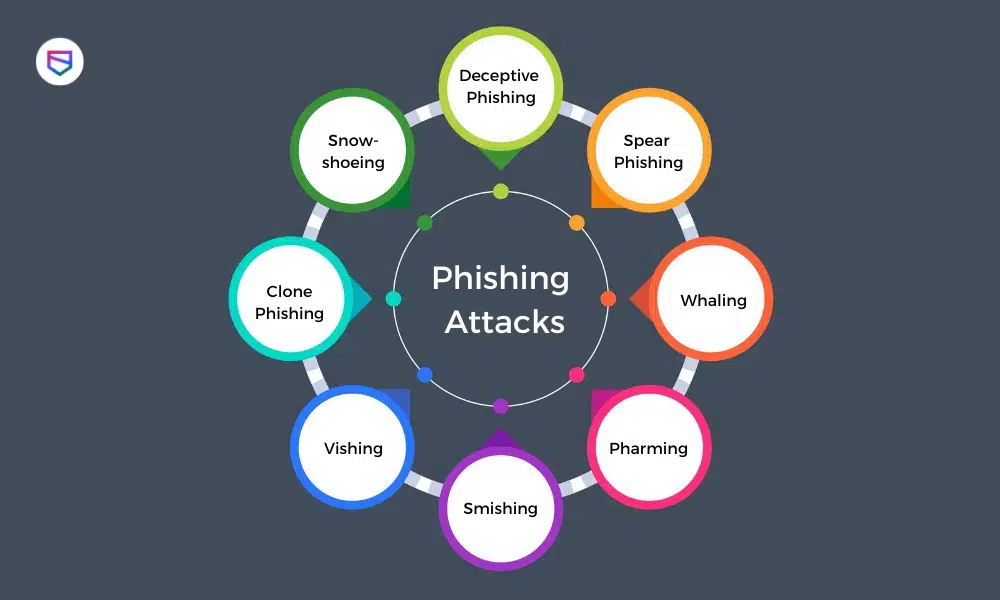
Phishing and Spear-Phishing have become the most dangerous cybercrime threats because they exploit human psychology rather than technical vulnerabilities.
According to AAG IT Support’s June 2025 statistics, phishing attacks continue to rise dramatically, with NordVPN reporting that “83% of organizations will experience at least one phishing attack annually in 2025.” Understanding how to recognize and prevent these attacks is essential for protecting yourself and your organization.
This guide explains what phishing is, the different types you’ll encounter, how to spot attacks, and proven prevention strategies.
Understanding Phishing: What It Is and Why It Works
Phishing is a social engineering attack where criminals impersonate trusted entities to trick you into revealing sensitive information or clicking on malicious links. The term comes from “fishing” criminals fish for your valuable data using bait that looks legitimate.
Unlike technical hacking that exploits software vulnerabilities, phishing exploits human trust. Criminals create fake emails, websites, text messages, or phone calls that appear to come from banks, government agencies, or companies you know. When you interact with these communications, you unknowingly give criminals access to your accounts or systems.
The Psychology That Makes Phishing Effective
Phishing works because it manipulates fundamental human behaviors:
Trust: We naturally trust familiar brands and authority figures. Phishing messages impersonate entities we trust.
Urgency: False urgency, like “Your account will be closed!” or “Immediate action required!” bypasses normal caution.
Fear: Threats of account suspension or legal action trigger emotional responses that cloud judgment.
Curiosity: Messages about prizes or interesting information exploit our natural curiosity.
Helpfulness: Requests from colleagues or bosses exploit our desire to be helpful at work.
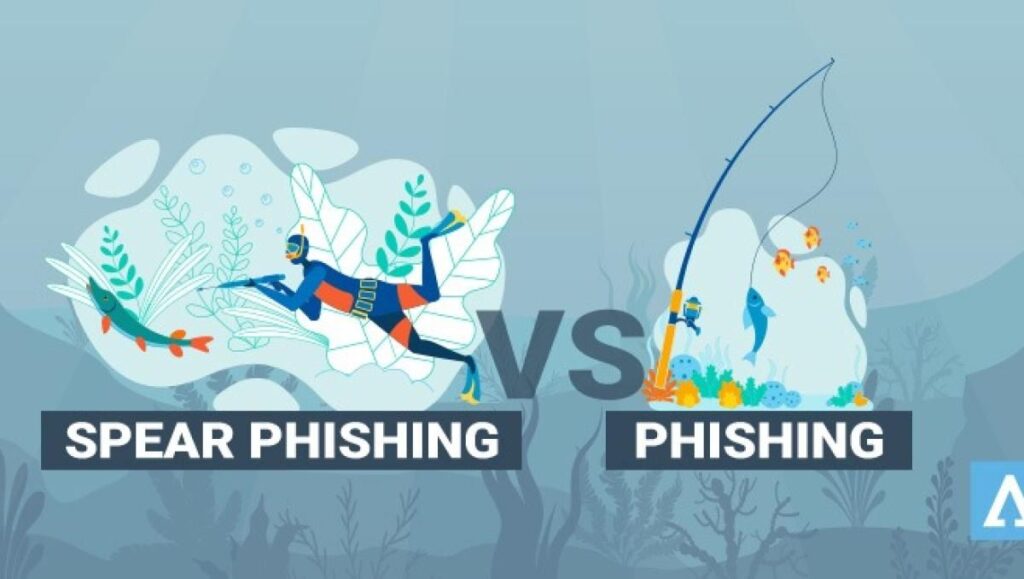
Traditional emailphishing sends mass messages to thousands of recipients. ControlD reports that:
“More than 3.4 billion phishing emails are sent daily.”
These generic attacks cast wide nets, hoping some victims will fall for the scam. Common scenarios include fake password reset requests, package delivery notifications, tax refund alerts, prize winnings, and account verification messages.
Spear-Phishing (Targeted Attacks)
Spear-phishing targets specific individuals with personalized messages. According to Astra Security:
“84% of US-based organizations experienced spear-phishing attacks,” making this extremely effective.
What makes spear-phishing dangerous is personalization. Criminals’ research targets on LinkedIn and Facebook to craft messages that reference real projects, colleagues, or situations. A spear-phishing email might mention your boss by name, reference an actual project, and use language consistent with your company’s style.
Spear-Phishing Example: An accountant receives an email appearing to be from the CEO requesting an urgent wire transfer for a confidential acquisition. The email uses the CEO’s real name, mentions an actual board meeting, and creates urgency. The accountant, believing it’s legitimate, transfers hundreds of thousands to criminals.
Whaling (Executive Targeting)
Whaling attacks target high-level executives like CEOs and CFOs. These attacks are meticulously researched and often impersonate other executives or legal authorities. The payoff can be enormous as executives have access to sensitive information, financial systems, and the authority to authorize large transactions.
“SMS attacks remain effective, especially when paired with spoofed caller IDs or fake urgency.”
Common smishing includes fake package delivery notifications, bank security alerts, prize winnings requiring clicks to claim, and government notifications about benefits. Smishing succeeds because people trust text messages more than email.
Vishing (Voice Phishing)
Vishing uses phone calls where criminals impersonate bank fraud departments, tech support from Microsoft or Apple, IRS officials threatening legal action, or company IT staff requesting passwords.
“By March 2025, AI agents were 24% more effective at tricking users than human experts.”
This is because the AI can now clone voices convincingly.
QR Code Phishing (Quishing)
QR code phishing has emerged as a significant 2025 threat. Hoxhunt explains that:
“Criminals use QR codes in emails, posters, or fake parking tickets to direct victims to phishing websites.”
Security software can not scan QR codes like URLs, as users trust QR codes as modern technology. Also, mobile devices have fewer protections, and QR codes hide destinations until after scanning.
“Fake parking tickets with QR codes for payment, restaurant menus that steal credit cards, email attachments requiring mobile QR scans, and fake delivery notices with rescheduling QR codes.”
Business Email Compromise (BEC)
BEC involves criminals compromising or impersonating business email accounts to conduct fraud.
BEC attacks target finance departments with requests to change vendor payment accounts, process urgent wire transfers, update employee direct deposits, or pay fake invoices. The FBI reports BEC causes billions in losses because requests appear legitimate.
AI integration has made phishing dramatically more effective. DeepStrike reports that:
“AI agents were 24% more effective at tricking users than human experts by March 2025.”
AI enables criminals to generate convincing emails at scale, personalize messages, create deepfake audio/video, translate perfectly, and adapt in real-time.
Industry Targeting
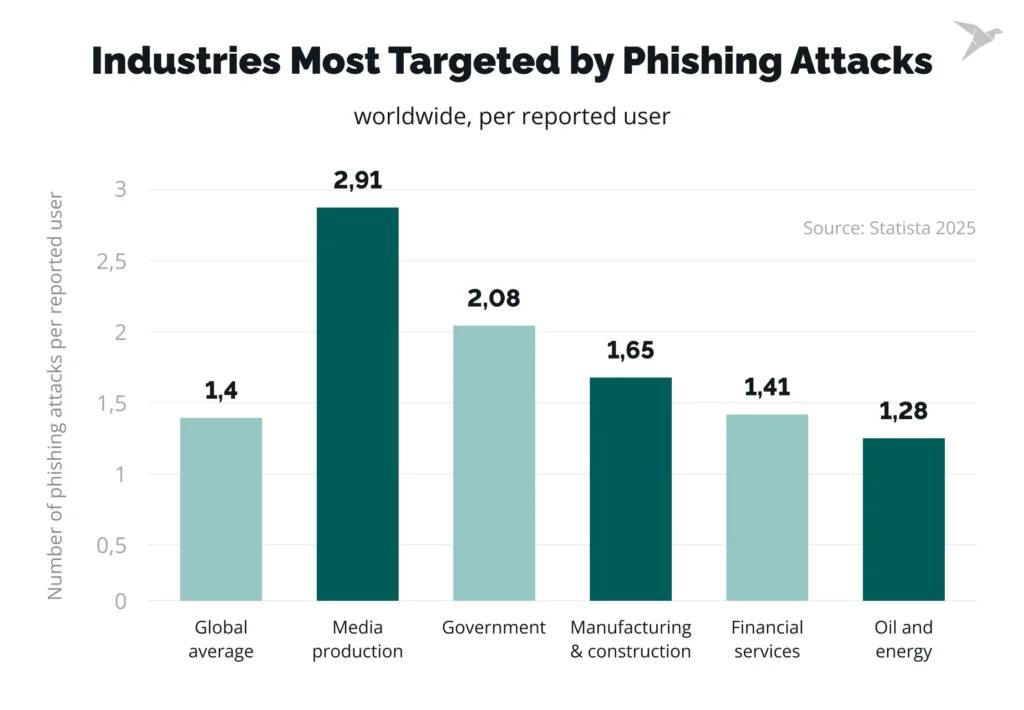
Finance offers direct money access, healthcare has valuable medical records, technology holds intellectual property, education has large user bases with limited budgets, and government stores sensitive information.
According to TechMagic:
“Finance, healthcare, and technology are prime targets.”
Financial Impact
Phishing causes billions in losses through direct theft, ransomware deployment, BEC fraud, credential theft, enabling further attacks, recovery costs, regulatory fines, and reputation damage.
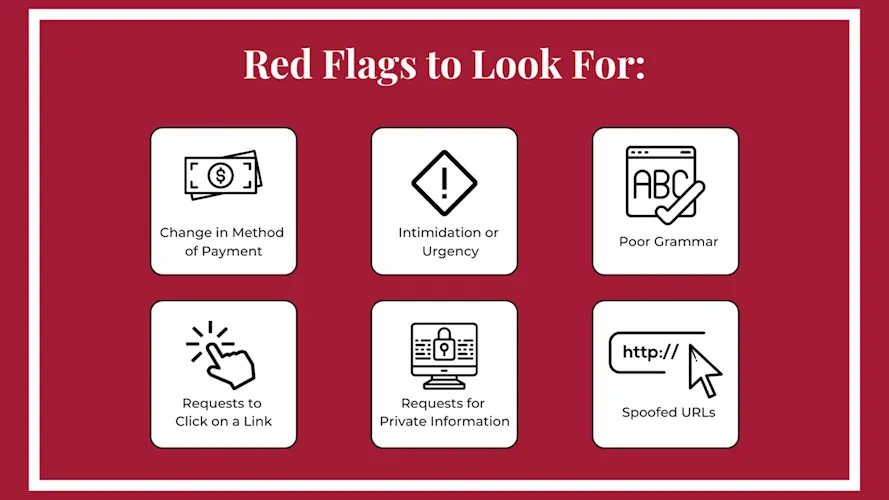
Red Flags and Warning Signs
Recognizing phishing is your first defense. Here are critical warning signs:
Suspicious Sender Information
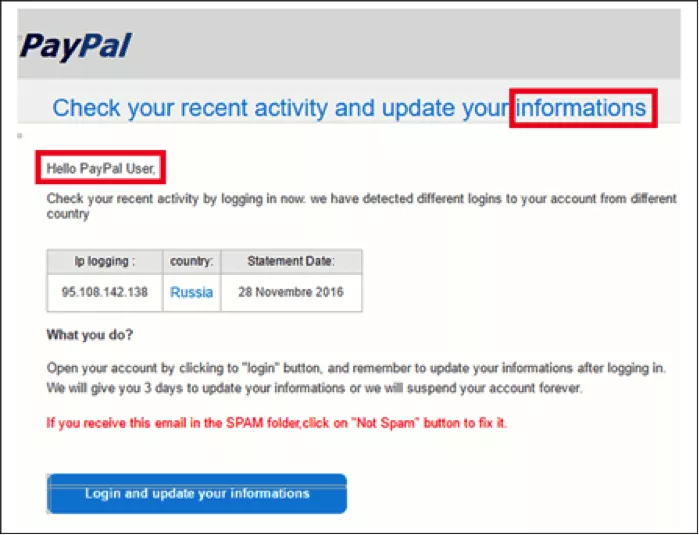
Check email addresses carefully. Phishing emails use addresses that look similar but have differences: michaelsoft.com instead of microsoft.com, paypa1.com (number 1 instead of L), amaz0n.com (zero instead of O), or extra characters like support-apple.com.
Legitimate companies use your name. Phishing says “Dear Customer,” “Dear User,” or “Valued Client.”
False Urgency
Phishing creates artificial urgency: “Your account will be closed in 24 hours,” “Immediate action required,” “Suspicious activity—verify now,” “Final notice,” or “Limited time offer.” Legitimate companies provide reasonable timeframes.
“Requests for sensitive information are huge red flags.”
Legitimate organizations never ask for passwords, socialsecurity numbers, credit card numbers, account verification codes, or security answers via email.
Suspicious Links and Attachments
Before clicking links, hover to see actual URLs. Look for misspelled domains, extra characters, unusual country codes, or IP addresses instead of names.
“Phishing links lead to credential harvesting pages, malware downloads, or fake information forms.”
Poor Grammar and Spelling
While AI has improved quality, many attacks contain spelling mistakes, awkward grammar, unusual word choices, inconsistent formatting, or mixed fonts. Professional organizations proofread communications.
QR Code Red Flags
Norton LifeLock identifies malicious QR code signs: stickers over existing codes, low-quality printing, unexpected locations, lack of official branding, and peeling edges suggesting recent addition.
Unexpected Attachments
Be suspicious of unsolicited attachments, especially .exe, .zip, .rar files, macros-enabled documents, JavaScript files, or PDFs from unknown senders. Legitimate businesses rarely send unsolicited attachments.
Organizations need comprehensive training and controls:
Security Awareness Training Programs
Effective training includes:
Regular Simulations: Send simulated phishing to test vigilance. Hoxhunt’s 2025 report shows regular simulations significantly improve detection rates.
Immediate Feedback: When employees click on simulated phishing, provide immediate training explaining what they missed.
Gamification: Make training engaging through competitions, rewards for reporting, and team challenges.
Real Examples: Show actual phishing your organization received and discuss dangers.
Quarterly Updates: Conduct training at least quarterly with updates for new tactics.
Technical Security Controls
Implement technical defenses:
Email Filtering: Deploy advanced emailsecurity that blocks malicious senders, scans attachments, analyzes links, quarantines suspicious messages, and uses AI for anomaly detection.
Multi-Factor Authentication: Require MFA on all accounts. Even if phishing steals passwords, MFA prevents access. Use app-based or hardware tokens over SMS.
Email Authentication: Implement SPF, DKIM, and DMARC to prevent email spoofing and verify sender authenticity.
Browser Security: Use browsers with built-in phishing protection and enable warnings for malicious sites.
Endpoint Protection: Deploy EDR solutions that detect and block malware delivered through phishing.
Incident Response Procedures
Establish procedures for handling suspected phishing:
Easy Reporting: Provide simple reporting methods like phishing report buttons or dedicated email addresses.
Rapid Response: Review reported emails quickly and act when threats are confirmed.
Communication: Alert employees when active phishing campaigns target your organization.
No Punishment: Never punish employees who report phishing, even if they clicked. Reward reporting.
Personal Protection Strategies
Individuals can protect themselves in the following manner:
Verify Before Acting
When receiving unexpected messages, contact organizations directly using official website phone numbers, don’t use contact information from suspicious messages, log into accounts by typing URLs yourself, and question if requests make sense.
Enable Security Features
Turn on multi-factor authentication everywhere, use password managers for strong, unique passwords, enable login alerts, and set up biometric authentication when possible.
Keep Software Updated
Ensure devices have current operating system updates, browser updates, security software updates, and application updates. Updates include patches for vulnerabilities, phishing-delivered malware exploits.
Use Caution with QR Codes
According to TechTarget’s prevention guide, inspect QR codes for tampering, verify URLs after scanning, be suspicious of codes in emails or unexpected locations, and use scanner apps that show URLs before opening.
Limit Social Media Information
Review privacy settings on all platforms, limit who sees posts and contact info, be cautious about what you share publicly, and don’t post about work projects, travel, or finances.
Monitor Your Accounts
Regularly check bank statements for unauthorized transactions, credit reports for fraudulent accounts, email login activity, and social media access logs. Early detection limits damage.
Conclusion
Phishing remains the most prevalent cybersecurity threat in 2025, with 83% of organizations experiencing attacks annually. From traditional emailphishing to sophisticated spear-phishing, vishing, smishing, and QR code attacks, criminals continuously evolve tactics exploiting human trust. AI has made attacks 24% more effective than human-crafted attempts, creating unprecedented challenges.
However, you can protect yourself and your organization by learning to recognize warning signs: suspicious sender addresses, generic greetings, false urgency, requests for sensitive information, and suspicious links or attachments. When in doubt, verify through independent channels before taking action.
Organizations should implement comprehensive security awareness training with regular phishing simulations, technical controls like email filtering and multi-factor authentication, and clear incident response procedures. Individuals should verify before acting, enable security features, keep software updated, and limit information shared online.
The fight against phishing requires constant vigilance and ongoing education. Criminals invest significant resources into making attacks more convincing, but informed, cautious users remain the strongest defense. Stay skeptical, verify carefully, and report suspicious activity promptly. Your awareness is the best protection against phishing attacks.
Whaling: Phishing attacks specifically targeting executives and high-level individuals
Frequently Asked Questions
What’s the difference between phishing and spear-phishing?
Phishing is a broad attack where scammers send fake emails or messages to many people, hoping someone takes the bait. Spear-phishing, on the other hand, targets specific individuals or organizations using personalized details like job titles or colleagues’ names. It is much more convincing and harder to detect because it feels genuine. Both aim to steal personal information, credentials, or money.
Attackers now use AI to create highly realistic emails, voice messages, and even deepfake videos. These tools remove spelling errors and mimic real communication styles, making scams far more believable. AI also helps hackers send thousands of personalized phishing messages in seconds. As a result, detection requires smarter AI-driven security tools and stronger user awareness.
How can I quickly spot a phishing or spear-phishing attempt?
Always check the sender’s full email address and not just the display name. Hover over links before clicking and verify if the URL matches the legitimate site. Be cautious of urgent or emotional language pushing you to act quickly. If a message seems odd, confirm it with the sender through another channel, like a phone call.
What are the best ways to prevent phishing attacks?
Enable phishing-resistant multi-factor authentication (like passkeys or security keys). Implement SPF, DKIM, and DMARC emailsecurity standards to block spoofed messages. Train employees regularly using simulated phishing tests. Use AI-based email filters and sandboxing tools to detect malicious links or attachments.
What should I do if I think I have been phished?
Stop interacting with the suspicious message immediately. Disconnect your device from the internet and change your passwords using a secure device. Notify your IT or security team and share the full email details for analysis. Run antivirus scans, monitor for unusual activity, and report the incident to relevant authorities.
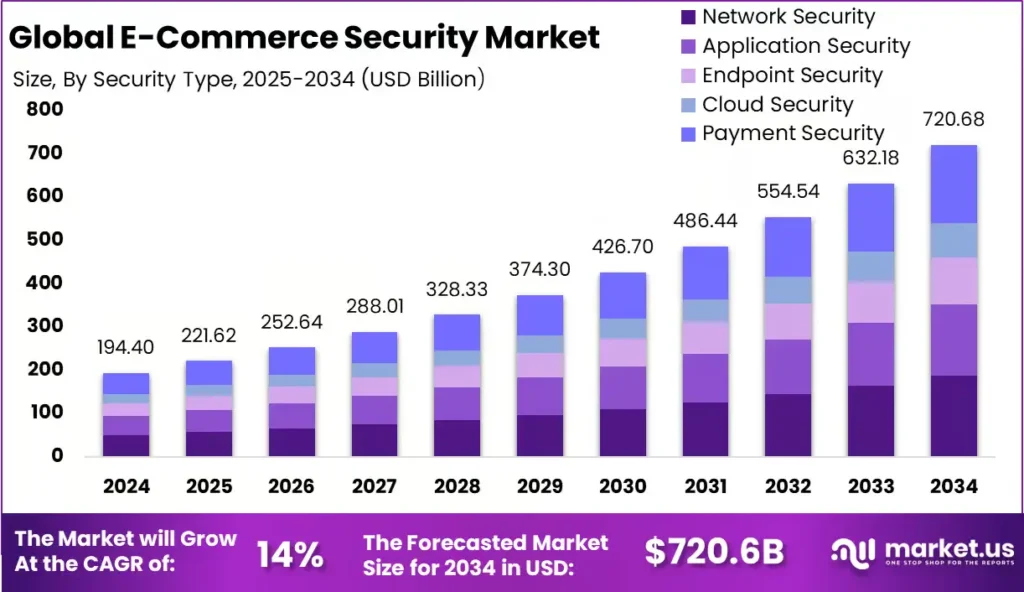
According to RSI Security’s 2025 trends, e-commerce businesses face evolving threats requiring comprehensive security measures. Therefore, understanding e-commercesecurity is essential for merchants and customers. This guide explains what e-commercecybersecurity is, why it matters, common threats, and how to protect your online business and customer data.
“Cybersecurity threats continue to evolve rapidly in 2025, with the latest data revealing a sharp rise in vulnerabilities, active exploits, and large-scale breaches.”
E-commercecybersecurity refers to the practices, technologies, and protocols that protect online stores, payment systems, and customer data from cyber threats.
It encompasses everything from securing website infrastructure and protecting payment processing to safeguarding customer personal information and maintaining business operations during attacks.
Confidentiality ensures that sensitive information like payment data and customer details remains accessible only to authorized parties. E-commerce sites must use encryption, access controls, and secure authentication to prevent unauthorized access.
Integrity guarantees that data remains accurate and unaltered. Product prices, order details, payment amounts, and customer information must be protected from tampering. If criminals can change prices or redirect payments, both customers and merchants suffer losses.
Availability ensures that online stores remain accessible to legitimate customers. DDoS attacks, server failures, or ransomware can shut down e-commerce operations, causing immediate revenue loss and long-term reputation damage.
E-commerce businesses face numerous cybersecurity threats, each requiring specific defenses:
Payment Card Fraud and Data Theft
Payment card fraud represents the primary threat to e-commerce. Criminals use various methods to steal payment information:
Card Not Present (CNP) Fraud: Criminals use stolen card details for online purchases. According toShopify, this fraud type particularly affects e-commerce because transactions don’t require physical card presence.
Credit Card Skimming: Malicious code injected into e-commerce websites captures payment information as customers enter it. This digital skimming, often called “Magecart” attacks, affects even major retailers.
Data Breaches: Hackers compromise databases storing payment information, stealing thousands or millions of card records simultaneously. Astra Security notes that:
“E-commerce security threats are continuing to cause havoc and losses in the world of online trading.”
Phishing and Social Engineering
Phishing attacks target both merchants and customers. Criminals send fake emails appearing to come from e-commerce platforms, banks, or shipping companies to steal login credentials or payment information.
Source: infosecinstitute
For merchants, phishing might impersonate payment processors requesting account updates or internal emails requesting wire transfers. For customers, fake order confirmations or shipping notifications lead to credential theft.
DDoS Attacks (Denial of Service)
Distributed Denial of Service (DDoS) attacks overwhelm e-commerce websites with traffic, making them unavailable to legitimate customers. According to Frontiers research:
DDoS attacks cause immediate revenue loss during downtime and may serve as distractions while criminals conduct other attacks. Attackers sometimes demand ransom to stop attacks, creating additional extortion threats.
Modify page content to capture payment information
Spread malware to website visitors
Malware and Ransomware
Malware infections target e-commerce infrastructure to steal data or disrupt operations. Ransomware encrypts business data and demands payment for decryption, potentially shutting down online stores completely.
Cryptominers use server resources for cryptocurrency mining
Account Takeover (ATO)
Account takeover occurs when criminals gain access to customer accounts through stolen credentials. Shopify explains that:
Attackers use stolen credentials to hack into customer accounts, make unauthorized purchases, or steal personal information.”
Criminals obtain credentials through phishing, data breaches, or credential stuffing attacks that test leaked passwords across multiple sites. Once inside accounts, they make fraudulent purchases, steal stored payment methods, or gather information for identity theft.
E-skimming (Digital Skimming)
E-skimming injects malicious JavaScript into payment pages to capture card details as customers enter them. Unlike traditional database breaches, e-skimming steals data in real-time without requiring direct access to stored payment information.
These attacks are difficult to detect because the malicious code often loads from external servers and may only activate during specific conditions, evading security scans.
Chargeback Fraud (Friendly Fraud)
Chargeback fraud occurs when customers dispute legitimate charges with their banks, claiming they did not authorize purchases or receive products. Shopify suggest that:
“Customers dispute legitimate charges after receiving products or services.”
While sometimes resulting from genuine confusion, organized chargeback fraud costs merchants significant revenue and can lead to payment processor penalties or account termination.
Man-in-the-Middle (MITM) Attacks
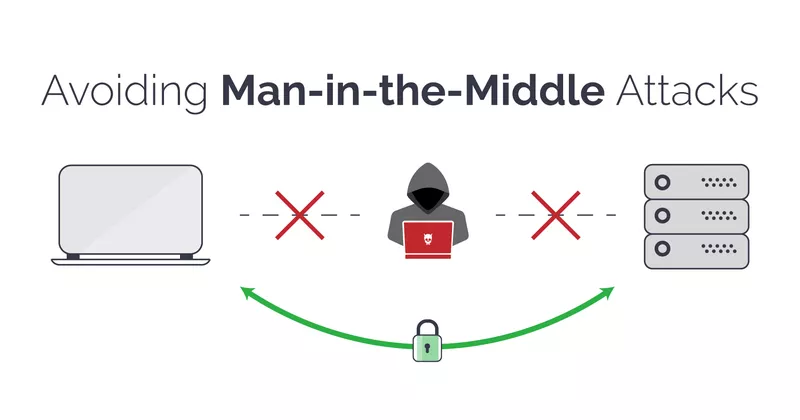
MITM attacks intercept communication between customers and e-commerce sites. Criminals position themselves between the two parties to:
Customers experience direct financial harm through unauthorized charges on compromised payment cards. While banks typically reimburse fraud, the process causes stress and inconvenience. Some victims suffer significant losses before detecting fraud.
Identity Theft
Stolen personal information enables criminals to open credit accounts, file fraudulent tax returns, apply for loans, or commit crimes using victims’ identities. Identity theft recovery can take years and significantly damage credit scores.
Loss of Privacy
Data breaches expose private information, including purchase histories, addresses, and contact details. This information can be used for targeted scams, harassment, or sold to other criminals.
Inconvenience and Time Loss
Customers must cancel compromised cards, monitor accounts for fraud, dispute unauthorized charges, and potentially freeze credit. These activities consume significant time and cause substantial frustration.
Loss of Trust
After experiencing breaches, customers become hesitant to shop online or share payment information, reducing their participation in e-commerce and limiting their purchasing options.
Businesses face enormous costs, including immediate theft losses, fraud reimbursements, forensic investigation expenses, legal fees, regulatory fines, increased insurance premiums, and security improvement investments.
Operational Disruption
Security incidents shut down online stores during investigation and remediation. Every hour offline means lost sales, abandoned shopping carts, and customers choosing competitors. RSI Security highlights that operational disruption represents a critical emerging risk.
“PCI DSS 4.0.1 became mandatory on March 31, 2025, bringing in 47 new requirements.”
Violations can cost millions in penalties.
Customer Loss
Breached businesses lose customers permanently. Competitors capitalize on security failures, gaining market share that proves difficult to reclaim. Studies show most customers never return to merchants that compromised their data.
Reputation Damage
Security breach news spreads rapidly through social media, news outlets, and word-of-mouth. Rebuilding reputation takes years and requires significant marketing investment that may never fully restore trust.
Payment Processor Penalties
Payment processors impose fines, increase transaction fees, or terminate merchant accounts after security failures. Losing the ability to accept card payments effectively ends e-commerce operations.
Legal Liability
Customers and payment card companies file lawsuits seeking damages for negligence. Class action lawsuits can bankrupt small e-commerce businesses and significantly harm larger ones.
Basic E-commerce Security Protections
Implementing fundamental security measures protects merchants and customers:
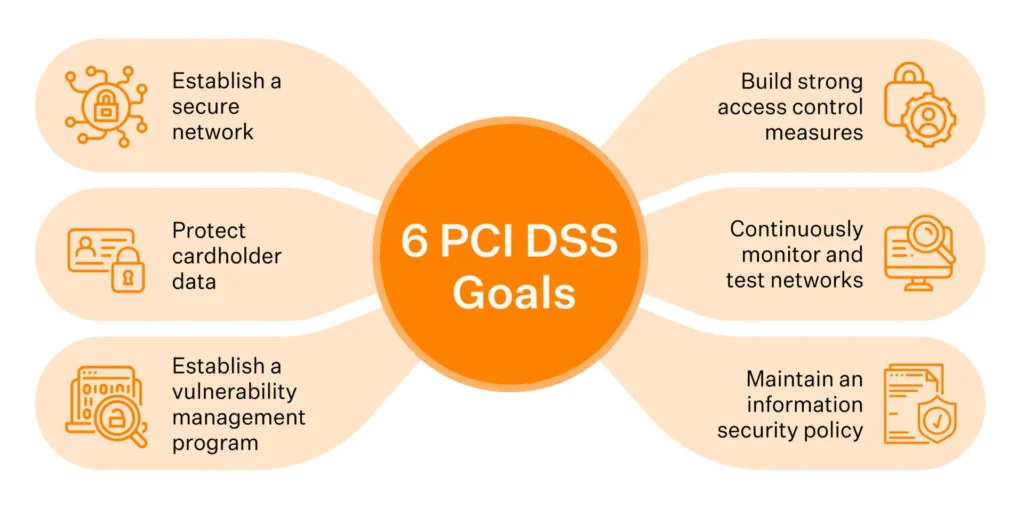
PCI DSS Compliance
The Payment Card Industry Data Security Standard (PCI DSS) establishes requirements for securely handling payment card data. According to Ampcus Cyber’s 2025 guide:
“PCI DSS compliance is essential and an ongoing journey for U.S. eCommerce businesses aiming to secure payment data and build customer trust.”
“PCI DSS compliance is a requirement for ecommerce stores that keep credit card information, handle any financial transactions, or accept payments using credit cards.”
Secure Sockets Layer (SSL) and Transport Layer Security (TLS) encrypt data transmitted between customers and e-commerce websites. This encryption prevents MITM attacks from capturing payment information or credentials.
All e-commerce sites must use HTTPS with valid SSL/TLS certificates. Modern browsers warn customers about insecure sites, causing immediate trust loss and abandoned purchases.
Secure Payment Gateways
Payment gateways process transactions securely without exposing merchants to raw payment card data. Using reputable payment processors like Stripe, PayPal, or Square provides:
Maintain detailed logs for forensic investigation if breaches occur.
Data Minimization
Only collect and store data you absolutely need. The less sensitive information you store, the less you can lose in breaches. According to ISMS.online’s compliance guide:
“Minimizing stored data reduces PCI DSS scope and risk.”
Never store full payment card numbers, CVV codes, or PINs. Use tokenization to replace sensitive data with non-sensitive equivalents.
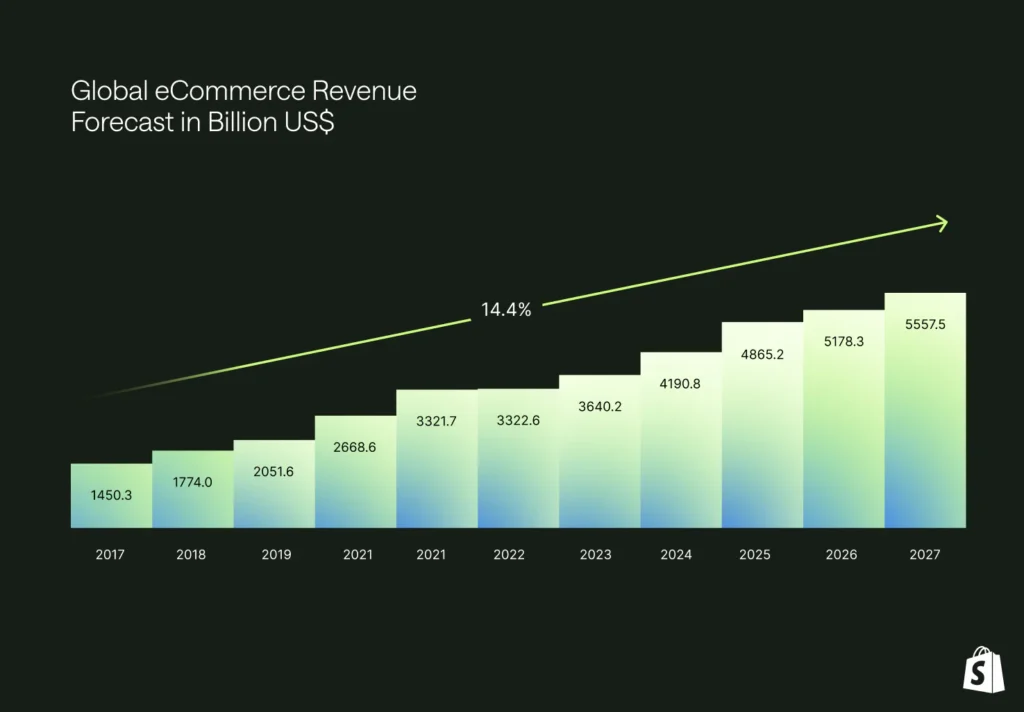
E-commercecybersecurity is essential for protecting the billions of dollars flowing through online stores and safeguarding the personal and payment data of millions of customers. As cyber threats continue evolving in 2025, with increasingly sophisticated attacks leveraging AI and automation, merchants must implement comprehensive security measures to survive and thrive.
The foundation of e-commercesecurity rests on the CIA triad, maintaining confidentiality of sensitive data, ensuring integrity of transactions and information, and guaranteeing availability of online services. PCI DSScompliance provides the baselinesecurityframework, but effective protection requires multiple layers, including encryption, secure payment processing, authentication, monitoring, and employee training.
The impact of security failures extends far beyond immediate financial losses. Customers suffer identity theft, financial fraud, and loss of privacy, while businesses face regulatory penalties, customer abandonment, reputation damage, and potential closure. These consequences make cybersecurity not just an IT concern but a fundamental business priority.
By implementing the basic protections outlined in this guide, PCI DSScompliance, SSL/TLS encryption, secure payment gateways, strong authentication, web application firewalls, regular updates, security monitoring, data minimization, employee training, incident response planning, and regular assessments, e-commerce merchants can significantly reduce their risk and protect both their businesses and their customers.
The investment in e-commercecybersecurity pays dividends through maintained customer trust, avoided breach costs, regulatorycompliance, competitive advantage, and sustainable business growth. In 2025’s increasingly dangerous cyber landscape, security is no longer optional—it’s the price of doing business online.
Glossary of E-commerce Security Terms
Account Takeover (ATO): Unauthorized access to customer accounts using stolen credentials
Chargeback: Customer dispute of credit card charges with their bank
CIA Triad: Confidentiality, Integrity, and Availability—core security principles
E-skimming: Malicious code capturing payment data from online checkout pages
Encryption: Converting data into a coded format, protecting it from unauthorized access
PCI DSS: Payment Card Industry Data Security Standard for securing card payments
Phishing: Fake communications tricking people into revealing sensitive information
SQL Injection: Exploiting database vulnerabilities to steal or modify data
SSL/TLS: Encryption protocols securing data transmission over networks
Tokenization: Replacing sensitive payment data with non-sensitive token equivalents
Web Application Firewall (WAF): A Security system that filters malicious web traffic
XSS (Cross-Site Scripting): Injecting malicious scripts into websites viewed by users
E-commercecybersecurity refers to the set of practices, technologies, and strategies used to protect online retail platforms, customer data, and financial transactions from cyber threats such as hacking, phishing, malware, and data breaches. It ensures a safe and trustworthy shopping experience for both businesses and customers.
In 2025, as online shopping continues to expand and AI-driven systems handle sensitive data, cybersecurity has become more critical than ever. Strong protection safeguards your business from financial losses, protects customer trust, ensures compliance with data privacylaws, and prevents reputation damage caused by cyberattacks.
The main threats include phishing scams, payment fraud, ransomware attacks, DDoS (Distributed Denial-of-Service) attacks, malware infections, and insider threats. Cybercriminals target weak payment gateways, unsecured databases, and outdated plugins to steal personal and financial data.
To strengthen cybersecurity, businesses should: Use SSL certificates and HTTPS for secure transactions Implement two-factor authentication (2FA) Regularly update software and plugins Conduct frequent security audits and penetration testing Use AI-based fraud detection systems Educate employees and customers on cybersecurity awareness
Some top tools and solutions for 2025 include: Cloudflare (DDoS and firewall protection) Norton Small Business (endpoint protection) Sucuri (website monitoring and malware removal) Trustwave (PCI compliance and threat detection) AI-driven fraud prevention tools like Forter or Riskified
Guest posting in 2025 remains the leading driver of content collaboration globally, shaping trends, strategies, building authority, and fostering digital partnerships across industries worldwide.
The global content collaboration landscape has reached a pivotal turning point, with guest posting emerging as a cornerstone of digital content strategy worldwide.
“Guest posts account for 53% of all content collaboration requests sent to bloggers,”
This underscores the significant shift toward collaborative content creation in the digital marketing landscape. The transformation extends far beyond traditional link-building tactics.
Modern guest posting represents a $120 billion global content collaboration economy that’s reshaping how businesses build authority, establish thought leadership, and create meaningful connections across industries.
As artificial intelligence integrates deeper into content creation workflows and remote collaboration becomes the dominant working model, guest posting has evolved into a sophisticated strategic imperative for global business growth.
This evolution reflects broader changes in how content creators, businesses, and publications approach relationship building in an increasingly digital-first world. The convergence of AI-powered content tools, global remote work adoption, and heightened demand for authentic expertise.
This has created unprecedented opportunities for strategic content collaboration that transcends geographic boundaries and traditional industry limitations.
The AI-Driven Content Collaboration Revolution
The integration of AI has fundamentally transformed guest posting from a manual, time-intensive process into a streamlined, data-driven strategy that scales globally.
The AI revolution in guest posting encompasses sophisticated tools for content ideation, audience research, competitive analysis, and performance optimization.
These technologies enable content creators to identify optimal publishing opportunities, craft personalized outreach messages, and create content that resonates with specific audience segments across different geographic markets and cultural contexts.
Global Marketplace Transformation and Scale
The guest posting marketplace has experienced explosive growth, with platforms facilitating millions of content collaboration opportunities worldwide.
“The largest marketplaces have millions of visits annually and host over 100k publishers, aka ‘link-donors’. prnews.io with 107k websites available in its marketplace.”
This marketplace expansion has democratized access to high-quality publishing opportunities while creating standardized processes for content collaboration across different industries and geographic regions.
The scale of these platforms enables sophisticated matching algorithms that connect content creators with optimal publishing opportunities based on audience alignment, industry expertise, and content performance history.
The global nature of these marketplaces has also facilitated cross-cultural content collaboration, enabling businesses to establish thought leadership in international markets through strategic partnerships with local publications and industry influencers.
This global reach has become particularly valuable as companies seek to establish authority in emerging markets and diverse cultural contexts.
The Rise of Long-Term Content Partnerships
Traditional one-off guest posting arrangements are rapidly giving way to strategic, long-term content partnerships that create sustained value for all parties involved.
“In 2025, the most successful guest bloggers will move beyond one-off collaborations to form long-term partnerships with blog owners. Establishing an ongoing relationship allows you to become a trusted voice on their platform.”
This shift toward partnership-based collaboration reflects the maturation of the content marketing industry and the recognition that sustainable authority building requires consistent, long-term investment in relationships rather than transactional content exchanges.
The most successful content collaboration initiatives now involve quarterly planning sessions, integrated content calendars, and shared performance metrics that align both parties’ strategic objectives.
Long-term partnerships also enable more sophisticated content strategies, including content series, cross-promotional campaigns, and coordinated thought leadership initiatives that would be impossible with traditional one-off guest posting approaches.
These partnerships often evolve into broader business relationships, including speaking opportunities, joint ventures, and strategic business development initiatives.
Quality Over Quantity: The Authority-First Approach
The guest posting landscape has shifted dramatically toward quality-focused strategies that prioritize authority building over volume-based approaches.
“Websites with 50+ guest post backlinks rank in the top 10 search results 75% of the time,”
This demonstrates the importance of strategic, high-quality content placement over mass distribution tactics.
This quality-first approach reflects Google’s continued emphasis on E-E-A-T (Experience, Expertise, Authoritativeness, Trustworthiness) signals and the recognition that sustainableSEO success requires genuine expertise demonstration rather than manipulative link-building tactics.
The most successful guest posting campaigns now focus on creating valuable, research-backed content that serves reader needs while demonstrating clear industry expertise.
The authority-first approach also involves more rigorous vetting processes for both content creators and publishing platforms, with increased emphasis on author credentials, content originality, and audience engagement metrics. This trend has raised the barriers to entry while creating more valuable opportunities for qualified experts and high-quality publications.
The guest posting landscape has evolved toward increasing specialization, with content creators and publications focusing on specific industry niches rather than general-interest topics.
“In 2025, guest blogging will be more about building genuine relationships with other bloggers and website owners. Instead of just submitting content for backlinks, businesses should aim to create meaningful connections.”
This specialization trend reflects the increasing sophistication of online audiences and the recognition that expertise-driven content performs significantly better than generic, broadly-focused articles. The most successful guest posting initiatives now involve deep industry knowledge, original research, and unique perspectives that would be difficult for generalist content creators to produce.
Niche specialization also enables more targeted audience development and higher-quality lead generation, as specialized content attracts more qualified prospects who are actively seeking specific industry insights and solutions. This trend has led to the emergence of highly specialized content collaboration networks focused on specific industries, professional disciplines, and technical domains.
AI-Powered Personalization and Audience Matching
Artificial intelligence has revolutionized how content creators identify optimal publishing opportunities and craft personalized content experiences for specific audience segments.
“By 2030, over 70% of businesses will integrate AI into processes”
This will include content collaboration, representing a significant component of this AI adoption trend. AI-powered audience matching enables more precise alignment between content creators’ expertise and publications’ audience needs, resulting in higher engagement rates and more effective authority-building outcomes.
These technologies analyze audience demographics, content consumption patterns, and engagement behaviors to optimize content placement and messaging strategies.
The personalization capabilities enabled by AI also allow content creators to adapt their messaging and content format for different cultural contexts and audience preferences, facilitating more effective international content collaboration and cross-cultural authority-building initiatives.
Regulatory Compliance and Content Standards
The guest posting industry has faced increased scrutiny regarding content quality, transparency, and ethical practices, resulting in more rigorous compliance requirements and industry standards.
Vention’s analysis also notes that:
“By 2025, half of AI use cases will be subject to regulation, highlighting the focus on responsible deployment”
This also extends to AI-generated content used in guest posting strategies. This regulatory evolution has led to more transparent disclosure requirements for sponsored content, author credentials, and commercial relationships between content creators and publications.
The most successful guest posting initiatives now incorporate comprehensive compliance frameworks that ensure adherence to industry standards and platform guidelines.
The emphasis on content standards has also raised the quality bar for guest posting, with publications implementing more rigorous editorial review processes and content creators investing more heavily in research, fact-checking, and original content creation to meet evolving industry expectations.
Modern guest posting strategies incorporate sophisticated analytics and performance measurement systems that enable continuous optimization based on real-time data insights.
“Backlinks from guest posts improve search rankings by 38% on average”
This highlights the measurable impact of strategic content collaboration on business outcomes. Data-driven optimization encompasses audience engagement analysis, conversion tracking, brand mention monitoring, and competitive intelligence gathering that inform content strategy decisions and publication selection processes.
The most successful content collaborations now involve shared analytics dashboards that provide transparency and accountability for all parties involved.
This analytical approach also enables more sophisticated ROI calculations that account for long-term brand-building benefits, relationship development value, and compound growth effects that traditional marketing metrics often overlook. These comprehensive measurement frameworks help justify increased investment in strategic content collaboration initiatives.
Emerging Markets and Global Expansion
The democratization of content collaboration tools and platforms has facilitated rapid expansion into emerging markets, creating new opportunities for international thought leadership and cross-cultural business development. This global expansion requires understanding local content preferences, cultural sensitivities, and market dynamics that impact the effectiveness of content collaboration.
Successful international guest posting strategies require cultural adaptation, local partnership development, and market-specific expertise that goes beyond simple translation of existing content. The most effective approaches involve collaborating with local experts and publications that understand regional audience needs and cultural contexts.
The emerging markets trend also includes the development of region-specific content collaboration platforms and networks that facilitate connections between international content creators and local publications, creating more accessible pathways for global content distribution and authority building.
Future-Proofing Content Collaboration Strategies
The rapidly evolving content collaboration landscape requires adaptive strategies that can respond to technological changes, algorithm updates, and shifting audience preferences.
“Over 73% of organisations worldwide are either using or piloting AI in core functions”
This indicates the accelerating pace of AI integration across business processes. Future-proofing strategies involve building flexible content collaboration frameworks. These can adapt to new platforms, technologies, and audience behaviors while maintaining core principles of value creation, relationship building, and expertise demonstration.
The most successful approaches focus on fundamental relationship-building skills that transcend specific platforms or technologies. This forward-looking perspective also involves continuous learning and adaptation, with successful content creators.
This also includes organizations investing in ongoing education, technology adoption, and strategic planning that anticipates future trends and opportunities in the content collaboration landscape.
Guest posting in 2025 has evolved far beyond its origins as a simple link-building tactic to become a sophisticated strategic imperative that drives authority building, relationship development, and global business growth. The convergence of AItechnology, remote collaboration tools, and increasing demand for authentic expertise has created unprecedented opportunities for strategic content collaboration that transcends traditional boundaries.
The most successful organizations recognize that effective content collaboration requires long-term strategic thinking, quality-first approaches, and genuine relationship building rather than transactional content exchanges. This evolution reflects the maturation of digital marketing and the recognition that sustainable competitive advantages emerge from demonstrating authentic expertise and fostering meaningful professional relationships.
As the content collaboration landscape continues evolving, the organizations that thrive will be those that balance technological efficiency with human authenticity, global reach with cultural sensitivity, and immediate results with long-term relationship building. The future belongs to content creators and organizations that view guest posting as part of a comprehensive content ecosystem, creating value for all stakeholders while building lasting competitive advantages.
The $120 billion content collaboration economy represents more than a marketing tactic as it is a fundamental shift toward collaborative value creation that will define how businesses build authority, establish thought leadership, and create meaningful connections in an increasingly digital-first global economy. Success in this environment requires strategic thinking, a quality focus, and a genuine commitment to creating value for both audiences and publishing partners.
AI has streamlined content creation, audience targeting, and performance optimization while maintaining human oversight for quality control. 27% of organizations using generative AI require human review of all AI-generated content before publication.
What are the most important guest posting trends for 2025?
Key trends include long-term content partnerships, AI-powered personalization, video content integration, niche specialization, and data-driven performance optimization, replacing volume-based approaches.
The largest marketplaces host over 100,000 publishers with millions of annual visits, representing significant growth in content collaboration opportunities globally.
Yes, websites with 50+ guest post backlinks rank in the top 10 search results 75% of the time, though success requires quality-focused, authority-building approaches rather than volume tactics.
Focus on building genuine relationships, creating high-quality, expertise-driven content, embracing AI tools while maintaining human oversight, and developing flexible strategies that adapt to platform and algorithm changes.
Building on the foundational understanding of global cybersecuritylaws and regional frameworks, this guide focuses on the practical aspects of compliance that organizations must navigate to ensure effective implementation.
From understanding specific obligations to implementing security controls, managing enforcement interactions, and staying ahead of emerging trends, this comprehensive resource provides actionable guidance for achieving and maintaining cybersecuritycompliance in 2025.
Core Compliance Obligations Under Cybersecurity Laws
Understanding specific compliance duties enables organizations to implement effective security programs that meet legal requirements across various jurisdictions.
Data Breach Reporting and Incident Notification
Breach notification represents one of the most universal cybersecurity legal obligations, though requirements vary significantly across jurisdictions:
Timeline Requirements:
European Union (GDPR): 72 hours to the supervisory authority, without undue delay to individuals
European Union (NIS2): 24 hours early warning, 72 hours detailed notification
The cybersecurity legal landscape continues evolving rapidly, with 2025 marking significant developments:
NIS2 Implementation and Enforcement
The NIS2 Directive’s October 2024 transposition deadline has created implementation challenges across EU member states. As of mid-2025, enforcement actions are beginning as national regulators operationalize their powers:
Implementation Progress: According to the Cloud Security Alliance, as of June 30, 2025, only 14 EU member states had fully transposed NIS2, with several states facing infringement procedures due to delayed implementation.
Lacking internal expertise for technical requirements
Facing customer or partner compliance questionnaires, you can’t confidently answer
Uncertainty about the adequacy of current measures
Budget available justifying the external expertise cost-benefit
Selecting Qualified Professionals: Look for:
Relevant certifications (CIPP, CISM, CISSP, etc.)
Experience in your industry and jurisdictions
References from similar organizations
Clear engagement scope and deliverables
Reasonable fee structures
Communication style matching your organization’s culture
Conclusion
Cybersecuritycompliance in 2025 demands more than checking boxes, as it requires organizations to embrace security as a strategic imperative that protects digital assets, builds stakeholder trust, and ensures operational resilience. The evolving regulatory landscape, with expanding frameworks like NIS2, DORA, and the Cyber Resilience Act, reflects the growing recognition that cybersecurity is fundamental to economic stability and national security.
Successful compliance begins with understanding which laws apply to your organization, implementing core security controls, establishing robust incident response capabilities, and maintaining continuous vigilance through monitoring and improvement. Whether you’re a multinational corporation navigating complex multi-jurisdictional requirements or a small business taking first steps toward security maturity, the principles remain consistent: assess your risks, implement appropriate controls, document your efforts, and respond effectively when incidents occur.
As highlighted in the first part of this guide, the trends shaping 2025, from AIsecurity requirements to quantum-safe cryptography, from product security mandates to ransomware-specific regulations, demonstrate that the cybersecurity legal landscape will continue evolving. Organizations that view compliance not as a burden but as an opportunity to strengthen their security posture, differentiate themselves competitively, and build lasting customer confidence will thrive in this dynamic environment.
As enforcement intensifies and penalties escalate, the cost of non-compliance far exceeds the investment in robust security programs. More importantly, effective cybersecuritycompliance protects what matters most: your data, your operations, your reputation, and ultimately, the trust placed in you by customers, partners, and society. In 2025 and beyond, cyber resilience is no longer optional as it is the foundation upon which sustainabledigital business is built.
Advanced Persistent Threat (APT): A Prolonged, targeted cyber attack where intruders establish an ongoing presence in networks to steal sensitive data.
Breach: Unauthorized access, acquisition, disclosure, or loss of personal information or sensitive data compromising security or confidentiality.
CIA Triad: Core cybersecurity principles of Confidentiality, Integrity, and Availability that laws seek to protect.
Compliance: Meeting legal, regulatory, and contractual security requirements through implementation of required controls and processes.
Critical Infrastructure: Systems and assets essential to national security, economic security, public health, or safety whose incapacity would have debilitating impacts.
Encryption: The Process of converting information into a coded format readable only with a decryption key, protecting data confidentiality.
Incident:Security event compromising confidentiality, integrity, or availability of information systems or data.
Penetration Testing: Authorized simulated cyber attack evaluating system security by attempting exploitation of vulnerabilities.
Personal Data/Information: Information relating to identified or identifiable individuals, subject to privacy law protections.
Risk Assessment: A Systematic process for identifying, analyzing, and evaluating cybersecurity threats, vulnerabilities, impacts, and likelihood.
Security Controls: Technical, administrative, and physical safeguards protecting information systems from threats and ensuring compliance.
Supply Chain: A Network of entities involved in creating and delivering products or services, creating potential security dependencies and risks.
Threat Intelligence: Evidence-based knowledge about existing or emerging threats used to inform security decisions and response.
Vulnerability: Weakness in a system, application, or process that could be exploited to compromise security.
Zero-Day: Previously unknown software vulnerability for which no patch exists, making it particularly dangerous until discovered and remediated.
Cybersecuritycompliance means meeting legal, regulatory, and industry security obligations designed to protect data, systems, and networks from evolving cyber threats. In 2025, stricter frameworks and higher penalties make compliance a core part of risk management and business continuity, not just an IT issue.
Which key laws and standards should organizations focus on in 2025?
Non-compliance consequences vary by jurisdiction and violation Organizations typically need to align with a mix of frameworks such as ISO 27001, NIST-based controls, GDPR, PCI DSS, and sectoral rules like NIS2 or CCPA equivalents, depending on industry and geography. Many regulators now also expect minimum controls like access management, encryption, logging, and incident response as baseline requirements
A practical path is to conduct a gap analysis against the chosen framework, then implement missing controls such as MFA, encryption, access control, and security monitoring in phases. Documented policies, staff training, and regular internal audits are essential to show regulators that controls are both implemented and consistently followed.
Regulators can impose administrative fines, issue directions or remediation orders, suspend licenses, or restrict business operations for serious or repeated non-compliance. Organizations may also face civil claims, contractual loss (e.g., disqualification from government or regulated contracts), and reputational damage after breaches.
How should organizations demonstrate ongoing compliance to regulators and auditors?
They should maintain evidence such as risk assessments, asset inventories, access logs, incident reports, training records, and third‑party audit reports mapped to each requirement. Continuous monitoring, periodic technical testing, and documented management reviews help prove that controls are effective, not just formally “on paper.”
The global cybersecurity legal landscape has undergone transformative changes in 2025, with governments worldwide implementing comprehensive frameworks to address escalating digital threats.
Cybersecuritylaws represent the legal frameworks that govern how organizations and individuals must protect digital assets, respond to cyber incidents, and maintain the confidentiality, integrity, and availability of information systems. These laws establish mandatory obligations for reporting breaches, implementing security controls, and establishing accountability mechanisms that span across borders and jurisdictions.
This comprehensive guide examines cybersecuritylaws from a global perspective, providing both novice readers and experienced professionals with detailed insights into regulatory requirements, compliance obligations, enforcement mechanisms, and emerging trends shaping the 2025 cybersecurity legal landscape.
According to Cloud Security Alliance, as of June 30, 2025, only 14 EU Member States have fully transposed NIS2 into national law, highlighting the ongoing evolution of cybersecuritylegislation globally.
What Are Cybersecurity Laws? Foundational Principles
Cybersecuritylaws constitute statutory and regulatory frameworks designed to protect information systems, networks, and data from unauthorized access, disclosure, disruption, modification, or destruction. Unlike privacylaws that primarily focus on personal data protection, cybersecuritylaws address the broader technical and organizational measures required to maintain system security and operational resilience.
The CIA Triad: Core Legal Objectives
The fundamental principles underlying cybersecuritylaws rest on the CIA triad:
Confidentiality ensures that information remains accessible only to authorized individuals and entities. Legal frameworks require access controls, encryption, and authentication mechanisms to prevent the unauthorized disclosure of sensitive data.
Integrity guarantees that information and systems remain accurate, complete, and unaltered except through authorized processes. Laws require organizations to implement change management procedures, audit trails, and verification mechanisms to detect and prevent unauthorized modifications.
Availability ensures that information systems remain accessible to authorized users when needed. Regulatory frameworks mandate business continuity planning, disaster recovery capabilities, and resilience measures to maintain operational continuity during and after cyber incidents.
Distinguishing Laws, Regulations, and Standards
Understanding the hierarchical structure of cybersecurity requirements proves essential for compliance:
Laws represent legislative acts passed by governmental bodies that establish broad legal obligations and penalties. Examples include the Computer Fraud and Abuse Act (CFAA) in the United States or the Network and Information Security Directive (NIS2) in the European Union.
Regulations constitute detailed rules issued by administrative agencies to implement statutory requirements. These provide specific technical and procedural requirements that organizations must follow, often with more granular specifications than the underlying laws.
Standards represent voluntary technical specifications and best practices developed by industry bodies or standards organizations. While not legally binding themselves, standards like ISO 27001 often become mandatory through their incorporation into regulatory requirements.
Compliance obligations emerge from the combination of laws, regulations, and contractual requirements, creating the specific duties organizations must fulfill to maintain legal conformity.
Cybercrime Prevention vs. Organizational Obligations
Cybersecuritylaws serve dual purposes with distinct legal mechanisms:
Criminal provisions punish malicious actors who conduct unauthorized access, deploy malware, engage in fraud, or perpetrate other cybercrimes. These provisions typically involve criminal penalties, including imprisonment and fines, enforced through prosecutorial action.
Organizational obligations require entities to implement proactive security measures, conduct risk assessments, report incidents, and maintain resilience capabilities. These administrative requirements use civil penalties, regulatorysanctions, and compliance orders as enforcement mechanisms.
This regulatory tension highlights why organizations must clearly distinguish between compliance-driven security controls and individual data rights, a distinction explored in detail in our analysis of privacy vs security in 2025.
Major Cybersecurity Laws by Region and Country
The global cybersecurity legal landscape reflects diverse approaches influenced by regional priorities, governance models, and varying perceptions of threats. This section examines major jurisdictions and their regulatory frameworks.
United States: Federal and Sectoral Approach
The United States employs a sectoral regulatorymodel, where different laws apply to specific industries and government operations, resulting in a complex compliance landscape.
Computer Fraud and Abuse Act (CFAA)
The CFAA represents America’s primary federal statute addressing cybercrime, criminalizing unauthorized access to computer systems. According to NRI Secure’s compliance guide, the CFAA permits victims to sue entities responsible for unauthorized system access, with businesses facing potential lawsuits from customers or partners after breaches.
The CFAA prohibits:
Accessing computers without authorization or exceeding authorized access
Obtaining information from protected computers
Transmitting programs, information, codes, or commands that cause damage
Trafficking in computer passwords
Threatening to damage protected computers for extortion purposes
Penalties range from civil damages to criminal prosecution with imprisonment up to 20 years for aggravated offenses.
Federal Information Security Modernization Act (FISMA)
FISMA 2014 updates the Federal Government’s cybersecurity practices by codifying the Department of Homeland Security’s (DHS) authority to administer the implementation of information security policies for non-national security federal Executive Branch systems, according to CISA’s official guidance.
The law establishes accountability through agency Inspector General audits and congressional reporting requirements.
Cybersecurity Information Sharing Act (CISA)
The Cybersecurity Information Sharing Act facilitates voluntary sharing of cyber threat indicators between private sector entities and government agencies. The law provides liability protection for entities sharing threat information in good faith, encouraging collaborative defense against emerging threats.
Sector-Specific Regulations
The HIPAA (Health Insurance Portability and Accountability Act) mandates comprehensive security controls for healthcare entities that handle protected health information. The Security Rule requires administrative, physical, and technical safeguards with penalties reaching $1.5 million annually per violation category.
The GLBA (Gramm-Leach-Bliley Act) requires financial institutions to implement information security programs that protect customer information. The Safeguards Rule mandates risk assessments, access controls, encryption, and incident response capabilities.
Critical Infrastructure Protection regulations from sector-specific agencies (like NERC CIP for power grids) impose stringent security requirements on critical infrastructure operators.
Emerging US Requirements
The Cyber Incident Reporting for Critical Infrastructure Act (CIRCIA) establishes mandatory reporting requirements for critical infrastructure entities that experience significant cyber incidents. Organizations must report covered incidents within 72 hours and ransomware payments within 24 hours of occurrence.
State-level regulations, such as the California Consumer Privacy Act (CCPA) and the New York SHIELD Act, create additional security and breach notification requirements at the state level.
European Union: Harmonized Comprehensive Framework
NIS2 Directive: Enhanced Cybersecurity Across the EU
The NIS2 Directive, Cyber Resilience Act (CRA), and Digital Operational Resilience Act (DORA) collectively harmonize cybersecurity standards across critical sectors, including infrastructure, digital products, and financial services, according to Infosecurity Magazine’s 2025 analysis.
The NIS2 Directive (Directive (EU) 2022/2555) significantly expands the scope and requirements of the original NIS Directive:
Expanded Scope: NIS2 covers 18 sectors, including energy, transport, banking, financial market infrastructures, health, drinking water, wastewater, digital infrastructure, public administration, space, postal and courier services, waste management, manufacturing, food production, chemical production, and digital providers.
Entity Categories: The directive distinguishes between “essential entities” (larger organizations with stricter requirements) and “important entities” (medium-sized organizations with proportionate requirements).
Key Obligations:
Implement comprehensive risk management measures
Report significant incidents within 24 hours (early warning) and 72 hours (detailed notification)
Implement security measures, including incident handling, business continuity, supply chain security, network security, access control, and encryption.
Conduct regular security audits and vulnerability assessments
Penalties: Member states must ensure penalties of at least €10 million or 2% of the entity’s annual worldwide turnover for essential entities, and €7 million or 1.4% of the entity’s turnover for crucial entities.
Implementation Status: As of June 30, 2025, only 14 EU Member States have fully transposed NIS2 into national law, while the European Commission continues to monitor implementation.
Digital Operational Resilience Act (DORA)
DORA (Regulation (EU) 2022/2554) establishes comprehensive digital operational resilience requirements for the financial sector. Unlike NIS2, DORA applies as a regulation directly binding across all EU member states without the need for national transposition.
Scope: DORA applies to approximately 22,000 financial entities, including credit institutions, payment institutions, investment firms, crypto-asset service providers, insurance companies, and critical third-party ICT service providers.
Five Pillars of Requirements:
ICT Risk Management: Comprehensive governance frameworks, business continuity planning, and disaster recovery capabilities
Incident Reporting: Mandatory reporting of significant ICT-related incidents to competent authorities
Digital Operational Resilience Testing: Regular vulnerability assessments and penetration testing, with threat-led penetration testing (TLPT) for significant entities
Third-Party ICT Risk Management: Stringent requirements for managing risks from ICT service providers, including contractual provisions and exit strategies
Information Sharing: Frameworks for sharing cyber threat intelligence and vulnerabilities
Enforcement: Direct supervision of critical ICT service providers by EU authorities, with penalties up to €10 million or 5% of annual worldwide turnover.
Implementation Timeline: DORA became applicable on January 17, 2025, with phased implementation of technical standards.
Cyber Resilience Act (CRA)
The Cyber Resilience Act (Regulation (EU) 2024/2847) aims to ensure that digital products, including hardware and software, meet minimum cybersecurity requirements, focusing on product security rather than operational response, as per the analysis of the NIS2 Directive.
The CRA establishes cybersecurity requirements for products with digital elements placed on the EU market:
Supply Chain Requirements:Due diligence obligations for components and development processes, including software bill of materials (SBOM) requirements.
Penalties: Up to €15 million or 2.5% of annual worldwide turnover, demonstrating the EU’s commitment to product security.
Effective Date: The CRA will take effect from December 2027, with vulnerability handling requirements commencing in December 2026.
Article 32: Mandates appropriate technical and organizational security measures, including encryption, pseudonymization, regular testing, and resilience capabilities.
Article 33: Requires notification of personal data breaches to supervisory authorities within 72 hours of becoming aware of the breach.
Data Protection Impact Assessments: Required for high-risk processing activities, incorporating cybersecurity risk analysis.
The GDPR’s maximum penalties of €20 million or 4% of annual global turnover create a substantial incentive for robust security implementation.
Cyber Solidarity Act
The proposed Cyber Solidarity Act aims to establish EU-wide incident response and recovery mechanisms, creating a European Cybersecurity Alert System and Emergency Response Fund. While still under legislative process, it represents the EU’s commitment to collective cyber defense capabilities.
Network and Information Systems Regulations: The UK’s NIS Regulations implement cybersecurity requirements for operators of essential services and relevant digital service providers. Following Brexit, the UK is developing its own CyberSecurity and Resilience Bill to modernize and enhance these requirements.
Data Protection Act 2018: The Data Protection Act 2018 incorporates GDPR-equivalent requirements into UK law, maintaining stringent data security obligations with penalties up to £17.5 million or 4% of global annual turnover.
Computer Misuse Act 1990: The Computer Misuse Act criminalizes unauthorized access to computer systems, unauthorized acts with the intent to impair computer operation, and creating or supplying tools for committing computer misuse offenses.
Canada employs a combination of federal and provincial laws addressing cybersecurity and privacy:
Personal Information Protection and Electronic Documents Act (PIPEDA): PIPEDA establishes privacy and security requirements for private sector organizations, mandating the implementation of reasonable security safeguards appropriate to the sensitivity of the information.
Security Breach Notification: Organizations must report breaches of security safeguards involving personal information that pose a real risk of significant harm.
Proposed Bill C-26: Bill C-26 represents Canada’s most significant cybersecuritylegislation, expected to pass in 2025:
Critical Cyber Systems Protection Act: Establishes cybersecurity program requirements for critical infrastructure sectors, including telecommunications, energy, transportation, and finance.
Comply with ministerial orders during cyber emergencies
Penalties: Administrative monetary penalties up to CAD $15 million and criminal penalties, including imprisonment.
Communications Security Establishment (CSE) Act: Authorizes CSE to provide cybersecurity and information assurance services to federal institutions and critical infrastructure operators.
Regulatory Authority: CSE provides technical guidance, threat intelligence, and incident response support to critical infrastructure sectors.
Section 43: Establishes civil liability for unauthorized access, data theft, virus introduction, and service disruption, with compensation up to INR 5 crores.
Section 66: Criminalizes hacking with imprisonment up to 3 years and fines up to INR 5 lakhs.
Section 70: Protects critical information infrastructure, with penalties including imprisonment up to 10 years.
Section 72A: Criminalizes disclosure of personal information obtained during service provision, protecting data confidentiality.
CERT-In Cyber Security Directions 2022
The Indian Computer Emergency Response Team (CERT-In) issued comprehensive cybersecurity directions requiring:
Incident Reporting: Mandatory reporting of cybersecurity incidents within 6 hours to CERT-In, covering 20 categories of incidents including data breaches, ransomware, unauthorized access, and malware.
Logging Requirements: Organizations must maintain system logs for a period of 180 days and traffic logs for a rolling 180-day period.
Vulnerability Reporting: Mandatory disclosure of vulnerabilities to CERT-In before public disclosure or patching.
KYC Requirements: Service providers must maintain accurate customer information and verify the identity of users.
Penalties:Non-compliance can result in imprisonment up to one year and removal of certifications or licenses.
Digital Personal Data Protection Act 2023 (DPDP Act)
While primarily focused on privacy, the DPDP Act creates security obligations:
Implement reasonable security safeguards to prevent data breaches
Notify Data Protection Board and affected individuals of breaches
Maintain data accuracy and limit retention
Penalties up to INR 250 crores for violations
Sector-Specific Regulations
Reserve Bank of India (RBI): Mandates comprehensive cybersecurity frameworks for banks and financial institutions, including penetration testing, vulnerability assessments, and incident response capabilities.
Securities and Exchange Board of India (SEBI): Requires stock exchanges, brokers, and market intermediaries to implement robust cybersecurity controls.
Telecom Regulatory Authority of India (TRAI): Establishes security requirements for telecommunications service providers.
Regulatory Authority: CERT-In serves as the national nodal agency for cybersecurity incident response, with the Ministry of Electronics and Information Technology (MeitY) providing policy direction.
Critical Information Infrastructure (CII): Enhanced requirements for sectors including public communications, information services, energy, transportation, finance, public services, and e-government.
Data Localization: CII operators must store personal information and important data collected in China within China’s borders.
Security Review: Network products and services used by CII operators must undergo a security review before procurement.
Penalties: Include Warnings, fines ofup to RMB 1 million, business suspension, and revocation of licenses.
Data Security Law (2021)
The Data Security Law complements the Cybersecurity Law by establishing data classification and protection requirements:
Data Classification: Three-tier system of general, critical, and core data with corresponding protection measures.
Data Security Review: Cross-border data transfers and data processing activities affecting national security require government review.
Data Trading Regulations: Rules governing legitimate data collection, use, processing, and trading.
Penalties: Fines ranging from RMB 500,000 to RMB 10 million, with severe cases resulting in business suspension.
Personal Information Protection Law (PIPL, 2021)
China’s comprehensive privacy law creates significant security obligations:
Security Requirements: Technical and organizational measures commensurate with the sensitivity of the information and the volume of processing.
Breach Notification: Mandatory notification to authorities and affected individuals without undue delay.
Cross-Border Transfers: Restrictions on personal information transfers outside China, requiring security assessments or certification.
Penalties: Fines up to RMB 50 million or 5% of annual revenue.
The first part of this guide establishes a foundational understanding of global cybersecuritylaws in 2025, examining the core principles that underpin these regulations and the major frameworks across key jurisdictions. From the United States’ sectoral approach to the European Union’s comprehensive harmonized model, and from China’s state-centric regime to emerging frameworks in Asia-Pacific, the Middle East, Africa, and Latin America, the diversity of approaches reflects different governance philosophies and threat priorities.
Understanding these foundational elements, such as the CIA triad, the distinction between laws and regulations, and the dual purpose of criminal provisions versus organizational obligations, provides the essential context for navigating the complex compliance landscape. As we have seen, major jurisdictions have implemented increasingly stringent requirements, with the EU leading the way through NIS2, DORA, and the upcoming Cyber Resilience Act. At the same time, other regions develop parallel frameworks tailored to their unique contexts.
The second part of this guide will examine the practical aspects of compliance, including core obligations that organizations must fulfill, the enforcement mechanisms that regulators employ, emerging trends shaping 2025, and actionable guidance for beginners starting their compliance journey. Together, these two articles provide the comprehensive understanding necessary for organizations to navigate the evolving cybersecurity legal landscape effectively.
Advanced Persistent Threat (APT): A Prolonged, targeted cyber attack where intruders establish an ongoing presence in networks to steal sensitive data.
Breach: Unauthorized access, acquisition, disclosure, or loss of personal information or sensitive data compromising security or confidentiality.
CIA Triad: Core cybersecurity principles of Confidentiality, Integrity, and Availability that laws seek to protect.
Compliance: Meeting legal, regulatory, and contractual security requirements through implementation of required controls and processes.
Critical Infrastructure: Systems and assets essential to national security, economic security, public health, or safety whose incapacity would have debilitating impacts.
Encryption: The Process of converting information into a coded format readable only with a decryption key, protecting data confidentiality.
Incident:Security event compromising confidentiality, integrity, or availability of information systems or data.
Penetration Testing: Authorized simulated cyber attack evaluating system security by attempting exploitation of vulnerabilities.
Personal Data/Information: Information relating to identified or identifiable individuals, subject to privacy law protections.
Risk Assessment: A Systematic process identifying, analyzing, and evaluating cybersecurity threats, vulnerabilities, impacts, and likelihood.
Security Controls: Technical, administrative, and physical safeguards protecting information systems from threats and ensuring compliance.
Supply Chain: A Network of entities involved in creating and delivering products or services, creating potential security dependencies and risks.
Threat Intelligence: Evidence-based knowledge about existing or emerging threats used to inform security decisions and response.
Vulnerability: Weakness in a system, application, or process that could be exploited to compromise security.Zero-Day: Previously unknown software vulnerability for which no patch exists, making it particularly dangerous until discovered and remediated.
Governments are moving toward stricter, risk‑based cybersecurity regimes with mandatory incident reporting, stronger governance, and higher penalties for non‑compliance. International guidance such as the Cyber Law Toolkit 2025 update also reinforces due diligence, responsibility, and cross‑border cooperation in cyber incidents.
Which key international and regional frameworks shape cybersecurity obligations?
Core influences include EU instruments like NIS2, DORA, and the Cyber Resilience Act, as well as global guidance on international cyber law from NATO‑linked initiatives and sectoral standards. These frameworks set expectations for risk management, resilience testing, supply‑chain security, and coordinated response across borders.
How do cybersecurity requirements differ by region (EU, US, Asia‑Pacific, etc.)?
The EU applies a harmonized model with horizontal obligations on critical sectors and digital services, backed by substantial turnover‑based fines. The US and many Asia‑Pacific states rely more on a mix of sector‑specific rules and state or national legislation, with growing emphasis on critical infrastructure obligations and incident reporting
What types of controls do these laws typically require from organizations?
Common requirements include governance structures, ICT risk management, business continuity and disaster recovery, regular vulnerability and penetration testing, and third‑party risk management. Many laws also expect logging, access control, MFA, encryption, and formal incident response plans as baseline controls.
How can organizations operating in multiple countries stay compliant across different regimes?
Organizations usually adopt a unified internal framework aligned with leading standards, then map local legal requirements (EU, US, APAC, Middle East, etc.) onto that baseline. Maintaining a cross‑jurisdictional register of obligations, supported by centralized policies and region‑specific procedures, helps manage overlapping and sometimes conflicting rules.
Pakistan rejects Trump’s Gaza Peace Plan, emphasizing its alignment with the broader Muslim nations’ stance and highlighting key disagreements over territorial and sovereignty issues in the proposed framework.
Pakistan’s Deputy Prime Minister and Foreign Minister, Ishaq Dar, officially distanced Islamabad from the 20-point Gaza peace plan announced by US President DonaldTrump. Speaking to Pakistani lawmakers on October 3, 2025, Dar said:
“I have made it clear that these 20 points which Trump has made public are … not the same as ours. I say that some changes have been made in it, in the draft we had.”
The statement highlights Pakistan’s position that the final US plan deviates significantly from a draft agreed upon by a group of Muslim-majority nations during a September 22 meeting with Trump.
Complete Israeli Withdrawal vs. Partial Pullback
Unlike Trump’s plan, the Muslim-majority nations called for:
“A comprehensive withdrawal of occupation forces from the Gaza Strip.”
The group, which includes Saudi Arabia, the UAE, Qatar, Egypt, Jordan, Turkey, Indonesia, and Pakistan, instead prepared a counter-draft that prioritized an immediate end to hostilities and humanitarian access, while also laying the groundwork for a two-state settlement.
Dar explained that the group, which includes Saudi Arabia, the UAE, Qatar, Egypt, Jordan, Turkey, Indonesia, and Pakistan, crafted its own counter-draft, emphasizing an immediate ceasefire and humanitarian aid, setting the framework for a two-state solution.
Contested Elements of the US Plan
On September 29, Trump revealed his template for peace, calling for a ceasefire, the release of hostages within 72 hours, and what he envisions for a rebuilt “New Gaza.” It also establishes a Board of Peace to oversee a technocratic Palestinian body that would serve as a temporary governing authority over Gaza.
“It’s not written in the agreement. We said we would strongly oppose a Palestinian state.”
The US plan leaves many details for future negotiations, particularly regarding governance and sovereignty.
Mixed Pakistani Responses
Prime Minister Shehbaz Sharif welcomed the peace plan, suggesting that peace is vital for both political stability and economic growth; however, a more cautious reception was expressed by Dar, who rejected the US text in its entirety.
The endorsement triggered domestic backlash, with politically driven figures dubbing it a capitulation and condemning the lack of explicit provisions for a Palestinian state.
Hamas has partially accepted the US-proposed Gazapeace plan and called for further negotiations, signaling cautious optimism toward ending the ongoing conflict.
Hamas responded to the U.S. proposal for a cessation of fighting in Gaza by accepting, in principle, specific terms, including the release of Israeli hostages, but wanted more talks on the key issues(adds rejected proposal details).
The Wings of Victory militant group said it would:
To release all the Israeli prisoners, living and dead, in accordance with the exchange formula contained in President Trump’s proposal, albeit conditional on appropriate conditions on the ground.
Nevertheless, Hamas said that national-level dialogue continues about Gaza governance and Palestinian rights.
US Puts Deadline on Tense Talks
Just hours before Hamas’s announcement, US President DonaldTrump gave the group an ultimatum to commit to the peace plan in time for the 6 PM Washington deadline (10 PM GMT) Sunday, threatening “very strong” repercussions if it was ignored:
“WITHOUT this LAST CHANCE agreement, all HELL, like NO ONE has ever seen, will come DOWN on Hamas. Well, either way, he said “THERE WILL BE PEACE IN THE MIDDLE EAST!”
It demands an immediate end to all fighting, and the release of 20 living Israeli hostages (plus remains of dead ones) within 3 days for every 1000 Gazans detained.
Details of the Peace Proposal
The 20-point plan laid out by Trump and agreed to by Israeli Prime Minister Benjamin Netanyahu states:
• Hamas and al-Quds be disarmed and banned from governing Gaza, temporarily replaced with a technocratic Palestinian committee under the auspices of an international transitional authority, the Board of Peace, run out of Mar-a-Lago by Trump.
• There is a reference to a future “process” towards a Palestinian state that continues to be disputed, with Netanyahu again reiterating opposition, saying:
This is not in the agreement. This is what we declared when we opposed a Palestinian state to the destruction of the ground.
• All humanitarian assistance would go into Gaza immediately upon agreement.
Mixed Reception Among Stakeholders
Egyptian and Qatari, and Turkish mediators prepare for talks; some Hamas political officials in Doha look willing to accept the plan with amendments, Gaza military wing is not so much
The initiative was widely welcomed by European and Middle Eastern governments, while the Palestinian Authority described Trump’s efforts as sincere and with determination.
However, some countries, such as Pakistan, have expressed reservations regarding the plan’s alignment with broader Muslim-majority perspectives.
Situation with Hostages and Current State of Conflict
Hamas is expected to still be holding about 48 hostages, and just 20 are believed to be alive. The new Israeli military campaign near Gaza City aims at upping the ante with added blockades and focused actions in an effort to extract prisoner frees.
According to Israeli reports, hundreds of thousands of Gaza residents have been forced to evacuate to specific humanitarian zones, as messages from the Israeli occupation threaten that those who don’t will be treated as terror supporters.
UNICEF spokesperson James Elder called such safe zone plans “farcical”, citing regular bombardment and bunker-busting of such designated havens, including schools.
The Path Forward
As the Sunday deadline approaches, tensions persist with significant uncertainties over whether Hamas will compromise or reject the US plan. Both Israel and the US emphasize readiness for further escalation if acceptance is not secured. The fragile balance reflects the immense challenge in resolving one of the world’s most protracted conflicts.
This evolving situation demands close monitoring as diplomatic efforts intersect with military realities in the pursuit of peace and humanitarian relief for Gaza.