Saturday, October 24, 2026
Home Blog Page 16

Australia Escapes U.S. Tariff Threats Despite Supplying Critical Minerals to China’s Hypersonic Missile Program

As U.S. President Donald Trump renews threats of tariffs and economic retaliation against allied states maintaining trade ties with China, a striking legal and geopolitical inconsistency has emerged. Australia, one of China’s most important suppliers of critical minerals linked to advanced weapons systems, remains exempt from U.S. coercive trade measures.

The divergence comes amid escalating global concern over supply chains feeding China’s hypersonic missile and nuclear technologies, raising questions about whether Trump’s trade pressure reflects enforceable legal standards or selective alliance politics.

China_australia_import

Australia provides China with a critical mineral that is vital to Beijing’s nuclear and missile technologies. Chinese companies own the largest stake in two Australian mines that manufacture the minerals, which allows China to get over significant hurdles in accessing resources of strategic importance.

China’s Strategic Dependence on Zirconium Imports

In a rare confession, China acknowledges it heavily relies on imports to supply its Zirconium supply, which is a largely unnoticed but vital mineral. Australia is the world’s leading producer of zirconium and supplies 41% of China’s import quantities.

Incredibly, Australian regulators permitted Beijing-backed firms to become major shareholders of two mines within Western Australia. Additionally, the Australian federal government gave one of the companies a $160 million loan to help boost production.

Australia’s Dual Role Amid U.S.-China Supply Chain Tensions

Australia is caught in a difficult position, supplying the essential raw materials needed for China’s military growth as well as collaborating together with United States to counter China’s dominance in rare earths as well as crucial mineral processing.

In the context of this strategy, Australia and the U.S. have formally ratified a crucial minerals framework to ease China’s influence over global supply chains. 

In the last month, Premier Anthony Albanese signed a $13 billion deal with U.S. President Donald Trump in order to protect America’s access to crucial raw materials essential to the defence and technology companies.

Australia_U.S

China’s Zirconium Exports to Russia Surge Amid Conflict

China doesn’t only use zirconium in its domestic. Information collected by Four Corners reveals that Beijing is exporting large quantities to Russia. Since the Russian-Ukraine war began in 2022, zirconium trades between China into Russia have been increasing by more than 300%. The company that is the ultimate parent of an Australian mining company is involved in the trade.

China_Russia

The military’s strategic David Kilcullen, a former advisor for secretary of state U.S. Secretary of State insists on the need of Australia to tighten its controls on the export of critical minerals. 

Kilcullen stated:

“I think it’s really important for us to have an understanding of where our minerals go … it’s appropriate to be applying those [controls] to things that might be used for nuclear or missile production.”

Zirconium’s Strategic Military Importance

Although it is typically used for toilets and bathroom tiles zirconium is now a prominent component in the field of military technology. The mineral’s zirconium sponge form is wrapped around nuclear fuel rods, which are essential not just for power plants that are used in civilian settings, as well as for countries that want to expand their arsenals of nuclear weapons.

Zirconium_mineral

The resistance of zirconium to extreme heat melting at more than 1,800 degrees centigrade makes it ideal for hypersonic missile construction, which is a process that has speeds of more than 5 times the speed of sound.

Dual-Use Technology Raises Security Concerns

The final decision on the use of zirconium that is imported by China is difficult. The country’s civil industries are frequently connected to military applications, particularly in China’s military-civil-fusion doctrine which is explained by Kilcullen. 

Kilcullen explained:

“Everything now, not only in nuclear technology, but writ large, is dual use. That’s particularly true of nuclear capability.”

China has less than 1% of the world’s zirconium resources, a vulnerability that was identified by its National University of Defense Technology, which is affiliated with the People’s Liberation Army. A study cautioned that China is facing severe challenges to resource security, highlighting the importance of zirconium in military development and national security.

Australia’s Critical Minerals and Chinese Processing Dominance

While Australia is home to the biggest zirconium reserves derived from mineral sands, China is the dominant downstream processing industry. Australia remains China’s main zirconium source.

The one Australian mining business, Image Resources, is mostly owned by Chinese LB Group, which has close ties with Beijing’s government. LB Group purchases 100% of Image Resources’ output through subsidiaries, and the annual report notes Chinese government backing in “strategic emerging industries” including the production of zirconium sponges with nuclear-grade quality.

Image_resource

Potential Military Applications Disclosed by Australian Miner

Image Resources has publicly acknowledged the military significance the minerals it mines. In its annual report for 2024, it mentioned zirconium’s role in nuclear energy and rockets, jet engines, in hypersonic cars, and rockets. In 2017, Image’s CEO Patrick Mutz revealed that Image’s most important customer could be the only Chinese firm that had been granted the license to manufacture zirconium that is nuclear-grade.

Zirconium sponge is crucial not only for nuclear power but also in nuclear submarines and aircraft carriers, as well as weapons programs. It is also used in weapons programs. U.S. targeted a zirconium production plant in its attack on Iran’s Isfahan nuclear plant in 2020.

Mutz did not respond to requests for interviews and said the company offered “small quantities” for civilian uses, such as flooring tiles and paint in compliance with export licenses.

Government Oversight and Trade Controls Under Scrutiny

In 2015, the Australian Foreign Investment Review Board approved Guangdong Orient Zirconic, now part of LB Group, as the largest shareholder in Image Resources. Regulations currently allow exports of raw minerals to China with no restrictions even though there are clear military applications.

Defense Minister Richard Marles downplays the need for tighter control by pointing to alternative zirconium sources as well as highlighting Australia’s dependence on China. 

According to Marles:

“China is our largest trading partner on the one hand, and our biggest source of security anxiety on the other. And that’s just the way the world is.”

Zirconium Trade Fuels Russia’s Military Efforts

Information obtained by the Ukrainian thought-leadership group Trap Aggressor shows that a substantial portion of zirconium exports to China is shipped to Russia, which helps support its military industry. Exports of zirconium to China to Russia exceeded 70 million dollars during the 12 months from February 2025 to the present, increasing by over 300% since the start of the war.

missiles

Image Resources’ largest shareholder is very involved in this business, exporting more than five million dollars’ worth of zirconium from Russia during the period. The principal Russian buyer is CMP, which is a part of the state-owned nuclear corporation Rosatom that manufactures nuclear fuel cladding as well as missile alloys.

Russia has conducted tests of their hypersonic missile arsenal, comprising its Zircon missile, during the Ukraine conflict by using these modern missiles against civilian targets. Jennifer Parker, a former Navy officer and expert in security She stresses the necessity of reassessing Australia’s trade policy in light of the security threats:

“We need to ask a lot of hard questions about what we are trading, who we’re trading it with, what does that mean for their capability, and what does that mean for our vulnerabilities.”

Government Support for Thunderbird Mine Raises Questions

Another important supplier of zirconium in China comes from China’s Thunderbird Mine in north-west Western Australia. In the year 2020, the Chinese company Yansteel purchased a 50% interest, which was approved by the Australian Foreign Investment Review Board.

The mine, which sold all of its output to China and China, was able to benefit from the concessional loan of $160 million for 2022 by the Northern Australia Infrastructure Facility (NAIF). Even with NAIF’s financial assistance and official statements, NAIF has largely dismissed the significance of the mineral’s defense and framed the growth in demand as being caused by:

“Construction, advanced manufacturing and renewable energy.”

Geopolitical Impact of Australia’s Zirconium Supply to China

The role of Australia as the top zirconium producer in the world places it at the forefront of crucial geopolitical battles involving China, the U.S., and Russia. The mineral is essential for the development of hypersonic missile technology and nuclear weapons, demonstrating the delicate balance Australia manages to maintain between trade concerns and security issues.

China_military

China’s reliance on Australian zirconium is a sign of a danger to its strategic position. Despite efforts made by Australia and its allies that is that of the U.S., to curb Beijing’s control over vital minerals supply chains Chinese firms hold a significant share in Australian mines. This allows China to safeguard essential resources and expand its military capabilities. They even export zirconium to help Russia’s war effort in Ukraine.

The widespread integration of technology from commercial companies in China’s military under the doctrine of military-civil fusion complicates attempts to distinguish civilian use from weapon development. The dual use nature of zirconium creates unique challenges for export control and international security policies.

Australia’s Regulatory Challenge and Security Implications

Although regulators have allowed foreign investment in zirconium mines in the past, there remain concerns regarding the possible military uses of minerals that are exported. 

The Australian Foreign Investment Review Board has given approval to Chinese stakes in major mines that are major and loans from government-backed banks aid in the growth of production.

Although experts have urged tightening trade restrictions to stop the recourse to Australian minerals in missile or nuclear programs Government officials warn that diversification of zirconium supplies globally helps reduce the risk of limiting Australian exports. 

Bottom Line

Australia’s continued supply of critical minerals to China, despite their relevance to hypersonic and nuclear technologies, reveals that Trump-era trade enforcement is driven less by objective legal thresholds than by strategic indispensability. This pragmatic stance is a reflection of the challenges of balancing financial connections with security and strategic in a world that is interconnected.

The Dark Side of Guest Posting: Fake Sites, Link Farms, and SEO Risks

Many businesses are unknowingly exposed to the dark side of guest posting. From fake sites to link farms, these risks not only harm rankings but also trigger severe penalties.

Guest_posting_main

The guest posting industry has spawned a $3.2 billion shadow economy built on deception, manipulation, and algorithmic gaming that threatens legitimate businesses and their digital assets.

According to the Federal Trade Commission, violations of native advertising disclosure rules can result in penalties of up to $43,792 per violation, yet an estimated 67% of guest posting networks operate outside regulatory compliance, creating a massive underground economy that distorts search results and undermines authentic content marketing.

This dark ecosystem has evolved into sophisticated operations employing AI content generation, fake domain registrations, and complex link manipulation schemes that can destroy years of legitimate SEO work in days.

KeyStar SEO Agency’s penalty statistics reveal that:

“40% of businesses that receive a Google penalty remain in business after six months.”

This highlights the devastating impact these risky practices can have on business survival and growth.

Two-Types-of-Penalties

Source: Google penalties

The proliferation of fake guest posting sites represents one of the most dangerous threats to modern digital marketing, with businesses unknowingly participating in schemes that can result in complete search engine banishment and permanent brand damage.

Understanding these risks has become crucial for protecting business assets and maintaining a competitive edge in an increasingly complex digital landscape.

The Anatomy of the Guest Posting Shadow Economy

The guest posting shadow economy operates through interconnected networks of fake sites, automated content generation, and sophisticated payment processing systems that mask the true nature of link manipulation schemes.

According to Blue Tree Digital’s link farm analysis:

“Link farms are specialized blog networks and sites set up to sell quick and cheap links to unsuspecting business owners.”

This results in creating an entire industry built on deceiving both search engines and legitimate businesses. This shadow economy generates approximately $3.2 billion annually through various deceptive practices.

This includes the creation of fake domains, the republishing of stolen content, and the use of automated outreach systems targeting businesses that are desperate for quick SEO results.

The sophistication of these operations has reached industrial levels, with some networks managing thousands of fake websites and processing hundreds of thousands of fraudulent transactions each month.

Editorial.link’s investigation reveals that:

“Link farming is when a bunch of websites link to each other in a closed network to try and trick search engines into boosting rankings.”

These closed networks often operate across multiple countries, use cryptocurrency payments, and employ advanced technical measures to avoid detection by both search engines and law enforcement agencies.

link_farm_sites

Source: Link Farm Analysis

The Economics of Deception

The fake guest posting site economy operates on sophisticated revenue models that monetize trust, exploit search engine weaknesses, and capitalize on businesses’ desperation for quick SEO results.

These operations generate revenue through multiple streams, including direct payment for guest post placement, affiliate commissions from recommended services, and data harvesting from business submissions.

The pricing structures of fake networks often undercut legitimate publications by 70-80%, making them attractive to budget-conscious businesses unaware of the risks.

Some networks offer “premium” packages with guarantees that are impossible for legitimate sites to match, such as guaranteed traffic increases or ranking improvements within specific timeframes.

Globex Outreach’s unnatural links analysis explains that:

“Unnatural links are backlinks that are artificial in the eyes of Google.”

Yet fake networks have become sophisticated at creating links that appear natural through varied anchor text, contextual placement, and gradual link velocity patterns designed to avoid detection.

Unnatural_links

Source: Globex Outreach – Unnatural Links Guide

Identifying Fake Guest Posting Sites

Professional marketers must develop sophisticated detection skills to identify fake guest posting opportunities before they damage their SEO efforts and business reputation.

The most common red flags include unrealistic pricing (significantly below market rates), guarantees of specific SEO outcomes, and the acceptance of any content without adherence to editorial standards or review processes.

Technical red flags include recent domain registration dates, low-quality content with obvious AI-generated markers, fake social media profiles featuring stock photos, and unusual payment processing requirements, such as transactions using only cryptocurrency or wire transfers to foreign accounts.

Legitimate publications typically have established payment systems, clear editorial guidelines, and transparent author verification processes.

Diggity Marketing’s penalty analysis reveals:

“After analyzing thousands of link profiles and fixing hundreds of Google Penalties, I can confidently say that the biggest cause of Manual Actions is too many ‘money keyword’ anchor text links.”

This highlights the importance of thorough vetting processes and conservative link-building approaches in the current enforcement environment.

Case Studies: Businesses Destroyed by Fake Guest Posting

The impact of fake guest posting on legitimate businesses ranges from minor ranking fluctuations to complete business destruction, with some companies losing 90% of their organic traffic overnight and never recovering.

Search Engine Land’s penalty documentation, through an article, “How A Single Guest Post May Have Gotten an Entire Site Penalized by Google“, demonstrates the catastrophic risks associated with poor guest posting choices.

Website_Penalized_Guest_Post

Source: Search Engine Land

One documented case involves a B2B software company that lost $2.3 million in annual revenue after participating in a guest posting network that was later identified as a link farm. The company’s recovery efforts took 18 months and required a complete reconstruction of its link profile, brand reputation management, and the development of alternative marketing channels to restore business operations.

Another case study involves a medical practice that received manual penalties affecting both their primary website and multiple location pages after guest posting on fake health sites. The penalty resulted in a complete loss of local search visibility, requiring two years of penalty recovery work and significant investments in alternative patient acquisition strategies.

Manual_Actions

Source: Search Engine Land – Guest Post Penalties

The Technical Sophistication of Modern Fake Networks

Contemporary fake guest posting networks employ advanced technical infrastructure, including distributed hosting across multiple countries, dynamic content generation systems, and sophisticated cloaking technologies that present different content to search engines versus human visitors.

These technical capabilities make detection increasingly difficult and penalties more severe when discovered.

The networks utilize AI content generation at scale, creating thousands of seemingly unique articles that pass plagiarism detection but lack genuine expertise or value. They employ advanced link insertion techniques, contextual anchor text variation, and gradual link velocity patterns designed to mimic natural editorial linking behaviors while serving purely manipulative purposes.

Some networks have invested in creating fake journalist profiles complete with social media histories, fake universities and credentials, and even AI-generated headshots that appear authentic to casual inspection.

These profiles are then used to create author bylines, social media promotion, and credibility signals that enhance the deceptive facade.

technical_analysis_report

Source: Technical SEO Analysis Report 2025

Regulatory Landscape: FTC Enforcement and Legal Risks

The regulatory environment surrounding guest posting has become increasingly complex, with multiple agencies enforcing different aspects of content marketing compliance.

The Federal Trade Commission’s native advertising guidelines require clear disclosure of sponsored content, while state consumer protection laws may impose additional requirements for transparency in business relationships.

SEMrush’s compliance analysis notes that:

“In the U.S., for example, the FTC (Federal Trade Commission) states that native advertising (ads that look like normal types of content) must be clearly labeled. The penalty for violating this rule can be up to $43,792 per violation.”

This creates significant legal liability for businesses participating in undisclosed paid guest posting arrangements.

International businesses face additional complexity with GDPR compliance in Europe, similar data protection laws in other jurisdictions, and varying disclosure requirements across different countries. Some jurisdictions treat undisclosed paid content as deceptive advertising, creating potential criminal liability in addition to civil penalties.

FTC_Safegaurd_Rule

Source: Federal Trade Commission – Safeguard-Rule

Recovery Strategies: Escaping the Penalty Trap

Recovering from fake guest posting penalties requires a systematic approach that addresses both the immediate penalty issues and the underlying business vulnerabilities that led to the problematic decisions.

The recovery process typically involves comprehensive link auditing, creating a disavow file, submitting penalty recovery requests, and developing alternative marketing channels to reduce dependency on organic search during recovery periods.

Fat Rank’s penalty recovery guide explains that:

“If you have received a manual action penalty in Google Search Console, you need to submit a reconsideration request to get it revoked.”

However, successful penalty recovery requires demonstrating a genuine understanding of the violations and implementing systematic changes to prevent recurrence.

The financial cost of penalty recovery often exceeds the original cost savings from using fake guest posting services by 10-20 times, including lost revenue during recovery periods, professional consultation fees, and alternative marketing investments.

Some businesses never fully recover their previous search visibility and are forced to restructure their entire business model around alternative customer acquisition channels.

position_tracking

Source: Search Engine Land- Google Penalty

Building Legitimate Guest Posting Strategies

Legitimate guest posting requires significant investments in relationship building, content quality, and editorial standards that make it impossible to compete with fake networks on price or convenience.

However, legitimate guest posting creates sustainable competitive advantages through genuine authority building, relationship development, and trust signal creation that compound over time.

The legitimate approach involves researching publication editorial standards, building genuine relationships with editors, creating original research and insights, and maintaining a long-term focus on value creation rather than short-term SEO manipulation.

This approach requires patience, expertise, and a commitment of resources that many businesses find challenging, but it creates lasting competitive advantages.

Wix SEO Expert’s best practices guide emphasizes that:

“Diversity in backlinks is essential for a well-rounded link profile. Relying solely on guest posts for backlinks.”

This can create vulnerabilities even in legitimate guest posting programs. Successful strategies integrate guest posting with broader content marketing, digital PR, and relationship-building initiatives.

Protection Frameworks: Due Diligence and Risk Management

Protecting businesses from fake guest posting risks requires systematic due diligence frameworks that evaluate publications across multiple criteria, including domain age, content quality, editorial standards, social media presence, and business legitimacy indicators.

These frameworks must be updated regularly to account for evolving deception techniques and new risk factors.

Risk management strategies include portfolio diversification across multiple high-quality publications, conservative link-building approaches that prioritize quality over quantity, and comprehensive monitoring systems that track link profile health and penalty risk indicators.

These approaches require significant resource investments but protect businesses from catastrophic penalty risks.

SEO.com’s penalty prevention guide recommends that:

“Blog posts and pages that enable comments are prone to getting user-generated spam content and suggest using comment moderation platforms to filter spam.”

This highlights the comprehensive nature of risk management required in modern SEO environments.

The Economic Cost of the Shadow Economy

The fake guest posting industry imposes significant economic costs on the legitimate digital marketing ecosystem through search result pollution, increased verification costs, and a decline in trust in content marketing channels.

These costs are ultimately borne by consumers through higher marketing costs and businesses through increased competition for authentic opportunities.

The shadow economy diverts billions of dollars from legitimate content creation, journalism, and marketing services into fraudulent operations that create no genuine value for consumers or businesses.

This misallocation of resources undermines the economic efficiency of digital marketing and reduces the overall effectiveness of online business development efforts.

GoGo Marketing’s penalty impact analysis emphasizes that:

“Google penalties remain a critical part of SEO in 2025. Businesses must stay informed, follow best practices, and act quickly if penalised to protect their traffic, revenue, and credibility.”

The economic impact extends beyond direct penalty costs to include lost opportunities, reduced consumer trust, and market inefficiencies.

Conclusion

The dark side of guest posting highlights serious risks in digital marketing, where fake networks, link farms, and manipulative tactics can undo years of growth in days. With Google manual actions rising 25% annually and penalties reaching $43,792, businesses face an environment where a single mistake can cause lasting damage. The insight here is clear that caution and strategy are non-negotiable.

Yet, the future of guest posting remains bright for those who focus on transparency, authentic value, and relationship-driven outreach. By adopting ethical practices, brands can establish credibility, cultivate partnerships, and achieve sustainable growth. The intent behind guest posting should shift from short-term link gains to long-term trust. Those who embrace this path will secure enduring competitive advantages.

Frequently Asked Questions

How can I identify fake guest posting sites?

Look for red flags including unrealistic pricing, guarantees of SEO outcomes, recent domain registration, low-quality content, fake author profiles, and unusual payment requirements like cryptocurrency-only transactions.

What are the penalties for using fake guest posting networks?

Google penalties can result in complete loss of search visibility, with 40% of penalized businesses failing within six months. FTC violations can cost up to $43,792 per violation for undisclosed paid content.

Can my business recover from a guest posting penalty?

Recovery is possible but costly and time-consuming, often requiring 12-24 months and professional consultation. Many businesses never fully recover their previous search visibility.

Are there safe ways to do guest posting in 2025?

Yes, focus on legitimate publications with clear editorial standards, transparent pricing, genuine author verification, and proper disclosure of any business relationships.

How do fake networks avoid detection by Google?

They use sophisticated techniques, including AI content generation, distributed hosting, fake author profiles, varied anchor text patterns, and gradual link velocity to mimic natural editorial linking.

What Is Intellectual Property? Complete Protection Guide 2025

Intellectual property has become one of the most valuable assets businesses own, making it a prime target for cybercriminals.

According to Halock Security Labs:

“IP theft causes $600 billion in annual losses to the U.S. economy.”

This figure demonstrates the massive scale of this threat. Iolo Security, in this regard, is of the view:

“Intellectual property theft involves the unauthorized use, reproduction, or distribution of someone else’s creations, inventions, or proprietary information.”

This comprehensive guide explains what intellectual property means in cybersecurity, the threats facing IP, and proven protection strategies.

Source: Halock Security – IP Theft and Cybersecurity

Understanding Intellectual Property in Cybersecurity Context

Intellectual property refers to creations of the mind protected by law, inventions, artistic works, designs, symbols, names, and proprietary information that give businesses competitive advantages. In cybersecurity, IP encompasses the digital assets and intangible property that companies must protect from theft, espionage, and unauthorized access.

Types of Intellectual Property

Patents protect inventions and technological innovations. In cybersecurity, this includes security algorithms, encryption methods, authentication systems, and security software architectures. Patents grant exclusive rights to make, use, or sell inventions for 20 years.

intellectual_property2

Copyrights protect original works of authorship, including software code, documentation, user interfaces, training materials, and security research publications. Copyright exists automatically upon creation and lasts for 70 years even after the author’s lifetime.

copyright_intellectual_property

Trademarks protect brand identities, including company names, logos, product names, and slogans. In cybersecurity, trademarks distinguish security products and services in the marketplace, building brand recognition and customer trust.

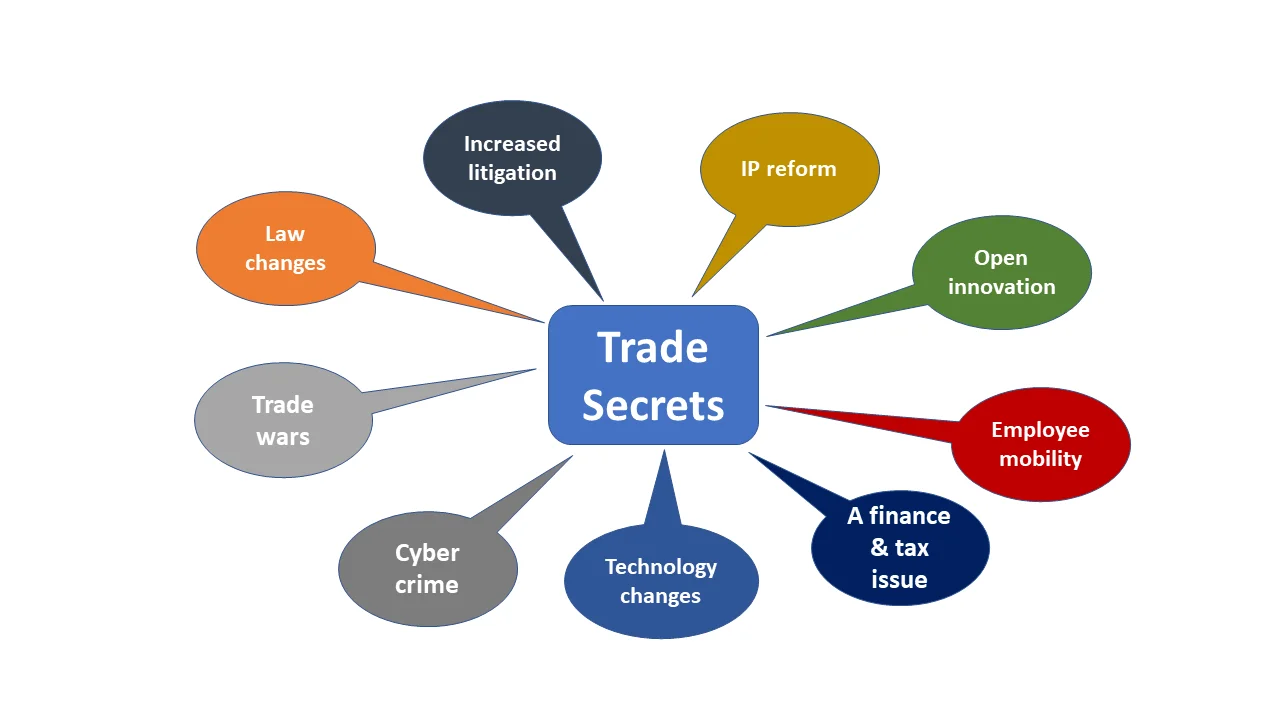
Trade Secrets include confidential business information providing competitive advantages, proprietary algorithms, customer lists, pricing strategies, security architectures, source code, and business processes. Unlike patents, trade secrets have no expiration if secrecy is maintained.

trade_secrets2

Why Intellectual Property Matters in Cybersecurity

Intellectual property often represents years of research and development investment, core competitive advantages differentiating companies from competitors, revenue streams from licensing or product sales, and market positioning establishing industry leadership. When IP is stolen, companies lose not just information but competitive edges, market share, and revenue potential.

Intellectual_property_theft

Source: Iolo – What Is IP Theft

Cyber Threats Targeting Intellectual Property

Cybercriminals, competitors, and nation-state actors use sophisticated methods to steal IP in the following manner:

Advanced Persistent Threats (APTs)

APTs are prolonged, targeted attacks where intruders gain access to networks and remain undetected for extended periods specifically to steal intellectual property. Nation-state actors often conduct APT campaigns targeting defense contractors, technology companies, and research institutions to steal trade secrets and technological innovations.

These attacks involve careful reconnaissance identifying high-value IP, custom malware evading detection systems, lateral movement to access development servers and research databases, and slow data exfiltration avoiding suspicion.

Insider Threats and Employee Data Theft

Halock Security notes that employees, contractors, or business partners with legitimate access pose significant IP theft risks. Insiders might steal IP when leaving for competitors, be recruited by foreign intelligence services, accidentally expose information through negligence, or be compromised through social engineering.

Insider threats are particularly dangerous because perpetrators already have authorized access, understand where valuable IP resides, and can exfiltrate data without triggering typical intrusion alarms.

Ransomware with Data Exfiltration

Modern ransomware attacks do not just encrypt data; they steal it first. Criminals threaten to publish stolen IP, including source code, product designs, and confidential research, if ransoms are not paid. This creates dual pressure even for organizations with good backups.

Supply Chain Compromises

Attackers target vendors, suppliers, or service providers to access multiple companies’ IP through single compromises. Software supply chain attacks compromise development tools or dependencies, affecting all downstream users.

Phishing and Social Engineering

Targeted phishing attacks trick employees into revealing credentials or downloading malware that provides IP access. Criminals research targets on LinkedIn and social media to craft convincing messages referencing real projects and colleagues.

Cloud and Remote Work Vulnerabilities

Intellectual property stored in cloud services or accessed by remote workers creates new attack surfaces. Misconfigured cloud storage, weak access controls, and unsecured home networks provide IP theft opportunities.

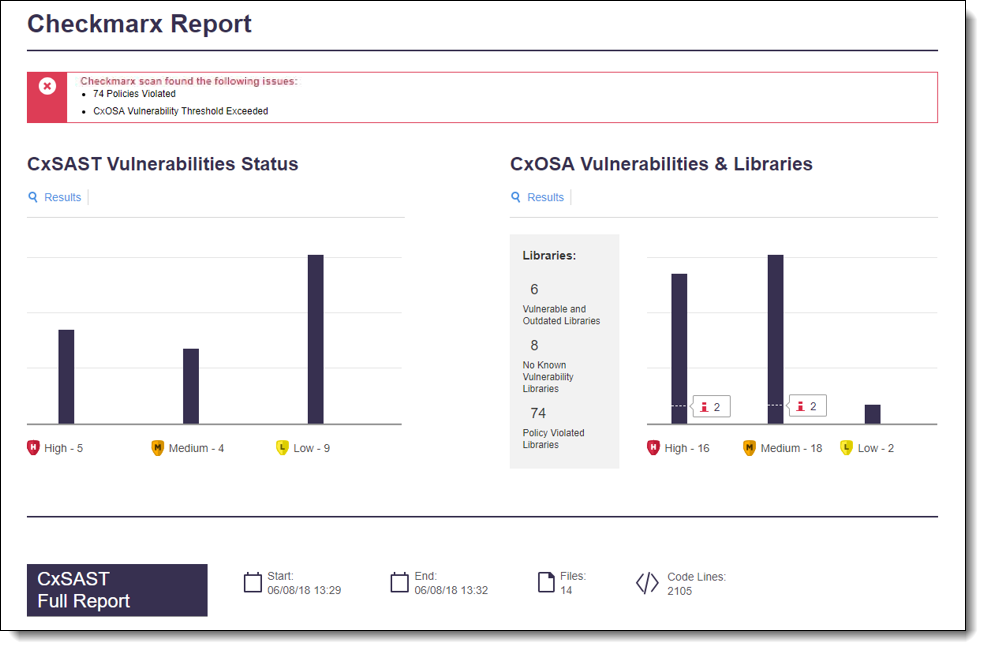
Checkmarx_report

Source: Checkmarx – Securing IP

Protecting Intellectual Property: Cybersecurity Strategies

Comprehensive IP protection requires multiple security layers:

Data Classification and Inventory

Identify and catalog all intellectual property assets including patents, source code, product designs, research data, customer information, and business processes. Classify information by sensitivity level and apply appropriate protection measures based on classification.

Access Control and Least Privilege

Implement strict access controls ensuring employees access only IP necessary for their roles. Use role-based access control (RBAC) limiting permissions by job function, multi-factor authentication for accessing sensitive IP, privileged access management for administrative accounts, and regular access reviews removing unnecessary permissions.

Encryption for Data Protection

Encrypt intellectual property both at rest and in transit. Use strong encryption for databases containing IP, file-level encryption for sensitive documents, encrypted communication channels for sharing IP, and encrypted backups protecting archived IP.

Network Segmentation

Separate networks containing intellectual property from general business systems. Create isolated segments for research and development, secure zones for source code repositories, restricted networks for proprietary databases, and air-gapped systems for extremely sensitive IP.

Data Loss Prevention (DLP)

Deploy DLP solutions monitoring and controlling IP movement. Configure DLP to detect sensitive data leaving the network, block unauthorized uploads to cloud storage, alert on suspicious file access patterns, and prevent email transmission of confidential IP.

Security Monitoring and Anomaly Detection

Implement continuous monitoring detecting unusual IP access or transfer patterns. Monitor for after-hours access to sensitive systems, large file downloads from development servers, unusual data transfers to external destinations, and access patterns inconsistent with job roles.

Secure Development Practices

For software companies, protect source code through secure code repositories with access logging, code review processes before commits, automated security scanning for vulnerabilities, and version control tracking all changes.

Employee Training and Awareness

Train staff on IP protection importance, recognizing social engineering attempts, proper handling of confidential information, and reporting security incidents. Include IP protection in onboarding and conduct regular refresher training.

Incident Response Planning

Develop specific procedures for IP theft incidents including rapid containment to stop ongoing exfiltration, forensic investigation determining what was stolen, legal notification and law enforcement contact, and damage assessment guiding response.

Third-Party Risk Management

Vet vendors and partners accessing IP, require contractual IP protection obligations, limit third-party access to necessary information only, and audit vendor security practices regularly.

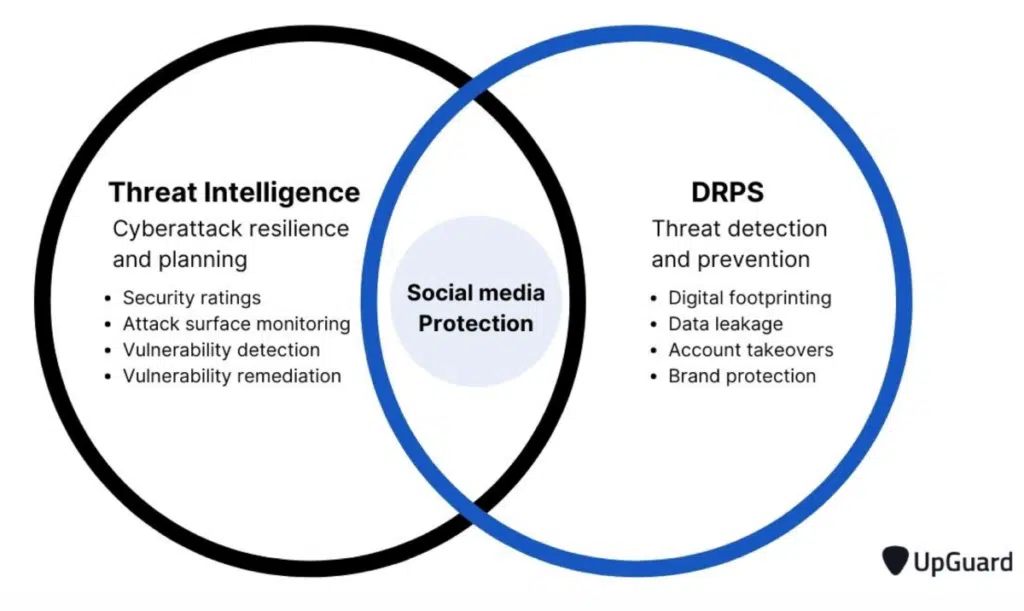
threat_intelligence_drps

Source: Halock Security – Threat-Intelligence

Legal Frameworks and IP Protection

Understanding legal protections helps enforce IP rights:

Digital Millennium Copyright Act (DMCA)

The DMCA criminalizes circumvention of technological protection measures for copyrighted works and limits liability for online service providers. It provides takedown procedures for infringing content online.

Economic Espionage Act

This federal law criminalizes theft of trade secrets to benefit foreign governments or companies. Penalties include up to 15 years imprisonment and substantial fines.

Defend Trade Secrets Act (DTSA)

The DTSA allows trade secret owners to sue in federal court for misappropriation and provides remedies including injunctions, damages, and attorney fees. It also protects whistleblowers disclosing trade secrets to report violations.

Patent and Trademark Laws

Federal patent law grants exclusive rights to inventions, while trademark law protects brand identifiers. Both provide legal recourse against infringement.

International IP Treaties

WIPO (World Intellectual Property Organization) treaties, the Berne Convention for copyrights, and the Paris Convention for patents provide international IP protection frameworks.

Emerging Technologies and IP Protection

New technologies create both opportunities and challenges for IP security:

AI and Machine Learning

AI helps detect IP theft through anomaly detection and behavioral analysis but also enables sophisticated attacks through automated vulnerability discovery and AI-generated phishing.

Blockchain for IP Management

Blockchain technology provides immutable records of IP creation and ownership, transparent licensing and royalty tracking, and proof of prior art for patents.

Zero-Trust Security

Zero-trust architectures enhance IP protection by continuously verifying all access requests, eliminating implicit trust assumptions, and segmenting access to IP assets.

Conclusion

Intellectual property represents critical business assets worth protecting with robust cybersecurity measures. With IP theft causing $600 billion in annual losses to the U.S. economy, organizations cannot afford to neglect IP protection. Understanding that IP encompasses patents, copyrights, trademarks, and trade secrets, each requiring specific protections, helps organizations develop comprehensive security strategies.

Cyber threats targeting IP range from advanced persistent threats and insider risks to ransomware, supply chain compromises, and social engineering. Protection requires multiple layers including data classification, access controls, encryption, network segmentation, DLP, monitoring, secure development, employee training, incident response, and vendor management.

Legal frameworks including DMCA, Economic Espionage Act, and DTSA provide recourse against IP theft while emerging technologies like AI, blockchain, and zero trust architectures offer new protection capabilities. By implementing the strategies outlined in this guide and maintaining vigilance against evolving threats, organizations can protect their intellectual property from cybercriminals while maximizing the value of their most critical intangible assets.

Frequently Asked Questions

What is the difference between intellectual property and physical property in cybersecurity?

Physical property refers to tangible assets like servers and devices that can be physically secured. Intellectual property is intangible ideas, designs, code, and information that exist digitally and can be copied instantly without physical theft. IP theft is harder to detect because the original remains while copies are stolen. Protecting IP requires different strategies focusing on access control, encryption, and monitoring rather than just physical security.

How can small businesses protect their intellectual property without large security budgets?

Small businesses can protect IP cost-effectively through: implementing strong access controls and multi-factor authentication (often free), using encryption for sensitive files and communications, training employees on IP protection and social engineering awareness, conducting regular backups with offline copies, implementing basic network segmentation, using cloud services with strong security features, and establishing clear IP handling policies. Many effective security measures require process changes rather than expensive technology.

What should I do if I discover my company’s intellectual property has been stolen?

Immediately: contain the breach by isolating affected systems, preserve evidence for investigation, notify your legal team and law enforcement (FBI for significant theft), document what IP was accessed or stolen, assess ongoing threat and close vulnerabilities, notify affected customers or partners if required, and consider legal action against perpetrators. Time is critical, rapid response can limit damage and improve recovery chances.

How does intellectual property theft differ from general data breaches?

General data breaches steal any information, including customer data, credentials, or operational data. IP theft specifically targets valuable proprietary information, providing competitive advantages trade secrets, source code, product designs, research data, and business strategies. IP theft is often more targeted, conducted by sophisticated actors, motivated by competitive or nation-state interests, and has long-term business impacts beyond immediate data loss. Recovery involves competitive damage assessment and legal action to prevent IP exploitation.

What role do employees play in protecting intellectual property?

Employees are both the greatest vulnerability and strongest defense for IP protection. They must understand which information is confidential IP, follow access control and handling procedures, recognize and report social engineering attempts, use secure methods for sharing IP, maintain confidentiality after employment ends, and report suspected IP theft immediately. Organizations should provide comprehensive training, clear policies, secure tools for IP handling, and culture emphasizing IP value and protection importance.

What Is Digital Privacy? Complete Guide to Online Data Protection in 2025

A complete 2025 guide to digital privacy. This guide covers key privacy risks, data protection laws, and effective steps to enhance your online safety

digital_privacy

Digital privacy has become one of the most important concerns for anyone who uses the internet, smartphones, or digital services.

According to IEEE Digital Privacy:

“digital privacy serves as a shield that safeguards personal information from undue exposure and misuse.”

According to Privacy Savvy reports:

“when you go online, you leave digital footprints used by companies to track your behavior,”

Therefore, understanding digital privacy is essential for protecting yourself in today’s connected world. This comprehensive guide explains what digital privacy means, why it matters, what personal information is at risk, and how you can protect your online data protection rights.

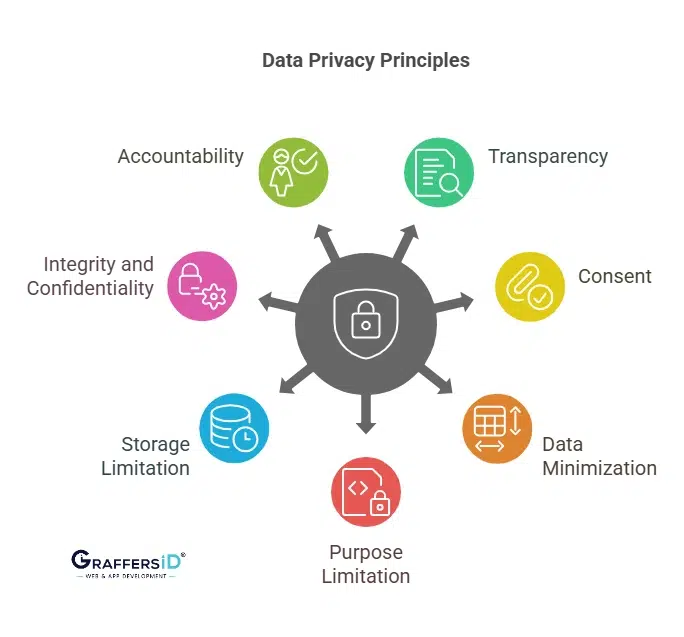
Principles_of_Data_Privacy

Source: What Is Digital Privacy

Understanding Digital Privacy: The Complete Definition

Digital privacy refers to the right to control how your personal information is collected, used, stored, and shared when you use digital technologies and online services.

Winston & Strawn’s legal glossary defines online privacy as:

“the level of privacy protection an individual has while connected to the Internet. It covers the amount of online security available for personal and financial data, communications, and preferences.”

What Digital Privacy Really Means

At its core, digital privacy is about your ability to decide:

  • What personal information you share online
  • Who has access to your data
  • How your information is used by companies and organizations
  • When and how your data is deleted or retained
  • Whether you remain anonymous or identifiable online

Wikipedia explains that:

“digital privacy is often used in contexts that promote advocacy on behalf of individual and consumer privacy rights in e-services and is typically used in opposition to the business practices of many e-marketers, businesses, and companies to collect and use such information.”

Three Categories of Online Privacy

According to IEEE’s digital age privacy analysis, digital privacy encompasses three interconnected categories:

Information Privacy protects your personal data including names, addresses, financial information, health records, and browsing history. This category focuses on controlling who accesses your data and how they use it.

Communication Privacy safeguards your digital communications including emails, messages, phone calls, video chats, and social media interactions. It ensures your conversations remain private and confidential.

Individual Privacy protects your right to control your online identity, reputation, and presence. This includes managing your digital footprint, controlling what information appears about you online, and maintaining anonymity when desired.

The Evolution of Privacy Meaning in Digital Age

Traditional privacy meant the right to be left alone, controlling physical access to your space and limiting who could observe your activities. Privacy Savvy notes that:

“in today’s digital age, this definition has evolved to encompass protecting personal data and preventing behavior tracking without explicit consent.”

Digital privacy now includes protecting data you actively share (like filling out forms), passively generate (like browsing history and location data), and data created about you by others (like photos, tags, and mentions). Every online action creates information that can be collected, analyzed, and used in ways you might not expect or want.

Digital_privacy 5

Source: Privacy Savvy – What Is Internet Privacy

What Is PII? Understanding Personal Identifiable Information

Personal Identifiable Information (PII) is any data that can identify you specifically or be combined with other information to identify you. Understanding what constitutes PII helps you recognize what information needs protection.

Direct Identifiers: Information That Identifies You Alone

Direct identifiers uniquely identify individuals by themselves:

  • Full name
  • Social Security number or national identification numbers
  • Driver’s license numbers
  • Passport numbers
  • Biometric data (fingerprints, facial recognition, iris scans)
  • Email addresses linked to real names
  • Phone numbers
  • Home addresses
  • Bank account numbers and credit card numbers

These identifiers pose immediate privacy risks because they directly reveal your identity. Criminals seek this information for identity theft and fraud.

Indirect Identifiers: Information That Can Identify You When Combined

Indirect identifiers don’t identify you alone but can when combined with other data:

  • Date and place of birth
  • Employment information
  • Education records
  • IP addresses
  • Device identifiers (MAC addresses, device IDs)
  • Location data and GPS coordinates
  • Browsing history and search queries
  • Purchase history and transaction data
  • Social media activity and connections
  • Health and medical information

Modern data analytics can combine seemingly harmless indirect identifiers to identify specific individuals. For example, combining your zip code, birthdate, and gender can uniquely identify you in many populations.

Sensitive PII Requiring Extra Protection

Some PII is particularly sensitive and requires enhanced protection:

  • Financial information (account numbers, credit scores, investment details)
  • Health and medical records
  • Genetic and biometric data
  • Religious or political affiliations
  • Sexual orientation and gender identity
  • Criminal records and legal proceedings
  • Children’s personal information

Laws like GDPR, HIPAA, and COPPA provide special protections for sensitive PII categories, recognizing the potential harm from unauthorized disclosure.

privacy-report

Source: Enzuzo – Digital Privacy Definition

Why Digital Privacy Matters: The Critical Importance

Digital privacy isn’t just an abstract concept—it has real, tangible impacts on your life, security, and freedom:

Protection from Identity Theft and Financial Fraud

Identity theft represents one of the most immediate privacy threats. When criminals access your PII, they can:

  • Open credit accounts in your name
  • File fraudulent tax returns to steal refunds
  • Take out loans you’re responsible for repaying
  • Access your existing financial accounts
  • Commit crimes using your identity
  • Ruin your credit score and financial reputation

Identity theft recovery takes years and costs thousands of dollars. Strong digital privacy practices prevent criminals from obtaining the information they need.

Safeguarding Financial Security

Your financial information requires robust privacy protection. Bank accounts, credit cards, investment accounts, and payment information must be secured from:

  • Unauthorized transactions and theft
  • Account takeovers
  • Wire transfer fraud
  • Credit card skimming
  • Investment scams targeting your assets

Smowl’s privacy guide emphasizes that

“digital privacy is about respecting the rights of users and protecting their personal information from cybercrime or unauthorized use.”

Preventing Targeted Manipulation and Exploitation

Companies collect vast amounts of data about your behavior, preferences, and psychology. This information can be used to:

  • Manipulate your purchasing decisions through personalized advertising
  • Influence your political opinions with targeted content
  • Exploit your vulnerabilities and emotional triggers
  • Discriminate in pricing, services, or opportunities
  • Create filter bubbles limiting information exposure

Understanding what companies know about you helps recognize when you’re being manipulated or targeted.

Protecting Personal Safety and Security

Digital privacy directly impacts physical safety. Exposed personal information can enable:

  • Stalking and harassment through location tracking
  • Home burglaries when vacation posts reveal empty houses
  • Domestic violence escalation when abusers track victims
  • Child exploitation when predators access children’s information
  • Physical confrontations from online disputes

Controlling what information is public about you, especially location and routine data, protects physical safety.

Maintaining Professional Reputation and Opportunities

Your digital presence affects professional opportunities. Employers, clients, and business partners research you online. Privacy concerns include:

  • Embarrassing photos or posts affecting hiring decisions
  • Political or controversial opinions limiting opportunities
  • Personal information used for discrimination
  • Old content that doesn’t represent current views
  • Private information affecting professional credibility

Managing your digital privacy helps control your professional reputation.

Preserving Freedom of Expression and Thought

Privacy enables free expression without fear of judgment, retaliation, or persecution. Without privacy:

  • People self-censor to avoid judgment or consequences
  • Unpopular opinions are suppressed
  • Dissent and whistleblowing become dangerous
  • Research into sensitive topics leaves permanent records
  • Creative exploration is chilled by surveillance

Privacy provides the freedom to explore ideas, express opinions, and develop beliefs without constant monitoring.

Protecting Relationships and Personal Connections

Private communications foster genuine relationships. Without communication privacy:

  • Intimate conversations can be exposed publicly
  • Confidential disclosures can be weaponized
  • Trust in relationships erodes
  • Honest communication becomes risky
  • Personal conflicts become public spectacles

Email, messaging, and social media privacy protections help maintain healthy relationships.

Exercising Autonomy and Personal Freedom

Fundamentally, privacy is about autonomy—the right to make choices about your life without undue influence or control. Digital privacy lets you:

  • Browse and research freely without judgment
  • Make purchasing decisions without manipulation
  • Explore ideas without permanent records
  • Change opinions without past views haunting you
  • Control what others know about you

Privacy preserves human dignity and self-determination in an increasingly surveilled world.

Privacy_Scenario

Source:  Robust Privacy Regulations

User Data Collection: What Companies Know About You

Understanding what data is collected helps you make informed privacy decisions:

Voluntary Information You Provide

You explicitly share information when you:

  • Create accounts with usernames, emails, and passwords
  • Fill out forms with addresses and phone numbers
  • Upload photos, videos, and content
  • Write posts, comments, and reviews
  • Make purchases with payment information
  • Complete surveys and questionnaires
  • Contact customer support

While you control providing this information, terms of service often grant companies broad rights to use, analyze, and share your data.

Automatically Collected Technical Data

Websites and apps automatically collect technical information including:

  • IP addresses revealing approximate location
  • Device types, operating systems, and browsers
  • Screen resolution and device specifications
  • Language and timezone settings
  • Referring websites and search terms
  • Cookies tracking across sites

This technical data creates detailed profiles about your habits and preferences even without explicit information sharing.

Behavioral Data and Usage Patterns

Services track how you use them:

  • Which pages you visit and how long you stay
  • What content you engage with
  • Products you view or add to carts
  • Search queries revealing interests
  • Video watching patterns
  • Reading habits and article preferences
  • Gaming behavior and achievements

This behavioral data reveals more about you than explicit information; your actions show your true interests and tendencies.

Location and Movement Data

Location tracking has become pervasive:

  • GPS coordinates from mobile devices
  • Wi-Fi and Bluetooth proximity tracking
  • Cell tower triangulation
  • IP address geolocation
  • Location tags in photos and posts
  • Check-ins and place reviews

Location data reveals where you live and work, where you shop and socialize, your daily routines, and even religious or political affiliations based on visited locations.

Social Connections and Relationship Data

Social platforms map your relationships:

  • Friends, followers, and connections
  • Family relationships and close contacts
  • Professional networks and colleagues
  • Groups and community memberships
  • Interaction patterns showing closest relationships
  • Influence and popularity metrics

This social graph data is valuable for advertisers and can be used to infer information about you based on your connections’ characteristics.

Inferred and Predicted Information

Companies use AI and machine learning to infer information you never explicitly provided:

  • Demographic characteristics (age, gender, income)
  • Interests and preferences
  • Political and religious views
  • Personality traits and psychological profiles
  • Future behaviors and likely actions
  • Purchasing propensity and price sensitivity
  • Health conditions based on searches and purchases

These inferences can be inaccurate but affect the content you see and opportunities you receive.

Digital _privacy_1

Source: Digital Safety Guide 2025

Achieving Anonymity and User Data Protection

Protecting your digital privacy requires active measures:

Understanding True Anonymity vs. Pseudonymity

True anonymity means no one, including service providers, can identify you. Achieving true online anonymity is extremely difficult because:

  • IP addresses link to internet service providers who know your identity
  • Payment methods reveal identity
  • Behavioral patterns can re-identify supposedly anonymous users
  • Device fingerprints track across anonymization attempts

Pseudonymity means using fake names or handles while the service provider might know your real identity. This protects you from other users but not from companies or law enforcement.

Most online privacy measures provide pseudonymity or privacy from other users rather than true anonymity.

Practical Steps for Digital Privacy Protection

Use Strong, Unique Passwords: Create complex passwords for every account using password managers to store them securely. Never reuse passwords because one breach can compromise multiple accounts.

Enable Multi-Factor Authentication: Add extra security layers requiring multiple verification forms. Even if passwords are stolen, MFA prevents unauthorized access.

Review Privacy Settings: Regularly check privacy settings on social media, apps, and services. Default settings often prioritize data collection over privacy. Customize settings to minimize information sharing.

Limit Information Sharing: Only provide necessary information. Question why services need certain data and whether you’re comfortable sharing it. Less shared information means less exposure risk.

Use Privacy-Focused Tools: Choose services that prioritize privacy including encrypted messaging apps, privacy-focused browsers, VPNs hiding your IP address and encrypting traffic, and search engines that don’t track queries.

Be Selective with App Permissions: Review and limit app permissions on mobile devices. Apps often request unnecessary access to contacts, location, camera, and microphone. Deny permissions apps don’t legitimately need.
Clear Browsing Data Regularly: Delete cookies, browsing history, and cached data periodically. This limits tracking across websites and reduces stored personal information.

Use Email Aliases: Create separate email addresses for different purposes. This prevents data brokers from linking activities across services and reduces spam to primary addresses.

Read Privacy Policies: While lengthy and complex, privacy policies reveal how services use your data. Focus on sections about data sharing, retention, and your rights.

Exercise Data Rights: Many privacy laws grant rights to access your data, request corrections, delete information, and opt-out of certain uses. Exercise these rights when available.

Teaching Children About Digital Privacy

Children require special privacy protection and education:

  • Supervise online activities and accounts
  • Teach them never to share personal information online
  • Use parental controls and kid-safe services
  • Explain why privacy matters in age-appropriate terms
  • Monitor who they communicate with online
  • Set clear rules about acceptable online behavior

DLA Piper notes that

“in January 2025, the Federal Trade Commission (FTC) finalized significant changes to the federal Children’s Online Privacy Protection Act (COPPA), enhancing online safety for children.”

Conclusion

Digital privacy in 2025 means controlling how your personal information is collected, used, and shared across the vast digital landscape where every click, search, and interaction generates data. From understanding what PII is, including direct identifiers like Social Security numbers and indirect identifiers like browsing history, to recognizing why privacy matters for preventing identity theft, maintaining security, protecting freedom, and preserving autonomy, digital privacy affects every aspect of modern life.

Companies collect enormous amounts of user data including information you voluntarily provide, automatically gathered technical details, behavioral patterns, location tracking, social connections, and inferred characteristics. This comprehensive data collection enables targeted advertising, personalized services, and unfortunately, potential manipulation and exploitation.

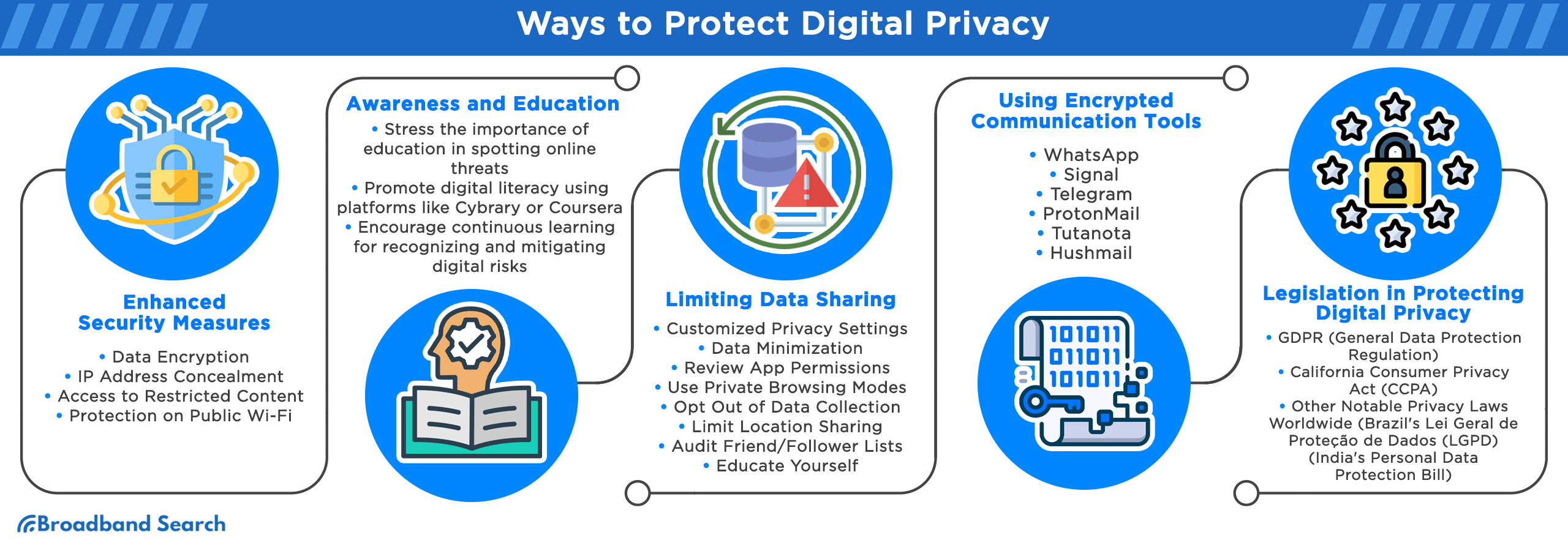
Protecting your online privacy requires understanding that true anonymity is difficult to achieve, but practical measures significantly enhance privacy. Using strong passwords, enabling multi-factor authentication, reviewing privacy settings, limiting information sharing, choosing privacy-focused tools, controlling app permissions, clearing browsing data, and exercising data rights under privacy laws all contribute to better digital data protection.

Digital privacy isn’t just a technical or legal issue; it’s a fundamental human right that enables freedom of expression, protects personal safety, preserves professional opportunities, and maintains human dignity in an increasingly connected world. By understanding what digital privacy means and taking concrete steps to protect it, you can navigate the digital age while maintaining control over your personal information and online identity.
Frequently Asked Questions

What is digital privacy in 2025?

Digital privacy means controlling how your personal information is collected, used, and shared online. It protects your identity, data, and freedom from misuse, surveillance, and unauthorized tracking.

Why is digital privacy important?

Digital privacy protects you from identity theft, hacking, manipulation, and tracking. It ensures your personal data stays secure, maintains freedom of expression, and safeguards your financial and social information.

What personal information is at risk online?

At risk are names, addresses, passwords, browsing history, financial data, location, and social connections. Companies and hackers use this information for advertising, profiling, or identity theft.

How can I protect my digital privacy?

Use strong passwords, enable two-factor authentication, review privacy settings, limit data sharing, use VPNs, and delete cookies regularly to reduce tracking and improve online privacy protection.

What laws protect digital privacy in 2025?

Major digital privacy laws include GDPR, CCPA, and COPPA. These laws regulate how companies collect, store, and share personal data, ensuring user rights and online protection.

Blue Zones: The Lifestyle Secrets Behind the World’s Longest-Living Communities

From diet to purpose, discover the lifestyle secrets behind the world’s longest-living communities of Blue Zones, who are living longer, healthier, and happier lives for decades.

BlueZones

Blue Zones are specific areas around the world that are known as having residents with remarkable longevity and low levels of chronic illnesses. The Blue Zones, which include regions within Italy, Greece, Japan, Costa Rica, and the United States, share common aspects of life like diet, fasting, and physical activity, which contribute to living longer and healthier lives.

What Exactly Are Blue Zones?

The term ‘Blue Zone‘ was coined by the author Dan Buettner, who identified areas where people live more than average. The name comes in the circles of blue that were drawn around these regions on the map he was studying. in his work “The Blue Zones“, Buettner highlights five popular Blue Zones:

Icaria, Greece: Icaria is known for its Mediterranean diet that is rich in red wine, olive oil, and fresh vegetables.

ikaria_blue_zones

Ogliastra, Sardinia, Italy: Known for its production of some of the oldest men, who live their lives focused on farming in the mountains and moderate consumption of red wines.

sardinia_blue_zone

Okinawa, Japan: Okinawa is home to the world’s longest-living women, alongside men who focus on soy-based cuisines and Tai Chi practices.

okinawa_blue_zone

Nicoya Peninsula, Costa Rica: The residents eat corn, beans, and tortillas, are physically active, and have a conviction known as the Plan de Vida.

nicoya_blue_zone

Loma Linda California, USA: The Seventh-day Adventist community that practiced vegetarianism in close-knit religious organizations.

loma_linda_blue_zone

Research has shown that these regions have large numbers of nonagenarians as well as centenarians. This highlights the importance of lifestyle and environmental aspects over genetics, which are only responsible for 20-30% of longevity.

Plant-Forward Diets as a Common Thread

A common characteristic among Blue Zone residents is a mostly plant-based diet, approximately 90% of their intake from whole plant food. The consumption of meat is very low generally limited to approximately five times a month.

Their diets are rich in:

Vegetables are a great source of nutrients, fiber, and minerals that are linked to a lower risk of risk of cancer and cardiovascular disease.

Legumes, such as beans and lentils, provide protein and fiber that is which are linked to a lower risk of death.

Whole grains are linked to lower blood pressure as well as a reduction in risk of heart disease and cancer.

Nuts, which are rich in healthy fats, are associated with improved metabolic health and longevity.

The consumption of fish is region-specific, which is evident particularly in Icaria and Sardinia, which are rich in omega-3 fatty acids that are beneficial to heart and brain health.

food_blue_zone

The 80% Diet Rule and Caloric Moderation

People living in Blue Zones generally adhere to calorie-controlled eating, more commonly known as the 80% diet rule. For instance, Okinawans adhere to the principle of ‘hara hachi bu‘, which is eating until you are only eighty percent full, stopping eating in excess. 

Research suggests that slower mindful eating improves the feeling of fullness and reduces calories, which can lead to a longer life span.

Their tiniest meals usually occur in the afternoon or early evening, then a period of fasting until the following day. This pattern is linked to a healthier older age.

Moderate Alcohol Intake

Moderate consumption of alcohol, specifically wines with red color, is quite common in Blue Zones, such as Sardinia and Icaria. 

While evidence on the benefits of alcohol on health is a mixed bag, certain studies suggest moderate consumption can lower the risk of developing heart disease. 

Sardinian Cannonau wines, which are high in antioxidants, could aid in preventing cellular aging. But, benefits seem to be tied to moderate consumption, and excessive drinking can increase the risk of dying.

Integrating Natural Movement Into Daily Life

The Blue Zone exercise program is integrated into daily activities, not rigorous workouts. Walking, gardening, and other manual tasks contribute to regular physical activities. 

Research has shown that higher levels of physical exertion, like walking distances and climbing stairs, are associated with improved longevity.

The latest health guidelines recommend at the very least 150 mins of moderate exercise or 75 minutes vigorous aerobic exercise per week in line with the natural levels of activity found in Blue Zones.

Prioritizing Restful Sleep and Naps

A good night’s sleep is a common aspect of a healthy lifestyle among Blue Zone populations, with a goal of seven hours per night. Sleeping too much or too little increases the risk of dying. 

Many people nap throughout the day, particularly in Mediterranean regions like Icaria or Sardinia. The short duration of naps (up to 30 minutes) could improve heart health and prolong life, whereas longer naps could pose a risk.

Social, Spiritual, and Psychological Factors

Beyond exercise and diet Blue Zones have deep spiritual and social connections:

The majority of communities are spiritual or religious and this is associated with lower mortality rates, which could be due to support from the community and lower depression.

The pursuit of a specific goal in life, such as ikigai in Okinawa or a plan of Vida in Nicoya, is linked to greater psychological well-being and longevity.

The multi-generational lifestyle is common and grandparents being active in their families. Caretaking positions have been linked to longer lives.

Healthy social networks, such as the ‘Moai’ of Okinawa, can influence behaviours and health outcomes by influencing social norms and support.

Social_blue_zone

Emulating Blue Zones for Better Health and Longevity

The Blue Zones demonstrate that modest, consistent lifestyle practices, primarily plant-based eating, regular movement, moderation in alcohol, sufficient sleep, and strong community connections contribute extensively to a longer, healthier life. 

These tested practices provide an easy-to-follow guideline for those looking to improve their longevity and improve their quality of living.

UK Faces Backlash as Public Anger Mounts Over Asylum Housing Crisis

The UK faces a backlash from the public as outrage grows over the rising cost of asylum, with taxpayers paying the bill and provoking widespread criticism.

UK asylum_post

A new report exposes billions in asylum hotel contracts because of incompetence and supervision from officials at the Home Office. Members of the Home Affairs Committee called the current system inefficient and chaotic, warning that expenditure has risen uncontrollably. The cost for asylum accommodation contracts from 2019 to 2029 has increased from a rumored £4.5 billion to a staggering £15.3 billion.

Rising Costs and Lack of Accountability

The government’s reliance on hotels that are expensive to house asylum seekers has led to lucrative contracts for accommodation providers but has not held the taxpayers accountable. 

The report reveals:

“Millions of pounds in excess profits are owed to the government by two accommodation providers, but the Home Office has yet to recover this money.”

Lady Karen Bradley, Chair of the Home Affairs Committee, said:

“urgent action is needed to lower the cost of asylum accommodation and address the concerns of local communities.”

She cautioned not to make:

“Undeliverable promises to appeal to popular sentiment, like the promise that it will end hotel use by 2029.”

Instead, ministers were urged to abandon short-term, reactive responses to focus on longer-term strategies.

Social Tensions and Controversies Over Migrant Hotels

Migrant hotels became the focal point for protests by the community after an asylum seeker from Epping, Essex, sexually assaulted a 14-year-old girl. Epping council’s effort to block the hotel was unsuccessful after taking it through the High Court. 

UK_asylum_protest

The judge, Dame Karen said:

“The Home Office has presided over a failing asylum accommodation system that has cost taxpayers billions of pounds.”

Scale and Regional Concentration of Asylum Accommodation

As of June 2025 about 103,000 people were sheltered at the Home Office as asylum seekers. While the number of people staying in hotels has decreased from the maximum, 32,059 were in hotels increasing year-on-year. 

The South of England accommodates 60% of asylum seekers who are staying in hotels, as the contract value has soared from £0.7 billion at the end of 2019 and £7 billion today.

Pandemic and Policy Shifts Inflate Hotel Use

The spread of the pandemic and the growing asylum seekers backlogs have pushed the need for hotel rooms dramatically up starting in 2020. It was reported that the Home Office renegotiated contracts, placing a high priority on hotel rooms, as they are considerably more expensive than houses and flats that are multi-occupancy (HMOs). 

UK_asylum_pandemic

The then-Home Secretary Yvette Cooper claimed that these contracts had been “signed in a rush in the summer of 2022,” highlighting the need for a more reactive approach to policymaking in the face of the increasing pressures. Hotel prices per person average £144.98 per night, compared to £23.25 in housing for dispersal. 

The MPs concluded that hotel usage can:

“Become a widespread and embedded part of the asylum accommodation system.”

Oversight Failures and Rising Complaints

MPs have described Home Office oversight as “chaotic” and “incompetent,” leading to substantial costs for taxpayers. 

Home Affairs Select Committee said:

“We find this incompetence unacceptable”

They also highlighted the absence of “basic elements of oversight” throughout the contracts.

Officials often lost track of who was operating services at the hotel. Freedom of Information requests have revealed hundreds of complaints from 2024 to the three providers Serco, Clearsprings, and Mears, which included 620 complaints to Serco in the sole instance.

The committee expressed concern about children being placed in adult-only accommodation because of inaccurate age assessment. They also advised against moving asylum accommodation to massive places like former military bases since they can be more expensive than hotels.

children_UK_asylum_hotel

Advocacy Groups Demand Reform

Enver Solomon, the CEO of the Refugee Council, affirmed:

“Everyone agrees that the Home Office’s reliance on hotels is a serious failure: they cost the taxpayer billions, unfairly trap people in limbo, and have become a lightning rod for division.”

He said:

“Hotels are particularly unsuitable for children and vulnerable people, who need responsible safeguarding.”

Sile Reynolds of Freedom from Torture urged the government to:

“Act now to relieve pressure on hotels by making better quality and faster asylum decisions, including swiftly granting status to people from countries where they are almost always recognised as refugees, like Syria and Sudan.”

Home Office Responds With Promises to Cut Costs

An Home Office spokesperson said:

“The government is enraged by the number of illegal immigrants throughout the country and in hotels. This is the reason we are going to shut down every asylum hotel, saving taxpayers hundreds of millions.”

The spokesperson also said:

“We have already taken action – closing hotels, slashing asylum costs by nearly a billion pounds and exploring the use of military bases and disused properties.”

Future Policy Options to Address Asylum Accommodation Challenges

To curb the soaring costs and systemic inefficiencies revealed in the Home Affairs Committee’s report, several policy directions merit consideration:

  • Expanding Dispersal Housing
  • Streamlining Asylum Decision-Making
  • Improved Contract Oversight and Accountability
  • Exploring Alternative Accommodation Models
  • Safeguarding Vulnerable Populations
  • Political and Community Engagement

The Ultimate Guide to Better Sleep Hygiene for Winters

Sleep hygiene can be a vital boost in the mood and energy levels as daylight begins to fade with the clocks returning.

Sleep_Hygiene

A good night’s sleep acts as protection, saving energy and encouraging resilience through seasonal transitions. I’ve experienced firsthand how paying attention to sleeping habits can help me stay away from the fatigue and mood swings that typically are associated with colder, darker winter months.

What Exactly Is Sleep Hygiene?

The concept “sleep hygiene” was introduced in 1977 by the clinical psychologist Dr. Peter Hauri in The Journal of Clinical Psychiatry. He described daily routines and changes to the environment that can improve the quality of sleep without taking medication. This strategy has changed the way insomnia is treated beyond just medications to include the use of environmental and behavioral methods.

Since then, the importance of sleep hygiene has become a crucial aspect of lifestyle medicine and well-being especially since disturbed sleep patterns caused by screens and busy schedules are becoming more commonplace.

The Impact of Clock Changes on Sleep

The close of British Summer Time on October 26th brings shorter days and darker, drier mornings and, in many cases, a dip in energy. This can alter natural circadian rhythms and lead to a sluggish start, nighttime insomnia, and afternoon fatigue.

Dr. Babak Ashrafi, a GP (member of Superdrug Online Doctor), emphasizes taking advantage of the change in clocks for an occasion to set up the:

“Bedtime ritual for success”

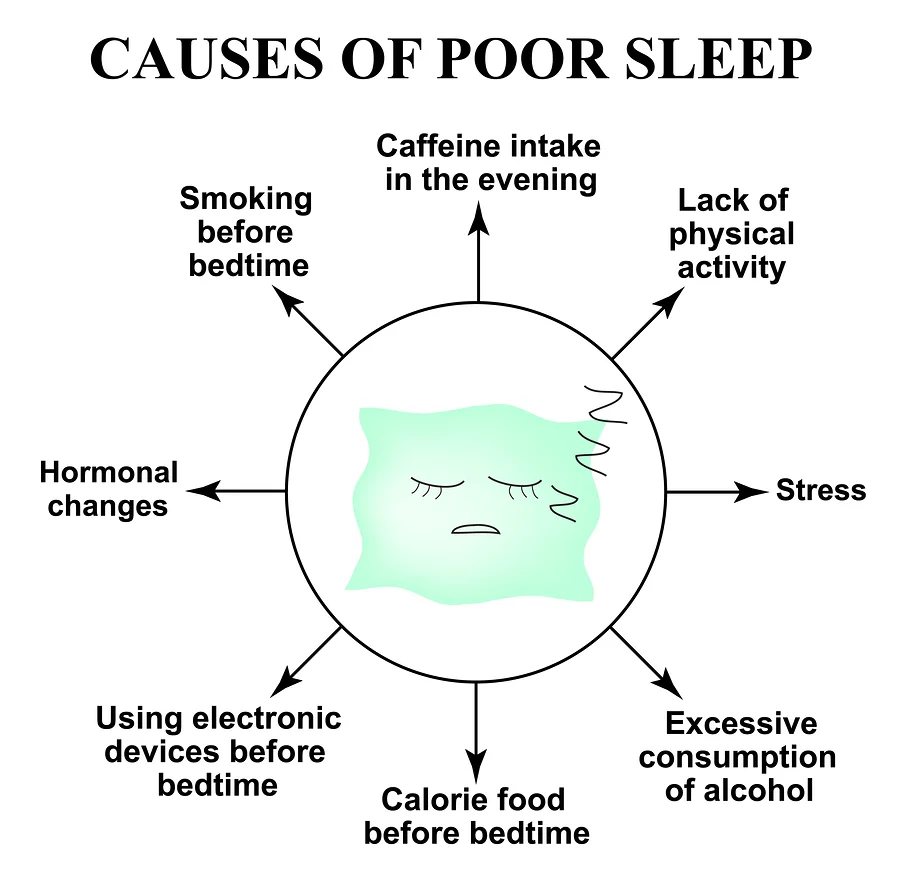
According to him, regular routines for sleeping, a comfortable bed, and staying away from late-night caffeine will significantly enhance the quality of sleep.

Practical Sleep Hygiene Rituals That Work

The routines for bedtime don’t need to be difficult or dependent on costly sleep aids. I have a strict routine for sleep hygiene, which includes the hydration process and scent therapy, and tracking my recovery using the Whoop or Oura Ring, and suffocating noise and light using an eye mask as well as earplugs.

Sleep_hygiene_tips

Simple practices of relaxation, like breathing or Yoga Nidra prior to sleeping, can help to create a calm alert to our nervous system that it is time to wind down. Dr. Ashrafi emphasizes that a consistent practice is crucial to better sleep quality.

Essentials of Good Sleep Hygiene: Light and Temperature

Cool, dim setting is conducive to a good night’s sleep. Dr. Ashrafi suggests keeping temperatures between 15 and 19 degrees Celsius, which allows the body’s temperature to fall to allow for a more restful sleep. Darkness stimulates the production of melatonin. crucial for falling asleep and remaining asleep.

From personal experience, I can confirm that natural fibers in bed linens and temperature-controlled mattresses, like Eight Sleep, enhance sleep quality. Temperature regulation is a key factor in the quantity of REM (rapid eye movement) and deep sleep, which are vital for the brain’s function, emotional health, and immune system strength.

Also, controlling the light exposure is crucial. Utilizing devices such as sunrise-simulating alarms or SAD lamps in winter can aid in maintaining cycles of circadian rhythms, reducing the effects of a lack of daylight.

Sleep, Light, and Mood: The Biological Link

The shorter duration of daylight reduces the exposure to natural sunlight, which can disrupt the fundamental biological processes. Harry Jarrett, head of research at Heights, says that reducing light levels lowers serotonin, which makes us less attentive and emotionally balanced, while also increasing the levels of melatonin, which causes fatigue.

This connection between biology and physiology is the reason people feel drowsy and less alert during winter’s dreary days.

How to Build Healthy Sleep Habits

The enticement of screens increases when the evenings get darker However, experts such as Dr. Ashrafi advise that a long period of screen time prior to sleep can disrupt the internal clock. Avoiding exposure to screens prior to bed and engaging in calming activities like meditation or reading will help your body to rest naturally.

The NHS also recommends removing televisions and smartphones from bedrooms in order to increase the control of stimuli and train the brain to think of sleep as a state instead of awakeness. Recent research supports this. A 2025 JAMA Network Open study found that using screens before bed reduces and decreases the quality of sleep, particularly for night owls.

Managing Nighttime Wakefulness Without Screens

If you awake in the night, you should avoid using your phone. Blue light stifles melatonin and makes it more difficult to fall asleep. Instead, you should engage in the most relaxing, low-light activities like listening to a book or music until you are able to fall asleep.

Sleep researcher Greg Potter highlights the clock change as a great moment to reset your bedtime routine rather than just getting an extra hour of sleep. Making sure your schedule is in line with your body’s rhythm could make it easier to transition into winter.

Chronotypes and Personalized Sleep Hygiene

Knowing your chronotype, whether you’re a morning lark or a night owl, helps you tailor your sleep hygiene methods to your particular biology. Sleep scientists recognize that there are variations in the optimal times for sleep and durations.

Consistency in wake and sleep timings is the most important factor. Recent studies linked irregular schedules for sleep to lower sleep quality as well as an increase in “social jetlag.” Sleep monitors often verify the benefits of regular routines.

Combining Habits for Long-Term Wellness

Harry Jarrett recommends a holistic method:

“Prioritise natural light, strengthen sleep hygiene, and fuel your brain properly.”

Inculcating these habits can help to maintain mental vigor and emotional strength in the darkest months.

A healthy sleep routine isn’t about luxury products or perfect results. It’s about creating an ideal environment for restorative relaxation and ensuring that you stick to it regularly. 

Establishing these habits now will improve mood and energy even after the winter months.

The Long Walk Marks Stephen King’s Best Movie Adaptation in Decades

Stephen King’s The Long Walk earns widespread praise from critics, making it the highest-rated adaptation of his work in years and a major return for Stephen King in the cinema.

the_long_walk_movie

Stephen King, renowned as the master of horror, has been praised not just for his terrifying jump scares and creatures but also for his deeply psychological tales. The latest film adaptation, The Long Walk, is a testimony to his innate talent, offering an emotionally stimulating and thrilling cinematic experience.

A Strong Debut and Streaming Success

It was released in theatres in the U.S. on September 12, 2025. The Long Walk quickly became a commercial and critical success. It was launched on digital platforms on October 21 and immediately debuted on the U.S. iTunes charts on October 22 and secured the second spot in Canada after the smash horror film Weapons. 

In addition to these success stories, ‘The Long Walk’ was ranked seventh among Amazon PVOD and fourth on Vudu on the 24th of October.

Although The Long Walk has yet to announce a broad launch date for streaming, it’s likely to hit major platforms by the end of either early or late November and promises to reach a wider audience in the near future.

Impressive Cast and Skilled Direction

Produced and directed by Francis Lawrence, known for his work on The Hunger Games franchise, the film is a powerful ensemble that includes performances by Taylor Kitsch and Johannes Haukur Johannesson, along with Garrett Wareing, Tut Nyuot, Charlie Plummer, Ben Wang, Joshua Odjick, Roman Griffin Davis, Josh Hamilton, Judy Greer, and Mark Hamill. 

long_walk

The screenplay was written by JT Mollner, who added the depth of King’s psychological thriller to this latest adaptation.

Critical Acclaim and Audience Praise

The Long Walk achieved an 88% Certified Fresh rating from critics who rely on more than 300 reviews. The audience agreed with the praise by 85%. This praise positions the film to be one of the most impressive adaptations of King’s works in recent times and is being praised for its compelling story and intense psychological realism.

With a budget of $20 million, the film has earned $48.4 million across the globe, which is close to the 2.5 times returns required to make it profitable. The film’s global release is being released, and when paired with a strong online advertising campaign, The Long Walk is predicted to make money for Lionsgate.

long_walk_mark_hamill

Ranking Among King’s Best Film Adaptations

Even though The Long Walk ranks as one of the best King-directed films over the years, the highest-rated of them all is 1976’s Carrie, which was hailed by critics, earning an AA Fresh rating and receiving 77% approval from the audience. 

The next closest contenders are the films of 1986, Stand by Me, which earned 92% of critics and 94% audience ratings. Then there’s the 1983 film The Dead Zone, lauded by 89% of critics while gaining 77% approval from audiences.

A number of much-anticipated Stephen King adaptations are set to release in the coming years, which will continue his illustrious career in TV and film.

A Strong Year for Stephen King Adaptations

2025 has been particularly successful for Stephen King fans. The year started with the release of Osgood Perkins’ ‘The Monkey‘, starring Theo James, which was also a huge success in theaters as well as streaming platforms. 

‘The Life of Chuck‘ by Mike Flanagan received rave reviews following its debut at the 2024 Toronto International Film Festival.

The popularity of the show continued to grow with the version of ‘The Institute’ that was renewed for another season on MGM+.

Upcoming Stephen King Adaptations

Many eagerly expected Stephen King adaptations are set to be released in the coming years, extending his illustrious presence in the world of television and film. 

In 2026 and beyond, Stephen King’s following projects are in the process of development or are in pre-production:

  • The adaptation is a new one of Cujo, and Darren Aronofsky (Black Swan) is reportedly involved as director at Netflix.
  • Amazon plans to release versions of Billy Summers and The Dark Tower.
  • A24 is working on an ongoing series of 10 episodes that is based on Fairy Tale.
  • Blumhouse, as well as Sony Pictures, plan a remake of Christine.
  • Netflix is working on an TV adaptation of the series The Talisman.
  • Other initiatives are Carrie (TV miniseries created by Amazon MGM Studios), Danny Coughlin’s Bad Dream, IT: Welcome to Derry (a new series for HBO), and The Running Man (with Edgar Wright as director, scheduled for November 14th, 2025).

Stephen King’s Long-standing Influence

These adaptations not only reflect the long-standing influence of Stephen King, but also the many genres that his work covers, from horror, psychological thriller, and supernatural drama.

Directors such as Mike Flanagan have become central characters in bringing King’s stories to a new audience, using quality productions and faithful adaptations.

Stephen King’s work continues to provide a constant flow of new content, promising years of thrilling suspense and entertainment for new and old fans alike.

Forbes Travel Guide Reveals the World’s Best Airlines and Airports for 2025

Forbes Travel Guide reveals the World’s best airlines and airports for 2025, highlighting the best performers in terms of service, luxury, and passenger experience.

best_airport

For the second time in a row, Singapore’s Changi Airport was honored as the Best International Airport by Forbes Travel Guide, (established in 1958 as the Mobil Travel Guide and is one of the oldest travel rating services in the U.S.).

This award is a testament to the airport’s constant dedication to revolutionizing travel by providing amenities that go beyond the basic and setting the bar for excellence in airports.

Highlights from the Verified Air Travel Awards

The Verified Air Travel Awards, which are now in their second year, honor the whole range of air travel, from luxurious cabins to awe-inspiring airport lounges. 

These 18 distinguished awards recognize those who excel at every touchpoint on the traveler’s journey, from curbside check-in to in-flight service.

Notable winners include Emirates as the best International Airline and Delta Air Lines as the Best U.S. Airline. In New York, LaGuardia Airport was named Best U.S. Airport, while Air New Zealand earned Innovation of the Year thanks to its unique Skycouch seats.

Skycouch_NZ

How Winners Were Selected

A committee of the executive at Forbes Travel Guide shortlisted nominees across various categories. The winners were chosen through an exclusive survey of more than 9000 hospitality professionals, luxury travel experts as well as Forbes its own undercover inspectors. 

The process guarantees that the awards reflect professional insights and genuine quality, which is confirmed by Forbes its long-running Star Ratings system. Peter Greenberg, Emmy Award-winning travel journalist, demonstrates the acclaim of these awards:

“The Verified Air Travel Awards provide a trusted benchmark—an annual check validated by Forbes Travel Guide to separate substance from spin.”

Greenberg further says:

“The real difference here is that these Verified Air Travel Awards aren’t driven by a transient popularity contest but are based on the expertise of the most discerning voices in travel and hospitality.”

Singapore Changi Crowned Best International Airport

Singapore Changi Airport earned the famous distinction of being the best international airport in the world. It is the 13th time that Changi Airport has won during the 2025 Skytrax World Airport Awards, an achievement that is unmatched. 

Changi provides unique facilities like a butterfly garden rooftop pool, a butterfly garden, and hedge maze. It creates a an inviting environment that goes beyond typical airport amenities.

Singapore_airport

One of the most distinctive characteristics The Rain Vortex, is celebrated as the world’s largest indoor waterfall that cascades from 40 metres high. Changi also took home the prize best airport dining on Forbes their most recent list, highlighting its broad popularity with travelers.

U.S. Travel and Airline Highlights

Within the United States, Delta Air Lines has been named the best U.S. airline, while JSX was named the best small airline. Forbes also ranked LaGuardia Airport in New York as the top Airport in the U.S., emphasizing local airports that provide an excellent passenger experience.

Delta_airline

Emirates did not stop with the recognition of airlines. The First Class on the Boeing 777-300ER won the top international first class. In addition, the Emirates First Class Lounge in Dubai was awarded the prize for the best lounge in an international airline that demonstrates the brand’s constant dedication to premium travel.

Emirates_airline

Key Airline and Airport Winners

Best International Airline: Emirates continues to invent and recently unveiled the lounge-like check-in areas for first-class travelers and Skywards Platinum members. This is the only airline that is autism-certified with extensive training for its staff to help people with autism.

Best U.S. Airlines: Delta Air Lines claimed five awards in 2025. They are renowned for their in-flight dining experience that is elevated by offering popular dishes like Shake Shack and Champagne Taittinger, exceptional customer service, and complimentary Wi-Fi available to all passengers.

Best Small Airline: The JSX offers a private-flying feeling with its 30-seat cabins, without middle seats, easy check-in procedures, with private terminals.

Best International Airport: Singapore Changi dazzles with things to do like 7 stories of Rain Vortex, a 24-hour cinema, a butterfly or bamboo-filled gardens as well as the rooftop pool and jacuzzi with views of runways.

Best U.S. Airport: LaGuardia Airport’s $8 billion upgrade has earned it the top U.S. airport honors for large gates, modern design, and outstanding culinary selections that include H&H Bagels and Junior’s.

Premium Cabin and Lounge Excellence

Best First Class International: Emirates’ Boeing 777-300ER suites have floor-to-ceiling doors and seats that are zero-gravity. Bulgari scents and gourmet meals on demand. There’s also shuttle service and access to the lounge.

Best U.S. First Class: The A321neo from Delta features memory foam recliners, with space for personalization and privacy screens, as well as ambiance lighting, and plenty of storage.

Best Business Class International: Qatar Airways’ Qsuites provide flexible configurations as well as extravagant amenities like Diptyque as well as pajamas by The White Company.

Best U.S. Business Class: Delta One cabins feature lying-flat beds, Missoni bedding, and skincare products from Grown Alchemist. They also have access to the only Delta One Lounge.

Best independent Lounge: Louis Vuitton Lounge by Yannick Alleno located at Hamad International Airport offers a French menu that features Qatari style, a chic design and a tranquil setting.

Best international Airline Lounge: Emirates Lounge located in Dubai impresses with its elegant lounge, the lounge’s cigar bar, massage treatments, and boarder privileges.

Best U.S. Airline Lounge: Its Delta One Lounge, located at JFK, is 39,000 square feet and features three-course meals, showers with steaming valet massage chairs, and spa services.

Other Standout Awards

Best Airport Dining: Singapore Changi’s over 200 dining options draw tourists and residents, offering local favorites such as Chili crab from Jumbo Seafood as well as new additions to 2025 like Tsuta Japanese Soba Noodles.

Best In-Flight Culinary Collaboration: Air France teamed with Michelin-starred chef Daniel Boulud to create authentic French meals for its top cabins.

Innovative of the Year: The Economy Skycouch of Air New Zealand transforms three seats into couch beds, dramatically increasing comfort on long-haul flights.

Most Loyal Programs: American Airlines AAdvantage provides an easy path to elite status through a wide range of partner stores as well as global network benefits via Oneworld Alliance.

Best Private Airport Experience: PS LAX offers an unbeatable private terminal experience for passengers in Los Angeles with its own TSA and customs suites, luxurious vehicle escorts, and domestic departure services, PS Direct.

Best Airline App: The Fly Delta app is updated with real-time baggage tracking, personal notifications, and the latest upgrade certificate options.

Upcoming Recognition Event

The winners will be honored during The Summit, Forbes Travel Guide’s annual event for luxury travel in Monaco from February 24 through 27, 2026.

The complete list of winners is available on ForbesTravelGuide.com.

FBI Reveals Deep Mafia Ties in Mind-Boggling NBA Gambling Scandal

FBI reveals deep mafia ties in mind-boggling NBA gambling scandal that has exposed connections between betting and organized crime, undermining the integrity of the league and sports in general.

FBI_probe

On Thursday, the FBI released a thorough criminal investigation that uncovered NBA figures involved in a vast fraud and illegal gambling scheme that involved four of the city’s most prominent Mafia clans. FBI Director Kash Patel described the scheme as “mind-boggling,” involving tens of millions of dollars, and connecting prominent organized crime organizations like Gambino, Bonanno, Lucchese, and the Genovese families.

Arrests Include NBA Players and Coaches

The investigation culminated in being arrest of 34 suspects from 11 states. Some of those arrested are famous NBA celebrities, including Portland Trail Blazers head coach Chauncey Billups, Miami Heat guard Terry Rozier, as well as an ex-NBA player and assistant coach, Damon Jones. 

The accusations are based on two distinct but connected plans that include a fraudulent underground poker operation using sophisticated cheating technologies and an insider betting scheme that relies on secret NBA information.

Allegations of High-Tech Cheating and Insider Betting

Authorities have claimed that poker games were controlled by marking playing cards, rigged shuffling devices and specially-designed contact lenses that let cheaters to use invisible signals. Victims suffered huge losses, and the possibility of manipulating wagers to secure losses. 

Additionally, Rozier and Jones are accused of conspiring to make bets illegally on NBA games by using insider information like fake injuries to players and game strategies that were altered to get an advantage.

Organized Crime’s Evolving Role

This incident is a sign of the mafia’s shift away from traditional racketeering to high-stakes security fraud and sports betting by utilizing a mix of violence, intimidation and the latest technology. 

The Federal government described this as an:

“Massive, nationwide takedown,”

This provides a major victory against organized crime’s entry into professional sports as well as illegal gambling companies.

Legal and Professional Consequences

As a response to charges as a response, the NBA has placed Rozier and Billups immediately on leave and pledged complete cooperation with police. The league highlighted the seriousness of the charges and reiterated its commitment to safeguarding respect for the fairness of sports. 

The investigation continues, and officials are suggesting that further charges and arrests might be in the near future.

This landmark case demonstrates the complicated relationship between professionally-run sports with organized crime which underscores the need for a robust surveillance and vigilance to protect fairness and sportsmanship in today’s ever-changing betting world.