
WASHINGTON — A false intelligence report produced with the assistance of artificial intelligence reportedly brought the United States close to a military confrontation with China after U.S. officials were told that a Chinese vessel was carrying components linked to a nuclear weapons programme.
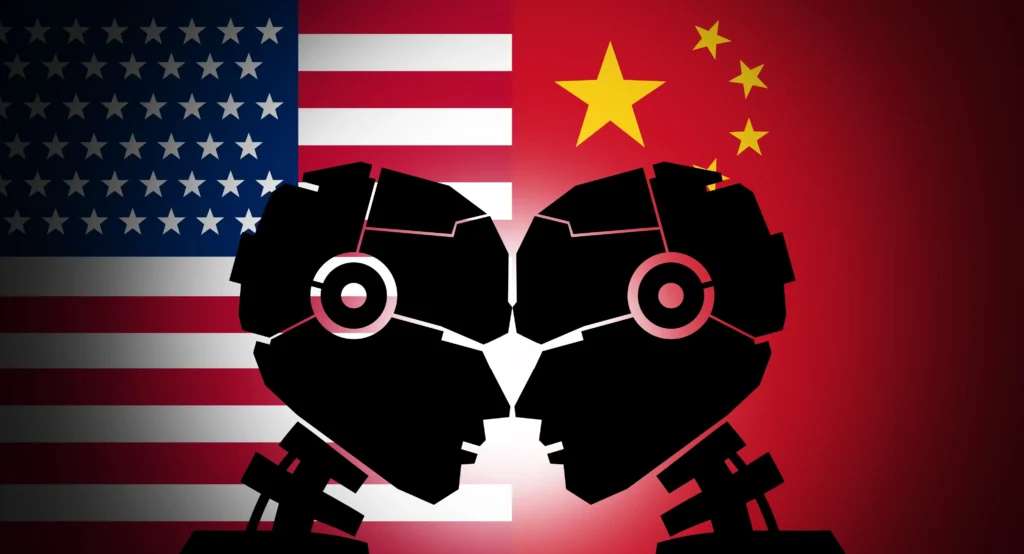
The intelligence report circulated through the U.S. military earlier this year during the war with Iran, according to CNN, citing four sources familiar with the incident. U.S. forces reportedly began preparing to intercept the Chinese vessel, with armed personnel preparing to board and military aircraft already in the air.
The operation was halted only after officials examined the intelligence more closely and discovered that an artificial-intelligence chatbot used by a U.S. Special Operations Command analyst had incorrectly identified the ship’s cargo.One source described the intelligence as:
“entirely false and said it had almost started a war.”
The incident has now raised fresh questions about the rapidly expanding use of AI inside military and intelligence operations and about who bears legal responsibility when an AI-generated error contributes to a potentially dangerous military decision.
AI-Generated Claim Set Off Military Response
According to the reporting, the intelligence originated from information concerning the Chinese vessel’s cargo manifest. A Special Operations Command analyst reportedly used an AI chatbot to analyse the information, combining open-source material with classified signals intelligence.
The system incorrectly concluded that the vessel was carrying material associated with a nuclear weapons programme. The analyst then used AI again to turn the findings into a conventional intelligence report.
The report was subsequently circulated through military channels and treated as intelligence requiring an operational response. The exact cargo the AI incorrectly identified has not been publicly established. Nor has it been publicly disclosed whether the chatbot was a commercial AI product or a U.S. government system.
Military Aircraft Were Already in the Air
The potential consequences were significant. According to sources, U.S. personnel were preparing to board the Chinese vessel while military aircraft were already airborne. Officials then conducted a closer examination of the intelligence and discovered the AI error before the operation proceeded.
That last-minute review appears to have prevented a potentially serious confrontation between Washington and Beijing.
A U.S. military operation against a Chinese vessel could have triggered an immediate diplomatic crisis and, depending on the circumstances and use of force, created a risk of further military escalation.
The Legal Question: Who Is Responsible for an AI Mistake?
The incident has significant implications for international law. Artificial intelligence does not acquire legal responsibility simply because it generated incorrect information. Responsibility would remain with the human officials and institutions that relied upon the information and authorised or executed military action.
That creates several questions for any future investigation:
- Who authorised the intelligence assessment?
- Was the AI-generated information independently verified?
- Were commanders aware that AI had been used?
- Did existing intelligence procedures require additional confirmation?
- What information was available before the proposed interception?
- Who ultimately authorised the use of military force?
These questions become particularly important when an intelligence error could result in an attack on another state’s vessel. The legal consequences would have depended heavily on where the vessel was located and what U.S. forces intended to do.
An attempt to stop or board a Chinese vessel could raise questions concerning maritime jurisdiction, freedom of navigation, sovereign rights and the use of force. If military force had been used, the incident could also have raised questions under the UN Charter.
The key issue would have been whether the United States had a lawful basis for using force in the circumstances. A mistaken intelligence report would not, by itself, create a legal right to attack another state’s vessel.
AI Hallucination Moves From Technology Problem to Security Threat
AI systems are known to generate convincing but incorrect information. In ordinary circumstances, such an error may result in a wrong answer or inaccurate document. In military intelligence, the consequences can be radically different.
A false AI assessment can potentially become:
false information → intelligence report → operational decision → military action.
That chain is what makes the latest incident particularly significant. The concern is not that an AI system independently decided to start a war. It is that a machine-generated error was reportedly incorporated into a human military decision-making process without being detected early enough.
Pentagon’s Rapid AI Push Faces New Scrutiny
The incident comes as the U.S. military is rapidly expanding its use of artificial intelligence. CNN reported that the Pentagon has been pushing AI into areas ranging from intelligence analysis and targeting to administrative and logistical functions.
That strategy is now facing renewed scrutiny because the same speed that makes AI attractive to military planners can also accelerate the spread of incorrect information. The more quickly an erroneous assessment moves through the chain of command, the less time there may be to challenge it.
Military organisations have increasingly emphasised the importance of human oversight of AI. But the reported incident raises a more difficult question:
“What happens when the human trusts the AI-generated intelligence?”
Having a person somewhere in the decision-making chain may not be sufficient if that person assumes that an AI-generated report has already been properly verified. This is sometimes described as automation bias, excessive reliance on information produced by automated systems. For military operations, the consequences can be far more serious than an ordinary technology error.
AI and the Law of Armed Conflict
The incident also raises questions about how existing international humanitarian law will operate in an increasingly AI-assisted military environment. The fundamental legal principles do not disappear because technology is involved. Military forces must still distinguish between legitimate military targets and protected persons or objects.
They must consider proportionality and take feasible precautions to minimise civilian harm. An AI system cannot provide a legal exemption from those obligations. If inaccurate AI-generated intelligence contributes to an unlawful attack, investigators would still need to examine the decisions of the people who relied on that information.
An armed interception of a Chinese vessel by U.S. forces could have produced a serious diplomatic confrontation even if no casualties occurred. If weapons had been used, the situation could have escalated much further. That is why the reported incident has become a warning about AI’s growing role in military decision-making.
U.S.-China Experts Are Already Calling for AI Safeguards
The incident comes just days after U.S. and Chinese security experts called for stronger safeguards against AI-related military escalation. A joint dialogue involving researchers from Brookings and Tsinghua University has proposed measures including human oversight of critical military AI systems, restrictions around nuclear systems and a direct hotline to manage AI-related incidents.
The recommendations have not been formally adopted by either government. But the timing is significant. The latest intelligence incident demonstrates precisely the kind of rapid escalation that experts are warning about. The incident could strengthen calls for a simple rule in military AI governance:
“AI-generated intelligence should not, without independent verification, become the sole factual basis for a decision to use military force.”
Such a rule would not require governments to abandon AI. AI can process enormous volumes of information much faster than human analysts. But high-risk decisions require additional safeguards. Those could include independent verification, audit trails, clear identification of AI-assisted intelligence and senior human review before military action.
What Happens Next?
The reported incident is likely to intensify questions inside the U.S. military about how AI tools are being used by intelligence personnel.
Among the issues requiring scrutiny are:
- Who approved the use of the AI system?
- Was the analyst authorised to process the intelligence through it?
- Why was the AI-generated conclusion not independently verified earlier?
- How widely was the false report circulated?
- Were commanders informed that AI had contributed to the assessment?
- What safeguards will be introduced to prevent a similar incident?
The answers could influence future rules governing military AI.
Conclusion
The reported U.S. intelligence failure is significant because the danger did not remain inside a computer system. An AI chatbot reportedly misidentified cargo on a Chinese vessel. The error was incorporated into an intelligence report. The report circulated through the U.S. military and armed personnel prepared for a possible boarding operation.
Military aircraft were reportedly already airborne and only a closer review stopped the operation after officials discovered that the intelligence had been generated with AI assistance and was wrong. No war began but the incident demonstrates how quickly an AI-generated mistake can move from a digital system into the real world.
As governments increasingly integrate AI into intelligence, targeting and military planning, the line between a technological error and an international security crisis may become dangerously thin. The next AI failure may not merely produce a wrong answer. It could produce the wrong target.