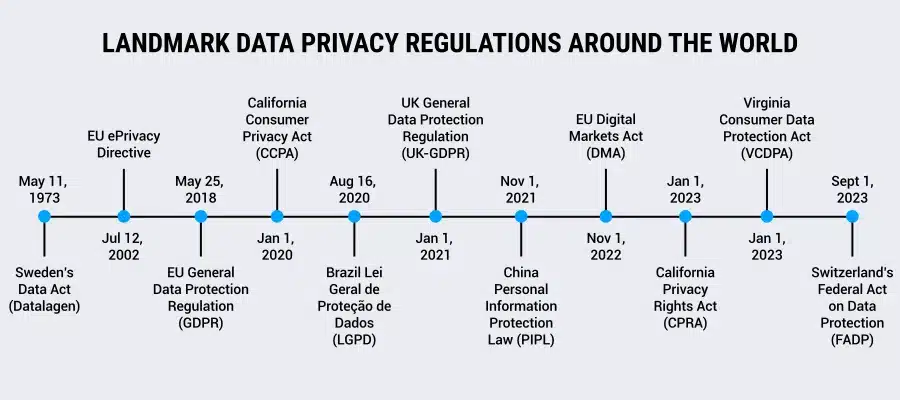
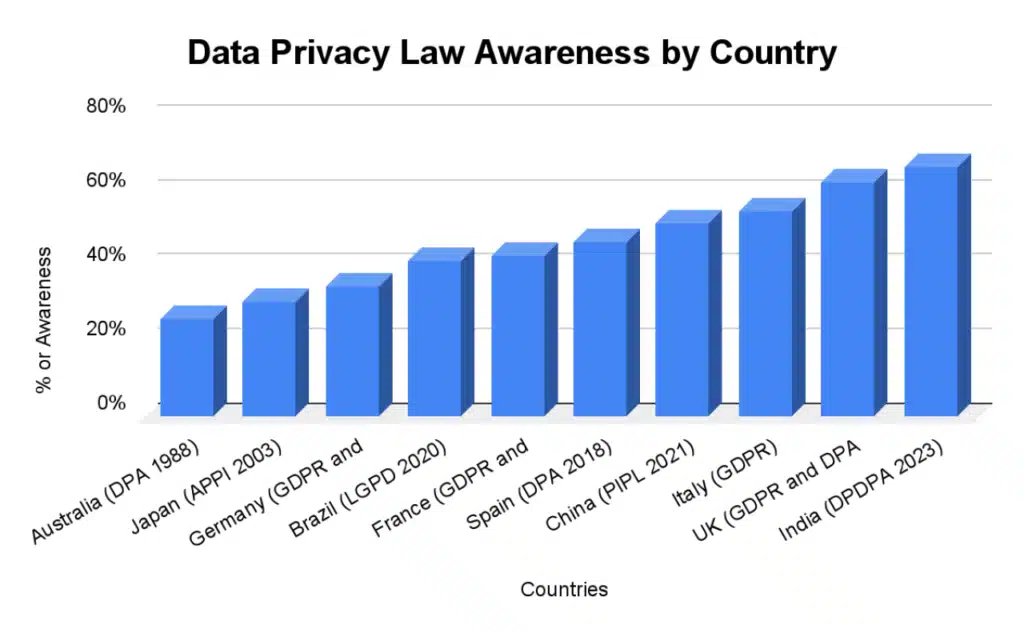
Privacy and data protection have become central concerns for governments, businesses, and individuals worldwide. As digital transformation accelerates and data-driven technologies evolve, regulators are responding with stricter and more complex legal frameworks. In 2025, organizations must navigate a growing web of global privacy and data protectionlaws that govern how personal data is collected, processed, stored, and shared.
This definitive guide provides a clear, up-to-date overview of key regulations, compliance obligations, and emerging trends across the globe, from GDPR in Europe to CCPA in California, DPDP Act in India, and beyond, helping you understand your rights and compliance responsibilities.
Data has become the most valuable asset in the digital economy. Every time you browse a website, make a purchase, use social media, or interact with online services, you generate personal data. This information includes your name, address, browsing habits, financial details, health records, and even your location history.
The problem is that this data has become a target. Matomo reports that:
“With over 400 million internet users in Europe and 331 million in the US (11% of which reside in California alone), understanding the nuances of privacylaws like GDPR and CCPA is crucial for compliant and ethical consumer data collection.”
Companies collect massive amounts of personal data because it helps them understand customers, improve services, and increase profits. However, when this data falls into the wrong hands through breaches or misuse, the consequences can be devastating, including identity theft, financial fraud, reputational damage, and loss of personal privacy.
Privacylaws have emerged as the legal framework protecting individuals’ rights to control their personal information. These laws establish clear rules about what data companies can collect, how they must protect it, and what rights individuals have regarding their information.
“seven years of GDPR have reshaped how we think about privacy, not just in Europe, but around the world… GDPR sparked a global movement towards privacy-preserving data practices.”
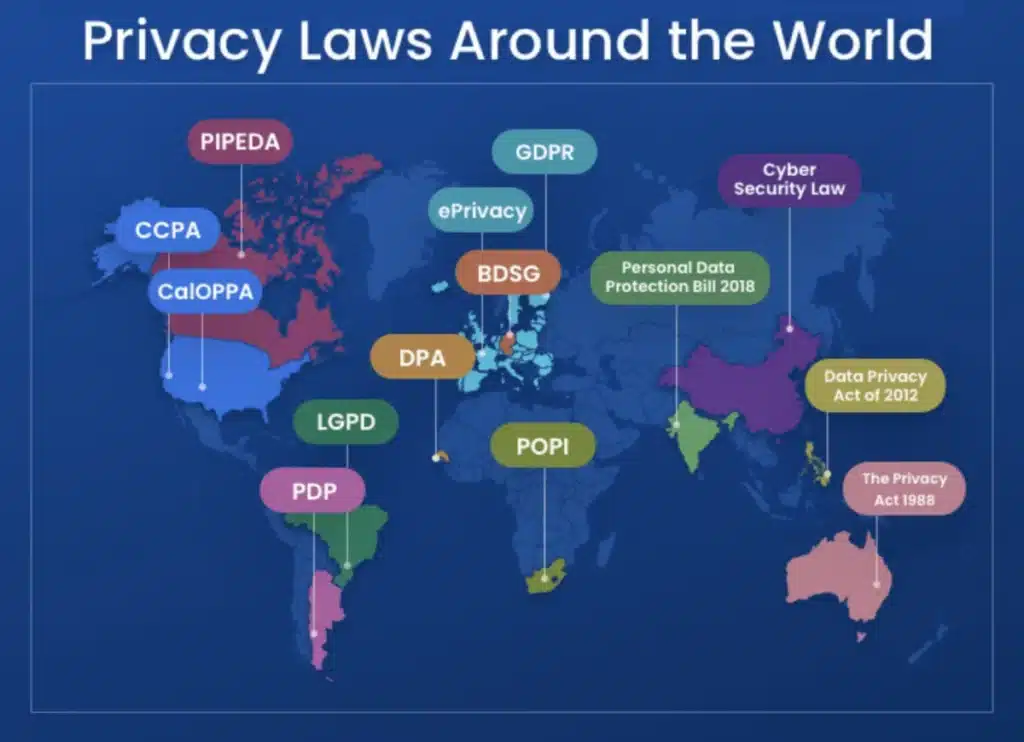
Today, more than 170 countries have enacted data privacy regulations, creating a complex global landscape businesses must navigate.
Understanding the major privacy frameworks across different regions helps you know which laws apply to your situation.
European Union: GDPR – The Global Standard
The General Data Protection Regulation (GDPR) is the world’s most comprehensive and influential privacy law. Enforced since May 2018, it applies to any organization processing personal data of EU residents, regardless of where that organization is located.
Lawful Basis: Organizations must have a valid legal reason to process personal data, such as consent, contractual necessity, legal obligation, vital interests, public task, or legitimate interests.
“organizations should collect only the data necessary for their stated purposes and retain it no longer than needed.”
Transparency: Companies must clearly inform individuals about what data is collected, why it’s collected, and how it will be used.
Security: Appropriate technical and organizational measures must protect personal data from unauthorized access, loss, or destruction.
Individual Rights: GDPR grants extensive rights including access, rectification, erasure (“right to be forgotten”), data portability, restriction of processing, and objection to processing.
Penalties: Non-compliance can result in fines up to €20 million or 4% of global annual revenue, whichever is higher. Matomo reports that:
“The GDPR has resulted in 2,248 fines totaling almost €6.6 billion since 2018, with Meta receiving a €1.2 billion fine in May 2023—the largest ever.”
ePrivacy Regulation: The proposed ePrivacy Regulation will complement GDPR by specifically addressing electronic communications, cookies, and tracking technologies. While still under development, it will strengthen consent requirements for cookies and online tracking.
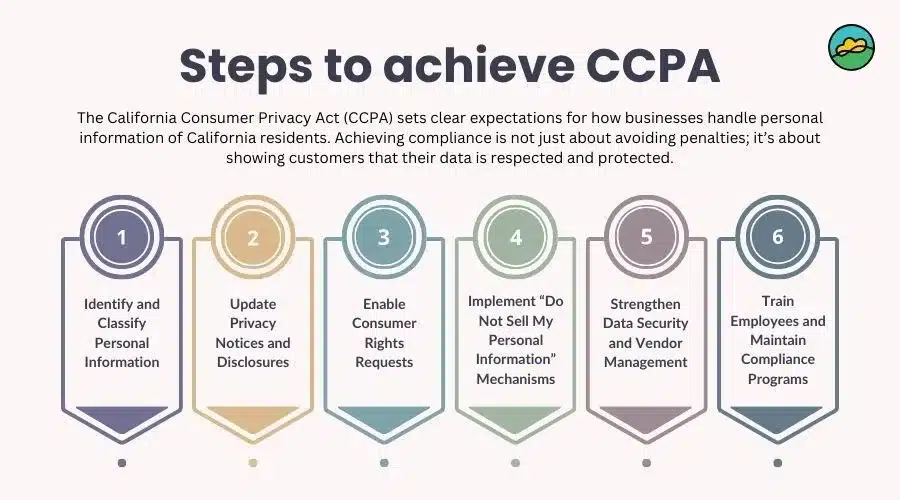
California leads US privacy protection. The CCPA, effective January 2020, and its enhancement the CPRA, effective January 2023, apply to for-profit businesses doing business in California that meet specific thresholds.
The Health Insurance Portability and Accountability (HIPAA) Act protect patient health information. Healthcare providers, health plans, and their business associates must implement privacy and security safeguards for Protected Health Information (PHI).
The Children’s Online Privacy Protection (COPPA) Act requires websites and online services directed at children under 13 to obtain verifiable parental consent before collecting personal information from children.
“eight new state privacylaws will take effect in 2025, bringing the total to 21 states with comprehensive privacylegislation.”
States including Virginia, Colorado, Connecticut, Utah, and others have enacted privacylaws with similar consumer rights but subtle variations in scope and enforcement.
Following Brexit, the UK implemented UK-GDPR, which mirrors the EUGDPR with minor modifications. Usercentrics explainsthat:
“the UK-GDPR took effect on January 1, 2021 following Brexit to ensure there was no gap in data protection after the EUGDPR ceased to apply in the UK.”
UK-GDPR works alongside the Data Protection Act 2018 and Privacy and Electronic Communications Regulations to form the UK’s comprehensive data protectionframework. The Information Commissioner’s Office (ICO) enforces these regulations with penalties similar to GDPR—up to £17.5 million or 4% of global annual turnover.
India: Digital Personal Data Protection Act (DPDP Act) 2023
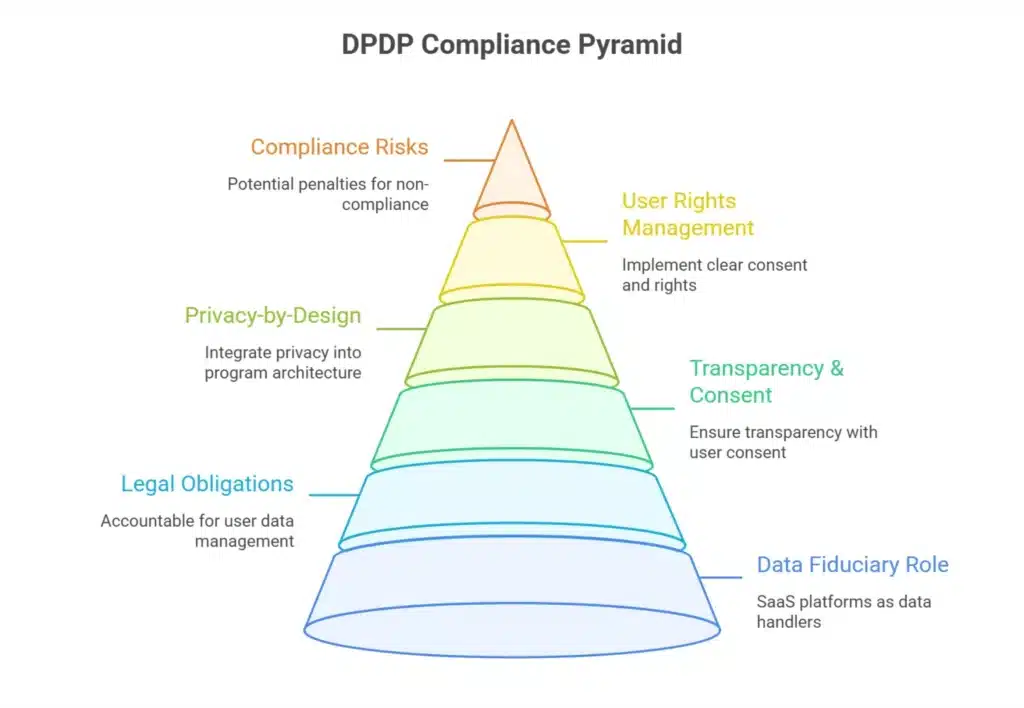
“while the law outlines the rights of data principals, obligations of data fiduciaries, and penalties for data breaches, implementation will occur in phases throughout 2025.”
“unlike GDPR, DPDPA-2023 does not distinguish between personal and sensitive personal data but requires clear, affirmative consent for most processing.”
Data Principal Rights: Individuals have rights to access their data, correct inaccuracies, erase data, and file grievances. However, unlike GDPR, the DPDP Act does not include a data portability requirement.
Data Fiduciary Obligations: Organizations must provide clear notice before collecting data, implement security measures, and enable easy consent withdrawal.
Significant Data Fiduciaries (SDFs): Large-scale data processors face enhanced requirements including appointing a Data Protection Officer in India, conducting annual Data Protection Impact Assessments, and undergoing independent audits.
Cross-Border Transfers: The act allows personal data transfers to any country unless specifically restricted by the government, providing more flexibility than GDPR’s transfer restrictions.
Brazil: Lei Geral de Proteção de Dados (LGPD)
Brazil’s LGPD, effective since 2020, closely mirrors GDPR in structure and requirements. ComplianceHub explains that:
LGPD applies to organizations processing data in Brazil or targeting Brazilian residents through localized services with no minimum revenue threshold.”
The Brazilian National Data Protection Authority (ANPD) oversees enforcement. In Q1 2025, the ANPD issued $12 million in fines for improper biometric data handling, demonstrating active enforcement.
South Africa: Protection of Personal Information Act (POPIA)
POPIA governs personal information processing in South Africa, requiring organizations to implement appropriate security safeguards and respect individual rights including access, correction, and deletion. The Information Regulator enforces POPIA with substantial penalties for violations.
United Arab Emirates: Personal Data Protection Law (PDPL)
The UAE’s federal PDPL establishes comprehensive data protection requirements for the private sector, including consent requirements, individual rights, and cross-border transfer restrictions. The law aligns broadly with international standards while addressing regional priorities.
Data Subject Rights: Your Power Over Personal Information
Privacylaws grant individuals significant rights over their personal data. Understanding these rights helps you control your information.
Right to Access
You have the right to know what personal data organizations hold about you. Companies must provide copies of your data in a clear, understandable format, usually within 30 days of your request.
Right to Rectification
If your personal information is inaccurate or incomplete, you can request corrections. Organizations must update your data promptly to ensure accuracy.
Right to Erasure (“Right to be Forgotten”)
In certain circumstances, you can request deletion of your personal data. This applies when data is no longer necessary for its original purpose, you withdraw consent, you object to processing, or data was unlawfully processed.
Right to Data Portability
GDPR grants you the right to receive your personal data in a structured, commonly used, machine-readable format and transfer it to another organization. This promotes competition and prevents vendor lock-in.
Right to Restrict Processing
You can request that organizations limit how they use your data, such as when you contest data accuracy or when processing is unlawful but you don’t want deletion.
Right to Object
You can object to processing based on legitimate interests, direct marketing, or research purposes. Organizations must stop unless they demonstrate compelling legitimate grounds.
Right to Opt-Out
US privacylaws emphasize opt-out rights, particularly for sale of personal information. California’s “Do Not Sell My Personal Information” requirement exemplifies this approach.
Corporate Responsibilities & Compliance Steps
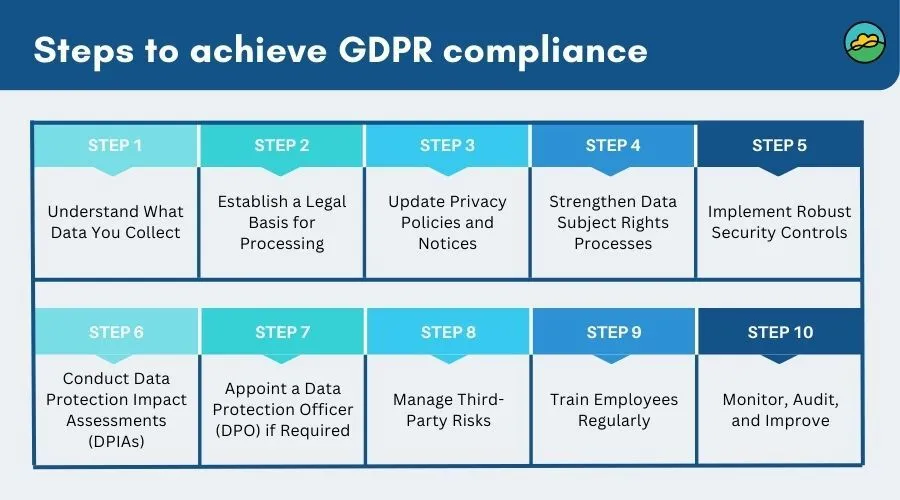
Organizations handling personal data face extensive compliance obligations under privacylaws.
“businesses must understand the type of personal data being collected and how it is processed. Data mapping should be the first step to identify what kind of data may be subject to potential regulatory oversight.”
Identify:
Data types collected (personal, sensitive, payment)
Establish processes to handle individual rights requests within legal timeframes, typically 30 days under GDPR, 45 days under CCPA. ComplianceHub recommends deploying:
“consent management platforms supporting all three frameworks and automating DSAR responses to meet tightening deadlines.”
“CCPA requires opt-outs for AI profiling affecting credit/employment decisions.”
Biometric Data Protections
Biometric data including facial recognition, fingerprints, and voice patterns receives heightened protection. The ANPD’s $12 million in fines for improper biometric handling in Q1 2025 demonstrates enforcement priorities.
Cross-Border Data Transfers
International data transfers face increasing scrutiny. GDPR’s transfer mechanisms (adequacy decisions, standard contractual clauses, binding corporate rules) set the standard, with other jurisdictions implementing similar frameworks.
Children’s Privacy
Enhanced protections for children’s data continue expanding. India’s DPDP Act requires parental consent for processing data of children under 16, while COPPA protects US children under 13.
Privacy by Design
Organizations increasingly adopt “privacy by design” approaches, integrating privacy considerations into product development from the outset rather than retrofitting compliance later. PDTN explains that:
“This proactive strategy helps ensure compliance with multiple frameworks and reduces the need for costly retrofitting.”
Unified Global Standards
While complete harmonization seems unlikely, core principles around consent, transparency, individual rights, and security are converging globally. Organizations benefiting from unified approaches that address multiple regulations simultaneously.
Conclusion
Privacy and data protectionlaws have transformed from niche concerns into fundamental business requirements affecting every organization handling personal information. With over 170 countries enacting privacy regulations and enforcement intensifying globally, compliance is no longer optional.
The key to success is treating privacy not as a compliance burden but as a competitive advantage. Didomi’s CEO Romain Gauthier notes that seven years of GDPR have reshaped how we think about privacy, not just in Europe, but around the world. Organizations embracing privacy build customer trust, avoid costly penalties, and position themselves for long-term success.
Start by understanding which laws apply to your organization, implement robust data governance practices, respect individual rights, and maintain ongoing compliance programs. Privacy is a journey, not a destination—stay informed, adapt to changes, and commit to responsible data stewardship.
Glossary
Consent: Freely given, specific, informed agreement to process personal data
Data Controller: Entity determining purposes and means of processing personal data
Data Processor: Entity processing data on behalf of a controller
Data Subject: Individual to whom personal data relates
Personal Data: Any information relating to an identified or identifiable person
Processing: Any operation performed on personal data (collection, storage, use, deletion)
Pseudonymization: Processing data so it can’t be attributed to a person without additional information
Sensitive Data: Special categories requiring extra protection (health, biometric, racial/ethnic data)
GDPR is more comprehensive, applying to all EU residents’ data regardless of where processing occurs. CCPA is California-specific, focusing on transparency and consumer rights like opt-out rather than consent-first approaches. GDPR penalties are significantly higher—up to €20 million vs. CCPA’s $7,988 per violation.
Yes, most privacylaws apply regardless of company size if you handle personal data. However, some laws have thresholds—CCPA requires $25 million revenue, 100,000+ consumers, or 50%+ revenue from data sales. Always verify specific law requirements.
PDTN advises implementing a unified privacyframework addressing the strictest requirements across all applicable laws. This “highest common denominator” approach ensures compliance everywhere you operate.
Penalties vary significantly: GDPR up to €20 million or 4% global revenue; CCPA/CPRA up to $7,988 per violation; India’s DPDP Act up to ₹250 crore; LGPD significant administrative sanctions. Beyond fines, expect reputational damage and customer loss.
Do I need to comply with GDPR if I’m not in Europe?
Yes, if you process EU residents’ data.PDTN reports that a hospital in Mumbai faces €200,000 in GDPR fines despite being located outside EU borders—a stark reminder that today’s data protectionlaws transcend geographical boundaries.
Mohsin Pirzada is a legal analyst and editor focusing on international law, human rights, global governance, and public accountability. His work examines how legal frameworks respond to geopolitical conflicts, executive power, emerging technologies, environmental regulation, and cross-border policy challenges.
He regularly analyzes global legal developments, including sanctions regimes, constitutional governance, digital regulation, and international compliance standards, with an emphasis on clarity, accuracy, and public relevance. His writing bridges legal analysis and current affairs, making complex legal issues accessible to a global audience.
As the founder and editor of N-LAWS, Mohsin Pirzada curates and publishes in-depth legal commentary, breaking legal news, and policy explainers aimed at scholars, professionals, and informed readers interested in the evolving role of law in global affairs.