
Europe’s education crisis is entering a new and increasingly contentious phase. Across the continent, governments are struggling with teacher shortages, overcrowded classrooms, declining basic skills, school infrastructure problems and persistent educational inequality. France is witnessing student unrest over school conditions and teacher shortages, while Austria has introduced a new ban on Islamic headscarves for girls under 14.
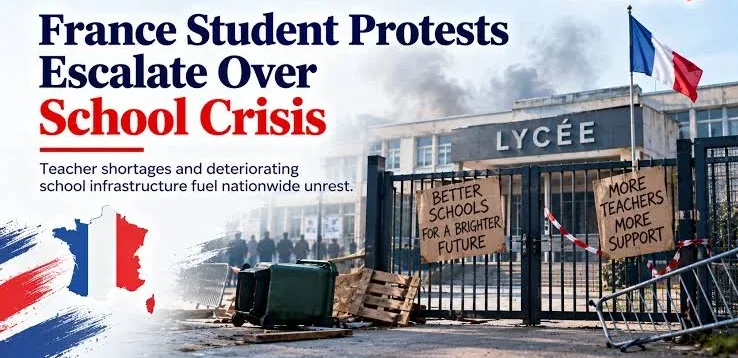
Belgium is facing a legal dispute after an East Flanders teacher was dismissed for refusing to remove her hijab under a provincial ban on religious and political symbols in schools. Italy has now moved to prohibit face-covering veils such as the burqa and niqab in schools, while continuing to permit the hijab. As of October 5, 2026, France is experiencing a major wave of high-school protests over overcrowded classrooms, teacher shortages, long school hours and deteriorating school facilities.
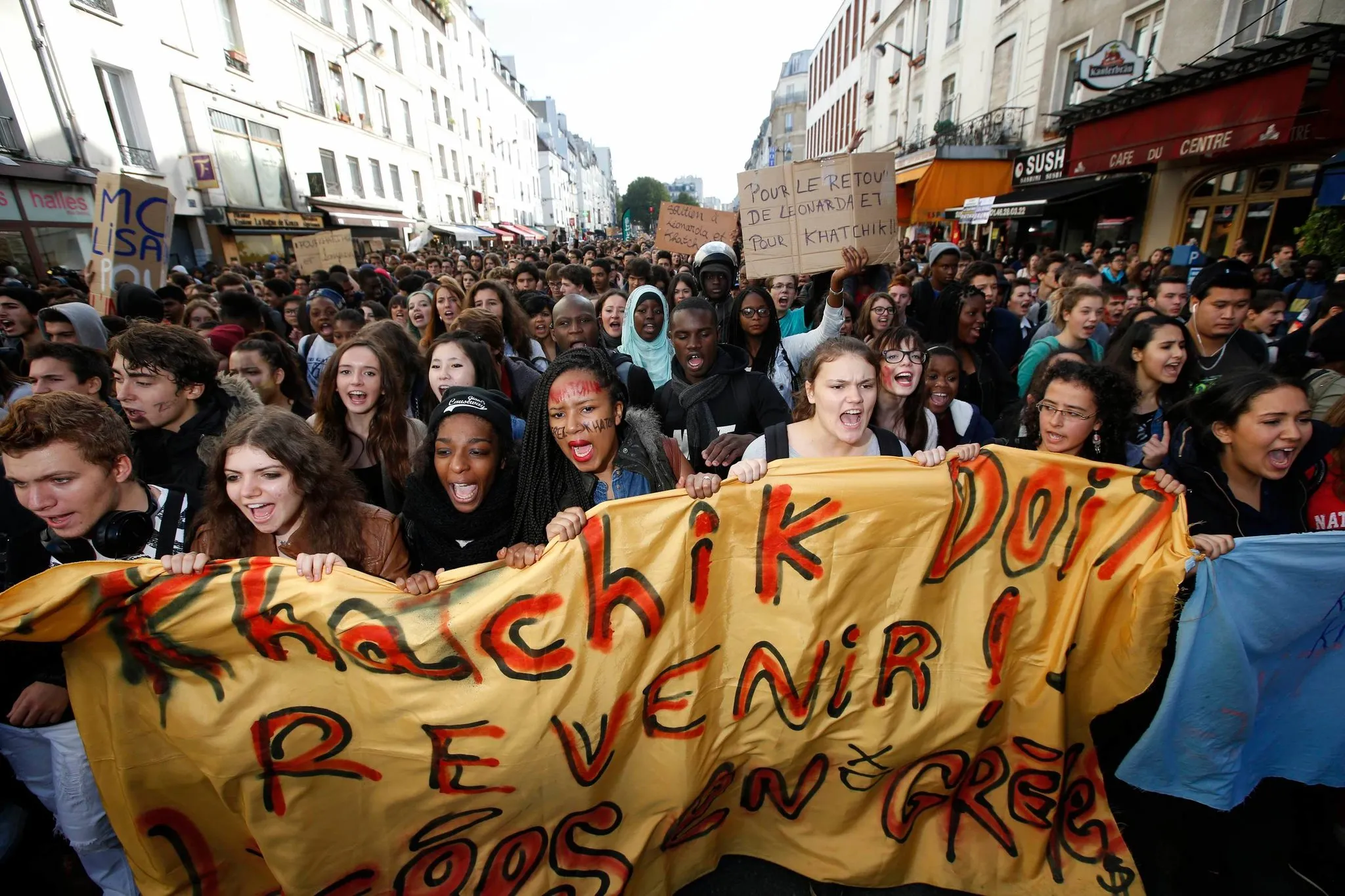
By October 1, more than 1,020 high schools had been affected, including 222 blockades, while police reported around 900 demonstrations, blockades and related incidents and more than 160 schools shut. Clashes in cities including Paris, Lyon, Marseille, Strasbourg and Rennes involved tear gas, fires and projectiles, with hundreds detained and several injuries reported.
Le Monde.fr reported that on October 4, France announced plans to fully or partially close up to 500 schools because of safety concerns as protesters prepared to resume demonstrations. In Austria, meanwhile, demonstrations have focused on the new law banning Islamic headscarves for girls under 14 in schools from September 1; a Vienna protest was held on October 1, while approximately 650 people demonstrated peacefully in Bregenz on October 2 against the measure.
ShiaWaves reported that the Austrian law can ultimately expose parents to administrative fines of up to €800, while the Constitutional Court is reviewing challenges brought by girls and their parents alleging violations of religious freedom and equality; the court currently expects to decide the matter in the first half of 2027.
These developments raise a question that goes far beyond school uniform policy:
“Is Europe attempting to solve an education and integration crisis through restrictions on religious expression — and, if so, where does the state’s authority end and freedom of religion begin?”
The answer could shape the future of European education law.
France: Education Crisis Meets a Crisis of Confidence
France is currently at the centre of Europe’s wider education debate. Student protests have erupted over teacher shortages, overcrowding and deteriorating school conditions. The unrest has affected hundreds of schools and escalated into clashes involving police, students and education workers.
But France’s education problem is bigger than the demonstrations. The OECD’s latest education data show that teacher shortages are affecting education systems across developed economies. France’s official vacancy rate may not appear particularly high, but the country’s problem includes the inability to replace teachers who are absent.
The OCED (Organisation for Economic Co-operation and Development) cites estimates that:
“around 9% of teaching hours were lost in French public lower-secondary education during 2023/24, with most losses connected to teacher absences that were not replaced.”
That creates a crucial legal distinction. A government may argue that almost every teaching position is technically filled. Students, however, experience something different if the teacher is absent and no replacement arrives. From the student’s perspective:
“an empty classroom can represent the practical failure of the right to education even where the administrative staffing statistics look satisfactory.”
France’s Second Education Battle: Religion and the Hijab
According to Légifrance, France has a very different legal approach to religious expression in public schools. Under the 2004 law, pupils in public schools, collèges and lycées are prohibited from wearing signs or clothing through which they manifest an ostensible religious affiliation. The rule forms part of France’s constitutional and statutory commitment to laïcité, or secularism.
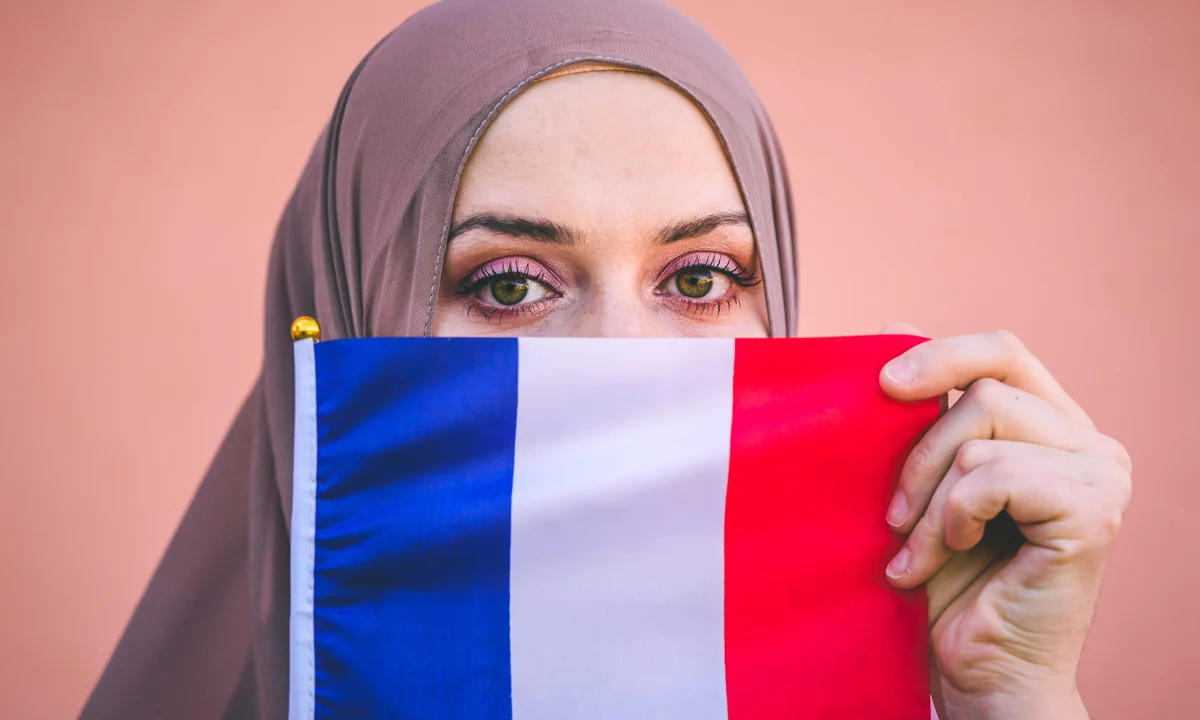
This has direct consequences for Muslim pupils wearing the hijab. The French model is therefore considerably more restrictive than the approach taken in some other European countries. France has also extended its school-based religious-symbol debate beyond the traditional hijab question.
Conseil d’État reported that in 2024, France’s Conseil d’État upheld the government’s decision to prohibit abaya-style garments in public schools, concluding that, in the circumstances documented by education authorities, such clothing could constitute an ostensible manifestation of religious affiliation prohibited under the 2004 law.
The legal issue is not whether the state can regulate school clothing at all. The question is:
“why, how and proportionately it does so.”
The French Legal Argument: Secularism Versus Religious Freedom
France’s position rests heavily on the principle of laïcité. The state argues that public schools must provide a neutral educational environment in which students are not subjected to religious pressure or proselytising.
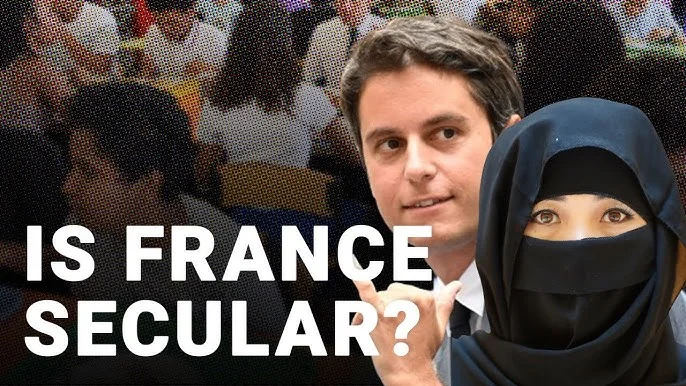
The opposing legal argument is that a ban on visible religious expression can interfere with an individual’s freedom of religion and potentially create unequal effects for particular religious minorities. This produces a difficult constitutional balance.
A state can legitimately pursue:
- school neutrality;
- protection against religious pressure;
- equality between pupils;
- freedom of conscience;
- public order.
But restrictions on religious expression must still be legally justified. The central question becomes:
“Is the restriction genuinely necessary for the educational objective being pursued, and is it proportionate?”
That question is now particularly important in Austria.
Austria: A New Hijab Ban Enters Into Force
Austria has taken one of Europe’s most significant new steps. From 1 September 2026, girls under the age of 14 are prohibited from wearing a headscarf at school where it covers the head in accordance with Islamic traditions. According to Parlament Österreich, the rule applies in state and private schools, subject to the law’s scope and exceptions.
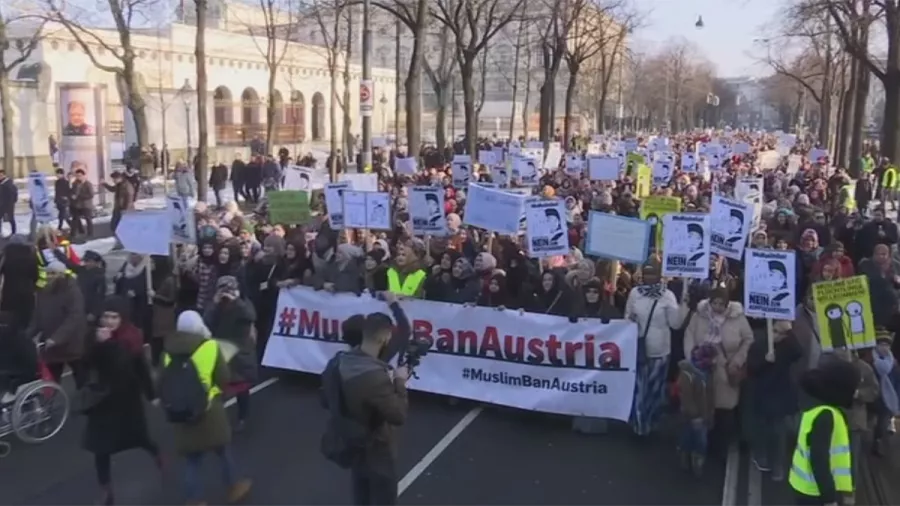
The government says the measure is designed to protect children’s development and freedom from potential family or social pressure. But the law immediately created a constitutional question. Austria’s Constitutional Court had already struck down an earlier headscarf restriction in 2020, finding that the previous rule violated equality and freedom of religion because, in practice, it primarily targeted Muslim girls.
The new law attempts to address the issue differently by:
- raising the age threshold;
- focusing on girls under 14;
- presenting the measure as child protection;
- emphasising freedom of personal development.
But whether those changes are constitutionally sufficient remains unresolved.
Austria’s Constitutional Court Now Faces the Core Question
The Austrian Constitutional Court announced in September that it expects to rule on the new legislation in the first half of 2027. The case is particularly significant because girls aged 9–12 and their parents have challenged the law, arguing that it interferes with religious freedom and equality.
The Court’s eventual analysis could become one of Europe’s most important rulings on the relationship between:
“religious freedom + children’s rights + equality + state neutrality.”
The government’s justification is that the state may need to protect young girls from pressure. The counterargument is equally powerful:
“What if the girl herself chooses to wear the hijab?”
In that situation, a law designed to protect her autonomy could arguably prevent her from exercising her own religious autonomy. That creates a difficult legal paradox.
“Can the state protect a child’s freedom by restricting the child’s freedom?”
The Enforcement Problem
Austria’s law also creates a practical problem for teachers. Teachers are expected to identify breaches and initiate the process when a pupil continues to wear the prohibited headscarf. Repeated non-compliance can eventually result in administrative fines ranging from €150 to €800 for parents. Austrian authorities have reported dozens of cases of non-compliance since the rule took effect.
This moves the controversy beyond constitutional law. It creates a question about the role of teachers. Should teachers be:
“educators or enforcers of religious-dress legislation?”
Teachers’ representatives have raised concerns that the system places educators in a monitoring and reporting role that goes beyond ordinary educational responsibilities.
Belgium: The Classroom Becomes a Legal Battleground
Belgium presents another version of the same conflict. In East Flanders, provincial schools introduced a rule prohibiting pupils and teachers from wearing religious or political symbols. The Belgian Council of State rejected an application by six students and three organisations seeking suspension of the measure.
As per Council of State, the court concluded that the applicants had not demonstrated the necessary urgency, including because they had not shown that they lacked access to another reasonably accessible school offering their course where no such ban applied.
But the controversy did not end there. Anadolu Agency reports that a teacher, Hadija Amajoud, was dismissed after refusing to remove her hijab while teaching. She had already been wearing it when she began working at the school. Her trade union has indicated that it intends to challenge the dismissal.
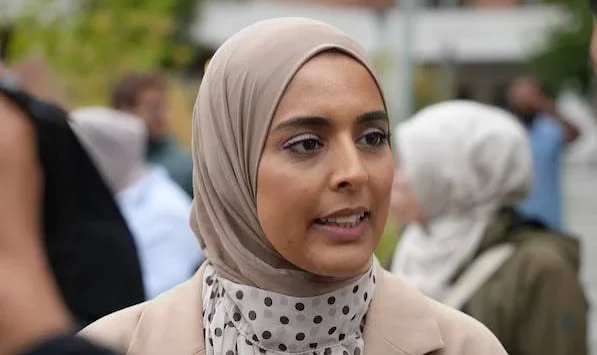
This creates a different legal question from the Austrian case. Austria concerns the religious freedom of children. Belgium raises the religious freedom and employment rights of teachers.
Can a Government Require a Teacher to Remove Her Hijab?
This is one of the most difficult questions emerging from Europe’s education debate. A government or public-school authority may argue that teachers represent the state and therefore must maintain institutional neutrality.
A teacher may respond that wearing a religious symbol represents her individual religious freedom and does not necessarily mean that she is imposing religion on pupils. The legal distinction between:
“state neutrality and individual neutrality is therefore crucial.”
A teacher may personally hold religious beliefs while still teaching the official curriculum objectively. The question is whether visible religious expression by a teacher necessarily compromises the neutrality of the educational institution. That issue is likely to continue generating litigation across Europe.
Italy: A Different Approach to the Veil
Italy has now taken another step in the debate. In September 2026, the Italian government approved an education decree prohibiting face coverings in schools where the face cannot be recognised, including the burqa and niqab, subject to health and security exceptions.
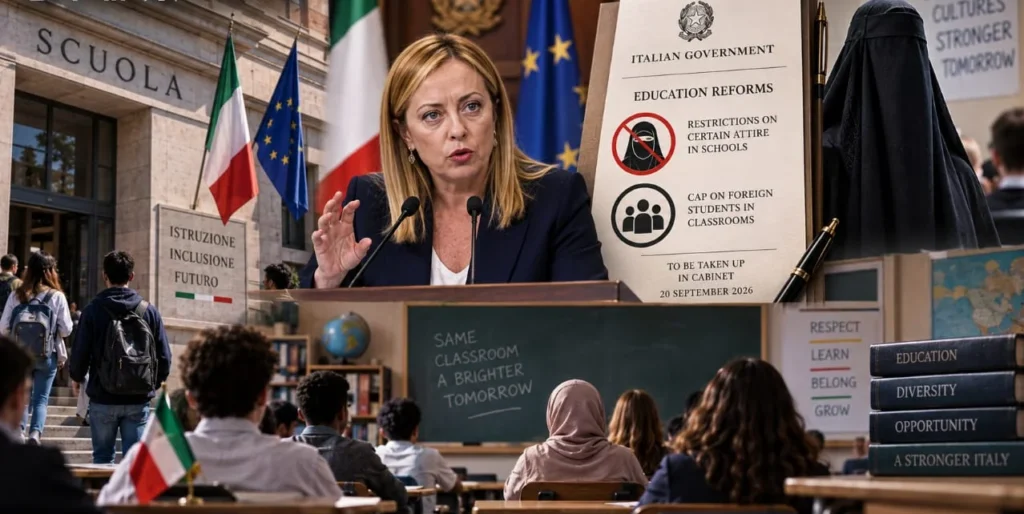
Violations can attract administrative penalties of €200 to €1,000, with penalties applying to parents where the student is a minor. But there is an important distinction.
“Italy’s new school rule does not ban the ordinary hijab.”
The government is targeting face coverings that prevent identification rather than head coverings that leave the face visible.That places Italy closer to a security and identification rationale than the broader French model of secularism.
Why the Difference Between Hijab, Niqab and Burqa Matters Legally
European political debate often groups different forms of Islamic dress together. Legally, that can be problematic.
A hijab generally leaves the face visible.
A niqab covers the face while leaving the eyes visible.
A burqa covers the body and face with a mesh covering over the eyes.
The legal justification for restricting them may therefore differ. A government arguing that a face covering interferes with identity verification has a different legal argument from a government arguing that a headscarf constitutes an unacceptable manifestation of religious affiliation. This distinction is central to proportionality analysis.
Italy’s Education Crisis Is Also an Integration Crisis
Italy’s new decree does not stop at religious clothing. The government has also introduced measures limiting the proportion of certain foreign pupils with limited Italian proficiency in particular classes, alongside language-support measures. The government presents the policy as an integration and educational-quality measure.
Critics argue that it risks turning schools into instruments of migration policy. That debate mirrors the broader European problem:
“When does legitimate educational integration become discriminatory exclusion?”
Europe’s Education Crisis and the Migration Question
The migration dimension cannot be ignored. Schools across Europe increasingly serve students from different linguistic, cultural and religious backgrounds. That creates genuine educational challenges. Teachers may need to deal with:
- language barriers;
- different educational backgrounds;
- integration;
- religious accommodation;
- cultural conflicts;
- additional learning needs.
But governments must be careful not to assume that cultural or religious identity itself represents an educational problem. The legal challenge is to distinguish between:
“a genuine barrier to education and a characteristic of the student that should be protected from discrimination.”
Teacher Shortages Make the Debate Even More Difficult
This religious-dress controversy is unfolding at the same time that Europe is experiencing a serious teacher shortage. The OECD reports that:
“9.1% of primary and secondary teachers were not fully qualified in 2024/25, while 6.4% of fully qualified teachers left the profession during that school year.”
Europe therefore faces a strange contradiction. Governments need to attract more teachers. Yet in some jurisdictions, teachers and potential teachers are simultaneously confronting restrictions concerning religious expression.
The Belgian dispute illustrates this tension particularly clearly. If a qualified teacher can perform the job effectively but is excluded because of a religious symbol, governments must consider whether the neutrality policy produces an educational cost.
Is Europe Moving Towards One Education Model?
Not at all. The emerging picture is actually one of greater legal fragmentation.
- France: Restricts conspicuous religious symbols worn by pupils in public schools under its strong laïcité framework.
- Austria: Has introduced a specific under-14 headscarf prohibition, now facing constitutional scrutiny.
- Belgium: Allows significant regional variation, with East Flanders adopting restrictions on religious and political symbols in provincial schools.
- Italy: Has prohibited face-covering veils in schools while allowing ordinary hijabs.
The result is not one European solution. It is a patchwork.
The European Human-Rights Question
At the European level, religious freedom is protected by Article 9 of the European Convention on Human Rights. The right is not absolute. States may restrict religious manifestation where restrictions are prescribed by law and pursue legitimate objectives such as public safety, public order or the protection of the rights of others, provided the interference is justified under the Convention’s requirements.
Education disputes can therefore require courts to balance several interests simultaneously. A court may have to consider:
- freedom of religion;
- equality;
- children’s rights;
- parental rights;
- state neutrality;
- public safety;
- education;
- institutional autonomy.
That makes school hijab disputes legally much more complicated than ordinary dress-code cases.
The Bigger Crisis: Europe Is Asking Schools to Solve Everything
The education crisis is no longer just about teaching mathematics, science and languages. Schools are increasingly being asked to solve:
- migration integration;
- religious tensions;
- gender equality;
- social inequality;
- digital literacy;
- AI risks;
- mental health;
- political extremism;
- cultural integration.
At the same time, many systems are struggling to recruit enough teachers. That creates a fundamental governance problem.
“Europe is expanding the responsibilities of schools while struggling to provide the resources necessary to fulfil their traditional responsibilities.”
What Happens If Students Stop Attending
Austria’s hijab dispute raises another important question. If a girl refuses to remove her headscarf and subsequently stops attending school, the government’s policy could potentially create an unintended consequence. The state may have successfully enforced neutrality inside the classroom while simultaneously reducing the child’s access to education.
That creates a legal and policy paradox:
“A rule designed to protect educational participation could potentially produce educational exclusion.”
Whether that occurs on a significant scale remains to be established. But the possibility makes the issue particularly important.
Conclusion
Europe’s education crisis is no longer confined to budgets, teacher shortages and examination results. It is increasingly about what education itself should represent. France is defending a strong secular model. Austria is testing whether child protection can justify a new restriction on Muslim girls.
Belgium is confronting the question of whether institutional neutrality can require a teacher to remove her hijab. Italy is drawing a legal line between ordinary religious head coverings and face coverings that prevent identification. At the same time, Europe’s schools are struggling with teacher shortages, inequality, migration and the rapid arrival of artificial intelligence.
The danger is that education becomes the place where Europe’s unresolved political questions are fought out. If governments respond to every social tension through new restrictions, schools could become increasingly politicised. But if governments ignore legitimate concerns about coercion, integration, safeguarding and institutional neutrality, they risk undermining confidence in the education system.
The legal solution is unlikely to be found in an absolute rule. It will instead depend on lawful justification, evidence, equality and proportionality. Europe’s education crisis may therefore produce a new generation of litigation, not simply over whether children are receiving enough teaching, but over what they are allowed to wear, what teachers are allowed to believe publicly, and where the boundary between state neutrality and individual freedom should be drawn.
N-LAWS Legal Takeaway: Europe’s education crisis is becoming a much broader rights-and-governance crisis. The continent is trying to repair understaffed and unequal school systems while simultaneously redefining the relationship between education, religion, migration and state neutrality. The decisions being made in classrooms today could become tomorrow’s constitutional and human-rights precedents.