
India’s latest Asia Cup victory has produced another unusual post-match controversy in which the team won the championship, but the trophy presentation did not take place in the customary manner. On September 13, 2026, India’s women’s cricket team defeated Sri Lanka by 72 runs in Dubai to win the Women’s Asia Cup for a record eighth time. Yet the post-match ceremony ended without India’s players accepting the trophy from Asian Cricket Council (ACC) President Mohsin Naqvi.
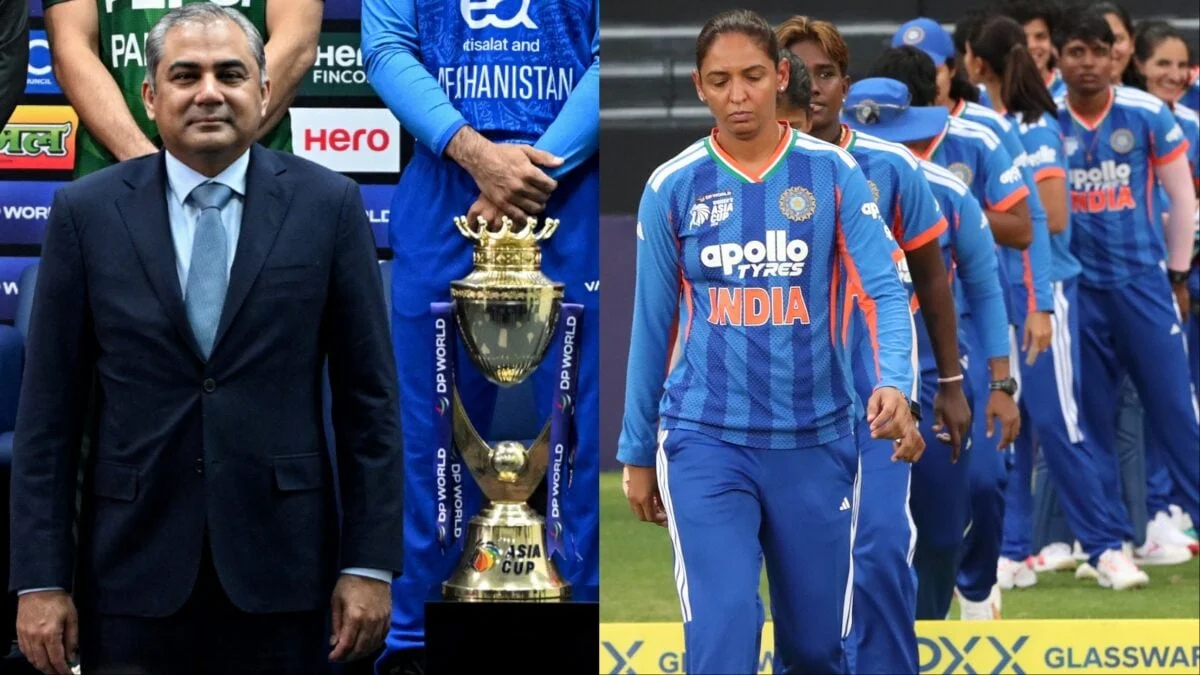
The incident immediately recalled the controversy surrounding India’s men’s team after the 2025 Asia Cup. India had defeated Pakistan in that final, but its players similarly declined to receive the trophy from Naqvi, who is not only ACC president but also chairman of the Pakistan Cricket Board (PCB) and Pakistan’s Interior Minister.
What might otherwise have been a ceremonial disagreement has therefore developed into a broader question for sports governance:
“Where should sporting neutrality end and political protest begin?”
The answer is increasingly important because international sport operates through institutions that claim independence from governments while simultaneously involving national teams, national symbols and, in some cases, officials who hold political office.
The 2026 Incident Follows the 2025 Trophy Dispute
The latest controversy cannot be considered in isolation. After winning the men’s Asia Cup in 2025, India’s players declined to accept the trophy from Naqvi. The BCCI argued that India’s position related to Naqvi’s political role and the wider tensions between India and Pakistan. The dispute continued after the tournament.
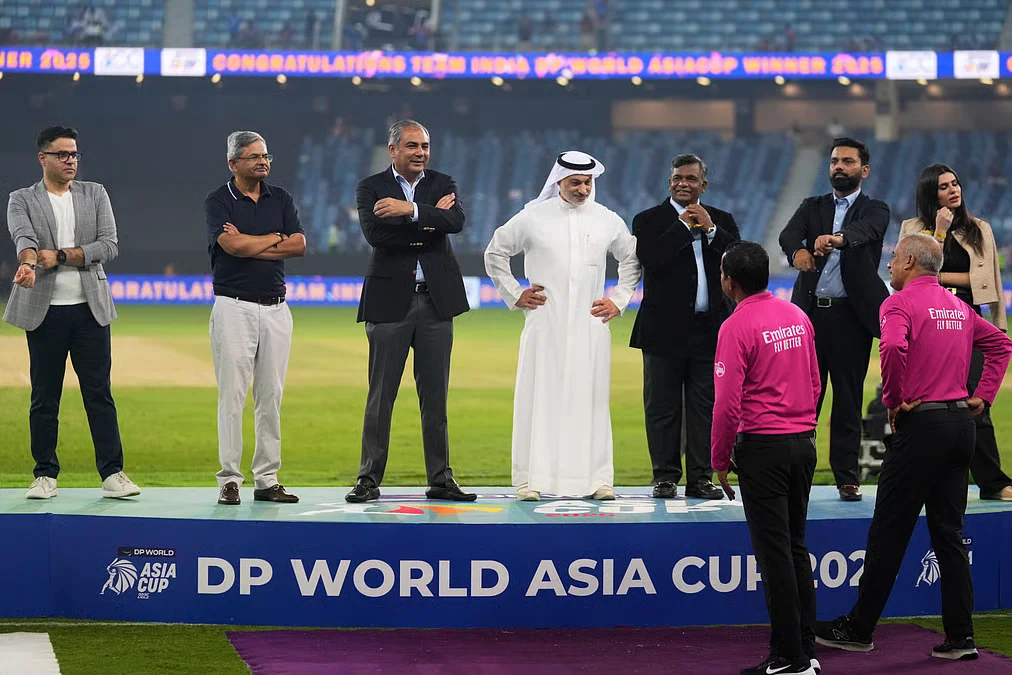
Reports indicated that Naqvi subsequently maintained that the trophy would have to be collected from him personally, while the BCCI objected to the manner in which the championship award was being handled. The 2026 women’s final has now brought essentially the same institutional problem back into public view.
That repetition matters. It suggests that the underlying issue has not been resolved through existing sporting protocols.
The “No Handshake” Problem
Handshakes may appear insignificant. Legally, they usually are. But politically, they can become extraordinarily powerful. The traditional post-match handshake represents:
- respect;
- recognition of the opponent;
- acceptance of competition;
- sportsmanship;
- reconciliation.
When players refuse to shake hands, the action can therefore become a political statement. In the 2025 India-Pakistan Asia Cup, Indian players repeatedly avoided handshakes with their Pakistani opponents. That created another question for sports law:
“Can sporting authorities compel athletes to perform symbolic gestures of reconciliation?”
If a governing body makes handshakes mandatory, it could potentially face questions about athlete autonomy and freedom of expression. If it leaves the matter entirely to players, political hostility can become increasingly visible within the sporting environment. Neither option is simple in any way.
Why Naqvi’s Political Position Creates a Governance Problem
The controversy arises largely because Naqvi occupies several positions simultaneously.
- As ACC president, he is a senior official of the regional cricket governing body.
- As PCB chairman, he leads Pakistan’s national cricket administration.
- As Pakistan’s Interior Minister, he is also a senior member of the Pakistani government.
From a strictly sporting perspective, the trophy presentation is an ACC function. From India’s perspective, however, the distinction between Naqvi’s sporting and political identities is difficult to separate. This creates a classic conflict-of-interest and institutional-neutrality problem. The issue is not necessarily whether Naqvi had authority to participate in the ceremony.
The more important question is:
“whether international sporting organisations should have procedures for situations where a senior sporting official simultaneously occupies a prominent political position in a country directly involved in a sporting rivalry.”
The 2025 and 2026 controversies suggest that such safeguards may be necessary.
Does India Have a Legal Right to the Trophy?
The trophy itself raises a surprisingly technical question. Winning a tournament and physically receiving its trophy are related but legally distinct matters. The championship is determined by the competition result. The trophy is an award governed by the tournament’s rules, regulations and traditions.
If the ACC’s regulations require the winner to receive the trophy through an official ceremony, the governing body may have obligations concerning its delivery. If the regulations leave ceremonial arrangements to the organisers, the legal position could be different. The important point is that:
“political disagreement does not determine ownership or entitlement by itself.”
Those questions must be answered through the governing rules of the competition. This distinction is important because a dispute over ceremonial presentation should not automatically become a dispute over the validity of the sporting result. India remains the tournament winner regardless of whether the trophy changes hands immediately.
Could India Be Penalized for Refusing the Ceremony?
That depends on whether the refusal violated a specific sporting rule. International sporting organizations generally possess disciplinary powers. But those powers are not unlimited. A governing body seeking to sanction a team would ordinarily need to identify:
- the rule allegedly breached;
- the conduct falling within that rule;
- the available sanction;
- the procedure for imposing it; and
- any applicable appeal mechanism.
This becomes particularly important when political expression is involved. A sporting authority cannot simply impose an arbitrary penalty because it considers a protest embarrassing or politically inconvenient. Any sanction should have a clear regulatory basis and should be proportionate to the conduct involved.
Political Expression and the Limits of Athlete Freedom
The Asia Cup dispute also sits within a wider debate over athletes’ freedom of expression. Athletes have political opinions like anyone else, but participation in international sport comes with contractual and regulatory obligations. The Olympic Movement provides one of the clearest examples.
Rule 50 of the Olympic Charter restricts demonstrations and political, religious or racial propaganda at Olympic sites and venues. The purpose is to preserve the political neutrality of the Games.
The difficult legal question is not whether sporting organisations can establish such restrictions. They clearly can. The harder question is whether the restrictions are clear, consistently applied and proportionate. That question has repeatedly surfaced when athletes use sporting events to express political positions.
From The 1968 Olympic Black Power Protest to Modern Athlete Protests
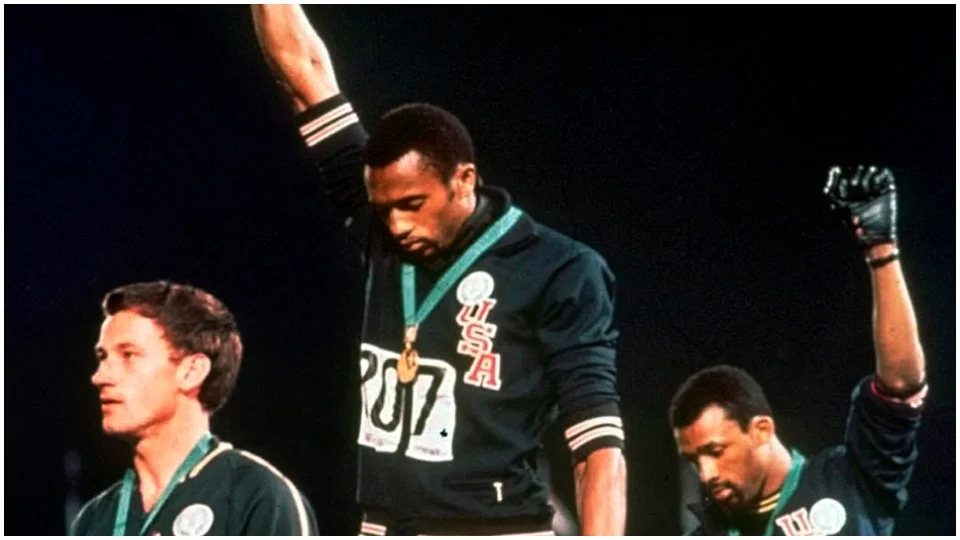
The conflict is not new. At the 1968 Mexico City Olympics, American sprinters Tommie Smith and John Carlos raised black-gloved fists during the medal ceremony in a protest associated with racial injustice. They were suspended and sent home after the IOC treated the gesture as a prohibited political demonstration.
Decades later, similar disputes continue.
At the 2026 Winter Olympics, Ukrainian skeleton racer Vladyslav Heraskevych was disqualified after displaying a helmet featuring Ukrainian athletes and coaches killed during the war. The IOC regarded the display as political expression prohibited by its rules, while Heraskevych disputed that interpretation.
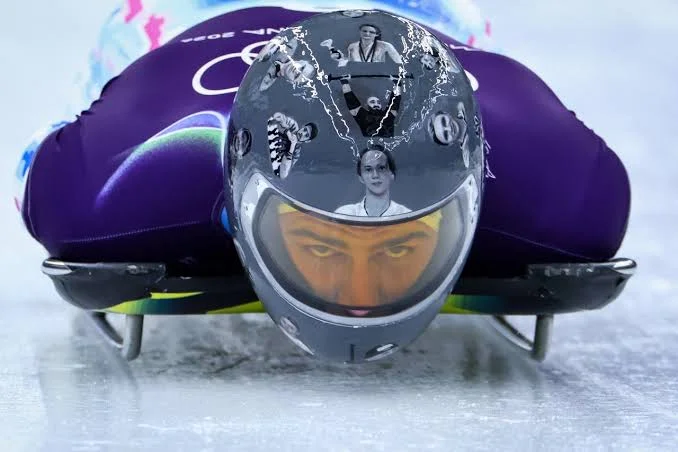
These cases demonstrate why political-expression rules remain contentious. The dispute is rarely simply about whether an athlete has a political opinion. It is about where, when and how that opinion is expressed within a regulated sporting environment. The legal question remains relevant today:
“How much political expression should athletes be allowed while representing their countries?”
Russia and Ukraine Conflict: When Geopolitics Changes Eligibility
The Russia-Ukraine conflict has taken the issue beyond athlete demonstrations and into eligibility itself. Following Russia’s invasion of Ukraine, international sporting organisations imposed various restrictions on Russian and Belarusian teams and athletes. Some federations excluded them altogether.
Others introduced neutral participation arrangements. That approach attempts to balance two competing principles: responding to a state’s conduct while avoiding automatic punishment of individual athletes. But it has also generated continuing legal disputes.
In September 2026, World Athletics president Sebastian Coe said the organisation remained committed to restrictions on Russian and Belarusian athletes, while acknowledging the need for a long-term solution. Russian Athletics is challenging the restrictions before the Court of Arbitration for Sport (CAS). The legal questions include:
“nationality discrimination, proportionality, sporting jurisdiction and individual responsibility.”
Neutral Athletes: A Compromise With Its Own Legal Problems
Allowing athletes to compete without national symbols has emerged as one possible compromise. It allows sporting organizations to distance themselves from governments while preserving an individual’s opportunity to compete. But neutral status creates another layer of regulation. Authorities must decide:
- who qualifies;
- what conditions apply;
- whether eligibility can be withdrawn;
- whether athletes must satisfy political or neutrality criteria; and
- how those decisions can be challenged.
The International Skating Union‘s decision in September 2026 to revoke the neutral status of Russian figure skater Kamila Valieva and other Russian athletes illustrates the problem. Russia indicated that it would challenge the decision before CAS. The result is a growing body of sports-law disputes in which geopolitical decisions become questions of individual sporting rights.
Olympic Boycotts: When Governments Take Sport Hostage
The most obvious historical examples are the Olympic boycotts of 1980 and 1984. The United States and several allies boycotted the Moscow Olympics following the Soviet invasion of Afghanistan. Four years later, the Soviet Union and several allied states boycotted the Los Angeles Games.
The 1936 Berlin Olympics remain perhaps the most controversial historical example of sport being used for political purposes. Nazi Germany used the Games as an opportunity to project an image of national strength and legitimacy. The event demonstrated that sport can be transformed into propaganda.
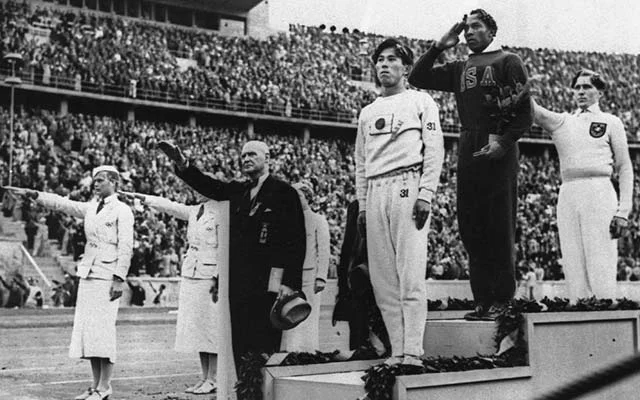
These episodes demonstrate why international sporting organizations have long attempted to protect the autonomy of sport. But they also expose the limits of that autonomy. When participation itself becomes a foreign-policy decision, athletes cannot simply separate the sporting arena from international politics. In all these cases, athletes paid the practical price for geopolitical decisions. The lesson is still relevant:
“Sporting events do not merely reflect politics. Governments can deliberately use sport to manufacture political legitimacy.”
Israel, Palestine and the Olympic Question
The Israel-Palestine conflict has also generated intense debate around international sport. At major competitions, political demonstrations, flags, chants and disputes involving athletes have raised questions about where legitimate political expression ends and sporting discrimination begins.
The Paris 2024 Olympics demonstrated the difficulty.
Israel and Palestine both participated, while the wider conflict generated calls for different forms of sporting action. International reporting around the Games highlighted the political tensions surrounding the participation of both sides. Again, sport could not simply escape geopolitics.
Apartheid South Africa Shows the Other Side of the Argument
The history of apartheid South Africa provides a different example. International sporting isolation became part of the wider opposition to apartheid. Here, political intervention was defended as consistent with the principle of equality rather than contrary to it. This distinction remains important.
It would be simplistic to say that every political intervention damages sport. Sometimes sporting organisations act precisely because political or governmental conduct conflicts with the values embedded in their own constitutions and regulations.
The legal challenge is therefore not to prohibit political considerations entirely. It is to ensure that:
“sporting bodies have objective standards for deciding when intervention is justified.”
India-Pakistan Cricket Raises a Different Question
The Asia Cup dispute differs from a country-wide sporting ban. India did not refuse to play the final. The match was completed. The sporting result was accepted. The dispute arose during the presentation ceremony. That makes the controversy particularly significant from a governance perspective. The competition itself survived the political disagreement. The ceremony did not.
This distinction suggests that international sporting bodies could manage similar disputes without allowing them to contaminate the competition. For example, tournament regulations could provide that where a presenter has a significant political role, another authorized sporting official may present the trophy.
Such a mechanism would not require the governing body to endorse either side’s political position. It would simply protect the sporting event from avoidable political confrontation.
The Real Legal Issue Is Consistency
Perhaps the greatest threat to sporting neutrality is not political expression itself. It is inconsistent enforcement. If one athlete is punished for a political gesture while another is permitted to make a comparable statement, the credibility of the governing body is weakened.
The same problem arises when sporting sanctions are imposed against one country but not another in circumstances that appear comparable. International sports law therefore depends heavily on:
- equal treatment;
- transparent rules;
- predictable enforcement;
- proportionality;
- procedural fairness; and
- independent review.
Without those principles, “neutrality” can become subjective.
Can Sports Organizations Really Keep Politics Out?
Probably not. International sport is inherently connected to politics because countries use national teams, flags and international sporting success as symbols of national identity. Governments also influence:
- funding;
- infrastructure;
- hosting rights;
- athlete development;
- diplomatic relationships; and
- international sporting policy.
The more realistic objective is therefore not to eliminate politics. It is to:
“prevent political disputes from arbitrarily controlling sporting decisions. That requires stronger institutional safeguards.”
What International Sports Bodies Should Consider
The repeated Asia Cup controversy provides several practical lessons.
1. Conflict-of-interest rules
Officials holding senior governmental positions should disclose potential conflicts and, where appropriate, step aside from sensitive ceremonies or decisions.
2. Alternative presentation procedures
Tournament regulations should identify a neutral replacement presenter when political circumstances make a ceremony contentious.
3. Clear political-expression rules
Athletes should know what conduct is prohibited before competition begins.
4. Proportionate sanctions
Refusing a ceremonial interaction should not automatically be treated like conduct that disrupts competition or threatens safety.
5. Independent appeals
Participants should have meaningful avenues to challenge disciplinary decisions.
6. Individual responsibility
Athletes should not automatically be treated as responsible for the conduct of their governments.
Conclusion
The significance of the India-Pakistan controversy extends beyond one tournament. This controversy has turned a trophy presentation into a debate about the limits of sporting neutrality. It illustrates a structural problem facing international sport. The old model was simple:
“Politics should stay outside sport.”
The modern reality is different:
“Politics will enter sport. Sporting institutions need rules for dealing with it.”
International conflicts increasingly affect eligibility and sporting officials sometimes hold political office themselves. These interests inevitably collide. The legal system cannot make those tensions disappear. What it can do is require sporting organizations to deal with them through predetermined rules rather than ad hoc decisions.