
Mass protests have erupted across multiple regions after the U.S. and Israel coordinated strikes reportedly killed Iran’s Supreme Leader, Ayatollah Ali Khamenei, family members, senior clerics, and several top military officials, triggering one of the most volatile geopolitical reactions in recent years. Demonstrations have spread from the Middle East to South Asia, Europe, and North America, with protesters condemning the targeted killing as a violation of international law and warning of escalating regional conflict.
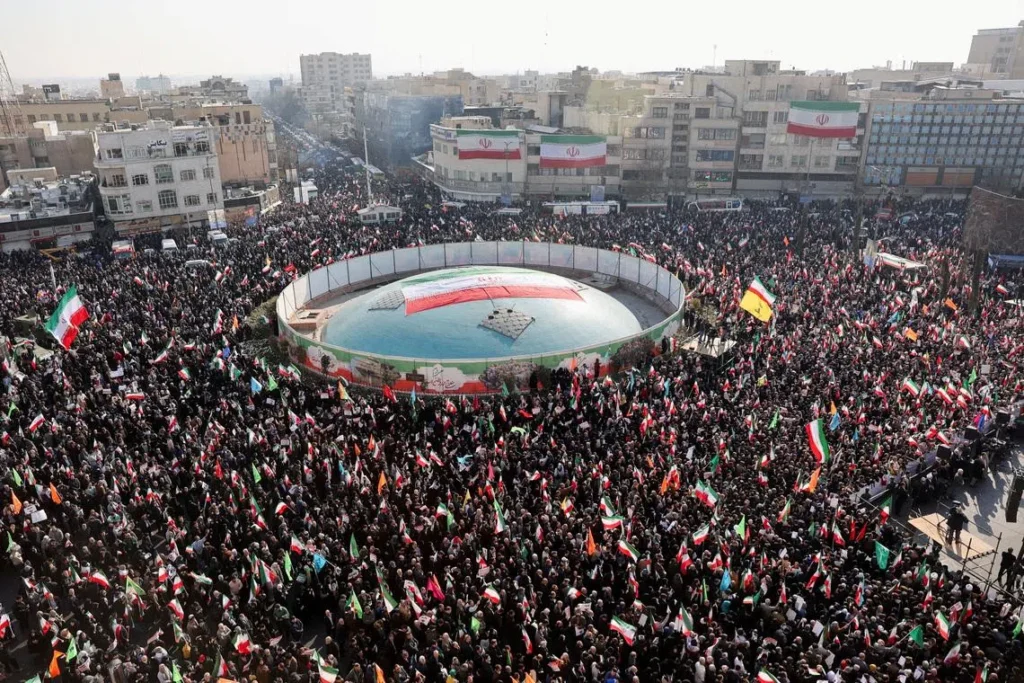
In Tehran, millions gathered in state-organized funerals and mass rallies, while protests in Iraq, Lebanon, and Syria saw clashes between demonstrators and security forces. Reports from regional authorities suggest that dozens of protestors have been killed and hundreds injured in confrontations with police and military personnel. Several Western embassies across the region have been placed on high alert, with emergency travel advisories issued by multiple governments amid fears of retaliatory violence.
Background: Targeted Killing Sparks Global Outrage
The February 28, 2026, airstrike, carried out by Israeli forces with U.S. intelligence support, reportedly targeted high-ranking Iranian leadership in what officials described as a strategic decapitation operation. Iran’s Supreme Leader and several senior figures were killed when missile strikes hit residential and command locations in Tehran.
The targeted attack on high-ranking Iranian leadership marked one of the most significant targeted killings of a sitting head of state in modern times and immediately intensified global tensions.
Iran and its allies have labelled the strike an unlawful act of aggression and a breach of the UN Charter’s prohibition on the use of force against sovereign states. Western governments remain divided, with some citing self-defense and counter-terrorism justifications, while others warn of dangerous precedent in targeting national leadership.
Global Protests and Security Fallout
Large-scale demonstrations have erupted in Tehran, Beirut, Baghdad, Istanbul, London, and several South Asian capitals. Protesters have called for international investigations and accountability, while Iranian authorities have declared days of national mourning and vowed retaliation. Security agencies worldwide have heightened alerts amid fears of retaliatory attacks, cyber operations, and disruption of global trade and aviation routes.
Human rights organizations and international law experts have also joined calls for independent inquiries into the legality of the strike, warning that targeted killings of state leaders risk normalizing extraterritorial uses of force and undermining international legal order.
Pakistan has witnessed some of the largest demonstrations outside the Middle East, particularly in Karachi, Lahore, and Islamabad. In Karachi, protestors gathered near the U.S. Consulate and major diplomatic zones, where clashes broke out between security forces and demonstrators attempting to breach security perimeters.
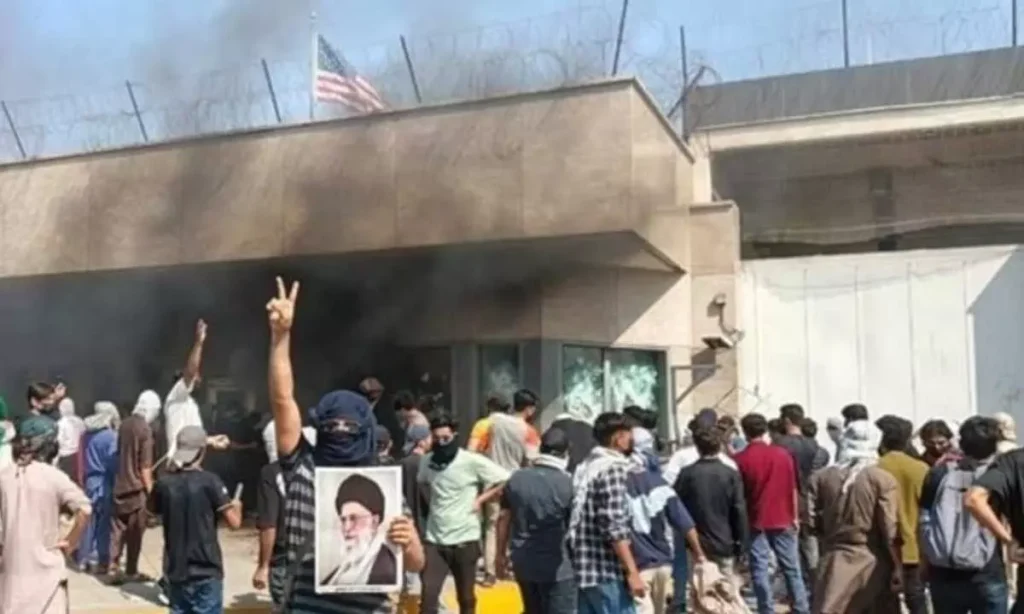
Local hospital and police sources indicate:
- At least 9 protest-related deaths were reported during clashes and stampedes near the Karachi U.S. Consulate area
- Dozens injured, including police personnel and protestors
- Over 120 arrests during security crackdowns and curfew enforcement
Authorities imposed emergency security measures around diplomatic missions, including partial lockdowns, road closures, and suspension of mobile services in certain districts. The Pakistani government urged calm while also condemning the escalation in the region and calling for restraint by all parties.
Legal Implications Under International Law
Legal scholars note that the killing of a sitting head of state through a cross-border strike raises complex questions under international humanitarian law and the UN Charter. Key issues include:
- Whether the strike qualifies as lawful self-defense under Article 51 of the UN Charter
- Whether targeted killing of political leadership constitutes an unlawful assassination
- Potential classification as an act of war triggering state responsibility
- Risks of escalation into a broader international armed conflict
The United Nations Security Council is expected to convene emergency consultations, though divisions among the permanent members may limit the scope of anybinding action. Meanwhile, the International Criminal Court faces renewed pressure to assess jurisdictional questions, though enforcement challenges remain significant when major powers are involved.
What Comes Next
The killing of Iran’s top leadership has created one of the most volatile moments in recent global geopolitics, with protests, diplomatic fallout, and legal disputes unfolding simultaneously. Analysts warn that the coming weeks will test the resilience of international legal norms governing use of force, sovereignty, and accountability in an era of escalating geopolitical confrontation.
The strikes and subsequent protests have triggered a sharp diplomatic crisis. Iran has vowed retaliation and described the killings as acts of war and violations of international law. Several countries, including Russia, China, Turkey, and members of the European Union, have called for immediate de-escalation and emergency UN Security Council consultations.
Human rights organizations have also expressed concern over protest crackdowns worldwide, warning that excessive use of force against demonstrators could further inflame tensions. Legal experts note that the unfolding crisis raises serious questions under international law regarding targeted killings, state sovereignty, and proportionality in the use of force.
As global protests continue and regional tensions intensify, governments worldwide are bracing for further demonstrations, security threats, and potential retaliatory actions that could deepen an already volatile geopolitical confrontation.