
The global legal order faces one of its most severe stress tests in decades after U.S. President Donald Trump signaled plans to exercise interim control over Venezuela following the capture of President Nicolás Maduro in a dramatic cross-border operation, triggering intense legal scrutiny and global diplomatic fallout. President Nicolás Maduro has now been transferred to New York to face federal drug-trafficking charges.
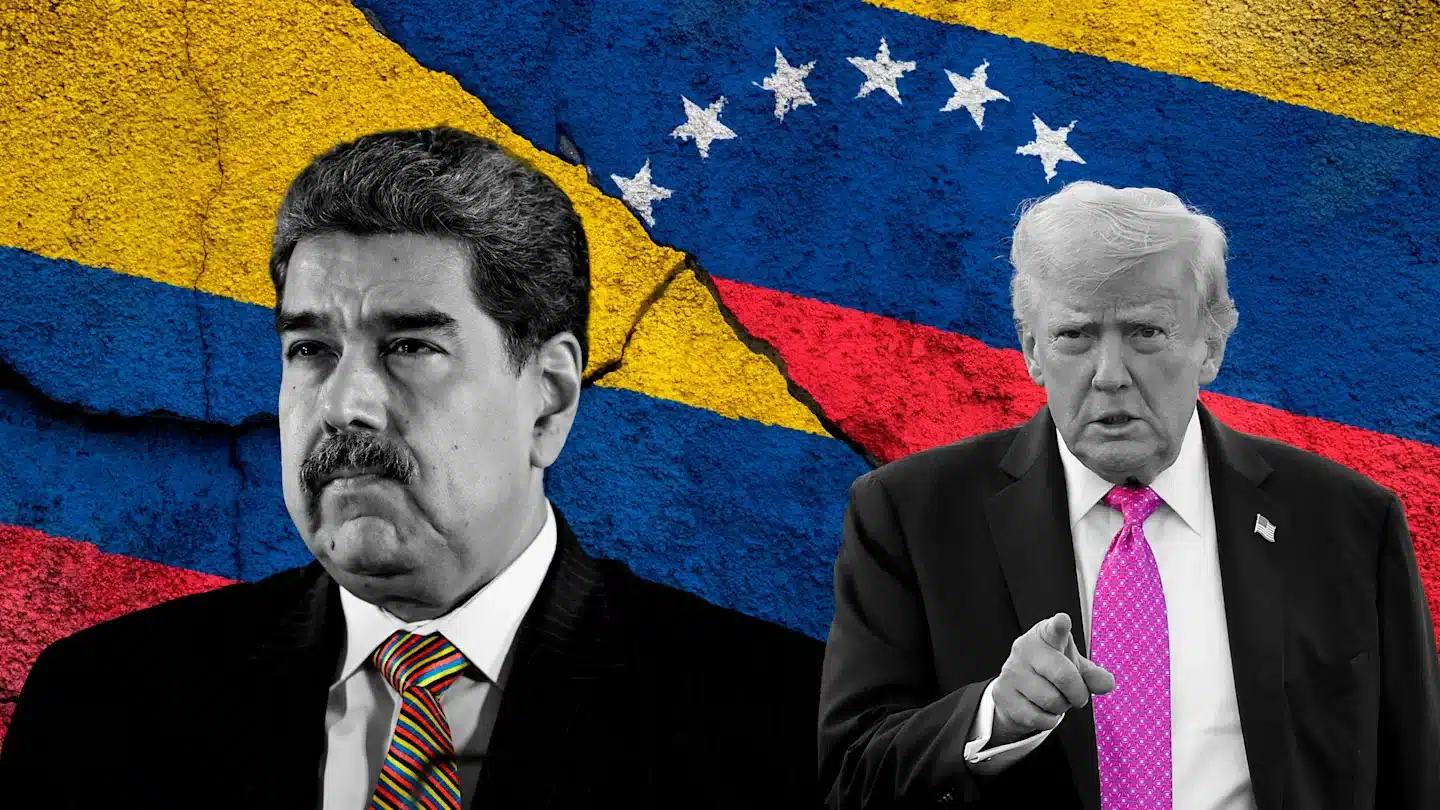
The unprecedented action involving the seizure of a sitting head of state, cross-border military strikes, and an assertion of administrative authority over a sovereign nation has triggered fierce international debate over state sovereignty, the use of force, regime change, and the limits of international law.
While Washington frames the operation as a law-enforcement and counter-narcotics mission, critics warn it represents a de facto military intervention with far-reaching geopolitical and legal consequences. U.S. officials frame the move as a temporary measure aimed at facilitating a:
“safe and judicious transition”
International law experts warn that the action raises serious questions about state sovereignty, the legality of regime intervention, and the precedent it sets for foreign-led governance in the modern international system.
Update: New Developments Following Maduro’s Capture
Updated on January 7, 2026
President Donald Trump subsequently defended the operation, describing it as “brilliant” and dismissing international criticism. He argued that U.S. actions had restored accountability in Venezuela, warned foreign governments against interference, and suggested that similar measures could be pursued elsewhere if U.S. interests were threatened.
Tensions escalated further after Trump claimed that “many” Cuban soldiers were killed during the raid, heightening regional alarm. Havana condemned the operation as an act of aggression and a violation of international law, though Cuban authorities have not released official casualty figures.
In New York, Nicolás Maduro and his wife, Cilia Flores, appeared before a federal judge and pleaded not guilty to U.S. drug-trafficking and narco-terrorism charges. Addressing the court, Maduro asserted that he remains Venezuela’s legitimate president and characterized his capture as an illegal abduction carried out in breach of international law.
The crisis also assumed a significant economic dimension after Trump announced that Venezuelan officials had agreed to begin transferring millions of barrels of oil to the United States, framing the move as compensation for U.S. involvement. The claim, which would represent Venezuela’s first major concession since Maduro’s capture, has raised immediate legal, diplomatic, and market concerns.
Caracas forcefully rejected U.S. assertions of interim control. Venezuela’s Supreme Court-backed leadership under Delcy Rodríguez stated that all state institutions remain under Venezuelan authority and warned that any foreign administration or resource control would be unconstitutional and illegitimate.
Most recently, residents reported anti-aircraft fire and heightened security deployments across parts of Caracas as authorities sought to maintain order. While major infrastructure remains operational, the capital remains on edge, with sporadic disruptions and an expanded military presence underscoring the volatility of the situation on the ground.
Why this matters legally: The latest developments raise fundamental questions about state sovereignty, extraterritorial enforcement, the legality of regime intervention, and the use of economic leverage under international law.
Recent developments have continued to unfold. For a comprehensive legal analysis of the international law implications of these actions, see our full article: U.S. Control Over Venezuela After Maduro’s Capture: A Legal Analysis Under International Law – https://n-laws.com/us-venezuela-legal-analysis/
What Happened: A Rare Capture of a Sitting Head of State
According to U.S. officials, American special forces carried out an overnight operation that disabled power infrastructure in parts of Caracas, struck Venezuelan military sites, and captured President Maduro near one of his safe houses.
Maduro and his wife, Cilia Flores, were transported offshore to a U.S. Navy vessel and flown to New York, where he is now held at the Metropolitan Detention Center in Brooklyn. U.S. prosecutors say Maduro will face charges including narco-terrorism conspiracy, allegations he has long denied.
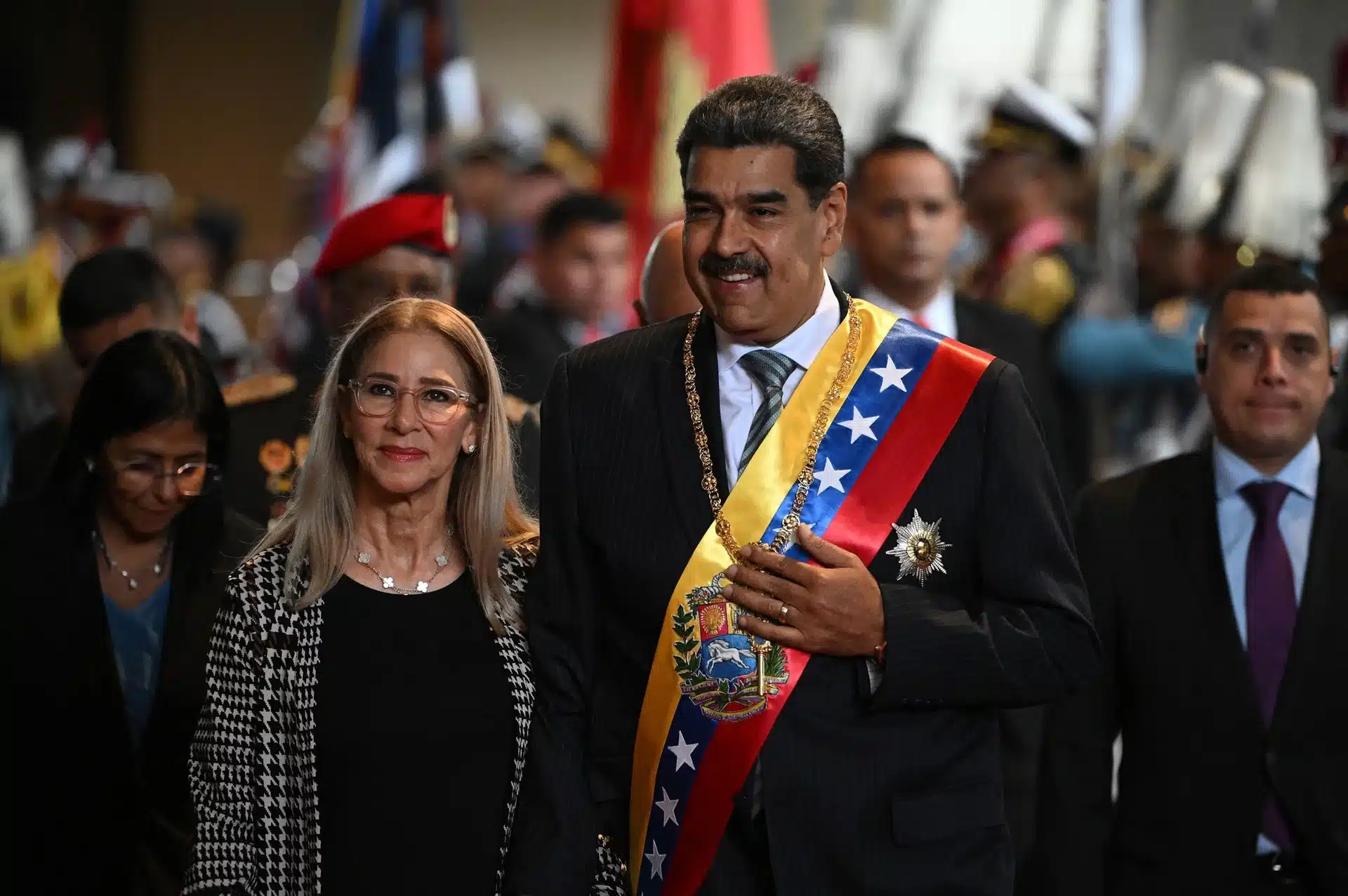
President Trump declared that the U.S. would oversee Venezuela until a safe, proper, and judicious transition could be arranged, adding that American oil companies would refurbish the country’s deteriorating oil infrastructure.
Global condemnation continued to build in the aftermath of the U.S. operation, with Russia, China, Mexico, and several Latin American states reiterating that the capture of Nicolás Maduro violates state sovereignty and the UN Charter. European officials urged restraint, warning that unilateral regime intervention risks normalizing actions that undermine the rules-based international order.
International Law Under Strain: Key Legal Questions
1. Violation of State Sovereignty
Under Article 2(4) of the UN Charter, states are prohibited from using force against the territorial integrity or political independence of another state.
Legal experts note that:
- The capture occurred without Venezuelan consent
- No UN Security Council authorization was granted
- No immediate self-defense justification was articulated
This places the operation in direct tension with the foundational principles of international law.
2. Arresting a Sitting Head of State
While international tribunals can prosecute heads of state, unilateral seizure by another country is virtually unprecedented outside wartime contexts. Customary international law typically protects:
- Personal immunity (ratione personae) while in office
- Due process through international or multilateral mechanisms
U.S. courts asserting jurisdiction over Maduro raises serious questions about extraterritorial enforcement and precedent.
3. Regime Change and Interim Governance by Force
Trump’s statement that the U.S. will “run” Venezuela echoes past regime-change interventions, which are widely criticized under international law unless justified by:
- Collective security mandates
- Imminent self-defense
- Humanitarian intervention (legally contested)
None of these grounds have been formally established. Externally-imposed interim governance risks breaking:
- The self-determination principle
- The prohibition against foreign government without a mandate
- The law against coercive politic restructuring
4. Oil, Resources, and Pillage Concerns
Trump’s comments that imply U.S. involvement to Venezuelan oil alarms international law on economic and humanitarian law.
According to international standards:
- Natural resources are the property of the sovereign state of the nation, not belonging to or other powers.
- Unrecognized economic exploitation could be considered to be a violation of appropriation laws.
- Contracts that are signed with coercion may be at risk of invalidity
Any oil transfer that is not accompanied by widespread international recognition could result in legal problems in arbitration courts and sanctions regimes.
5. Precedent Risk to the Global Legal Order
The Maduro operation could alter international norms through:
- Abduction of leaders in a unilateral manner is normalized.
- Infringing sovereignty protections
- Promoting enforcement of power-based principles over multilateral law
Legal experts caution that, if the precedent holds this could trigger the shift away from an international order based on rules towards a more selective enforcement driven through geopolitics.
Venezuela’s Response: Emergency Rule and Defiance
In the wake of the alleged capture, Venezuela’s government declared an emergency rule, consolidating power and restricting dissent to maintain control over key institutions and territory. President Maduro’s administration framed the U.S. action as an illegal foreign intervention, calling for national unity and mobilizing loyal security forces.
Defiance has also taken a diplomatic form, with Venezuela appealing to allies and international bodies to condemn what it describes as a breach of sovereignty, while signaling that external attempts to assert control will not be recognized. This response shows the resilience of domestic authority structures and highlights the legal and political obstacles facing any externally imposed interim governance.
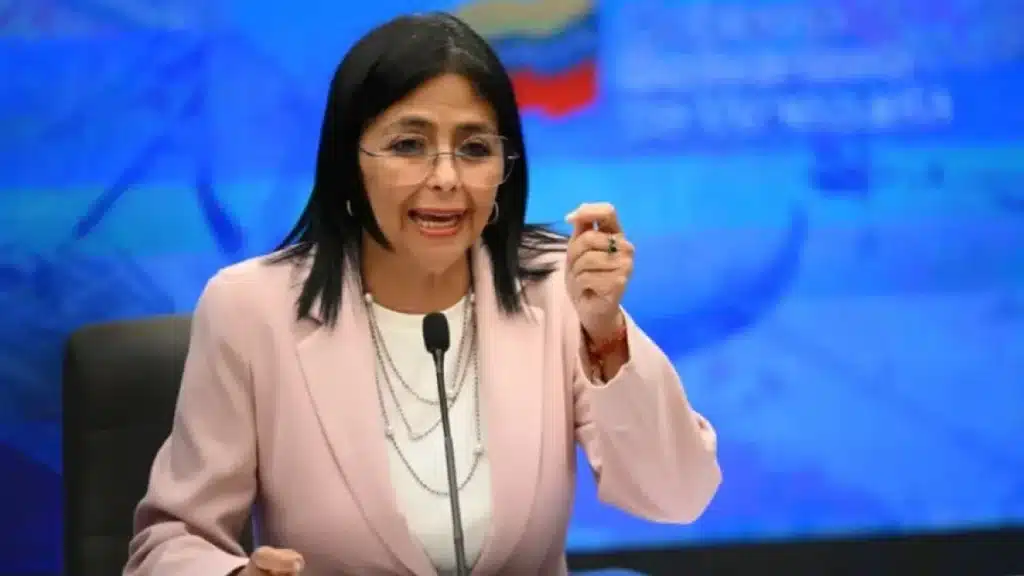
Venezuela’s high court later named Delcy Rodríguez interim president, who denounced the operation as a “kidnapping” and declared Maduro the country’s only legitimate president, citing the need to maintain administrative continuity during a
“national emergency.”
Global Reaction: A Divided International Community
Global reaction has exposed deep divisions in the international community over the legality and legitimacy of the U.S. action, with reactions broadly split between political approval and legal alarm. Supportive statements focused on Maduro’s removal rather than the method used, while critics warned that the operation risks normalizing unilateral intervention and weakening sovereignty-based international order.
United Kingdom: Prime Minister Keir Starmer said the UK would “shed no tears” over Nicolás Maduro’s removal, signaling political relief but avoiding any endorsement of the operation’s legality.
Argentina: President Javier Milei welcomed what he called Venezuela’s “new freedom,” aligning with his government’s hardline opposition to authoritarian regimes and support for U.S.-led pressure.
Brazil: President Luiz Inácio Lula da Silva condemned the move as “an unacceptable line,” arguing it threatens regional stability and undermines non-intervention principles in Latin America.
Mexico: Rejected the operation as a clear breach of sovereignty, reinforcing its long-standing doctrine of non-intervention in foreign affairs.
Russia and China: Jointly denounced the action as illegal and destabilizing, accusing Washington of bypassing international law and multilateral institutions.
European Union: Officials expressed concern over escalation and legality, urging restraint and a return to diplomatic and multilateral frameworks rather than unilateral enforcement.
Organization of American States (OAS): Member states remained divided, reflecting broader hemispheric splits between governments prioritizing democratic change and those emphasizing sovereignty.
United Nations: Secretary-General António Guterres warned the move could set a “dangerous precedent,” stressing that leadership change through force raises serious international law concerns.
These responses reflect a growing divide between rule-based internationalism and power-driven unilateralism.
Oil, Power, and Resource Questions
Venezuela’s vast oil reserves add a critical economic dimension to the crisis, raising questions over who holds lawful authority to manage, export, and profit from state-owned resources during any interim control period.
Trump’s repeated references to Venezuela’s oil reserves have intensified scrutiny. His claim that U.S. involvement would be “paid for” by oil revenue recalls the Iraq War’s flawed economic justifications.
Under international law, control over natural resources is tied to recognized sovereignty, meaning shifts in political authority, especially those imposed externally, can complicate contracts, sanctions enforcement, and global energy markets. As a result, energy security, corporate exposure, and legal ownership claims have emerged as central issues alongside the political fallout.
Historical Echoes: Panama, Iraq, and the Monroe Doctrine
The episode has drawn comparisons to past U.S. interventions, particularly the 1989 invasion of Panama to remove Manuel Noriega and the 2003 Iraq war in which Saddam Hussein was sentenced to death by hanging, both of which were justified on security and governance grounds but later scrutinized under international law.
Critics argue the current situation reflects a modern extension of the Monroe Doctrine, asserting U.S. primacy in the Western Hemisphere, while supporters contend it represents a targeted response to regional instability rather than territorial ambition.
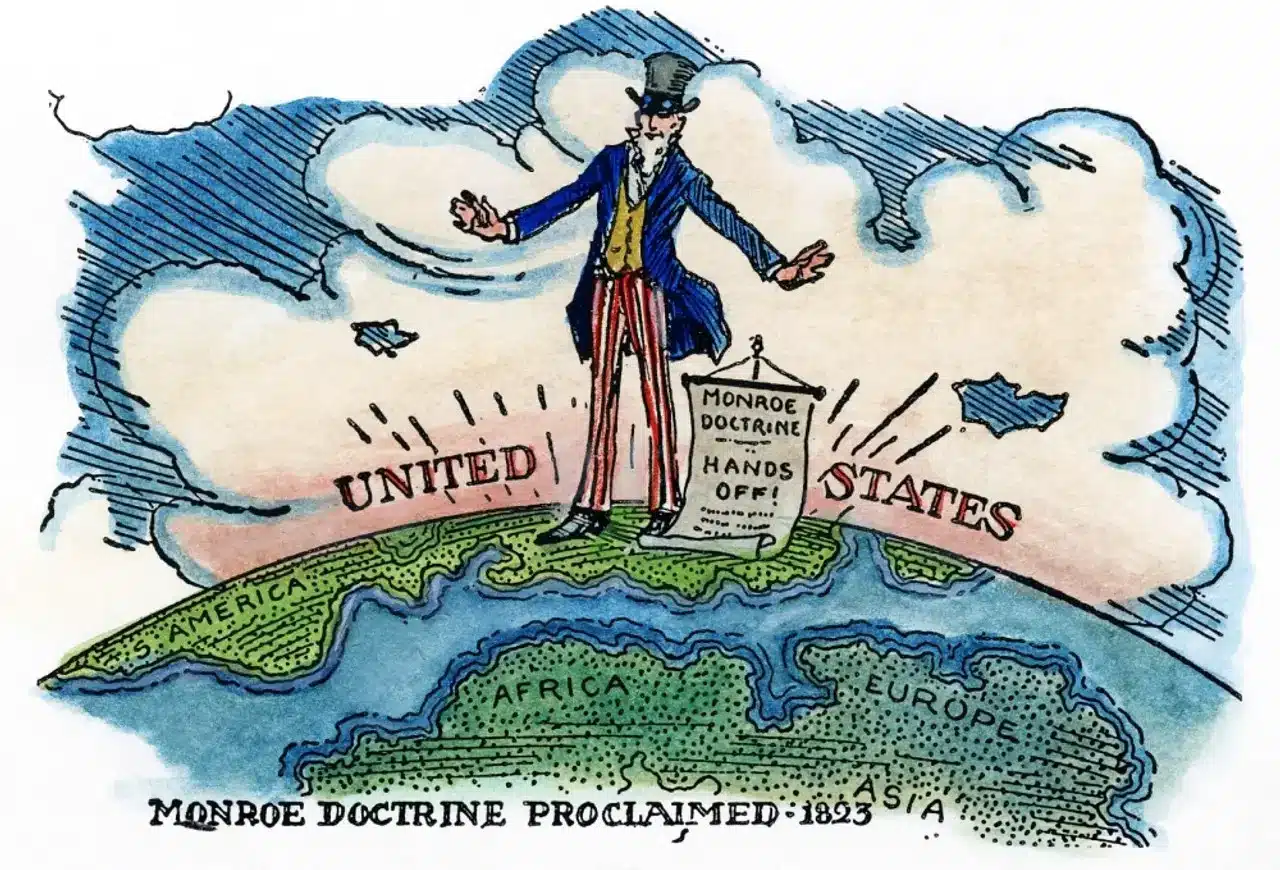
These historical parallels reveal recurring tensions between unilateral action, legal justification, and long-term geopolitical consequences. Trump’s remarks referencing oil infrastructure and the “Monroe Doctrine” revive comparisons to:
- The Monroe Doctrine (1823)
- Early 20th-century gunboat diplomacy
- Cold War-era interventions widely criticized in Latin America
Domestic Political Risks for Washington
The move carries significant domestic political risks for Washington, where public opinion remains wary of overseas interventions following prolonged conflicts in Iraq and Afghanistan. Lawmakers from both parties have raised concerns over constitutional authority, potential costs, and the absence of congressional approval, while supporters argue the action strengthens U.S. credibility and regional leadership.
As economic pressures and election-year dynamics intensify, the operation could become a focal point for debates over executive power, foreign policy restraint, and America’s role abroad. The move exposes Trump to bipartisan scrutiny:
- Democrats question congressional authorization and constitutional limits
- Some Republicans warn of foreign entanglement contradicting “America First”
- Public opinion remains focused on inflation and domestic costs
What Comes Next?
The U.S. move involving Venezuela marks a pivotal test for international law, sovereignty, and the limits of unilateral power. While supporters focus on political outcomes, critics warn that bypassing multilateral frameworks risks weakening the very legal order meant to manage global stability.
What comes next remains uncertain, with outcomes likely shaped by diplomatic recognition, internal stability in Venezuela, and international legal challenges. Key unresolved questions include:
- Who will administer Venezuela on the ground?
- How long will interim control last?
- Will international organizations recognize the arrangement?
- Can a legitimate transition occur without internal consensus?
The answers will determine not only Venezuela’s political trajectory but also how far international norms on sovereignty and intervention are tested in the years ahead. The capture of Nicolás Maduro is no longer just a Venezuela crisis, it is a stress test for international law itself. Whether the global community accepts or resists this action will shape future interpretations of sovereignty, immunity, and the lawful use of force for years to come.
Frequently Asked Questions
Is it legal for the U.S. to capture a sitting foreign president?
Under international law, arresting a sitting head of state without consent or UN authorization is highly controversial and may violate sovereignty and immunity principles.
Did the U.S. violate international law in Venezuela?
Many legal experts argue the operation breaches Article 2(4) of the UN Charter, prohibiting use of force against another state’s territorial integrity
What precedent does this set globally?
It risks normalizing unilateral regime change and weakening global protections for sovereignty and diplomatic immunity.