
Understanding biodiversity conservation has never been more critical. This comprehensive guide explains what biodiversity is, why it matters, and how the 2030 UN Framework drives global efforts to protect it.
Biodiversity is critical for maintaining healthy ecosystems, supporting human well-being, and sustaining the planet’s natural resources. Yet, rapid environmental changes, habitat loss, and climate pressures have put countless species at risk. The United Nations’ 2030 Framework provides a global blueprint for conserving biodiversity, setting clear targets and strategies to protect ecosystems and promote sustainable development. This guide breaks down the framework, explains its key goals, and offers practical insights for understanding and supporting biodiversity conservation worldwide.
Biodiversity, the incredible variety of life on Earth, is declining at an alarming rate. According to UNEP:
“A dangerous decline in nature threatening the survival of 1 million species and impacting the lives of billions of people.”
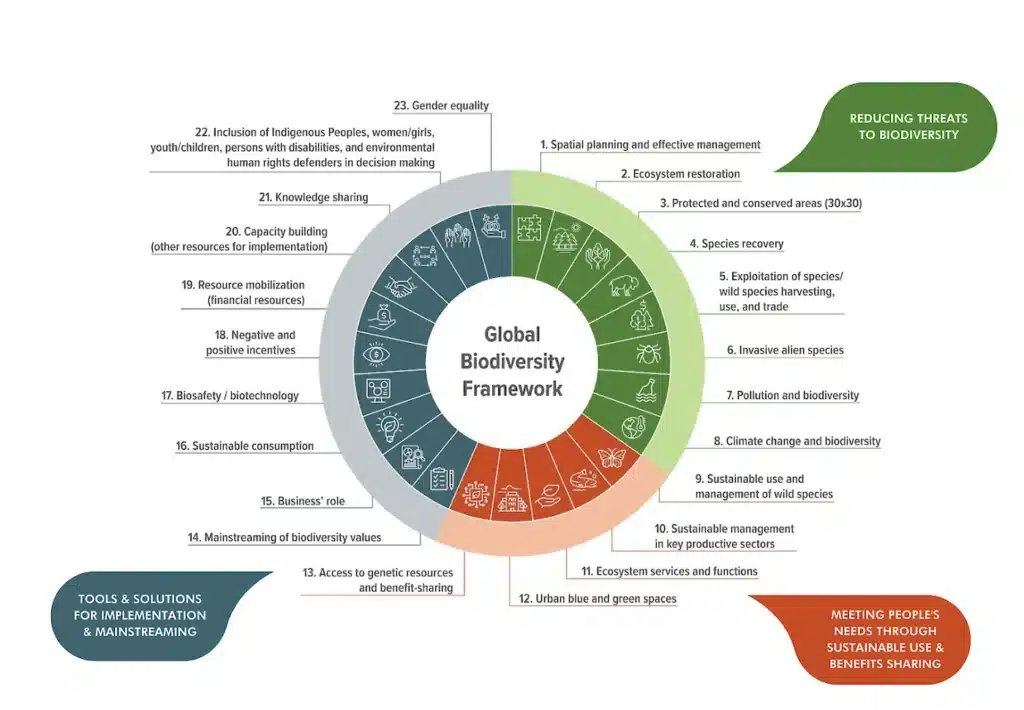
This has led to the adoption of the Kunming-Montreal Global Biodiversity Framework in December 2022. This historic agreement aims to “halt and reverse nature loss” through concrete targets to be achieved by 2030.
Source: UNEP – Kunming-Montreal Global Biodiversity Framework
What Is Biodiversity?
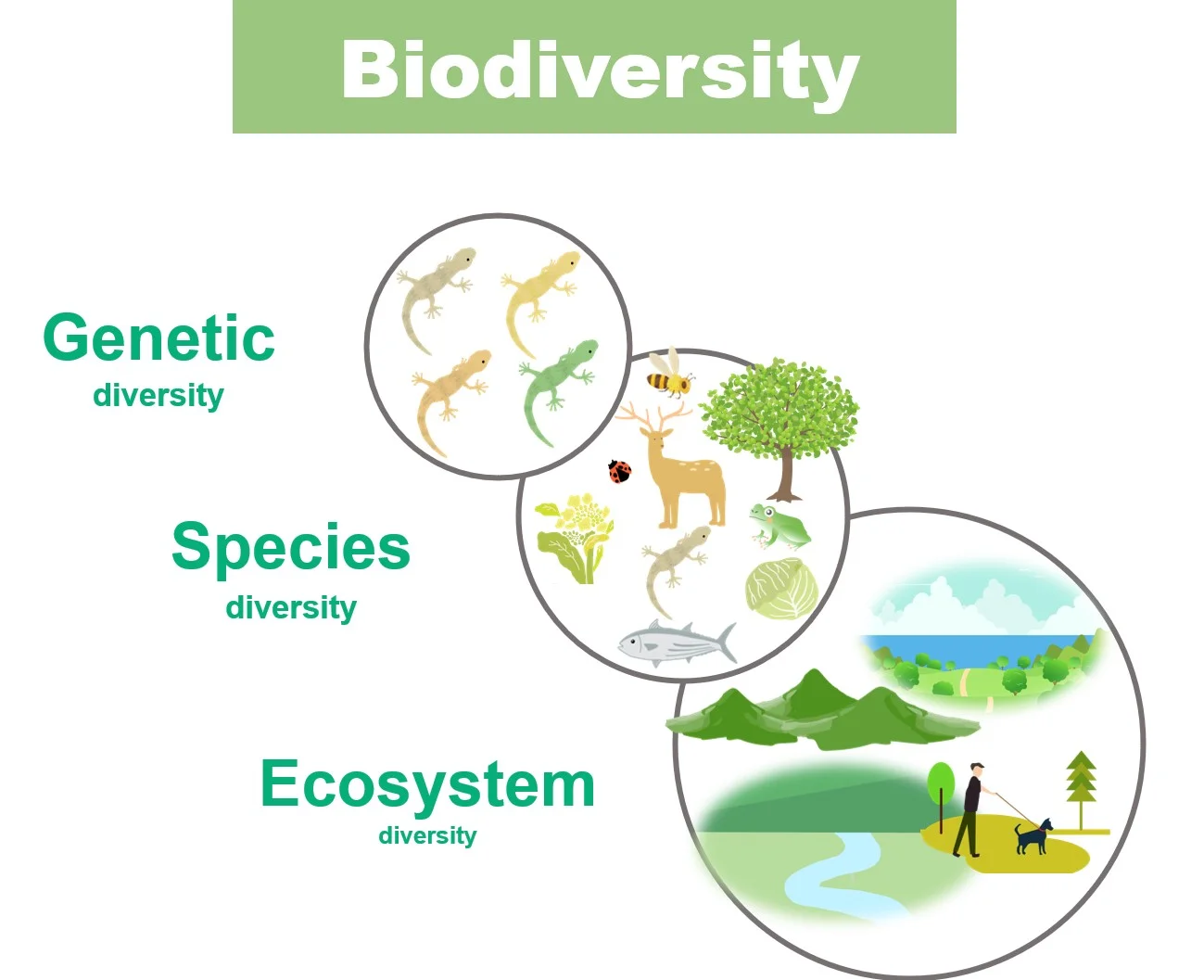
Biodiversity is the variety of life at all levels from genes to species to ecosystems.
According to Wikipedia:
“Biodiversity is commonly measured in terms of taxonomic richness of a geographic area over a time interval, examining the number and variety of different species in a particular place.”
Biodiversity encompasses three fundamental components:
Genetic Diversity represents variation within species. According to Nature’s 2025 analysis:
“Shaw et al. present a wide-ranging assessment of changes in genetic diversity across 36 taxonomic groupings of 622 species,” revealing “patterns of genetic-diversity loss that include declines in diversity even in widespread species.”
Genetic diversity enables species to adapt to changing environments and resist diseases. When genetic diversity declines, populations become vulnerable to extinction from environmental changes or disease outbreaks.
Species Richness measures the number of different species in an area. From the 20,000 species of ants to 300,000 species of beetles to 28,000 species of fish, Earth harbors incredible species diversity.
NCERT reports that:
“There are more than 20,000 species of ants, 3,00,000 species of beetles, 28,000 species of fishes and nearly 20,000 species of orchids.”
Ecosystem Diversity encompasses the variety of habitats, communities, and ecological processes. From tropical rainforests to coral reefs, from grasslands to wetlands, different ecosystems support distinct communities of organisms.
Conservation Letters research published in 2025 emphasizes that:
“Species richness is an intuitively appealing metric for biodiversity conservation because a reduction in the number of species in an area seems obviously to reflect a failure to prevent local extirpations.”
Why Biodiversity Matters
Ecosystem Services and Human Survival
Biodiversity provides essential services that sustain human life.
According to NCERT educational materials:
“Among the ecosystem services are control of floods and soil erosion, along with pollination, water purification, climate regulation, and nutrient cycling.”
Forests produce oxygen, absorb carbon dioxide, regulate water cycles, and prevent soil erosion. Wetlands filter pollutants and buffer against floods. Coral reefs protect coastlines and support fisheries. Pollinators enable food production. These services, provided free by nature, would cost trillions of dollars to replicate artificially if replacement were even possible.
Stability and Resilience
Research from Conservation Letters explains that:
“For many decades, ecologists believed that communities with more species, generally tend to be more stable than those with fewer species.”
Diverse ecosystems better withstand disturbances, resist invasions, and recover from damage.
Nature Sustainability research demonstrates that:
“Artificial intelligence holds great promise for improving the conservation and sustainable use of biological and ecosystem values in a rapidly changing and resource-limited world.”
This helps identify priority areas that protect maximum biodiversity efficiently.
Economic and Cultural Value
Biodiversity and Conservation journal notes that:
“Biodiversity continues to decline” despite its immense value.”
Beyond ecosystem services, biodiversity supports tourism, pharmaceuticals, agriculture, and countless industries. Many cultures also hold deep spiritual connections to specific species and landscapes.
Preventing Extinction Crisis
Wikipedia reports that:
“About 40 percent of the 40,177 species assessed using the IUCN Red List criteria are now listed as threatened with extinction, a total of 16,119.” As of late 2022, 9,251 species were considered critically endangered.”
Source: Threats-Biodiversity
The Kunming-Montreal Global Biodiversity Framework 2030
In December 2022, over 190 countries adopted the Kunming-Montreal Global Biodiversity Framework (GBF) at COP15.
Wikipedia calls it:
“A Paris Agreement for Nature and the most significant agreement under the Convention on Biological Diversity to date.”
Four Goals for 2050
The framework establishes four overarching goals to be achieved by 2050:
- Ecosystem and Species Health: Halt human-induced species extinction and maintain healthy, resilient ecosystems
- Sustainable Use: Ensure biodiversity is sustainably used and managed
- Benefit Sharing: Fairly and equitably share benefits from genetic resources
- Implementation: Secure adequate financial resources, capacity-building, and technology transfer
IUCN explains that:
“Achieving these goals requires decisive local and global action from all countries and all sectors of society.”
23 Action Targets for 2030
The GBF includes 23 concrete targets for 2030, categorized into:
- Reducing threats to biodiversity
- Meeting people’s needs through sustainable use
- Tools and solutions for implementation
Target 3: The 30×30 Initiative
The framework’s centerpiece is Target 3, known as “30 by 30” or “30×30.”
The Nature Conservancy states that:
“This target calls for the effective protection and management of 30% of the world’s terrestrial, inland water, and coastal and marine areas by the year 2030.”
According to WWF:
“Target 3 contains an ambitious commitment to conserve 30% of terrestrial, inland water, coastal and marine areas by 2030, through ecologically representative, well-connected and equitably governed systems of protected areas.”
Target 2: Restoration
IUCN documentation explains that:
“Target 2 calls for 30% of areas of degraded terrestrial, inland water, and marine and coastal ecosystems [to be] under effective restoration by 2030.”
Indigenous Rights Recognition
Critically, the framework recognizes indigenous peoples’ and local communities’ rights and roles.
CBD targets emphasize:
“Recognizing and respecting the rights of indigenous peoples and local communities, including over their traditional territories.”
Global Conservation Strategies
Protected Areas
Protected areas remain conservation’s cornerstone. The Nature Conservancy explains that:
“Protected areas are one of the most effective ways to conserve biodiversity and they remain a cornerstone of biodiversity conservation strategies.”
According to NCERT:
In situ conservation protects:
“Endangered species in their natural habitat so that the entire ecosystem is protected. India’s conservation efforts include 14 biosphere reserves, 90 national parks, > 450 wildlife sanctuaries, and many sacred groves.”
Biodiversity Hotspots
According to NCERT:
“34 ‘biodiversity hotspots’ in the world have been proposed for intensive conservation efforts, including three covering India: Western Ghats-Sri Lanka, Himalaya, and Indo-Burma regions.”
Ex Situ Conservation
When in situ protection proves insufficient, ex situ methods preserve species outside natural habitats.
NCERT lists techniques including:
“Protective maintenance of threatened species in zoological parks and botanical gardens, in vitro fertilisation, tissue culture propagation and cryopreservation of gametes.”
Translocation and Restoration
ScienceDaily reports successful conservation examples that include:
“Reintroduction of the golden bandicoot into areas in Western Australia, release of arctic foxes from captive breeding programs in Scandinavia, translocation of greater prairie chickens into existing populations in North America.”
Technology-Enhanced Conservation
Modern conservation employs cutting-edge technology. Nature Sustainability demonstrates how their:
“Conservation Area Prioritization Through Artificial Intelligence (CAPTAIN) framework protects significantly more species from extinction than areas selected randomly or naively (such as based on species richness).”
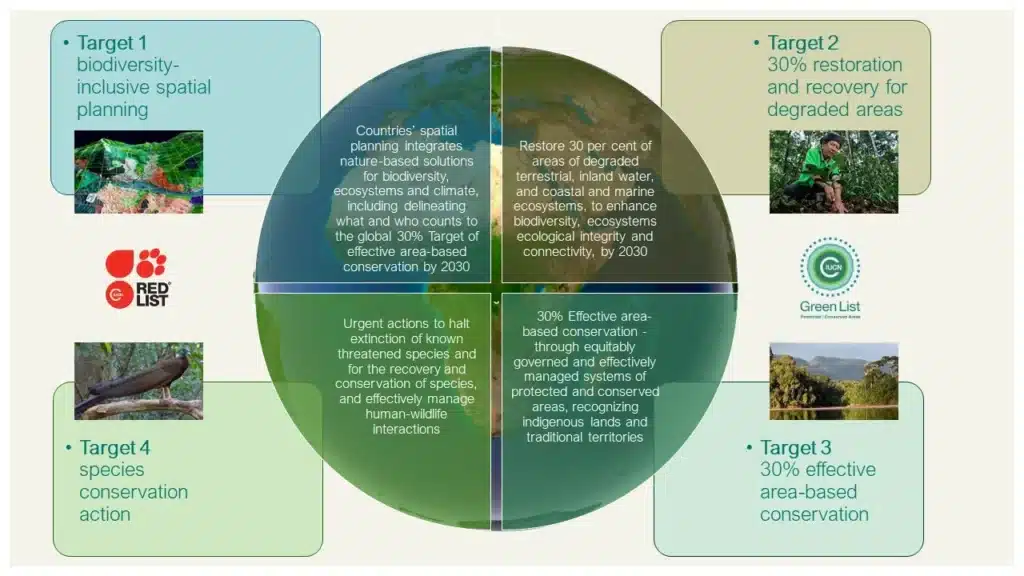
Source: IUCN – 30×30 Implementation Guide
Major Threats to Biodiversity
Understanding threats helps target conservation efforts effectively:
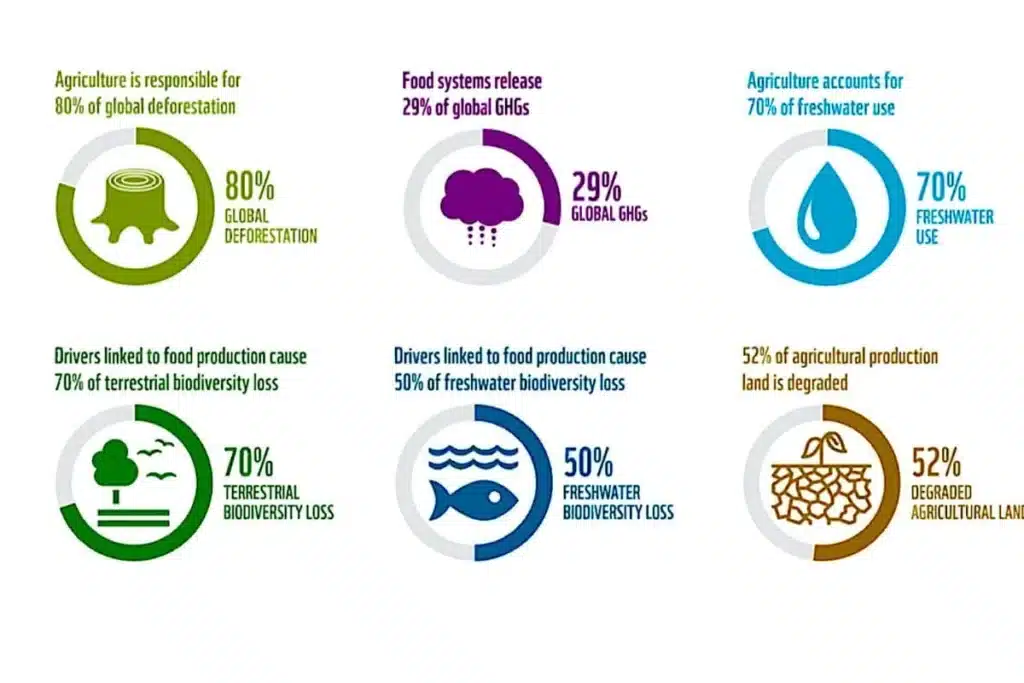
Habitat Loss and Degradation: Land-use change for agriculture, urbanization, and infrastructure destroys natural habitats.
According to Wikipedia:
“Loss of habitat caused by ‘the growth of commodities for export’ is the main driver of biodiversity decline.”
Climate Change: Rising temperatures, changing precipitation patterns, and extreme weather events disrupt ecosystems and species ranges.
Overexploitation: Unsustainable harvesting of wildlife, overfishing, and illegal poaching drive species toward extinction.
Pollution: Chemical contaminants, plastic waste, and nutrient runoff degrade ecosystems and harm species.
Invasive Species: Non-native species outcompete, prey upon, or spread diseases to native species.
Disease: Emerging infectious diseases can devastate populations, especially when genetic diversity is low.
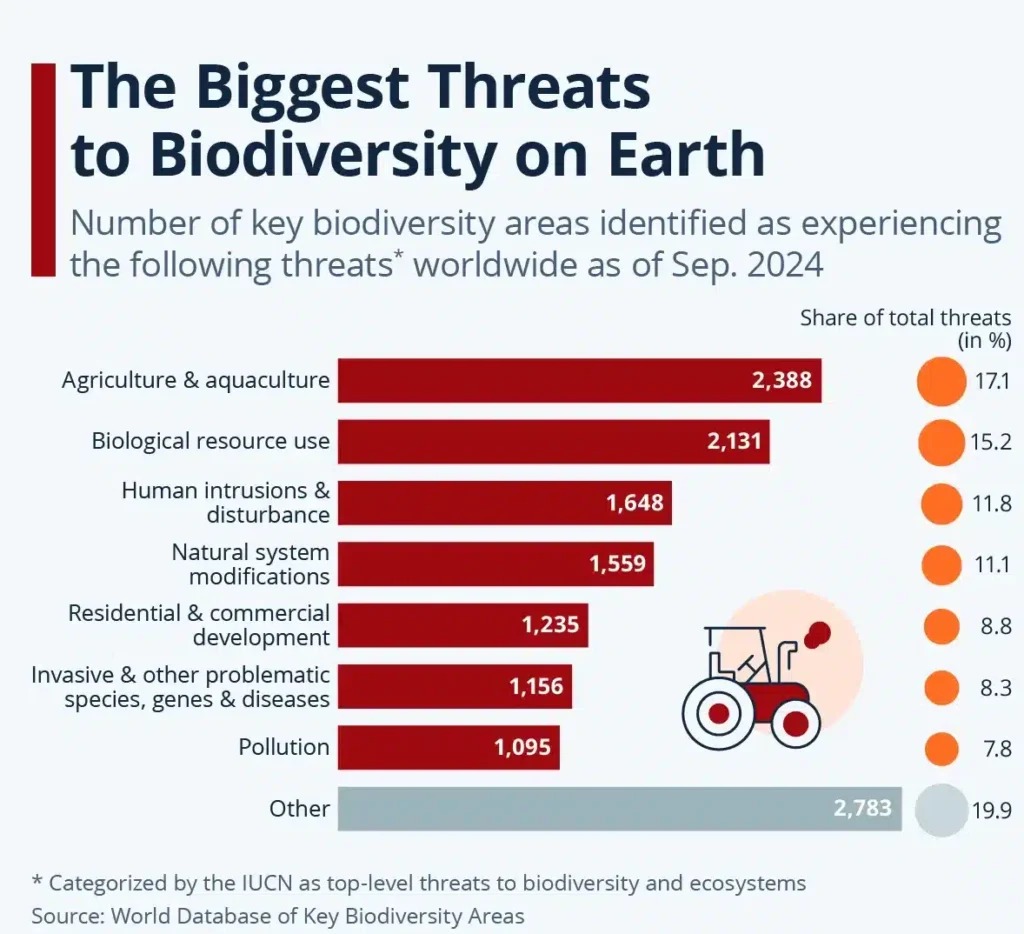
Source: Biodiversity-Threats
Implementing Conservation Successfully
Financial Investment
IUCN emphasizes that:
“Investment of at least USD 200 billion per year is needed, while the framework aims at progressively closing the biodiversity finance gap of $700 billion per year.”
National Planning
Countries must develop National Biodiversity Strategies and Action Plans (NBSAPs) aligned with GBF targets, considering local contexts, priorities, and capabilities.
Participatory Approaches
IUCN stresses that:
“Setting national targets [must be] a participatory process, inclusive of those who are most affected by biodiversity loss and those who are most impacting biodiversity.”
Monitoring and Accountability
CBD provides:
“Adopted indicators to monitor progress for each target, enabling countries to track implementation and adjust strategies as needed.”
Integration Across Sectors
Wikipedia notes that:
“Implementation will require mandatory nature-related disclosure of data, where companies will be required to disclose their impacts on biodiversity and the natural world.”
How You Can Support Biodiversity Conservation
Individual actions collectively create significant impact:
- Support conservation organizations financially or through volunteering
- Choose sustainable products certified by credible organizations
- Reduce consumption and waste
- Create wildlife-friendly spaces in gardens and communities
- Advocate for strong environmental policies
- Educate others about biodiversity importance
- Participate in citizen science projects monitoring local species
- Avoid purchasing products from threatened species
- Support indigenous communities protecting traditional territories
Conclusion: A Critical Decade
The 2020s represent a critical decade for biodiversity. The Kunming-Montreal Global Biodiversity Framework provides an unprecedented global commitment to halt and reverse nature loss, but success depends on immediate action.
UNEP concludes that:
“Accelerating action across sectors and society toward the realization of the goals and targets of the GBF is urgent to address the key drivers of biodiversity loss.”
The 30×30 target protecting 30% of Earth by 2030 is achievable but requires coordinated efforts from governments, businesses, communities, and individuals.
As The Nature Conservancy states:
“30×30 is an ambitious target… but these goals are bold and unprecedented in scale, and they are also achievable through coordinated and collaborative efforts.”
Every species lost diminishes Earth’s resilience and our own survival prospects. Every ecosystem protected maintains life-support systems we all depend on. The coming years will determine whether we successfully preserve the incredible diversity of life that makes Earth habitable, or whether we allow continued decline threatening our collective future.
Understanding biodiversity conservation empowers everyone to contribute to protecting nature. The framework exists, the targets are set, and the tools are available. Now comes the decisive test: implementation. The biodiversity we save today determines the world we inhabit tomorrow.
Glossary
Biodiversity: The variety of life at the genetic, species, and ecosystem levels within a given area or across the planet.
Genetic Diversity: Variation in genes within a species that allows populations to adapt to environmental change and resist diseases.
Species Richness: A measure of biodiversity referring to the total number of species present in a specific geographic area.
Ecosystem Diversity: The range of different ecosystems, such as forests, coral reefs, wetlands, and their ecological processes.
Ecosystem Services: Benefits humans obtain from nature, including pollination, climate regulation, water purification, and soil stabilization.
Extinction Risk (IUCN Status): A species’ probability of becoming extinct, assessed through categories such as Critically Endangered, Endangered, or Vulnerable.
Kunming-Montreal Global Biodiversity Framework (GBF): A global agreement adopted in 2022 that sets targets to halt and reverse biodiversity loss by 2030 and achieve long-term sustainability by 2050.
30×30 Initiative: A flagship GBF target calling for 30% of Earth’s land, freshwater, and marine areas to be effectively conserved by 2030.
In Situ Conservation: Protection of species within their natural habitats (e.g., national parks, wildlife sanctuaries).
Ex Situ Conservation: Conservation of species outside their natural habitats, such as in zoos, botanical gardens, seed banks, and cryopreservation facilities.
Biodiversity Hotspot: A region with exceptionally high species richness and endemism that is under severe threat from human activity.
Habitat Degradation: A reduction in habitat quality due to pollution, land-use change, fragmentation, or other human pressures.
Invasive Species: Non-native organisms that spread rapidly, outcompete native species, and disrupt ecosystem functioning.
Restoration Ecology: The scientific discipline and practice of repairing degraded ecosystems to restore biodiversity and ecological integrity.
National Biodiversity Strategy and Action Plans (NBSAPs): Country-level policy frameworks for implementing the GBF’s targets through national actions.
Frequently Asked Questions
What is biodiversity and why is it important?
Biodiversity refers to the variety of life on Earth. It is essential for food security, climate regulation, clean water, fertile soils, and ecosystem stability. Human survival depends directly on biodiversity.
What is causing the global biodiversity crisis?
Major drivers include habitat loss, climate change, overexploitation, pollution, invasive species, and disease. Human activities are responsible for biodiversity decline across all ecosystems.
What is the Kunming-Montreal Global Biodiversity Framework?
It is a global agreement adopted in 2022 at COP15 to halt and reverse biodiversity loss by 2030 through 23 targets, including the 30×30 conservation goal.
What is the 30×30 target?
The 30×30 target aims to protect and effectively manage 30% of Earth’s land, freshwater, and marine ecosystems by 2030 through ecologically representative and equitably governed conservation areas.
What are biodiversity hotspots?
These are regions with exceptional species richness and high numbers of endemic species. Hotspots are heavily threatened and prioritized for urgent conservation action.
How does biodiversity support human economies?
Biodiversity underpins agriculture, fisheries, tourism, pharmaceuticals, and ecosystem services valued in the trillions of dollars annually.
What is the difference between in situ and ex situ conservation?
In situ conservation protects species in their natural habitats, while ex situ conservation preserves species outside natural environments through zoos, seed banks, or laboratories.
How do protected areas help conserve biodiversity?
Protected areas safeguard habitats, prevent species extinction, and preserve ecological processes making them foundational to conservation strategies worldwide.
What role do indigenous peoples and local communities play?
They manage large areas of intact ecosystems, hold deep ecological knowledge, and are recognized under the GBF as essential partners with rights that must be respected in conservation.
How can individuals contribute to biodiversity conservation?
Actions include supporting conservation organizations, reducing waste, choosing sustainable products, restoring habitats at home, participating in citizen science, and advocating for biodiversity policies.