
The capture of Venezuelan President Nicolás Maduro by U.S. forces has triggered one of the most consequential legal disputes in international relations in recent years. While Washington has framed the operation as a lawful enforcement action, subsequent claims of interim authority, jurisdiction, and economic compensation have raised fundamental questions under international law.
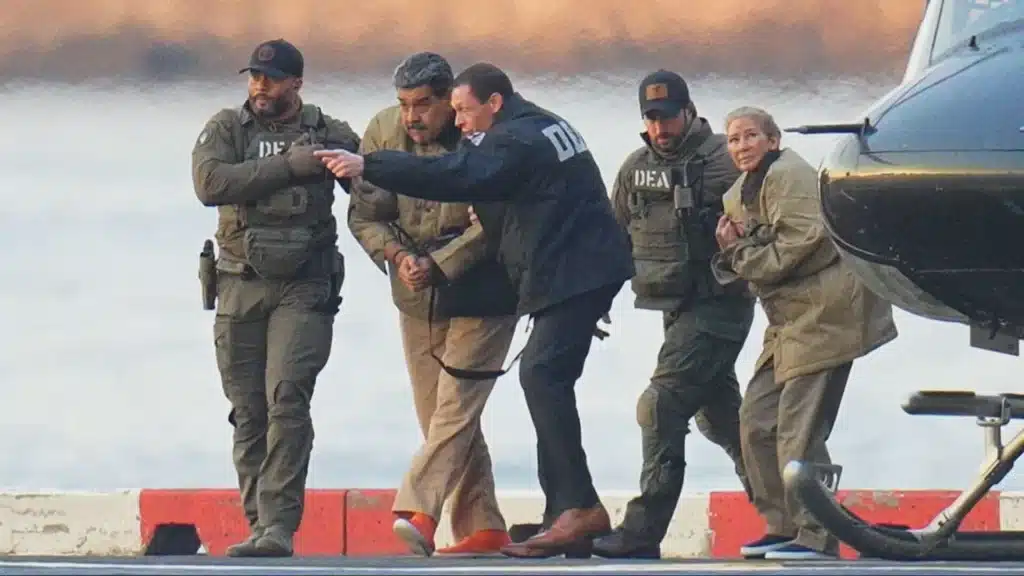
This analysis builds on N-LAWS’ earlier reporting on the capture of Maduro and the United States’ assertions of interim control over Venezuelan institutions. Readers seeking a factual account of how the operation unfolded and the immediate political reactions can refer to the full news report here:
https://n-laws.com/us-interim-control-venezuela-maduro-capture/
The Legal Basis Claimed by the United States
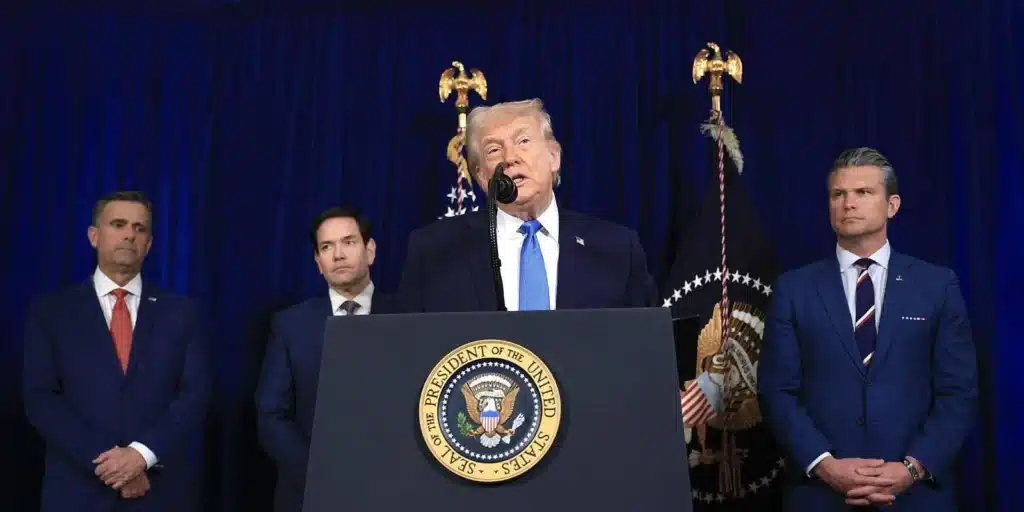
The United States has justified the capture of Nicolás Maduro primarily by invoking domestic criminal jurisdiction based on long-standing indictments alleging drug trafficking and narco-terrorism. U.S. authorities argue that these offenses produced substantial effects on U.S. security interests, allowing federal courts to exercise extraterritorial jurisdiction over a foreign national.
Under U.S. law, such jurisdictional claims are not unusual where Congress has clearly authorized extraterritorial reach and where the alleged conduct has a direct or foreseeable connection to the United States. From a domestic perspective, the assertion of jurisdiction may therefore be legally sustainable.
Assertion of Universal and Protective Jurisdiction
Supporters of the U.S. position argue that the alleged offenses attributed to Nicolás Maduro fall within categories of conduct that justify expanded jurisdiction under international law. Drug trafficking and narco-terrorism are often characterized as transnational crimes with cross-border effects, permitting states to invoke forms of protective or universal jurisdiction when their national security is directly threatened.
From this perspective, U.S. authorities contend that the scale and impact of the alleged criminal activity justified exceptional measures, particularly where domestic legal processes within the territorial state were viewed as unavailable or ineffective.
Questioning the Applicability of Head-of-State Immunity
Another central argument advanced by U.S. officials concerns the scope of head-of-state immunity. While customary international law recognizes personal immunity for sitting heads of state, U.S. practice has, at times, taken the position that immunity may not apply where a leader is accused of serious transnational crimes or where recognition of legitimate authority is contested.
Proponents of this view argue that immunity should not function as a shield for conduct that undermines international security or facilitates large-scale criminal enterprises. They further assert that immunity doctrines were never intended to protect individuals acting outside lawful governmental authority.
Reliance on the Effects Doctrine and National Security Exceptions
The United States has also relied on the effects doctrine, under which jurisdiction may be asserted where conduct outside a state’s territory produces substantial and foreseeable effects within it. In cases involving narcotics trafficking and terrorism-related offenses, U.S. courts have frequently accepted this rationale.
Applied internationally, this argument suggests that where criminal conduct generates direct threats to a state’s population or institutions, enforcement actions may be justified as necessary measures to protect national security interests, even when conducted extraterritorially.
Argument of Necessity and Exceptional Circumstances
A further defense sometimes invoked is the doctrine of necessity, which permits temporary departures from international obligations where such action is the only means of safeguarding an essential interest against a grave and imminent peril. U.S. officials may argue that the operation was conducted under exceptional circumstances in which alternative legal avenues were unavailable.
While the doctrine of necessity is narrowly construed under international law, its invocation reflects the argument that extraordinary threats may justify extraordinary responses.
Rejection of Territorial Consent as a Practical Requirement
Finally, supporters of the U.S. position contend that requiring consent from the territorial state in cases involving alleged criminal leadership creates an inherent enforcement gap. If a government is unwilling or unable to act against its own leadership, strict adherence to consent-based enforcement mechanisms may render international criminal accountability ineffective.
From this perspective, unilateral action is framed not as a violation of sovereignty, but as a response to governance failure and impunity.
Limits on Enforcement Jurisdiction Under International Law
International law, however, draws a critical distinction between the authority to prosecute and the authority to enforce that prosecution on the following grounds:
Limits on Enforcement and Territorial Sovereignty
Even where a state lawfully claims criminal jurisdiction, international law restricts how that jurisdiction may be enforced. Law-enforcement actions such as arrests or seizures may not be carried out on the territory of another sovereign state without consent.
This principle is grounded in territorial sovereignty and has long been recognized in international jurisprudence. In The Lotus Case (Permanent Court of International Justice, 1927), the court emphasized that a state may not exercise its power in the territory of another state unless international law expressly permits it.
In the present case, the United States has not publicly asserted that Venezuelan authorities consented to the operation, nor has it relied on a recognized extradition process. In the absence of consent or a treaty-based framework, unilateral enforcement action on foreign soil is generally regarded as a violation of sovereignty under international law.
Head-of-State Immunity and Jurisdictional Barriers
The legal position becomes substantially more complex because the operation targeted a sitting head of state. Under customary international law, heads of state enjoy personal immunity, known as immunity ratione personae, from foreign criminal jurisdiction while in office.
This immunity applies regardless of the seriousness of the alleged offenses and is intended to preserve the sovereign equality of states and the stability of international relations. The International Court of Justice reaffirmed this rule in the Arrest Warrant Case (Democratic Republic of the Congo v. Belgium, 2002), holding that domestic courts may not exercise criminal jurisdiction over incumbent heads of state.
International law does not make this immunity dependent on political recognition by foreign governments. Instead, it attaches to the office itself unless lawfully removed by the state concerned or displaced by the jurisdiction of an international criminal tribunal.
Absence of United Nations Authorization or Self-Defense Justification
The absence of authorization from the United Nations Security Council further undermines the international legal basis for the operation. Under the UN Charter, coercive measures involving force against another state are lawful only when authorized by the Security Council under Chapter VII or justified as an act of self-defense in response to an armed attack.
The International Court of Justice has consistently interpreted these exceptions narrowly. In Nicaragua v. United States (1986), the Court rejected broad claims that unilateral enforcement actions could be justified solely on the basis of security or policy interests.
Publicly available information has not indicated that the capture of Maduro was carried out pursuant to Security Council authorization or in response to an armed attack attributable to Venezuela.
Core Legal Vulnerability in the U.S. Position
Taken together, while the United States may assert a domestic legal basis for prosecuting alleged criminal conduct, international law imposes strict limits on how that jurisdiction may be enforced. The unilateral capture of a sitting head of state on foreign territory, without consent or international authorization, remains the central legal vulnerability in the U.S. position.
International law, however, draws a sharp distinction between criminal jurisdiction and lawful enforcement action. While states may prosecute foreign leaders following extradition or voluntary surrender, forcibly apprehending a sitting head of state on foreign territory raises far more serious legal barriers.
How International Courts Would Likely Approach the Case
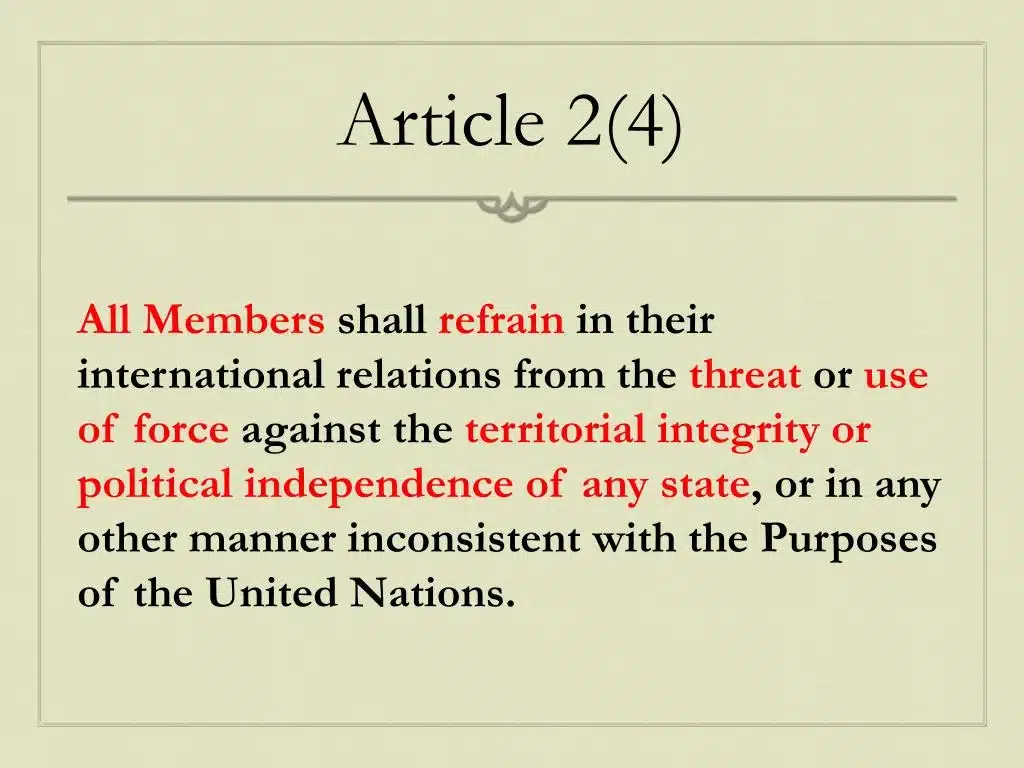
If the legality of Maduro’s capture were assessed by an international judicial body, the analysis would likely begin with the prohibition on the use of force under Article 2(4) of the United Nations Charter. International courts have consistently treated this prohibition as a cornerstone of the international legal system, subject only to narrowly construed exceptions.
The absence of explicit Security Council authorization would weigh heavily against the legality of the operation. International jurisprudence has repeatedly rejected unilateral enforcement actions justified solely on policy or security grounds, emphasizing that such measures risk undermining collective security frameworks.
The court would then likely examine the question of head-of-state immunity. Past decisions, including those of the International Court of Justice, suggest that immunity ratione personae remains applicable before foreign domestic courts, regardless of the seriousness of the alleged crimes. Without involvement of an international criminal tribunal or lawful removal of immunity by the state concerned, immunity would likely be upheld.
Claims based on necessity or exceptional circumstances would be scrutinized narrowly. International courts have historically required that necessity be the only available means to address a grave and imminent peril and that the measure not seriously impair essential interests of other states. Meeting this threshold would present a significant challenge.
Taken together, while an international court might acknowledge the gravity of the alleged offenses and the enforcement concerns raised by the United States, prevailing jurisprudence suggests that unilateral capture of a sitting head of state on foreign territory would face substantial legal obstacles under international law.
Sovereignty and the Prohibition on the Use of Force
Sovereignty is a basic rule of international law. It means that each state has exclusive authority over its own territory and internal affairs. Other states are not allowed to interfere in that authority without consent. This principle exists to maintain stability and prevent conflicts between states.
International law treats sovereignty as a starting point for all legal analysis involving cross-border actions. When a state uses coercive measures inside another state’s territory, it immediately raises legal concerns.
Article 2(4) of the UN Charter
The prohibition on the use of force is set out in Article 2(4) of the United Nations Charter. This provision requires states to refrain from using force against the territorial integrity or political independence of another state. It applies to all UN members and is widely accepted as customary international law.
International courts have consistently interpreted Article 2(4) broadly. It covers not only large-scale military operations but also other coercive actions that intrude on a state’s sovereignty.
How International Courts Interpret the Rule
The International Court of Justice has repeatedly confirmed the strength of the prohibition on force. In Nicaragua v. United States (1986), the Court held that the use of force includes actions that interfere with another state’s sovereignty, even when framed as security measures. The Court rejected arguments that political objectives or general security concerns could justify such actions.
In the Oil Platforms Case (Iran v. United States, 2003), the Court further clarified that claims of necessity or security must meet strict legal standards. States cannot rely on broad or speculative threats to justify unilateral uses of force.
Narrow Exceptions to the Prohibition
International law recognizes only two main exceptions to the prohibition on the use of force. The first is authorization by the United Nations Security Council under Chapter VII of the UN Charter. The second is the right of self-defense under Article 51, which applies only when a state suffers an armed attack.
The International Court of Justice has stressed that self-defense must be necessary and proportionate and must be reported to the Security Council. These conditions are interpreted narrowly to prevent abuse.
Application to Unilateral Capture Operations
Forcibly capturing an individual on the territory of another state without consent generally qualifies as a use of force under international law, even if the action is described as law enforcement. When such an operation targets a head of state, the intrusion into sovereignty and political independence is especially severe.
International law does not recognize a general right for states to carry out unilateral enforcement actions abroad simply because serious crimes are alleged. Without territorial consent or Security Council authorization, such operations face strong legal objections under Article 2(4).
Why the Prohibition Matters
The prohibition on the use of force is designed to prevent escalation and retaliation between states. If unilateral uses of force were widely accepted, the international system would risk shifting from collective security to discretionary enforcement by powerful states.
For this reason, international courts have consistently resisted expanding the exceptions to Article 2(4), even in cases involving serious allegations or urgent political circumstances.
Legal Significance in the Present Case
In the absence of publicly demonstrated Security Council authorization or a qualifying armed attack, the use of force against Venezuelan territory raises serious legal concerns. Under established international law, sovereignty and the prohibition on the use of force remain central barriers to the legality of unilateral capture operations.
Claims of Interim Control and International Administration
International law recognizes that, in limited and exceptional circumstances, a territory may be placed under international or transitional administration. Such arrangements have historically arisen in post-conflict or humanitarian crisis settings and have been grounded in multilateral authorization rather than unilateral action.
Notable examples include Kosovo, where the United Nations Interim Administration Mission (UNMIK) was established through Security Council Resolution 1244 (1999), and East Timor, which was administered by the United Nations Transitional Administration in East Timor (UNTAET) pursuant to Security Council Resolution 1272 (1999). In both cases, international administration was explicitly authorized by the Security Council and exercised collectively rather than by a single state.
A further example is Iraq following the 2003 invasion. Although the legality of the invasion itself was contested, subsequent transitional arrangements, including the Coalition Provisional Authority, were later acknowledged within a Security Council framework, most notably Resolution 1483 (2003). Even in that context, the international legal debate underscored that governance authority required multilateral recognition and oversight.
These precedents demonstrate that international administration is treated as an exceptional legal mechanism, dependent on clear international mandates.
Requirement of Authorization or Consent
Under the United Nations Charter, any arrangement that interferes with a state’s governing authority generally requires authorization from the Security Council under Chapter VII or the valid consent of the territorial state. This requirement reflects the collective security structure of international law and limits unilateral exercises of power over another state’s institutions.
In the absence of Security Council authorization or explicit consent, claims of interim control lack a recognized legal foundation. Publicly available information does not indicate that Venezuelan authorities consented to any form of foreign administration or transfer of governing authority, a fact that significantly weakens the legal basis of such claims.
Sovereign Equality and the Limits of Unilateral Control
The principle of sovereign equality, enshrined in Article 2(1) of the UN Charter, requires that all states be treated as legally equal. Unilateral assertions of interim control risk violating this principle by allowing one state to assume governing authority over another without collective approval.
International law has consistently resisted recognizing unilateral governance claims, even when framed as temporary or stabilizing, due to their potential to undermine the prohibition on intervention and the predictability of the international legal order.
Counter-Argument: Defending Claims of Interim Control
Supporters of interim control claims argue that international law must adapt to situations in which a state’s institutions are allegedly compromised or unable to exercise effective governance. From this perspective, temporary control may be framed as a necessity-driven response aimed at stabilizing conditions, protecting populations, or preventing further harm.
Proponents contend that where multilateral mechanisms are politically paralyzed, limited unilateral action may serve broader international interests, particularly when framed as transitional rather than permanent. While such arguments emphasize pragmatism and effectiveness, they remain legally controversial and have not been clearly accepted as lawful exceptions under established international law.
In simple terms, international law allows temporary foreign administration of a country only in rare cases and usually with approval from the United Nations or the country itself. Past examples like Kosovo and East Timor were managed by the UN, not by a single state acting alone. When a country claims interim control without UN approval or consent, international law generally views this as a violation of sovereignty, even if the claim is described as temporary or necessary.
Economic Coercion and Resource Transfer Concerns
International law recognizes that coercion is not limited to military force. Economic pressure exerted to compel another state to surrender sovereign rights or resources can also raise serious legal concerns. While states are generally free to engage in economic relations, international law draws a line where economic measures are used to force political or sovereign concessions.
The principle of non-intervention prohibits states from using coercive measures, military or economic, to interfere in the internal or external affairs of another state. This principle was affirmed by the International Court of Justice in Nicaragua v. United States (1986), where the Court held that coercive economic measures aimed at influencing another state’s sovereign decisions may constitute unlawful intervention.
Resource Transfers Under Conditions of Coercion
Claims that Venezuelan oil or other natural resources could be transferred as compensation following coercive action raise distinct legal issues. Under international law, permanent sovereignty over natural resources belongs to the state and its people, not to foreign powers. This principle has been repeatedly affirmed in United Nations General Assembly resolutions and forms part of customary international law.
Agreements involving natural resources must be entered into freely and by authorities exercising lawful control. Where resource transfers occur under conditions of military pressure, political coercion, or unlawful intervention, their legal validity is highly questionable. International law generally treats such arrangements as voidable or invalid, particularly if they undermine the economic sovereignty of the affected state.
Occupation Law and Effective Control Considerations
If a foreign state exercises effective control over territory or state institutions, international humanitarian law may also become relevant. Under the law of occupation, an occupying power is prohibited from exploiting natural resources for its own benefit and must administer resources in accordance with the interests of the local population.
Even absent a formal occupation, assertions of control that enable resource extraction risk triggering similar legal scrutiny. International practice has consistently rejected the use of natural resources as compensation for intervention or enforcement actions.
Precedents and International Practice
Historical practice reinforces these limits. In situations where resource exploitation followed military intervention, international legal debate has often focused on the absence of genuine consent and the imbalance of power between the parties. Such concerns were raised in relation to resource arrangements in conflict and post-conflict settings, where international oversight was viewed as essential to legitimacy.
No widely accepted precedent exists in which unilateral enforcement action lawfully resulted in compulsory resource transfers as compensation under international law.
Legal and Market Implications
Beyond legality, claims of coerced resource transfers carry significant economic and market consequences. Uncertainty surrounding ownership, consent, and legality can deter investment, disrupt markets, and expose third parties to legal risk. Companies engaging in transactions involving contested resources may face liability under international law, domestic legislation, or sanctions regimes.
Legal Significance in the Present Context
In the absence of freely given consent or multilateral authorization, economic arrangements framed as compensation following coercive action are likely to face serious legal challenges. International law places strong emphasis on protecting economic sovereignty and preventing the use of pressure to extract strategic resources.
Accordingly, claims involving forced or coerced transfers of Venezuelan oil or other resources represent a further legal vulnerability in the broader framework of unilateral enforcement and interim control assertions.
Counter-Argument: Economic Leverage as Lawful State Practice
Supporters of the U.S. position argue that the use of economic leverage does not automatically amount to unlawful coercion under international law. States routinely condition economic relations, sanctions relief, or access to markets on political or legal compliance, and such practices are widely accepted as lawful tools of statecraft.
From this perspective, resource transfers framed as negotiated compensation or settlement arrangements may be characterized as political agreements rather than coerced expropriation, particularly where no formal state of occupation exists. Proponents further contend that international law does not prohibit all forms of pressure, but only those that deprive a state of its free will in matters reserved to sovereign decision-making.
Where agreements are presented as transitional, revocable, or linked to broader stabilization efforts, supporters argue that economic leverage can be defended as a pragmatic response to governance breakdown rather than an unlawful interference with economic sovereignty.
Regional and Global Implications
The capture of a sitting head of state and subsequent claims of interim control have heightened regional tensions and raised concerns about political and security stability. Neighboring states and regional actors have warned that unilateral enforcement actions risk escalation, public unrest, and spillover effects, including refugee movements and cross-border tensions. These concerns reflect the underlying purpose of international law’s non-intervention and use-of-force rules, which seek to prevent destabilizing chain reactions.
Regional Stability and Sovereignty Concerns
Regional responses have reflected deep sensitivity to sovereignty. While reactions vary politically, many states have expressed unease about precedents that could normalize extraterritorial enforcement against sitting governments. The absence of broad regional support weakens claims that such actions serve collective or stabilizing interests.
Implications for the International Legal Order
At the global level, the case raises broader questions about the durability of international legal constraints. If unilateral capture operations and interim control claims were accepted as lawful, other states could invoke similar reasoning, eroding the prohibition on the use of force and the principle of sovereign equality. International law depends on consistent restraint; departures from established norms risk reducing predictability and increasing conflict.
Long-Term Consequences for Global Governance
Ultimately, the case highlights a growing tension between demands for effective enforcement against transnational wrongdoing and the limits imposed by sovereignty-based rules. How states respond will shape future expectations about lawful enforcement, regional stability, and the balance between accountability and international order.
Why This Matters Legally
The legal issues raised by the capture of Nicolás Maduro extend well beyond the immediate political dispute. At stake are core principles of international law that govern how states exercise power beyond their borders, including sovereignty, jurisdiction, the prohibition on the use of force, and the limits of economic and political coercion.
If unilateral capture operations, claims of interim control, or coerced resource transfers were accepted as lawful, they would weaken long-standing legal restraints designed to prevent escalation and protect sovereign equality. International law relies on these restraints to ensure that enforcement actions occur through collective mechanisms rather than unilateral force.
The case also highlights the growing gap between the demand for accountability in cases of alleged transnational crime and the limited capacity of existing international institutions to deliver that accountability. How states respond to this gap, whether by strengthening multilateral mechanisms or bypassing them, will shape the future balance between legality and effectiveness.
Ultimately, this dispute serves as a test of whether international law remains a meaningful constraint on state power or evolves toward a more discretionary system in which enforcement depends on political strength rather than legal authorization. The outcome will influence not only this case, but future approaches to extraterritorial enforcement, leadership accountability, and global stability.
Conclusion
The capture of Nicolás Maduro and the subsequent claims advanced by the United States present a critical test for the contemporary international legal order. While states have legitimate interests in combating transnational crime and addressing governance failures, international law imposes firm limits on how those interests may be pursued.
The principles of sovereignty, non-intervention, head-of-state immunity, and collective authorization remain central safeguards against unilateral coercion. How these principles are interpreted and applied in this case will shape future expectations about lawful enforcement, accountability, and the balance between effectiveness and legality in international relations.
For detailed factual reporting on how the operation unfolded and the immediate political responses, readers can consult N-LAWS’ earlier coverage here:https://n-laws.com/us-interim-control-venezuela-maduro-capture/
Frequently Asked Questions
Is the capture of Nicolás Maduro legal under international law?
The legality of Nicolás Maduro’s capture is highly contested. Under international law, forcibly apprehending a sitting head of state on foreign territory without consent or UN authorization generally violates principles of sovereignty and the prohibition on the use of force.
Does international law allow the arrest of a sitting head of state?
Customary international law grants sitting heads of state personal immunity from foreign criminal jurisdiction. This immunity applies even in cases involving serious allegations, unless lifted by an international tribunal or the individual’s own state.
Can the United States claim interim control over another country?
International law does not recognize unilateral claims of interim or temporary control over another sovereign state. Legitimate international administration typically requires multilateral authorization, such as a UN mandate or peacekeeping arrangement.
What role does the United Nations Charter play in this case?
Article 2(4) of the United Nations Charter prohibits the use of force against the territorial integrity or political independence of any state. Any exception must meet strict legal criteria, such as self-defense or Security Council authorization.
Is economic compensation through resource transfers lawful after military intervention?
Resource transfers negotiated under conditions of coercion or following unlawful intervention may be legally invalid under international law. Such arrangements raise serious concerns related to economic sovereignty and the exploitation of natural resources.
Could this case set a precedent for future international interventions?
Yes. If accepted as lawful, similar actions could be cited by other states to justify extraterritorial enforcement through force, potentially weakening long-standing norms of non-intervention and sovereign equality.
How does this differ from lawful extradition?
Lawful extradition requires formal legal processes, treaty obligations, and the consent of the state where the individual is located. Forcible capture without such procedures is fundamentally different and far more controversial under international law.
Why is this case significant for international law?
The case tests foundational principles governing sovereignty, jurisdiction, the use of force, and economic coercion. Its outcome may influence how international law constrains state power in future geopolitical crises.