
Davos, Switzerland — U.S. President Donald Trump’s controversial push to assert U.S. control over Greenland has overshadowed the 2026 World Economic Forum in Davos. This not only triggered sharp rebukes from European leaders but has also raised fresh questions about the future of the transatlantic alliance and the rule of law in international relations. This situation developed after days of intense controversy, following Trump publicly threatening sweeping tariffs against European allies to pressure Denmark over Greenland’s status.
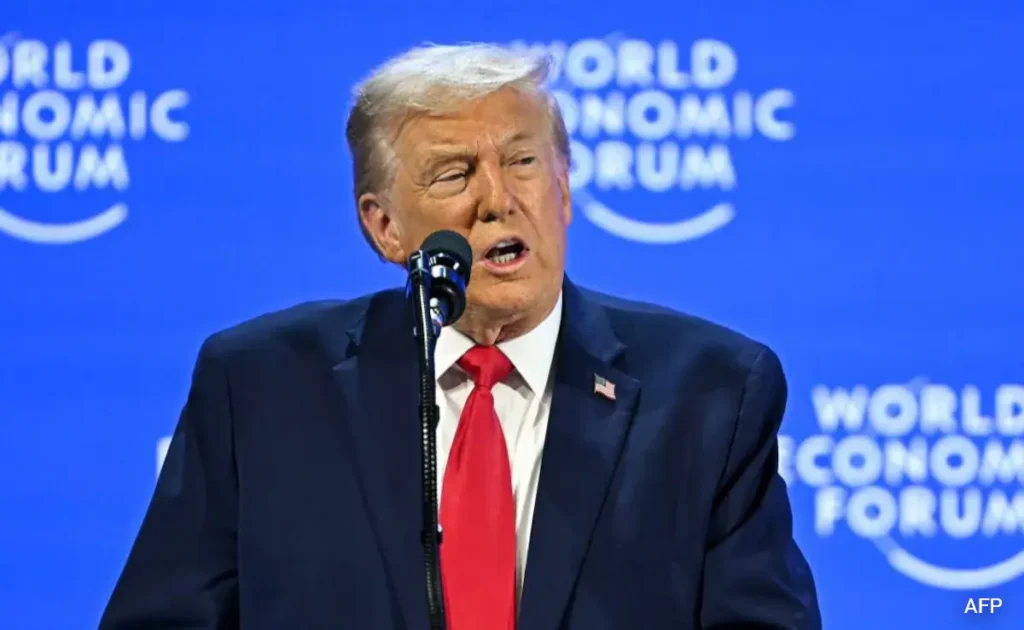
European leaders have lined up to condemn Donald Trump’s “new colonialism” and warn that the continent is facing a crossroads as the US president said there is no going back on his goal of controlling Greenland. In a dramatic turn, President Trump announced that the United States will “not impose previously threatened tariffs” on several European countries over objections to his push regarding Greenland, saying a “framework” for future discussions has been agreed upon with allies.
Trump’s Davos Speech: Tariffs, Greenland, and a Dramatic U-Turn
At the annual gathering of global political and business elites, Trump doubled down on his previously announced plan to impose significant tariffs on European allies opposed to U.S. ambitions over Greenland, a semi-autonomous Danish territory seen as strategically critical in the Arctic. He said the U.S. had effectively saved Europe during World War II and even declared of NATO:
“It’s a very small ask compared to what we have given them for many, many decades.”
While Trump insisted he would not deploy military force to take Greenland, he asserted that the United States is uniquely positioned to secure and defend the island and warned that the refusal to negotiate could result in tariffs of 10% escalating to 25% on imports from several European countries. Trump’s Davos comments mirrored his language on the Chagos Islands, where he framed allied sovereignty decisions as strategic weaknesses justifying stronger U.S. leverage.
The speech came after Trump’s flight to Davos was delayed following a midair turnaround of Air Force One due to a “minor electrical issue” and a transatlantic flight on a backup jet. Trump’s remarks, which also included criticism of NATO and European economic policies, reframed this year’s forum from multilateral cooperation to a tense spotlight on U.S.–Europe relations.
But in a dramatic U-Turn, President Trump, after a meeting with NATO Secretary General Mark Rutte, announced that the United States will:
“not impose previously threatened tariffs.”
President Trump said progress had been made toward a potential agreement on the Arctic island, which the U.S. has long viewed as strategically critical. Trump ruled out imposing tariffs that were scheduled to take effect on February 1 on nations including Denmark, Germany, France, the United Kingdom, Sweden, Norway, the Netherlands, and Finland, all of which had opposed his broader ambitions relating to the territory.
European Leaders Reject “New Colonialism”
European leaders and institutions have responded with unprecedented diplomatic and economic pushback against Trump’s threats to impose tariffs on NATO allies opposing U.S. ambitions regarding Greenland. European Commission President Ursula von der Leyen has vowed a united and firm response, emphasizing that threats tied to Greenland undermine international law and the transatlantic partnership by saying:
“Arctic security can only be achieved together, and this is why the proposed additional tariffs are a mistake, especially between long-standing allies.”
European Council President António Costa warned that the tariff threats challenge Europe’s security, principles, and prosperity, and stressed the EU’s commitment to defend territorial integrity and sovereignty. EU leaders have convened emergency meetings to coordinate responses, including potential retaliation and reliance on the bloc’s “Anti-Coercion Instrument” to protect EU markets from coercive trade measures.
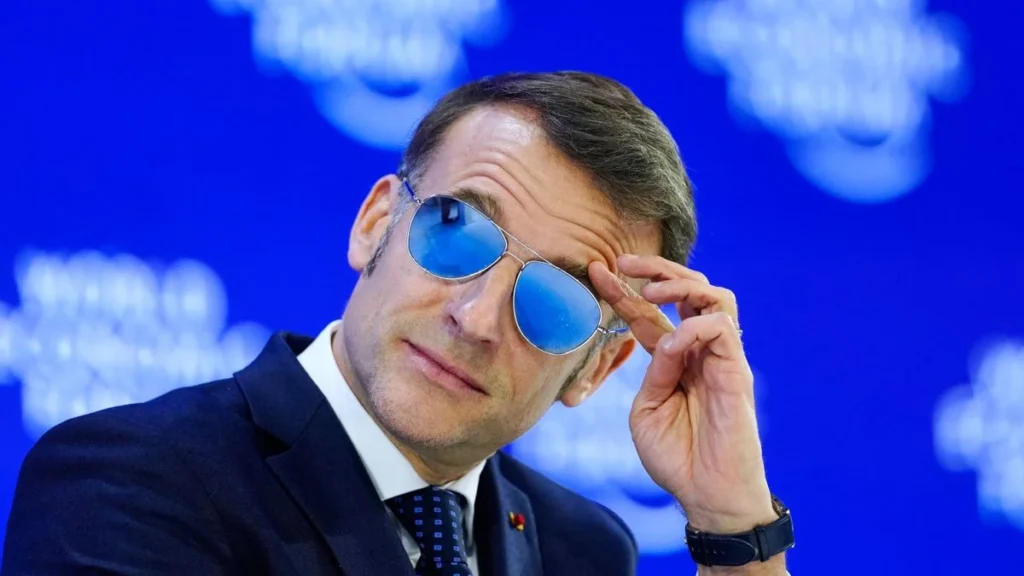
France, Sweden, and Germany have taken particularly strong stances, as Emmanuel Macron, with his charming ‘Top Gun’ shades look opposes Trump’s Greenland takeover, warning that:
“No amount of intimidation” will persuade European nations to change their course on Greenland.”
Sweden’s Ulf Kristersson warns the EU will not be:
“blackmailed by tariff threats and urging unity and resilience within the 27-member bloc.”
The European Parliament has reacted by suspending progress on a proposed EU-U.S. trade agreement, postponing its formal ratification process in protest against the threatened U.S. tariffs, a move that intensifies pressure on Washington and underscores European lawmakers’ belief that Trump’s strategy breaches the terms of existing trade cooperation.
Across capitals, leaders from the United Kingdom, Norway, Spain, Poland, and other EU states have united in public statements affirming that Greenland’s future is a matter for Denmark and its people, not unilateral pressure from an ally. European officials have reiterated that respect for sovereignty, territorial integrity, and international law must guide diplomatic engagement, and have signaled readiness to defend these principles economically and politically.
These reactions reflect deepening transatlantic tensions under Trump’s second term, as traditional alliances face stress tests over sovereignty disputes and the use of economic tools as leverage in geopolitical negotiations.
European Reaction: Trade Tensions Cool but Skepticism Remains
European officials welcomed the withdrawal of tariff threats but stopped short of full diplomatic relief. The European Parliament has halted progress on a proposed EU–U.S. trade agreement, citing U.S. tariff threats and Greenland tensions as undermining trust in transatlantic trade cooperation. Lawmakers are pushing for safeguards to guard against future coercive economic measures.
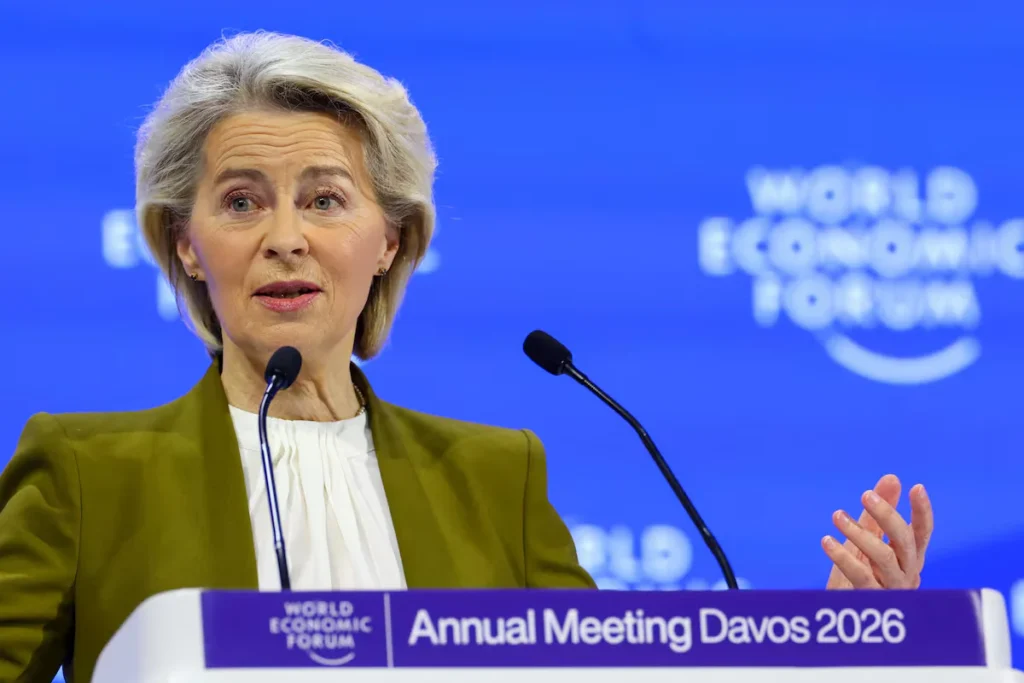
Earlier in the dispute, EU leaders, including Commission President Ursula von der Leyen, characterized the tariff threats as a strategic error that risked undermining longstanding trade and diplomatic relations, saying:
“When friends shake hands, it must mean something.”
Despite the latest de-escalation, skepticism persists in European capitals, where officials stress that sovereignty and rule-based diplomacy must guide discussions about Greenland’s future.
Trump’s decision not to impose tariffs was framed as part of a broader “framework of future cooperation” with NATO allies on Arctic security, an area of increasing geopolitical importance amid competition with Russia and China. Trump also reiterated that the United States “won’t use force” to alter Greenland’s status, a clarification aimed at assuaging European concerns over earlier rhetoric.
NATO officials described the move as an opportunity to recalibrate cooperation in the Arctic region, although they acknowledged lingering tensions over how best to balance alliance commitments with bilateral interests.
What Comes Next: Diplomacy Over Tariffs
The Greenland episode, from tariff threats to their abrupt retraction, reflects the volatility now shaping parts of U.S.–European relations. While the tariff reversal reduces the immediate threat of a transatlantic economic dispute, many analysts warn that structural mistrust remains. European governments are expected to pursue formal discussions on Arctic policy, sovereignty, and economic cooperation to prevent future unrest.
The suspension of tariff threats may also revive talks on the previously negotiated Agreement on Reciprocal, Fair, and Balanced Trade between the U.S. and the EU. That pact, which would have harmonized tariff levels and modernized trade relations, stalled amid Greenland tensions and political backlash from lawmakers demanding respect for sovereign decision-making.
European officials have indicated that trade negotiations could resume once diplomatic confidence is restored, highlighting that mutual economic interests remain strong even as political friction over security and territorial questions persists.
Trump’s reversal on tariffs signals a potential shift toward diplomacy after a period of sharp rhetoric. However, despite the suspension of tariffs, the core dispute over Greenland’s sovereignty and the legality of coercive economic pressure remains unresolved, as highlighted by the earlier escalation over Greenland’s sovereignty and tariff pressure.