
A dramatic constitutional and economic confrontation has erupted in Washington after Donald Trump launched a sweeping new 10% global tariff proposal shortly after publicly attacking a recent U.S. Supreme Court ruling. This 10% tariff as of now has further been increased to 15%, that has stunned global markets and ignited intense debate among legal experts, with critics warning that linking trade retaliation to judicial disagreement risks pushing the United States into a historic separation-of-powers and international trade crisis.
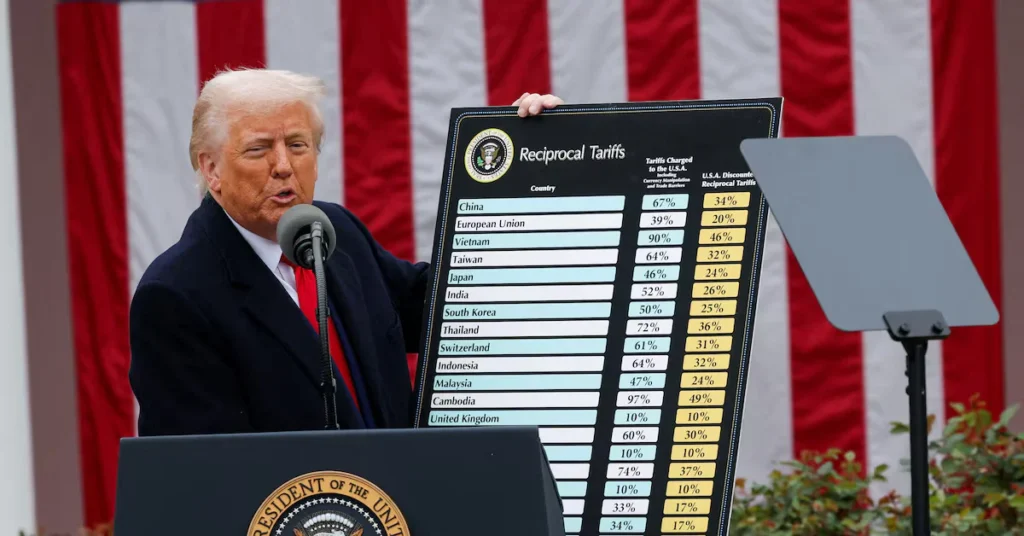
The proposed tariff regime, framed by Trump as an “economic reset” following what he called an unfavorable court decision, could reshape global commerce while simultaneously testing the constitutional limits of presidential authority. Lawyers and policy analysts say the move may trigger a wave of domestic litigation and international trade disputes within weeks.
Legal observers describe the announcement as a direct political counter-move to the Supreme Court decision, with Trump publicly arguing that the judiciary had “interfered” with the executive branch’s ability to defend U.S. economic interests.
The dispute follows the landmark February 2026 Supreme Court ruling in Learning Resources, Inc. v. Trump, where the Court held that the International Emergency Economic Powers Act (IEEPA) does not authorize a president to impose tariffs without congressional approval. The majority opinion concluded that the statute’s language does not grant unilateral tariff-setting authority, rejecting the administration’s argument that emergency economic powers permitted sweeping import duties.
Supreme Court Criticism Sparks Institutional Showdown
Trump’s sharp criticism of the Supreme Court itself carries no direct legal penalty under U.S. law, as political leaders retain wide free-speech protection to challenge judicial reasoning. However, the legal storm centers on what came next: a sweeping tariff announcement widely interpreted as a retaliatory policy move following the ruling.
Constitutional scholars warn that while presidents may disagree with court judgments, they cannot legally bypass or undermine binding judicial interpretations. If the tariff plan is perceived as an attempt to circumvent judicial limits on executive authority, federal courts could be asked to intervene quickly through emergency injunctions.
Legal observers describe the situation as one of the most serious institutional confrontations in years between the executive branch and the judiciary over economic powers. Such litigation would center on the separation of powers doctrine, which requires the executive branch to comply with judicial interpretations of law. Persistent attempts to bypass a ruling could trigger constitutional disputes over executive overreach.
Legal Basis for Global Tariffs Under Scrutiny
The administration is expected to rely on existing trade laws such as Section 301 of the Trade Act of 1974 and Section 232 of the Trade Expansion Act to justify the tariffs. These statutes allow tariffs under specific conditions, including national security concerns or unfair trade practices.
However, legal experts stress that such laws require formal investigations, evidence-based findings, and procedural safeguards before tariffs can be imposed. A blanket global tariff without detailed justification could face immediate legal challenges under the Administrative Procedure Act.
Major business groups and import-dependent industries are already preparing lawsuits arguing that sweeping tariffs without statutory compliance would exceed presidential authority and violate established trade law procedures.
Congress and Courts May Move to Block Tariff Plan
The unfolding dispute has also reignited debate over Congress’s constitutional power to regulate commerce. Lawmakers from both parties are reportedly considering oversight hearings and possible legislative action to restrict executive tariff powers if the proposed measures proceed.
Courts could also become a decisive battleground. If affected companies or states file legal challenges, judges may examine whether the tariffs are grounded in lawful statutory authority or represent an attempt to bypass judicial limits. A finding of executive overreach could lead to immediate suspension or invalidation of the tariffs.
White House officials indicated that new tariffs could be introduced under trade-deficit or national-security justifications rather than emergency economic powers previously struck down by the Court.
Global Trade Fallout and WTO Risks
International reaction has been swift, with major trading partners warning that across-the-board tariffs could violate World Trade Organization obligations. Governments in Europe and Asia are already evaluating retaliatory measures and possible WTO dispute filings.
Trade lawyers note that a unilateral global tariff could trigger one of the largest waves of trade litigation in years, potentially leading to counter-tariffs on U.S. exports and escalating economic tensions worldwide. Multinational companies fear sudden cost increases, disrupted supply chains, and contract disputes as uncertainty spreads across global markets.
Economic Shockwaves and Investor Anxiety
Financial markets responded cautiously to the announcement, with investors warning that sudden tariff shifts could destabilize international trade flows. Corporate groups have cautioned that abrupt policy changes may trigger commercial litigation, supply-chain restructuring, and even investor-state arbitration claims if foreign investors suffer losses.
Economists warn that the combination of constitutional conflict and global trade escalation could amplify market volatility and strain diplomatic ties with key allies.
A Defining Test of Presidential Power
At its core, the confrontation raises a profound legal question: can a president deploy sweeping trade measures immediately after a Supreme Court setback without violating constitutional limits? While political criticism of the judiciary is protected speech, policy actions perceived as retaliatory against court rulings may face swift judicial scrutiny.
The coming weeks are expected to determine whether Trump’s tariff strategy survives constitutional and international legal challenges. If struck down, the dispute could redefine the limits of presidential trade authority. If upheld, it may signal a new era where economic policy becomes a frontline tool in institutional power struggles.
Either way, the clash has already transformed into one of the most sensational legal and geopolitical showdowns of 2026, a high-stakes battle over tariffs, courts, and the boundaries of executive power.