
Bern, Switzerland — In a significant animal-welfare reform taking effect this year, Switzerland has officially banned the live shredding of male chicks in the egg-production industry, marking a major legal shift away from a long-criticized practice that has drawn global ethical scrutiny. Effective January 1, 2026, Swiss poultry producers will no longer be permitted to kill newly hatched male chicks simply because they are male and considered economically unviable, a move animal-rights advocates have championed for years as part of broader cruelty-reduction reforms.
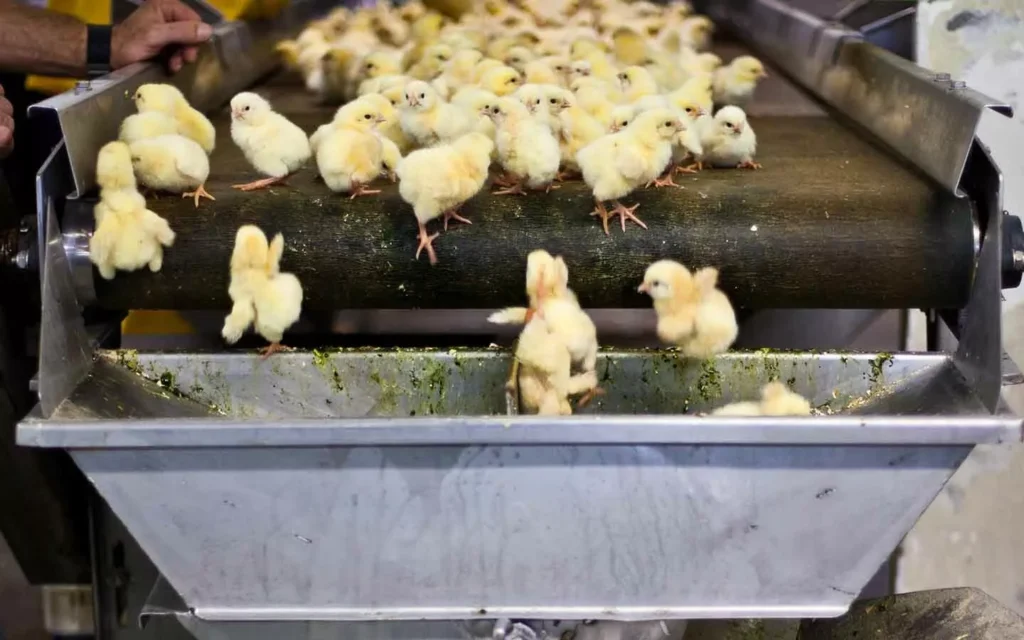
Under previous practice, male chicks, which cannot lay eggs and are less profitable for meat production, were often killed shortly after hatching. In line with longstanding Swiss animal-welfare norms, the Animal Welfare Act prohibits unnecessary suffering and harm to animals, and since 2019, Switzerland has already outlawed the maceration (shredding) of live chicks, even though the method had fallen out of regular use.
The new prohibition extends this principle across the egg industry, in which male chicks must no longer be routinely culled after hatch, and producers are instead expected to adopt alternatives such as in-ovo sex-identification technology to determine chick gender before hatching, dual-purpose breeds, or ethically humane euthanasia techniques consistent with both animal-welfare law and industry standards.
Legal and Regulatory Context
Switzerland’s ban builds upon its stringent animal-welfare framework. The Animal Welfare Act (AniWA) 2005 establishes broad protections against inflicting pain or suffering on animals without justification, a legal foundation that has enabled incremental reforms such as eliminating inhumane slaughtering methods.
While Switzerland banned the specific practice of shredding male chicks nearly a decade ago, the broader industry, including methods like gassing or other forms of killing, remained legally permissible under certain conditions until the end of 2025.
The 2026 policy change represents a formal closure of loopholes that had enabled routine culling of male chicks, aligning practice with both ethical standards and evolving public expectations regarding farm-animal treatment.
Industry and Welfare Reactions
Animal-welfare organizations and ethicists have widely praised Switzerland’s decision as a global leader in humane animal-production standards. Advocates note that modern technologies, such as pre-hatch sex identification and alternative breeding practices, make the routine culling of male chicks both avoidable and ethically indefensible.
Critics of the previous regime argued that the practice reduced sentient beings to mere by-products of production, contravening the dignity principles enshrined in AniWA and consistent with contemporary welfare jurisprudence.
Egg producers and agricultural stakeholders have acknowledged the shift, emphasizing the need for practical implementation timelines and support for adopting humane alternatives. Swiss poultry associations have indicated their intent to collaborate with technology providers and farmers to ensure a smooth transition that balances ethical obligations with economic viability.
Comparative Legal Landscape
Switzerland’s move fits within a broader trend of countries reforming animal cruelty laws. Several EU-member states, including France and Germany, have also committed to banning the routine culling of male chicks and exploring in-ovo sexing technologies, although the specific legal mechanisms and timelines vary.
Switzerland’s 2026 ban thus highlights its position at the forefront of animal-welfare legislation, particularly in areas where ethical considerations increasingly influence statutory reform.
Comparative Table
| Country / Jurisdiction | Current Legal Status (2026) | Key Regulatory Measures / Notes | Practical Alternatives Encouraged or Mandated |
|---|---|---|---|
| Switzerland | Ban on live maceration/shredding and strengthened prohibition on routine post-hatch culling (effective 2026) | Animal Welfare Act foundations; formal closure of loopholes permitting routine killing methods; enforcement and transition support announced | In-ovo sex-identification, dual-purpose breeds, humane euthanasia protocols, mandatory phase-in timelines |
| Germany | National phase-out announced; commercial use restricted with timelines to eliminate post-hatch culling | Government strategy under animal-welfare legislation with subsidies for in-ovo technology adoption; regulatory roadmaps in place | In-ovo sexing widely piloted; incentives for breeding alternatives and certification schemes |
| France | Policy commitment to end routine culling; industry commitments and EU coordination | Ministerial roadmaps and funding for R&D; moves to require earlier sexing where feasible | In-ovo sexing pilots; certification and labelling schemes for welfare-friendly eggs |
| United Kingdom | Industry transition plans supported by government guidance; regulatory reform proposals under consideration | No blanket criminal ban across UK as of 2026 but strong regulatory pressure and retailer commitments | In-ovo sexing pilots, dual-purpose breeds, retailer codes of practice |
| European Union (overview) | EU-level policy alignment and funding incentives; member states taking varied legal steps | EU regulatory instruments and funding to accelerate non-culling solutions; potential harmonized standards under animal-welfare initiatives | EU grant support for in-ovo tech; guidance on humane practices and labelling |
| United States | No federal ban; state-level actions limited and patchwork regulation | Industry self-regulation and animal-welfare standards from NGOs; USDA guidance varies; litigation rare | Voluntary in-ovo tech adoption; market pressure from retailers and consumers |
| Brazil | No national ban; industry practice continues with growing NGO pressure | Regulatory focus remains on biosecurity and food safety; animal-welfare reforms discussed | Limited adoption of alternatives; pilot projects emerging |
| Japan | Industry and government exploring in-ovo sexing; no comprehensive ban | Government funding for tech pilots and industry guidance; cultural and market differences affect uptake | In-ovo sexing trials; gradual adoption encouraged |
| India | No formal ban; regulatory attention limited | Focus remains primarily on large-scale poultry efficiency; animal-welfare activism increasing | Small number of pilots for dual-purpose breeds and humane practices |
| Canada | Provincial initiatives and industry commitments; no federal prohibition | Provincial animal-welfare frameworks encourage alternatives; retailers active | In-ovo sexing pilots, industry codes of conduct |
What This Means Going Forward
Switzerland’s 2026 prohibition formalizes a legal trend in high-income jurisdictions that is moving from tolerance of routine post-hatch culling toward legally enforceable bans or phase-outs backed by industry transition support.
- Legal Impact: The ban enforces stricter compliance with animal-welfare law and closes prior regulatory gaps that allowed culling under specific methods.
- Industry Obligations: Egg producers must adopt humane alternatives to routine culling, potentially increasing operational costs and incentivizing innovation.
- Ethical Precedent: Switzerland’s decision may influence legislative developments globally as activists and policymakers push for similar bans in other jurisdictions.
Switzerland’s 2026 prohibition on live shredding of male chicks thus represents both a legal clarification and a normative shift, reinforcing that cruelty-free livestock practices are becoming an established expectation in animal welfare jurisprudence. Switzerland’s move is likely to accelerate EU harmonization and push retailers globally to drive change in supply chains.