
Learn the essentials of environmental conservation in this beginner’s guide. Discover global laws, practical sustainability tips, and ways you can protect the planet today.
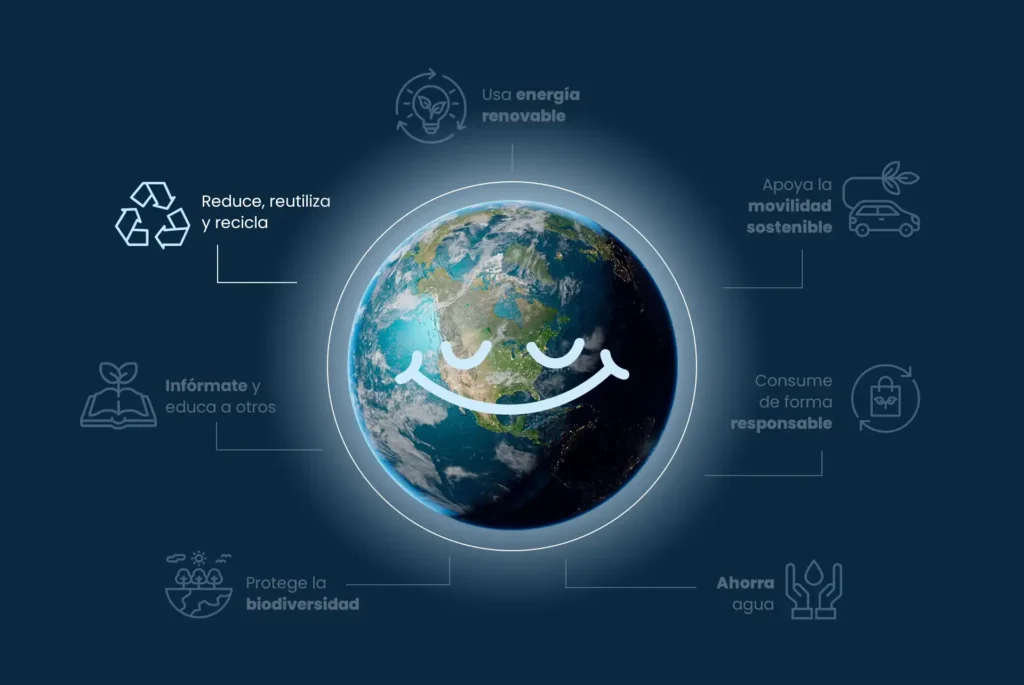
Environmental conservation is more than planting trees or cleaning beaches. It’s a global effort to protect air, water, land, and wildlife. From international climate agreements to local recycling programs, conservation involves laws, enforcement, compliance, and individual participation. Whether you’re a student, professional, or simply curious, this beginner-friendly guide breaks down everything you need to know about protecting the environment, why it matters globally, and real-world examples you can relate to.
According to Worldpackers:
“Environmental conservation focuses on preserving natural resources, like forests, wildlife, water and energy, for present and future generations.”
Understanding Environmental Conservation
Environmental conservation is the practice of protecting the environment and natural resources from harmful human activities. EcoCart explains that conservation is:
“the protection of plants and animals, natural areas, and interesting and important structures and buildings, especially from the damaging effects of human activity.”
At its core, environmental conservation aims to balance human needs with environmental health. This involves numerous activities including:
- Preserving natural habitats like forests, wetlands, and grasslands
- Protecting endangered species from extinction
- Reducing pollution in air, water, and soil
- Promoting sustainable resource management
- Restoring degraded ecosystems
Leverage Edu emphasizes that:
“environmental conservation is a practice that paves the way for protecting the environment and natural resources at the individual, organisational as well and governmental levels.”
The scope of environmental conservation is broad and multifaceted. It includes efforts to combat climate change, manage natural resources sustainably, reduce human impact on ecosystems, and raise awareness about environmental issues to promote sustainable practices.
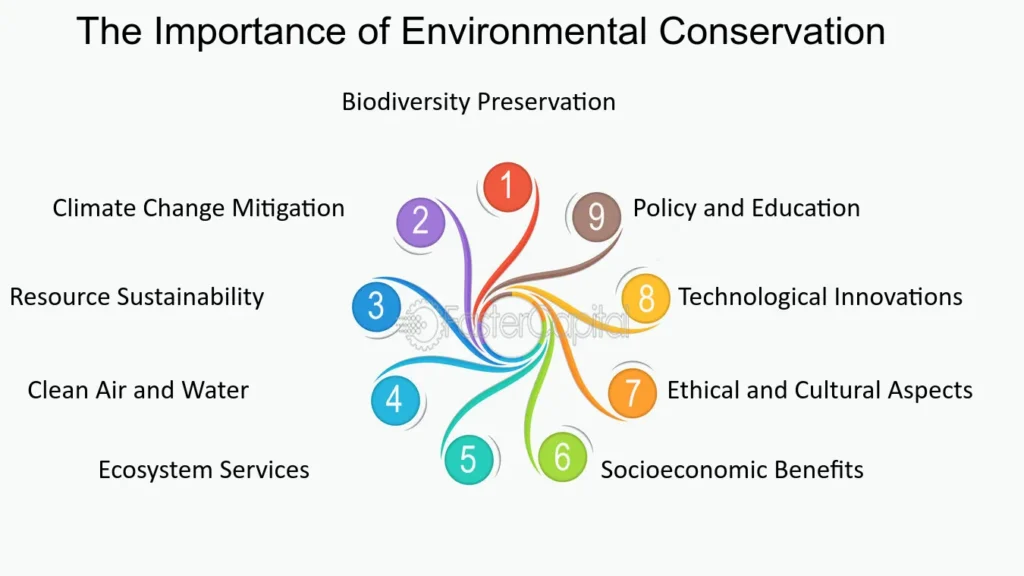
Source: Environmental Conservation
Why Environmental Conservation Matters
Protecting Biodiversity
Our planet thrums with an incredible diversity of life, with each species playing a vital role in maintaining ecosystem balance. Worldpackers notes that:
“environmental conservation seeks to counteract these negative effects by protecting habitats through sustainable practices which help to preserve biodiversity.”
Biodiversity loss has reached critical levels. Human activities, particularly habitat destruction, pollution, and climate change, have pushed countless species toward extinction. Conservation efforts work to protect vulnerable species and the ecosystems they depend on, maintaining the complex web of life that supports all living things, including humans.
Combating Climate Change
Our actions, particularly burning fossil fuels and rampant deforestation, wreak havoc on our climate. Greenhouse gas emissions are major contributors to environmental challenges, impacting air quality and contributing to global warming. CleanHub warns that:
“without environmental sustainability, climate disasters and severe weather events will become increasingly common.”
Environmental conservation, especially through reforestation, renewable energy use, and responsible land management, aims to mitigate the negative effects of human activity on the environment.
According to EcoCart:
“GHG emissions need to be cut in half every single year to keep global warming below 1.5º C above pre-industrial levels. Reforestation and conservation of forests is an important feature of carbon removal.”
Ensuring Clean Air and Water
Environmental conservation plays a huge role in keeping our water and air clean. Wetlands, forests, and other natural areas act as nature’s filtration systems, purifying air and water naturally.
CleanHub reports that:
“it’s estimated that an average of 9 million people die globally from air, water, soil, or ocean pollution each year.”
This clearly shows that we need environmental conservation not only to improve our health but also to remove a major threat to life.
Protecting Human Health and Wellbeing
Human wellbeing is intrinsically linked to environmental health. Inspire Clean Energy states that:
“about 24% of global human deaths are caused directly or indirectly by avoidable environmental factors.”
To live long and healthy lives, we need unpolluted air to breathe, clean water to drink, and to live in places free of toxic substances. From breathing polluted air to eating contaminated food, environmental degradation takes a toll on our lives.
Securing Future Generations
Greengage Solutions emphasizes that:
“environmental sustainability is crucial in safeguarding the well-being and quality of life for future generations.”
By committing to sustainable practices today, we ensure that essential resources such as clean water, fertile soil, and breathable air remain available for our children and grandchildren. Conservation is fundamentally about intergenerational equity, ensuring that today’s actions don’t harm future generations’ ability to meet their needs.
Key Areas of Environmental Conservation
Forest Conservation
Forests cover approximately 31% of Earth’s land area and provide critical ecosystem services. They absorb carbon dioxide, produce oxygen, regulate water cycles, prevent soil erosion, and house incredible biodiversity.
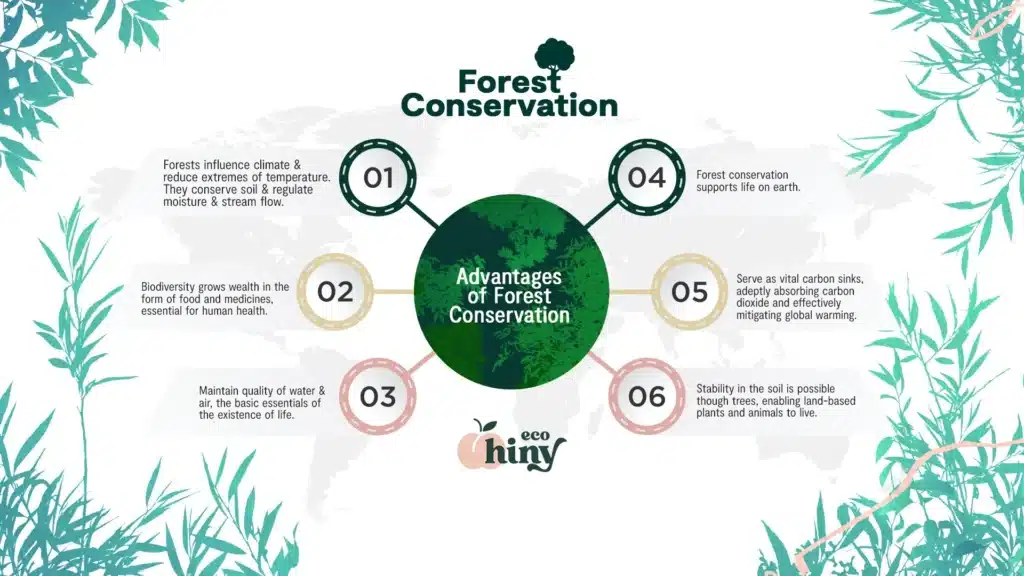
Source: Forest Conservation
Every year, we lose huge numbers of forest life due to fires, logging, and land conversion. Afforestation (planting new forests) and protecting existing forests are among the best ways to conserve the environment.
Wildlife Conservation
Wildlife conservation protects animal species and their habitats from extinction. This includes establishing protected areas, combating poaching and illegal wildlife trade, breeding endangered species in captivity, and restoring degraded habitats.
Species on the verge of extinction must be saved not only for their intrinsic value but because each species plays unique roles in ecosystem functioning.
Marine Conservation
Our oceans cover 71% of Earth’s surface and support incredible biodiversity while regulating climate. However, oceans face threats from overfishing, pollution (especially plastic), ocean acidification, and habitat destruction.
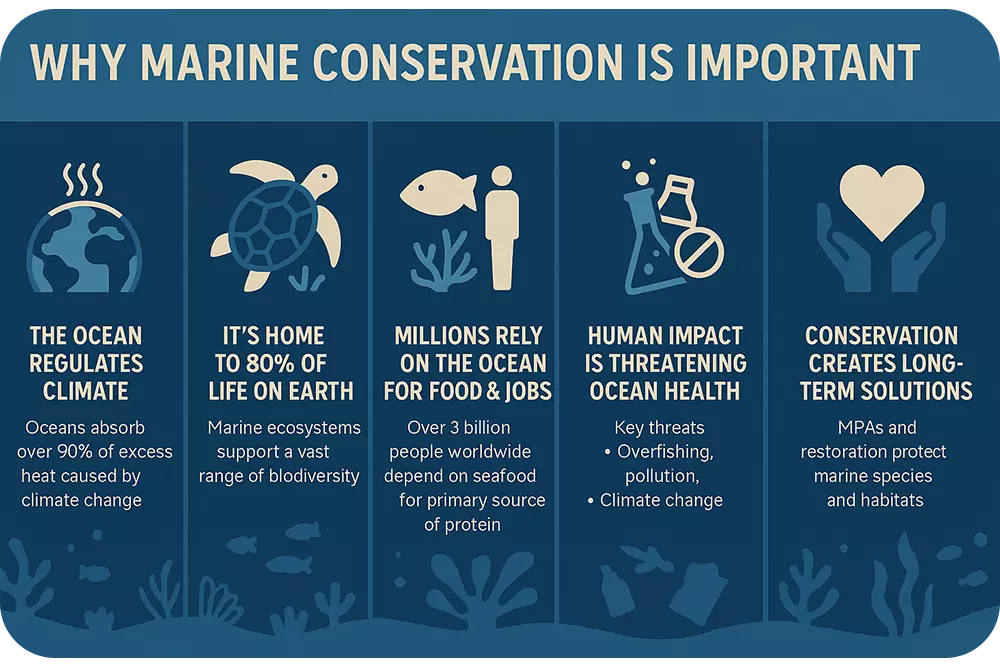
Source: Marine Conservation
By establishing protected marine areas, advocating for sustainable fishing methods, and cleaning up plastic waste already choking our oceans, marine conservation aims to protect these vital ecosystems.
Water Conservation
From showering to farming, from brushing teeth to producing clothes, our daily lives depend on water. However, freshwater resources are under increasing pressure from overuse, pollution, and climate change.
Water conservation encourages us to use this precious resource wisely through practices like fixing leaks promptly, installing water-efficient appliances, and adjusting irrigation methods in agriculture. Reducing water waste lessens strain on freshwater resources, especially important in regions grappling with water scarcity.
Soil Conservation
Healthy soil is fundamental to food production and ecosystem health. Soil conservation prevents erosion, maintains soil fertility, and protects against degradation through practices like crop rotation, terracing, and maintaining vegetation cover.
Energy Conservation
Energy conservation reduces consumption and promotes efficient use, mitigating impacts associated with energy production, including greenhouse gas emissions and resource depletion. This includes using renewable energy sources, improving energy efficiency, and reducing unnecessary consumption.
The Difference Between Conservation and Sustainability
While often used interchangeably, conservation and sustainability have important distinctions. EcoCart clarifies that while both approaches protect nature from human activity:
“conservation seeks to preserve nature whereas sustainability attempts to cause little or no damage in the hopes of continued resource use and symbiosis between humans and nature.”
Conservation focuses on protecting nature, often by restricting or prohibiting human use. For example, if a forest were protected through conservation, activities like logging or building would be banned.
Sustainability aims to meet present needs without compromising future generations’ ability to meet theirs. Inspire Clean Energy defines it as:
“the practice of interacting with the planet responsibly to avoid depleting natural resources and compromising the future generation’s ability to meet their daily needs.”
The Brundtland Commission of 1987 provided sustainability’s widely accepted definition:
“meeting the needs of the present without compromising the ability of future generations to meet their own needs.”
Coursera explains that sustainability rests on three pillars:
- Environmental sustainability: Maintaining ecological integrity as humans use natural resources
- Economic sustainability: Ensuring humans can maintain independence and access resources to meet needs
- Social sustainability: Ensuring basic human needs are attainable by all community members
Conservation works alongside sustainability to save our planet. They complement each other rather than compete.
Environmental Laws Around the World
Environmental laws form the backbone of global conservation. These rules regulate human activities to prevent pollution, conserve natural resources, and protect ecosystems. Key examples include the
- Paris Climate Agreement, which commits countries to reducing greenhouse gas emissions.
- Convention on International Trade in Endangered Species (CITES), which protects endangered wildlife.
- National laws, like the Clean Air Act (USA).
- Environmental Protection Act (UK), provide enforceable standards for pollution control and ecosystem protection.
These laws ensure that environmental conservation is not just a voluntary effort but a global legal responsibility.
Enforcement: Turning Laws into Action
Environmental enforcement is the mechanism through which environmental laws are implemented, monitored, and upheld. Without enforcement, environmental legislation remains ineffective and symbolic. Governments assign enforcement responsibilities to environmental protection agencies, regulatory authorities, and judicial institutions, which monitor pollution levels, conduct inspections, and investigate environmental violations.
Enforcement actions may include financial penalties, suspension of operations, remediation orders, or criminal prosecution in severe cases. For example, industries discharging untreated wastewater into rivers have faced significant fines, while corporations responsible for oil spills and toxic dumping have been subjected to lawsuits and cleanup obligations.
In recent years, technological tools such as satellite monitoring and remote sensing have strengthened enforcement, particularly in combating illegal deforestation and mining in regions like the Amazon rainforest. Effective enforcement ensures accountability, deters environmental harm, and reinforces environmental protection as a legal duty rather than a voluntary practice.
Environmental Compliance in Practice
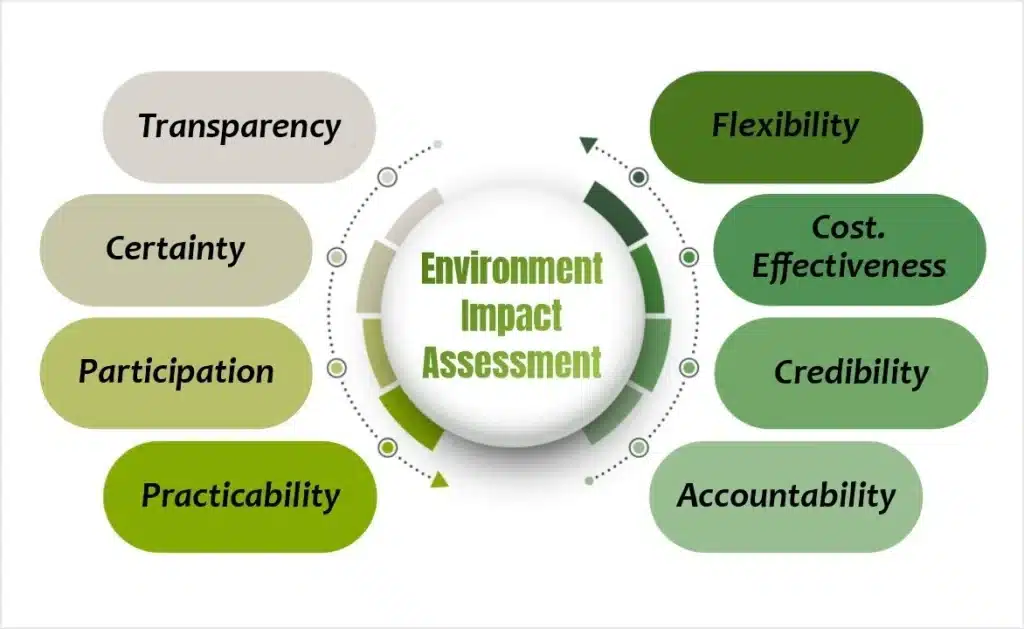
Environmental compliance refers to the obligation of individuals, businesses, and governments to adhere to environmental laws, regulations, and standards in their daily operations and development activities. Compliance mechanisms are designed to prevent environmental damage before it occurs, rather than responding after harm has been done.
Common compliance requirements include conducting Environmental Impact Assessments (EIAs) for infrastructure and industrial projects, installing emission-control technologies, treating industrial effluents, and maintaining proper waste disposal systems. Multinational corporations increasingly integrate environmental compliance into corporate governance through sustainability reporting and carbon disclosure frameworks.
Source: Environmental Impact Assessments
Effective compliance reduces legal and financial risks, enhances corporate credibility, and contributes to national and global environmental objectives. In a globalized economy, compliance also helps align local development practices with international environmental standards.
Why Laws and Compliance Matter Globally
Environmental laws and compliance systems are critically important because environmental challenges transcend national boundaries. Problems such as climate change, ocean pollution, air pollution, and biodiversity loss have global consequences that affect ecosystems, food security, and human health worldwide.
Strong legal frameworks ensure that economic development proceeds in a sustainable manner, balancing growth with environmental protection. Research shows that countries with robust environmental regulations experience lower pollution levels and improved public health outcomes.
Moreover, international cooperation through environmental treaties enables collective action against shared environmental threats. Without binding laws and effective compliance mechanisms, conservation efforts would rely solely on voluntary actions, which are often inconsistent and inadequate for addressing large-scale environmental crises.
Global Conservation Efforts
International Agreements and Organizations
Numerous international treaties and organizations coordinate global conservation efforts:
- Convention on Biological Diversity (CBD) addresses biodiversity conservation globally
- CITES regulates international trade in endangered species
- Paris Agreement commits nations to climate action
- Ramsar Convention protects wetlands of international importance
- World Heritage Convention safeguards natural and cultural heritage sites
Organizations like the United Nations Environment Programme (UNEP), World Wildlife Fund (WWF), International Union for Conservation of Nature (IUCN), and countless NGOs lead conservation initiatives worldwide.
National Parks and Protected Areas
Protected areas represent one of conservation’s most effective tools. National parks, wildlife reserves, marine protected areas, and wilderness areas provide safe havens where nature can thrive without human interference.
Community-Based Conservation
Modern conservation increasingly recognizes indigenous peoples’ and local communities’ critical roles. JMU notes that:
“environmental stewardship is not a new phenomenon.”
From farming to hunting, from conservation practices to spiritual beliefs, one can find an appreciation for natural resources and the valuable services they provide in many diverse settings.
Community-based conservation empowers local people to manage natural resources sustainably, recognizing their traditional knowledge and ensuring they benefit from conservation efforts.
How You Can Contribute to Conservation
Environmental conservation isn’t just for governments and organizations. Individuals and local communities also play a fundamental role in the success of environmental laws and conservation policies.
Individual Actions
Public participation strengthens environmental governance by promoting transparency, accountability, and social responsibility. Individuals contribute by complying with environmental regulations, reducing waste, conserving energy, and adopting sustainable consumption patterns.
Reduce, Reuse, Recycle: Minimize waste by reducing consumption, reusing items, and recycling materials properly.
Conserve Water: Fix leaks, take shorter showers, install water-efficient fixtures, and be mindful of water use.
Save Energy: Use energy-efficient appliances, switch to LED lighting, unplug devices when not in use, and consider renewable energy options like solar panels.
Sustainable Transportation: Walk, bike, use public transportation, or choose electric vehicles when possible to reduce emissions.
Conscious Consumption: Buy sustainably sourced products, support eco-friendly businesses, reduce meat consumption, and avoid single-use plastics.
Support Conservation Organizations: Donate to or volunteer with environmental organizations working to protect nature.
Community Level Actions
Communities also act as watchdogs by reporting environmental violations, participating in environmental impact consultations, and supporting environmental advocacy initiatives. In many countries, public interest litigation has empowered citizens to challenge environmentally harmful projects and enforce legal protections for ecosystems. When citizens actively engage with environmental laws, conservation becomes a collective responsibility rather than a top-down regulatory process.
Advocate for Policies: Support environmental legislation and hold elected officials accountable for conservation commitments.
Participate in Local Programs: Join community cleanups, tree-planting initiatives, or conservation projects in your area.
Educate Others: Share knowledge about conservation and inspire others to adopt sustainable practices.
Create Green Spaces: Support urban gardens, green roofs, and local parks that provide habitat for wildlife and improve air quality.
Examples of Successful Conservation
Conservation efforts worldwide have achieved remarkable successes:
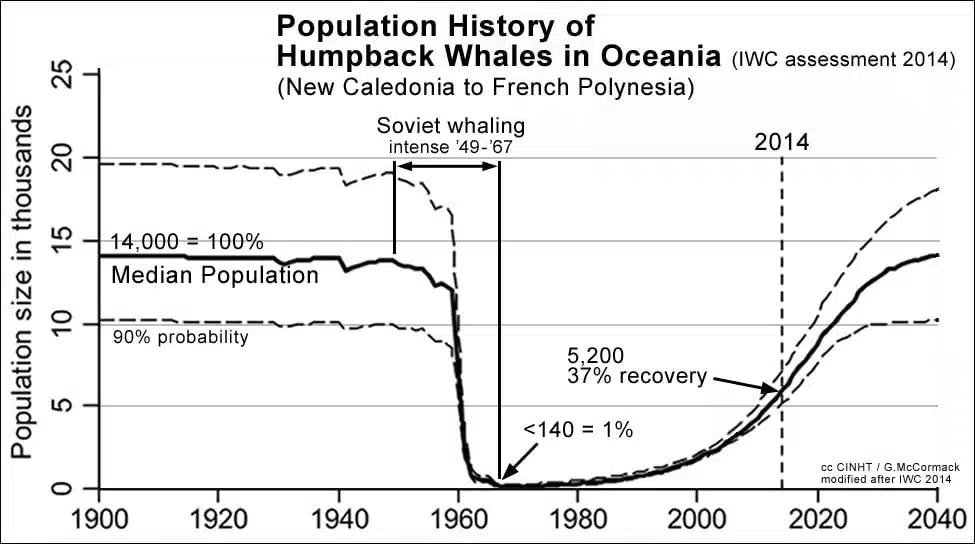
Humpback Whales Recovery: The ban on commercial whaling in 1986 led to a strong recovery of humpback whales, with populations now around 93% of their original size.
Source: Humpback Whales Recovery
Wetland Restoration: Rebuilding wetlands improves water quality, reduces flood risks, and provides crucial habitat for countless species.
Reforestation Projects: Large-scale tree planting initiatives restore degraded forests, sequester carbon, and revive ecosystems.
Pollution Reduction: Implementation of clean air and water regulations has dramatically improved environmental quality in many regions.
Species Recovery: Targeted conservation programs have saved numerous species from extinction, including bald eagles, giant pandas, and mountain gorillas.
Challenges Facing Conservation
Despite progress, conservation faces significant challenges:
- Balancing economic development with environmental protection
- Insufficient funding for conservation programs
- Weak enforcement of environmental laws
- Climate change accelerating habitat loss
- Conflicts between conservation and local livelihoods
- Lack of public awareness and political will
Addressing these challenges requires sustained commitment from individuals, businesses, governments, and international organizations working together toward common goals.
Conclusion
Environmental conservation represents humanity’s commitment to protecting the natural world that sustains all life. From preventing species extinction to combating climate change, from ensuring clean air and water to preserving resources for future generations, conservation addresses the most pressing challenges facing our planet.
Environmental conservation is a collective effort, combining laws, enforcement, compliance, and citizen action. Understanding global regulations, following sustainable practices, and actively participating in local initiatives allow everyone to protect the planet effectively. Conservation is not just about preserving nature, it’s about ensuring a healthier, more sustainable world for current and future generations.
The good news is that conservation works. When we protect habitats, species recover. When we reduce pollution, health improves. When we restore ecosystems, nature rebounds with remarkable resilience. Every individual has a role to play in conservation. The actions you take today, whether conserving water, reducing waste, supporting conservation organizations, or advocating for environmental policies, contribute to protecting our planet’s future.
Environmental conservation isn’t just about saving nature; it’s about ensuring a livable future for all. Start your conservation journey today, because the planet we protect today is the one we will call home tomorrow. Environmental laws regulate human activities, prevent pollution, protect biodiversity, and ensure sustainable development, making conservation a legal obligation worldwide.
Frequently Asked Questions
What is environmental conservation?
Environmental conservation refers to the protection, restoration, and sustainable management of natural resources such as forests, wildlife, oceans, air, and water. It focuses on reducing human impact and ensuring a healthy environment for present and future generations.
What is the difference between conservation and sustainability?
Conservation focuses on preserving and protecting natural resources, often by limiting human use. Sustainability aims to use resources responsibly so that people can meet their needs without harming the ability of future generations to meet theirs.
Why are environmental laws important?
Environmental laws regulate human activities, prevent pollution, protect biodiversity, and ensure sustainable development, making conservation a legal obligation worldwide.
How is environmental enforcement carried out?
Enforcement involves monitoring, inspections, fines, legal action, and technological tools like satellite monitoring to ensure laws are followed and ecosystems are protected.
What is environmental compliance?
Compliance is the practice of following environmental laws and regulations, including conducting impact assessments, managing waste properly, and implementing pollution control measures.
How does conservation help fight climate change?
Conservation reduces greenhouse gas emissions through forest protection, reforestation, clean energy use, and sustainable land management. Healthy ecosystems store carbon and help regulate climate patterns.
What are the biggest challenges facing conservation today?
Major challenges include:
Conflicts between conservation efforts and economic development
Climate change
Habitat destruction
Pollution
Insufficient funding
Weak environmental enforcement
How does biodiversity relate to environmental conservation?
Biodiversity ensures ecosystems function properly. Conservation protects diverse species and habitats, maintaining ecosystem services like pollination, clean water, climate regulation, and soil fertility.
What is community-based conservation?
It involves local communities and indigenous groups in protecting natural resources. Their traditional knowledge, land stewardship, and direct involvement lead to more effective and sustainable conservation outcomes.