
Pakistan’s repeated urban fire disasters, including the Baldia (Ali Enterprises) factory fire, the Gul Plaza fire in Karachi, and large-scale commercial blazes at Hafeez Centre and Pace Centre in Lahore, and several other major fire incidents, reveal a systemic failure to enforce fire safety laws despite a well-established legal framework. The most recent illustration of this pattern is the Gul Plaza fire in Karachi, which exposed widespread violations of fire safety laws in a multi-storey commercial building.
This legal analysis examines recurring safety violations underlying these incidents, evaluates judicial responses by the Sindh High Court, Punjab courts, and the Supreme Court of Pakistan, and argues that the persistence of such disasters reflects an enforcement and governance deficit rather than a legislative vacuum.
Drawing on comparative international law, the article situates Pakistan’s failures within global standards on the right to life and state responsibility and concludes by proposing a nationwide fire safety compliance framework grounded in constitutional doctrine, statutory law, judicial precedent, and international best practices.
Recurrent Fire Disasters as a Failure of Governance
Pakistan’s repeated urban fire disasters are not random accidents or unavoidable misfortunes. They represent a persistent and systemic failure of safety governance, regulatory enforcement, and accountability mechanisms. Over the past decade, incidents such as the Baldia (Ali Enterprises) factory fire of 2012, the recent Gul Plaza fire in Karachi, and large-scale commercial blazes at Hafeez Centre and Pace Centre in Lahore have revealed a consistent pattern of regulatory neglect, foreseeable risk, and delayed or incomplete accountability across major provinces in Pakistan.
Despite differences in location, building function, and casualty count, these cases share the same legal DNA: blocked or absent exits, non-functional fire safety systems, illegal or unsafe building use, and prolonged regulatory inaction. In each case, risks were visible, documented, and legally prohibited long before disaster struck. Courts have repeatedly recognized these failures as legally actionable. Yet enforcement has remained episodic, reactive, and insufficient to deter repetition.
This analysis examines Pakistan’s major fire disasters through a domestic and comparative legal lens. It assesses the legal duties breached, the judicial responses that followed, the structural reasons enforcement has failed to evolve, and the reforms required to translate settled legal doctrine into lived public safety.
Legal Framework Governing Fire Safety in Pakistan
Fire safety in Pakistan is regulated through a multi-layered legal framework combining constitutional protections, federal criminal law, provincial statutes, labour legislation, and municipal regulations. While Pakistan lacks a single unified national fire code, courts have consistently held that the existing legal framework is sufficient in substance. The recurring problem identified in major fire disasters is not absence of law, but weak enforcement, fragmented authority, and regulatory neglect.
Constitutional Foundation
- Constitution of Pakistan, 1973 – Article 9 (Right to Life)
The Supreme Court of Pakistan has repeatedly interpreted the right to life to include protection from foreseeable hazards, including unsafe buildings, industrial risks, and fire dangers. Failure by state authorities to enforce fire safety laws can therefore amount to a constitutional violation and maladministration.
Federal Criminal Law (Nationwide Application)
- Pakistan Penal Code, 1860
- Sections 322 and 319 – Causing death by negligence, applicable where fatalities occur due to unsafe premises or absence of fire safety measures
- Sections 285–289 – Negligent conduct involving fire or combustible matter, including unsafe storage of flammable materials
- Sections 269–270 – Negligent acts likely to spread danger to public health or safety
These provisions formed the basis of criminal liability in the Baldia factory fire litigation.
Provincial Fire Safety and Building Laws
Fire safety regulation is primarily a provincial subject, with each province enforcing its own building and fire prevention regime.
Sindh
- Sindh Building Control Ordinance, 1979
- Sindh Fire Prevention and Safety Act, 2022
- Karachi Building and Town Planning Regulations
These laws govern fire exits, emergency stairwells, alarms, suppression systems, inspections, occupancy certificates, and sealing of unsafe buildings. The Sindh High Court has held that failure to enforce these laws constitutes a breach of public duty.
Punjab
- Punjab Local Government Acts
- Punjab Fire Safety Regulations
- Lahore Development Authority Building Regulations
- Punjab Civil Defence Rules
These instruments apply to commercial plazas, shopping malls, factories, and mixed-use buildings, regulating emergency exits, evacuation planning, and inspections. Judicial scrutiny intensified after the Hafeez Center and Pace Center fires.
Khyber Pakhtunkhwa
- KP Building Control Authority Act
- KP Local Government Laws
- Civil Defence Regulations
Enforcement is delegated to local authorities and civil defence departments.
Balochistan
- Balochistan Local Government Acts
- Municipal and Civil Defence Regulations
Fire safety oversight remains fragmented, particularly in commercial structures.
Labour and Workplace Safety Laws
- Factories Act, 1934
- Provincial Occupational Safety and Health Laws
- Industrial and Commercial Employment Regulations
These laws require safe means of escape, fire drills, safe electrical installations, and general workplace safety. Violations were central to judicial findings in the Baldia factory fire.
Civil Defence and Emergency Preparedness Laws
- Pakistan Civil Defence Act, 1952
- Provincial Civil Defence Rules
These empower authorities to inspect buildings, conduct fire safety training, order preventive measures, and assist in emergencies. Courts have criticized the largely reactive enforcement of these powers.
Municipal and Development Authority Regulations
- Karachi Metropolitan Corporation Building By-Laws
- Lahore Development Authority Regulations
- Cantonment Board Building Rules
- Local Municipal Building and Fire Clearance Rules
Municipal bodies act as the first line of enforcement through approvals, inspections, and occupancy certification, and are frequently implicated in regulatory failures.
Recurring Safety Failures Across Major Fire Incidents
Across Baldia, Gul Plaza, Hafeez Center, Pace Center, and numerous other fires, three categories of failure recur with striking consistency.
The first is the absence or disabling of basic fire protection systems. Investigations consistently reveal missing or non-functional fire alarms, sprinklers, smoke detectors, and emergency lighting. In Baldia, exits were locked and windows barred. In Gul Plaza and the Pace Center, exits were blocked or poorly marked. At Hafeez Center, the absence of modern suppression systems allowed the fire to burn uncontrollably for days.
The second is unsafe and illegal building use. Basements converted into storage areas, flammable materials stacked in confined spaces, unauthorized electrical loads, and unapproved structural modifications were common across cases. These violations were visible, long-standing, and expressly prohibited by law, yet rarely enforced against.
The third is regulatory neglect. In each case, buildings operated openly for years without valid safety certifications or despite known violations. Inspection regimes were weak, inconsistent, or compromised, pointing to systemic institutional failure rather than isolated oversight.
Baldia Factory Fire: Judicial Benchmark for Criminal Negligence
The Baldia factory fire of 2012 remains Pakistan’s deadliest industrial disaster, killing more than 260 workers trapped inside a garment factory. Investigations later established that exits were locked, windows barred, and no functional fire alarms or sprinklers existed.
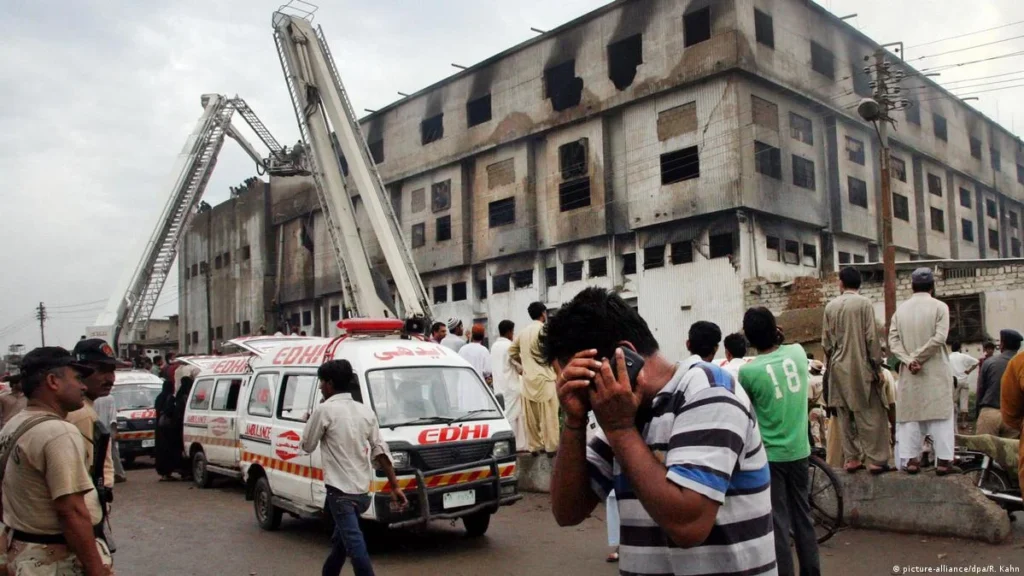
From a legal standpoint, Baldia marked a turning point. Courts recognized that the deaths were not accidental but the foreseeable outcome of criminal negligence. Prosecutions followed, and the Sindh High Court played a central role in supervising investigations, hearing appeals, and affirming key findings.
Crucially, the court rejected arguments that regulatory failure diluted private liability. Employers could not rely on lax inspections to escape responsibility. Later revelations of arson linked to extortion expanded the case into one involving organized crime, but this did not negate the foundational finding: safety violations had already made mass death inevitable.
Yet Baldia also exposed the limits of Pakistan’s justice system. Convictions took years, compensation was delayed, and systemic regulatory reform remained largely symbolic. The case became a landmark without becoming a deterrent.
Gul Plaza Fire: Commercial Negligence and Expanding Legal Liability
The Gul Plaza fire differs in context but not in substance. Unlike Baldia, which involved industrial labour, Gul Plaza housed offices and small commercial enterprises. Preliminary findings reveal familiar violations: blocked exits, absent alarms, lack of emergency stairwells, flammable stock, and no evacuation planning.
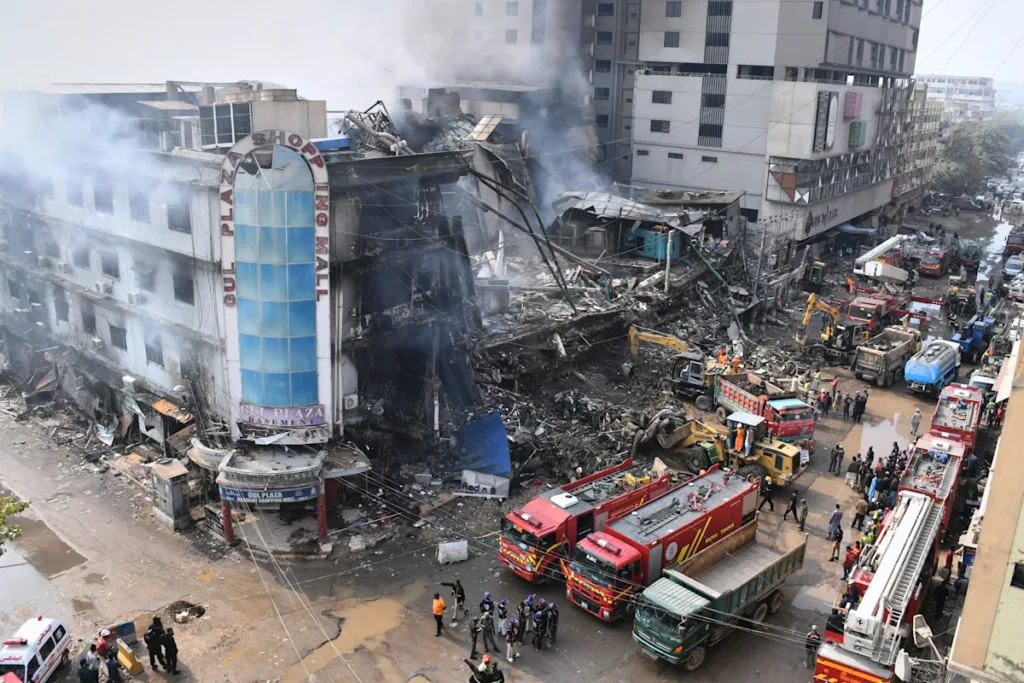
Legally, Gul Plaza highlights that safety duties extend beyond factories. Commercial landlords, property managers, tenants, and approving authorities all owe a duty of care. Liability is not confined to ownership but extends to those who permit continued operation despite known risks.
The case mirrors Baldia’s unresolved questions: Were safety clearances issued lawfully? Were inspections conducted at all? Did officials ignore known violations? Gul Plaza tests whether the legal lessons of 2012 have been internalized—or merely archived.
Hafeez Centre Fire: Commercial Hub Reduced to Ashes
The fire at Hafeez Centre, one of Lahore’s largest electronics markets, erupted in October 2020 and burned for more than 48 hours, destroying hundreds of shops and causing losses estimated in the billions of rupees. Although the incident did not result in mass fatalities due to the timing of the fire, legal experts note that the absence of deaths was a matter of chance rather than compliance.
Investigations revealed that the building lacked a functional fire suppression system, had overloaded electrical wiring, and stored flammable materials in violation of safety norms. Emergency access was limited, and fire services struggled to contain the blaze due to structural and planning deficiencies.
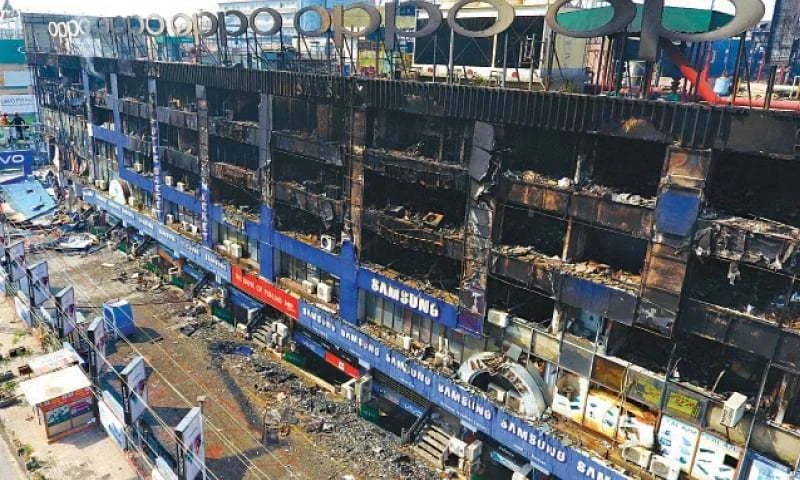
From a legal perspective, Hafeez Centre highlighted the gap between property loss-focused enforcement and life safety regulation. Despite clear evidence of violations, enforcement actions largely remained administrative, with limited criminal accountability. Courts and inquiries emphasized the need for updated safety infrastructure, but long-term enforcement reforms remained elusive.
Following the Hafeez Centre fire, courts in Punjab took suo motu notice of the scale of losses and questioned regulatory authorities about inspection failures. Judicial observations stressed that commercial hubs operating without modern fire safety systems posed an ongoing threat to life and property. However, the legal aftermath focused more on reconstruction and compensation than on prosecuting negligence, reinforcing concerns that deterrence remains weak.
Pace Centre Fire: A Repeat of Known Risks
The Pace Centre fire in Lahore, which broke out in a multi-storey shopping mall, reinforced the same legal fault lines. The building reportedly lacked adequate fire exits, alarm systems, and emergency evacuation planning. Firefighters again cited narrow access routes, poor internal fire compartmentalization, and delayed detection as factors that allowed the fire to spread rapidly.
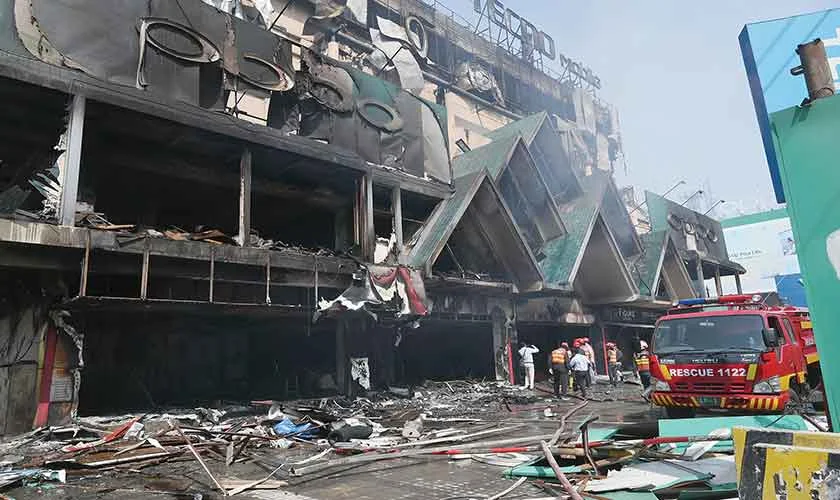
As with Hafeez Centre, investigations pointed to non-compliance with building codes and fire safety regulations that should have prevented the blaze or minimized its impact. Yet accountability again remained limited, with few public prosecutions and reliance on temporary closures and repair directives.
From a legal standpoint, these cases demonstrate a critical enforcement failure: where deaths do not occur, accountability weakens, even though the legal breach is identical. Safety law imposes a duty to prevent foreseeable harm, not merely to respond after fatalities.
Comparative Table: Major Fire Disasters and Legal Outcomes in Pakistan
| Case (Year) | Location & Type | Reported Causes and Safety Failures | Human / Economic Impact | Legal and Judicial Outcomes | Key Legal Lessons |
| Gul Plaza (2026) | Karachi – Commercial plaza | Lack of fire alarms; blocked exits; flammable stock; inadequate emergency access; partial structural collapse | Multiple fatalities; dozens injured; significant commercial losses | Police investigation and provincial inquiry ordered; potential criminal negligence and regulatory liability under review | Fire safety violations in commercial plazas create criminal exposure for owners and regulators |
| Baldia / Ali Enterprises (2012) | Karachi – Garment factory | Locked exits; barred windows; no fire alarms or sprinklers; overcrowding; later arson/extortion angle | 260+ workers killed; Pakistan’s deadliest industrial fire | Criminal trials; Sindh High Court involvement; convictions upheld in part after prolonged litigation; international compensation | Foreseeable risk + locked exits = criminal negligence; enforcement delay undermines deterrence |
| Hafeez Centre (2020) | Lahore – Electronics commercial hub | Overloaded wiring; no modern suppression system; flammable inventory; poor fire compartmentalization | No mass fatalities (fire at night); billions of rupees in losses; hundreds of shops destroyed | Punjab authorities and courts took notice; focus on reconstruction and compliance; limited criminal accountability | Absence of deaths does not negate legal duty; enforcement failure still engages liability |
| Pace Centre (multiple incidents) | Lahore – Shopping mall | Inadequate exits; lack of alarms; delayed detection; poor emergency planning | Property damage; evacuation risks; recurring safety concerns | Administrative actions and temporary closures; no major reported prosecutions | Repeated non-compliance shows weakness of administrative penalties alone |
| Lahore Factory Fires (2012 and later) | Lahore – Industrial facilities | Generator sparks; chemical storage; insufficient exits | Dozens killed across incidents | Judicial inquiries; compensation; limited structural reform | Industrial safety laws exist but enforcement remains inconsistent |
| Other Mall & Residential Fires (Karachi, Lahore, Islamabad) | Urban centers – Mixed use | Illegal construction; basement conversions; absent suppression systems | Variable casualties; repeated evacuations | Mostly administrative penalties; sporadic court intervention | Regulatory fragmentation enables repeat disasters |
Judicial Responses: Doctrine Without Institutionalization
Pakistan’s superior courts, including the Supreme Court of Pakistan, have repeatedly emphasized that safety laws are mandatory and that regulatory bodies bear enforceable public duties. Courts have taken suo motu notice, summoned officials, and demanded compliance reports. Across multiple rulings, Pakistani courts have consistently held that:
• Fire safety is a non-delegable public duty
• Economic activity cannot override the right to life
• Regulatory authorities are liable for maladministration where inspections fail
• Absence of deaths does not absolve legal responsibility if risk was foreseeable
These principles flow from constitutional protections of life and dignity and from statutory obligations under provincial building and labour laws. However, judicial intervention has often been episodic. Courts articulate strong principles, but sustained enforcement depends on executive action. Once public attention fades, non-compliant buildings often reopen after cosmetic fixes. Judicial doctrine remains strong; institutional follow-through remains weak.
Comparative International Perspective
International law increasingly recognizes fire safety and building regulation as integral components of the right to life. Article 6 of the International Covenant on Civil and Political Rights (ICCPR) obliges states not only to refrain from arbitrary deprivation of life but also to adopt positive measures to protect life from foreseeable threats, including industrial and structural hazards.
The UN Human Rights Committee has clarified that state responsibility arises where authorities knew or ought to have known of life-threatening risks and failed to take reasonable preventive measures.² This positive-obligation doctrine directly parallels Pakistani constitutional jurisprudence under Article 9, situating domestic fire disasters within a broader international legal framework.
Bangladesh: Rana Plaza and the Internationalization of Industrial Safety Duties
The Rana Plaza disaster in Bangladesh, which killed more than 1,100 workers in 2013, represents a pivotal moment in international labor and safety law. Although not a fire, Rana Plaza involved the same core failure present in Pakistan’s Baldia case, that is, foreseeable structural danger ignored by regulators and employers.
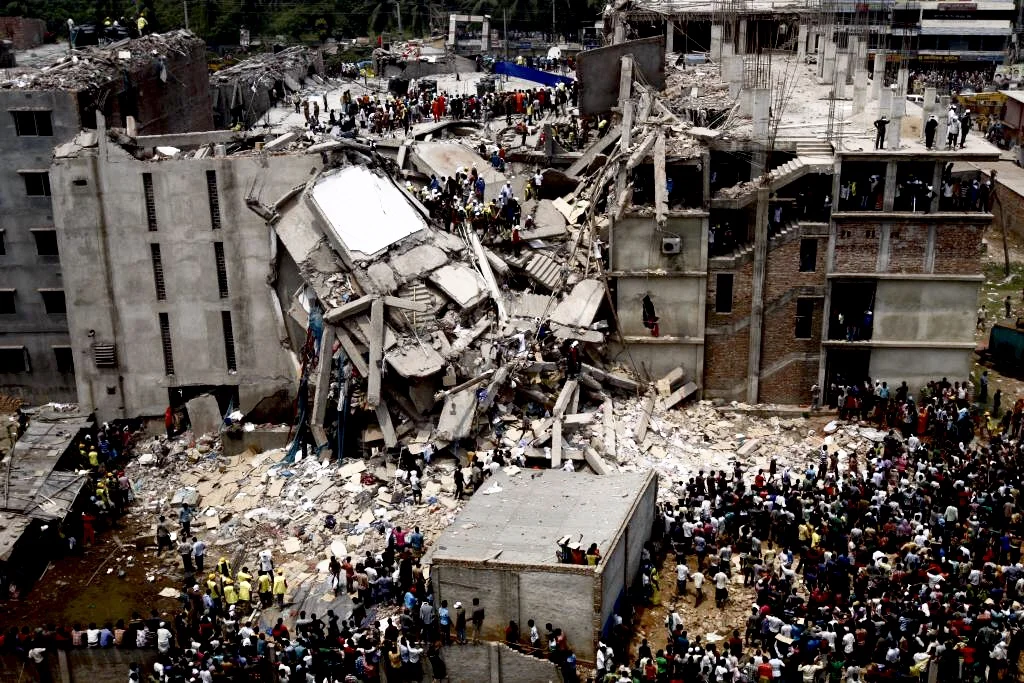
International legal pressure following Rana Plaza led to binding transnational instruments such as the Accord on Fire and Building Safety in Bangladesh, imposing mandatory inspections, public disclosure, and enforceable remediation obligations on factory owners and international brands.
Comparatively, while Pakistan’s courts articulated similar principles in Baldia, foreseeability, non-delegable duty, and regulatory accountability, Pakistan lacked the international enforcement leverage and binding compliance mechanisms that followed Rana Plaza. The contrast illustrates how international economic pressure can accelerate domestic safety reform where internal enforcement falters.
United Kingdom: Grenfell Tower and State Accountability for Regulatory Failure
The Grenfell Tower fire in the United Kingdom in 2017, which killed 72 residents, provides a direct comparative precedent for state liability arising from regulatory neglect. Public inquiries concluded that the disaster resulted from systemic failures in building regulation, fire safety oversight, and governmental complacency.
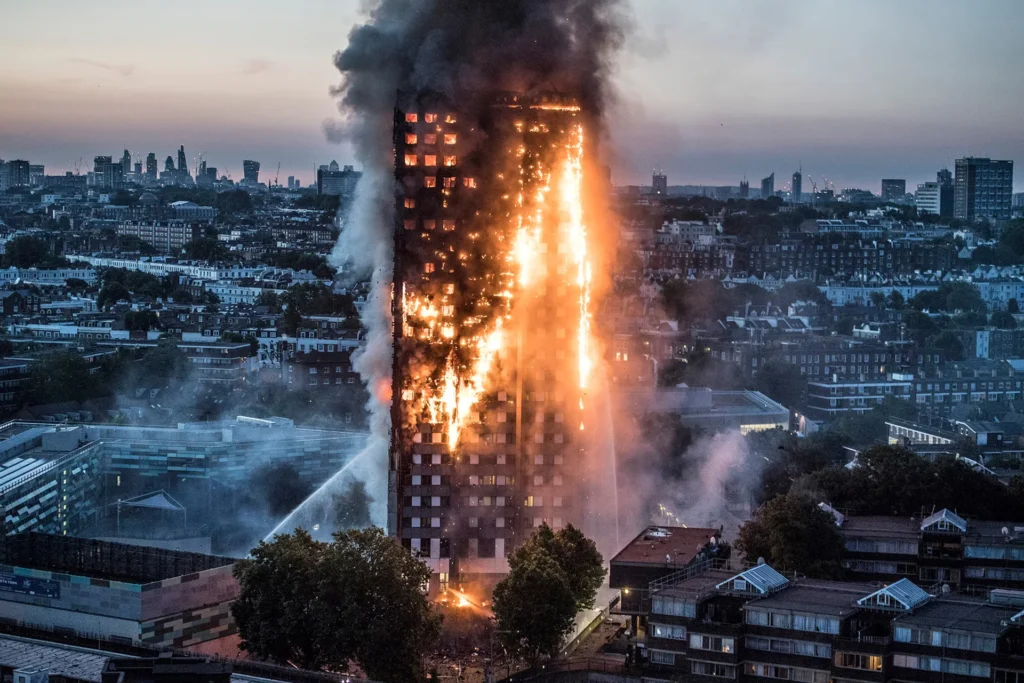
Legally, Grenfell reaffirmed the European Court of Human Rights’ jurisprudence that Article 2 of the European Convention on Human Rights imposes procedural and substantive obligations on states to regulate dangerous activities and investigate failures effectively.
The Grenfell inquiry model, public, victim-centered, and enforcement-oriented, stands in contrast to Pakistan’s fragmented post-fire inquiries, which rarely lead to sustained institutional reform or criminal accountability beyond individual actors.
The Hong Kong High-Rise Fire: Foreseeable Risk and State Responsibility
In comparative terms, the deadly Wang-Fuk high-rise court fire in Hong Kong in late 2025, which killed over 128 residents, illustrates the same regulatory failure seen in Pakistan’s major fire disasters. Investigations linked the blaze to renovation work, flammable external scaffolding, and inspection lapses, underscoring that mass-casualty fires stem from foreseeable risks and enforcement breakdown rather than sudden accidents.
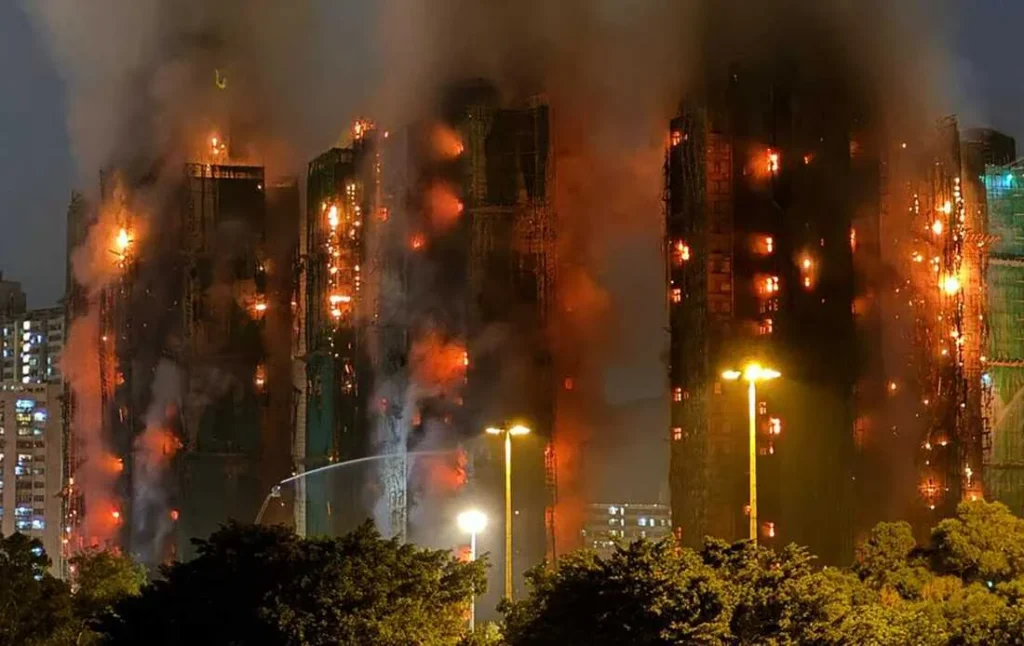
The incident is instructive because it occurred in a jurisdiction with strong building codes, yet still required arrests and an independent inquiry—highlighting how weak oversight, not legal absence, enables tragedy and reinforcing the urgency of sustained fire safety enforcement in Pakistan.
European Court of Human Rights: Positive Obligations and Preventive Regulation
The European Court of Human Rights (ECtHR) has consistently held states responsible for failure to regulate dangerous activities. In Öneryıldız v. Turkey, the Court ruled that where authorities tolerate known risks, resulting deaths constitute a violation of the right to life.
The Court emphasized that liability arises not only from direct state action but from regulatory omission, including failure to enforce safety standards. This jurisprudence mirrors Pakistan’s Baldia doctrine but goes further by imposing international legal consequences for sustained regulatory neglect.
United States: Regulatory Enforcement and Tort-Based Accountability
In the United States, fire safety enforcement operates through a combination of federal standards, state building codes, and tort liability. Major industrial and residential fires routinely generate civil class actions, punitive damages, and criminal prosecutions where negligence is proven.
Unlike Pakistan, U.S. regulatory agencies face institutional liability, and inspection records are routinely discoverable in litigation. While the U.S. lacks constitutionalized safety jurisprudence equivalent to Article 9, its enforcement architecture demonstrates how economic deterrence supplements criminal law in preventing safety violations.
Across all these jurisdictions, three important lessons emerge:
- Fire safety is a life-protection obligation.
- Independent oversight is essential.
- Deterrence depends on certainty, not severity, of punishment.
International Law Implications for Pakistan
As a party to the ICCPR, Pakistan bears international responsibility to take reasonable measures to prevent foreseeable loss of life. Repeated fire disasters with identical safety failures risk constituting a pattern of systemic omission, which may attract scrutiny from international human rights mechanisms.
Failure to institutionalize fire safety enforcement not only undermines domestic constitutional guarantees but also places Pakistan at odds with evolving international standards on state responsibility for preventable industrial and urban hazards.
Comparative international law confirms what Pakistan’s courts have already articulated, that fire disasters resulting from known risks are legally preventable. The divergence lies not in doctrine but in implementation. Jurisdictions that converted tragedy into binding reform reduced recurrence; those that did not continued to repeat it.
For Pakistan, aligning domestic enforcement with international best practices is not a matter of legal innovation, but of legal fidelity to constitutional law, judicial precedent, and international obligations already assumed.
Towards a Nationwide Fire Safety Compliance Framework
Several factors explain why settled legal doctrine has not translated into prevention. Regulatory fragmentation diffuses responsibility across multiple agencies. Inspection systems remain manual, opaque, and vulnerable to interference. Penalties for non-compliance are often lower than the economic cost of compliance, encouraging risk-taking. Most critically, criminal liability for regulators remains rare despite judicial recognition that official negligence can directly contribute to loss of life.
To translate judicial principles into practice, Pakistan requires a unified compliance framework applicable across provinces. This framework requires no new constitutional interpretation, only political and administrative commitment to apply settled law consistently. Core elements should include mandatory annual fire safety audits, independent provincial fire safety authorities, criminal liability for foreseeable risk creation, public access to safety records, mandatory insurance, victim compensation mechanisms, and sustained judicial oversight.
1. Legal Foundation
• Anchor fire safety enforcement under constitutional right to life
• Treat fire safety violations as strict regulatory offences with criminal consequences where risk is foreseeable
• Apply uniform minimum standards nationwide, with provincial enhancement powers
2. Mandatory Audit Regime
• Annual independent fire safety audits for all multi-storey commercial, industrial, and mixed-use buildings
• Audit reports uploaded to a centralized provincial registry
• Occupancy certificates automatically suspended upon audit failure
3. Institutional Structure
• Establish independent Provincial Fire Safety Authorities
• Separate approval, inspection, and enforcement functions
• Grant inspectors statutory protection from political interference
4. Criminal and Administrative Accountability
• Mandatory FIR registration where blocked exits, disabled alarms, or illegal storage is found
• Departmental and criminal proceedings against inspectors approving non-compliant buildings
• Escalating penalties for repeat offenders
5. Transparency and Public Access
• Public online access to building safety status
• Citizen complaint mechanisms with statutory response timelines
• Whistleblower protection for reporting violations
6. Insurance and Victim Protection
• Mandatory third-party fire liability insurance
• Provincial fire victim compensation funds
• Fast-track civil claims linked to criminal findings
7. Judicial Oversight
• High Courts to maintain supervisory jurisdiction over compliance reporting
• Annual judicial review of enforcement data
• Contempt proceedings for persistent non-compliance with court directions
Such a framework aligns directly with existing judicial reasoning. It does not require new constitutional interpretation, only political and administrative commitment. Courts have already recognized the legal duties; this framework operationalizes them.
Conclusion: Law Exists, Enforcement Does Not
Pakistan’s fire disasters are legally preventable and certainly demonstrate that the country does not lack safety laws or judicial doctrine. What it lacks is consistent enforcement. Baldia, Gul Plaza, Hafeez Centre, and Pace Centre collectively show that fires are predictable outcomes of ignored risks rather than unavoidable accidents.
From a legal perspective, the lesson is clear. Unless safety violations are treated as serious criminal and public-law breaches, regardless of whether deaths occur. Pakistan will continue to cycle through tragedy, inquiry, and limited reform. The courts have spoken. The unresolved question is whether the state will finally act because what remains unresolved is enforcement. The Gul Plaza case serves as a contemporary test of whether Pakistan will finally translate settled legal doctrine into enforcement, as examined in reporting on the Karachi plaza fire and its accountability implications.
All these major fire incidents reveal a stark reality that Pakistan continues to pay with lives for ignoring fire safety laws. Each disaster follows a similar legal script of non-compliance, tragedy, outrage, and limited reform. Unless safety violations are treated as serious criminal and public-law breaches regardless of casualty count, Pakistan will continue to repeat the same tragedies.
The law is very much settled that foreseeable risk plus regulatory neglect equals liability. For Pakistan’s legal system, the current Gul Plaza fire represents an opportunity to break this cycle. Whether it does so will determine if past tragedies have led to real legal change or merely served as warnings repeatedly ignored.
Frequently Asked Questions
What makes Pakistan’s fire disasters legally preventable rather than accidental
In nearly all major cases, safety violations such as blocked exits, missing alarms, and illegal building use were visible and known in advance. Courts have repeatedly held that such foreseeability transforms accidents into legal negligence.
Can building owners and regulators both be held liable
Yes. Pakistani courts recognize shared liability. Private owners, managers, and public officials responsible for inspection and approval can all be held accountable where regulatory neglect contributes to loss of life.
Why did the Baldia case not deter future disasters?
Although Baldia produced landmark rulings, prosecutions were delayed, penalties were inconsistent, and regulatory reform remained limited. Without certainty of enforcement, deterrence failed.
Does absence of deaths reduce legal responsibility?
No. Courts have emphasized that safety law aims to prevent foreseeable harm. Near-miss disasters like Hafeez Center and Pace Center still engage legal liability.
What is the most urgent reform needed?
Mandatory independent fire safety audits linked to occupancy permits, combined with criminal liability for regulators who ignore violations, would immediately reduce risk.
How does international law affect Pakistan’s obligations?