
Netflix confirms a historic $82.7 billion acquisition of Warner Bros. and HBO, reshaping the streaming industry and expanding its entertainment empire.
Netflix has agreed to acquire Warner Bros., including its film and TV studios, HBO, and HBO Max, in a landmark entertainment deal valued at roughly $82.7 billion in enterprise value and $72 billion in equity value. The agreement caps a fast-moving bidding war and would bring some of Hollywood’s most iconic IP libraries under the control of the world’s largest streaming platform, if regulators sign off.
Under the terms announced by Netflix and Warner Bros. Discovery (WBD), WBD shareholders will receive $23.25 in cash and $4.50 in Netflix stock per share, valuing the transaction at about $27.75 per WBD share, subject to final collar details.
The companies expect the deal to close within 12 to 18 months, after WBD completes the planned spin-off of its Global Networks TV business, Discovery Global, into a separate public company, now targeted for Q3 2026. Boards at both firms have unanimously approved the acquisition, which still requires regulatory clearance and a vote from WBD shareholders.
How Netflix Won The Bidding War
The sale process began in October after WBD opened itself up to offers and drew interest from Paramount, Comcast, and Netflix. According to multiple reports, Netflix ultimately offered around $28 per share for WBD’s studio and streaming assets, largely in cash, which also includes a breakup fee of about $5 billion if the deal fails to close, matching protections offered by rival bidders.
Paramount argued publicly that Netflix’s dominant streaming position would face serious antitrust hurdles and accused WBD’s sale process of favoring Netflix, while also highlighting potential management conflicts around CEO David Zaslav’s post-deal incentives. WBD’s board responded that it had fulfilled its fiduciary duties and would continue to do so.
What Netflix Is Actually Buying
The transaction will see Netflix acquire Warner Bros. Studios and WBD’s streaming operations, including Warner Bros. Television, Warner Bros. Motion Picture Group, DC Studios, HBO, and HBO Max, plus their film and TV libraries.
WBD’s Global Networks business, covering linear brands like CNN, Discovery channels, TNT Sports, and Discovery+, is slated to spin out separately and is not part of the Netflix deal.
Netflix says it plans to maintain Warner Bros.’ theatrical release slate through at least 2029 and keep HBO Max operating as a standalone service in the short term, while progressively integrating HBO and HBO Max titles into the Netflix catalog. The company projects $2–$3 billion in annual cost synergies by year three after closing.
Bringing Two Giant Content Libraries Under One Roof
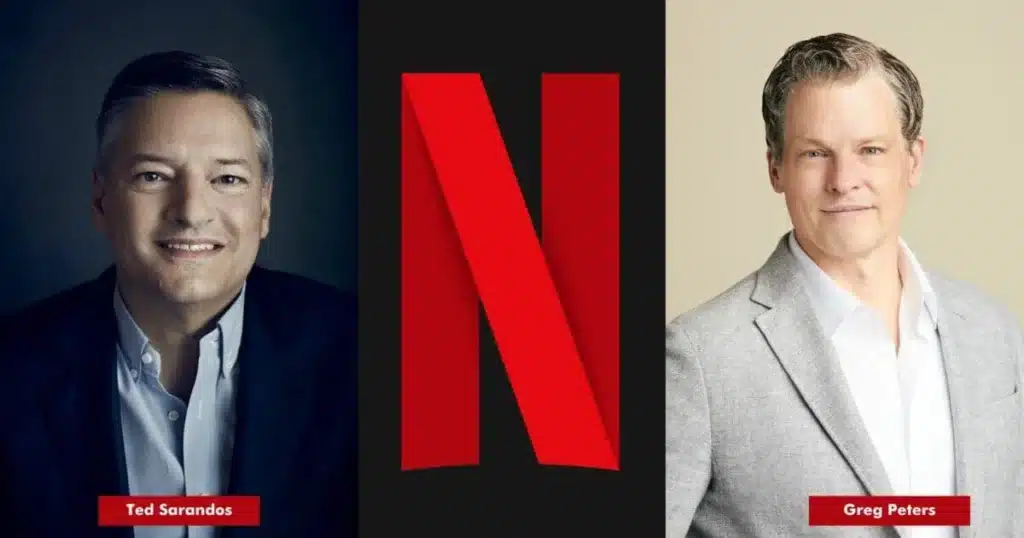
Netflix co-CEOs Ted Sarandos and Greg Peters framed the merger as a way to combine Netflix’s global streaming reach with Warner Bros.’”
“century-long legacy of storytelling”
They achieved this by uniting classic film and TV with modern streaming hits. Sarandos highlighted that titles such as Casablanca, Citizen Kane, Harry Potter, and Friends will eventually sit alongside franchises like Stranger Things, Bridgerton, Squid Game and other Netflix originals.
Analysts note that Netflix has historically shied away from large-scale M&A, preferring to build IP organically, but argue that this deal instantly deepens its franchise bench across DC Comics, Harry Potter, Hanna-Barbera and more, while adding physical studios and production infrastructure that can help attract top-tier talent.
Buying A Library For Less Than Pandemic Content Spend
One way to contextualize the price: Netflix has spent more than $87 billion in cash on content since the end of 2019, meaning it is now acquiring Warner Bros. and HBO’s entire content engine for less than its cumulative pandemic-era content bill.
The equity value of $72 billion and enterprise value of $82.7 billion also represent a hefty premium to where WBD’s stock traded before takeover chatter, with shares recently hitting a 52-week high after languishing since the 2022 WarnerMedia–Discovery merger.
From a consumer perspective, the expectation is that once existing licensing deals roll off, much of the Warner Bros. and HBO library could be consolidated on Netflix, although that likely implies higher subscription prices over time. As Netflix put it in its announcement:
“By adding the deep film and TV libraries and HBO and HBO Max programming, Netflix members will have even more high-quality titles from which to choose… [and] this also allows Netflix to optimize its plans for consumers, enhancing viewing options and expanding access to content.”
Regulatory Scrutiny And Industry Impact
Regulatory review is expected to be intense, particularly in the US and EU, given Netflix’s leading streaming position and the scale of Warner Bros.’ assets. Paramount has already argued that a Netflix–WBD combination presents:
“Serious issues that no regulator will be able to ignore.”
This will be especially around competition in premium scripted content and streaming subscriptions. The companies, however, are betting that the fragmented nature of the broader entertainment landscape and competition from tech giants like Amazon and Apple will help make their case.
If approved, the merger would reshape Hollywood’s competitive map, fusing Netflix’s distribution engine with one of the deepest IP catalogs in the industry and giving the streamer a global theatrical apparatus on top of its direct-to-consumer business.
For viewers, the long-term headline is simple, which is more of HBO and Warner Bros. under the Netflix umbrella, and for rivals, it’s a sharp escalation in the content and franchise arms race.