
The recent speech by Kasim Khan at the United Nations Human Rights Council (UNHRC) has triggered significant political controversy and legal debate in Pakistan, following viral misinformation about his remarks, which fueled intense government backlash and public debate.
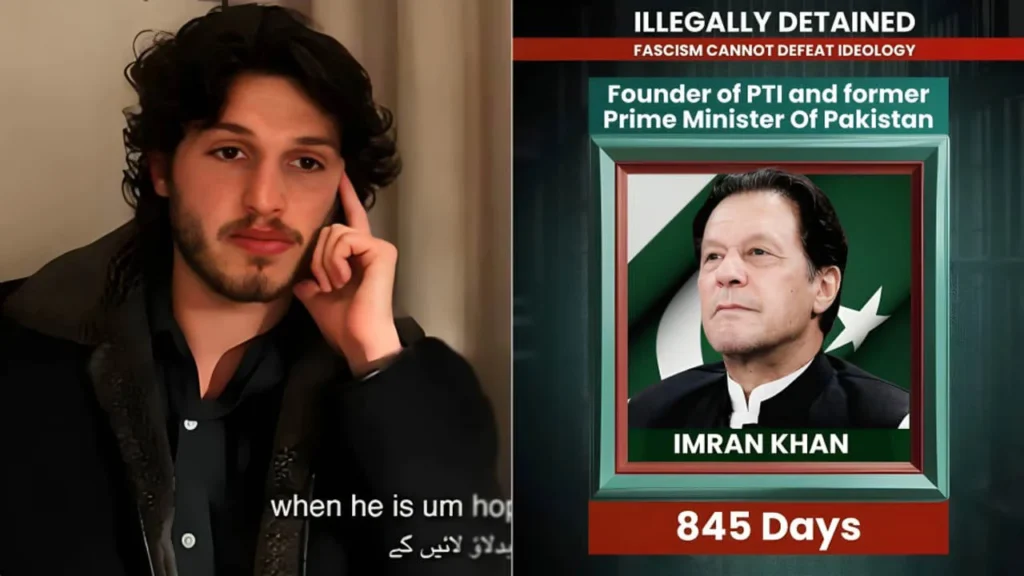
Speech at the UN: Allegations of Human Rights Violations
Speaking at a UNHRC session in Geneva, Kasim Khan called for international attention to the detention and treatment of his father, Imran Khan, who has been imprisoned since 2023. He urged global institutions to intervene, describing the situation as a human rights issue rather than purely a political dispute.
In his address, Kasim highlighted concerns including:
- Alleged denial of fair trial rights
- Restrictions on family access
- Conditions of detention
The speech forms part of a broader effort by the family to internationalize concerns over alleged due process violations, prison conditions, and access to legal rights. His remarks align with increasing use of global platforms like the UN to spotlight domestic legal disputes.
Viral Claims and Misinformation Controversy
Following the speech, viral clips circulated on social media claiming that Kasim Khan called for the revocation of Pakistan’s GSP+ trade status with the European Union, a move that could have major economic implications.
However, subsequent fact-checking and review of the full UN session confirmed that no such demand was made. The viral narrative was based on edited or misleading excerpts of his speech.
Kasim later clarified that:
- He did not call for sanctions or trade penalties
- His references to GSP+ were limited to human rights obligations linked to the program
Analysts say the controversy reflects how edited or selective content can distort legal and political narratives, particularly in highly polarized environments.
Government Reaction and Political Fallout
Despite the clarification, the speech sparked strong reactions from Pakistani officials, with some ministers accusing Kasim Khan of undermining national economic interests. Government figures suggested the speech could be part of a broader international lobbying effort, while opposition voices defended it as a legitimate exercise of free expression and human rights advocacy.
The controversy quickly escalated into:
- Accusations of a “foreign lobbying campaign” against Pakistan
- Claims of a “conspiracy” involving international pressure mechanisms
- Renewed tensions between the government and supporters of Imran Khan
The issue quickly escalated into a wider political confrontation, further deepening divisions between the government and supporters of Imran Khan.
Legal Implications: Free Speech vs. State Interest
The controversy raises several important legal questions:
1. Right to International Advocacy
Kasim Khan’s speech falls within the broader framework of freedom of expression and international human rights advocacy, particularly in global forums like the UN.
2. Sovereignty and External Pressure
Governments often argue that such speeches may invite external interference in domestic affairs, raising concerns under principles of state sovereignty.
3. Trade Law Sensitivities
The mention of GSP+ status, a preferential trade arrangement with the EU—adds a legal-economic dimension. While Kasim did not call for its removal, the controversy highlights how human rights claims can intersect with international trade obligations.
Broader Significance
Kasim Khan’s UN speech reflects a growing trend where domestic political disputes are increasingly internationalized through global legal and human rights platforms.
The episode also highlights the power of misinformation in shaping legal and political narratives, especially when partial or edited content circulates widely before verification.
As tensions continue, the incident may influence:
- Pakistan’s international human rights scrutiny
- Domestic debates over political freedoms and due process
- The role of diaspora voices in global legal advocacy
It also reflects a broader global trend where legal battles are increasingly fought not only in courts but also in international institutions and the digital information space.
Conclusion
Kasim Khan’s UNHRC speech has evolved from a human rights appeal into a high-stakes legal and political controversy shaped as much by misinformation as by substance.
As the situation develops, the case highlights the fragile balance between free speech, state sovereignty, and the role of international institutions in domestic legal matters, while also exposing the powerful impact of misinformation on modern legal discourse.