
Iran has officially announced a new supreme leader following the death of Ayatollah Ali Khamenei, marking one of the most consequential leadership transitions in the Islamic Republic since 1989. Iranian state media reported that Mojtaba Khamenei, the son of the late leader, has been selected by the Assembly of Experts to assume the position during an escalating regional war involving Iran, Israel, and the United States.
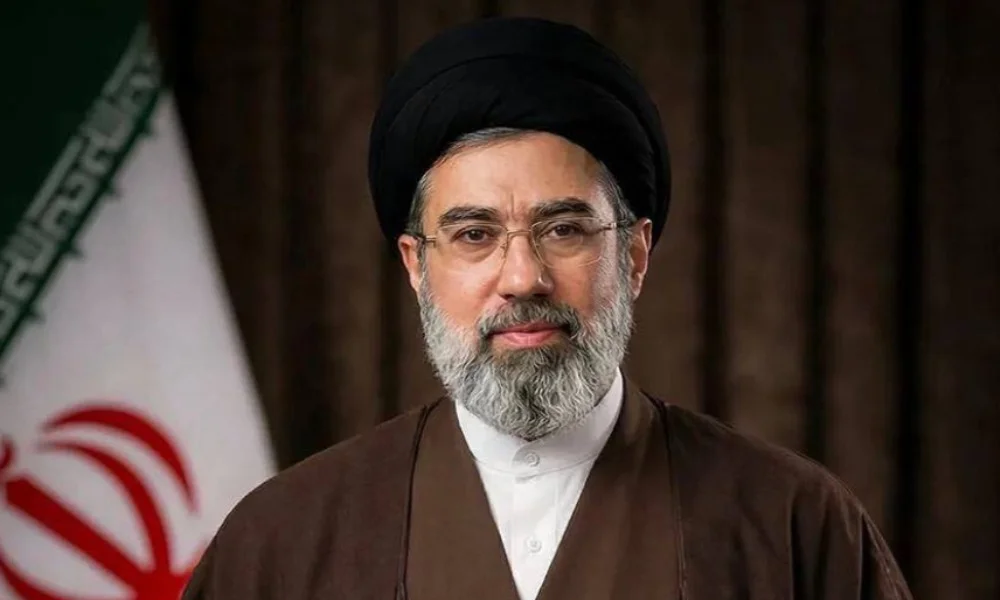
The leadership change comes only days after the elder Khamenei was reportedly killed during joint U.S.–Israeli strikes on Iranian targets, an event that triggered widespread military retaliation and heightened geopolitical tensions across the Middle East.
Mojtaba Khamenei Takes Power Amid War
Mojtaba Khamenei, a mid-ranking cleric long rumoured to wield influence behind the scenes, has strong ties to Iran’s Islamic Revolutionary Guard Corps (IRGC) and has been viewed as a key figure within the country’s security establishment.
Although the Islamic Republic traditionally rejects hereditary leadership, analysts say his selection reflects the political strength of Iran’s military and clerical networks, which sought continuity during wartime conditions.
Following Khamenei’s death, Iran initially operated under a temporary leadership council consisting of the president, judiciary chief, and a Guardian Council cleric until a permanent successor could be chosen.
Israel Issues Direct Threats to Iran’s New Leader
The leadership transition has already drawn strong reactions from Israel. Israeli military officials warned that they would
“pursue every successor of the late Iranian leader.”
This notion clearly signals that the new leadership could also become a target in the ongoing war. Such statements indicate that Israel views Iran’s leadership structure itself as a strategic component of the conflict and suggest the possibility of further high-level targeting operations.
Washington’s Reaction and Strategic Concerns
The United States has responded cautiously but critically to the succession. Reports indicate that U.S. officials have expressed concern about Mojtaba Khamenei’s close relationship with Iran’s security apparatus and his perceived hard-line stance toward the West.
The leadership change could influence several key issues:
- Iran’s nuclear policy
- Iran’s regional proxy strategy
- Iran’s military response to Israeli and U.S. operations
Some analysts believe the new leadership may adopt an even more confrontational approach toward Washington and its allies.
What It Means for the Iran–Israel–U.S. War
The appointment of a new supreme leader during an active conflict creates several strategic and legal implications:
1. Consolidation of Military Authority
The supreme leader serves as commander-in-chief of Iran’s armed forces and controls the IRGC, meaning the new leader will directly shape Iran’s war strategy.
2. Potential Hardening of Iran’s Foreign Policy
Mojtaba Khamenei’s association with the security establishment suggests Iran may maintain or intensify its resistance to U.S. and Israeli pressure.
3. Escalation Risks
With Israel openly threatening Iran’s leadership and Tehran promising retaliation, the leadership transition may deepen the conflict rather than create opportunities for negotiation.
4. Legal Questions Under International Law
Targeting political or religious leaders during wartime raises complex legal issues under international humanitarian law, particularly regarding whether such individuals qualify as lawful military targets.
Uncertain Future for Iran’s Political System
The succession is also controversial inside Iran. Critics argue that the selection of the late leader’s son resembles a hereditary transfer of power, which contradicts the revolutionary principles of the Islamic Republic. At the same time, the country faces intense internal pressure from war, economic disruption, and regional instability, making the new leader’s legitimacy and political control critical to Iran’s future stability.
Iran’s appointment of a new supreme leader marks a pivotal moment in the ongoing Middle East conflict. With Israel threatening further strikes and the United States closely monitoring the leadership transition, the change in Tehran is likely to influence both the direction of the war and the broader balance of power in the region.