
This comprehensive guide explores the cutting-edge AI technologies powering Google Search in 2025, how they work, and what they mean for users and content creators.
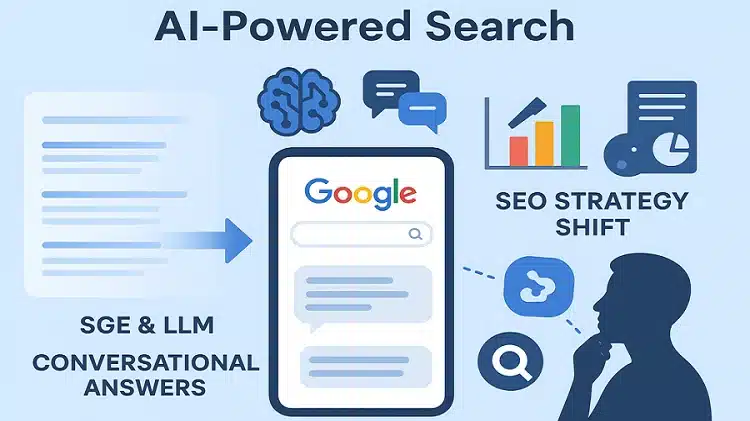
Google Search has undergone a revolutionary transformation in 2025, evolving from a simple link directory into an intelligent answer engine powered by sophisticated artificial intelligence. This transformation represents the most significant shift in search technology since Google’s inception, fundamentally changing how billions of people access information online. Understanding how Google uses AI in search is essential for anyone who creates content, markets online, or simply wants to comprehend the technology shaping our digital world.
The Evolution of Google Search: From Links to AI
For over 25 years, Google has continuously reimagined what a search engine can do. What started as an algorithm that displayed web pages related to keywords has evolved into a machine capable of interpreting intentions, delivering real-time results, and even predicting what users are looking for.
According to Google’s official blog:
“the company has developed completely new ways to search, powered by their latest advancements in AI.”
People now use Google Lens for 12 billion visual searches per month, a fourfold increase in just two years, with a growing number of those searches being multimodal (combining images and text). The introduction of generative AI represents another reimagining of what search engines can accomplish. With this powerful technology, Google can unlock entirely new types of questions users never thought Search could answer, transforming how information is organized to help people sort through and make sense of what is available.
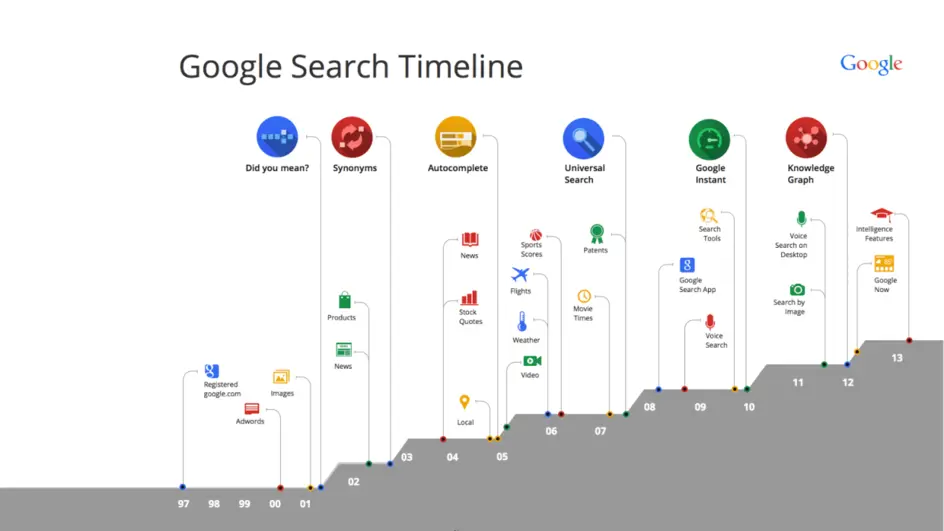
Source: Google Search Evolution Timeline
Google’s AI Overviews: The New Search Experience
AI Overviews, formerly known as Search Generative Experience (SGE), represent Google’s most visible application of artificial intelligence in search results. These AI-generated summaries appear at the top of search results pages, providing comprehensive answers to user queries without requiring clicks to external websites.
How AI Overviews Work
When you submit a query, Google’s AI model processes your question, searches through its massive index and knowledge base, synthesizes information from multiple authoritative sources, and generates a coherent, comprehensive answer presented directly on the search results page.
According to Noergia’s detailed explanation:
“Instead of just showing blue links or featured snippets, SGE automatically generates written content to answer what you are looking for.”
The system utilizes advanced language models to comprehend your search intent and provide the most relevant answer instantly.
For example, asking “What is the best laptop for video editing in 2025?” generates an AI-written paragraph comparing models, specifications, and prices, all based on multiple reliable sources. This approach not only improves the speed with which you find useful information but also transforms search into a more interactive, natural, and adaptive experience.
Rollout and Availability
As of 2025, AI Overviews have rolled out to everyone in the United States, with hundreds of millions of users having access. According to Google’s May 2024 announcement:
“The company expects to bring AI Overviews to over a billion people by the end of the year.”
Data from Semrush cited by Viser X shows that:
“AI Overviews appeared on 13.14% of all United States desktop queries as of mid-2025, double the January figure.”
Internal testing by Google indicates that AI Overviews will soon appear in more than 80% of informational queries.
User Response
People have used AI Overviews billions of times through Google’s experiment in Search Labs. According to Google’s data, users like that they can get both a quick overview of a topic and links to learn more. With AI Overviews, people use Search more and are more satisfied with their results.
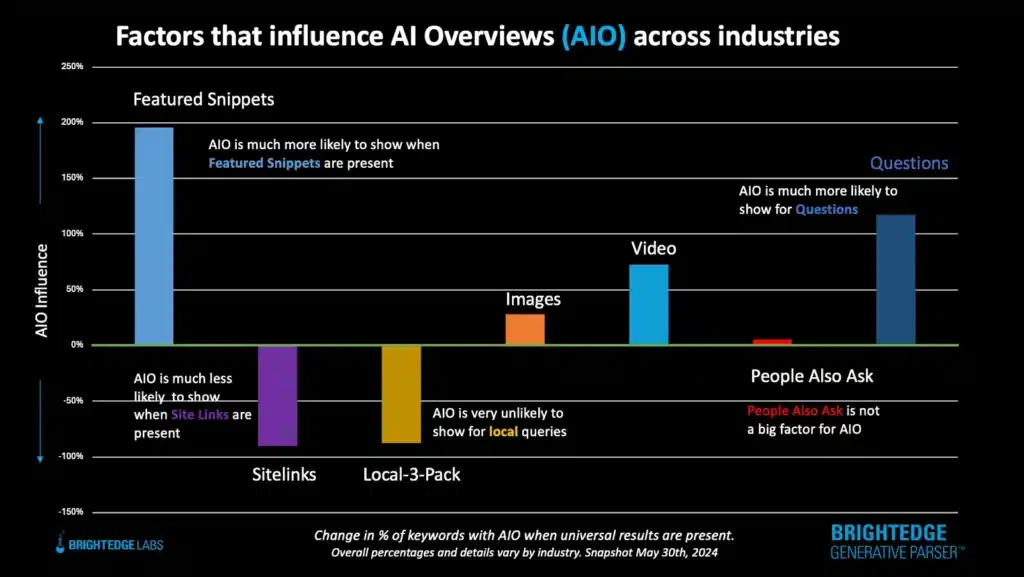
Interestingly, Google reports that people are visiting a greater diversity of websites for help with more complex questions. The links included in AI Overviews receive more clicks than if the page had appeared as a traditional web listing for that query.
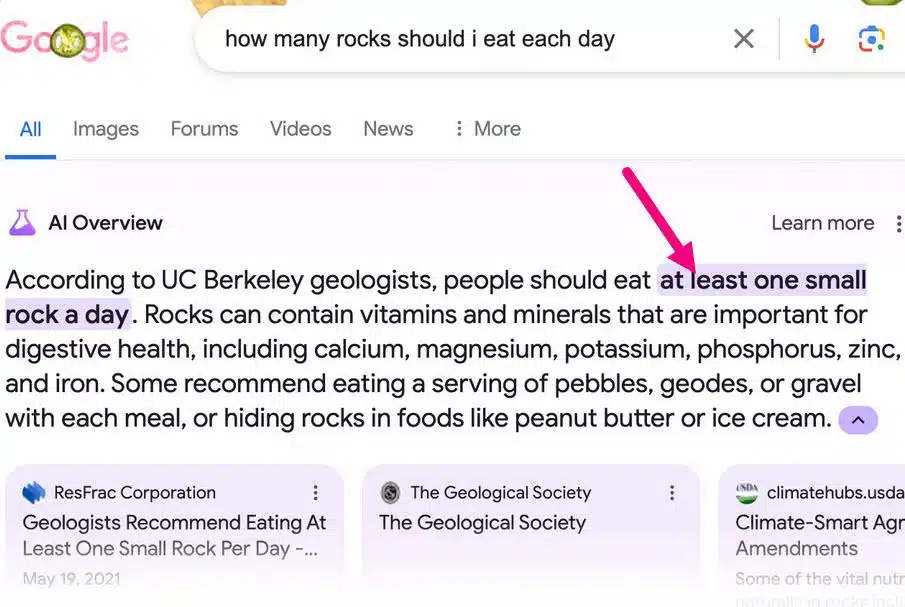
Source: AI Overviews Example
The Technology Behind Google’s AI Search
Several sophisticated AI technologies work together to power Google’s intelligent search capabilities.
Gemini: Google’s Custom AI Model
Google’s custom Gemini model serves as the foundation for AI-powered search features. According to Search Engine Land’s comprehensive guide:
“Gemini represents the next generation of language models specifically optimized for search applications.”
The model combines natural language processing (NLP) to understand conversational language and context, generative AI to create new text and respond naturally to user queries, and real-time web content integration that pulls up-to-date information directly from available website content.
Gemini’s architecture enables it to handle multimodal inputs, processing text, images, and eventually video and audio queries simultaneously. This versatility allows for more sophisticated search experiences than were previously possible.
Pathways Language Model 2 (PaLM 2)
Before Gemini, Google relied heavily on PaLM 2, an advanced large language model that powers various Google products. According to Semrush’s SGE explanation:
“PaLM 2 was trained on vast amounts of data, enabling it to understand and generate human-like responses.”
Think of PaLM 2 as someone who has read everything on the internet and can synthesize that knowledge to answer your questions conversationally. This deep understanding makes LLMs useful for responding to general prompts while maintaining contextual awareness.
Natural Language Processing
NLP enables Google to move beyond simple keyword matching to understand the actual meaning, context, and intent behind conversational language. When you ask “What should I wear to a beach wedding?” Google understands this is about appropriate attire for a specific occasion, not about beaches or weddings separately.
Advanced NLP analyzes syntax, semantics, context, user intent, and query relationships to deliver relevant results even when queries are phrased colloquially or incompletely.
Knowledge Graph
Google’s Knowledge Graph contains billions of facts about people, places, things, and their relationships. This massive database helps AI systems understand entities and their connections, providing context that improves search accuracy.
When you search for “Eiffel Tower,” the Knowledge Graph provides structured information about its height, location, construction date, and related entities. AI systems leverage this knowledge when generating responses.
Retrieval-Augmented Generation (RAG)
According to Search Engine Land’s AI Mode guide:
“Google uses RAG processes where AI retrieves information from the real-time web index or Knowledge Graph, then blends them with generative AI to create coherent, well-structured answers that directly address user queries.”
This approach ensures AI responses are grounded in current, authoritative information rather than relying solely on model training data, which has a cutoff date.
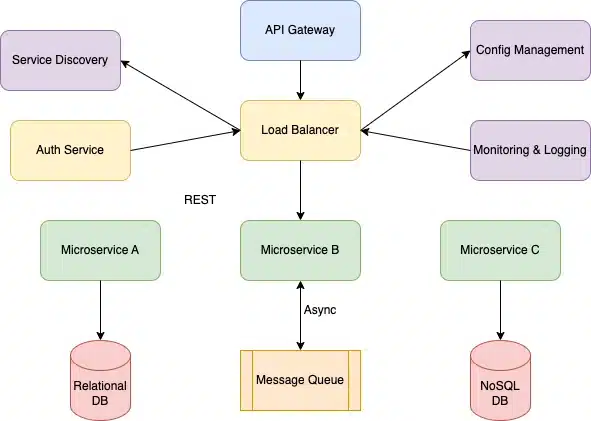
Source: Google AI Architecture Diagram
AI Mode: The Complete AI Search Experience
AI Mode represents the newest format for AI search within Google’s Search Generative Experiences. Unlike AI Overviews that appear as one feature among traditional results, AI Mode replaces the entire traditional search experience with an AI-first interface.
Accessing AI Mode
When available, you can access AI Mode by clicking the “AI Mode” tab on Google, which takes you to a new search interface. This feature is currently available through Search Labs, Google’s experimental features program.
To enable AI Mode, open Chrome while signed in to your Google Account, click the Labs icon (beaker) in the Google search interface, find the AI Mode option, and toggle it on. Note that AI Mode is still in beta and available in limited regions.
How AI Mode Differs from Traditional Search
According to Search Engine Land’s analysis:
“AI Mode brings a fundamentally different layer to the search landscape.”
Instead of delivering a list of results that users must sift through manually, AI synthesizes and summarizes information from across the web in real time using generative AI.
This removes friction for searchers by giving users direct answers to their queries. When people search via AI Mode, they see paraphrased summaries from a range of sources, getting exactly what they want instead of clicking through links and sifting through content.
Interactive Conversational Search
One of AI Mode’s key innovations is that you can interact with generated answers. According to Noergia’s guide:
“below AI-generated content, you will find suggestions like ‘ask a follow-up question’ or ‘explore further’.”
You can continue a conversation with the search engine, refining your query or asking for more details. If you search for “how to learn Python programming,” SGE gives you an overview of initial steps and free resources, then allows you to click on related questions like “how long does it take to learn?” or “what are the best free courses?”
This turns search into a dynamic dialogue with artificial intelligence. It is no longer just typing and reading; now you can guide and shape the answer according to your needs.
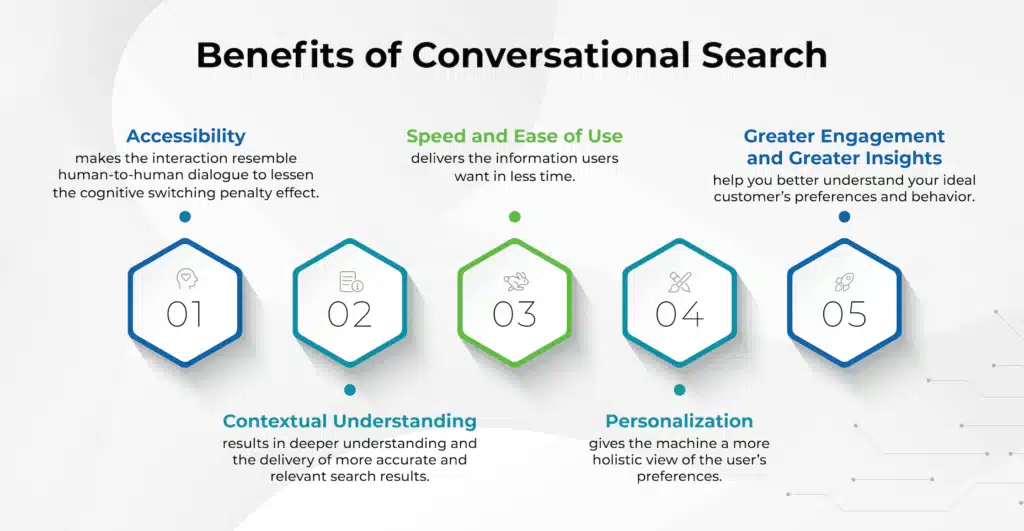
Source: Benefits of Conversational Search
Specialized AI Search Capabilities
Beyond general web search, Google has integrated AI across numerous specialized search features.
Visual Search with Google Lens
Google Lens enables searching using images rather than text. According to Google:
“People now use Lens for 12 billion visual searches monthly.”
The AI can identify objects, translate text, solve math problems, and provide information about anything in your camera view. Multisearch combines images and text, allowing you to take a picture of something and add text like “in blue” or “near me” to refine results. AI understands both visual and textual context simultaneously.
Video Search and Understanding
Searching with video saves you the time and trouble of finding the right words to describe this issue. You will get an AI Overview with steps and resources to troubleshoot. This capability will expand to more regions over time.
Shopping and Product Search
AI enhances shopping searches by understanding product attributes, comparing features across multiple products, identifying similar items, providing price comparisons, and showing personalized recommendations based on search and purchase history.
When you search for products, AI considers your implicit preferences, previous searches, and current trends to surface the most relevant options.
Local Search and Maps
AI improves local search by better understanding contextual queries like “best sushi near me for a date,” analyzing review sentiment to surface highly-rated options, providing personalized recommendations based on your preferences and history, and optimizing route planning with real-time traffic and condition analysis.
Meal and Trip Planning
According to Google’s blog:
“meal and trip planning are now available in Search Labs in English in the United States.”
Google will add customization capabilities and more categories like parties, date night, and workouts, later on. AI helps you plan entire experiences by understanding your preferences, constraints, and goals, then suggesting comprehensive plans with activities, restaurants, and logistics.
Source: AI Search Features
Impact on Content Creators and SEO
The integration of AI into Google Search has profound implications for content creators, marketers, and SEO professionals.
Changes in Traffic Patterns
According to Search Engine Land’s guide:
“impressions in Google Search Console may be rising, but clicks are dropping, plateauing, or nonexistent.”
Sites get plenty of visibility because people see them in search results, but they are not clicking through because AI is serving answers within the SERP. For queries triggered by AI Overviews, the median zero-click rate reaches approximately 80%. This dramatically reduces website traffic for many content creators who previously relied on organic search.
New SEO Strategies
Success in AI-powered search requires adapting SEO strategies. According to White Peak Digital’s analysis:
“correct use of structured data becomes critical so that AI can find your content more easily and deliver it to your target audience as part of its response.”
Key strategies include implementing comprehensive schema markup for all content types, creating content that answers specific questions clearly and concisely, building topical authority through content clusters and interlinking, optimizing for E-E-A-T (Experience, Expertise, Authoritativeness, Trustworthiness), and developing interactive content that cannot be replicated in AI summaries.
Content Quality Over Quantity
According to Ekarigar Tech’s analysis:
“Google’s AI wants high-quality, useful, and original content it can trust.”
Ironically, while SGE is AI-powered, it does not reward AI-generated spam. Google still values original human insights, editorial review, and transparency. Websites that provide clear value, trustworthy answers, and user-first experiences will thrive in this new era.
Entity-Rich Content
According to Search Engine Land:
“entity-rich content may help protect your brand’s narrative in AI search because you are making it very clear who you are and what content across the web belongs to you and your brand.”
If you have done the work to bring entities together, AI search is less likely to mistake your brand for another. This can happen when brands have similar names.
Conclusion
Google’s integration of artificial intelligence into search represents the most significant transformation in how we access information since the internet’s inception. AI Overviews, AI Mode, and related technologies are fundamentally changing search from a link directory into an intelligent answer engine.
For content creators and marketers, this shift requires strategic adaptation. Success in the AI search era means creating genuinely valuable content, building topical authority, implementing structured data, and diversifying traffic sources beyond organic search alone.
For users, AI-powered search provides faster, more comprehensive answers to questions, enabling more efficient information gathering and decision-making. However, maintaining critical thinking and verification habits remains essential.
As we move through 2025 and beyond, AI’s role in search will only expand. Google continues developing more sophisticated capabilities, expanding coverage, and integrating AI across all search functions. Understanding these technologies and adapting to the changing landscape is crucial for anyone who creates content, markets online, or simply wants to navigate the digital world effectively.
The future of search is here, and it is powered by artificial intelligence. Those who understand and embrace this transformation will be best positioned to thrive in the evolving digital ecosystem.
Frequently Asked Questions
What is the difference between AI Overviews and AI Mode?
AI Overviews appear at the top of traditional search results pages as one feature among many, providing AI-generated summaries for specific queries. AI Mode replaces the entire traditional search experience with an AI-first interface accessible through a dedicated tab. AI Overviews are available to all United States users, while AI Mode is currently in beta through Search Labs in limited regions. Both use similar AI technology but represent different levels of AI integration into the search experience.
Will AI search completely replace traditional search results?
No, AI search complements rather than completely replaces traditional results. Even with AI Overviews, Google continues showing traditional web listings below the AI-generated content. According to Google’s data, links included in AI Overviews actually receive more clicks than if the same pages appeared as traditional listings. Google remains committed to sending traffic to websites and supporting the open web ecosystem, though traffic patterns are changing significantly.
How can content creators optimize for AI search?
Content creators should implement comprehensive schema markup to help AI understand content structure, create content that directly answers specific questions with clear, concise responses, build topical authority through interlinked content clusters, demonstrate expertise, experience, authoritativeness, and trustworthiness (E-E-A-T), optimize for long-tail, conversational keywords that trigger AI responses, and develop unique, interactive content that cannot be easily replicated in AI summaries. Quality, originality, and clear value remain paramount.
Does AI search mean the end of SEO?
No, AI search represents the evolution of SEO rather than its end. According to multiple experts, traditional ranking factors still matter, but the focus shifts toward earning visibility in AI Overviews and featured snippets rather than just traditional rankings. SEO professionals must adapt strategies to prioritize structured data, question-based content, topical authority, and user-first experiences. The discipline continues but with different tactics and goals aligned with AI-powered search realities.
How accurate are Google’s AI-generated search responses?
Google works extensively to ensure AI response accuracy by training models on vast datasets, implementing quality control systems, providing source citations for verification, and continuously monitoring and improving performance. However, AI can still make errors, particularly for specialized topics, recent events, or edge cases. Users should verify important information from authoritative sources, especially for critical decisions. Google acknowledges these limitations while working to minimize errors through better training and systems refinement.