
Australia’s ability to avoid tariff threats from Donald Trump, even while supplying critical minerals linked to China’s hypersonic missile and nuclear programs, illustrates a sharp case of geopolitical selectivity rather than legal inconsistency. At the core of this outcome lies Australia’s unique strategic positioning within U.S. alliance architecture, the legal flexibility of trade coercion tools, and Washington’s long-term calculus in the Indo-Pacific.
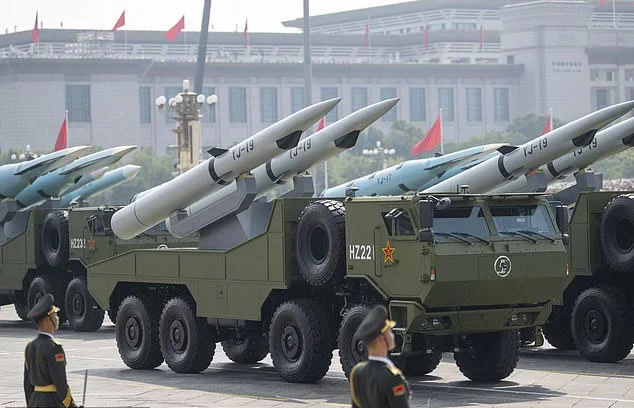
Strategic Indispensability Overrules Economic Coercion
Australia occupies a category distinct from other U.S. allies targeted by Trump-era tariff threats. As a cornerstone Indo-Pacific ally, Australia hosts critical intelligence, military, and surveillance infrastructure essential to U.S. power projection and containment strategy vis-à-vis China. From Washington’s perspective, coercing Australia economically would risk undermining alliance cohesion at a moment when strategic unity against Beijing is viewed as paramount.
Why Australia Was Spared Tariff Pressure
Despite U.S. concerns over Australian critical minerals entering Chinese supply chains with potential military applications, Washington has not threatened or imposed tariffs on Australia. This restraint reflects strategic calculation rather than legal limitation. The United States possesses ample authority to act but has chosen not to, prioritizing alliance stability over economic coercion.
Australia as an Indispensable Security Ally
Australia occupies a unique position in U.S. Indo-Pacific strategy. It hosts key U.S. military assets, enables force projection, and is embedded in intelligence and deterrence planning. Applying tariffs would risk alliance friction and operational setbacks that far outweigh any trade leverage. In effect, Australia is treated as strategic infrastructure, not a typical trade partner.
Alliance Logic Beats Compliance Logic
Under Donald Trump, tariffs were used to pressure partners seen as hedging or insufficiently aligned. Australia fell outside this category. While Canberra’s China-linked trade raises concerns, Washington views it as a structural constraint, not defiance. Sudden coercion would weaken Australia economically and push it closer to China—counterproductive to U.S. aims.
Minerals Today, Alignment Tomorrow
U.S. policymakers see Australia as a future anchor for non-Chinese critical mineral supply chains. Short-term tolerance of leakage to China preserves long-term alignment and supply chain realignment. Tariffs would undermine this strategy by triggering defensive nationalism or deeper dependence on Chinese markets.
Strategic Trust Limits Economic Lawfare
Australia’s role in long-term security arrangements, including AUKUS, places it inside a perimeter of strategic trust where disputes are managed through diplomacy, not punishment. The comparison with India and parts of Europe, both subjected to tariff threats, highlights a hierarchy: indispensable allies are insulated from economic coercion.
Tariffs as a Tool of Legalized Coercion
U.S. tariff threats and impositions under Donald Trump reveal a pattern of selective economic coercion rather than uniform legal enforcement. U.S. tariff actions during the Trump era relied on domestic statutes, most prominently Section 232 (national security) and Section 301 (unfair trade practices), that grant the executive wide latitude. While India faced tariff pressure linked to its Russia oil trade, and the United Kingdom and European Union encountered tariff threats amid expanding trade with China, Australia, despite supplying dual-use critical minerals to China, has avoided comparable measures.
Tariffs Beyond Trade Regulation
In contemporary geopolitics, tariffs have evolved from conventional trade remedies into instruments of legalized coercion. While formally imposed under domestic trade laws and justified as economic safeguards, they are increasingly deployed to influence the political and strategic behavior of other states.
Under governments led by Donald Trump, tariff policy was explicitly linked to non-trade objectives, including foreign policy alignment, security cooperation, and diplomatic conduct toward third states. In these cases, tariffs were used less to correct trade distortions and more to exert pressure on sovereign decision-making.
Domestic Legality Versus International Law Tensions
From a domestic perspective, tariffs imposed under U.S. trade statutes may be legally valid. However, their strategic use raises concerns under international law, particularly the principles of sovereign equality and non-intervention. When tariffs are conditioned on a state altering lawful sovereign conduct, such as energy imports, defense partnerships, or diplomatic relations, they move beyond economic regulation into coercive influence.
International legal scholars argue that such practices challenge the spirit, if not always the letter, of the World Trade Organization framework. While WTO law permits certain trade remedies, it does not endorse economic pressure designed to compel political compliance unrelated to trade obligations.
Selective Enforcement and the Logic of Power
The coercive nature of tariffs becomes most visible through selective application. States perceived as strategically replaceable or politically misaligned have faced tariff threats or penalties, while strategically indispensable allies have been spared, even when their conduct raises comparable concerns.
This selectivity reveals that tariffs function as leverage, not merely enforcement. Economic pressure is applied where it is expected to yield political concessions, and withheld where it would undermine broader strategic interests.
Tariffs as Instruments of Power Politics
The growing reliance on tariffs as geopolitical tools reflects a broader shift in international relations. Economic law is increasingly intertwined with strategic objectives, blurring the boundary between lawful economic measures and coercive interference.
In this context, tariffs operate as a form of power politics cloaked in legality, measures that remain formally lawful but are deployed to reshape international behavior. This evolution challenges existing trade norms and raises fundamental questions about the future role of economic instruments in global governance.
Minerals as a Controlled Strategic Asset, Not a Defection
While Australia supplies large volumes of zirconium and other dual-use minerals to China, U.S. policymakers treat this relationship as manageable rather than adversarial. The prevailing view in Washington is that Australia’s resource sector, unlike that of non-aligned or strategically autonomous states, remains ultimately aligned with Western interests and subject to rapid policy realignment if security conditions deteriorate.

This perception matters. Trump’s tariff strategy was aimed less at punishing trade itself and more at signaling discipline against allies using China ties to dilute U.S. strategic influence. Australia’s mineral exports were framed as commercial inertia, not geopolitical defiance.
Legal Ambiguity Creates Political Discretion
Trump’s tariff threats relied heavily on broad domestic authorities justified under national security grounds. These tools offer political discretion rather than rule-based enforcement. Crucially, no binding international or domestic legal finding established that Australia’s mineral exports violated export controls, sanctions regimes, or non-proliferation obligations.
Without a clear legal breach, applying tariffs would have appeared arbitrary, exposing the U.S. to WTO challenges and weakening the legitimacy of national-security-based trade actions. In contrast, targeting other allies was easier, where political narratives of “strategic freeloading” could be constructed.
From a strictly legal perspective, the U.S. had ample authority to act against Australia. Trump-era tariffs relied heavily on domestic statutes such as Section 232 (national security) and Section 301 (unfair trade practices), which provide broad executive discretion and are loosely constrained by WTO security exceptions. Nothing in U.S. trade law required consistent application across partners.
Australia’s mineral exports to China, given their dual-use military potential, could plausibly have been framed as a national security concern. The absence of tariff action, therefore, cannot be explained by legal incapacity. It must be explained by strategic restraint.
Indo-Pacific Strategy Overrides Consistency
From a geopolitical lens, the U.S. application of tariffs has been shaped less by legal uniformity than by strategic necessity, particularly in the Indo-Pacific. In this region, economic coercion has repeatedly given way to security priorities, producing clear inconsistencies in how allies are treated. Australia completely illustrates this approach.
As a core U.S. security partner, central to military basing, intelligence sharing, and regional deterrence, Australia is viewed as strategically indispensable. Applying tariff pressure would risk weakening a key pillar of Indo-Pacific stability, so Washington has treated Australia’s trade ties with China as a manageable strategic risk rather than a trigger for coercion.
This contrasts with U.S. tariff actions toward other partners perceived as more diplomatically flexible or strategically replaceable. The distinction is not legal but geopolitical, where economic pressure could undermine alliance architecture, and it is avoided. The outcome is a pragmatic doctrine in which tariffs are used selectively. In the Indo-Pacific, strategic imperatives override consistency, subordinating trade enforcement to long-term security and competition with China.
The Australia Exception in Trump-Era Trade Pressure
When viewed alongside U.S. tariff pressure on India over Russian oil imports and tariff threats directed at the United Kingdom and the European Union amid expanding trade with China, Australia stands out as a conspicuous exception. Despite credible evidence that Australian critical minerals, particularly zirconium, have entered Chinese supply chains linked to hypersonic missile and nuclear programs, the United States under the Trump administration neither imposed nor seriously threatened tariffs on Australia.
While the United States imposed or threatened tariffs against several allies for maintaining economic or energy ties with geopolitical rivals, Australia was treated as an exception rather than a target. The primary reason lies in Australia’s role as a cornerstone of U.S. Indo-Pacific strategy. Canberra is not merely a trade partner but a critical security ally, deeply embedded in U.S. defense planning through intelligence sharing, military basing, and joint deterrence initiatives aimed at balancing China’s regional influence.
From Washington’s perspective, applying tariff pressure on Australia would risk undermining alliance cohesion at a moment when strategic unity in the Indo-Pacific is viewed as essential. This exception is particularly striking given that Australia supplies critical minerals to China that have acknowledged dual-use potential, including applications in advanced military and hypersonic missile technologies.
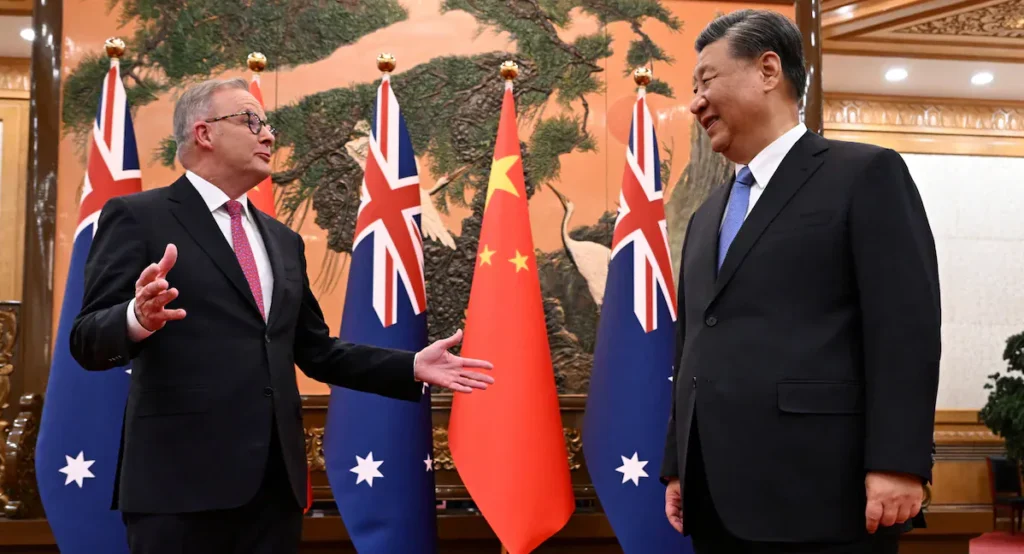
Trump-era trade practice, therefore, reveals an implicit hierarchy of allies. States perceived as strategically indispensable were shielded from coercive trade tools, while others faced tariffs framed as leverage or discipline. The “Australia exception” shows that U.S. tariff policy during this period functioned less as a rules-based instrument and more as a flexible geopolitical tool, calibrated to preserve alliances deemed vital to broader strategic competition with China.
Australia’s Strategic Status in U.S. Grand Strategy
The United States views Australia as structurally different from other partners facing tariff pressure. Australia occupies a unique position in U.S. long-term planning across four dimensions:
First, Australia is a core Indo-Pacific security ally, deeply embedded in U.S. defense architecture. It hosts critical intelligence, surveillance, and rotational military capabilities and is integral to alliance frameworks designed to counterbalance China’s regional influence. Tariff coercion would directly undermine alliance cohesion.
Second, Australia is central to future non-Chinese supply chains, even when current realities fall short. While Australian minerals still flow into Chinese processing networks, Washington’s strategic objective is to reorient those supply chains over time, not to punish Australia while that transition remains incomplete. Tariffs would slow, not accelerate, this decoupling.
Third, Australia is treated as a trusted governance partner, not a geopolitical swing state. Unlike India, whose strategic autonomy includes balancing relations with Russia, or parts of Europe pursuing economic hedging with China, Australia is perceived in Washington as fundamentally aligned with U.S. security objectives, even when commercial realities lag behind policy goals.
Fourth, Australia’s cooperation is forward-looking rather than transactional. The U.S. approach toward Canberra emphasizes long-term integration in defense technology, critical minerals processing, and strategic manufacturing. Tariff threats would inject unpredictability into relationships the U.S. sees as foundational for the next decade.
Selective Pressure as a Feature, Not a Flaw
Trump’s approach to tariffs was never designed to be universally applied. Selective pressure was not an inconsistency in Trump-era trade policy; it was a deliberate design choice. Tariffs were deployed not as neutral trade remedies, but as instruments of calibrated geopolitical leverage. The uneven application of economic pressure, harsh on some partners, restrained with others, reflected a hierarchy of strategic value rather than adherence to uniform legal or economic standards.
In this framework, allies were assessed less by their formal compliance with U.S. preferences and more by their perceived indispensability to core American strategic objectives. Countries such as India or parts of Europe faced tariff threats when their policies were viewed as adjustable without jeopardizing U.S. grand strategy. By contrast, states embedded in critical security architectures, most notably Australia, were insulated from coercion even when their conduct raised comparable strategic concerns.
This selectivity reveals how tariffs functioned as a form of legalized coercion under domestic trade law, but one constrained by geopolitical calculation. Rather than weakening U.S. policy, the inconsistency served its purpose, which is preserving essential alliances while extracting concessions where the political and strategic costs were deemed manageable. In effect, pressure was applied where it could bite without breaking, reinforcing the reality that in the Trump-era trade practice, strategic utility outweighed formal equality among allies.
Australia’s exemption illustrates a broader pattern that states deemed indispensable to future U.S. strategy enjoyed de facto immunity, even when their conduct raised genuine security concerns. In this sense, Australia benefited from what might be called strategic immunity, because its cooperation is essential to U.S. long-term objectives in the Indo-Pacific and global supply-chain restructuring.
Implications for International Trade Law and Alliances
The selective deployment of tariffs under the Trump administration carries lasting implications for international trade law and alliance management. By treating tariffs as tools of geopolitical leverage rather than remedies tied strictly to trade distortions, the U.S. blurred the line between lawful trade defense measures and coercive economic statecraft. While such actions were often justified under domestic statutes and national security exceptions, their uneven application weakened the normative foundations of the multilateral trading system.
From a legal perspective, this approach strained the credibility of World Trade Organization disciplines, particularly principles of non-discrimination and predictability. When similarly situated allies were treated differently based on strategic utility, it reinforced perceptions that trade law compliance is contingent on power and political alignment rather than legal merit. This undermines smaller and middle powers’ confidence that rules-based mechanisms can reliably constrain major economies.
For alliances, the implications are equally complex. Selective pressure signaled to partners that security alignment could shield them from economic coercion, while policy divergence, even among allies, could trigger punitive trade action. Over time, this dynamic risks reshaping alliances from rule-based partnerships into transactional arrangements, where economic exposure is managed through strategic indispensability rather than mutual legal commitments.
Conclusion
Australia’s successful avoidance of Trump’s tariff threats, despite supplying minerals critical to China’s hypersonic missile program, reflects a conscious choice to preserve and cultivate a partner viewed as essential to future strategic architecture. In Washington’s calculus, Australia is not a problem to be disciplined, but a platform to be built upon.
This explains why, even as Trump-era trade policy targeted allies and partners alike, Australia remained untouched. The lesson is clear that in contemporary geopolitics, legal exposure follows strategic indispensability more than factual inconsistency.
This strategy reveals that in great-power competition, trade law often bends to strategy. For Australia, alignment, not compliance, proved decisive. In the long term, such a model may preserve short-term leverage but erodes the legal and institutional trust that underpins stable trade and security cooperation.
Frequently Asked Questions
Why did Australia avoid U.S. tariff threats despite supplying critical minerals to China?
Australia avoided tariff threats largely because of its strategic indispensability to U.S. security interests in the Indo-Pacific. Washington views Australia as a core defense ally, intelligence partner, and logistical hub under frameworks such as ANZUS and AUKUS. These strategic considerations outweighed concerns over Australia’s mineral exports to China.
What makes Australia strategically indispensable to the United States?
Australia hosts key U.S. military assets, supports freedom-of-navigation operations, provides intelligence cooperation, and plays a central role in counterbalancing China in the Indo-Pacific. U.S. policymakers consider long-term alliance stability more critical than short-term trade enforcement consistency.
Is supplying minerals to China’s hypersonic missile supply chain legal under international law?
Supplying dual-use minerals is generally lawful under international trade law unless restricted by export-control regimes or sanctions. The legal concern arises from national security risk rather than a clear violation of international law, placing the issue in a regulatory and policy space rather than a strictly legal one.
What precedent does this set for international trade law?
How does the U.S. view Australia’s role going forward?
What does this mean for other U.S. allies?
Does this selective approach comply with WTO rules?
Formally, the U.S. has relied on national security exceptions to justify tariff actions. However, selective enforcement based on political alignment challenges WTO principles of non-discrimination and predictability, even if not easily justiciable.