
KARACHI: The deadly fire at Gul Plaza in Karachi has once again exposed the severe legal, human, and economic consequences of systematic neglect of fire safety laws in Pakistan, reigniting calls for criminal accountability, regulatory reform, and stricter enforcement of building codes. For a broader national pattern of fire safety failures, the Gul Plaza tragedy is examined in a comprehensive legal analysis of Pakistan’s recurring urban fire disasters and enforcement breakdowns.
A massive fire erupted at Gul Plaza, a multi-story shopping mall on M.A. Jinnah Road in Karachi, Pakistan, on January 16, 2026, destroying over 1,200 shops and causing structural collapses. The blaze, fueled by chemicals and possibly a faulty circuit breaker, took over a day to extinguish and has led to at least 27 deaths, including a firefighter and a child, with 81 people still missing as of January 20.
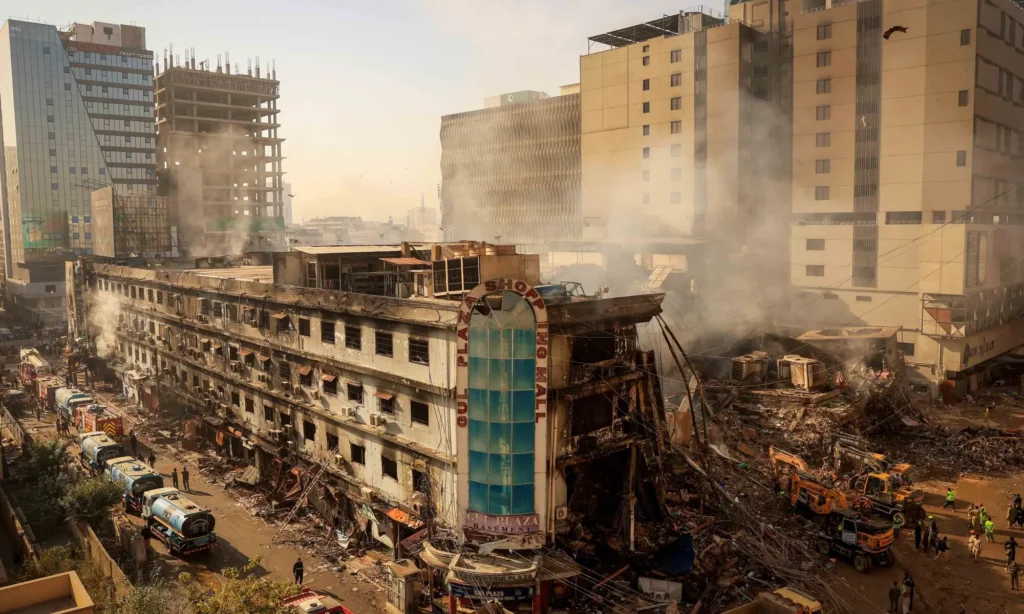
Rescue operations continue with teams from Rescue 1122, Sindh Rangers, Pakistan Navy, and KMC using heavy machinery to access upper floors after clearing the ground and first levels. Over 30 injuries reported; cooling the structure delays full searches, expected to last days. A help desk at DC South Office tracks missing persons.
Preliminary investigations indicate that the structure lacked functional fire alarms, emergency exits, and proper evacuation plans, violations that are explicitly prohibited under provincial building and occupational safety regulations.
Legal Obligations Under Pakistani Law
Under Pakistan’s existing legal framework, commercial buildings are required to comply with fire safety standards enforced by municipal authorities, development authorities, and civil defence departments. In Sindh, these obligations arise from local building control regulations, the Sindh Fire Prevention and Life Safety Measures Act, and occupational safety rules governing workplaces.
Legal experts note that failure to install fire detection systems, maintain accessible emergency exits, and conduct safety inspections can trigger criminal negligence, civil liability, and administrative sanctions. Where loss of life occurs, responsible parties, including building owners, occupiers, and approving authorities may face prosecution under the Pakistan Penal Code for causing death by negligence.
Pattern of Regulatory Neglect
The Gul Plaza incident follows a familiar pattern seen in past tragedies across Pakistan, where commercial buildings operate for years without compliance checks, often due to weak enforcement, regulatory capture, or corruption. Investigators have found that several floors of the building were operating without valid safety clearance certificates, while stairwells and exits were reportedly blocked or locked at the time of the fire.
Firefighters responding to the blaze cited narrow access points, lack of internal fire suppression systems, and absence of emergency lighting as factors that hampered rescue operations and contributed to fatalities.
Similar regulatory failures have been documented across multiple provinces and fire incidents, reinforcing the conclusion that Pakistan’s fire disasters stem from governance and enforcement deficits rather than the absence of law, as detailed in a wider national compliance analysis of fire safety enforcement.
Criminal and Civil Liability Risks
From a legal standpoint, the incident exposes multiple layers of liability. Building owners and management may face criminal charges for reckless disregard of safety obligations. Employers operating inside the premises may also be liable for failing to ensure a safe working environment for employees.
In addition, victims’ families may pursue civil compensation claims for wrongful death and personal injury, arguing that the fire was foreseeable and preventable. Courts in Pakistan have previously held that economic activity cannot justify compromising life safety standards.
Role of State Authorities Under Question
Beyond private liability, the fire has raised uncomfortable questions about the role of state and municipal authorities responsible for inspection and enforcement. Legal analysts point out that regulatory agencies have a public law duty to ensure compliance with safety laws, and prolonged inaction may amount to maladministration.
Sindh CM ordered strict fire safety enforcement and compensation of 10 million PKR per affected family. Inquiry underway into response delays, water shortages from Green Line construction, and safety lapses. Officials, including IGP Sindh and Mayor Wahab, oversaw operations.
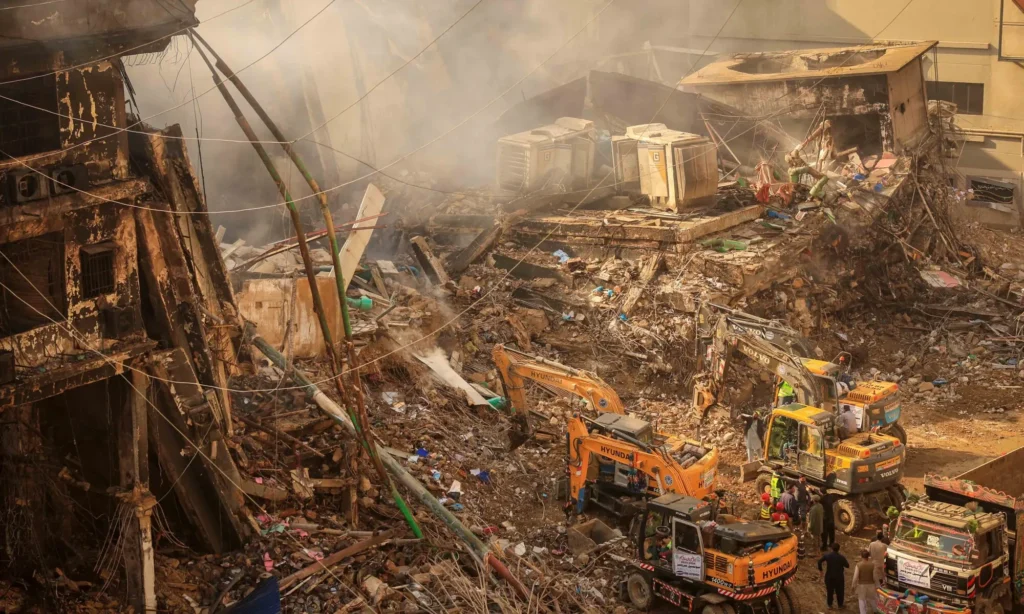
In previous cases, courts have criticised local authorities for issuing completion certificates or allowing occupancy despite clear violations. The Gul Plaza fire is likely to revive debate over whether officials who failed to enforce safety requirements should face departmental or criminal proceedings.
Broader Legal and Policy Implications
The tragedy highlights a systemic failure in urban safety governance in Pakistan’s major cities. Despite repeated fatal fires in factories, shopping centres, and residential buildings, enforcement remains reactive rather than preventive.
Legal observers warn that without structural reforms such as mandatory annual safety audits, digital inspection records, and independent fire safety authorities, Pakistan will continue to pay a high human cost for regulatory neglect.
Calls for Accountability and Reform
In the aftermath of the Gul Plaza fire, civil society groups and legal practitioners have called for transparent investigations, public disclosure of inspection records, and swift prosecution of those responsible. There are also renewed demands for amendments to strengthen penalties for safety violations and to eliminate discretionary loopholes that allow non-compliant buildings to operate.
The Gul Plaza fire is not merely an isolated accident but a stark illustration of the legal and human losses caused by ignoring fire safety laws in Pakistan. As investigations continue, the case may become a defining test of whether existing legal frameworks will be meaningfully enforced, or whether accountability will once again fade after public attention subsides.
Without structural reform and consistent enforcement, the Gul Plaza fire risks becoming another entry in a growing list of preventable disasters highlighted in broader assessments of Pakistan’s systemic fire safety failures. For Pakistan’s courts, regulators, and lawmakers, the message from Karachi is clear: neglecting fire safety is no longer just a regulatory lapse; it is a matter of life, death, and legal responsibility.