
By 2026, global legal affairs have entered a phase of accelerated transformation. The architecture of international law, built on multilateral treaties, customary norms, and institutional adjudication, continues to operate, yet it does so under unprecedented geopolitical strain. Trade wars, selective sanctions, AI governance disputes, climate litigation, cyber operations, maritime tensions, and the politicization of international institutions have redefined how law functions across borders.
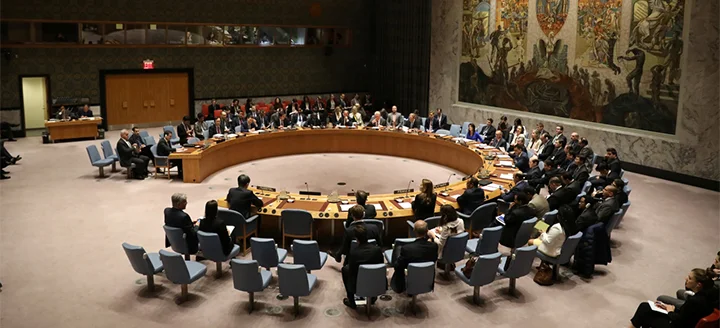
International law today is not collapsing; it is being stress-tested. States increasingly invoke legal doctrine strategically, sometimes to justify unilateral measures, sometimes to resist them. The United Nations, the International Court of Justice, the International Criminal Court, and the World Trade Organization remain operational pillars of global governance. Yet their authority is increasingly shaped by geopolitical power competition rather than purely doctrinal coherence.
What we are witnessing is not the erosion of law, but the transformation of its operational architecture. Legal norms are invoked strategically, compliance is increasingly selective, enforcement is politically mediated, and sector-specific regimes are diverging in coherence and effectiveness. The central question in 2026 is therefore not whether international law survives, but what form it will take in an era of multipolarity, technological acceleration, climate emergency, and economic coercion.
This analysis examines the structural foundations of international law, its enforcement dynamics, institutional resilience, and emerging regulatory domains, while assessing how power politics is reshaping global legal governance.
Foundations of International Law: Consent, Custom, and Constraint
International legal affairs operate through a complex network of treaties, conventions, and customary international law that bind nations together. The United Nations serves as the cornerstone institution, with the International Court of Justice adjudicates disputes between states and provides advisory opinions on legal questions. Article 38 of the ICJ Statute remains the canonical articulation of these sources.
According to the UN Treaty Collection, over 560 multilateral treaties currently govern various aspects of international relations, from human rights to environmental protection. The doctrine of pacta sunt servanda, codified in the Vienna Convention on the Law of Treaties, still underpins treaty compliance. The Vienna Convention on the Law of Treaties establishes:
“every treaty in force is binding upon the parties to it and must be performed by them in good faith.”
This fundamental doctrine ensures stability in international relations and provides predictability for cross-border transactions. Yet in 2026, the tension between legal obligation and strategic interest is increasingly visible. States sometimes reinterpret treaty commitments through national security exceptions, domestic constitutional doctrines, or economic emergency powers.
Customary international law, formed by consistent state practice accompanied by opinio juris, continues to evolve in areas such as cyber operations, environmental protection, and space governance. However, fragmentation of practice among major powers complicates the crystallization of universal norms. General principles, good faith, proportionality, equity, and estoppel remain doctrinal tools that international tribunals invoke when treaty text is silent or ambiguous.
Sovereignty in 2026: From Absolute Authority to Managed Interdependence
The principle of sovereign equality under Article 2(1) of the United Nations Charter formally treats states as equal. In practice, however, global governance reflects asymmetries of power. In 2026, the classical notion of sovereignty as absolute and exclusive authority within a defined territory has continued to evolve under the pressures of globalization, technological integration, and multilateral governance.
While the principle of sovereign equality remains formally intact under the UN Charter, state authority is increasingly shaped by binding treaty commitments, economic interdependence, and transnational regulatory frameworks. Sovereignty is no longer exercised in isolation as it operates within a dense network of legal obligations that condition how states regulate trade, security, climate policy, digital infrastructure, and human rights.
At the same time, sovereignty has not disappeared; it has been recalibrated. States continue to assert control over borders, natural resources, national security policy, and digital ecosystems, often invoking sovereignty to justify regulatory autonomy or resistance to external pressure. However, this assertion coexists with structural constraints imposed by global supply chains, financial systems, cyber interconnectivity, and collective security arrangements.
In practice, sovereignty in 2026 functions less as absolute independence and more as strategic participation in international regimes that require cooperation, compliance, and negotiated compromise. The emerging model can be described as managed interdependence. States retain ultimate authority but exercise it within frameworks that recognize mutual vulnerability and shared risk, particularly in areas such as climate change, artificial intelligence governance, public health, and cross-border security threats.
Sovereignty today is defined not by insulation from external influence, but by a state’s capacity to navigate international obligations while safeguarding domestic legitimacy. The shift reflects a transformation in the operational meaning of sovereignty, from unilateral control to coordinated governance in an interconnected global order.
International Judicial Institutions
International judicial institutions in 2026 operate in an increasingly complex and politically contested environment. Courts such as the International Court of Justice, the International Criminal Court, and regional human rights tribunals were designed to provide legal clarity, accountability, and peaceful dispute resolution. However, their authority depends largely on state consent and cooperation, making them vulnerable to geopolitical tension, selective compliance, and jurisdictional resistance.
International Court of Justice
The International Court of Justice (ICJ) in The Hague represents the principal judicial organ of the United Nations, resolving contentious cases between states and issuing advisory opinions. With 15 judges elected by the UN General Assembly and Security Council, the ICJ has adjudicated over 180 cases since its establishment in 1946. Recent landmark cases include maritime boundary disputes, questions of genocide, and environmental protection obligations.
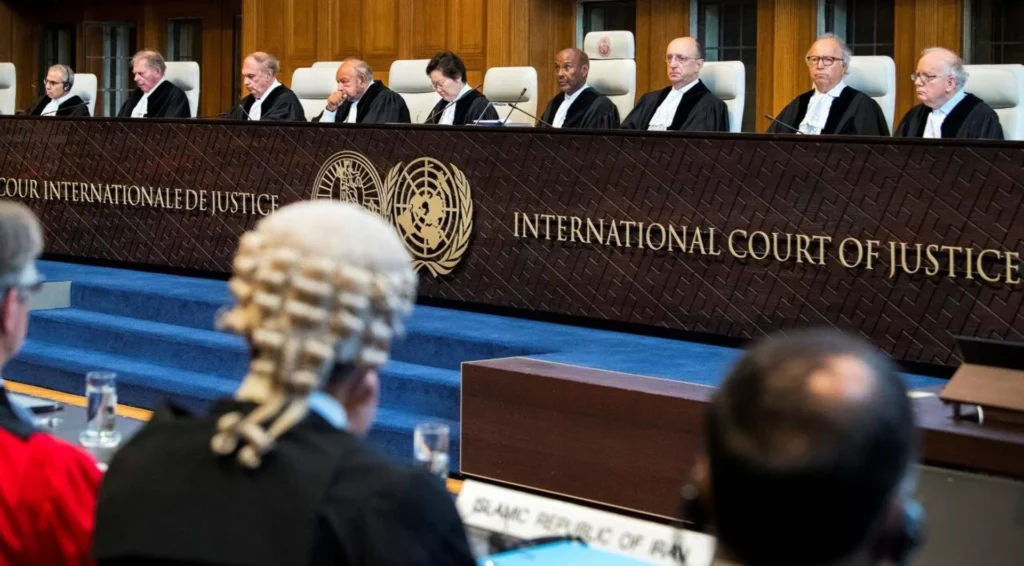
The Permanent Court of Arbitration complements the ICJ by providing arbitration services for international disputes involving states, international organizations, and private parties. Established in 1899, it has facilitated the resolution of complex territorial, investment, and treaty interpretation disputes through flexible arbitration mechanisms.
Jurisdiction and Functions
The ICJ has two main functions. First, it settles contentious cases between states. Only states may be parties before the Court, and jurisdiction is based on state consent, either through special agreements, treaty clauses, or optional declarations recognizing compulsory jurisdiction. Second, the Court issues advisory opinions at the request of authorized UN organs and specialized agencies. Although advisory opinions are not legally binding, they carry significant legal weight and influence international practice.
The Court addresses a wide range of issues, including territorial disputes, maritime boundaries, diplomatic protection, treaty interpretation, use of force, and state responsibility. Its judgments are final and binding on the parties to the dispute, without appeal, although interpretation or revision may be requested under limited conditions.
Role in the International Legal Order
Despite enforcement constraints, the ICJ plays a central role in clarifying and developing international law. Its jurisprudence contributes to the interpretation of treaties, the consolidation of customary international law, and the articulation of principles such as sovereign equality, non-intervention, and state responsibility. Advisory opinions have also shaped debates on decolonization, self-determination, humanitarian law, and environmental obligations.
International Criminal Court
The International Criminal Court (ICC) prosecutes individuals for genocide, crimes against humanity, war crimes, and aggression. With 123 states parties to the Rome Statute, the ICC represents a critical evolution in international criminal justice. As of 2026, the court has opened investigations in 17 situations and issued arrest warrants for numerous individuals accused of grave international crimes.
Jurisdiction and Legal Framework
The ICC’s jurisdiction is defined by the Rome Statute. It may exercise authority where crimes are committed on the territory of a State Party, by nationals of a State Party, or when a situation is referred by the United Nations Security Council. The Court operates on the principle of complementarity, meaning it acts only when national courts are unwilling or genuinely unable to prosecute alleged crimes. This reinforces state sovereignty while providing a mechanism to address impunity.
The crime of aggression, activated in 2018, further expanded the Court’s scope, though its jurisdiction in this area remains legally and politically complex. The ICC’s authority is not universal, as several major powers are not parties to the Rome Statute, which limits the Court’s reach in certain geopolitical contexts.
Contemporary Relevance in 2026
In 2026, the ICC operates in a politically polarized environment marked by ongoing conflicts and allegations of war crimes in multiple regions. The Court faces pressure from geopolitical rivalry, jurisdictional disputes, and questions about enforcement capacity. At the same time, it remains a central institution in the global fight against impunity. Its investigations and arrest warrants continue to shape diplomatic discourse, reinforce accountability norms, and influence domestic legal proceedings.
Arbitration and Investment Tribunals
Arbitration and investment tribunals play a central role in resolving cross-border commercial and investment disputes. Unlike standing international courts, arbitral tribunals are typically constituted on an ad hoc basis to decide specific disputes, particularly between foreign investors and host states. In 2026, these mechanisms remain a cornerstone of international economic law, offering a structured forum for neutral dispute resolution outside domestic courts.
Investor–State Dispute Settlement (ISDS)
Investment arbitration is most commonly conducted under bilateral investment treaties (BITs), multilateral agreements, or free trade agreements that include Investor–State Dispute Settlement (ISDS) provisions. These clauses allow foreign investors to bring claims directly against states for alleged breaches of treaty obligations, such as expropriation without compensation, denial of fair and equitable treatment, or discrimination. Institutions such as the International Centre for Settlement of Investment Disputes (ICSID) and arbitral frameworks under UNCITRAL rules administer many of these disputes.
The rationale behind ISDS is to depoliticize investment disputes and provide legal certainty, thereby encouraging cross-border investment. Awards issued by tribunals are binding and enforceable under international conventions, including the ICSID Convention and the New York Convention on the Recognition and Enforcement of Foreign Arbitral Awards.
Commercial Arbitration
Beyond investment disputes, international commercial arbitration remains widely used for resolving disputes between private parties engaged in cross-border trade. Arbitration clauses in contracts allow parties to avoid domestic court systems and instead rely on neutral arbitrators, chosen procedures, and enforceable awards. The flexibility, confidentiality, and global enforceability of arbitral awards continue to make arbitration a preferred mechanism in international commerce.
Trade Law in the Age of Economic Coercion
In 2026, international trade law operates in an environment increasingly shaped by economic coercion, strategic decoupling, and geopolitical rivalry. The multilateral trading system, built on predictability and non-discrimination under the World Trade Organization (WTO), faces sustained pressure from unilateral tariffs, export controls, sanctions regimes, and industrial policy measures.
WTO and Fragmented Multilateralism
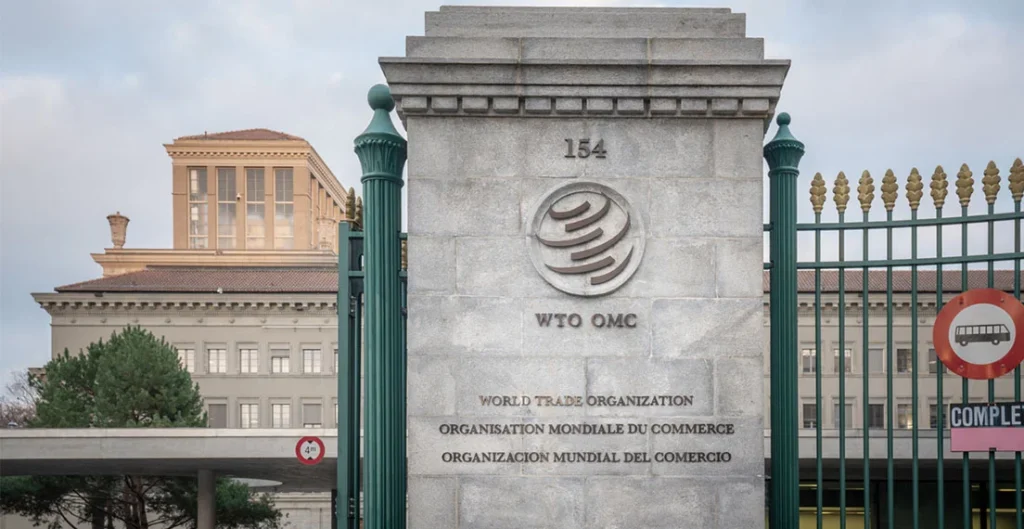
The World Trade Organization (WTO) governs international trade relations among 164 member states, administering trade agreements and resolving disputes through its comprehensive legal framework. The WTO’s Dispute Settlement Body has become one of the most active international tribunals, having ruled on over 600 disputes since 1995.
Trade liberalization under WTO agreements has generated substantial economic benefits. According to WTO statistics, global merchandise trade reached $25.3 trillion in 2024, with services trade contributing an additional $7.5 trillion. The legal framework governing this massive economic exchange includes the General Agreement on Tariffs and Trade (GATT), the General Agreement on Trade in Services (GATS), and the Agreement on Trade-Related Aspects of Intellectual Property Rights (TRIPS).
One of the most significant structural challenges remains the weakened dispute settlement system. The paralysis of the Appellate Body has reduced the enforceability of WTO rulings, encouraging some members to bypass or delay compliance. The inability to restore a fully functioning dispute resolution mechanism reflects deeper divisions over trade governance, industrial policy, and the role of state intervention in markets.
International Investment Law and Arbitration
International investment law regulates the protection of foreign investments and governs disputes between investors and host states. Built primarily on bilateral investment treaties (BITs), free trade agreements (FTAs), and multilateral conventions, this legal regime seeks to promote cross-border capital flows by offering legal certainty and enforceable protections.
Cross-border investment is protected by over 3,000 bilateral investment treaties (BITs) and numerous multilateral agreements. The International Centre for Settlement of Investment Disputes (ICSID) has administered over 800 investment arbitration cases, addressing disputes between foreign investors and host states. As detailed in ICSID’s 2024 Annual Report, investment treaty arbitration continues to evolve, with increasing focus on regulatory space for public policy objectives.
A defining feature of the system is Investor–State Dispute Settlement (ISDS), which allows investors to bring claims directly against states without requiring diplomatic intervention. This mechanism was designed to depoliticize disputes and ensure neutrality. However, ISDS has faced sustained criticism.
Human Rights Law: Normative Expansion, Political Resistance
Treaties, customary law, and regional human rights instruments collectively create a robust framework obligating states to respect, protect, and fulfill individual and collective rights. Issues such as freedom of expression, minority protections, gender equality, environmental justice, and digital privacy are increasingly recognized as legally enforceable rights, reflecting evolving international norms and societal expectations.
Universal Human Rights Frameworks
Universal human rights frameworks provide the foundational architecture for protecting fundamental rights and freedoms across all states, regardless of culture, political system, or economic status. At their core are treaties, conventions, and declarations developed under the United Nations and other international bodies, establishing legal obligations and normative standards that guide state behavior and influence domestic law.
The Universal Declaration of Human Rights (UDHR), adopted in 1948, established the foundation for modern international human rights law. This framework has expanded through nine core international human rights treaties, including the International Covenant on Civil and Political Rights and the International Covenant on Economic, Social, and Cultural Rights (ICESCR). Together, these instruments articulate the universal principles of dignity, equality, freedom, and non-discrimination.
The Office of the High Commissioner for Human Rights monitors compliance with these treaties through treaty bodies, special procedures, and the Universal Periodic Review mechanism. As of 2026, all UN member states have ratified at least one core human rights treaty, demonstrating universal acceptance of human rights obligations.
Regional Human Rights Systems
Regional systems complement universal mechanisms through the European Court of Human Rights, the Inter-American Court of Human Rights, and the African Court on Human and Peoples’ Rights. These courts have issued thousands of binding judgments, developing sophisticated jurisprudence on civil, political, economic, and social rights. The European Court alone has delivered over 25,000 judgments since its establishment, addressing issues from privacy rights to fair trial guarantees.
These regional treaties create courts and commissions that monitor compliance, adjudicate complaints, and issue binding or persuasive decisions, reinforcing accountability at multiple levels. The interplay between universal and regional frameworks ensures a more comprehensive and accessible rights protection system worldwide.
International Humanitarian Law and Armed Conflict
Grounded in the four Geneva Conventions of 1949 and their Additional Protocols, IHL establishes rules governing the conduct of war, treatment of prisoners, protection of civilians, and the use of weapons. It applies to both international and non-international armed conflicts, creating binding obligations on states and organized armed groups to adhere to principles of distinction, proportionality, and necessity.
The International Committee of the Red Cross (ICRC) serves as the guardian of IHL, promoting compliance and providing humanitarian assistance in conflict zones. The Arms Trade Treaty, which entered into force in 2014, regulates international trade in conventional weapons to prevent illicit trafficking and diversion. With 113 states parties as of 2025, the treaty represents significant progress in controlling weapons proliferation, though major arms exporters remain outside the framework.
Enforcement and compliance remain ongoing challenges. While IHL sets clear legal obligations, violations continue due to limited enforcement mechanisms, lack of state cooperation, and political considerations. International monitoring bodies, fact-finding missions, and humanitarian organizations play a key role in documenting breaches and advocating for accountability.
Climate Governance and Environmental Litigation
In 2026, climate governance has become a central focus of international law, reflecting the urgent need to address global environmental challenges. Multilateral frameworks such as the Paris Agreement and the United Nations Framework Convention on Climate Change (UNFCCC) provide binding and aspirational obligations for states to reduce greenhouse gas emissions, adapt to climate impacts, and support sustainable development.
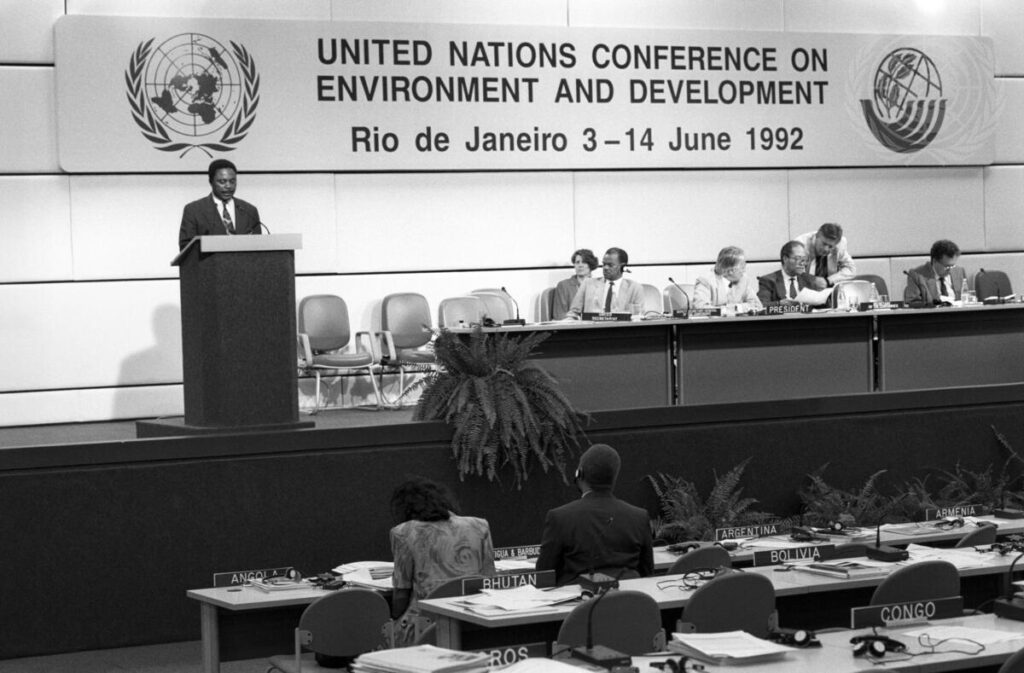
Environmental litigation, on the other hand, has emerged as a critical tool for enforcing climate obligations and holding states and corporations accountable. Courts and tribunals at national and international levels increasingly hear cases challenging inadequate climate policies, pollution, deforestation, and the failure to meet emissions targets.
The Paris Agreement and Climate Action
The Paris Agreement, adopted in 2015 under the United Nations Framework Convention on Climate Change (UNFCCC), represents the most comprehensive international legal framework for climate action. With 195 parties committed to limiting global temperature, its primary objective is to limit global temperature rise to well below 2°C above pre-industrial levels, with efforts to contain the increase to 1.5°C.
The Agreement relies on nationally determined contributions (NDCs), allowing states to set their own emission reduction targets while promoting transparency, accountability, and periodic review. According to the UN Framework Convention on Climate Change, global greenhouse gas emissions must decline by 45% from 2010 levels by 2030 to achieve the Paris Agreement’s goals. This urgent timeline has prompted unprecedented legal and regulatory innovation across jurisdictions.
Courts increasingly reference the Paris framework in climate litigation, holding governments accountable for inadequate policies and invoking the Agreement as a normative standard for environmental protection. Private sector initiatives, investment decisions, and regulatory measures are also guided by the Agreement’s objectives, signaling its role as both a legal and policy benchmark.
Biodiversity and Environmental Protection
Biodiversity and environmental protection have become central pillars of international law and global governance in 2026. Recognizing that ecosystems, species, and genetic resources are critical to human survival and sustainable development, states and international institutions have increasingly codified obligations to conserve biodiversity and manage natural resources responsibly.
The Convention on Biological Diversity and its protocols govern the conservation and sustainable use of biological resources, while the Montreal Protocol demonstrates the success of multilateral environmental agreements in phasing out ozone-depleting substances. The Kunming-Montreal Global Biodiversity Framework, adopted in 2022, sets ambitious targets for protecting 30% of terrestrial and marine areas by 2030.
Related agreements, such as the Nagoya Protocol and the Cartagena Protocol on Biosafety, provide frameworks for protecting ecosystems, regulating access to genetic resources, and promoting the sustainable use of biodiversity. Environmental impact assessments, regulatory compliance mechanisms, and reporting requirements have become standard tools to ensure accountability. At the same time, multilateral cooperation is essential to address challenges such as species extinction, invasive species, and ecosystem degradation.
Cybersecurity and Digital Governance
International law in cyberspace remains a complex and contested domain. Principles derived from the UN Charter, customary international law, and the Tallinn Manual on the International Law Applicable to Cyber Operations guide state conduct regarding sovereignty, non-intervention, and the use of force in digital operations. Multilateral efforts to develop binding norms, such as UN Group of Governmental Experts (GGE) initiatives, continue, but enforcement relies heavily on state consent and cooperation.
The Council of Europe’s Budapest Convention on Cybercrime, with 68 parties as of 2025, provides the most comprehensive international treaty addressing internet crimes and electronic evidence. The United Nations Group of Governmental Experts has developed voluntary norms for responsible state behavior in cyberspace, while regional organizations advance complementary frameworks. The European Union’s General Data Protection Regulation (GDPR) has established influential standards for data protection, with many jurisdictions adopting similar frameworks.
Digital governance also encompasses issues of privacy, data protection, and regulation of cross-border data flows. International agreements, national legislation, and standards set by organizations such as the OECD, ISO, and regional authorities shape the rights of individuals and the obligations of corporations. Cybersecurity and digital governance in 2026 increasingly intersect with human rights, trade, and critical infrastructure protection, emphasizing the need for coordinated, multilevel legal responses.
Intellectual Property Rights in Global Commerce
Intellectual Property Rights (IPR) continue to be a cornerstone of global commerce, shaping innovation, trade, and economic competitiveness. Patents, trademarks, copyrights, industrial designs, and trade secrets provide legal protection for creators, innovators, and businesses, incentivizing research and development while fostering technology transfer and market growth.
The World Intellectual Property Organization (WIPO) administers 26 international treaties protecting intellectual property rights across borders. The Patent Cooperation Treaty streamlines international patent applications, while the Madrid System facilitates international trademark registration. According to WIPO’s 2024 statistics, over 3.5 million patent applications were filed globally in 2024, reflecting the critical importance of intellectual property protection in the knowledge economy.

The Agreement on Trade-Related Aspects of Intellectual Property Rights (TRIPS) under the World Trade Organization remains the primary international framework, establishing minimum standards for the protection and enforcement of IPR across member states. in 2026, issues such as artificial intelligence-generated works, biotechnology innovations, pharmaceutical patents, and cross-border data use raise complex questions regarding ownership, licensing, and enforcement.
Migration and Refugee Law
The legal framework is primarily anchored in the 1951 Refugee Convention and its 1967 protocol that defines refugee rights and state obligations toward asylum seekers. The UN High Commissioner for Refugees (UNHCR) reports that over 117 million people worldwide were forcibly displaced by the end of 2024, creating unprecedented challenges for refugee protection systems.
The Global Compact on Refugees and Global Compact for Safe, Orderly and Regular Migration provide comprehensive frameworks for addressing contemporary migration challenges through international cooperation and burden-sharing mechanisms. Complementing these instruments are regional treaties, such as the OAU Refugee Convention in Africa and the Cartagena Declaration in Latin America, as well as international human rights law, which collectively broaden protections for migrants and displaced persons.
Enforcement and compliance in migration and refugee law continue to face limitations. While the principle of non-refoulement is legally binding, practical implementation is uneven, and states sometimes impose restrictive policies that limit asylum access. At the same time, strategic litigation, advocacy by NGOs, and international monitoring mechanisms help reinforce accountability and protect vulnerable populations.
Maritime Law and Ocean Governance
The UN Convention on the Law of the Sea (UNCLOS), described as the “constitution for the oceans,” continues to serve as the foundational framework, defining states’ rights and responsibilities over territorial seas, exclusive economic zones (EEZs), continental shelves, and the high seas. UNCLOS establishes principles for navigation, fishing, resource exploitation, and environmental protection, balancing national sovereignty with the collective interest in maintaining the oceans as a sustainable global commons.
With 168 parties, UNCLOS governs maritime zones, navigation rights, marine resources, and dispute settlement through the International Tribunal for the Law of the Sea (ITLOS). Current debates focus on governance of areas beyond national jurisdiction, with negotiations ongoing for a treaty on marine biodiversity in areas beyond national jurisdiction (BBNJ), which was adopted in 2023 and is progressing toward entry into force.
Ocean governance has expanded beyond traditional territorial concerns to encompass environmental protection, climate resilience, and the sustainable use of marine resources. Issues such as overfishing, coral reef degradation, pollution from shipping, and deep-sea mining require coordinated international regulation.
Enforcement in maritime law remains a complex challenge. Compliance depends on state cooperation, effective monitoring, and dispute resolution mechanisms such as the International Tribunal for the Law of the Sea (ITLOS). While UNCLOS provides legal recourse for maritime disputes, geopolitical tensions, overlapping claims, and unilateral resource exploitation sometimes test the effectiveness of these frameworks.
Space Law
In 2026, space law has become an increasingly critical area of international law, governing human activities in outer space as nations and private actors expand exploration, commercial ventures, and military applications. The legal framework is primarily based on the 1967 Outer Space Treaty, the 1979 Moon Agreement, and related UN resolutions, which establish fundamental principles such as the peaceful use of space, non-appropriation of celestial bodies, freedom of exploration, and state responsibility for national space activities.
The rapid growth of commercial space operations, including satellite constellations, space mining, and tourism, has prompted new challenges in regulation and governance. Issues such as orbital debris management, space traffic coordination, resource extraction, and the sustainability of outer space are increasingly pressing.
In addition, military and dual-use technologies raise concerns about the weaponization of space, compliance with international law, and potential conflicts in orbit. Enforcement and compliance in space law remain limited, relying heavily on state oversight and voluntary adherence to norms. While national space agencies and private companies must operate under domestic authorization and supervision, international cooperation through forums such as the UN Committee on the Peaceful Uses of Outer Space (COPUOS) is crucial for harmonizing standards and preventing conflicts.
Emerging Challenges in 2026
One major challenge is the rise of cyber and hybrid threats, including cyberattacks, disinformation campaigns, and the militarization of digital infrastructure. Existing international law, including customary norms and the UN Charter, provides partial guidance, but attribution, proportionality, and accountability remain contested.
Similarly, emerging technologies such as artificial intelligence, autonomous weapons, and quantum computing pose legal and ethical dilemmas, as the pace of innovation outstrips regulatory frameworks and creates new questions of liability, safety, and human rights compliance. Economic coercion, trade disputes through tariffs and export controls, and investment conflicts further complicate enforcement, as states balance national interests against international obligations.
Another pressing challenge lies in climate change, environmental degradation, and resource scarcity, which strain traditional legal mechanisms. Disputes over emissions responsibility, biodiversity protection, and access to shared resources increasingly intersect with human rights and international humanitarian law.
Conclusion
Global legal affairs in 2026 stand at a critical juncture. The international legal order faces challenges from rising nationalism, power competition among major states, and the urgent need to address transnational threats like climate change, pandemics, and cybersecurity. Yet the framework of international law has demonstrated remarkable resilience and adaptability over decades.
Success in navigating these challenges requires strengthening international institutions, ensuring equitable participation of all states in legal development, and maintaining commitment to the rule of law at both national and international levels. As cross-border interdependence deepens across economic, environmental, and security domains, effective global legal governance becomes not merely desirable but essential for human flourishing.
The continued evolution of international law, from traditional state-centric frameworks to more inclusive systems addressing non-state actors, individuals, and global commons, reflects the dynamic nature of legal development in response to changing global needs. Legal practitioners, policymakers, and engaged citizens must remain vigilant in supporting and strengthening the international legal order that underpins global peace, prosperity, and justice.
Frequently Asked Questions
What is the difference between international law and domestic law?
International law governs relations between states and international organizations, deriving from treaties, customary international law, and general principles. Domestic law operates within individual countries. While domestic law can be enforced through national courts and police, international law relies primarily on state consent, reciprocity, and institutional mechanisms like the International Court of Justice for enforcement.
Are international treaties legally binding on countries?
Yes, international treaties are legally binding on states that have ratified or acceded to them under the principle of pacta sunt servanda (agreements must be kept) established in the Vienna Convention on the Law of Treaties. However, enforcement mechanisms vary, and some treaties include reservation clauses allowing states to opt out of specific provisions.
How does the International Criminal Court differ from the International Court of Justice?
The International Court of Justice adjudicates disputes between states and provides advisory opinions on legal questions, while the International Criminal Court prosecutes individuals for genocide, crimes against humanity, war crimes, and aggression. The ICJ cannot try individuals, and the ICC cannot hear cases between states.
What happens when countries violate international law?
Consequences for violating international law include diplomatic pressure, economic sanctions, referral to international courts or tribunals, suspension from international organizations, and in extreme cases, authorized use of force by the UN Security Council. However, enforcement depends heavily on political will and power dynamics among states.
How is international law created and changed?
International law is created primarily through treaties (negotiated agreements between states), customary international law (consistent state practice accepted as legally binding), and general principles of law recognized by civilized nations. Changes occur through new treaties, evolution of customary law, or authoritative interpretations by international courts and tribunals. The process typically requires broad international consensus and can be slow, particularly for customary law development.
What is the biggest emerging area of international law?
AI governance, cyber norms, climate accountability, and regulation of global digital platforms are rapidly evolving frontiers.