
Stay ahead of 2026 immigration reforms with new visa rules, travel bans, and stricter border controls that are shaping global travel and skilled migration.

The year 2026 marks a massive global immigration overhaul, with major changes to visa rules, travel restrictions, and entry requirements in countries around the world. Governments are tightening regulations to enhance security, streamline visa processing, and respond to shifting labor and humanitarian needs. Travelers, students, and expatriates must stay informed, as these updates could impact work permits, family reunifications, and international travel plans.
Global Mobility Faces Its Biggest Reset in Years
2026 marks one of the most consequential turning points in modern immigration and visa law. Governments across North America, Europe, the UK, Australia, and parts of Asia and the Middle East have introduced sweeping reforms that fundamentally reshape how people travel, work, study, and settle across borders.
From expanded U.S. travel bans and mandatory biometric tracking to stricter skilled-worker thresholds in the UK, fee hikes in Canada, and digitized border controls across Europe, the global immigration system is moving toward tighter security, higher compliance, and skill-driven migration.
For travelers, students, professionals, and policymakers alike, these changes signal a new era of controlled global mobility.
United States: Expanded Travel Bans & Biometric Enforcement
The United States has implemented some of the most impactful immigration changes for 2026, with direct consequences for tourists, workers, and visa applicants. In 2025–2026, the United States significantly overhauled its border security and visa policies, expanding both travel bans and biometric enforcement to reshape how foreign nationals are screened and admitted.
A December 2025 presidential proclamation broadened the U.S. travel ban list to 39 countries, adding new nationalities to both full and partial entry suspensions that take effect January 1, 2026, and prompting some affected nations to reciprocate with bans on U.S. citizens.
Complementing these restrictions, the Department of Homeland Security finalized a mandatory biometric entry-exit system that requires facial recognition and other biometric collection from virtually all non-U.S. citizens, including visa holders, green card holders, and previously exempt groups such as Canadian visitors and young children, at airports, seaports, and land borders beginning December 26, 2025.
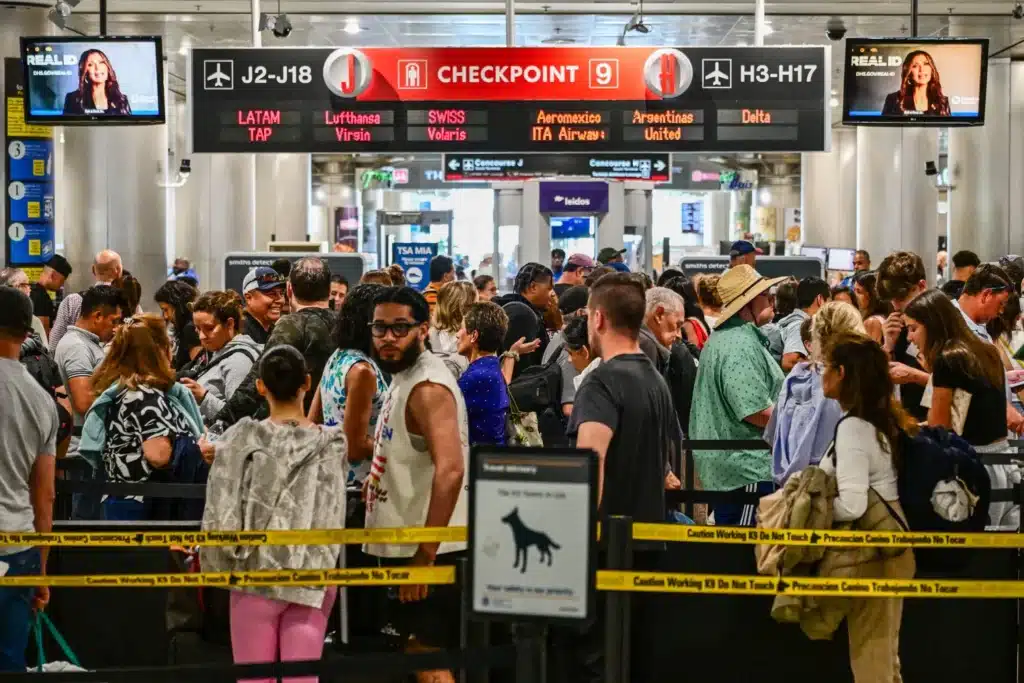
Refusal to comply with biometric checks can result in denied entry or departure, reflecting a broader security strategy to tighten identity verification, reduce visa overstays, and link traveler movement data across DHS systems.
Key Developments
- Expanded travel restrictions affecting nationals from dozens of countries, limiting access to tourist, student, and non-immigrant visas.
- Mandatory biometric entry-exit systems now operational at ports of entry, tracking arrivals and departures of non-citizens in real time.
- H-1B visa reforms introducing stricter wage thresholds, employer accountability, and selection criteria emphasizing economic value.
Why It Matters
These measures reflect a shift toward national security-first immigration policy, reducing overstays and tightening employer-based migration. Businesses dependent on foreign talent and international students may face increased hurdles and costs.
United Kingdom: Skilled Migration Tightened, Settlement Harder
The UK’s 2026 immigration strategy continues its post-Brexit recalibration, placing skills and economic contribution at the center of visa policy. In 2025–2026, the United Kingdom pressed forward with sweeping immigration reforms that tightened access for skilled migrants and made permanent settlement significantly harder under its
“Restoring Control over the Immigration System agenda.”
As of 22 July 2025, the Skilled Worker visa was overhauled as minimum skill and salary thresholds were raised to require at least a bachelor’s-degree-level qualification (RQF 6) and higher pay requirements, while hundreds of medium-skill occupations were removed from eligibility or shifted to a temporary shortage list with restricted benefits, such as no dependent visas.
From January 8, 2026, new applicants must meet an upper-intermediate (B2) English language standard, a notable jump from the previous requirement, further narrowing access.
Looking ahead to April 2026, the standard qualifying period for Indefinite Leave to Remain (ILR) is set to double from five years to ten years for most migrants, delaying pathways to permanent residency and citizenship except in limited fast-track categories.

These changes reflect a broader shift toward prioritising highly qualified, high-earning workers and reducing net migration, while compelling migrants to demonstrate greater language proficiency, financial stability, and long-term “earned” contribution before settling in the UK.
What’s Changed
- Higher salary and sponsorship thresholds for Skilled Worker visas.
- Increased scrutiny for long-term residence and settlement pathways.
- Stronger emphasis on English proficiency and compliance history.
Impact
While the UK remains open to talent, low-skill and marginal eligibility applicants face exclusion, signaling a more selective migration system aligned with labor shortages rather than population growth.
Canada: Rising Costs & Selective Residency Pathways
Canada, long viewed as migrant-friendly, has also recalibrated its approach for 2026. In 2025–2026, Canada’s immigration system shifted toward higher application costs and more targeted residency routes, reflecting efforts to balance labour needs with fiscal sustainability.
Effective December 1, 2025, Immigration, Refugees and Citizenship Canada (IRCC) raised fees across key categories, including permanent residence, work permits, and study permits, with typical increases of roughly 8–10 % for main economic programs, pushing overall costs for applicants higher as 2026 approaches.
At the same time, the federal Temporary Resident to Permanent Resident (TR-to-PR) pathway was updated to create a more selective fast-track for international graduates, healthcare workers, and essential workers already in Canada with sufficient work experience and language skills, bypassing the traditional points-based Express Entry competition.
Provincial programs are also tightening criteria, for example, Alberta’s Rural Renewal Stream updates effective January 1, 2026, impose stricter endorsement limits, and require valid work permits for in-Canada applicants.
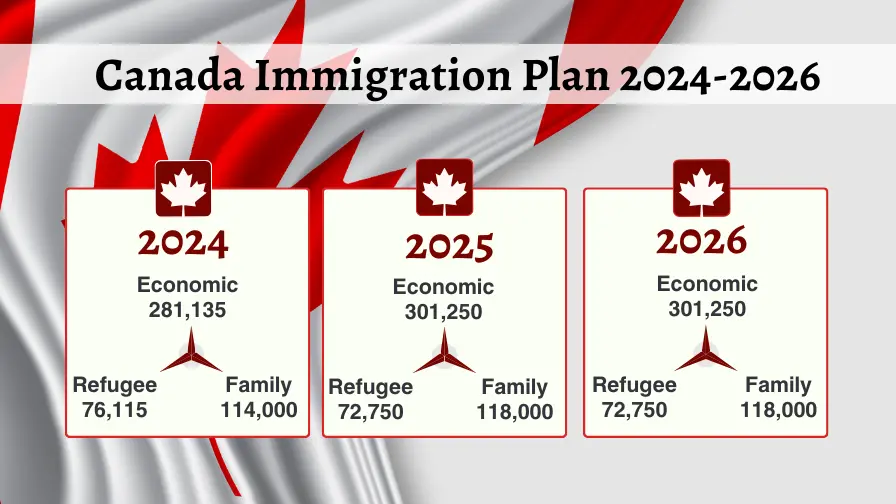
These changes together mark a more costly and targeted immigration landscape, with higher financial barriers for new applicants paired with selective pathways designed to retain in-country talent and fill specific labour-market gaps.
Key Updates
- Visa application and processing fee increases across multiple categories.
- Greater focus on economic migrants, entrepreneurs, and targeted skills.
- More rigorous documentation and verification processes.
What Applicants Should Know
Higher costs and longer processing timelines may disproportionately affect students and temporary workers, while high-skill applicants remain prioritized.
Australia: Skills Over Degrees
Australia’s immigration reset for 2026 represents a structural shift in philosophy. In 2025–2026, Australia’s immigration system shifted toward prioritising demonstrable skills, earnings and job-market alignment over formal degrees alone, reinforcing a strategic pivot in its skilled migration framework.
Effective 1 July 2025, a major structural change was the introduction of the Skills in Demand (SID) visa, which replaced the old Temporary Skill Shortage (TSS) visa and categorises applicants based on Core Skills and Specialist Skills streams tied to market-driven income thresholds rather than degree level alone, with the Core Skills Income Threshold (CSIT) and Temporary Skilled Migration Income Threshold (TSMIT) both rising to AUD 76,515 and the Specialist Skills Income Threshold (SSIT) increasing to AUD 141,210.

Employers must now demonstrate that nominees are paid at or above these benchmarks, signalling a clear preference for high-productivity roles and tangible job contributions. Meanwhile, the Core Skills Occupation List (CSOL) has become the primary gateway for employer-sponsored recruitment, streamlining and tightening who qualifies, and a new National Innovation Visa pathway prioritises measurable impact and specialised expertise over traditional academic credentials.
These reforms reflect Canberra’s push to align migration more closely with acute skill shortages and practical capabilities, making workplace experience and wage-based criteria more decisive than degrees in many cases.
Major Changes
- Migration policy now prioritizes practical skills and labor demand over academic qualifications.
- Adjustments to international student pathways and post-study work rights.
- Stronger alignment between visas and workforce shortages.
Global Trend Indicator
Australia’s approach reflects a broader global pattern of migration as an economic tool, not a humanitarian default.
Europe & Schengen Area: Digitized Borders and Biometric Control
Europe is undergoing a silent but transformative border revolution. In 2025–2026, the European Union launched a major digital transformation of its external borders, replacing traditional passport stamping with a biometric Entry/Exit System (EES) designed to strengthen security, speed up crossings, and better track short-stay travellers from non-EU countries.
Beginning 12 October 2025, 29 Schengen Area countries and associated states started rolling out the EES, which collects facial images, fingerprints, travel document data, and entry/exit dates each time a non-EU national crosses an external border; this digital record will replace manual stamps and become fully operational across all border points by 10 April 2026.
The system aims to detect overstays automatically, reduce identity fraud, and provide real-time security information to national authorities, while self-service and automated checks are expected to speed processing at airports, seaports and land crossings.
In parallel, the EU is preparing to roll out the European Travel Information and Authorisation System (ETIAS) in late 2026, requiring advance online authorisation for visa-exempt travellers, a measure that will further digitise and pre-screen entry into the Schengen zone.
What’s New
- Rollout of the Entry/Exit System (EES), recording biometric data of non-EU travelers.
- Enforcement of the 90/180-day rule through automated systems.
- Upcoming ETIAS travel authorization, requiring pre-approval before travel.
Implications
Short-term visitors, business travelers, and frequent flyers will face greater surveillance and compliance checks, reducing flexibility but increasing enforcement consistency.
Middle East: Residency Reforms & Expat Controls
Several Gulf states are refining residency systems amid economic diversification efforts. Across the Middle East in 2025–2026, governments are reshaping residency frameworks and tightening controls on expatriate populations as part of broader economic and labour reforms.
Kuwait has overhauled its immigration rules, introducing a tiered residency model with long-term permits of up to 15 years for investors and property owners while imposing a new six-month limit on how long expats can remain abroad without losing their residency status, a change intended to strengthen compliance and population management.
At the same time, digital e-services now allow online issuance, renewal, and transfer of work and residency visas, aiming to streamline administrative processes for foreign workers. Oman has both extended the validity of foreign residency cards to ten years and tightened pre-entry professional qualification checks for regulated roles, reflecting a dual strategy of attracting high-value talent while tightening standards.
Meanwhile, Saudi Arabia is enhancing enforcement of iqama (residency permit) compliance and accelerating deportation procedures for violators, signaling stricter oversight of foreign workers and employers alike.

In Bahrain, legislative changes have expanded flexible and Golden Visa options for investors, skilled professionals and retirees, even as “Bahrainization” labour policies increasingly prioritise national hires.
These varied but concurrent reforms mark a regional shift toward controlled expatriate populations, digitalised residency administration, and selective long-term residency pathways tied to investment and strategic skills, balancing the need for foreign talent with domestic economic objectives.
Notable Trends
- Expansion of digital visa and residency services.
- Stricter monitoring of expatriate stays and sponsorship conditions.
- Policy shifts balancing labor demand with demographic management.
A Global Pattern Emerges: Controlled, Conditional Mobility
Across regions, a clear global pattern is emerging in which mobility is no longer expanding freely but is being tightly conditioned on skills, income, security screening, and compliance. Governments are shifting away from broad access models toward selective, data-driven migration systems that prioritise economic value, biometric verification, and long-term contribution over simple eligibility.
From digitised borders in Europe and biometric enforcement in the United States to skills-based pathways in Australia and earned settlement models in the UK and Canada, migration is increasingly treated as a regulated privilege rather than an open channel.
For travellers, workers, and migrants in 2026, crossing borders now requires more than a valid visa, it demands measurable credentials, ongoing compliance, and acceptance of continuous monitoring in an era of controlled, conditional movement.
Despite regional differences, these trends define the 2026 immigration law:
- Biometrics and digital tracking
- Higher financial and compliance thresholds
- Skill-based and security-driven selection
- Reduced tolerance for overstays and misuse
What Individuals and Institutions Should Do Now
For Travelers & Migrants
- Verify visa rules before booking travel.
- Expect biometric checks and longer processing.
- Budget for higher fees and documentation.
For Employers & Universities
- Plan recruitment earlier.
- Strengthen compliance frameworks.
- Prepare for stricter sponsorship obligations.
For Policymakers & Analysts
- Monitor rights implications.
- Assess labor market impacts.
- Track international coordination trends.
Looking Ahead
As governments continue to recalibrate immigration systems in 2026 and beyond, further tightening, not liberalisation, appears the more likely trajectory. Policymakers are expected to expand digital border infrastructure, raise eligibility thresholds, and refine selective pathways that favour high-skill, high-income, and in-country applicants, while limiting low-discretion entry routes.
For migrants and travellers, this means earlier planning, higher costs, stricter documentation, and increased scrutiny at every stage of movement. In the near term, the defining challenge will be adaptability; those who align with evolving skills demands, compliance requirements, and biometric systems will retain mobility, while others face narrowing legal pathways in an increasingly regulated global migration landscape.
Frequently Asked Questions
What are the major immigration changes in the U.S. for 2026?
Expanded travel restrictions affecting multiple countries, mandatory biometric entry-exit systems at ports of entry, and H-1B visa reforms introducing stricter wage thresholds and employer accountability.
How is the UK tightening skilled migration in 2026?
Higher salary and sponsorship thresholds for Skilled Worker visas, stricter long-term residence and settlement requirements, and a stronger emphasis on English proficiency and compliance history.
What updates has Canada made to immigration rules in 2026?
Visa application and processing fees have increased, more focus on economic migrants and high-skill applicants, and documentation and verification processes are more rigorous.
How is Australia prioritizing immigration in 2026?
Migration policy now favors practical skills over academic qualifications, international student pathways have been adjusted, and visas are aligned with workforce shortages.
What is changing in Europe & the Schengen Area in 2026?
Rollout of the Entry/Exit System (EES) recording biometric data of non-EU travelers, automated enforcement of the 90/180-day rule, and the upcoming ETIAS travel authorization requiring pre-approval.
What residency reforms are happening in the Middle East?
Answer: Expansion of digital visa and residency services, stricter monitoring of expatriate stays, and policy shifts balancing labor demand with demographic management.
What should travelers and migrants do in 2026?
Verify visa rules before travel, expect biometric checks and longer processing times, and budget for higher fees and documentation.
What should employers, universities, and policymakers do?
Employers and universities should plan recruitment earlier and strengthen compliance frameworks. Policymakers should monitor rights implications, labor market impacts, and international coordination trends.