
Understand Environmental Impact Assessment (EIA) with this global guide covering methods, legal process, and environmental laws worldwide.
Mega infrastructure projects, highways, dams, power plants, and smart cities don’t get approved by chance; they pass through a powerful legal filter known as Environmental Impact Assessment (EIA). Across the world, governments rely on EIA to decide whether development moves forward, gets redesigned, or stops altogether.
Environmental Impact Assessment (EIA) is one of the most powerful tools used globally to regulate development and protect the environment. It is not simply a technical assessment of pollution or ecological damage; it is a legally enforceable decision-making framework embedded in environmental laws across developed and developing countries alike.
This global guide breaks down Environmental Impact Assessment (EIA) in simple terms, explaining the methods used to predict environmental harm, the legal approval process, and the environmental laws that make EIA mandatory in countries like the United States, the EU, the UK, Australia, Pakistan, and beyond. Whether you’re a student, policymaker, consultant, or concerned citizen, this article shows how EIA protects ecosystems, enforces accountability, and drives sustainable development in the real world.
Global Legal Framework Governing Environmental Impact Assessment
Environmental Impact Assessment is mandated by law in most jurisdictions worldwide. While procedures vary, core principles are remarkably consistent.
Key Global and Regional Legal Instruments
- United States: National Environmental Policy Act (NEPA, 1969)
- European Union: EU EIA Directive (2011/92/EU, amended by 2014/52/EU)
- United Kingdom: Town and Country Planning (Environmental Impact Assessment) Regulations
- Australia: Environment Protection and Biodiversity Conservation (EPBC) Act
- Canada: Impact Assessment Act (IAA)
- Pakistan: Pakistan Environmental Protection Act (PEPA) 1997
- India: EIA Notification 2006 (under the Environment Protection Act)
- International: Espoo Convention (Transboundary EIAs), World Bank Environmental and Social Framework (ESF), IFC Performance Standards
Across these systems, EIA is legally binding, enforceable, and subject to judicial review.
EIA Methods & Techniques
Environmental Impact Assessment relies on multiple methodologies to identify, predict, evaluate, and communicate environmental impacts. Courts and regulators often assess not just whether an EIA was conducted, but whether appropriate methods were used.
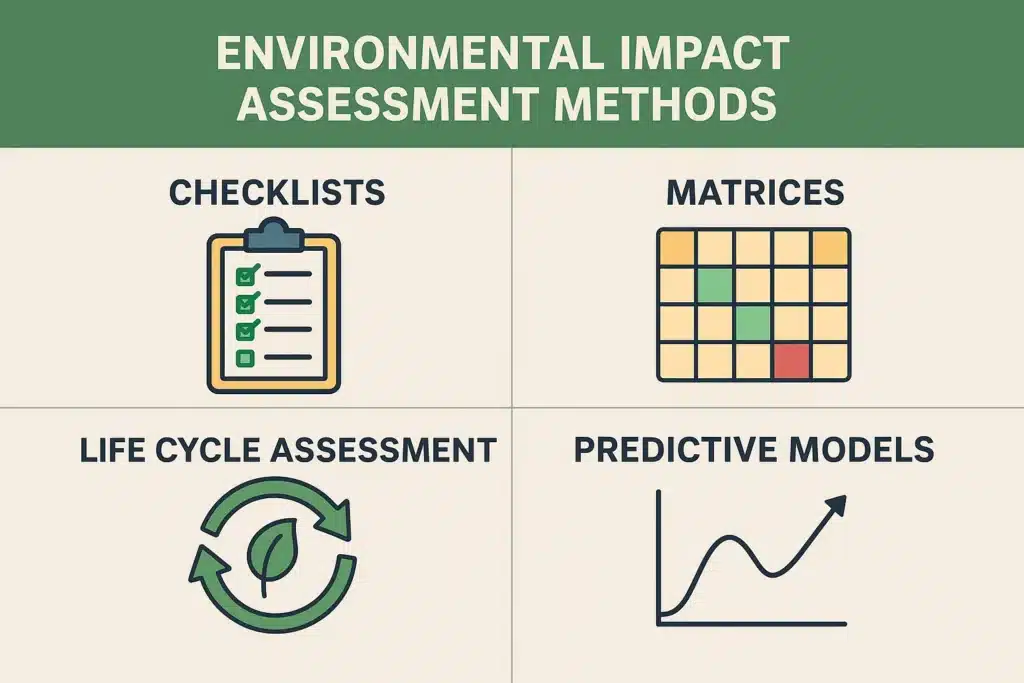
Source: Environmental Impact Assessment Methods
According to SpringerLink’s methods introduction:
“many methods have been devised to aid identification, prediction, and assessment of impacts and preparation of Environmental Impact Statements.”
Methods vary from simple to complex, from static piecemeal approaches to dynamic representations of environmental systems, and from listing potential impacts to complex models involving feedback paths and higher-order impacts.
According to Advanced Environmental Engineering:
“EIA is moving away from simple listing toward complex modes involving identification of feedback paths leading to higher-order impacts.”
1. Checklists: Foundational but Legally Limited
Checklists represent the most fundamental EIA technique, providing structured lists of environmental parameters likely to be affected by a project.
Types of Checklists
According to Advanced Environmental Engineering’s methodology guide:
“checklists may be simple (parameter lists without interpretation guidance), descriptive (lists with measurement and assessment information), scaling (incorporating magnitude ratings), or weighting (assigning relative importance values).”
- Simple checklists: Lists of parameters only that ensure comprehensive coverage by systematically reviewing potential impact categories.
- Descriptive checklists: Include guidance on how to measure parameters, predict impacts, and assess significance.
- Scaling checklists: Assign numerical ratings indicating impact magnitude.
- Weighting checklists: Assign relative importance values reflecting the relative significance of different impacts.
They typically cover:
- Air quality
- Surface and groundwater
- Soil and geology
- Noise and vibration
- Flora and fauna
- Land use
- Cultural heritage
- Socioeconomic conditions
Advantages of Checklists
Checklists are easy to understand and use, good for site selection and priority setting, and allow simple ranking and weighting. Checklists ensure that no major impact categories are overlooked, provide systematic frameworks for team coordination, facilitate comparisons between alternatives, and are accessible to non-specialists.
Limitations of Checklists
checklists do not distinguish between direct and indirect impacts, do not link actions to impacts, and can involve controversial value incorporation processes.
According to Advanced Environmental Engineering:
“simple checklists identify potential impacts without rating relative magnitudes.”
Scaling and weighting remove decision-making from decision-makers by assigning single numbers to inherently different impacts.
Legal Impact
Checklists demonstrate procedural compliance, especially during screening and scoping. However, courts often criticize EIAs that rely solely on checklists for failing to assess indirect, cumulative, or long-term impacts.
2. Matrices and the Leopold Matrix
Matrices explicitly link project actions with environmental receptors, allowing analysts to visualize cause-effect relationships in tabular formats.
Leopold Matrix
The most famous matrix is the Leopold Matrix, developed in 1971. According to Advanced Environmental Engineering:
“this matrix lists 100 different project actions along one axis and 88 environmental characteristics along the other, covering both biophysical and socioeconomic environments.”
Matrices display project activities (columns) and environmental components (rows) with cells showing whether interactions occur and their characteristics (magnitude, importance, duration).
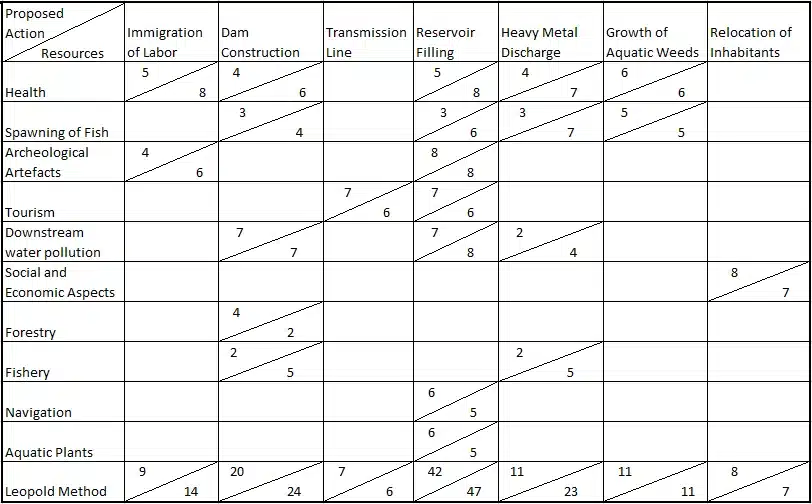
Source: Leopold Matrix
Matrix Advantages
Matrices link actions to impacts, provide good methods for displaying EIA results, and clearly show cause-and-effect relationships. Matrices facilitate systematic impact identification, enable visual impact summaries, support comparison between alternatives, and communicate findings effectively to diverse audiences.
Matrix Limitations
Matrices have difficulty distinguishing direct from indirect impacts and have potential for double-counting impacts. Large matrices become cumbersome with hundreds of cells. According to Advanced Environmental Engineering:
“they make no provision for assessing dynamic probabilistic trends or identifying higher-order effects and interactions.”
Legal Significance
Matrices support legal requirements for causation analysis, a critical element in regulatory approvals and environmental litigation. However, large matrices can become static and fail to capture dynamic interactions.
3. Networks and Systems Diagrams
Network diagrams show how project actions trigger chains of environmental effects through ecosystems and social systems.
Network Characteristics
Networks link actions to impacts, are useful for checking second-order impacts, handle direct and indirect impacts, but can become very complex beyond simplified versions. Networks use flowcharts showing pathways from project activities through primary impacts to secondary and higher-order effects. Arrows indicate causal relationships and feedback loops.
Applications
Networks excel at identifying indirect and cumulative impacts that simpler methods miss, understanding ecosystem interactions and cascading effects, communicating complex environmental relationships, and supporting adaptive management through systems thinking.
According to the FAO’s EIA guide:
“network diagrams and systems analysis help understand complex environmental interactions in irrigation and drainage projects.”
Why They Matter Legally
Many environmental laws require assessment of:
- Indirect impacts
- Secondary impacts
- Cumulative impacts
Failure to identify these impacts is a common reason EIAs are challenged or overturned in court.
4. Overlay Mapping and Geographic Information Systems (GIS)
Overlay mapping uses spatial layers to analyze project impacts geographically.
Traditional Overlays
Overlays are easy to understand, focus and display spatial impacts, serve as good siting tools, but can be cumbersome and poorly suited to address impact duration or probability. Traditional approaches involve transparent map layers showing project footprints, sensitive environmental features, land use patterns, protected areas, and infrastructure. Overlaying these reveals spatial conflicts and opportunities.
Geographic Information Systems
Modern GIS technology revolutionizes spatial analysis in EIA.
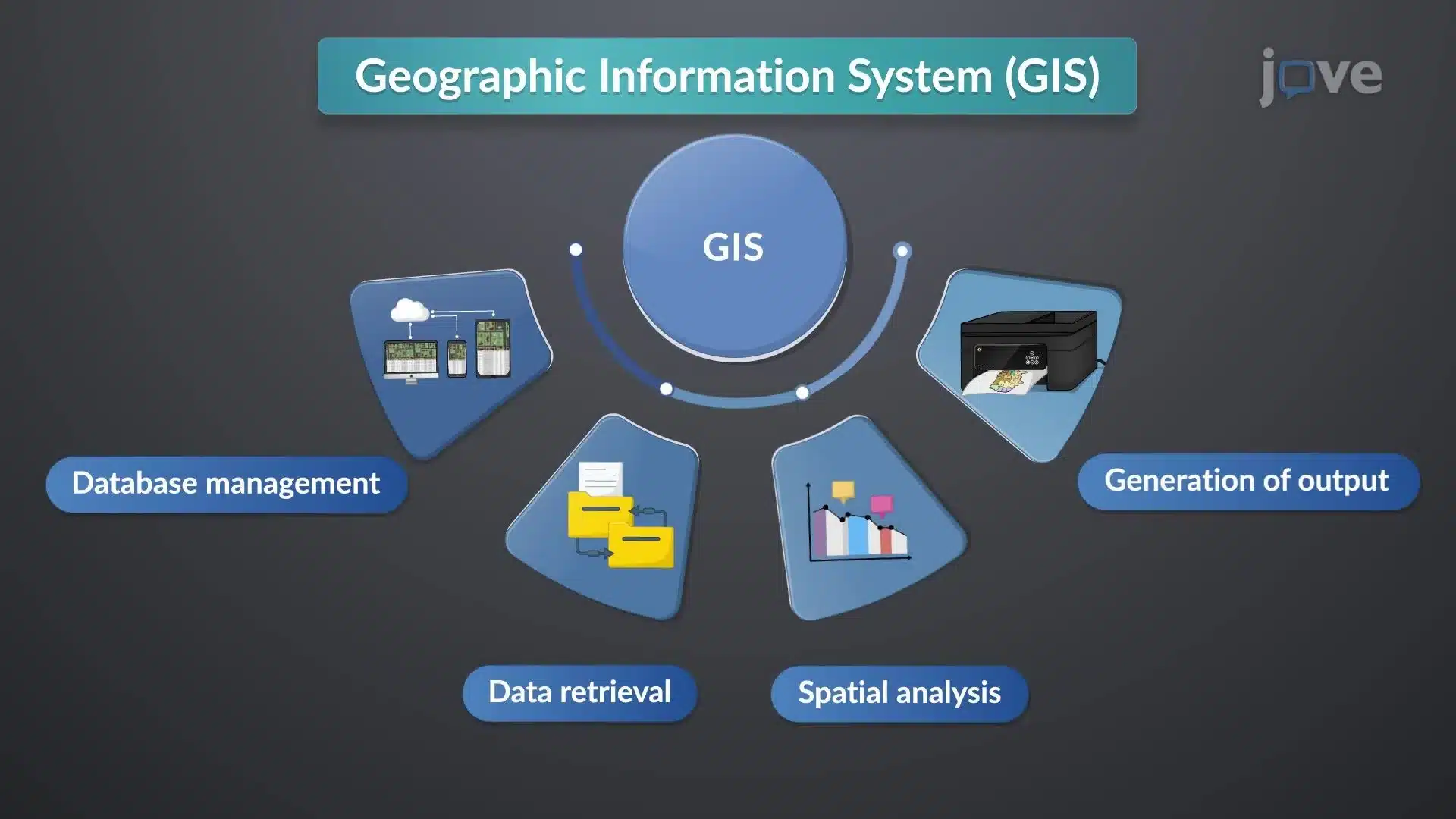
Source: Geographic Information System-Jove
According to the IISD methods guide:
“GIS and computer expert systems excel at impact identification and spatial analysis, are good for experimenting with alternatives, but rely heavily on knowledge and data availability.”
GIS capabilities include:
- Multi-layered spatial data integration
- Sophisticated buffer
- Proximity Analysis
- Viewshed and visibility modelling
- Watershed delineation
- Hydrological analysis
- Dynamic visualization of alternatives
According to ZFuture’s EIA study guide:
“Geographic Information Systems (GIS) and remote sensing tools monitor and analyze environmental factors like air and water quality, helping evaluate environmental impacts more accurately.”
Legal Importance
GIS evidence is frequently relied upon in regulatory hearings and judicial proceedings, especially where zoning laws, conservation areas, or indigenous lands are involved.
5. Quantitative Prediction Models
Models simulate environmental processes to predict impacts numerically.
Types of Models
Quantitative models: These models suit particular cause-and-effect relationships being studied. Examples include air dispersion models predicting emissions and pollution concentrations, hydrological models predicting flow regime changes, and ecological models predicting changes in aquatic biota from toxic substance discharge.
Additional model types include:
- Water quality models
- Simulating pollutant transport and fate
- Noise propagation models: Predicting sound levels
- Traffic models: Forecasting congestion and emissions
- Economic models: Estimating employment and income effects
Model Selection and Application
According to the FAO guide:
“It is important to assess the required accuracy levels of predictions.”
Mathematical modelling provides valuable techniques, but care must be taken to choose models suited to available data. Model selection considers data requirements and availability, spatial and temporal resolution needed, computational complexity and resources, regulatory acceptance and precedent, and uncertainty characterization capabilities.
Model Limitations
According to the EVS Institute’s prediction techniques guide:
“Environmental systems involve countless interactions that scientific models cannot fully capture. Expert judgment helps bridge knowledge gaps.”
All models simplify reality through assumptions. Understanding and communicating these limitations is essential for appropriate use of model results in decision-making.
Legal Scrutiny
Regulators often mandate modeling to demonstrate compliance with environmental standards. Courts carefully examine:
- Model assumptions
- Data quality
- Transparency of uncertainty
6. Expert Judgment and Delphi Techniques
Expert judgment remains essential where data is limited or impacts are complex.
Role of Expert Judgment
According to the EVS Institute’s analysis:
“Expert judgment remains essential for interpreting complex environmental interactions and addressing uncertainty.”
Experienced professionals identify potential impacts that quantitative analysis might miss. Expert judgment proves particularly valuable when assessing unique environmental conditions with limited data, evaluating the significance of impacts, selecting appropriate assessment methods, and interpreting model results within broader contexts.
Delphi Technique
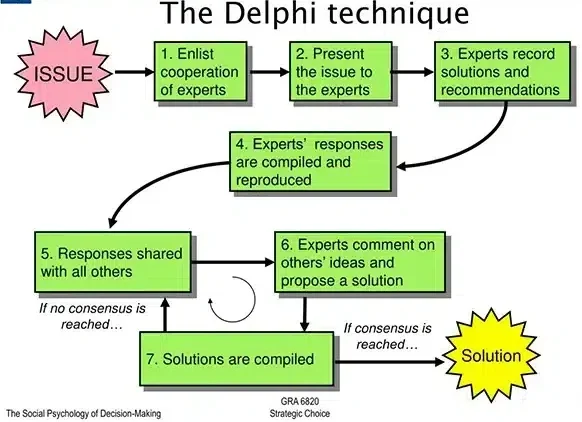
The Delphi technique structures expert consultation through iterative questionnaire rounds, allowing experts to revise opinions based on group feedback while maintaining anonymity to reduce bias.
Source: Delphi Technique
Delphi applications include scoping to identify key issues, significance evaluation when objective criteria are insufficient, and uncertainty assessment to characterize knowledge gaps.
Legal Value
Well-documented expert processes strengthen the defensibility of EIAs in contested approvals.
7. Rapid Impact Assessment Matrix (RIAM)
RIAM applies standardized scoring across criteria such as magnitude, permanence, reversibility, and cumulative effects.
RIAM Methodology
According to ResearchGate’s RIAM case study:
“RIAM achieves better knowledge of existing situations and presents appropriate enforcement strategies.”
The method provides objective assessment frameworks, reducing subjectivity. RIAM evaluates impacts across standardized criteria including magnitude, permanence, reversibility, and cumulative effects, assigning numerical scores that facilitate comparison.
RIAM Applications
According to the ResearchGate study:
“RIAM was applied to assess COVID-19 pandemic environmental impacts in Tehran, demonstrating versatility for diverse assessment contexts.”
RIAM suits rapid assessments where resources are limited, comparative evaluation of alternatives, communication of results to non-specialists, and integration of diverse impact types into comparable frameworks.
Why Regulators Use RIAM
- Transparency
- Comparability
- Reduced subjectivity
- Easier justification of decisions
8. Life Cycle Assessment (LCA)
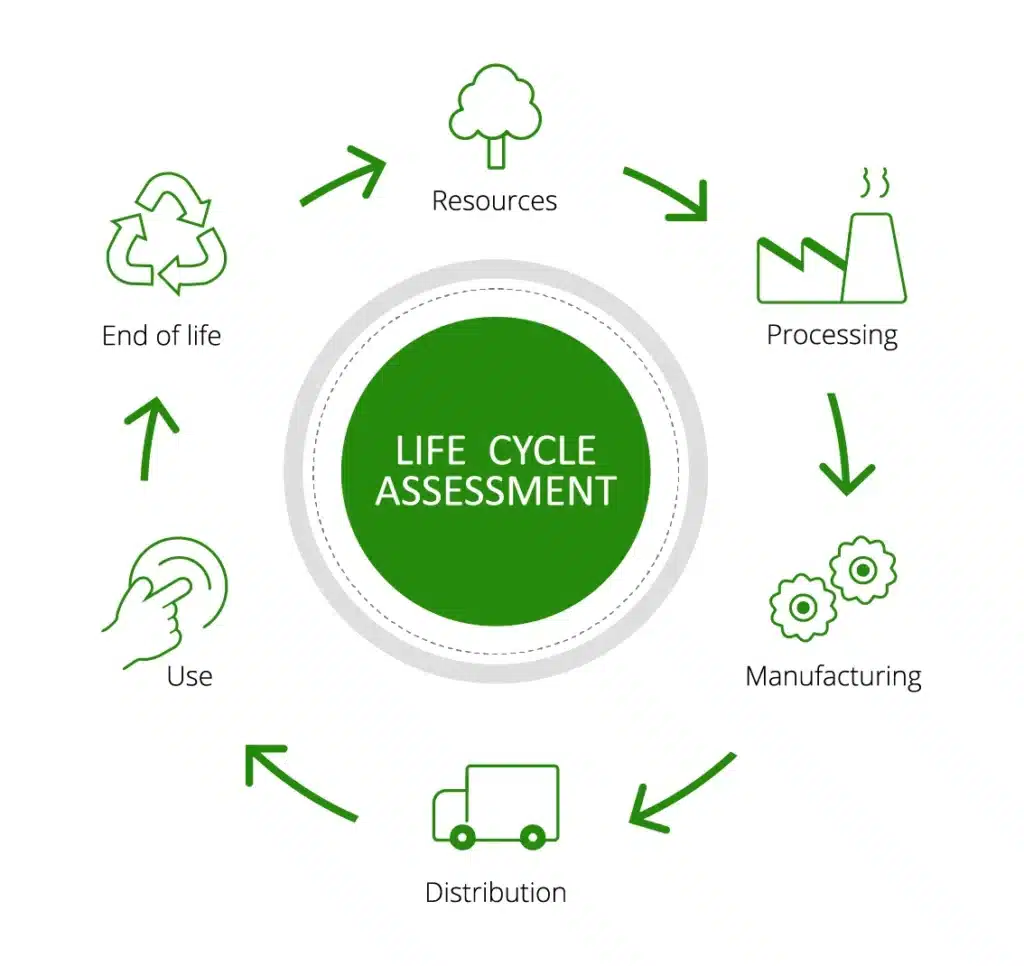
LCA evaluates impacts from raw material extraction to decommissioning. According to ZFuture’s EIA methodology overview:
“Life Cycle Analysis (LCA) examines environmental impacts throughout all project stages from raw material extraction to production, consumption, and final disposal.”
LCA Applications in EIA
LCA methodology is widely used in EIA studies for facilities like plastic factories, helping understand energy and resource consumption plus emissions generated during manufacturing and operation. LCA considers resource extraction impacts, manufacturing and construction effects, operational phase environmental loads, maintenance and upgrade requirements, and decommissioning and disposal considerations.
Source: Life Cycle Assessment (LCA)
Legal Alignment
LCA supports compliance with:
- Climate change legislation
- Carbon disclosure laws
- Circular economy policies
- Net-zero commitments
9. Digital Models, AI, and Emerging Techniques
According to ZFuture:
“Digital models and simulations rely on software tools to create environmental impact assessment models for specific projects, providing quantitative data helping informed decisions.”
Simulation Capabilities
Modern simulation platforms integrate multiple environmental processes, enabling complex scenario testing including climate change projections, cumulative impact assessment, adaptive management alternatives, and uncertainty quantification.
Regulatory Guidance
These tools are increasingly referenced in best-practice regulatory guidance.
Environmental Impact Assessment Process
The EIA process provides the legally structured pathway through which methods are applied. The EIA process follows a logical sequence designed to identify, predict, evaluate, and manage environmental impacts comprehensively. While specific procedures vary by jurisdiction, the core steps remain remarkably consistent worldwide, reflecting decades of international experience and best practice development.
According to Mission Sustainability’s process overview:
“the EIA process is designed to identify and address potential environmental effects, ensuring development proceeds in ways that minimize environmental harm.”
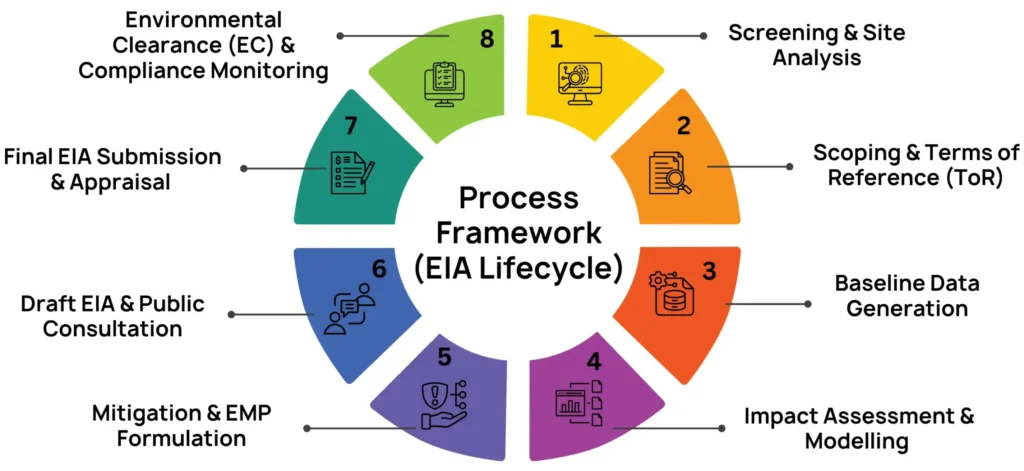
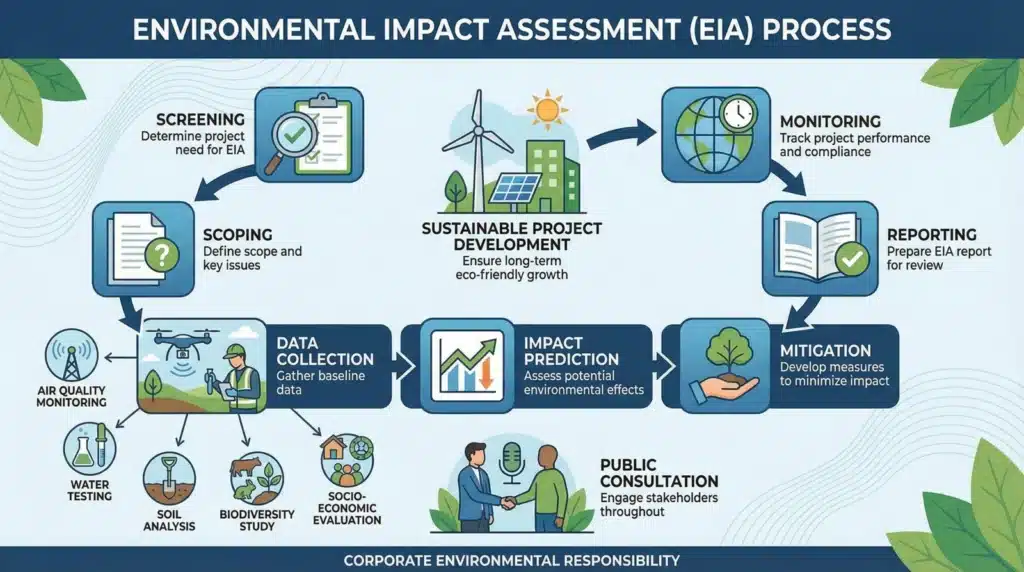
The process typically includes screening, scoping, impact analysis, mitigation planning, reporting, review, decision-making, and monitoring.
Source: Environmental Impact Assessment Process
These stages form an iterative rather than strictly linear process. Information gathered in later stages may reveal the need to revisit earlier decisions. Public consultation and stakeholder engagement occur throughout, ensuring transparency and incorporating diverse perspectives at each critical juncture.
Step 1: Screening
Screening represents the critical first decision point that determines whether a proposed project requires a full Environmental Impact Assessment. This initial filter ensures that assessment efforts focus on projects with potential for significant environmental impacts while avoiding unnecessary regulatory burdens on low-impact activities.
Screening Objectives
Screening determines the level of impact of proposed projects and whether EIA is required. The process ensures that environmental review is proportional to potential environmental impacts, facilitating informed decision-making by providing a clear analysis of proposed actions.
Screening answers this fundamental question:
“Does this project require formal environmental assessment?”
The answer depends on project characteristics, location, and potential impacts.
Screening Approaches
Different jurisdictions employ various screening mechanisms. According to Solen’s screening analysis:
“many cases involve project lists annexed to legislation that specify which activities require EIA.”
However, project lists are jurisdiction-specific and require adequate review by competent stakeholders. Common screening approaches include mandatory lists (projects automatically requiring EIA), threshold-based criteria (size, capacity, or investment triggers), case-by-case assessment (discretionary review based on project specifics), and hybrid systems (combining lists with case-by-case flexibility).
For example, projects like large dams, nuclear power plants, major highways, and industrial facilities almost universally require full EIA. Smaller projects undergo screening evaluation considering factors like location sensitivity, existing environmental conditions, and cumulative impacts.
Screening Criteria
Additional screening considerations include proximity to protected areas or sensitive habitats, potential for transboundary impacts, number of people likely affected, cumulative impacts from multiple developments, and reversibility of potential environmental changes.
Screening Outcomes
Screening produces categorical decisions such as no EIA required (project proceeds without assessment), simplified assessment (abbreviated environmental review), or full EIA required (comprehensive assessment necessary). Some jurisdictions include additional categories for projects requiring extended or specialized studies.
In the United States, the EPA’s NEPA process allows Categorical Exclusions for actions with no significant environmental effects, Environmental Assessments for uncertain significance, and full Environmental Impact Statements for significant impacts.
Legal Trigger
Screening ensures proportional regulation. The legal trigger determines whether EIA is required using:
- Project lists
- Threshold criteria
- Case-by-case review
Step 2: Scoping
Once screening determines that EIA is necessary, scoping defines what the assessment will examine. According to the EVS Institute’s scoping analysis:
“scoping creates a detailed roadmap for the entire EIA process, identifying which environmental components deserve detailed study and which impacts are most likely to occur.”
Scoping Objectives
Scoping serves multiple critical functions. Key objectives include creating comprehensive lists of issues and concerns, evaluating their relative importance to derive key issues, organizing key issues into impact categories, identifying alternatives for investigation, and planning public consultation and expert inputs.
The Scoping Process
Effective scoping typically involves:
- Assembling multidisciplinary teams with expertise covering anticipated impact areas.
- Describing project details including alternatives.
- Delineating study area and area of influence.
- Conducting stakeholder consultations to identify concerns.
- Reviewing existing environmental data and studies.
- Prioritizing issues based on significance and stakeholder input.
A project scoping activity can be carried out in nine main steps that includes:
- Setting up expert teams.
- Describing project areas.
- Outlining alternatives.
- Conducting public consultations.
- Outlining environmental resources to be addressed.
Determining Study Boundaries
Scoping establishes several types of boundaries:
- Spatial boundaries define the geographic area where impacts will be assessed, extending beyond immediate project footprints to include indirect and cumulative effect zones.
- Temporal boundaries specify timeframes covering construction, operation, and decommissioning phases plus post-closure periods where relevant.
- Impact category boundaries identify which environmental components require detailed assessment such as air quality, water resources, biodiversity, socioeconomic conditions, and cultural heritage.
Developing Terms of Reference
The scoping process culminates in Terms of Reference (TOR) that guide the entire EIA. TOR preparation represents an important concluding task that specifies impact categories requiring assessment, methodologies for impact prediction and evaluation, baseline data requirements, stakeholder consultation plans, report structure and content requirements, and timelines and responsibilities.
Step 3: Baseline Studies
With the scope defined, the next step involves comprehensive documentation of existing environmental conditions. Baseline studies establish the reference state against which predicted project impacts are measured.
According to Capacity4dev’s EIA guidance:
“baseline studies describe the initial state of the environment within selected study area boundaries, including a description of the ‘no project’ scenario based on assumptions regarding future changes.”
Purpose of Baseline Studies
Baseline studies serve multiple functions:
- Describing the current environmental status
- Identifying sensitive receptors and valued ecosystem components
- Providing data for impact prediction models
- Establishing monitoring benchmarks for future comparison
- Supporting cumulative impact assessment.
Data Collection Methods
Baseline data collection employs diverse methods, including literature review of existing studies and reports, field surveys and sampling programs, remote sensing and aerial photography, stakeholder interviews and traditional knowledge documentation, and monitoring programs measuring environmental parameters over time. The choice of methods depends on environmental components, data availability and quality, budget and time constraints, and accessibility of study areas.
Step 4: Impact Prediction and Significance Assessment
The core of EIA involves predicting how proposed projects will affect the environment and evaluating the significance of those impacts.
Impact Identification
According to Mission Sustainability:
“Impact analysis in the EIA process assesses potential effects, including both positive and negative impacts.”
This requires understanding cause-effect relationships between project activities and environmental changes. Impact identification employs various tools including checklists ensuring comprehensive coverage, matrices linking actions to impacts, networks showing cascading effects, and expert panels providing professional judgment.
Prediction Techniques
Environmental professionals employ diverse techniques, including extrapolative methods using historical data and trends, quantitative models simulating environmental processes, experimental studies testing specific hypotheses, and case studies examining similar projects.
Evaluating Significance
Not all impacts carry equal weight. Significance evaluation considers:
Step 5: Mitigation and Environmental Management Plans (EMP)
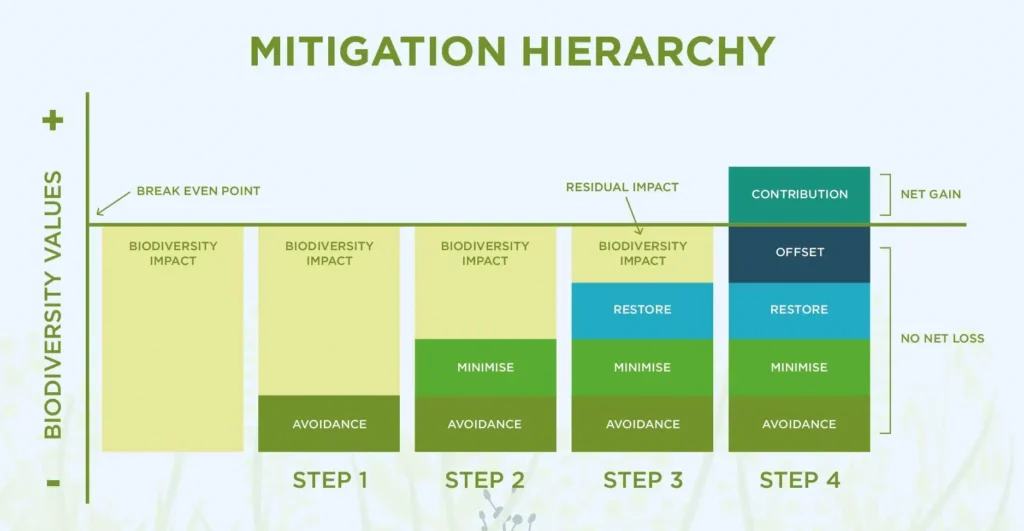
Mitigation can be approached through avoiding (designing projects to eliminate impacts), minimizing (reducing impact magnitude through design modifications), restoring (rehabilitating affected areas), and compensating (offsetting unavoidable impacts).
Source: Mitigation Hierarchy
Developing Mitigation Measures
Effective mitigation planning specifies exactly what actions will be taken, when implementation will occur (during design, construction, or operation), who is responsible for implementation, what resources are required, and how effectiveness will be monitored and verified.
Mitigation measures might include technology choices reducing emissions, design modifications avoiding sensitive areas, timing restrictions protecting breeding seasons, restoration programs rehabilitating disturbed lands, and monitoring programs ensuring compliance.
Environmental Management Plans
The EMP lays out how measures should be implemented and monitored. EMPs translate mitigation commitments into operational procedures, assigning responsibilities and establishing accountability for environmental performance. EMPs translate commitments into legally enforceable conditions.
Step 6: Reporting (EIS / EIA Report)
The Environmental Impact Statement is submitted for regulatory and public review. It is a formal legal document. The Environmental Impact Statement or EIA Report represents the culmination of months of study and consultation.
Report Structure
Environmental Impact Statements must include executive summary, project description, purpose and need, alternatives analysis, affected environment description, environmental consequences discussion, list of preparers, and appendices with supporting materials.
Writing for Multiple Audiences
EIA reports must serve diverse readers including regulatory decision-makers, technical experts, affected communities, and the general public. Effective reports balance technical rigor with accessible communication, using executive summaries for quick overview, technical sections for detailed analysis, visual aids clarifying complex information, and plain language summaries making findings accessible.
Quality Assurance
Before submission, reports undergo internal quality review checking completeness against Terms of Reference, accuracy of data and analysis, clarity of presentation, adequacy of impact assessment, and feasibility of proposed mitigation.
Step 7: Review and Decision-Making
Completed EIA reports undergo formal review before decisions are made about project approval.
Review Process
Regulatory authorities review EIA reports for adequacy and compliance with requirements. According to the EPA’s NEPA process:
“draft EIS documents are published for public review and comment for minimum 45-day periods.”
Review involves checking completeness and accuracy, assessing significance evaluation, evaluating mitigation adequacy, considering public comments, and requesting additional information or studies if needed.
Public Consultation
Public comment periods allow stakeholders to review findings and provide feedback. Agencies must consider substantive comments and may conduct further analyses in response.
Decision Outcomes
Based on EIA review, several outcomes are possible: project approval without changes, approval with conditions and mitigation requirements, requirement for project modifications and re-submission, or project rejection due to unacceptable impacts. Public participation is legally required in many jurisdictions.
Step 8: Monitoring, Enforcement, and Compliance
EIA does not end with project approval. Ongoing monitoring ensures that predictions were accurate and mitigation measures are implemented effectively.
Monitoring Objectives
Environmental monitoring programs track whether impacts occur as predicted, verify mitigation measure effectiveness, detect unanticipated impacts, ensure regulatory compliance, and provide data for adaptive management.
Monitoring Design
Methods for baseline data collection should be consistent with monitoring plans, ensuring comparability over time. Monitoring programs specify parameters to be measured, measurement locations and frequency, acceptable thresholds or standards, reporting requirements, and corrective action procedures if problems are detected.
Adaptive Management
Monitoring results may reveal that adjustments are necessary. Adaptive management allows project modifications based on actual environmental performance, improving outcomes compared to static implementation of original plans. Non-compliance may result in fines, suspension, or revocation of approvals.
Selecting Appropriate Methods
Method selection significantly influences EIA quality and usefulness.
Selection Criteria
According to the FAO guide:
“comprehensive checklists aid multiple EIA activities, particularly scoping and defining baseline studies.”
Method selection considers project characteristics and scale, environmental conditions and sensitivity, data availability and quality, resource and time constraints, regulatory requirements, and stakeholder expectations.
Adaptive Method Application
No single method suits all situations. Different methods work better for different types of impacts and environmental conditions. Effective EIA combines methods strategically, using checklists for comprehensive screening, matrices for systematic impact identification, models for quantitative prediction where appropriate, expert judgment for complex interactions, and stakeholder input for significance evaluation.
Emerging Techniques
EIA methodology continues evolving with technological advancement and environmental understanding.
Remote Sensing Applications
Satellite imagery and aerial surveys provide comprehensive baseline data, change detection capabilities, and ongoing monitoring foundations at landscape scales impossible to achieve through ground surveys alone.
Artificial Intelligence
Machine learning algorithms increasingly assist pattern recognition in environmental data, predictive modeling with complex interactions, automated impact screening, and synthesis of diverse information sources.
Scenario Planning
Climate change uncertainty requires robust scenario analysis exploring plausible futures rather than single predictions, testing project resilience across conditions.
Why EIA Methods, Process, and Law Must Work Together
Environmental Impact Assessment succeeds only when sound science, transparent methods, and strong legal frameworks operate together. EIA methods provide analytical rigour; the EIA process ensures accountability; and environmental laws provide enforcement power.
As climate change, biodiversity loss, and environmental litigation intensify globally, EIA remains one of the most critical tools for aligning development with sustainability, legality, and public trust.
Conclusion
EIA methods and techniques provide the analytical foundation transforming environmental concerns into evidence-based decisions. From simple checklists ensuring comprehensive coverage to sophisticated models predicting complex environmental responses, these tools enable systematic impact assessment across diverse project types and environmental contexts.
Effective EIA practitioners understand multiple methods, selecting and combining them appropriately for specific assessment needs. While technical sophistication continues advancing, core principles remain constant: systematic analysis, transparent processes, stakeholder engagement, and clear communication of findings and uncertainties.
The EIA process represents a comprehensive journey from initial project conception through long-term monitoring and management. Each step builds on previous stages, creating an integrated system for understanding and managing environmental impacts. While the process can be complex and time-consuming, it provides essential benefits by identifying ecological problems before they occur.
Success depends on conducting each step thoroughly and transparently, maintaining scientific rigor while ensuring accessibility, engaging stakeholders meaningfully throughout the process, and following through on commitments through implementation monitoring. As environmental challenges intensify globally, the structured approach embodied in the EIA process becomes ever more critical for steering development toward sustainable pathways that protect environmental quality for current and future generations.
Frequently Asked Questions
Is EIA legally mandatory worldwide?
Yes. Most countries require EIA under national environmental laws, though scope and thresholds vary.
Which EIA method is most widely used globally?
Can courts cancel a project due to a weak EIA?
Yes. Courts frequently overturn approvals where impacts were inadequately assessed, or public participation was flawed.
Do more sophisticated methods always produce better EIA results?
Not necessarily. Method sophistication should match assessment needs and available resources. Overly complex methods can create accessibility problems, require data that is unavailable, exceed time and budget constraints, and obscure key findings in technical detail. Simple methods applied rigorously often outperform sophisticated methods applied poorly.
Are mitigation measures legally enforceable?
Yes. Once approved, mitigation and EMP commitments become binding legal conditions.
Can EIA methods be standardized internationally or must they vary by jurisdiction?
While core principles translate across jurisdictions, specific methods must often adapt to local conditions, data availability, regulatory requirements, cultural contexts, and resource constraints. International guidance promotes best practices while allowing contextual adaptation. Organizations like the International Association for Impact Assessment facilitate knowledge exchange while recognizing appropriate variation.
How does EIA support environmental justice?
Through mandatory public participation, disclosure, and accountability mechanisms.
How can practitioners ensure they select appropriate methods for specific assessments?
Method selection requires considering project characteristics (type, scale, complexity), environmental context (sensitivity, data availability), regulatory requirements and expectations, resource constraints (time, budget, expertise), stakeholder needs and preferences, and precedent from similar assessments.
How long does each step of the EIA process typically take?
Duration varies considerably based on project complexity. Screening might take days to weeks. Scoping often requires 4-8 weeks including consultations. Baseline studies and impact assessment can span 3-12 months depending on data availability and seasonal considerations. Review periods typically range from 30-90 days. Overall, simple projects might complete EIA in 6 months while complex projects can take 18-36 months or longer.
Who is responsible for conducting each step of the EIA?
Project proponents typically hire environmental consultants to conduct EIA studies, though regulatory agencies oversee the process. Screening decisions are usually made by regulatory authorities. Scoping involves both proponents and regulators with stakeholder input. Consultants conduct baseline studies and impact assessment under proponent direction. Regulatory agencies review reports and make approval decisions. Independent monitoring may involve third-party oversight.
Can steps be conducted simultaneously or must they follow strict sequence?
Environmental Impact Assessment (EIA) is a systematic process that evaluates the potential environmental consequences of proposed projects. While the steps of the EIA are typically sequential, certain phases can be conducted concurrently to enhance efficiency and adaptability. For instance, baseline data collection may commence during the scoping stage, allowing for a more informed impact assessment as project alternatives are analyzed. Nonetheless, it is essential to adhere to specific sequence requirements, ensuring that screening precedes scoping and that baseline studies guide impact predictions.