
A comprehensive look at Climate Change Effects in 2025, from environmental shifts and health hazards to social and economic risks affecting vulnerable populations.
Climate change is reshaping the world in 2025, driving widespread environmental disruption, rising public health threats, and growing social and economic instability. From more frequent heatwaves and extreme weather events to accelerating biodiversity loss and increased pressure on vulnerable communities, the impacts are becoming harder to ignore. This guide breaks down the key environmental, health, and social effects of climate change in 2025 and explains why understanding these risks is essential for policymakers, businesses, and individuals.
The effects of climate change are no longer distant predictions as they’re happening now across every continent and ocean.
According to Wikipedia:
“Changes to the climate system include an overall warming trend, changes to precipitation patterns, and more extreme weather,” with impacts ranging from thawing permafrost and melting glaciers to more intense forest fires and desertification.”
EPA confirms that:
“The planet’s oceans and glaciers have also experienced changes—oceans are warming and becoming more acidic, ice caps are melting, and sea level is rising.”
The World Health Organization calls climate change one of the biggest threats to global health in the 21st century, highlighting the profound consequences for both natural systems and human societies.
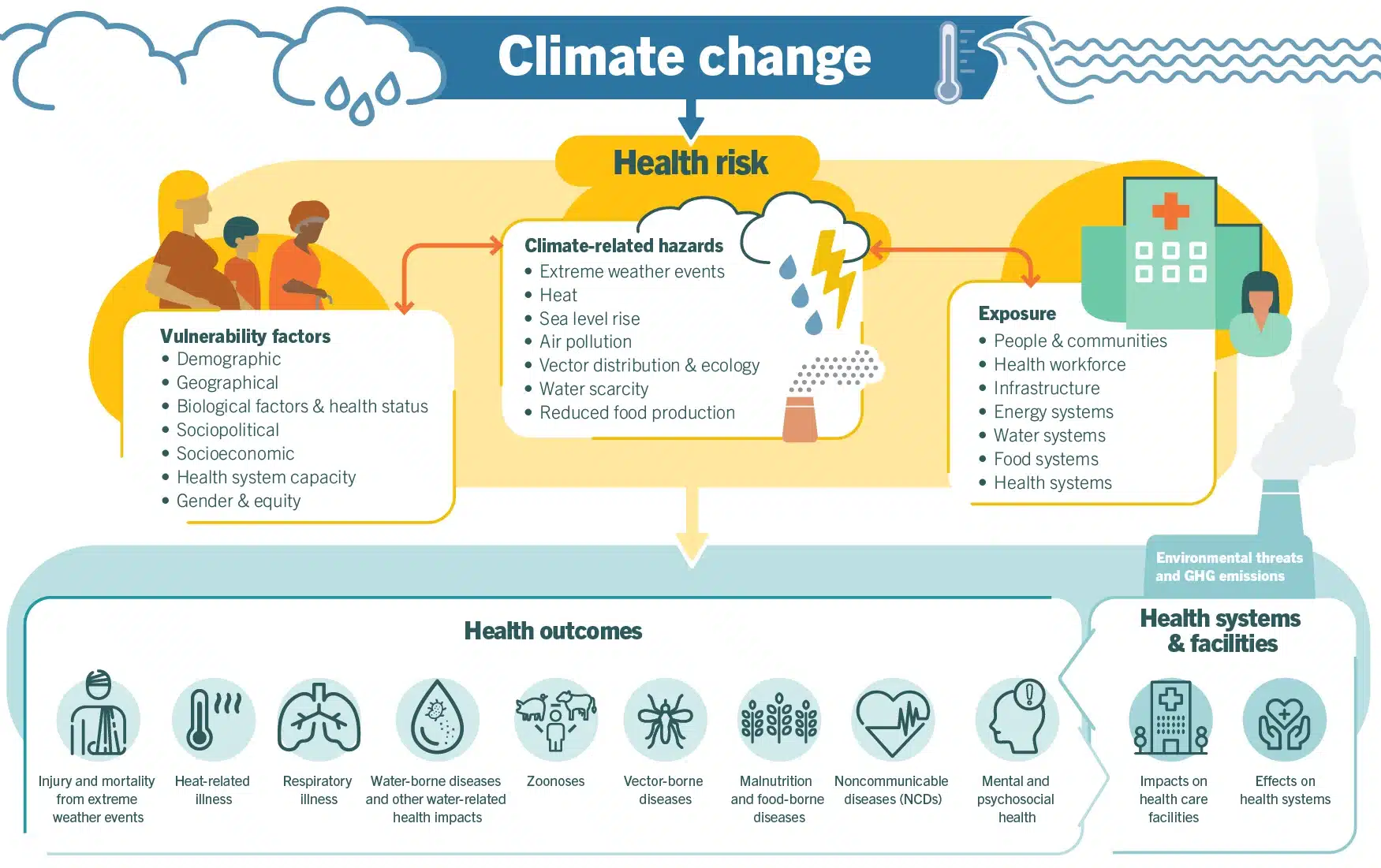
Source: World Health Organization
Rising Global Temperatures: The Foundation of Climate Change Effects
Global temperature rise is the most fundamental effect of climate change, driving countless other impacts.
Wikipedia reports that:
“Since the pre-industrial period, the average surface temperature over land regions has increased almost twice as fast as the global average surface temperature.”
Current Temperature Increases:
- Global average temperature has risen approximately 1.1°C above pre-industrial levels
- Land areas are warming faster than oceans
- The Arctic is warming more than twice as fast as the global average
- The last decade (2015-2024) was the warmest on record
EPA notes that:
“Warmer temperatures increase the frequency, intensity, and duration of heat waves, which can pose health risks, particularly for young children and the elderly.”
These temperature increases may seem small, but they have cascading effects throughout Earth’s systems, triggering changes to weather patterns, ocean currents, ice sheets, and ecosystems worldwide.
Environmental Effects of Climate Change
Melting Glaciers and Ice Sheets
One of the most visible effects of climate change is the rapid melting of ice worldwide.
Wikipedia explains that:
“Since the beginning of the twentieth century, there has been a widespread retreat of glaciers. Those glaciers that are not associated with the polar ice sheets lost around 8% of their mass between 1971 and 2019.”
Glacier Retreat Consequences:
- Water Supply Threats: Wikipedia notes that in the Andes in South America and in the Himalayas in Asia, the retreat of glaciers could impact water supply.
- Glacial Hazards: Melting can cause landslides or glacial lake outburst floods
- Loss of Freshwater Storage: Glaciers act as natural water towers for downstream communities
Polar Ice Loss:
- Greenland: Ice sheet loss is mainly driven by surface melting
- Antarctica: Warm ocean water is melting outlet glaciers from below
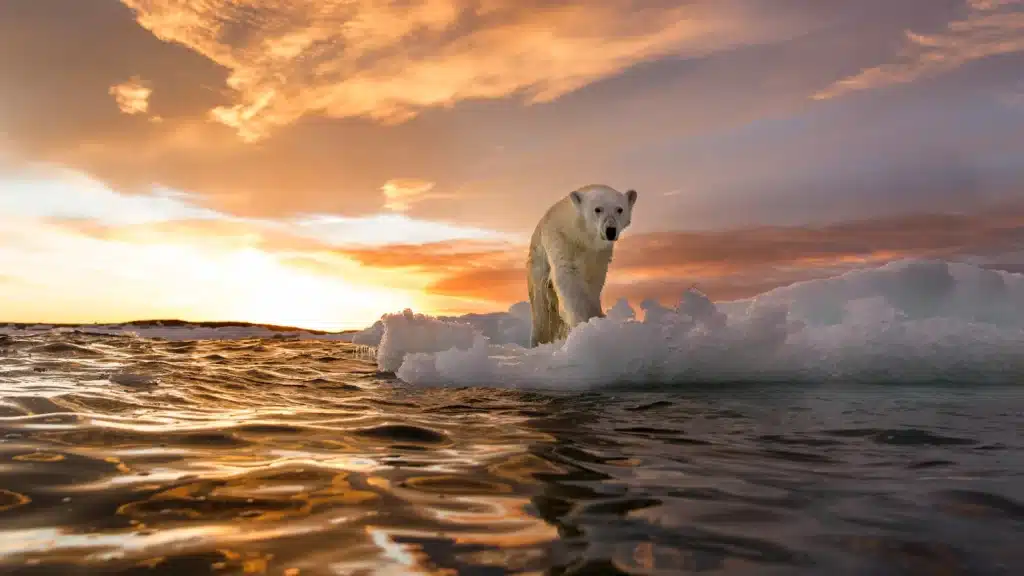
- Arctic Sea Ice: Summer sea ice extent has dramatically declined, affecting polar bear habitat and Arctic ecosystems
Greenpeace UK reports that:
“Polar ice caps and glaciers are melting, causing sea levels to rise and encroach on coastal habitats and the Arctic tundra.”
Rising Sea Levels
As ice melts and warmer water expands, sea levels rise globally. Wikipedia states that:
“Between 1901 and 2018, the average sea level rose by 15–25 cm (6–10 in), with an increase of 2.3 mm (0.091 in) per year since the 1970s.”
According to Wikipedia:
“More alarmingly, “the rate accelerated to 4.62 mm (0.182 in)/yr for the decade 2013–2022,”
NOAA Fisheries reports that:
“Global average sea level rise has risen by about 7–8 inches since 1900, with almost half of this rise occurring since 1993.”
Sea Level Rise Impacts:
- Coastal flooding and erosion
- Saltwater intrusion into freshwater aquifers
- Loss of coastal wetlands and habitats
- Displacement of coastal communities
- Infrastructure damage in low-lying areas
NOAA projects that:
“Relative to the year 2000, sea level rise is likely to rise 1–4 feet by the end of the century.”
Extreme Weather Events
Climate change is intensifying extreme weather worldwide. Wikipedia explains that:
“Since the 1950s, droughts and heat waves have appeared simultaneously with increasing frequency. Extremely wet or dry events within the monsoon period have increased in India and East Asia.”
Types of Extreme Weather:
- Heat Waves: More frequent, longer-lasting, and more intense
- Droughts: WWF reports that “longer, more intense droughts threaten crops, wildlife and freshwater supplies”
- Intense Precipitation: Heavier rainfall events leading to flooding
- Hurricanes: Wikipedia notes that “the rainfall rate and intensity of hurricanes and typhoons is likely increasing, and the geographic range likely expanding poleward”
- Wildfires: Extended fire seasons with more severe fires
Changes to Precipitation Patterns
Greenpeace UK explains that:
“Global rainfall patterns are being affected by climate change, with some regions experiencing increased rainfall while others face decreasing precipitation.”
Precipitation Effects:
- Water scarcity in arid and semi-arid regions
- Flooding in areas with increased precipitation
- Changes to agricultural growing seasons
- Shifts in water availability for human use and ecosystems
Desertification and Land Degradation
Greenpeace UK describes how:
“Changes in weather patterns can lead to extreme environmental changes, like ‘desertification’—when wild habitats like grasslands or shrublands slowly turn into deserts.”
This transformation destroys habitats, reduces agricultural productivity, and forces human migration from affected areas.
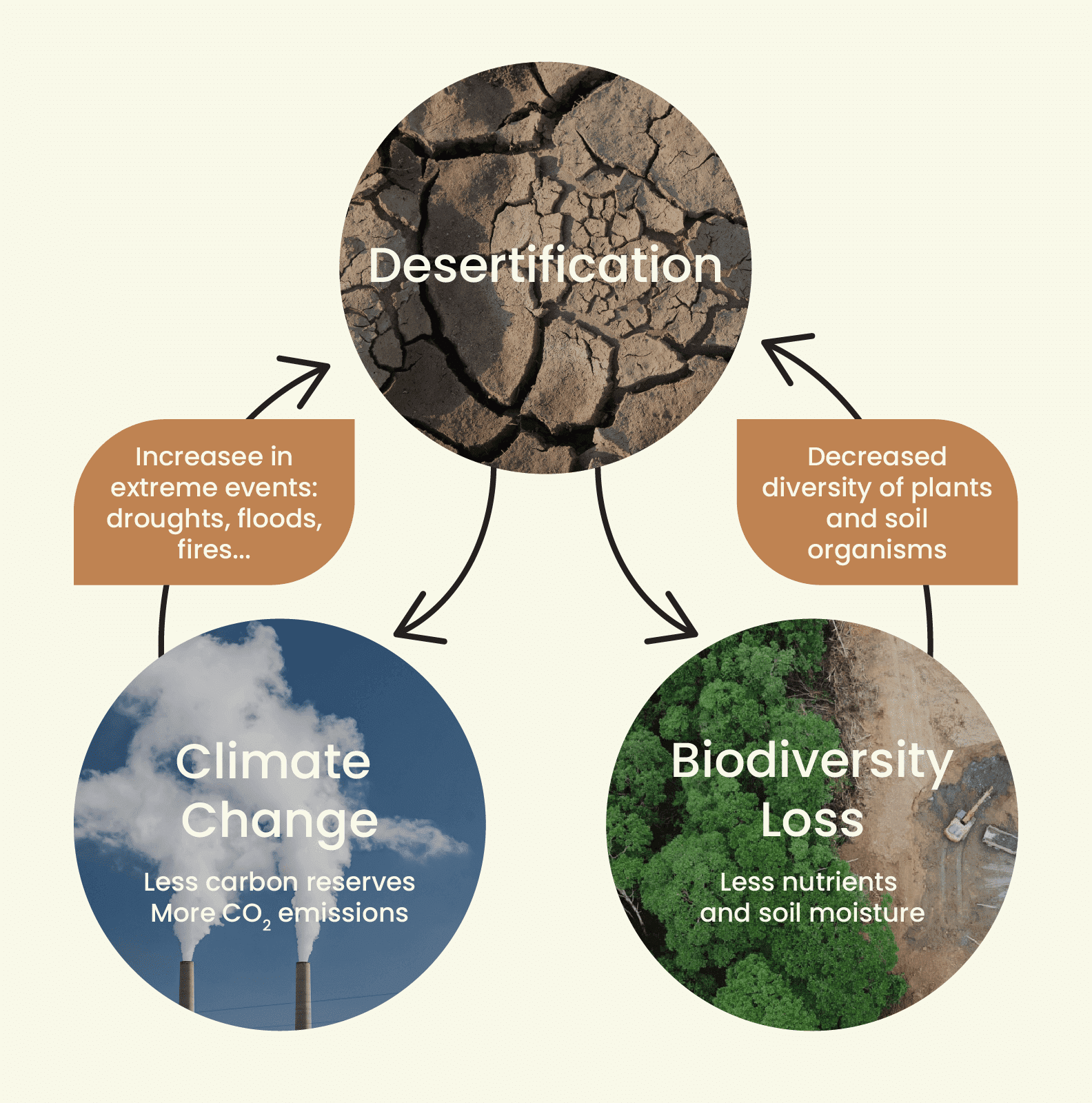
Source: Degradation and Biodiversity
Effects on Oceans and Marine Life
Ocean Warming
WWF states that:
“Oceans are becoming warmer, with profound consequences for marine ecosystems.”
NOAA Fisheries explains that:
“The changing climate and oceans have significant impacts on the nation’s valuable marine life and ecosystems.”
Ocean Warming Consequences:
- Marine heatwaves becoming more frequent
- Coral bleaching events
- Changes to ocean circulation patterns
- Intensification of tropical storms
- Shifts in marine species distributions
Ocean Acidification
Greenpeace UK reports that:
“In the oceans, CO2 concentrations are now higher than they have been in the past 800,000 years. As a result, the oceans are becoming more acidic.”
Ocean acidification occurs as oceans absorb excess atmospheric CO2, forming carbonic acid that lowers ocean pH. This process:
- Threatens coral reefs and shellfish
- Disrupts marine food webs
- Affects organisms that build calcium carbonate shells or skeletons
- Potentially damages fisheries and aquaculture
Coral Reef Degradation
Greenpeace UK notes that:
“Scientists have identified six coral bleaching events since 1998, most notably on the Great Barrier Reef. This is of concern since coral reefs are one of the most biodiverse and valuable ecosystems on Earth.”
Coral bleaching occurs when stressed corals expel the algae living in their tissues, turning white. While corals can recover, severe or repeated bleaching often leads to death.
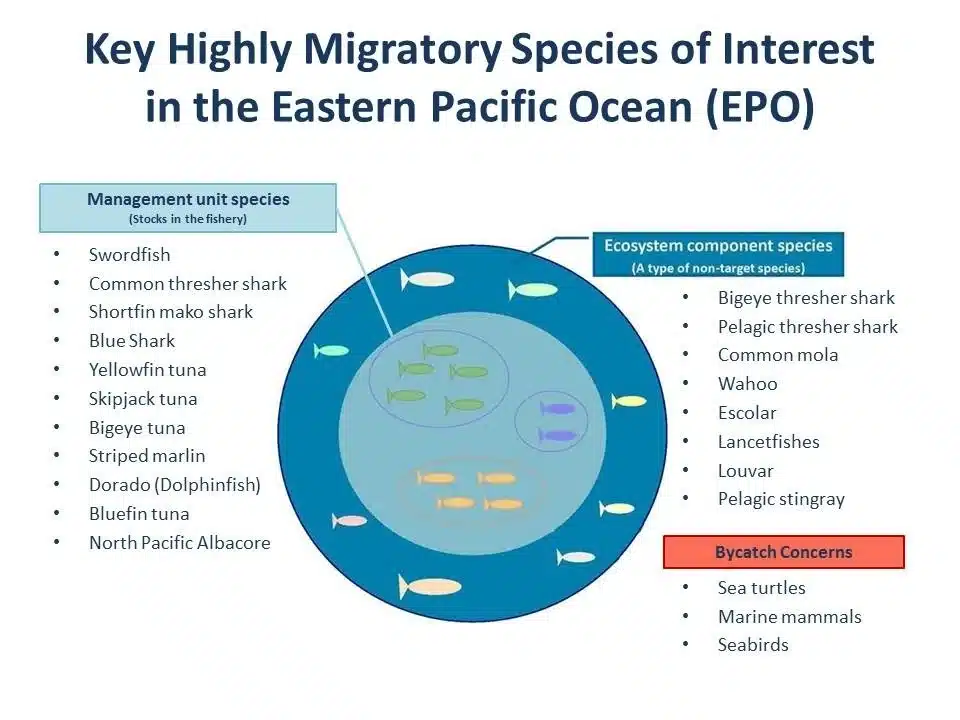
Marine Species Migration
NOAA Fisheries reports that:
“A number of marine species are shifting poleward at a rate of about 44 miles per decade. They are moving 5–10 times faster than terrestrial species.”
This rapid migration:
- Disrupts marine ecosystems
- Affects fishing communities dependent on specific species
- Creates new species interactions and competition
- Changes marine biodiversity patterns
Source: NOAA Fisheries
Impacts on Biodiversity and Ecosystems
Biodiversity Loss
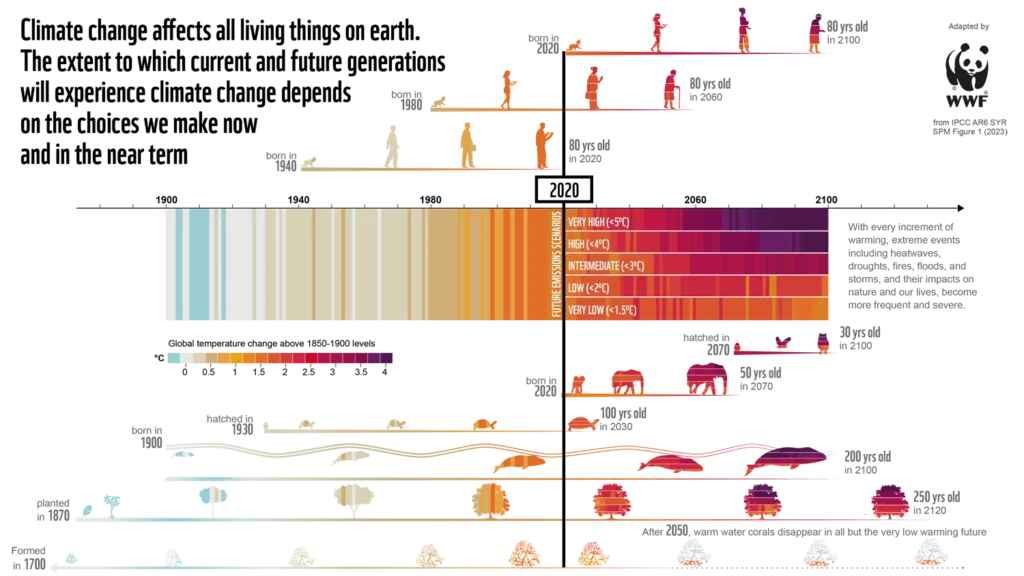
Climate change has become a major driver of biodiversity loss. Greenpeace UK warns that:
“In just over 40 years, wildlife populations showed a dramatic decline of 69% on average. The IPCC reports that around 20-30% of species could die out if global mean temperatures go up by 1.5-2.5 degrees.”
Wikipedia confirms that:
“Climate change is a major driver of biodiversity loss in different land types, including cool conifer forests, savannas, Mediterranean-climate systems, tropical forests, and the Arctic tundra.”
Mechanisms of Biodiversity Loss:
- Habitat Loss: Rising temperatures make current habitats unsuitable
- Range Shifts: Species must move to cooler areas or face extinction
- Phenological Mismatches: Greenpeace UK explains that “animals often take cues from their environment when making important decisions, like when to migrate or when to reproduce. Big changes in weather patterns can mean biological events fall out of sync”
- Increased Extinction Risk: Many species cannot adapt or migrate fast enough
Ecosystem Disruption
NOAA Fisheries suggests that:
“Climate change impacts every aspect of our mission from managing fisheries and aquaculture, to conserving protected resources and vital habitats.”
Ecosystems provide essential services including:
- Water purification
- Carbon storage
- Food production
- Climate regulation
- Coastal protection
As climate change disrupts these ecosystems, the services they provide become compromised, affecting both nature and human societies.
Forest Changes
According to Wikipedia:
“Amplified warming in the Arctic has contributed to thawing permafrost, releasing stored carbon and potentially creating feedback loops that accelerate warming.”
Forests face multiple climate stressors:
- Increased wildfire frequency and severity
- Pest and disease outbreaks
- Drought stress
- Shifts in species composition
- Tree line migration to higher elevations and latitudes
Source: WWF – Effects of Climate Change
Social Effects: Human Health and Well-being
Direct Health Impacts
Wikipedia states that:
“Climate change threatens people with increased flooding, extreme heat, increased food and water scarcity, more disease, and economic loss.”
Heat-Related Illness: More frequent and severe heat waves cause:
- Heat stroke and heat exhaustion
- Cardiovascular and respiratory problems
- Increased mortality, especially among vulnerable populations
- Reduced labor productivity
Air Quality: Climate change worsens air quality through:
- Increased ground-level ozone formation
- More wildfire smoke exposure
- Higher pollen levels and longer allergy seasons
- Spread of dust from desertification
Vector-Borne and Infectious Diseases
Warming temperatures are expanding the geographic range of disease-carrying insects like mosquitoes and ticks, spreading diseases to new areas. Climate change also affects waterborne diseases and food safety.
Food Security and Agriculture
WWF warns that:
“Longer, more intense droughts threaten crops, wildlife, and freshwater supplies.”
Agricultural Impacts:
- Crop yield reductions from heat and drought
- Changes to growing seasons and suitable crop areas
- Increased pest and disease pressure
- Livestock heat stress
- Disrupted pollination services
NOAA Fisheries notes that:
“Fisheries support more than 1.7 million jobs and $253 billion in economic activity in the United States every year, with climate change threatening these resources.”
Water Scarcity
Climate change is altering water availability globally:
- Glacier-dependent water supplies declining
- Changing precipitation patterns affecting water resources
- Increased evaporation in warmer temperatures
- Groundwater depletion accelerating
- Competition for water intensifying
Human Migration and Conflict
Wikipedia explains that:
“Human migration and conflict can also be a result of climate change impacts.”
Climate-Induced Migration:
- Sea level rise forcing coastal community relocation
- Drought and agricultural failure driving rural-to-urban migration
- Extreme weather displacing populations
- Resource scarcity creating tensions
- Climate refugees lack international legal recognition
Economic Impacts
NOAA Fisheries reports that:
“Communities and economies in southern states are also being impacted by changing climate and ocean conditions. Louisiana loses a football-field-size area of coastal wetlands to the sea every hour due to rising seas and sinking lands.”
Economic effects include:
- Infrastructure damage from extreme weather
- Agricultural and fishery losses
- Tourism impacts
- Insurance cost increases
- Property value declines in vulnerable areas
Regional Variations in Climate Change Effects
Climate change effects vary by region. According to Wikipedia that:
“The effects of climate change vary in timing and location. Up until now, the Arctic has warmed faster than most other regions due to climate change feedback.”
Arctic: Rapid warming, sea ice loss, permafrost thaw, ecosystem transformation
Small Island States: Sea level rise threatens existence, saltwater intrusion, coral reef loss
Africa: Increased drought, food insecurity, water scarcity, desertification
Asia: Glacier melt affecting water supplies, increased monsoon variability, coastal flooding
Europe: Heat waves, changing precipitation, Alpine glacier retreat, Mediterranean drought
North America: Increased wildfires, hurricane intensity, heat waves, coastal erosion
South America: Amazon rainforest stress, Andean glacier retreat, changing precipitation
Australia: Severe droughts, intense heat waves, Great Barrier Reef bleaching, bushfires
Long-Term and Irreversible Effects
EPA warns that:
“Elevated concentrations of carbon dioxide will persist in the atmosphere for hundreds or thousands of years, so the earth will continue to warm in the coming decades.”
Some effects become irreversible once tipping points are crossed:
- Complete loss of Arctic summer sea ice
- Collapse of major ice sheets (Greenland, West Antarctic)
- Shutdown of ocean circulation systems
- Amazon rainforest die-back
- Permafrost carbon release
- Coral reef extinction
Wikipedia reports that:
“Even if efforts to minimize future warming are successful, some effects will continue for centuries, including ocean heating, ocean acidification, and sea level rise.”
Conclusion
The effects of climate change are profound, wide-ranging, and accelerating. From melting glaciers and rising seas to biodiversity loss and human health impacts, no corner of our planet remains untouched. The World Health Organization’s designation of climate change as one of the biggest threats to global health in the 21st century reflects the severity of these impacts.
Understanding these effects is crucial for developing effective responses. While some effects are now unavoidable due to past emissions, rapid action to reduce greenhouse gases can limit future warming and its consequences. The choices we make today will determine whether we face manageable climate change impacts or catastrophic disruptions to natural systems and human societies. Time is running out, but solutions exist. What’s needed is the collective will to implement them at scale.
Frequently Asked Questions
What drives most climate change impacts?
Rising global temperatures caused by increased greenhouse gases alter weather patterns, melt glaciers and ice sheets, warm oceans, and shift ecosystems. This warming acts as the core force behind most observed climate effects worldwide.
How does climate change affect human health?
Climate change raises heat illness risk, worsens air quality, expands mosquito and tick habitats, reduces food and water security, and increases exposure to storms and floods. These impacts fall hardest on children, older adults, and low income groups.
What is happening to the oceans?
Oceans are warming, acidifying and losing oxygen. These shifts trigger coral bleaching, change marine species ranges, alter storm behavior and disrupt fisheries. Coastal communities face growing threats to food supplies and economic stability.
Why is sea level rising faster now?
Are climate change effects reversible?
Some impacts such as ocean warming, acidification and sea level rise persist for centuries because carbon dioxide remains long in the atmosphere. Rapid emission cuts and adaptation can limit future harm but cannot undo all existing changes.