
Protests inside the U.S. Capitol occasionally trigger tense confrontations between lawmakers, security personnel, and demonstrators. But when a protester disrupts proceedings, a critical legal question emerges: can a U.S. senator personally use force to remove or restrain that individual? The confrontation between U.S. Senator Tim Sheehy and protester Brian McGinnis during a Senate hearing has raised important legal questions about the limits of authority within the U.S. Capitol, protesters’ rights, and the potential liability of lawmakers who physically intervene in security incidents.
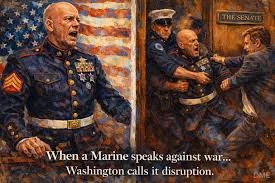
Although congressional hearings are protected spaces governed by strict rules of conduct, the incident highlights a complex intersection of constitutional rights, Capitol security authority, and civil liability law. While maintaining order inside Congress is essential for the functioning of democratic institutions, the authority to use force is generally governed by constitutional protections, congressional rules, and the role of law enforcement, particularly the United States Capitol Police. This raises a complex legal issue about where a senator’s authority ends and the responsibility of official security begins.
Congressional Authority to Maintain Order
The authority of Congress to maintain order within its legislative proceedings is rooted in the U.S. Constitution and long-standing parliamentary practice. Under Article I, Section 5 of the Constitution, each chamber of Congress is granted:
“the power to determine the rules of its proceedings, as well as the authority to discipline its members and ensure the orderly conduct of legislative business.”
This provision establishes the legal basis for the House of Representatives and the Senate to regulate behavior in their chambers, hearings, and committee meetings. Maintaining order during congressional proceedings is considered essential to the functioning of democratic governance. Legislative sessions often involve contentious debate, and Congress’s ability to enforce procedural rules ensures that discussions occur in an organized and lawful manner. Both chambers have established detailed procedural rules that govern how hearings are conducted, how witnesses are treated, and how disruptions are handled.
Congress exercises this authority through a combination of presiding officers, committee chairs, and security personnel. In the House of Representatives, the Speaker of the House oversees chamber proceedings, while in the Senate, the Vice President or the President pro tempore performs a similar role. During committee hearings, the committee chair has the authority to enforce decorum, recognize speakers, and remove individuals who disrupt the proceedings.
To support this authority, Congress relies on institutional security forces such as the U.S. Capitol Police, who are responsible for maintaining safety and order within the Capitol complex. If individuals disrupt hearings, refuse to follow instructions from the presiding officer, or pose a security risk, Capitol Police officers may remove them from the room. This enforcement mechanism ensures that legislative activities can continue without interference or intimidation.
Congress also retains disciplinary authority over its own members. Both the House and the Senate may impose sanctions ranging from formal reprimands and censures to expulsion, depending on the severity of misconduct. These powers allow Congress to enforce internal standards of behavior and maintain institutional integrity.
In the context of public hearings, the authority to maintain order must also be balanced against constitutional protections such as the First Amendment. Members of the public are generally allowed to observe legislative proceedings, and individuals may participate as witnesses or invited speakers. However, the right to free speech does not extend to disrupting official government proceedings, and Congress may impose reasonable restrictions to ensure that hearings proceed in an orderly manner.
Ultimately, congressional authority to maintain order reflects a broader constitutional principle: legislative bodies must be able to regulate their own proceedings in order to carry out their constitutional responsibilities effectively. By establishing procedural rules and enforcement mechanisms, Congress ensures that debate remains structured, respectful, and conducive to democratic decision-making.
Who Has Authority to Remove Protesters
During congressional hearings or legislative proceedings, the authority to remove protesters or disruptive individuals generally rests with the presiding officer of the proceeding and law enforcement officials responsible for security within the U.S. Capitol complex. This authority is grounded in Article I, Section 5 of the U.S. Constitution, which allows each chamber of Congress to determine its own procedural rules and maintain order during legislative activities.
Role of the Presiding Officer or Committee Chair
In congressional hearings, the committee chair or the presiding officer has primary authority to manage the proceedings. This includes recognizing speakers, maintaining decorum, and addressing disruptions. If an individual in the audience or a participant begins to interrupt or obstruct the hearing, the chair may issue warnings and direct that the individual cease the disruptive behavior.
If the disruption continues, the chair may formally order that the individual be removed from the hearing room so that the proceedings can continue without interference. This authority is part of the broader power of Congress to regulate its internal operations.
Role of the U.S. Capitol Police
Once the presiding officer orders removal, the responsibility for physically escorting the individual out typically falls to the U.S. Capitol Police, the federal law enforcement agency tasked with protecting members of Congress, congressional staff, and visitors within the Capitol complex. Capitol Police officers have the legal authority to remove individuals who disrupt official proceedings or refuse to comply with lawful instructions.
In some cases, protesters who refuse to leave voluntarily may be detained or arrested for offenses such as disorderly conduct, unlawful entry, or disruption of congressional proceedings.
Limits on Private Individuals
Private individuals, including members of the public or other attendees, generally do not have legal authority to forcibly remove protesters. Physical intervention by a private person can raise legal concerns, particularly if it involves the use of force. In most situations, enforcement actions are expected to be carried out by authorized security personnel or law enforcement officers.
Balancing Order and Free Expression
Although protests and political expression are protected under the First Amendment, these rights do not extend to disrupting official government proceedings. Courts have recognized that legislative bodies may impose reasonable restrictions on speech within official meetings or hearings in order to ensure that government functions can continue effectively.
As a result, while individuals may express dissent outside the hearing room or through lawful protest, disruptions within congressional proceedings may legally result in removal by security authorities acting under the direction of congressional leadership.
The Doctrine of Legislative Immunity
The doctrine of legislative immunity is a constitutional principle that protects members of legislative bodies from legal liability for actions taken within the scope of their official legislative duties. In the United States, this protection is primarily derived from the Speech or Debate Clause of the U.S. Constitution, found in Article I, Section 6, which states that members of Congress:
“shall not be questioned in any other place for any speech or debate in either chamber.”
This provision ensures that lawmakers can perform their legislative responsibilities without fear of external interference from the executive branch, the judiciary, or private parties. The purpose of legislative immunity is to safeguard the independence of the legislative branch and preserve the separation of powers within the constitutional system.
By shielding lawmakers from lawsuits or prosecution related to their legislative activities, the doctrine allows them to engage in debate, introduce legislation, conduct hearings, and investigate government conduct without intimidation or retaliation. This protection reflects the broader democratic principle that elected representatives must be able to act freely in carrying out their duties on behalf of the public.
Legislative immunity generally applies to actions that are considered legislative acts, such as speeches made during congressional debates, participation in committee hearings, voting on legislation, drafting bills, and issuing official reports. Courts have interpreted these activities as core functions of the legislative process and therefore entitled to constitutional protection.
However, the doctrine does not provide blanket immunity for all conduct by lawmakers. Actions that fall outside the legislative sphere, such as political activities, campaign-related conduct, administrative tasks, or personal behavior, are not protected under the Speech or Debate Clause. In such cases, members of Congress may still be subject to criminal prosecution, civil lawsuits, or ethical investigations.
The scope of legislative immunity has been clarified through several decisions by the U.S. Supreme Court. In cases such as Gravel v. United States (1972) and Eastland v. United States Servicemen’s Fund (1975), the Court affirmed that the Speech or Debate Clause provides broad protection for legislative acts but does not extend to activities unrelated to the legislative process.
In the context of disruptions during congressional hearings or confrontations with protesters, legislative immunity may protect lawmakers from legal consequences if their actions are directly related to maintaining order in the legislative process. However, if a lawmaker engages in conduct that goes beyond legislative functions, such as physically intervening in a situation unrelated to official proceedings, courts may determine that such actions fall outside the scope of legislative immunity.
Ultimately, the doctrine of legislative immunity plays a crucial role in protecting the institutional independence of Congress while still allowing for accountability when lawmakers act outside the boundaries of their constitutional responsibilities.
Potential Civil Liability for Excessive Force
While members of Congress and other officials may have authority to maintain order during legislative proceedings, the use of physical force against protesters or disruptive individuals can raise questions of potential civil liability, particularly if the force used is deemed excessive or unreasonable. U.S. law generally permits reasonable actions to remove individuals who are disrupting official proceedings, but the level of force used must remain proportionate to the situation.
Legal Standard for Excessive Force
Under U.S. civil rights law, the concept of excessive force arises when an individual uses more force than is reasonably necessary to address a situation. Courts typically evaluate excessive force claims using a reasonableness standard, examining whether the force used was appropriate given the circumstances. This analysis considers factors such as:
- The level of threat posed by the individual being removed
- Whether the individual was resisting lawful instructions
- Whether less forceful alternatives were available
- The severity and context of the disruption
If the force used exceeds what a reasonable person would consider necessary to restore order, it may be considered excessive and could give rise to legal claims.
Civil Rights Claims Under Federal Law
Individuals who believe their rights were violated during an encounter with government officials may bring civil claims under federal civil rights statutes, particularly 42 U.S.C. § 1983, which allows individuals to seek damages for violations of constitutional rights by government actors. Although members of Congress operate within a unique constitutional framework, actions that fall outside protected legislative functions may still expose individuals to civil liability if constitutional rights, such as freedom from unreasonable force, are violated.
Potential claims could involve violations of:
- First Amendment rights, if a protester alleges retaliation for protected speech
- Fourth Amendment protections, which guard against unreasonable seizures or excessive force
Limits of Legislative Immunity
The doctrine of legislative immunity, derived from the Speech or Debate Clause, protects lawmakers from legal consequences for actions that are directly tied to the legislative process. However, courts have consistently held that this protection applies only to legislative acts, such as debating, voting, or conducting official investigations.
If a lawmaker’s actions involve physical conduct unrelated to core legislative functions, such as personally using force against an individual rather than directing security personnel to handle the situation, courts may determine that the conduct falls outside the scope of legislative immunity.
Role of Law Enforcement
In most congressional proceedings, the responsibility for handling disruptive individuals lies with trained law enforcement personnel, particularly the U.S. Capitol Police. These officers are authorized to remove protesters and enforce order within the Capitol complex. When lawmakers personally intervene in a physical confrontation, it can complicate the legal analysis and raise questions about whether proper procedures were followed.
Possible Legal Consequences
If a court determines that excessive force was used and that the conduct is not protected by legislative immunity, potential legal consequences may include:
- Civil lawsuits seeking monetary damages
- Claims for violations of constitutional rights
- Investigations by congressional ethics committees
- Public and political scrutiny
Even when a court ultimately finds that the actions were justified, incidents involving the use of force during official proceedings often attract significant legal and political attention.
Balancing Authority and Accountability
The ability of Congress to maintain order is essential for the functioning of democratic institutions. However, that authority must be exercised in a manner consistent with constitutional protections and civil rights. As a result, the legal system attempts to balance the need for order in legislative proceedings with the requirement that individuals be protected from unreasonable or excessive use of force.
Self-Defense and Defense of Others
In situations involving physical confrontations during public or governmental proceedings, individuals may sometimes invoke the legal doctrines of self-defense or defense of others to justify their actions. These principles are widely recognized in U.S. law and allow a person to use reasonable force to protect themselves or another person from an imminent threat of harm. However, the application of these defenses depends heavily on the specific circumstances of the incident and the proportionality of the response.
Legal Basis for Self-Defense
Self-defense allows an individual to use force when they reasonably believe that such force is necessary to prevent imminent physical harm. The key legal requirement is that the response must be proportionate to the threat. In other words, the level of force used must be no greater than what is reasonably required to stop the immediate danger. Courts typically evaluate self-defense claims using several factors, including:
- Whether the person reasonably believed that they faced an immediate threat
- Whether the force used was necessary to prevent harm
- Whether the response was proportional to the level of danger
If these conditions are satisfied, the use of force may be considered legally justified.
Defense of Others
The related doctrine of defense of others allows a person to intervene when they reasonably believe another individual is facing imminent harm. Similar to self-defense, the force used must be proportionate and aimed at stopping the threat rather than punishing the individual causing it.
For example, a person may lawfully intervene to protect a colleague, public official, or bystander if they believe that individual is about to be physically attacked.
Limits on the Use of Force
While self-defense and defense of others are recognized legal defenses, they are subject to strict limitations. The use of force must be necessary and reasonable under the circumstances, and courts often examine whether less forceful alternatives were available. If the person claiming self-defense initiated the confrontation or escalated the situation unnecessarily, the defense may not apply.
Additionally, individuals are generally expected to defer to trained law enforcement personnel when they are present and able to handle the situation. In settings such as congressional hearings or public government proceedings, security personnel, including the U.S. Capitol Police, are responsible for maintaining order and addressing security threats.
Application in Government Settings
In the context of legislative hearings or official government events, the doctrines of self-defense and defense of others may still apply if an individual reasonably believes that immediate action is necessary to prevent harm. However, the presence of official security forces and established procedures for handling disruptions often complicates the legal analysis.
If a confrontation occurs and physical force is used, courts may examine whether the person who intervened reasonably believed that immediate action was required or whether the situation could have been handled by security personnel.
Legal and Practical Considerations
Ultimately, claims of self-defense or defense of others depend on the facts of the incident, including the nature of the threat and the proportionality of the response. Even when such defenses are raised, incidents involving physical force in official government settings may still trigger legal scrutiny, civil claims, or internal investigations.
These doctrines illustrate the broader legal principle that individuals may protect themselves or others from immediate harm, but the use of force must always remain reasonable, necessary, and proportionate to the threat faced.
First Amendment and Limits on Protest
The First Amendment to the U.S. Constitution guarantees fundamental freedoms, including the rights to free speech, peaceful assembly, and petitioning the government for redress of grievances. These protections form the legal foundation for public protest and political expression in the United States. Individuals, therefore, have the right to express dissent, criticize government officials, and participate in demonstrations, including protests related to congressional hearings or government policies.
However, the First Amendment does not grant an unrestricted right to protest in all places or in any manner. Courts have long recognized that the government may impose reasonable restrictions on the time, place, and manner of speech to ensure public safety, maintain order, and allow government institutions to function effectively. These limitations are particularly relevant in government buildings and official proceedings, where maintaining order is essential to the legislative process.
Public Forums and Government Spaces
The level of First Amendment protection often depends on the type of location where the protest occurs. Courts generally classify locations into three categories:
Traditional public forums, such as streets, parks, and sidewalks, are areas where free speech rights receive the strongest protection. In these spaces, the government may regulate speech only through narrow, content-neutral restrictions designed to serve important public interests.
Designated public forums are locations that the government intentionally opens for public expression, such as certain meeting rooms or public hearings. Speech restrictions in these areas must also remain neutral and reasonable.
Nonpublic forums, such as government offices, legislative chambers, and restricted areas of the Capitol, are spaces where the government may impose broader restrictions on speech in order to preserve the proper functioning of official activities.
Congressional hearing rooms typically fall within the nonpublic forum category, meaning that officials may limit disruptive conduct that interferes with legislative proceedings.
Disruptions and Legal Consequences
While individuals may attend congressional hearings and observe government proceedings, the First Amendment does not protect actions that disrupt official government functions. Courts have consistently held that government institutions may enforce rules prohibiting interruptions, shouting, or other conduct that prevents the orderly conduct of official meetings.
As a result, protesters who interrupt hearings, refuse to follow instructions from presiding officials, or obstruct proceedings may be removed from the hearing room by security personnel such as the U.S. Capitol Police. In certain cases, individuals who continue disruptive behavior may face charges such as disorderly conduct or unlawful disruption of congressional proceedings.
Balancing Free Speech and Institutional Order
The legal framework governing protests in government settings attempts to balance two important principles: the constitutional right to express dissent and the need for government institutions to carry out their functions without interference. Courts generally support restrictions on disruptive conduct when those restrictions are content-neutral and applied to maintain order rather than suppress particular viewpoints.
In practice, this means that individuals are free to protest government policies, criticize officials, and engage in political advocacy. However, when such activity takes place inside official government proceedings, it must conform to procedural rules designed to ensure that hearings and legislative sessions can proceed without interruption.
The First Amendment, therefore, protects the right to protest, but it also recognizes that democratic institutions require order and structure to function effectively, allowing both political expression and legislative deliberation to coexist within the constitutional system.
Possible Criminal Liability
When physical confrontations or disruptions occur during official government proceedings, participants may face potential criminal liability depending on the circumstances and the severity of the conduct. U.S. law provides several statutes that can apply to incidents involving the use of force, obstruction of proceedings, or disorderly conduct within federal government buildings, including congressional hearing rooms.
Disorderly Conduct and Disruption of Official Proceedings
One of the most common charges in such cases is disorderly conduct or disruption of official proceedings. Federal law allows authorities to prosecute individuals who intentionally disturb or obstruct government operations in places such as the U.S. Capitol or congressional offices. Actions such as shouting, refusing lawful orders, physically interfering with officials, or creating disturbances that prevent a hearing from continuing may fall within this category.
These offenses can result in fines, removal from the premises, or misdemeanor criminal charges, depending on the seriousness of the disruption.
Assault or Physical Contact
If a confrontation involves physical force or unwanted physical contact, the situation may escalate into potential charges for assault or battery. Under federal and state law, assault does not necessarily require serious injury; even unlawful physical contact or attempts to cause harm can qualify as an assault offense. If an individual uses force to remove or restrain another person without legal authority, prosecutors could consider whether the conduct constituted:
- Simple assault
- Assault causing bodily injury
- Reckless endangerment
The specific charge would depend on the level of force used and whether the person involved suffered injuries.
Obstruction of Government Functions
Another possible charge relates to obstruction of government operations. Federal statutes prohibit interfering with the lawful activities of government officials or proceedings. If a protester or participant prevents a hearing from continuing or obstructs the work of congressional staff or security officers, prosecutors may argue that the conduct interfered with a federal function.
Such offenses are treated seriously because they involve interference with the operations of the legislative branch.
Trespass or Failure to Comply With Security Orders
Government buildings often have strict security rules governing behavior inside hearing rooms and public areas. Individuals who refuse to follow instructions from security personnel, such as orders to leave or cease disruptive conduct, may face trespassing or failure-to-comply charges.
For example, ignoring instructions from Capitol Police or remaining in a restricted area after being directed to leave could constitute a violation of federal security regulations.
Possible Defenses
Individuals facing criminal accusations may raise several legal defenses depending on the circumstances. These may include:
- Self-defense or defense of others, if force was used to prevent immediate harm
- Lack of intent, arguing that the conduct did not intentionally disrupt proceedings
- First Amendment protections, if the actions were part of lawful protest rather than obstruction
However, courts generally hold that the First Amendment does not protect disruptive conduct that interferes with official government proceedings.
Investigations and Prosecutorial Discretion
Whether criminal charges are ultimately filed often depends on investigations conducted by law enforcement authorities, including federal security agencies responsible for Capitol protection. Prosecutors will typically evaluate evidence such as video footage, witness statements, and the level of disruption before deciding whether criminal prosecution is appropriate.
In many cases, authorities may opt for removal and warning rather than prosecution, particularly if the disruption was minor. However, incidents involving violence, injury, or serious interference with government functions are more likely to result in formal criminal charges.
Broader Legal Implications
Incidents involving confrontations during congressional proceedings often raise broader legal questions about the balance between free speech rights, security protocols, and institutional authority. While the law protects the right to protest and express dissent, it also recognizes that government institutions must maintain order to carry out their constitutional responsibilities.
As a result, actions that cross the line from protest into physical interference or violence may trigger both criminal liability and broader legal scrutiny regarding the limits of permissible conduct in government spaces.
Historical Precedents in Congress and Comparative Legal Matrix
Although protests frequently occur during congressional hearings, it is rare for members of Congress to personally intervene. In previous cases, protesters disrupting hearings have typically been removed solely by Capitol Police, sometimes resulting in arrests but rarely involving direct physical engagement by lawmakers. This rarity is one reason the incident has drawn significant attention.
The incident involving Senator Tim Sheehy and protester Brian McGinnis highlights an important legal distinction between the roles and authorities of members of Congress, Capitol Police officers, and private citizens inside the U.S. Capitol. The following matrix explains the different legal powers, responsibilities, and liability risks associated with each actor during disruptions or protests in congressional proceedings.
| Category | Members of Congress (Senators/Representatives) | U.S. Capitol Police | Private Citizens / Protesters |
|---|---|---|---|
| Legal Authority Inside Congress | Authority to conduct legislative proceedings and enforce rules of debate under Article I of the U.S. Constitution. | Federal law enforcement authority to protect the Capitol complex and enforce laws and security rules. | No official authority; may attend hearings as members of the public subject to congressional rules. |
| Role in Maintaining Order | Can order the removal of disruptive individuals and direct security personnel to restore order. | Primary responsibility for maintaining order and security during hearings and congressional proceedings. | Must comply with rules governing public conduct in congressional buildings. |
| Power to Use Physical Force | Generally no law enforcement authority to use force; physical intervention is unusual and legally risky. | Authorized to use reasonable and necessary force to remove disruptive individuals or make arrests. | May use force only in limited circumstances such as self-defense or defense of others. |
| Arrest Authority | No authority to arrest individuals. | Full authority to detain and arrest individuals who violate federal law or Capitol regulations. | No authority to arrest others except under rare “citizen’s arrest” circumstances under local law. |
| Legal Immunity Protections | Protected by the Speech or Debate Clause for legislative acts but not for physical actions outside legislative functions. | Protected by qualified immunity when performing official duties within lawful limits. | No official immunity protections. |
| Liability Risk if Force Is Used | Potential exposure to civil lawsuits for assault, battery, or negligence if excessive force is alleged. | Liability may arise only if officers use excessive or unreasonable force. | May face criminal charges if they resist removal, assault officers, or disrupt proceedings. |
| Applicable Laws and Rules | Congressional rules of procedure; U.S. Constitution Article I; ethics and conduct rules. | Federal law governing the Capitol Police; criminal statutes covering disorderly conduct, assault, and obstruction. | Federal criminal law and Capitol regulations governing demonstrations and disruptions. |
| Typical Outcome During Disruptions | Direct security officers to remove individuals but rarely physically intervene themselves. | Remove the individual, detain them if necessary, and potentially file criminal charges. | Risk arrest or charges if they refuse to comply with removal orders. |
The matrix illustrates that while members of Congress possess the authority to direct security measures, they are not normally responsible for enforcing those measures physically. The responsibility for removing protesters or maintaining order lies primarily with Capitol Police, who are legally trained and authorized to use force when necessary.
When a lawmaker personally intervenes in a physical confrontation, the legal protections normally associated with legislative activity may not apply. This can create potential exposure to civil liability claims, especially if injuries occur during the incident.
For protesters and members of the public, the First Amendment protects the right to express political views. However, these rights are subject to restrictions in non-public forums such as congressional hearing rooms, where disruptions can legally result in removal or arrest.
Why This Incident Is Legally Significant
The confrontation has drawn attention not simply because a protest occurred, such disruptions are relatively common, but because a sitting senator physically assisted law enforcement officers in removing a protester.
Such direct involvement raises broader legal and constitutional questions about:
- The limits of legislative immunity
- The boundaries between legislative authority and law enforcement powers
- The legal risks associated with physical intervention by elected officials
As political protests increasingly occur inside government institutions, courts and policymakers may face growing pressure to clarify the legal boundaries governing such situations.
Conclusion
Incidents involving physical confrontations or the removal of protesters during congressional hearings highlight the complex intersection between constitutional rights, institutional authority, and criminal law. The incident involving Senator Tim Sheehy and protester Brian McGinnis sits at the intersection of congressional authority, protest rights, and civil liability law.
While the First Amendment guarantees robust protections for political speech and peaceful protest, these rights are not absolute when exercised inside official government proceedings where order and security must be maintained. Congress and its presiding officials possess clear authority to regulate conduct within hearing rooms and legislative chambers, including the power to remove individuals whose actions disrupt proceedings.
At the same time, the use of physical force by anyone other than authorized security personnel may raise questions about legal justification, proportionality, and potential civil or criminal liability. In the broader constitutional framework, such incidents highlight the continuing challenge of preserving democratic debate while ensuring that government institutions can function effectively.
Frequently Asked Questions
Do protesters have the right to interrupt congressional hearings under the First Amendment?
No. While the First Amendment protects free speech and the right to protest, it does not protect actions that disrupt official government proceedings. Congressional hearings are considered controlled government spaces where officials may enforce rules to maintain order. Protesters can express dissent but may be removed if they interrupt or obstruct the proceedings.
Who has the authority to remove protesters from a congressional hearing?
Typically, security personnel such as the U.S. Capitol Police have the authority to remove disruptive individuals from congressional hearings or government buildings. Committee chairs or presiding officials may order the removal of individuals who violate rules of conduct, but the physical enforcement of that order is generally carried out by security officers.
Can a lawmaker or private individual physically remove a protester?
This depends on the circumstances. While lawmakers have authority to maintain order within hearings, physical removal is usually the responsibility of trained security personnel. If a private individual or official uses force without proper authority, questions may arise regarding assault, excessive force, or civil liability, depending on how the situation unfolded.
Can someone claim self-defense when force is used during a confrontation?
Yes, self-defense or defense of others may be raised as a legal defense if a person reasonably believed that force was necessary to prevent immediate harm. However, courts will examine whether the force used was proportionate and necessary under the circumstances.
What criminal charges could arise from a confrontation at a congressional hearing?
Possible charges may include disorderly conduct, assault, obstruction of official proceedings, or trespassing if an individual refuses to comply with security orders. The exact charges depend on the severity of the disruption and whether physical force or injuries were involved.
Can protesters be arrested simply for expressing political opinions?
No. Individuals cannot be arrested solely for expressing political views. The First Amendment protects political expression, but arrests may occur if a protester engages in conduct that disrupts proceedings, threatens safety, or violates security rules.
Could someone face civil lawsuits after such an incident?
Yes. Individuals who suffer injuries or unlawful physical contact during a confrontation may pursue civil claims for assault, battery, or excessive force. Courts would assess whether the force used was justified under the circumstances.
How do courts balance free speech with maintaining order in government proceedings?
Courts apply the principle that the government may impose reasonable time, place, and manner restrictions on speech. These restrictions must be content-neutral and designed to ensure that official proceedings, such as congressional hearings, can function without disruption while still respecting constitutional rights.