
A series of aggressive statements and profanity-filled social media posts by Donald Trump targeting Iran has triggered a major legal, diplomatic, and ethical controversy, with critics accusing the U.S. leader of violating the norms expected of a head of state and potentially signaling unlawful military intent and global legal condemnation and renewed scrutiny over the laws of war and political ethics.
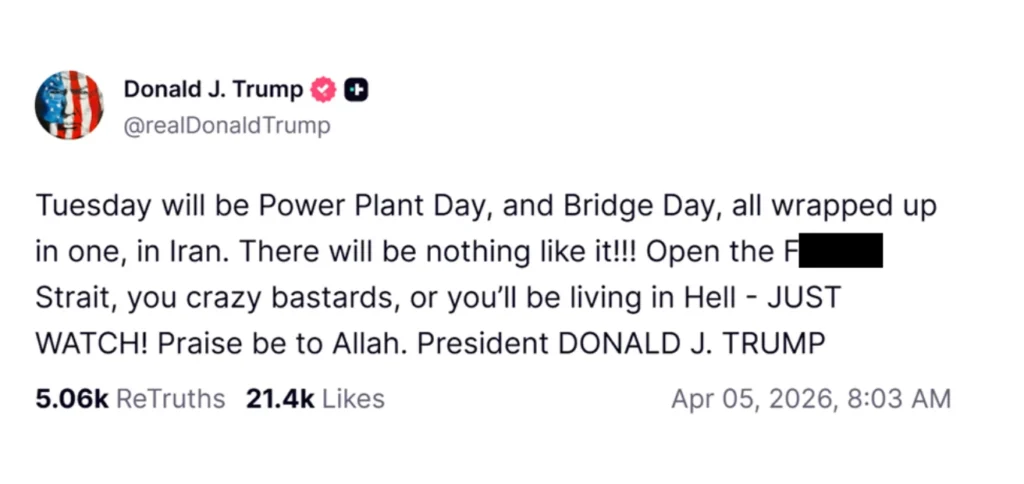
The controversy escalated after Trump warned that the United States could destroy Iran’s power plants, bridges, and key infrastructure within hours if Tehran failed to reopen the Strait of Hormuz or accept U.S. demands.
The Controversial Rhetoric: From “Stone Age” to Profanity
In recent days, Trump has issued a string of inflammatory statements, including threats to:
“Bomb Iran back to the stone ages”
Trump also threatened to:
- Declare “Power Plant Day” targeting infrastructure
- Use profanity and insults such as calling Iranian leaders “bastards” in social media posts
- Intensify attacks within weeks if demands were not met
One widely circulated post demanded Iran reopen the Strait of Hormuz using explicit language and threats of destruction. He also reiterated threats to destroy bridges and power plants, warning of massive escalation if U.S. demands are not met. These remarks were widely interpreted as threats of large-scale destruction affecting civilian populations, rather than purely military targets.
Legal Concerns: Threats and the Laws of War
Legal experts have raised serious concerns that such rhetoric may cross into potential violations of international law, even before any military action occurs.
1. Threatening Civilian Infrastructure
Statements explicitly targeting power plants, bridges, and national infrastructure raise concerns under the Geneva Conventions, which prohibit attacks on civilian objects unless they are legitimate military targets. The International Committee of the Red Cross (ICRC) has warned that even rhetoric normalizing such attacks undermines the laws of war.
2. Evidence of Intent
Public threats by state leaders can be used as evidence of intent in international legal proceedings, particularly in cases involving:
- War crimes investigations
- Disproportionate or indiscriminate attacks
Experts have warned that such statements could later be scrutinized in international tribunals or UN inquiries.
3. Collective Punishment Concerns
Broad threats against an entire country rather than specific military targets may violate the principle prohibiting the collective punishment of civilian populations.
Ethical and Constitutional Criticism
Trump’s rhetoric has also triggered ethical and constitutional criticism within the United States. Trump’s language has also drawn widespread criticism for breaching diplomatic and ethical norms expected of world leaders.
- His posts included profanity and insults, even during official events such as Easter
- Critics argue that such rhetoric undermines diplomatic credibility and global stability
- Lawmakers and analysts have called the statements reckless and destabilizing
- Critics argue such language undermines international norms and diplomatic efforts
- Concerns have been raised about whether such threats align with the War Powers framework and responsible executive conduct
International observers stress that leaders are expected to exercise restraint and precision in wartime communication, especially during active conflicts. Particularly given the risk of misinterpretation during an active conflict, some commentators have described the remarks as
“unethical and dangerous escalation rhetoric”
Military and Institutional Concerns
The rhetoric has also created unease within legal and military circles.
- Military legal experts warn that orders consistent with such threats could place soldiers in a dilemma between obeying orders and committing unlawful acts
- Concerns have been raised about the erosion of legal oversight and adherence to rules of engagement
This highlights a deeper issue of whether political rhetoric can influence operational conduct on the battlefield. Iran has condemned the statements as provocative and destabilizing, warning of severe retaliation.
“devastating and widespread retaliation”
International organizations cautioned that such rhetoric could intensify regional instability. Global actors, including humanitarian groups and European officials, have warned that threats against civilian infrastructure could breach international law and escalate the conflict further.
Broader Legal Implications
The controversy highlights a critical legal issue in modern warfare: whether public threats by state leaders themselves can constitute violations of international law or evidence of unlawful intent. These include:
- Can threatening language alone violate international law norms?
- Do such statements weaken compliance with international humanitarian law (IHL)?
- How should global institutions respond when leaders publicly endorse potentially unlawful conduct?
Legal experts increasingly argue that words themselves can shape the legality and accountability of war, especially when they signal intent to bypass established legal limits. Key implications include:
- Potential use of such statements in future war crimes investigations
- Increased scrutiny of U.S. compliance with international humanitarian law
- Erosion of norms limiting indiscriminate or disproportionate warfare
Conclusion
Trump’s “Stone Age,” “Power Plant Day,” and profanity-laced threats have moved beyond political rhetoric into a serious legal and ethical controversy, raising questions about the boundaries of lawful military threats and the responsibilities of state leaders during armed conflict.
As the war in Iran intensifies, the episode highlights a growing concern among legal experts that, in an age of instant communication, statements by heads of state are not just political messaging. They can carry legal consequences, influence military conduct, and shape the legitimacy of war itself.