
Tehran/Washington — February 28, 2026: A major military confrontation has erupted between Iran, the United States, and Israel after coordinated strikes on Iranian territory. According to Israeli authorities, the Israel Defense Forces (IDF) launched a pre-emptive strike against Iran, citing threats from Tehran’s nuclear and missile programs. The United States confirmed involvement in what President Donald Trump described as “major combat operations” against Iranian military targets.
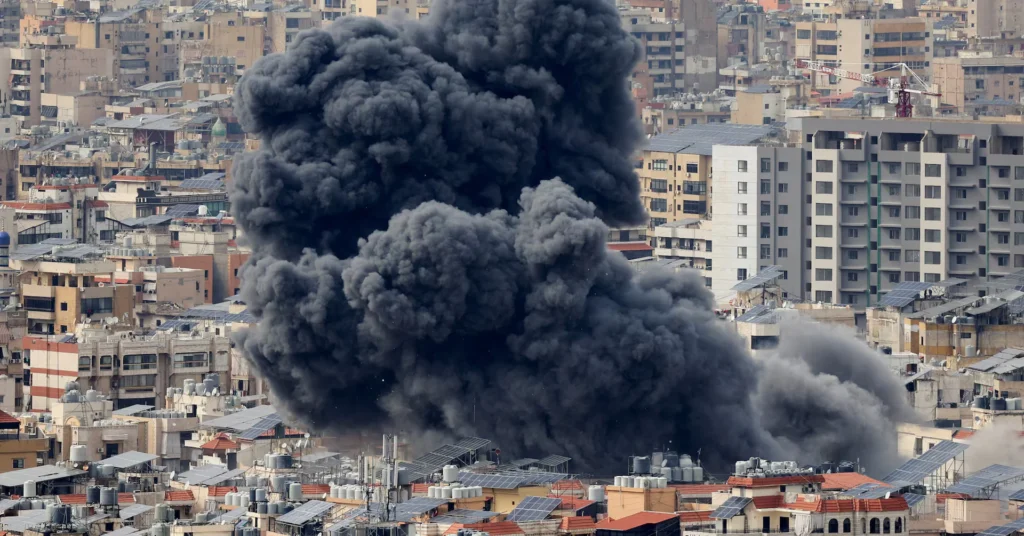
Explosions were widely reported in Tehran and other Iranian cities, with some strikes reportedly near strategic government and military facilities. Iran’s paramilitary Revolutionary Guard responded with a barrage of missiles and drones targeting Israel and, according to regional monitoring, a U.S. naval base in Bahrain. Civil defense sirens sounded in Israel as authorities warned of further retaliation.
This escalation marks a significant intensification of hostilities following earlier tensions, including a 12-day air war in June 2025 and prolonged disputes over Iran’s nuclear program and ballistic missile development.
Diplomatic and Nuclear Talk Breakdown
Before the outbreak of open hostilities, nuclear negotiations between the U.S. and Iran in Geneva ended without an agreement. Tehran had prepared a counterproposal aimed at preserving its civilian nuclear activity in exchange for sanctions relief, but negotiations faltered over missile restrictions and verification access for the International Atomic Energy Agency (IAEA). A recent confidential IAEA report indicates ongoing uncertainty about Iran’s enrichment activities due to limited monitoring access at key facilities.
Israel has framed its military action, dubbed Operation Lion’s Roar, as necessary to “remove existential threats” posed by Iran’s nuclear ambitions. Israeli Prime Minister Benjamin Netanyahu emphasized that Iran must not acquire nuclear weapons, reflecting long-standing national security doctrine shared by Washington.
Regional Fallout and International Repercussions
The conflict is already affecting regional stability:
- Airspaces across parts of the Middle East have been closed, and international airlines have suspended flights to and from key hubs amid safety concerns.
- Lebanon has publicly urged Hezbollah not to enter the conflict, warning of severe civilian consequences if hostilities spread beyond Iran and Israel.
- A near-total internet blackout in Iran has been reported, complicating independent verification of events on the ground.
Multiple global actors have called for restraint, but the rapid escalation raises the possibility of a broader regional war. The U.S. has deployed substantial military assets in the region over the preceding weeks, including carrier strike groups and aerial forces, and expanded sanctions targeting Iranian oil networks and weapons supply chains, intensifying economic pressure alongside military action.
Legal and Policy Implications
The strikes and retaliatory actions carry complex legal ramifications under international law:
- Use of Force and Self-Defense: Israel and the U.S. justify military action as pre-emptive self-defense against imminent threats posed by Iran’s alleged nuclear and missile programs. Under Article 51 of the UN Charter, pre-emptive strikes remain controversial and heavily contested in legal doctrine.
- Sovereignty and Territorial Integrity: Unilateral military action on Iranian sovereign territory raises questions about the legality of force absent explicit United Nations Security Council authorization.
- Sanctions Enforcement vs. Armed Conflict: The simultaneous use of broad sanctions and military operations blurs the lines between economic coercion and armed conflict law, inviting legal scrutiny into proportionality, civilian harm mitigation, and treaty obligations.
Governments around the world are closely monitoring developments as global markets react to geopolitical risk, and humanitarian organizations warn of widening civilian impact. This situation remains highly fluid. Casualty figures, diplomatic responses from other states, and future legal challenges, including potential International Court of Justice or UN Security Council involvement are expected as the conflict unfolds.