
The death of Russian opposition leader Alexei Navalny in an Arctic penal colony in February 2024 continues to generate major legal and diplomatic repercussions into 2026, with new international investigations, sanctions debates, and human-rights litigation shaping the global legal response. Western governments, the European Union, and human-rights organizations maintain that Navalny’s death remains a potential case of state responsibility under international law, while Moscow denies wrongdoing and has rejected calls for an independent inquiry.
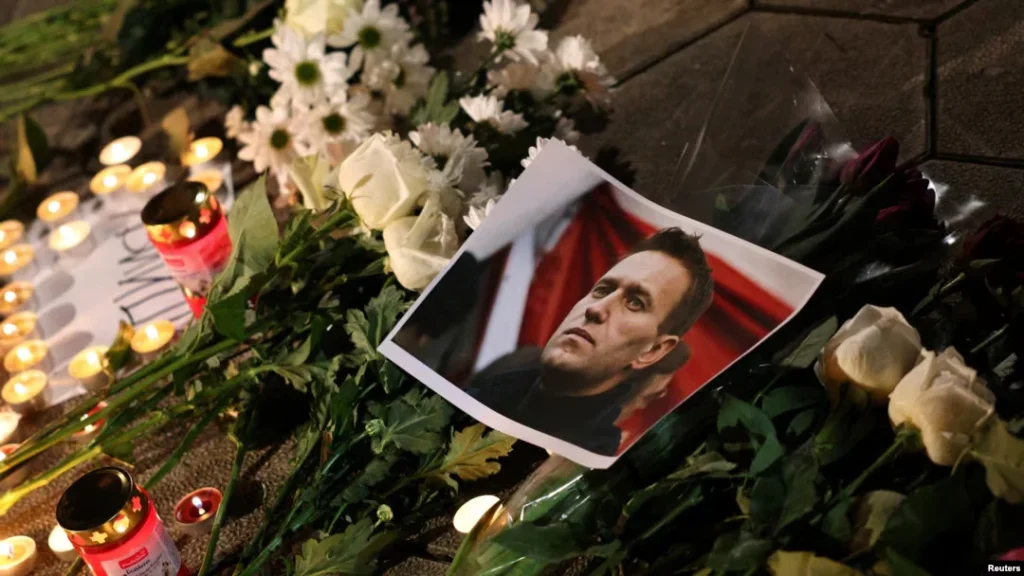
Navalny, who died in February 2024 while imprisoned in Russia, had long been recognized as one of the most prominent political critics of the Russian government. His death triggered widespread calls for independent investigations, sanctions, and legal accountability. Yet the legal response has also exposed structural limitations within international courts when major powers refuse cooperation or reject jurisdiction altogether.
Navalny himself faced multiple criminal prosecutions, many of which were widely viewed by international observers as politically motivated. Russian courts convicted him on charges including fraud, extremism, and violations of parole conditions. International human rights bodies, including the European Court of Human Rights (ECHR), had previously concluded that several of Navalny’s detentions and convictions violated fundamental rights, including the right to liberty and fair trial.
Background and Global Response
Navalny, long regarded as one of the most prominent critics of the Russian government, had been imprisoned following a series of legal proceedings widely criticized by international observers as politically motivated. His death in custody triggered immediate condemnation from European states, the United States, and human rights organizations, which called for independent investigations and accountability.
The European Union and several Western governments responded primarily through targeted sanctions. The United Kingdom imposed sanctions on officials linked to the penal colony where Navalny died, freezing assets and imposing travel bans. Meanwhile, the European Union reiterated that it had already sanctioned individuals responsible for Navalny’s earlier poisoning, arrest, and prosecution under its human rights sanctions regime and urged Russia to comply with international law and cease repression of political opposition.
Despite this diplomatic and economic pressure, no international court has been able to initiate a binding criminal process directly linked to Navalny’s death. This reflects deeper structural limitations within international legal institutions.
The death of Alexei Navalny has intensified allegations by European officials and legal observers that Russian authorities may have used a rare and difficult-to-trace toxic substance, continuing a pattern of politically motivated poisonings linked to state security operations. Several European governments, including Germany and United Kingdom, have cited forensic and intelligence assessments suggesting exposure to an uncommon toxin, raising serious concerns about deliberate targeting.
These allegations draw legal and evidentiary significance from Navalny’s earlier confirmed poisoning in 2020 with a Novichok-class nerve agent, which was independently verified by laboratories designated by the Organisation for the Prohibition of Chemical Weapons. In the current case, while Russian authorities maintain that Navalny died of natural causes in custody, European investigators and human rights experts argue that the use of a rare toxin, if proven, would strongly indicate state involvement.
Such substances are typically restricted to advanced state-level research or military programs and are not accessible to private actors. From a legal standpoint, poisoning a political detainee would constitute a grave violation of international human rights law, including the right to life under customary international law and obligations previously binding on Russia under the European human rights framework.
Ongoing Investigations and Sanctions Pressure
European Union states and the United States have imposed successive sanctions on Russian officials and prison authorities believed to be linked to Navalny’s imprisonment and death. Legal discussions now focus on whether the circumstances surrounding his detention and treatment could amount to violations of the right to life under international human-rights law, particularly the European Convention on Human Rights and the International Covenant on Civil and Political Rights (ICCPR).
Several European parliaments and international legal experts continue to call for an independent international investigation, arguing that Russia’s refusal to cooperate with external probes raises questions about compliance with its treaty obligations to protect detainees and investigate suspicious deaths in custody.
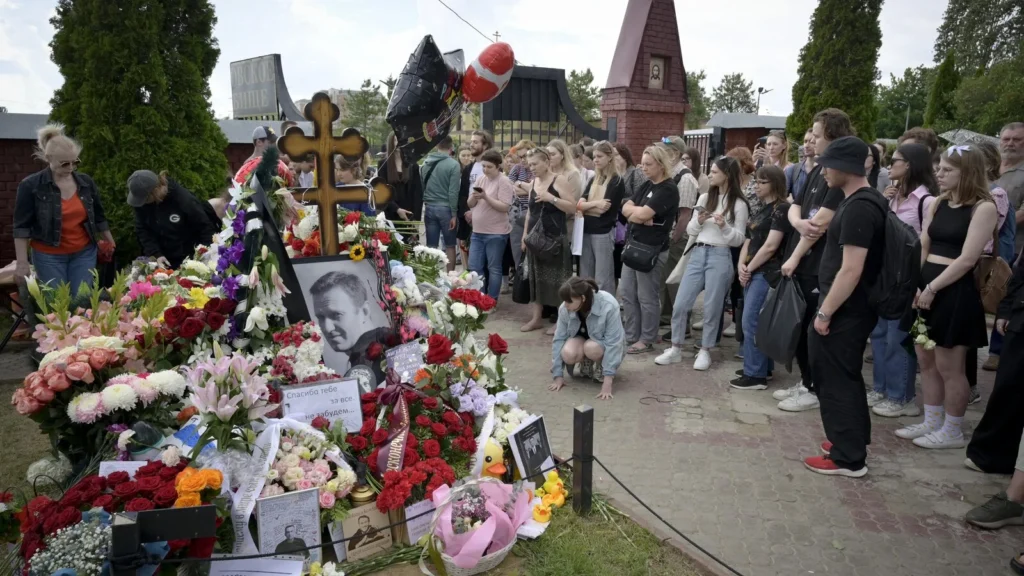
Navalny’s family and supporters have pursued legal action in international forums, including applications to the European Court of Human Rights (ECHR) and UN human-rights bodies, seeking accountability for alleged unlawful detention, mistreatment, and failure to provide adequate medical care. Although Russia withdrew from the Council of Europe in 2022, legal experts argue that the Court may still examine violations occurring before its departure and use findings to support international sanctions or reparations claims.
Navalny first fell gravely ill in 2020 after exposure to a cholinesterase-inhibiting nerve agent later identified by multiple certified laboratories as belonging to the Novichok family. Investigations by German authorities and the Organisation for the Prohibition of Chemical Weapons (OPCW) confirmed the presence of a previously unidentified variant of Novichok in his biological samples.
Novichok agents are internationally prohibited under the Chemical Weapons Convention due to their extreme toxicity and military-grade design, and their confirmed presence in a civilian poisoning case immediately elevated the matter from domestic criminal law to international chemical weapons enforcement. Navalny’s death has prompted renewed demands by European states, human rights bodies, and chemical weapons watchdogs for a comprehensive international investigation.
Legal experts argue that confirmation of a banned nerve agent in a political dissident’s death engages:
- Chemical Weapons Convention obligations, requiring states to investigate and prevent use of prohibited agents
- State responsibility doctrines where a state is alleged to have permitted or failed to prevent use of chemical weapons
- International human rights law, particularly the right to life and the duty to conduct effective investigations into suspicious deaths
Several governments and legal scholars maintain that the use of a Novichok-type nerve agent constitutes not merely a domestic crime but a potential breach of international chemical weapons law, raising questions about enforcement where a permanent UN Security Council member is implicated.
Jurisdictional Barriers Facing International Courts
The International Criminal Court (ICC) and the International Court of Justice (ICJ) represent the primary global judicial bodies capable of addressing serious international legal violations. However, both institutions face jurisdictional constraints that significantly limit their ability to address cases involving powerful states such as Russia.
The ICC prosecutes individuals for crimes such as crimes against humanity and war crimes, but requires either territorial or nationality jurisdiction or a referral by the UN Security Council. Russia is not a party to the Rome Statute and has withdrawn from ICC jurisdiction, meaning that any prosecution would require a Security Council referral, an option effectively blocked by Russia’s veto power as a permanent member.
The ICJ, by contrast, adjudicates disputes between states rather than individuals. It cannot prosecute criminal responsibility for Navalny’s death unless a state brings a case alleging violation of international obligations and Russia consents to jurisdiction or is bound by a relevant treaty mechanism.
Even where the ICJ issues binding judgments, enforcement relies on voluntary compliance or Security Council action, again subject to veto constraints. These structural limits illustrate why international courts struggle to impose direct accountability when major powers resist legal scrutiny.
Sovereignty and the Enforcement Deficit
International law operates on the principle of state sovereignty and consent. Unlike domestic legal systems, it lacks a centralized enforcement authority capable of compelling compliance. As a result, enforcement mechanisms rely heavily on diplomatic pressure, sanctions, and reputational costs rather than coercive legal enforcement.
Navalny’s case underscores how this system functions in practice. While international bodies can condemn actions and impose sanctions, they cannot compel a sovereign state to cooperate with investigations or extradite suspects without political alignment. Even where human rights violations are alleged, enforcement remains contingent on geopolitical realities rather than purely legal determinations.
The reliance on sanctions as the primary accountability mechanism reflects this enforcement deficit. Sanctions can impose economic and political costs but rarely deliver judicial accountability comparable to domestic criminal proceedings.
European Human Rights System and Russia’s Withdrawal
Navalny’s legal battles were previously addressed by the European Court of Human Rights, which ruled in multiple judgments that his detention violated fundamental human rights protections. However, Russia’s expulsion from the Council of Europe in 2022 effectively severed its formal obligations under the European human rights system.
Although the ECHR retains jurisdiction over violations occurring before Russia’s withdrawal, enforcement remains problematic. Without cooperation from Russian authorities, judgments may carry symbolic and legal significance but lack direct coercive effect.
Before its withdrawal, Russia had been one of the most frequent respondents before the ECHR, with numerous rulings finding violations of rights related to arbitrary detention, fair trial guarantees, and political freedoms. In Navalny’s case, the Court repeatedly concluded that his arrests and prosecutions were politically motivated and violated protections under the European Convention.
Sanctions as Substitute Justice
In the absence of enforceable criminal jurisdiction or binding international investigations, sanctions have emerged as the primary mechanism through which states respond to alleged human rights violations linked to Alexei Navalny’s death. Western governments, particularly the European Union, United Kingdom, and United States, have relied on targeted asset freezes, travel bans, and financial restrictions against Russian officials and institutions believed to be connected to Navalny’s detention and treatment.
These measures function as a form of quasi-legal accountability. While not judicial findings of guilt, sanctions signal international attribution of responsibility and impose tangible economic and reputational costs on targeted individuals. The EU’s Global Human Rights Sanctions Regime, often described as a “Magnitsky-style” framework, allows for coordinated action against individuals accused of serious abuses without requiring a criminal conviction.
However, sanctions operate as political and economic instruments rather than formal legal remedies. They do not provide victims with judicial determinations of responsibility, criminal punishment, or reparations. Nor do they compel cooperation from the sanctioned state. Their effectiveness depends on multilateral coordination and sustained enforcement, and they may harden geopolitical divisions rather than produce compliance.
Structural Limits of International Justice
The international legal response to Alexei Navalny’s death illustrates the structural limits of global justice mechanisms when allegations involve powerful states. While international law establishes clear prohibitions on political assassinations, chemical weapon use, and arbitrary deprivation of life, the institutions responsible for enforcing these norms lack centralized coercive authority.
At the core of this limitation is the state-centric nature of international law. International courts and investigative bodies operate primarily through state consent. The International Criminal Court, for instance, cannot exercise jurisdiction over nationals of non-member states without either that state’s consent or a referral from the United Nations Security Council. Where a major power holds veto authority in the Security Council, the likelihood of such a referral is minimal. This structural design effectively shields powerful states from compulsory international criminal jurisdiction.
The Organisation for the Prohibition of Chemical Weapons (OPCW) demonstrates a similar constraint. Although the OPCW possesses strong technical capacity to verify the presence of banned substances and attribute chemical signatures, it lacks enforcement authority. It cannot impose sanctions, initiate prosecutions, or compel cooperation beyond treaty obligations. Enforcement of its findings depends on member states and on political consensus within multilateral institutions. When consensus is absent, legal findings risk remaining declaratory rather than actionable.
International human rights mechanisms face comparable challenges. Bodies such as the European Court of Human Rights or UN special procedures can issue findings of violations and recommend remedies, but they rely on state compliance for implementation. Where states reject jurisdiction, withdraw cooperation, or contest findings, enforcement tools are limited to diplomatic pressure, reputational cost, and economic sanctions imposed by other states.
Domestic Crackdown and Legal Repression in Russia
Inside Russia, authorities have intensified actions against Navalny’s associates and supporters, including prosecutions under extremism laws and restrictions on public memorials. Human-rights organizations describe the ongoing repression as part of a broader legal strategy to dismantle political opposition networks linked to Navalny, further complicating prospects for domestic accountability.
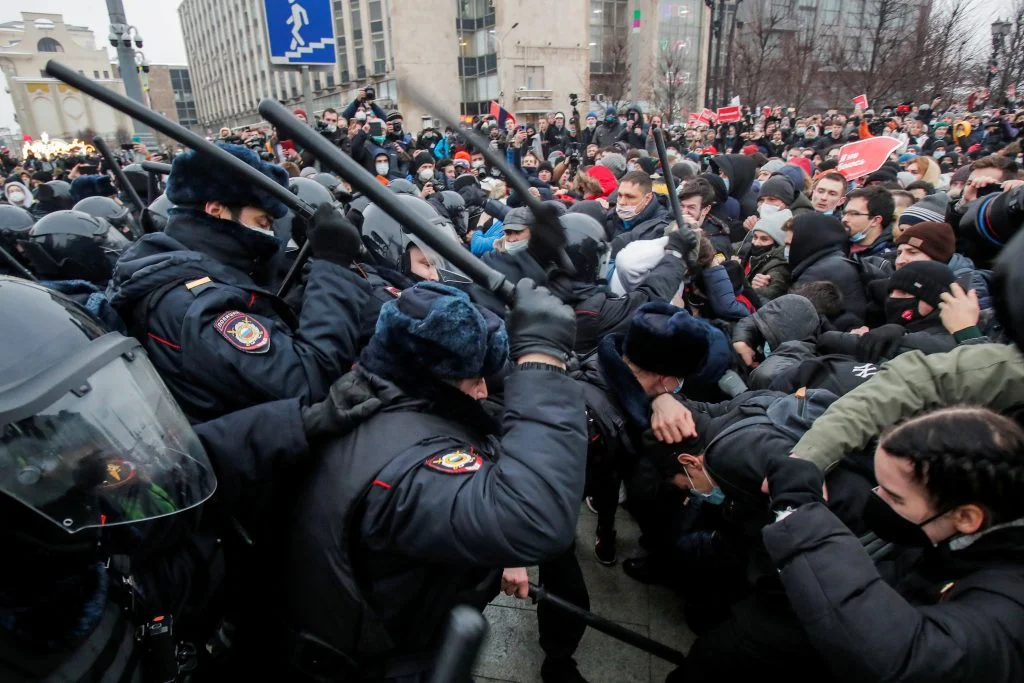
Beyond individual prosecutions, Russian authorities have implemented systemic legal measures to restrict political mobilization. Peaceful protests have frequently been met with mass arrests under public assembly laws, and participation in unauthorized demonstrations has been criminalized. Legal amendments have also increased penalties for speech deemed to “discredit” state institutions or military operations, further narrowing the space for political expression.
The designation of opposition groups as extremist organizations has had particularly far-reaching consequences. Courts ordered the dissolution of Navalny’s political network, criminalizing association with its activities. This legal classification effectively transformed political participation into a prosecutable offense, exposing supporters and affiliates to potential criminal liability.
Global Legal Implications
One of the most significant implications lies in the reaffirmation of the global prohibition on chemical weapons. Under the Chemical Weapons Convention (CWC), the use of toxic substances as weapons, whether in wartime or peacetime, is strictly prohibited. If the presence of banned agents in Navalny’s case is conclusively established, it reinforces the legal position that targeted poisoning constitutes not only a human rights violation but potentially a breach of international disarmament law. This elevates the case from a domestic criminal matter to a question of international treaty compliance and state responsibility.
The case also highlights the evolving concept of transnational political repression. International human rights law increasingly recognizes that states may bear responsibility for actions targeting political opponents beyond traditional battlefield contexts. Allegations of targeted poisoning or politically motivated deaths fall within the broader framework of extrajudicial killings and violations of the right to life under international human rights instruments such as the International Covenant on Civil and Political Rights.
Another major implication concerns the role of sanctions as an alternative enforcement mechanism. In situations where international courts lack jurisdiction or enforcement capacity, states and regional organizations increasingly rely on targeted sanctions regimes, such as asset freezes, travel bans, and export restrictions, to impose consequences. While these measures are political rather than judicial, they function as a form of quasi-legal accountability, shaping state behavior through economic and diplomatic pressure.
The incident also intensifies scrutiny of the international chemical weapons monitoring regime. Findings related to toxic substances may trigger expanded verification efforts by the Organisation for the Prohibition of Chemical Weapons and renewed debates over compliance mechanisms. States may push for stronger inspection powers, enhanced reporting requirements, and clearer attribution standards, particularly in cases involving alleged use of banned agents against individuals rather than in large-scale attacks.
At a systemic level, the case exposes the limitations of existing international justice structures when dealing with powerful states. The inability of institutions such as the International Criminal Court to exercise jurisdiction without consent or Security Council referral underscores structural weaknesses in global accountability frameworks. This may prompt renewed calls for institutional reform, including proposals to expand universal jurisdiction for certain international crimes or strengthen independent investigative mechanisms.
Finally, the broader geopolitical impact cannot be ignored. High-profile cases involving alleged state-linked wrongdoing often reshape diplomatic alignments, influence treaty negotiations, and affect cooperation in areas such as arms control and security. Legal disputes and sanctions related to the Navalny case may spill over into trade relations, multilateral negotiations, and regional security dynamics, demonstrating how individual incidents can carry systemic legal consequences.
Conclusion
Navalny’s death has become a defining test of the international legal system’s capacity to deliver accountability when major powers stand accused of human rights abuses. While international courts and institutions provide frameworks for justice, their effectiveness remains constrained by jurisdictional limits, sovereignty principles, and geopolitical realities.
The global response demonstrates that international law continues to function as a system of norms, pressure, and partial accountability rather than a fully enforceable judicial order. Navalny’s case therefore exposes not only the limits of international courts but also the enduring tension between legal principle and political power in the modern international system.
The episode has revived debate over universal jurisdiction, targeted sanctions regimes, and the limits of international courts when dealing with major powers that refuse cooperation. As legal and diplomatic pressure continues, the Navalny case remains one of the most consequential human-rights controversies shaping global legal discourse in 2026.
The Navalny case highlights how international justice systems operate most effectively as normative and reputational frameworks rather than coercive ones. Investigations, sanctions, and international condemnation may shape global opinion and diplomatic relations, yet they rarely produce direct legal accountability without state cooperation. This gap between legal prohibition and enforceable consequence remains one of the central structural challenges confronting contemporary international law.
Frequently Asked Questions
Why has Navalny’s death become an international legal issue rather than only a domestic matter?
Navalny’s death has drawn global legal scrutiny because it involves potential violations of international human rights law, including the right to life under the International Covenant on Civil and Political Rights. Allegations of poisoning or state involvement elevate the matter beyond domestic criminal law into questions of state responsibility, treaty compliance, and possible breaches of the Chemical Weapons Convention.
Can international courts prosecute those responsible for Navalny’s death?
Direct prosecution by international courts is unlikely unless jurisdictional thresholds are met. The International Criminal Court can only act where a state accepts its jurisdiction or the UN Security Council refers a case. Without these conditions, accountability may instead rely on national courts exercising universal jurisdiction or on sanctions and diplomatic pressure.
How does the Chemical Weapons Convention apply to this case?
If banned toxic substances were used, the incident could constitute a violation of the Chemical Weapons Convention, which prohibits the use of chemical agents against individuals in both wartime and peacetime. Such findings could trigger investigations by the Organisation for the Prohibition of Chemical Weapons and potentially lead to international sanctions or compliance proceedings.
Why are sanctions being used instead of criminal prosecutions?
Sanctions often serve as a substitute when legal prosecution is difficult due to jurisdictional or political barriers. Travel bans, asset freezes, and financial restrictions can be imposed by individual states or regional blocs without requiring court judgments, making them a primary tool for enforcing accountability against powerful states or officials.
What role does the United Nations play in such cases?
The UN can investigate alleged human rights violations through special rapporteurs and independent mechanisms. However, enforcement action—such as referrals to international courts or binding sanctions—depends on the UN Security Council, where veto powers held by permanent members often limit decisive action in politically sensitive cases.
Could national courts outside Russia pursue cases related to Navalny’s death?
Some countries allow universal jurisdiction for serious international crimes such as extrajudicial killings or use of prohibited weapons. If sufficient evidence exists and suspects travel to those jurisdictions, prosecutors may attempt to initiate cases. However, such proceedings face practical and diplomatic obstacles.
What broader impact does this case have on international law?
The case reinforces debates about the effectiveness of international justice mechanisms when powerful states are involved. It highlights the growing reliance on sanctions, independent investigations, and diplomatic pressure as alternative forms of accountability, and may lead to calls for stronger global enforcement mechanisms.
Could this case lead to changes in global chemical weapons enforcement?
Yes. Confirmed use of prohibited toxins in high-profile political cases could prompt stricter monitoring by international bodies, stronger verification measures, and renewed diplomatic efforts to reinforce compliance with the Chemical Weapons Convention.
How does this case affect global diplomacy and security relations?
High-profile allegations of politically motivated deaths can strain diplomatic ties, trigger coordinated sanctions, and influence negotiations on security, arms control, and trade. Legal disputes arising from such cases often extend into broader geopolitical tensions.
What does this case reveal about the limits of international justice?
It demonstrates that while international law establishes clear prohibitions against extrajudicial killings and chemical weapons use, enforcement remains dependent on political will and institutional capacity. When major powers resist cooperation, legal accountability often shifts from courtrooms to diplomatic and economic pressure mechanisms.