
Pakistan has formally withdrawn its boycott of the India–Pakistan fixture at the upcoming T20 World Cup, ending days of uncertainty that had raised legal, commercial, and governance concerns for international cricket. The decision follows intensive engagement between the Pakistan Cricket Board (PCB), the International Cricket Council, and tournament stakeholders, whose interests converged on avoiding a governance and commercial crisis at the T20 World Cup.
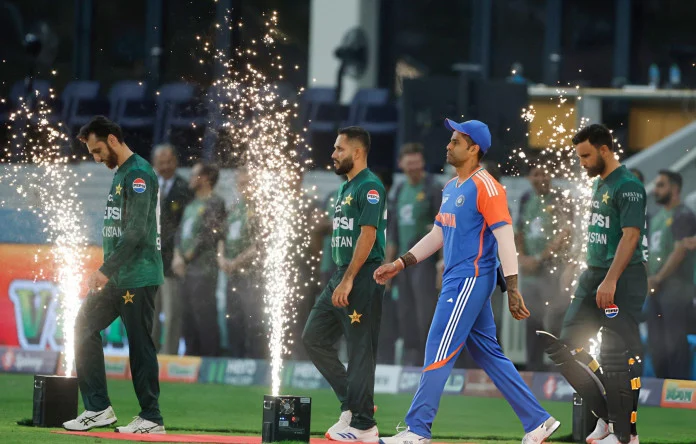
Pakistan’s initial stance was framed as a protest rooted in principles of competitive fairness and institutional consistency. The PCB argued that selective enforcement of tournament obligations, particularly the ICC’s handling of Bangladesh’s refusal to travel and the subsequent replacement decision, created unequal treatment among member boards.
From a legal standpoint, the boycott risked breaching ICC Participation Agreements, event regulations, and commercial commitments tied to broadcast and sponsorship rights. The Pakistan government reaffirms its stance that it stands shoulder to shoulder with Bangladesh, stating:
“The Government of Pakistan has reviewed the formal requests extended to the PCB by the Bangladesh Cricket Board, as well as the supporting communications from Sri Lanka, the United Arab Emirates, and other member nations.”
The Pakistan Government further noted the statement by BCB President, Mr. Amin ul Islam, by acknowledging:
“The profound gratitude expressed by our brotherly nation is received with great warmth. These correspondences sought Pakistan’s leadership in securing a viable solution to recent challenges.”
Parties Involved in Resolving the Dispute
Pakistan, through the Pakistan Cricket Board, was the initiating party to the boycott. Its leverage came from the exceptional sporting and commercial value of the India–Pakistan fixture and the legal disruption its absence would have caused.
India, represented institutionally by the Board of Control for Cricket in India, did not negotiate directly on political questions but played a decisive role indirectly. The scale of Indian broadcast revenue and sponsorship exposure meant that India’s participation made compromise unavoidable for the tournament as a whole.
The central coordinating role was played by the International Cricket Council, which acted as mediator, regulator, and risk absorber. The ICC facilitated assurances, clarified regulatory positions, and balanced competing member interests to prevent escalation into formal disputes or arbitration.
The host state (India for the match in question) and ICC-appointed international security consultants were involved at the operational level, providing updated security guarantees and compliance assurances that removed the only legally defensible basis for a match refusal under ICC rules.
Terms on Which the Boycott Was Withdrawn
Pakistan’s withdrawal of the boycott is understood to rest on a package of assurances rather than a single concession. According to officials familiar with the discussions, the following elements were central:
- Written Governance Assurances by the International Cricket Council – The ICC reportedly provided formal assurances reaffirming that tournament regulations would be applied uniformly, with clearer procedural standards for venue changes, force majeure claims, and participation disputes.
- Security and Logistics Guarantees – Pakistan received updated security briefings and operational guarantees for the India match, including coordination protocols with local authorities and ICC-appointed security consultants, addressing player welfare and risk allocation.
- Dispute-Resolution Pathways Preserved – Crucially, Pakistan retained the right to pursue institutional remedies, through ICC committees or, if necessary, external arbitration, on broader governance grievances, without those claims being deemed waived by participation.
- Commercial and Disciplinary Safeguards – By returning to play, Pakistan avoided potential sanctions under ICC rules, including fines, points deductions, or claims for breach of commercial obligations that could have arisen from a unilateral refusal to play a marquee fixture.
Who Gains From the Withdrawal
Pakistan gains the most immediate legal protection. By playing the match, it avoids disciplinary sanctions, financial penalties, and potential claims for breach of ICC Participation Agreements. It also preserves its standing as a compliant full member while still retaining the ability to challenge governance issues through formal channels.
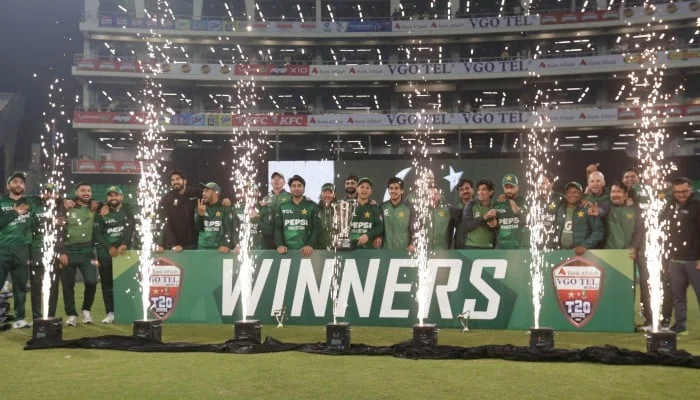
India secures the uninterrupted staging of the world’s most valuable cricket fixture, protecting broadcast revenue, sponsorship exposure, and domestic commercial commitments. It also avoids being drawn into a precedent-setting dispute over boycotts and political objections.
International Cricket Council avoids a governance crisis that could have undermined its authority and exposed it to arbitration or credibility damage. By resolving the issue through negotiation, it reinforces its role as the ultimate regulator capable of managing political and legal risk within the sport.
Broadcasters, Sponsors and advertisers are clear beneficiaries. The India–Pakistan match is among the highest-value events in world sport, and its cancellation would have triggered refund claims, renegotiations, and reputational fallout.
The Tournament Itself, as the integrity, scheduling stability, and commercial viability of the T20 World Cup are preserved, preventing knock-on effects for other teams and matches.
Legal Significance for International Cricket
From a sports law perspective, the episode highlights the limits of political or protest-based boycotts within tightly regulated global tournaments. ICC events are governed by binding participation agreements that prioritize competition integrity, broadcast certainty, and sponsor rights.
While boards may raise governance objections, outright refusal to play carries significant legal exposure unless grounded in narrowly defined exceptions such as verified security force majeure.
The resolution also reflects the ICC’s preference for negotiated compliance over punitive enforcement, particularly where a boycott could destabilize the tournament and trigger cascading disputes among member boards.
What Comes Next
With the boycott lifted, Pakistan will play the India match as scheduled, restoring one of cricket’s most commercially significant fixtures. Attention now shifts to whether the ICC follows through on promised governance clarifications and whether unresolved disputes, especially those linked to venue allocation and political interference claims, are addressed through formal institutional reform rather than ad hoc crisis management.
For now, the episode closes without litigation, but it leaves behind a clear precedent that participation in ICC tournaments is a legal obligation first, and a political instrument only at significant regulatory and financial risk.