
SpaceX, the aerospace innovator led by Elon Musk, and its artificial-intelligence subsidiary xAI have unveiled several high-impact developments that are drawing both technological acclaim and legal scrutiny. The announcements come as SpaceX continues to scale its Starship orbital missions and expand its Starlink satellite constellation, while xAI accelerates advancements in generative AI models and AI alignment research. These moves have reverberated across regulatory, national-security, and international legal arenas.
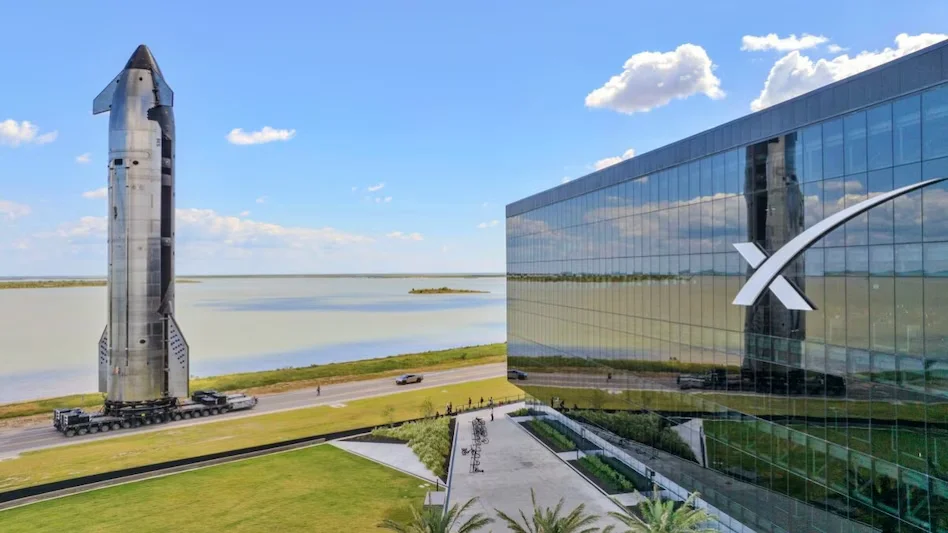
Merger Background and Strategic Integration
Space Exploration Technologies Corp. (SpaceX) was founded in 2002 by Elon Musk with a singular mission: significantly lowering the cost of space access and enabling human presence on Mars. Over two decades, SpaceX has matured into a leading aerospace company with record-breaking reusable rockets, global satellite internet via Starlink, and a broad set of government and commercial space launch contracts.
xAI, formally incorporated in 2023, was conceived by Musk as an independent artificial intelligence research and development entity with the stated purpose of creating safe, trustworthy, and highly capable AI systems. Positioned at the intersection of scientific computing and next-generation generative AI, xAI’s charter emphasizes alignment research, multimodal reasoning, and transparency.
Despite separate incorporation structures, the two companies share overlapping leadership networks, common strategic interests, and Musk as a central executive figure, creating substantive operational links even before formal integration planning.
Merger Rationale and Strategic Logic
While SpaceX and xAI have not formally announced a full legal merger in the traditional corporate sense, the phrase “SpaceX–xAI merger” is widely used to describe the ongoing operational integration and strategic alignment across multiple dimensions:
1. Technological Integration
AI systems from xAI are being embedded into key SpaceX workflows, including:
- Autonomous mission planning
- Automated fault detection and resolution
- Optimal trajectory computations
- AI-driven resource allocation across distributed launch networks
This integration accelerates SpaceX’s operational capabilities while offering xAI real-world performance data at scale.
Starlink’s global satellite constellation provides a unique real-time information network, a potential training stream for advanced AI models. xAI has signaled interest in responsibly leveraging this data for safer multimodal systems, subject to compliance safeguards.
3. Cross-Functional Talent Mobility
Engineers and researchers are increasingly engaged in joint teams focused on AI for space autonomy, including partnerships with academic institutions and multi-industry research labs.
4. Strategic Positioning Against Competitors
Combined AI-enabled aerospace systems position the SpaceX–xAI ecosystem ahead of competitors such as traditional aerospace primes and large AI incumbents. The integrated narrative bolsters market confidence and investment flows.
In the SpaceX memo announcing the xAI merger, Musk said he thought space would provide the solution to the energy needs faced by AI firms suggesting:
“In the long term, space-based AI is obviously the only way to scale”
SpaceX Pushes Starship Toward Operational Flights
SpaceX announced that its fully reusable Starship heavy-lift launch vehicle has completed a series of high-altitude test flights this year, bringing the program closer to commercial and crewed missions. The company says the next launch window will focus on:
- Validation of full orbital insertion capabilities
- Payload integration for commercial and government customers
- Expanded life-support systems for future lunar and Mars missions
SpaceX CEO Musk highlighted the strategic importance of Starship for global space access, saying:
“It represents the backbone of humanity’s multiplanetary future.”
Legal and Regulatory Context
Starship’s rapid development trajectory has triggered heightened oversight from the Federal Aviation Administration (FAA) and the National Telecommunications and Information Administration (NTIA) due to concerns about airspace safety, frequency spectrum use for telemetry, and compliance with environmental review obligations under the National Environmental Policy Act (NEPA).
Several advocacy groups have filed petitions alleging that SpaceX’s environmental impact assessments for Starship flights lack sufficient analysis of noise, debris, and coastal ecosystem impacts. Courts have indicated they may review whether the FAA properly accounted for environmental and safety factors in issuing launch licenses.
Starlink Expansion Draws National Security and Data Protection Scrutiny
SpaceX’s Starlink satellite broadband network continues to grow, with expansions into Asia, Africa, and parts of Latin America. The service’s low-latency connectivity is crucial for remote communities, disaster response, and defense communications.
However, regulators in multiple jurisdictions are intensifying oversight:
- European Union: The Commission has launched inquiries into whether Starlink must comply with EU data privacy and network security laws, including the Digital Markets Act (DMA) and the forthcoming European Cybersecurity Certification Scheme for Satellite Services.
- United States: U.S. national security agencies are reviewing export-control compliance for advanced Starlink waveforms and potential restrictions under the Export Administration Regulations (EAR), given concerns about dual-use capabilities in contested regions.
- India: The government is conducting targeted risk assessments of Starlink services in border districts, weighing sensitive data flow against commercial licensing.
Legal experts suggest heightened satellite regulation may require SpaceX to adopt localized data controls and security audits to meet regional compliance.
xAI Advances Models With Emphasis on Safety and Alignment
SpaceX’s sister company xAI released a new multimodal generative model, branded Athena-2, which integrates large language capabilities with structured reasoning and real-world knowledge graphs. Athena-2 is being positioned for applications ranging from research assistance to scientific discovery.
xAI’s leadership said the model was trained with alignment guardrails designed to minimize hallucinations and harmful outputs, incorporating real-time feedback from human evaluators.
Regulatory and Legal Risk
As xAI’s footprint expands, it intersects with emerging AI governance frameworks:
- European Union: Regulators are assessing whether Athena-2 qualifies as a “high-risk AI system” under the EU AI Act, which could trigger conformity assessments and enhanced transparency obligations.
- Digital Services Act (DSA): If deployed via online platforms with a large user reach, xAI models may fall under systemic risk mitigation duties for Very Large Online Platforms (VLOPs) when used to generate public-facing content.
- United States: Congressional hearings have called for strengthened labeling standards, data provenance audits, and documented safety monitoring for generative models with broad distribution.
Legal scholars suggest that xAI’s focus on alignment could position it favorably in regulatory dialogues but emphasize that compliance will require rigorous documentation, third-party audits, and potentially, localized governance structures for model deployment.
SpaceX, xAI and Export Controls: A Growing Intersection
A particularly pressing legal issue for both SpaceX and xAI is export control. Advanced rocket technology and cutting-edge AI models are potentially subject to U.S. export restrictions under the EAR and, for defense-related tech, the International Traffic in Arms Regulations (ITAR).
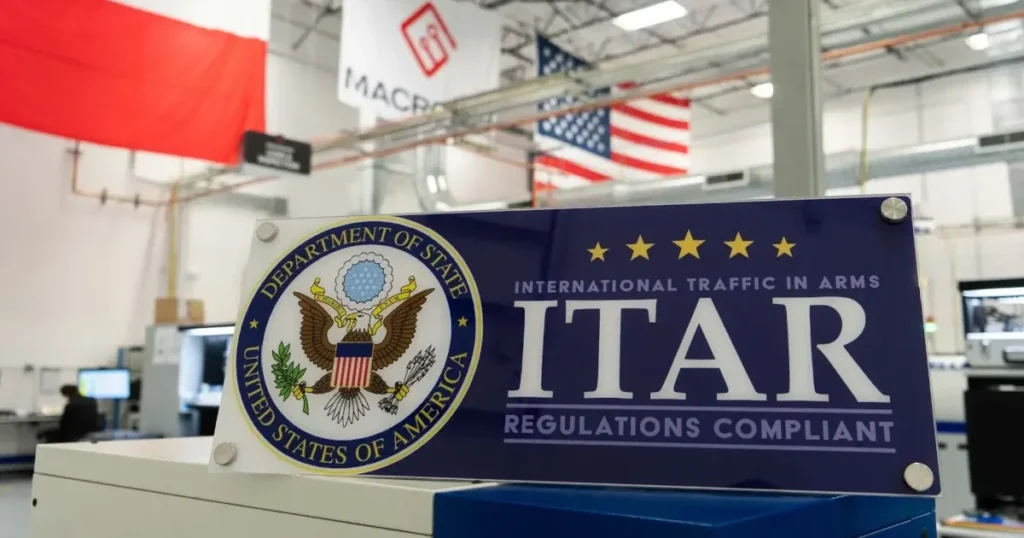
Sources familiar with the matter say that U.S. agencies are drafting updated guidance on how generative AI models trained on classified or dual-use datasets should be governed when shared internationally. Companies in the AI space fear broad export controls could hinder innovation and market access.
International Collaboration and Compliance Challenges
SpaceX and xAI are also engaged in a range of global partnerships that raise legal questions:
- Bilateral agreements on spectrum use for space services
- Data sharing accords with telecommunications regulators
- Cooperative AI research initiatives with universities and defense labs
In many cases, harmonizing compliance across jurisdictions, from EU digital safety laws to U.S. export rules, presents a complex legal environment requiring tailored corporate governance.
Reactions and Industry Impact
Industry associations have largely welcomed the technological progress but caution that regulatory uncertainty could slow market deployment and international cooperation.
Civil liberties groups have voiced concern over surveillance and data rights, especially where space-based connectivity services intersect with AI platforms that influence information ecosystems.
Looking Forward
As SpaceX and xAI continue to innovate, their trajectory will shape not only space exploration and AI research but also the evolving legal landscape for dual-use technologies. Legal experts predict the next 12–24 months will be critical as:
- Courts review environmental and licensing disputes
- EU regulators finalize AI governance rules
- Export-control regimes adapt to emerging technologies
The balance between innovation leadership and regulatory compliance will define how SpaceX and xAI navigate the complex interplay of law, geopolitics, and technology policy.
Timeline: SpaceX and xAI—Key Legal & Regulatory Developments
March 2024
FAA issues updated guidance on commercial launch licenses, signaling tighter environmental and safety review standards for large-scale orbital systems.
June 2024
SpaceX submits revised environmental impact assessment for Starship missions after public petitions challenge prior FAA authorizations.
September 2024
European telecom regulators begin formal inquiries into Starlink’s compliance with EU data privacy and security frameworks, identifying potential gaps in localization and user data handling.
January 2025
xAI files initial design documentation for its next-generation generative AI model, triggering interest from U.S. tech oversight bodies regarding alignment and safety features.
March–May 2025
Multiple civil society groups file legal petitions against FAA’s Starship environmental review, arguing that NEPA obligations require more detailed analysis of ecosystem impacts at launch sites.
August 2025
India’s telecommunications authority initiates risk assessments of Starlink services in border regions amid concerns over data routing and national security protections.
October 2025
EU regulators and privacy authorities issue preliminary notices to SpaceX regarding potential GDPR and Digital Markets Act compliance issues for Starlink operations.
December 2025
xAI publicly announces its new generative AI model (Athena-2) with enhanced safety guardrails; regulators in the EU begin evaluating whether the model qualifies as “high-risk” under the EU AI Act.
Early January 2026
U.S. Congressional tech oversight hearings raise questions about generative AI export controls, including whether dual-use model architectures should be covered under EAR or related statutes.
January 28, 2026
Dutch data protection authority launches a formal investigation into Starlink’s handling of user metadata and cross-border data transfers involving EU end users.
February 6, 2026
SpaceX announces a new series of Starship high-altitude and pre-orbital tests; FAA signals that future approvals will require supplementary risk documentation.
February 10, 2026
xAI completes multi-jurisdictional safety documentation for Athena-2, submitting reports to EU and U.S. regulators ahead of anticipated conformity assessments.
February 15, 2026
EU Commission confirms it will coordinate with Spanish and French regulators to assess AI systemic risks related to generative models offered on social platforms, including those connected to xAI’s technologies.
Late February 2026 (Ongoing)
Legal challenges are expected to be filed in U.S. federal court regarding FAA’s Starship licensing procedures, potentially invoking NEPA and administrative procedure arguments.