
Pakistan has officially announced it will boycott its scheduled match against India at the ICC Men’s T20 World Cup 2026, set for 15 February 2026 in Colombo, Sri Lanka, the Government of Pakistan said on 1 February 2026 via its official social media account. The statement confirmed that while the national team will travel to Sri Lanka and play other matches, the team will not take the field against India, a decision that highlights geopolitical and sporting tensions tied to broader disputes within international cricket’s governance.
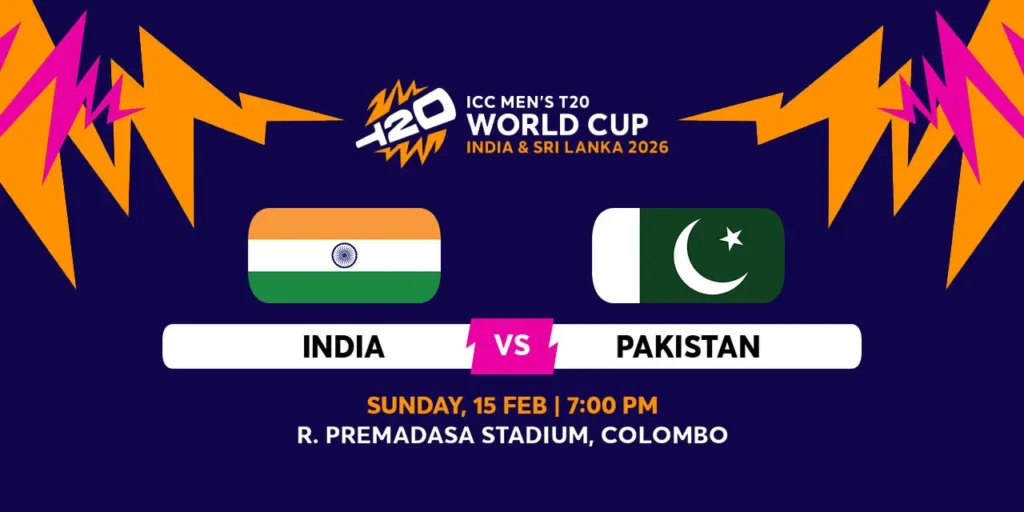
This move comes as part of a broader dispute involving Bangladesh’s exclusion from the tournament after it cited security concerns about playing in India, a request that the International Cricket Council (ICC) denied, ultimately replacing Bangladesh with Scotland in the World Cup lineup.
Pakistan openly backed Bangladesh’s position earlier in the row, prompting speculation in cricketing circles about solidarity actions, raising fresh legal questions over political interference, tournament governance, and the limits of national discretion under international sports law.
Background: Bangladesh Controversy Fuels Boycott Talk
The controversy began after the Bangladesh Cricket Board (BCB) requested that its World Cup fixtures be moved out of India following political and security concerns tied to broader bilateral tensions and the IPL release of Bangladeshi fast bowler Mustafizur Rahman.
When the ICC rejected their request and warned of point forfeiture if Bangladesh refused to travel, it triggered diplomatic and sporting fallout. Former Pakistan captain Rashid Latif had earlier urged the Pakistan Cricket Board (PCB) to boycott the entire tournament in solidarity with Bangladesh, reflecting political solidarity among cricket boards from South Asia.
Pakistan subsequently publicly supported Bangladesh’s stance, and cricket analysts suggested Pakistan might either withdraw from the tournament entirely or boycott just its match against India as a diplomatic signal.
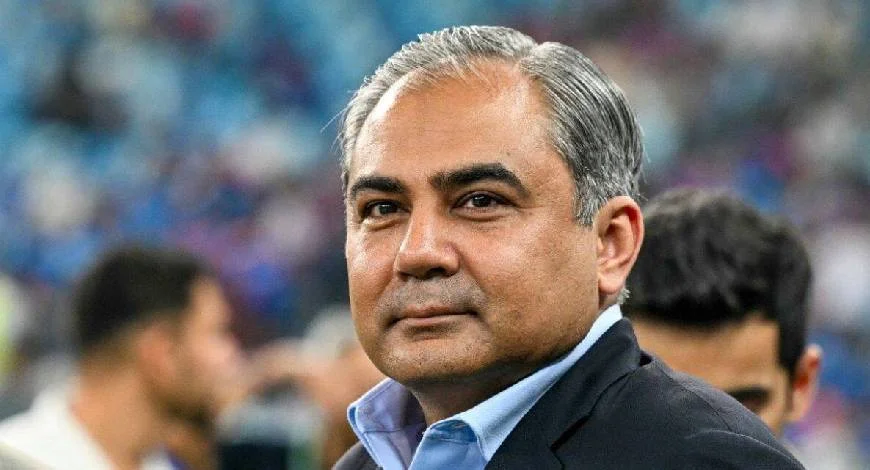
The announcement ends weeks of uncertainty over Pakistan’s participation after Pakistan Cricket Board (PCB) chairman Mohsin Naqvi said government clearance was required for the team to travel. Pakistan’s stance has immediately placed the International Cricket Council (ICC) under pressure, as a boycott by one of the sport’s most commercially significant teams threatens tournament integrity, broadcast contracts, and the ICC’s regulatory authority.
ICC’s Warning and Commercial Stakes
The ICC has warned that boycotting tournament fixtures could lead to sanctions against Pakistan, including possible restrictions on future participation in ICC events like the Asia Cup or impacts on league schedules, underlining the governance and contractual implications of such sporting protests. Under ICC tournament regulations, a refusal to play a scheduled fixture without approved justification can result in automatic match forfeiture, points penalties, and potential elimination from the competition.
Beyond sporting consequences, the financial implications are substantial. India–Pakistan matches are among the most valuable fixtures in global cricket, anchoring broadcast and sponsorship agreements worth hundreds of millions of dollars.
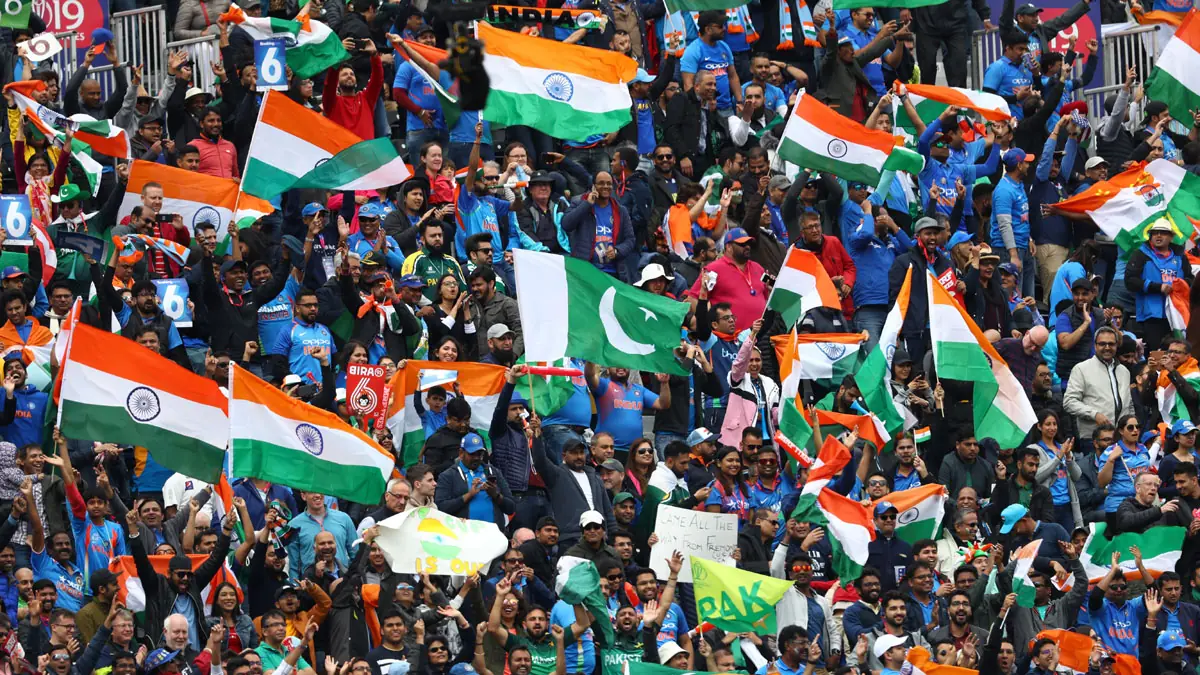
Broadcasters and sponsors typically hold contractual rights to compensation or indemnities in the event of non-performance, meaning the ICC may face pressure to recover losses from the defaulting board. Insurance coverage is limited in boycott scenarios unless triggered by explicit force majeure events such as government-imposed travel bans.
Legal Framework Governing Boycotts
From a legal perspective, Pakistan’s position engages multiple overlapping regimes. ICC tournament rules impose strict participation obligations, while the ICC Constitution prohibits undue government interference in the autonomy of national cricket boards. If Pakistan’s refusal is shown to stem from direct state instruction rather than an independent board decision, the ICC could open separate governance proceedings, potentially leading to sanctions beyond the tournament itself.
Pakistan may seek to justify its stance under force majeure or impossibility doctrines, arguing that regional security conditions or diplomatic breakdowns render participation unsafe. However, under international sports arbitration standards, such defenses carry a high evidentiary burden.
The board would need to demonstrate contemporaneous, credible security assessments, official travel prohibitions, or an objective failure by hosts to meet agreed safety obligations. Absent such proof, political or symbolic boycotts are generally treated as contractual breaches rather than excusable non-performance.
ICC Enforcement Powers and Dispute Resolution
The ICC has wide discretion to impose sanctions for non-compliance, including match forfeiture, fines, and potential suspension from future events. Any disciplinary action would be appealable to the Court of Arbitration for Sport (CAS), which serves as the final judicial forum for international sports disputes.
Legal experts note that CAS rarely overturns venue or participation decisions unless there is clear procedural unfairness, irrationality, or a demonstrable failure to assess genuine risk. Emergency interim relief is possible, but only where irreparable harm and a strong prima facie case are shown.
Political Interference Risk
A central legal risk for Pakistan lies in the ICC’s long-standing prohibition on government control over cricket boards. If evidence emerges that Pakistan’s decision was mandated by state authorities rather than taken independently, the ICC could initiate governance proceedings similar to past cases involving other national boards.
Such findings can result in suspension of voting rights, funding restrictions, or, in extreme cases, suspension from international cricket. This places boards in a delicate position where national political pressures collide with international sporting obligations, often leaving players exposed to consequences beyond their control.
Broader Implications for International Cricket
The standoff underscores a growing structural tension in global sport: the collision between geopolitical disputes and rigid tournament governance models. With cricket increasingly centralized around multi-host mega-events, the ICC faces mounting challenges in balancing security assurances, political neutrality, and commercial certainty.
If Pakistan proceeds with a boycott, the ICC will be forced to choose between strict rule enforcement and pragmatic accommodation, a decision that could set a precedent for future disputes involving security, diplomacy, and state influence in sport.
What Comes Next
The ICC is expected to seek urgent clarification from the Pakistan Cricket Board and may commission independent security assessments to assess the legitimacy of the concerns raised. Behind the scenes, mediation efforts are likely, aimed at avoiding a repeat of the Bangladesh controversy and preserving the tournament’s credibility.
If no resolution is reached, disciplinary proceedings and possible CAS litigation appear inevitable, potentially turning the T20 World Cup into a landmark case on the limits of national discretion in international sport.
Timeline: ICC–Bangladesh Dispute and Pakistan’s India Match Boycott Threat
January 21, 2026
The ICC Board rejects Bangladesh’s request to relocate its T20 World Cup matches from India, citing independent security assessments rating the risk as low to moderate.
January 23, 2026
Bangladesh fails to meet the ICC’s 24-hour compliance deadline after its interim government advises against travel to India. The ICC formally notifies the Bangladesh Cricket Board of non-compliance.
January 24, 2026
The ICC confirms Bangladesh’s removal from the T20 World Cup 2026 and announces Scotland as the replacement team.
Late January 2026
Bangladesh appeals unsuccessfully to the ICC Dispute Resolution Committee and signals it is considering proceedings before the Court of Arbitration for Sport (CAS).
Early February 2026
Pakistan publicly expresses solidarity with Bangladesh and raises objections to playing its scheduled T20 World Cup match against India.
Mid-February 2026
Pakistan signals it may refuse to play India, triggering internal ICC consultations on forfeiture rules, political interference provisions, and tournament integrity.
Current Status
The ICC is seeking clarification from the Pakistan Cricket Board, weighing independent security assessments, and exploring mediation options to avoid a second high-profile boycott ahead of the T20 World Cup 2026.