
Since assuming office, Donald Trump has pursued a foreign policy characterized by unilateralism, coercive rhetoric, and repeated interference in the internal affairs of other states. Across multiple regions, including Europe, the Middle East, Latin America, and Asia, Trump’s statements and actions have raised sustained concerns under international law, particularly regarding the principles of non-intervention, sovereign equality, and the prohibition on the threat or use of force.
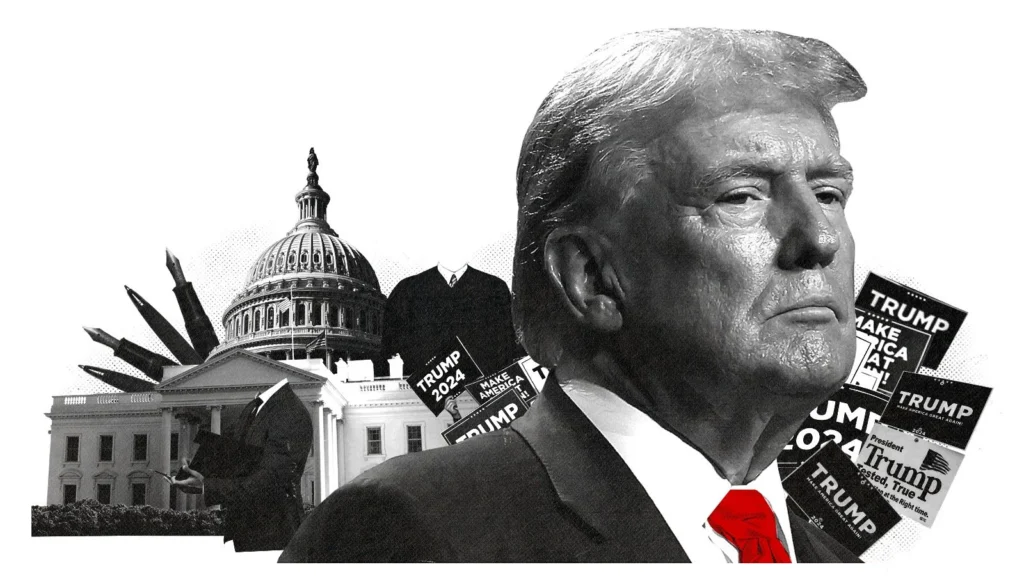
Recent disputes involving U.S. pressure over Greenland, including threats of tariffs against European allies to advance territorial ambitions, illustrate how these concerns have moved from abstract doctrine into concrete geopolitical confrontation. Despite the scale and frequency of these interventions, the United Nations has been largely unable to take effective enforcement action. This analysis examines the legal implications of Trump-era interventions and explains why existing international mechanisms have failed to impose meaningful accountability.
Core Legal Principles at Stake Under International Law
At the center of debates surrounding Trump-era foreign policy interventions lie a set of foundational principles of international law, enshrined in the Charter of the United Nations and reinforced through customary international law and judicial practice. These principles are not aspirational norms but binding legal rules designed to preserve international order, limit power politics, and prevent coercion by stronger states against weaker ones. The International Court of Justice has repeatedly affirmed that coercive interference, whether military, political, or economic, is unlawful when it deprives states of freedom in matters reserved to their domestic jurisdiction.
Sovereign Equality of States – UN Charter Article 2(1)
The principle of sovereign equality establishes that all states, regardless of size, power, or economic strength, possess equal legal status under international law. This norm prohibits powerful states from asserting superior rights to dictate the political, economic, or territorial decisions of others.
Trump’s public disparagement of allied governments, pressure campaigns over territorial issues, and unilateral policy demands have been criticized as undermining this principle by treating sovereignty as conditional rather than inherent. When state conduct signals that compliance is expected based on power asymmetry rather than consent, it erodes the legal equality that underpins the international system.
Prohibition on the Threat or Use of Force – Article 2(4)
Article 2(4) of the UN Charter prohibits not only the use of armed force, but also the threat of force against the territorial integrity or political independence of any state. International jurisprudence has clarified that threats need not be explicit military ultimatums; coercive posturing that implies force or leverages overwhelming power may also fall within the scope of the prohibition.
Trump-era rhetoric suggesting potential military action, territorial acquisition, or punitive consequences for non-compliance has raised concerns that political pressure was at times accompanied by implicit threats inconsistent with this core rule. The norm exists precisely to prevent escalation and to ensure that disputes are resolved through peaceful means rather than intimidation.
Non-Intervention in Domestic Affairs – Article 2(7)
The principle of non-intervention bars states from coercively interfering in matters that fall within another state’s domestic jurisdiction, including internal political processes, territorial administration, and economic policy choices. While international law permits criticism, diplomacy, and advocacy, particularly on human rights, it draws a firm line at coercion.
Trump-era policies that combined public encouragement of internal political movements, economic pressure, and threats of unilateral action have been viewed by legal scholars as approaching or crossing this line. The International Court of Justice has repeatedly held that intervention becomes unlawful when it deprives a state of free choice in matters reserved to its sovereign authority.
Collective Security Through the UN Security Council
The UN Charter establishes collective security as the exclusive legal framework for addressing threats to international peace and security. Enforcement action, including sanctions and the use of force, is meant to flow through the UN Security Council to ensure legality, proportionality, and multilateral oversight. Trump-era reliance on unilateral sanctions, military threats, and coercive economic measures outside this framework has highlighted a structural tension in international law.
While the Charter centralizes enforcement authority, powerful states retain the capacity to act independently. This dynamic explains why many Trump-era actions generated legal controversy but little formal accountability, because the very mechanisms designed to enforce collective security can be blocked or bypassed by those with sufficient power.
Why These Principles Matter Collectively
Taken together, these four principles form the legal firewall against unilateral domination in international relations. Sovereign equality ensures formal parity, non-intervention protects political independence, the prohibition on force prevents coercive escalation, and collective security channels enforcement through multilateral institutions.
When these norms are selectively applied or disregarded, the result is not merely legal violation but systemic weakening of the rules-based order. Trump-era interventions are therefore significant not only for their individual legality, but for how they test the resilience of the international legal framework itself, exposing the gap between law on the books and law in practice when confronted by hegemonic power.
Although some disputes de-escalated, including Trump’s later decision to suspend threatened tariffs following talks with NATO allies, the underlying legal questions around coercion and sovereignty remain unresolved.
Trump’s Global Interventions and Legal Concerns
Since assuming office, Donald Trump has pursued a distinctly interventionist approach to foreign policy that blends unilateral decision-making, coercive rhetoric, and strategic pressure across multiple regions of the world. From economic threats against allies to political interference in domestic crises and ambiguous postures in armed conflicts, these actions have repeatedly tested the boundaries of international law.
Trump’s Critique of the Chagos Islands Deal as Diplomatic Interference
Trump’s remarks that the United Kingdom’s decision to transfer sovereignty of the Chagos Islands to Mauritius was an “act of great stupidity” and “total weakness” reflect more than partisan commentary on geopolitical strategy. They raise serious questions about interference in another sovereign state’s internal decision-making processes.
His public critique of an agreement reached between two sovereign states, the United Kingdom and Mauritius, on sovereignty and military basing arrangements signals a departure from established diplomatic norms that respect state autonomy in territorial negotiations. Under international law, states generally refrain from public disparagement of another state’s internal agreements, especially between allies, as a matter of respect for sovereign equality and non-intervention.
The UN Charter’s foundational principles require states to refrain from the threat or use of force against the territorial integrity or political independence of any state and to refrain from intervention in matters essentially within domestic jurisdiction. While diplomatic critique is lawful, when such statements are coupled with calls for unilateral actions, such as acquiring foreign territory, including Greenland, or pressuring allies, they risk crossing into politically coercive interference.
Europe & Greenland Tariff Threats: Sovereign Equality, and Prohibition on Force
When President Trump threatened tariffs on eight European allies, including Denmark, France, Germany, the UK, and others, over their opposition to U.S. pressure regarding Greenland, legal concerns were raised about coercive economic measures that undermine sovereign equality and verge on interference in internal policy decisions.
By linking trade penalties to support for U.S. ambitions over Greenland, a Danish territory, Trump’s approach troubled European leaders who asserted that territorial decisions are matters for Denmark and Greenland, not U.S. dictates. The Greenland episode marked one of the clearest examples of economic pressure being tied directly to territorial demands, drawing sharp legal criticism from European governments.
The tariff threats were widely condemned as inappropriate leverage and “blackmail,” risking erosion of long-standing norms of sovereign decision-making. In response to such pushback, Trump ultimately backed down and suspended the threatened tariffs after agreeing on a vague “framework of a future deal” with NATO Secretary-General Mark Rutte, explicitly ruling out use of force and averting an immediate trade conflict.
Under the UN Charter, the prohibition on the threat or use of force (Article 2(4)) extends to coercive threats that might undermine territorial integrity or independence, while Article 2(1) affirms that all states enjoy equal sovereign status. Imposing punitive tariffs conditional on political acquiescence can contravene these principles when used coercively rather than as legitimate trade policy.
Article 2(7) further prohibits intervention in another state’s domestic decisions, here, Denmark’s handling of its territory, by external economic coercion. The European Union’s consideration of its own countermeasures and suspension of a major U.S.–EU trade deal reflects how such tariff threats can challenge established legal norms and alliance cohesion
Israel–Gaza: Diplomatic Shielding and Legal Impunity
Although specific recent Trump-era actions on Israel and Gaza are not directly tied to fresh events like Greenland or Venezuela, the larger pattern of U.S. diplomatic support, including blocking or vetoing accountability mechanisms at the U.N. or shielding Israel from scrutiny over civilian harm, triggers international law concerns.
While states may lawfully support allies, international lawyers have contended that providing diplomatic cover for actions that might violate international humanitarian law (IHL) or obscure accountability raises questions about complicity and respect for legal norms.
Under the principles of sovereign equality and non-intervention, states must avoid actions that materially support or facilitate what could amount to internationally wrongful acts by allies. Although veto use at the U.N. Security Council is lawful, persistent shielding can weaken enforcement of IHL obligations and undermine collective security mechanisms that are central to the U.N. Charter’s purpose.
India–Pakistan: Escalatory Rhetoric in a Nuclear Context
Trump’s public statements and mediation offers concerning tensions between India and Pakistan, particularly regarding Kashmir, raised concerns about external interference in one of the world’s most volatile bilateral disputes. Trump’s repeated public statements offering to “mediate” or “intervene,” without a jointly accepted mandate from both states, were viewed by legal analysts as inconsistent with the norm of non-intervention under Article 2(7) of the UN Charter.
Also, Trump’s decision to impose and threaten tariffs on Indian goods, including the withdrawal of preferential trade benefits, introduced an economic dimension with legal implications. While tariffs are not per se unlawful, their use as leverage to influence a state’s strategic or political choices raises questions under customary international law on economic coercion and under the World Trade Organization framework.
Applied to India, the tariffs signaled that economic pressure could be deployed alongside geopolitical messaging, reinforcing perceptions of power-based diplomacy rather than rules-based engagement. For Pakistan, the rhetoric contributed to concerns that external actors might reshape the strategic balance without regional consent.
Cambodia–Thailand: Regional Interference and Power Signaling
Trump’s engagement with tensions between Cambodia and Thailand, including security signaling and economic leverage, illustrates how great-power involvement in regional disputes can undermine ASEAN norms of non-interference.
Such actions, though often framed as strategic balancing, risk violating customary principles when they influence internal or border disputes without collective regional authorization.
Russia–Ukraine: Selective Legalism and Strategic Ambiguity
Trump’s approach to the Russia–Ukraine conflict was marked by ambiguity, delayed sanctions, and rhetoric that undermined Ukraine’s sovereignty while questioning NATO commitments. International law requires consistent opposition to territorial acquisition by force. Selective enforcement weakens legal norms and emboldens violations by signaling that geopolitical alignment, rather than legality, determines consequences.
On the one hand, the United States formally recognized Ukraine’s territorial integrity and maintained sanctions imposed after Russia’s annexation of Crimea. On the other hand, Trump repeatedly questioned the legitimacy of those sanctions, expressed skepticism about Ukraine’s sovereignty claims, and suggested that Russia’s actions were understandable or negotiable. This rhetoric diluted the clarity of the legal position that territorial conquest is unlawful under Article 2(4) of the UN Charter, regardless of geopolitical context.
The ambiguity was compounded by Trump’s public questioning of U.S. security commitments under North Atlantic Treaty Organization. By framing NATO obligations as conditional or transactional, Trump introduced uncertainty into the collective security architecture designed to deter aggression. From an international law perspective, such uncertainty weakens the effectiveness of collective security without formally withdrawing from it, creating space for violations to persist without decisive response.
U.S. Rhetoric and Actions in Iran: Interference or International Concern
In the context of the mass protests in Iran that began in late 2025, President Trump and U.S. officials issued repeated statements suggesting that the U.S. might intervene militarily if Iranian forces escalated lethal force against protesters. U.S. officials said they were “locked and loaded” to aid protesters and warned that violence against demonstrators could prompt a forceful American response. These public threats raise critical international law questions about the line between legitimate concern for human rights and unlawful intervention in internal affairs.
Under Article 2(7) of the UN Charter, states should refrain from intervening in matters within another state’s domestic jurisdiction. While supporting human rights is lawful, threats of military intervention to influence internal political developments tread into prohibited interference when they curtail a state’s free choice and encourage regime change.
Moreover, explicit threats of force implicate Article 2(4), which forbids the threat or use of force except in self-defense or with Security Council authorization. Trump’s rhetoric triggered warnings from Iran that U.S. interference would destabilize the region, highlighting how such threats can exacerbate tensions and violate norms of non-intervention.
From Tehran’s perspective, such rhetoric was framed as external instigation of domestic unrest, complicating diplomatic resolution and increasing the risk of escalation. This illustrates how interventionist rhetoric—even absent direct force- can exacerbate internal conflicts and undermine peaceful settlement.
U.S. Military Intervention in Venezuela and Latin America
The U.S. military intervention in Venezuela on 3 January 2026, which resulted in the capture of President Nicolás Maduro and his wife, sparked widespread legal debate. International law experts have characterized this action as unlawful under the UN Charter’s prohibition on the use of force, Article 2(4), since it lacked Security Council authorization or a legitimate self-defense justification.
Many scholars argue that the intervention qualifies as a crime of aggression or at least a manifest violation of international law, as no imminent threat to U.S. security was articulated, and standard legal bases (collective self-defense or Council mandate) were absent.
Global reactions were swift, with Latin American states and others condemning the strikes and abduction as breaches of sovereignty. U.N. officials expressed alarm about destabilizing effects on regional peace and security. This intervention illustrates how military operations undertaken without multilateral legitimacy can breach the prohibition on the threat or use of force, even when framed domestically as protective or strategic.
More broadly, sustained U.S. political and economic pressure across Latin America, including sanctions linked to regime change objectives has reinforced concerns about systemic violations of the non-intervention principle.
China: Economic Coercion and Sovereignty Pressure
Trump-era policy toward China illustrates how economic power was used as a primary instrument of geopolitical pressure, raising sustained concerns under the international law principles of non-intervention, sovereign equality, and collective security. While competition between states is lawful, international law draws a critical distinction between legitimate trade measures and coercive economic action designed to compel changes in another state’s internal or sovereign policy choices.
The imposition of sweeping tariffs on Chinese goods, often justified publicly on grounds extending well beyond trade imbalances, including technology policy, industrial planning, national security posture, and geopolitical alignment, shifted tariffs from a commercial remedy to a tool of strategic coercion.
Legal scholars argue that when economic measures are explicitly intended to force changes in a state’s domestic governance model, regulatory regime, or long-term development strategy, they begin to resemble unlawful intervention under customary international law, particularly where they deprive the targeted state of free choice in matters within its domestic jurisdiction.
This approach also strained the principle of sovereign equality, as it framed compliance with U.S. preferences as a condition for access to global markets, implicitly asserting hierarchical economic authority rather than legal parity. Although tariffs themselves are not prohibited per se under international law, their use outside multilateral frameworks, particularly the marginalization of the World Trade Organization dispute-settlement system, undermined collective trade governance and weakened confidence in the rule-based economic order.
Economic Warfare: Tariffs as Instruments of Coercive Intervention
Tariffs are not inherently unlawful. However, when used strategically to undermine a state’s political autonomy, destabilize governance, or compel internal policy change, they may constitute economic coercion, prohibited under customary international law and reflected in UN General Assembly resolutions.
Trump imposed sweeping tariffs on multiple states, including China, European allies, and Latin American countries, not merely for trade balancing, but explicitly to force changes in domestic policies, regulatory frameworks, and political alignment.
Trump’s tariff strategy functioned as a non-kinetic intervention tool, designed to undermine domestic industries and employment, generate internal political pressure against governments, force renegotiation of treaties under duress, and signal dominance outside multilateral trade regimes. This approach bypassed the World Trade Organization, eroding institutional dispute resolution and normalizing unilateral economic punishment.
Why the United Nations Is Unable to Act
Despite recurring allegations that Trump-era interventions violated core principles of international law, the United Nations has remained largely unable to take binding or corrective action. This institutional paralysis is not accidental; it is rooted in the structure of the UN system, power asymmetries among states, and limits of international adjudication.
Security Council Veto Power and Structural Immunity
The most decisive constraint is the United States’ position as a permanent member of the UN Security Council. Under the UN Charter, any substantive resolution requires the consent of all five permanent members. As a result, any attempt to condemn, sanction, or authorize action against U.S. conduct can be unilaterally blocked by a U.S. veto. This creates de facto legal immunity for actions taken by permanent members, even when those actions raise serious concerns under Article 2(4) (use of force) or Article 2(7) (non-intervention).
Absence of Compulsory Jurisdiction Over Powerful States
The International Court of Justice lacks automatic jurisdiction over states. The United States has historically restricted its acceptance of ICJ jurisdiction and routinely contests admissibility when its conduct is challenged. Without state consent, judicial review of alleged violations—whether in Venezuela, Iran, or elsewhere, is procedurally barred, regardless of the substantive legal merits.
Political Nature of Enforcement Mechanisms
UN enforcement is inherently political rather than judicial. Even where violations appear clear, action depends on diplomatic consensus, not legal determination alone. When alleged violators are major powers or strategic allies, political considerations override legal accountability. This explains why norms are enforced asymmetrically, with weaker states facing sanctions while stronger ones face statements, reports, or silence.
Fragmentation Between Legal Norms and Enforcement Tools
International law lacks a centralized enforcement authority. Human rights bodies can issue findings and recommendations, but they cannot compel compliance. The General Assembly can pass resolutions, but these are non-binding. As a result, legal condemnation does not translate into legal consequence when states are willing to absorb reputational costs.
Normalization of Exceptionalism by Major Powers
When influential states openly disregard or reinterpret international norms—whether through unilateral tariffs, threats of territorial acquisition, or military interventions—it weakens the authority of the system itself. Other states become less willing to push for accountability, fearing retaliation or erosion of reciprocal restraint. This creates a self-reinforcing cycle of non-enforcement.
The Resulting Accountability Gap
The UN’s inability to act is therefore not a failure of legal principles, but a failure of enforcement against power. The legal framework prohibiting coercion, intervention, and unlawful use of force remains intact on paper. What is missing is the capacity or political will to apply those rules evenly.
In effect, the Trump era exposed a long-standing reality of international law: it constrains the willing more than the powerful. Until structural reforms address veto dominance, jurisdictional opt-outs, and enforcement asymmetry, the UN will continue to document violations without being able to prevent or remedy them
Systemic Consequences for International Order
Trump-era interventions reveal a shift from rules-based restraint to power-based assertion, with far-reaching consequences: erosion of non-intervention norms, increased normalization of economic coercion, weakening of UN legitimacy, and precedent for rival powers to justify aggression. These consequences persist beyond any single administration.
Trump’s global interventions illustrate a fundamental tension in international law: norms exist, but enforcement against powerful states remains limited. While many actions and threats appear inconsistent with the UN Charter, structural constraints within the UN system have prevented accountability.
International law ultimately depends on restraint by those with the greatest capacity to violate it. When that restraint erodes, so too does the stability of the international legal order itself.
Comparative Intervention Matrix: Trump-Era Actions and International Law Implications
This matrix compares major Trump-era interventions, rhetoric, and coercive actions across regions, identifying the type of intervention, applicable international law norms, alleged violations, and constraints on UN response.
Comparative Matrix of Interventions
| Region / Issue | Nature of U.S. Action | Legal Norms Engaged | Potential International Law Violations | UN / International Response Constraints |
|---|---|---|---|---|
| Chagos Islands (UK–Mauritius) | Public denunciation of UK sovereignty transfer; pressure rhetoric | Sovereign equality; non-intervention (UN Charter Art. 2(1), 2(7)) | Political coercion; interference in sovereign territorial settlement | Diplomatic speech; no enforcement mechanism for rhetoric |
| Greenland (Denmark) | Public proposal to acquire territory; coercive rhetoric | Territorial integrity; prohibition on threat of force (Art. 2(4)) | Threatening territorial integrity; neo-colonial pressure | No armed force used; UN limited to diplomatic norms |
| Iran (Domestic Protests) | Public encouragement of protesters; threats; sanctions | Non-intervention; sovereign equality; use-of-force prohibition | Interference in internal affairs; coercive political pressure | Security Council veto; political framing as “human rights support” |
| Venezuela | Support for regime change; military intervention; capture of leadership | Prohibition on use of force (Art. 2(4)); crime of aggression | Unlawful use of force; aggression absent UNSC authorization | U.S. veto power; lack of compulsory ICJ jurisdiction |
| Israel–Gaza | Diplomatic shielding; vetoes blocking accountability | IHL; aiding or assisting wrongful acts | Complicity concerns; obstruction of accountability | U.S. veto; political protection of ally |
| India–Pakistan (Kashmir) | Unsolicited mediation offers; public commentary | Non-intervention; peaceful settlement of disputes | External interference in bilateral territorial dispute | No coercive act; diplomatic latitude |
| Cambodia–Thailand | Strategic signaling; economic leverage | Regional non-interference norms; sovereignty | Undermining ASEAN non-intervention principle | Outside UN enforcement scope |
| Russia–Ukraine | Ambiguous rhetoric; delayed sanctions; NATO signaling | Territorial integrity; prohibition on acquisition by force | Norm erosion through selective enforcement | Political divisions in Security Council |
| China (Trade & Security) | Tariffs; economic pressure; strategic threats | Non-intervention; economic coercion norms | Unlawful economic coercion; WTO circumvention | Weak enforcement of economic coercion norms |
| Latin America (General) | Sanctions; political pressure; regime-change rhetoric | Sovereignty; non-intervention | Systemic coercive interference | Fragmented regional and UN response |
Thematic Risk Analysis
| Intervention Type | Primary Legal Risk | Long-Term Impact on International Law |
|---|---|---|
| Military intervention | Violation of Art. 2(4); aggression | Normalization of unilateral force |
| Political coercion | Breach of non-intervention | Weakening sovereign equality |
| Economic coercion (tariffs, sanctions) | Customary law violations | Erosion of rules-based trade order |
| Diplomatic interference | Norm erosion | Decline in diplomatic restraint |
| Accountability obstruction | Complicity risks | Collapse of enforcement credibility |
Structural Barriers to Accountability
| Constraint | Effect |
|---|---|
| UN Security Council veto | Blocks binding resolutions |
| No compulsory ICJ jurisdiction | Prevents judicial review |
| Political dominance of major powers | Discourages enforcement |
| Absence of global enforcement authority | Compliance becomes voluntary |
| Fragmented economic law regime | Weak control of coercive tariffs |
Key Legal Insight
The matrix demonstrates that Trump-era conduct reflects not isolated breaches, but a pattern of intervention across military, political, and economic domains. While each action may be defended individually, taken together they signal systemic stress on the international legal order, particularly the norms of non-intervention, sovereign equality, and collective security.
International law’s inability to respond effectively is not a failure of norms, but a failure of enforcement against power.
Conclusion
The examination of Trump-era interventions across Europe, the Middle East, Latin America, and Asia reveals a consistent pattern, which is the exercise of power increasingly decoupled from the legal restraints that have traditionally governed international relations. While each episode, whether involving tariffs, territorial rhetoric, military pressure, or political interference, can be defended in isolation as strategy or diplomacy, taken together they expose a deeper structural problem for the international legal order.
International law is built on restraint, reciprocity, and the expectation that even powerful states will accept limits on their conduct. When those limits are treated as optional, enforcement mechanisms falter, not because the law is unclear, but because the system is structurally ill-equipped to discipline its most influential members. The United Nations’ inability to respond meaningfully to such conduct highlights this imbalance between legal norms and geopolitical reality.
The long-term risk is not confined to any single administration or state. The precedents set by unilateralism and coercive leverage are easily replicated by others, accelerating the erosion of non-intervention, sovereign equality, and collective security. As these norms weaken, disputes become harder to resolve peacefully, economic relations more unstable, and international institutions less authoritative.
Ultimately, the durability of international law depends less on its textual strength than on political commitment to uphold it. Without renewed restraint by major powers and a recommitment to multilateral processes, the global order risks drifting further toward selective legality, where rules bind the weak more tightly than the strong. The challenge ahead is not to redefine international law, but to restore confidence that it applies to all states, without exception.
Frequently Asked Questions
What core principles of international law are implicated by Trump-era interventions?
Why are economic tools like tariffs controversial under international law?
Tariffs are lawful trade instruments in principle, but when used to coerce another state’s political or sovereign decisions, they may cross into unlawful economic coercion. Such use can conflict with World Trade Organization rules and the customary international law principle of non-intervention.
How do these actions affect the credibility of international law?
Selective compliance—invoking international law against rivals while disregarding it in one’s own conduct—undermines the perceived neutrality and authority of international law. This weakens trust in global institutions and reduces the law’s deterrent effect.
Why has the United Nations been unable to take effective action?
Structural constraints limit UN enforcement. The permanent members of the Security Council, including the United States, possess veto power over binding resolutions. Additionally, the International Court of Justice lacks compulsory jurisdiction without state consent, and international law has no centralized enforcement mechanism.
Are rhetorical statements alone considered violations of international law?
Not always. Diplomatic speech is generally lawful. However, rhetoric can become legally significant when it forms part of coercive pressure, threats, or policies that interfere with another state’s political independence or territorial integrity.
How do these interventions impact smaller or weaker states?
They increase vulnerability by signaling that legal protections may be overridden by power. This can discourage reliance on international institutions and encourage self-help measures, including militarization or alignment with rival powers.
What is meant by “selective legalism”?
Selective legalism refers to the practice of applying international law inconsistently—strictly against adversaries but flexibly or dismissively when it constrains one’s own actions. This practice accelerates erosion of legal norms.
Do these developments permanently weaken the international legal order?
Not necessarily, but they place it under significant strain. The resilience of international law depends on renewed political commitment by major powers to multilateralism, restraint, and good-faith compliance with established norms.
What could restore confidence in international law going forward?
Greater adherence to multilateral decision-making, restraint in the use of coercive economic measures, respect for UN processes, and consistent application of legal principles regardless of geopolitical alignment would help rebuild trust in the international legal system.