
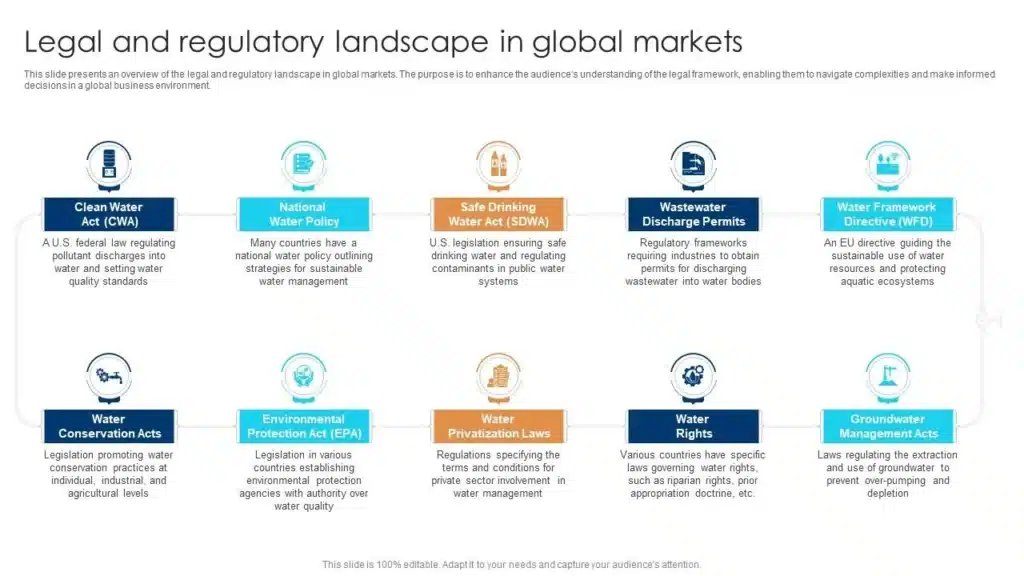
Water pollution control is a core pillar of environmental governance, protecting public health, freshwater ecosystems, and economic stability worldwide. From rivers and lakes to coastal waters and wetlands, legal systems increasingly recognize clean water as both a human necessity and a regulated public trust resource. While the U.S. Clean Water Act (CWA) remains one of the most influential water protection statutes globally, parallel regulatory frameworks operate across Europe, Asia, Africa, and under international law.
In November 2025, proposed regulatory rollbacks in the United States, particularly affecting wetlands jurisdiction, highlighted growing global concern over weakening water protections at a time of rising pollution, climate stress, and emerging contaminants. Similar regulatory pressures and reform debates are occurring worldwide, making a comparative understanding of water pollution control methods, discharge standards, treatment technologies, and compliance mechanisms increasingly urgent.
This guide examines global water pollution control frameworks in 2026, covering legal standards, discharge regulations, effluent limitations, treatment technologies, monitoring obligations, and enforcement systems shaping modern water governance.
Global Legal Frameworks Governing Water Pollution Control: 2026 Regulatory Outlook
As governments enter 2026, water pollution control laws are undergoing accelerated reform driven by climate risks, emerging contaminants, and tighter international compliance expectations. Global legal frameworks are increasingly converging around stricter discharge standards, enhanced enforcement mechanisms, and expanded jurisdiction over previously unregulated water bodies. Understanding this evolving regulatory landscape is critical for governments, industries, and environmental compliance professionals.
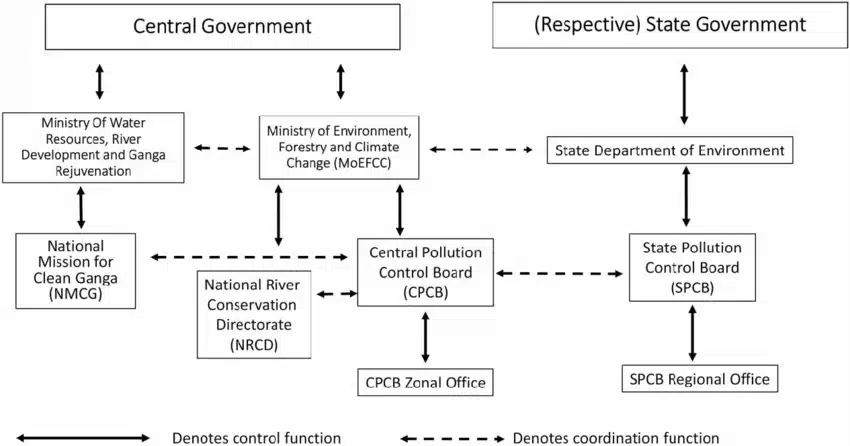
International Water Pollution Treaties: 2026 Policy Direction
In 2026, international environmental agreements continue to shape national water protection laws through harmonized pollution controls and expanded reporting obligations:
- UNCLOS (United Nations Convention on the Law of the Sea) remains central to marine pollution regulation, with growing emphasis on land-based source pollution and offshore industrial activity.
- UNECE Water Convention is expanding participation beyond Europe, signaling stronger global governance of transboundary rivers and lakes.
- Stockholm and Basel Conventions are increasingly applied to micro-pollutants, PFAS-contaminated waste, and pharmaceutical residues entering water systems.
- Minamata Convention on Mercury enforcement is tightening, particularly for industrial wastewater and artisanal mining discharges.
By 2026, these treaties are expected to drive lower pollutant thresholds, mandatory monitoring, and enhanced liability for cross-border water contamination.
Regional Water Pollution Regulations in 2026
Regional legal regimes are setting the pace for enforceable water quality standards:
- European Union – Water Framework Directive (WFD)
The EU is advancing toward stricter ecological status benchmarks, enhanced nutrient controls, and updated priority substance lists reflecting PFAS and microplastics. - Revised EU Urban Waste Water Treatment Directive (2026 implementation phase)
Introduces tougher treatment requirements, energy neutrality goals, and expanded monitoring for emerging contaminants. - OSPAR and Regional Seas Conventions
Increasing regulatory focus on cumulative pollution impacts and offshore industrial discharges. - Asia-Pacific Frameworks
ASEAN and regional river basin agreements are prioritizing industrial wastewater regulation and cross-border water quality coordination.
These frameworks signal a shift from pollution response to pollution prevention, supported by enforceable compliance timelines.
National Water Pollution Laws: 2026 Enforcement Trends
Domestic water pollution control laws are expected to become more stringent in 2026:
- United States: Anticipated regulatory revisions affecting Waters of the United States (WOTUS), PFAS effluent limitations, and stormwater permitting.
- European Union Member States: Expanded penalties for non-compliance and tighter industrial discharge licensing.
- China: Strengthened enforcement of the Water Pollution Prevention and Control Law with increased fines and criminal liability.
- India: Digital monitoring, consent-to-operate reforms, and stricter industrial discharge standards.
- Australia and Canada: Climate-resilient water quality planning and enhanced protection of sensitive watersheds.
Across jurisdictions, 2026 reforms emphasize:
- Real-time discharge monitoring
- Expanded regulatory coverage of nonpoint pollution
- Increased corporate environmental liability
- Public access to compliance data
Emerging Regulatory Priorities for 2026
Water pollution control laws are rapidly evolving to address new risks:
- PFAS and Emerging Contaminants: Global adoption of enforceable limits and treatment mandates.
- Climate Change Impacts: Integration of flood risk, drought resilience, and wastewater system capacity planning into permitting decisions.
- Nature-Based Solutions: Legal recognition of constructed wetlands and green infrastructure as compliance tools.
- Digital Compliance Systems: Mandatory electronic reporting, AI-enabled monitoring, and remote inspections.
These priorities reflect a regulatory shift toward preventive, technology-driven water governance.
Compliance, Liability, and Risk in 2026
By 2026, water pollution compliance failures carry higher legal and financial risk:
- Increased administrative and criminal penalties
- Expanded citizen-suit provisions
- Transboundary environmental damage claims
- Mandatory remediation and ecosystem restoration obligations
Regulators are also reinforcing the polluter-pays principle, requiring responsible parties to bear the full cost of contamination cleanup and long-term environmental harm.
2026 Outlook: Toward Global Water Governance Convergence
Although water law remains nationally implemented, 2026 marks a clear trend toward global convergence in water pollution regulation. Shared legal principles, precaution, sustainability, transparency, and accountability are shaping future reforms.
As regulatory scrutiny intensifies, compliance with global water pollution control frameworks is no longer optional but a core legal and operational requirement for governments and industries worldwide.
Discharge Permits and Regulatory Authorization Systems
Discharge permit systems form the core legal mechanism for controlling water pollution worldwide, authorizing regulated releases of wastewater while enforcing enforceable environmental standards. As regulators enter 2026, permit regimes are tightening, expanding coverage to emerging contaminants, digital monitoring, climate resilience, and cross-border accountability. Understanding how discharge authorization systems are evolving is essential for regulated industries, utilities, and policymakers.
Purpose and Legal Function of Discharge Permits
Discharge permits serve as legally binding authorizations allowing the release of pollutants into surface waters, groundwater, or marine environments under strictly defined conditions. Across jurisdictions, permit systems are designed to:
- Prevent uncontrolled pollutant discharges
- Translate statutory water quality goals into enforceable limits
- Enable regulatory monitoring, enforcement, and public transparency
- Allocate pollution loads within watersheds and river basins
In 2026, permits increasingly function as dynamic compliance instruments, incorporating adaptive conditions that respond to climate variability and ecosystem sensitivity.
Global Models of Discharge Authorization Systems
While permit structures vary, most regulatory systems follow common models:
- Permit-Based Authorization
Individual or general permits specifying discharge limits, monitoring obligations, and operational conditions. - Licensing and Consent Regimes
Used in the UK, EU, Australia, and parts of Asia, requiring prior consent before any discharge activity begins. - Integrated Environmental Permits
Single permits covering air, water, and waste discharges under unified regulatory frameworks.
By 2026, integrated permitting is expanding as regulators seek holistic pollution control and streamlined enforcement.
United States: NPDES Permits and 2026 Developments
The U.S. National Pollutant Discharge Elimination System (NPDES) remains one of the world’s most developed discharge permit frameworks. Key 2026 regulatory trends include:
- Expansion of PFAS effluent limitations across industrial categories
- Greater scrutiny of stormwater and nonpoint source discharges
- Revisions to Waters of the United States (WOTUS) affecting permit jurisdiction
- Enhanced electronic reporting and real-time monitoring requirements
Permits increasingly include site-specific water quality-based effluent limits (WQBELs) reflecting downstream ecosystem impacts.
European Union and UK Discharge Authorization Systems
In the EU, discharge permits operate under the Water Framework Directive (WFD) and Industrial Emissions Directive (IED):
- Permits must ensure compliance with ecological and chemical status objectives
- Best Available Techniques (BAT) conclusions directly shape effluent limits
- 2026 reforms expand coverage of pharmaceuticals, microplastics, and PFAS
The UK’s Environmental Permitting Regulations continue to evolve post-Brexit, with stronger enforcement, higher penalties, and digital permitting platforms forming the backbone of 2026 compliance.
Asia-Pacific and Emerging Economies: Permit Expansion
Across Asia-Pacific jurisdictions, discharge permitting systems are rapidly maturing:
- China is strengthening discharge licensing with strict daily penalties and criminal liability
- India is modernizing consent-to-operate systems through real-time effluent monitoring
- Southeast Asia is expanding industrial wastewater permitting tied to river basin management
In 2026, emerging economies are prioritizing permit transparency, monitoring accuracy, and enforcement credibility.
Key Permit Conditions in 2026
Modern discharge permits typically impose:
- Numeric effluent limitations for conventional, toxic, and emerging pollutants
- Flow-based and load-based discharge caps
- Monitoring frequency and sampling protocols
- Electronic reporting and data retention obligations
- Spill prevention and emergency response requirements
- Adaptive conditions linked to climate and hydrological changes
These conditions are increasingly supported by digital compliance platforms and automated alerts.
General Permits vs. Individual Permits
Regulators distinguish between:
- General Permits: Covering categories of similar dischargers (e.g., stormwater, construction sites)
- Individual Permits: Tailored to high-risk or complex discharge operations
In 2026, agencies are narrowing eligibility for general permits where cumulative pollution risks are high, shifting more facilities into site-specific authorization frameworks.
Enforcement, Renewal, and Permit Revocation Risks
Permit systems are enforced through:
- Administrative penalties
- Civil and criminal liability
- Permit suspension or revocation
- Citizen enforcement actions
Renewals in 2026 are expected to trigger stricter conditions, reflecting updated water quality data, emerging contaminant standards, and climate risk assessments.
Cross-Border and Transboundary Discharge Controls
Transboundary rivers and marine waters require coordinated authorization systems:
- Basin-wide discharge caps
- Joint permitting and monitoring mechanisms
- Shared data platforms between states
International cooperation is becoming increasingly important as pollution impacts cross national boundaries.
2026 Regulatory Outlook: Future of Discharge Permitting
By 2026, discharge permits are evolving from static authorizations into adaptive regulatory instruments. Key trends include:
- Lower pollutant thresholds
- Expanded permit coverage
- Real-time monitoring integration
- Greater public disclosure
- Increased liability for non-compliance
These changes reflect a global shift toward preventive, transparent, and enforceable water pollution control.
Effluent Limitations and Technology-Based Standards
Effluent limitations and technology-based standards remain the cornerstone of modern water pollution control law, translating environmental protection goals into enforceable discharge limits. Entering 2026, regulators worldwide are tightening effluent controls, expanding regulated pollutants, and redefining what qualifies as “available” and “economically achievable” treatment technology. These changes significantly increase compliance obligations for industrial facilities, municipal utilities, and infrastructure operators.
Legal Purpose of Effluent Limitations
Effluent limitations are legally binding numerical or narrative restrictions placed on wastewater discharges to:
- Prevent degradation of surface and groundwater quality
- Create uniform pollution control requirements across industries
- Eliminate competitive advantages from weaker environmental controls
- Support attainment of water quality standards
Technology-based standards operate independently of receiving water conditions, ensuring baseline protection even where water quality appears adequate.
Technology-Based Standards Explained
Technology-based effluent standards require dischargers to apply specific levels of treatment performance based on what is technically feasible and economically reasonable for their industry sector. These standards focus on pollution prevention at the source, rather than relying solely on downstream water quality impacts.
By 2026, regulators increasingly view technology-based limits as essential tools for addressing emerging contaminants and cumulative pollution risks.
Core Technology Tiers in 2026
Most regulatory systems continue to rely on tiered technology benchmarks:
Best Practicable Control Technology (BPT)
- Baseline standard for conventional pollutants
- Considers treatment availability, operational cost, and industry practices
Best Conventional Pollutant Control Technology (BCT)
- Applies to pollutants such as BOD, TSS, oil and grease, and pH
- Uses cost-benefit analysis to justify stricter controls
Best Available Technology Economically Achievable (BAT)
- Most stringent standard for toxic and non-conventional pollutants
- Requires maximum pollutant reduction regardless of cost-benefit balancing
- Central to 2026 regulatory expansions targeting PFAS, metals, and synthetic chemicals
New Source Performance Standards (NSPS)
- Apply to newly constructed or significantly modified facilities
- Reflect the highest level of demonstrated pollution control achievable
In 2026, BAT and NSPS standards are increasingly aligned with advanced treatment technologies, including membrane systems and advanced oxidation.
Expansion of Regulated Pollutants in 2026
Effluent limitations are expanding beyond traditional pollutants to address:
- PFAS and fluorinated compounds
- Pharmaceuticals and personal care products
- Microplastics and nanomaterials
- Endocrine-disrupting chemicals
- Nutrient pollution contributing to harmful algal blooms
Regulators are lowering detection thresholds and requiring technology upgrades to meet new limits.
Industry-Specific Effluent Guidelines
Effluent limitations are often established through categorical guidelines tailored to specific industrial sectors, including:
- Chemical manufacturing
- Petroleum refining
- Metal finishing and electroplating
- Pulp and paper production
- Food and beverage processing
- Pharmaceutical manufacturing
In 2026, many sectors face revised guidelines reflecting updated treatment capabilities and environmental risk assessments.
Relationship Between Technology-Based and Water Quality-Based Limits
When technology-based limits alone are insufficient to protect receiving waters, regulators impose water quality-based effluent limits (WQBELs). These are:
- Site-specific
- Based on designated water uses
- More stringent than baseline technology standards
In 2026, agencies are increasingly combining technology-based and water quality-based approaches to address climate-driven changes in flow, temperature, and dilution capacity.
Compliance, Monitoring, and Verification
Modern effluent standards rely on robust compliance systems, including:
- Continuous or high-frequency monitoring
- EPA- or regulator-approved analytical methods
- Electronic reporting platforms
- Automated exceedance alerts
- Independent verification and audits
By 2026, real-time monitoring and data transparency are becoming standard permit conditions, particularly for high-risk dischargers.
Economic and Legal Implications in 2026
Stricter effluent limitations carry significant legal and operational consequences:
- Increased capital investment in treatment infrastructure
- Higher risk of enforcement actions and penalties
- Expanded citizen-suit exposure
- Greater liability for legacy contamination
Courts and regulators are increasingly rejecting arguments that advanced treatment is economically infeasible when technology is commercially available.
2026 Outlook: The Future of Effluent Regulation
Effluent limitations in 2026 are evolving toward:
- Lower numeric discharge thresholds
- Technology mandates for emerging contaminants
- Climate-resilient treatment performance standards
- Greater alignment across global regulatory systems
These trends signal a shift from minimum compliance toward continuous pollution reduction and long-term water ecosystem protection.
Water Quality Standards and Ecosystem Protection
Water quality standards form the legal backbone of ecosystem protection, translating environmental objectives into enforceable criteria that safeguard human health, biodiversity, and aquatic system integrity. As regulatory frameworks evolve in 2026, water quality regulation is increasingly ecosystem-centric, addressing cumulative impacts, climate stressors, and emerging pollutants across entire watersheds.
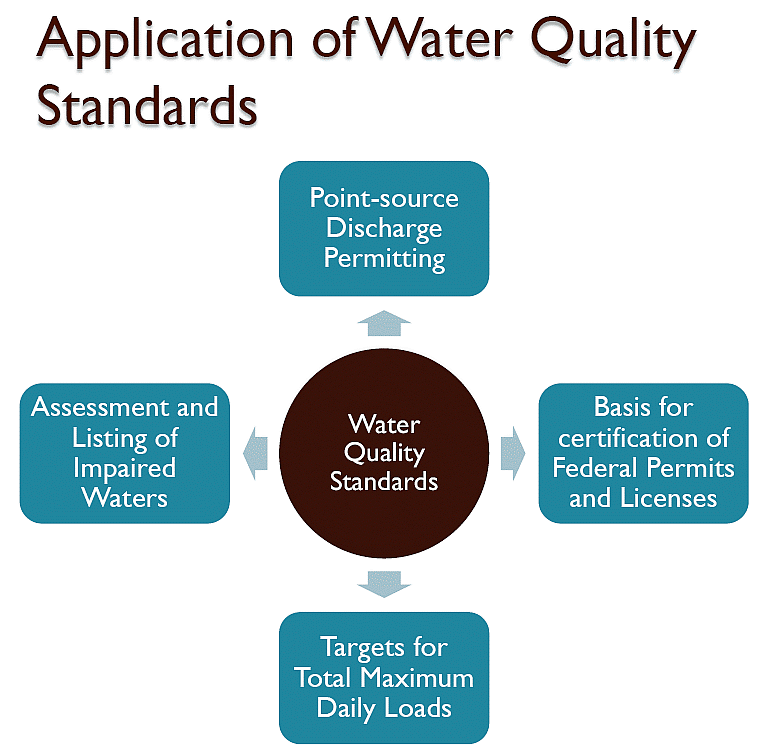
Globally, governments are shifting from single-pollutant compliance models toward holistic aquatic ecosystem protection, aligning water quality laws with biodiversity conservation, climate adaptation, and sustainable development goals.
Legal Purpose of Water Quality Standards
Water quality standards serve three core legal functions:
- Defining acceptable pollutant levels to protect designated water uses
- Triggering regulatory intervention when degradation occurs
- Providing the legal basis for discharge permitting and enforcement
Unlike technology-based effluent limits, water quality standards are site-specific, reflecting ecological sensitivity, hydrological conditions, and ecosystem services provided by each waterbody.
Designated Uses and Protected Ecosystem Functions
Regulatory systems classify waters based on designated uses, which typically include:
- Drinking water supply
- Aquatic life protection
- Recreational use (swimming, fishing)
- Agricultural and industrial use
- Cultural and indigenous resource protection
In 2026, many jurisdictions are expanding designated uses to explicitly include:
- Biodiversity conservation
- Climate resilience
- Wetland and floodplain protection
- Carbon sequestration and nutrient cycling
This evolution strengthens legal protections for ecosystem services, not just water chemistry.
Types of Water Quality Criteria
Modern water quality standards rely on multiple criteria types to reflect complex ecological conditions:
Numeric Criteria
Legally enforceable concentration limits for pollutants such as nutrients, metals, pathogens, and toxic substances. Numeric criteria increasingly reflect lower thresholds in 2026, particularly for endocrine disruptors and PFAS.
Narrative Criteria
Qualitative standards prohibiting conditions that cause toxicity, bioaccumulation, or ecological imbalance, providing regulators flexibility to address unlisted pollutants.
Biological Criteria
Assessment of aquatic life communities using indicators such as species diversity, abundance, and functional traits. These criteria play a growing role in ecosystem-based regulation.
Nutrient and Sediment Criteria
Standards addressing eutrophication, harmful algal blooms, and habitat smothering are key priorities in 2026 climate-driven water management.
Anti-Degradation Policies and High-Value Waters
Anti-degradation rules prevent backsliding by maintaining existing water quality and protecting high-value ecosystems. Most frameworks follow a tiered structure:
- Baseline protection for all waters
- Enhanced protection for high-quality waters exceeding minimum standards
- Strict preservation for outstanding or ecologically critical waters
In 2026, regulators are expanding the classification of high-ecological-value waters, including headwaters, wetlands, coral reefs, and transboundary river systems.
Ecosystem-Based Water Management
Water quality regulation is increasingly integrated into ecosystem-based management approaches, recognizing that aquatic health depends on:
- Hydrology and flow regimes
- Riparian vegetation
- Wetland connectivity
- Sediment transport
- Climate variability
Legal frameworks now incorporate environmental flow requirements, habitat connectivity protections, and watershed-scale planning obligations.
Climate Change and Adaptive Standards
Climate change is reshaping water quality governance in 2026 by:
- Altering pollutant dilution capacity
- Increasing water temperatures and oxygen depletion
- Intensifying runoff and contamination events
- Shifting species tolerance thresholds
As a result, regulators are adopting adaptive water quality standards that allow periodic revision based on climate and ecological data, strengthening long-term ecosystem protection.
Monitoring, Assessment, and Transparency
Ecosystem protection depends on robust monitoring systems, including:
- Biological and chemical monitoring networks
- Remote sensing and satellite analysis
- Early-warning systems for algal blooms
- Public data disclosure platforms
By 2026, many jurisdictions require ecosystem condition reporting, not just pollutant exceedance data, reinforcing accountability.
Legal Enforcement and Ecosystem Protection
When water quality standards are violated, enforcement mechanisms may include:
- Stricter discharge permit limits
- Mandatory restoration and remediation
- Civil and criminal penalties
- Injunctions halting harmful activities
- Citizen-initiated legal actions
Courts increasingly recognize ecological harm as a legally actionable injury, strengthening ecosystem-based enforcement.
2026 Outlook: Strengthening Aquatic Ecosystem Protection
Water quality standards in 2026 reflect a broader regulatory shift toward:
- Ecosystem integrity over single-pollutant compliance
- Preventive regulation addressing cumulative impacts
- Integration with biodiversity and climate law
- Enhanced protection for vulnerable and transboundary waters
As legal systems converge around ecosystem protection principles, water quality standards are becoming central tools for sustaining resilient, life-supporting aquatic environments worldwide.
Wastewater Treatment Methods and Pollution Control Technologies
Wastewater treatment methods and pollution control technologies form the technical foundation of water pollution regulation, enabling governments to enforce discharge limits, protect ecosystems, and safeguard public health. As regulatory standards tighten in 2026, treatment systems are evolving beyond conventional compliance to address emerging contaminants, climate stressors, and cumulative environmental impacts.
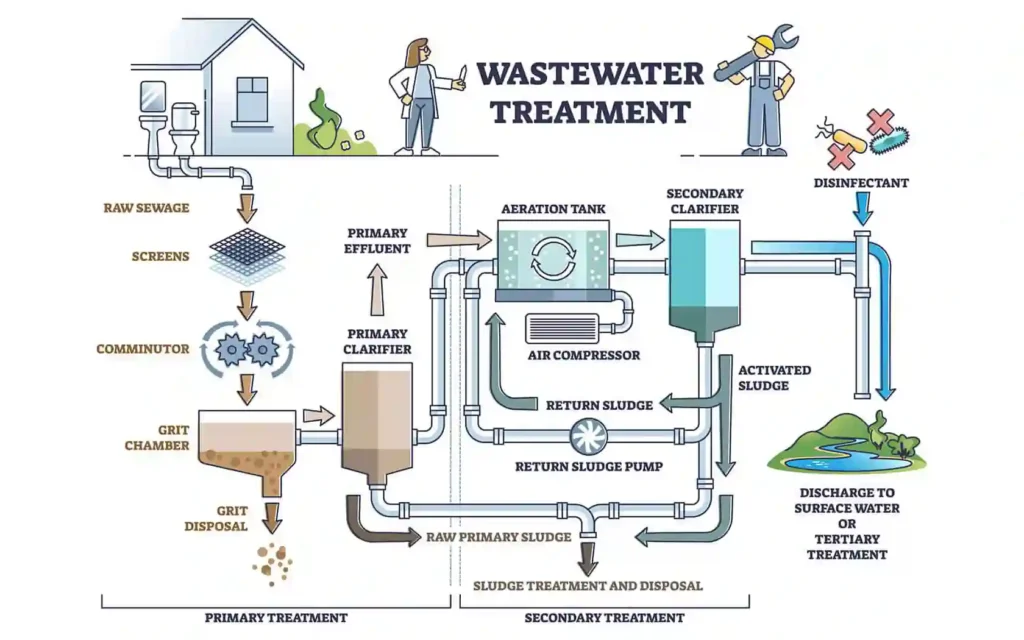
Globally, regulators are aligning treatment requirements with technology-based effluent standards, ecosystem protection goals, and climate resilience strategies, making advanced wastewater treatment a central compliance obligation rather than a discretionary investment.
Legal Role of Wastewater Treatment in Pollution Control
Wastewater treatment systems serve a dual legal function:
- Enabling compliance with technology-based and water quality-based discharge limits
- Preventing ecological harm through pollutant removal prior to environmental release
In 2026, failure to deploy adequate treatment technology increasingly exposes operators to enforcement actions, permit revocation, and civil liability.
Municipal Wastewater Treatment Systems
Public wastewater treatment plants remain the backbone of urban pollution control, relying on multi-stage treatment processes.
Primary Treatment
Physical processes remove settleable solids and floatable materials through screening, grit removal, and sedimentation. While primary treatment offers limited pollutant removal, it reduces system loading and supports downstream biological processes.
Secondary Treatment
Biological treatment is the regulatory minimum in most jurisdictions. Activated sludge systems, trickling filters, and rotating biological contactors degrade organic matter, achieving significant reductions in biochemical oxygen demand (BOD) and suspended solids.
Tertiary and Advanced Treatment
By 2026, advanced treatment is increasingly required to:
- Remove nutrients such as nitrogen and phosphorus
- Eliminate pathogens and trace contaminants
- Improve effluent quality in sensitive watersheds
Technologies include filtration, membrane systems, advanced disinfection, and nutrient recovery processes.
Industrial Wastewater Treatment Technologies
Industrial wastewater treatment is tailored to facility-specific pollutant profiles and regulatory obligations.
Physical and Chemical Treatment
These processes address metals, oils, and suspended solids through coagulation, precipitation, pH adjustment, and separation techniques. Chemical treatment remains essential for meeting stringent discharge limits.
Biological Treatment
Aerobic and anaerobic systems treat biodegradable organic wastes, with anaerobic digestion gaining prominence due to its energy recovery potential and reduced sludge generation.
Advanced Oxidation Processes (AOPs)
AOPs such as ozone, UV/hydrogen peroxide, and catalytic oxidation are increasingly deployed to destroy persistent organic pollutants and pharmaceutical residues.
Emerging Technologies in 2026
Regulatory pressure and technological innovation are accelerating adoption of advanced solutions:
- Membrane Bioreactors (MBRs) combining biological treatment and membrane filtration
- Reverse Osmosis and Nanofiltration for high-purity effluent and reuse applications
- Constructed Wetlands as nature-based treatment systems
- Electrochemical Treatment for industrial pollutants
- Thermal Destruction and Plasma Technologies for high-strength waste streams
These technologies are becoming critical for compliance with BAT and new source standards.
Addressing Emerging Contaminants
2026 regulatory frameworks increasingly target pollutants previously unregulated, including:
- PFAS and fluorinated compounds
- Microplastics and nanomaterials
- Endocrine-disrupting chemicals
- Pharmaceutical residues
- Antibiotic resistance genes
Treatment systems are evolving to detect, capture, or destroy these substances, often requiring multi-barrier treatment approaches.
Climate-Resilient Treatment Design
Climate change is reshaping wastewater infrastructure planning by:
- Increasing hydraulic loading from extreme precipitation
- Raising influent temperatures affecting biological processes
- Increasing salinity intrusion in coastal systems
Regulators now expect climate-adaptive treatment design, including capacity flexibility, redundancy, and resilient energy systems.
Pollution Prevention and Source Control
Treatment technologies are increasingly complemented by source reduction strategies, such as:
- Industrial pretreatment requirements
- Chemical substitution mandates
- Water reuse and circular economy models
- Zero-liquid-discharge systems in water-scarce regions
In 2026, regulators increasingly view pollution prevention as a legal compliance strategy, not merely a best practice.
Monitoring, Automation, and Digital Compliance
Modern wastewater systems integrate:
- Real-time monitoring sensors
- Automated process controls
- AI-driven optimization
- Predictive maintenance tools
- Digital compliance reporting platforms
These systems enhance treatment reliability and reduce enforcement risk by enabling continuous compliance assurance.
Regulatory and Economic Implications
Stricter treatment requirements in 2026 carry significant implications:
- Increased capital and operating costs
- Greater scrutiny of treatment performance
- Heightened enforcement and penalty exposure
- Expanded legal liability for treatment failures
However, investment in advanced treatment often reduces long-term compliance risk and supports water reuse and sustainability goals.
2026 Outlook: The Future of Wastewater Treatment Regulation
Wastewater treatment regulation is evolving toward:
- Mandatory advanced treatment in sensitive watersheds
- Technology mandates for emerging contaminants
- Integration of treatment with water reuse and resource recovery
- Harmonization of global pollution control standards
These trends position wastewater treatment technologies as central instruments of environmental law enforcement and ecosystem protection in 2026 and beyond.
Compliance Monitoring, Reporting, and Enforcement
Compliance monitoring, reporting, and enforcement form the operational backbone of environmental regulation, ensuring that water pollution control laws move beyond policy commitments into measurable, enforceable outcomes. As regulatory regimes tighten in 2026, authorities worldwide are strengthening monitoring obligations, expanding digital reporting requirements, and intensifying enforcement against non-compliant dischargers.
For a deeper understanding of regulatory updates in 2026, including environmental compliance and industrial standards, explore the full 2026 Pollution Control Laws and EPA Compliance Rules .
The regulatory focus is shifting from periodic compliance checks to continuous, data-driven oversight, increasing legal exposure for facilities that fail to demonstrate consistent adherence to permit conditions.
Legal Purpose of Compliance Systems
Environmental compliance frameworks serve three core legal functions:
- Verifying adherence to discharge permits and regulatory standards
- Detecting violations before ecological harm escalates
- Enabling enforcement actions and judicial remedies
In 2026, the legal burden increasingly rests on permit holders to prove compliance, not merely avoid enforcement.
Monitoring Requirements and Performance Verification
Monitoring obligations are designed to measure actual environmental performance under real operating conditions.
Sampling and Monitoring Methods
Regulators require use of approved analytical methods capable of detecting pollutants at or below regulatory thresholds. Enhanced detection sensitivity is now expected for:
- PFAS and trace organics
- Nutrients contributing to eutrophication
- Metals and persistent toxics
- Pathogens and microbial indicators
Monitoring Frequency and Locations
Permits specify:
- Sampling intervals (continuous, daily, monthly, event-based)
- Sample types (grab, composite, automated)
- Monitoring points (final effluent, internal process streams, upstream/downstream waters)
By 2026, high-risk dischargers increasingly face continuous or near-real-time monitoring mandates.
Digital Reporting and Data Transparency
Regulatory authorities are expanding digital compliance platforms to improve oversight and public accountability.
Electronic Reporting Systems
Facilities must submit discharge data through centralized electronic systems, enabling:
- Automated compliance screening
- Public access to environmental performance data
- Faster detection of exceedances
Discharge and Performance Reports
Routine reports typically include:
- Pollutant concentrations and loading calculations
- Flow measurements
- Permit exceedances and explanations
- Equipment malfunctions or bypass events
- Corrective and preventive actions taken
In 2026, incomplete or late reporting increasingly triggers enforcement action independent of discharge violations.
Inspection and Audit Programs
Regulatory agencies conduct inspections to verify reported data and operational integrity.
Inspection Focus Areas
- Treatment system operation and maintenance
- Sampling and laboratory procedures
- Record-keeping accuracy
- Emergency response preparedness
- Implementation of best management practices
Authorities are expanding unannounced inspections and third-party audits, particularly for facilities with compliance histories or high environmental risk profiles.
Enforcement Mechanisms and Legal Consequences
Enforcement systems rely on escalating responses proportionate to violation severity.
Administrative Enforcement
- Notices of violation
- Compliance orders with deadlines
- Permit modifications or suspensions
Civil Enforcement
- Monetary penalties based on duration and severity of violations
- Injunctive relief requiring corrective action
- Recovery of economic benefit from non-compliance
- Applied to knowing or negligent violations
- Includes fines, corporate liability, and imprisonment
- Increasingly targets falsified reports and monitoring fraud
In 2026, regulators are placing greater emphasis on individual accountability for compliance failures.
Citizen Enforcement and Public Participation
Many environmental laws authorize citizen-initiated enforcement actions.
Citizen suit provisions allow:
- Lawsuits against violators after notice periods
- Legal challenges to regulatory inaction
- Recovery of attorney fees
- Court-ordered injunctive relief
Expanded data transparency in 2026 strengthens the role of civil society in compliance oversight.
International and Transboundary Enforcement Trends
Global water governance increasingly relies on:
- Cross-border data sharing
- Harmonized reporting standards
- Cooperative enforcement mechanisms
- Treaty-based compliance review bodies
These frameworks are especially important for shared river basins, coastal waters, and marine ecosystems.
Compliance Risk Management in 2026
To manage heightened enforcement risk, regulated entities are adopting:
- Environmental management systems (EMS)
- Internal compliance audits
- Predictive monitoring and analytics
- Staff training and accountability programs
- Legal and regulatory horizon scanning
Proactive compliance is now viewed as a legal risk mitigation strategy, not merely operational best practice.
2026 Outlook: Enforcement-Driven Environmental Governance
Compliance monitoring and enforcement in 2026 reflect a broader regulatory shift toward:
- Continuous performance verification
- Digital transparency and public accountability
- Stronger penalties for repeat or knowing violations
- Integration of compliance with climate and biodiversity objectives
As enforcement frameworks grow more sophisticated, compliance systems are becoming central pillars of effective water pollution control and ecosystem protection worldwide.
Wetlands, Dredge-and-Fill Regulation, and Physical Impacts
Wetlands regulation and dredge-and-fill controls represent one of the most contested areas of water and land-use law, governing physical alterations to aquatic ecosystems rather than pollutant discharges alone. As governments reassess wetland protections in 2026, legal frameworks are increasingly focused on ecosystem function, flood resilience, biodiversity protection, and climate adaptation, even as jurisdictional boundaries remain under debate.
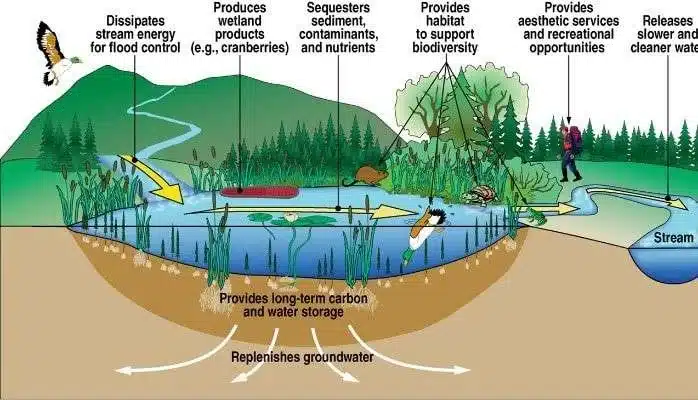
Globally, wetlands are recognized as critical infrastructure for water quality, carbon storage, flood mitigation, and habitat conservation making dredge-and-fill regulation central to environmental governance.
Legal Purpose of Wetlands and Dredge-and-Fill Regulation
Dredge-and-fill laws are designed to:
- Prevent irreversible loss of aquatic ecosystems
- Regulate physical modifications to water bodies and wetlands
- Balance development needs with ecosystem protection
- Require mitigation where impacts cannot be avoided
Unlike discharge permits, dredge-and-fill regulations address land-disturbing activities that permanently alter hydrology, habitat structure, and ecological connectivity.
Jurisdictional Scope and Wetland Definitions in 2026
Regulatory jurisdiction hinges on how wetlands and waters are legally defined. In 2026, frameworks commonly distinguish between:
- Permanent and seasonal waters
- Wetlands with surface or subsurface hydrological connections
- Floodplain and riparian wetlands
- Coastal and tidal wetlands
Following recent judicial and regulatory shifts, many jurisdictions are refining definitions to emphasize functional connectivity rather than strict physical adjacency, though approaches vary widely across regions.
Regulated Dredge-and-Fill Activities
Dredge-and-fill regulation typically applies to activities such as:
- Placement of fill material for construction or development
- Excavation and dredging for navigation or mining
- Road, bridge, and utility infrastructure projects
- Flood control and shoreline stabilization
- Wetland conversion for agriculture or urban expansion
In 2026, regulators increasingly require early impact assessments to determine whether alternatives exist that avoid or minimize wetland disturbance.
Environmental Impact Assessment and Alternatives Analysis
Most regulatory systems require applicants to demonstrate:
- Avoidance of wetland impacts where practicable
- Minimization of unavoidable impacts
- Implementation of compensatory mitigation
Alternatives analysis has become more rigorous in 2026, with authorities scrutinizing project siting, design, and construction methods to reduce ecological harm.
Compensatory Mitigation and No-Net-Loss Policies
Where impacts cannot be avoided, permits require compensatory mitigation to offset ecological loss. Accepted mitigation approaches include:
- Wetland restoration returning degraded sites to functional condition
- Wetland enhancement improving ecological performance
- Wetland creation establishing new aquatic habitats
- Preservation of high-quality wetlands under legal protection
- Mitigation banking using pre-approved wetland credits
By 2026, many jurisdictions are strengthening no-net-loss or net-gain policies, requiring mitigation to replace lost functions, not just acreage.
Climate Change and Wetlands Protection
Wetlands play a critical role in climate adaptation and mitigation by:
- Absorbing floodwaters and storm surges
- Filtering pollutants and sediments
- Sequestering carbon in soils and vegetation
- Supporting climate-resilient biodiversity
As a result, 2026 regulatory frameworks increasingly treat wetlands as climate infrastructure, elevating protection standards and mitigation ratios.
Enforcement and Compliance Risks
Noncompliance with dredge-and-fill requirements carries significant legal consequences, including:
- Stop-work orders and restoration mandates
- Administrative and civil penalties
- Criminal liability for knowing violations
- Long-term monitoring obligations
- Citizen-initiated legal actions
Regulators are placing greater emphasis on unauthorized fill and cumulative impacts, particularly in sensitive watersheds.
International and Transboundary Wetlands Governance
Global wetland protection is reinforced through:
- International conventions addressing wetland conservation
- Transboundary river basin agreements
- Regional biodiversity frameworks
- Cooperative monitoring and enforcement programs
These mechanisms are increasingly integrated into national dredge-and-fill permitting decisions in 2026.
2026 Outlook: Physical Impacts Under Heightened Scrutiny
Wetlands and dredge-and-fill regulation in 2026 reflects a broader shift toward:
- Ecosystem-based land-use decision-making
- Stronger avoidance and mitigation requirements
- Recognition of wetlands as critical climate assets
- Greater enforcement against unauthorized physical impacts
As environmental laws evolve, physical alteration of wetlands is becoming one of the most legally sensitive aspects of development, requiring early legal analysis, careful project design, and robust compliance planning.
Stormwater, Nonpoint Source Pollution, and Oil Spill Control
Stormwater runoff, nonpoint source pollution, and oil spill risks represent some of the most complex challenges in modern water pollution control law, as they originate from diffuse sources rather than discrete discharge points. In 2026, regulators worldwide are expanding stormwater permitting, strengthening nonpoint source management programs, and tightening oil spill prevention and response obligations in response to climate-driven extreme weather and increasing industrial activity.
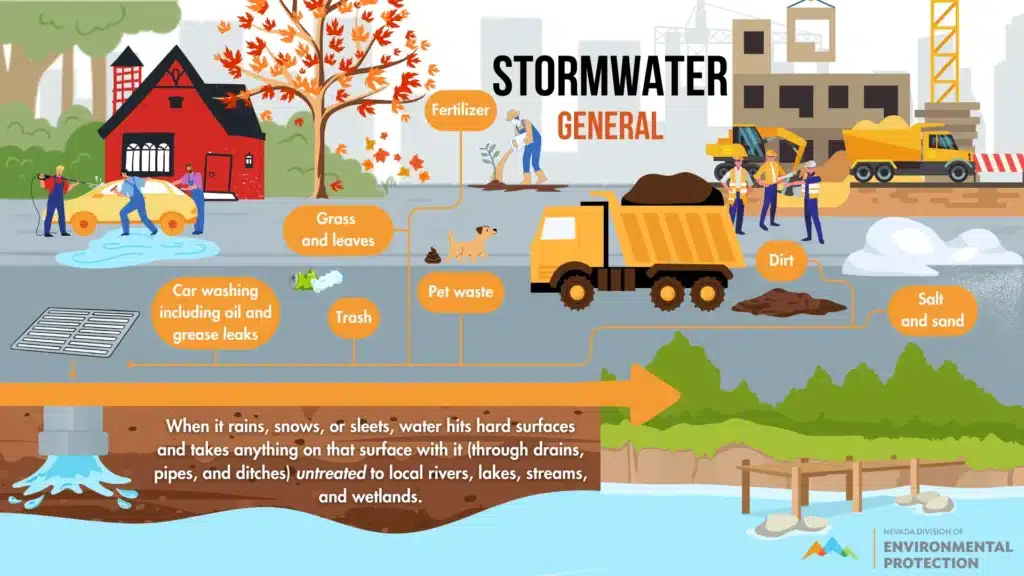
These regulatory areas now sit at the intersection of water quality protection, land-use planning, climate resilience, and emergency response law.
Legal Framework for Stormwater and Nonpoint Source Control
Unlike traditional point-source regulation, stormwater and nonpoint source pollution are governed through management-based legal approaches rather than strict numeric discharge limits. Regulatory systems rely on:
- Permit requirements for regulated stormwater discharges
- Best management practices (BMPs)
- Watershed-based planning obligations
- Spill prevention and emergency response mandates
In 2026, regulators increasingly treat stormwater and runoff as predictable pollution sources, expanding legal accountability.
Stormwater Permitting and Urban Runoff Regulation
Stormwater discharges from urban and industrial sources are subject to permit requirements in many jurisdictions.
Regulated Stormwater Systems
- Municipal separate storm sewer systems (MS4s)
- Industrial facilities exposed to precipitation
- Construction activities disturbing land above threshold sizes
Permits typically require implementation of stormwater pollution prevention plans (SWPPPs) incorporating structural and non-structural controls.
Key Stormwater Control Measures
- Green infrastructure such as bioswales, rain gardens, and permeable pavement
- Detention and retention basins managing runoff volume
- Street sweeping and sediment control programs
- Illicit discharge detection and elimination programs
- Public education and outreach initiatives
By 2026, many cities face mandatory green infrastructure targets to address flooding and water quality simultaneously.
Nonpoint Source Pollution Management
Nonpoint source pollution arises from diffuse activities, including agriculture, forestry, and urban development.
Primary Nonpoint Pollution Sources
- Agricultural runoff containing nutrients and pesticides
- Sediment from construction and land clearing
- Urban runoff transporting oils, metals, and debris
- Failing septic systems
- Forestry and mining operations
Regulatory approaches emphasize incentive-based and land-management strategies, often supported by public funding and technical assistance.
Watershed-Based and Land-Use Controls
In 2026, regulators increasingly rely on:
- Watershed management plans integrating land and water policy
- Nutrient reduction strategies targeting algal blooms
- Riparian buffer and setback requirements
- Erosion and sediment control ordinances
- Conservation and restoration projects
These approaches recognize that controlling nonpoint pollution requires landscape-scale intervention.
Oil Spill Prevention and Response Frameworks
Oil spill regulation addresses accidental releases of oil and hazardous substances that threaten water bodies.
Spill Prevention Requirements
Facilities with oil storage capacity above regulatory thresholds must implement spill prevention, control, and countermeasure (SPCC) plans that:
- Identify spill risks and vulnerable waters
- Establish prevention and inspection procedures
- Require employee training
- Include secondary containment systems
Emergency Response and Liability
Oil spill laws impose strict liability for:
- Cleanup and remediation costs
- Natural resource damages
- Economic losses to affected communities
- Long-term environmental monitoring
In 2026, spill response obligations increasingly incorporate climate risk scenarios, such as flooding and storm surge.
Enforcement and Compliance Risks
Failure to manage stormwater, runoff, or oil spill risks can result in:
- Permit violations and administrative penalties
- Injunctive relief requiring infrastructure upgrades
- Cleanup and restoration mandates
- Criminal liability for knowing violations
- Citizen-initiated enforcement actions
Regulators are increasingly targeting chronic stormwater violations and inadequate spill preparedness.
Climate Change and Extreme Weather Impacts
Climate-driven changes are intensifying regulatory focus on:
- Increased storm intensity overwhelming drainage systems
- Greater pollutant mobilization during flood events
- Elevated oil spill risk from inundated facilities
- Coastal erosion and shoreline instability
As a result, 2026 regulations emphasize resilience-based stormwater and spill control design.
2026 Outlook: Integrated Runoff and Spill Governance
Stormwater, nonpoint source pollution, and oil spill control in 2026 reflect a shift toward:
- Integrated land–water regulatory frameworks
- Expansion of stormwater permitting obligations
- Greater reliance on green infrastructure
- Stronger liability and enforcement mechanisms
- Alignment with climate adaptation and disaster preparedness laws
These regulatory trends signal that diffuse pollution sources are no longer peripheral concerns, but central components of modern water pollution control and ecosystem protection strategies.
Emerging Challenges and the Future of Water Pollution
Water pollution control faces a rapidly evolving landscape, with emerging contaminants, climate change, technological innovation, and regulatory uncertainty reshaping legal and operational frameworks worldwide. As governments, industries, and communities navigate 2026, effective water protection requires a proactive, adaptive, and integrated approach.
This section explores key trends, regulatory pressures, and future opportunities for water pollution governance.
Emerging Contaminants and Regulatory Complexity
The proliferation of per- and polyfluoroalkyl substances (PFAS), pharmaceuticals, microplastics, and endocrine-disrupting chemicals presents unprecedented monitoring and treatment challenges.
- PFAS and “forever chemicals”: Regulators worldwide are finalizing numeric and narrative standards for industrial, municipal, and agricultural discharges.
- Pharmaceutical residues: Hospital and municipal effluents increasingly require advanced tertiary treatment to mitigate environmental and human health impacts.
- Microplastics: Identification of sources, fate, and ecological effects drives new policies and monitoring mandates.
In 2026, cross-jurisdictional standards and harmonized testing methods are becoming critical for global compliance and trade.
Climate Change and Hydrological Variability
Extreme weather events, rising temperatures, and altered precipitation patterns are amplifying risks to water quality:
- Increased stormwater volumes and urban runoff overwhelm existing infrastructure.
- Nonpoint source pollution intensifies during heavy rainfall, leading to eutrophication and habitat degradation.
- Sea-level rise and coastal flooding threaten wastewater treatment facilities and oil spill containment systems.
Regulators are embedding climate resilience and adaptive management requirements into permits, infrastructure design, and emergency planning.
Technological Innovation and Digital Compliance
Advances in environmental technology are reshaping monitoring, reporting, and enforcement:
- Real-time water quality sensors enable continuous compliance tracking.
- AI and machine learning improve predictive modeling for discharge violations and stormwater impacts.
- Membrane filtration, advanced oxidation, and nature-based solutions enhance treatment efficiency for emerging contaminants.
- Digital reporting platforms enhance transparency, citizen engagement, and regulatory oversight.
Facilities that leverage these technologies gain risk reduction and regulatory advantage while improving environmental performance.
Regulatory Uncertainty and Policy Evolution
The 2026 regulatory landscape remains dynamic:
- Proposed deregulatory measures may reduce protections for certain wetlands and streams in some jurisdictions.
- Simultaneously, international agreements and climate-linked water governance frameworks are strengthening obligations for cross-border watersheds.
- Industries must navigate a patchwork of federal, state, and international rules, requiring robust compliance programs and legal foresight.
Adaptive compliance, early legal review, and stakeholder engagement are critical to mitigating risk and maintaining operational continuity.
The Future of Water Pollution Control
Looking forward, water pollution governance is likely to emphasize:
- Integrated watershed and ecosystem management, combining point and nonpoint source regulation.
- Science-based standard setting, including thresholds for emerging contaminants.
- Climate-adaptive infrastructure and green engineering solutions.
- Collaborative enforcement, engaging regulators, communities, and private stakeholders.
- Data-driven environmental accountability, leveraging digital platforms and predictive analytics.
The next decade will demand innovative, legally robust, and technologically advanced approaches to ensure clean water for human health, ecosystem integrity, and sustainable development.
For a deeper understanding of regulatory updates in 2026, including environmental compliance and industrial standards, explore the full 2026 Pollution Control Laws and EPA Compliance Rules .
Conclusion
Water pollution control in 2026 stands at a critical juncture, shaped by emerging contaminants, climate change, technological innovation, and evolving regulatory frameworks. Strong legal foundations, such as discharge permits, effluent limitations, water quality standards, and wetlands protections, remain essential, but modern challenges demand integrated, adaptive, and forward-looking approaches to safeguard ecosystems and public health.
Effective water protection requires robust compliance monitoring, reporting, and enforcement, alongside advanced treatment technologies and watershed-based management strategies. Regulators worldwide are emphasizing digital transparency, real-time monitoring, and citizen participation, while industries must adopt proactive compliance systems, green infrastructure, and risk-based pollution control measures to meet increasingly stringent 2026 standards.
Looking ahead, the future of water pollution control hinges on holistic governance, technological innovation, and collaborative stewardship. By combining regulatory rigor with sustainable practices, nations can protect critical water resources, support climate resilience, and ensure clean water for communities, ecosystems, and future generations. In this dynamic regulatory landscape, vigilance, innovation, and legal compliance are not optional; they are the foundation of sustainable water management.
Frequently Asked Questions
What is the legal framework for water pollution control in 2026?
Water pollution control is governed by federal, state, and international regulations, including the Clean Water Act (CWA), National Pollutant Discharge Elimination System (NPDES) permits, wetlands dredge-and-fill rules, stormwater and nonpoint source programs, and oil spill prevention laws. In 2026, regulatory updates emphasize climate resilience, emerging contaminants, and ecosystem protection.
How are discharge limits determined for wastewater?
Discharge limits are based on technology-based effluent standards such as BPT, BCT, BAT, and New Source Performance Standards (NSPS), along with water quality-based criteria for specific waterbodies. Industry-specific categorical guidelines and 2026 PFAS regulations further tailor limits to protect aquatic ecosystems and public health.
What wastewater treatment methods are used for pollution control?
Treatment methods include primary, secondary, and advanced/tertiary treatments for municipal facilities, and physical-chemical, biological, and advanced oxidation processes for industrial wastewater. Emerging technologies such as membrane filtration, AI-driven monitoring, and nature-based solutions are increasingly applied to remove contaminants and meet stricter 2026 standards.
How is compliance with water pollution laws monitored and enforced?
Facilities must submit Discharge Monitoring Reports (DMRs), follow EPA-approved analytical methods, and implement corrective measures for violations. Regulatory agencies conduct inspections, enforce permit conditions, and can impose civil or criminal penalties. Citizen suit provisions allow public legal action against violators.
How are wetlands and dredge-and-fill activities regulated?
Section 404 permits under the CWA regulate physical impacts to wetlands, rivers, and navigable waters. 2026 frameworks emphasize avoidance, minimization, and compensatory mitigation through wetland restoration, enhancement, creation, or preservation. Regulatory agencies review project impacts on hydrology, biodiversity, and ecosystem services.
What are the main strategies for stormwater and nonpoint source pollution control?
Stormwater and nonpoint source pollution are managed using permit-based controls, best management practices (BMPs), watershed planning, green infrastructure, and agricultural runoff management. Section 319 programs and MS4 permits require municipalities and industries to implement measures that reduce pollutant loading and maintain water quality.
How are oil spills prevented and managed under 2026 regulations?
Oil storage facilities must develop Spill Prevention, Control, and Countermeasure (SPCC) Plans, including facility diagrams, prevention procedures, and employee training. The Oil Pollution Act of 1990 provides liability frameworks and mandates rapid response, cleanup, and remediation for oil and hazardous substance spills.
What are the emerging challenges for water pollution control in 2026?
Key challenges include PFAS and microplastics contamination, climate-driven stormwater events, nonpoint source runoff, aging infrastructure, and regulatory uncertainty. Adopting advanced treatment technologies, real-time monitoring, and adaptive management are critical to addressing these emerging risks.
How is water pollution control evolving globally?
International agreements, transboundary watershed management, and regional biodiversity frameworks are increasingly influencing national policies. Global trends emphasize ecosystem-based management, climate adaptation, and harmonized standards for emerging contaminants, wastewater discharge, and wetlands protection.
What is the future outlook for water pollution control?
The future emphasizes integrated watershed governance, technology-driven compliance, stakeholder engagement, and resilient infrastructure. Effective management will rely on combining regulatory enforcement with sustainable practices to ensure clean water for human health, biodiversity, and long-term ecosystem integrity.