
Explore climate change laws worldwide, covering key regulations, global agreements, and national legal frameworks shaping climate policy in 2025.
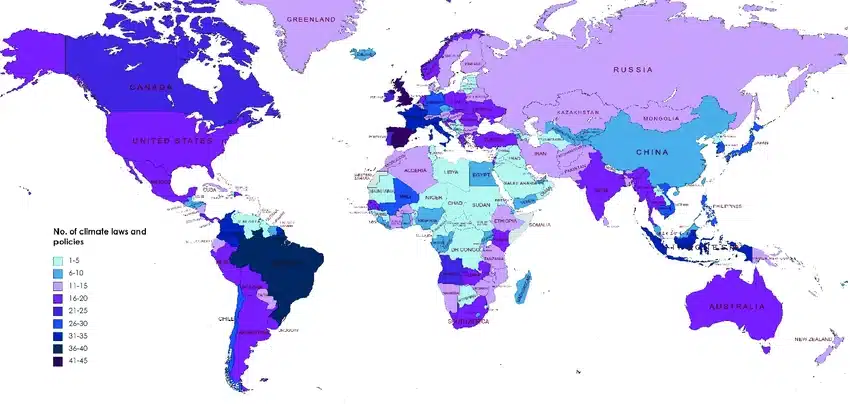
Climate change laws have moved from high-level international pledges to enforceable national legislation, reshaping how governments, businesses, and courts respond to the climate crisis. In 2025, countries worldwide are tightening emissions rules, expanding disclosure requirements, and strengthening enforcement under a growing web of international agreements and domestic laws.
Climate change laws have become the legal backbone of global efforts to combat rising temperatures and environmental degradation. According to UN Framework Convention on Climate Change (UNFCCC):
“To limit global warming to 1.5°C, greenhouse gas emissions must peak before 2025 at the latest and decline 43% by 2030.”
This urgent timeline has driven countries worldwide to enact comprehensive legal frameworks addressing climate action.
The Climate Change Laws of the World database tracks over 1,200 climate policies across 164 countries, representing 95% of global greenhouse gas emissions. These laws represent humanity’s collective legal response to the defining challenge of our time, establishing binding commitments, enforcement mechanisms, and accountability structures for climate action.
This guide explains the global legal framework governing climate change, how major jurisdictions approach regulation, and what these evolving laws mean in practice.
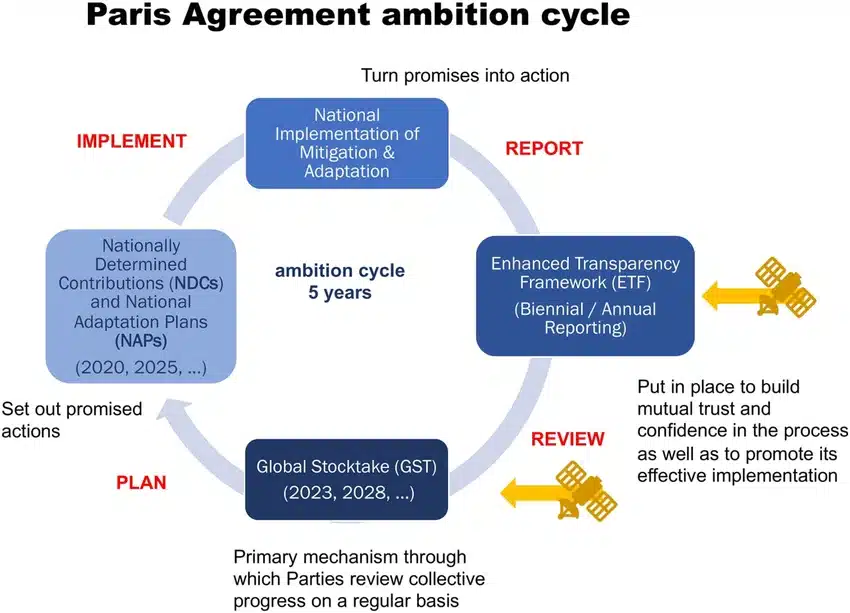
Source: UNFCCC – Paris Agreement
What Are Climate Change Laws?
Climate change laws are national or international legal frameworks designed to reduce greenhouse gas emissions, promote adaptation to climate impacts, and transition economies toward sustainability. These laws regulate industries, energy production, land use, and resource consumption to meet scientifically determined targets for limiting global temperature rise.
Wikipedia explains that:
“The Paris Agreement is a legally binding international treaty on climate change adopted by 195 Parties at the UN Climate Change Conference (COP21) in Paris, France, on 12 December 2015.”
This landmark agreement provides the framework within which national climate laws operate, establishing the principle of Nationally Determined Contributions (NDCs) where each country sets its own emission reduction targets.
Climate laws take various forms framework legislation establishing overarching goals, sector-specific regulations targeting emissions from energy or transport, carbon pricing mechanisms creating economic incentives for reduction, and adaptation measures protecting communities from climate impacts. Together, they create comprehensive legal architectures for addressing climate change at every level of governance.
Why Climate Laws Matter More Than Ever in 2025
According to Wikipedia’s Paris Agreement analysis:
“The urgency of climate action has intensified dramatically. Recent scientific evidence shows we may have already entered a 20-year period that will reach an average warming of 1.5 degrees Celsius.”
This reality makes robust legal frameworks essential for driving the rapid transformation needed.
Economic Imperative: The transition to clean energy represents one of the world’s fastest-growing markets. Imperial College London notes that:
“UK has already been successful in enabling economic growth alongside taking climate change action. Since 1990, the UK’s economy has grown by around 75% while greenhouse gas emissions have reduced by 44%.”
This demonstrates that climate laws can drive prosperity while protecting the environment.
Public Health Protection: Climate laws protect public health by reducing air pollution, promoting healthier diets, and preventing climate-related disasters. These benefits lower healthcare costs while improving quality of life.
Legal Rights: Climate laws increasingly recognize the right to a stable climate as a fundamental human right. Courts worldwide have ruled that governments have legal duties to protect citizens from climate change, establishing new precedents for environmental justice.
Corporate Accountability: New disclosure requirements and ESG (Environmental, Social, Governance) mandates under climate laws ensure businesses take responsibility for their environmental impacts, driving private sector innovation and investment in sustainable technologies.
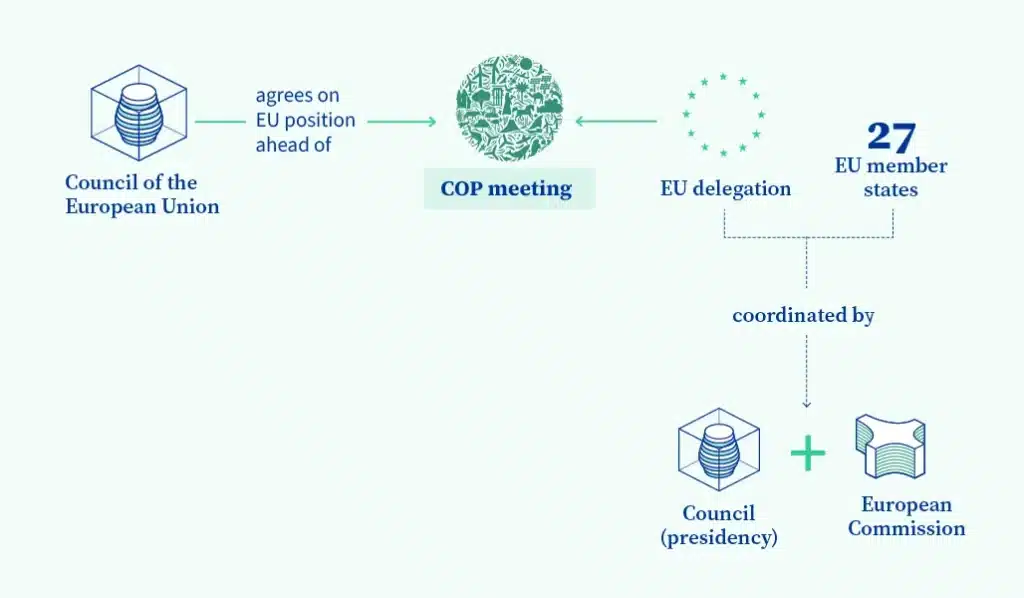
Source: Consilium – Paris Agreement
Key International Climate Agreements
Global climate governance rests on foundational international treaties:
UN Framework Convention on Climate Change (UNFCCC)
Adopted at the 1992 Earth Summit, the UNFCCC established the principle that parties should meet regularly to address climate change through Conferences of Parties (COP).
Consilium explains that:
“The UNFCCC is one of the three conventions that were adopted at the Rio Earth Summit in 1992, when the international community recognised the need to act collectively to protect people and the environment and to contain greenhouse gas emissions.”
Kyoto Protocol (1997-2020)
The Kyoto Protocol introduced the first legally binding emissions reduction targets for developed countries. While the United States never ratified it, the protocol established important mechanisms including emissions trading and the Clean Development Mechanism.
Paris Agreement (2015)
The Paris Agreement represents the most significant international climate treaty.
NRDC reports that:
“It marked a historic turning point for global climate action, as world leaders came to a consensus on an accord comprised of commitments by 195 nations to combat climate change and adapt to its impacts.”
Key features include:
- Temperature Goals: Hold global warming “well below 2°C” above pre-industrial levels and pursue efforts to limit it to 1.5°C
- NDCs: Each country determines and communicates climate actions they will take
- Five-Year Cycles: Countries must submit updated, more ambitious NDCs every five years
- Transparency Framework: Enhanced reporting and review mechanisms for tracking progress
- Climate Finance: Developed countries committed to mobilizing $100 billion annually by 2020 through 2025, with a new goal to be set before 2025
Glasgow Climate Pact (COP26, 2021)
The Glasgow pact reinforced net-zero commitments, called for accelerated phase-down of coal power, and strengthened 2030 targets. It also completed the Paris Rulebook, operationalizing the agreement’s provisions.
Current Status (2025)
Countries are currently submitting their third round of NDCs with 2035 targets.
According to WRI analysis:
“Over 60 countries including Brazil, Canada, Japan, and the UK have submitted new NDCs, though major emitters like China, the EU, and India missed the February 2025 deadline.”
Climate Change News reports that:
“More than 170 countries have indicated they intend to submit plans in 2025.”
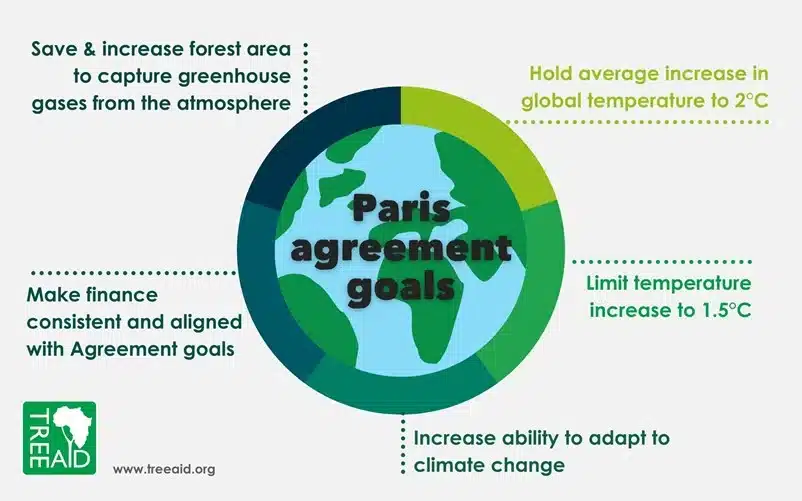
Source: Paris Agreement
Climate Change Laws by Region and Country
European Union: Climate Leadership Through Law
The EU has established the world’s most comprehensive climate legal framework. The European Climate Law, adopted in 2021, makes climate neutrality by 2050 legally binding. This law creates enforceable targets with five-year carbon budgets and independent monitoring through the European Scientific Advisory Board on Climate Change.
Key EU regulations include:
- Emissions Trading System (ETS): The world’s largest carbon market covering power generation, manufacturing, and aviation
- Effort Sharing Regulation: Binding national targets for sectors outside the ETS
- Renewable Energy Directive: Requiring 42.5% renewable energy by 2030
- Energy Efficiency Directive: Mandating efficiency improvements across the economy
EU member states have individual laws: Germany targets climate neutrality by 2045, Sweden by 2045, France by 2050, with legally binding national commitments creating accountability mechanisms.
United Kingdom: Pioneering Framework Legislation
The UK’s Climate Change Act 2008 (updated 2019) pioneered legally binding carbon budgets limiting emissions over five-year periods. The UK targets an 81% reduction by 2035 compared to 1990 levels, as announced at COP29. The Act establishes the independent Climate Change Committee providing scientific advice and progress assessments, creating accountability through mandatory parliamentary reporting.
United States: State and Federal Action
While the US withdrew from the Paris Agreement in January 2025 under President Trump (effective January 2026), climate action continues at state and local levels. California leads with comprehensive climate legislation including cap-and-trade, renewable portfolio standards, and vehicle emission standards. A bipartisan coalition of 24 governors have pledged to maintain US Paris Agreement commitments despite federal withdrawal.
Federal laws include the Inflation Reduction Act (2022), providing $369 billion for clean energy and climate programs, representing the largest federal climate investment in US history.
China: World’s Largest Emitter Takes Action
China’s climate framework integrates climate goals into its Five-Year Plans.
Imperial College reports that:
“Zhang Xiliang, the director of the Institute of Energy, Environment, and Economy at China’s Tsinghua University, expects his country’s carbon emissions to peak around 2025, followed by a plateau and then a sharp decline.”
China’s 14th Five-Year Plan emphasizes renewable energy expansion, electric vehicle adoption, and emissions intensity reduction. The country operates the world’s largest emissions trading system and has made massive investments in solar and wind capacity.
India: Balancing Development and Climate Action
India’s National Action Plan on Climate Change and Energy Conservation Act (2022) establish frameworks for emissions reduction while supporting economic development.
Imperial College notes that:
“India had set a target to install 175 gigawatts of renewable energy generators by 2022 but is now set to surpass this goal and extend it to 480 gigawatts.”
India’s approach emphasizes renewable energy deployment, electric mobility, and energy efficiency while maintaining its position that developed countries bear primary responsibility for historical emissions.
Other Key Countries
Australia: The Climate Change Act (2022) mandates 43% emissions cuts by 2030, ending a decade-long policy vacuum.
Canada: The Canadian Net-Zero Emissions Accountability Act (2021) legally requires net-zero by 2050, with five-year progress reports.
Japan: Targets 46% emissions reduction by 2030 under its Global Warming Countermeasures Act.
Brazil: The National Policy on Climate Change (2009) focuses on deforestation control, with updated NDCs emphasizing Amazon protection.
South Africa: The Climate Change Bill (2022) creates a carbon budget system for major emitters.
Corporate Climate Compliance and ESG Legal Obligations
Climate laws increasingly regulate corporate behavior through mandatory disclosure, emissions caps, and sustainability reporting:
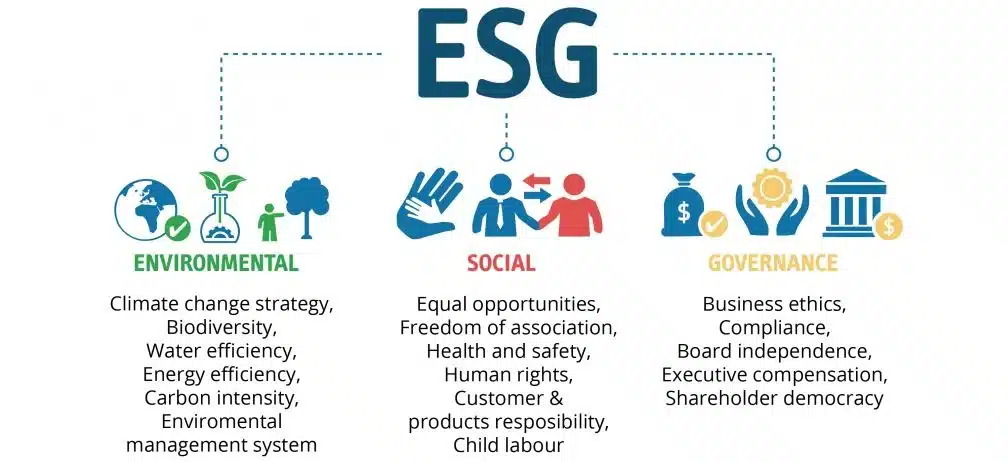
Source: ESG Legal Obligations
Carbon Pricing: Over 60 jurisdictions implement carbon pricing through taxes or emissions trading systems, creating economic incentives for emissions reduction.
Mandatory Disclosure: The EU’s Corporate Sustainability Reporting Directive (CSRD) requires large companies to report environmental impacts, climate risks, and sustainability strategies. Similar requirements are emerging globally.
Scope 3 Emissions: Companies must increasingly account for value chain emissions beyond their direct operations, requiring supply chain transformation and transparency.
Climate Risk Disclosure: Financial regulators require companies to disclose climate-related financial risks under frameworks like the Task Force on Climate-related Financial Disclosures (TCFD).
Net-Zero Commitments: Voluntary corporate net-zero pledges are becoming subject to legal scrutiny for greenwashing, with regulators establishing standards for credible commitments.
Climate Justice and Human Rights Law
Climate change is increasingly recognized as a human rights issue, with courts ruling that governments have duties to protect citizens from climate impacts:
Landmark Cases:
- Urgenda v. Netherlands (2019): Dutch Supreme Court ruled the government must reduce emissions to protect citizens’ human rights
- Neubauer v. Germany (2021): Constitutional court ruled Germany’s climate law violated younger generations’ rights
- Shell v. Milieudefensie (2021): Court ordered Shell to reduce emissions 45% by 2030, holding a corporation directly accountable
Youth Litigation: Young people worldwide are suing governments for climate inaction, arguing their futures are being compromised by insufficient action.
Indigenous Rights: Climate laws increasingly recognize indigenous peoples’ rights to protect their lands and traditional knowledge, acknowledging their critical role in conservation.
Climate Refugees: While international law doesn’t yet recognize climate refugees, courts are beginning to consider climate impacts in asylum decisions.
Challenges in Global Climate Law Enforcement
Despite progress, significant challenges remain:
Enforcement Gaps: Many countries lack mechanisms to enforce climate laws effectively, with targets treated as aspirational rather than binding.
North-South Divide: Developing countries require financial and technical support to implement climate laws, but promised climate finance often falls short of commitments.
Fossil Fuel Subsidies: Despite climate commitments, governments still provide over $7 trillion annually in fossil fuel subsidies, undermining climate laws.
Short-Term Political Cycles: Climate action requires long-term commitment, but political cycles create uncertainty as new governments may weaken or abandon climate policies.
Just Transition: Ensuring climate laws don’t disproportionately burden workers and communities dependent on fossil fuel industries remains a critical challenge requiring careful policy design.
The Future of Climate Legislation (2025-2030)
Stronger Enforcement: Expect courts to play increasing roles in holding governments accountable through climate litigation.
Carbon Border Adjustments: The EU’s Carbon Border Adjustment Mechanism (CBAM) starting in 2026 will impose carbon tariffs on imports, with other countries likely following.
Nature-Based Solutions: Climate laws will increasingly integrate ecosystem protection, recognizing forests, wetlands, and oceans as carbon sinks.
Technology Regulation: Laws governing carbon capture, green hydrogen, and other emerging technologies will proliferate.
Global Climate Finance: Post-2025 climate finance commitments will define how developed countries support developing nation climate action.
Adaptation Focus: As climate impacts intensify, laws will shift toward adaptation, resilience, and loss and damage compensation.
Conclusion
Climate change laws represent humanity’s legal response to the defining challenge of our time. From the foundational UNFCCC to the Paris Agreement’s framework of national commitments, from pioneering legislation in the UK and EU to emerging laws in developing countries, legal frameworks are driving the global transition to a sustainable future.
The 2025 deadline for updated NDCs marks a critical juncture. With emissions needing to peak before 2025 and decline 43% by 2030 to limit warming to 1.5°C, the legal commitments made now will determine whether we meet these targets. Success requires not just ambitious laws, but effective implementation, adequate financing, and political will to maintain climate action despite short-term pressures.
Climate laws work when they establish clear targets, create accountability mechanisms, provide enforcement tools, and ensure just transitions that protect vulnerable populations. As climate impacts intensify and scientific urgency grows, expect climate law to continue evolving, with courts, citizens, and international bodies playing increasing roles in holding governments and corporations accountable for protecting our planetary future.
Frequently Asked Questions
What is the most important climate law?
The Paris Agreement provides the overarching international framework, but the EU European Climate Law represents the most comprehensive binding national/regional legislation.
Are climate laws legally binding?
Many are, particularly in the EU, UK, and some other developed countries. However, enforcement mechanisms vary widely, with some laws establishing aspirational goals rather than enforceable obligations.
How do NDCs work?
Nationally Determined Contributions are each country’s self-determined climate commitments under the Paris Agreement. Countries must submit updated NDCs every five years, with each round expected to be more ambitious than the last.
Can citizens sue governments for climate inaction?
Yes, climate litigation is growing rapidly. Courts in numerous countries have ruled that governments have legal duties to protect citizens from climate change, establishing grounds for legal action.
What happens to countries that don’t meet their climate targets?
The Paris Agreement relies on transparency and peer pressure rather than financial penalties. However, countries face reputational costs, potential trade consequences, and increasing domestic legal challenges when failing to meet commitments.