
Storm Bram slams the UK and Ireland with violent winds and flash flooding, causing power outages, nationwide travel chaos, and severe weather warnings.

Storm Bram is hammering Britain and Ireland with severe winds and intense rainfall, leaving thousands without power, disrupting major transport routes, and triggering widespread flood alerts across both countries. Authorities are urging people in the worst‑hit areas to avoid non-essential travel and prepare for further flooding as the storm system continues to track north and east.
Warnings, Rainfall And Coastal Impacts
By early Tuesday afternoon, more than 300 flood warnings and alerts were in force across the UK, alongside Met Office amber wind warnings for north‑west Scotland and Northern Ireland, where gusts up to about 90 mph were forecast. Six additional yellow warnings for wind and rain covered large parts of England and Wales, while Met Éireann issued a red marine warning for storm‑force conditions off Ireland’s coasts and orange wind alerts for every Irish county at some point during the day.
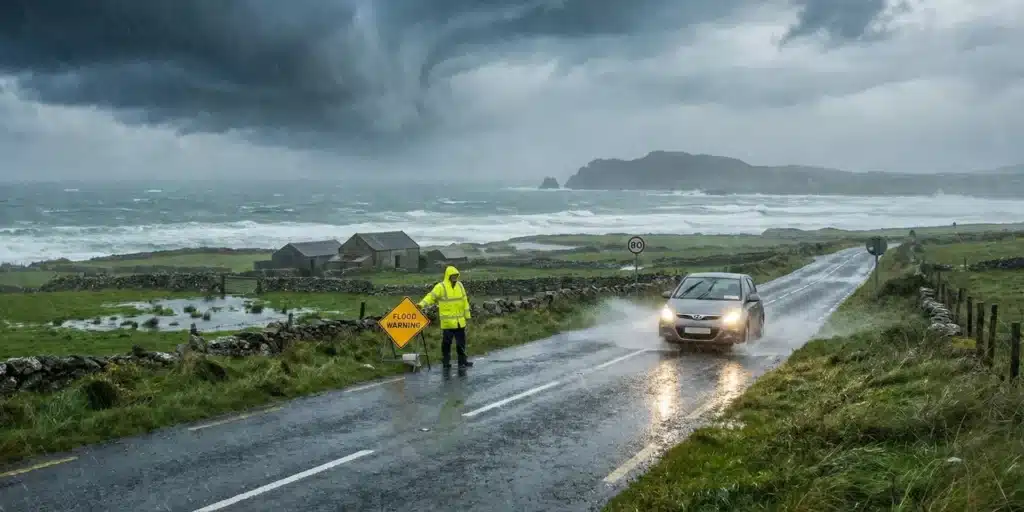
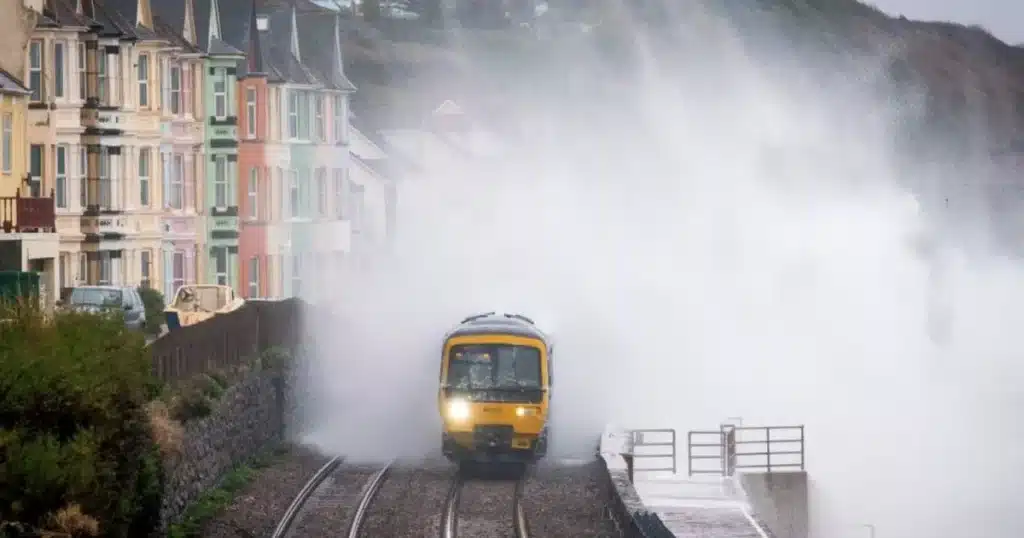
Some of the heaviest rain has fallen across south‑west England and south Wales, with totals of 75–90 mm recorded in places like Dartmoor and Carmarthenshire in just 12 hours, on already saturated ground. Forecasters say exposed locations could see up to 100 mm, significantly raising the risk of river and surface water flooding. Large waves have been battering coastal defences in Dorset, south Wales and western Ireland, with dramatic scenes captured at Lyme Regis, Porthcawl and along the Galway shoreline.
Rescue Operations And Localised Damage
Emergency services have been called to multiple water rescues as roads and fords rapidly became impassable. In Hampshire, a driver had to be pulled from her submerged car after it was swept roughly 40 metres downstream from a flooded ford near Ringwood when she tried to reverse out and was caught by fast‑moving water. Four other motorists were helped from vehicles trapped in floodwater in Thornford, Dorset, and firefighters in Devon rescued two people from the roof of their stranded car in Teigngrace on the River Teign; all were reported safe and well.
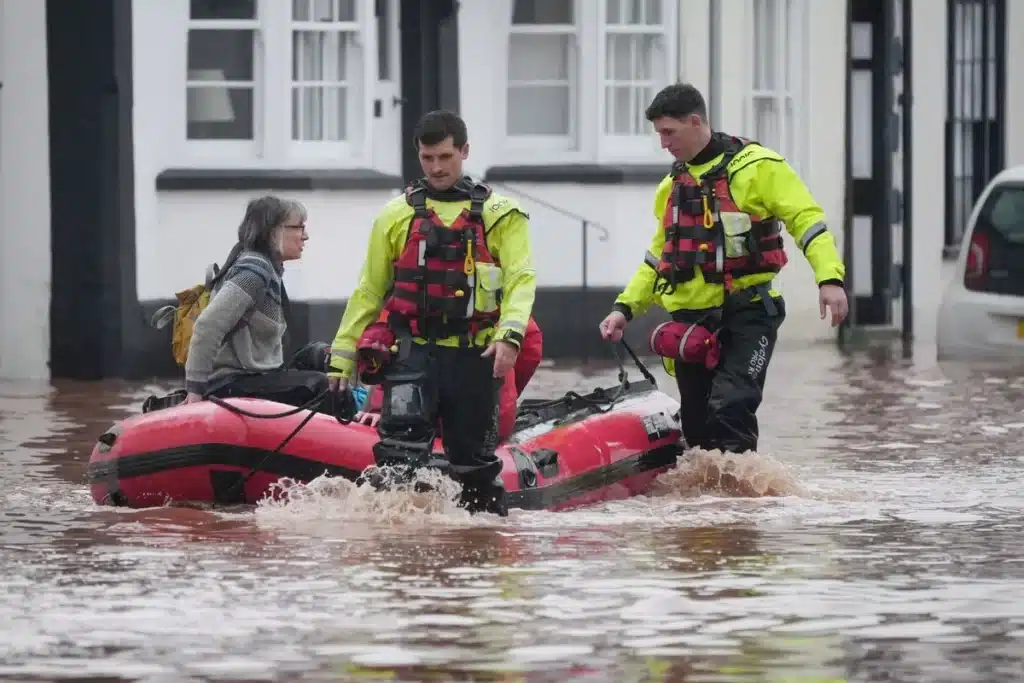
Fallen trees and debris are adding to the disruption. A large tree came down in the Lenaghmore area of Cork, while images from Dorset, York and parts of north‑west England show vehicles driving through deep standing water and rivers overtopping their banks. Natural Resources Wales has warned that rivers are already running high on saturated catchments, urging residents to check their flood risk, sign up for alerts and:
“make preparations for potential flooding now.”
Widespread Transport Disruption On Roads, Rail, Sea And Air
Storm Bram has caused significant travel disruption across the network. Great Western Railway says flooding is “significantly” affecting services, with trains between London, the south‑west and south Wales cancelled, delayed or diverted, and the Par–Newquay branch line in Cornwall closed due to floodwater.
Transport for Wales has suspended services between Abercynon and Aberdare in south Wales, substituting replacement buses, while Network Rail Scotland has also halted some routes as a precaution.
On the roads, sections of the M66 in Greater Manchester were closed after flooding and a multi‑vehicle collision, and the M48 Severn Bridge has repeatedly shut in both directions because of high winds, just as the nearby M4 Prince of Wales Bridge operates with reduced lanes for emergency works, leading to delays of up to 90 minutes for cross‑Severn traffic.
Ferries on Scotland’s west coast have seen widespread cancellations or disruption, and Dublin Airport has cancelled more than 70 flights in and out due to crosswinds, warning of further disruption as gusts strengthen. Police forces in Devon, Cornwall and other regions have asked the public to travel only if necessary and to drive slowly, leaving extra distance between vehicles.
Power Cuts, School Changes And Local Warnings
Thousands of homes have lost electricity across south‑west England, Wales, the Midlands and Northern Ireland, with utilities blaming weather‑related damage to the grid. The National Grid reported more than 4,000 properties without power at midday, including nearly 1,000 in Devon alone, while Northern Ireland Electricity Networks listed multiple affected postcodes around Belfast and Lisburn.

In Northern Ireland, where an amber wind warning is in force for several western counties, the Education Authority has told schools to be:
“flexible on school leaving times.”
Also prompting some primaries to allow early pick‑ups so pupils can get home safely before the worst of the storm. Local flood alerts, such as new Environment Agency amber notices for the middle River Mersey and parts of the River Irwell catchment in Greater Manchester, are advising residents in low‑lying areas like Stockport, Sale, Altrincham and Bramhall to avoid riverside paths, bridges and other at‑risk spots as levels rise.
Climate Context And Growing Flood Fatigue
Meteorologists note that Bram follows a succession of wet, stormy systems this autumn, driven by a jet stream repeatedly steering deep Atlantic lows across the British Isles.
Autumn 2025 has been significantly wetter than average in parts of Wales and Northern Ireland, and the current storm is arriving in a context where many catchments have already reached or exceeded typical seasonal rainfall.
With temperatures also running unseasonably mild up to 15–16°C in some southern areas, experts highlight how a warming climate allows the air to hold more moisture, increasing the potential for extreme downpours.
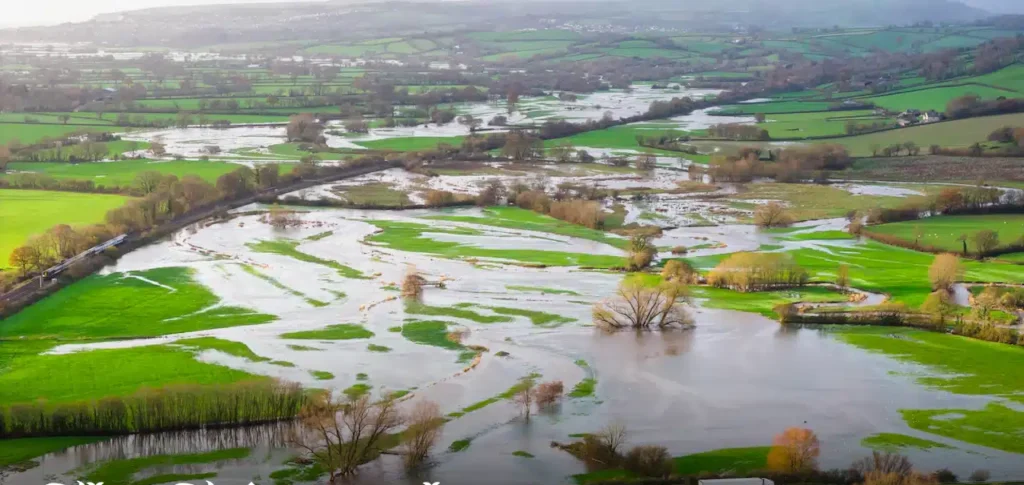
Community groups say the human impact is compounding. Flooded People UK, a mutual‑aid initiative supporting households in high‑risk areas, says some communities are now seeing flood alerts “almost weekly,” leaving residents exhausted and under sustained psychological and financial strain.
Against that backdrop, agencies across the UK and Ireland are repeating the same core advice, which is to stay weather‑aware, avoid driving through floodwater, prepare for potential power cuts, and follow official warnings closely as Storm Bram continues to move across the region.