
After Ukraine, a Trump-brokered peace plan for Thailand-Cambodia is at risk as border violence escalates, forcing mass evacuations from the border area.
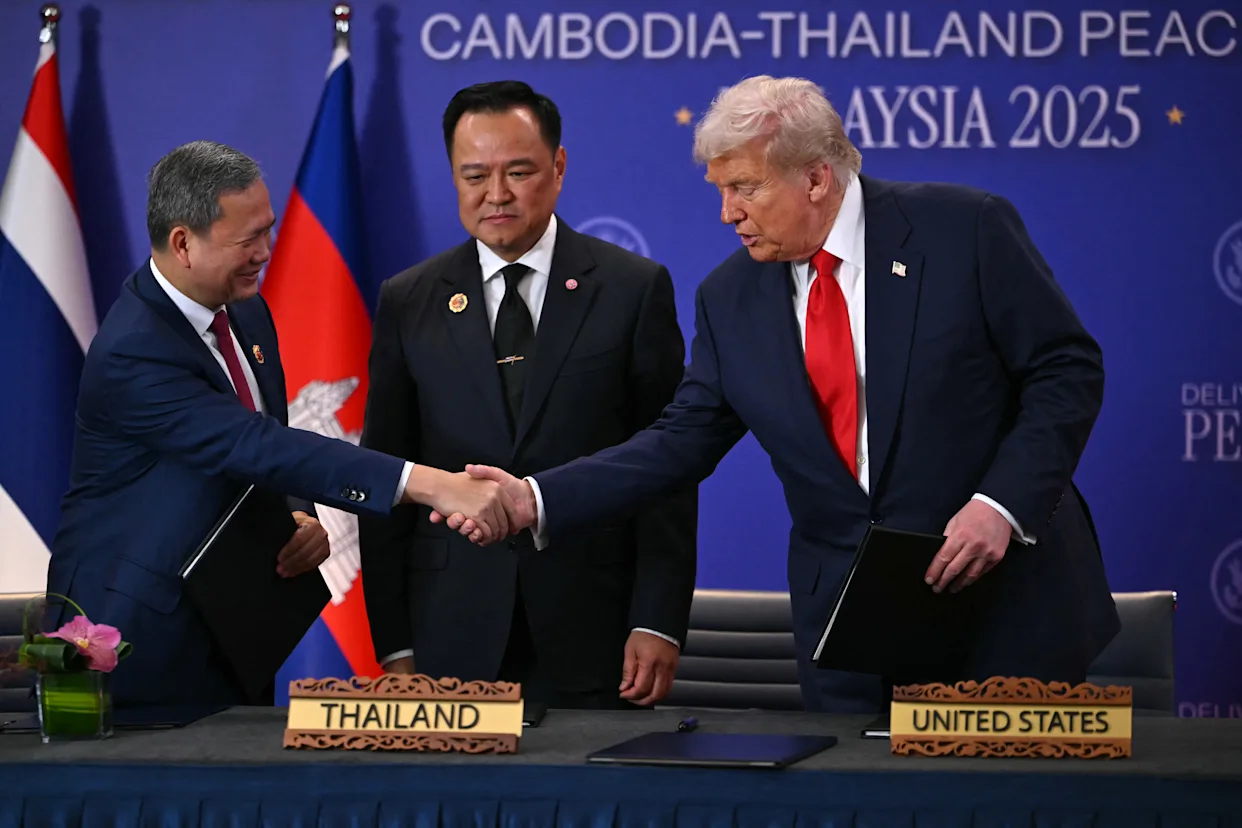
A new round of fighting along the Thailand-Cambodia border has pushed a fragile, Trump-brokered ceasefire to the brink, forcing mass evacuations and drawing urgent calls for restraint from regional and international actors. The clashes, which include Thai air strikes on Cambodian territory, underscore how quickly this long-running border dispute can escalate despite multiple diplomatic efforts to contain it.
Heavy Fighting, Air Strikes, and Casualties
Thailand says its fighter jets and artillery struck Cambodian military positions on Monday after what it describes as sustained Cambodian attacks along disputed stretches of the frontier in Ubon Ratchathani province.
Officials in Bangkok report that at least one Thai soldier has been killed and more than a dozen wounded, while Cambodia says four of its civilians were killed and at least nine others injured in the latest violence.
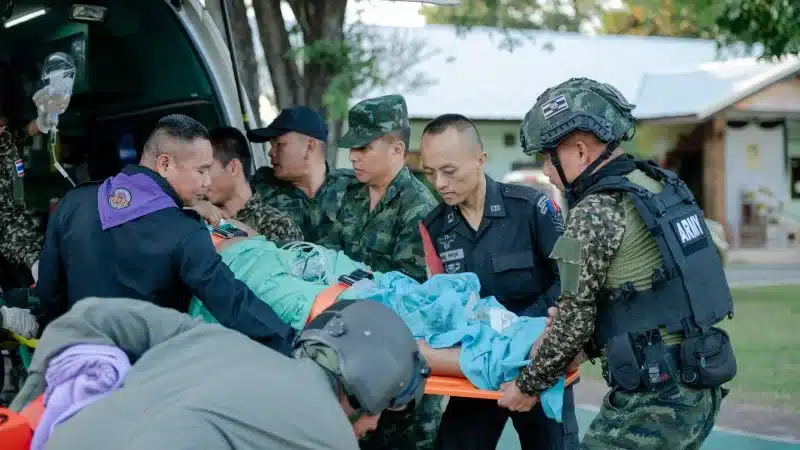
Phnom Penh accuses Thailand of launching “inhumane and brutal acts” of aggression and insists its own forces have not retaliated, framing the current escalation as one-sided and demanding that the international community condemn Thailand’s actions.
Thai commanders, meanwhile, say Cambodian units have used drones and BM‑21 rocket systems near civilian areas, and claim the goal of the current operation is to:
“Cripple Cambodia’s military capability for a long time to come, for the safety of our children and grandchildren.”
Mass Displacement and Impact on Civilians
The renewed hostilities have triggered a large-scale displacement on both sides of the border. Thai authorities say more than 400,000 residents have been moved to shelters or safer areas across five provinces, while Cambodian officials report hundreds of thousands fleeing villages in provinces such as Oddar Meanchey and Preah Vihear.
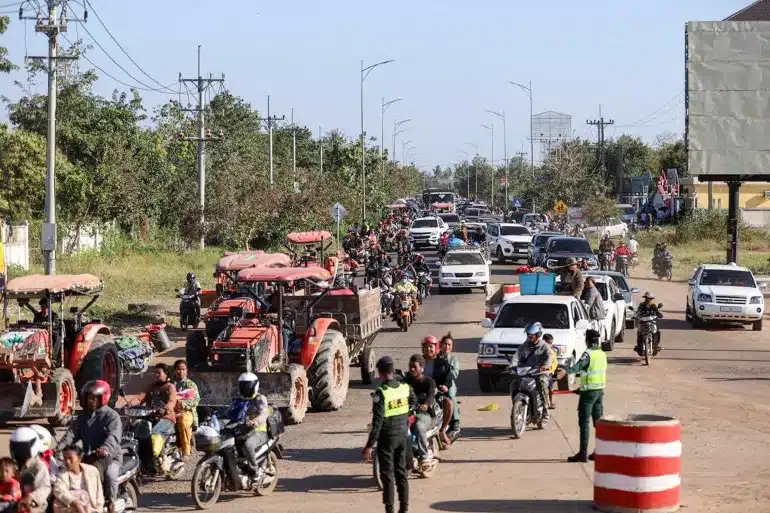
Images from the region show families sheltering in bunkers, concrete pipes, and makeshift camps, as columns of trucks, tractors, and motorbikes leave frontline communities. Human rights groups warn that civilian infrastructure is at serious risk. Amnesty International has urged both governments to take:
“All the necessary steps to protect civilians in line with international humanitarian law.”
Amnesty International cites reports of civilian casualties and damage in border areas. Local media have also reported that a Cambodian journalist was critically wounded by Thai fire in Oddar Meanchey, highlighting the danger for those documenting events on the ground.
Ceasefire Under Strain and Regional Reactions
This latest spike in violence comes just months after a five-day bout of heavy fighting in July left at least 48 people dead and displaced around 300,000 people, before U.S. President Donald Trump helped broker an:
“Immediate and unconditional ceasefire.”
An expanded agreement signed in October in Malaysia, witnessed by Trump and ASEAN mediators, committed both sides to de‑escalation, removal of heavy weapons from the border, and an end to online
“information warfare.”
Tensions flared again in November when Thailand suspended implementation of parts of the deal after several of its soldiers were wounded by landmines it says were newly laid by Cambodian forces, an allegation Phnom Penh denies.
Thai Prime Minister Anutin Charnvirakul now says “there will be no talks” unless Cambodia meets Thailand’s conditions, while Cambodian Prime Minister Hun Manet and former leader Hun Sen both insist Cambodia is upholding the truce and accuse Bangkok of using the conflict for political gain.
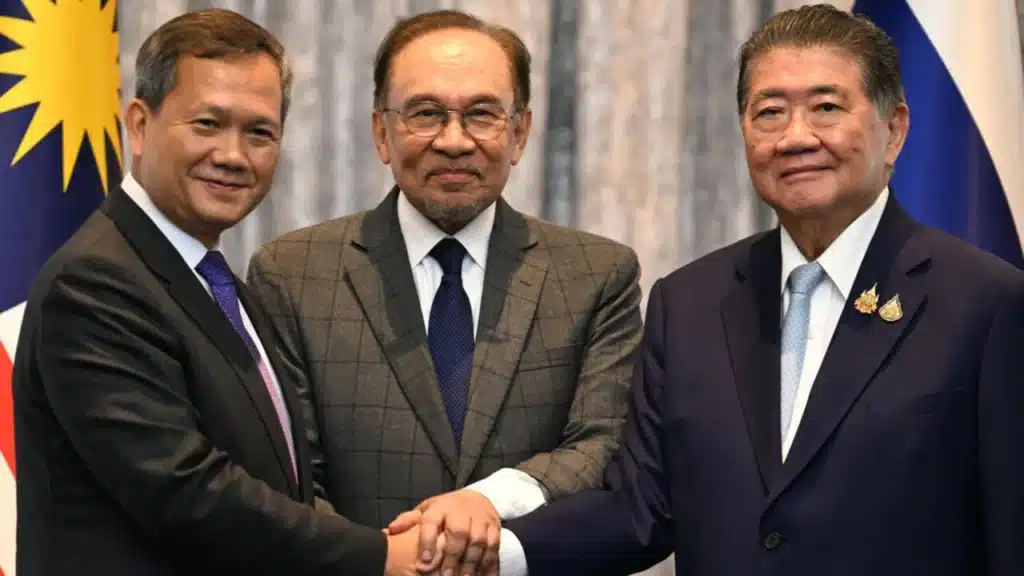
Malaysia’s Prime Minister Anwar Ibrahim and Japan’s government have both expressed “deep concern” and urged maximum restraint, warning that the latest clashes risk “unravelling” months of painstaking diplomacy.
Long-standing Border Dispute and Military Imbalance
The current crisis sits atop a century-old border dispute dating back to colonial-era maps drawn while Cambodia was under French rule, which Thailand argues are inaccurate. Sovereignty disagreements around temple complexes and undemarcated stretches of the 800‑plus kilometre frontier have sparked repeated clashes, including deadly exchanges between 2008 and 2011 and this year’s earlier confrontations.
Thailand holds a clear conventional military edge, with a far larger defence budget, a sizeable standing army, modern air power including F‑16s and Gripen fighter jets, and a significantly bigger navy. Cambodia, by contrast, fields a smaller force with more limited air and naval capabilities, relying heavily on ground units, artillery, and a modest helicopter fleet.
That imbalance helps explain why the use of Thai fighter jets has rapidly escalated concern among neighbours and observers, who fear further miscalculation or a broader conflict if diplomacy fails to regain traction.
What Happened to the Ukraine Peace Plan?
After growing pressure from Donald Trump’s controversial peace plan, President Volodymyr Zelensky met with European allies in London to coordinate a unified response. Kyiv and its partners are revising proposals that could compromise Ukraine’s territorial integrity, emphasizing that any settlement must preserve sovereignty.

Meanwhile, Russia continues large-scale drone and missile attacks targeting energy and transport infrastructure, causing blackouts and disruptions. Ukraine’s parliament has approved a 2026 defense-focused budget to sustain military readiness, reinforcing that peace must not come at the expense of national security.
Trump’s Latest Thailand-Cambodia Peace Initiative Remains Uncertain
As tensions rise along the Thailand-Cambodia border, the future of Trump’s latest peace initiative remains uncertain. With violence escalating and diplomatic negotiations under pressure, regional stability hangs in the balance.
Observers warn that without immediate intervention and effective conflict resolution, the border clashes could spiral further, undermining international efforts to secure lasting peace and casting new doubt on the viability of Trump-brokered agreements in Southeast Asia.